My Writing Process Alex Hart

Alex Hart, my writing routine, my writing process, author, writer, Take Me Home, My Writing Routine:

I’ve written since an early age, whether it was short stories, poems (dreadful ones!), or novels. I read voraciously and love many genres. I have worked in the film and television industry for over twenty five years and have always felt passionate about story telling whether on screen or in books. To be able to disappear into someone else’s world, even temporarily and experience a different life is something that will never lose its thrill.

What you have written, past and present.

I’m currently working on a couple of novels, one which is the next in the series of Take Me Home, and another which is a standalone thriller. 

What you are promoting now.

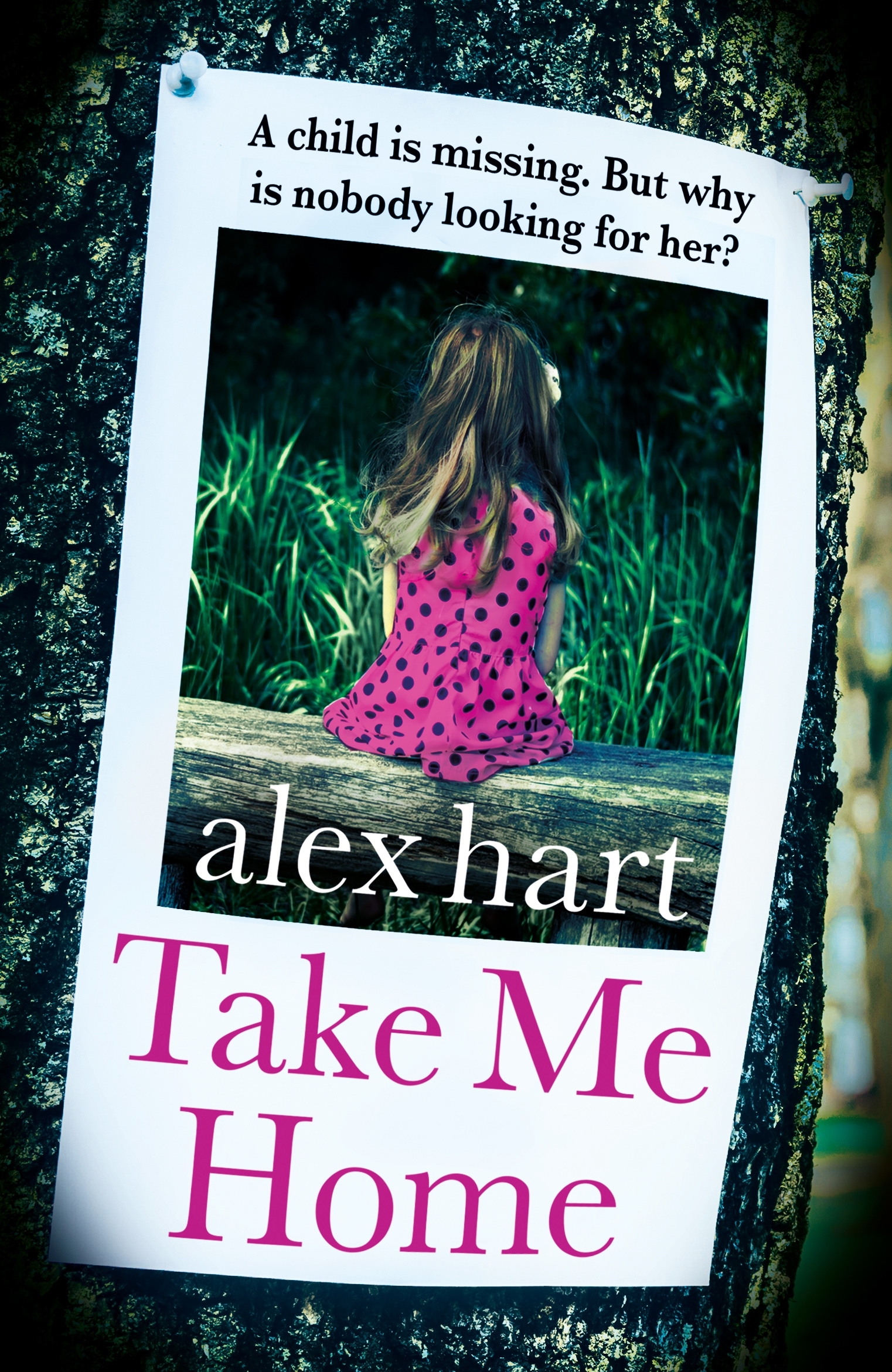
Take Me Home is a mystery thriller. The main character Harper finds a young girl left alone in a New York store and sets out to find out where she has come from. No one has reported her missing yet the little girl May says she misses her mom. Harper is someone who is strong and feisty. She paints outside of the lines, yet relentlessly strives for the truth. Despite her outwardly spiky edges, she is sensitive and warm-hearted. I hope she is someone the reader enjoys spending time with, along with her friends TJ and Reggie (the yin to her yang, the cheese to her macaroni) as they try to unravel the mystery along with her. It raises the questions, ‘What would we do in that situation?’ ‘How far would we go for strangers and those we love?’ and ‘What constitutes family?’ 

A bit about your process of writing.

I’m pretty disciplined when I have a project I’m working on. My day usually starts at the gym (before Covid!) where I am waking up my brain and beginning to think about the task ahead. Once I am at my desk, I often turn off my phone so there are less distractions and set to on that day’s goal. If I have the book planned out, I’ll always aim to write a chapter a day; even if I know what I’m writing is trash. If I started to edit as I went along, I think I would come to a grinding halt. If there is something on the page, I at least have words to play with. 

Do you plan or just write?

I always plan. I don’t know any other way. For me, a plan is a safe way of being able to go off piste sometimes, as I know I can always refer back to it. Things often change when you’re writing; either something you are sure was going to work, suddenly falls apart in your hands, or you get further inspiration meaning the story changes direction. I think, so long as you have a plan you can explore these options without going off on a tangent too much. 

What about word count?

I really don’t think about it in the first draft. I just want to get the bones of the story down and I’ll worry about word count later. Often or not, it just works out at the right length. 

How do you do your structure?

I always work with paper and pen at the beginning, just writing down notes, random thoughts, character traits etc and once I am able to formulate a basic beginning, middle and end, I begin to scratch out a structure. If I get stuck, I always refer back to the usual; Joseph Campbell, Christopher Vogler, Robert McKee, Syd Field, Dan Harman. I’ll re-read what they’re saying and think how my story and characters fit and start penning out a potential paradigm. 

What do you find hard about writing?

When I lose confidence! There’s nothing worse than facing the day thinking ‘something isn’t working’, ‘I’m the worst writer known to man’, ‘what was I thinking even attempting this?!’ I think this happens to all writers at some point of their journey. You’re all alone in this room, with your imaginary characters (who you have become close to and feel you are letting down) and you only have yourself to argue with. When those days come, (and they do!) rather than give up and beat myself up further, I make myself write 100 words. Often or not, I’ll end up writing more and suddenly you’re up and running again. 

What do you love about writing?

Everything except for the above days! 

Advice for other writers.

The same any writer gives, read, read, read, write, write, write. For me, there is no other way. My motto has always been, ‘Get it down, then get it done. Get it written, then get it right.’


TAKE ME HOME by Alex Hart is published by Orion (Paperback, £7.99) on 1st October.

 

MELISSA OLIVER ON WINNING THE JOAN HESSAYON AWARD FOR NEW WRITERS

When I sat down in front of my laptop on that sun-drenched September afternoon, to find out who the winner of the prestigious Romantic Novelists’ Association Joan Hessayon Award would be, I had no idea that by the end of the zoom presentation, the wonderful Katie Fforde would open the envelope and say my name.

It was quite a surreal moment and it was actually a blessing (for me) that the recording of the presentation didn’t include my initial utter disbelief. For a few seconds, after my name was announced, I felt that time had actually stood still as I blinked repeatedly, wondering whether there had been some sort of mistake. And then of course, I was to make a garbled speech and this time the speech in all its effusive glory was recorded. Here, not only do I forget to thank Dr Hessayon – who generously sponsors the award in memory of his late wife, Joan- a vehement champion of new writers but also my lovely editor, Charlotte Ellis at Harlequin, Mills and Boon. I had been convinced that I had thanked both only to realise my mistake on second viewing. Thankfully, I have since rectified that oversight.

The truth is that I was and still am so ridiculously happy to be the winner of this amazing award, especially in the RNA’s 60th anniversary year.

The New Writer’s Scheme (or NWS) is a unique scheme run by the RNA offering unpublished writers the chance to have their work critiqued anonymously by the RNA’s team of published authors. My own experience of getting detailed feedback of my work was both nerve-racking and stressful yet immensely valuable as well.

For writers to be able to pass through the scheme and achieve the Herculean feat of getting their books published, it’s such an amazing feeling of accomplishment. After all the years of hard work, determination and at times disappointment, it all becomes worth it and not only that but this book that you’ve written- your debut can then qualify for this award as well.

The nurture and support from the RNA and the New Writer’s Scheme helped me achieve that elusive dream of becoming a published author. From the chapters (shout out to the London Chapter), to the seminars, courses, talks, events- the fabulous summer conference (where I met my editor, at the one-to-one meeting last year), Winter Party and the industry award ceremonies- it is such an amazingly warm, welcoming professional body.

This year there was an unprecedented number of books (21) that went through the New Writer’s Scheme to publication with a huge variety of stories within the romantic fiction genre. From historical romance, heart-warming contemporaries, saga, festive romance, romance infused with a thriller element, a paranormal romance to romantic comedies and so much more. I’m still quite bewildered by how the judges managed to choose from such a dazzling list of books this year but the fact that my debut, The Rebel Heiress and the Knight was selected as the winner is an absolute honour for me and something I will always cherish forever.

Melissa x

Melissa Oliver is from south-west London where she writes historical romance novels. She lives with her lovely husband and daughters, who share her passion for decrepit, old castles, grand palaces and all things historical.
When she’s not writing she loves to travel for inspiration, paint, and visit museums & art galleries.

Check out Kirsten Hesketh’s review of The Rebel Heiress and the Knight in this month’s Sister Scribes Reading Round Up.


My Writing Process Paul McCartney

Paul McCartney, interview, book, author, children's book

© MPL Communications/Paul McCartney & Kathryn Durst

My Writing Routine

 Where did the idea for the book come from?

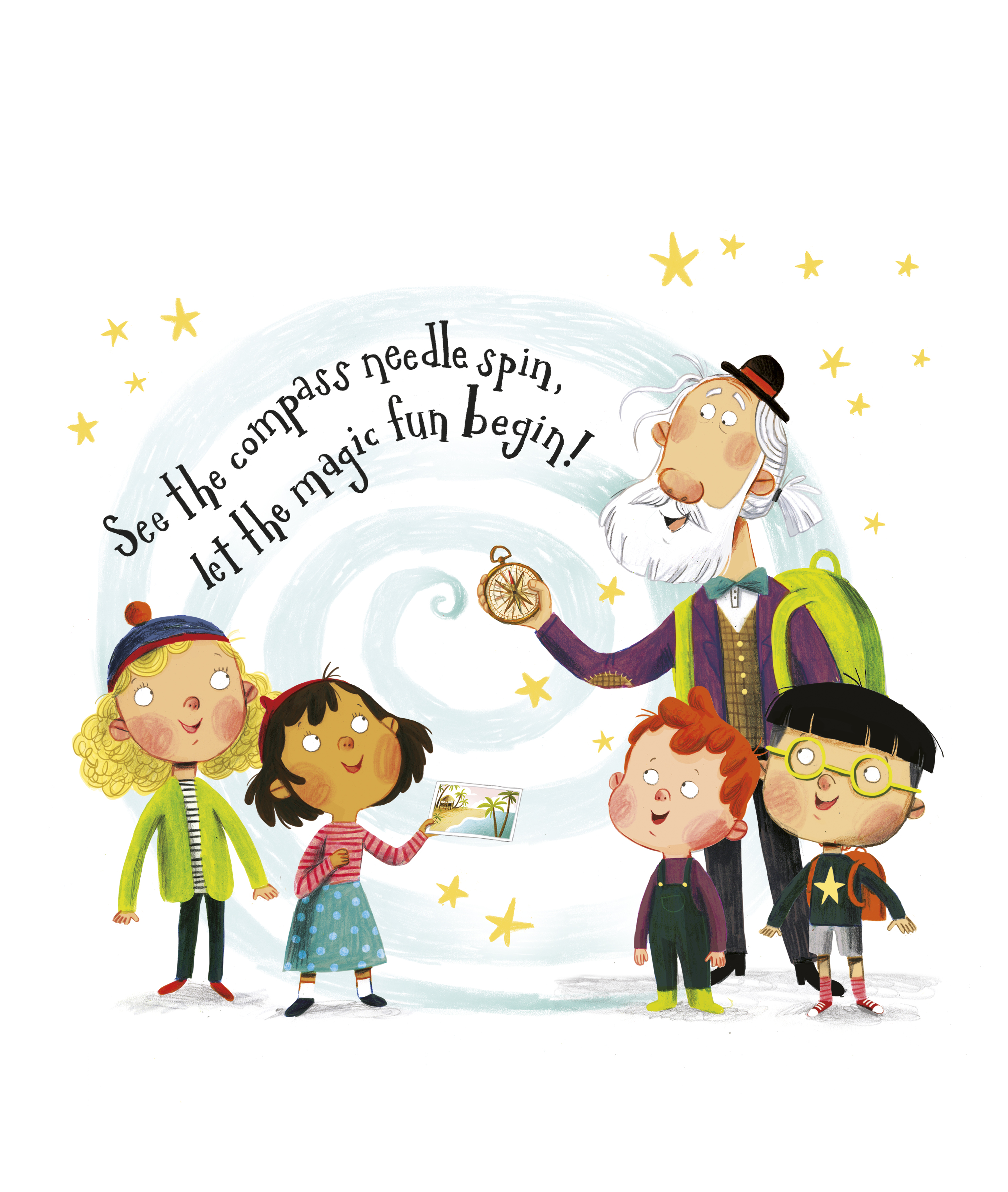
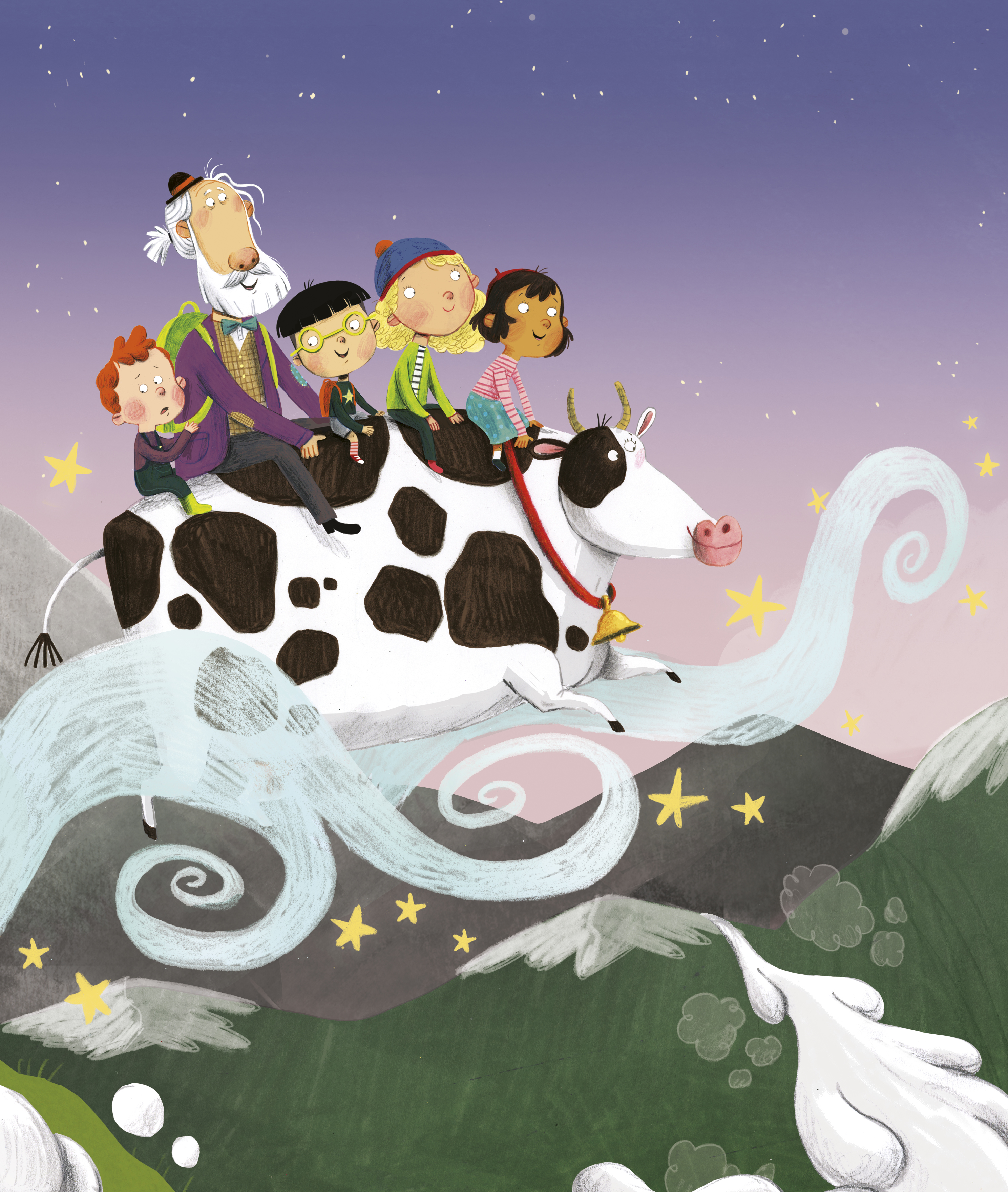
One day one of my grandkids, instead of calling me Grandad, called me Grandude: “Grandude, can we do this . . . ?” I thought, Well, that’s nice, I like that, so I started to think of stories about this character Grandude. I thought, I’ll make him magical. The kids say, “Hey Grandude, can we go somewhere?” and he takes them on magical adventures. That’s how it started – one of my grandkids just called me Grandude one day, and that was it.

Will there be more adventures of Grandude?

Well, you know, maybe we’ll see how this goes. If people like it, then I’ve definitely got a few more adventures up my sleeve – or Grandude has – so it would be quite nice to continue. I’m ready to write more if people do like it.

Paul McCartney, interview, book, author, children's book

© MPL Communications/Paul McCartney & Kathryn Durst

How did you collaborate with Kathryn Durst?

I was shown the work of a few illustrators, and because I read a lot of children’s books to my own kids when they were growing up, I know the styles that are out there and I liked her style very much. I thought it suited Grandude perfectly. It was slightly unusual and bohemian, and she made him a bit of an eccentric character, so she was really good. But there was one thing that happened during the making of the book. She’d do an illustration and it would come to me to approve it, and I’d say, “Oh yeah, it’s great.” I loved what she was doing. There was just one funny little detail: in one of the adventures the kids and Grandude were all riding horses and their stirrups were just hanging down – their feet weren’t in the stirrups. So I said to the publishers, “They’re riding horses – their feet should be in the stirrups, shouldn’t they?” And they said, “You know, that’s funny – the American publishers picked up on that too,” so we had to ring Kathryn and say, “Could you just stick their feet in the stirrups?” If you look, you will note that they’ve all got their feet in the stirrups now!

Is writing a picture book for children anything like writing a song?

Well, you know, it is a little bit like that, in as much as you’ve gotta use your imagination – you’re making something up. If it’s a song, you’re making up words and music, and maybe a story. If it’s a children’s book, then obviously you don’t need the music but you still gotta have the imagination, and that’s actually what’s fun about it: you’re making stuff up, but if you’re writing a children’s book your story tends to go to more far out places. You can rub a compass and go to Zanzibar – you can go wherever you like. You could do that in a song, but you tend to keep it a little bit more feet-on-the-ground.

The paperback of Hey Grandude! comes out on 17th September and includes a story CD, featuring narration and instrumental music by Paul. 

Niall Edworthy: My Writing Process

Niall Edworthy

I have been writing in one capacity or another since I finished studying thirty years ago. I worked as a reporter for broadsheet newspapers and international news agencies Reuters and AFP in the 1990s. In 1996 I was commissioned to write the Official History of the England football team. The following year I was invited to ghostwrite a travelogue for actor David Jason. Soon after I gave up journalism and focussed on books. I live in the Downs above Chichester, commuting down 14 steps to my, ahem, fancy office (converted shed, no sun after 11). When I’m not writing, I tend to be reading although I’m suffering a little reader’s block right now, unable to settle on a title and bouncing back and forth between half a dozen on my Kindle. I pursue all the boring middle-aged activities, sometimes with passion, more often with relief after a day at the computer. I cycle a lot up in the hills, and I have grown to love gardening and cooking – semi-mindless activities that allow my brain to drain after writing. If the Test cricket’s on, I have to chain myself to the desk and resist the temptation.

What you have written, past and present.

I have written over 40 books, roughly half of them ghosted for well-known public figures or ‘ordinary’ people who have had extraordinary experiences. I have written memoirs, military history, sport, humour and natural history.

What you are promoting now. 

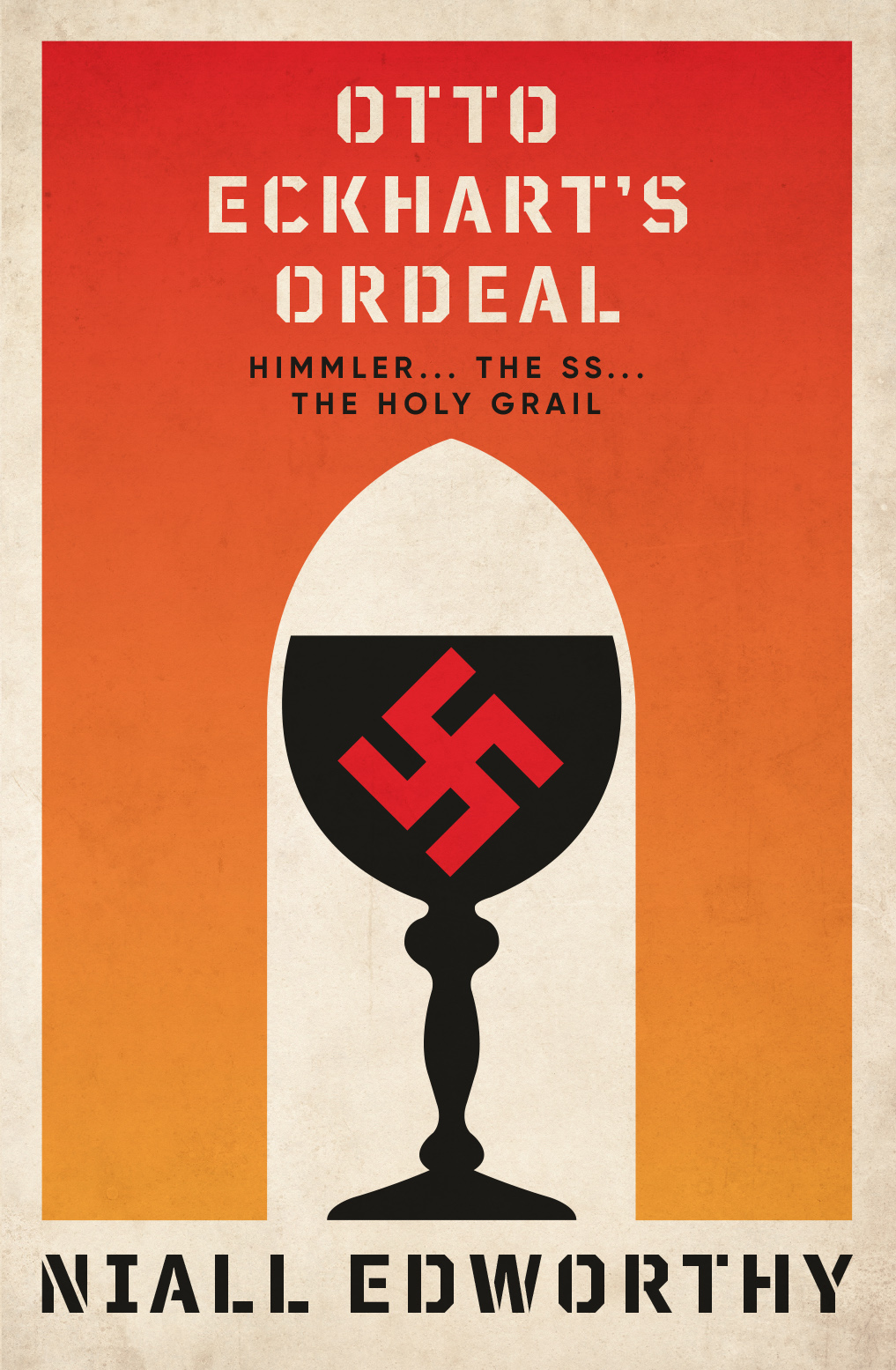
My first novel, Otto Eckhart’s Ordeal. It is hard to slot into a genre but if you were in a bookshop (remember them?), you’d probably find it in Historical Fiction. Set in 1937 and based on a true premise, it tells the story of an aimless, young historian dispatched by the Nazis to go fetch the Holy Grail for the glory of Germany. It is a coming-of-age, adventure story with a dash of romance and, dealing with some grim characters at a grim period of history, I have tried to write it with dark humour.

A bit about your process of writing. 

I’m reasonably methodical. Once all the research is done and the story laid out loosely but with direction, I go at it every day if I can. I need momentum and I need to be deeply immersed in the world I am describing or creating. It’s no good grabbing an hour here or there. I need a good long stretch for each session. I start early, between 7 and 8, and tend to work through to a late lunch. If I have written a good amount I often feel drained and don’t go back to my computer. If it’s been a frustrating effort and I haven’t got much down, panic propels me back to my keyboard.

Do you plan or just write?

I am a planner, but the plan changes a little every day. I think it’s important not to plot too hard, and to keep all options open. I read a good description recently that sums up my approach: Starting a book, you are at John O’Groats heading for Land’s End but not entirely sure of the route you are going to take.

What about word count?

Big difference between fiction and non-fiction. If all the research is at my fingertips, I average about 1,500 words a day for non-fiction, but can push to 2,500. With fiction, I’m delighted if I have 1,000 words in the bank at the end of a session.

How do you do your structure?

As clearly as possible. Structure is everything in building a story. You are reminded of the challenges facing the architects and engineers of skyscrapers – if they are an inch out at the bottom, it won’t be long before the building starts to lean and they have to demolish it and start again. In fiction, structure is more flexible because the characters will soon start to take you to places and scenarios you hadn’t foreseen.

What do you find hard about writing?

Where to start? Lack of company – not being able to wander over to the water-cooler for a good moan from time to time. Anxiety about money – it’s not the path to fabulous wealth. Fretting about the next project while I’m deep in the current one. The time it takes to set up new projects, writing proposals, pushing them on publishers, knowing all the effort may come to nothing. (The writing itself is the easiest and most enjoyable part of the process.) The occasional jerk on Amazon, who writes an ignorant, cowardly and malicious review. Why bother torpedoing someone’s huge effort to produce a book? It’s not personal.

What do you love about writing? 

Again, where to start? I like the independence. I like not having to commute, to set my own agenda. I’m writing this in my shorts and slippers with very un-combed hair wondering where I might cycle this afternoon in the glorious autumn sunshine. On the actual writing, it’s a great feeling when you know in your bones you have written a passage that will stand the reader’s scrutiny. A cricketer who has played the perfect cover drive will recognise the feeling.


Advice for other writers. 

Know what you want to say before you write. Short sentences. Be bold. Find your voice. Get up early. Trial & error is the only way to learn – most writing is more effort than inspiration. If you have a setback, dust yourself down and keep going. Have a second source of income. Read as much as you can to immerse yourself in words and expand your range of reference.


My Writing Process Angie Lake

author Angie LakeHow I Write 

  1. A bit about you.

After moving around chasing the rock n’ roll lifestyle, my partner and I decided to settle with our toddler on the Spanish Costa Blanca, which is where I grew up. He’s a musician and I’m a writer, so we knew that life was going to be challenging. We decided that we might as well live somewhere pretty as, chances are we’ll never be able to afford a holiday.

  1. What you have written, past and present.

I started out with a short stint doing reviews and interviews for a Heavy Metal magazine. Over the years I’ve written articles and worked on translations and subtitles for the music industry.

My Dad and I collaborated on two series of children’s books The Diaries of Robin’s Toys and The Diaries of Robin’s Travels, published by Sweet Cherry Publishing.

I then went on to write the middle-grade book series Danny Dingle’s Fantastic Finds, and its spin-off series Mina Mistry Investigates, also published by Sweet Cherry.

I’m currently working on the plot for another children’s series.

Aside from that I have some unpublished work including a trilogy of novels and a series of children’s books for adults (also comedy).

  1. What you are promoting now.

Sweet Cherry Publishing are launching Mina Mistry Investigates this September. It’s a series about a witty schoolgirl detective and her half-hearted attempt to fit in with the kids around her as she puts her energy into solving mysteries while maintaining her secret identity.

  1. A bit about your process of writing.

I went through a very draining phase of writing for up to 22 hours a day for two months on the trot, but once my hair grew back I decided to keep to a less lethal schedule.

I write 5 or 6 days a week, always in the mornings unless I’m up against a deadline.

I have notebooks where I jot down random ideas, then when I “go into production” with a pitch or a series I write everything on a project board to help me visualise the emerging universe.

I take time out to clear my head and come up with ideas: I run or hike most mornings before work.

  1. Do you plan or just write?

I think that if I didn’t plan everything with painful intricacy, my brain would disintegrate. I find that I’m more creative when I’m breaking rules; I impose my own strict rules on myself, then break them and feel awful about it. A typical work day should include an hour and a half of coming up with ideas, about an hour of planning and adapting plots and storylines and three to four hours of writing. There are also meetings, editing and other tasks. Usually my day will get hijacked by just one task though, and then I’ll panic.

  1. What about word count?

My current projects have a set word count, so I divide that into the time allowance I have for each project and then struggle to meet my own deadline.

  1. How do you do your structure?

Very rigidly. I’ll come up with characters and a concept for a series and I write as if I were working on episodes for a cartoon. I come up with a plot and a subplot for each episode, and then I divide that into eight scenes. I write a draft for each scene and then work towards the ending. I never drift; I always know how a story is going to end before I start writing it.

  1. What do you find hard about writing?

The financial uncertainty and having no one but myself to blame for it; that’s the problem with being your own employee and manager – what are the chances that you’re going to be good at both of those things?

  1. What do you love about writing?

That it comes more naturally to me than resurfacing roads or working in a call centre. Also that all the worlds and characters you create give you somewhere to escape to when you’re stuck resurfacing a road or working in a call centre.

  1. Advice for other writers.

In order to get anywhere you’ll have to take it seriously, but while you’re doing this you shouldn’t forget how ridiculous writers who take themselves seriously seem to the rest of the world. Embrace this and start collecting hats.


Mina Mistry Investigates: the Case of the Missing School Dinners will be published by Sweet Cherry Publishing on 10 September.

My Writing Process Taryn Leigh

writerMy Writing Routine

I try to write whenever I can have moments alone, which are long enough for me to take my mind into the world of my characters.

Because writing currently isn’t my full time profession, this means that I cannot have a formal writing routine, but instead have to write when I get the chance.

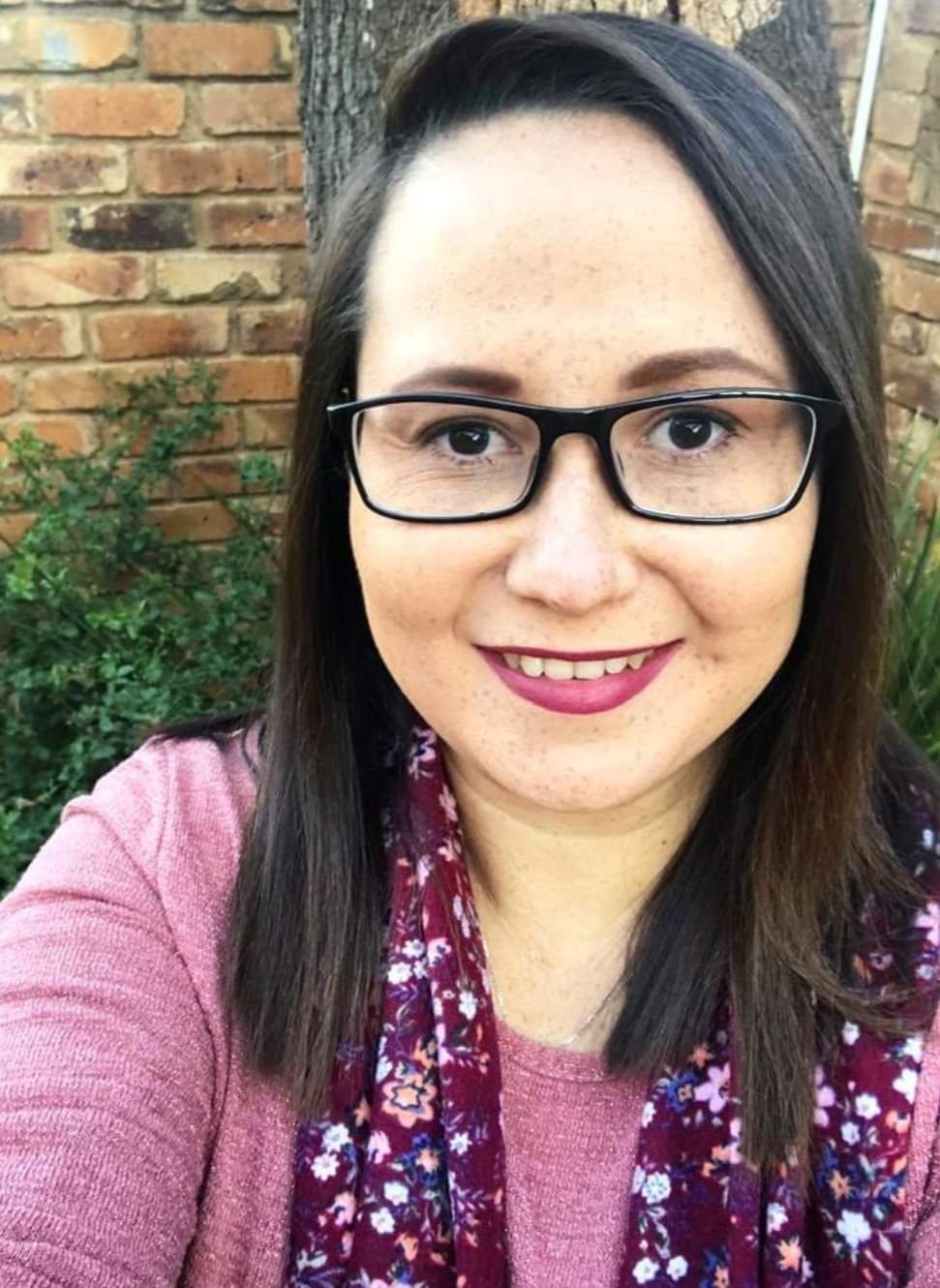
My name is Taryn Leigh, and I’m a South African based Author, whose first book was published in the UK.

Although I write books that are considered to be romance or contemporary fiction novels, I try to ensure the reader can walk away with something of value after reading the book. Because of that, my books deal with real life struggles that women endure.

My first book was called Perfect Imperfections, and is available in Paperback, Audiobook and on Kindle.

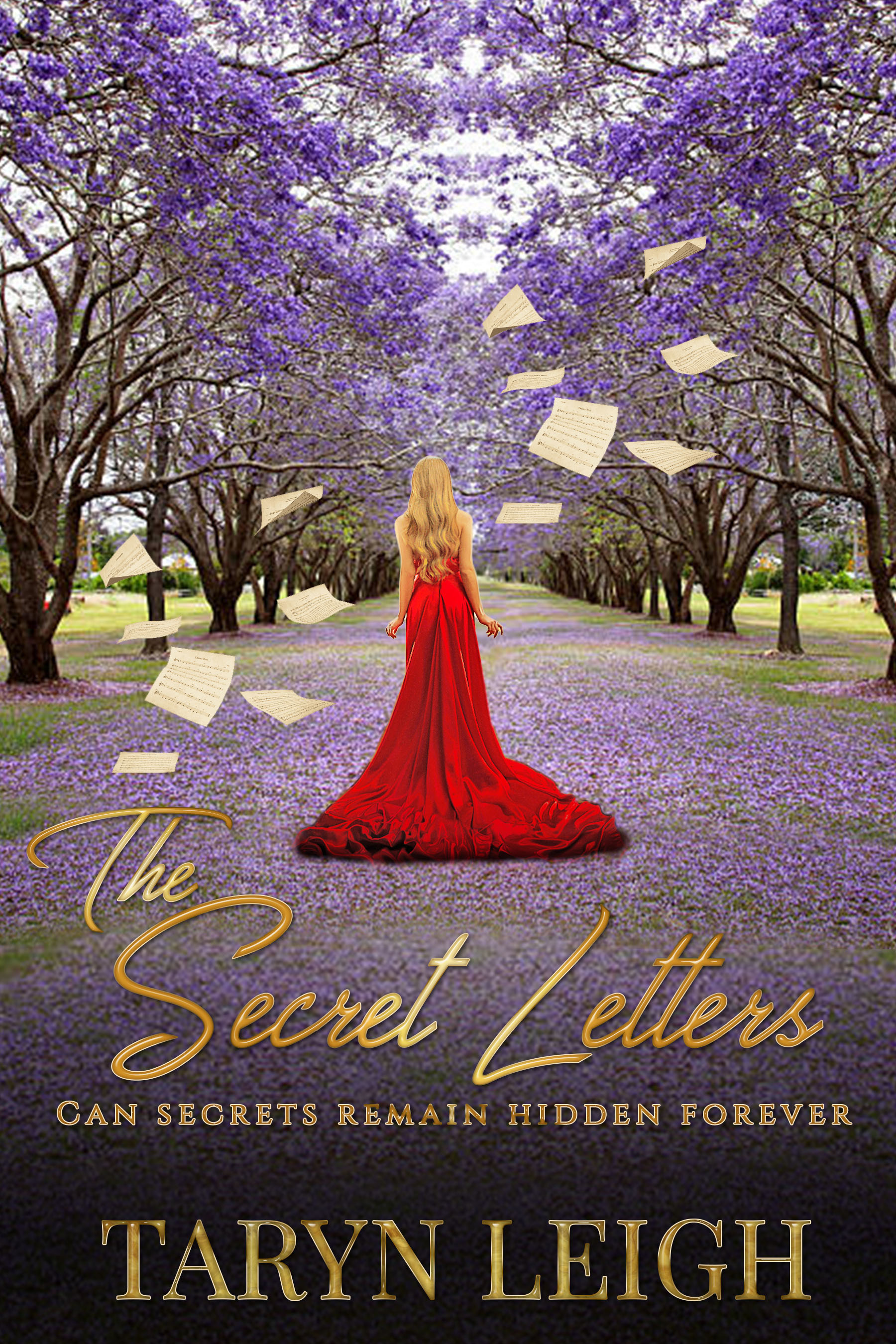
My current book is called The Secret Letters and launched on 09 August in Paperback and Kindle.

What you are promoting now. 

My latest novel, The Secret Letters, which deal’s with real topics of gender based violence, and the mental battle that comes with that.

It’s also a story of love and hope, and how to overcome your worst nightmares, especially in the arms of someone who loves you.

A bit about your process of writing. 

I look out for stories that peak my interest, and then I let them mull over in my mind for a while, as I start to imagine the lives of the characters, as if they are real people. Only once I feel that they feel real to me do I start to put pen to paper and plan things more formally.

Do you plan or just write?

I have a very broad plan. Mostly the main characters and main events. I normally know how it should start, when the big reveal should be, and how it should end.

The rest, I just write and see how the characters develop over time, who they meet, and what additional relationships are formed.

What about word count?

I am conscious of it, but more towards the end of the book, because if I worry about it the whole time, I won’t get the story out.

I aim for 80,000 words or more, that can then be edited down during the editing process.

What do you find hard about writing?

Finding time to be alone, the rest, I absolutely look forward to.

The other part is editing and writing a blurb. It seems so hard to condense over 400 pages into a few lines.

What do you love about writing? 

Meeting my characters. Might sound strange, but they feel like real people to me. They make me laugh and cry as I write their stories. They take me on adventures, I just love it.

Advice for other writers

Find your own voice and be authentic. Don’t try to write for the mainstream. You need to believe in what you are writing and the story will just flow.

Also dont give up, even when you feel stuck in the book, just keep going, it will all come together eventually.


SISTER SCRIBES: CASS GRAFTON ON JANE CABLE’S ANOTHER YOU

Today, I’m delighted to be talking to author, Jane Cable, about one of her novels, Another You, a moving saga of modern-day family life. Despite touching on the horrors of combat, past and present, it’s a heart-warming tale of one woman’s fight to reclaim her identity and discover what really matters to her.

Marie is the well-respected chef of The Smugglers pub, near Studland Bay, but despite her success in the kitchen, she feels less confident in her handling of relationships, both with her (almost) ex-husband, Stephen, and her much-loved son, Jude.

A chance meeting with an American soldier, just as the Bay is preparing to celebrate the 60th anniversary of the D-Day landings, seems the perfect escape from worrying about everything—if only she could get rid of her debilitating migraines and the sense of the past coalescing with the present.

Another You was a brilliant read, and Jane is a proficient storyteller. Her characters are entirely relatable, their faults as much at play as their strengths. Although touching upon the lingering effects of PTSD and the invisible scars left by all wars, Jane manages to blend in romance, mystery, family relationships and an unforeseen twist towards the end.
The book stayed with me long after I’d finished, and I was keen to ask Jane some questions about it.

I was swept away by your beautiful descriptions of the Studland Bay area of Dorset. Was it the setting that inspired you initially or had you come across the tragic story that took place there during the war first?

Studland was the initial inspiration for Another You. I first visited with a friend in 2009 and fell in love with the enclosed bay with its calm blue waters and high white cliffs. It has a magic all of its own for me – arriving on the chain ferry from Sandbanks (Dorset’s millionaire’s row) you feel as though you’ve fallen down a rabbit hole and landed in another world. The Second World War story only came in at the second major redraft of the book, but when I read about it during my research into the area it spoke to me too loudly to ignore.

The connection between the past and the present is something you do so skilfully in your novels. What is it as a writer that attracts you to blending time periods?

I have always had an interest in consciousness beyond matter and the ways present and past could intermingle; either through the spirit world, inside people’s heads, or by any other mechanism it’s currently beyond us to understand. If that sounds seriously strange it springs from my firm belief that because we can’t possibly know everything we shouldn’t rule anything out. Just think how science continues to advance. As I writer I love the ambiguity of it all and try to let my readers make up their own minds about how it could happen.

On a lighter note, how are your cheffing skills? Are you as good a cook as Marie, because if so, please can I come to dinner?

I’m sorry, but I am no more than an adequate cook – not even the best chef in my own household, to be honest. But I loved researching Marie’s recipes for Another You. And you are more than welcome to risk dinner with me at any time. I’ll get the rosé in…


I’ll bring the glasses! Thank you, Jane, both for answering my questions and writing such an absorbing, well researched and beautifully told story about self-discovery, emerging from darkness into light and finding love where you least expect it.


My Writing Process Charles Freeman

charles freemanWhat you have written, past and present.

I am a historian with a keen interest in world history. For many years I taught history courses with the International Baccalaureate. My first book came out in the late 1970s when I was writing for schools on such issues as terrorism and human rights.
In 1990 I got a big writing contract to work on a world history project. They ran out of money after three years but I rewrote the first three volumes as one, Egypt, Greece and Rome, Civilizations of the Ancient Mediterranean and it was taken by Oxford University Press. I have a longstanding interest in ancient history from my childhood and I loved working on this. It has sold well in the US and opened the doors to a lot of new contracts. The sort of lucky break all writers need.

What you are promoting now.

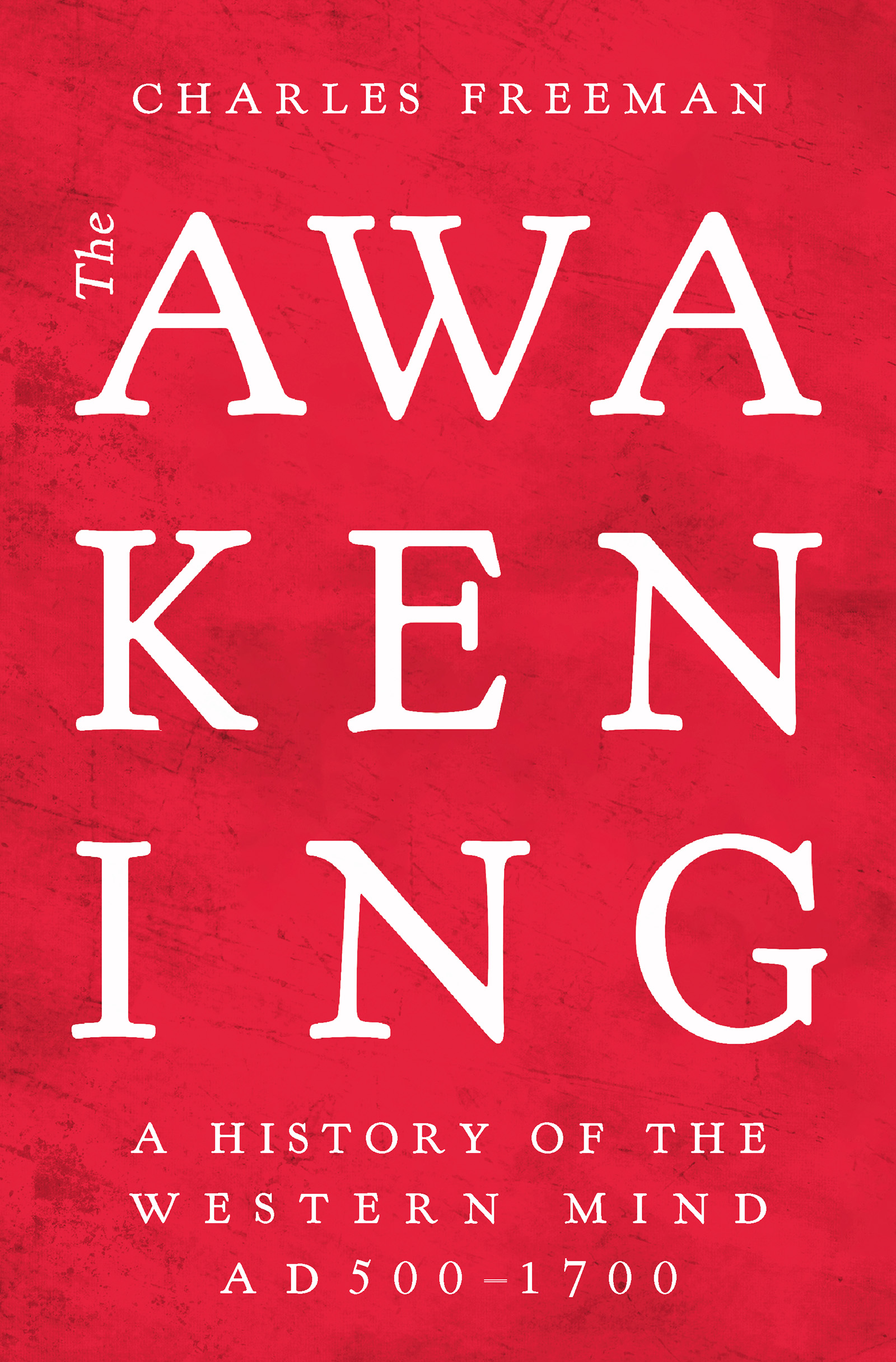
My new book, out on August 6th, is The Awakening, A History of the Western Mind AD 500—AD 1700, published by Head of Zeus. It is an ambitious book but it brings together of a lot of reading and travelling I have done over the past twenty years. So it deals with the survival of Greek and Roman culture into the Middle Ages, the ways in which Christianity developed over the centuries and the emergence of philosophy and science. It took four years to write.
Head of Zeus have illustrated it beautifully and so it is pricey at £40! I am encouraging my friends who can afford to buy the hardback to go to their local bookshop to help get them on their feet again.

A bit about your process of writing.

I am driven by interest in what I am writing. I pick subjects that I would enjoy learning more about and go from there. The trouble is that I am easily waylaid by exploring things that I cannot possibly fit into a book! (My middle name is serendipity –browsing around haphazardly to see what interests me.) I do not use time very efficiently but often I find what I need in odd places in books or on the tours I run in the Mediterranean.
On an actual text I rewrite continuously. A chapter might be rewritten twenty times, often with small changes but sometimes with a complete reordering of the material.
A good tip is to read aloud what you have written. You can then spot if the rhythm of a sentence is wrong and if you need to break up a sentence or insert or take away commas!
Zadie Smith once said that once you had finished a book you should lock it in a drawer for a year. I would not go so far but it is extraordinary what problems you can find if you reread what you have written three months later! Never try to rush a book. Let it mature. Once it is out you can’t change it and if it is not as good as it should be you might never get another contract.
It pays to have a set piece opening, something from anywhere in the book that draws the reader in and leaves them wanting to read more.
I look out for the best history writing on whatever topic in the hope that it will influence my own style. I always have a pile of well-reviewed books waiting to be read. However, you must find your own voice and that takes time. The reader likes to feel that there is a real person there even in a history textbook.
I was once described in a school report as a ‘harum-scarum character’ (those were the days when they told you it straight). I know what the teacher meant when I get back a book with a copy-editor’s corrections on it!

Do you plan or just write?

I need to have a clear idea in my head, an end point towards which the book will lead. I map out a book in advance so as to keep a balance between chapters. After I have done this I let myself be flexible.
Usually once you are into a subject you develop completely new ways of looking at it. Once I had to go cap in hand with my agent to a publisher to say that I had decided to write a completely different book from the one I had signed up for. One of my planned chapters needed to be the whole book! We did persuade him and the book, The Closing of the Western Mind, sold well.

What about word count?

My longest book, the third edition of my Egypt, Greece and Rome, is 345,000 words- it was more than we agreed but they did not notice and the printer had to diminish the script to fit it all in. I don’t work by daily word count, one good page is worth twenty rambling ones.

How do you do your structure?

For a historian much of this is set within a chronology so you need to fix a starting date and an end date. Then you have to find links between each chapter so that the reader has a feeling that it hangs together. Sadly you might then have to dump a chapter that does not work.

What do you find hard about writing?

The problem of selling a proposal and making any money from it is one that makes life hard for most writers. I have spent a lot of time on proposals that no one wanted -I even have a complete book that my agent has put through twenty publishers without success.
Personally I would find it difficult to be a full time writer. It can cut you off from people and the real world too much, so I organise study trips to the Mediterranean in the spring and autumn and then write largely over the winter. It helps to have a break from a text. See Zadie Smith’s recommendation above.
It is also important to have some other way of making some cash if you want to be a writer! So I do lectures, tours and act as consultant for the Blue Guides, cultural travel guides. And now at last I have my pension to help keep me going!
On a day to day basis the hardest is to ditch a piece of writing which might have taken some weeks of research but which just does not fit into the narrative.
When I am stuck I go for a long walk. I have a theory that the human brain works at its best when it is travelling horizontally at 2 ¾ miles an hour (even better when it is pulled along by a lively border terrier). It is amazing what gets untangled on a walk.

What do you love about writing?

It’s a peaceful and satisfying way of living and you can fit other things in around it. As a historian I am always finding out new ideas and authors that I would not come across otherwise so I feel that, even in my seventies, my mind is still developing. I often find that the research for a new book leads to all sorts of new interests.
Don’t write for money, write for the pleasure it gives you. Writing is in itself therapeutic. Don’t expect too much. I have seen too many friends assume that once their first book is out everyone will notice and applaud it and the money will come pouring in. Then it gets a couple of nice reviews and that’s it. Within six months it is way down on the Amazon bestsellers list along with thousands of others. It is a jungle out there and it is a long haul to get noticed, let alone make any money. (Only two of my twenty published books have made me more than the basic hourly wage.)
Publicity. I decided, with powerful support from my wife, that it might not be a good idea to pose naked behind a pile of my books as one female historian did- but her subject was a naughty eighteenth century duchess so perhaps it worked for her.
I don’t have a website. A good history book spreads by word of mouth. If you want to know more about me, then ‘Charles Freeman, Yale University Press’ has all the details and links to reviews of two of my books with them.
I worry that many good and committed writers get missed by publishers but there are other books so badly written that one wonders why they ever got published. The same as with artists. Standards of editing have gone down a great deal since I started writing.
Don’t try and copy a genre or theme. By the time you have finished the reading world will have moved on. It’s an original voice that matters, especially in fiction.
Keep at it. It’s about the fifth book that you write that you begin to get the hang of it! I think hopeful writers still underestimate how difficult it is to write well- it is a craft and needs thought and time. No easier than being an artist.
I have never done a creative writing course and I am sure they will help but there is no substitute for reading widely (the thriller writer Lee Child says that the only way to learn how to write is to read for forty years), experiencing the world and just getting down to actually doing it!
Support your local bookshop if you can. At the least they might give you a launch and put your book in the window!

Further details about Charles Freeman can be found at Charles Freeman.
Yale University Press.

The Awakening will be published by Head of Zeus on 6 August