BEST ENDEAVOURS BEST EFFECTS: Jane Cable On What Happens When That Digital Publishing Deal Happens

Jane Cable, publishing, writingBEST ENDEAVOURS
Jane Cable’s blog about what happens once that digital publishing deal is in the bag continues.
BEST EFFECTS
There are moments when the penny drops and you think ‘so that’s how it’s done’. And last week, in a palatial room in Reading Town Hall, the smallest coin of the realm came tumbling down in my direction.
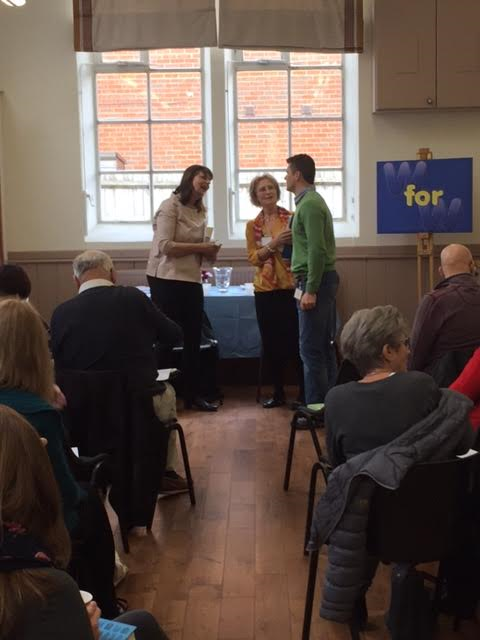
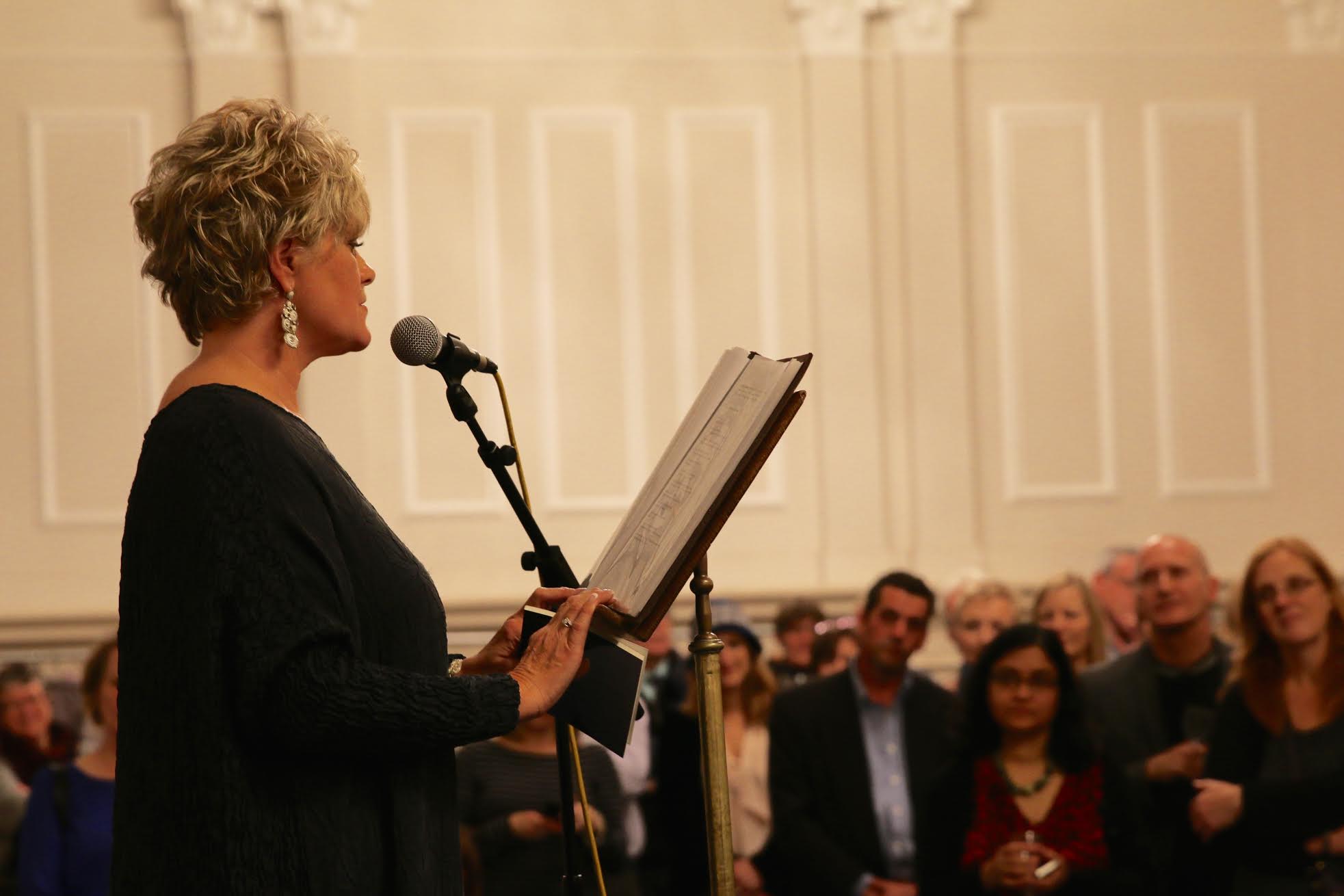
The occasion was the launch of Claire Dyer’s latest collection of poetry, Interference Effects. I have known Claire for several years, firstly as a fellow author (although more senior by several ranks) and more recently as a friend. She is also an award winning poet – and now I know that she is absolutely expert at holding launch events.
I find the idea of a book launch of my own both terrifying and strangely alluring. Not because I’m scared to stand up and read – no, I can manage that (thanks to my mother’s insistence on extra-curricular speech & drama lessons at junior school); more because my grass hopper mind can never decide exactly what to do. And even if I could decide, then I’d have to organise it.
First problem: where would I hold it? I live near Chichester, so that makes a certain amount of sense, but none of my books are set there. The Seahorse Summer is based in Studland in Dorset so there’s a logic to holding an event there – but I don’t know anybody, so would anyone come? I’d like to raise some money for Words for the Wounded, so perhaps London. At which point I run screaming for the hills.
Claire held her launch in her home town; it’s really the only sensible thing to do and the room was packed with her friends, fellow writers, former colleagues and other supporters. And I mean packed. When my neighbour Ali (who introduced me to Claire in the first place) and I arrived – late – having  battled and lost with Reading’s one way system and early closing multi storey car parks, we could barely edge into the room.
best-endeavours-best-effects-jane-cable-on-what-happens-when-that-digital-publishing-deal-happens
And what a room; easy access (signposted) from the street and inside muted decoration and elegant windows soaring to the sky. A huge platform on which Claire stood to read her wonderful poems (complete with fully functioning sound system); a generously proportioned sales table manned by her publishers, Two Rivers Press; a grand piano in one corner and wall to wall coat racks set at some little distance from the action.
Every detail had been considered. Entertainment while the queue to have books signed snaked across the carpet comprised a talented gentleman cutting silhouettes and a lady pianist working her way through classical preludes. Waiters kept appearing with trays of drinks and canapés – including gluten free options – and the conversation flowed with the wine.
In the centre of it all – the poet herself. Hair neatly coiffed, make up perfect, classic black dress and sparkling rock ‘n’ roll shoes. Having a whale of a time – in her elegant, understated way. By the time Ali and I left I felt uplifted by Claire’s poems and in awe of the whole event. Not only that but a huge lesson was beginning to dawn on me: if you can’t do it as well as this, don’t do it at all. Thank goodness The Seahorse Summer is an ebook…
Claire Dyer’s Interference Effects is published by Two Rivers Press and available through their website and on Amazon. To find out more about Claire and her work please visit www.clairedyer.com.
 
 
Jane Cable is the author of two independently published romantic suspense novels, The Cheesemaker’s House and The Faerie Tree, and a sporadic contributor to Frost. The Seahorse Summer tells the tale of how two American soldiers born sixty years apart help forty-something Marie Johnson to rebuild her shattered confidence and find new love. Discover more at www.janecable.com.
BEST ENDEAVOURS: Best Of Days: Jane Cable’s Digital Publishing Journey

Jane Cable, publishing, writingBEST ENDEAVOURS

Jane Cable’s blog about what happens once that digital publishing deal is in the bag continues.

BEST OF DAYS

That’s it – the manuscript has been emailed to Endeavour and acknowledged. In four to six weeks I’ll know how much more work I have to do.

So how do I feel? Exhausted – and suddenly very uncertain about my book. Of course the logical part of my mind tells me to get a grip; all I’ve done is a little tweaking and tidying up – they’ve read The Seahorse Summer, for goodness sake – and they’ve bought the rights. So of course it’s going to be fine. The tired, emotional part of my brain, however, is so mashed up I got motion sickness on the elevator in Sainsburys. No kidding.

But last night in my favourite pub, The Victory Inn at Towan Cross in Cornwall, an important aspect of my book was validated when conversation around the bar fell to a former soldier who was going badly off the rails. In so many ways they could have been talking about one of the two GIs in my book, Paxton.

Now when you tackle a subject like combat stress it’s important to get it right. I was lucky enough to be introduced to a former para turned fitness instructor who was prepared to tell me what he’d seen and heard from the soldiers under his care in Afghanistan after they came home from setting up Camp Bastion. The sense of isolation when separated from their unit on leave. The struggle returning to normal family life and relationships after all they’d experienced. How combat can scar a man in ways unseen. How fireworks are never the same again.

publishing, writing

Readers of Frost will be no strangers to Words for The Wounded, the charity set up by author and contributing editor Margaret Graham. The charity supports soldiers suffering from combat stress and I very much hope that I can do something with The Seahorse Summer that can help them in this work.

In the meantime, with the editing finished, what now? Feet up for a while? Not a chance… there’s a huge ‘to do’ list of tasks which have been swept to one side and too long ignored; a vast amount of marketing to be done – both in advance of The Seahorse Summer and for The Cheesemaker’s House and The Faerie Tree which have been sliding down the Kindle charts while I’ve been busy editing; and, of course, picking up the threads of my current manuscript again.

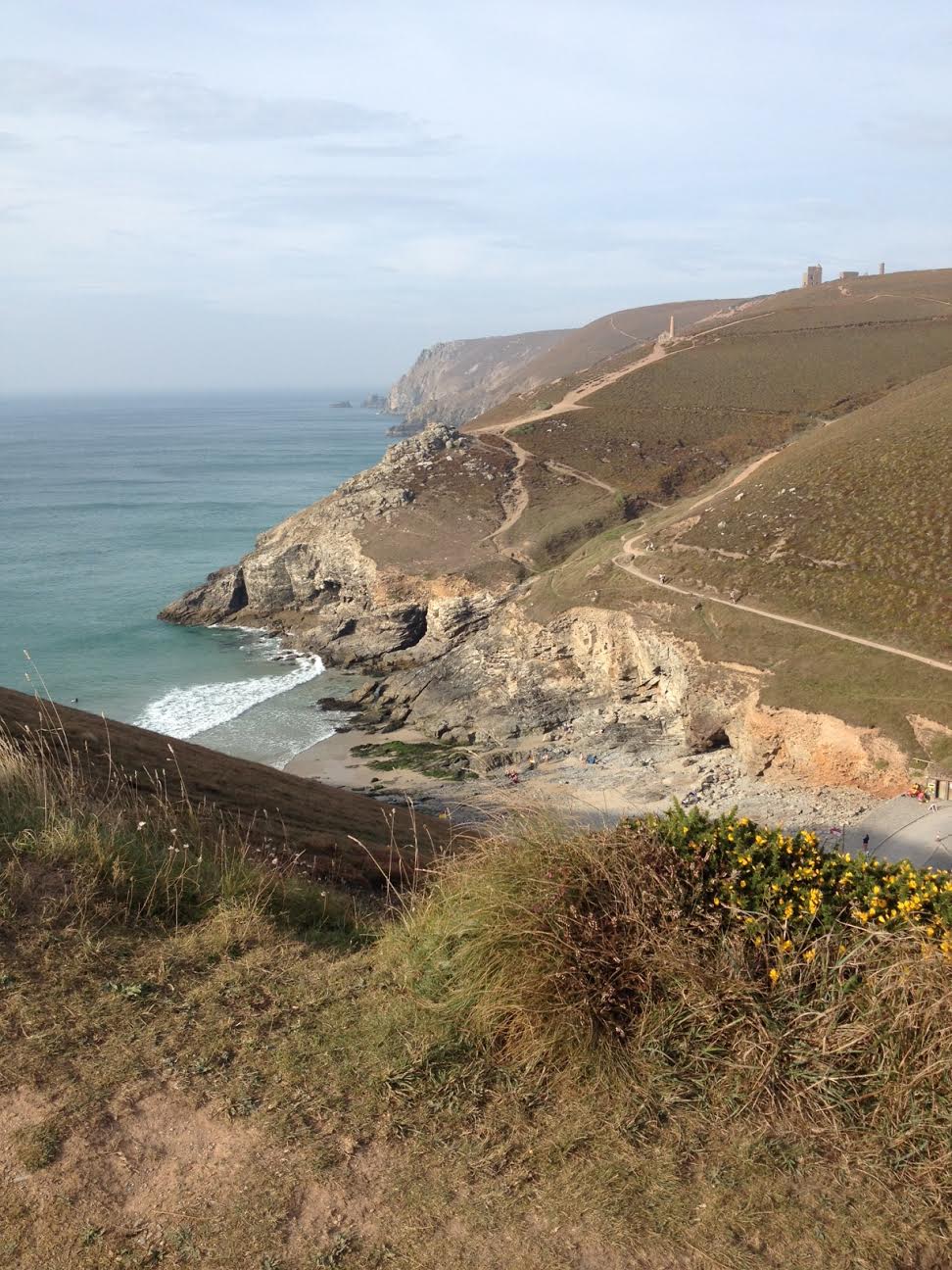
But as for today? I’m on the north Cornish coast and the sun is shining. Quite honestly, I think I deserve a little break.


Jane Cable is the author of two independently published romantic suspense novels, The Cheesemaker’s House and The Faerie Tree, and a sporadic contributor to Frost. The Seahorse Summer tells the tale of how two American soldiers born sixty years apart help forty-something Marie Johnson to rebuild her shattered confidence and find new love. Discover more at www.janecable.com.


Best Endeavours Technical Best: Jane Cable On What Happens After You Sign That Digital Publishing Contract

Jane Cable, publishing, writingBEST ENDEAVOURS

Jane Cable’s blog about what happens once that digital publishing deal is in the bag continues.

TECHNICAL BEST

I feel as though I know every word of The Seahorse Summer off by heart. And that can’t be a good thing. My real battle with editing over a short period of time is coming to the manuscript fresh and able to concentrate on what’s actually on the page, not what I think is there.

It’s just as well I’m on the last lap now, the technical points which are often overlooked. None of them rocket science but mistakes which are all too easy to make and not so simple to spot: a ‘by’ for a ‘my’; a missing indefinite article; and the multiple perils (for me at least) of punctuating dialogue. Yes, I could leave that to the proof reader but I’d like to submit a manuscript which is as perfect as possible.

I have another task for this week too. Quite some months ago I was asked to judge the Autumn Writing competition for one of the better writing groups. The subject matter – A Ghost Story – poetry or prose – and now the entries are sitting in my inbox. To be honest they will be a welcome distraction.

Best Endeavours Technical Best: Jane Cable On What Happens After You Sign That Digital Publishing Contract writing, amwriting, publishing

Most helpfully the group’s website gives a critique guide which can double as a framework when editing your own manuscript and for anyone embarking on the process I thought it would be useful to summarise:

Plot
Is the plot believable? Is it too fast or too slow? Too simple or too complex?

Characters
Too many characters or too few? Are they real people, or flat cutouts? Is it easy to confuse one with another?

Setting
Too many locations or too few? Too much description or too little?

Dialogue
Too much or too little? Do the characters have different voices? Are their words believable?

Viewpoint
Do we stay in one viewpoint, or change? Does the chosen viewpoint work?

Ending
Is the ending too sudden or too slow? Does it follow logically from the story? Does it leave the reader satisfied?

Technical Points
Are there errors in grammar, spelling, layout or punctuation? Are there factual mistakes?

Having some sort of structure helps you to step back from your own work and see it more as others do. Not an easy task, by any means, but an essential part of the writing process. If you don’t belong to a writers’ group you may well have completed your manuscript in glorious isolation. If you aren’t against a deadline, put it down for a few weeks, read something else, get out into the real world for a while so you come back to it fresh.

At the very least, pick up a few ghost stories and settle down with a cup of tea to enjoy them.

Jane Cable is the author of two independently published romantic suspense novels, The Cheesemaker’s House and The Faerie Tree, and a sporadic contributor to Frost. The Seahorse Summer tells the tale of how two American soldiers born sixty years apart help forty-something Marie Johnson to rebuild her shattered confidence and find new love. Discover more at www.janecable.com.


BEST ENDEAVOURS: what happens once that digital publishing deal is in the bag

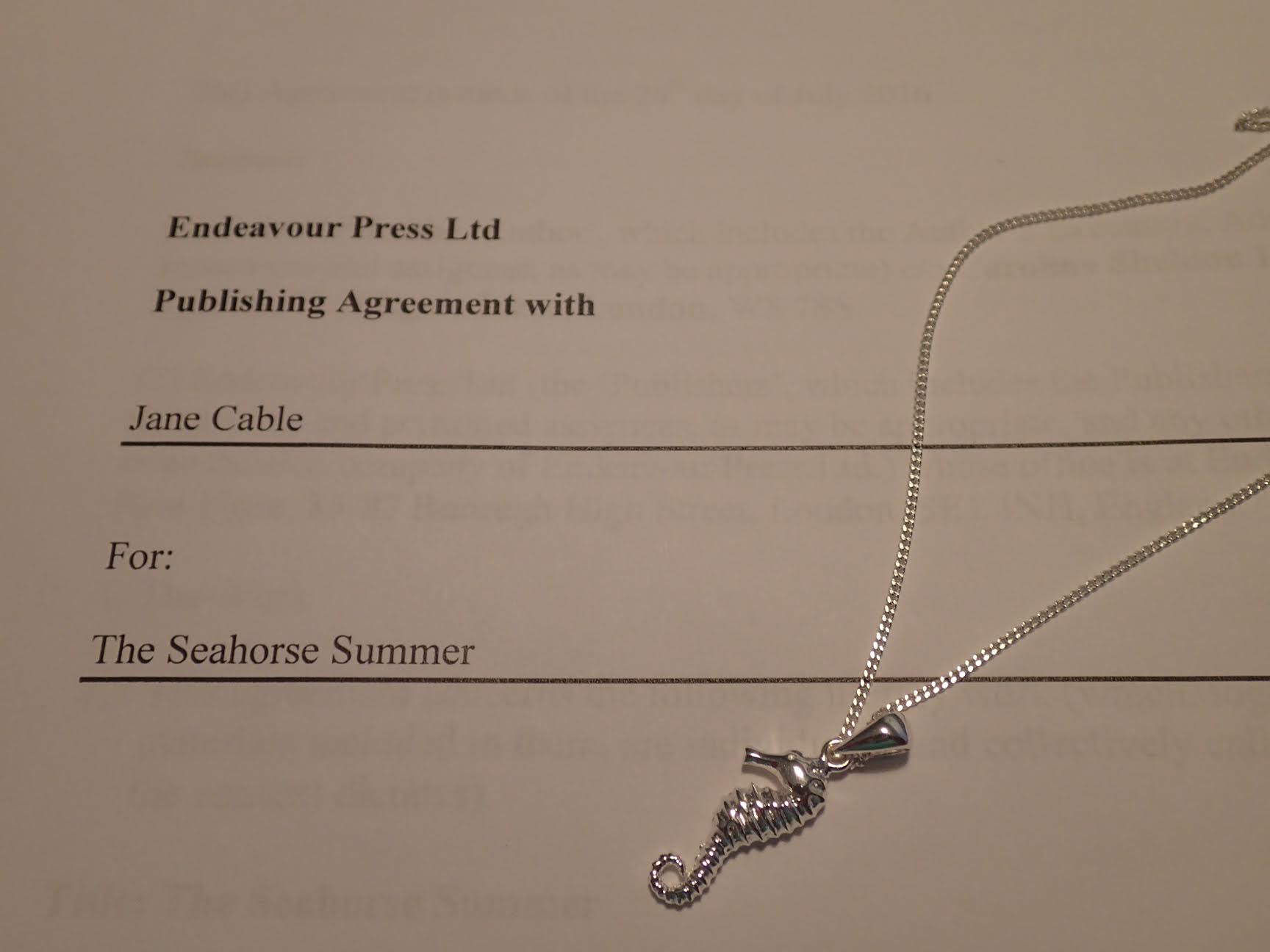
janecablepublishingagreementThe first in a series of blogs about what happens once that digital publishing deal is in the bag!

BEST FRIENDS

If you write, it’s a moment you dream of – the moment you learn that a publisher wants to buy your book. There’ll be champagne, fireworks, violins playing sweet music… Actually – when it happened to me – I didn’t believe it.

I read the email my agent, Felicity Trew, sent about three times and then she called me. I don’t remember much about the conversation to be honest. Then I went downstairs, told my husband, and drove into town to do some last minute pre-holiday chores.

It was only as I walked from the car park that the news began to hit home. Just fifteen short months earlier I would have been straight on the phone to my mother, always the biggest supporter of my work, but who could I share the excitement with now she’s gone? Who would understand? Another writer, that’s who; someone who’d been on the same journey – someone who was a good friend I could rely on to keep quiet. Even though she actually screamed when I told her: “Jane – oh my god – that’s amaaaaaaazing!”

janecablepublishingdealblog

Bookish bestie and blogger Becky Edwards (walkingnormally.blogspot.co.uk) is the person who’s kept me sane during the two months it took for the contract to be finalised and signed. You need someone to do that. I kept thinking it was all some terrible joke and that Endeavour would change their mind. Every delay… even when the final contract got lost in the post… was agony. But it’s over now: the contract is signed and I can go public.

Part of going public involves writing this blog. Endeavour is one of the new breed of UK digital publishers and must be the biggest in the game, bringing out 25 new titles each week. This deal isn’t going to be like working with one of the ‘traditional’ houses – there will be no waiting a year or more for a book to appear – things are going to happen fast and furiously from here on in.

Digital is a route that many authors seeking publication will be looking to take and so this blog will not only be of interest to the reading public but also to other writers. The intention is to share the reality of the hard graft, sweat, and maybe even tears along the way as I embark on the latest phase of my writing career. I want it to be useful; I want people to comment and ask questions. I also want to give Becky a break!

Jane Cable is the author of two independently published romantic suspense novels, The Cheesemaker’s House and The Faerie Tree, and a sporadic contributor to Frost. Find out more at www.janecable.com.


Short Story Author embarks on “World’s Most Insane” Writing Marathon


In March author Tim Austin began a “Brilliantly Insane” project: to write a brand new 100 word short story every single day for 365 days.  It has since been viewed thousands of times by readers from across the globe – from Sri Lanka to Canada, India and Australia.

With just under 300 more days to go, we talk to Tim about the project, celebrity contributors and what writing fiction means to him.

What is One Word, One Story?

It’s a project where members of the public suggest single words and I use those words as titles for flash fiction short stories.  I read each word, an image forms in my mind and I take that image as inspiration for what I write.  I never, ever know what’s going to come next!  And I’m writing a new story every day for a year over at onewordonestory.org.

It sounds crazy.  What made you do it?

A friend of mine suggested the notion of word association as a way of exploring my imagination and practicing my writing.  I started doing that as a hobby.  At first it was single paragraphs but I enjoyed it so much that I turned it into entire short stories.  Taking it public and doing it every day for a year seemed like a fun next step.

You have a strange idea of fun,….

Haha!  I enjoy taking things too far and I like a challenge.  I think this counts for both.

Why just a hundred words?

I wanted to create something that people could read on the go.  People have little time if they’re on a lunch break or travelling to work and I wanted to write something bite-sized that they could enjoy.  Maybe read two or three in a go.  The other reason was the challenge of condensing a whole narrative into so few words – it really makes every word count.  It’s very pure and I like that very much.

Where did the idea of approaching other authors and celebrities come in?

Yeech, I hate the word “celebrities”!  It sounds so contrived and pat.  I want everyone to be able to suggest words and titles but I thought it’d be fun to approach a few writers and actors I admire.  I’ve been honoured that many of them have been kind enough to donate words.

Such as?

Danny John-Jules (“Cat” in the Sci-Fi classic “Red Dwarf”) suggested “SmegForBrains”.  I’ve also had suggestions from screen writers and authors including Mike Wells, Jonathan Maberry, Eddie Robson (Doctor Who) and Robert Shearman (also Doctor Who – writer of the acclaimed Season One story “Dalek”).  I’m keeping quiet about future contributors.  But I’m always asking.  And I’m always looking for new words – anyone can suggest their own.  Hint.

Did you expect it to become this popular?

To be honest, I thought it’d get a couple of hits a day.  I started the site as a hobby, after all.  But within two weeks I was getting hundreds of visitors a day and thousands of hits a month.  It’s been wonderful to connect with people and hear that they’ve enjoyed each story.  That’s been the greatest pleasure.

You can read, contribute to and support Tim’s One Word, One Story project over at onewordonestory.org now.


Torbay Poetry Festival 2016 Competition. £700 1st Prize

As Frost Magazine readers know, we are always supportive of writing events, and here’s one for all the poets out there.


Torbay Poetry Festival 2016 Poetry Competition is open for entries now. Poems submitted must be original, unpublished and not accepted for publication. They should be written in English and not exceed 50 lines. To give you an idea of the standard, please take a look at John Greening’s report on the Torbay Poetry Festival Competition Winners 2015 on the Torbay Poets Website website. All entries must be received by 6.00pm on 28th August 2016. Very best of luck!


Judging


Sue Boyle won The Poetry Business pamphlet competition in 2010 with Too Late for the Love Hotel and has a poem in The Forward Poems of the Decade, 2011. Her book Report from the Judenplatz was performed in full at the Torbay Festival of Poetry in 2014. Her first full collection, Safe Passage from Oversteps, came out last year.


Sue runs regular Writing Days for the Bath Poetry Cafe and organised the Cafe’s Short Poem Competition in 2015. Her wordpress site Sue Boyle features the ongoing story of last year’s Cafe Competition, with reviews of many of the successful poems and helpful insights from the twelve experienced Cafe judges for competition poets who aspire to win.


Prizes

£700 FIRST PRIZE, plus free weekend at the poetry festival, (27th – 31st Oct 2016), including accommodation and Festival Pass.

£400 second prize plus a free Festival Pass.

£200 third prize plus ticket for the Festival supper for two.

ENTRANCE FEE:  £5 per poem or 5 poems for £20 for entries received by post. Online entries are £5 each because of additional admin costs in time and printing.

Closing date:  August 28th 2016

Winners to be announced at the PRIZE-WINNERS’ PARTY on Saturday 29th October, at the Torbay Poetry Festival, Livermead Cliff Hotel,Torquay, Devon where short-listed poets will be invited to read their poems.


For further information:  http://www.torbaypoetryfestival.co.uk/competition/


Interview With Bestselling Author Margaret Graham

housedivided

What made you get into writing?

Having a 4th child. She was lovely but seldom slept and mithered a great deal. I needed to ‘get away’ even if only for half an hour. So I started writing a book about my mother’s rather interesting life growing up in the North East just after the 1st World War. Halfway down the first page I realised I didn’t really know my mum in that way, only anecdotes. So it became fiction, but based on her life. It’s called After the Storm.

margaretgraham

Did You find becoming a published writer easy?

Not at all. Having embarked on the novel I joined a writing class. I do wish more would these days, or at least learn the basics of structure, and how to edit one’s work. The class was not only crucial but also supportive, because I was working alongside like minded people, and it helped me enjoy the process. Mark you, my writing class had an excellent tutor, and you need to check this out. There are a lot of charlatans out there, selling their services when they know diddly-squat – and charge a lot. If you have the time, try ARVON and other residential courses. Also the weekend Winchester Writing Festival. That’s fantastic.

Then, of course, you reach the stage where you have a manuscript, finished. What next? How to get that publishing contract?

Try and find an agent. But how do you get the interest of an agent. I entered a competition and was one of the Best Entries. This helped when circulating the manuscript. I was finally taken by an agent who knew that Catherine Cookson, who wrote about the North East had just left Heinemann. Mine was a novel about the North East, and the publishers were immediately interested. Mark you, I then had to double it in length, put in a secondary character and sub plot, and do it all in 6 months. I was on my way.

So it is very much about what the publisher needs at a particular time. However, as you can see, the author does need to be flexible, and listen to the experts, and do as they want. Basically we are providing a product, which they have to need in the first instance. Then it has to be tweaked to be the best product you can create. They are invariably right. As a writer, you need patience. Learning to write well took me 4 years. Over those years I was serving an apprenticeship really, lhoning my skills, so that when the time came, I could do as they advised.

What else would you have liked to do?

Be a star. I feel the world has been deprived of a great talent!

What is your writing process?

Find that germ of an idea. Then think, think and think again, to see if it it will run as a novel. I work out the normal world, point of change, the tension, motivation, and totally getting to be the main and secondary characters. Alongside this, because I am invariably writing out of my time and place, I need to research, make notes, become so familiar with the context so that I can swim amongst the period, or situation, without overloading it with show-off details. Therefore I do a lot of reading, and that old chestnut – thinking again. Then, when I have a thorough plan, and by this I mean a chapter by chapter plan I get my head down and write hard for about 8 weeks. Because I’ve been doing it so long I have the experience to get it more or less right, and to create a sound structure. There is only one structure, you know. And it must be followed. It is the author’s ‘voice’ that makes a novel ‘different’. That’s the first draft, then I go through and alter, tweak, edit. So the second I usually sent into my publisher. Writers need to designate writing time. It’s a job, even if you already have a day job, so discipline yourself to create your writing time. You will find you do much of your thinking whilst traveling, driving, working, and at the end of the day you’re a bit further on.

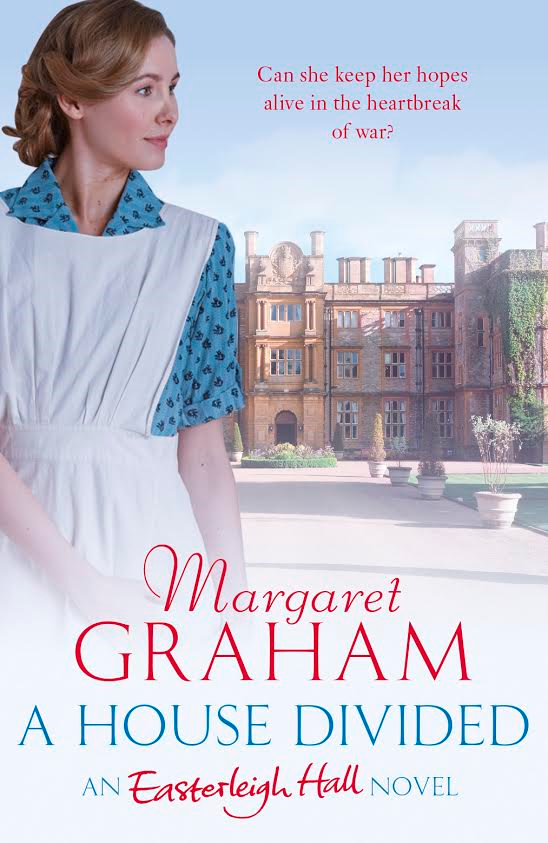
A House Divided is the third Easterleigh Hall novel. How hard is it doing a series?

Hard in a way. You have to remember all the characters inside and out. What are their ages? Appearance, little ways, and then when you start the novel you have to try and make the novel stand alone, though it must also bring previous readers of the series up to date. I think that first chapter is the most difficult.

When can we expect another EH novel?

In a year.

Have you become close to the characters? Oh yes, I become all the characters really. You have to or it doesn’t work.

Can you tell us where the series is going next?

I would imagine into the 2nd world war. Perhaps Tim will go into the secret side of the war, but not quite sure about anyone else yet. It will come to me.

Lizy, me and Matt

What do you like to do when you are not writing? I run my charity, Words for the Wounded, which raises money for the wounded through writing events. We have an annual Independent Author Book Award, and we also run workshops and an annual LitFest. We’ve helped a few writers along in this way. Last year’s winner was picked up by an editor, and others have found that the publicity of being placed has helped their sales. I love working with Frost, and reviewing books, and I do like to play truant and just have a good time.

Any tips for aspiring writers.

Work hard, go to writing classes, and literary festivals, listen to authors talking, and listen to a publishers’ or agents’ advice. READ books, learn how to write short stories, because publication in womens’ magazines promotes sales of your books. Most of all, don’t rush. Do several drafts, edit carefully, and enjoy it. Life’s too short not to.


Writing Short Stories for Magazines

Short Story Magazines

The Most Important Thing You Need to Know


There isn’t a secret recipe to success so it’s no use looking for the answer here.  If you want to write short stories and sell them there is one thing you need to do before you even begin to write your story. Market Research. You can’t write a story and send it off willy nilly. You may sell one or two that way, if you are extremely lucky, but for continuous success you need to know your reader.

I’d advise selecting one or two magazines that publish short stories. Those accepting them at the moment are, among others, Woman’s Weekly, Take A Break, Fiction Feast, The People’s Friend and Yours. You can find a full list of markets at www.womagwriter.blogspot.co.uk

Read through all of the stories in your chosen magazine and find something that resonates with you, those that might be similar to stories you would choose to write. Most importantly, read them with respect. Don’t sneer and pass judgement. It’s a hard market to crack and if you disrespect your reader your writing will come across as patronising. Guess what? No sale.

Get a pen and paper and make notes. What are the characters names, what ages? Where do they work?  Where are the stories set? What are they about – family, romance, comedy, thriller? Each market has its subtleties and you need to make yourself familiar with them if you are to have any hope of success.

What is the word count? Each magazine has set limits. It’s no good sending a 700 word story  to Woman’s Weekly when they only take 1,000 or 2,000 words. It will come straight back to you.

Now read the entire magazine, the articles, the readers’ letters, the adverts, the problem pages. You can learn so much about the readership by doing this and then you will be able to build a picture of your ideal reader. Do it as an exercise. Imagine a woman buying that magazine – what does she look like? What job does she have? Where does she live? Before you know it you will have a character; you may even have a story – get writing.

Editors are busy people. Make things easy for them. Present your work as per their guidelines, found on their website. If you are unsure how to set things out pop over to writer Sue Moorcroft’s website because she has the best example I’ve seen on how to present a professional manuscript. It will save you so much time and effort  www.suemoorcroft.wordpress.com/manuscript-presentation


I’ll be talking at Words for the Wounded Literary Festival on 16th April and will be happy to chat about writing short stories for the commercial market throughout the day.


Tracy Baines’ stories have appeared in Woman’s Weekly, Best, Take a Break, The People’s Friend, Candis, My Weekly, Yours in the UK – and magazines in Scandinavia, Australia and South Africa. She has completed a book on Eating Disorders and is now working on a novel.