WRITING CAREER CROSSROADS BY SUE MOORCROFT: PART 2

Setting my goal

In my last article, I explained my self-coaching session that saw me dropping work that was problematic and/or didn’t earn me much money. With more time for my writing yet not losing much financially, my mental health improved! It was time to look at the other side of the coin. I now knew what I didn’t want – so what was it that I did want?

Credit: Silvia Rosado Photography

It was a question I found easy to answer as it hadn’t changed since the early nineties when I began to try and get published.

I wanted to earn my living from writing novels.

Not from writing novels and short stories, serials, courses, columns and writing how-to and judging competitions, appraising manuscripts and leading workshops. Just writing novels. Wouldn’t that be bliss?

How could I achieve this Utopia? I had a good, independent publisher, but their size limited their reach. I needed a publisher who would get my books into supermarkets.

Step one was to get a great agent, one who would love my books and be ambitious for me. I’d had an agent in the past, but we’d never completely gelled, and we’d eventually parted amicably, so for my last six books I’d dealt directly with my publisher.

Aiming high, I emailed Carole Blake of Blake Friedmann. I knew her slightly from writing conferences and social media – yes, friendly relationships can be forged on Twitter. The email began, ‘Dear Carole, I know you’re not taking anybody on but I’m going to ask you anyway.’ The short version of what happened next was that I was right – she wasn’t taking anybody on. But, happily for me, she showed my work to the wonderful Juliet Pickering at the same agency and Juliet wanted to talk to me as she was looking for authors writing commercial fiction. Would I like to talk to her?

Would I ever!
I met Juliet in London for lunch, and we got on wonderfully. I was transparent about what I wanted. She was equally transparent that that whilst was an agent’s job to help me achieve my ambitions, she couldn’t offer guarantees. She asked about ideas for future books, and I pitched three. She told me which of these she’d feel most confident in presenting to publishers and I had that happy feeling you get when something clicks into place, as it was the one I most wanted to write. It was an idea that had already received a green light from my old publisher, but they’d wanted a novella. I thought the idea had enough meat for a novel.

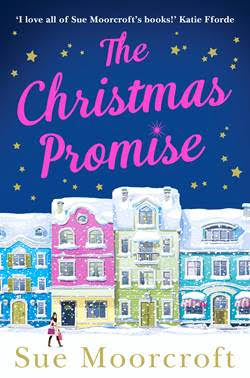
But I was deflated when Juliet didn’t offer to represent me. She asked me to write the book first. This is the book that eventually became The Christmas Promise.

The snag with that was by the time I’d spent a year on the book, my old publisher would be expecting it. It would be . . . awkward. I asked if I could send Juliet the traditional three chapters and outline instead. Would she make a decision on that basis? She agreed. She told me later she’d already made up her mind to offer to represent me but wanted to go through the process in the right way.

Takeaways from the meeting:

  • honesty and transparency on both sides is hugely productive
  • accepting the commercial realities of publishing is a must
  • listening to what’s on offer doesn’t prevent the putting forward of alternatives
  • take disappointment on the chin because, let’s face it, a writer’s life is full of it.
WRITING CAREER CROSSROADS BY SUE MOORCROFT: PART 1

Recognising the crossroads

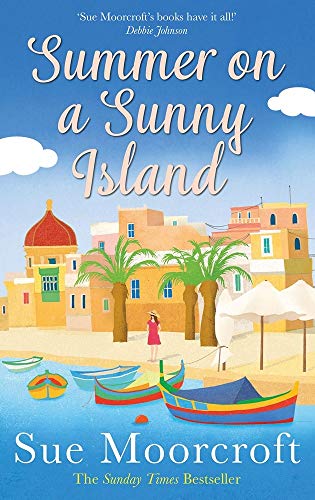
In my book Summer on a Sunny Island, Rosa and Zach stand at crossroads in their lives. In one scene on a sunny roof terrace, they attempt to coach each other over a beer. Is change necessary? If so, what does that look like and how can they effect it?

Credit: Silvia Rosado Photography

A few years ago, I felt at a crossroads. I wasn’t on a Maltese roof terrace overlooking the blue Mediterranean with a handy friend, so I coached myself. It had a profound effect on my writing career.

I’d published nine novels and a raft of short stories, serials, courses and columns; I was a creative writing tutor and writing-competition judge. I had what’s politely referred to as ‘a portfolio career’. Translation: I would take on most paid tasks if they related to writing and some that were unpaid if they might prove useful to my career or meant I was ‘giving back’.

I’d suffered a bereavement and felt unhappy, over-stressed and underpaid. I couldn’t change the bereavement (no matter how much I yearned to), so I assessed everything writing-connected under three headings, subdivided into good or bad.

Things that make me happy Things that make me unhappy Things that are good for me Things that are bad for me Things that earn me money Things that don’t earn me money


Two things were instant candidates for all three bold columns:

  • being a committee member and vice chair of an authors’ organisation
  • writing a column for a Formula 1 website

I was shocked to see volunteering for the authors’ organisation in all the wrong columns. But I had to accept that an organisation that has brought me a lot of joy and helped me professionally, was also sucking up hundreds of hours each year and causing anxiety. I emailed the chair, who’s one of my best friends, and said, ‘I don’t think I can be vice chair anymore.’ To her huge credit, she supported my decision and had me replaced without one word of reproach, though she could have felt immensely let down. After that, it was comparatively easy to email the Formula 1 website and gracefully retire from their list of writers. I think my son encapsulated this situation perfectly when he said, ‘You’d taken two of your greatest pleasures and made them into jobs.’

I felt tonnes lighter. I could read what I chose instead of books that needed appraising for awards. I could watch Formula 1 races without making notes or worrying about the angle the column I had to write.

Spurred by this success, I began to cut other things that appeared in negative columns. They earned me some money but not much:

  • appraising manuscripts
  • tutoring creative writing students
  • judging writing competitions – especially after a writing group ‘forgot’ to pay me a fee that was only ever nominal, even after three polite reminders

What made me unhappy about tutoring was not the students, who were fulfilling to work with, but the constant flow of work that piled up if I were ill or on holiday. The workflow was not within my control and kept me from my own stuff.

Sloughing off these two items gave me significant time for my own writing without losing me much money. A win-win.

Takeaways from the self-coaching:

  • recognise when self-coaching is necessary
  • recognise the results, even when shocking
  • act on them

JANE CABLE ON THE BENEFITS OF A WRITING ESCAPE TO THE SUN

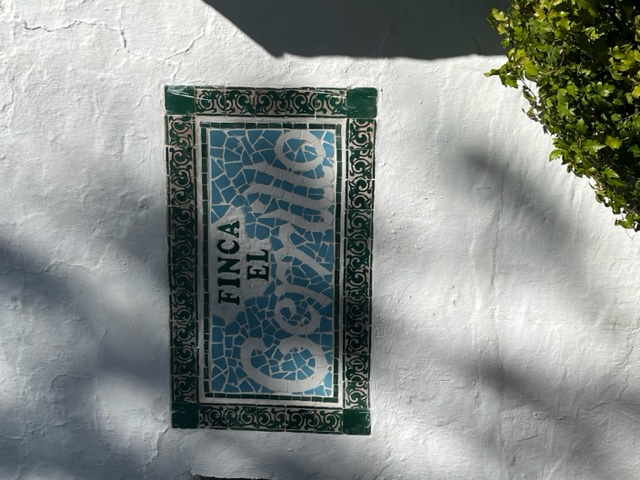
I have just returned from a third fabulous week of writing led by one of my favourite authors, Rosanna Ley, in one of my favourite places, Finca el Cerrillo in the mountains north of Malaga. My first was in February 2020 then, courtesy of Covid there was a gap before I returned in March 2022 and again this year.

So why do I keep going back? And if you are looking for a writing retreat, or writing holiday, as Rosanna calls them, what might help you to decide which one to choose?

The first year I went my objectives were quite broad; I had a contract with a small publisher but was desperate to break into the mainstream, so I wanted to hone my skills, find inspiration for ‘the book with the hook’, and pick Rosanna’s brains about where my writing career might take me.

On every level, the retreat worked for me. Every morning, after a hearty breakfast and an optional walk through the finca’s olive grove, we met in the light and airy classroom for a themed session aimed to both inspire us and improve our skills. There were people at every stage of their career and Rosanna managed the sessions cleverly so we all got something out of it. Topics ranged from beginnings and endings, to writing dialogue, and short stories so there is plenty to get your teeth into, whether you are writing a novel or not.

After that, the day is your own to write, relax, or chat to other participants. One-to-one sessions with Rosanna are offered, including feedback on your writing, which is always detailed and incredibly valuable. Everyone meets in the dining room or on the terrace for lunch, and part of the whole joy of the week is making connections with other writers. In fact, simply having time to be a writer, with no distractions, was a revelation in itself.

Towards the end of the afternoon is a feedback session where we could read a piece of our work for comment by the group. I had never done this before but soon lost my fear as the other participants were so constructive and helpful.

A couple of evenings we had dinner at a local village, but otherwise ate at the finca, where the food is excellent. There is always some sort of entertainment; a quiz night, group singing, dancing, party games… and on the last night the finca tradition of desert island discs, where we have to guess who from the group chose a particular song.

All of this goes to form strong bonds, and after my first retreat, when we were plunged into lockdown so soon afterwards, we kept in touch via Zoom. This year we have a WhatsApp group instead. Time marches on.

Rosanna is very flexible in her approach, and this year arranged things so that those of us who wanted to focus on a particular project could leave the morning sessions early, and as a result my wordcount went through the roof. I was bashing out the first draft of my summer 2024 Eva Glyn novel and when I wasn’t at my laptop took invigorating and mentally stimulating walks around the olive grove between scenes, or when I needed to unknot a thorny problem.

Because of the way the week is structured it is quite genuinely suitable for everyone from absolute novice writers to published authors. And Finca el Cerrillo is a little piece of heaven on earth. At the time of writing Rosanna has a place or two left on this June’s retreat, and is taking expressions of interest for next year. I hope to see you there!

For more information, visit Rosanna’s website: https://rosannaley.com/writing-retreats-events

The 5 Books That Changed Me by Jane Lambert

‘Rebecca’ by Daphne du Maurier: My mum gave me this book when I was about 15.

As a shy, gauche teenager I identified with the second Mrs de Winter. Her story taught me to not always take situations or people at face value, that being shy is not a sign of weakness, not to compare myself to others and to be true to myself.  

‘Bridget Jones’s Diary’ by Helen Fielding: Like Bridget, I used to want to be in a meaningful relationship, but would fall for the wrong guys. I eventually learned that I deserved better, to have self-respect and to stop putting up with bad behaviour – just as Bridget did. I too can be clumsy and say the wrong thing at the wrong time. Bridget taught me to laugh at myself and that I’m okay just as I am. 

‘The Understudy’ by David Nicholls: I was drawn to this book as I have been an understudy many (too many!) times. Though fiction, the authenticity of the narrative made me wonder if the writer was, or had been an actor. I was right, and it is his personal story which inspired me to take my writing more seriously and to aim high. As an actor you’re dependent on someone hiring you. You have no control. As a writer you produce your own work. It’s rewarding to be part of something you have created. I have ‘The Understudy’ to thank for leading me to David Nicholls, who set me on an alternative and more enriching creative path. 

‘The Curious Incident of the Dog in the Night-time’ by Mark Haddon: This book had a huge effect on me. The story is told through the eyes of 15-year-old Christopher, whose inability to tell lies, social awkwardness and logical take on the world give you an insight into being on the autistic spectrum and the effect it has on those around you. I could identify with some of Christopher’s thoughts, such as: “I find people confusing” and “I want my name to mean me.” Christopher’s story gave me an appreciation of how being “different” brings its own special gifts and should be celebrated. I was lucky enough to be involved in the London stage production.  I was lucky enough to be involved in the London stage production.

‘Big Magic’ by Elizabeth Gilbert: “The universe buries strange jewels deep within us all, and then stands back to see if we can find them.” When I was writing my first novel there was an annoying voice whispering in my ear that it was a waste of time. Who did I think I was? JK Rowling? ‘Big Magic’ taught me to believe in myself and not let fear stand in my way. Thanks to this book, I have learned to live alongside fear so I may strive to be better, but not let it control my mind. This has helped me in my acting career too. I still suffer occasionally from ‘Imposter Syndrome’, but dipping into this book gives me a dose of self-belief and puts me back on the right track. 

How I got a Literary Agent.

In January this year one of the most amazing things happened to me: I got a literary agent. Having an agent was always something beyond my wildest dreams, more than that, my agent is the amazing Susan Yearwood. Champagne popping time indeed.

I spent the months in the run up to Christmas researching agents and sending off submissions. I went through The Writers’ & Artists’ Yearbook with precision, choosing ten agents to send my book off to. I researched every agent heavily and Susan called to me. There are a few interviews I found in which Susan and her ethos resonated with me. I knew she was The One.  In fact, before her email asking to schedule a call with her, I had a dream she was my agent and we were being interviewed at a literary festival together.

In the end I sent my first novel off to a lot of agents and publishers. I got a lot of good feedback and a few full manuscript requests. I also got a wonderful rejection from Harper Collins, who read the entire thing and sent me four paragraphs of feedback. They even asked me to send them anything else I wrote. In the end Susan passed on my first novel, but she liked my writing enough to ask if I had anything else I could send her. Thankfully I did. I always write a first draft of a book and then get started on another one while I let the other one sit. Then I go back to it with fresh eyes, alternating my drafts. I did not think the other book was ready and had spent hundreds sending it off to a professional editing agency for feedback. By the time the feedback came back Susan had been my agent for three months! It may have been a waste of money, but I have no complaints.

Susan loved the book and took my on as a client after our phone call. I was a true pinch me moment. For anyone who wants an agent and does not have one yet I would say the following things:

  • Write a good book. Send off the first three chapters, along with a synopsis that really grabs.
  • Collate all of the writing you have done and any awards you have won. Write a paragraph about yourself that sells all you have to offer. Covering letters are important.
  • Get a copy of The Write”s and Artists’ Yearbook and research what agents work in your genre.
  • Start submitting.
  • Keep submitting.
  • Take rejection in your stride.
  • Listen to all feedback.
  • Redo your submission to suit various agents.
  • Start writing your new book.


Good luck!


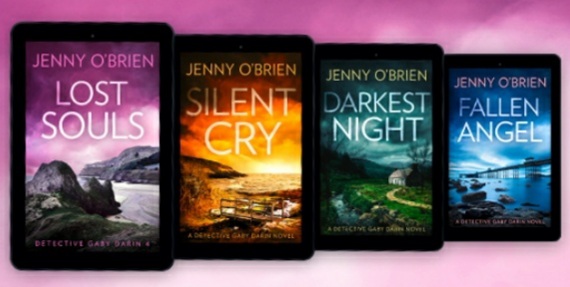
How I Got Published Jenny O’Brien

There are many roads to publication. But as a forty-year-old with three kids of three and under, including twins and a busy job as a nurse, none of them were for me – or so I thought. Then a character popped into my mind. An earworm that wouldn’t go away. A little boy called Dai Monday. It took me a year to find the courage to pick up a pen. With no time to write at home and a busy day job, I took to carrying a notebook around in my scrub top. This notebook got filled during my 15 minute coffee breaks. Within 6 weeks I had a very poor, first draft of my first book.

Jenny O'Brien , author, writer, how I got published ,

Fast forward five years. I was still writing but with no thought of publishing until peer pressure and a bullying incident at school led me to self-publish Boy Brainy. Six more years quickly followed in tandem with a box full of rejection letters. I’m not sure how many rejections—too many to count but not so many as to blunt my determination to succeed.

It took twelve years to find a home for my writing. Twelve years when my writing improved, but also the quality of my query letters. Never underestimate the importance of a well-crafted query letter!

But, in the end, the years didn’t count for much. It was a few quirks of fate that pushed me over the finishing line. A change in genre from children’s books to romance and finally crime fiction. BookBub accepting me for a book promotion the first time I applied. One last push to secure a publisher and, finally, engineering the date of the BookBub promotion to coincide with my query letter arriving at HQ Digital, an imprint of Harper Collins.

I said at the start that there are many roads to publication. While I wouldn’t recommend mine to anyone, there are lessons to be learnt. If you are struggling to find the time to write, change how you view time. Chunk it into 15-minute sessions instead of hours. Those few minutes add up. It might mean writing in transit but that’s easily catered for with a notebook or even a mobile phone. To rephrase a well-known saying. There is always a way, but first you must find the will. My BookBub deal was a fluke, but what followed wasn’t. There’s nothing wrong with nudging luck along with a little gentle manoeuvring.

Good luck!

Jenny O’Brien is an Irish writer of the Detective Gaby Darin series published by HQ Digital.

THE DIARY OF A BOOK, JULY 2021

At the end of June Jane Cable was poised to start writing The Lost Heir. Did it happen? Not a bit of it…

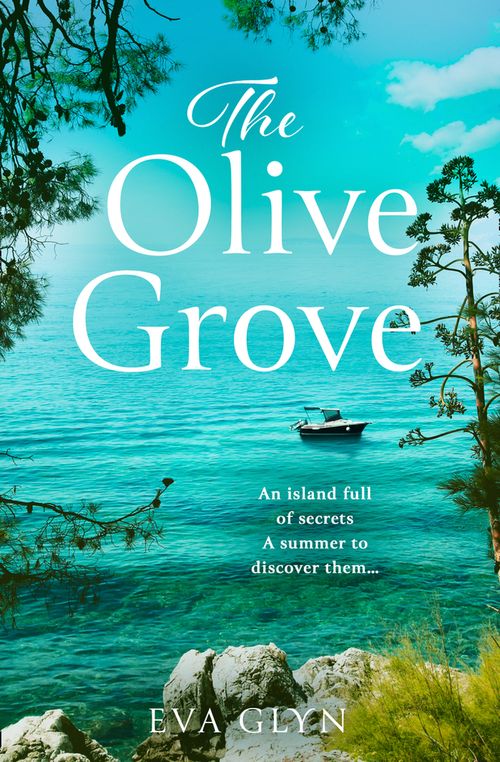
There were several reasons for my lack of progress, most of which I can share. We had a week or so’s holiday planned early in the month, and publication of The Missing Pieces of Us, my first title writing as Eva Glyn, was scheduled for the 21st. What I wasn’t anticipating were the scale of the structural edits for The Olive Grove, Eva’s second book.

Let me explain a little about this process. As an author you submit a final draft manuscript to the publisher, and your editor reviews it with the objective of making it better. My editor at Sapere Books does most of the work for me, so basically my input is to read, negotiate, and perhaps add a few extra tweaks. Eva is signed to a bigger publishing house (0ne More Chapter is a division of Harper Collins) and the system is entirely different.

So I received an editorial letter telling me in some detail what they would like me to do to improve the book. At this point people often ask questions along the lines of ‘don’t you mind?’. Of course I don’t mind – it is absolutely fantastic to have detailed feedback that will make the book a real joy for readers and a story that will stay with them long after they have finished it.

You lose perspective on your own book – or at least I do. Just before the submission deadline it seems common amongst authors to loath your manuscript, but even once you are over that you still need to accept that you probably can’t see the wood for the trees.

The problem was that I needed to juggle the edits not only with a full on holiday – a historical tour of Hadrian’s Wall – but also with our nephew coming to stay. This meant everything else had to be swept to one side, but my husband was magnificent, taking over all the domestic duties (he does most of them anyway as I am so useless!). And I suspect he enjoyed some ‘boy time’ with our nephew too.

So in the main I have spent a large chunk of July editing The Olive Grove and I absolutely know I have a better book, which I can’t wait for you to be able to read in September. And the last few days I’ve been running around like a headless chicken on social media, what with the launch of The Missing Pieces of Us, and The Forgotten Maid being on Netgalley ready for publication next month.

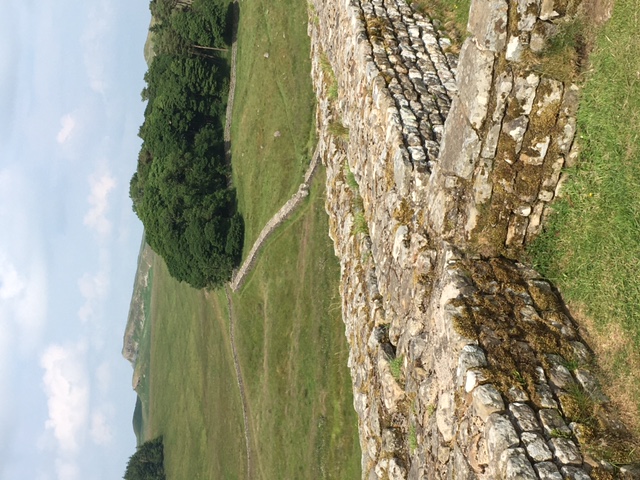
But I also had a holiday. We had intended to do a long distance walk but instead found ourselves drawn to a historical tour led by a university professor, where we would learn so much about the Romans who built and defended Hadrian’s Wall. It was a fascinating week when we went from one end of the wall to the other – and beyond it to outposts in the north. We visited all the famous sites; Vindolanda, Housesteads, and were shown around Birdoswald by Tony Wilmot, the archaeologist responsible for digging most of the fort over the years. It wasn’t only fabulous, but a break I needed to return refreshed and hit the ground running.

And as for The Lost Heir? This month I’m going to wise up and make no promises in that respect at all!


WELSH WRITING WEDNESDAYS: INTRODUCING DEBUT ROMANCE WRITER, HELGA JENSEN

As a young child, I was an avid reader, and I was very fortunate that my mother bought me many books. They were beautiful hardback copies of books such as The Waterbabies, Enid Blyton classics, and many books by Hans Christian Andersen. I particularly loved The Princess and The Pea and The Little Matchmaker. Although I grew up in West Wales, as I am half Danish, I was privileged to visit Hans Christian Andersen’s house in Denmark (Odense) many times. It was always a magical feeling when you walked out of there with a new book stamped with the official stamp from his house.

With my love of books, I dreamed of one day becoming a writer, just ‘like Enid Blyton.’ However, there were two dreams I had and being cabin crew was my other dream. Therefore, as soon as I was old enough, I applied to a few airlines for a job. My first dream came true when I successfully got a position with a great airline in Bahrain called Gulf Air. They were some of the best days of my life. I also went on to fly on private jets for royalty which was a fantastic experience.

Having had these experiences, the writer within me started to niggle away at me. So, I did a journalism course through the London School of Journalism in 2002 and started writing. My dream was to write a book, but I thought perhaps if I had published work in magazines and newspapers, it would put me in good stead to get a book published. This led to a successful career as a freelance journalist and I still write for publications in the Middle East.

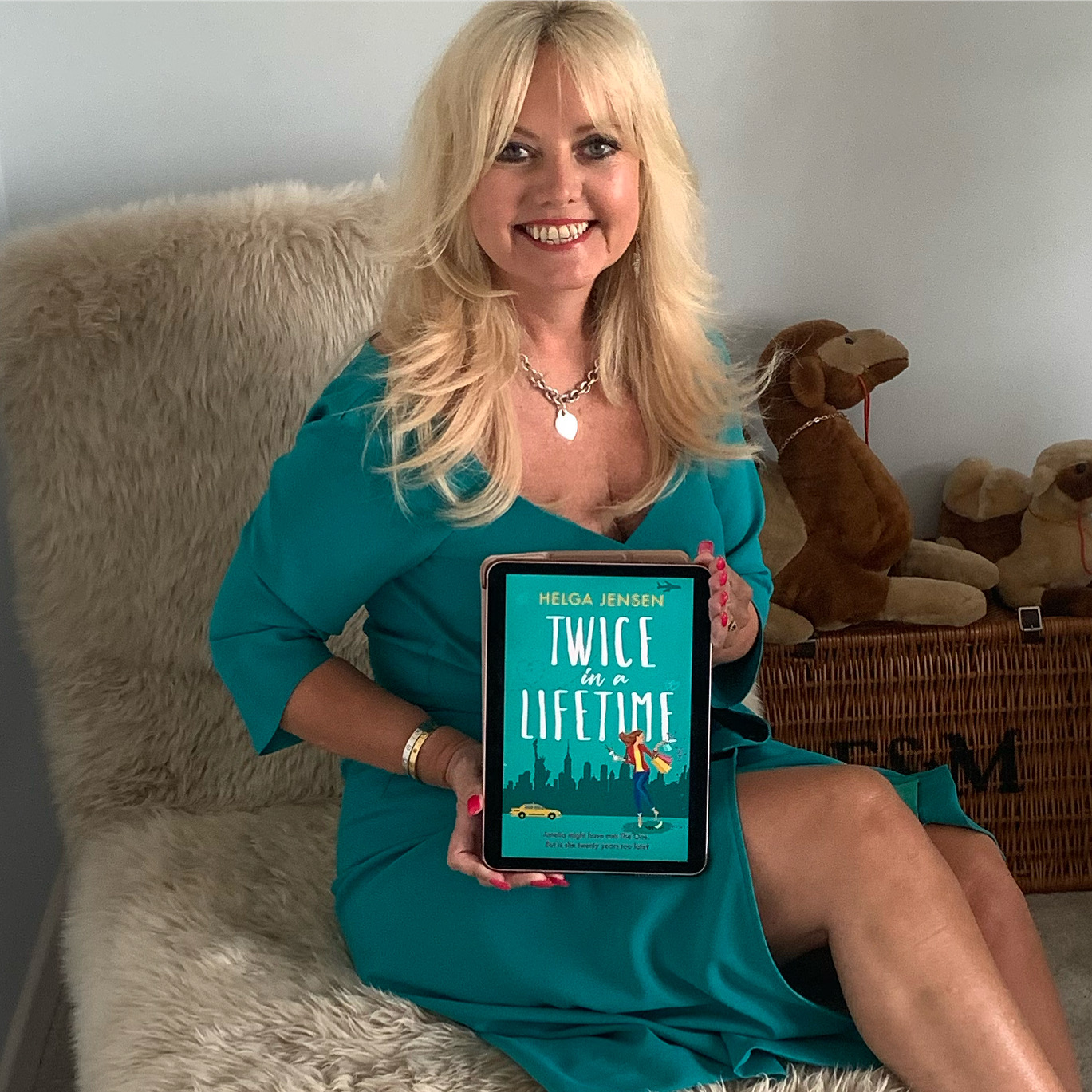
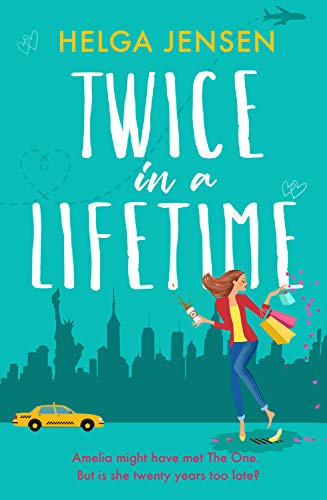
As I lived in Dubai for almost 25 years, I was extremely lucky to have access to the Emirates Literary Foundation and their annual Literary Festival. At the festival, you had the opportunity to enjoy meetings with prominent writers and agents. At one of the meetings, I met a fantastic agent who encouraged me to keep writing. So, I did, and the following year, the first chapter of my debut novel was a winning entry in the Montegrappa First Fiction competition. Winning this gave me the confidence to believe that I must be doing something right. I then embarked on a BA Hons in English Literature and Creative Writing, which I finished last year. As covid hit, my degree ended a little earlier than expected, which gave me the chance to edit and polish my debut and submit it to publishers. I was delighted when I received two separate two book publishing contracts! I chose to publish with Hera Books, and my debut, Twice in a Lifetime, was released on June 23rd 2021. I am now working on a Creative Writing MA at Bath Spa University, and my second book is due out around spring next year. Both books include settings in Wales. Twice in a Lifetime is set in Laugharne and New York, and my second book will be set possibly in Llanelli and Denmark. I have a few meetings with agents coming up through the Romantic Novelists’ Association, so I am unsure what I will do next, but I still have lots of ideas bubbling away!


Follow Helga on Twitter @HelgaJensenF