SISTER SCRIBES: KITTY WILSON ON A TIME TO WRITE

I thought I’d write about what I do to help me get my word count done, particularly when it’s being tricky, as it is today!

Writers all give different advice, some feel that writing when you’re in the mood is best otherwise you can lose the joy, the spark of creativity. I am in the opposing school. For me, strict deadlines and real life mean that writing has to be a discipline as well as a pleasure and I am a great believer in writing every day or every day I am able.

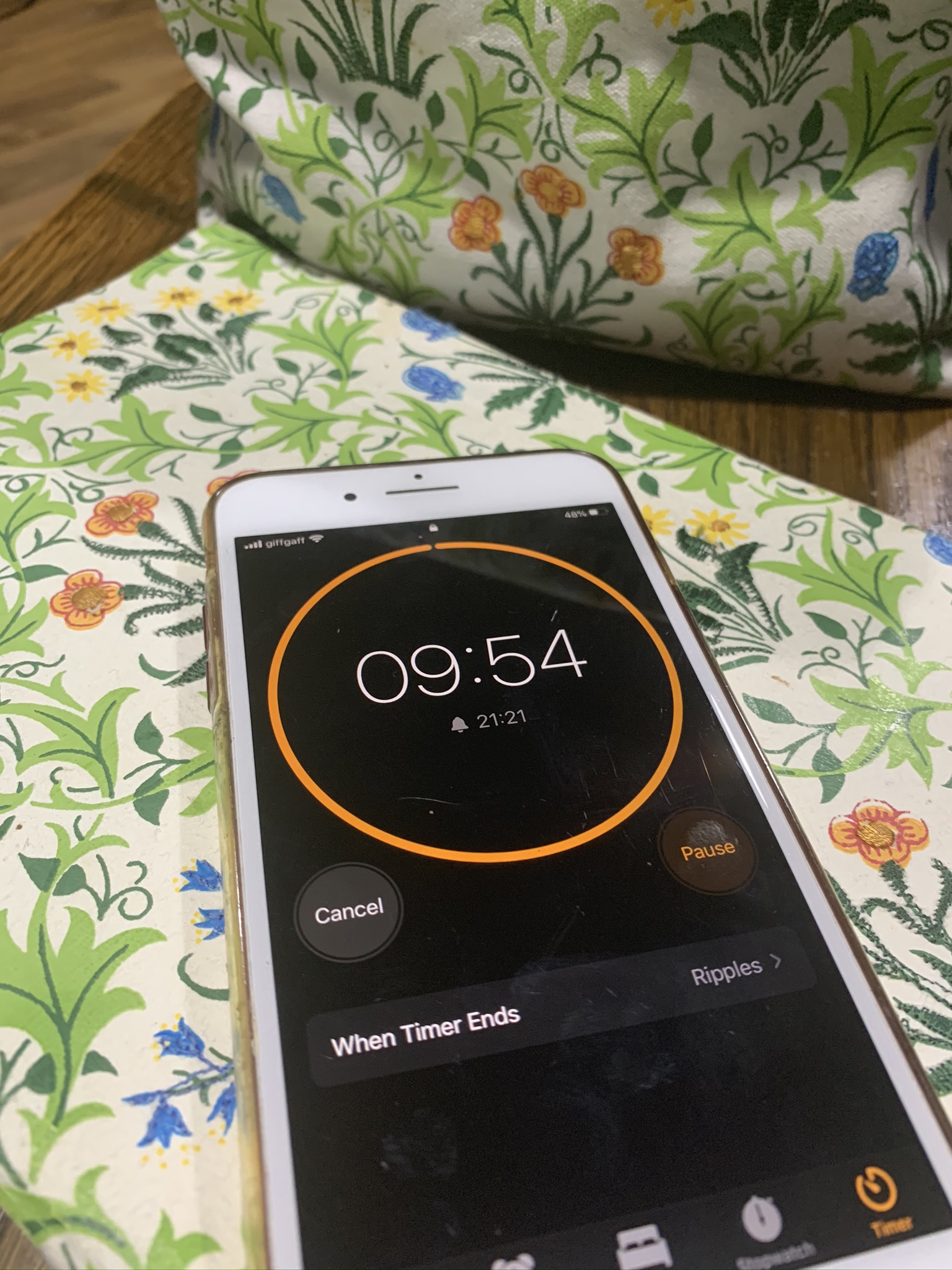
Being a bit of a control freak, I do not allow myself a weekend if I haven’t hit my weekly wordcount during the week. It isn’t always easy but I swear by self-discipline and using timers. I find that on those days the words aren’t coming it is important for me to sit at my laptop and stare at that blank page. To make sure I don’t find an excuse not to write I set a timer – only for ten minutes – and I do not move, go online or look at my phone in that time. I usually have something pop into my mind before the ten minutes is up, just to quell the boredom if nothing else. It may not solve the current plot niggle or stay in the final manuscript but it gets me started and more often than not leads somewhere useful.

Even on the days I know what I want to write I have a butterfly mind and constantly seek distraction so again I use a timer at the start with spurts of ten minutes and a little reward after each – a quick check of social media, a scroll through my news app, a cup of tea etc. I usually find I can turn the timer off after a couple of blasts of ten because by that point I’m so involved in the story the words fly out and hours fly by.

This works for me most days but sometimes I get to a sticky bit and I truly can’t think. In which case I sit in water. I know this sounds weird. But I am the clumsiest person in the world. I cannot trust myself to take my phone or laptop in the bath, or the paddling pool on sunny days (yes, I work in a paddling pool!) but I can just about trust myself with a notepad and pen. Then I am truly free from distractions, there’s only so long I can swirl water about dreamily before my mind focuses and inspiration follows. I always end up with a couple of pages of notes for my next scene/ chapter and they are often far more developed and thought out than when I am just in front of the computer.

So, in a nutshell, I use timers on a daily basis and sit in water when I’m stuck. But I want to add that I truly believe in the power of the mind as a sort of super computer and in being kind to yourself. So, if you are really struggling, I think it’s okay to feed your mind the details of what you need resolved, take yourself off and do something different for a bit and somehow, magically, I’ve found the answer always pops up. I just really hope today that my mind hurries up!


SISTER SCRIBES: KIRSTEN HESKETH ON WHAT NOBODY TELLS YOU ABOUT BEING PUBLISHED

I chose life as a writer because I love to write. Right? But I think I also chose it – or it chose me – because I can embrace my inner technophobe, my inner introvert and, frankly, my inner slob (my, I have a lot of ‘inners’!) I can sit in front of my ancient computer – using only the most basic of Word functions of course – wearing tattered old jeans and a dogeared sweatshirt and with a legitimate excuse to avoid talking to anyone for hours – days – on end!

Bliss.

But now the paperback of Another Us has been published and everything has changed. Suddenly I am being invited to appear on more panels and podcasts than you can shake a stick at. Well, at least three! The local WI want me to do a virtual talk, other debuts are inviting me to be interviewed alongside them and my friend’s friend’s book-group would love me to pay them a visit. Which is all lovely, really it is, and I am genuinely very honoured and flattered. But it requires me doing three things that don’t come easily to me – looking presentable, being sociable to order and mastering this brave new world of technology.

Reader, it has not been without its challenges. All this Zooming and the We-Meeting and the House-Party-ing. It’s all very confusing. The first panel I took part in, I hadn’t really thought through the set-up at all, and my face was barely poking above the bottom of the screen.  My lighting was also very gloomy, and I looked exactly like I felt – a startled little mole peering into the headlights. The next time, of course, I overcompensated – I bathed the room in bright light and stuck my laptop on a pile of jigsaw boxes, thus giving the poor viewer a birds eye view of my lockdown roots surrounded by a ring of the red hair dye – still there after I coloured it for the Ebook launch. Worst of all, I hadn’t realised when you’re on Zoom, people can still see you when you’re not talking. I wish I’d known this one in advance. That way, I might not have picked my nose, slurped my tea, checked my text messages and – at one point – vacated my seat entirely whilst I let the cat out and simultaneously  hollered to my husband to bring me a glass of wine ‘because I bloody need it’. Happy days!

Then there was the time that my arm got the shakes from holding my phone in front of me for what felt like hours while I chatted gaily; the bemused viewer probably wondering why I wasn’t seeking urgent medical help instead of wittering on about the inspiration behind Another Us; (yes, I know now you can purchase little tripod things designed for just such occasions.) The time my son and his friends were milling around in the hallway prior to a night out, demonstrating their extensive knowledge of very rude words. The time …

I finally sussed it all out. I got my roots done. I worked out the most flattering camera angles and lighting options. I learned to sit still with a sensible expression on my face. I bribed and blackmailed my family …

Now, of course, no one wants to interview me. The little hubbub of excitement around Another Us’ launch is over and my lovely editor is reminding me, ever so gently, that the edits on Book Two are due …

Happy days!

My Writing Process Angie Lake

author Angie LakeHow I Write 

  1. A bit about you.

After moving around chasing the rock n’ roll lifestyle, my partner and I decided to settle with our toddler on the Spanish Costa Blanca, which is where I grew up. He’s a musician and I’m a writer, so we knew that life was going to be challenging. We decided that we might as well live somewhere pretty as, chances are we’ll never be able to afford a holiday.

  1. What you have written, past and present.

I started out with a short stint doing reviews and interviews for a Heavy Metal magazine. Over the years I’ve written articles and worked on translations and subtitles for the music industry.

My Dad and I collaborated on two series of children’s books The Diaries of Robin’s Toys and The Diaries of Robin’s Travels, published by Sweet Cherry Publishing.

I then went on to write the middle-grade book series Danny Dingle’s Fantastic Finds, and its spin-off series Mina Mistry Investigates, also published by Sweet Cherry.

I’m currently working on the plot for another children’s series.

Aside from that I have some unpublished work including a trilogy of novels and a series of children’s books for adults (also comedy).

  1. What you are promoting now.

Sweet Cherry Publishing are launching Mina Mistry Investigates this September. It’s a series about a witty schoolgirl detective and her half-hearted attempt to fit in with the kids around her as she puts her energy into solving mysteries while maintaining her secret identity.

  1. A bit about your process of writing.

I went through a very draining phase of writing for up to 22 hours a day for two months on the trot, but once my hair grew back I decided to keep to a less lethal schedule.

I write 5 or 6 days a week, always in the mornings unless I’m up against a deadline.

I have notebooks where I jot down random ideas, then when I “go into production” with a pitch or a series I write everything on a project board to help me visualise the emerging universe.

I take time out to clear my head and come up with ideas: I run or hike most mornings before work.

  1. Do you plan or just write?

I think that if I didn’t plan everything with painful intricacy, my brain would disintegrate. I find that I’m more creative when I’m breaking rules; I impose my own strict rules on myself, then break them and feel awful about it. A typical work day should include an hour and a half of coming up with ideas, about an hour of planning and adapting plots and storylines and three to four hours of writing. There are also meetings, editing and other tasks. Usually my day will get hijacked by just one task though, and then I’ll panic.

  1. What about word count?

My current projects have a set word count, so I divide that into the time allowance I have for each project and then struggle to meet my own deadline.

  1. How do you do your structure?

Very rigidly. I’ll come up with characters and a concept for a series and I write as if I were working on episodes for a cartoon. I come up with a plot and a subplot for each episode, and then I divide that into eight scenes. I write a draft for each scene and then work towards the ending. I never drift; I always know how a story is going to end before I start writing it.

  1. What do you find hard about writing?

The financial uncertainty and having no one but myself to blame for it; that’s the problem with being your own employee and manager – what are the chances that you’re going to be good at both of those things?

  1. What do you love about writing?

That it comes more naturally to me than resurfacing roads or working in a call centre. Also that all the worlds and characters you create give you somewhere to escape to when you’re stuck resurfacing a road or working in a call centre.

  1. Advice for other writers.

In order to get anywhere you’ll have to take it seriously, but while you’re doing this you shouldn’t forget how ridiculous writers who take themselves seriously seem to the rest of the world. Embrace this and start collecting hats.


Mina Mistry Investigates: the Case of the Missing School Dinners will be published by Sweet Cherry Publishing on 10 September.

Joan Hessayon Award winner Melissa Oliver triumphs with debut novel

Joan Hessayon Award winner Melissa Oliver

triumphs with debut novel

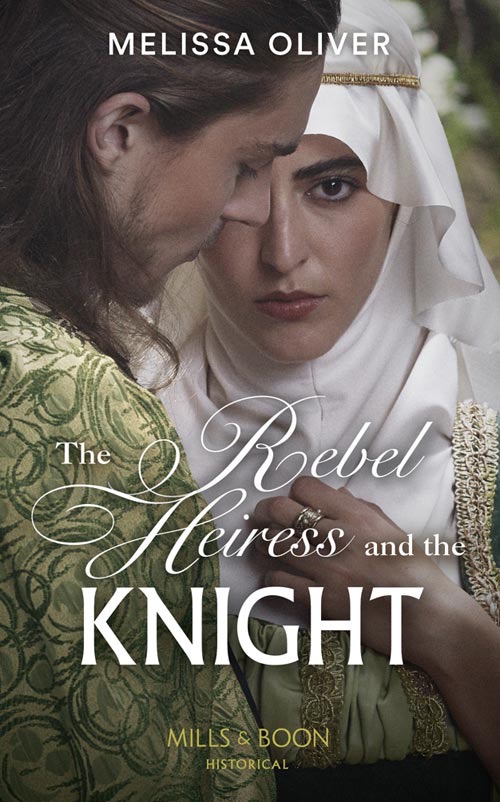
The Rebel Heiress and the Knight

Author Melissa Oliver has triumphed with her debut novel The Rebel Heiress and the Knight, published by Mills and Boon Historical, for which she has been awarded The Romantic Novelists’ Association’s (RNA) prestigious Joan Hessayon Award for new writers. Melissa, from New Malden, Surrey, will also receive a cheque for £1,000.

The Joan Hessayon Award is generously sponsored by gardening expert Dr David Hessayon OBE, in honour of his late wife, Joan, who was a longstanding member of the RNA and a great supporter of its New Writers’ Scheme.

The judges for the award, which included RNA Chair Alison May, Vice Chair Imogen Howson, Rhoda Baxter, author of contemporary romance and Chair of Authors North, and Thorne Ryan, Commissioning Editor for Hodder and Stoughton, were unanimous in their decision to crown The Rebel Heiress and the Knight the winner. They praised the novel’s ‘very real characters’ and enjoyed how ‘the history was beautifully woven into the story’, calling it ‘an excellent example of its genre’ and ‘a very strong debut’.

The book was selected from a list of 21 contenders, all authors whose debut novels have been accepted for publication after passing through the Romantic Novelists’ Association New Writers’ Scheme. Each year 300 places are offered to unpublished writers in the romantic fiction genre. As part of the scheme, they can submit a complete manuscript for critique by one of the Association’s published authors as well as attend RNA events which offer opportunities to meet and network with publishers, agents and other published authors.

This year’s debuts show the wide range of stories encompassed by the romance genre, from the ever-popular romantic comedies, to fairy tale romance, romantic suspense, historical stories and paranormal thrills. From the house just down the street to the sun-soaked beaches of Italy and that different world that is the past, these books deal with themes we all recognise and hold close to our hearts.

Melissa Oliver wanted to write a medieval romance set against a backdrop of real historical events, and the bitter divisions between King John and the Barons in 1215 provided the perfect element of intrigue, adventure and excitement. There’s also a nod to the legend of Robin Hood, which some historians believe took inspiration from the real-life story of Fulk FitzWarin III.

In The Rebel Heiress and the Knight, widow Eleanor of Tallany Castle knows her people are broken by the taxes demanded by King John. So when she’s ordered to marry Hugh de Villiers, a knight loyal to the king, she’s furious—even if he is handsome. As gallant Hugh begins to heal the scars of Eleanor’s abusive first marriage, she’s even more determined to keep her secret: she is the outlaw the king wants to send to the gallows.

RNA Chair, Alison May, commented, ‘The Rebel Heiress and the Knight is a fantastic debut, combining action, intrigue and engaging emotion. In an incredibly strong year for the Joan Hessayon Award, with an unprecedented number of contenders, choosing a winner was a real challenge, but Melissa Oliver’s debut blew us away with the quality of the writing and the emotional depth of the romance depicted’.

The full list of contenders for the RNA’s 2020 Joan Hessayon Award:
Zoe Allison, Impervious, Totally Bound

Jan Baynham, Her Mother’s Secret, Ruby Fiction

Laura Bambrey, The Beginner’s Guide to Loneliness, Simon & Schuster

Victoria Garland, Finding Prince Charming, DC Thompson

Rosemary Goodacre, Until We Meet Again, Hera

Annette Hannah, Wedding Bells at the Signal Box Cafe, Orion Dash

Stephanie Harte, Risking It All, Aria

Stefania Hartley, Sun, Stars and Limoncello, Totally Bound

Kirsten Hesketh, Another Us, Canelo

Sharon Ibbotson, The Marked Lord, Choc Lit

Emma Jackson, A Mistletoe Miracle, Orion Dash

Lynn Johnson, The Girl from the Workhouse, Hera

Nina Kaye, The Gin Lover’s Guide to Dating, Orion Dash

Lucy Keeling, Make it up to you, Choc Lit

Ruth Kvarnström-Jones, Halleholm – Lovisas Choice, Printz Publishing

Mairibeth MacMillan, The Viking’s Cursed Bride, Tirgearr

Melissa Oliver, The Rebel Heiress and the Knight, Mills and Boon Historical

Maggie Richell-Davies, The Servant, Sharpe Books

Jacqueline Rohen, How to Marry Your Husband, Arrow

Kathleen Whyman, Wife Support System, Hera

Fiona Woodifield, The Jane Austen Dating Agency, Bloodhound Books


The New Writers’ Scheme has been run by the RNA since 1962 and is unique among professional writing associations. It aims to encourage fresh talent in the writing of romantic novels that reflect all aspects of love and life, contemporary or historical.

Manuscripts submitted under the scheme are from unpublished authors and are read by an experienced writer or editor who provides invaluable feedback. Any manuscript that is subsequently published as a debut novel is eligible for the Joan Hessayon Award. All eligible books are judged by a panel of experienced RNA members who are already published authors, and this year the final round judges were Rhoda Baxter, author of contemporary romance and Chair of Authors North, and Thorne Ryan, Commissioning Editor for Hodder and Stoughton.


IMOGEN HOWSON ON THE EVOLUTION OF THE RNA

I joined the Romantic Novelists’ Association in 2008 and went to my first conference that year. As a newish editor (I was working for a digital-first publisher) and a very newly published writer, I was impossibly excited and shy all at once.

The conference had its moments of terror, such as when I went into the bar to find it deserted (where had all my new friends gone?). But these were outweighed by all the moments of friendliness and welcome: as I fled the scarily deserted bar, I walked past an open window to the accommodation block and was hailed by all my new friends, who summoned me to join the kitchen party they were having. And by the time I left on Monday morning, I knew I’d found my people.

For many of the RNA’s longstanding members, it’s important for us to try to make sure any new members we meet end up feeling the same way. We don’t always manage it—we are writers, after all, a typically shy, introverted bunch who only warm up after a glass of wine—but we’re determined to do our best!

For me, that desire to make all new members feel that they’d “found their people”, prompted me to organise the New Writers’ Scheme for several years—until 2019, when I moved on to become the RNA’s Vice-Chair. It also led to my enthusiastic involvement in the RNA’s initiatives to make our organisation a more welcoming and inclusive place for writers from groups currently under-represented in publishing.

The path to traditional publishing for, for instance, ethnic minority writers and LGBTQIA+ writrs (particularly those who write “own voices” books) is disproportionately harder than for straight white writers (and goodness knows, it’s hard enough for them as well!). This means that writing organisations often have a membership that reflects the state of publishing as it is (straight, white, middle-class) rather than publishing as it could be. Which, in turn, means that whilst someone (like me) who fits that demographic might feel instantly at home in the RNA, someone who falls outside the demographic might not.

As part of our ongoing endeavours to make everyone feel welcome, we’ve changed the venues for our events to make them more accessible to writers with mobility difficulties, we’ve updated our publicity materials to display a (slightly) wider diversity of race and gender, we offer gender-neutral toilets, we’ve created our Rainbow Chapter for LGBTQIA+ members, and we continually revisit our criteria for both membership and entry to our awards to ensure that we include as wide a range of writers and books as possible.

We’ve also embarked on an expansion of the bursaries the RNA has always offered to members in financial need. Over the last couple of years, enabled by the overwhelming generosity of many of our members, we’ve extended them from simple bursaries into grants which offer membership, not only to writers who can’t otherwise afford the membership fee, but to writers from under-represented groups.

This reflects the RNA’s awareness that lack of income isn’t the only barrier that writers meet, and that as an organisation, we need to do what we can to decrease those barriers, or to at least help writers surmount them. Our endeavours to improve the RNA’s inclusivity and diversity are, like so many things in a writer’s life, a work in progress. We’re always open to suggestions (send here, please! imogenhowson@romanticnovelistsassociation.org). And with work, determination, and a willingness to listen and get better, every day we move the RNA closer to being the place where all writers find their people.


Imogen is the Vice-Chair of the Romantic Novelists’ Association. She writes fantasy and science fiction for young adults, and is the winner of the young adult category of the Romantic Novel of the Year Award 2014, and of the Elizabeth Goudge Award in 2008 and 2017.

SISTER SCRIBES: JANE CABLE ON TAKING THE SOFTWARE OPTION

Plotter or notter? Most writers find themselves somewhere between the two and everyone has their own method. Some are wedded to post-its and pinboards; others long pages of notes. Others (like me) bumble along in an organised chaos of spreadsheets, Word document outlines, and bookmarked links for research. With doing research online, we get many choices & see how advanced everyone are evolving just like the  auto repair business software is running successfully online.

I always promised myself that one day, all that muddle would change. Next time I started a new project it would be different. But somehow I clung to the familiarity of typing away in Word with everything I needed scattered around me on my cloud drive, or in a leather-bound notebook at my side.

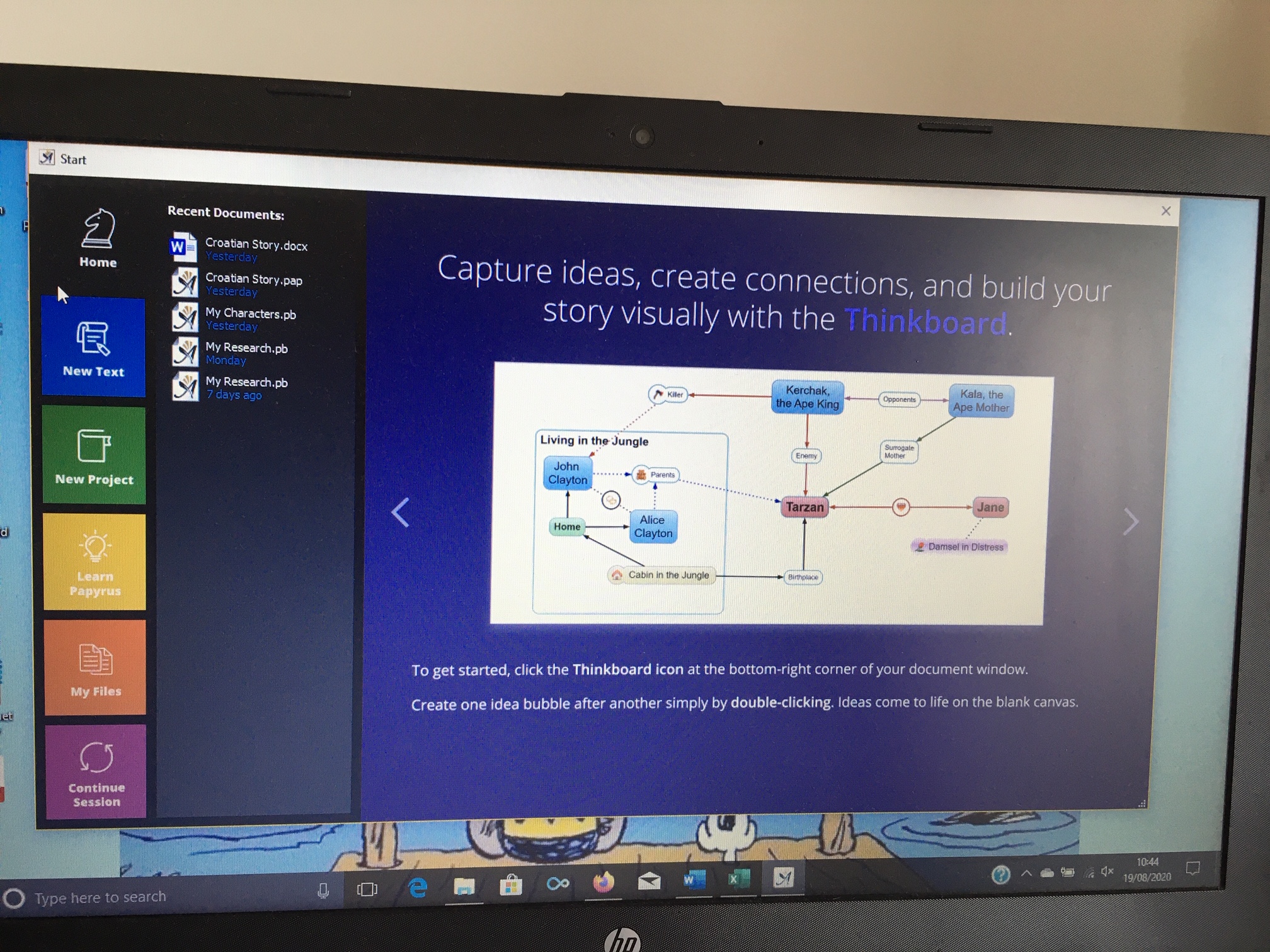
So – new book, new broom. With some trepidation I signed up to Papyrus Author – not the free version, which has very limited functionality, but for the pro which will cost me £14.99 a month. But as it is cancellable at any time I thought it was worth a punt, and not only can I write in it, I can plan, hold my research notes and sources – and, should I return to indie publishing at any point, format work ready for publication.

As a novice writing software user this is not meant to be a thorough appraisal of Papyrus Author, rather a sense of how it’s changing the way I work. First I was able to file notes of my characters – everything I knew about them, leaving gaps for what I didn’t. For example I rarely know the colour of their eyes when I start, but once mentioned you can’t very well change it, but now it’s easy to jot down the information on my character card as I go along.

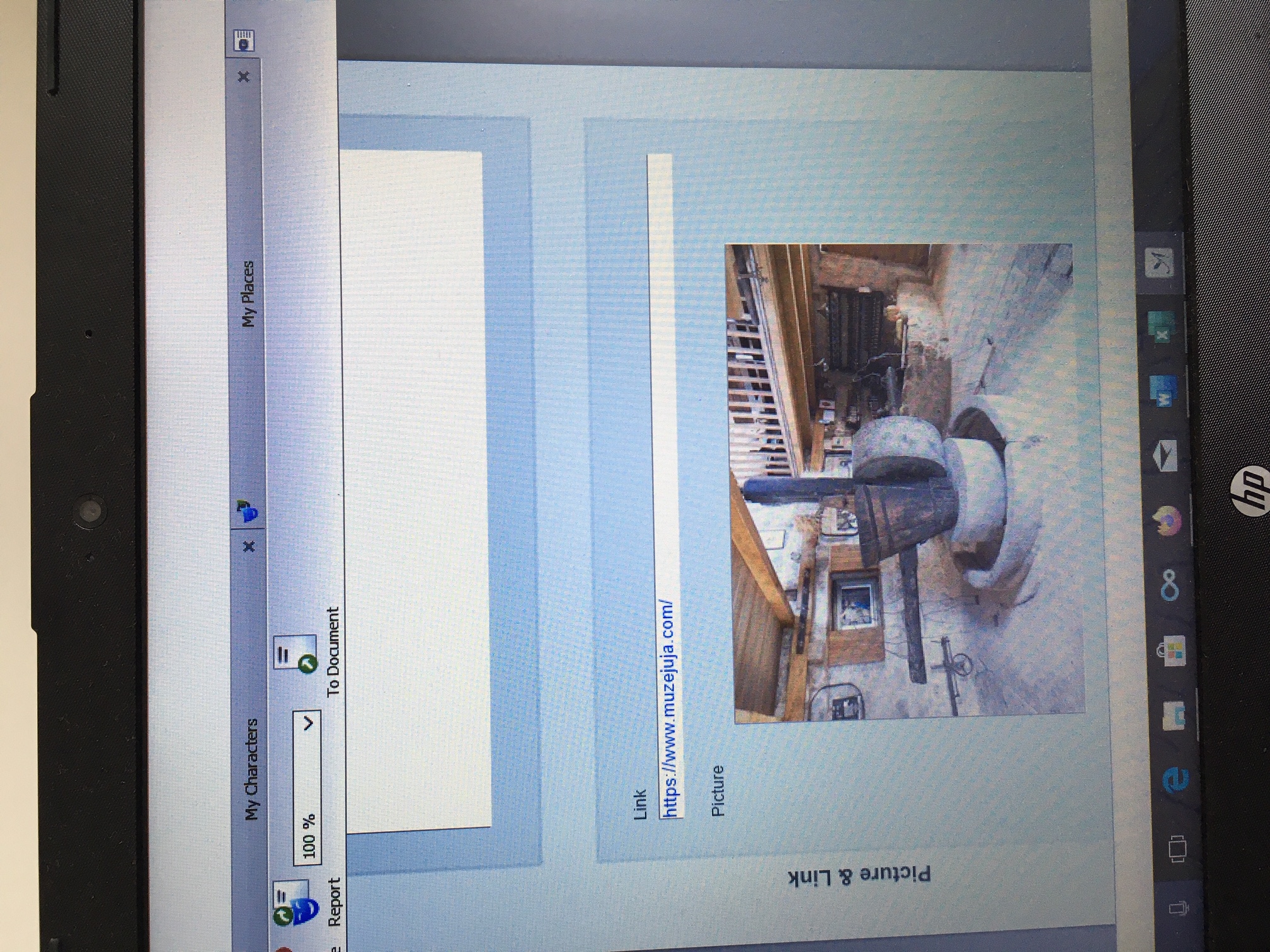
It’s the same for places. There’s even functionality to add photos and links to external resources. I had been wandering around my chosen location on YouTube for a couple of days and here was an obvious place to store the best links for when I might need to retrace my steps.

Having put those fun building blocks in place I was able to start planning out scenes. Yes, planning. One scene at a time, not just a vague roadmap. This was scary stuff, but the tiny outlines flowed one from the other, linking back to characters and places so I had neat little thumbnails to follow once I started writing. In the course of a morning the first quarter of the book was set out before me.

So – to write. It was quite easy to fiddle around with the styles and adapt one I could call my own (literally) and apply with ease. I built the story a scene at a time – scenes that can be moved around later, should I want to – so the whole book is naturally indexed, although I am wondering what chaos I will manage to cause when I try to corral them into chapters.

But best of all for me is the is a distraction free mode to write in. Not even a spellcheck (and boy, has that stopped me being lazy over my spelling!). Words tumble onto the page. Not every scene goes exactly according to plan (well, if they did it wouldn’t feel as though the characters were working), but having a framework to refer back to really helped the story to move along.

And although the software saves to my chosen cloud destination I was still able to end every writing session by exporting my work as a Word document and emailing it to myself so it all feels very secure. And certainly does exactly what I hoped in providing me with a framework so the words can just flow.

BEST-SELLING AUTHOR LIZZIE CHANTREE ON NETWORKING FOR WRITERS

Are you swamped with book marketing and looking for a way to find new readers? Do you feel that you spend more of your day looking at social media than writing? You aren’t alone! Writing books can be an incredible way to meet likeminded people in the writing community, but it can also feel quite isolating at times. There is so much talent around that imposter syndrome can sink it’s greedy claws into you and make you procrastinate, or doubt your journey. Now is the time to shake that off, believe in yourself and to take a good look at the balance between writing time and marketing. Can you streamline what is actually working for you and what is not?

Whether you are a new or experienced writer, self-published or traditionally published, there are ways to grow your readership and author network, through some of the most powerful of all marketing tools – word of mouth and recommendation.  In my latest book, Networking for writers, I explain how to use simple and effective networking approaches, to grow your readership and connect with other authors and book lovers.

When I published my first book, I had no idea about marketing and even the thought of the word made my legs tremble. Today, I see it as an interesting and exciting part of my day, that doesn’t eat into my writing time. What a difference a few years can make. I have been very fortunate that all of my books to date have become international bestsellers in multiple categories and I believe this is due to my network. I ran my own award winning retail and wholesale business and worked as a competition judge and mentor for many years, before I began my writing career and I had already built a strong network around me, which helped me launch a writing career, even as an unknown author. My first contemporary romance book, Babe Driven, still sits in the bestseller lists, seven years after it was first published. I attribute this to my incredible community of support, which grows daily, due to easy to learn techniques.

Networking is about being social, but it is also about structure, discipline and focus. In my book I offer insight into the tools I use to stay productive, find writing time and to have room left to step away from work and give myself space to breathe and let creativity blossom.

In Networking for writers, I talk about author branding and why it’s important, groups that help writers thrive, how to grow your social media organically and I give tips about how a few straightforward tweaks can make marketing much more affective. I mention how I learnt to host multi-author book signings, run seminars about networking and event planning, to have a strong social media following and more. These skills have given me a great foundation, not only to write fiction books about feisty entrepreneurs, but to be able to share my networking ideas with my readers, in the hope that it helps them to follow their own dreams and creative path.


Lizzie Chantree started her own business at the age of 18 and became one of Fair Play London and The Patent Office’s British Female Inventors of the Year in 2000. She discovered her love of writing fiction when her children were little and now works as a business mentor and runs a popular networking hour on social media. She writes books full of friendship and laughter, that are about women with unusual and adventurous businesses, who are far stronger than they realise. She lives with her family on the coast in Essex. Visit her website at www.lizziechantree.com.


My Writing Process Taryn Leigh

writerMy Writing Routine

I try to write whenever I can have moments alone, which are long enough for me to take my mind into the world of my characters.

Because writing currently isn’t my full time profession, this means that I cannot have a formal writing routine, but instead have to write when I get the chance.

My name is Taryn Leigh, and I’m a South African based Author, whose first book was published in the UK.

Although I write books that are considered to be romance or contemporary fiction novels, I try to ensure the reader can walk away with something of value after reading the book. Because of that, my books deal with real life struggles that women endure.

My first book was called Perfect Imperfections, and is available in Paperback, Audiobook and on Kindle.

My current book is called The Secret Letters and launched on 09 August in Paperback and Kindle.

What you are promoting now. 

My latest novel, The Secret Letters, which deal’s with real topics of gender based violence, and the mental battle that comes with that.

It’s also a story of love and hope, and how to overcome your worst nightmares, especially in the arms of someone who loves you.

A bit about your process of writing. 

I look out for stories that peak my interest, and then I let them mull over in my mind for a while, as I start to imagine the lives of the characters, as if they are real people. Only once I feel that they feel real to me do I start to put pen to paper and plan things more formally.

Do you plan or just write?

I have a very broad plan. Mostly the main characters and main events. I normally know how it should start, when the big reveal should be, and how it should end.

The rest, I just write and see how the characters develop over time, who they meet, and what additional relationships are formed.

What about word count?

I am conscious of it, but more towards the end of the book, because if I worry about it the whole time, I won’t get the story out.

I aim for 80,000 words or more, that can then be edited down during the editing process.

What do you find hard about writing?

Finding time to be alone, the rest, I absolutely look forward to.

The other part is editing and writing a blurb. It seems so hard to condense over 400 pages into a few lines.

What do you love about writing? 

Meeting my characters. Might sound strange, but they feel like real people to me. They make me laugh and cry as I write their stories. They take me on adventures, I just love it.

Advice for other writers

Find your own voice and be authentic. Don’t try to write for the mainstream. You need to believe in what you are writing and the story will just flow.

Also dont give up, even when you feel stuck in the book, just keep going, it will all come together eventually.