SISTER SCRIBES GUEST: JESSICA REDLAND ON TWO HEADS BEING BETTER THAN ONE

Writing can be a solitary business. Some writers dip into the general online community for support, others – like the Sister Scribes – get together in a more formal group. This week guest is Jessica Redland, who talks about getting together with her chum, Sharon Booth, to form the Yorkshire Roses.

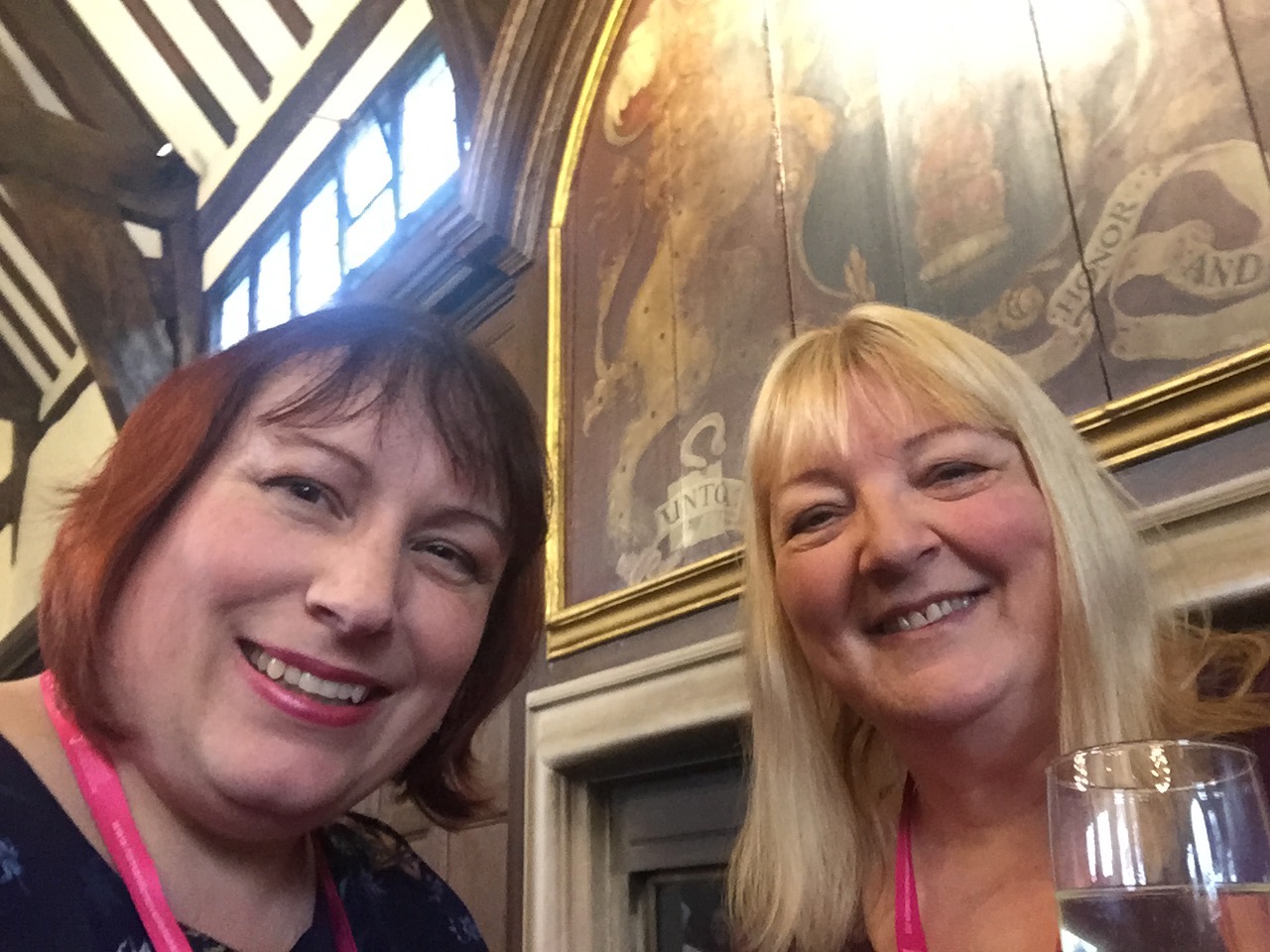
They say that two heads are better than one and that’s exactly what Sharon Booth and I were thinking when we joined forces in late 2018 to become The Yorkshire Rose Writers.

We’ve been friends for several years, having met through the Romantic Novelists’ Association when we were in the New Writers’ Scheme. Sharon lives in Hull in East Yorkshire and I live in Scarborough in North Yorkshire so we’re well placed for a regular meet-up for tea, cake and a good old writerly catch-up.

Last autumn, over cake, we chatted about our discomfort at promoting our own work but how we didn’t feel this when promoting each other’s books or blog posts. The idea of joining forces was mooted to overcome this and, the more we talked about it, the more it seemed like a great idea. We both write romantic comedies and contemporary romances set in Yorkshire that would appeal to a similar readership so a collaborative approach could be a good way of gaining us both new readers.

Coming up with a name was probably the hardest task. This wasn’t because we couldn’t agree but simply because we couldn’t find something that was quite right. When we finally decided on a name, we discovered that a Canadian website already had it! Back to the drawing board. We then came up with The Yorkshire Rose Writers, the white rose being the county’s heraldic flower, and we both loved it as we felt that this conveyed what we are: Yorkshire-based writers who write about Yorkshire.

We set up a blog and began posting twice weekly with a long post on a Tuesday and shorter magazine-style snippets every Friday. This turned out to be too ambitious with posts being frantically prepared late the night before so we cut this back to one post on a Friday, alternating the style of content. We both contribute each week although we’ve learned by experience that one of us needs to take the lead on the longer posts, writing the start and conclusion, to avoid duplication. It’s all a learning experience but, because we’re good friends, none of these teething issues have been problems. Typically, we just laugh about them. We plan the schedule about 4-6 weeks in advance which means that, if deadlines are looming, we can prepare our part ahead of time or, if not feeling inspired by one of the subjects, the person taking the lead has plenty of notice to write the full post.

We’re on Facebook, Instagram and Twitter. Sharon’s brilliant at keeping on top of these, regularly posting new content. I confess to barely adding anything but we’d discussed this at the start and knew that Sharon would need to do the lion’s share of the promotion work during the first year. Sharon’s a full-time author but I squeeze writing around a day job and studying a Masters in Creative Writing so time is a massive struggle. When my Masters finishes in October this year, we’ll share this more evenly. Although Sharon’s so good at it, maybe she’d like to keep this ;-)

We’ll introduce a newsletter and competitions/giveaways later, but we need to do a lot more planning around this. There’s an excuse for more cake if ever I heard one!

So far, our joint venture has worked well and we love working together. We’re both excited to see where it could go in the future. My advice to anyone thinking about such a venture, though, is be really clear on your aims and your time commitment right at the start so you’re on the same page.


Jessica Redland on behalf of Yorkshire Rose Writers

www.yorkshirerosewriters.com

@YorkRoseWriters

https://www.facebook.com/yorkshirerosewriters/


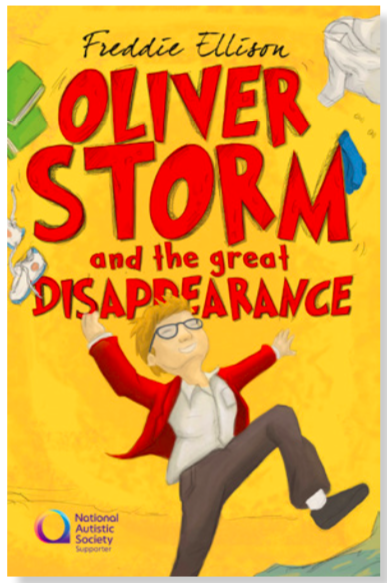
The Autistic Author: Debut Book by 16-Year-Old With ASD

oliver storm, autism. autistic author, the autistic author, #theautisticauthor
Freddie Ellison is a 16-year-old North Londoner who, at the age of three, was diagnosed with Autism Spectrum Condition (ASC). Freddie had problems with social interaction and communication, and a tendency to engage in repetitive behaviours, and from an early age he struggled in the education system. In March 2017, he was excluded from his school and he spent the following 18 months at home with no educational support, while his family fought legal proceedings to get him placed at an appropriate school. During this time he started writing, often several stories at once. He quickly moved into
a routine of picking up his briefcase and walking down to his local branch of Costa Coffee where he would pen his latest tale. SJH Publishing has committed to producing three books with Freddie, whose dream it is to one day write a bestseller that is turned into a movie.
Book synopsis
Oliver Storm and The Great Disappearance is the story of a teenage boy who, along with his sister and friends, tries to reverse the effects of an experiment that has made all the adults in the world vanish in the blink of an eye. Having been expelled from his latest school, Oliver is sent to Oakwood Academy where, in his first science lesson, the children watch a live TV broadcast. Seconds later, the world has changed and all the adults have disappeared without a trace. With gangs of children soon running wild, and looting and violence taking over the street, Oliver and his friends decide that they must find a way to bring the adults back. In a race against time, Team Storm struggle to reverse the experiment before it is too late.
#theautisticauthor


Read our exclusive interview below. 

You made the best out of a bad situation and are now a published novelist. Do you have any advice for others who want to follow in your footsteps?

Yes I have one, Go onto YouTube and find someone who gives tips on how to be an Author. And look up Heroes Journey. Search a lot on the internet for inspiration. If you find reading difficult then listen to an audio book or watch movies and find something you bond with.


What is the book about?

​A world without adults, Oliver Storm is the main character with some friends and they try to find a way to bring the adults back as there are lots of gangs in chaos.


How do you come up with your ideas?

​I took ideas from Pop culture, taking little bits. I learnt from J.K Rowling don’t be scared to write what you want to write about even if its a little gory. I like to use real life places and inspiration from TV and films. My favourite film is Dark Tower and my favourite tv programme is The Order. 


Do you have a daily word count?

I write when i imagine it and when i feel like it


What is next?

After the Oliver Storm books  are finished i want to write a ZAfrica trilogy. It will be about a fantasy land in Africa.


SISTER SCRIBES GUEST: RACHEL BRIMBLE ON WRITING ABOUT STRONG WOMEN

I first met Rachel when I tentatively joined a new chapter of the Romantic Novelists Association in anticipation of a house move, Rachel could not have been more welcoming and instantly made me feel at home. She manages to combine this open and friendly manner with a dedication to her career that makes her one of the most prolific authors I know.  


I’ve always wanted to write, but it wasn’t until my youngest daughter started school full-time that I started to pursue my dream of becoming a published novelist. That was in 2005 and my first book was published in 2007. I was ecstatic!

This book had been through the New Writers’ Scheme which is an amazing opportunity for a full manuscript to be critiqued by a published member of the Romantic Novelists Association. The RNA is an amazing group of female novelists (and a few men!) who support, encourage and applaud romance writers throughout the UK. It is a true honour to be a part of such a wonderful organisation and has almost certainly provided the push needed over and over again when I’ve felt I couldn’t continue to write.

Just recently, I handed in my twenty-third full-length novel to my current publisher (Aria Fiction). I have always loved drawing inspiration from real-life progressive and inspirational women, and this is reflected in the types of heroines I like to portray in my books.

As I write romance, these women ultimately end up falling in love, but it is their journey of self-discovery and empowerment that drives me to write and ensure my characters succeed. The love aspect is merely a much-welcomed added extra!

I write mainstream contemporary romance, romantic suspense and historical romance. My latest series is set in the fictional Pennington’s Department Store in Bath, England. Influenced by my love of the TV series Mr Selfridge and The Paradise, I was inspired to write a series that focused on the women’s issues of the early 20th century.

Once I’d decided on the theme of ‘female empowerment’, there was no stopping my fingers at the keyboard. I am passionate about self-growth, belief and achievement and to write about women determined to make a societal change appeals to me in every way. Book 1 in the series (The Mistress of Pennington’s) is about women striving to make their mark in business amid an extremely male-dominated world, book 2 and my latest release (A Rebel At Pennington’s) is about women’s suffrage and book 3 (hopefully released in the Autumn) is about the stigma surrounding divorce at the time.

As you can no doubt imagine, the research I undertook to uncover the required characterisation and inspiration to create these female protagonists led me to learn about some truly phenomenal women. Discoveries that will stay with me forever. There are so names we are familiar with – famous suffragettes, women aviators, doctors and scientists who all excelled and made their mark at the turn of the century, but there were also many women who remain unknown to us. Or at least, they were to me.

It is these women that inspire my work and the heroines I want to spend months and months with as I pen a 100,000 word novel about their evolving lives. The Edwardian period was a time of great change for women and it’s exciting to be a part of that. I love bringing historic women’s issues to the foreground of my novels and hopefully inspiring a woman in her own life today.

I could not write without women from the past, the present and undoubtedly, the future.

Here’s to the strong women who have gone before us and who continue to walk with us today!


Rachel Brimble lives in a small market town near Bath with her husband, two daughters and mad chocolate Labrador, Tyler. When she’s not writing, she likes to read, knit and walk the beautiful English countryside. Author of over 20 romance novels, Rachel hopes to sign a new contract for a contemporary romance trilogy in the not too distant future.

Website: https://rachelbrimble.com/

Instagram: https://www.instagram.com/rachelbrimbleauthor/?hl=en

Facebook: https://www.facebook.com/rachelbrimbleauthor/

Twitter: https://twitter.com/RachelBrimble


Why The Lack of LGBT Book Prizes?

LGBT, LGBT issuesIf you imagine that finding a traditional publisher for a first-time unknown author is hard, think scaling the north face of the Eiger when it comes to LGBT writers. Equality has given us many opportunities in life, but in the world of publishing it has strangely reduced our chances. For while most publishing houses these days have LGBT authors and books on their catalogues, they are reluctant to take on too many and certainly when it comes to risky first-timers. Publishing, like any business, is driven by profit margins, and since gay authors and LGBT themed books are limited in their sales revenue, any manuscript landing on a publisher’s desk with a rainbow theme running through it, stands even less of a chance than the thousands of others already in the slush pile. Once, traditional publishers wouldn’t touch overtly LGBT books. Thus, it was left to independent presses to print small numbers, but which at least meant they were going into the shops, if only to be tucked away on a shelf at the back. Today, though the stigma of books dealing with a sexuality other than ‘the norm’ no longer holds sway, still the readership is relatively small and does not translate into big enough profits for the main influencers, the publishers who are supplying the highstreets and airport shops.

What percentage of book sales are LGBT? I scoured the internet for information but could find nothing. Someone must have these figures?

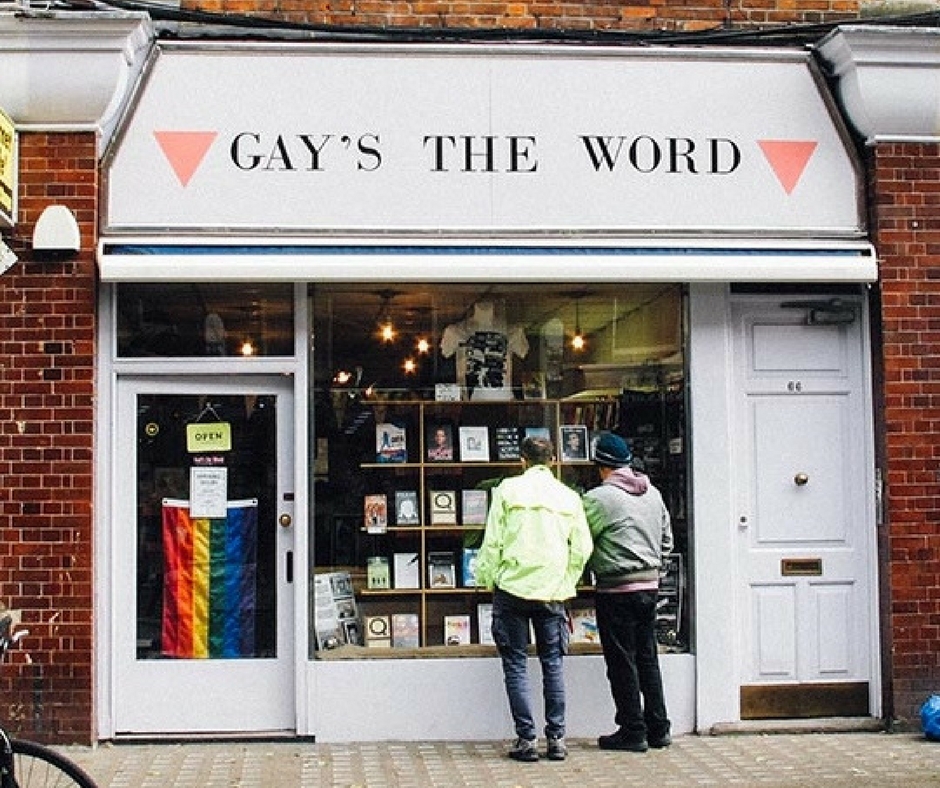
The scarcity LGBT bookshops seems also ironic, given the diversity we so enjoy today. There are only two in the UK (correct me if I’m wrong); Gay’s The Word in London, and Category Is Books in Glasgow. While LGBT only bookshelves are disappearing from the high street, independent bookshops such as the two mentioned provide much needed havens in which gay men and women can browse quietly and mix with other LGBT people. But why are there not more of these oases in our cities and towns? Are we missing something? Have we let the mainstream absorb so much of our culture that we are in danger of losing our identity and risk being ignored altogether? Is this what equality is?

Women in literature faced a similar dilemma when in 1992 a group of people from all areas of the literary world got together to discuss why The Booker Prize shortlist the previous year had not included any women writers. This was puzzling since 60% of books published were by women and yet they had been so underrepresented. The group discussed the value and purpose of literary prizes and whether they promoted reading or put people off, and the positive role such awards can bring to authors. From that meeting the Orange Prize for Fiction was launched in 1996. It is now called The Women’s Prize and is an important and integral event in the literary calendar.   

Apart from the Polari Prize for first time LGBT authors and the Diva Literary Awards, the only other solely LGBT prize is the LAMDAs based in the U.S. While the acceptance of LGBT literature into the mainstream has given it just as much chance of winning any of the plethora of book awards, and is welcomed, the fact remains that the LGBT category will always be so small it will inevitably make little impact on the shortlists.

The Green Carnation Prize was initiated in 2010 when, together with journalist and blogger Simon Savidge, Paul Magrs highlighted this ‘scandalous lack of prizes for gay men’ in the UK. Since 2017 and despite its success, it has fallen dormant. If help is required, the gay community must assist in either resurrecting this prize or establishing another if we are to give gay authors and their books the attention they deserve. It will take the support of major players and sponsors for it to happen and to be sustainable, but as the Women’s Prize has proved, it can be done.


Amazon’s Kindle Storyteller Award celebrates independent writing talent with £20,000 prize

An exciting new writing competition is here!

Kindle Storyteller Award returns to the UK for third year, recognising the best talent
in independent publishing

Amazon today announced that the Kindle Storyteller Award, recognising outstanding work by independent authors with a £20,000 cash prize, will return for its third year in 2019. The award is open to all authors who publish their book through Kindle Direct Publishing on Amazon.co.uk from 1st May 2019 to 31st August 2019.

The prize will be awarded to the work that garners praise not just from the judging panel of book and publishing industry experts, but also from readers. The shortlist will be compiled on the basis of a number of factors, including reviews, sales and pages read in Kindle Unlimited.

The winner will be announced at a ceremony in London this Autumn, and awarded the cash prize of £20,000, a marketing campaign to support the book on Amazon.co.uk, and the opportunity to have their book translated for readers around the world.

The award has been won previously by contemporary fiction author Hannah Lynn and action thriller writer David Leadbeater. Since winning the Prize, Leadbeater has sold more than 165,000 books, and Lynn has gone on to publish three further novels.

Other Kindle Direct Publishing success stories include LJ Ross, who has had seven Kindle number one bestsellers and five books go to number one on pre-orders alone, and Rachel Abbott, who has sold over three million books to date.

Alessio Santarelli, Director, Kindle Content said: “Following the enthusiasm and huge number of entries in 2018, we are delighted to bring the Kindle Storyteller Award back for its third year. The encouragement and support of aspiring authors is an endeavour we continue to champion at Amazon. Publishing a book has never been easier and we are proud to provide a service that allows for a breadth of diverse stories to be told.”

Hannah Lynn, winner of the 2018 UK Kindle Storyteller Award said: “Hearing my name called out last October for The Afterlife of Walter Augustus was incredible. To receive such recognition for only my second book was such a fantastic confidence boost that has made me all the more determined to keep writing. I wish the best of luck to the 2019 entrants and urge any writers who are on the fence to enter – you never know what might happen!”

The Kindle Storyteller Award will be open to submissions of new books in the English language, published using Kindle Direct Publishing. Titles must be previously unpublished, with a minimum of 24 pages in paperback. Readers can access all titles entered into the prize in print or on the Kindle store on any device with the free Kindle app for iPhone, iPad, Android phones and tablets, PC and Mac, and on Kindle e-readers and Fire Tablets.

The Kindle Storyteller Award 2019 opens for entries on 1st May 2019, and titles must be enrolled in KDP Select while they are in the competition. For further information, authors can visit www.amazon.co.uk/storyteller.

SISTERS SCRIBES: KITTY WILSON ON STRUCTURAL EDITS

Hello, it’s lovely to be on Frost again and I thought I’d take the chance to tell you what’s happening in my writing life right now.

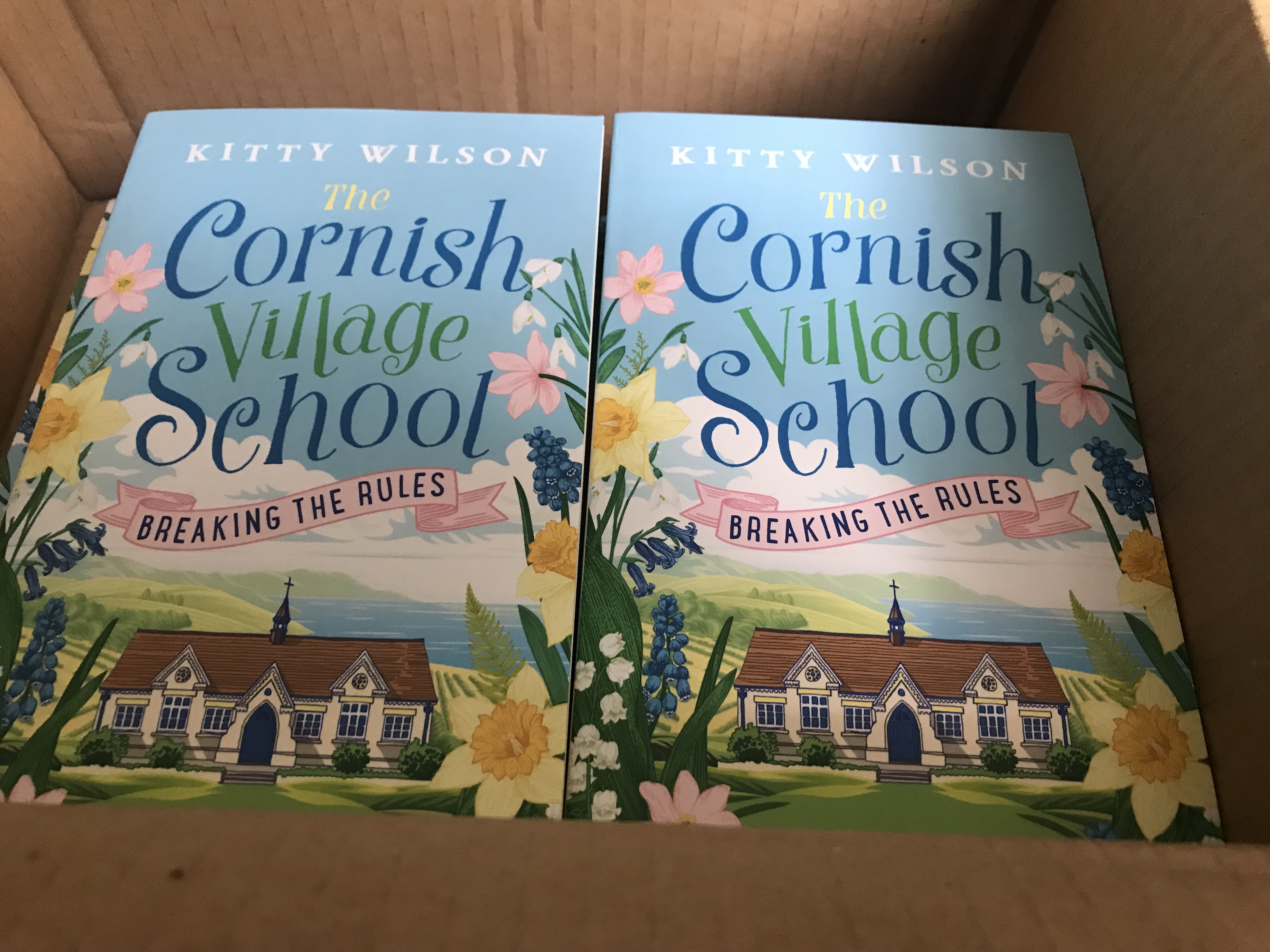
It’s been a busy couple of months for The Cornish Village School series. At the time of writing this I’m working through the structural edits on book three, have signed off on the cover for the audio release of book two and received my first copies of the paperbacks for book one.

Structural edits are the first thing that needs to be tackled once you’ve finished and polished the first (second, third, umpteenth) draft and bitten the bullet and sent it off to your editor to see what they think. Because the author tends to be so close to the book, these edits are a vital, objective view of what needs to be tidied up, changed and possibly cut, possibly extended. Chapters may need to be moved or restructured and it usually involves ‘killing your darlings’.

For me, waiting for these is the most terrifying time; I somehow expect them to receive, read and critique my draft within the first fifteen minutes. I fill that quarter of an hour by biting my nails and opening up Indeed.co.uk and looking for jobs. I could definitely be a cast member in the Disney Store (as long as there is no singing required), perhaps that job negotiating exit from the EU would be simpler than any edits I will have to do (this job was advertised during my last panic browse. I considered it). Then I give myself a good talking to about rational behaviour and decide that I could do some housework, change my mind (no need for desperate measures), panic a bit more and start the next book in an attempt to distract myself.

The starting of the next book thing is a jolly good move. It’s my favourite bit of the process – that time where the world is full of possibilities, deadlines are so far away they may as well not exist and you can make anything happen. Once I’d written the first chapter with a vicar (my new hero and I’m already in love with him), a guerrilla yarn-bombing octogenarian and a secret underground dungeon, all was right again in my world. In fact, I was so enthused I almost forgot the dreaded edits. Which were made even more worrisome this time around by the fact that I have a new editor* and I am a little oppositional to change (I still have the screws to my bunkbed that my mother dismantled when I was eight).

When the structural edits did come in I read them, had a mini meltdown and it took a couple of days before I processed the words in front of me – all of which were fair, true and actually very positive. In fact, there was nothing at all that warranted the seismic earthquake of stroppiness I had engaged in but which is, apparently, a natural part of the process, because only after that could I start working my way diligently through her fairly short list of suggestions.

The next phase is the line edits and the proofread, all of which I’m hoping will be completed by the time you are reading this and I should be well on the way to finding romance for my handsome vicar. I enjoy these, or at least I think I do. If you’ve heard screaming bouncing across the British Isles recently then there’s a good chance I was kidding myself. Keep your fingers crossed for me!

All love, Kitty.

*who’s proved to be lovely btw.


Follow us @Sister5cribes

SISTER SCRIBES: KIRSTEN HESKETH ON WHY WRITERS CAN’T QUIT

‘At what point do you give up on the writing?’

A friend asked me that the other day. A longstanding friend whose views and judgments I generally respect. We hadn’t seen other for a few months and she asked if I was published yet. When I replied that I was not, she followed through she asked the question above. She asked it pleasantly, with interest, no apparent edge at all. In her mind, clearly a logical and reasonable question.

‘At what point do you give up on the writing?’

I didn’t really answer my friend. I think I just shrugged and the conversation moved on. But it got me thinking. More than that, it knocked me for six.

‘At what point do you give up on the writing?’

What had she meant by that?

Was there an implication that I was failing, maybe had already failed, because I wasn’t yet published? Was there a suggestion that maybe, just maybe, I was deluding myself? Kidding myself that my writing was going somewhere when really there was no hope. That there was no chance of my ever being published. Was that, I asked myself in one of those dark nights of the soul, how other people, other friends saw me? Did they feel sorry for me? Did they shake their heads at each other and say, ‘poor girl, she’s been plugging away at this for so long’?  Did they purse their lips and murmur, ‘she still isn’t published, she’s still warbling away from deep in the querying trenches’?

Then I stopped being paranoid!

It had only been a question.

But maybe this is what I should have replied:

  • Things in publishing work at glacial speeds. It’s not unusual for nothing to happen over a few months – or at least nothing you can announce to the world at large. In fact, since I’d had last seen my friend, I’d been signed by a top London agent. I was moving in the right direction and full of optimism and enthusiasm. But, no, I hadn’t been published.
  • It’s really difficult to get published nowadays. It takes talent, sure, but also loads more persistence than you think you’ll need. And luck. Lots of luck. Getting the right work on the right desk at the right time. I know many really talented writers who are not published yet. And yet hope still springs eternal. It may happen. It will happen ….
  • It’s not just about being published. It’s really not. It’s a journey, not just a destination.
  • I have never thought about ‘giving up’. Oh, sure, when I have a knock-back, I throw things about* and say I’m going to take up crochet instead. But, even at the time, I know I don’t mean it. More than that, I can’t imagine a time when I would.
  • I write because I love writing. I write because I have stories and thoughts and dreams I want to put into words. I write because I can’t not write. And even if I am never published, will it still have been ‘worth it’? Hell, yeah.

So, what should I have said when my friend asked at what point I would give up writing?

‘At what point do you give up on the writing?’

I should have told her the truth.

I should have said ‘never’.


Writers, how would you have responded to my friend’s question? Do you agree with my points above? What else would you add? I’d love to know.

Join the discussion below or @Sister5cribes


SISTER SCRIBES GUEST: ADA BRIGHT ON BEING A CO-AUTHOR

I’m delighted to welcome my very good friend and fellow co-author, Ada Bright, to Sister Scribes. Ada is a novelist and a photographer, a wife and a mom and a very picky eater. She has lived in Southern California her whole life and says she fits into a good number of the stereotypes of the area, including being pretty laid back, considering anything below 65F as frigidly cold, and being unfazed by any earthquake under 5.0.

Over to you, Ada!


Thank you to Cassandra Grafton for inviting me to be a guest on Sister Scribes.  I was going to quip that we really are “sister scribes” since we co-author novels together, and we are unofficial family, but then I was imagining Cass reading it and injuring her eyes because she rolled them so hard… and I wouldn’t want to be the cause of something like that!

My best memories of childhood are from when I was living fictional stories by reading books. The characters I read about and re-read about were so much more formative to who I am than my early peers.

Writing became a natural next step for me. By writing extra scenes or character studies, I could hold on to the world I loved longer. My desire to write novels came more recently, but stemmed from a similar core. I simply wanted more.

Of course, impatience is not usually a good trait for a writer. But, in my case, I got  very, very lucky: I’d already met Cass. While we share a similar taste in stories, our writing is very different. I write in bursts that push the story forward, she composes a scene and always seems to have a handle on just exactly where our characters, our plot and even the reader are in their experiences at any given moment.

While we specialize in different areas, when we co-write, there is not one sentence that is purely one or the other of us. We write alone during our respective work days (which are 9 hours apart, since Cass lives in Switzerland). That means we usually start by waking up to a new scene from the other partner that we will begin by editing. Once we edit the new material, we either ask for a call to clarify what we’ve read or what we need to write next or we just continue on.

So many times, while talking about our first co-written novel The Particular Charm of Miss Jane Austen, I say how much I love co-writing with Cass – I mean, what writer wouldn’t want to hand off a scene that isn’t working to someone else and have it come back polished?! But, the further I get on in my solo novel, the more I realize that this experience of creating a shared world with someone has been a learning experience beyond measure.

As hard as writing can be, Cass and I have created a system that is, with all its ups and downs, fun. I have often joked about how I would leave text in the middle of the manuscript that said something to the effect of “Cass writes something brilliant here.” It can be a crutch, most definitely, but eventually, each writer will have taken a turn at being the hero even if the night before their entire scene ended up in the bin.

What I couldn’t have predicted is that seeing how Cass untangled us taught me both to recognize my negative patterns and also to learn ways of getting myself out of the ditches I’d written myself into.

Last year, Cass and I signed with Canelo Digital Publishing, and we’ve just finished writing our second novel together, which will be out later this year. No matter where our single careers take us, I will always be game to join our words together to create the voice that is both of us but not quite either of us.

Thank you for having me, Sister Scribes!


You can find Ada and Cass on their Blog, Tabby Cowhttps://tabbycow.com

Alternatively, Ada can be found on:

Facebook Ada Bright

Twitter @missyadabright