A PUBLISHER’S YEAR: FEBRUARY – ROMANCE, CRIME, APPLICATIONS

To pick up on the cliffhanger of last month – the exciting Romantic Novelists’ Association news is now public! They are running a new prize from this year, which we have agreed to sponsor. It is officially called the Sapere Books Popular Romantic Fiction Award. The shortlist of six books has been announced. In the running are THE LION TAMER WHO LOST by Louise Beech, ONE THOUSAND STARS AND YOU by Isabelle Broom, YOU ME EVERYTHING by Catherine Isaac, THIS COULD CHANGE EVERYTHING by Jill Mansell and A SKY PAINTED GOLD by Laura Wood. I do have a personal favourite but my lips are sealed until the winner is announced on March 4th!

We are still looking for our first staff-member. Applications are just about closed but we have well over 100 to go through, so that will keep us busy for the next few weeks! We’ve also had our first responses to our ‘Call For Nautical Fiction’ and it looks like we’ll be able to announce some naval fiction deals soon. We have just finalised our schedule for London Book Fair and we are pretty booked up for all three days, plus some evening events so that will be a full-on week for us!

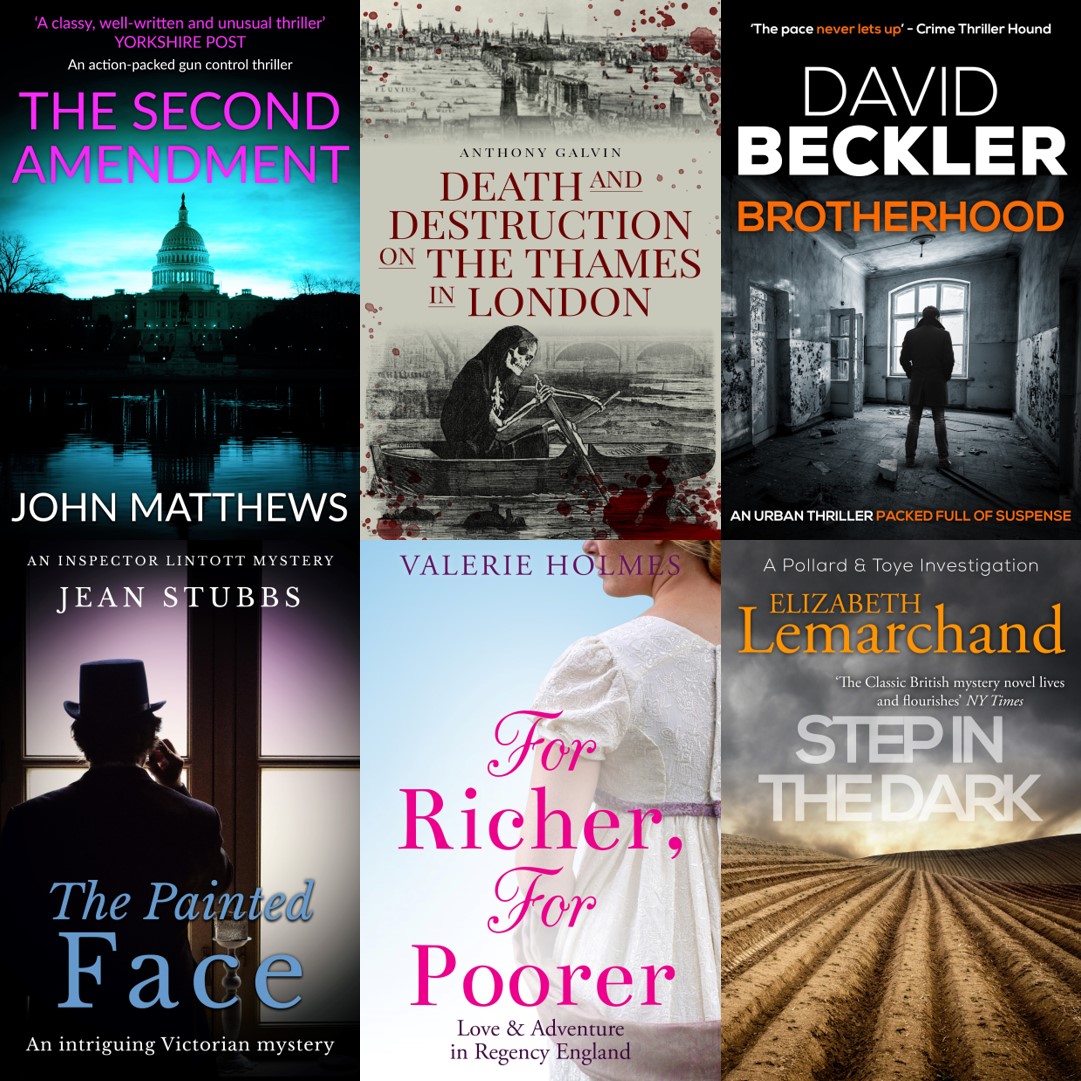
The published titles for this month were a mix of genres. We published Valerie Holmes’ second Regency romance novel in her Yorkshire Saga just in time for Valentines Day. We’ve also published one of our first non-fiction titles: a ‘deadly’ history of the Thames in London by Irish author, Anthony Galvin. That was followed by two classic mysteries: THE PAINTED FACE by Jean Stubbs and STEP IN THE DARK by Elizabeth Lemarchand. Finally, we launched two action-packed thrillers: David Beckler’s debut, BROTHERHOOD, set in urban Manchester and John Matthews’ thought-provoking gun-control thriller, THE SECOND AMENDMENT.

Our final piece of news is that we will be going to CrimeFest this year for the first time, which we are thrilled about. Last year we went ‘on tour’ to cover the Crime Writers’ Association Conference in Shrewsbury and the Historical Novelists’ Conference in Cumbernauld, and to contribute to a writing panel in Chorley. We aren’t actually speaking at CrimeFest so it will be fun to just enjoy all the talks, dress up for the Gala dinner and of course, hang out at the bar 😊. We should find out the longlist for the Sapere Books Historical Dagger Award as well, which is very exciting.

Come back next month for our Book Fair news, March releases, RNA award announcements and potentially a hello from our new Editorial Assistant!

Amy Durant


IT’S TIME TO START SHOWING THE SCI-FI GENRE SOME LOVE

Science-fiction may be enjoying a meteoric sales boom but it’s still not receiving the acclaim it deserves, writes the British novelist Hannah De Giorgis.

By Hannah De Giorgis

When it comes to the perception of Science Fiction and Fantasy (SF&F) as a genre, there’s a tension between its commercial success and its critical reputation. This time last year, it was reported that combined print and digital book sales in SF&F genres had doubled since 2010.

Today, unit sales of self-published and Amazon-published titles represent almost 50% of all SF&F sales across print, digital and audio. Elsewhere, and especially on the Big Screen, the popularity of SF&F shows no sign of abating: movies including the Maze Runner: The Death Cure, Black Panther, Annihilation, Jurassic World: Fallen Kingdom, and Solo: A Star Wars Story grossed billions of dollars at the Box Office and outsold most other genres.

Given its commercial dominance and crossover potential, one might assume that SF&F would carry the same kudos as other acclaimed genres. And yet, when it comes to the “literary” world, it doesn’t.

Despite its importance in popular culture, SF&F is often overlooked and underappreciated critically. For instance, SF&F is rarely offered as a module in undergraduate literature degrees – and, when it is, the relevant lecturer laments that it is regarded as a “lesser” genre. Meanwhile, in literary circles, science-fiction and literary speculative fiction is routinely dismissed and overlooked for most (if not all) of the more prestigious literary prizes. Perhaps because a potential consequence of being regarded as more “mainstream” can automatically render a book as less “serious”.

However, such a dismissal is – I think – unfair. Not only does SF&F arguably require more imagination than most other genres, it also allows writers to really delve into the potential repercussions of technological advancement in modern society. In some cases, sci-fi novelists will possess a comprehensive understanding of the laws of physical sciences, and in others fantasy novelists might fabricate an entirely new world from scratch.

In the glamorous world of film, the problem is less acute; blockbusters like The Martian and Interstellar have and do attract acclaim. That acclaim, however, only goes so far. Interstellar, for instance, was nominated for Academy Awards in categories such as special effects but not for overall picture. The Martian, on the other hand, which of the two movies is more “realistic”, was nominated for Best Picture.

While it would be disingenuous to suggest that critical acclaim is only reserved for Hollywood, it is fair to state that SF&F receives more recognition in the world of film than in the world of literature – and that’s not simply a consequence of the asymmetry of the two industries. And, when I think about it, this shouldn’t be the case given the important role that SF&F has and continues to play in our lives. Sci-fi, in particular, has long been a reflection on society: it shines a spotlight on mankind’s lust for and dependency on emerging technologies, arguably in a manner that would not be nearly as effective if it were not in the sci-fi form. Indeed, SF&F authors have for decades paved the way for Hollywood by daring to explore the potential repercussions of a world that is increasingly advancing technologically. Moreover, the genre offers an imaginative scope that is, in effect, unlimited – as can be demonstrated by many sci-fi movies or fantasy series that immediately spring to mind.

All I can hope is that, little by little, the literary world might cease to look down on SF&F and come to eventually recognise it for the innovative, limitless, and – at times – genius genre that it is.

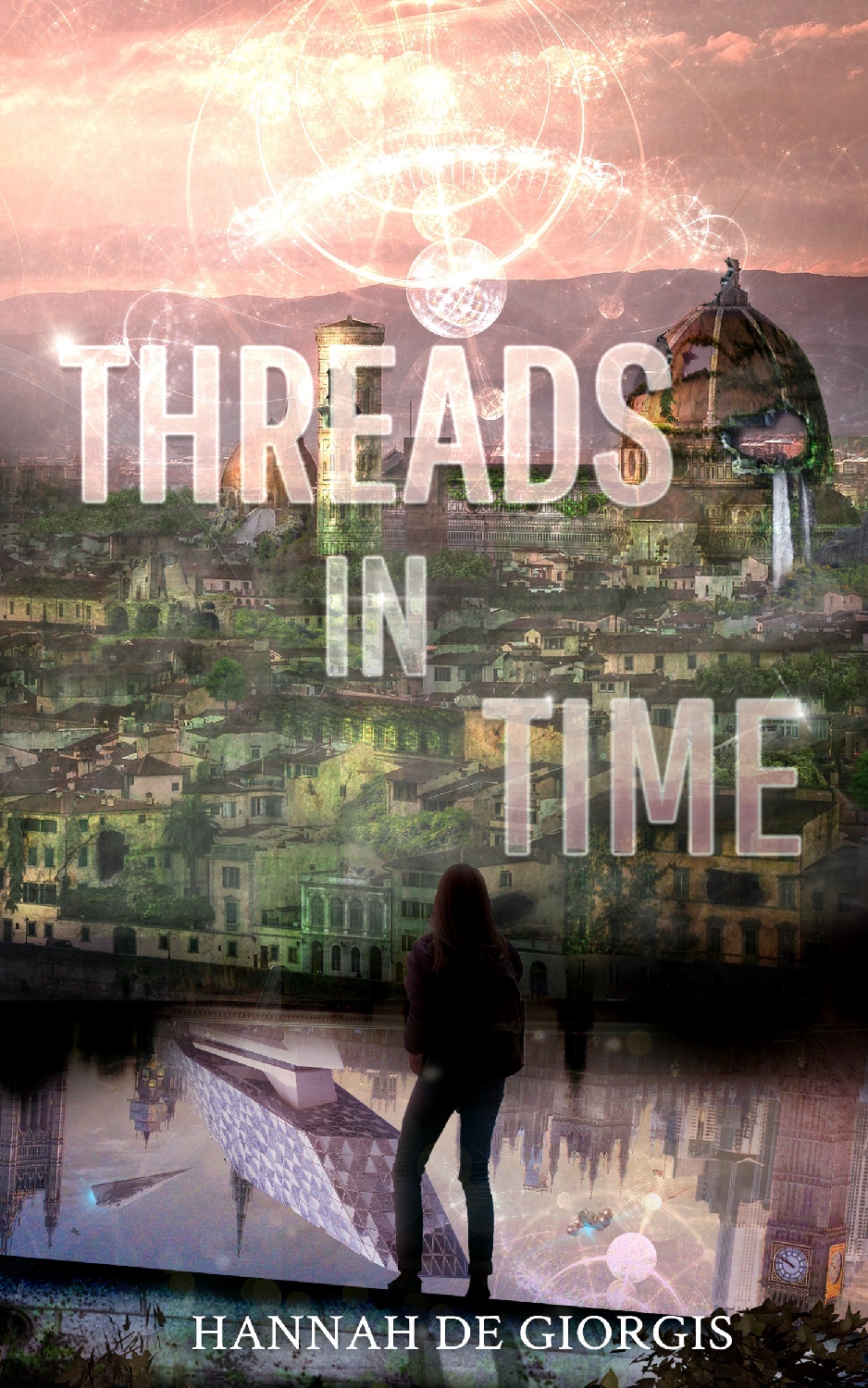
Threads in Time by Hannah De Giorgis is available from today on Amazon priced £3.49 in Kindle edition and £7.99 in paperback.

SISTER SCRIBES: CASS GRAFTON ON MRS GASKELL… ON CHARLOTTE BRONTE

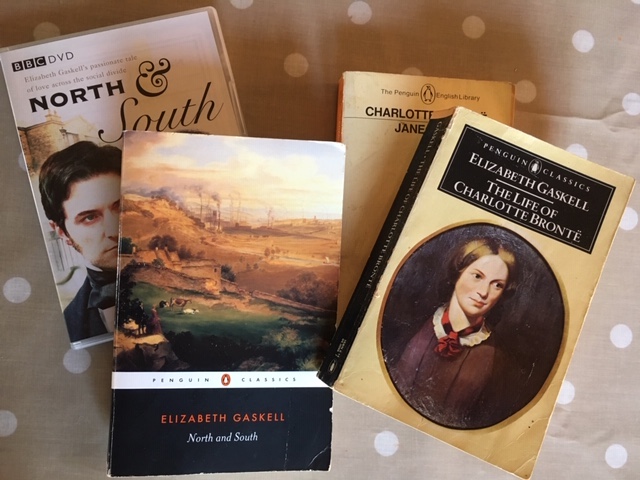
The other day, I had the urge to watch North & South again, the well-received BBC dramatization of Elizabeth Gaskell’s second novel.

I’m not sure if this stemmed from a need to watch a classic film or simply the shallowness of wanting to wallow in Richard Armitage’s smouldering interpretation of John Thornton, but whatever the attraction, it did make me think about Victorian writers.

Written originally for Charles Dickens’ magazine, Household Words, North & South has more recently been dubbed the ‘industrial’ Pride & Prejudice. It is typical of the stories spilling from Mrs Gaskell’s pen at this time: ones that didn’t flinch away from contentious social commentary but always had, at their heart, a bit of romance – and a copious body count!

It wasn’t a novel, however, that first introduced me to Mrs Gaskell’s writing. Back in school, I was obliged to read Jane Eyre as a set book.  My teenage heart was swept away by the passion of Charlotte Brontë’s classic and, considering myself plain and unnoticeable, I relished reading about this ‘oh so ordinary’ heroine getting her man.

Intrigued by the story behind the author, I bought a copy of a popular biography of Charlotte – the aforementioned Mrs Gaskell’s account of ‘The Life of Charlotte Brontë, having no idea of the drama surrounding the book.

It was written at the invitation of Charlotte’s father soon after his daughter’s death in 1855. Encouraged by Charlotte’s close friend, Ellen Nussey, Patrick Brontë wanted Mrs Gaskell, also a friend of his daughter’s, “to publish a long or short account of her life and works, just as you deem expedient and proper”.

Mrs Gaskell was used to her own writing exciting controversy amidst the admiration, but although the biography attracted critical acclaim, it was not universally well-received, with some critics not appreciating the whitewashing of certain aspects of Charlotte’s life. Mrs Gaskell had been stuck between the proverbial rock and a hard place – after all, parts of Charlotte’s life (like anyone’s) were not really for public consumption.

More controversy, however, came back to haunt the author. Published in March 1857, the Life attracted enough attention for a second edition to be announced in May of the same year. Suddenly, though, the book was withdrawn from sale, due to the threat of libel proceedings on more than one count and general grumblings from those who felt they had been unfairly depicted in the book.

The three main issues seem to have been these: how Patrick Brontë himself was portrayed; the account of Charlotte’s brother, Branwell’s, decline – exacerbated by the implication of the influence of a ‘lady’, who was described in such a way, all of society knew her identity; and descriptions of Charlotte and her sister, Emily’s, time at the Clergy Daughters’ School at Cowan Bridge.

Mrs Gaskell went on to describe herself as being in ‘the hornet’s nest with a vengeance’ and referred to the biography as ‘this unlucky book’ in a letter to her publisher. Its overall success, however, meant the Life wasn’t going to disappear. Balancing out the unpleasantness of the above, Mrs Gaskell began to receive additional information, either from others who admired what she had already achieved or those who wanted to correct certain details.

She faced a daunting major revision, but set to and the third edition – Revised and Corrected – appeared in the November, less than six months after the original had been withdrawn from sale. It contained a substantial amount of new material.

Despite the challenges she faced, Elizabeth Gaskell did an admirable job, and her insight into the life of Charlotte Brontë is a fascinating read and one I would highly recommend to anyone who enjoys reading about Victorian authors.

As for myself, I think I’ll avoid any attempts to pen biographies for my writing friends and immerse myself in fiction instead – the visual rather than the written version on this occasion! Excuse me whilst I hit play again on North & South… I may be gone some time!


Sources: Various Gaskell letters, and Alan Shelston’s Introduction and Appendices to the Penguin English Library 1975 edition of Jane Eyre


SISTER SCRIBES GUEST: CAROL THOMAS ON COLLABORATION

It’s my absolute pleasure to introduce Carol Thomas, my long time Chindi Authors partner in crime and one of the best collaborators I know. Carol’s contemporary romance novels have relatable heroines whose stories are layered with emotion, sprinkled with laughter and topped with irresistible male leads; while her children’s books have irresistibly cute, generally furry characters young children can relate to.

“Alone we can do so little, together we can do so much.” — Helen Keller

At the Romantic Novelists’ Association conference in July 2018, Sam Missingham made the point that as writers, even writing within the same genre, we are not competing. Readers read books, lots of them and generally in a preferred genre. Working collaboratively on promotion means a group can be greater than the sum of its parts. Her point was well made and, from experience, I have to agree.

After self-publishing my first novel, Crazy Over You, I reached the point where I didn’t know what to do next. Fortunately, I heard about Chindi Authors – a local group of self-published authors, working together to promote their work. Writing in a range of genres, they had amongst them a wealth of knowledge about self-publishing and promotion.

I joined and learnt a lot, not just from the others, but also through what I achieved from being an active member of the group. My confidence grew, my author platform improved. When it came to pitching my next novel, The Purrfect Pet Sitter, to Choc Lit, all that I had learnt was invaluable. I successfully gained a contract under their imprint Ruby Fiction.

While I remain an active member of Chindi Authors, following Sam Missingham’s advice, I have also recently joined forces with fellow romance writers Caroline James, Angela Barton, Morton S Gray, Julie Houston, Jane Cable, Tora Williams and Mariam Kobras to form Apricot Plots.

We are all passionate about writing smart, fresh romance for the twenty-first century – stripping away out-dated conceptions of romance and romance writers. We are loud and proud about our genre.

Covering the sub-genres of contemporary, historical, mystery, suspense, comedy and more, together we offer something for every romance lover. And we enjoy interacting with our readers, offering competitions and giveaways too. Together we reach more readers and can keep our presence active. If one author is having an off day, the others can take up the slack.

And while our public persona as a group is important what is also invaluable is the private group we share. Behind the scenes, we can talk about issues with our writing, plots, edits and so forth, as well as the general things, positive and negative, that get thrown at us in life. We are there for each other, ready to listen, supportive and encouraging.

When you write within the romance genre, you soon learn that you are part of a very supportive and collaborative community of writers – especially if you become a member of the Romantic Novelists’ Association. But, as my experience with Chindi Authors proved, I don’t think this is necessarily genre specific. Writing itself can be a solitary affair, connecting with other authors is important and when you work collaboratively, it can be beneficial too.

Three top tips for working collaboratively:

1) Take a little time to find your way, but also be prepared to step up. Somewhat obvious but … the key to collaboration is collaborating.

2) Be prepared to compromise. Working as part of a group will require it at some point.

3) Be actively supportive of others; you’ll get more from it than you might think. Rightfully so, when it comes to working in a group, you tend to get out, what you put in.


Find Carol on Twitter @carol_thomas2 and on other social media here:

http://facebook.com/carolthomasauthor

http://www.pinterest.co.uk/carol_thomas2/

http://www.instagram.com/carol_thomas2/

Website / Blog Link:

http://carol-thomas.co.uk/blog


INTRODUCING SISTER SCRIBES: JANE CABLE

This isn’t an easy post to write. If you’re a Frost regular, then you probably know who I am. On the other hand our readership is increasing all the time, so you could well never have heard of Jane Cable.

The first thing to say is I’ve recently been given the role of Contributing Editor at Frost and I’m feeling a bit of a fraud. If anything, having dragged my Sister Scribes on board (not that all of them were kicking and screaming) I’ll be ‘contributing’ even less this year. But it will allow me to spread my wings a little and write more about some of the other things I love… like history, travel, food and drink.

I’m also feeling a bit of a fraud about describing myself as a full time writer, because the reality is I generally spend about half the time writing (or marketing, or all the other bits and bobs associated with it) that I would do if I had a genuine full time job. But actually I want to enjoy life too.

I’m in my fifties (and proud of it… prouder than I am of the parentheses which are plaguing every paragraph) and my OH and I have worked really hard in the corporate world and in our own business since we graduated. Rather than continue at such a pace we decided to kick back and in 2017 we downsized to Cornwall and it was the best thing we ever did.

I’m a total advocate of the lifestyle down here. Not the part holidaymakers would necessarily see, but the everyday world of the everyday people. Very few live to work – most work about enough to live. Nobody’s bothered what you do or what sort of car you drive. As long as you say thank you when they give way to you. And once you sink back into the ‘manana with breaks for pasties’ timescale of anything getting done then it’s a dream.

So where am I in my writing career? I brought out two books independently with a reasonable degree of success, but after a false start with a publisher that went bust I now have a two book deal with Sapere. They are a joy to work with (saying that, I haven’t had my first edit notes yet so time will tell), collaborative and co-operative. They also do their best to bring their authors together, and I’m a great one for that.

Little did I know how influential attending the Romantic Novelists’ Association conference in 2017 would be in terms of finding writer friends. For me by far the most valuable part of the weekend was time spent with other authors and through social media we kept in touch. I was delighted to find that Kitty Wilson lived in Cornwall (although the rat bag has since moved to Bristol) and when Cassandra Grafton came here on a research trip we all met up.

From this meeting the idea of organising our own mini retreat/girls’ break was formed. We invited along Susanna Bavin and Kirsten Hesketh (who’d we also met at the RNA conference) and the rest, as they say, is history and after four days in Bath we’d become Sister Scribes.

There are probably a few other things you need to know about me that sometimes surprise people. I used to freelance as a cricket writer and I love the game. I’m Welsh by birth and fiercely proud of it. And if I couldn’t write it would feel as though my hands had been cut off. Actually, it would probably be because my hands had been cut off…

Follow Jane on Twitter @JaneCable


INTRODUCING SISTER SCRIBES: SUSANNA BAVIN

Despite her concerns about sounding showy-offy that’s the last thing Susanna Bavin is. She may be the quietest of the Sister Scribes, the most softly spoken, but that does nothing to hide her keen intellect and enquiring mind. Most definitely her own woman.

There is something scary about being asked to introduce yourself on a magazine page. Will it sound showy-offy? But my fellow Sister Scribes have all introduced themselves, so now it’s my turn. Here goes.

I am living proof that dreams come true. There! How’s that for showy-offy? Not to mention being rather a grand claim. But it’s the simple truth. As a child, I dreamed of one day living in North Wales – Llandudno, to be precise – and six years ago, my husband and I found a beautiful house here, threw caution and jobs to the winds, and moved here. Best thing we ever did. One question we get asked by people who would love to live here (it seems that almost everybody who comes here on holiday dreams of living here) is, “Is it different when you live here? Less special?” and the answer to that is a resounding No. We love it just as much, if not more, and that feeling of “Wow! We really live here” has never gone away.

So that’s one dream. The other, of course, is that I have finally become a published writer. I say ‘finally’ because, although I was a child-writer and have been writing all my life, for most of that time I didn’t submit anything to literary agents. As a matter of fact, I got rather hooked on getting feedback and worked with a writers’ advisory service for some years. Then I decided to aim for publication, so I joined the RNA (Romantic Novelists’ Association) with the intention of writing four books, so as to have a body of work to offer a literary agent.

In the event, after I had written three, I became aware of other new writers getting their books published, which made me feel left behind, so I decided that the size of my body of work was perfectly adequate at three books and started submitting to literary agents. I was lucky enough to be signed up by Laura Longrigg at MBA.

The books I write are sagas. To date, I have had three published – The Deserter’s Daughter, A Respectable Woman and The Sewing Room Girl. The fourth, The Poor Relation, follows in May. The books are set in the part of Manchester where my family has lived for several generations and where I grew up.

I was a saga writer before I knew what sagas were. As a teenager, I lapped up Victoria Holt’s novels and started writing gothic stories, but these naturally grew and became what I later found out were sagas. For me, this was just the natural development of my writing style. I was delighted when, as a reader, I found out that other people wrote this kind of story too!

What do I like about sagas? The historical setting, for starters. I love to see the characters having to tackle their problems within the social and legal context of the time. I also enjoy the glimpse of social history, which is a great interest of mine. Clothes, meals, furniture – I love all those domestic details especially costume. It’s no coincidence that my forthcoming book, The Sewing Room Girl, involves the making of lots of clothes!

Follow Susanna on Twitter @SusannaBavin


A PUBLISHER’S YEAR: JANUARY – HIRING, GENRES, AMAZON

It is an exciting start to the year for Sapere Books. We have decided to hire our first full-time staff member. Up until now Sapere Books had been solely run by its three co-founders – myself as Editorial Director, Caoimhe O’Brien as Marketing Director and Richard Simpson as Operations Director. We were also using freelancers last year to help with cover design and proofreading, but we have decided we are at a stage where we need a full-time extra pair of hands as well! So, in a couple of months I’ll have a new Editorial Assistant to introduce to everybody. It is our first time hiring so we are currently brainstorming what tests to set candidates and exactly what we want to ask them at the interview stage. More news on that in a few weeks!

We have also put a call out for ‘nautical fiction’, as that is a genre which is underrepresented in the market and which we know readers love, and we’ll be looking for other niche genres to sign up throughout the year. We are having a lot of success with our first ‘timeslip’ novel – The Catherine Howard Conspiracy by Alexandra Walsh, which alternates between the Tudor court and the modern day, so that may be an area we’ll expand into more in the coming months. Other than that, my inbox is full to bursting with submissions, which is fantastic, but I always find it slightly heartbreaking when I have to turn authors down. We are getting such a fantastic quality of submissions coming through that I am turning down lots of novels which are certainly good enough to be published, but we can’t say yes to all of them because we don’t want to flood our list, and end up not being able to give our books the attention they deserve.

The publication schedule for this month focussed largely on historical fiction. At the start of the year I published the fourth book in Elizabeth Bailey’s brilliant Regency mystery series and M J Logue’s first romantic thriller featuring Major Thankful Russell and his wife Thomazine, set during the Restoration. They were followed by a Medieval novel; the first part of a saga trilogy set at the time of the American Civil War; a crime novel featuring Charles Dickens as the investigator; and the final book in the eight-part Victorian mystery series we launched last year, featuring a husband and wife detective partnership. Next month will be more crime and thriller focussed – with a bit of romance thrown in in time for Valentine’s Day!

We have just had a catch up meeting at Amazon HQ to let them know what we will be publishing this year. The Amazon team have given us lots of ‘Kindle Daily Deal’ and ‘Kindle Monthly Deal’ slots over the past few months in the UK, US, Australia, Canada and even India, which can really give books a boost, so we are keen to keep the team over there up-to-date with our plans and the books we are publishing. I am also sorting out the diary for London Book Fair, which promises to be a crazily intense three days as always, but a brilliant time to catch up with literary agents, meet with authors – and indulge in a drink or two!

Finally, I have some exciting news to share to do with the Romantic Novelists’ Association but I have to wait until the official press release goes out next month so you’ll have to wait until then to hear more!

Amy Durant


INTRODUCING SISTER SCRIBES: KITTY WILSON

Sister Scribe number three is Kitty Wilson. You know with every group of friends there’s always one who’s outrageously funny. Well that’s Kitty. Funny and clever and warm. It’s little wonder she writes romcoms – and that they’re hilarious.


Hello! It’s so exciting to be able to collaborate with some of my best writing friends as Sister Scribes and keep you updated with all our news and views, so a big thank you to Frost Magazine for hosting us.

I’m Kitty Wilson and I write contemporary romantic comedies; my current series is set in the fictional village of Penmenna and is based around the school there. I used to be a primary school teacher myself and absolutely loved being part of such a strong community.

Having been both parent and teacher, I know what goes on both sides of the school door and really wanted to use a school as a setting and then fill it with some larger-than-life characters. I feel very lucky to be able to do this and often find myself giggling away as I invent some of the more outlandish antics of Penmenna’s PTA.

When my parents first suggested moving to Cornwall I was furious, and vowed I would never set foot in the place. I failed to win that battle so would wander around the lanes, sulky look on my face and a book tucked in my pocket, desperately waiting for a romantic hero to come and rescue me. These days I’m glad I wasn’t bundled into a car by a passer-by but it felt as if my heart would break with disappointment back then.

I lived there for twenty-five years, only moving away a few months ago to have a taste of life in the city. However, the sea is in my soul and I do head back to Cornwall regularly to get some beach time. Cornwall provided me with so much inspiration it made sense to set my books in the county and writing about it now makes me feel as if I’m still there.

Nine years ago, I was devastated when prolonged ill-health meant I had to give it teaching.  After a couple of years, I decided that I would chase my dreams instead until I could return to the classroom. I started to write.

When I had finished the first novel, I began the second, having heard you needed to write a fair few to learn all the things that make a book work. When I put that through the NWS which is a scheme run by the Romantic Novelists Association (the most supportive professional association in the world and one that actively encourages new writers and helps them build a career. It’s also responsible for me meeting my Sister Scribes) I was encouraged to submit the book to agents and publishers. I did this and couldn’t believe it when I had an offer. When I ran to tell one of my closest friends, laptop in hand and tears streaming down my face unable to get any words out, he made me hot sweet tea and sat me down, assuming all the emotion meant a close family member had died!

I used that publication offer to secure myself an agent who then immediately found me an alternative deal to consider. I never had dreamt I would be in the position of choosing a publisher, to this day I can’t quite believe that happened. I am loving writing them and there will be five Cornish School books in total, I have just finished the third and will be starting number four next week.

I am so looking forward to keeping everyone up to date with its progress through Frost magazine and introducing you to some of the women within the writing industry whom I admire. We’re going to have a blast!

Follow Kitty on Twitter @KittyWilson23