Writing a Series – the pros and the cons! – Della Parker

reading-group-april-della-parker

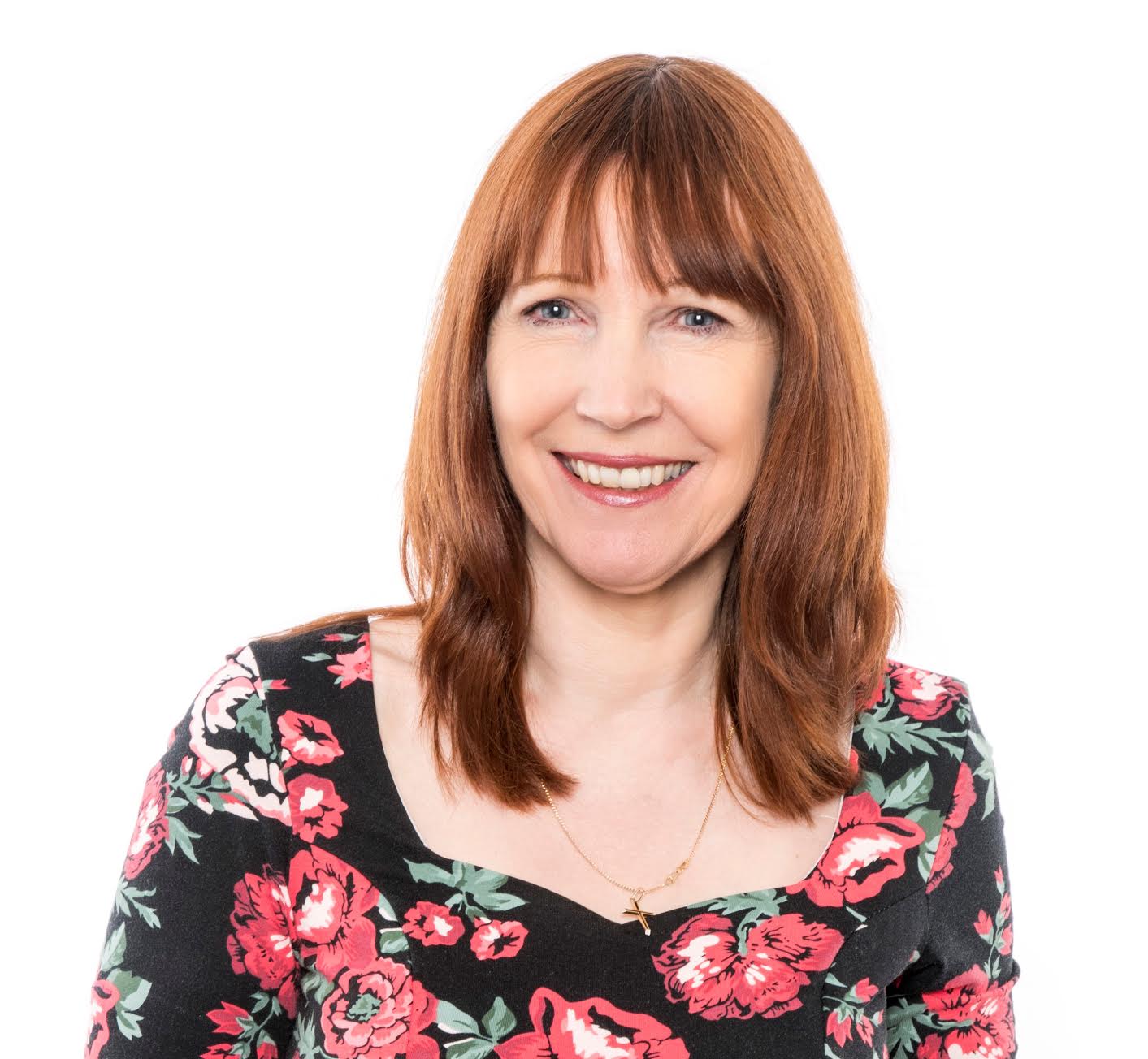
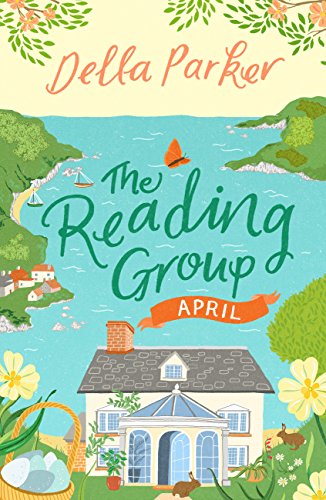
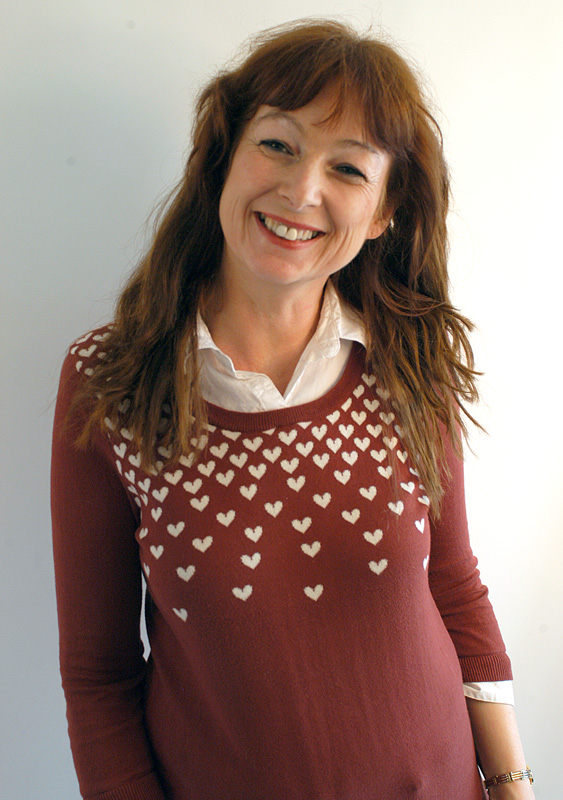
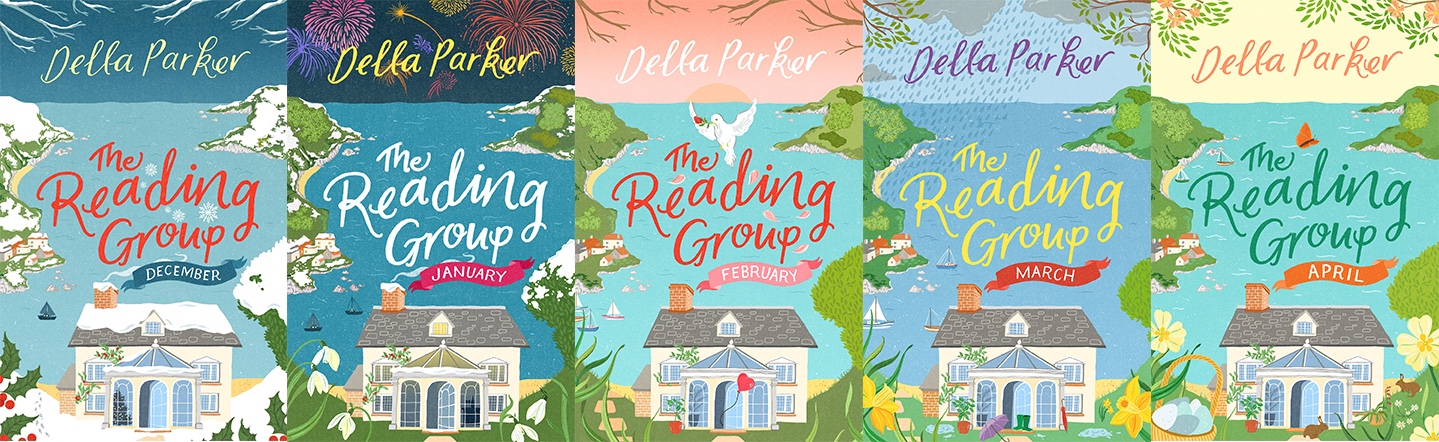
As the next book in Della Parker’s Reading Group series fast approaches publication she shares on Frost Magazine some of the pros and cons she’s discovered creating and developing a series.

Publishers love them.  Readers love them. But what about the writers?  Is it easier or harder to write a series of novels? Or in my case, novellas? Well, I’ve just finished number five in my series The Reading Group, so here’s what I think. Hot off the press!

The Best Bits

You know the characters, so you don’t need to start from scratch for every story. In fact it’s brilliant to be able to develop the same characters over more than one book.  You can get so much deeper.

When you really love a character – you don’t have to say goodbye for long.

Each story can (and should) still be complete in itself – readers won’t necessarily read the whole series. So you do feel as though you’re writing a ‘whole’ book.

The Most (er) Challenging Bits!

I’m one of those writers who doesn’t plot so I tend to put in throwaway lines and then find out why I wrote them later.  Not the other way round.  Why oh why did I mention in the February novella that Jojo (who stars in March) had already had three husbands? When it came to writing Jojo’s story my publisher suggested just the two might be better! Luckily there was time to change the facts in February.

Continuity is a nightmare. I keep detailed character resumes on everyone, but it’s still really hard to make sure I don’t change someone’s eye colour, or contradict the fact that I once said they loved Marmite or had size eight feet. Don’t even get me started on ages!

Once you’ve set a fact in stone – perhaps in an earlier book that’s already published – you can’t change it. So you have to work round it. This can be pretty, er, challenging.

della_galton

My Top Tips

Keep spreadsheets for the timeline.  It’s much easier to keep track this way.

Have a “photo” of your character as a visual prompt. I cut them out of magazines or junk mail that comes through the door. It’s an excellent use of junk mail!

Alternatively, pick a ‘character from a TV drama. This is brilliant for gestures.

I also keep information sheets for each character, which has things like, how many siblings they have (with names) the way they talk, (softly, loudly, not finishing sentences etc) and their favourite/most used words.

I also have a note of each character’s date of birth as it’s much easier to change a timeline when you have this information, than if you just have their age.

Never throw anything away that’s related to character. So if you cut a scene from your novel, keep it as information. You’ll still think of your character like this, even though the scene is no longer there.

To sum up…

So to return to the question I asked earlier – do writers love writing a series?Well, I can’t speak for everyone, but this writer certainly does! I’ve enjoyed every minute.

Reading Group - Bookends 2

The Reading Group April is out on 30 March.

The Reading Group Summer Holiday is out 27 April.

You can preorder both now.

The Business of Books: The Feeling’s Mutual

the-business-of-books-interviewswithjanecableThe Business of Books: The Feeling’s Mutual

Jane Cable muses support from other writers

I had a very interesting conversation on Thursday. At the Romantic Novelists’ Association Cornish Chapter lunch we fell to talking about how best to market our books. None of us felt we had a firm grasp of what worked and what didn’t, but all the same I was adamant that doing something was better than doing nothing.

Take the RNA’s #TuesNews initiative. On Tuesdays a number of us (probably about a hundred or so of the full membership) retweet each other’s posts carrying the hashtag. As a result our Twitter feeds fill with the latest news from romantic novelists, some blatant promotion and some a bit more interesting, but we do it to support each other. And actually, for readers and bloggers with an interest in the genre it’s a good place to find out what’s going on in the world of romantic fiction.

writing, #amwriting, authors, jane cable. Margaret graham

You also come to ‘know’ the regular retweeters and interact with them in other places and in other ways. Writing can be isolating and it’s good to know there are people around you sharing the same experiences, even if it’s in a virtual sense. Whether or not there are sales to be gained from the exercise is perhaps less important than the feeling of being part of something larger.

I belong to a number of groups of writers, formal and informal, and all have their own character. The No 1 Author Buddy Ladies on Facebook has become a real place for mutual support. We have just over 100 members covering multiple genres and writers at different stages of their careers help each other out. We celebrate when someone has their first deal, help them to see the wood for the trees with potentially dodgy contracts and chip in on all sorts of subjects from naming characters to helping to promote special offers.

All the same it’s still helpful to meet other authors face to face, like at the Cornish Chapter lunch. The problem is that finding mutually convenient times for meetings is hard, and even local groups need to be flexible. Take Chindi Authors – formally Chichester Independent Authors and now rebranding as Celebrating and Helping Indie Authors with a stronger online presence and virtual meetings. Chindi has always existed primarily to help with publishing and marketing indie books and to gain real depth of experience across all genres we needed to extend our reach beyond the confines of our corner of West Sussex.

I still have a hunch that the authors you support the most are those you actually know. Certainly when setbacks come they are the ones you turn to for advice and – let’s face it – sympathy. Although when I recently parted company with my agent because she didn’t rate my current manuscript my loving husband cracked open the champagne (literally!), it was author friends who provided solid advice and shored up my wavering confidence in my work.

In the digital age writers can’t afford to be isolated and selfish with their time and a large number aren’t. I suppose there are those who are, but we simply don’t know them. There is huge generosity out there, such as JoJo Moyes on Twitter offering a week in her holiday home for an aspiring writer to work in peace and Chindi Authors pulling together to raise almost £1,000 for Words for the Wounded.

The world of publishing is getting tougher and it’s up to writers to work together to make the best of it. So if anyone is reading this in a lonely garret – reach out – you’ll be surprised what you find.


Writing About My Experiences With Autism to Help Myself and Others

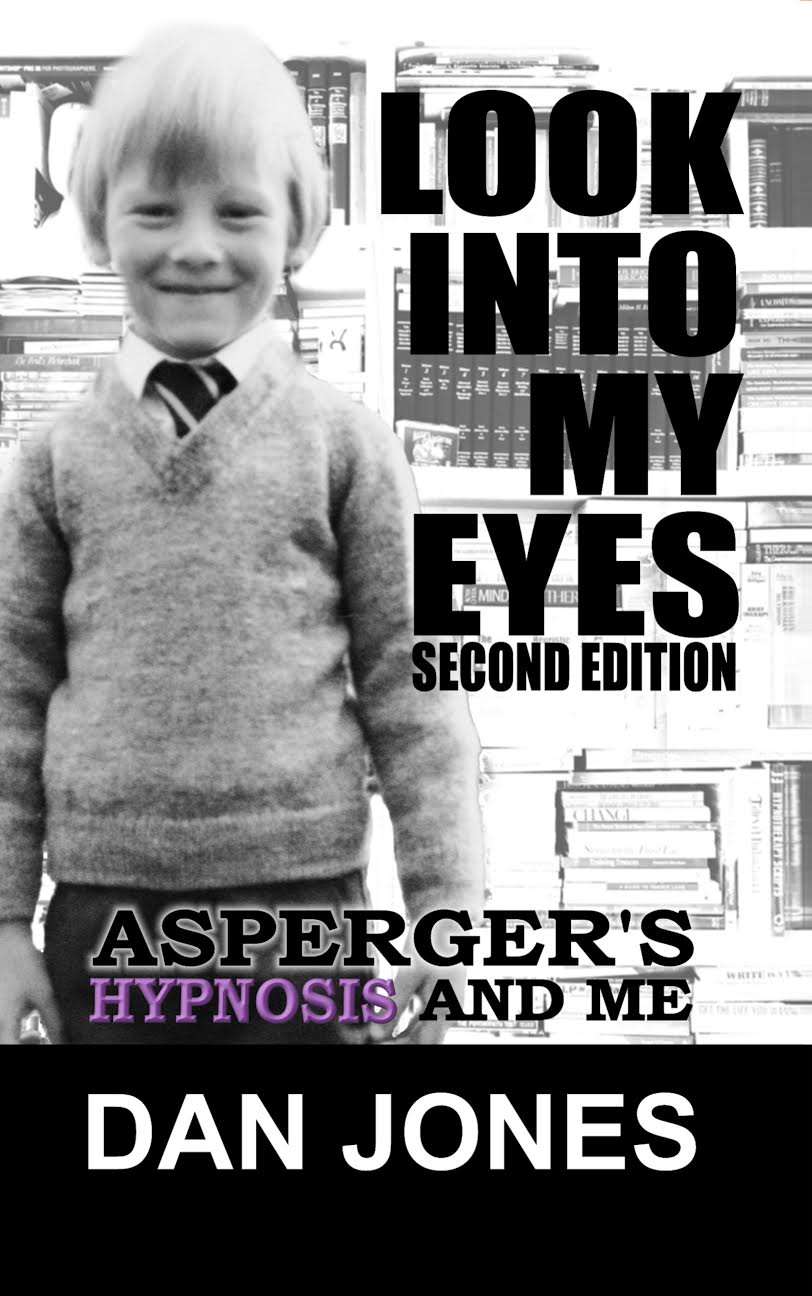
Writing About My Experiences With Autism to Help Myself and Others aspergersThis week is the release of my book Look Into My Eyes which is about my experiences as someone who has Asperger’s Syndrome, a high-functioning form of autism spectrum disorder (ASD), and also my experiences professionally from around 20 years working with those who have autism, their parents/carers, employers and supporting professionals.

I was diagnosed with ASD a couple of years ago. Following my adult diagnosis I felt compelled to try to learn more about myself. Until I sought diagnosis I wasn’t a fan of labels. I understood that they could be helpful, but I was also aware of people being treated as the label and not as a person, and some of these people would end up doing the same to themselves, viewing themselves as a label, not as a person.

What led me to seek diagnosis was that I was facing workplace discrimination which I felt powerless to tackle. It was making me depressed and suicidal. It was only when I reached this point that I decided if I had a diagnosis then I would get occupational health support to improve my situation at work. It took almost a year from visiting the GP to receiving diagnosis. In my work with families I had often encountered parents who had a negative view of the expected future for their autistic child. In many cases I could see strengths in these children that the parents weren’t noticing because they were dealing with the problems everyday like violence or challenging behaviour. They had sought diagnosis because of problems the child was having, so when they were told “your child has autism spectrum disorder, it is a lifelong condition” they often heard “the problems with your child will be there for life.” Many of these parents didn’t know much about autism, and hadn’t focused on the strengths their child had, so part of my role as a family worker was to help parents recognise these positives, and help them to learn how to work with the strengths whilst teaching their children how to handle the challenges.

After getting diagnosed I felt that I was in a unique position to help others. Due to working as a psychological therapist and family worker I had better insight about myself as a starting point than most, and I felt if I wrote down about myself I could look objectively at what I had written as if the writing on the page was a client, giving me an opportunity to gain greater insight and understanding. I thought if I wrote a book like that going through my life from birth to present day I would be able to write something which shows what the world is like from within the mind of someone with autism, as well as saying what I, as someone with autism, find helps me, what doesn’t help me, and what I think would be helpful around the different issues I’ve faced at different stages of life. I would also be able to share tips and strategies from a professional perspective, and my wife kindly wrote a chapter about her experiences being in a relationship with someone with autism.

I found the process of writing the book insightful, giving me greater understanding about myself. I have also had many people say how helpful it has been for them to understand why I am the way I am, and many readers have commented how the book has helped to give them a look inside the mind of their child, helping them to better understand their child, and given hope to them about what their child may be capable of in the future if their skills are channelled and they are helped with the challenges they face.

Daniel jones

About Me

Dan Jones is author of parenting books including Sleepy Bedtime Tales, which includes 11 bedtime stories to be read to children to help them sleep, and additional tips and strategies for helping children sleep, Relaxing Tales for Children, which is 11 stories to be read to children to help them relax. The stories in these books are targeted at 4-7 year olds. Dan is also author of Look Into My Eyes which is an autobiography through the lens of Asperger’s Syndrome, that includes an extensive chapter of tips and strategies for parents/carers, teachers, friends, employers, and those with autism spectrum disorder, and a chapter written by Dan’s wife about being in a relationship with someone with Asperger’s. Dan has almost 20 years’ experience working within child and family support.

Website: www.alt-solutions.org

These links are for the books mentioned and direct people to their local Amazon website:

Sleepy Bedtime Tales: http://apn.to/prod/1517364248

Relaxing Tales for Children: http://www.apn.to/prod/1539976882

Look Into My Eyes: http://apn.to/prod/1542551196


The Book Publicist EllyDonovanPR talks to Jane Cable

the-business-of-books-interviewswithjanecableWhat is your book-related job or business?

I am a freelance book publicist carrying out PR campaigns for authors and publishers. I try to obtain reviews, articles and interviews about my clients’ books in newspapers and magazines – and on the internet, the radio or television.  This type of publicity can help boost book sales as well as raising the author’s profile: a good review, an article or an interview in the media is more likely to get a book (and its author) noticed than expensive advertising might do.


Nonetheless, book publicity is an extremely competitive and there are no guarantees of success. With approximately 500 new books published every single day in the UK (yes, 500 every day!) it is impossible for every new book to get the media attention it may deserve.


Every day, busy journalists and broadcasters are inundated with communications from publishers and authors who are trying to grab their attention with news of forthcoming books. A professional PR campaign may improve an author’s chances of success.  A professional book-publicist knows and understands the media – and knows how to give a book the best possible chance of media coverage in this tough industry.

The Book Publicist EllyDonovanPR talks to Jane Cable …

What is the most rewarding part of it?

It is very satisfying to help authors make the most of their PR opportunities (eg: helping them with their interview technique or advising on their use of social media etc).   New authors soon discover that writing their book is just the first step in a long journey. These days, authors are also expected to be experts at marketing, sales and PR – as well as being good writers. It can be an extremely frustrating and bewildering experience for some novice authors.


Assisting authors by carrying out their PR campaigns and then supporting them in the lead-up to publication and during the first few months after is extremely rewarding for me.  It is always a pleasure to hear an author’s reaction on receiving their first good review or when they hear themselves performing well  on the radio or when their TV appearance gets lots of ‘Likes’ on social media. And, naturally, the lovely comments, thank-you cards and testimonials that I receive from authors also mean the world to me.


What do you consider to be your major successes?

With so many books being published, only a tiny percentage of books achieve any nationwide publicity at all. This is why it is always a thrill when I see or hear my authors appearing in the national media as a result of my efforts.  Even after all these years in the business, I still get a ‘buzz’ from seeing one of my authors on TV or hearing them interviewed on the radio or reading a good review of their book in a quality newspaper.  However, my successes are not always measured in circulation figures or audience numbers. Sometimes niche coverage in the right publication can be an even more effective way to reach the perfect book-buying audience for a particular book.


Have you always loved books and what are you reading at the moment?

I’ve always loved reading so studying English literature at University was a pleasure, not a chore. In my professional life, I make a point of reading every one of the many books I promote. (It may surprise you but not all book publicists read the books they promote.) Currently, for my work, I am reading one novel and one memoir written by my clients. In my free time, I am also enjoying Jeremy Paxman’s autobiography, A Life in Questions.


Brighton-based EllyDonovanPR has worked in publishing and PR since graduating in 1980. She is a Member of The Publishers’ Publicity Circle; 

and a Partner Member of The Alliance of Independent Authors. 

To find out more about EllyDonovanPR ‘s services for authors and publishers, visit her website ellydonovan.co.uk

You can connect with Elly on social media: 

twitter: @EllyDonovanPR   facebook.com/elly.donovan.7   

Linked-In: Elly Donovan PR  

For further information,  authors & publishers can email: elly@ellydonovan.co.uk


The Business of Books: #AMREADING

the-business-of-books-interviewswithjanecableJane Cable starts working through her ‘to be read’ pile

Two weeks ago I wrote, with some trepidation, about my slightly difficult relationship with reading now that I’m a writer. I have to say I was really pleased by the positive comments I received from other authors feel the same – I certainly don’t feel so much of a freak. But nevertheless I made a decision: this month I’m not going to write – I’m going to read.

I have, however, imposed a basic rule: the books I choose have to be in my genre – contemporary romance. Of course this exercise is for pleasure but it’s also research into how other writers and their publishers achieve excellence. So, what have I been reading? And what have I learnt?

The Girl on the Beach by Morton S Gray (Choclit)

You simply can’t be a romance author and ignore Choclit. They have such a huge presence in the market it felt irresponsible not to have read anything they’ve published. I decided to start putting that right with The Girl on the Beach because it was a mystery as well as a love story so right up my street.

It was completely different to my own books in that much of the intrigue was fairly obvious and initially I wondered how it was going to hold my attention. But it did – largely because of the wonderful characters; I cared about Ellie and as with every great romance, even fell for Harry just a little bit myself. The writing was crisp and unpretentious and I found it hard to put this book down. It re-enforced my belief that well written mainstream romance will never die.

The Business of Books- #AMREADING

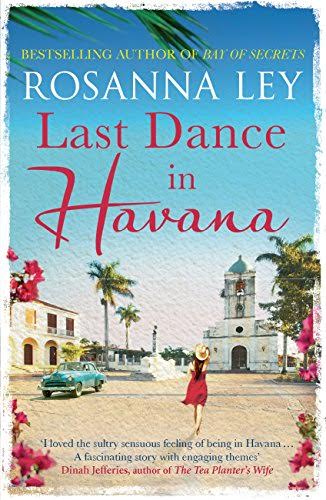
Last Dance in Havana by Rosanna Ley (Quercus)

I have been a big fan of Ley’s for some years and was delighted when she provided me with some lovely cover quotes for Another You. Last Dance in Havana flips between Bristol (which I know) and Havana (which I don’t) and tells the story of a step-daughter’s and step-mother’s searches for love. Ley’s descriptions brought both places to life to the point I could feel the Cuban sun on my back but it was her superb characterisation that made the book for me. In particular Rosa, the older woman, will remain in my head and heart for a very long time.

Writing as well as Rosanna Ley takes years of experience but thinking about this book (and her others) they show me that with a good story, great characters and an amazing sense of place you don’t need gimmicks to write a first class commercial romance.

Sealskin by Su Bristow (Orenda Press)

Sealskin is the book everyone is talking about at the moment. It’s a re-telling of a Scottish legend about the selkies, seals which can turn into people, and is a fairly short but thought-provoking read. I was completely transported to a remote Scottish fishing village and one of the really clever things about the book is its timelessness – there isn’t a clue about when the story takes place and it actually doesn’t matter. It’s a multi-layered romance which sits equally well in the realms of literary fiction which is where its publisher’s interests lie.

It’s also been marketed incredibly well by Orenda and I’m delighted that the dynamo behind this amazing independent publishing house, Karen Sullivan, will guest on this column in April. In the meantime I’m trying to work out what I would need to do before I’d even consider sending a manuscript to them. Although I can recognise literary fiction when I see it, how to create it is another matter entirely. Definitely something to aim for, though.


The Business Of Books: Writing In Balance

the-business-of-books-interviewswithjanecableAuthor Nikki Moore tells Jane Cable why she never quite wants to give up her day job.


  1. How much of your working life does the business of books take up?


The honest answer is, quite a bit, but not as much as I’d like. I have a full-time HR day job, so writing has to slot around that, as well as my children. Of course there’s also seeing my boyfriend, friends and family, housework, food shopping etc. I have the same commitments as everybody else. I’ve had to be very disciplined and maketime to write. I set several evenings a week aside and also write on weekends; I watch a lot less TV than I used to (although my boyfriend and I are newly addicted to The Walking Dead). When I’m working under deadline – 2015 was a busy year as I delivered five novellas and a 100,000 word novel for the #LoveLondon series – I write any spare moment I can, whether it’s during lunch breaks or into the early hours of the morning. As well as working on manuscripts, I also have to promote my books so I blog when I can, as well as tweeting and Facebook posting regularly.

I used to want to give up the day job to write full-time, but I’ve realised I need to be around people in order to write believable characters and compelling storylines, so now the dream is to scale back the day job to 1-2 days a week and write the rest of the time.

THE BUSINESS OF BOOKS- WRITING IN BALANCE

  1. What’s your business model to earn a living from writing?

I’m not a best-selling author – I hope to be one day – although I’ve sold more books than I ever imagined I would when I started out. However, like many authors, I don’t earn enough to give up the day job yet; my HR career pays the bills.  So my business model is to stay passionate and keep working hard to write the best books I can for my readers, get them published, earn good reviews, promote my books through as many forms of media as possible, interact with my audience including bloggers, build networks… and cross my fingers for luck.


  1.  What do you write and what do you consider to be your major successes?


I write romantic fiction and am hoping to move into women’s commercial fiction. In terms of successes, before being published I was a finalist in several writing competitions including the RNA’s Elizabeth Goudge trophy (judged by the fabulous Katie Fforde) and Novelicious Undiscovered.  Some of the #LoveLondon novellas have been in the Top 100 short story charts on Kobo and Top 20 in the Amazon UK bestsellers Holiday chart. Having a short story in the bestselling RNA/Mills & Boon anthology Truly, Madly, Deeply alongside best-sellers like Adele Parks, Miranda Dickinson and Carole Matthews was amazing. My debut novel Crazy, Undercover, Love was shortlisted for the RNA Joan Hessayon Award and Valentine’s on Primrose Hillshortlisted for a Love Stories award. But there are other measures of success too; the thrill of a message from a reader telling me they stayed up until 2.00 a.m. to read my book and cried when it was over; being interviewed by my local paper; being asked to co-tutor a workshop with my aunt Sue Moorcroft at Purbeck Literary Festival last year. And sometimes, just finishing a book is a success.


  1. Tell me about your latest project.

I’m currently finishing revisions on a women’s commercial fiction book I’ve been working on in the background for several years. I can’t say much, other than people who enjoyed Eat, Pray, Love or Me Before You, or The Fault in Our Stars may enjoy it. I’m also working on an outline for another exciting project. One thing is for sure; whether its revisions or writing something new, as long as I’m writing, I’m happy.

Nikki Moore is a Dorset girl and social media addict who loves reading and writing. Published mainly by HarperImpulse, she is the author of the #LoveLondon series. A member of the Romantic Novelists Association, she is a firm supporter of aspiring writers and is always happy to share her writing experiences. She encourages readers to get in touch too!


London Book & Screen Week 2017 unveils programme that goes from Hogwarts to Hygge in celebration of books

David Nicholls, Roddy Doyle and Michael Morpurgo headline the seven-day festival

1100x180xcropped-2-1.png.pagespeed.ic.o9r4uwJJPF

A Soho awards night with David Nicholls, a very special Harry Potter screening at the St. Pancras Renaissance Hotel London and conversations with Michael Morpurgo and Roddy Doyle lead the eclectic line-up of this year’s London Book & Screen Week (13-19 March 2017).


Produced by The London Book Fair, the seven-day, citywide festival celebrates books – and the films, games, plays and TV programmes they inspire – shining the spotlight on the critical role books play in our creative industries. This year’s programme celebrates the 20th anniversary of the publication of Harry Potter and the Philosopher’s Stone and 200 years since the death of Jane Austen.


David Nicholls, one of the UK’s leading figures in literature, TV and film, will champion the specially curated programme of events as the Ambassador of this year’s London Book & Screen Week. Roddy Doyle will be in conversation at House of St Barnabas – thirty years after the publication of his novel The Commitments.


St. Pancras Renaissance Hotel London will be the spellbinding setting for a very special Harry Potter film screening. All-star comedy troupe Austentatious will return to Leicester Square Theatre to perform an improvised show based on audience suggestions. The show will be preceded by a panel of special guests from the literary world, who will divulge and share their own love for Jane Austen’s work.


Acclaimed children’s author Michael Morpurgo will be in conversation with Owen Sheers, and Deborah Moggach will introduce a screening of The Best Exotic Marigold Hotel, which was adapted from her novel These Foolish Things.


With Britain in the grip of Hygge fever, Waterstones Piccadilly are putting on a Scandi crime screening, and bringing together Hygge experts Bronte Aurell (The Scandi Kitchen), Signe Johansen (How to Hygge), Louisa Thomsen Brits(The Book of Hygge) and Trine Hahnemann (Scandinavian Comfort Food) to provide wisdom on how to live more Danishly.


The fitness stars of Instagram – who have become publishing sensations – come together for a talk about fitness in the digital age: Faya Nilsson (Fitness on Toast), James Exton (LDN Muscle) and Alice Living (Clean Living Alice).


London’s award-winning LGBT literary salon Polari returns once again to The Light Lounge in Soho for a night of chat and cocktails hosted by Paul Burston, with joyous readings from Sophia Blackwell, Christopher Fowler and VG Lee. The Irish Literary Society are hosting a bumper series of events to showcase some of Ireland’s finest writers.


Jacks Thomas, Director of The London Book Fair and London Book & Screen Week, said:


“It’s wonderful to be working with partners across London to celebrate writers and their work in all its different formats. The line-up of this year’s London Book & Screen Week once again demonstrates the range and depth of London’s creative talent, and how vital books are for all our creative industries.


In 2017, we are particularly proud to present the CAMEO awards in their inaugural year. The Creativity Across Media: Excellence and Originality Awards will identify the individuals who create some of the most successful film, stage, TV and game adaptations, telling inspiring, gripping, life-transforming stories here and across the globe.”


London Book & Screen Week is run in partnership with some of the capital’s highest-profile brands, including London & Partners, the Mayor’s official promotional company for London, which attracts businesses and visitors to the capital and operates VisitLondon.com, the official city guide for London.


The launch night at Soho House, central London (13 March), will also see the awards ceremony for the inauguralCreativity Across Media: Entertainment & Originality Awards (CAMEO).


The festival combines specially curated events with an open sourced strand that anyone can submit to online at www.londonbookandscreenweek.co.uk.  To find out more, and book event tickets, visit www.londonbookandscreenweek.co.uk.


LONDON BOOK & SCREEN WEEK 2017

Programme Highlights

Monday 13 March


AUSTENTATIOUS: A SPECIAL EDITION

At Leicester Square Theatre – 7 pm


Austentatious returns to its London home in resplendent fashion. In this special edition, powered by London Book & Screen Week, enjoy a pre-show ample with some special guests from the literary world as they divulge and share their own love for Austen’s work. Panellists include Oxford professor and Jane Austen expert Kathryn Sutherland (Teenage Writings), a member of the Austentatious cast, and more.

Tickets: £12.50: https://leicestersquaretheatre.ticketsolve.com/#/shows/873569690


POLARI LITERARY SALON

At The Light Lounge, Soho – 6.30 pm


London’s award-winning LGBT literary salon returns once again to The Light Lounge in Soho for London Book & Screen Week. Polari began in November 2007 in the upstairs room of a pub in Soho. It is now based at the Southbank Centre, where events are held every month. It tours regularly across the country, and hosts Polari Prize for Fiction, an award handed annually to the best first book by an LGBT author in the UK.

Tickets £5: https://www.eventbrite.co.uk/e/polari-soho-special-tickets-31751988051


Tuesday 14 March


LIVING DANISHLY: AN EVENING OF COSINESS AND SCANDI CRIME

At Waterstones Piccadilly – 6 pm


London Book & Screen Week is collaborating with Waterstones Piccadilly to put on a special film screening, followed by a How to Hygge discussion with Hygge experts Louisa Thomsen Brits (The Book of Hygge), Bronte Aurell (The Scandi Kitchen), Signe Johansen (How to Hygge) and Trine Hahnemann (Scandinavian Comfort Food). Light refreshments will be provided.

Tickets £5: https://www.waterstones.com/events/living-danishly-an-evening-of-cosiness-and-scandi-crime/london-piccadilly


AN EVENING WITH RODDY DOYLE

At The House of St Barnabas – 7 pm


Roddy Doyle is the author of eleven novels, two collections of stories, two books of dialogues and Rory & Ita, a memoir of his parents. He has written seven books for children and has contributed to a variety of publications including The New YorkerMcSweeney’sMetro Eireann and several anthologies. He won the Booker Prize in 1993, for Paddy Clarke Ha Ha Ha.

Tickets £15: https://www.eventbrite.co.uk/e/an-evening-with-roddy-doyle-tickets-31889474276


THE BEST EXOTIC MARIGOLD HOTEL: A VERY SPECIAL SCREENING

At The Charlotte Street Hotel – 6.30 pm


This screening of The Best Exotic Marigold Hotel will be preceded by a special interview with Deborah Moggach, whose novel These Foolish Things, was adapted into the hit film. Deborah’s latest novel, Something to Hide, is set in Beijing, Texas, a fictitious African country and Pimlico. She will be talking about the meaning of settings and the writer’s view behind adaptations with the biographer, lecturer, and journalist Anne Sebba, author of nine critically acclaimed books of non-fiction, most recently Les Parisiennes, about Paris from 1939-49 through women’s eyes.

Tickets £18.43: https://www.eventbrite.co.uk/e/the-best-exotic-marigold-hotel-a-very-special-screening-tickets-31827938220


Wednesday 15 March


MICHAEL MORPURGO IN CONVERSATION

At Bush Hall, Shepherds Hall


Michael Morpurgo, OBE, is the former Children’s Laureate and best-selling author of over 140 books, including Private Peaceful, Kensuke’s Kingdom, The Butterfly Lion, and War Horse, which first performed at the National Theatre in 2007. In this exclusive London Book & Screen Week event, Michael will be joined by Owen Sheers, author, poet and playwright, as they delve into the world of adaptions. This intimate dialogue will see the prolific authors discuss what it means to see the words and world you so carefully composed being lifted from the page and onto the stage and beyond.
Tickets £17.05: https://www.eventbrite.co.uk/e/the-story-books-screen-stage-michael-morpurgo-talks-narrative-adaptation-with-owen-sheers-tickets-31991195527

FROM FIGHTING FANTASY TO THE WITCHER: HOW NARRATIVE DESIGN IN GAMING ENHANCES STORYTELLING
At BAFTA – 6.30 pm  

In the world of storytelling, gaming is unique. Giving over control, it allows gamers to define their own journey within a malleable landscape. This inspires a new growing generation of storytellers in the 21st century across all media. With video game sales in the UK at an all-time high – what is the next chapter? And what is gaming’s mandate as a creative platform in the world of storytelling? Join us for a panel discussion featuring Ian Livingstone, co-creator of Fighting Fantasy gamebooks, Andrzej Sapkowski, the author of the Witcher novels, the writer and digital producer Meg Jayanth, and Chris Gardiner, Narrative Director at Failbetter Games.

Tickets available soon: http://www.londonbookandscreenweek.co.uk/events/


Thursday 16 March


OLGA TOKARCZUK AND DEBORAH LEVY

At London Review Bookshop – 7 pm


One of the most acclaimed Polish writers of her generation, Olga Tokarczuk has won multiple prizes, most recently for her novel The Books of Jacob, which explores an important moment in 18th-century Polish history. Two recent novels, The Books of Jacob and Flights, will shortly be published, for the first time in English, by Fitzcarraldo Editions. Tokarczuk will be in conversation with The Man Booker shortlisted novelist Deborah Levy.

Tickets available soon: http://www.londonbookandscreenweek.co.uk/events/


Friday 17 March


IRISH LITERARY SOCIETY

At Bloomsbury Hotel


The Irish Literary Society are putting on three events at the Bloomsbury Hotel specially for London Book & Screen Week. The Irish Literary Society was established in London in 1892. Among its founders were W B Yeats and Douglas Hyde and other leaders of the Irish Literary Revival.

The object of the Society is to promote the appreciation of Irish literature and culture and to provide a forum for intellectual and social activities in connection with these interests.
Tickets available soon: http://www.londonbookandscreenweek.co.uk/events/


Saturday 18 March


FITNESS IN THE DIGITAL AGE

At SF Studios, Hampstead – 10 am


Now that we’re all making a #fitspo to spread #motivation to our #fitfam, ‘Fitness in Our Digital Age’ will bring together some of the biggest stars in the fitness scene who have built dedicated followings on Instagram and blogs such as Fitness on Toast. In the tranquil setting of SF Studios, north London’s leading movement studio, we host a unique panel discussions featuring an amazing line-up including fitness expert Faya Nilsson and the co-founder of LDN Muscle, James Exton. Their discussion will be followed by an audience Q&A and book signings.

Tickets £13.25: https://www.eventbrite.co.uk/e/fitness-in-a-digital-age-tickets-31997576613


Sunday 19 March


CELEBRATE 20 YEARS OF HARRY POTTER: FILM SCREENING AT ST PANCRAS RENAISSANCE HOTEL LONDON

At St. Pancras Renaissance Hotel London– 6 pm


Grown up Potter fans, rejoice: London Book & Screen Week are putting on a Harry Potter film screening in the spellbinding St. Pancras Renaissance Hotel London. Celebrate the 20th anniversary of the publication of Harry Potter and the Philosopher’s Stone in a setting straight out of Hogwarts. Expect free popcorn on arrival and themed cocktails at the bar. Wands, wizarding robes, hats and broomsticks are welcome.

Tickets: £18.43: https://www.eventbrite.co.uk/e/celebrate-20-years-of-harry-potter-film-screening-at-st-pancras-renaissance-hotel-london-tickets-31874274814


The Business of Books: Writer as Reader

the-business-of-books-interviewswithjanecableJane Cable admits to sometimes having a slightly uneasy relationship with other writers’ books


Writers are by our very nature readers. We tend to have fallen in love with stories at an early age and as children at least devoured every book we could lay our hands on or persuade someone to read to us. We disappeared into the magic of lives so very different to our own, travelling time and the globe with the carelessness of youth. Except that I was terrified of swings for a long time after reading What Katy Did.

I suppose it is no surprise that one of the first characters I can remember really relating to was Jo in Little Women. When Amy burnt her story I felt real anger and cried bitter tears. I guess I was already sucking my own pencil and waiting for the words to come.

From teenage years onwards real life started to intervene in my bookish world. In sixth form I still bought a paperback every week with the money I earned from my Saturday job at BHS and wherever I moved to for college and in early working years the first thing I did was join the local library. But as life became busier time to read became increasingly rare and I relished holidays where in pre-Kindle days my husband and I would almost literally pack a case full of books.

In my forties I started writing my first story which turned into a full length novel and here the dilemmas began. First, there was time: I really didn’t have enough to read and to write. Secondly was the fact that my head was so full of my characters there just wasn’t room for anyone else’s.

Now most writers read voraciously (apparently) and certainly everyone tells you that as a writer you should, but I have to admit to struggling. While I am living and breathing my story, how can I do anyone else’s justice? I suppose I never could read more than one book at once and it used to completely do my head in that my mother always used to have two on the go; one upstairs for light relief and nodding off to sleep with and another, normally something a little more demanding, by her chair in the living room.

The Business of Books- Writer as Reader

So reading has been pushed to the margins of my life, to the rare times when I’m not working on anything new. An advantage of this is that the great books, such as The Time Traveler’s Wife, really stand out. This one in particular opened new doors creatively speaking because it showed me that if your characters were strong enough you could take your readers anywhere. As a writer, it made me brave and I do wonder what else I would learn if I had more bandwidth to read.

I’m also aware of the need to read successful authors in my genre and books which break out of the ordinary and get talked about. Then there’s the guilt-induced consumption of books by authors you know and feel you should review. So is reading purely for pleasure a thing of the past for me?

Thankfully, no. I have learnt to be incredibly selective and not to finish a book if I’m not enjoying it. There is a difference between books I read for research and books I read for pure joy. And in the last few weeks I actually became very excited about the launch of a new novel for the first time in years. But more about that anon, because Su Bristow’s Sealskin deserves an article all of its own.