Booksellers Unveil Their Top Books of 2020

Bookshops across the UK & Ireland have revealed their favourite books and authors of 2020.

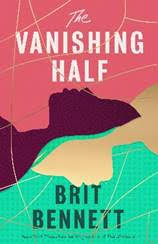
This year’s shortlist includes: The Vanishing Half, by New York Time bestseller Brit Bennett; Diary of a Young Naturalist, by 16-year-old Dara McAnulty; the most hopeful book of the pandemic, Humankind by international bestselling author Rutger Bregman; The Devil and the Dark Water by 2018 Books Are My Bag Readers Awards winner Stuart Turton; South Korean sensational #MeToo bestseller Kim Jiyoung, Born 1982 by Cho Nam-joo(translated by Jamie Chang); Cinderella is Dead, a retelling of the popular fairy tale by Kalynn Bayron; and 2019-shortlistee Alice Oseman forHeartstopper Vol 3.


Grace Dent to host virtual Books Are My Bag Readers Awards ceremony on Tuesday 10thNovember, sponsored by National Book Tokens

·       16-year-old nature writer, two graphic novelists, previously shortlisted Alice Oseman, South Korean sensation Cho Nam-joo, and nine debut writers among booksellers’ top books of the year

·       Books on sexuality, dance, Cinderella and Greek myths make the shortlist, hand-picked by booksellers

·       Record number of books from independent publishers are shortlisted

Nine debut writers are among the 25-strong shortlists across six categories. In addition to Cho Nam-joo, Dara McAnulty and Kalynn Bayron, the other debut authors shortlisted are: Eliza Clark for her celebrated novel Boy Parts; Summer Young for her Tracy Emin-like pamphlet Sylvanian Family;Elle McNicoll for her children’s fiction book A Kind of Spark; Jean Menzies for her retellings of mythical tales Greek Myths (illustrator Katie Ponder);Kiley Reid for her Booker longlisted debut Such a Fun Age; Douglas Stuart for his heart-rending novel set in 1980s Glasgow Shuggie Bain.


More than half of this year’s nominated titles – spanning Fiction, Non-Fiction, Poetry, Young Adult Fiction, Children’s Fiction and Breakthrough Author – come from independent publishers, including Influx Press, Granta Books, Little Toller, Verso Books, Bad Betty Press, Nosy Crow and Knights Of. In addition, this year almost 40% of the shortlisted titles re from first-time writers.


The public vote opens today, ahead of Bookshop Day this weekend, to decide the winners across the six categories. The public is invited to vote for a winning title from each shortlist from Thursday 1 October until 11pm of Sunday 25 October, with the winners being announced on Tuesday 10 November at a virtual awards ceremony hosted by restaurant critic and author Grace Dent. The ceremony will be streamed at 5:30pm across the @booksaremybag YouTube, Twitter and Facebook channels.


The 2020 Books Are My Bag Readers Awards Shortlist, as chosen by bookshops:


Fiction

Boy Parts by Eliza Clark (Influx Press)

The Devil and the Dark Water by Stuart Turton (Bloomsbury)

Kim Jiyoung, Born 1982 by Cho Nam-joo (Simon & Schuster)

The Vanishing Half by Brit Bennett (Dialogue Books)

Weather by Jenny Offill (Granta Books)


Non-Fiction

The Dance Cure by Dr Peter Lovatt (Short Books Ltd)

Diary of a Young Naturalist by Dara McAnulty (Little Toller Books)

Humankind by Rutger Bregman (Bloomsbury)

Insurgent Empire: Anticolonial Resistance and British Dissent by Priyamvada Gopal (Verso Books)


Poetry

Homie by Danez Smith (Vintage)

Seagull Seagull by James K Baxter (Gecko Press)

Sylvanian Family by Summer Young (Bad Betty Press)

Tiger, Tiger Burning Bright: An Animal Poem for Every Day of the Year by Britta Teckentrup and Fiona Waters (Nosy Crow)


Young Adult Fiction

Children of Virtue and Vengeance by Tomi Adeyemi (Pan Macmillan)

Cinderella is Dead by Kalynn Bayron (Bloomsbury)

The Crossover: Graphic Novel by Kwame Alexander (author), Dawud Anyabwile (illustrator) (Andersen Press)

Heartstopper Vol 3 by Alice Oseman (Hachette Children’s Group)


Children’s Fiction

A Kind of Spark by Elle McNicoll (Knights Of)

Blended by Sharon M. Draper (Simon & Schuster)

Gargantis by Thomas Taylor (Walker)

The Highland Falcon Thief by M.G. Leonard & Sam Sedgman (Pan Macmillan)


Breakthrough Author

Brit Bennett author of The Vanishing Half (Dialogue Books)

Jean Menzies author of Greek Myths (Dorling Kindersley)

Kiley Reid author of Such a Fun Age (Bloomsbury)

Douglas Stuart author of Shuggie Bain (Pan Macmillan)


Danez Smith, author of Homie, said: “Books saved me, save me, will save me as long as I have a spirit to rescue from its own darkness and the dark corners of the world. To think that my little words might be doing the same for someone else, even one person, makes the work worth it. To be shortlisted for the Books are My Bag Readers Awards is beyond an honor, it affirms for me that my duty to poetry isn’t some selfish need to confess and be heard, but that poems are how we nourish one another, how we make sanctuary and fight for one another. I’m humbled to share the company of incredible writers, and to share the love and need of poetry with booksellers and readers everywhere.”


Jenny Offill, author of Weather, said: “I am a former bookseller myself, so this feels like the highest of honors to me! I am utterly thrilled to be nominated by such a discerning group of readers.”


Jean Mezies, nominated in the Breakthrough Author category, said: “It’s an absolute honour to have been nominated for the Books Are My Bag Breakthrough Award for Greek Myths, particularly given that it was chosen by booksellers. Exploring bookshops as a child and discovering titles on new and exciting topics thanks to the staff who curated their shelves is one of the main reasons I’m an Ancient Historian now.”


Emma Bradshaw, Head of Campaigns at the Booksellers Association, commented: “Curated by booksellers, the book experts par excellence, the Books Are My Bags Readers Awards are truly special awards. The shortlist always gives a fascinating insight into the reading trends of the year, and this year’s shortlist is particularly poignant given the impact COVID-19 has had on both our reading and shopping habits. Consumers appreciated anew the knowledge, dedication and expertise of booksellers during lockdown; a time when for many books were the only thing to bring hope and comfort. While we were unable to physically browse in bookshops, booksellers found new and creative ways of pairing their customers with the right book at the right time.  


This year we encourage consumers to think about their Christmas shopping earlier than usual and to support their high street. Whether you shop in-store or online with your local bookshop this Christmas, the Books Are My Bag Readers Awards shortlist is the ultimate book guide for shoppers; there’s something there for everyone. We hope book lovers will continue to support bookshops this Bookshop Day and beyond.”


Alex de Berry, Managing Director of National Book Tokens, said: “Not only are the Readers Awards the only book awards where the winners are chosen by truly democratic public vote, they have also proved to be a positive platform for diverse voices. We are immensely proud to have helped create these awards and to continue to be able to sponsor them.”


The Books Are My Bag Readers Awards, now in their fifth year, are the only book awards curated by booksellers, and voted for by readers. The shortlist panel comprises: Katharine Fry (Blackwell’s), Meera Ghanshamdas (Moon Lane Books), James Routledge (Forum Books), Mog and Pauline Harris (Warwick Books), Amy Vale (Book-ish) and Joe Hedinger (The Book Hive). The shortlist categories open for public vote are: Fiction, Non-Fiction, Poetry, Young Adult Fiction, Children’s Fiction and Breakthrough Author. In addition to voting on the shortlisted titles in the categories above, the public are invited to nominate their favourite book of the year – any book they’ve read in the past year – as the Readers’ Choice winner.

The public can vote online at the following link: www.nationalbooktokens.com/vote


The Books Are My Bag Readers Awards are sponsored by National Book Tokens and are part of Books Are My Bag – the annual campaign celebrating the vital importance of bookshops.

 For more information visit www.booksaremybag.com / @BooksAreMyBag / #BAMBReadersAwards
 

Tips for squeezing the best out of the last few months of 2020

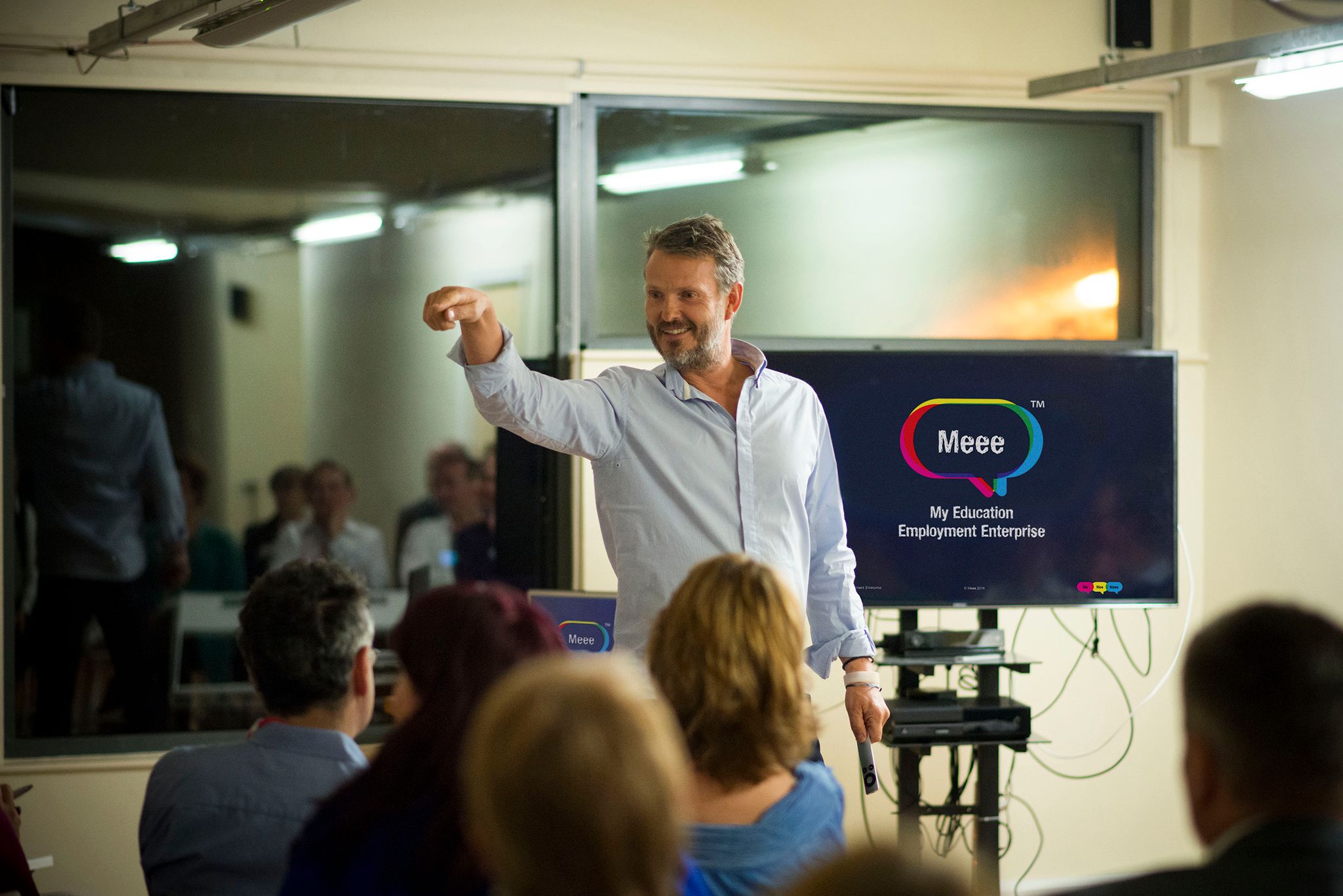
By Sid Madge, author of the ‘Meee in a minute’ series of books 

2020 is proving to be the toughest year that most of us can remember. We’ve got through so far and can now look at how to adapt and get the most we can from the remaining few months of this year.   

According to a YouGov poll only 8% of Britons want to go back to life as it was before the pandemic.  

Let’s create something better for everyone instead of some watered down ‘new normal’. The first step for squeezing the best out of the rest of 2020 is to embrace uncertainty. There isn’t going to be some miracle vaccine by December, so what do we do now and for the rest of the year?  We grab the remainder of the year by the scruff of its neck and focus on changing for the better. 

Your Innate Growth Mindset

Stanford psychologist Carol Dweck became obsessed with understanding how people cope with failures and setbacks. Initially her research looked at kids and how they reacted to puzzles they couldn’t solve. The outcome of Dweck’s research is now world famous and she proposes that our success and happiness in life comes down to one thing – mindset. According to Dweck there are two – fixed and growth.  

Individuals with a fixed mindset, have a fixed idea of what they are capable of, believing that what they are born with is the finish line. They tend to be more defeatist. Those with a growth mindset believe that what we are born with is just the beginning. What we are capable of is determined by our own aspirations, effort and determination. 

Interestingly, Dweck believes we are all born with a growth mindset. We get trained out of it. We’re taught that failure is unacceptable – even though all great success comes through failure not by avoiding it. If ever we needed to re-assess that growth mindset it’s now. 

Take a minute to consider whether you have a fixed or growth mindset?  Has Covid-19 made it more fixed as you sink into a gloom? If you imagine you had a growth mindset instead – what would you do? Looking at your life and the rest of 2020 – what could you try? What have you always thought of doing but never got around to it? Lean into the uncertainty and adapt. Use it as a springboard to try things you’ve been putting off. Is there a different market you could approach? Stay curious, flexible, and open. 

Changing Your Today to Change Your Tomorrow

What have you done today? Is that getting you closer to your business and life goals or further away? If you want a different tomorrow so you find a successful way through the pandemic, you need to take steps to change what you do today. 

Stop for a moment and reflect on how you spend your time. When did you get up this morning?  How much TV do you watch?  How much time do you spend on social media? How much time do you spend learning something new? Do you spend time with family or friends?  Are those exchanges enjoyable or stressful? How much time do you spend on your health?  How much sleep do you get most nights? 

Take a minute to draw a circle and divide it up into slices that represent how you spend your time during a typical day. Now draw another circle and divide it up to represent how you would like to spend your day. If you spend a lot of time at work but don’t enjoy it, what could you do today to find a something that you might enjoy more? Or what could you change at in work/home life today to improve your day? Identify the things you like or can live with and the things that you don’t like and can’t live with. How can you change the aspects of your day that bring you down? 

Often, we don’t need to make big sweeping changes.  Subtle little shifts can accumulate to bring about change.  

Growth from Trauma

In 1967 psychiatrists Thomas Holmes and Richard Rahe developed a list of 47 stressful events that could impact health and happiness. The assumption is logical – we get more stressed when bad stuff happens to us, start accumulating stressful experiences such as a job loss, illness or divorce and you are more susceptible to physical illness, disease and depression. Global pandemics and economic uncertainty don’t help either.

However, the fly in their theoretical ointment was the fact that not everyone who experienced really tough life events were negatively impacted by them. On the contrary, some of those people actively flourished. This field of study is called post traumatic growth or adversarial growth and studies have shown that great suffering or trauma can actually lead to huge positive change. For example, after the Madrid bombings of 2004 psychologists found that many of those affected experienced positive psychological growth. A diagnosis of cancer and subsequent recovery can also trigger positive growth. 

The people in many of these studies found new meaning and new purpose from surviving something terrible. Instead of seeing their situation as a failure or a problem they believed it could make them stronger. How can you use Covid-19 to find new meaning and positive growth?

Take a minute to think about exactly what you are worried about most in your life and identify one thing you can do about it right now. Set that in motion. What positives could you pull from the turmoil? Get creative – think of at least three positives that Covid-19 could give you. It might not be fun but if you can find the silver linings you can often move on quicker.

These suggestions are pulled from my Meee in a Minute books, each offering 60 one-minute micro-ideas and insights that can help us to shift our perception in life, family and at work.  We can all use tiny interventions to adapt and change and make the very best we can of the months ahead. 

ABOUT THE AUTHOR

Sid Madge is founder of Meee (My Education Employment Enterprise) which draws on the best creativity and thinking from the worlds of branding, psychology, neuroscience, education and sociology, to help people achieve extraordinary lives.

To date, Meee has transformed the lives of over 20,000 people, from leaders of PLC’s and SME’s to parents, teachers, students, carers, the unemployed and prison inmates.

Sid Madge is also author of the ‘Meee in Minute’ series of books which each offer 60 ways to change your life, work-, or family-life in 60 seconds. 

Web: www.meee.global

Web: www.meeebooks.com

Twitter twitter.com/Meee_HQ
Facebook https://www.facebook.com/MeeeHQ/
Instagram www.instagram.com/meeehq
YouTube https://youtu.be/fISupZWZMQc
TEDx https://www.youtube.com/watch?v=bR3Cyjs62c8


My Writing Process Glenda Young

Glenda Young, author, writer, The Girl with the Scarlet Ribbon by Glenda Young is published 1st October (£7.99, Paperback, Headline)

1.      A bit about you.

My name’s Glenda Young and I’ve loved writing ever since I was a child. I live in the northeast and my novels are set in the coalmining village of Ryhope where I was born and bred. You don’t need to know the village to enjoy the books, which are gritty and dramatic and have a feisty, young heroine at their core. All of my books are stand alone books and you can read them in any order. 

I’m a life-long fan of the soap opera Coronation Street run two Coronation Street fan sites – Corrie.net online since 1995 and the Coronation Street Blog which was launched in 2007.
2. What you have written, past and present.

I’ve written six novels to date published with Headline. The first four are now available and these are Belle of the Back Streets, The Tuppenny Child, Pearl of Pit Lane and The Girl with the Scarlet Ribbon. Still to come are The Paper Mill Girl and novel six which has the title to be confirmed. The novels are gritty sagas, inspired by my love of soap opera, really dramatic with lots of action and some great women characters!

I’ve also built an impressive reputation as an award-winning short story writer.  Plus, I have an unusual claim to fame! I’m the creator of the first ever weekly soap opera Riverside to appear in The People’s Friend, the longest running women’s magazine in the world. My short fiction has appeared in magazines including Take a Break, My Weekly and The People’s Friend. In 2019 I was a finalist in the Clement & Le Frenais Comedy Award.

As a life-long fan of the soap opera Coronation Street I’ve written TV Tie-In books about the show including Coronation Street: The official colouring book, Deirdre: A Life on Coronation Street, A Perfect Duet. The Diary of Roy and Hayley Cropper in Coronation Street, and have written major updates to Coronation Street: The Novel and Coronation Street: The Complete Saga.

3. What you are promoting now.

My fourth novel is The Girl with the Scarlet Ribbon. It’s a dramatic, gritty story set in a small village in 1919. It begins with a new born baby girl being left on the doorstep of a very grand house. The baby is left in a basket that has a scarlet ribbon tied around the handle. The housekeeper of the wealthy McNally family takes the baby into her care and names her Jess. Sworn to secrecy about the baby’s true identity, the housekeeper brings Jess up as her own, giving Jess no reason to question where she came from. But when the housekeeper passes away, grief-stricken Jess, now sixteen, is banished from the place she’s always called home. With the scarlet ribbon the only connection to her past, will Jess ever find out where she really belongs? And will she uncover the truth about the ruthless McNallys?

4. A bit about your process of writing.

I write in the mornings when I can concentrate better. I stop for coffee and have a break, do some thinking and then return to writing. I try to write 2,000 words per day. I find I’m much more able and creative in the mornings than in the afternoon. I live close to a lovely beach so I walk on the beach in the afternoons or go for a bike ride. This helps clear my head after writing all morning.

5. Do you plan or just write?

I always plan, even if it’s just a short story I’ll make a list of say, ten things I want to include from start to finish. I plot and plan loosely as I think all writers know that once you start writing your work takes on a life of its own and you should go with the flow to a certain extent. I liken my plotting and planning to building a frame on which to weave my words. It’s always flexible to change as I go but I always have a structure in place so I know what I’m doing and where I’m going, even if sometimes I go off on a side road for a little while.
6. What about word count?

For novels it’s usually around 100,000 words and for short stories for women’s magazines, it can be anything from 700 words up to 3,000 and beyond.

7. How do you do your structure?

For my novels I take sheets of A4 paper, one for each chapter and lay them out on the floor. Then I take my plot points and spread them out on post-it notes across the book, moving them around until I’m happy. Then I type up chapter plans, just a couple of paragraphs for each chapter so I know what I’m doing within each one. Then once I start writing, characters appear I never planned for, incidents happen I never envisaged and the book takes on a life of its own. It’s quite scary how it happens and I don’t truly understand it. Perhaps that’s the secret?

8. What do you find hard about writing?

Switching off. When I’m writing a novel it’s all encompassing, my entire concentration goes into my work for the duration I’m writing it. I’m living in that world and I love it, it’s all I can think about as I immerse myself into the story.

9. What do you love about writing?

Everything! From getting that initial spark of an idea to seeing my books on the shelves of the bookshops and getting amazing reviews online and in the press and on radio, etc. There’s nothing I don’t like.

10. Advice for other writers?

Never give up. Never.

http://glendayoungbooks.com

@flaming_nora on Twitter.

My Writing Process Alex Hart

Alex Hart, my writing routine, my writing process, author, writer, Take Me Home, My Writing Routine:

I’ve written since an early age, whether it was short stories, poems (dreadful ones!), or novels. I read voraciously and love many genres. I have worked in the film and television industry for over twenty five years and have always felt passionate about story telling whether on screen or in books. To be able to disappear into someone else’s world, even temporarily and experience a different life is something that will never lose its thrill.

What you have written, past and present.

I’m currently working on a couple of novels, one which is the next in the series of Take Me Home, and another which is a standalone thriller. 

What you are promoting now.

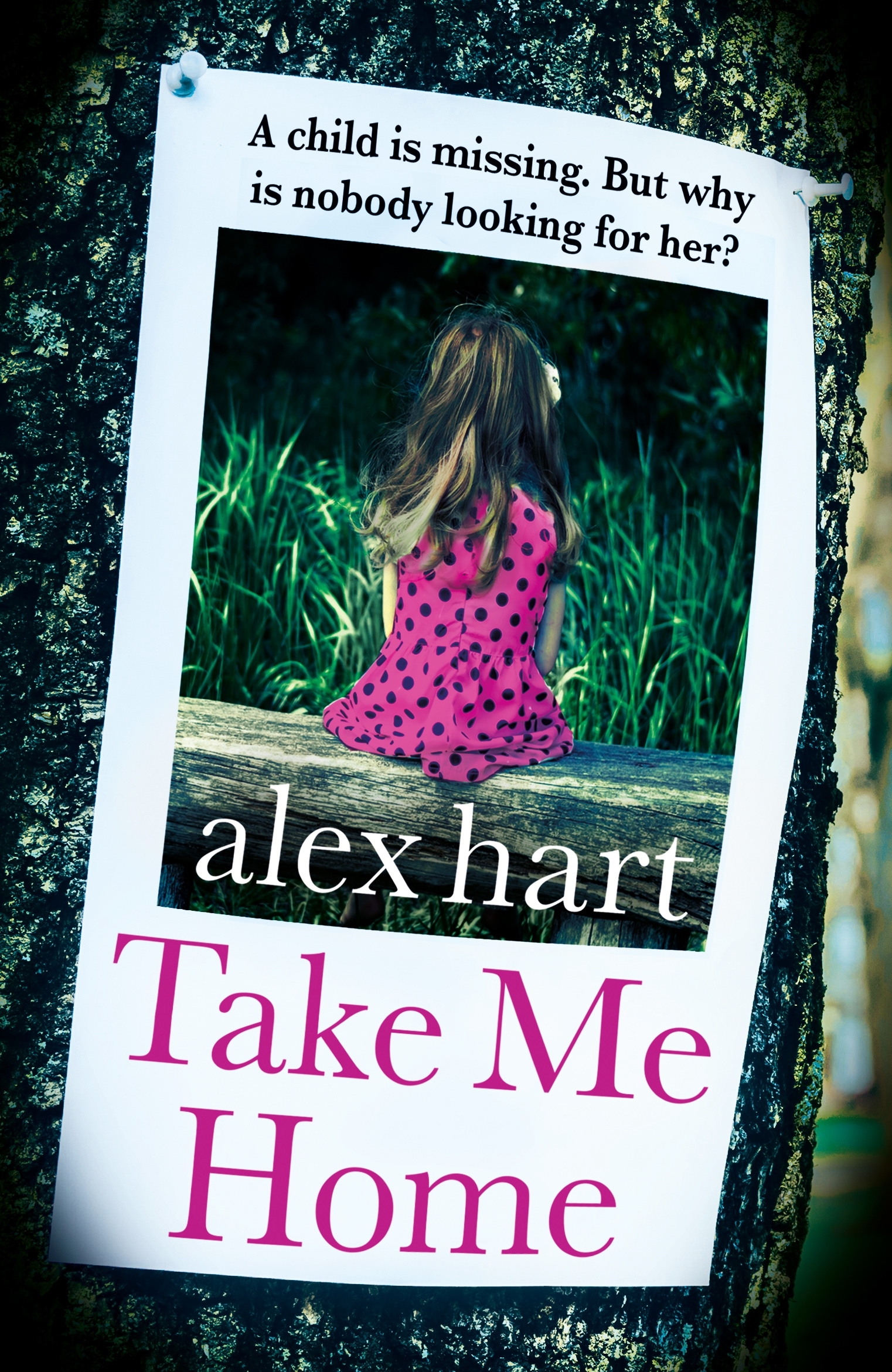
Take Me Home is a mystery thriller. The main character Harper finds a young girl left alone in a New York store and sets out to find out where she has come from. No one has reported her missing yet the little girl May says she misses her mom. Harper is someone who is strong and feisty. She paints outside of the lines, yet relentlessly strives for the truth. Despite her outwardly spiky edges, she is sensitive and warm-hearted. I hope she is someone the reader enjoys spending time with, along with her friends TJ and Reggie (the yin to her yang, the cheese to her macaroni) as they try to unravel the mystery along with her. It raises the questions, ‘What would we do in that situation?’ ‘How far would we go for strangers and those we love?’ and ‘What constitutes family?’ 

A bit about your process of writing.

I’m pretty disciplined when I have a project I’m working on. My day usually starts at the gym (before Covid!) where I am waking up my brain and beginning to think about the task ahead. Once I am at my desk, I often turn off my phone so there are less distractions and set to on that day’s goal. If I have the book planned out, I’ll always aim to write a chapter a day; even if I know what I’m writing is trash. If I started to edit as I went along, I think I would come to a grinding halt. If there is something on the page, I at least have words to play with. 

Do you plan or just write?

I always plan. I don’t know any other way. For me, a plan is a safe way of being able to go off piste sometimes, as I know I can always refer back to it. Things often change when you’re writing; either something you are sure was going to work, suddenly falls apart in your hands, or you get further inspiration meaning the story changes direction. I think, so long as you have a plan you can explore these options without going off on a tangent too much. 

What about word count?

I really don’t think about it in the first draft. I just want to get the bones of the story down and I’ll worry about word count later. Often or not, it just works out at the right length. 

How do you do your structure?

I always work with paper and pen at the beginning, just writing down notes, random thoughts, character traits etc and once I am able to formulate a basic beginning, middle and end, I begin to scratch out a structure. If I get stuck, I always refer back to the usual; Joseph Campbell, Christopher Vogler, Robert McKee, Syd Field, Dan Harman. I’ll re-read what they’re saying and think how my story and characters fit and start penning out a potential paradigm. 

What do you find hard about writing?

When I lose confidence! There’s nothing worse than facing the day thinking ‘something isn’t working’, ‘I’m the worst writer known to man’, ‘what was I thinking even attempting this?!’ I think this happens to all writers at some point of their journey. You’re all alone in this room, with your imaginary characters (who you have become close to and feel you are letting down) and you only have yourself to argue with. When those days come, (and they do!) rather than give up and beat myself up further, I make myself write 100 words. Often or not, I’ll end up writing more and suddenly you’re up and running again. 

What do you love about writing?

Everything except for the above days! 

Advice for other writers.

The same any writer gives, read, read, read, write, write, write. For me, there is no other way. My motto has always been, ‘Get it down, then get it done. Get it written, then get it right.’


TAKE ME HOME by Alex Hart is published by Orion (Paperback, £7.99) on 1st October.


Take Me Home by Alex Hart Book Review

take me home , alex hartTake Me Home by Alex Hart is a tightly written thriller which is classically New York. It dives deep into the characters and really tells the story. Full of twists and brilliant description, Take Me Home is the perfect thriller to take some time out of your day and just enjoy. 

How much would you risk for a child who isn’t yours?

An ingenious, taut, global thriller for fans of Linwood Barclay and Harlan Coben…

When struggling journalist Harper returns a dress to the shop she bought it from that morning, she sees the same little girl sitting in the exact same place she saw her hours ago.

No one in the shop knows who the girl is.
No desperate parents have contacted mall security to say they’ve lost their daughter.
And the local police have no new reports of a missing child.

The girl says she misses her mother.
But why is nobody looking for her?
And what if finding her home is the worst thing you could do?

Take Me Home by Alex Hart is available here.


My Writing Process Diane Allen, author of The Girl in the Tanners Yard

I was born into a farming family that had a sheep farm which was very remote within the Yorkshire Dales. My early years were spent roaming the fells and dales, often by myself as I was the youngest of four and my older siblings had already spread their wings leaving me as an only child. I made my own entertainment and had a good imagination but also had a great love of losing myself in a good book which I still do to this day. The love of reading continued into my teenage years and could often be found reading to the early hours of the morning. When I left school I found a job in the local glass engraving firm, which I did enjoy but left to marry my husband, Ronnie who after forty-eight years I am still married to. After raising a family of two and nursing an ill father, I finally found my true niche in life at a local large print book firm. I soon rose through the firm and eventually became manager, negotiating rights with authors and agent and loving every minute especially when the books I had chosen came into the warehouse to be distributed to the libraries we supplied. It was that which started me thinking that I could perhaps be lucky enough to be able to write myself and the rest is history. 

I have written nine books now for Pan Macmillan. All are based in the Yorkshire Dales and I hope to portray the Dales and the people within them. I have family connections with the Settle to Carlisle Railway so that features quite a bit in my books. For A Mother’s Sin’s was a fictional account of the building of the line, featuring the building of the Ribble Head viaduct, while the Windfell trilogy is set around Settle and the Cotton Mills. 

My latest title is THE GIRL FROM THE TANNER’S YARD, this is set in West Yorkshire, around Haworth and Keighley. It tells the tale of lowly born Lucy Bancroft and ex-military man Adam Brooksbank and the unlikely love affair that springs up between them. Adam lives on the wild moors above Keighley and employs Lucy as his maid and finds just how strong and caring she is when he befalls an accident. Lucy thinks her love can never be returned by Adam, she comes from the Tanner’s Yard, a filthy dirty place and thinks that he will never treat her as an equal. However, with a little help from Adam’s old friend Ivy loves blooms, and Lucy’s dreams will be fulfilled despite what life puts between them. 

In the morning after breakfast, I usually disappear into my office, answering e-mails and promotional things and then go on to edit the previous day’s writing. After lunch I write for a solid four hours, trying to write at least 2,000 words. Sometimes it does not always go to plan, I feel I can’t write or I get stuck in a plot. Walking around my garden usually helps out along with plenty of cups of coffee supplied by my husband. 

Usually, when I’m nearly finishing my latest title I start thinking about the next. I visit where the book is to be set, research the area, picking up any history so that I can include it in my writing. I have notebooks that include loads of my scribbles within them just noting anything that I think would be interesting to be included. I then plot a rough start, middle, and end, this may alter as I once get writing. I let the characters take me where I should go as they develop in the book. 

My officially set word count is 100, 000 words, however, I usually find this hard to reach, so most of my books are around the 95,000 mark. I can’t see the point of padding a book out with things that have not relevance to the story.

When structuring my book, I give most though to the two main characters within the story, their occupations, and the setting of the book. I then make a note of their age, their looks, their hair and eye colour and any unusual features. Their surrounding is also noted along with any place names and local names to the area.

Some days you just can’t write and those days you are better walking away from your keyboard. Your characters will draw you back to them when the time is right. My biggest failing is following timelines, no matter how I try, I always seem to be out with age or length of a pregnancy. I get too carried away in the plot. 

I love writing, I can’t live without it now. If I give myself a fortnight break between books by the end of it I am the most frustrated person on the planet. I’m always hatching a plan in my head and looking for new ideas. It is a break from the real world, I can be where I want and who I want. Through these hard months of COVID, it’s been a welcome escape, I can go back to more simpler Victorian times and forget the heartache outside in the real world.   

The Girl From Tanners Yard is available here.


Take Time for Self Care with HEINRICH BARTH: the N.07 Mykonos Range

HEINRICH BARTH: the N.07 Mykonos Range, bath, relaxing, self care, Greece’s golden sunshine averages 26° C throughout summer, in a range of terrains on Mykonos. The flora on the island is famed for Mediterranean herbs inspired HEINRICH BARTH to create this range from Basil, Sage, Rosemary, Chamomile, Lavender, Olive leaf extract, Fig leaves, Honey, Peppermint, Nettle, Sunflower and Soybeans, to name a few!

Gazing upon this range of beautiful, rich local produce, HEINRICH BARTH, named after the 19th century German explorer, found inspiration for their ‘N. 07 Mykonos’ capsule line (named ‘N. 07’ because July, the 7th month, is the start of their summer).

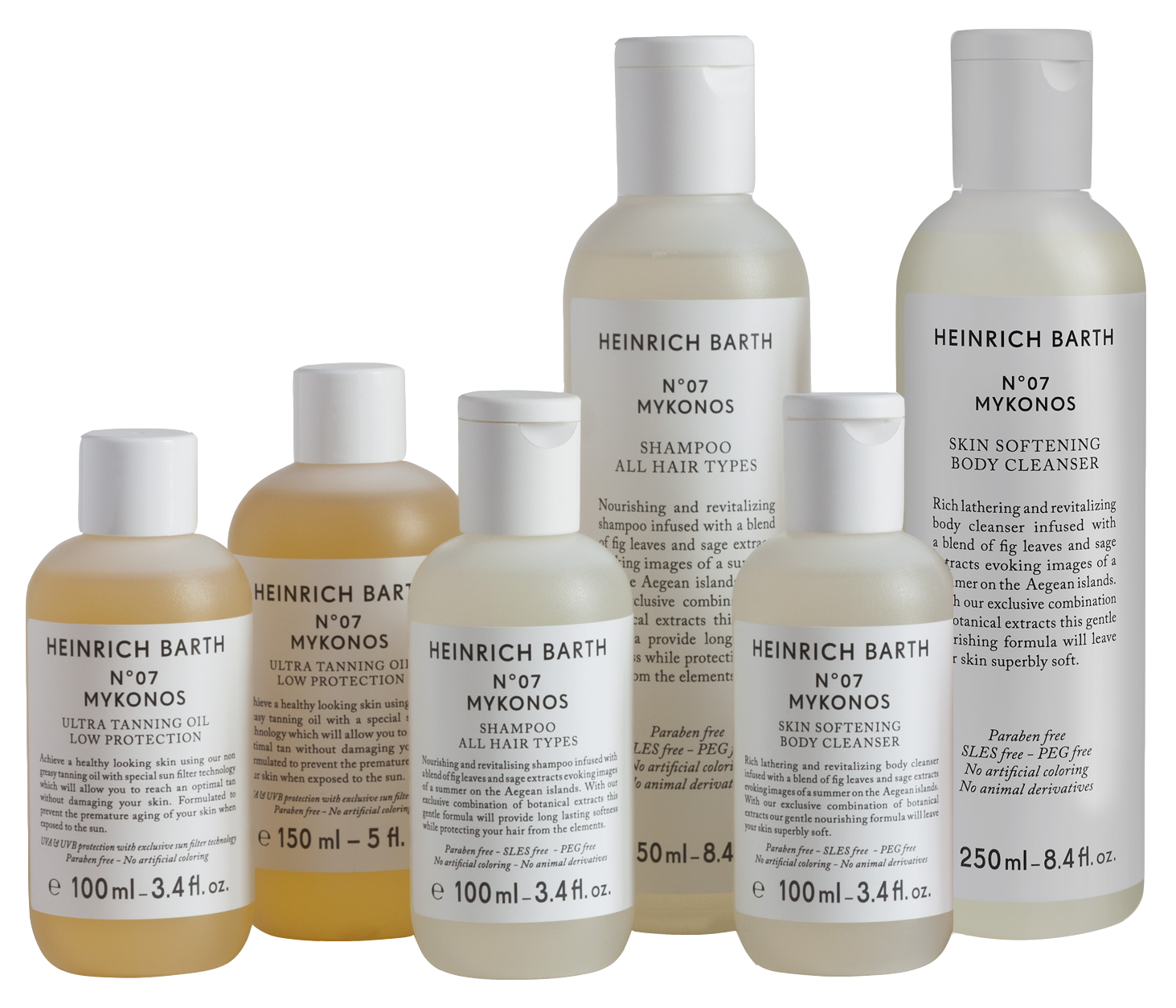
N. 07 Mykonos from HEINRICH BARTH (all Paraben free and without artificial colouring):

N. 07 Mykonos Skin Softening Body Cleanser (cruelty-free and Vegan-friendly)

250ml RRP £22100ml RRP £13

This rich smelling body cleanser is infused with a blend of locally grown herbs (fig leaves, sage, rosemary, lavender, basil), taking us back to the golden beaches of this stunning Aegean island. The experts at HEINRICH BARTH have enthused this cleanser with a range of botanical extracts, to make the formula extra nourishing and gentle, and leave your skin superbly soft and smelling good enough for the Gods.

The Skin Softening Body Cleanser comes in 2 sizes, large and travel sized, to make it easier to take your holiday memories to other destinations.

N. 07 Mykonos Shampoo All Hair Types (cruelty-free and Vegan-friendly)

250ml RRP £21100ml RRP £13

The experts at HEINRICH BARTH set out to create a rich, nourishing and revitalizing shampoo from the ingredients available on Mykonos. In a blend of mallow, honey, peppermint and nettle these ingredients come together to cleanse the scalp from any sea water or excess salt, soothe and regulate oil production in the follicles. The results are worthy of the best beaches on the island, and the aroma is intoxicating; scent from above!

I tried the shampoo and the body cleanser. Both smell divine and do the job well. Great products.


All products available at www.HEINRICHBARTH.com

@worldofheinrichbarth

My Writing Process Paul McCartney

Paul McCartney, interview, book, author, children's book

© MPL Communications/Paul McCartney & Kathryn Durst

My Writing Routine

 Where did the idea for the book come from?

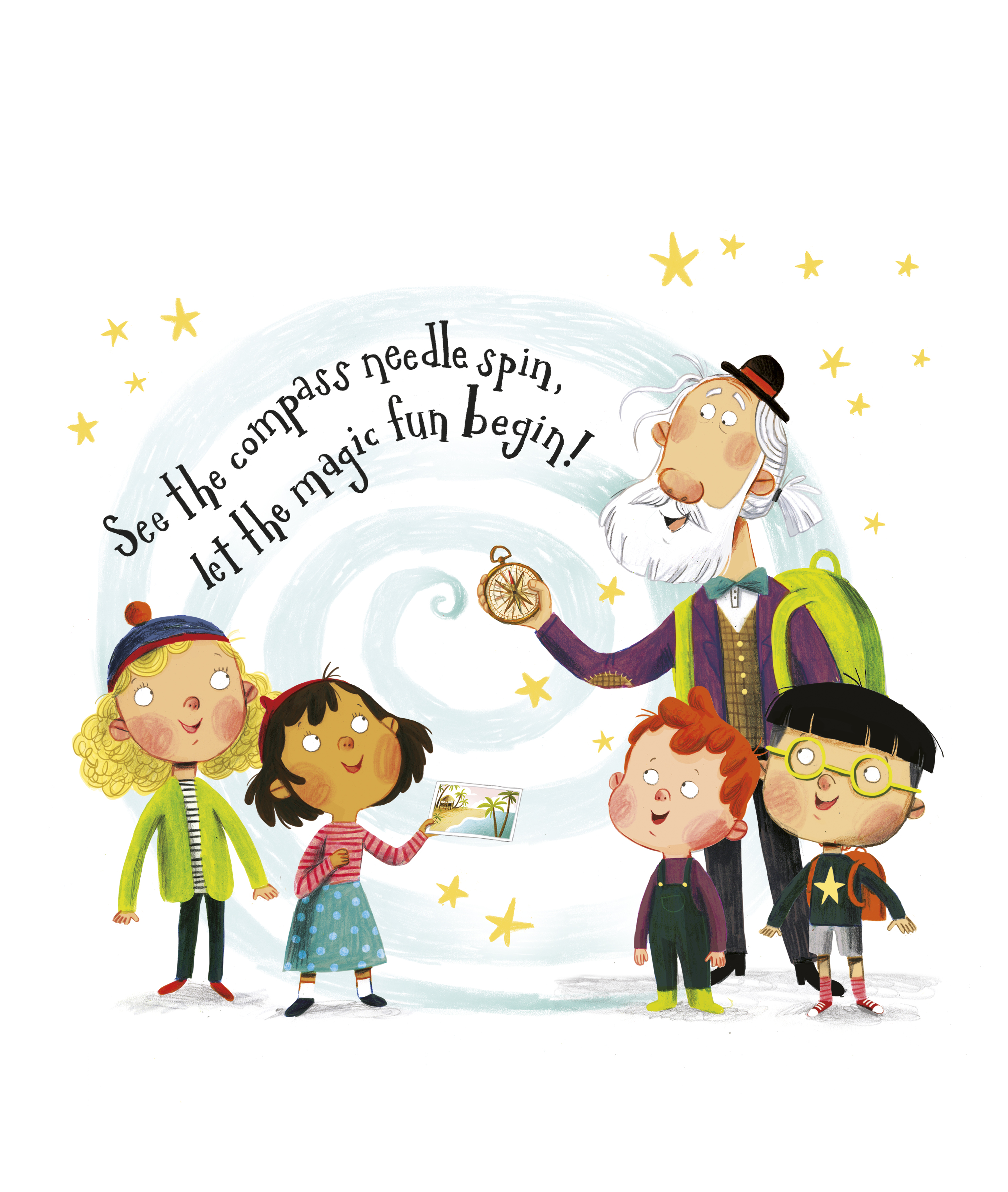
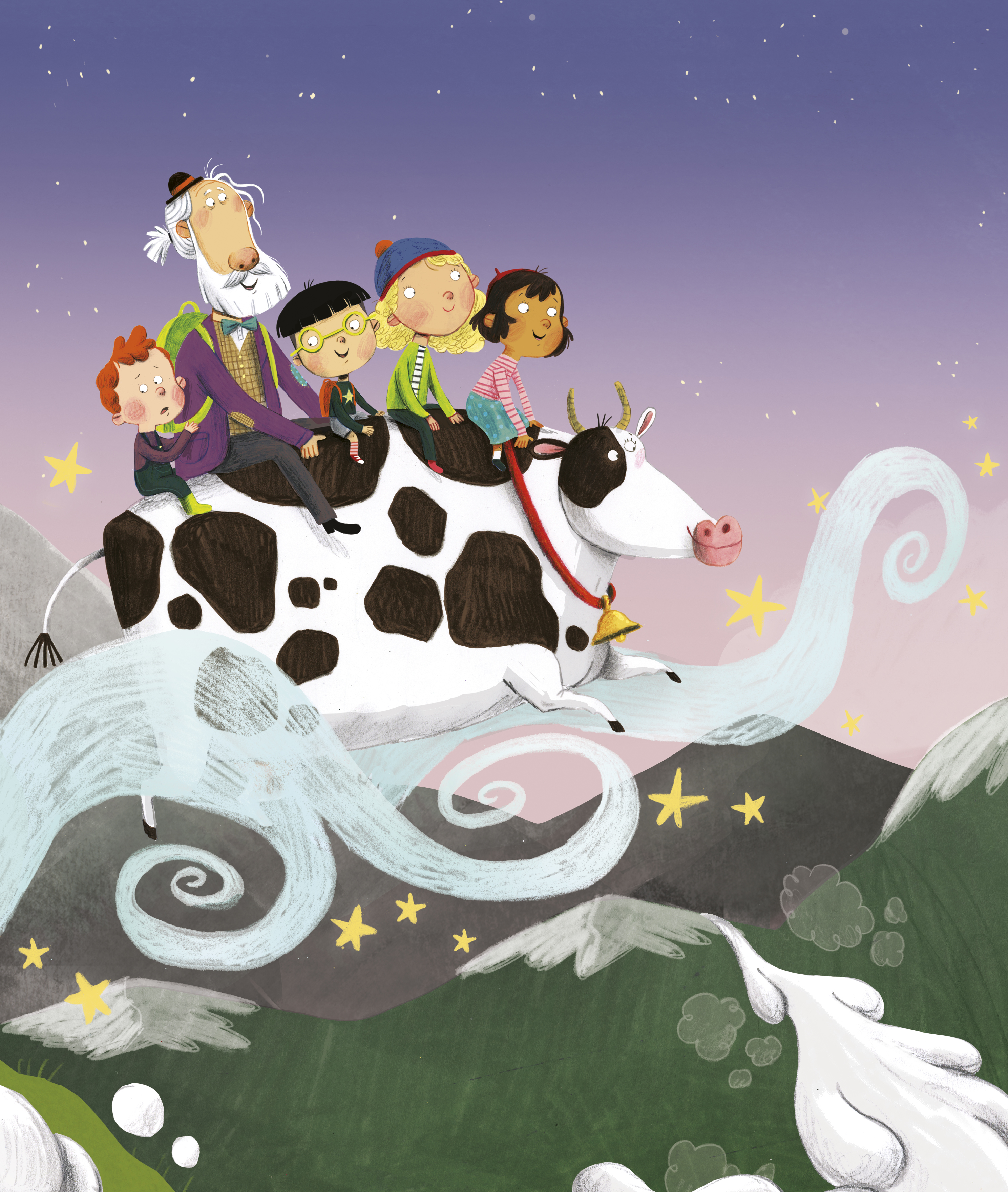
One day one of my grandkids, instead of calling me Grandad, called me Grandude: “Grandude, can we do this . . . ?” I thought, Well, that’s nice, I like that, so I started to think of stories about this character Grandude. I thought, I’ll make him magical. The kids say, “Hey Grandude, can we go somewhere?” and he takes them on magical adventures. That’s how it started – one of my grandkids just called me Grandude one day, and that was it.

Will there be more adventures of Grandude?

Well, you know, maybe we’ll see how this goes. If people like it, then I’ve definitely got a few more adventures up my sleeve – or Grandude has – so it would be quite nice to continue. I’m ready to write more if people do like it.

Paul McCartney, interview, book, author, children's book

© MPL Communications/Paul McCartney & Kathryn Durst

How did you collaborate with Kathryn Durst?

I was shown the work of a few illustrators, and because I read a lot of children’s books to my own kids when they were growing up, I know the styles that are out there and I liked her style very much. I thought it suited Grandude perfectly. It was slightly unusual and bohemian, and she made him a bit of an eccentric character, so she was really good. But there was one thing that happened during the making of the book. She’d do an illustration and it would come to me to approve it, and I’d say, “Oh yeah, it’s great.” I loved what she was doing. There was just one funny little detail: in one of the adventures the kids and Grandude were all riding horses and their stirrups were just hanging down – their feet weren’t in the stirrups. So I said to the publishers, “They’re riding horses – their feet should be in the stirrups, shouldn’t they?” And they said, “You know, that’s funny – the American publishers picked up on that too,” so we had to ring Kathryn and say, “Could you just stick their feet in the stirrups?” If you look, you will note that they’ve all got their feet in the stirrups now!

Is writing a picture book for children anything like writing a song?

Well, you know, it is a little bit like that, in as much as you’ve gotta use your imagination – you’re making something up. If it’s a song, you’re making up words and music, and maybe a story. If it’s a children’s book, then obviously you don’t need the music but you still gotta have the imagination, and that’s actually what’s fun about it: you’re making stuff up, but if you’re writing a children’s book your story tends to go to more far out places. You can rub a compass and go to Zanzibar – you can go wherever you like. You could do that in a song, but you tend to keep it a little bit more feet-on-the-ground.

The paperback of Hey Grandude! comes out on 17th September and includes a story CD, featuring narration and instrumental music by Paul.