Blooming Brilliance Pop-Up Bar Creates New Summer Sanctuary In Knightsbridge…


BLOOMING BRILLIANCE POP-UP BAR CREATES NEW SUMMER SANCTUARY AT THE RIB ROOM BAR & RESTAURANT

• OPEN DAILY FROM 4PM, 8 JUNE-2 AUGUST
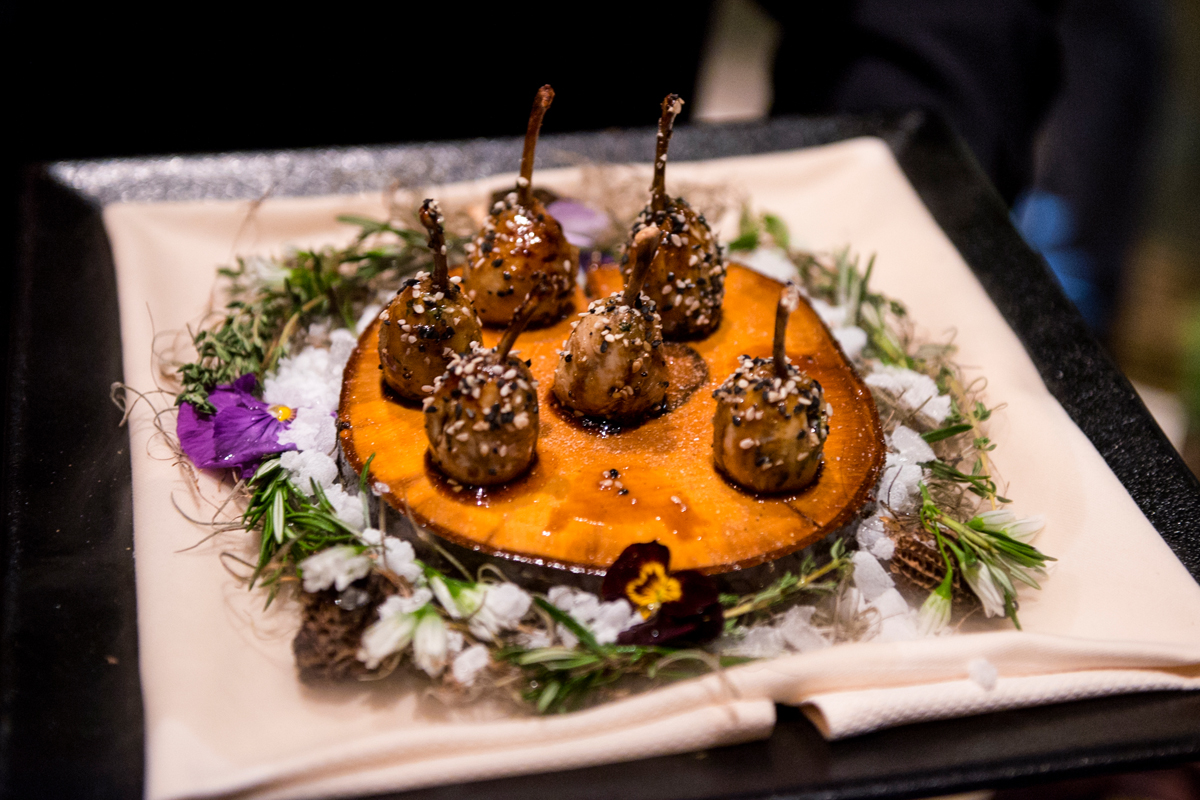
• LAUNCH OF SEVENTEEN BOTANICAL-INSPIRED COCKTAILS & SEASONAL LIGHT CUISINE
• EXCLUSIVE TASTING & SHOWCASE EVENINGS IN JUNE

VIS_0663

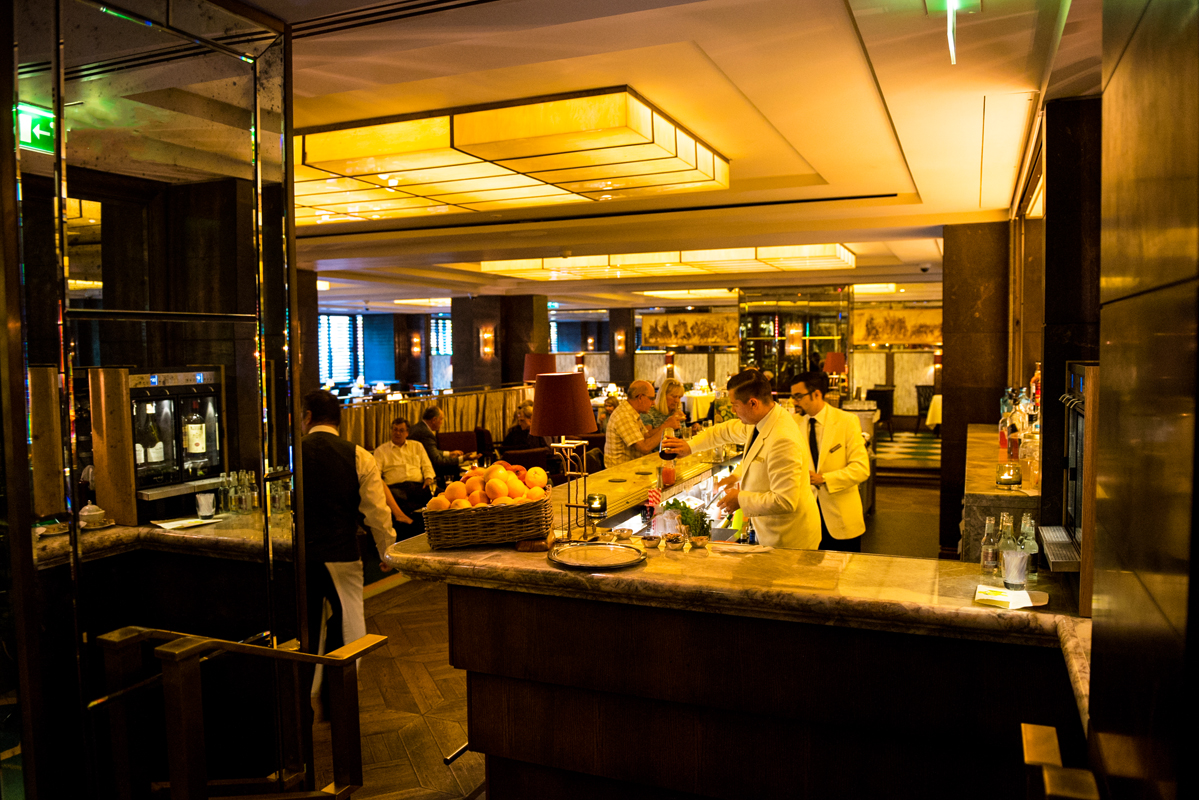
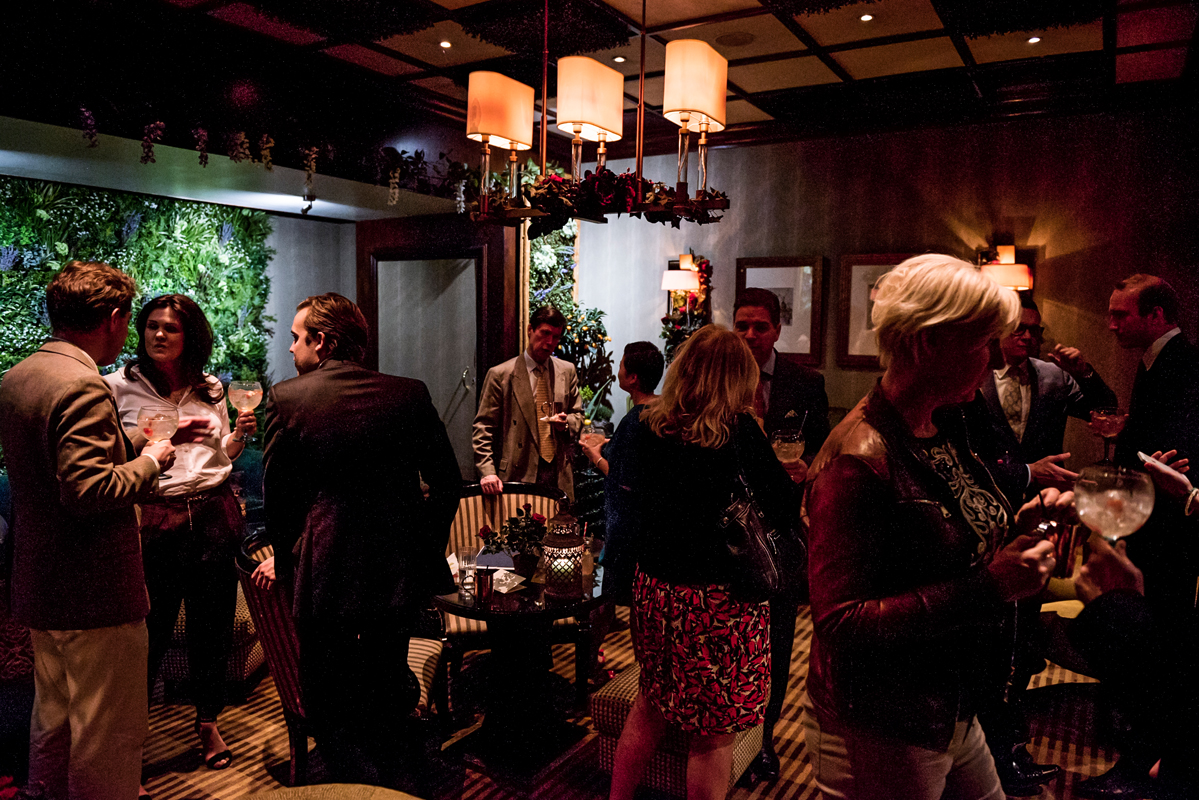
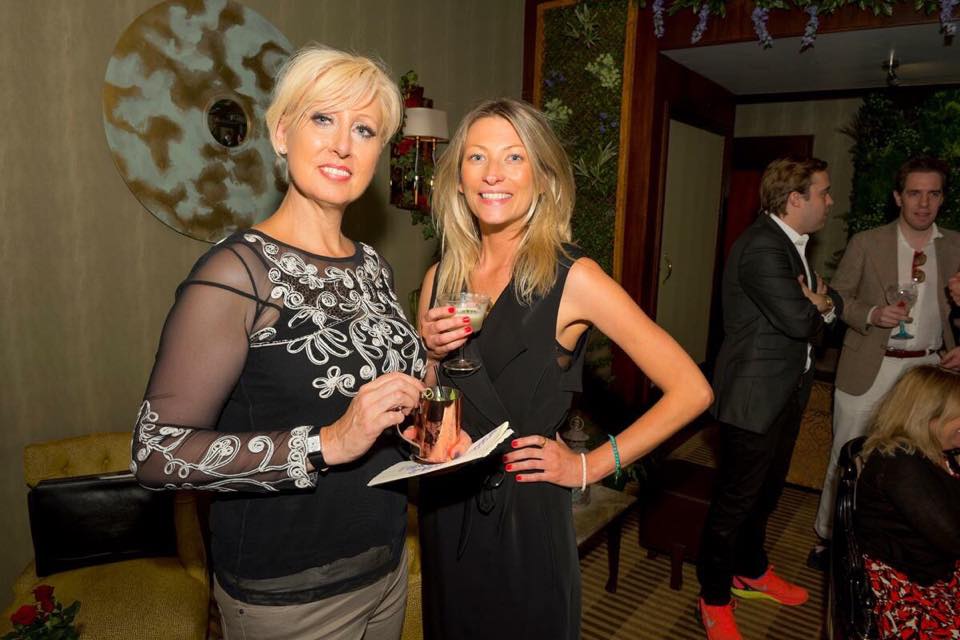
On 8 June 2015, The Rib Room Bar & Restaurant at Jumeirah Carlton Tower in the heart of London’s Knightsbridge unveiled Blooming Brilliance, its first pop-up seasonal bar, offering an enchanting escape from the heat of summer in the city with a series of innovative botanical cocktails and exclusive tasting evenings.

VIS_0657

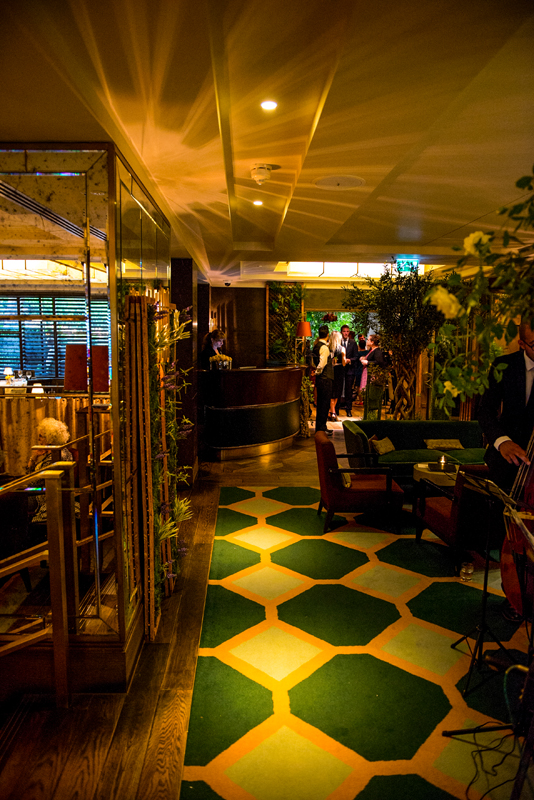
Creating a direct connection with the manicured splendour of Cadogan Place Gardens, guests will experience a floral journey from the moment they arrive outside the hotel, through the lobby into the restaurant and bar itself. The decoration reflects a summer theme with imaginative planting of botanical herbs, vibrant flowers and citrus shrubs that add an intoxicating fragrance.

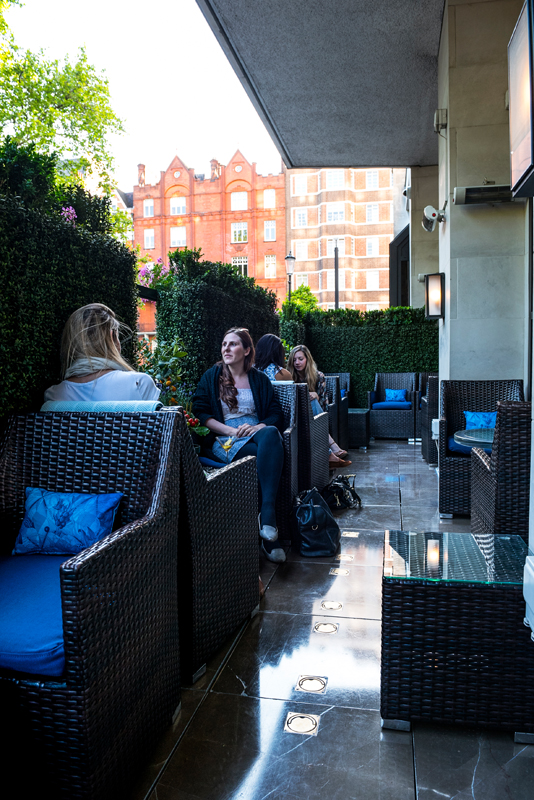
Guests may also enjoy sipping al fresco in The Rib Room’s outdoor terrace.

VIS_0651

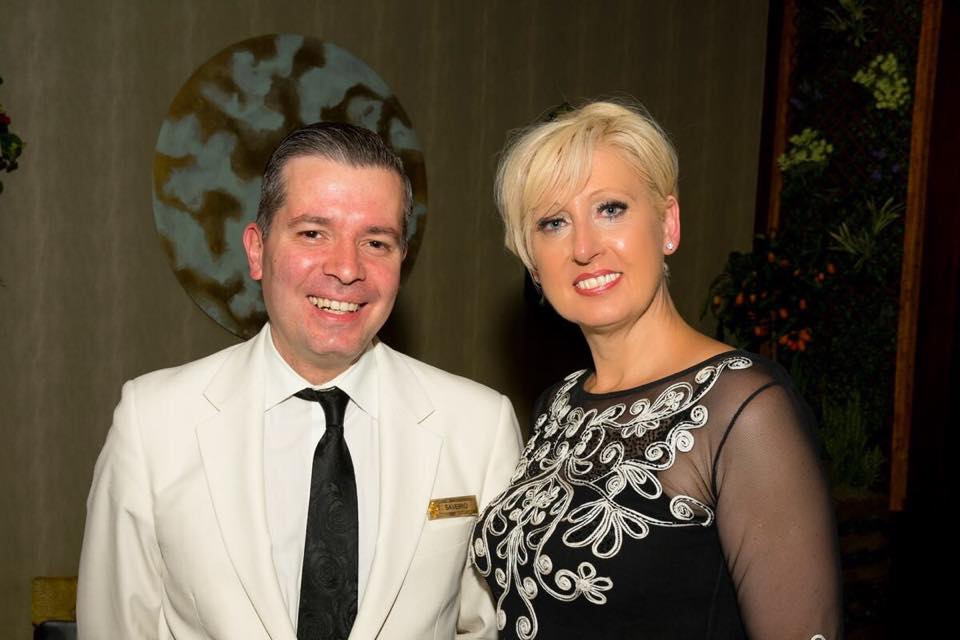
As part of this seasonal spectacle, Saverio Vicari, the Rib Room’s Head Mixologist has devised a specially crafted menu offering seventeen cocktails with a botanical twist.

11173464_10153058160698031_1286449322_n

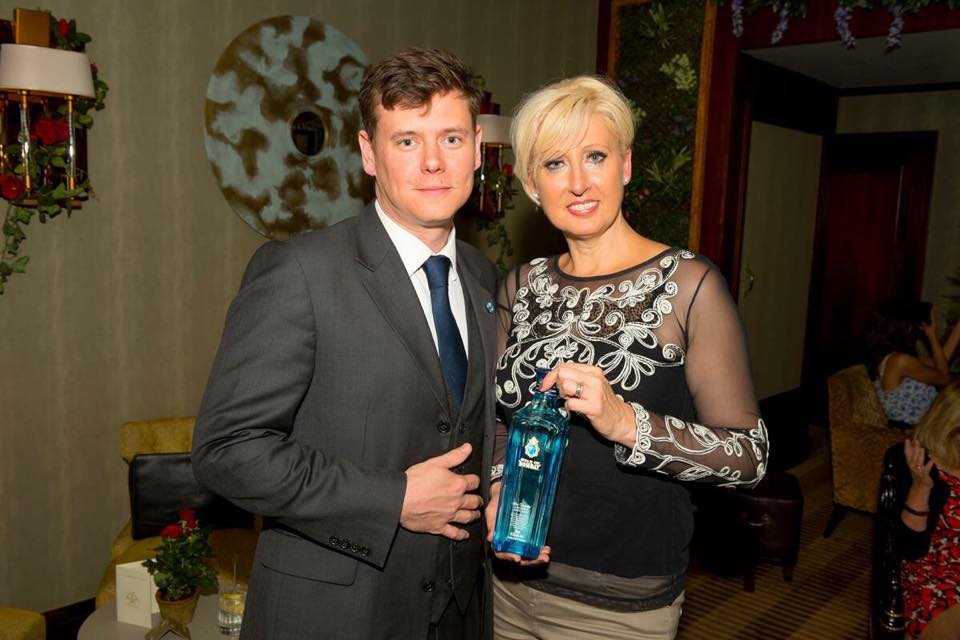
The menu will incorporate classic English favourites, plus some contemporary concoctions featuring summer staples of Bombay Sapphire Gin and Grey Goose vodka, with some refreshing non-alcoholic choices as an option.

Just some of the botanical cocktails to launch will include; the thirst-quenching Jack and Shrub – a horticultural concoction of Gentleman Jack Bourbon, Amaro Lucano and strawberry shrub with dashes of lemon juice and Peychaud bitters, sweetened with sugar and served in a copper mug decorated with mint and strawberry.

Inspired by the fragrant herb, the Basil Sour is a heady mix of Beluga vodka, lemon juice and ginger syrup complemented with a teaspoon of basil olive oil. Lavender Cutie offers a non-alcoholic summer bouquet of blueberry purée mixed with equal measures of lavender syrup and lemon juice, topped up with soda water and garnished with blueberry on a stick of lavender.

For the cocktail aficionado, Blooming Brilliance will host a series of showcase evenings including; a Sipsmith Gin experience on the 18th June, Cocktail Creations on the 25th June, and on the 2nd July a summer botanical food demonstration for £30.00 per person.

VIS_0639

Michele Caggianese, Manager of The Rib Room Bar & Restaurant said: “Blooming Brilliance creates a casual ambience for enjoying carefree summer evenings in the heart of Knightsbridge – whatever the Great British weather. Our imaginative drinks menu, savoury treats and experiences promise to refresh and reinvigorate, and restore seasonal bloom.”

VIS_0673

Blooming Brilliance at The Rib Room Bar & Restaurant opens daily from 4pm, 8 June to 2 August. Visit theribroom.co.uk or call 020 7858 7250.

11351560_10153058160833031_1930546334_n11355524_10153058160893031_254889811_n

 About The Rib Room Bar & Restaurant…
The Rib Room Bar & Restaurant is located on the ground floor of Jumeirah Carlton Tower, in the heart of London’s Knightsbridge. Awarded three AA Rosettes for culinary and service excellence, The Rib Room Bar is an intimate destination for drinks and bar cuisine, bringing together expert mixologists and contemporary design to evoke a chic ambience of indulgence. Located on the corner of Sloane Street and Cadogan Gardens, The Rib Room Bar serves a superb selection of world wines and cocktails – including Cocktail of the Month, and premium gins and bespoke bitters. The al fresco terrace offers a cocktail menu and a cigar menu. See: theribroom.co.uk


About Jumeirah Carlton Tower…

A beacon of British style and sophistication, Jumeirah Carlton Tower is a renowned five star hotel in London, located in the heart of the city’s central area.

Located on Sloane Street, the hub of Knightsbridge, this luxury hotel is one of the best hotels in London and boasts 216 guest rooms including 58 suites. These include the exclusive Royal Suite, offering superb views of the London skyline and spacious Executive Suites, ideal for business travellers.

Home to one of London’s most exclusive health clubs, The Peak Health Club and Spa, you can enjoy a relaxing spa treatment or invigorating workout in the gym. Combined with award-winning restaurants and elegant bars, Jumeirah Carlton Tower is the ideal destination for your next London city break.

Key attractions close to Jumeirah Carlton Tower include Hyde Park, and the city’s finest luxury shopping at Sloane Street’s boutiques and Harrods and Harvey Nichols are within easy walking distance.

See: https://www.jumeirah.com/en/hotels-resorts/london/jumeirah-carlton-tower

Slumbersac Sleeping Bags For Babies Review

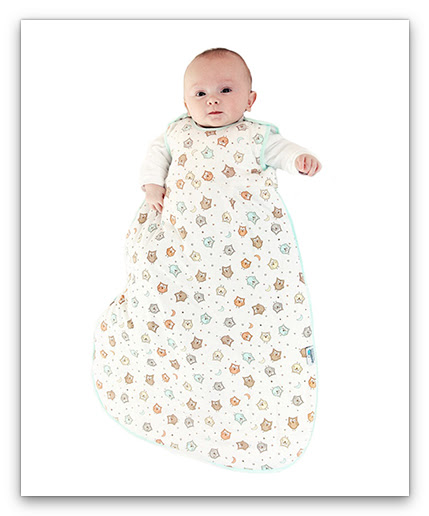
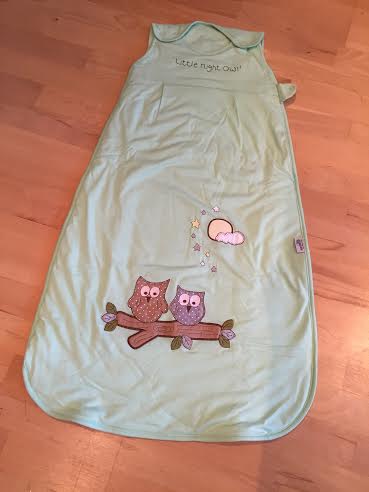
slumbersacThere are a number of reasons a baby will wake you up at night: hunger, a wet or dirty nappy, boredom. Thankfully with the invention of baby sleeping bags your baby kicking of their sheets and waking you up because they are cold is a thing of the past. Our first thought when we first opened the Slumbersac packaging was how big it seemed. It has buttons at the side for the arms to make sure your little one is securely in. There is also a zip that goes down the side and along the bottom. There are buttons that fasten at the top, making it easy to put baby in. The Slumbersac is easy to use and the fabric feels nice and soft. Made with 100% cotton and lined with 100% pure cotton, they are rigorously tested and can be both machine-washed and tumble-dried. The design is cute and baby likes it. We were sent the green owl one to review and we love the design.

Slumbersac has a good choice of sleeping bags that caters for a wide range of ages from newborn right up to 10 years old.There is a great choice of designs to choose from featuring beautiful embroidery, appliqués and prints to suit both boys and girls. They are priced from £9

www.slumbersac.co.uk Also available from rakuten.co.uk.

slumbersac

Benefits of a Slumbersac sleeping bag

• Safe: We all want to make sure our children are as safe as possible, and a Slumbersac sleeping bag can really help. Conventional bedding can ride up and cover a baby’s face, causing breathing difficulties. In a Slumbersac bag, your baby can wriggle about as much as he likes without accidentally covering his head, which greatly reduces the risk of suffocation. Just as importantly, with a sleeping bag it’s much easier to make sure your baby is at the right temperature, not too cold and not too warm. This is significant because overheating is one of the risk factors implicated in sudden infant death syndrome (SIDS).

• Convenient: With a Slumbersac bag, getting baby to bed is easy – just put them in the bag for a cuddle and then put them down in their cot or moses basket! The familiarity of their sleeping bag acts as a signal that it’s sleep time, which helps them to settle more quickly, and the warm and cosy bag will help them to drift off with minimal fuss. Plus, night-time nappy changes are made easy with the all-round zip.

• Comfortable: Slumbersac sleeping bags are made from 100% cotton with a soft and quick-dry fleece filling for maximum comfort and ideal for sensitive skin, so your baby will always be safe and snuggly. And because there are no covers for baby to get tangled up in, they are much more likely to sleep well – and so are you!

• Ideal Temperature: Baby Sleeping bags keep your child at a constant temperature during the night, which is safer and results in better sleep.

• Familiar comfort: Baby sleeping bags are ideal when traveling, on holiday or sleepovers as babies feel more at home in their sleeping bag. Your child is naturally more unsettled when traveling. The familiarity of their sleeping bag will help them settle in new and unfamiliar surroundings. Slumbersac’s specially designed travel sleeping bags can be used in car seats and buggies where your baby can be securely buckled into any seatbelt.

• Value: Slumbersac’s aim is to deliver quality, comfort and safety at a price you won’t find anywhere else! Slumbersac aim to offer their customers second to none customer service and receive impeccable feedback.

• Choice: Slumbersac offers a range of innovative products to compliment their sleeping bags, from sleeping bags with feet to bedding and comforters. They offer a wide choice of designs to suit all needs from birth to 10 years.

• Easy care: Slumbersac sleeping bags can be machine washed and tumble dried.


There’s Something Fishy About Our Lives… Leading Experts Detail New Research and Science Concerning Brain Health

On Thursday 11th June, The Ivy played host to a presentation by three leading experts who detailed new research and science concerning brain health from cradle to grave,

including the importance and benefits of omega fatty acids.

Professor Michael Crawford, a director of the Institute of Brain Chemistry and Human Nutrition gave a brief synopsis of what makes our brains ‘tick’, outlining latest brain health research including how omega fatty acids support optimal cognitive function.  Thirty years ago, he predicted dangers if long-chain DHA and EPA omega-3 dietary intakes were not increased, a prediction in danger of coming true as rates of depression, schizophrenia, Alzheimer’s and other cognitive disorders spiral in the western world… he opened with a grave and eye-opening statement:

“We are facing the most serious crisis ever in terms of future sustainability of homosapiens… it has now been vindicated as brain disorders have overtaken all other burdens of ill health.  In the UK, the cost was assessed at £77 billion for 2007.  A recent update by the Department of Health came out at £105 billion. This cost is greater than heart disease and cancer combined. 

Moreover, the greatest rise is amongst children…”

 VIS_0579

World-Rhino-Day-2011-low-res[1]

So… why the rhino?

It’s been a common misconception that fish and seafood provide the highest content of protein, that’s why we eat it… right?  Wrong!  Protein is readily obtainable and the cow, horse and rhinoceros all gain their optimum intake from grass. Human developmental biology is all about brain growth and the human brain is approximately 60% fat, but, In fact, human milk contains the least amount of protein compared to any other large mammal.   There is abundant evidence in animals and humans on the need for DHA for the brain, but fish and sea foods are not necessarily of major value for protein but are for their essential fats and trace elements needed for good brain development and health.

The brain evolved in the sea 500-600 million years ago using marine fats and trace elements. It still uses the same today, so addressing this issue is the greatest challenge we face as humans.  It’s commonly noted that a  well-managed diet containing effective levels of omega-3 helps parents and professionals manage conditions like dyslexia, attention-deficit hyperactivity disorder (ADHD), dyspraxia and autism spectrum disorders.

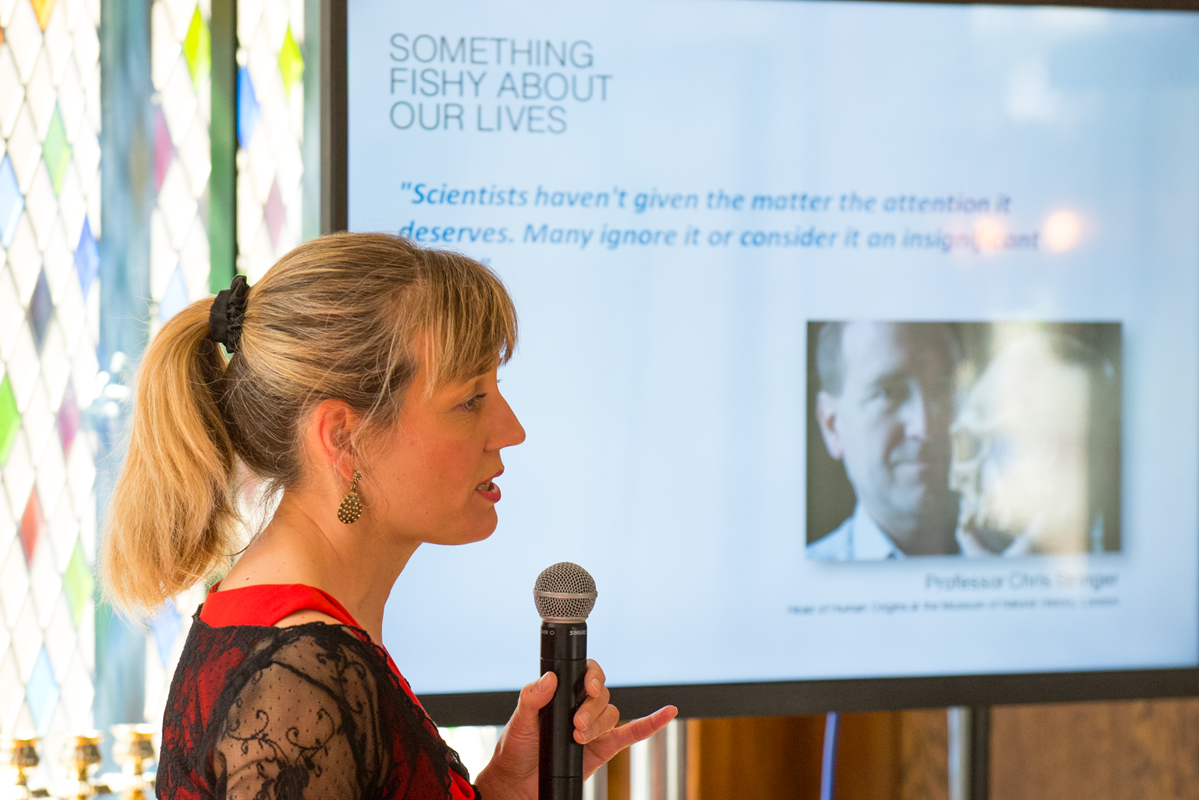
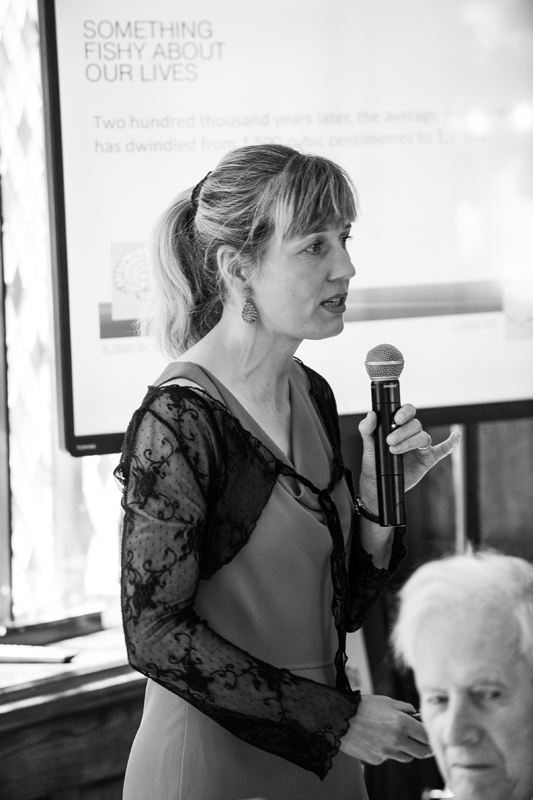
Award winning dietitian Dr Carrie Ruxton examined omega intakes in the modern day diet and benefits of omega-3, whatever our age.  She outlined that, in dietary terms, things began to go wrong when we made the shift from hunter-gatherer to farming, around 10,000 years ago.  The fossil record shows that as our intake of omega-3 began to tail off, our brains began to shrink, with the average male brain dwindling from 1,500 cubic centimetres to 1,350 cubic centimetres.
VIS_0560

Dr Ruxton went on to explain the ‘fabulous’ fats and ones which are less than fantastic for brain health and function.

Omega-3 is an umbrella term typically used to describe polyunsaturated fatty acids, such as DHA (Docosahexaenoic Acid), EPA (Eicosapentaenoic Acid) and ALA (alpha-linolenic Acid).  DHA and EPA can be made in the body from ALA, but the process is slow and inefficient, so regular dietary consumption is vital to ensure we get enough.

EPA is found in oily fish and plays a key role in signalling between brain cells, both anti-inflammatory and neuroprotective.  Studies have shown low blood levels in patients with depression, schizophrenia and Alzheimer’s.
VIS_0557

DHA is another omega-3 marine oil which provides the building blocks of the brain, nervous system and eyes, it makes up 40% of the polyunsaturated fatty acids (PUFAs) in the brain and 60% of those found in the retina.  A diet high in DHA is associated with improved learning ability, but a deficiency is linked to poor cognitive performance, Alzheimer’s disease, depression, aggression, stress and ADHD.

ALA is a vegetarian source of omega-3 which is most commonly found in flaxseeds.  Our body converts it into EPA, which in turn is converted into DHA.

Omega-6 includes 11 polyunsaturated fatty acids which are found in nuts, seeds, vegetable oils and animal fats.

The long and the short of it… it’s all about getting the balance right!
VIS_0566

But why are we so out of balance?

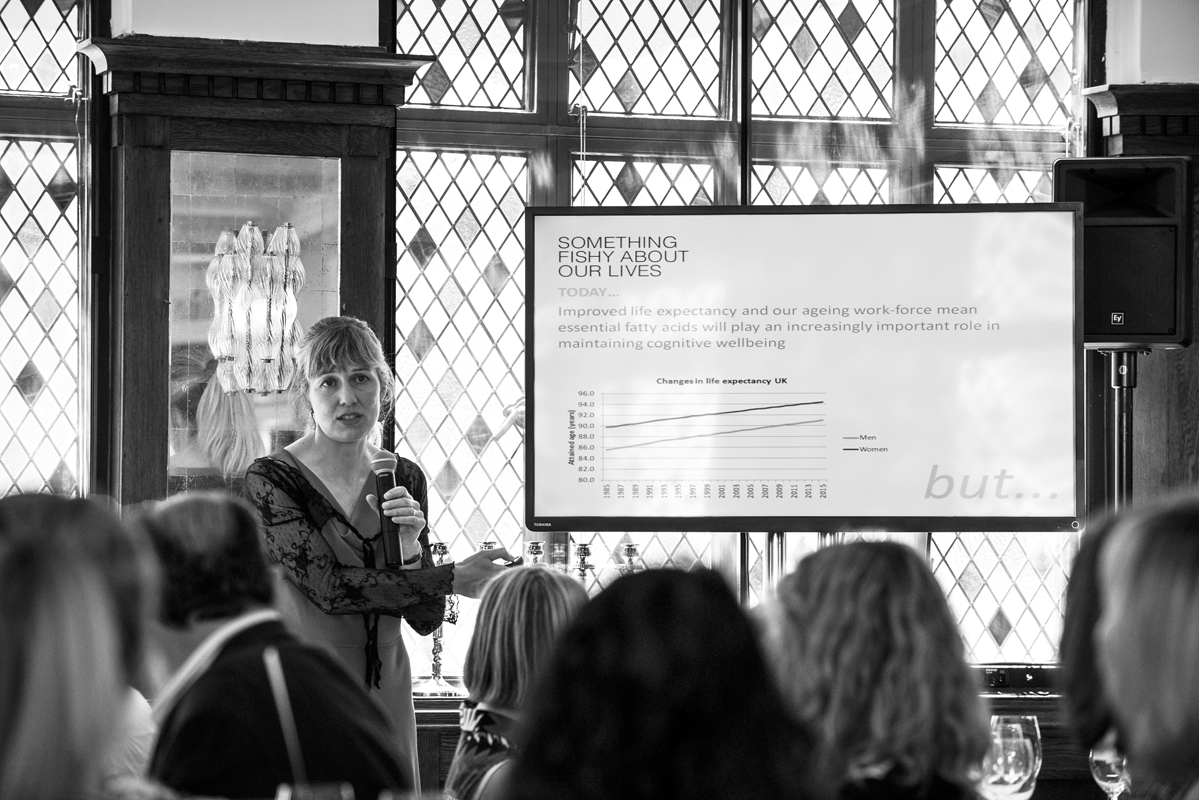
When we examine the diet up to the Victorian era, the ratio of omega-6 to omega-3 was 1:1, but an upsurge in intensive production of land-based foods since World War II is exacerbating the decline in DHA intakes which began 10,000 years ago when Paleolithic hunter-gatherers starting farming.  Now, our diet is so wildly out of step with our evolutionary age, this ratio could be as high as 50:1!  And it cannot be ignored that it’s no accident that this shift has coincided with a surge in cognitive conditions across the ages.

oilyfish[1]


During World War II, oily fish, such as herrings, were off-ration and housewives became creative in their recipes, incorporating this oily fish into the household’s diet at least once a week.  Taking a leaf out of granny’s book and bringing this nutritious food back into our day-to-day menu may take the brakes off the detrimental effects of some of the processes triggered in the brain by high-fat diets.

When questioned, the average respondent will cite tinned tuna as an oily fish, commonly teamed up with pasta for what is considered a meal high in omega-3, but in fact, tinned tuna is LOW in omega-3, due to being canned in brine or vegetable oil!

Another myth is that pregnant and breastfeeding women should avoid all oily fish, but in order to ensure adequate levels of omega-3, expectant mothers should be eating at least one portion a week.  It’s quite staggering that one UK study of 9,000 families found women with the lowest consumption of omega-3 from oily fish had children with lower IQs by the age of three.  By the time they were teens, they were twice as likely to struggle with social interactions and have trouble making friends – ‘These children may be on a developmental trajectory towards life-long disruptive and poorly-socialised behaviour as they grow up” Dr Joseph Hibbeln.

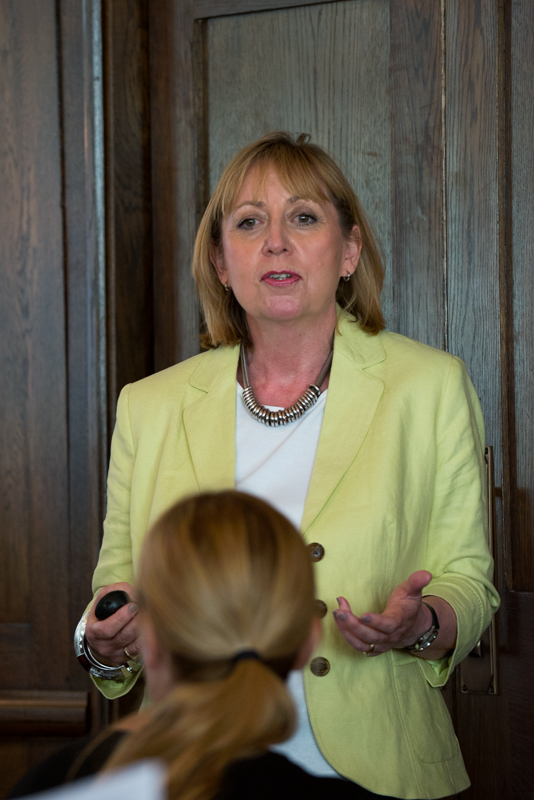
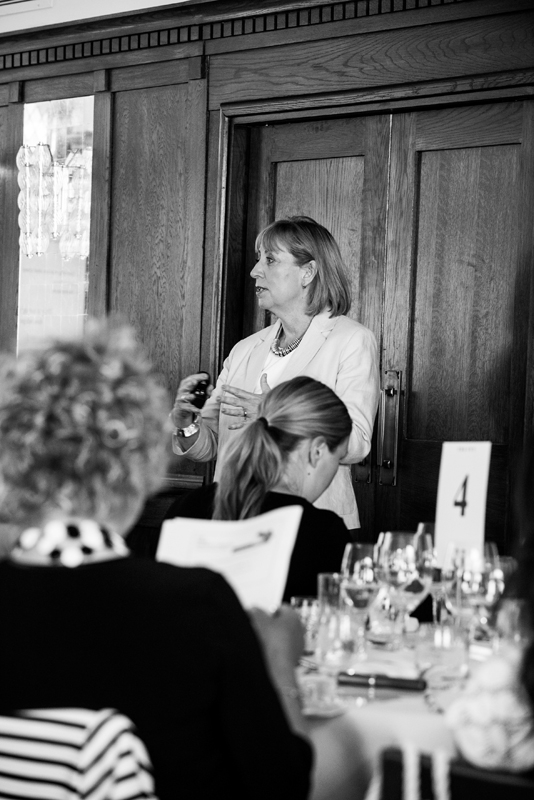
Parenting coach Lorraine Thomas provided expert advice on behaviour management in children and teenagers.
 VIS_0629

Quite reassuringly, Lorraine opened her presentation by informing the invited guests that “…tantrums indicate you and your child are developing normally, but understanding what causes them helps you manage them well.”

She outlined that working mums spend between 1 and 2 hours a day worrying, 9 out of 10 parents throw tantrums on a regular basis and 8 out of 10 act their children’s age at least once a week!

With the key trigger times being the evening routine and sleep, mealtimes and homework, Lorraine commented that, as a parent, we are our child’s most powerful role model and when you look after yourself, you are looking after your children – you are the family ‘engine room’ and great habits are caught not taught.  The greatest impacts on a child’s behaviour and attitude are following a healthy diet, exercise, sleep, fun and love.

Frantic parents have frantic children and well-balanced parents have well-balanced children, so it’s important to develop good routines and a healthy attitude.

Lorraine’s key pieces of advice:

* set your parent ‘Tom-Tom’ and create a schedule, involve your child in some of the choices

* you can’t be 100% parent all of the time, but you can some of the time

* engage all your senses and ‘tune in’ to what makes them behave in a challenging way

* eat with them whenever you can

* every day is an opportunity to make a difference in our children’s lives
VIS_0612

11292670_10153056316028031_884724128_n

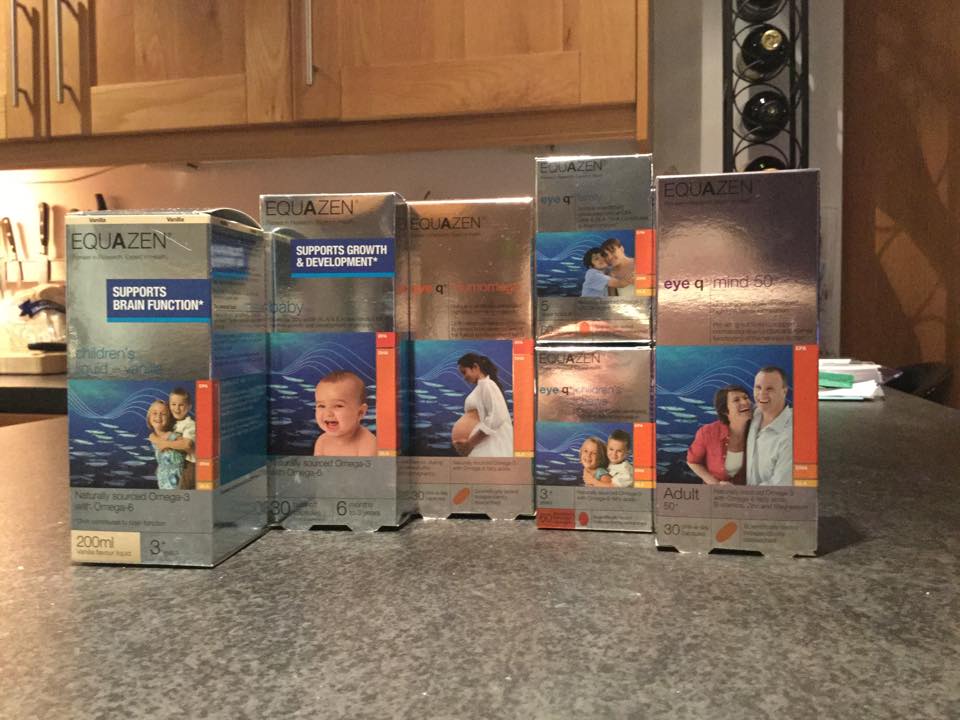
Equazen has spent many years of scientific investment to develop and create the Equazen range as we know it today, a unique formulation of both omega-3 and omega-6, meeting the specific needs of different life stages.

Equazen Mumomega is ideal for during and after pregnancy, The specific blend of omega-3 EPA and DHA, together with omega-6 GLA ensures a synergistic and balance formulation to meet baby’s individual needs.

Equazen Baby provides a balanced blend of omega-3 and omega-6 to support growth and development for babies from 6 months to 3 years.

Equazen Liquid is ideal for children 3 years+ and adults who don’t like swallowing pills and capsules – available in two flavours – vanilla and citrus.

Equazen Chews deliver a specific blend of omega-3 and omega-6 oils in a soft gelatin chew in a strawberry flavour, free from additives such as aspartame, saccharine or hydrogenated oils.

Equazen Capsules offer a combination of omega-3 EPA and DHA together with omega-6 GLA, ensuring a balance formulation to support the body’s individual needs.

Equazen Mind 50+ is a balanced formulation, great for those who find it hard to eat oily fish.

Available from: Boots, Ocado, Holland & Barrett, Tesco, Waitrose, Sainsbury’s, Lloyds Pharmacy, Amazon, independent pharmacies and healthfood stores.
_m_eYuOtXaWwEltuChIZVNGdOGhOqw8Y7WvKEbivva4

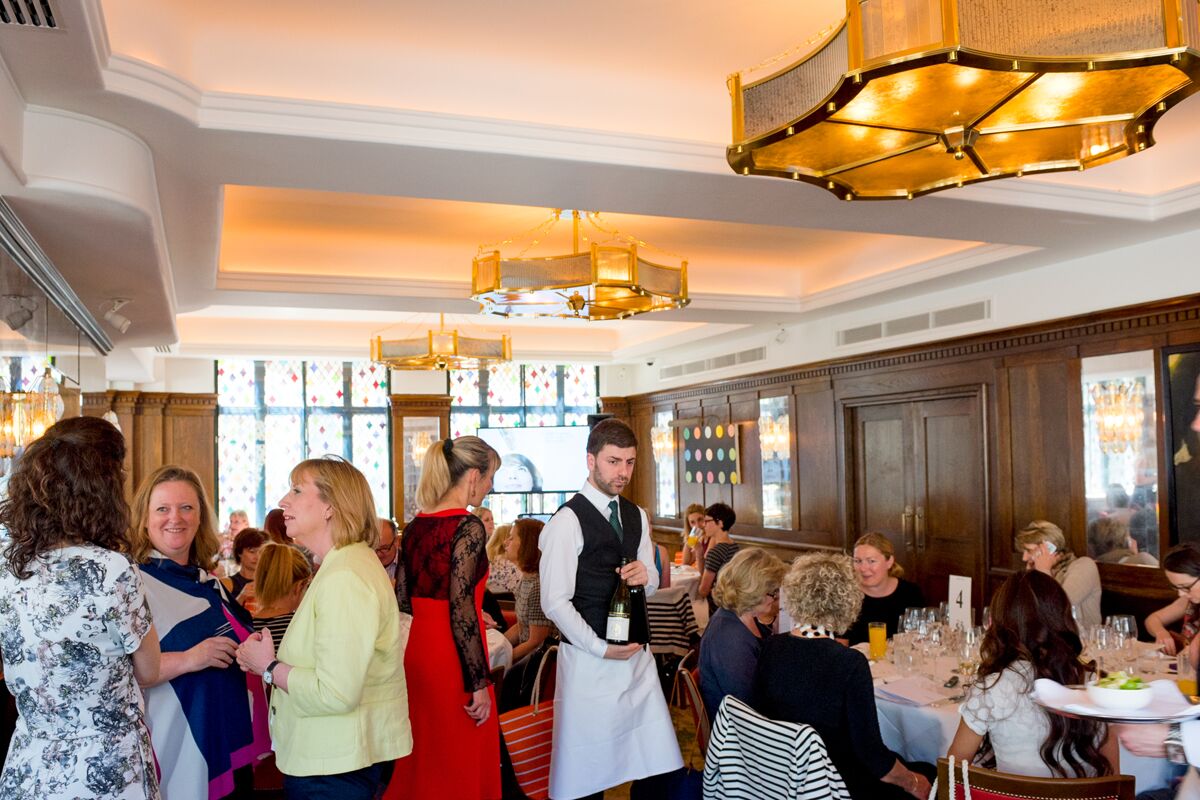
Guests enjoyed a delightful menu consisting of:

Argyll smoked salmon with soda bread and a slice of lemon, roast rump of Cornish lamb, new potatoes and spinach, gooseberry pie with elderflower ice cream and a selection of teas, coffee and petits fours with Framingham Sauvignon Blanc, Marlborough 2014 New Zealand and Château La Grave Singalier Bordeaux Supérieur 2012 France
VIS_0634

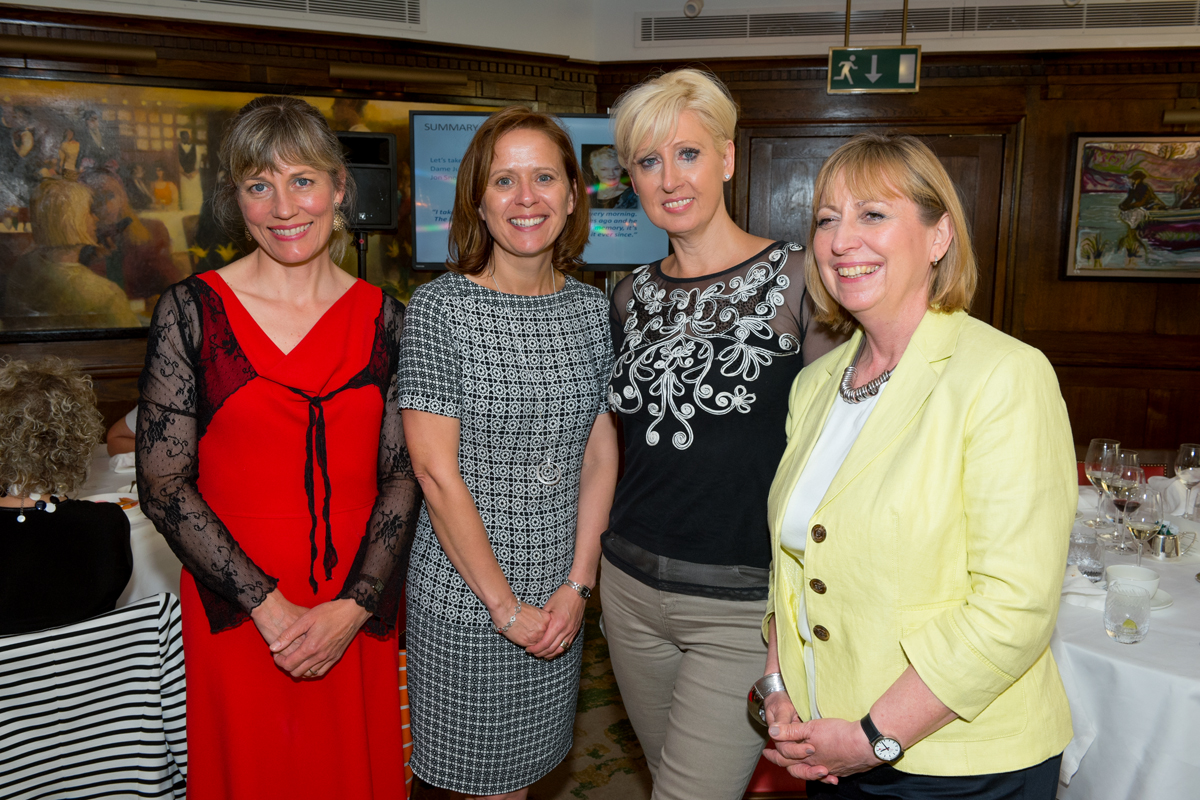
L to R: Dr Carrie Ruxton, Anita Clarke (Equazen), Corinne Tuddenham-Trett and Lorraine Thomas

Professor Michael Crawford…

Professor Crawford has been the Director of the Institute of Brain Chemistry and Human Nutrition since 1990. Having worked in the East-end of London on maternal nutrition and health with Newham, the Homerton and Queen Elizabeth Hospital for Children, he is now at Reproductive Physiology at the Chelsea and Westminster Hospital Campus of Imperial College, London. His special interest is in the role that lipids and essential fatty acids play interacting with the cellular signalling systems, i.e. the key interaction between nutrition affecting membrane lipids and gene expression.

He has published over 300 peer reviewed papers and 3 books. Amongst his several honours and prizes, he was elected by his peers to the Hall of Fame at the Royal Society of Medicine in 2010. In 2015 he was awarded the Chevreul Medal for his research on DHA identification as a major determinant of brain growth and plausible evolution of the human brain. He collaborates in research internationally and is much in demand as a lecturer worldwide.

In 1972, Professor Crawford published ‘What We Eat Today’  – available from http://www.amazon.com/What-eat-today-Michael-Crawford/dp/0854353607

– See more at: http://www.ifbb.org.uk/professor-michael-crawford#sthash.F9u1oYRZ.dpuf

Dr Carrie Ruxton…

With a PhD in Child Nutrition and over 100 published articles on diet and health, Carrie has a strong grounding in nutrition science. Yet she combines this with an understanding of the food industry and its important role in the nation’s diet.  As well as helping companies to develop healthy, innovative food and beverage products, Carrie regularly appears in magazines and newspapers, and has a number of radio and TV credits (Channel Four news, BBC Three’s ‘Honey We’re Killing the Kids’, Radio Scotland, Five Live, BBC Belfast).  Carrie has worked with a wide range of organisations including the NHS , Food Standards Agency, major food companies, ingredient manufacturers, the European Commission, PR agencies and national newspapers. Carrie’s expertise in communicating clear, evidence-based nutrition and diet messages has involved her in many different projects all over the world.

http://www.nutrition-communications.co.uk/


Lorraine Thomas…

Lorraine Thomas is the Chief Executive of The Parent Coaching Academy. She is the author of The 7-Day Parent Coach (Vermilion 2005), Get A Life (Hodder Arnold 2006) and her new book, The Mummy Coach (Hamlyn), published in 2010.  She is the parent coach for Tesco’s baby & toddler club and healthy living magazine. www.tesco.com/babyclub/

She appears regularly in the national media commenting on parenting issues.  Lorraine has over 20 years’ experience working with executives within the corporate, public and voluntary sectors. She has a first-class honours degree in education from Cambridge University and is a qualified teacher. She is accredited with distinction by The Coaching Academy.

http://www.theparentcoachingacademy.com/

The Ivy…

The Ivy restaurant and private room re-opened on Monday, 1 June, designed by Martin Brudnizki Design Studio. “Non-negotiables” such as the harlequin stained glass windows, green leather banquettes, wood, mirrors, great art and kind lighting are all incorporated in a way reminiscent of the past but apt for the 21st century. Note-worthy are the fantastic central dining bar, the new entrance and the sumptuous loos.  Chef Gary Lee has created a balanced seasonal menu, still featuring Ivy classics, but accounting for today’s tastes, incorporating more Asian dishes, salads and vegetables, and the advent of a “sea and shells” section. Director Fernando Peire continues to lead a strong and experienced team to deliver the same excellent service for which The Ivy has become well known over the years.

http://www.the-ivy.co.uk/


Images copyright Shane Finn www.visual-devotion.co.uk



Ready, Steady, Baby! 4 Things You Need to Know About Fertility

kimkardashianpregnantAfter giving birth to daughter North two years ago, Kim Kardashian is now pregnant again. Kardashian previously admitted that she was desperately trying to conceive

As Kim and her partner, Kanye are both in their mid thirties, leading busy and stressful lifestyles, they are in a large group of fertility challenged couples.

According to the Journal of Human Reproduction, woman in their mid thirties with an older partner have a shocking 20 per cent chance of conceiving each month. Notonly does sperm quality decline with age, but also women are born with all the eggs they will ever have, so their fertility only goes down over time*.

The second most common cause of infertility is ‘unexplained’, which means that following thorough investigations, doctors can find no identifiable medical problem for a couple’s infertility. Fertility is multi-factorial so it’s important to look at every aspect of wellbeing, from general health, emotional problems and lifestyle.

We asked Dr Marilyn Glenville, the UK’s leading nutritionist specialising in women’s health and author of best selling Getting Pregnant Faster: Boost Your Fertility in Just 3 Months – Naturally, to give us her 4 step plan on boosting fertility naturally.

Check your menu

‘Although it goes without saying that a healthy diet is crucial to a successful pregnancy and a healthy baby, many people are unaware of the fact that diet may affect the ability to conceive. The following are recommended:

Plenty of fruit and vegetables
Complex carbohydrates – wholegrains like brown rice, oats and wholemeal bread
Organic foods where possible
Oily foods such as fish, nuts, seeds and oils
Reduced intake of saturated fats from dairy products etc.
Increased intake of fibre
Avoid additives, preservatives and chemicals, such as artificial sweeteners
Avoid sugar, both on its own and hidden in food

Avoid the three main fertility busters: Caffeine, alcohol and smoking as they have all been linked to an increased risk of infertility in men and women.’

Food Supplements

‘As well as looking at what you eat and drink there is now a great deal of scientific knowledge about the use of nutritional supplements and their beneficial effects on fertility. The most important nutrients for fertilityare Zinc, Folic Acid, Selenium, Vitamin E and C and Omega 3 Fatty Acids.’

Weight Matters

‘Women are most fertile when they are neither too thin nor too heavy. They need at least 18% body fat to ovulate and the best chance of getting pregnant is when 20-25% of the body mass is fat tissue. On the other hand, the menstrual cycle can be disrupted by too much fat, which affects oestrogen levels. Being 25% over the ideal weight can even stop ovulation. It’s important for the man to keep his eye on his weight too as there is an increased risk of infertility or poor sperm quality and quantity in men who are overweight’

De-stress

‘Stress can cause irregular ovulation and also lower sperm count. To minimise stress, the recommendations are to eat a healthy diet which keeps blood sugar in balance, exercise regularly and get at least eight hours sleep a night. Yoga or meditation can also be helpful and well as seeing a counsellor as infertility is itself stressful.’

Natural Approach

Dr Marilyn Glenville has joined forces with luxury health spa Champneys, to deliver a series of women’s wellbeing weekends this year.  These very special one and two day retreats are led by Dr Glenville herself and offer natural solutions and insight into four significant female health issues.  Dr Glenville’s Fertility retreat is this November at Champneys in Tring.  Groups are kept small to allow for plenty of time for questions and one to one time.  Each retreat includes full use of all facilities, nutritious meals and a thalassotherapy session.  Champneys.com for booking and more information.

*http://www.dailymail.co.uk/health/article-112136/The-female-fertility-clock-starts-ticking-27.html


How to Photograph Your Kids

howtophotographyourkids

kidphotographyThis famous mom photographer shares her secrets with Frost Magazine and SmugMug.

Last year, Elena Shumilova took photos of her sons as they played by the Russian countryside. She uploaded the photos online, they started getting shared, and shared again… until they became a viral sensation, with over 60 million views.

These photos hit something magical all across the Internet — a sense of nostalgia for a childhood past. She even started getting letters from people in their nineties, saying the photos moved them to tears.

As parents, we instinctively want to take photos of our kids. We’re trying to preserve this brief slice of time before they grow up. But when we take our kids to professional photo studios, the results can end up looking stilted and unnatural.

We want to remember our kids as they actually are — not with the forced smile a stranger coaxed out of them at the studio, but with the real smiles and giggles they share with us every day.

How can we capture natural photos of our kids, the kind Elena seemingly has a magic touch for?

Elena has mostly been quiet since her photos have gone viral, undistracted by all the media attention. Instead, she focuses on raising her kids and continues to photograph them every day.

Given how quiet Elena has been, we are excited to share a behind-the-scenes look at her in action.

5 Tips to Get Better Photographs of Your Kids

1. How to get your kids to look natural, not “posed.”

So you catch your kids in the perfect moment — they’re outside playing and laughing, the lighting is just right, and you see this perfect picture you want to capture. You rush to get out your camera, but then…

They see the camera. They stiffen up. They start posing. The moment is lost.

What do you do?

When photographing children, the single most important thing is to photograph them often — every day.

You can’t just do it sporadically, or they’ll freeze up as soon as the camera comes out. Consistency is key. That way they’ll be comfortable around the camera.

It’s these everyday scenes that you want to capture — the ones you’ll remember best when they grow up.

To get the most genuine photos, I try to catch them in the moment — when they’re playing with each other and have completely forgotten about the camera.

Here they’re playing “airplanes,” a game we also play together at lunchtime when they’re feeling picky about their food.

2. The types of clothes that work the best.

I follow a pretty simple rule: clothes shouldn’t be distracting. They shouldn’t take attention away from what’s happening in the photo.

For such a simple rule, it’s harder to follow than you might think. Kids’ clothes today are designed to grab your attention—with bright colours, cartoon characters, and writing all over them. In photographs, all this takes attention away from your kids.

When I started pursuing photography seriously, I actually replaced all their outfits. This took quite a while to do, but now I know that anything I pull from their closet won’t interfere with the photo.

3. How to best capture kids of different ages.

Newborns
A lot of parents have asked me about this photo — how did you get your one-month-old to look so calm? Infants are notoriously difficult to photograph because they’re often crying or fidgeting.

Here you’ll have an advantage as a parent. I’m his mom. I’m around him 24 hours a day, and I know when he cries and when he doesn’t. Let your parenting instinct help you choose the right moment.

The Golden Age: Ages 2–4
Something I noticed while photographing many children, including my own, is that there seems to be a universal age when kids are the most photogenic.

That seems to happen between ages two and four.

Kids around this age behave very naturally. They don’t care that someone is looking at them, they don’t care what others think, and they don’t care that a camera is pointed at them.

They aren’t yet self- aware. And so, they’re free.

Ages 5 and Older
It gets a bit more difficult when they’re older. As early as age five, they start to become more self-conscious when the camera comes out. They start to pose.

The key here is to be very patient. Let them play while you disappear into the background. My best photos always happen at the end of a photo shoot, when my kids have forgotten all about the camera.

4. How to get good photos of your kids with pets.

Just like people, every animal is different. Some pets like to be photographed, and others don’t.

Because every pet is different, there isn’t a magic formula for this. I spend hours observing our farm animals, figuring out how they move and what angles work best for them — just like I would for people.

I’ve also tried bribing pets with food, but it doesn’t work. It’s almost impossible to get a good picture when they’re chewing or licking their paws. So I’ve learned the hard way not to feed our pets during photo shoots.

With animals, you have to rely on a bit of luck — and constant patience.

5. Don’t give up.

This is the most famous photo I’ve taken. It’s been viewed over 10 million times — but I almost didn’t bring my camera that day.

Before I took this photo, my confidence was at a pretty low point. I had tried for a photo of my son and dog 14 other times — not 14 other photos, but 14 full photo shoots, all failures.

I was convinced that my hands were too clumsy, or my dog was not the right dog for it, or my kid was not the right kid for it. I was just feeling desperate that day and didn’t even want to bring my camera.

But something told me to bring it. And on that fifteenth day, it all just came together.

This dog of ours is now famous — but he’s not all that photogenic from most angles. He’s actually a pretty difficult dog to work with. From the previous 14 photo shoots, I’d learned what angles and body compositions work for him and my son.

It‘s easy to get discouraged. It’s easy to think, “Oh, why bother, it won’t work anyway.” And it may not for the first 14 times. Those 14 photo shoots weren’t failures though, because I learned from them. And they’re what made the fifteenth one possible.

Don’t give up.

Rather than creating high-pressure elaborate setups, observe your kids in everyday simple situations. Do it every day. Bring your camera along.

And then — when the right moment comes along — you’ll be ready.


Stars Of Film, Music and F1 Take Theatrical Journey Into The Art Of Blending At Monaco’s Ermanno Palais as Johnnie Walker Blue Label Presents Symphony In Blue

Symphony In Blue, Monaco, Hosted By Johnnie Walker Blue Label - InsideSymphony In Blue, Monaco, Hosted By Johnnie Walker Blue Label - Inside

JOHNNIE WALKER BLUE LABEL welcomed icons from the worlds of film, music and F1 to SYMPHONY IN BLUE, MONACO on Thursday evening, May 22nd 2015 – an experiential spectacular that transported guests including Eva Longoria, McLaren Honda Formula One driver Jenson Button, England Rugby Captain Chris Robshaw and his girlfriend Camilla Kerslake into a universe of flavour, craftsmanship and heritage.

Hosted inside Monaco’s Ermanno Palais, Symphony in Blue kicked off a long weekend of glamour, style and sophistication. As anticipation in Monte Carlo grew for one of the greatest jewels in the motor racing crown – the Monaco Grand Prix – Johnnie Walker and the McLaren Formula One Team celebrated the 10th anniversary of their partnership.

Symphony In Blue, Monaco, Hosted By Johnnie Walker Blue Label - Inside Symphony In Blue, Monaco, Hosted By Johnnie Walker Blue Label - Inside Symphony In Blue, Monaco, Hosted By Johnnie Walker Blue Label - Inside

Just sixty guests from around the globe were invited to Friday’s intimate Symphony in Blue experience, which showcased how a multi sensorial, theatrical experience that plays with imagery, sound and light can influence the perception and taste of a whisky hailing from the four corners of Scotland. Two-time Formula 1 World Champion and Johnnie Walker Global Responsible Drinking Ambassador, Mika Häkkinen, joined Button and Ron Dennis, Chairman and CEO McLaren Group, to celebrate the unique partnership forged over the past decade.

Guest attendee, Eva Longoria, wearing a white tasseled mini dress by AK Studios, said, “It has been a real pleasure to be a part of Johnnie Walker Blue Label’s Symphony in Blue, Monaco this evening. To be here on race weekend, when the atmosphere is so electric, is an amazing experience!”

Jenson Button said, “Living here, I understand the unique character of Monaco and what makes it so glamorous, which is why Symphony in Blue, is the perfect match for this Grand Prix. It’s the pinnacle race of the season and the perfect way to celebrate our historic 10 year partnership.”

On arrival, guests were drawn into a Scottish woodland, as oak, moss, peat, barley and water surrounded them, bringing to life the rarity of Johnnie Walker Blue Label that comes from uniquely delicate ingredients and a symphony of rich flavours.

Symphony In Blue, Monaco, Hosted By Johnnie Walker Blue Label - Inside Symphony In Blue, Monaco, Hosted By Johnnie Walker Blue Label - Inside Symphony In Blue, Monaco, Hosted By Johnnie Walker Blue Label - Inside Symphony In Blue, Monaco, Hosted By Johnnie Walker Blue Label - Inside Symphony In Blue, Monaco, Hosted By Johnnie Walker Blue Label - Inside

In further rooms guests continued to explore the unparalleled rarity, heritage and craft of Johnnie Walker Blue Label with each experience encapsulating the delicacy and intricacy of detail that goes into every bottle.

Global Brand Ambassador, Tom Jones, was on hand to mentor guests on the impeccable character demanded for Johnnie Walker Blue Label, “Only one in 10,000 casks of whisky are selected to form our blend so we gave guests the opportunity to experience the perfect serve over 10,000 year old ice chiseled by their own hand, to represent the rarity of our liquid.”

As they looked over a city buzzing with excitement ahead of Sunday’s race, guests sipped on stunning Johnnie Walker cocktails which were carefully paired with luxurious canapés such as haggis bon bons with whisky marmalade and freshly shucked oysters to delicately enhance the whisky’s unique flavour profiles.

Symphony In Blue, Monaco, Hosted By Johnnie Walker Blue Label - Inside Symphony In Blue, Monaco, Hosted By Johnnie Walker Blue Label - Inside Symphony In Blue, Monaco, Hosted By Johnnie Walker Blue Label - Inside

The guests were served these innovative cocktails:

Johnnie Walker pear & cucumber press

Johnnie Walker Gold Label Reserve, Freshly pressed pear Juice, Freshly pressed cucumber juice, house-made roasted barley shrub cordial, lemon juice, soda

Johnnie’s berry shrub

Johnnie Walker Gold Label Reserve steeped in strawberry and raspberry, Lime juice, soda

Pear & Apple press

Freshly pressed pear Juice, Freshly pressed apple juice, house-made roasted barley shrub cordial, lemon juice, soda

East meets North

Johnnie Walker Gold Label Reserve, White port, Lapsang souchong & jasmine tea mix, Lemon juice, Water, Soda

Scotch Bonnet

Johnnie Walker Gold Label Reserve, Antica Formula, Angostura bitters, Blood Orange juice, Scotch Bonnet syrup

Fire & Ice

Johnnie Walker Blue Label, Averna, Fig liqueur, Gomme, Black walnut bitters

Golden Gloves

Johnnie Walker Gold Label Reserve, Sweet rhubarb syrup, Seude bitters, Fresh ginger juice, Lemon juice

Canapés were carefully crafted to hero the six key flavours found in the pinnacle blend Johnnie Walker Blue Label:

Peaty

Heirloom beetroot with pecans and wild rocket and a pecan dressing served on a tiny focaccia croute served on a bespoke tray made of bark and peat

Fresh and Spicy

Freshly shucked oysters served with a spicy shallot vinegar served in their shells

Served on a silver tray with dry ice pouring out of the middle of the tray

Fresh

Fresh tuna rice paper roll with julienne of carrot, avocado with mint and basil topped with a wasabi mayonnaise

Served on a gold frame with a beautiful padded picture inside to match the design of the rooms

Smokey

Stuffed quails eggs with sumac, chipotle and 24 carat gold leaf

Served on a silver tray nestled inside a tiny birds nest

Fruity

Haggis bonbons with whiskey marmalade

Served on a gold frame with a beautiful padded tartan picture

Wood

Wild mushroom and creamy gorgonzola tartlet piled with fresh truffle

Served on a wooden panelled tray

Puddings:

Smokey

Johnnie Walker whiskey flavoured homemade chocolate truffles rolled in gold leaf, cocoa powder and plain chocolate coated

Served on beautiful glass petit fours cake stands with dry ice bellowing out

Fruity

Tiny pear and almond tartlets with gold leaf

Served on a leather tray


Symphony In Blue, Monaco, Hosted By Johnnie Walker Blue Label - Inside

About JOHNNIE WALKER® BLUE LABEL™…

JOHNNIE WALKER BLUE LABEL is one of the pinnacle offerings from JOHNNIE WALKER.

Only sublime, rare whiskies at the pinnacle of perfection are used in the blending of JOHNNIE WALKER BLUE LABEL, with only 1 in 10,000 casks containing whisky of sufficient character to deliver its remarkably smooth signature taste. Each is hand selected by the JOHNNIE WALKER Master Blender himself, part of an unbroken lineage of Master Blenders stretching back over 190 years – it is an ultimate expression of whisky making today and an remarkable achievement for the modern era.

Presented in individually numbered bottles, it is reminiscent of the 19th century style of whiskies. The Master Blender uses his decades of experience to select some of the rarest casks from the JOHNNIE WALKER reserves for their quality, character and flavour to create the powerful, complex, smooth character of BLUE LABEL.

BLUE LABEL has a mellow, rounded nose, with a dry smokiness (a JOHNNIE WALKER signature flavour) mixing with raisin sweetness. It is best savoured with the palate cleansed and cooled by iced water. One sip reveals a velvety mouth-feel, then an explosion of flavour. At once you’ll discover hazelnuts, honey, rose petals, sherry and oranges. Subsequent sips reward you with more hidden secrets like kumquats, wispy aromatic smoke, sandalwood, tobacco, and dark chocolate.

About DIAGEO…

DIAGEO is the world’s leading premium drinks business with an outstanding collection of beverage alcohol brands across spirits, beer and wine categories. These brands include Johnnie Walker, Crown Royal, JεB, Buchanan’s, Windsor whisky, Smirnoff, Cîroc and Ketel One vodkas, Captain Morgan, Baileys, Tanqueray and Guinness.

DIAGEO is a global company, with its products sold in more than 180 countries around the world. The company is listed on both the New York Stock Exchange (DEO) and the London Stock Exchange (DGE). For more information about DIAGEO, its people, brands, and performance, visit www.diageo.com. For DIAGEO’s global resource that promotes responsible drinking through the sharing of best practice tools, information and initiatives, visit www.DRINKiQ.com.

Celebrating life, every day, everywhere.

About JOHNNIE WALKER in F1®…

In 2005, JOHNNIE WALKER took another bold stride on its journey of global success, when it began its partnership with the McLaren F1® Team. McLaren are proven winners and hold proud credentials as one of the most successful teams of the modern era.

F1® and McLaren have long partnered with some of the world’s most established companies and brands, but perhaps none more symbolic than JOHNNIE WALKER. The famous Striding Man logo adorns the wing mirrors, overalls, visors and track signage at some of the most glamorous locations on the circuit. But the significance of the partnership runs much deeper.

McLaren Honda and F1® epitomise the characteristics of JOHNNIE WALKER: pioneering, progressive and the essence of quality, style and sophistication. It links an iconic brand with an iconic team and sport on a global scale – the perfect blend.

JOHNNIE WALKER has placed responsible drinking at the heart of its ten-year partnership with the McLaren Formula One Team and Formula 1®. Through its pioneering sponsorship and with the profile of the race team this provides an ideal opportunity to raise awareness of issues around drink driving to a wider audience.

At the 2014 SINGAPORE AIRLINES SINGAPORE GRAND PRIX, Johnnie Walker announced a new commitment target for the Join the Pact responsible drinking campaign. This target is to collect 5 million pledges to Join the Pact, and to continue to drive awareness around the globe to never drink and drive.

To honour the five million commitments, Johnnie Walker will give away globally 5 million kilometres of safe rides home. To Join the Pact, visit www.jointhepact.com

www.corinne-modelling.co.uk

How To Improve Your Chances of Getting Pregnant

baby, fertility, getting pregnant, Some woman get pregnant easily but for others it can be a long and difficult journey. Now I want to start this article off with pointing out that I am not a doctor, but I have researched the subject and I got pregnant as soon as my husband and I started trying. I have combined what I learned with some tips from friends, some of whom did not get pregnant for a while but persevered.

Have Regular Sex.

Sperm can live inside you for seven days. The sperm travels up the fallopian tubes to “wait” for the egg to be released. If you ovulate during this time you can get pregnant at any point during those seven days. The NHS recommend having sex every few days during ovulation.

Find Out When You Are Ovulating.

There is an abundance of calendars and apps to help you figure out when you are ovulating. Having sex when you are not ovulating may be fun but it won’t get you pregnant. The NHS website can help you figure out when you are ovulating.

Take Your Vitamins.

Make sure you are taking folic acid. It is best to take this for three months before you plan to conceive and make sure you take it throughout the pregnancy too.

Stop Smoking.

This is obvious. It has been proven in medical studies that smoking brings on the menopause by at least four years. It is also very bad for your baby. You should not smoke when trying for a baby and certainly not when you are pregnant.

Exercise.

I exercised for an hour five days a week and lost two stone before getting pregnant. It helped that I was also working out for my impending wedding. I went from a size 12 to a size eight. Exercise helped but the other thing is…

Diet.

I ate as healthy as possible. I did not eat a lot of meat and if I did it was organic. I eat a lot of vegetables and drank a lot of water. I cut down on alcohol, only having a glass if at a restaurant or at a special occasion. Read this article for more diet advice. More importantly I…

Quit Sugar

This was hard but I stopped having sugar in my tea. No chocolate, no added sugar, no fizzy drinks. I am almost positive that this was one of the main things that made a difference. Sugar affects your insulin levels and your insulin levels affect your health.

Lie flat for 15 minutes.

Lie flat for 15 minutes after sex to give the sperm a helping hand. I know many people who swear by this.

IVF

Have IVF. Consider IVF if you are over 35 and have been trying for a baby for six months or if you are under 35 and have been trying for over a year. IVF is a wonderful invention, giving many couples the chance at parenthood who otherwise would never have had children. Go to a clinic with a high success rate like  Posted in Beauty & Grooming, Featured, Life & Style, Parenting | Tagged , , , , , , , , , , , , , ,

Nappy Comparison Site Bumdeal Shows How Kate & Will (And Everyone Else) Can Save Money

baby,nappies, nappy, save, cheap, budget,  working mothers, overwork, stress

The price of nappies can be shocking.

Save money in nappies: Nappy comparison site bumdeal.co.uk shows how Kate & Will (and everyone else) can save up to £500 over the first two years of nappy buying!

Shopping around and comparing the price of nappies can save parents a shed load of cash – even the Royals! Across the first two years of a baby’s life, it is estimated that you will use over 4,000 nappies. As some retailers can charge more than double the cheapest price for nappies it is wise to shop around.

The table below shows a breakdown of the cost of nappies across an average first 24 months:


Nappy  Cheapest Price Most Expensive Nappies per Day Months Total nappies Min Cost Max Cost Difference
Size 1Pampers New Baby 9p/nappyAmazon family 17p/nappyOcado 10 2 600 £54 £102 £48
Size 2Pampers New Baby 11p/nappyTesco 19p/nappyBoots 8 2 480 £52.80 £91.20 £38.40
Size 3Pampers Baby Dry 9p/nappyAmazon family 20p/nappyTesco 6 4 720 £64.80 £144 £79.20
Size 4Pampers Baby Dry 10p/nappyAmazon family 24p/nappyOcado 5 16 2,400 £240 £576 £336
    Totals: 4,140 £411.60 £913.20 £501.60

If you bought all of the most expensive nappies, you would spend over £900 across the two years. If you were savvy and bought from the cheapest retailer, you’d spend just shy of £400 – an incredible saving of over £500.

Some of the cheapest prices are via Amazon’s membership programme known as Amazon family. This offers a 20% discount off various nappies when you sign up to its subscribe and save service. A free 30 day trial is available which can be cancelled at any time.

For completeness, excluding the Amazon family programme the total cost of nappies rises by £37.20, but still gives savings of over £460 over the two year period.


BumDeal founder Adam Cable, says “Nappies are amongst the largest expenditure young families face. You can save by shopping around, but it’s not easy to take into consideration all the special offers and promotions. Luckily BumDeal takes away the time-consuming task of finding the best deal and provides results in a clear way. Plus, those with a smartphone can access the comparison on the go, which is great for when you’re already inside a supermarket.”


Nappy  Cheapest Price Most Expensive Nappies per Day Months Total nappies Min Cost Max Cost Difference
Size 1

Pampers New Baby

10p/nappy

Tesco

17p/nappy

Ocado

10 2 600 £60 £102 £42
Size 2

Pampers New Baby

11p/nappy

Tesco

19p/nappy

Boots

8 2 480 £52.80 £91.20 £38.40
Size 3

Pampers Baby Dry

10p/nappy

Tesco Direct

20p/nappy

Tesco

6 4 720 £72 £144 £72
Size 4

Pampers Baby Dry

11p/nappy

ASDA

24p/nappy

Ocado

5 16 2,400 £264 £576 £312
  Totals: 4,140 £448.80 £913.20 £464.40