
The big burger challenge at the Hippodrome

big-burgerThere are some challenges in life you just can’t pass up. So when the Heliot Steak Restaurant – based in London’s Hippodrome – started offering a two kilogram burger – yes, that’s almost four and half pounds of meat – we felt we had to try it. So I took my family down to the Hippodrome to give it a shot.

The Hippodrome in London is a casino. So under-18’s are not allowed. It’s also quite noisy and not particularly romantic – so it’s not the place for a first date. But the Heliot Steak House – which is upstairs and overlooks the gaming tables – has got a reputation for great steaks and also does half price wine on Sundays. Like most casinos, the Hippodrome makes its money on the gaming,so the food is good value.

I took my wife with my son and daughter (aged 18 and 20). We made our way through the main casino floor and up to the galleries where the steaks were being served. We had to book in advance – because it takes an hour to prepare this massive chunk of minced-meat. We knew it would be big and when it came we weren’t disappointed. It was huge – like a large birthday cake. Madgid – the chef – told us that the beef has to be minced twice and the bun has to be specially baked because you can’t buy them commercially at that size. It came with cheese and bacon and lovely little bits of pickle. And the chips, which are hand-cut were excellent. I was very impressed by the attention to detail. It looked exactly like a normal burger – with sesame seeds on the bun – but just several sizes larger.

The burger was an absolute monster. We gawped at it for a couple of minutes and then attacked it. My daughter cut it into slices and handed them out. It was tasty and well seasoned with herbs, but even four hungry members of our family couldn’t finish more than about half of it. Truth to tell, it’s not something I’d order again. The burger costs £70 and it is more like an outsized meatloaf than a regular burger. It lacked the lovely seared crust of meat that you get on a regular burger. And frankly, the sight of all that meat is a bit off-putting.

But the Heliot is a good place to eat. We sat on leather swivel chairs watching the action below. And we spoke to the two guys on the next table, who come every week for a good steak and a good bottle of wine: a 10 ounce sirloin costs £18 and looks marvellous. We drank Spanish beer and the desserts were excellent – I had gin and tonic sorbet and my daughter had a superb millefeuille.

The Hippodrome is an interesting place to visit. There is an attractive woman cavorting in a cage downstairs and on most days there is a burlesque show. Unfortunately on the day we came, the burlesque show had been cancelled because it was the NFL (American football) final and the place was full of Americans watching the match on a big screen. But even without the risqué dancing, it’s still a good evening out.

Best Endeavours Technical Best: Jane Cable On What Happens After You Sign That Digital Publishing Contract

Jane Cable, publishing, writingBEST ENDEAVOURS

Jane Cable’s blog about what happens once that digital publishing deal is in the bag continues.

TECHNICAL BEST

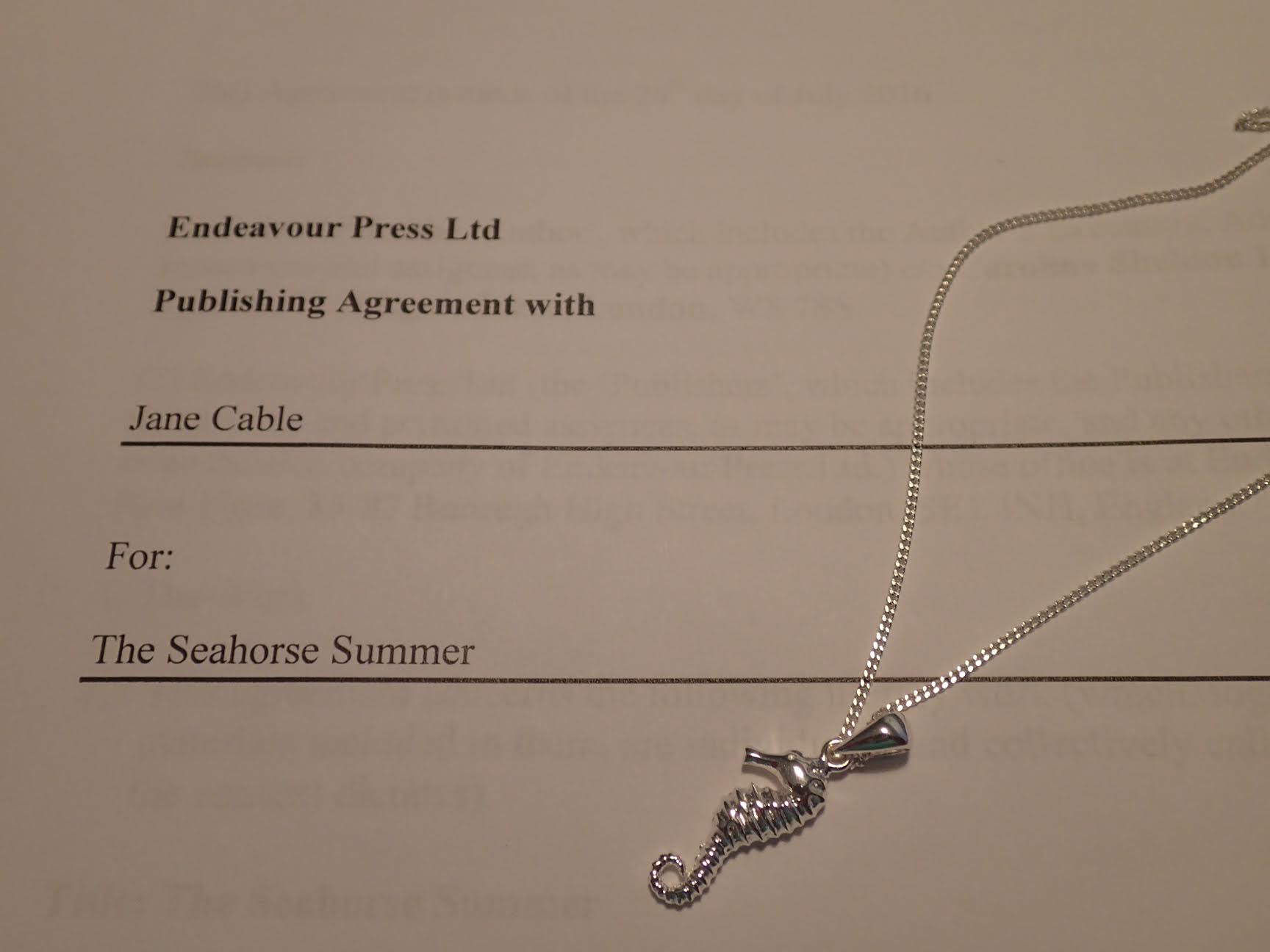
I feel as though I know every word of The Seahorse Summer off by heart. And that can’t be a good thing. My real battle with editing over a short period of time is coming to the manuscript fresh and able to concentrate on what’s actually on the page, not what I think is there.

It’s just as well I’m on the last lap now, the technical points which are often overlooked. None of them rocket science but mistakes which are all too easy to make and not so simple to spot: a ‘by’ for a ‘my’; a missing indefinite article; and the multiple perils (for me at least) of punctuating dialogue. Yes, I could leave that to the proof reader but I’d like to submit a manuscript which is as perfect as possible.

I have another task for this week too. Quite some months ago I was asked to judge the Autumn Writing competition for one of the better writing groups. The subject matter – A Ghost Story – poetry or prose – and now the entries are sitting in my inbox. To be honest they will be a welcome distraction.

Best Endeavours Technical Best: Jane Cable On What Happens After You Sign That Digital Publishing Contract writing, amwriting, publishing

Most helpfully the group’s website gives a critique guide which can double as a framework when editing your own manuscript and for anyone embarking on the process I thought it would be useful to summarise:

Plot
Is the plot believable? Is it too fast or too slow? Too simple or too complex?

Characters
Too many characters or too few? Are they real people, or flat cutouts? Is it easy to confuse one with another?

Setting
Too many locations or too few? Too much description or too little?

Dialogue
Too much or too little? Do the characters have different voices? Are their words believable?

Viewpoint
Do we stay in one viewpoint, or change? Does the chosen viewpoint work?

Ending
Is the ending too sudden or too slow? Does it follow logically from the story? Does it leave the reader satisfied?

Technical Points
Are there errors in grammar, spelling, layout or punctuation? Are there factual mistakes?

Having some sort of structure helps you to step back from your own work and see it more as others do. Not an easy task, by any means, but an essential part of the writing process. If you don’t belong to a writers’ group you may well have completed your manuscript in glorious isolation. If you aren’t against a deadline, put it down for a few weeks, read something else, get out into the real world for a while so you come back to it fresh.

At the very least, pick up a few ghost stories and settle down with a cup of tea to enjoy them.

Jane Cable is the author of two independently published romantic suspense novels, The Cheesemaker’s House and The Faerie Tree, and a sporadic contributor to Frost. The Seahorse Summer tells the tale of how two American soldiers born sixty years apart help forty-something Marie Johnson to rebuild her shattered confidence and find new love. Discover more at www.janecable.com.


GransThread Jan Speedie Talks About Her New Phase

Jan Speedie: Surrey Reviews EditorRetirement is entering a completely new phase of life; I am not going to say final phase. I have to admit when faced with retirement after 30 years working in the NHS I was worried what life would bring  – daytime TV, expanding waist line with too many coffee and biscuits, aches and pains of a maturing body.

Being one of the three Grannies who helps administer the charity www.wordsforthewounded and faced in 2015 with the Mud Challenge, our fundraiser for that year, it was off to the gym to get fit and not let my team down. I remember the bemused faces of the staff at Ash Manor Sports Centre when I explained that in 6 weeks I needed to be fit and ready for the challenge – well they did it and now I am a regular at the gym and will even admit that I enjoy the hard work and friendship.

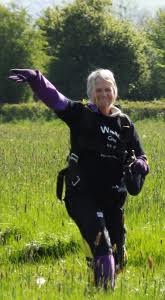
The fundraiser for 2014 was a tandem skydive: pushing 70 and strapped to a gorgeous young RAF instructor what more could a girl want – it was an amazing experience. Then there is feeding 40 people lunch at the W4W Litfest with little experience of mass catering which has proved to be an interesting and rewarding event.

Back to everyday retirement – I have 4 grandchildren who still want to be with granny, but are totally unimpressed with my technology skills – but I am learning. I have been cajoled in to doing book reviews for Frost Magazine which is great as it keeps me reading and the brain ticking over.  It’s great to be able to holiday anytime and fly off to interesting destinations – Canada, Portugal, Italy, Poland and skiing in France and soon to add Australia to my list.  Then there are days out with friends completing things on our bucket lists. I take a renewed interest in cooking, gardening, decorating and even cleaning my house. Still need to investigate U3A, the WI and many more.

Some weeks my calendar is empty but it’s amazing what turns up or just occasionally it is nice to do nothing. Remember that 70 is the new 50 so let’s go for it and enjoy.


Stir-fry Beef in Black Bean Sauce

So you may have guessed from a previous article I love Chinese food. When I fly from the Channel Islands to the mainland it is difficult as I want to try every new restaurant, well that is a bit of an exaggeration my waist line is bad enough as it is, but I always hanker for a fantastic Chinese extravaganza, and that is always a rather greedy feast I am afraid. My absolute favourite was I recall eating a delicious Chinese meal in Oakham, Rutland, see I once lived and worked geographically about as far from the sea as you can get in England. In particular, one dish, crispy chilli beef served in a deep-fried potato nest was fantastic, it was from over fifteen years ago however, so I cannot guarantee that the restaurant even exists now, just a fabulous memory.

Next I crave the moist, oh so flavoursome steamed scallop wantons and prawn and pork dumplings from Hakkasan in Hanway Place, London, for which I would almost give anything to learn how to make, and is cooking at it’s best. Finally I would have an awesome crab with ginger and scallions ( Spring onions fellow English readers ), in East Harbor, New York, with a mind blowing Chinese and Japanese menu.  It is rather sad that I have yet had the opportunity to go to China but it is on my list to do, perhaps one day.

What I have done was an inspiring course in London with Ken Hom, equipped myself with numerous books, woks, steamers and ingredients from quaint little Asian speciality suppliers and set to work as only a chef can and chopped, pounded, crushed, fried and ate my way through the Chinese canon. Cantonese, Shandong, Hunan and spicy Szechaun cuisine with noodles, rice, black beans, bok choi and lots of seasoning; garlic, chilli, cloves and ginger, and the wonderfully pungent star anise. Am I giving my little local take away a bit of a run for his money what do you think? Enjoy.

My Top Tip – Add splashes of water or vegetable stock occasionally while stir frying – this aids with steam-cooking the vegetables and prevents sticking.

chinese-meal

Beef in Black Bean Sauce                                                                                                           serves 4

750 gr quality Rump Steak

2 Carrots, peeled and cut into thin strips or julienne

2 large Onions, Peeled and cut into thin slices

1 Green Pepper, cut into slices

1 Red Pepper, cut into slices

75 ml neutral Oil for stir frying

50 gr Fermented Black Beans

3 Cloves of Garlic, peeled and finely chopped

3 cm piece of Ginger, peeled and finely grated

1 small Red Chilli, seeds removed and very finely sliced

1 tablespoon quality Toasted Sesame Oil


For the marinade

3 tablespoons Dark Soy Sauce

3 tablespoons Rice Wine or Dry Sherry

¼ teaspoon Chinese Five Spice

1 Clove of Garlic, peeled and finely chopped

2 teaspoons Corn Flour, mixed with a little cold water


For the sauce

100 ml quality beef Stock

1 tablespoon Caster Sugar

1 tablespoon Corn Flour, mixed with a little cold water

2 Cloves

Place the rump steak in the freezer for thirty minutes, this firms up the beef making it easier to slice thinly. On a secure board slice the beef with a sharp kitchen knife into thin strips and place into a glass bowl. Add the marinade ingredients, mix well to combine together and fully cover the steak strips.

Cover and chill in the fridge for a minimum of two hours. Meanwhile, prepare the black beans by first rinsing thoroughly in cold water then soaking in fresh water for around half an hour, changing the water once. Drain thoroughly, chop finely and set aside.

When ready to cook, drain the meat from the marinade pouring any remaining marinade into a small, heavy bottomed pan. Add the sauce ingredients to the marinade and heat gently to thicken, stirring occasionally to prevent lumps forming. Heat the oil in the wok until smoking and carefully add the meat. Stir fry until cooked, remove with a slotted spoon and set aside on to some kitchen paper.

Heat a little more oil then stir fry onion over medium heat for five minutes before adding the carrots and peppers, continue cooking for a couple more minutes until they are just starting to go soft. Add the black beans and cook for two more minutes stirring continuously, be careful not to burn, then add the garlic, ginger and chilli and cook for a further two minutes. Return the beef to the wok, strain the sauce through a fine sieve and add as well. Mix in the sesame oil and cook for one more minute stirring all the time to heat the beef through and serve immediately with egg fried rice or noodles.

Old wines in interesting bottles at Winerack

Borgo Magredo - great wine in an attractive flask

Borgo Magredo – great wine in an attractive flask

The big wine retailer Conviviality, which includes Bargain Booze and Wine Rack, is offering a series of wines which are veering towards the unusual.

Their autumn wine tasting, held last week (7 September 2016) had a wide variety of wines from unlikely countries. A Slovenian 2015 Gomilla Sauvignon Blanc (£10.99) was being offered alongside a Chinese2015 Chateau Changyu Moser XV Cabernet Sauvignon (£10.99). The Slovenian wine was light and fruity. The Chinese wine was slightly too dry for my palate, but it is the sort of thing that guests would be keen to try..

There are some really pretty flask-shaped wine bottles from Italy. The 2015 Fruliano Borgo Magedo, Friuli Grave was fruity and slightly floral with notes of grapefruit. It’s a nice wine and – it might sound a bit shallow – but when you are having a dinner party, it’s nice to have something on the table that looks interesting.

It’s worth checking out the South African wines. There are some good chenin blancs and I particularly rated the Julien Schaal Mountain Vineyards Chardonnay (£13.99) – light and slightly fruity with citrus tones. A nice thing to drink with fish, chicken breasts or just by itself.

And there are even wines with celebrity links. The 2016 MT Pinot Noir Rose (£10.99), is made by McGuigan/John Torode. John Torode is the Australian celebrity chef who does Masterchef and looks severe when contestants burn the apple crumble. Pinot noir is more normally used for Burgundy style wines and it is found in rose Champagnes. So this is a slightly unusual wine, but it would go well with prawns or a tuna salad and it is reasonably priced.

Gomila Exclusive sauvignon blanc

An exciting Slovenian cabernet sauvignon

Crobar by Gathr – Award Winning cricket flour protein bar


crobar-frost_magazine

Crobar is the first insect-based food product to retail in the UK and Gathr have now added Coffee & Vanilla and Raspberry & Cacao to the original range of Peanut and Cacao. They are made from fruit, nuts and cricket flour and contain no added sugars or sweeteners.

Gathr is leading the trend of food producers who are looking at alternative sources of protein and vitamins in their products, and have plans on developing insects into a viable and more sustainable source of protein in our diets. Crickets contain more protein and less fat than an equivalent amount of beef, plus are high in iron and vitamin B12. They are not only good for you, they are good for the planet.

Insects are already available to buy as food in the UK, but Gathr has taken things one step further by using them as a key ingredient and incorporating them into everyday food.

Gathr’s products won ‘Best New Food Concept’ at the IFE World Food Innovation Awards.

Don’t be put off by the fact that it contains insects, albeit that they are ground into a flour. I can happily say it tastes delicious. I’m not partial to coffee flavoured sweets or cakes but the flavour was subtle and suitably balanced by the cacao. That said, I preferred the raspberry & cacao flavour.  Free from gluten, soy and dairy it was a tasty snack and easily satisfied my sweet tooth. I’d love to say it made me jump higher as well – but it didn’t.

Available in smaller 30g sizes the new flavours RRP from £1.79 each and are available online on the Gathr website, Amazon Prime and at selected retailers. For further information and multipack orders visit the Gathr website.

They will also be available to buy in-store from South East Asian Cuisine specialists Nusa Kitchen.

As well as energy bars, Gathr also stocks organic cricket flour, which can be used in everyday cooking. Recipes on the website.
 www.gathrfoods.com

www.gathrfoods.com/recipes

www.nusakitchen.co.uk

Interview With casting director, coach, actress & founder of Sound Advice Kate McClanaghan

Interview With casting director, coach, actress & founder of Sound Advice Kate McClanahan voice over work1. Tell us a bit about yourself. 

I’m a seasoned casting director, producer, coach, actress and founder of SOUND ADVICE, a unique, one-stop option for unparalleled voice over coaching, and exceptional demo production for all skill and experience levels.

I had been a freelance producer since I was 19 years old, producing commercials for Coca-Cola, McDonald’s, Dodge, JC Penney, FORD, Sprint, SEARS, and Kraft, to name a few. I had always been freelance because I’m a union actress as well. I’ve studied with the Royal Shakespeare in London, and came up through Chicago’s Second City and ImprovOlympic (IO), and even brought 9 shows to the Edinburgh Fringe.

2. What made you start Big House Casting & Audio and Actors’ Sound Advice?

BIG HOUSE came about to service the various casting and production demands that consistently kept coming in the door after I had produced a number of freelance projects for NPR. I was already freelance, I just named it after the enormous, greystone building we worked and lived in, in Chicago.

I started SOUND ADVICE because I couldn’t find a single, reliable source that would take me through the entire process of voiceover training, demo production, branding and marketing the career I was after. There were random people who did pieces, but didn’t have the whole in mind. I wanted a single source that honestly had my best interests in mind, understood my greatest commercial assets (perhaps even better than I did), and could produce my demos well enough to truly advance my career, not just my voiceover!

I began assisting friends, and after coaching and producing more than 100 demos for them and seeing them achieve remarkable results rather quickly, I realized my casting and production skills had a greater purpose!

3. How important is training?

It’s imperative. Without it, regardless of how naturally talented, smart, and mellifluous the voice might be… you’re dealing with a loose cannon. You can’t rely on a talent who doesn’t know their job. Trusting a million-dollar campaign to a complete hack puts everyone’s reputation on the line. And your mettle will be tested. There are no beginner, intermediate and advanced talent in this industry. You’re either a professional… or you’re not. Training defines your professionalism and instills confidence. And commerce is confidence.

4. Any tips for acing an audition?

Instead of trying to second-guess what those auditioning you are thinking, give them something interesting to think about. That’s the job! Besides they honestly aren’t thinking a thing. It’s precisely why you’re there. How would YOU play it?

THINK for yourself! In fact, entertain yourself and you’ll find your audience!

5. How different is voice over acting from acting?

There is very little, if any difference at all. Acting is acting is acting.

Voice acting is closest to film acting than any other medium, because they both demand a very vivid imagination and the desire to tell a story, often in the most constricting conditions. Personality and the ability to self direct are key attributes as well.

Perhaps the greatest difference is the fact that in nearly all voiceover scenarios, you’re all by your lonesome in the booth with no one to play off but yourself.

6. Tell us about your books.

The SOUND ADVICE Encyclopedia of Voice-over & The Business of Being a Working Talent is currently in its third edition. (There will be a fourth sometime next year.) It’s more than 500 printed pages of well-vetted industry insider information as well as How To Get An Agent, the branding, marketing and promotion of your career, to more than 100 printed pages of terms and phrases commonly used in all manner of acting for recorded media.

7. How do you become a successful voice over actor?

Do your homework. Practice. If you were to honestly dedicate 25 to 30 hours a week, what would be considered part-time for any other business, for a year or more to creating a voiceover career for yourself, then the chances of becoming successful in this field is more likely—provided, of course, you have realistic expectations and you wisely allocate your time.

You need a proper Vocal Warm Up, and maintain it 4 to 5 times a week for a solid half hour to 45 minutes at a time. Granted it may take you a couple weeks to incorporate it into your weekly routine, but without it your vocal precision and stamina won’t be as reliable as it should be.

Check out our website www.voiceoverinfo.com. Study up. Listen to a lot of demos.

Listen to our podcasts then email us. We have talent all over the world. Provided you have a reliable computer and stable Internet service, we can generally work with just about anyone from anywhere—we just don’t invite everyone to do a demo. (Our name is on it too. We don’t produce a demo track in an hour. Nearly every other demo production house does.)

Everything we do as SOUND ADVICE, just like in nearly everything in voiceover, is one-on-one. We don’t cookie-cutter anything. And we offer the best insight because we continually survey the industry as to what’s needed and wanted from talent in every aspect of the industry.


Port Lympne Hotel and Animal Reserve


port-lympne-hotel

It was our anniversary and we didn’t want to escape too far but we were looking for something different. We certainly found it at Port Lympne Hotel, Kent and enjoyed a superbly relaxing two-day break.

From the moment we arrived, we were entranced. The reception is housed in the library and the shelves spill with old books – the perfect welcome. The house was  built in 1911 for Sir Philip Sassoon with later additions after WWI and abandoned after WW2. It was in a sorry state when John Aspinall bought it in 1973 to cope with the overspill from his venture Howlett’s Animal Park. The house was restored over a ten year period and the animal reserve began to take shape.

port-lympne-business-of-conservation

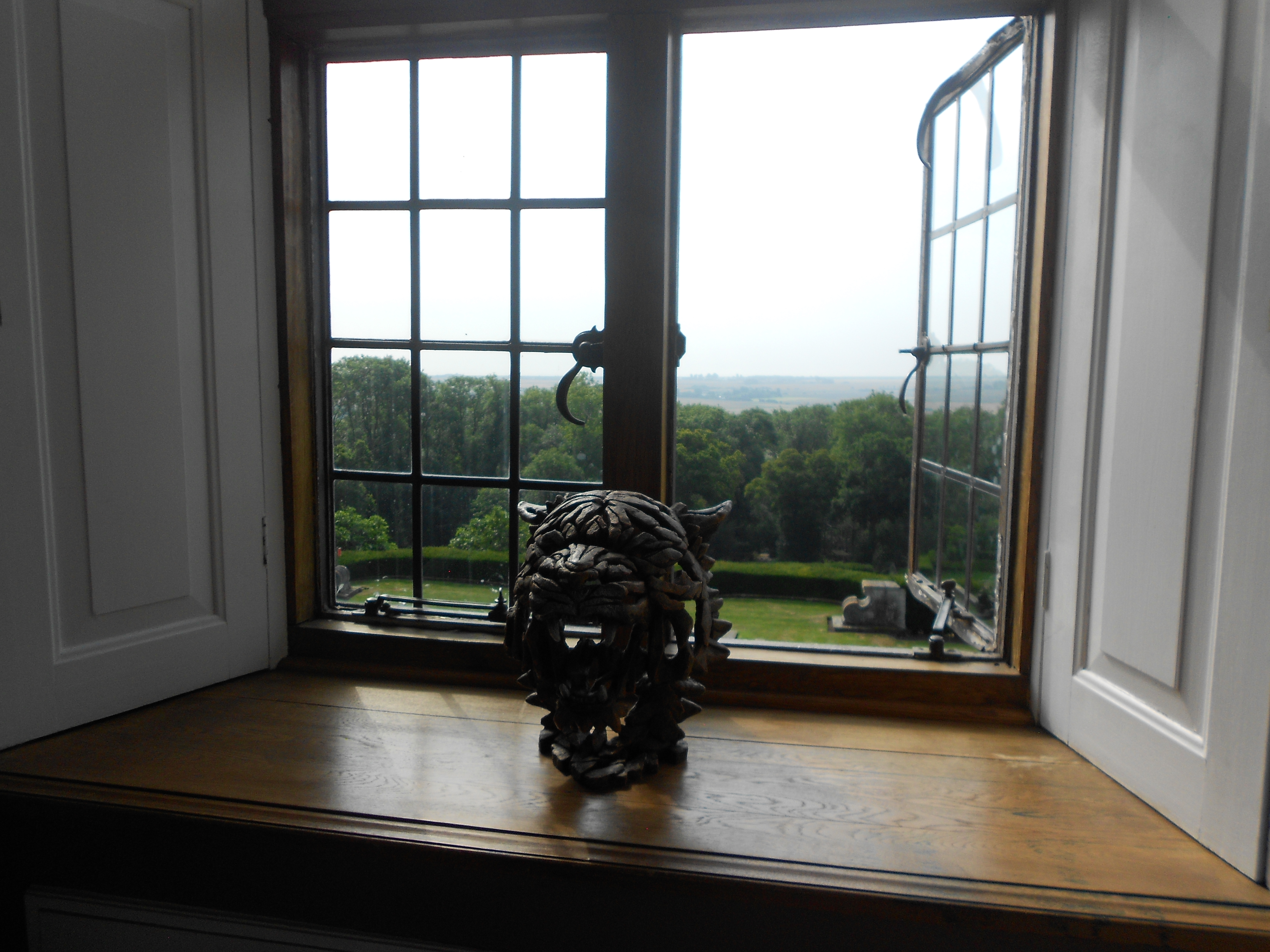
The rooms are named after the guests that Sir Philip Sassoon entertained there. We were shown to the Sir Winston Churchill room, overlooking the garden with views beyond the trees to the flatland of Romney Marsh. It was absolutely stunning and a joy to wake early and sit up in bed, enjoying the vista. It was exceptionally quiet, a few bird calls and the odd animal noise from a few animals that start with X but nothing disturbing at all. Bliss.

Our room had a new shower suite but the other rooms retain the original bathrooms from 1911 with art deco porcelain ware and tiles. Quite extraordinary given that most homeowners take on a total revamp once they have purchased a new property. Everything was clean and warm, and most importantly, the bed was comfortable. There was also a plentiful supply of hot drinks and biscuits which will always be a huge plus to me.

port-lympne-churchill-room-view

I was offered a peek into the other rooms: T E Lawrence, Sir Herbert Baker, The Rex Whistler and the two bridal suites – Sir Philip Sassoon and Charles  Chaplin. All were unique and any one of them would be a pleasure to stay in; all had fabulous views.

There are six rooms at the moment and two more were quietly being prepared during our stay.

port-lympne-dining-room

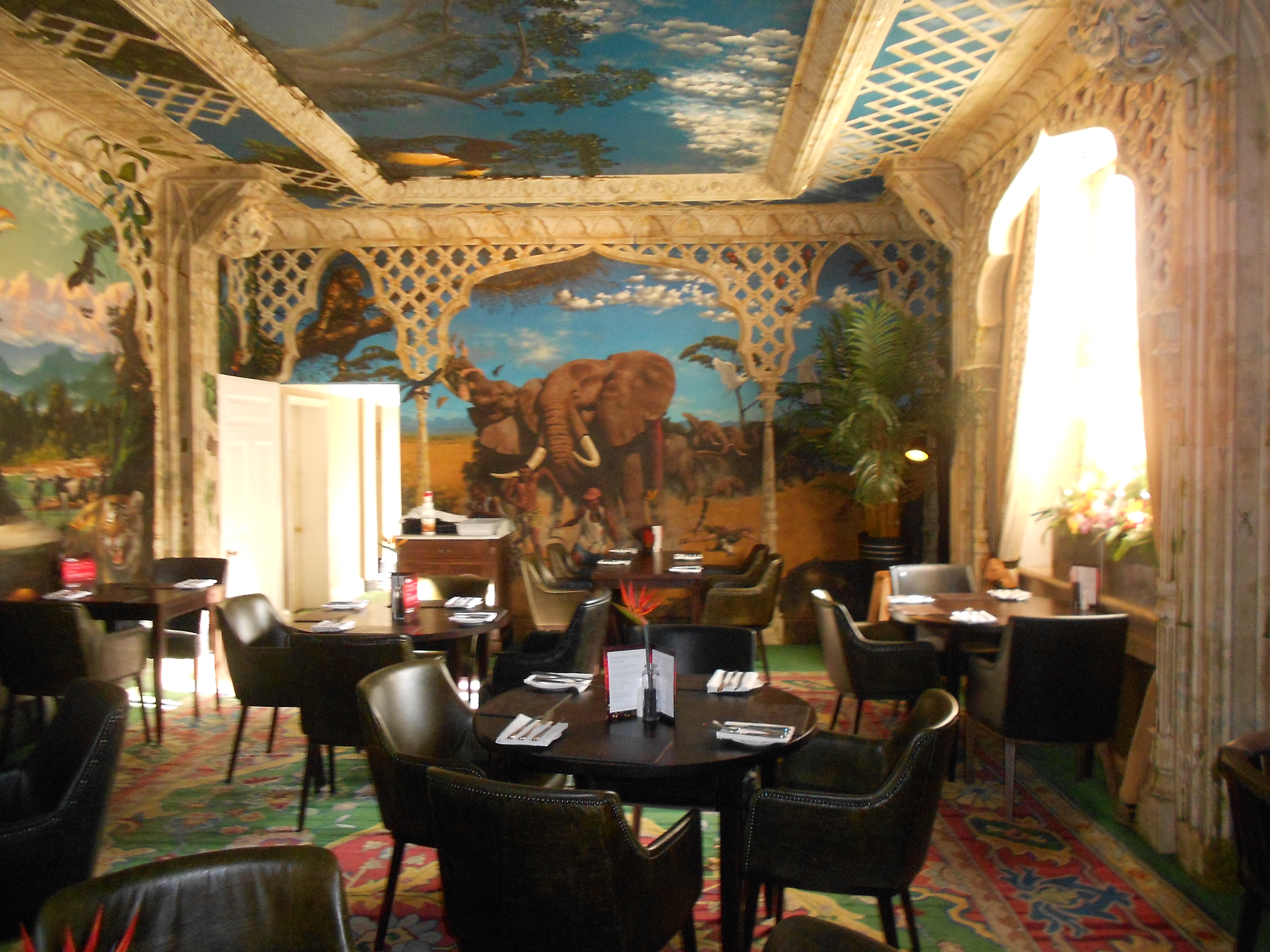
Dinner and breakfast were served in the dining room that was rather breathtaking, even a little intimidating. The mural was painted by Martin Jordan, a self-taught artist and over 200 animals adorn the walls and ceilings. In John Aspinall’s words ‘It is to be a tribute to the heroism of wild animals in the face of their continuing persecution by mankind.’ As we were alone in the room that evening I enjoyed spotting the various species, right down to the butterflies and insects that hide in the cornices and window frames.

port-lympne-bar

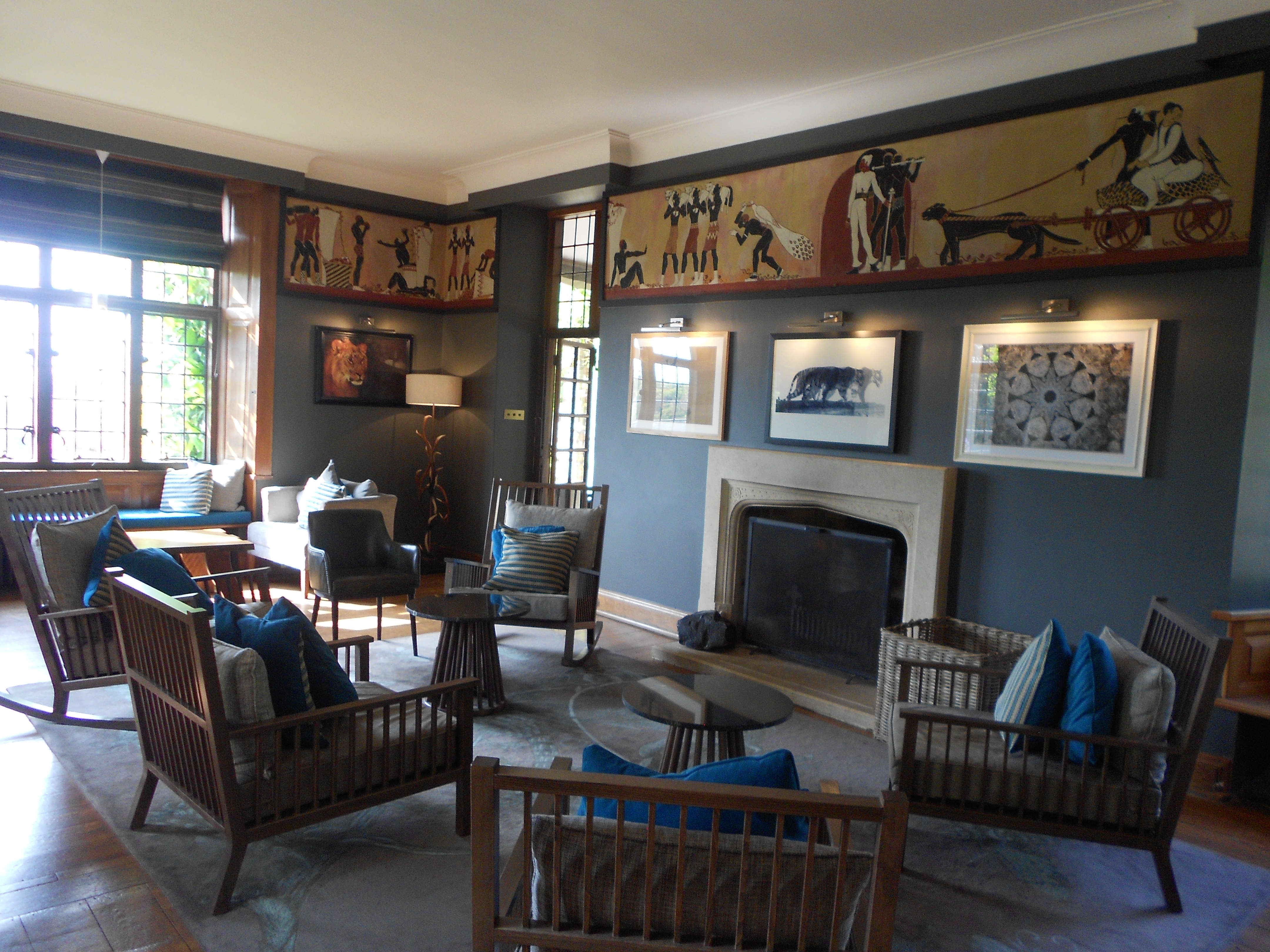
The hotel bar was restful and elegant, again with the safari theme but with all the comfort of the house. There is a TV on the wall which is almost the only reminder that the world still exists beyond the grounds.

port-lympne-tent-room

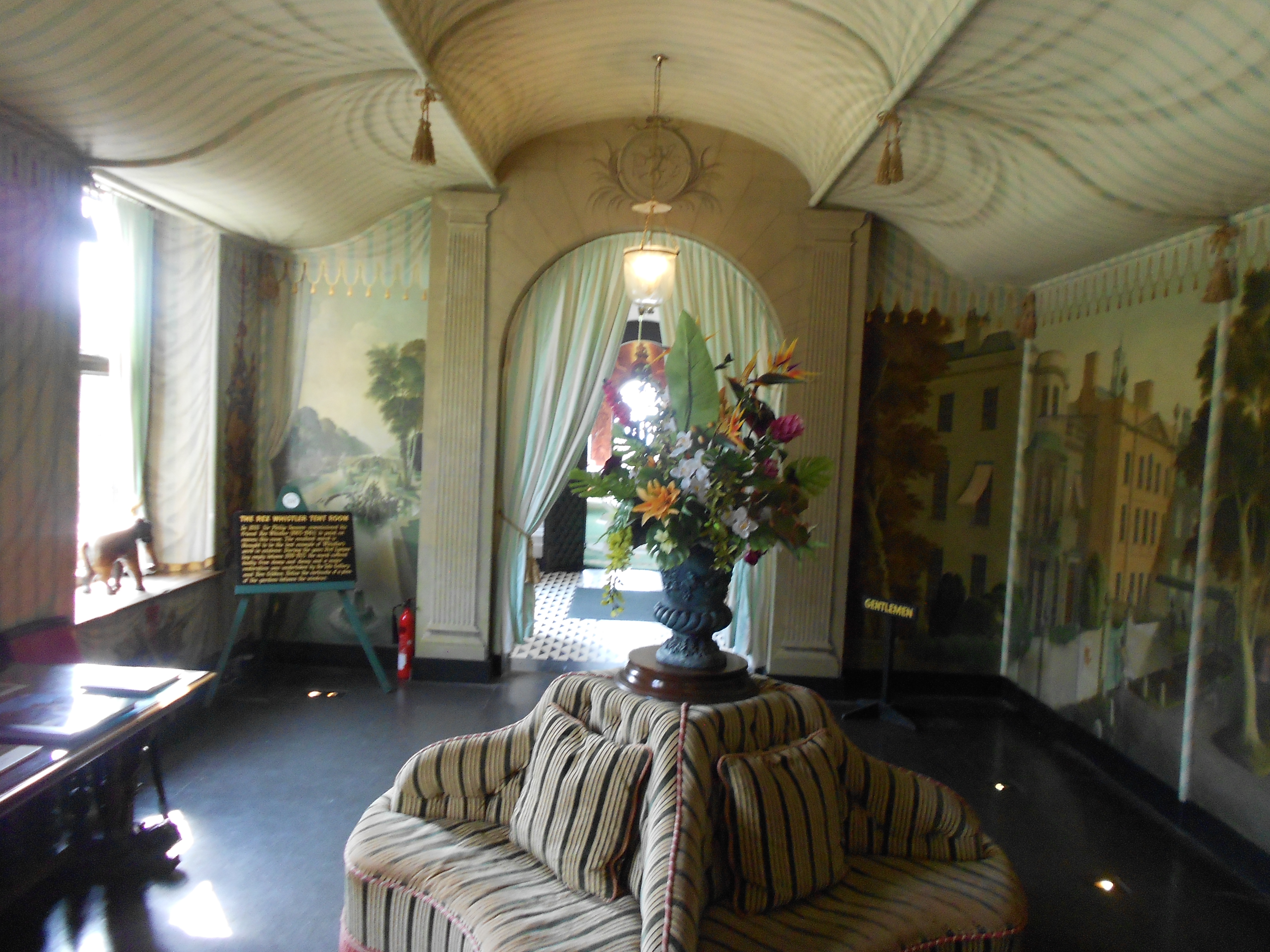
Just off the hall was a reception area, The Whistler Tented Room. Sir Philip commissioned his friend, Rex Whistler, to paint, on canvas, this room in 1933. It is thought to be the best example of his work in existence. The mural suffered badly from damp and decay when the house lay empty and restoration was undertaken by the Tate Gallery. The hotel is a popular wedding venue and this room is a rest area for guests; toilets and cloakrooms are located here. The hotel staff were busy preparing for a wedding that would take place the day following our visit – so we timed things perfectly.

The beautiful  gardens that surround the hotel are tranquil and soothing and if you never strayed toward the animal reserve you would barely know it was there.

One the second night we drove round to Bear Lodge, one of the other types of accommodation at the reserve – glamping on a hill overlooking the bear and black rhino area. Each ‘tent’ sleeps 6 and has simple kitchen and bathroom facilities, and a wood burner for colder evenings. There is a clubhouse and play area so it’s perfect for families.

port-lympne-bear-lodge

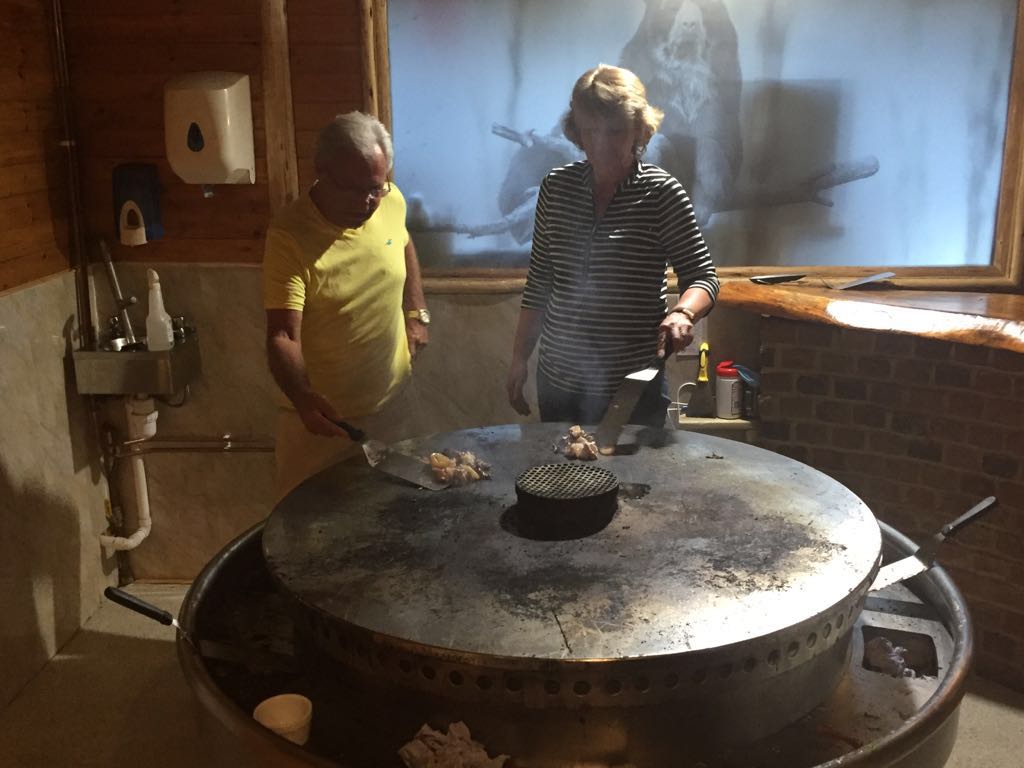
We visited the clubhouse to try the Mongolian barbecue we’d heard so much about.  We were shown bowls of three sizes that we were to fill with a choice of  meat and/or fish in one, vegetables another and lastly, noodles and rice. There was a selection of sauces – satay, sweet and sour, curry etc and we were to add a large tablespoon before taking over to the cooking area.

port-lympne-dining-room

It was the perfect portion size and our meal was ready in minutes. You could leave it to the chef or get stuck in – so we did. It was great fun but the heat was intense and I had great admiration for the chef who effortlessly coped with four meals at once, time after time.

mongolian-grill

No matter where your accommodation on the reserve entrance into the parks is included, as is travel on the safari trucks. These run every fifteen minutes and there are various stop-off points along the way so that you can disembark and wander through different sectors of the reserve.

port-lympne-safari-trucks

Private safari tours take place throughout the day and evening and I would definitely make use of these when we visit again. Whereas the trucks follow a given route the safari jeeps go across the terrain among the animals. There are other experiences on offer and you can find more about them on the website.

During our stay the staff were attentive and friendly – the right kind of friendly – not too intrusive and not over chatty but they really were a huge part of the enjoyment of our time there. We spent far too long just sitting and enjoying the view but it was so restful it was hard to drag ourselves away.

We thoroughly enjoyed our break but it would be far too quiet if you are looking for something with a bit of a buzz. As it was, we were glad of the quiet and respite.

www.aspinallfoundation.org