Grandma Crunch, The Breakfast of Champions: High protein, zero sugar, keto friendly

All new high protein, zero sugar, keto friendly, crunchy snack for those wanting to kick-start the day right.

Grandma (Crunch) is on a mission to create a healthier way of living and with her famous recipe book in hand, she has been hard at work concocting new ways to provide healthy, nutritious snacks, which will help keep people fit and strong. 

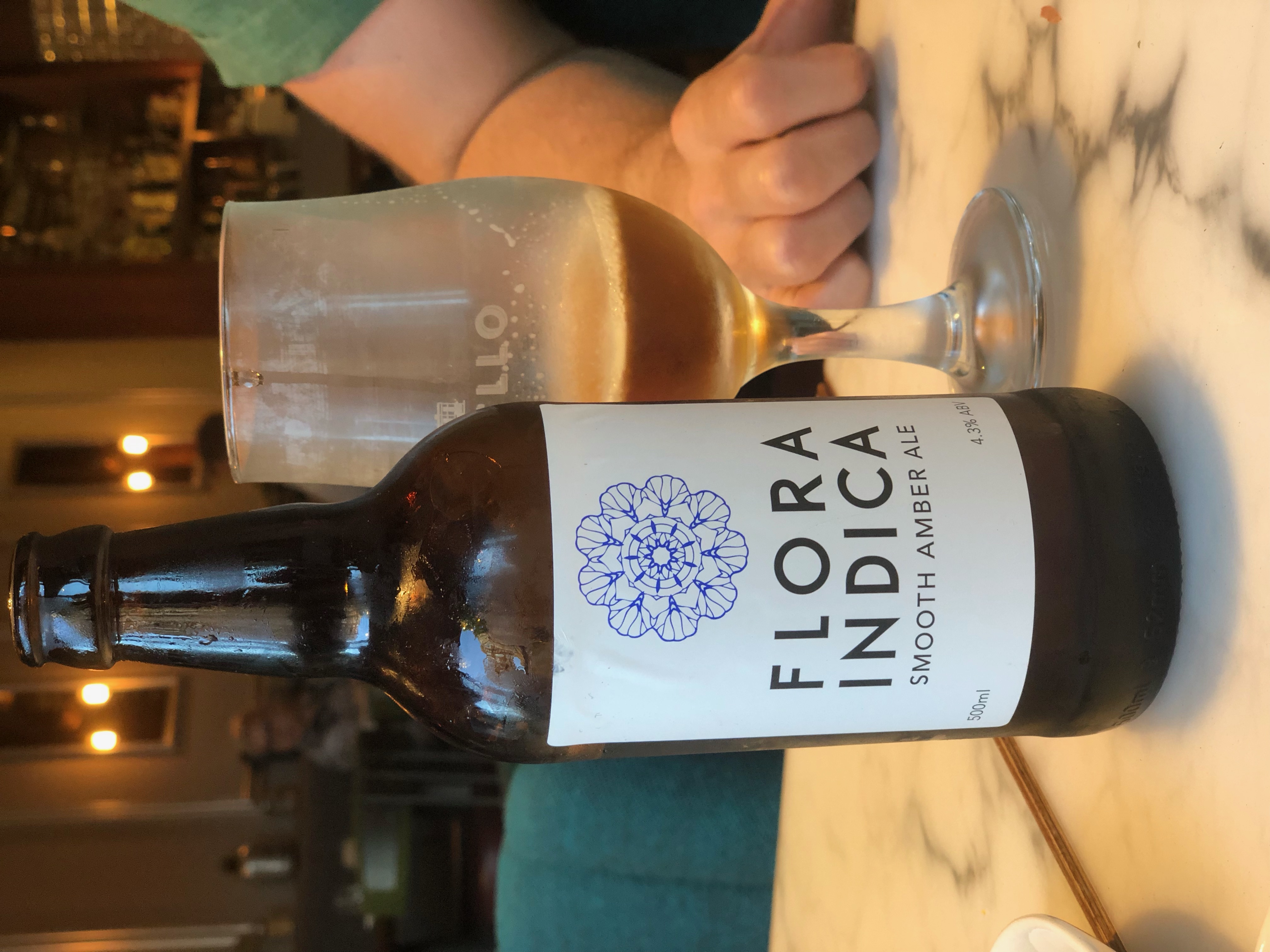
We tried the cinnamon, coconut and cocoa cereal and they all taste great. Grandma Crunch is a great idea and we are super impressed at how it is healthy and delicious. What a great idea. 

 Grandma crunch, cereal, high protein, no sugar

Now, more so than ever, Grandma wants to get the nation back to healthy eating habits. It’s been a hard year for everyone, both physically and mentally, and whilst most of us have taken some comfort in takeaways and sugary snacks, it’s time to limit those back to the odd treat, and start to build our immune systems and fill our bodies with nutritious food, which will fight off any nasties. 

The UK is a nation of breakfast cereal lovers, both young and old, after all it’s a simple, easy to prepare breakfast staple. However with over 90% of the market saturated by high sugar varieties, Grandma Crunch aims to allow people to enjoy a bowl of cereal, knowing they are fuelling the body with goodness, without compromising on texture and taste. 

Keto snacks generally all have a similar texture, and take the form of thick dense protein bars. Additionally, many of these high protein, low sugar options give misleading impressions. An example is the use of Maltitol in leading protein bars, which is often used as a sugar replacement and marketed as ‘no sugar’ but in reality it still spikes insulin, and so it’s not diabetic friendly.

Founded by husband and wife duo, Charlotte and Norman, they believe in alternative functional foods, which have a real impact on people’s lifestyle. They believe food should be delicious as well as providing a crucial function and significant impact on how you feel and how you perform. Charlotte is passionate about the problems of diet culture and the impact of misleading consumers.  Whilst Norman, who is driven by data, has spent many years researching various diets, meditation, stress management and sleep patterns, which together has led them to creation of Grandma Crunch.


What you need to know when starting your own record label

Whether you are an entrepreneur looking to start something new or an aspiring musician who wants to go out on their own, this article is for you. It discusses everything you need to know about starting your own record label and becoming a big player in the music industry if that is your target. Of course, you might just want to set up a small local label to help local musicians, but these tips will still help. 

  1. A Name

To start your own record label, you need a name. It doesn’t have to be the catchiest phrase on the planet, but it would help. The name is important because it represents you and what you stand for. It will be your branding and will be the name everyone knows. If you are reaching out to artists and producers at any level, it will need to be a name that you are proud of. 

As music covers so many industries and genres, you also need to think about what the name means. For example, if you are planning on specialising in the Pop music sector, you might want to avoid something that represents another genre entirely. Obviously, it is down to you in the end, but the name is what will stick. Be imaginative as you would if you were setting up your own company or agency name. At the end of the day, the name is something you should be happy with. 

  1. Defining a Genre

This sort of goes hand in hand with the name choosing. If you are going to specifically settle for one niche then that will have played a factor in setting up your branding. However, if you opted for a label to be named after yourself for example, then you still need to make sure you have a defined focus. Whilst a scattergun approach may work for some people when trying to find clients, it helps to be more targeted. This way will also see you face less rejection. 

Imagine a band trying to make it in Rock ‘n’ Roll like Nirvana receiving an approach from a label which promotes Pop Music. They will likely dismiss your email or direct message. You do not have to appeal to everyone, as quite simply, you just won’t. This applies to those looking to start their own record label, as well as musicians, producers and songwriters. Be strategic and mindful of who you want to market to. In the same way as a marketing company refine their target audience for their newsletters and social media strategy, you will want to do the same when attracting potential clients.  

  1. Work Out When How You are Going to Distribute Your Music

When learning how to start a record label, you reach a point where you know it is about to get serious. As seen in the article on Pirate Studios, starting your own record label can be so rewarding. It can work in so many ways and can be extremely beneficial if you are an aspiring musician yourself. However, you do have to get it right, especially when it comes to distributing and releasing music. As we have seen down the years, the music industry can ride in waves. Artists can have a stellar year and then you may never hear from them again. 

That is why it is so important to avoid releasing and distributing when you feel like it. Similar to when approaching clients and artists, it is important to avoid a scattergun approach in this regard. As there is new music being released every hour, every day, timing is everything. Even the artists and labels with the biggest status will still research the best time to release. Perhaps the best example is how much thought goes into getting the Christmas Number One spot in the UK. This is quite a profitable time for record labels and in the UK, there was always a battle against Simon Cowell’s X Factor juggernaut. 

  1. Think About How You Are Going to Distribute Your Music

Since streaming and downloads started being counted towards the charts and other official figures, how you distribute your music if you are a record label has become a lot more complicated. Obviously, you can still look into releasing online and this is what most new record labels will do. Finding a digital distributor can be quite simple if you know where to look, and this means your records will hopefully land on all streaming sites such as Spotify and others. 

On the other hand, it can be more profitable to get your music distributed to shop floors. With HMV still going, there is still scope for this to be done. However, this can come further down the line if you are just starting out. First things first, don’t overthink it and just get your music distributed online. 

  1. Spread the Word

Perhaps the most important part of starting your own record label is to spread the word. Word of mouth is a great tool. Similarly, to an artist trying to get their name out there, you are wanting to do the same. In an already saturated industry, it is all about timing and word of mouth. Get your friends and other business to promote your new label.

Do some scouting as well. There are many unsigned bands and artists with loads of potential that just need a break in the same way you do. Signing a fledgling artist with bags of talent and ability is easier said than done, but they are out there. What better way to give your new record label a real boost by getting that talented, unsigned artist on the radio. Some record labels started out as bloggers reviewing unsigned talent and this led to promotion online. From there, they realised they had a knack for spotting talent and ability, which led to them setting up their own recording label. 

What you need to remember is that everybody has to start somewhere. Just have a look around and make sure you have everything covered. 


Collaborative post with our brand partner.

5 Books that Changed My Life By The Lucky Escape Author Laura Jane Williams

The Babysitter’s Club series

My parents had a rule when we were growing up: they’d always say yes to a book. I remember being in Waterstone’s Durham and randomly pulling a Babysitter’s Club of off the shelf, purely to get my dad’s attention and praise. Turns out, it was a gateway drug. Over the next few years I collected all of them, devouring the stories of these incredibly glamourous Americans who essentially ran their own little business. Couple that with starting highs school as The Spice Girls hit number one and a lot of my personality suddenly makes sense!

lucky escape, Laura Jane Williams, books that changed me,

On Beauty, Zadie Smith

I read this when I was about 20, and it opened a secret door within me that I hadn’t known about before. Every character in this book leaps off the page – there is no such thing as a flat or incidental character, everyone is 3-D and complete. It was the first time I remember being aware of not just enjoying the story, but that the story was created by somebody, a writer, who had worked at it and used certain techniques and skills to make their point. I know every man and his dog has been inspired by Zadie, but it really is for a reason. She’s remarkable – she’s got the most smart, intelligent brain.

Heartburn, Nora Ephron

I’ve read and re-read this book, and every time I just cannot get over the self-awareness of it. It’s so funny. There’s not a line wasted. It’s no mean feat, writing a character with so much life in them, with strong opinions and questionable choices who is still utterly likeable. It’s the same for Bridget Jones. I love knowing that the novel is a roman a clef and picking out which bits are slightly less veiled retellings of actual events than others. It must only be about 50,000 words, if that, so it’s proof that not every story needs to be an opus to be impactful.

Homegoing by Yaa Gyasi

This book taught me more about the lasting impact of slavery than anything else I’d ever read up until that point. I remember knowing that whilst the third chapter was some of the most difficult reading I’d come across it was unquestionably important. The novel branches out to illustrate the continued echoes of white supremacy alive today and so much clicked for me, then – my privilege had not allowed me to see so much, and through the gift of this story I could. It was a jumping off point for so much more interrogation into racial inequality.

Last Night, Mhairi McFarlane

I’d never read and Mhairi before this one, but offfft! What a book to get started on! Right from the first page I was sucked in to this world of banter and wholehearted friendship, and whilst I think the sort of rom-com/women’s fiction genre gets deliberately misunderstood (don’t get me started on that!) there’s no mistaking this book as an incisive, accomplished balance between hilarious and heart-breaking. That’s masterful! I read it in awe of her skill, trying to unpick how she’d done what she’d done. That’s how I know I’ve been impressed – I hold the thing up to the light desperate to learn from it!


The Lucky Escape publishing on the 10th June, is the third unmissable new novel from the bestselling author of Our Stop and The Love Square. The perfect romcom, and more: full of effortless banter; sizzling sexual tension and, above all, an overwhelming sense of hopefulness – in life as well as love.

Frost’s Mindfulness Series with Alex Bannard: Automatic Pilot & Negativity Bias – with a free visualisation.


When understanding why mindfulness is important,  it is significant to consider where we tend to rest our attention when we are not aware or paying attention, when we’re not being;  well, mindful.

Did you know that we spend approximately 50% of our time ruminating on the past, which we can’t change, it’s gone, we can’t do anything about it or worrying about the future which more often than not doesn’t quite pan out how we imagined it would…it’s quite a lot of wasted time really isn’t it?

Meanwhile we also spend around 46% of our time in automatic pilot. Have you ever driven somewhere & wondered how you got there? This is automatic pilot. It’s important for our brains to habituate repetitive tasks & new skills in order to save valuable energy. But if we dwell too much in automatic pilot, in our subconscious thoughts, we often end up reacting automatically which can get us into trouble.

Finally, we have evolved with a strong negativity bias, it’s our brain’s way of keeping us safe, scanning our environment for threats. This was really important when the sabre tooth tiger was parading outside our cave door but our brain can’t tell the difference between perceived & real threats: the sabre tooth tiger or an email from our boss asking us to work late.

As a result of this negativity bias, we are more disposed to focus on the negative. Rick Hanson talks about how negative experiences tend to stick in our head like Velcro, whilst +ve experiences are like Teflon. For example, we find 100 pounds, we think ah that’s nice, but if we loose 100 pounds it’s a disaster. It can take up to 5 positives to offset a negative.

Instead of letting a negative experiences define us when we practice mindfulness we can take a moment to reflect on this experience, appreciating that everyone has a bad day & reflecting on what we could learn from it. Meanwhile being more engaged in the now we can take some time to savour the good times, committing them to memory by literally stopping & reflecting on situation & appreciating it.

When you layer all this up, a little like the layers of an onion, and put it together with our natural disposition & all the many stresses & strains for modern living, not to mention global pandemics…there’s not a great deal of time left to enjoy the only moment that really matters: this present moment. And here we are back at the old expression – the past is history, the future a mystery, the present is a gift, why do you think it’s called the present?

When we practice mindfulness, we become more aware of patterns in our mind & body; we can identify real & perceived threats, shift away from negative thoughts & reconnect to the present moment, a calmer more compassionate space in which to reside. It also gives us an opportunity to acknowledge that we can’t stop our minds from doing what they do: thinking thoughts but we can stop these thoughts from controlling us.

This week’s meditation is a waterfall meditation – a visualisation, this meditation gives us the opportunity to reflect on the torrent of thoughts cascading through our mind as we would the flow of water in a waterfall, developing a sense of spacious distance from these thoughts. To obtain your copy email Alex at alex@alexbannard.com quoting FROSTWATER.

Alex is based on the edge of the stunning Cotswolds & has been sharing her love for all things yoga & mindfulness for almost a decade, not just in the UK but also around the world. Her mission is to help everyone discover a more mindful way of living & to encourage them to embrace regular self-care practices for a happier & healthier way of being.

If you would like more information on how to practice mindfulness, meditation & yoga message her at alex@alexbannard.com.

For free resources check out her Facebook group: Mindfulness & Yoga for Self-Care, here is the link: https://www.facebook.com/groups/MindfulnessYoga4Relationships

Alternatively please check out her website: alexbannard.com

Return of the Foodfest: by Natalie Jayne Peeke West Country Correspondent


Since the first ever Foodfest that was hosted by our lovely seaside town I have made a conscious effort to go to every one that followed. EAT Festivals organise a array of food festivals throughout the glorious westcountry, starting in April and running until December.

17 April Weston-super-Mare

24 April Lyme Regis

1 May Castle Cary

8 May Taunton – cancelled

15 May Clevedon

22 May Yeovil

29 May Burnham-on-Sea

14 August Portishead

21 August Honiton Gate to Plate

28 August Chipping Sodbury

4 Sept Wellington

18 Sept Yeovil

25 Sept Weston-super-Mare

26 Sept Tiverton

2 October Minehead

9 October Nailsea

16 October Teignmouth

23 October Burnham-on-Sea

27 Nov Taunton

4 Dec Nailsea

11 December Yeovil

12 Dec Weston-super-Mare

The Foodfests aim to bring a great range of producers and products into the town on the day of the festival. Most are based within 25 miles of each town, bringing in a few exceptional and hard to find producers from further afield.

With everything that occurred last year, the festivals were obviously cancelled and one of the things that I looked forward to was attending the festival with my parents again. It seemed ages since I had seem them properly, and couldn’t wait to get back to normal(ish). You can only imagine my excitement when I found out that on the 29th of May we would be able to do just that.

We had a fantastic day, sampling food and beverages, treating ourselves to some delicious purchases, there was a contagious atmosphere; the vendors were happy to be there and equally, if not more, excited than we were. It was a warm sunny Saturday fuelled by fun.

Some of my favourite vendors include;

Chalice mead, their passion and knowledge of mead is fantastic, the flavours are exquisite, my personal favourites being Elderflower Mead & Blackberry mead, delicious.

Shanty Spirit who made some exquisite cocktails with their seaweed vodka, again the producers were very helpful and were very passionate about their product.

Cocoa Chocolate, These guys have been a favourite for me since the first time I encountered them back in 2017.I am a chocoholic and theirs is by far the best I have ever tasted, tand their flavours? Well, read on: malteaser, oreo, coffee, honeycomb. As well as dark, milk & white chocolate bars.

Country bumpkins, These geniuses make something delicious, a roast dinner wrapped up in a giant Yorkshire pudding. Yes you read that right , it is incredibly filling and messy, always ask for extra napkins. I indulged in roast lamb wrap so that included lamb, stuffing, roast potatoes, vegetables, gravy and my choice of sauce naturally I opted for mint sauce.

Harry’s Cider is a must, at a West country food and drink festival. I visited the guys at Harry’s cider and enjoyed a cup of mango and lime flavoured cider. It is scrumpy cider so it is not fizzy. I was offered some ice and it was a lovely refreshing fruity drink, not too sweet either. It was absolutely perfect.


I can not recommend the food festivals enough, they’re family friendly and are completely free to attend, so if you have one near you pop over for a few hours and sample some local food.

WELSH WRITING WEDNESDAYS: INTRODUCING ALEXANDRA WALSH

West Wales has always held my heart. Although I was born and brought up in London, I have family in Milford Haven and St Ishmaels – Tish to residents and locals – in Pembrokeshire. My memories of holidays here are wide, varied and full of laughter.

My writing, like my links to Wales, have been life-long. There was never any question about what I would do but, as it was necessary to earn a living while trying to fulfil my ambition of being a published author, I toyed first with the idea of acting and writing for theatre. At the age of 18, I set up and ran a touring theatre company, however, acting was not for me and a few years later I closed the company.

Instead, I moved into journalism. My first job was on a local newspaper, from here I progressed to women’s magazines, national newspapers and prestigious launches.

Yet still, I wrote fiction. For a while, I focused on scripts, both film and TV. I sold three film scripts and, for a while, worked in the British Film Industry but it’s an unpredictable and strange place. In the space of two weeks, due to the large companies who were producing my scripts suffering internal upheaval, I saw my dream vanish. My response was to run away to Pembrokeshire.

Using the last of the money from the script debacle, I took the summer off and wrote my first novel, returning to London to find a new agent and sell my masterpiece. Sadly, it didn’t happen, so it was back to freelancing as a journalist.

Things changed again, I became seriously ill, losing my ability to walk for nearly 18 months. My solace as I battled to regain my health was to write. A new manuscript, a new agent, new hope but still no publishing deal. Another book languished.

Then a new idea arrived, in a direction I had never before explored: an historical thriller.

It centred on the Tudors and as I lived not far from Hampton Court and worked near the Tower of London both places issued a siren call. On my commute to work, I researched the historical thriller, then began writing it every morning in a notebook. The Tudor link to Wales, to Pembroke, to the area I knew and loved spurred me on, even leading me to set the book in St Ishmaels.

Life changed again, resulting in a move to Milford Haven. Settled in my purpose-built writing hut, a few miles from my cousins, I took the story from my notebooks and began to polish it. A new agent made all the difference and The Marquess House Saga was born.

Then, one day, the first book I’d written popped back into my mind: The Wind Chime. Rethinking and restructuring it, I pitched it to my agent and publisher and suddenly, I was in the Victorian era, weaving my own family history into the story. The same happened with the book that had sustained me through my illness, The Music Makers. This, too, became a Victorian time-shift with both drawing on the Welsh countryside, the myths and folklore of Pembrokeshire and the endless backdrop of the sea.

Wales is the land of bards, story tellers, of Merlin, Druids and the Fair Folk. The landscape holds magic in its rolling hills, its jagged mountains, its sparkling streams and rivers. It was the place that always held my heart and is now the place I call home and it has helped me make my dream come true.


What the H*ll is PR Anyway by Andrea Sexton, and a great bunch of other books to read and keep. Reviewed by Annie Clarke

What the H*ll is PR Anyway is an essential, quick, easy to read guide to help you on the road to understanding what exactly PR is, and as Andrea says, make it work for you and your business.

Andrea has a neat definition of PR, and explains that Public Relations professionals can help a business or individual cultivate a positive reputation. Let’s look at that again – A POSITIVE REPUTATION.   

It’s so obvious, but so often overlooked by those setting up a product or service. Read on, look, learn. As Andrea says, all the answers are not in this slim book, but you will know what questions to ask as you pursue further guidance.

SUCCEED! By Inqlak Hussain has been devised to show how to thoroughly plan, develop and execute a new business venture, which might well be a timely aid  for those of you wanting a new direction, or having one forced upon you by the Covid-19 emergency.  Inqlak Hussain uses his own entrepreneurial journey. Again it is an easy to read guide, with input from others to give a wide  look at how you could do it.


And here, fanning out are three that I also enjoyed.

Sailaday OK by  Richard Lannowe-Hall tells the absorbing story of the author’s personal experiences of overcoming addictions, his professional journey towards helping others heal and the creation of the charity Sailaday OK. This led to Richard being awarded the British Empire Medal, ‘For Services to Adventure Therapy and addiction services in  south west UK.

This is clearly of value for practitioners involved in Outdoor Education, Adventure and Eco-therapy. And anyone who understands Sailing as more than just a hobby. Richard’s story is evidence of how this form of therapy can help professionals and others involved in addiction recovery.

The Bounce Back Journey of Careers. A fascinating collection of personal stories of those who have done what it says in the title; hold a variety of roles, and are happy to share their wisdom with others. The authors come from various walks of life, but with one aim, to share their journey and inspire others.

Peg’s Boys by Johnny Tudor is a semi-autobiographical novel and therein lies the key to  why I have placed it here, among the autobiographical  experiences.

Johnny Tudor is an actor, entertainer and writer. He has embraced all forms of the industry during a career spanning stage, radio, film and TV. He has directed 3 pantos – Oh no he hasn’t, oh yes he has. And on, and on. Such a list of achievements.

In Peg’s Boys Jono, who has known nothing but his parents’ show business world, is uprooted as the family returns to industrial South Wales. Jono is at first adrift, but then the characters of Cwm Teg begin to settle his turbulance, and he finds his centre in the home of Peg and her boys, Pip and Frankie.

It is a voyage of discovery, a coming of age which will hold true as be becomes an adult. Family? What is family? It comes in many forms is the lesson he learns.

All these books are available on Amazon.

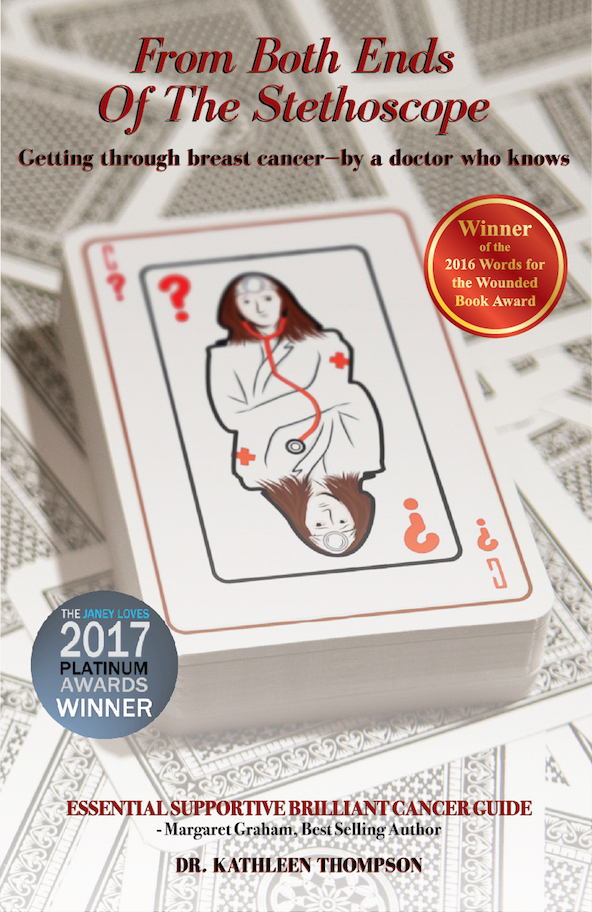
Annie Clarke is a pseudonym of Margaret Graham who has written 30 books over 30 years.

The Home Front Girls is  the latest series from Annie Clarke, pub  by Arrow.

THE DIARY OF A BOOK, MAY 2021

The first of Jane Cable’s monthly post charts acquisition and initial research

There is always a fascination with how books are written, but so very often when they’re started an author doesn’t know whether they will see the light of day so we’re unwilling to share what could be a disappointing journey. But as I signed the contract with Sapere for my second Cornish Echoes novel, The Lost Heir, in April, I thought I would tell the story of its creation too.

All the Cornish Echoes books will be standalone dual timeline romantic mysteries with one foot in the present and the other in the Poldark era (as I like to think of it), or the Regency period (for the purposes of Amazon classification). It was a fascinating time in Cornwall’s history when mine owners were making fortunes and building houses to prove it but there was still an element of lawlessness in the Cornish spirit. You’ve probably read or seen Poldark, so you will know what I’m talking about.

Each book is based around one of these great houses and at least some of the people connected with them – both in the early nineteenth century and the present day. The first, The Forgotten Maid, takes its inspiration from Trelissick, now owned by the National Trust and open to the public. For The Lost Heir it’s Tehidy, which burnt down in 1919, had a hospital on the site for almost seventy years, and is now a country park.

Sapere acquired the book on the basis of an outline, which for me means a four page summary of the characters, setting, history and plot. I had very little of the 1810 story but had discovered that the daughter of the house, Frances, remained unmarried – most unusual at the time, especially given the baronetcy was drawn up to pass through the female line as well. You could say my curiosity was piqued.

So in May the detailed research began and initially it involved a great deal of walking. Luckily my husband and I really enjoy it, so we tramped paths old and new to us both within the country park and around it; along the fabulous North Cliffs which run a field’s width from Tehidy’s boundary, then heading out to discover the farmhouse where important characters would live, and down old tracks into the harbour village of Portreath. All valuable settings for both timelines.

Alongside this I set out on some internet research into the history of Tehidy and the Basset family in the Poldark era. To my great delight I unearthed the possible existence of an illegitimate son, William. And the more I dug, the more certain it seemed he existed and what’s more, led a pretty colourful life.

His and Frances’ father was no slouch in that respect either, but as one of Cornwall’s most famous landowners it was easy to track down information about him. The online catalogue of Cornwall’s library system has an excellent search engine and through it I discovered books which mentioned him and a slim volume all about him, including accounts of how his household was run and guests’ impressions of the family and their magnificent home. Gold dust for a writer. The era – and the plot – were filling out.

But if these books were gold dust, a footnote in one of them led me to the actual gold. A family memoir of the type I assumed I would need to go to Kresen Kernow, Cornwall’s archives, to ferret out. But no, here it was in the library catalogue and it popped up at Truro branch within a few days. And it started with William. Lots about William. But to tell too much would spoil the story…