Takeaway hacks from top chefs

food, food tips, takeaways, hacks, coronavirus, covid-19

We love takeaways at Frost so we thought we would share these top hacks on how to improve a takeaway using ingredients in your cupboard.

James Cochran – 12:51
Pizza: I always add soy sauce to a takeaway pizza, it brings out the sweetness in the tomato whilst intensifying the cheesey umami goodness.
Curry: Always order more naan than you need. With the leftovers, add cheese, lime pickle, plain yogurt, and chilli sauce and grill for a delicious new dish, perfect for a weekend brunch or hangover snack!
Kebab: Order a proper chicken shish kebab and when you’re waiting for it to arrive, make up a packet béarnaise sauce. Pour it all over the kebab when it’s all nice and hot. Game changer

Pip Lacey – Hicce
Pizza: Even the worst takeaway pizza can be improved with a hit of chilli. I keep lots of Thai green chillies in the freezer so I can add them to takeaway pizzas when needed. Also, if you ever see chilli oil in a sachet, grab a few extras for future pizzas and go to town with it.
Chicken Wings: Whatever cuisine you decide to order, if they do chicken wings – add them! Chicken wings are always a good idea.
Sushi: Always ask for extra wasabi with any Japanese takeaway. If the flavours are lacking then the wasabi will add a welcome hit of heat and always make sure you have soy sauce In the house.
Curry: Keep a jar of mango chutney in the house. They never send enough with the poppadoms and always get two poppadoms each so you’re not fighting over the crumbs.

Tom Booton – The Grill, The Dorchester
Burger: If I get a burger delivered, I have to make my dirty mayonnaise for the chips. It’s made up of two parts mayonnaise, one part tomato ketchup, one tablespoon chopped capers & gherkins and a dash of tabasco to taste. I always have a pot of it in the fridge! It’s banging with a steak.

Ben Tish – The Stafford Collection
Curry: If I’m ordering an indian, I’ll always get roti on the side. To refresh them, I get a frying pan very hot and then flash fry the roti on both sides for a minute or so. It gets them nice and fresh and crispy. Also chopped fresh coriander and a squeeze of lemon juice adds a zip to any curry if it needs livening up a bit.

Martin Sweeney – The Petersham
Fish and chips: Unless you’re eating them right away, ask for just salt and add your favourite vinegar when you get home, this will keep the chips from getting sweaty and soggy in the bag. Mix brown sauce and vinegar and get dipping, it sounds odd but it’s a staple in Edinburgh and it works surprisingly well!
Curry: The most consistently disappointing thing about curries is the condiments. Knock up a quick raita at home from natural yogurt, cucumber and mint and keep a jar of good quality mango chutney handy. Give soggy naans a flash in the oven to re-crisp.
Fried chicken: Fried chicken goes well with pickled gherkins – the salt and vinegar compliments the hot, crispy chicken wonderfully. Slice up some gherkins at home for a sour refresher between bites of chicken. I’d also mix a bit of pungent blue cheese with jarred mayonnaise for a great cheesy dip.

Sara Lewis – Vintry & Mercer
Curry: For the two of us, our usual failsafe order is one crunchy starter, one rice, a veggie side dish, a main and a naan bread. Follow that equation and you can’t go wrong! I always love to make a dipping yogurt when we’re waiting for the delivery with natural yogurt, add a little smoked paprika and some lemon zest, some dried mixed herbs and finely sliced cucumber. To jazz up the rice dish, we always saute some onions, peas and egg with turmeric and occasionally a pinch of saffron so we can turn our regular pilau into a yummy fried rice.
Pizza: If we are ordering a pizza, we love to add some fresh rocket and parma ham on the top and a drizzle of Spanish extra virgin olive oil. Delicious!

Coronavirus SARS-COV-2 Health Advice From GPDQ’s Dr Gero Baiarda

NHS GP Dr Gero Baiarda is one of the hundreds of GPs currently on-call at GPDQ – the UK’s leading GP-on-demand service. Dr Baiarda has myth-busted 10 common beliefs associated with the SARS-COV-2:

The virus is a living organism that we can kill. It is not alive. It is a protein chain of RNA within a protective layer of fat. Since the virus is a protein super molecule rather than a living organism, you cannot kill it. It will, however, decay spontaneously given enough time. The time it takes to break down depends on the environmental temperature, humidity and type of material upon which it settles.

People are most contagious before they even know they have the virus. This is untrue. Infected cells are invaded and destroyed by the virus, allowing millions of new viruses to burst forth and be shed on surfaces or passed to other people. Spread is most effective, therefore, in coughed droplets. Patients who are asymptomatic can, however, pass on the virus as soon as they are infected.

SARS-COV-2 is a hardy virus. It isn’t. SARS-COV-2 is surprisingly fragile. The only protection it has is a thin outer layer of lipid or fat. That is why any soap or detergent (both of which break down fat) will destroy it – even washing up liquid works well. By dissolving the external lipid layer of the virus, the virus is rendered completely inert and unable to penetrate human cells. Hence why washing hands often with soap and water is so important.

If delivery drivers wear gloves, they won’t spread it. This is wrong. Every item that a gloved hand touches can then be contaminated. According to a recent study from the New England Journal of Medicine, the virus can live up to eight hours on cardboard. To stay safe, the best advice is not to touch the parcel until ideally the following day.

The virus can’t be passed on by food. It can be transferred easily. If someone who has the virus on their hands touches food, it is very likely to become contaminated for many hours. To denature and inactivate the virus, food should either be washed or cooked at 65 degrees celsius at least for 4 minutes or more.

Alcohol-based sanitizer with a 60 percent alcohol concentration is as effective as washing your hands in soap and water. Wrong. Squirting a little bit of alcohol gel on your palms and rubbing them together is not effective. You need to cover the entire surface of both hands including fingers and thumbs, but this should be done only after the hands are free of any residues – such as after sneezing. The small nozzle on bottles of sanitizer are part of the problem, as people assume a small amount is ample.

Drinking alcohol will prevent people getting the virus. This is not true. The only alcohol that will help to prevent the spread of the SARS-COV-2 is that in hand sanitizer. This is only for external use, and even then, it is only effective if it has a concentration of 60 percent or above, if you use enough, and in the right way.

Moisturising hands after washing reduces cleanliness. Incorrect. Moisturizing the skin is very important. The virus can lodge itself in damaged skin on your hands cracked by repeated washing, so it’s important to try to avoid this. Keeping fingernails short will reduce the risk of sheltering and passing on the virus too.

Washing hands isn’t as important when self-isolating, as you’re all virus-free. Wrong. If there are any external items (shopping / deliveries / post etc) entering your home, hand washing remains important. Every time you wash your hands you will break the chain of infection. If in doubt, give them a wash! Do this for at least 20 seconds with warm, soapy water and if you have paper towels that you can throw away, this is better than using a communal towel. If using towels, dedicate one to each person in the house, keep them separate, and wash them daily.

Vinegar is good for keeping bathrooms and kitchens free of the virus. Incorrect. Vinegar will not work against SARS-COV-2 and is not advised. The cleaning of bathrooms, kitchens and surfaces is still best carried out with hot water from the tap and a surface detergent as you have always done. If you have a case of SARS-COV-2 in your house and want to disinfect common areas, you can use a dilution of household bleach or hydrogen peroxide – this is a mild antiseptic.

Living with the long term effects of cancer

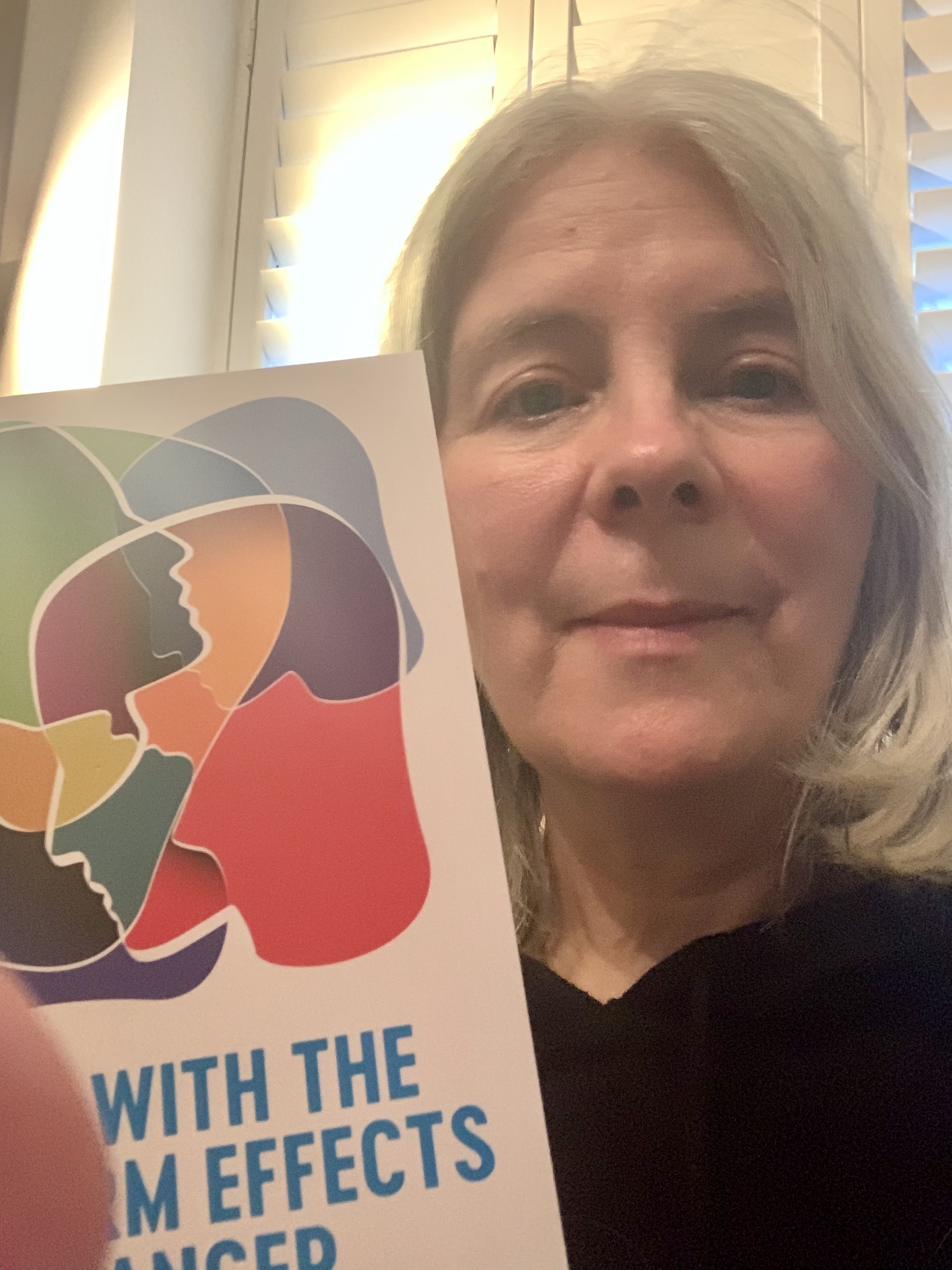
Cordelia GalgutI couldn’t possibly have imagined, when writing my latest book, Living with the long term effects of cancer, last year, from my dual perspective as psychologist and woman who has had breast cancer, that we would all be facing a pandemic such as this appalling Covid19 one we are now enduring. This situation is a huge challenge for so many of us; not least, it’s such a shock and everything else in our lives has taken something of a back seat, for very understandable reasons. This has included, in my case, trying to make light of my own health problems and related psychological challenges. And yet I am in the “vulnerable” category due to the long term effects of cancer that I experience. I am therefore at greater risk of experiencing a bad version of this virus. And I am realising increasingly, day by day, that these infernal long term effects are actually being heightened and worsened by the difficulties of the current situation, as are many other people’s problems. This situation is a veritable Pandora’s box of potential problems and very scary unknowns.

Why I wrote the book

I wrote my book on cancer’s long term effects because, since being diagnosed with breast cancer twice, in 2004, I had realised, over time, that side effects from the treatments I had, both physical and psychological, weren’t subsiding in the way I had been told they should. In fact, some were actually getting worse, eg. muscular skeletal problems, immune function and dread of the local recurrence and spread of cancer. However, despite the fact that other “survivors” were telling me they were in a similar state, what numbers of us have found is that there is little, if any, recognition of our suffering. It’s invisible to many, who look but do not see, who listen but do not hear. And the net result of this is that our problems are often enough belittled and we are judged for not ‘getting over’ cancer and not ‘moving on’. I know that this judgement is often unintentional, but it’s impact is still hard to bear.

Getting over cancer and moving beyond it is a tall order

The reality is that it is nigh on impossible to, for example, get over a cancer that could return or indeed, has returned. And cancer’s  treatments often enough cause long term effects, as well. So, I wanted my book to validate the suffering of those living with and beyond cancer and I also wanted it to inform those in healthcare and in the world at large about the plight of those living with cancer’s long term effects, across a range of cancers.

Long term effects are an increasing problem as more of us survive

Very scary though cancer still is, not least because it can still kill its hosts, it is increasingly becoming a chronic condition for many who live beyond their diagnosis, whether they are free of cancer or not. 1 in 2 of us will get this disease and many many of us will even survive for years, so my book effectively speaks to everyone. It’s a stark fact that we will all be affected by cancer in our lifetimes one way or another, if we haven’t already been.

My book is relevant for those with other long term conditions, too.

In this new Covid19 world, I hope my book can offer emotional support to those of us with other chronic conditions too and even to those of us struggling emotionally with this horrible new reality in one way or another. The support and strategies I offer are transferable to many situations and many other conditions, too.

An interesting podcast featuring me: https://twitter.com/JKPBooks/status/1247951884272443392

The Psychological Impact of Breast Cancer: A Psychologist’s Insight as a Patient is available here.

SISTER SCRIBES GUEST: JAN BAYNHAM ON WRITING HER DEBUT NOVEL

Jan Baynham is a good friend to all the Sister Scribes and here she provides an insight into writing her debut novel, Her Mother’s Secret: The Summer of ’69. Susanna Bavin asks the questions.

You started out as a short story and flash fiction writer. What made you decide to write a full-length novel?

On retirement, I joined a writing group where I wrote my first short story. Very soon, I could see my stories getting longer and longer. After enrolling on a novel-writing course at Cardiff University, I enjoyed being able to explore characters in more depth and delve further into their stories. I still write shorts but now it tends to be when I’m editing or doing research for a novel. When writing a novel, I love getting to know my characters so well that I miss them when I come to the end and I enjoy visiting new locations with them. The length of a novel allows me to create more involved plots and sub-plots for the characters to experience than I’m able to do in a short story or piece of flash fiction.

What was the initial idea behind the story from which it all grew?

The novel started out as a short story. At the time, I’d been reading a novel where the rustling in the trees sounded like whispers and inanimate statues took on the form of the ghosts of people they represented. Combining both ideas, I asked myself what if the whispering could show the presence of a past family member. Always fascinated by family secrets and the bond between mothers and daughters, I knew I had the basis for a story. In both the story and the novel, I leave it to the reader to decide what the whispering represents. In the short story, Alexandra’s search for the truth was resolved quite quickly whereas in the novel there are many more twists and turns, obstacles and setbacks before the story concludes.

Tell us about the places that feature as the backdrops of the story.

Once I’d decided that my main character Elin would be an artist, I chose a setting where the surrounding colours would be more vibrant and intense than in her home country of Wales. Having visited many times and being struck by the wonderful palette of colours seen in every landscape, Greece was my choice of background. The island is not based on one particular place but is an amalgam of areas I’ve visited. Every holiday has contributed to the whole backdrop where I’ve tried to show the climate, the vivid colours of the sea and the flowers as well as the warmth of its people.

How important is the mother-daughter dynamic to the story?

The mother/daughter relationship is central to the novel. Alexandra is grieving after the untimely death of her mother, Elin. She experiences a whole gamut of emotions from deep loss and its accompanying sadness, through to anger that her mother has abandoned her. When she learns there is part of her mother’s life she knew nothing about, Alexandra goes to Greece with the hope of finding answers.

What have you learned about the writing/editing process? Is there a piece of advice you’d like to share?

Everything suggested by my lovely editor at Ruby Fiction was very clear and straight-forward, but one thing stood out. I hadn’t always got the dates or passing of time issues right. Elin’s story is interspersed with diary entries and these didn’t always tally! The way I dealt with these continuity edits was to have a calendar in front of me and highlight the dates as events happened. Although a diary may not feature in another novel, I will definitely use a calendar to check the passing of time in future.


Stay In Work Out: Rachael Attard Helps You Stay Fit and Active At Home

Rachael Attard , PT, workouts Australian PT Rachael Attard has shared a free 7-day cardio workout on her website to help us keep active and beat self-isolation blues.

Following government coronavirus advice, people around the world have been urged to stay home but that doesn’t mean you need to miss out on a workout.

Women’s fitness expert and personal trainer Rachael Attard is giving everyone the opportunity to get moving and take part in her cardio sessions without having to part with money, in a bid to keep the world active while at home and help cure self-isolation blues.

Rachael Attard has launched ‘Quarantine Cardio’, a seven-day cardio workout plan that you can do from your home. You can access the workouts for free via Attard’s website here.

The workouts are appropriate for all fitness levels and abilities, require minimal equipment and most importantly can be done without leaving the house. The videos can be done alone or you can encourage those you’re quarantined with to get involved, so grab your mom/housemate/bff if applicable. The videos range from brief one minute tutorials to full length follow at home workouts.

Get ready to get your heart racing, it’s time to take advantage of the free workouts led by Attard or her Mom (a cardio instructor with over 25 years experience)!

Day 1: At Home Cardio Blast

https://www.youtube.com/watch?v=HPc71ec6IHM

This is a great alternative workout to power walking or running. Attard is joined by her mom in this workout so if you’re self-isolating with others why not get them involved too.

This workout is a full length, follow at home workout and will take around thirty minutes.

Day 2: Full Body Workout

https://www.youtube.com/watch?v=T-B8IOB7GvE

A full-body resistance workout that won’t leave you feeling exhausted. It’s low impact and suitable for all fitness levels.

This is a one minute workout demo. Attard demonstrates how to properly execute each exercise within the comfort of your own home.

Day 3: Core Workout

https://www.youtube.com/watch?v=eVZVYRz8AlU

A super quick ab workout that can be done anywhere. If you have sliding discs, dig them out, if not grab some small towels or paper plates.

This is a one minute workout demo. Attard demonstrates how to properly execute each exercise within the comfort of your own home.

Day 4: Couch Booty Workout

https://www.youtube.com/watch?v=iYV5iwmuCPk

It’s time to work on your glutes and legs. To do this workout, stay in your living room as you’ll need to use the couch.

This is a one minute workout demo. Attard demonstrates how to properly execute each exercise within the comfort of your own home.

Day 5: Rest and Replenish

Day 5: Rest and Replenish

As important as it is to move your body, it’s also important to give your body time off to rest and recover.

Pro tip: Make sure you sleep on the right bed. A hybrid mattress that comes with an additional layer to relieve pressure from the most sensitive areas can help your body recover overnight

Day 6: Boxing Workout

https://www.youtube.com/watch?v=Hb6ik1ivQHo

Attard is once again joined by her mom for a boxing workout that will help tone your core and upper body.

This workout is a full length, follow at home workout and will take around 40 minutes.

Day 7: Full Body Burn

https://www.youtube.com/watch?v=UP8Bm0BQ4Ro

To finish off this 7-day plan, Attard has prepared another low to moderate intensity routine that will work your whole body.

This workout is a full length, follow at home workout and take a little over thirty minutes.


CHARITY GETTING DISABLED KIDS DANCING DURING LOCKDOWN

  • Charity Flamingo Chicks is pioneering inclusive dance classes for disabled children
  • Virtual classes are designed not only for fun and fitness, but also to tackle loneliness and isolation
  • Their dance classes benefit 3,000 children each year

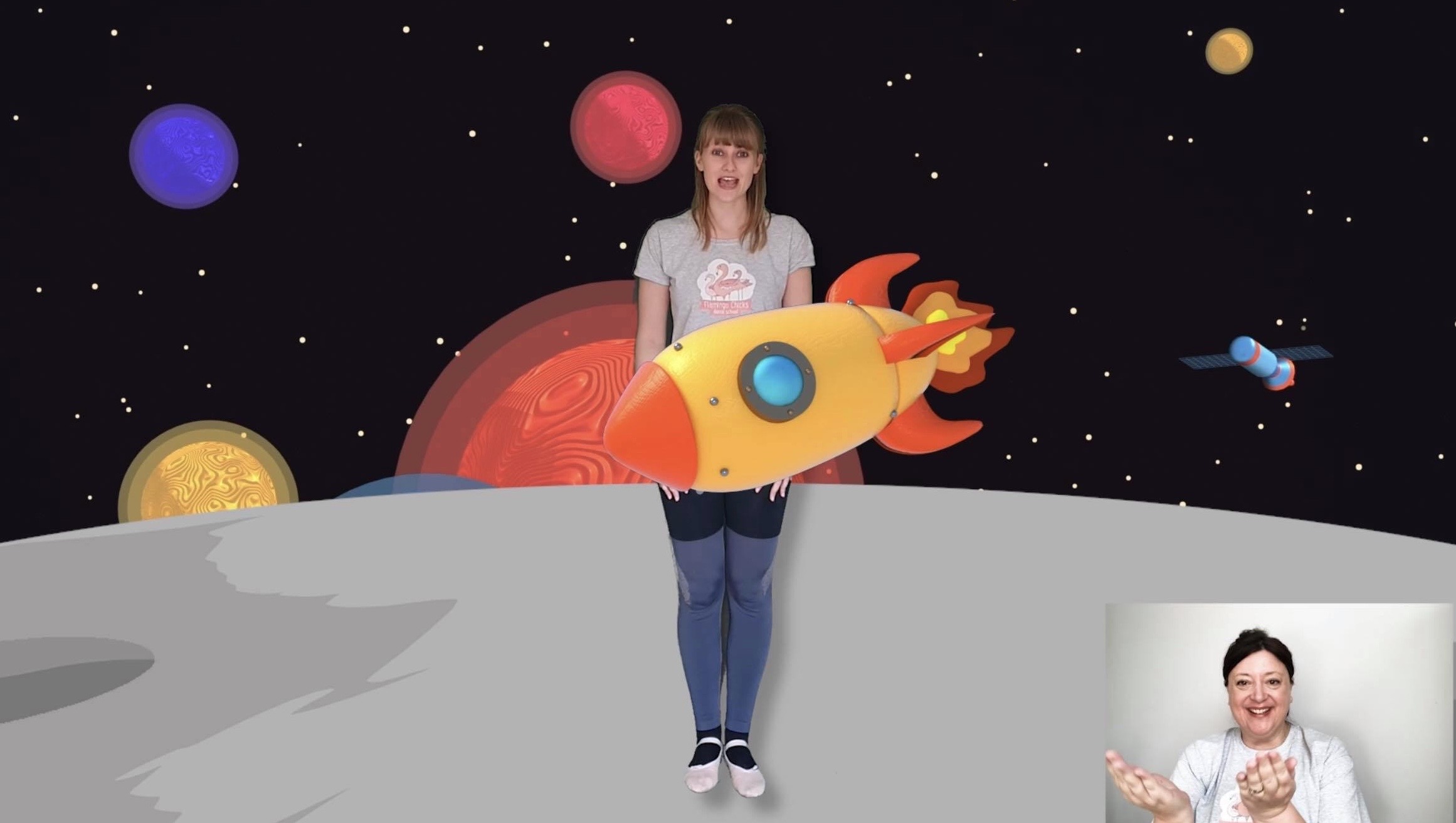
UK charity for disabled children has produced a one of a kind series of virtual dance classes for children of all abilities, but especially aimed at those with conditions like autism, cerebral palsy, profound and multiple learning disabilities and physical impairments. Pirouetting in the footsteps of Joe Wicks, UK charity Flamingo Chicks is launching Makaton-signed and subtitled online dance classes that disabled children can do with their siblings and carers.

These unique online classes are suitable for children with a wide variety of needs, including those with complex medical needs or life limiting conditions as well as children with learning disabilities, autism, physical impairments, and children without additional needs. As in all Flamingo Chicks classes, adaptations are provided throughout, including ways parents and carers can support children with limited mobility, and ways to translate different ballet and dance movements.

Filmed using green screens with animated backgrounds, the classes not only get kids moving but immerse children in a magical world of storytelling, characterization, and music and come complete with Makaton for further accessibility.

Flamingo Chicks have even got volunteer celebrities on board to help young minds keep active, alert and engaged. These celebs have written new stories with the themes of dance and inclusion that will be illustrated and read aloud by a famous face. First up is Julie Hesmondhalgh (Coronation Street’s Hayley Cropper) reading ‘Ozi Seven Legs’!

Even in normal circumstances, life with a disabled child can be an isolating experience – a study revealed that, before the Coronavirus pandemic, two thirds (65%) of parents already reported feelings of isolation. Limited social interaction can be due to work, lack of time and money to do activities other families take for granted, fear of people’s reactions to their child.

However, the lockdown is creating new challenges for families with a disabled child. The lack of  routine, the uncertainty and the added anxiety parents are experiencing about their disabled children’s vulnerability means social isolation is an even greater challenge. Many kids will no longer be getting their usual visits from their care teams, such as their physiotherapist or mental health professionals, and as a result may be showing extreme anxiety or behaviour changes.

The virtual classes are one of a number of resources created by the charity that also campaigns for a fair future for disabled children and their families and provides a peer support network for parents and carers.


Not only will they encourage dance through their online classes – the first with a SPACE theme filmed using animated green-screen technology and signed with Makaton – but the charity will also offer activities for little scientists and crafters, guided meditation and relaxation videos for parents/carers, ‘smile calls’ via video chat to provide those much needed boosts and a variety of other online resources.


FC at home

inclusive dance lessons, disability, disabled, dance, lessons

Coronavirus Is Tough On All of Us But Together We Will Pull Through

Hey, how are you doing? Not great? I do not blame you. These are scary times. Every day is seems unbelievable that our lives have changed so much, and that so many have lost their lives. The NHS workers, delivery drivers, bin men and grocery workers are our new heroes. It is a new world and frivolous things do not mean much in a world like this.

I am seeing a lot of stuff on social media and in the press about how staying at home is easy so I just want to write this, not for any idiots who are going out and not listening to the Government guidelines, but for the rest of us: none of this is easy. It is okay to not be okay.

What is going on at the moment is horrendous and there is so much we do not know. If you are struggling then do not feel bad. I read a story about a 43-year-old woman who had what she thought was a cold and a fever for two days. Her husband called an ambulance when she collapsed. She died before the paramedics even arrived and her husband was in shock. They had a 13-year-old son.

A lot of people are dying every day and there are mass graves in New York. Pregnant women are having a tough time and some women who wanted to get pregnant say they have lost their last chance. This is all scary and unknown.

So many people have lost jobs and money. Millions of people have gone hungry. People are worried about the roof over their heads and the future. There is so much suffering at the moment. It is impossible to not be affected by this. So we must all go forward together because never before have we been more in this together. This is not easy but we have each other and we can all do whatever we can to put goodness and positivity into the world.

Get in touch with us if you want to talk or share your story. If you want to learn more about the Pandemic, or Pandemics in general, then I recommend Pandemic, the documentary series on Netflix, Pandemic: Covid-19 on NowTv.com and the movie Contagion which is also on Netflix.com.


The Folio Society’s Top 10 Books for Social Distancing

As the UK continues in this unprecedented period of social distancing, more and more people are looking for productive ways to spend their time at home. On the top of many people’s lists, no doubt, is reading new books that they may not have gotten around to. Reading has many benefits and has been proven to help reduce stress and boost wellbeing.


To help book-loving Brits find their next read, Tom Walker, Publishing Director at The Folio Society, who, for over 70 years, has been publishing beautifully illustrated editions of the world’s greatest fiction books as well as thoroughly picture-researched non-fiction books, has pulled together his top 10 picks of books to read whilst in self-isolation.


The Tenant of Wildfell Hall

Being stuck at home and only allowed out to go to the shops seems a good time to read about feminism, and this is arguably the first feminist novel. Wildly surprising in its modern sensibility, Brontë rages against a society that held women shackled to men and the home.


The Little Prince

I can’t help thinking of how the Little prince would respond to our world right now. An enigmatic, compassionate but sad creature of the stars, I sometimes imagine the weight of his judgement on us all for the job we’re doing of keeping our little planet safe.


The World Turned Upside Down

The English Civil War of the 1640s shook the nation to its core, and in the process out scattered a legion of radical ideas and philosophies which have formed the national identity ever since. One wonders how our current upheaval will reshape us.


Dr Zhivago

What better time to re-engage with this great Russian epic? The recent translation by Boris Pasternak’s nephew returns the lyricism and colour to this beautiful novel of love, war and the Russian soul.


Moby-Dick

What an opportunity, if you never have, to read this bulking leviathan of a novel. From the first pages in Nantucket, where Ishmael befriends trusty Queequeg, Melville loops his crazed tale of ambition and revenge, culminating in scenes of terror on the high seas.


His Dark Materials

Pullman might be the purest storyteller of our times, and His Dark Materials is his masterpiece: a truly addictive adventure story which leads us into other worlds.
Handmaid’s Tale

Turning to Margaret Atwood in times of trouble is always a good decision. Prophetic or not she is wise and compassionate, and laces those qualities with a killer wit.


Maigret

If all else fails, pick up a Maigret. With plots as light as a feather and a stripped-down style, Simenon’s thrillers are beautifully evocative of the underground tensions of a mid-century Paris.


Persuasion

It’s always a good time to re-read Austen, to get lost in that luscious prose and arch wit. Persuasion is her last-completed, and perhaps her most mature novel, and a joy to revisit.


I am Legend

In the current circumstances this is not a book for the faint-hearted: Matheson’s vision of a post pandemic future doesn’t contain many people, and even fewer who are not zombie-vampires, but there is a glimmer of hope at its end…


Mirror & The Light

My eleventh choice is not yet available as a Folio Society edition, but I do hope that it will be one day. This is my current quarantine reading. A nine-hundred-page masterwork of astonishing delicacy and intelligence which draws one back through the eyes of Cromwell to a Tudor London infested with plague and political instability.