Outlander By Diana Gabaldon: Reviewed by Natalie Jayne Peeke, West Country Correspondent.


What if your future was in the past? Well, read – or listen to Outlander – and discover how complicated it can be.

1946,And Claire Randall goes to the Scottish Highlands with her husband Frank. iI’s a second honeymoon and a chance to re-establish their loving marriage.  One afternoon, however, Claire walks through a circle of standing stones and is transported into 1743 where the first person she meets is a British Army officer – her husband’s 6 times great-grandfather
Unfortunately, blackjack Randall is not the man his descendant is and while trying to escape him, Claire  falls into the hands of a gang of Scottish bad ‘uns and finds herself, as Sassenach an Outlander,  in danger from both Jacobite and red coat.

Marooned and in danger, e her only chance of safety lies in Jamie Fraser a gallant young Scots warrior. Lo and behold,  Claire finds herself torn between 2 very different men – husband or Scots warrior?
Committing the ultimate bookworm betrayal, I watched the TV series before I even approached the audio book, and became engrossed. I was intrigued to see what the series would be like, and I picked up a copy, the first in the series.

I was not disappointed, Gabaldon Is a beautiful storyteller I was immediately hooked. Prior to discovering Outlander, I knew little of Scotland’s history, including the Highland clearances.   Outlander not only brought   history to life, but I found it unputdownable.  There is something for everyone from time travel romance and adventure with some violence thrown into the mix.

With parts of the book being narrated from Claire’s pov we discover more about Claire’s character:  she’s funny amusing intelligent and has a great overview of life even with a potty mouth.

paperback, eBook and Audio available

Jane Shemilt, fabulous author of the upcoming Little Friends, interviewed by Natalie Jayne Peeke

1.Your latest book Little Friends is due for release next month (February 2020). Tell me a little about it and how it came to be.

Little Friends is a story about friendship and its risks; three very different families come together as the mother of one offers dyslexia teaching for children like hers with this problem. The children make friends and the adults do too; over the course of a long hot summer they share barbecues and dinner parties, a holiday in Greece. An affair starts, resentments smoulder but the three woman become close. They watch each other but forget to watch their kids who begin to play dangerous little games. Without realising it, the adults have let evil creep into their safe little world which begins to turn upside down.

How did it come to be?

It was a response to John Updike the American novelist whose book Couples intrigues me as a teenager; adulterous couples in a small American town got together using their children as an excuse; the reader quickly lost sight of those children who were banished to the further reaches of the garden while the adults played their games. We never found out what those children got up to or even their names, but I felt in my bones they were up to no good as unsupervised children so often are. Another noval William Goldings Lord of the Flies influenced me, it seemed to me to be a honest portrayal of childhood for the dangerous jungle it often is, where survival of the fittest determines who will win.

2. How do you go about developing the settings for “little friends”

We bought up three of our children in West Dulwich, a long time ago now. It was near the pretty and privileged little village of Dulwich but like so many areas of London, it you turn a corner you can find yourself somewhere completely different; tremendous wealth can co-exist with its opposite. In a place where different groups live close by, the potential for ne friendships as well as conflict can arise

I travelled to the Mani in Greece to research another story; the Mani in southern Peloponnese is an unspoilt area of rugged beauty; we stayed in an old tower house which was surrounded by olive trees and I realised this would provide another place to take my characters and see how they behaved. I also think it’s refreshing for the reader to be taken somewhere else different from the default setting – a bit like going on holiday. It is also true that beautiful places as settings for terrible things can work well.

3. In little Friends who are the main characters and what makes them tick?

The three couples and the six children they have between them

Eve is a woman born to wealth, an earth mother in an enormous house, careless and generous by nature. she studies how to teach children with dyslexia in order to help her own daughter, and advertises for pupils on Facebook. Her husband is Eric who was her father gardener. Melissa a workaholic interior designer is married to Paul; an architect they have a dyslexic daughter; this little family is highly complex. Finally Grace, a Zimbabwean immigrant and her husband Martin, a once famous writer, have two children between them, they struggle with poverty and live in a high rise flat in the outskirts of the village.

4.Out of all your books, which character was the most difficult to create and why?

The heroine of my third novel How Far We Fall, she is called Beth. The novel was a modern Macbeth tale, built around the lives of competitive neurosurgeons, at the cutting edge of their craft. Beth is the lady Macbeth character; in Shakespeare’s Macbeth, Lady Macbeth is driven by ambition for her husband to encourage him to commit murder; I felt a modern woman would be compelled by her own agenda. Crafting a believable modern story as well as a complex character with whom the reader could identify was challenging but also rewarding

5 Who are your favourite authors to read

So many,here are a few in no particular order;

Ann Patchett.

Annie Tyler

Colm Toibin

Hilary Mantel

Marianne Robinson.

Elisabeth Strout.

Andrew Miler

Margaret Atwood.

Jane Smiley

Coetzee.

Deborah Levy

Sally Rooney

Tessa Hadley

7.What is your writing process like?

I write from home which is peaceful now the children have left; a first draft takes six months at least, working anything from 4 to 6 hours a day; once edits come back and deadlines are set’ then I can be working from 12 to 18 hours a day, re -writing and editing.

I work on a large table using my laptop though the first stages when I’m trying out ideas and possible story threads I tend to use pen and paper and often make diagrams and graphs until I have the shape of my story.

8. You have five children; how do you balance your family life with your writing?

My children are grown up now and have all left home. Having said that if they come home or discussions are needed then they always come first. I don’t think I could have written when they were little; I was working as a GP then and when I came home I left that identity and any problems behind. It’s not so easy to do when you are writing, the story stays in your head all the time; I also need stretches of unbroken time as the story takes its final shape.

9. What is the worst writing advice anyone has ever given you?

No one has given bad advice; you take what you need; advice that isn’t for me may be right for another writer but I’m glad no one told me the truth, quite what hard work it is and how much resilience you need!

10.What your writing kryptonite?

If you mean what makes the writing work well, it’s positive feedback. In this industry you get a lot of edits, many of them about things that need to be changed which of course is essential; what really powers you on though is knowing what you have done right, something is working well. When readers get back to me with their thoughts it’s like gold dust. Sometimes my words have made a difference to their lives and there is nothing better than that.

11.If you could tell your younger self anything what would it be?

You have made the right decision, train as a doctor if you want to, you’ll come back to you first love in the end.

12. What would you choose as your spirit animal

An elephant: I love the sense of the matriarch at the head of the tribe; wisdom and patience and strength are good watchwords for a writer.

13. If you could invite anyone living or dead to a dinner party who would you invite and why

Shakespeare: ask him how he did it.

Freya Stark the explorer- where did her courage and determination come from? What things did she learn?

My mother who died a while ago now, so much to tell her, so much to ask.

Available from Amazon.co.uk 

Jane Shemilt Little Friends

 

In Search of Wellness | Catherine Balavage’s New Health Column

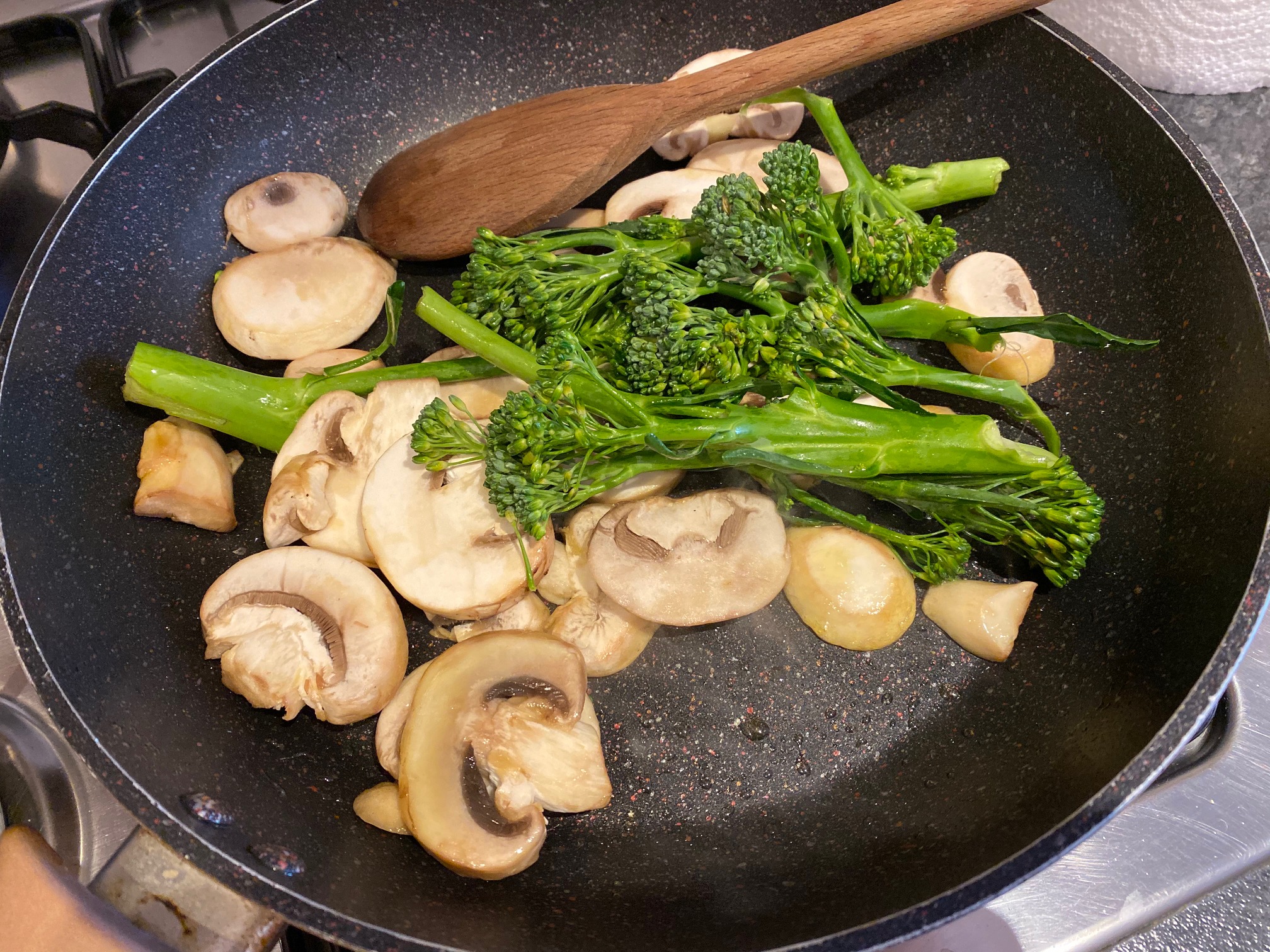
healthy eating, food, mushrooms, broccoli , It started with abject fear. The radiologist would not meet my eye. They were all smiles when I first arrived. I have had scans before and I know, without a doubt, that this time they have found something. When I go home I tell my husband they found something. He tells me I am being silly but I saw it in the radiologists eyes.

It is a week until the doctor calls me with the results. They have found nodules on my thyroid. I had told the doctor about my persistent sore throat many times. ‘I am going to be alright though?’ I ask the doctor. I cannot tell you that she replies. Everything feels very real. All I can think of is my two little children.

In another three weeks I have more tests and another scan. The consultant decides that they are not worried after all. I feel like I can breathe again. The weight of burden being lifted makes the world even brighter than before. But then I feel angry at myself. I have taken my body and my health for granted. I read an article in a newspaper that having sugar in your tea increases your risk of cancer. I rarely have a soft drink but I love chocolate and in July 2019 I took two sugars in my tea.

When this happened I was overweight. Not by much, but enough to make me worry. I have since lost a stone, stopped taking sugar in my tea, exercised frequently, and improved my diet. There was a huge difference in every aspect of my life. After I cut out sugar a lot of people told me my skin looked amazing and I was glowing. I stopped having those awful sugar crashes. You do not realise how awful sugar and caffeine makes you feel with the constant highs and subsequent crashes.

I have started this column to talk about my progress. Not just the weight loss but the improvement that happened to my health. The highs and lows, along with my relapses.

In November I had a medical emergency that required urgent surgery. I almost died. A few weeks after the surgery I got severe pneumonia in both lungs and ended up going in and out of hospital. The past three months have been the worst of my life but I refuse to let it break me. This column will cover everything about wellness as I become the fittest and healthiest I have ever been. From healthy eating, exercise and meditating; if it is about health I will cover it and give you the low down. Here goes.

A STUDY OF STUDIOS: AN INTERVIEW WITH ART AUTHOR ROSIE OSBORNE

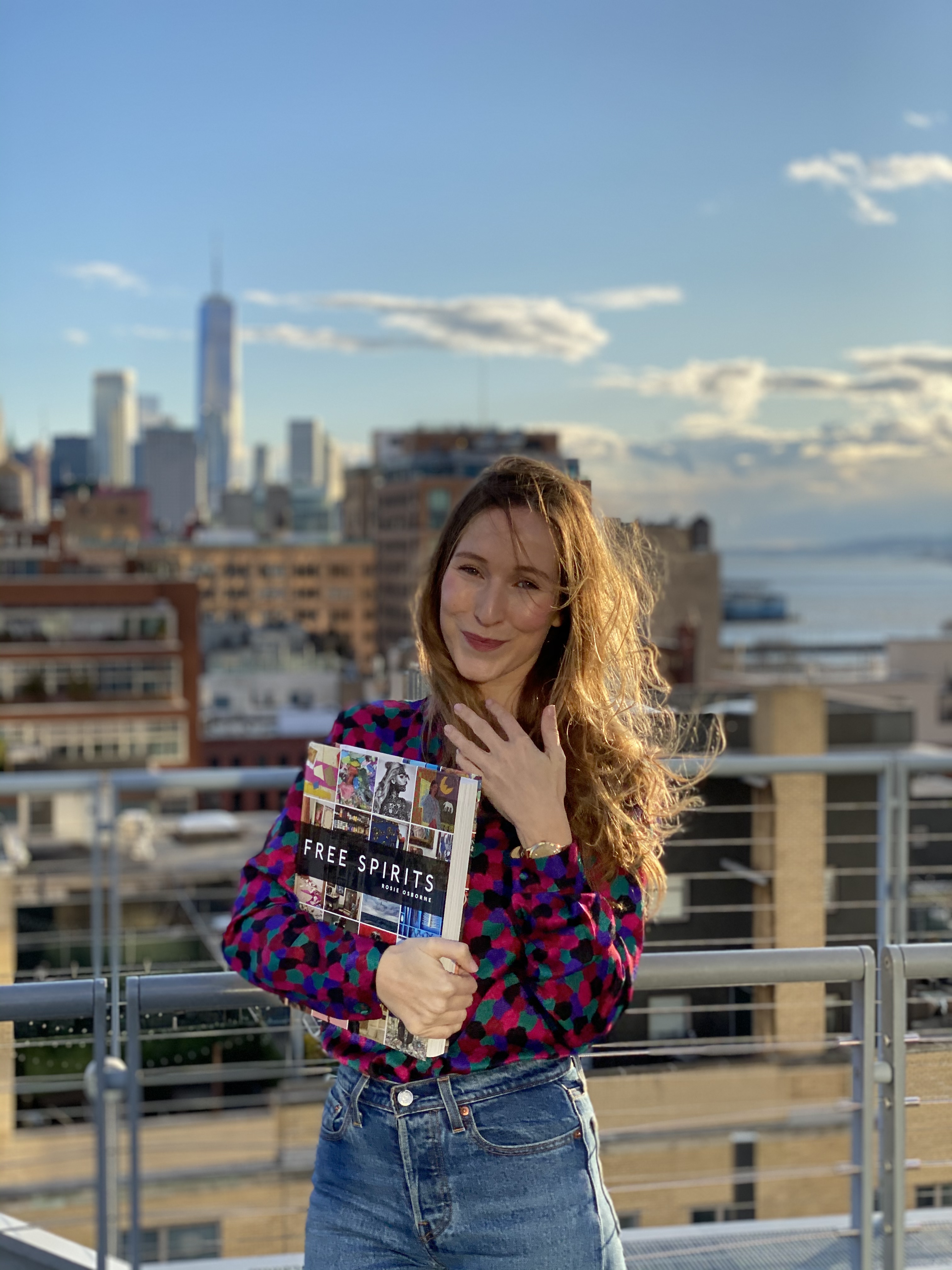
Rosie Osborne, author, While still in her teens, author and award-winning photographer Rosie Osborne made a vow to herself. She promised that by the time she turned 30 she would have published a book collecting her exclusive access-all-areas interviews with some of the UK’s most dynamic contemporary artists such as Sylvette David and Danny Fox. 

All those years later she achieved her ambition and the result is fascinating new coffee-table tome Free Spirits. We caught up with Rosie to find out more…

Q. Free Spirits is obviously aimed at art lovers, but what do you think is its unique appeal?

A. I hope that it offers an insight into the private side of artistic practice, and the everyday struggles and triumphs that artists experience. I think there’s a very human side of art that can sometimes be hidden by the polished gallery shows or the museum retrospectives and that’s what I have tried to delve into.

Q. All the interviewees must have been fascinating to speak with, but are there any that especially stand out to you?

A. Interviewing British artist Danny Fox last year was fascinating. Fox is a self-taught painter who grew up in St Ives, Cornwall, where I spent a lot of my childhood. As a teenager, he worked long hours in restaurant kitchens, washing up dishes to save up to buy paint. I remember him saying at the time that if he was offered a job with more responsibility, he’d turn it down, because he didn’t want to take up the mind space that he needed for painting. I went to his first exhibition in St Ives when I was 15 and was really moved by his painting style. Although Danny didn’t go to art school or have any contacts, he moved to London, where his work started to gain more and more recognition. Over the years following, his paintings were featured in shows all over Europe and America, and he is now based in Los Angeles, California. Danny’s work ethic from day one always inspired me, and his paintings are amongst my favourites, up with Picasso and Matisse. Last year, 15 years after attending his first exhibition, I interviewed Danny back in Cornwall. It was so interesting to discuss all of the years that had passed, especially back in St Ives, where it all started.

Q. You interviewed artists over a space of 17 years. Does this mean there are more interviews yet to be published and, if so, what are your plans in this regard?

A. Yes, I selected 13 interviews for Free Spirits, but I’ve got around a hundred interviews ready for publication. I publish some interviews on my website, but I hold on to lots in order to wait until what feels like the right time to release them.

A.  You were only a teenager when you started conducting the interviews. Did you find any resistance to your interview requests and how did you overcome this?

A. I’ve learnt that it’s really important to use rejection to propel you to move forward. Many of my requests to interview my favourite artists as a teenager were left unread, or I just never heard back from them. Over the years, I started to see it as a process of elimination. Four artists out of five may not have replied, but one often did. Putting everything into making that one interview as good as it could possibly be would mean that the likelihood of future artists saying ‘yes’ was much more promising. I saw it as a process, like any person learning to improve or perfect their trade. Nothing comes easy. I truly believe that if you can learn to take rejection on the chin, and turn it into a positive force, nothing can hold you back from getting to where you’ve always wanted to be.

Q. How would you describe the importance of contemporary art to those who may not be familiar with it?

A. I think that in order to attempt to understand contemporary art, it helps to look back to what came before it. Picasso said that, “Every act of creation begins with an act of destruction”. Everything in art is consciously, or subconsciously, a reaction to something that has come before it, so the symbolism or meaning of a piece of contemporary art can sometimes be linked to something that came hundreds of years before.

Q. If you could travel back in time, which one artist from the past would you like to speak with, and what would you ask them?

A. I’d love to interview Henri Matisse, towards the end of his life when he worked from his studio in a wheelchair. After undergoing surgery for cancer, he lost his mobility. Instead of giving up, Matisse drew incessantly and rediscovered the medium of paper cutouts. He talked about how he felt completely reenergised, and called the last 14 years of his life “une seconde vie” (his second life.) I’d love to ask him about this stage of his life, and how the work that he was able to do in the studio, in a sense, saved him.

Q. Your book features a wealth of photos with the artists in their studios. Why did you think this important to include?

A. It’s impossible to describe some of the studio scenes in the book with words! They’re all completely different: some are orderly and tidy and some are filled floor to ceiling with collected objects and everyday items alongside art materials. A studio space that I really enjoyed documenting a couple of years ago belonged to Cornish artist Samuel Bassett. I tried to take photographs of his working space that were really honest, so that the reader feels as if they’re standing in the room, observing every detail. His small studio was filled with surfboards, crates of paint, sofas, packs of cereal, saucepans and all of his kitchen items, along with works in progress and paint dripped over absolutely everything. It was great fun spending time there. It’s honestly impossible to describe, but the images say it all! Artists’ working spaces are often very transient places. As Samuel no longer paints there, the room was painted white, ready for the next artist, and the spirit of that room has changed and become something else. That’s why I felt compelled to try to record the atmosphere in that room in some way.

Q. Free Spirits also serves as a memoir of your personal development. What achievements to date are you most proud of?

A. Getting the book out into the public sphere felt really significant to me. I promised myself at 17 years old that I’d publish the book before I turned 30. Free Spirits came out the day before my 30th birthday. It’s definitely the personal accomplishment that I feel most proud of.

Free Spirits by Rosie Osborne is available now, priced £30 in hardcover. Visit www.rosieosborne.com 


SISTER SCRIBES GUEST: JANE WENHAM-JONES ON THE BIG FIVE O

Following on from the RNA article in Frost last week I’m delighted to welcome Jane Wenham-Jones – novelist, columnist and presenter  – to Sister Scribes today. Thank you, Jane, for answering our many and varied questions.


First off the blocks. Plotter or pantser? Or does it vary by what you are writing (short story, novel, ‘how to’ book etc)?  

I started off as a Pantser, but I am now – through bitter experience ha! – a plotter. I plotted my last novel – The Big Five O – fairly forensically as it follows the stories of four different women and I needed to make sure it was balanced and the timeline worked. When I wrote a weekly column, however,  I would often just begin writing and see what came out… And I tend to write articles with just a vague idea of the content. I am on my tenth book as we speak and I have a one-sentence description for each chapter on a sheet beside me, but whether the novel will end up like that is another matter…

What, for you, is the very hardest part of writing?

Getting started. I am such a procrastinator. My son used to say he could always tell when the novel wasn’t flowing because even HIS shelf of the airing cupboard had been tidied…

And what is the most rewarding?

Writing “The End” (There’s nothing like it!!)

Photo credit Bill Harris

What do you see as the greatest success of your writing career? And what was the deepest disappointment?

One came from the other. When the publishing house that took my first two novels didn’t want the third (“too many serious issues”) it felt like the end of the world. I really thought it was all over. But this led indirectly to my writing Wannabe a Writer?, which in turn has led to many opportunities and has apparently, and gratifyingly, helped lots of writers (many of them now more successful than I am!) get published. I now have a patchwork ‘career’ which I love, and all the interviewing I do – I’ve done events with hundreds of top authors and celebs – which brings me great joy, started from one event for that small publisher who took me on for my third novel. As one door closes etc …

As you know, Sister Scribes is all about women writers supporting each other through their writing journeys. Do you have a ‘go to’ bunch of fellow female writers you value and rely on? If so, how did you meet them and how do you support each other?  

The RNA (Romantic Novelists’ Association) is a wonderful institution and I have made many terrific friends through it, who have been wonderfully supportive. I email often with Katie Fforde, Judy Astley, Janie Millman, and others and it is good to have someone at the end of a screen who knows what it’s like when one is only capable of pairing the socks…

What are your wishes and ambitions for this year and this decade?

My own chat show anyone?

And finally.  I LOVED the Big 50.  So funny and warm. How do you celebrate big birthdays yourself?

Ah thank you so much x It was fun to write. I love a party but I tend to cower when it comes  to  big birthdays. I spent 40 in a darkened room and ran away for my 50th. But now – having lost people far too young and had a life-threatening illness myself, I think how ridiculous that all was. If I haven’t been crushed by a passing bus by the time I’m sixty, I shall have a ball!


The Big Five-O by Jane Wenham-Jones is published by Harper Collins in paperback and in e-book formats. www.janewenham-jones.com @JaneWenhamJones

STEP ASIDE GU – THERE’S A NEW DESSERT DON IN TOWN

Every once in a while a sweet treat lands in our lap that changes EVERYTHING. Pati & Coco’s multi-layered, multi-textured chocolate desserts have done just that.

Picture this, you start by cracking through the signature layer of fine tempered dark chocolate. Once through, experience patisserie folds of luscious ganache and delicate sheets of chocolate underneath before ending with a satisfyingly crunchy biscuit layer at the base. Swoon.

Available in packs of 2, these 80g pots come in four intense and luxurious flavours. Disclaimer, our favourite was the caramel & choc pots, giving decadent, millionaire’s shortbread vibes!

  • Ganache & Choc
  • Praline & Choc
  • Caramel & Choc
  • Pistachio & Choc

Available to buy at Sainsburys

Living with Alzheimers – I wish I’d paid more attention to Paul Daniels’s Magic shows by Chris Suich.

Living with Alzheimers- Bob and Chris Suich

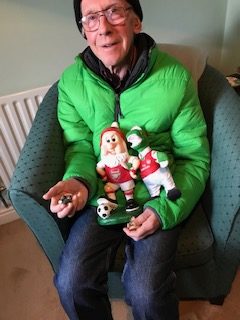
It was a big match day for Arsenal. I’d got the ‘football room’ suitably attired for Bob with the lucky Arsenal gnome, the two Irish leprechauns and the Gunnersaurus. They were lined up looking towards the TV. We were waiting for our friend to come round and watch it with us.
Bob had recently had a bit of an obsession about door handles. He kept trying the handle, pushing them down fiercely (several times) to such an extent the latch was sticking and I couldn’t get into some rooms. The only way I could get the latch to move back was to get my bank card, slide it in the gap, and push the latch back. In the end I had been so annoyed that I’d actually taken the handles off the door in the ‘ football room’. I left the door wide open with a note sellotaped to it ‘DO NOT SHUT’ and put a square pouffe in front to hold the door back to the wall.
Our friend came round and the game became very exciting. The beers flowed and we became totally absorbed in the match. Suddenly I realised the door was shut.
I screamed out in horror. ‘ The door’s shut!’

‘It wasn’t me.’ chanted Bob over and over (who was sitting on the pouffe.)
‘It must have been you though, Bob because you’ve moved the pouffe and shut the door at the same time.’
‘It wasn’t me,’ Bob repeated.
There was no door handle to get out and the door was fast shut. My purse with the bank card was in my handbag – the other side of the door. My phone was also in my bag so I couldn’t even phone a neighbour for help. I had a vision of us all being locked in until the postman came the next day, and us waving frantically at him shouting ‘Save us. Save us!’
How could we get out? I remembered the front door was unlocked – if we could get out of the window. But the window was so small. There was no way I could get out as my back was playing up and if I tried to twist it my muscles might go into an agonising spasm. Our friend is a 6 footer so I couldn’t imagine he could get through the window. But Bob was thin and small perhaps I could persuade him somehow to try to get out.
Bob was the right size but could he understand how to climb out of the window? I started to try to make him understand.
‘If I tipped you up, Bob, out of that top window and held onto your ankles you might be able to do a forward roll like the SAS, do you think you could do it?’
‘Not me.’
That was when I wished I had paid more attention to those Paul Daniels magic shows where they put people into a box and they become very small people, contortionists I think they are called. If only I knew how to make myself that small I could have got through the window. I had a flash back to a show Bob had booked where I had watched a young lady supposedly chopped up with a sword and all the time they were in a tiny space where the sword never went.
Then our friend saved the day.
‘I think I might be able to get out of that window’ he exclaimed.
‘ Really?’ I answered, a little hope in my heart.
We cleared the windowsill of the ornaments and pictures and our friend climbed up. It was at this moment that the ridiculousness of the situation took a hold of me and I became a hopeless giggling mass. Desperately trying not to let our friend see me laughing as he was struggling to balance with one leg either side of the frame. He became that very small person I had seen in the magic shows.

He managed it! He jumped down onto the path. He walked in through the front door and between us we did the bank card trick in the edge of the door where the latch was, and managed to push it backwards so the door opened.
Well, that was a game to remember for all the wrong reasons!

Thank goodness Arsenal won.

JANE WENHAM-JONES REFLECTS ON TEN YEARS OF PRESENTING THE ROMANTIC FICTION AWARDS

One of the most anticipated highlights of Romance Reading Month is when the announcement of the shortlistees for the Romantic Novel Awards is made which this year will be on the 3rd Feb. The awards themselves will be held on 2nd March 2020 at The Leonardo Hotel, Tower Hill, with prizes in nine categories of Romantic Fiction as well as the award for Outstanding Achievement.

Jane Wenham-Jones has hosted the RNA awards since 2011. Here she reflects on ten years of sparkly gowns, celebrity guests and Awarding Excellence in Romantic Fiction.

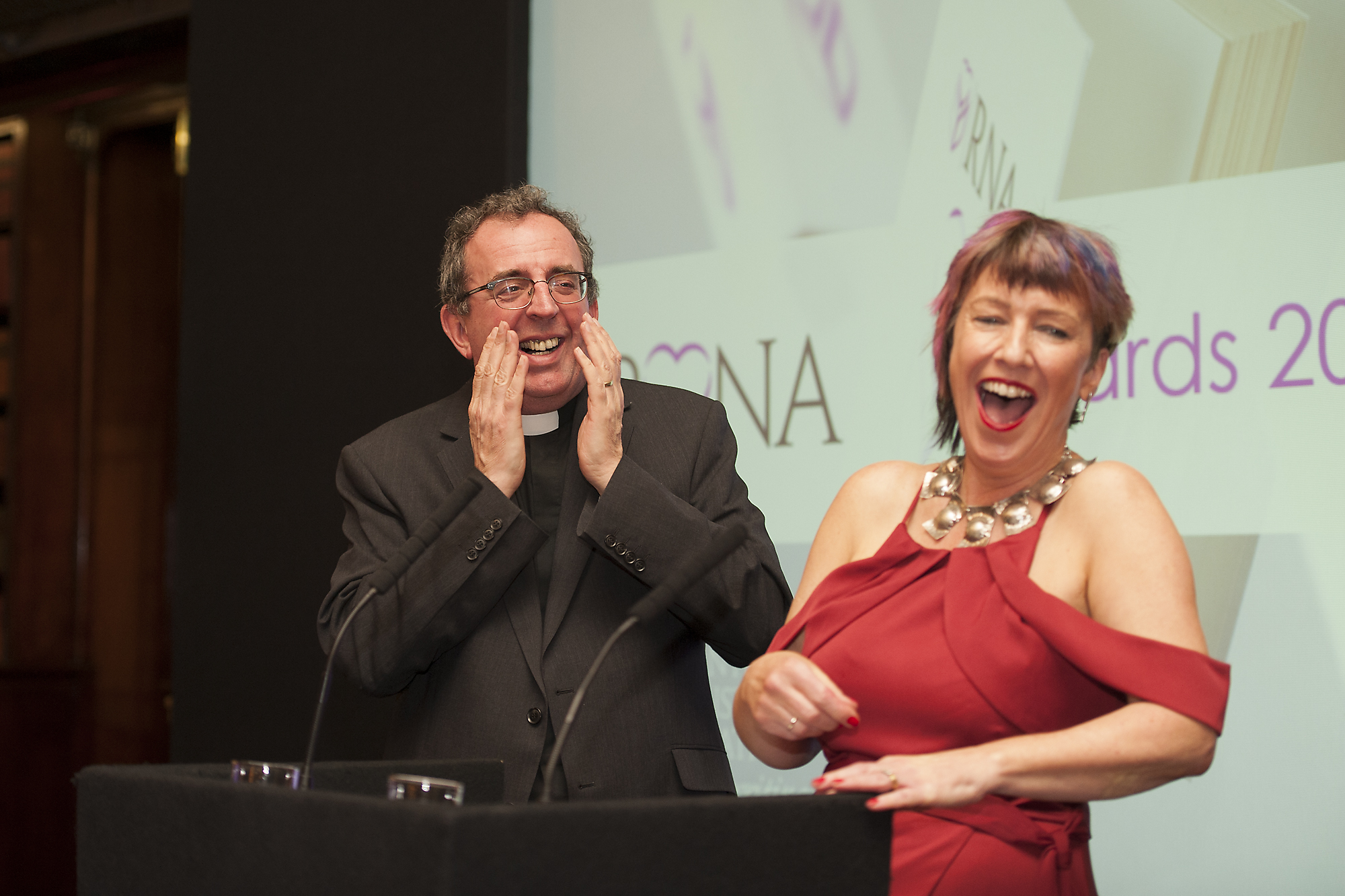
“It is usually around this time of year that I start spending an inordinate amount of time looking at frocks. When I first presented the Romantic Novelists’ Association Awards, it was with Tim Bentinck – David from The Archers – and I wore an over-the-top glittery affair in fuchsia, which set the pattern for the next ten years. In that time, I have got stuck in a dress, had to involve a veritable team to zip me up, and had the formidable Catherine Jones (ex-army) shove an authoritative arm down my front to tape up my cleavage so I didn’t do a Judy Finnegan. Who, as it happens, made the night when she gave out the awards with the lovely Richard Madeley a couple of years later.

Photo credit Marte L Rekaa

The award ceremony is one of the highlights of my year. It is glorious to celebrate the very best in romantic fiction – a massively-selling and important genre that warms hearts worldwide – and uplifting to see the very real joy on the faces of the winners. I usually mispronounce the name of at least one of these and quite often drop my notes, but thanks to our marvellous celebrity guests we laugh on.   I have choked with hilarity with the Reverend Richard Coles, developed a small crush on Barbara Taylor Bradford  and gazed in awe at the beauty and elegance that is Dame Darcey Bussell. Prue Leith, Fern Britton, Alison Weir and Peter James have done the honours too, and were all funny and as hugely supportive as you would expect.

The Romantic Novelists’ Association does much to dispel the image of the romantic author floating in a cloud of pink chiffon dreaming of tall, brooding, macho men sweeping small fluttery females off their delicate size threes and the annual awards are a celebration of the reality and diversity of writing about love, as well as a jolly good excuse to drink lots of champagne. The next one is going to be extra special as it falls in the year this brilliant organisation gets its bus pass. We have a famous guest to hand out the gongs, an exciting new award in memory of the late, great Jackie Collins and more on the various short lists than ever before. I’ve got the dress early. Bring it on and Happy Birthday RNA!”

www.janewenham-jones.com

To celebrate 60 years of the Romantic Novelists’ Association, Romance Reading Month will run throughout February #RNA60 #RomanceReadingMonth

Throughout the month the focus will be on different ways that readers can access romantic fiction and will be highlighting different sub-genres and authors as well as supporting libraries during #LoveMyLibraryWeek On Valentine’s Day the RNA will be launching a new Facebook Group, the Romantic Fiction Book Club. The group has been created by a number of RNA members to provide a safe and cosy place for romance lovers to chat about their favourite books. The RNA will also be championing romantic fiction from underrepresented authors. RNA Chairwoman Alison May said, “We have bursaries available for new and mid-career authors from under-represented groups. We invite authors and readers to share their diverse romance novels using the hashtag #RNADiverseRomance.”

If you would like more details about Romance Reading Month or the Romantic Novelists Association then please visit www.romanticnovelistsassociation.org