Living with Alzheimers – A Carer’s Story by Chris Suich

Living-with-Alzheimers-Chris-Bob-Suich

In 2012 my husband, Bob, was diagnosed with Amnesia and we were told it could become Dementia. Three years later he was diagnosed as having vascular dementia. However, after two weeks in hospital in 2018 with severe anxiety linked to the condition, we finally saw a dementia specialist who diagnosed Alzheimers. Nothing could prepare us as a family for the devastating news – and that there was no cure. To see this dynamic and clever man become so dependent and scared of day to day things was devastating. My life now revolves around caring for the man I have been with for over 40 years.

I met Bob whilst having a gap year working on Cleethorpes Pier before starting a degree at Hull University. I was only 17, but we got on so well and shared so many interests that we became inseparable. We married a year later. Bob was theatre manager on the pier and went on to pursue a career in tourism and leisure, and I put my degree on hold to support him in his anti-social hours and bringing up our two boys, Joseph and Edward.

Whilst they were babies I enrolled in the Open University and after six years managed to gain a BA in English, History and Cultural Studies. After a year I started teaching full time at a local primary school. Bob’s career grew and soon he was in charge of tourism and leisure for East Lindsey District Council in Lincolnshire. We met many stars of show business such as Norman Wisdom, Ken Dodd, Joe Pasquale, Lulu, and Barbara Windsor, who sadly also suffers from Alzheimers.

Bob worked hard and had a knack for securing TV appearances. He would follow up every bit of publicity he could, including swimming in the sea in January to prove how clean the water was after gaining a Blue Badge award.

He was managing a huge budget, a very successful manager and well-liked by his many staff. We had a great life. but so much has changed since his diagnosis.

Life isn’t easy but we do manage to share lots of fun and laughter. In sharing our story, I hope to cast a little awareness of what it’s like to be a carer for someone living with dementia.

A typical Sunday in our house.

Bob has taken to waking up very early. Today it was 4.00 am.

‘Hello ‘ he says. ‘ Are we getting up yet?’

‘It’s early, go back to sleep,’ I say. ‘I’m not at school today.’

Then the restlessness starts. We manage a few more hours then I give in, get him up, bathed, hair washed all clean set of clothes, wet shaved, pills, hair combed and all the other small things it takes to get him ready for the day. It’s exhausting and the day’s barely begun. He looks smart and well though, so it’s worth it.

We listen to the news whilst we share our morning coffee, having a discussion of the likelihood of which Tory will become the next prime minister. Bob has me howling as he has a complaint about them all.

Then it’s out for Sunday lunch at a friend’s house. Bob eats a small plateful, but I have to chop it up and feed him as he never manages more than a few spoonfuls himself. He’ll say he’s finished but I can usually get more down him as he forgets what he’s said.

When we get home another friend calls in for a glass of wine. He sits with Bob and they enjoy a beer for an hour. Bob ‘loves him’ because he knows him and feels safe. This gives me a break as I have real problems keeping Bob occupied. He wants to do something all the time, but his concentration is nil and so I’m not able to get on with as much as I’d like.

I put ‘Babe’ on the TV for Bob while I mow the grass. He enjoys children’s films as the story is not difficult to follow. I try to dodge the showers and just manage it before the heavens open. When it stops our friend helps me dig some plants in and put the heavy green bin out for dustbin men.

Our friend leaves and we settle down on the sofa, side by side, to watch footie for a bit. If it goes to penalties I might just be able to escape to do the pack ups and the organisation for work tomorrow.

Then out comes the doodle book with his nice new pencil crayons. He lasts fifteen minutes but I am cajoling him the whole time.

Getting Bob to bed is a huge undertaking as by 9.00 pm he is tired and irritable. I start by getting him in his pjs. He complains about getting changed as he wants to go to bed in his clothes. I have to manoeuvre his arms and legs as he can’t do it himself and his arms are stiff as he no longer knows what to do to get undressed.

Then the teeth.

‘Oh, not that!’ he says.

He hates the sound of the motor on the electric toothbrush and I have to brush his teeth as he would never do them.

Then the pills.

‘Not them’ he says.

Bob is on a cocktail of tablets: one for his memory, one for anxiety and several others. Then we go downstairs for a glass of ‘something lovely’ – part of the deal for co-operating in the getting ready for bed routine. Bed by 10.00 -10.30pm and Bob goes out like a light.

Whereas I am laid awake thinking; thinking about how my life has changed, how Bob must feel so bewildered, and how I’m going to have the strength to start it all again tomorrow.


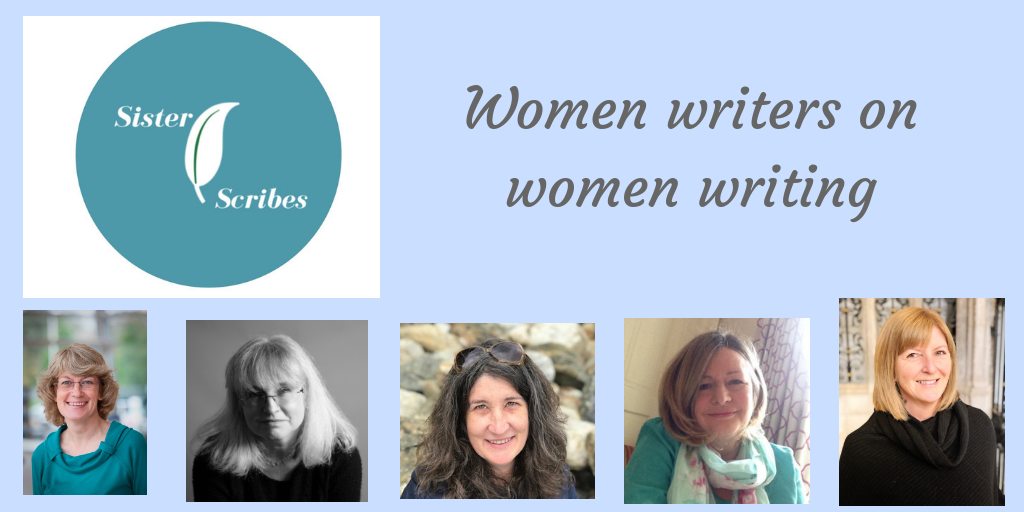
SISTER SCRIBES: JANE CABLE ON CONTRADICTIONS AND RABBIT HOLES

For the first time in my writing life I am going back a couple of centuries. Not just with a glance over my shoulder, but really, properly back. With a good half of the novel taking place in 1815. It’s frightening – and exciting – and it’s requiring a great deal of research.

My research is centred on one family, their homes and their business interests. From that point of view, it should have been easy. Their country estate is in the hands of the National Trust, their town house still exists (albeit as offices) and their mine was one of the richest in Cornwall. What could possibly go wrong?

I knew before I started that nothing existed on the ground to show where the mine buildings once stood. I’ve walked past the field in roughly the right place numerous times, and apart from a few lumps and bumps, which may or may not be indicators, there is nothing there. What I didn’t expect was that the mine itself has almost completely disappeared from the records.

There is a portrait of the owner though, and a copy of it is in St Agnes Museum. It’s labelled as showing Ralph and his mine captain, with the mine in the background. Perfect. Except the original of the same painting in the Royal Cornwall Museum says it’s Ralph’s father, and that the mine is unknown. When I eventually found some corroborating evidence, and given when the artist died, the RCM version is almost certainly right.

This sort of thing has dogged my research. Sources you believe would be credible contradict each other. The National Trust had little to offer, telling me there was some confusion in the records as to which works on the house were completed by Ralph, and which by his son. Other sources claim more precision, but are they right?

My husband thinks this is a good thing, his theory being that if nobody really knows what happened, then no-one will know if I get it wrong. But as far as possible, I want to get it right. And thanks to the wonderful Courtney Collection at the RCM I am making progress. Not only are there some records of the mine (very little of it contemporary, however), but also an article from the 1960s about Truro’s Georgian townhouses. I popped in for an hour or two and stayed all day.

Herein lies the rub. The biggest danger of research isn’t necessarily the inaccuracies, it’s the rabbit holes. Does my story require me to know there were eleven shafts in the mine and their precise locations? I found myself becoming a total bore, pointing out to longsuffering walking friends exactly where they all were and the order they were dug. And how much a share in the mine was worth and how that was calculated. And the ages of the pumping engines. No, no, no. Completely irrelevant.

But all the same, it helped me to paint a picture, and some very useful facts did emerge. Like the mine was closed in 1814. It reopened later, but my novel deals in a very thin slice of time. And actually, the fact it was temporarily abandoned suits my story very well. Now I need to sift and sort through the rest of the information covering many pages in my notebooks, to work out what might be right – and what I actually need.

Oh, and I need to avoid any more rabbit holes and actually get writing.

My Writing Process – Ada Bright

First, thank you very much to Frost Magazine for inviting me to be here, specifically during this week which is quite a big deal for me!

My name is Ada Bright and I am a writer born, raised, and still living in Southern California.  I make a point of it because I’ve learned that alot about me can be traced to this little factoid. I am laid back about life and stressed about that three pounds I gained in 2017, I don’t own a coat that can withstand temperatures below 68 degrees Fahrenheit, foodie menus float my boat, and I am very leary of how you store your dishes considering the fact that I’m ready for the earth to roll and shake beneath my feet at any moment. Also, I’m married to a very cute, blue-eyed guy who gave me no blue-eyed children (0/3), I have a photography following, and my mother lives with me and still does my laundry (but none of this stuff can be blamed on California living).

Today, September 12, Canelo Digital Publishing is releasing a book I wrote with British-born-and-raised Cass Grafton called The Particular Charm of Miss Jane Austen. It is the first book we’ve written together, but it’s sequel will follow shortly behind – being released in November of this year. The tagline for our first book is “a comedic tale of time-travel and friendship” and honestly, that about sums it up. Cass and I have been friends for nearly two decades and the many varied and often hilarious differences we’ve discovered in how our two cultures have shaped us is as much at the heart of this book as our love for Jane Austen’s novels.

Even as we work on the marketing for these novels (and start outlining a third in the series), I am also working on a romantic mystery set right in the US. This is quite a shift to try to work alone. I realize that what Cass does effortlessly (keep in mind the structure and order of the story throughout) I struggle with. My natural rhythm of writing is to compose a scene in my mind almost entirely, then write it all on the page in one quick lump of words (after that initial rush, I’ll slowly revise everytime I read through it). Therefore, I jump around from scene to scene as the inspiration strikes. Since I don’t have Cass to give me order, I’ve been meticulously writing scenes on sticky notes and moving them around on the floor to figure out the order they need to go in. It’s been fun and overwhelming and a bit of a housekeeping mess, but I think, in my own meandering way, I’ve found a way to thread it all together. 

Writing is like that for me. I write because the words give structure to my mind. I wrote as a child to understand my feelings and my choices. I wrote as a teenager to entertain my peers with “friend fiction” (Yes, that boy at the mall who took your lunch order did fall in love with you immediately! Or, even if he didn’t, I’ll write a story that will make you feel like he did). I write today because I hope that what makes me feel excitement, joy, and love will entertain others as well. 

Thank you again for having me, Frost Magazine! 


The Big Five-0 By Jane Wenham-Jones | Book Review

the big five O , book, book review, Jane Wenham-Jones

I was very excited to receive this book. It has a great cover and looks like fun. The fact it is about women turning fifty also made me happy. Older women are underrepresented in books in my opinion.

The book itself is fantastic. Every character is well-written and interesting. The story keeps you entertained and guessing. This is an enjoyable read that totally engrosses you into the story. Jane Wenham-Jones is clearly a master of her craft. This book is just perfect. I hope it gets made into a film. 

Four friends are planning a joint 50th party the seaside town of Broadstairs will never forget, but these 49 year olds have far more on their minds than canapés and balloons for their half-century.

Empty-nester Charlotte wants to know what her husband’s up to.

Single mother Roz fears her teenage daughter will discover how she pays the bills.

Tough businesswoman Fay crows about her no-strings toy boy but hides the real story behind her divorce.

Singleton Sherie’s cat is the only male in her life who ever stays around. Or is he?

They’re all keeping secrets but as the big birthday looms, the beans are about to spill. As the shocks come out, one of them is going to need her friends more than ever.

Is fifty the new thirty? Today’s fifty-somethings lead very different lives from fifty-something women even one generation ago. Jane Wenham-Jones writes with insight and humour about the challenges today’s mid-lifers are grappling with – relationship wobbles or break ups, making ends meet, juggling the demands of offspring and elderly parents, health scares and the minefield of finding love.

All of Jane’s books feature issues she has faced – and life has a way of reflecting fiction, too. Several times she has found herself dealing with serious issues soon after she’s started writing about them.

Jane’s characters meet their own problems head-on in this very funny and relatable book.

The Big Five-0 by Jane Wenham-Jones, published 19 September 2019 by HarperImpulse, paperback, £8.99.

Jane Wenham-Jones is a well-known author and journalist who regularly appears on radio and TV. She has written for a wide variety of magazines and newspapers, is a regular columnist for Woman’s Weekly and the agony aunt for Writing Magazine.

She has published six novels: Raising The Roof, Perfect Alibis, One Glass Is Never Enough, Prime Time, Mum in the Middle and The Big Five-0, as well as three non-fiction books – Wannabe a Writer? and Wannabe a Writer We’ve Heard Of? plus a humorous diet book, 100 Ways to Fight the Flab and Still Have Wine and Chocolate.

Jane also works the after-dinner circuit, talks to writers groups and conferences, and has worked as a celebrity speaker for P&O. She has hosted the Romantic Novelists’ Association’s Romantic Novel Awards – the annual awards for the best in Romantic Fiction – for the last nine years, and presented hundreds of events at literary and book festivals in the UK and abroad. Jane lives with her family in Broadstairs, Kent, where three of her novels are set.

The Big Five-0 By Jane Wenham-Jones is available here

HarperImpulse, 19 September 2019,  paperback, £8.99

The Escape Act – A Holocaust Memoir UK Tour: 23rd September – 29th October 2019

Image credit: Asaf Sagi

The spectacular true story of how a Jewish acrobat escaped the Nazis by running away to join the circus!
Based on the true story of Irene Danner-Storm, The Escape Act – A Holocaust Memoir tells the riveting and powerful story of a Jewish acrobat who hid in a German circus during WWII to escape the concentration camps. Hard-hitting and inspiring, this historically researched and poignant onewoman theatre and puppetry production embarks on a UK tour this autumn.
The production follows Irene’s journey from Kristallnacht in 1938 to liberation in 1945, and her all too risky escape to the circus. It’s the story of how she fell in love and started her own family, all under the protection of the Althoff Circus. It is about the immense kindness shown towards Irene by the non-Jews who risked their lives to save her and inspects the devastating impact of the Holocaust on individuals and families who were torn apart.
The performance flits from past to present as it simultaneously examines Irene’s life under the Third Reich and the experiences of writer and performer Stav Meishar growing up a grandchild to Holocaust survivors. As Meishar tells Irene’s story it triggers her own memories of family stories, and she is compelled to face the past traumas and struggles of their history.

Image credit: David Konecny

A multi-faceted performance combining theatre, circus and puppetry, the performance is a
culmination of seven years of research into the lives of German-Jewish circus families between 1929- 1945. Using collected testimonies and interviewed witnesses, the production is brought to life by Meishar in an effort to document and commemorate the Jewish legacies.
Creator and Performer Stav Meishar comments, I felt compelled to make this work of historical circus-theatre in light of the current climate. With statistics showing 1 in 20 Britons disbelieving that the Holocaust happened …’

In addition, the tour is accompanied by a public talk about the history of Circus Jews in Europe
Between the World Wars; interactive circus and drama workshops for all ages; audience Q&As; and
more, which are all available to book in advance.

The Escape Act is produced by Dreamcoat Experience and Petite Mort Productions, and supported by
Arts Council England, The European Cultural Association, TelepART and The Puffin Foundation.
Title The Escape Act – A Holocaust Memoir
Running time 75 minutes
Box Office Tickets are available from individual theatre box offices.
Twitter #TheEscapeActShow
Guidance Suitable for ages 10+ (Viewer discretion advised)
Performance Dates
23rd -24th September Jackson’s Lane
269a Archway Road, London, N6 5AA

Home


26th September Circomedia
Portland Square, Bristol BS2 8SJ, UK

Home


26th – 27th October CircusMASH
2 Vicarage Road, Kings Heath, Birmingham, B14 7RA
https://www.brownpapertickets.com/event/4311021
29th October The Lowry
Pier 8, The Quays, Salford M50 3AZ
https://thelowry.com/

The Day we Meet Again by Miranda Dickinson reviewed by Natalie Jayne Peeke


Phoebe is getting ready to go on the trip of a lifetime, a year long journey across Europe. She’s having second thoughts…..again , even her friends don’t think she will go . When she arrives at St Pancras station she is met with a delay with no end in sight . This has to be a sign that she’s not meant to go, right ? Then she meets Sam .

Sam is leaving London for a year and is going back to the small island of his childhood to find out what he can about his father who abandoned his family when Sam was young . It’s a trip that Sam knows he has to take , doesn’t he ? Then he meets Phoebe.

I am not a romantic, I do not believe in love at first sight, I do not believe that you can fall in love with someone just hours after meeting them. Call me cynical if you must .

So naturally I tend to stay away from the romance section. However I decided to give ‘The day we meet again’ a go. What attracted me to it was the fact that it was different from other ‘Boy meets girl’ books. Phoebe and Sam meet just as they are about to go on year long trips.

They spend a few hours with each other, talking , laughing and discussing what they have in store for the next twelve months. Their trains are ready to leave so they make a promise to each other that if they both still feel the same they will meet again in exactly one year.

I loved the fact that it’s written from both Sam and Phoebe’s point of view. I felt like I was enjoying coffee and sunshine in paris with Phoebe one moment and the next I was on a windy little island with Sam.

A beautiful story of adventure, taking risks, friendship and of course – love.  

The Day we Meet Again  by Miranda Dickinson  paperback £7.99

Review: Natalie Jayne Peeke www.thebookwormmother.co.uk

My Writing Process – Ruthie Lewis

Ruthie Lewis is the latest author in the series How I Write, which gives readers, and other writers, an insight into the minds of writers. Not only how they think, but how they work. However, this is a writing process with a twist because A.J. MacKenzie and Ruthie Lewis are pen names for the husband-and-wife writing team of Marilyn Livingstone and Morgen Witzel. They also write non-fiction under their own names. 


We grew up in Canada, where we met at the University of Victoria. We come from quite different backgrounds. Marilyn grew up in towns and city suburbs in Ontario and British Columbia, whilst Morgen’s parents lived in the wilds of northern British Columbia. Same country – two hugely different lifestyles! We married nearly 40 years ago and had a long honeymoon in Europe. Back in Canada, Morgen did his MA in Renaissance history, while Marilyn waited until we had moved to the UK to continue her studies at University of London (MA in medieval studies) and the Queen’s University of Belfast (PhD in medieval economic history).

After moving to the UK we lived for a year in London, thirteen years in rural Kent and for the past nineteen years in very rural west Devon. Marilyn is a keen singer and musician and occasional composer, an A-level examiner and governor of a group of primary and secondary schools, Morgen tries never to miss Test Match Special, teaches at business schools and works as a Fellow of the Royal Literary Fund. He is also a trustee of two local charities.

Morgen has written books on management history, leadership and ethics. Marilyn’s solo writing has been academic book chapters, articles and reviews about the agricultural economy of early 14th century England. Our first joint work was The Road to Crécy: the invasion of France in 1346 (2004) followed by The Black Prince and the Capture of a King, Poitiers 1356 (2018). Our A.J. MacKenzie novel was The Body on the Doorstep published by Zaffre in 2015, the first of three historical crime novels set in Romney Marsh during the smuggling era and the French Revolution (the others The Body in the Ice and The Body in the Boat). A J MacKenzie has another series set during the War of 1812 in Canada, published by Canelo (The Ballad of John MacLea, The Hunt for the North Star and forthcoming Invasion). Our first Ruthie Lewis novel, The Orphans of Bell Lane came out in August 2019 and is our first foray into historical sagas.

The Orphans of Bell Lane has a place dear to our hearts as some of the situations and locations are based on family history. It has been wonderful to bring that to life. We also love the Hardcastle and Chaytor mysteries, and hope to return to them soon.

Our writing process

It may be because there are two of us, but so far no two books have developed in quite the same way. This is partly for practical reasons; the person with the most free time will take on necessary jobs. For our first non-fiction work we wrote in the same room, sorting through the original sources with one of us keying in text. Otherwise, sometimes, we each write individual chapters or groups of chapters and then edit each other’s work to create a unified voice. Sometimes one person takes on the first draft and the other does a strong edit to ensure continuity of language, tone, voice and so on. Often one of us will have a very strong idea for a particular chapter and want to write that.

One thing that is important for all of our fiction is the final read through of the final draft. We do this in our sitting room, in facing armchairs, with a draft on our laptops and we read the book out to each other. One of us is responsible for making changes on the master text. The presence of at least one cat is crucial to this process, although we keep the dog out as he is still young and wants to play. (His role as editorial assistant is crucial as he gets us out to walk each day; walking is great for plot development too!)

Planner or Pantser?

We are very much planners. We spend longer on planning, character development, location research, plot development etc than we do on actual drafting. We find this a most enjoyable part of writing and we often do it out of our offices: on Dartmoor, on the beach, lazing in a garden in France, sometimes during long car journeys. Our planning document can take as much as a quarter the length of the eventual novel. We spend a lot of time on the background and back stories of our characters and we have full descriptions of the main character, not just what they look like, but how they move and sound, and how they think. This helps a great deal when writing dialogue.

Structure?

We start with a rough story arc followed by a basic chapter structure. We then develop a more detailed chapter outline guides the initial draft. And, we always have a sequel or series in mind as we write.

What do you find hard about writing?

One of us finds settling to writing more difficult and will procrastinate before starting, the other dives straight in. Mostly, though, the hardest thing is carving out enough time to do it…

What do you love about writing?

One of us particularly loves the character development part of the process, while plotting is the favourite bit of the other (not going to tell you which is which!)

Advice for other writers.

Try to write something every day, no matter how short. It is easy to drift and find that you have not written for days, and that makes it much harder to get back into it. The other piece of advice is that walking is a great aid to planning and plotting, and will often help to clear a log-jam that seemed insurmountable.

The Orphans of Bell Lane by Ruthie Lewis. Published by Zaffre, 22nd August 2019, Paperback, eBook and audio.


Elastoplast ‘s latest Plasters featuring famous characters – what’s not to like?

These  arrived on my desk, and having seen my two year old grandchild running full pelt, before tripping, I thought it a great idea.

Pic


Take a look at Elastoplast’s,  the UK’s leading plaster brand,  new range of ‘PAW Patrol’ plasters which feature all famous characters from the hit animated pre-school series – Chase, Skye, Marshall, Rubble, Zuma, Rocky and Everest. Elastoplast children’s plasters are especially developed for the sensitive skin of children. The plasters are dirt and water resistant. They are very skin friendly and easy to remove..

But don’t forget to put Elastoplast Wound Spray into your rescue pack. This cleans and prepares the wound. Apart from anything else,  the tot will be so fascinated tears will be forgotten.

Then the plaster, best not to stretch, and heavens – no creases.

Then Elastoplast also have healing cream which you might consider applying.

Almost worth coming a cropper.

Nickelodeon PAW Patrol Plasters: RRSP: £2.90*