Orb Gaming – Retro Console from Thumbs up. Such a blast… By Annie Clarke


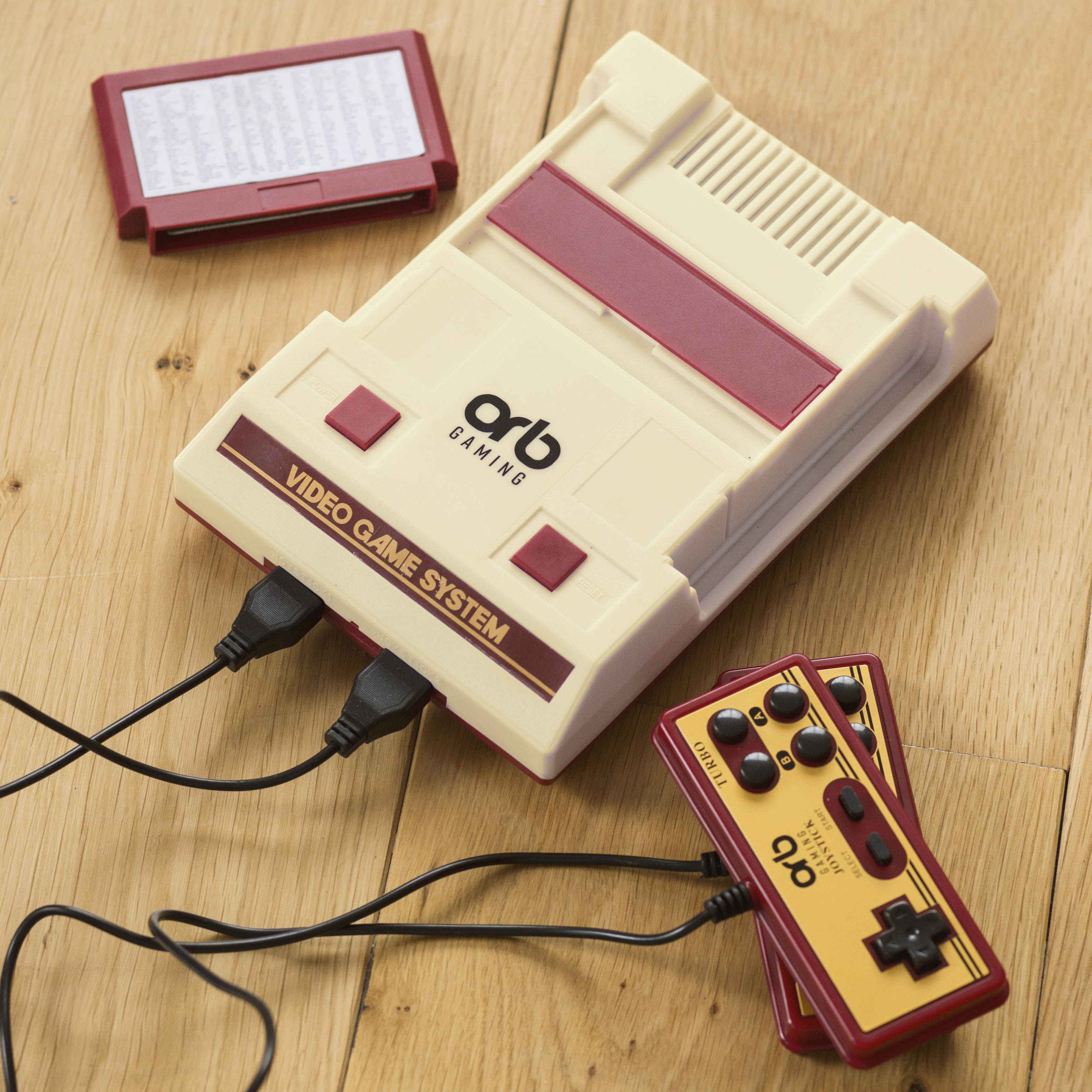
One of our reviewers loved this retro Console by Thumbs Up Look at it, doesn’t it bring back memories, or aren’t you as old as I am. If that’s the case, then enjoy the newness of this image.

Our reviewer and his mates played over the Bank Holiday – well, it was raining much of the time and they had hours of challenging gaming.

Looks good, works well. And packed with over 274 16-bit games: shooting arcade, puzzle and sports activities what’s not to like.

Nostalgia is big at the moment, and this is state of the art nostalgic gaming. It flew high in the 80s. Could well repeat now: fun but tense, they loved it.

This plugs directly into your TV, has two controllers for multi-player use. RCA and power cables included. It will make a fabulous present.

Orb Gaming Retro Console, £34.99 from Thumbs Up.

Annie Clarke’s new novel Girls on the Home Front is published on 29th May

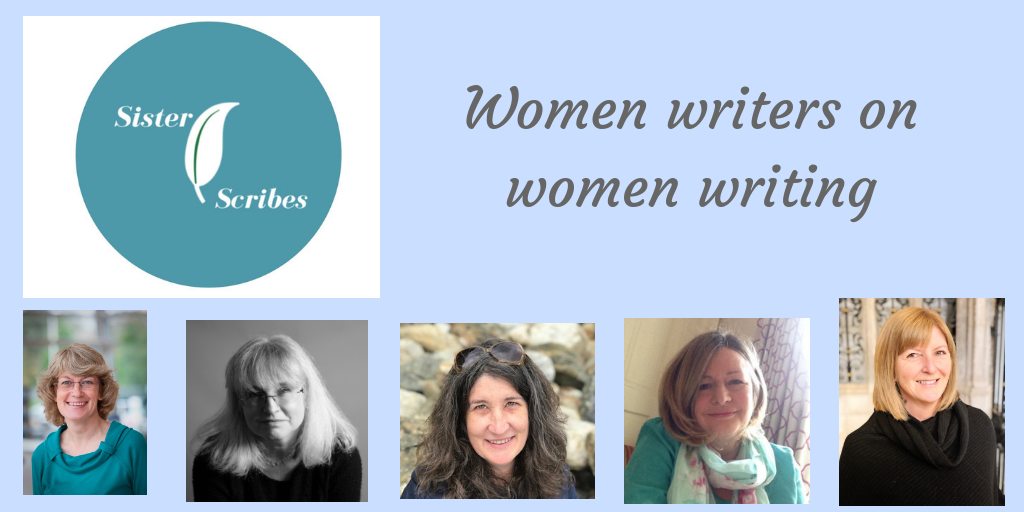
SISTER SCRIBES GUEST: ALISON KNIGHT & JENNY KANE ON CREATIVE CONFIDENCE

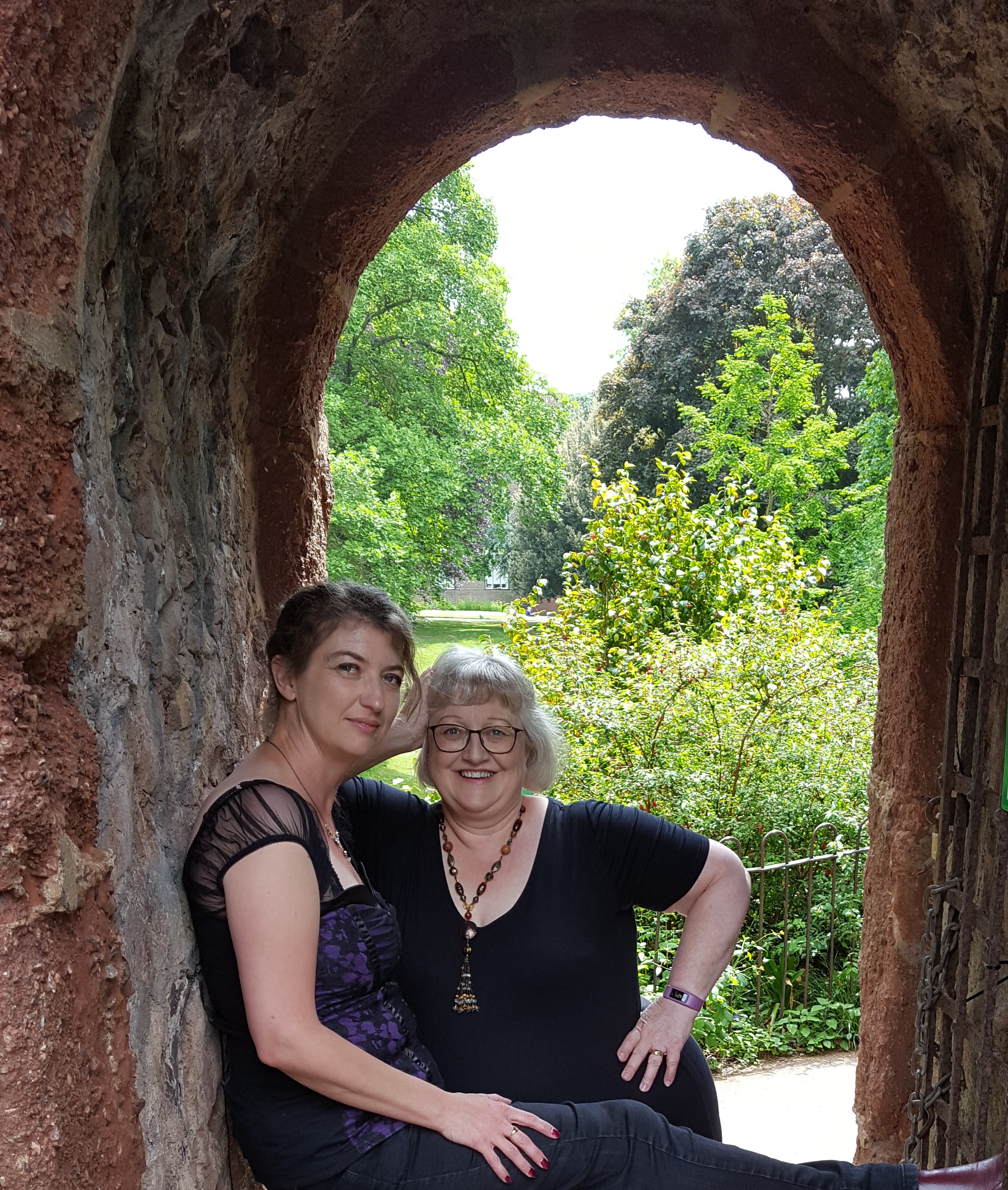
I’m so pleased to be able to welcome two fabulous writers to Frost today.  Alison and Jenny have come on to tell us all about their latest venture  Imagine, a creative writing business that encourages new writers to have confidence in their work. With a huge (and I mean huge) breadth of experience and wisdom, they are two of the nicest women you could ever hope to meet. 


Writing is a solitary occupation so it’s good to have a permanent cheerleader to help you through the bad days and celebrate the good days (and friends and relatives don’t count because they tell you what you want to hear). We’re really lucky because when we met at a Romantic Novelists’ Association meeting, we hit it off immediately and have since become business partners.

Imagine Creative Writing Workshops was born amid much laughter and copious quantities of mint tea and black coffee. For the past two years we’ve been teaching courses and workshops in Wiltshire, Somerset, Devon, Cornwall, Wales and London and have gathered together over one hundred regular students aged from six to one hundred and four!

Our aim is not just to teach people to write but to give them the confidence to write. So many talented people don’t follow their dream of being a writer just because they lack confidence. For us, there’s a certain magical quality in seeing our students develop their skills and produce work they can be proud of. It’s a privilege to be able to watch new writers go from their first writing exercise to completing the first draft of their novel.

The highlight of our year is our residential writing retreat every October at the splendid Northmoor House, a Victorian manor with lots of original features on the edge of Exmoor. There, everyone has the time and space to write with our support and the camaraderie of other writers as well as excellent food and visiting guest speakers.

Between the two of us we write nine different genres, including historical crime, contemporary fiction, YA adventures, family drama and romance. To avoid confusion (or is it to confuse ourselves?) we use five different pen names! We like to think that our broad range helps us to help our students.

When it comes to our own writing it’s nice to be able to depend upon each other for honest opinions, beta reading, and a firm kick up the backside as and when is necessary. We haven’t come to blows yet and are looking forward to the continuing Imagine adventure.


Alison’s Bio

I’ve always enjoyed writing and in my forties decided I wanted to learn more about the craft. I studied at Bath Spa University and Oxford Brookes University, achieving a first class degree and an MA in Creative Writing. I’ve been teaching for four years now and have had three books published – two contemporary romances and a YA time-travel adventure. I’ve two further books completed – a second YA book and a family drama set in 1960s London – and I’m currently working on more contemporary romances. I also work as a freelance editor. I live in Somerset, within sight of Glastonbury Tor.

Jenny’s Bio
Lucky enough to be a Costa writer in residence, I spend my days in Devon within easy reach of coffee, writing contemporary fiction, romance, and children’s picture books. I also write medieval mystery novels and audio scripts for ITV as Jennifer Ash. Occasionally I masquerade as award winning erotica writer, Kay Jaybee. Over the past 14 years I’ve accumulated over 200 publications, including 21 novels. I’m published by Accent Press, LittwitzPress, Mammoth, Penguin, and Spiteful Puppet.

Imagine: www.imaginecreativewriting.co.uk


Interesting launch of very special editions of Mrs Dalloway: Reviewed by Annie Clarke

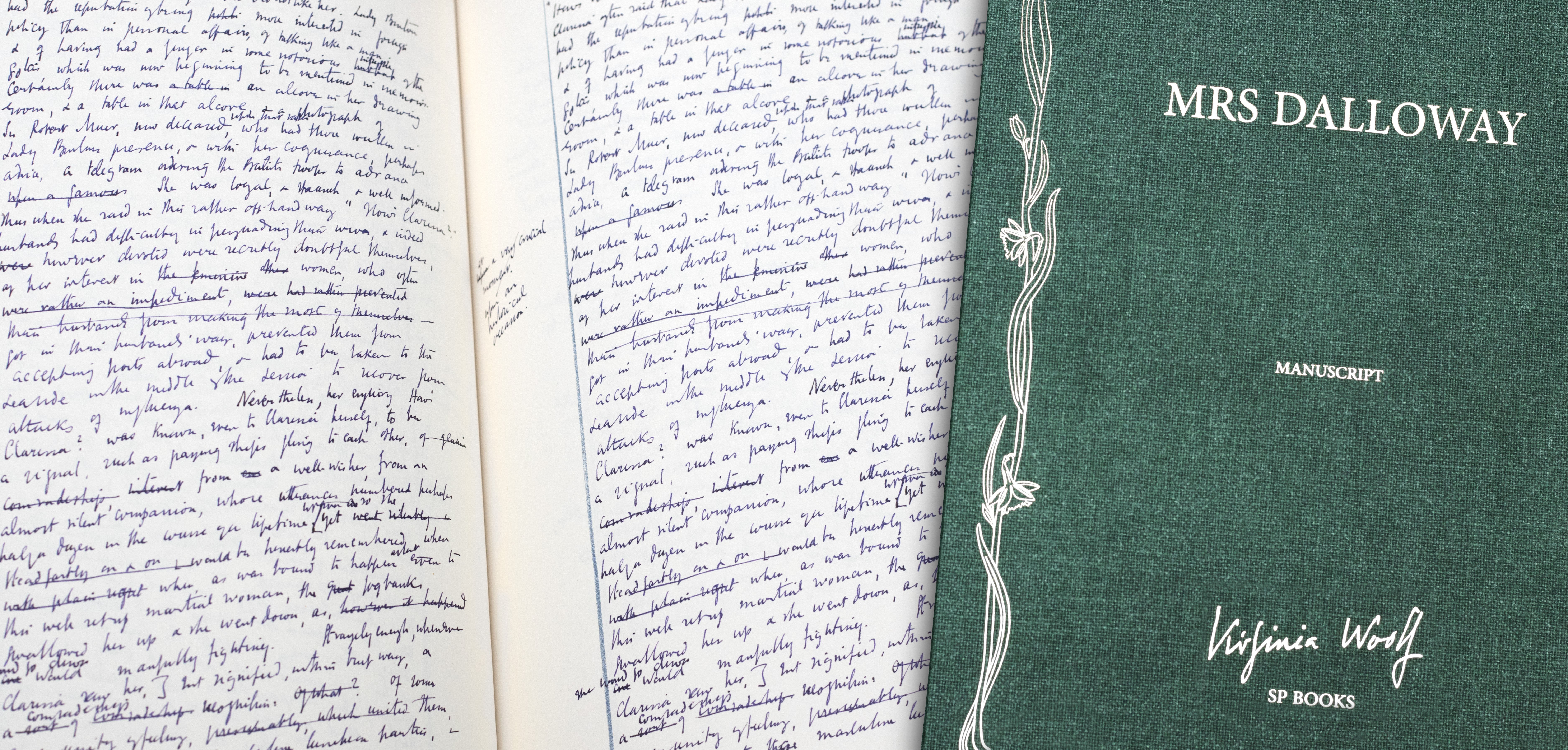
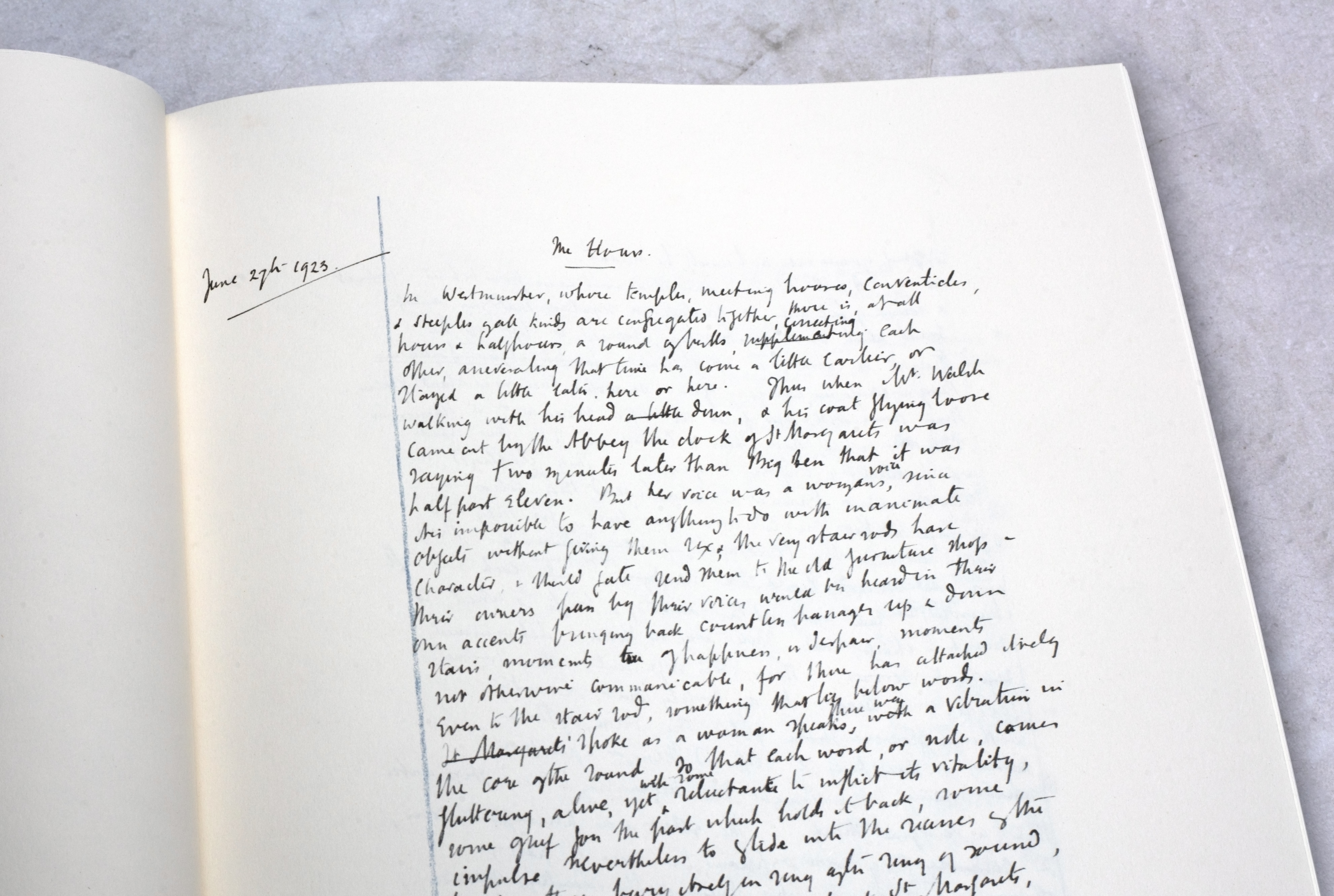
Three limited edition books (hand numbered from 1 to 1000) of Mrs Dalloway is released on 3rd June  by Parisian publisher SP Books. These bring together the three handwritten notebooks in which Virginia Woolf wrote the classic text in one pretty special hand-bound edition.

The volumes represent a return to ‘slow reading’ in a digital age, offering an intimate insight into the writer’s mind and thought-process, and giving new life to a well loved classic.

The interesting manuscripts includes revisions, crossed out passages and personal memos in the margins in Woolf’s own handwriting, and are of interest in their own right as a design object, the perfect coffee-table centrepiece or addition to a curated bookshelf.

Over the course of time between June 1923 and October 1924, Virginia Woolf wrote in three notebooks the first full-length draft of what was to become Mrs Dalloway

Clarissa Dalloway had already made several appearances in Woolf’s writings, in her first novel The Voyage Out and the short stories ‘Mrs. Dalloway in Bond Street’ and ‘The Prime Minister’. In a diary entry for October 1922, Woolf notes that she planned to write a novel about ‘Mrs Dalloway seeing the truth’, in which her heroine was supposed to commit suicide. Yet in her notebooks, Woolf develops the story of another character, shell-shocked war veteran Septimus Warren Smith, the anti-Clarissa that ends up committing suicide in her place. To fax your documents or files in a better and a more medern setup you can click here to find out more

Woolf would write in her diary of Mrs Dalloway:

“I meant to write about death, but life came breaking in as usual”. Thus the draft of  The Hours,intended to be a narrative about London after WWI, develops into the parallel lives of Clarissa and Septimus, in a London at once restored to itself and irrevocably changed by the war.


In 1941, after Woolf’s death, her husband Leonard Woolf sent the manuscript of ‘The Hours’ to her friend and lover Vita Sackville-West, who kept it until her own death in 1962. A year later, it was purchased by the British Museum Department of Manuscripts, now part of the British Library. ‘The Hours’ represents the only full-length manuscript draft for ​Mrs Dalloway, revealing different initial versions of the final text.    Leonard describes the notebooks in which Woolf wrote her text as bound in the ‘coloured, patterned Italian papers’ of which she was very fond. The volume shows the substantial additions, changes and corrections that Woolf made to her manuscript, revealing her creative process in flowing purple ink. Woolf draws pencil margins on each page of the notebooks, in which she records the date, word count and many other insertions, sometimes including personal memos and notes for her essays.

The notebooks reveal Woolf’s hesitation between two possible titles, recording the shift by which Clarissa Dalloway becomes the central focus of the novel. Initially titled ‘The Hours?’, the work is renamed ‘The Hours or Mrs Dalloway’, before settling on ‘Mrs Dalloway (or The Hours)’ in the third notebook. The manuscript also reveals an alternative opening describing the bells and temples of Westminster, which is revised in the second notebook to the well-known inaugural line: ‘Mrs. Dalloway said she would buy the flowers herself.’

The text is accompanied by two essays by leading Woolf experts. Helen Wussow, dean at The New School, New York, has published an edited transcription of ‘The Hours’ entitled ​Virginia Woolf ‘The Hours’: The British Museum Manuscript of Mrs Dalloway’ (New York: Pace UP, 1996). Michael Cunningham is an American novelist and screenwriter, author of Pulitzer Prize-winning The Hours (1998), based on the life of Virginia Woolf and inspired by Mrs Dalloway.

SP Books  is an independent and acclaimed publishing house founded by Jessica Nelson and Nicolas Tretiakow in Paris in 2012, specialising in the publication of limited facsimile editions of manuscripts from some of history’s most renowned authors such as Jules Verne, Lewis Carroll, Jean Cocteau and Charles Baudelaire.

Each limited edition book is hand-numbered from 1 to 1000, and from 3 June is available for £180 from spbooks.com. An exclusive foreword from Pulitzer Prize-winning author Michael Cunningham is printed alongside the manuscript.   RRP: £180 www.spbooks.com

Images courtesy of sp books

Annie Clarke is the author of Girls on the Home Front.

SISTER SCRIBES: MAY READING ROUND UP

Jane:

My book club selection for May was Monica Ali’s Brick Lane. Now I know most of the world read it when it first came out in 2003 but it somehow passed me by – and I have to say that it’s aged very well. Which I suppose is the sign of a true classic.

It’s a book that threw me into a culture that was on my doorstep when I lived in London in the 1980s but I knew nothing of. It tells the story of Nazneen, a young Bangladeshi woman who comes to England in an arranged marriage to an older man and charts the changes both in her life and that of the immigrant community around her. It’s a richly painted tapestry of experiences which, while not surprising to me, were worlds – if not miles – away from my life. Sometimes that can be an uncomfortable experience, but the characters were so rounded and real the book was an absolute joy and I thoroughly recommend it.

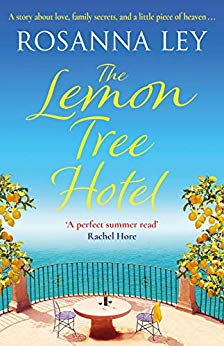
By way of setting, Rosanna Ley’s The Lemon Tree Hotel was a complete contrast. Rosanna is one of my favourite authors so this book was always going to be a pleasure. The story wraps itself around the lives of four Italian women; a grandmother, mother, daughter and close family friend, and although there are secrets and love and a few surprises along the way, it is the bonds that unite – and divide – them, which give the story its impetus.

The relationships between the women in The Lemon Tree Hotel are real, not saccharine in any way. The issues that arise within families, the conflicting loyalties, the misunderstandings but overall the love, whether easily expressed or not. All these and more play out between the generations as change creeps into the beautiful village of Vernazza.

In many ways this book was as different as it was possible to be from Brick Lane, but in both the women stand centre stage across the generations and the skilful way their lives are played out by both authors is what keeps you reading to the end.


Susanna:

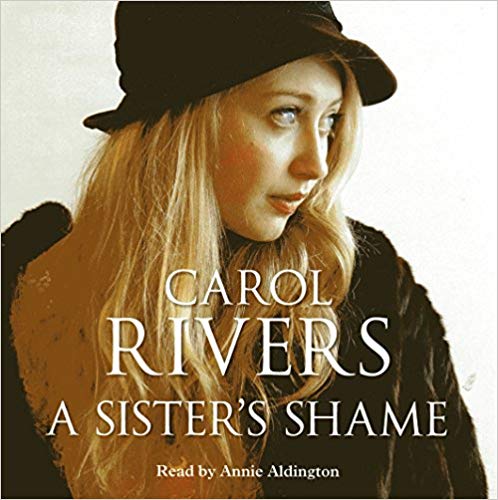
With A Sister’s Shame Carol Rivers has constructed a dramatic and involving plot in a detailed and atmospheric setting. There is an undercurrent of menace throughout and my fingers itched to give Vesta a good shake as, blinded by love and ambition, she threw herself headlong into the new life everyone warned her against.

This is also a tale of relationships in various forms – the bond between twins; long-lasting friendship that turns friends in family; and romance, both real and imagined, one leading to lasting love, the other to a relationship based on control.

Having read and enjoyed A Sister’s Shame some time ago, this time round I listened to it, read by Annie Aldington, who is an experienced and skilled narrator, who brings character and atmosphere to the telling.


Kitty:

This month I haven’t read as much I would like but I have discovered the joy of the audiobook, which I’m finding so addictive that I’m not getting much else done. That, of course, is Susanna Bavin’s fault for her excellent new book, The Sewing Room Girl, which I can’t stop listening to.

I did however have the pleasure of reading the second in Terri Nixon’s Penhaligon series, Penhaligon’s Pride and once again loved the way she describes the elemental nature of Cornwall and the strength of communities within it. A fabulous book.

I also read Mary Jane Baker’s A Bicycle Made for Two, a romcom set in Yorkshire and written with such sharp wit that she had me giggling loudly. She is now one of my favourite authors within the genre.


A PUBLISHER’S YEAR: MAY – CRIME, CONTRACTS, ASSISTANCE

May saw Caoimhe and I head off to represent Sapere Books at our first ever CrimeFest in Bristol. Two of our lovely authors were speaking on panels; newly-appointed Chair of the Crime Writers’ Association, Linda Stratmann, and co-founder of Crime Cymru, Alis Hawkins. The Friday evening saw the announcement of the longlist for the first ever Sapere Books Historical Dagger Award. I can’t wait to get stuck into them all! You can see the longlists for all of the CWA Daggers here: https://thecwa.co.uk/wp-content/uploads/2016/05/CWA-Dagger-2019-Longlists-3.pdf

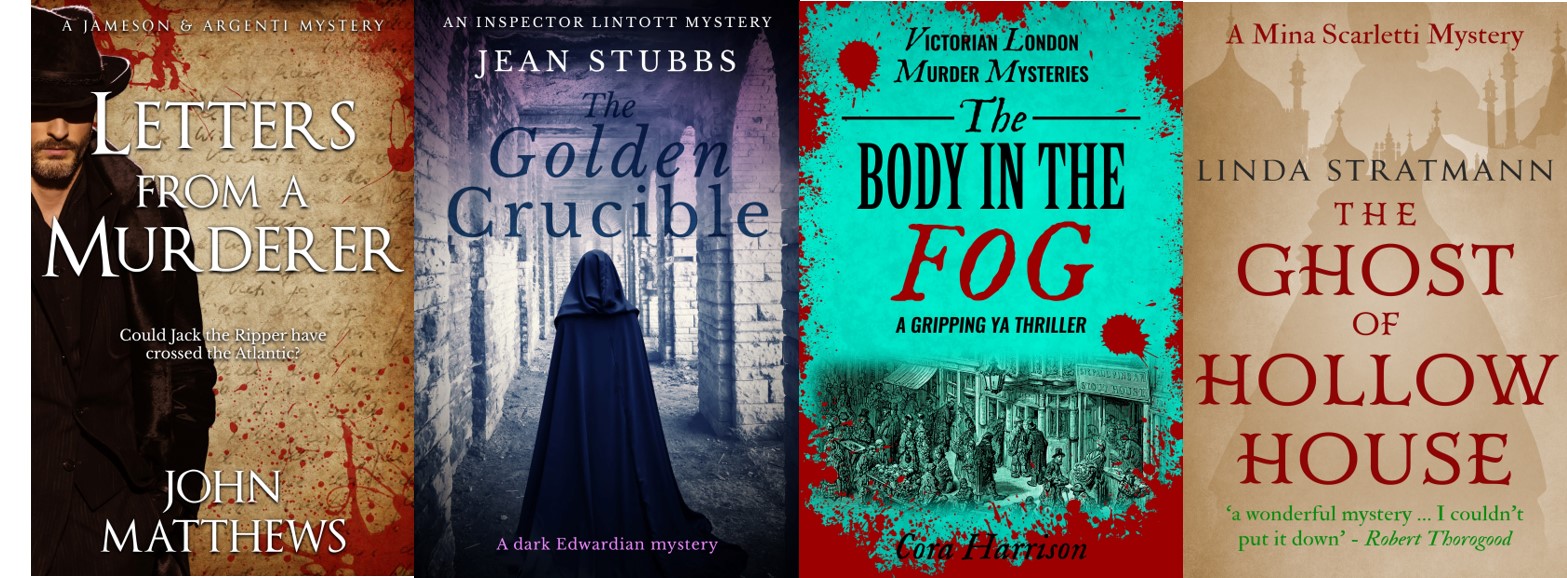
May saw the release of eight of our books: four books in Cora Harrison’s Victorian London Mystery series; Linda Stratmann’s latest mystery, THE GHOST OF HOLLOW HOUSE; the first in John Matthew’s historical thrillers, LETTERS FROM A MURDERER; the third Inspector Lintott mystery by Jean Stubbs, THE GOLDEN CRUCIBLE; and the penultimate cosy crime novel from Elizabeth Lemarchand, WHO GOES HOME?

We also signed two new authors to our family. We’ve contracted Sean Gibbons for a three-book deal of a series of crime books set in Galway City. We also signed a four-book detail with Natalie Kleinmann for her Regency romance novels.

And we can finally reveal our new Editorial Assistant! Natalie Linh Bolderston will be joining us from June 10th, and we can’t wait! We have lots of books in various stages of production, so she won’t be short of work – but we’ll try not to scare her off! Hopefully I can persuade her to check in with next month’s blogpost to let you know how she’s getting on!


Amy Durant

Follow Natalie on Twitter @NatBolderston

The Doll Factory: Historical Fiction for the ‘Me Too’ Era

‘The Doll Factory’, by Elizabeth Macneal, is published by Pan Macmillan.

I’ve never really considered myself the jealous type. And yet, yesterday – having finished the altogether best book I have read in possibly years – I found myself to be unequivocally, admittedly just that. Jealous. But, also awed, inspired and (isn’t it always so with a favourite book?) almost satisfied.

Because, well, this. This is the kind of book I’d want to write. Because it’s exactly the book I wanted to read.

We follow Iris: twin, shop girl, would-be artist. Dreaming of escape from the drudgery of working-class respectability she feels imprisoned in. Enter Louis, a spirited young painter who could offer just that. But is that all she has to contend with? Silas, a taxidermist with an obsession, has developed other ideas. It is a tale of possession, power and intrigue, with just the right measure of romantic relief.

Set in the possibilities of 1850, smack bang in the time of the Great Exhibition, The Doll Factory captures all of the aspects of Victorian London that we are most familiar with. The poverty, the degradation, the prostitution. Charity, ingenuity, opportunity. The constant framework of class. And art. Lots of art. The nothingness and the excess.

Aside from personal penchant – as a long-time fan of neo-Victorian literature, this romantic thriller was bound to appeal to me – Elizabeth Macneal’s debut boasts all the ingredients of a stunning success. Compelling characterisation, clever plot lines, and the seamless blending of historical accuracy with imaginary detail. Macneal’s world comes vividly alive and the thrill is deliciously real.

And a success it is proving to be. Macneal’s novel won the 2018 Caledonia Novel Award, is a Sunday Times top ten bestseller, and the TV rights have already been sold. And it’s not even out in paperback yet.

But more than that. There is a very modern edge to this story. At its heart, it is a story of womanhood, it is a story of breaking bonds and forging new ones, and it is a story of escape. And of course, the universal themes; life, and death.

And it is perfectly on point for the post ‘Me Too’ consciousness that we are living in. One particularly poignant passage conveys the male power that Iris feels threatened by, the paradoxical standard that women are held to; one that women are pushing against even now, two centuries later:

 ‘… all her life she has been careful not to encourage men, but not to slight them either… an arm around her waist is nothing more than friendly, a whisper in her ear and a forced kiss on the cheek is flattering, something for which she should be grateful. She should appreciate the attentions of men more, but she should resist them too, subtly, in a way both to encourage and discourage, so as not lead to doubts of her purity and goodness but not to make the men feel snubbed.’

Macneal’s Doll Factory. It is romantic, it is considered, and it is thrilling. I’d go as far as to employ that feminist buzzword, ‘empowering’.

Yes. Must read.

Reviewed by Nadia Tariq


SISTER SCRIBES GUEST: MERRYN ALLINGHAM ON HISTORY REPEATING ITSELF

“Researching history… changes our perspective, makes connections.” Historical novelist Merryn Allingham tells Susanna Bavin what she found by delving into the story of the Ottoman Empire.


When several members of my book group announced recently they didn’t like historical fiction, I was disappointed. But stunned when one went on to say she couldn’t see the point of history. For me, discovering the past doesn’t just illuminate quirky corners of a bygone age but helps understand the world of today. When I set out to research the background for A Tale of Two Sisters, a novel set in Constantinople 1905 – 1907, it was the nationalism of President Erdogan that I heard in my head, declaiming that Turkey had once been a great power and would be again.

So began my burrowing into the Ottoman Empire, a regime that lasted over five hundred years. The Ottoman Turks were indeed a great power, wielding influence over territories stretching from the Balkan States to the Horn of Africa. A multinational, multilingual empire, that  ended only after the Great War, when it was partitioned and its Arab region divided between Britain and France – helping to explain something of the Middle East today.

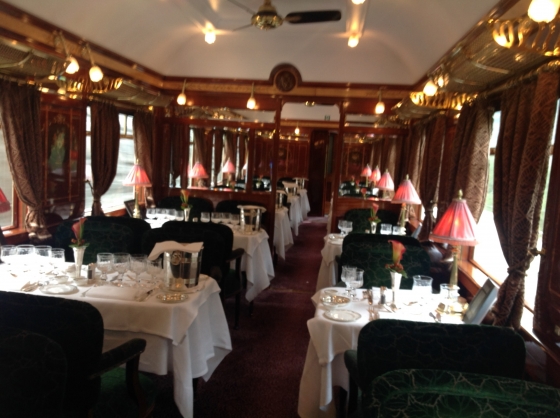
My research wasn’t all political. I had my characters travel on the Orient Express – I’d been fortunate to journey on the train myself, to Venice rather than Constantinople. Cocooned in gleaming blue and gold carriages, art deco compartments and mosaic-tiled bathrooms, I stepped back a century. Today the long journey to Istanbul is a once a year event, but in the early twentieth century it was part of the regular timetable and I gave my heroine the chance of travelling alone for the first time time in her life and to an unfamiliar, exotic destination.
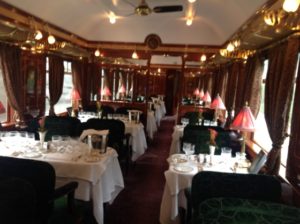
I enjoyed researching old timetables, calculating how many days, how many hours, between one beautiful capital and the next – Paris, Munich, Vienna, Budapest, Bucharest – locomotives changing at every frontier, as one national railway system handed over to another. In all, the train covered a route of more than 1,700 miles before reaching Sirkeci station in Constantinople.

Topkapi Palace was my heroine’s destination and I still retain a vivid memory of my visit there. It was one of many Ottoman palaces in the city, sultans moving their court from palace to palace, often in response to external threat. Even though I saw only a small portion of Topkapi, I was overwhelmed by its opulence and beauty.

For this book, I wanted to dig deeper, wanted to know what life was like for the women who lived there around the  turn of the century. I’d read accounts by a number of intrepid female travellers to the Orient – Lady Mary Wortley Montague, Mabel Sharman Crawford, Mary Lee Settle – and been struck that, almost to the woman, their experience ran counter to the prevailing European stereotype of Turkish women as either decadent concubines or slaves.

Women spent most of their lives within the home, it was true, but within those four walls, they had absolute sovereignty. The harem was a sacrosanct space, not just a place where women were guarded, but a place of retreat to be respected. And if they ventured outside, always with a female companion, they were treated with courtesy. It was considered a sin to stare at women in public, for instance, and if a man behaved badly towards a woman, regardless of his position or religion, he would not escape punishment.

The truth, as always, is mixed. The Ottoman Empire was both civilising and brutal. Slavery continued until the last days of the empire, yet it was time limited for the individual and could be a means of social mobility. The children of the court were much loved, but in the early days of the empire, fratricide was frequent – the Ottomans did not practice primogeniture and male relatives seen as a threat to the potential sultan could be executed or imprisoned.

Researching history complicates that first simple ‘take’ on a culture and a period, changes our perspective, makes connections. And, crucially,  illuminates our own troubled present. Worth paying attention then!

Doo Doo Doo De Dooballs – Sweet Toys for the Littlest Little Ones by Dr Kathleen Thompson


Is it me, or are baby toys getting cuter? I love these sweet ball-shaped animal rattles, suitable for babies from as soon as they can hold a toy.

The set of four balls, each with a different animal face and in different colours, will grab Baby’s attention for sure.  There is a cat, a rabbit, a panda and a bear – personally I love the rabbit, but I’m sure my grandson will enjoy the remaining three.

They are very light, so easy for Baby to hold, and nice and soft to chew or slobber over.  Each has a soft and distinct jingle when shaken.  They are made of a wipe-able fabric for easy cleaning and would make delightful additions to your cot’s soft toy community.

When Baby reaches the throwing stage they will continue to be fun too, hopefully without knocking over too many vases.

They are available at Baby To Love at just  £14.95 for the four.


By Dr K Thompson, author of From Both Ends of the Stethoscope: Getting through breast cancer – by a doctor who knows

http://www.amazon.co.uk/dp/B01A7DM42Q

http://www.amazon.com/dp/B01A7DM42Q

http://faitobooks.co.uk