THE TRUTH ABOUT BULLYING – ALEXANDER WALLIS

Jane Cable: Last week I received an email from an author I used to know when I lived in Chichester. I remembered him as a warm and principled man, a youth worker who’d written a fantasy book with a moral message. He’d contacted me to let me know he’d written a novel about bullying, aimed at teenagers and children. Not my normal read, but I clicked the link to I H8 Bullies anyway. Then I clicked on ‘look inside’. I read two pages and I was compelled, yes, compelled, to buy it.

It’s written from the point of view of a teenage lad in rich yet accessible language. The voice rings true. Alex’s blurb says it’s written for kids who don’t like books, and at only 66 pages short I can believe it. I also think it should be compulsory reading. Which is why I asked Alex to write this article for Frost.


The truth about bullying is that it can rarely be stopped.

The act of undermining others is a survival strategy – however maladaptive – which feeds vampiric ego at the target’s cost. Its excesses are applauded by those who don’t want to be next in the firing line and whose silence (or laughter) serve to timidly collude. Organisations enable rather than contain its flourishing, hierarchical lines supporting those who narcissistically abuse their power.

Nowhere can bullying be better studied than in a school, where adolescence stirs thicker the drama and thinner the consequences. A fully-stocked armoury is available to the teenager who bullies, from opportunity to physically aggress (within the relatively less punitive micro-society of the school discipline system), to ample places to regularly do it and the chance to capture and further torment on social media.

School anti-bullying programmes lean towards ‘awareness raising’, as if this phenomena is not already deeply understood. Since Goliath took up against David, humans have recognised that superior size, privilege or opportunity presents the risk of some throwing their weight around more than they should.

Interviewing students helped me to better understand the experience from the target’s view. Bullying somehow forces an intense self-examination, our own inner critic immediately jumping ship to add to the gang of detractors. Targeted students were not just conscious of the way they looked, but made to think deliberately of how they walked or talked. Thrown into a deep self-critique which often stemmed from an already sensitive and self-conscious life position.

When I began writing I H8 Bullies, my thoughts were initially on my own school experience, decades earlier. Old school bullying more often took the form of a thump to the ear, a pounding by some bigger boys (which we had sometimes provoked) and, at worst, the wave of a penknife.

Bullying feels more enduring and emotionally damaging now. Social media provides means to shame a person that is only limited by the imagination and which can endure long beyond the school bell. It can follow a person from place to place, preserving images better forgotten.

Sometimes the only factor under a target’s control is how they themselves react (or don’t). The quiet dignity of preserving your own values, even if you are still discovering for yourself what you think and feel. Bullying can rarely be stopped but it can be survived. It is about winning the battle within, and that is what the story of I H8 Bullies is all about.

Alexander Wallis is a youth worker for Sussex Against Bullying and the author of I H8 Bullies.



The Lemon Tree Hotel By Rosanna Ley

The Lemon Tree Hotel By Rosanna Ley

The weather is hotting up and this glorious, sun-drenched novel from Rosanna Ley should make its way into your suitcase. This is perfect feel-good escapism.

A story about love, family secrets, and a little piece of heaven . . .

In the beautiful village of Vernazza, the Mazzone family have transformed an old convent overlooking the glamorous Italian Riviera into the elegant Lemon Tree Hotel. For Chiara, her daughter Elene and her granddaughter Isabella, the running of their hotel is the driving force in their lives.

One day, two unexpected guests check in. The first, Dante, is a face from Chiara’s past, but what exactly happened between them all those years ago, Elene wonders. Meanwhile, Isabella is preoccupied with the second guest, a mysterious young man who seems to know a lot about the history of the old convent and the people who live there. Isabella is determined to find out his true intentions and discover the secret past of the Lemon Tree Hotel.

Available here.

SISTER SCRIBES: KITTY WILSON ON PLANNING… OR NOT

Hello, it’s my turn again on the Sister Scribes and I thought seeing as I wrote about the structural editing last time, today I would go backwards and talk about how I begin a brand-new book.

The writing world is often divided into pantsters and planners, with a whole sliding scale in between. Pantsters are those writers that pick up a pen, or open the keyboard, and then just write into the void. I love doing this. It’s so exciting and you start the day never knowing exactly where the characters will take you. Whilst the start can be immediate and the writing often flows, the editing process is a lot longer as you tighten up the plot, ensure character continuity and fill any gaping holes that you didn’t notice whilst sprinting along.

Planning involves a lot more work before you start putting words on the page, you flesh out your characters, decide their strengths and weaknesses and become familiar with them and their back stories, plan the plot within an inch of its life so you don’t have massive rewrites to do later and know exactly what is happening where.

The very first book I ever wrote (unpublished), I did by pantstering. At that point I didn’t know if I could write anything other than academic essays and job applications, so was unsure as to whether a whole book was even possible. It didn’t cross my mind to plan, I started with an anecdote and went from there. It was so much fun! I also hit writers block, more so than any time since. I would write my characters into a corner and then have no idea how to get them out. I would sit at the laptop and try and write anything at all and see if it worked. I would then decide it was all rubbish and binge watch crime shows instead.

I now know this is actually standard operating procedure, and I spend the entire length of a book, from the first fifteen thousand words until the reviews come in, absolutely hating it, declaring it’s the worst book in the world and should never be allowed to see the light of day. My family are struggling to remain sympathetic, although have learnt the phrase ‘but you thought that about the last one’ is likely to initiate threats about eye-gouging (my favourite threat and absolute stand by).

These days, with tight deadlines and a determination to do as little structural editing as necessary, I am a converted planner. I start with an inkling of who the characters are going to be, their dominant personality traits and their flaws. Writing a series means that I tend to have mentioned them in previous books so take my cue from that. Then comes the stationary. I have a chalk wall, a great big whiteboard, notebooks galore and every colour post-it note pad imaginable. I draw diagrams, story maps and make swirly messes on huge sheets of paper with coloured felt-tips. I print out calendars and plan a timeline. I work out my beginning, my end and think about exciting middle bits and then take a deep breath before drawing out chapter plans, because I know if I have detailed chapter plans then writing will be an absolute breeze.

But then my butterfly mind kicks in, I look at all the bits and pieces surrounding me and think sod it and start to type.

I am a committed planner with a pantster heart. I write romantic comedy where we all know, heart wins every time.

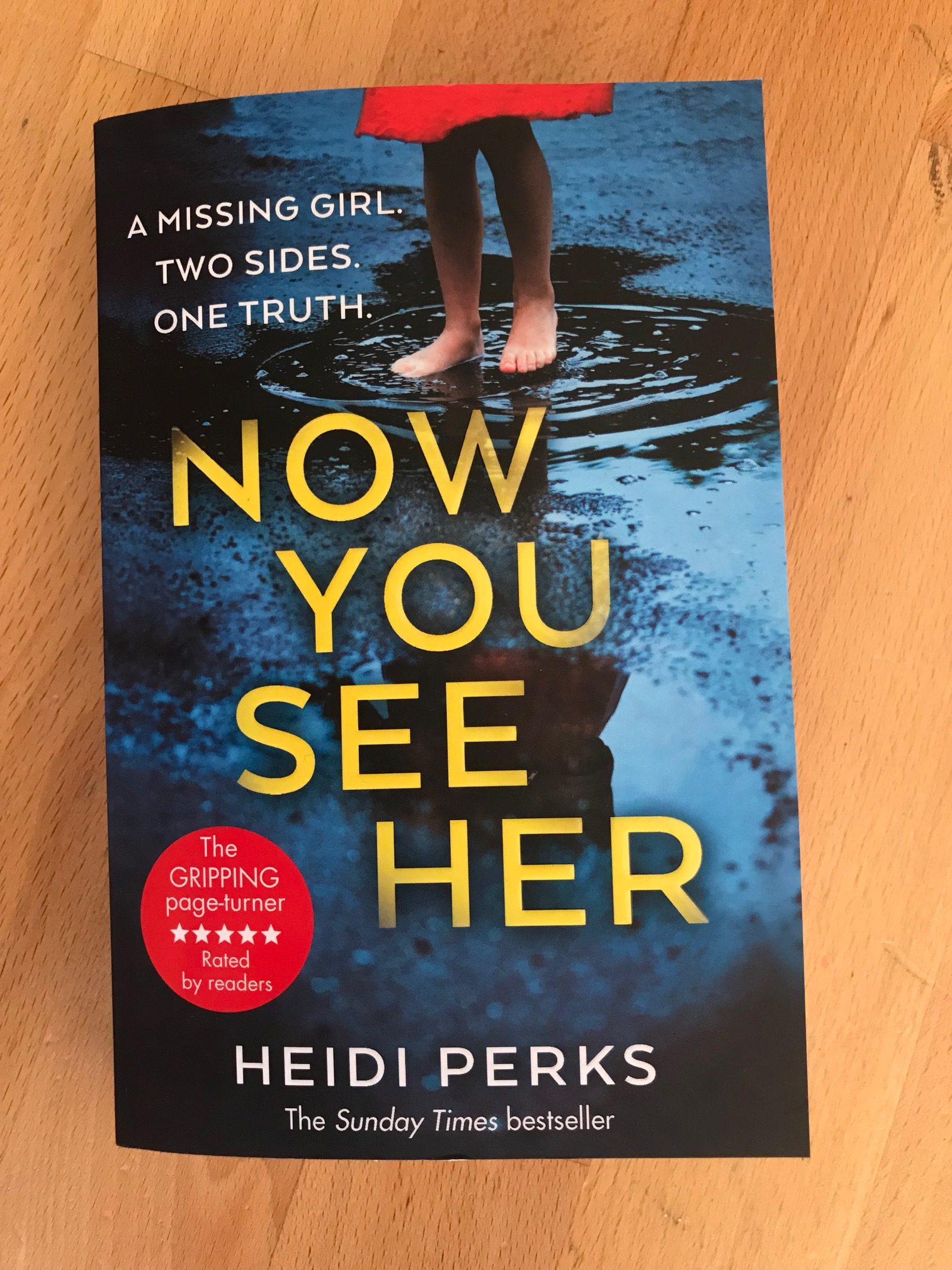
Now You See Her by Heidi Perks | Recommended Reads

Now You See Her by Heidi Perks

This bestselling book is gripping from start to finish. It has even been optioned for TV. This recommended read is a fantastic thriller.

Charlotte is looking after her best friend’s daughter the day she disappears. She thought the little girl was playing with her own children. She swears she only took her eyes off them for a second.

Now, Charlotte must do the unthinkable: tell her best friend Harriet that her only child is missing. The child she was meant to be watching.

Devastated, Harriet can no longer bear to see Charlotte. No one could expect her to trust her friend again.
Only now she needs to. Because two weeks later Harriet and Charlotte are both being questioned separately by the police. And secrets are about to surface.

Someone is hiding the truth.
So what really happened to Alice?

Available here.

A Queer Museum?

Kind permission Joseph Galliano

LGBTQ people have influenced every aspect of culture and history with their incredible stories and contributions, but they have consistently been air-brushed from the history books. A new museum, Queer Britain, is seeking to put this right with the first dedicated site specifically designed to preserve, explore and celebrate our culture, and is due to open in central London in 2021.

The concept was launched by co-founder Joseph Galliano in 2018 at the Café Royal, where Oscar Wilde first met and fell in love with Lord Alfred Douglas. Many museums, archives and personal collections already have items in their catalogues synonymous with the LGBTQ story. Now, a mammoth task is underway to understand and ultimately pull together artefacts and records to create a new focal point. The aim is for the museum not only to be a bricks and mortar building but that it should also utilise cutting edge digital technology and have a strong educational responsibility and ethos. It will be a place used by everyone, regardless of their sexuality or gender identification, to explore the culture they have been born into or wish to understand.

But why is a museum like Queer Britain important when young people today have so much freedom and understanding about their gender identity and sexuality? It is true, that in the past twenty years great improvements have been made in our society and through anti-discrimination laws, but in our rightful seeking of equality we are also in danger of losing sight of why those battles were fought in the first place. Who were the men and women who came before us and lived through times when homosexuality was illegal? Their stories, and those of the generations before them, must be preserved and told. Ignoring history or simply allowing it to fade into the shadows, risks letting those same prejudices and intolerances rear their ugly heads again and again.

‘When you’ve been told you don’t exist, you go looking for clues,’ says Galliano, ‘The problem is that our histories have been so often written in the margins.’ The museum will, he says ‘validate and show people of their own existence.’ He intends the museum to be a catalytic space, a hub within the mainstream where LGBTQ stories can be seen and heard in permanent displays and through different exhibitions that cannot be adequately told in other museums.

The highly successful LGBTQ tours at the V&A, and soon to be modelled at the British Museum, are testament to the thirst there is for such knowledge. Museums have a unique place in our society, they show us who we were, give us the opportunity to explore who we are and empower us to decide our future. Queer Britain promises to serve as that place.

DISHING THE DIRT ON…DERMAPLANING

Quite literally, this will leave you with a dish of dirt that comes straight from the pores.

Dermaplaning is the latest skincare treatment on our radar and we were lucky enough to try it for ourselves at Regent’s Street Aesthetics, with the fabulously talented Aesthetics Nurse Practitioner and Founder of Regents Park Aesthetics, Kay Greveson.

We’ve rounded up some of the common questions (that we had ourselves too!)

What is dermaplaning

Dermaplaning is an intense exfoliating treatment which using a surgical scalpel to scratch away the dead skin, dirt and impurities

What results can I expect

The beauty of dermaplaning is that it has multiple benefits. First and foremost, the skin exfoliation. The process completely removes the dead, dull skin cells at the top of the skin and leave you with glowing, fresh skin that is super, super soft. because dead skin cells are taken off during treatment, your usual skincare will penetrate deeper and have a better effect. In addition, it combats that niggly, annoying peach fuzz

Is it painful

Not at all. There are some light scratching feelings but nothing painful. If anything, it’s quite relaxing

How long does the procedure take

You’ll be in an out within 45 minutes – simple and easy

What’s the aftercare

In the 24 hours post dermaplaning, you should avoid moisturisers with active ingredients (like salycillic acid etc) but after 24 hours, you should apply hydrating moisturiser to help the new skin cells get off to their best start. It’s really important to use a high SPF in your moisturiser and makeup because you’ll need extra protection from UVA and UVB rays

How long do results last

Your average skin cell cycle is 6 weeks therefore repeat treatments only need to be done every 6-8 weeks. This can be longer if combined with skin peels

Will my hair grow back darker

Facial hair does not grow back darker as the hair on your face is vellus hair which cannot transform into terminal hair follicles (like the hair on your legs)

Who would benefit from dermaplaning?

Dermaplaning is great for everyone. The treatment is suitable for all skin types and can also be done during pregnancy and breastfeeding

How much does it cost

Prices vary depending on where you choose. At Regent Street Aesthetics, a session costs £80 or you can buy packages including a skin peel or microneedling from £120

Where can I book

Book in at Regent’s Street Aesthetics: https://app.acuityscheduling.com/schedule.php?owner=15220636


7 Tips to Handle a Snoring Spouse

Research has found that around 37 million adult Americans snore regularly, which means there are many partners and spouses out there that are struggling to get a good night’s sleep. While being a snorer can massively disrupt your quality of sleep, it can impact your partner’s sleep as well. If you have ever slept in the same room as someone who snores, then you will know how impossible it can be to get some shut eye when lying next to a snorer. 

Having a partner who snores can cause you serious exhaustion and fatigue, which can be damaging to both your physical and mental health. Not getting enough sleep can cause you a huge range of issues, including anxiety, memory loss, weight gain, and a drop-in productivity. Therefore, if your partner snores in the night, it is important that you address the issue before it causes any additional health or relationship problems. 

Snoring occurs when someone who is sleeping cannot freely move air between their nose and throat, which causes tissues to vibrate and creates the snoring noise we have all become familiar with. However, there are ways to help your partner if they do snore and by using these helpful tips you can handle a snoring spouse and once again enjoy a good night’s sleep!  

Get a Bigger Bed 

The more space between you and your partner when they are snoring the better. Therefore, by investing in a bigger bed you can have more room and be further away from your partner’s face when they start to snore. When sleeping in a bigger bed, you can also build a wall of pillows between you and your partner’s head to block some of the noise from coming your way while you are trying to sleep. 

Getting a bigger bed and investing in a new mattress that you find more comfortable is a great way to help you fall asleep quicker and stay asleep for longer, even if you do have a snoring spouse next to you. 

Try Anti-Snoring Strips 

You should consider asking your spouse to try anti-snoring strips to combat their disruptive noises throughout the night. Get them to use anti snoring strips, provided by SomniFix, as these can reduce open-mouth snoring and improve nasal breathing abilities. They are an affordable and effective alternative to other mouth taping options that offer a breathing vent that allows for mouth breathing if needed. 

Roll Them Over 

You may find that your partner snores due to their position when they are sleeping. If this is the case, you should spend some time trying to discover which positions are more likely to make your partner snore. Some people are more likely to snore when they are lying on their back so you should try to encourage your partner to sleep on their side instead. You can also use pillows to help prop them up on their side and stop them from flipping onto their back while they sleep. 

However, if you and your partner are determined to sort out their snoring problem, you may want to take things a step further and consider using the ping pong ball trick. This is where you sew a ping pong ball to the inside of the top that your partner wears to sleep. This will make lying on their back (and the ping pong ball) very uncomfortable, which will naturally make them roll onto their side. 

Be Patient 

You should try and remember to remain patient with your partner and bear in mind that they can’t help the snoring that keeps you up all night. People can get very embarrassed about their snoring habits, which can cause problems in the relationship. It is very natural to get frustrated and annoyed with your partner when their snoring keeps you awake at night, and the sleep deprivation kicks in, but try to be understanding about your partner’s snoring and empathize with their condition. Instead, focus on trying to work on the issue together as a couple instead of letting it drive a wedge between you. 

Encourage Them to Exercise 

Research has shown that exercising can help those who snore, as having extra weight around your neck can cause your throat to narrow, and make you snore louder. Therefore, you should try to encourage your spouse to exercise if they could do with losing some weight. Being overweight can make a snoring problem worse, so losing excess weight can help improve the situation. 

Suggest exercises that you can do together, such as brisk walking or jogging, as this can be a great way for you both to bond, get in a shape, and be so tired in the evenings that your spouse snoring isn’t as much of an issue anymore. Anything that your spouse enjoys, and is willing to stick to, is worth trying though.

Drown Out the Noise

If you’ve tried all of the above and nothing has worked, or if you feel uncomfortable bringing up the issue with your spouse, investing in a pair of earplugs may be the best solution. You should shop around for a pair of earplugs that fit your ears well, as if they are uncomfortable, this will only make getting a good night’s sleep even more difficult. 

While using earplugs may feel weird at first, you will soon become accustomed to them and they can be a great way to block out the noises coming from your snoring spouse. 

Go to the Doctors 

If you and your partner have tried everything to no avail, your last option is to book a doctor’s appointment. You may find that your spouse’s snoring is due to a medical condition and healthcare professionals may be able to shed some light on how to solve the problem. 

While having a partner that snores can be frustrating and disruptive to your daily life, you should try to be as understanding as possible and focus on solving the issues as a couple, so it doesn’t cause any additional relationship problems. 


Sponsored Post

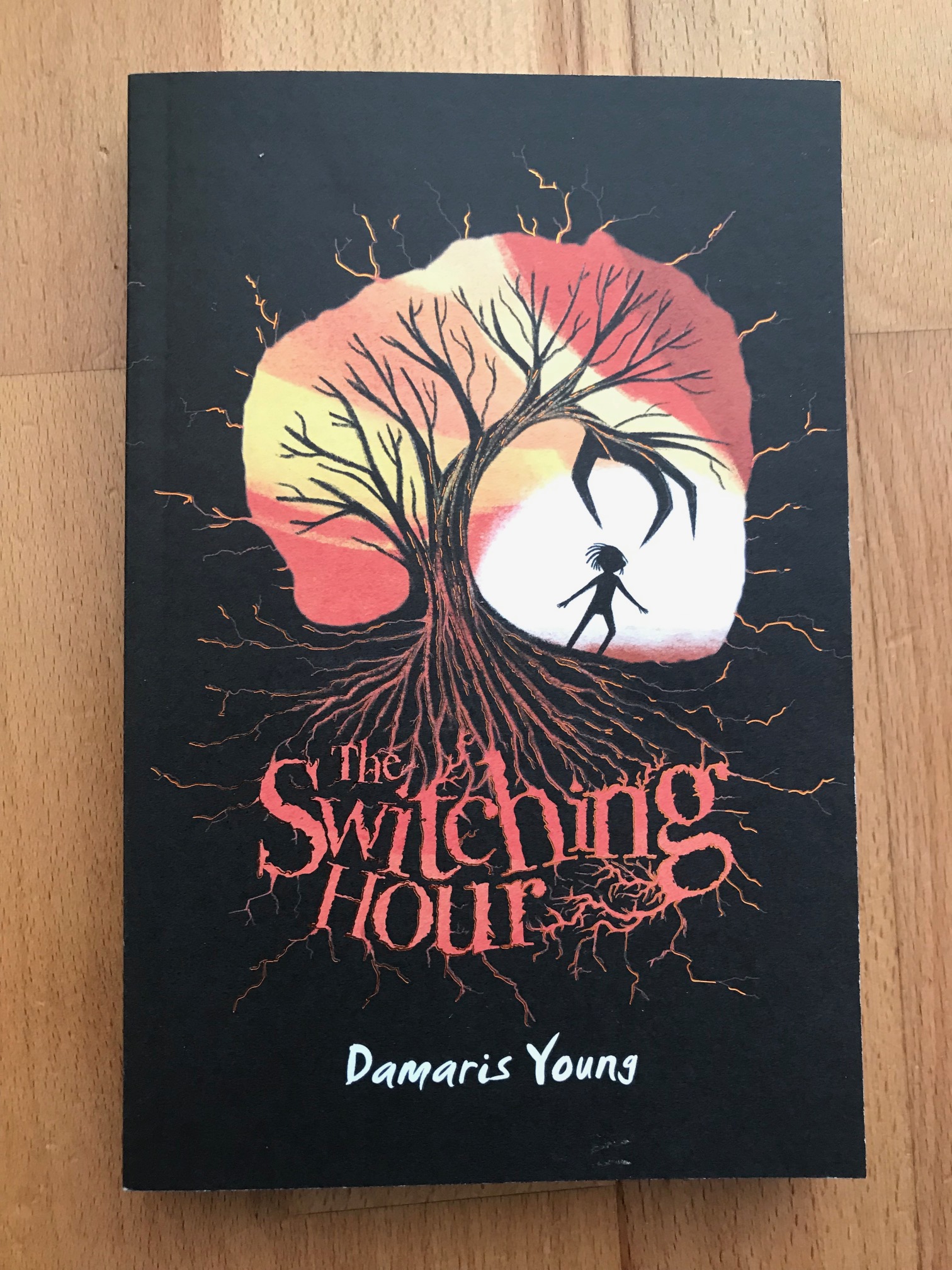
Upcoming Books: The Switching Hour by Damaris Young

A bewitchingly beautiful, spine-chilling story of courage, friendship and fears that come alive after dark… Never stay out after the Switching Hour… never let the outside in… Amaya lives with her grandmother, her small brother Kaleb and her pet goat Tao in a land suffering a terrible drought. Every night, the doors must be locked after twilight, the Switching Hour, because the drought has awoken Badoko, a creature that snatches people away to eat their dreams. Three days later, the memory that they existed is gone from those that knew them, and those that are left are afflicted with The Sorrow Sickness – a grief which consumes a person without them knowing why. When Kaleb is taken by Badoko, Amaya must journey into the terrifying forest to find her brother before she forgets him.

Out on August 1st. Available here.