Express Valentine’s Dinner with La Famiglia Rana

Valentine’s Day doesn’t have to be exhausting, expensive or filled with Chocolate, Champagne and Rose Petal bath’s. Take the pressure off and just make sure you make it delicious.

Guaranteed to be on your table in five minutes, La Famiglia Rana formerly known as Giovanni Rana have a whole selection of delicious, restaurant quality, filled-pastas for you to prepare. We recommend you surprise your loved one with;

CHICKEN AND SMOKED PANCETTA TORTELLONI WITH SPINACH AND CREAM INGREDIENTS

1 250g pack of Rana Chicken and Smoked Pancetta Tortellon

i 2 tbsp extra virgin olive oil

2 shallots

1 cup heavy cream

4 packed cups fresh baby spinach leaves

salt and freshly ground pink peppercorn to taste

METHOD

Thinly slice 2 large shallots; heat the oil in a large skillet over high heat until it shimmers. Add shallots, season with salt and pepper to taste, and sauté until just wilted, 30 seconds to 1 minute In the meantime, cook the Tortelloni according to package instructions in generously salted boiling water. Add the spinach to the skillet and the heavy cream; cook until spinach is wilted and sauce is reduced. Transfer sauce to a large serving bowl and add pasta. Serve immediately

What’s more we have some;

SERVING SUGGESTIONS

To create a romantic setting place flowers in a diagonal line along the table, you can also gently place a table runner or a soft coloured fabric underneath the flowers and use flower petals to frame the composition. The fabric will work best if it’s a contrasting colour to the flowers, allowing them to stand out. A linen tablecloth in a light grey palette balances the candy pink and pastel green plates, with mismatched napkins for a fun touch. As a final romantic touch, light an unscented candle to give a soft touch of light and serve a delicious plate of your partner’s favourite La Famiglia Rana pasta. Happy Valentine’s Day and… buon appetito!

The pasta can be purchased from various Morrisons, Sainsbury’s and ASDA stores throughout London or on Ocado.

www.rana.co.uk

Flight – The Evolution of Aviation – Stephen Woolford and Carl Warner Reviewed by Annie Clarke


2019 marks 50 years since the debut flights of the Boeing 747 and Concorde.


It also marks 100 years since Alcock & Brown departed on the first non-stop transatlantic flight.

Flight is something that has fascinated us for centuries, until here, in our century, it has become commonplace. But what do we really know?

Flight – The Evolution of Aviation is a tour through the hinterland of flight with illustrations to warm the cockles. This book absorbed generations within my family, from a 70 year old to an eleven year old –and what’s more, each wanted to find out, flesh out, areas of interest. So as an introduction to, and overall view, of flight it is absolutely perfect.

Read about The Wright Brothers, The Aeroplane  during the 1st and 2nd world wars. Air travel in in the post-war world, and on, and on.

And what about the hot-air balloons and onto the technology behind military jets and space rockets.

Yes, all here. Enjoy.


Price £20..00 pub. Carlton Publishing Group. Distributed by HarperCollins.

A Quarter of Mums Lack Confidence Introducing Solid Foods to Their Baby


  • New Start4Life campaign launched to boost parents’ confidence in weaning their baby
  • New survey shows one in four mums (26%) did not feel confident introducing solid foods[1]
  • Findings also reveal common misconceptions around the signs that a baby is ready to start weaning

Public Health England (PHE) has launched its first ever Start4Life campaign to help parents introduce their baby to solid foods.


Official advice is that most babies should not start solid foods until they are around six months old. By this point their bodies are better able to cope with solid foods and they are more able feed themselves. They are also better at moving food around their mouth, chewing and swallowing. The last UK Infant Feeding Survey showed that three-quarters of parents had introduced solid foods by the time their baby was 5 months old.


A new survey of 1,000 mothers of young children conducted for Public Health England found that common myths persist about the signs a baby is ready for their first solid foods, including:

  • Just under half of mums (46%) think wanting extra milk feeds is a sign that babies are ready for solid foods;
  • A third of mums (32%) believe that a baby chewing their fists is a sign that they are ready to start weaning;
  • Just under a quarter of mums (24%) believe that waking up in the night is a sign a baby is ready for weaning.

The survey revealed that many parents have concerns around weaning with more than a quarter saying they didn’t feel confident when they introduced solid foods to their baby. Choking topped the list of worries about weaning, with mums also concerned about allergic reactions to new foods, how much food to give their baby, and concern that their baby won’t eat enough or will reject food.


A brand-new weaning hub has been launched on the Start4Life website to help parents during their weaning journey. Packed with NHS-approved advice and tips for each weaning stage, plus simple, healthy weaning recipes for different age groups, it puts everything parents need to know in one place. It also includes new videos showing the signs that indicate babies are ready to wean, how much food to give, and weaning tips from other parents.


Public Health England nutritionist Orla Hugueniot said: “Introducing solid foods is an important stage in a baby’s development. It’s a great opportunity to guide their taste preferences and help them learn healthy eating habits that will stay with them for life.


“We know that parents have lots of questions about weaning and that many feel nervous about it. That’s why our new weaning hub on the Start4Life website puts all of the NHS advice in one place, helping parents to be more confident and enjoy this big milestone in their child’s life.”


Developed in partnership with parents, the weaning hub makes it easy for parents to find answers to their weaning questions and get information relevant to their baby’s age and weaning stage.


The campaign is being launched as part of the Start4Life programme, which aims to help parents adopt healthy behaviours during pregnancy, birth and their children’s early years.

To find out more visit: www.nhs.uk/start4life/weaning


BBC Science Focus Magazine survey reveals girls uninspired by STEM subjects at school

  • A third of girls cite Maths as their least favourite subject
  • Boys inspired by STEM, list Computing and Maths as favourite subjects
  • Girls dream of becoming teachers while boys aspire to be computer programmers


To commemorate International Women in Science Day today, BBC Science Focus Magazine has launched an investigation into why many girls are not choosing to study science, technology, engineering and mathematics at A-level and University. To get to the heart of the issue, BBC Science Focus Magazine conducted three separate surveys in a bid to discover why certain subjects get a thumbs-down, and whether anything can be done to stop them turning away.


The survey sent to 11 to 14-year olds conducted by agency CINT UK Ltd/Immediate Media Co, discovered that there is notable gender difference in the respondents, with no STEM subjects listed in the Top 3 subjects for girls, whilst STEM subjects feature twice (ICT and Maths/Statistics) in the boys Top 3.


Girls Favourite Subjects

  • Art            (43%)
  • English     (28%)
  • Drama      (28%)
  Boys Favourite Subjects

  • ICT/computing    (41%)
  • PE                          (36%)
  • Maths/Statistics  (35%)


Those polled citing, ‘I’m good at them’ (68%) and ‘I find them interesting’ (65%) as the main reasons behind favourite subjects.


When it comes to Least Favourite, Maths/Statistics comes top for girls polled. Both boys and girls also cite similar reasoning for their least favourites: 57% find the subjects boring, 42% because they are not good at them and 35% find them difficult to understand.


Girls Least Favourite

  • Maths/Statistics (33%)
  • RE                         (29%)
  • Languages           (28%)
  Boys Least Favourite

  • RE                         (33%)
  • Languages           (29%)
  • Maths/Statistics (23%)
     

This attitude is certainly reflected nationally. According to the Your Life campaign, at A-level, just 19% of girls choose two STEM subjects, compared to 33% of boys. Maths and physics fare particularly poorly: according to the JCQ (Joint Centre for Qualifications), last year 59,270 boys took A-level maths, compared to 38,357 girls; and 29,422 boys took physics, compared to 8,384 girls.


Alice Lipscombe-Southwell, Production Editor at BBC Science Focus Magazine commented, “From our research, we found that interest in the sciences drops off when girls enter secondary school. This is troubling, as many of them want to follow career paths where science, technology, engineering and maths would be helpful. In fact, these subjects are useful for loads of careers – whether you want to be a journalist, a video game designer, an astronaut or a lawyer.”


But how do the younger girls view STEM? When we spoke to around 100 readers at Girl Talk, a magazine for girls aged 7 to 11, they told us they enjoy their science lessons, especially the experiments and hands on learning, which would suggest that girls are less interested in STEM, the older they get.


With 40,000** STEM jobs lying vacant each year, there is a huge opportunity to get more women into science-based roles. When asked what careers the 11 to 14-year olds would like to do when older, there is a marked difference between the genders. Girls are aiming for traditionally nurturing roles with teacher (8%) taking the top spot, a career in the medical profession (7%) orworking with animals (7%), complete their Top 3, whereas boys have opted for computer programming (10%), engineering (8%) and becoming a blogger/vlogger at 6%.


Considering that STEM qualifications are needed to pursue several of the girls’ dream jobs, the magazine also surveyed more than 2,000 adults to ascertain whether STEM subjects are suggested by School Careers Advisors, or indeed whether pupils career aspirations are considered.


Considering that it can, and should, play an important part in future careers, over a third (37%) of our audience agree that better, or the presence of, careers advice would have altered the career path they followed. A huge number of those polled (63%) agree there should be more advice from schools, whilst 40% wished they had understood what qualifications were needed to pursue their preferred career, as 30% of those would have taken the necessary subjects more seriously at school.


For more on the subject, the full feature is at www.sciencefocus.com

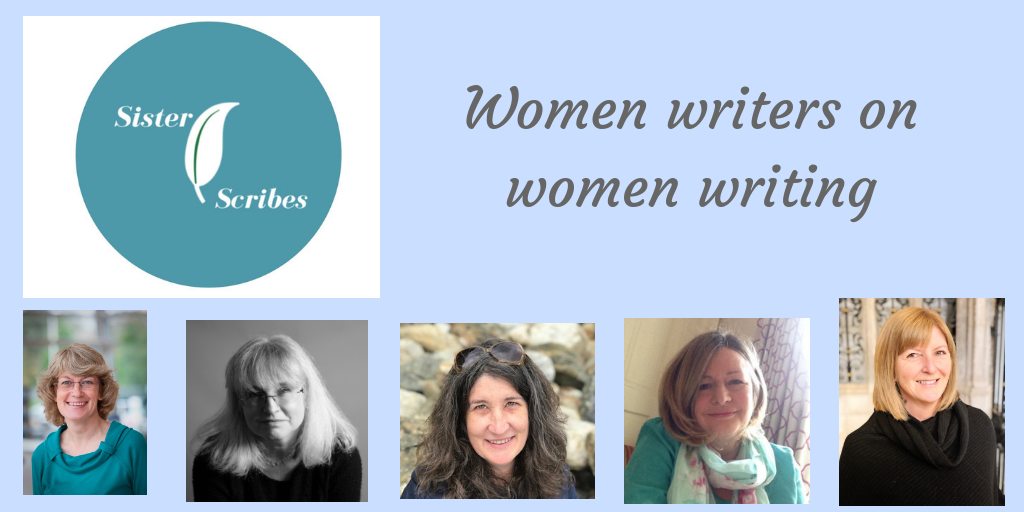
INTRODUCING SISTER SCRIBES: JANE CABLE

This isn’t an easy post to write. If you’re a Frost regular, then you probably know who I am. On the other hand our readership is increasing all the time, so you could well never have heard of Jane Cable.

The first thing to say is I’ve recently been given the role of Contributing Editor at Frost and I’m feeling a bit of a fraud. If anything, having dragged my Sister Scribes on board (not that all of them were kicking and screaming) I’ll be ‘contributing’ even less this year. But it will allow me to spread my wings a little and write more about some of the other things I love… like history, travel, food and drink.

I’m also feeling a bit of a fraud about describing myself as a full time writer, because the reality is I generally spend about half the time writing (or marketing, or all the other bits and bobs associated with it) that I would do if I had a genuine full time job. But actually I want to enjoy life too.

I’m in my fifties (and proud of it… prouder than I am of the parentheses which are plaguing every paragraph) and my OH and I have worked really hard in the corporate world and in our own business since we graduated. Rather than continue at such a pace we decided to kick back and in 2017 we downsized to Cornwall and it was the best thing we ever did.

I’m a total advocate of the lifestyle down here. Not the part holidaymakers would necessarily see, but the everyday world of the everyday people. Very few live to work – most work about enough to live. Nobody’s bothered what you do or what sort of car you drive. As long as you say thank you when they give way to you. And once you sink back into the ‘manana with breaks for pasties’ timescale of anything getting done then it’s a dream.

So where am I in my writing career? I brought out two books independently with a reasonable degree of success, but after a false start with a publisher that went bust I now have a two book deal with Sapere. They are a joy to work with (saying that, I haven’t had my first edit notes yet so time will tell), collaborative and co-operative. They also do their best to bring their authors together, and I’m a great one for that.

Little did I know how influential attending the Romantic Novelists’ Association conference in 2017 would be in terms of finding writer friends. For me by far the most valuable part of the weekend was time spent with other authors and through social media we kept in touch. I was delighted to find that Kitty Wilson lived in Cornwall (although the rat bag has since moved to Bristol) and when Cassandra Grafton came here on a research trip we all met up.

From this meeting the idea of organising our own mini retreat/girls’ break was formed. We invited along Susanna Bavin and Kirsten Hesketh (who’d we also met at the RNA conference) and the rest, as they say, is history and after four days in Bath we’d become Sister Scribes.

There are probably a few other things you need to know about me that sometimes surprise people. I used to freelance as a cricket writer and I love the game. I’m Welsh by birth and fiercely proud of it. And if I couldn’t write it would feel as though my hands had been cut off. Actually, it would probably be because my hands had been cut off…

Follow Jane on Twitter @JaneCable


Little Darlings by Melanie Golding. Reviewed by Natalie Jayne Peeke

Lauren has just had a long and difficult birth , but now her twin boys are here.  Unfortunately things are about to get a lot more terrifying for Lauren .

Lauren is at home with her new born babies, Patrick (her husband) is back at work and is not much help when he’s home . Lauren is exhausted .

After a strong suggestion from Patrick, Lauren FINALLY leaves the house to meet up with her fellow mum friends . All is going well , Lauren is almost having fun . She takes the babies for a walk and makes a terrible mistake …She sits down . And before she knows it , she’s asleep !

The babies will never be the same again in Lauren’s eyes . No one believes her , not even Patrick.

What a creepy but enticing read. One character gave me nightmares, which is just a example at how good the writing is. The characters seem real , all of them.

I felt so sympathetic to Lauren, and I became frustrated when no one would listen to her.

I couldn’t put this book down, I simply had to know the truth. Was she mad , like everyone was saying? Or was she completely sane?

Little darlings is definitely worth a read. Especially for fans of the films “Shutter island” and “Changeling” as well as reader that enjoy psychological thrillers – this is a book for you.

Published – 2nd May 2019

Hardback – £12.99
Ebook – £9.99

A Story About Cancer (With a Happy Ending) by India Desjardins  by Dr Kathleen Thompson


When I first qualified as a doctor nobody talked about cancer. Staff and relatives hid the diagnosis from the patient – too shocking to bear, or share. Often one only knew that someone had had cancer after they’d died.

Today we are much more aware of success stories, due to improvements in treatment but also to a more open attitude. Many people have written their cancer ‘stories’, insights into living with the big C, and some doctors, like myself, who have had cancer, have written guides to help others.

India Desjardin’s book is a welcome addition to the growing cancer genre. An established author, her ‘A Story About Cancer (With a Happy Ending)’ was inspired by a young girl she met, who had leukaemia. Sympathetically illustrated by Marianne Ferrer, it addresses the feelings, fears and insights of a teenager going through what no young adult should have to face – the possibility of imminent death.

The book touches on the raw honesty of youth – why are hospitals always decorated in boring colours?

The story reminds us that young adults are much more aware than we may wish in these stressful situations. Yes, they know exactly what ‘that look’ in people’s eyes means; they also understand why Mum needs to keep telling them they are brave, even though it drives them crazy; they have the wisdom to understand that being strong and positive isn’t always the answer, sometimes even the most positive people die.

The author addresses the thoughts that adults pray their children don’t have – like would it be better for everyone if they died? She covers a teenager’s need to deal with being ‘different’ at an age when everyone is desperate to fit in.  Romance. Can anyone fancy someone with a bald head?

Finally waiting for those crucial results – an integral part of living with cancer. In this story the news is good.

Teenagers, like everyone else, can vary in their approach to cancer literature. Some find the resonance of someone understanding their issues helpful, and this book could break through the isolation common amongst cancer sufferers of any age. Response to such a book will depend on individual circumstances though and it may not be for everyone. For the right person this book is beautifully written and illustrated, delivering gentle messages for people who may not be in a state to absorb copious detail.


By Dr K Thompson, author of From Both Ends of the Stethoscope: Getting through breast cancer – by a doctor who knows

http://www.amazon.co.uk/dp/B01A7DM42Q http://www.amazon.com/dp/B01A7DM42Q

http://faitobooks.co.uk

This Week’s Must Read: UJA – The Book That Changed Jamaica

photo credit Lis McDermott

Thanks to solar power, Jamaica’s future is bright in Ira Poyser’s visionary debut novel, which imagines the Caribbean island as a powerhouse of economics, sport and global affairs.

By Lucy Bryson

It’s portrayed as an idyllic island blessed with blue skies, white sandy beaches and warm Caribbean seas. But away from the affluent tourist spots where holidaymakers sip expensive cocktails to reggae music lies a country struggling with crime, violence, poverty, inequality and unemployment. For all of Jamaica’s accomplishments – most notably in sport, music and culture – it has for decades remained reportedly stuck in an economic quagmire.

UJA – The Book That Changed Jamaica, cleverly imagines a future in which Jamaica escapes the impasse and lives up to its immense, untapped potential. The country harnesses one of its greatest natural resources, solar energy, to variously lift itself out of poverty and bolster its athletics talent to Olympic, world-beating dominance.

Ira Poyser’s impressive work of fiction fuses real-life events with fictional characters to create a hopeful – and realistic – vision for post-2030 Jamaica. Not without reason did respected Jamaican newspaper The Daily Gleaner describe it as having “bright, provocative moments” and succeeding in “challenge us to reflect”. 

The date is a key one; Jamaica is currently several years into its ambitious Vision 30 Plan, described by the state as a “strategic road map to guide the country to achieve its goals of sustainable development and prosperity by 2030”. The book contains numerous references to real life events and characters, too. There are ‘cameos’ Jamaican dancehall megastar Shaggy, track legend Usain Bolt, and even American indie musician Ezra Furman. 

A contemporary, sexually-charged romance, UJA – The Book That Changed Jamaica tells the fictional story of Khadeen and Orson “Awesome” Matisse – a power couple like no other. Orson is a former 400-metre Olympic champion who goes on to become Jamaican Prime Minister, while Khadeen is a beautiful, intellectual heavyweight with an aspirational vision for the future of the country. Set in Jamaica, New York, Chicago and Manchester, UK, the book spans a time period from the 1960s to 2031. It follows the pair’s turbulent relationship and the repercussions of publishing ‘Universalizing JA’, a book which sets out to convince their countrymen to harness the power of solar energy to transform Jamaica’s entire future. 

But with great power comes great responsibility, and the most powerful couple in the country struggle to adapt to their new role as leaders.

Alongside the dramatic ups and downs of the central couple’s relationships, Poyser threads in a story of athletic achievements, a giant, uber-destructive storm, and a sports superstar – presumed dead after the storm – with a severe case of amnesia.

Doping scandals, mistaken identity, sexual transgressions (this is a fairly racy novel in places) all have a part to play, and readers also follow the fortunes of the pair’s son Leo, captain of the Jamaican Athletics Team, as he struggles to discover who he really is and where his true strengths lie. 

As Orson and Khadeen overcome their differences to find their missing son, they also fight for Jamaica’s place on the world stage and discover the true strength of their own relationship. 

Poyser, who splits his time between Kingston, Jamaica, and Manchester, UK, writes with warm wit and humour, and in an easy, relaxed style. But he also pulls no punches and tells it like it is; there’s an undercurrent of violence throughout, which reaches a bloody conclusion at the end of the book, before once again taking a positive turn. His book is by turns challenging, romantic and adventurous – much like Jamaica itself. 

UJA – The Book that Changed Jamaica by Ira Poyser (Sculpture Enterprises) is available now  on Amazon, priced £5.09 in paperback and £4 as an eBook. For more information, go to Ira’s official Facebook page.