A Day in the Life of Sharon Bennett

I have always enjoyed making things; getting messy and creating atmosphere, whether with paint, fabrics, light or furniture. I am inspired by beautiful countryside, buildings, colour, water and places that I love!
A Day in the Life - Sharon Bennett

As a child I continuously annoyed my younger sisters by trying to capture them on paper with my pencils. After that I mostly drew and painted flowers in watercolour. More recently I joined an Art Group where I eventually developed a style of painting with which I am very happy.  Also I have a great love of photography, my recent works merge photos with collage, acrylic pallet, watercolour and pen work.


For texture in my work I often use different types of paper, including tissue, corrugated and foil.  One of my artworks ‘The East London Skyline’ was created during the 2012 Olympics. I incorporated cuttings about the Olympics from London newspapers into the painting itself. In my Venice paintings I have used handmade Venetian paper, tickets from train and boat trips! The painting then becomes alive and personal!

A painting will begin by the taking of an inspiring photograph. While out walking, holidaying or just shopping, beautiful buildings, waterways, boats, countryside, simply demand to be photographed! I take many – thank heavens for digital photography.


The next job is to search through the photos to see which will work well with my style of pallet knife painting and collage. The selected photographs are then enlarged, pixilated and often form a part of my paintings and become merged with collage, mixed media and acrylic pallet knife painting. I also usually include newspaper cuttings, tickets, wood, paper, anything which makes the picture more personal and unique! The result of these combinations create some powerful pieces of work. By using collage and many different textures it helps me to capture the vibrancy and atmosphere of the scene. I always like to work from my own photographs although I have created a couple of commission pieces.


I photographed St Paul’s from the Tate Modern on one of those perfect winter days. My daughter had bought me ‘high tea at the Tate’ as a birthday present last year. The weather was a perfectly crisp and sunny February day! A very rare treat in the middle of an awfully wet winter. I took the photograph from the restaurant on the top floor of the Tate. The resulting photograph was stunning and I hope you like the painting that emerged too! Margaret Graham did, and bought it when Easterleigh Hall was published. This is what she does – buys paintings to celebrate.


Six nights booked in Venice. We hoped for lovely weather as we were going in February! The first three days we had non-stop rain!  This did not stop me taking tons of photos and the results were stunning. The rain just seemed to enhance the colours of the beautiful Italian buildings and made the water a very deep green.


I was very pleased with the resulting painting, which also incorporated collage of matchsticks, our ticket from Venice to Verona and pieces of handmade Venetian paper.

I have lots of gorgeous atmospheric photographs to work with. A very familiar sight of a gondola full of Japanese tourists. The buildings over this canal are such a beautiful colour and I have tried to, and hopefully have, captured that! This is one of my most recent paintings.


I have some work going into a new pop up shop in Maidenhead called Craft Coop, located in Nicholsons Centre,  in an ex jewellery shop, across from Icelands, from 22nd Nov till the 4th January 2015.


For a further look at my work:


Website: www.mashup-designs.co.uk……..then…….Sharon’s Art.


My contact email is shazben58@gmail.com



THE BUSINESS OF BOOKS: THE KITCHEN CLASS OF 2017

Jane Cable catches up with RNA friends

There is a tradition at Romantic Novelists’ Association conferences that the really important stuff happens in the kitchens of the shared accommodation. And for me (and I’m sure I’m not alone) the really important stuff was making friends with other writers. Almost a year later most of us have kept in touch and there have been many successes to celebrate. To be honest, I haven’t had the best year of my writing career but being able to cheer on my new friends had been a pleasure which has kept me going.

Jan Baynham, another writer from my home city of Cardiff feels the same: “No exciting publisher or agent news from me, I’m afraid, but I’ve been delighted to read about others’ successes this year. There’s been so much to celebrate! I’ve spent the time since the Conference submitting my first novel to publishers. Two recent rejections have given me very encouraging feedback and spurred me on. One editor said my novel fell into ‘the nearly-but-not-quite’ category, telling me why, but said she would be happy to consider further submissions from me. A second was even more complimentary about the quality of the writing and has asked to see my second mother-daughter saga that’s partly set in Greece. I’m working hard to get Whispering Olive Trees ready to submit to her.”

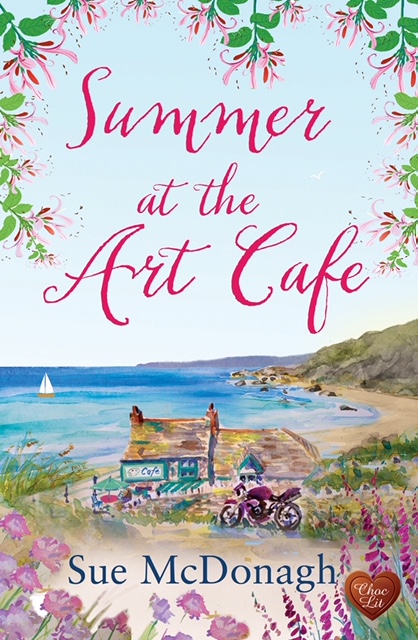
Jan’s travelling companion last year was Sue McDonagh whose debut novel has just been published by Choc Lit, but it hasn’t always been an easy road. “I wrote, learned and submitted until that magical ‘Yes’. There was joy – until the edits came in. Christmas to February, Writing Boot Camp, I rewrote almost every word, hacked back rookie errors of over-blown baddies and plot lines that went nowhere. My timeline was a joke.  I despaired that the ending would ever work. I couldn’t do it. I could, and it did, miraculously. I painted the front cover, another highlight. Published five days ago, Summer at the Art Café is already earning a slew of 5* reviews. I’m still learning – it’s a steep curve!”

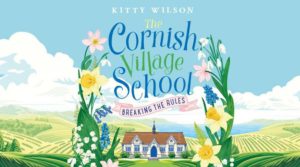
Another kitchen compatriot discovering the joy of a publishing deal was Cornwall based Kitty Wilson. “My writing life has been a whirlwind since we all sat around the kitchen table at the RNA conference last year. I have gone from wannabe novelist used to micro-expressions that flashed sympathy and suggested delusion to fully fledged author. By January I had landed myself my dream agent, had to choose which publisher to go with and spent a lot of time pinching myself – it was all so dreamlike. With my first book coming out next month, the second nearly completed and a whole series to write, 2018 is going to be a very busy, but very happy, year.” The cover of the first of her Cornish Village School books has just been revealed, ready for publication next month.

When we met last year Susanna Bavin already had her deal with Allison & Busby, and her writing career is going from strength to strength: “It’s been a year of dreams coming true for me. My debut saga, The Deserter’s Daughter, has been published in hardback, e-book, audiobook, large print and paperback. My second, A Respectable Woman, will appear in the same formats; and I have a contract for another two. The best moment? Out of a year of ‘best moments,’ the very best was listening to The Deserter’s Daughter as an audiobook read by Julia Franklin. I’ve listened to audiobooks for years and Julia is one of my two favourite readers, so having her as ‘my’ reader is wonderful.”

Last but not least, Kirsten Hesketh feels she’s on the verge of something big too: “What a year! The main thing I have learned over the past year is not to submit your work too early to agents! After a round of ‘good’ rejections last September, I spent the next few months editing, restructuring, polishing and then getting a critique from the marvellous Alison May whose advice made all the difference. Then I did it all again!  The result is …. I now have an agent! I am thrilled to be represented by the wonderful Felicity Trew and have just had the excitement of having my book taken to the London Book Fair. Fingers crossed!”


The Grid: An Immersive Black Mirror/Dystopia Inspired Escape Experience

Image:  Courtesy of brand

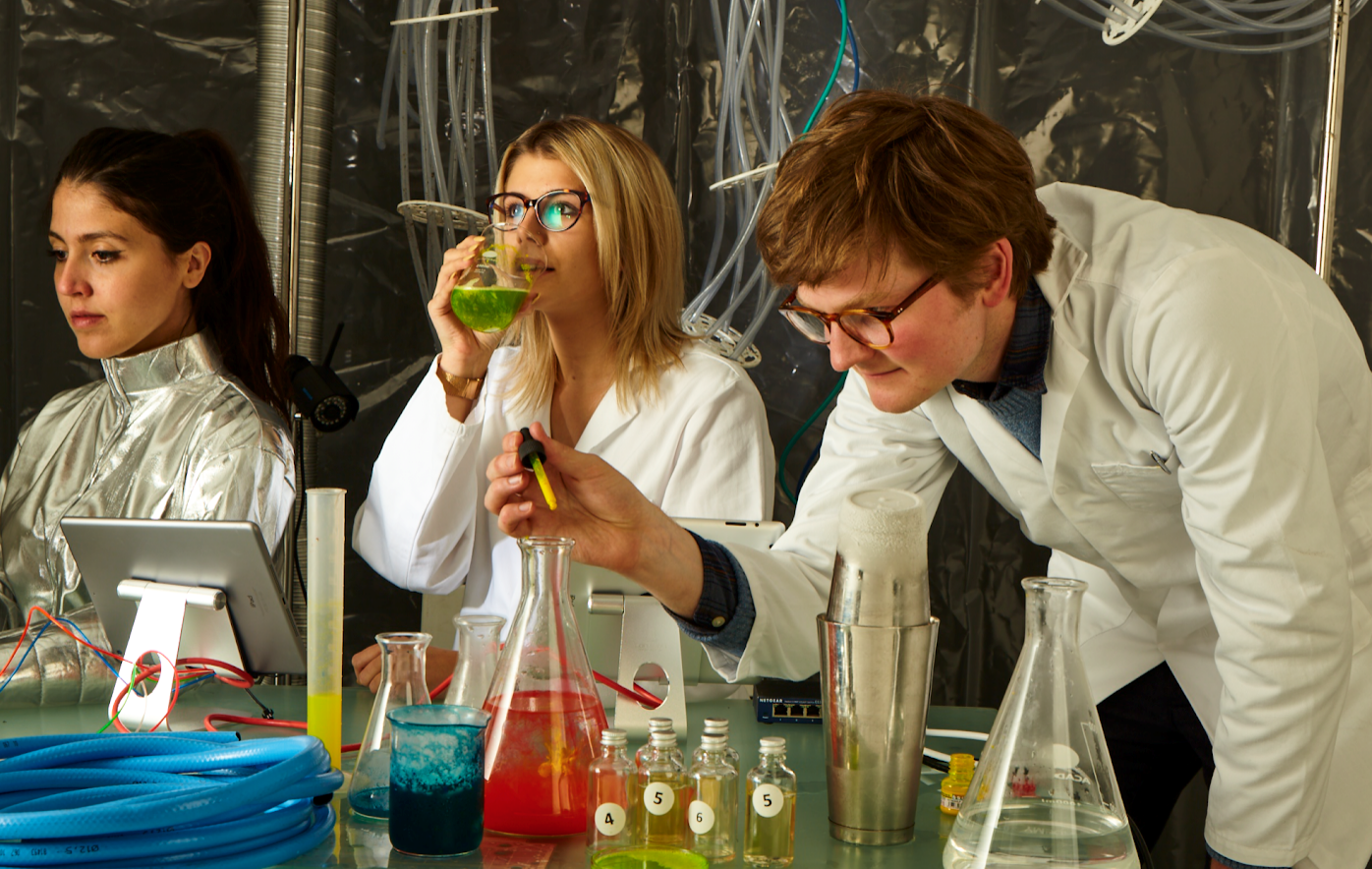
The Grid is an immersive, multi-room alcoholic escape experience where patrons get to go undercover an Artificial Intelligence firm in an attempt to learn and defeat the “system”

The tech-driven escape experience challenges guests to puzzles across a series of rooms, with the bar as a backdrop.

Participants are invited to join The Grid, a secret society of individuals working to safeguard humanity’s future against machines.

On the day of the experience, they arrive undercover at the AI corp’s (neosight.org) HQ, where they must move between different rooms, interacting with the Artificial Intelligence and Neosight specialist technology as they try to stop the corp from crunching human data for the “greater good”. The 1.5 hour experience is full of surprises, bespoke tech and futurists tonics (sci-fi cocktails).

“I believe the future of hospitality is all about having fun. Fun now lies in experiences and not only food and drink. This is our first multi-room experience and I am very excited for it,” said Sebastian Lyall, Founder of Lollipop, the immersive experience group behind The Grid.

Lollipop is an immersive lifestyle group known for its experiential creations both here and abroad, including ABQ (abqlondon.com), The Bletchley (thebletchley.co.uk) and The Bunyadi (thebunyadi.com). The mission of the group is to design experiences that cater to the more demanding consumer of today. The group has also recently launched a drink at home wine experience, Vinny (wearevinny.com)

The Grid is set to open its door to public in July/Aug. The waiting list is now open and reservations will be released on a first come first served basis.

Tickets will be priced between £30-£40 per head for a 1h 30m experience and 2 cocktails.

Website: thegrid.london (use code 456712)

A Day In The Life of Author Frances Colville

I’ve always been an organised sort of person; writing lists, making plans and generally achieving whatever I set out to achieve. Then I took early retirement and expected to devote hours to writing. But… But… There are, suddenly, all kinds of people making demands on your time. And there are so many things of interest calling to you.

All of this means I no longer have a typical day. But there are some typical elements.
I always make time to read. Have you ever worked out how very few books you can actually get through in a lifetime? A scary thought when there is so much wonderful stuff on my list and in my teetering pile. Then, if it is at all possible, I make time to walk down to the sea.

A DAY IN THE LIFE of author Frances Colvillepic1
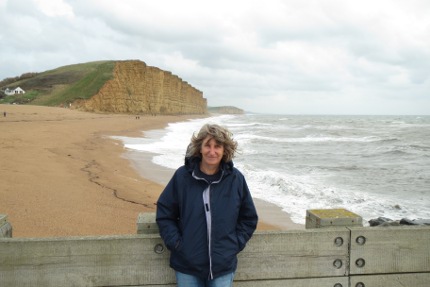
It takes me twelve minutes to reach my local beach of Seatown. I like it best when it is wild and stormy, when the waves crash in along the shore line and the cormorants have to battle to stay airborne. But whatever the weather, there is inevitably something different to see, something to provide writing inspiration.

And that is the other constant. I try each day to make time for whatever writing project is uppermost in my life This year there have been several main threads. I’ve organised a Story Slam in my local town of Bridport,

A DAY IN THE LIFE of author Frances Colvillepic2
I’ve taken part in various performances and competitions, and I’ve been working on my Sixty List ( a project to do sixty new things in my sixtieth year and to write about them). But the biggest project and for me, the most satisfying, has been working on a local First World War story. I’ve researched it thoroughly, curated two exhibitions, talked about it on radio and TV, written about it for magazines and papers.

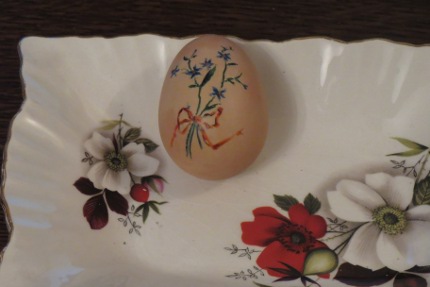
It’s the intriguing story of a young woman who contributed fresh eggs to the National Egg Collection for wounded soldiers and who decorated those eggs with paintings, poems and her name and address. In return she received thank-you letters from many soldiers. Now, as well as dealing with the factual aspects of the story, I’m trying to develop it as fiction.
A DAY IN THE LIFE of author Frances Colvillepic3

So far, a couple of short stories have been successful and I’m working on a novel. But there’s a long way to go yet. And never enough hours in the day!

© Frances Colville

NEW BLOOD BOOSTS BRITAIN’S GOTHIC FANG CLUB

From Bram Stoker’s Dracula to Mary Shelley’s Frankenstein, Britons have been devouring gothic literature for over 200 years. But after more than two centuries is our appetite for the gothic finally starting to wane? To hell it is, writes novelist Katja Brown – it’s more alive than ever.

I’m often asked why the gothic still appeals. The genre is a creation that compels everyone from a lover of romantic fiction to a lover of blood and guts. Whilst it doesn’t hinge on these elements they add to it and create something that is constantly reinventing itself. The gothic is essentially the presentation of a ‘terrible beauty’, a collection of literary conventions that come together beautifully to scare, entrance and hook the reader. In what other genre could a character such as Dracula exist? He is a character you love to hate, the greatest anti-hero that has been thought up and is so loved by readers and authors alike that he has been revived ever since in one incarnation or another.

The gothic appeals because inside every reader there is still a spark, a need, a deep desire to be scared by something beautiful, something obscure and otherworldly. I think this genre inhabits the part of your imagination that wants to see the world differently, that imagines alternate possibilities to the norm and much like a vampire it doesn’t stay down for long. Once you pick up a gothic book it’s like a budding romance: you feel as if you have to know how it ends and the truth is… no one really knows why. It happens with other genres, sure, but the gothic has something special about it. You’ve heard that girls are attracted to the bad boys? Well it’s the same idea.

Throughout history the gothic has been the mother of great tomes and literary works of genius, manipulated and reshaped to fit the changing times. From Bram Stoker’s famous fanged fiend Dracula, to Mary Shelley’s Frankenstein, we’ve watched as this genre has survived the stress of time and made it here to 2018. Thanks to a wealth of fabulous new gothic books, and also to the Twilight series, I’ve no doubt that it will keep kicking long after. 

It has endured because we as humans want a thrill, we actively seek out the new and terrifying because we want to feel our hearts quicken, our palms get sweaty and the hairs on the back of our neck stand on end. It is the gothic that provides those sensations, every page walking the razors edge between dream and reality.

What’s so loveable is that behind the things that go bump in the night, behind the sublime descriptions, the complicated characters and the narrations I guarantee there will always be something to learn – from a moral lesson to something more practical (‘don’t go down the scary-looking corridor by yourself late at night). The gothic has and will probably always be used to impart some sort of wisdom from one person to the next and it doesn’t matter what piece of gothic literature you pick up, it’ll be there between the lines. All you have to do is look.

The gothic helps define us as people, understand our own identity by understanding what we are not. We are not immortal, so, unlike Dracula, we learn to live like there’s no tomorrow. We shape ourselves based on what knowledge we assimilate, but the gothic gives us imagination and way to step out of our lives for a few hundred pages, a chapter each night, a page between coffee and cake. That is why it appeals, why it still appeals, why it always will.   

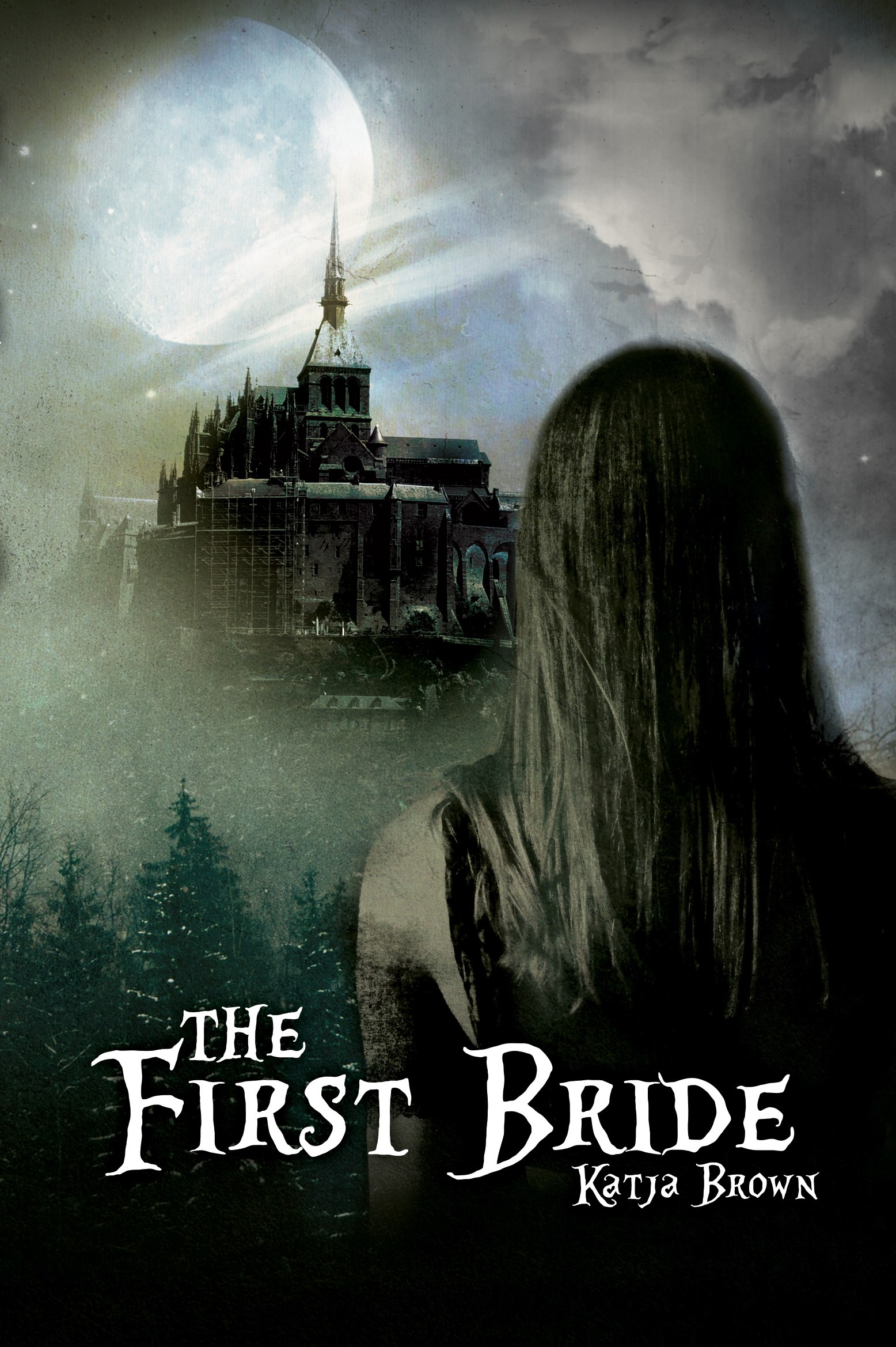
Katja Brown is an acclaimed gothic novelist. Her seat-of-the-pants debut novel, The First Bride (Austin Macauley) is out now in paperback and eBook from Amazon UK.


5 Simple Tips for Saving Money on Over-50’s Car Insurance

Credit: https://unsplash.com/photos/nw6xREmkXkg

Over 50’s are the second safest group of drivers on the road but their insurance policies often don’t reflect their years of experience and good safety record.  Consider these suggestions for saving money on your car insurance.


  1. Increase your car’s security

One of the factors which will increase the cost of your car insurance is the probability of theft or damage to your car.  If you live in a high-risk area it makes sense to try and minimise the risk.  The cost of renting a garage might be more than offset by a reduction in the cost of your car insurance and you’ll have the additional benefit of not having to worry about finding a parking space.  You can talk to your insurer about the benefits of car insurance and ask your questions to understand How much is a windshield deductible? and how an insurance can be helpful in such scenarios. You should also consider fitting an alarm system or using a steering lock, both of which could reduce the cost of your premiums.

  1. Avoid auto renewal

A comparethemarket report revealed that drivers over the age of fifty can save an average of around £45 by shopping around, so make sure that you compare the quotes online.  You don’t have to wait for your renewal date before you can change your policy, you can switch at any time.  Check the cost of the admin fee but it may still be worth your while to switch, if you’ve found a good deal.  Always pay upfront, paying by instalments will add a considerable cost to the price of your insurance.  Look at your voluntary excess, if you increase this amount, it could lower your premiums, but be sure that you compare the saving you could make with the cost of what you’d have to pay in the event of an accident.  Look at the detail of your policy, do you really need extras such as a courtesy car?  Comprehensive cover may actually be cheaper than third party.  By selecting comprehensive cover, you appear to be low risk and consequently your premium is lower.

  1. How you drive and how far you drive affect the cost of your insurance

Most people over estimate their annual mileage and as a result they pay more for their insurance than they need to.  Look for ways to reduce your mileage: don’t use your car for short trips, try walking or using public transport.  Remember that many companies offer discounts for over-50’s, such as National Rail.  Consider installing telematics, a device insurers put inside your car to monitor how you drive: if you’re a safe, sensible driver, this could save you money.

  1. Switch to a car which is cheaper to insure

Insurers place all cars in an insurance group, if your car is a top range model it is likely to be in an expensive group because the repair costs are high.  Cars with smaller engines are statistically less likely to be involved in an accident and are therefore cheaper to insure.

5. Make sure you are on the electoral roll

Some insurance companies check whether you are on the electoral roll to confirm your identity in order to avoid fraud. Make sure you’re on the electoral roll and all your details are up to date just in case. You can check whether you’re registered by phoning up your local electoral registration office. Find their details on the your vote matters website by entering your postcode.


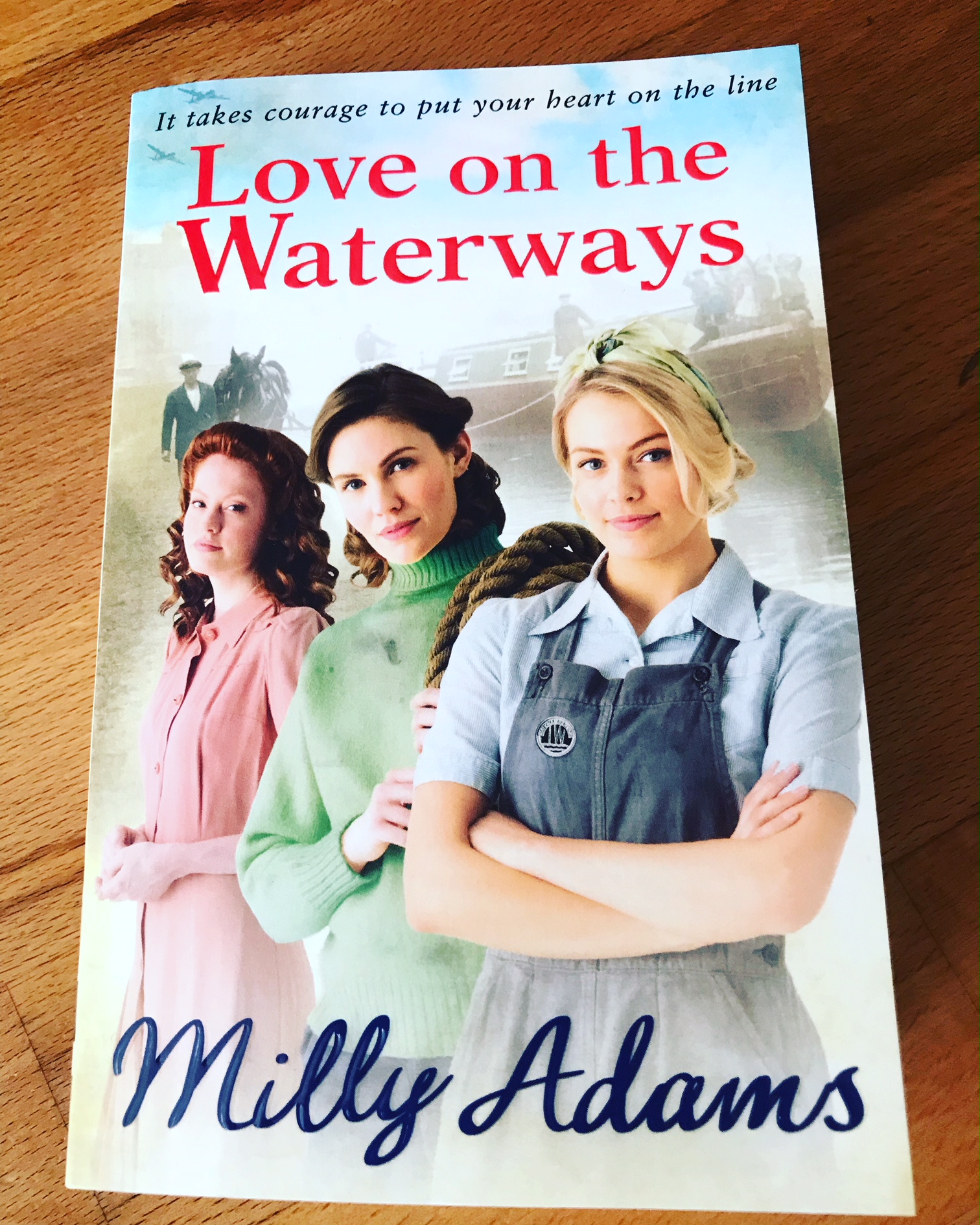
Book of The Month: Love on the Waterways By Milly Adams

New to Frost is the Book of The Month. We review a lot of books at Frost so picking one will be hard but we do not mind. It is our job to bring the best to our readers. The first ever book of the month is the latest from Milly Adams. The second book in her new saga, it is yet another corker. love on the waterways, milly adams

THE SECOND NOVEL IN MILLY ADAMS’ BRAND NEW SAGA SERIES. Perfect for fans of Daisy Styles and Nancy Revell.

March 1944, West London: it’s been five months since Verity Clement fled home for a life on Britain’s canals and she could never have imagined how tough it would get. Yet hauling cargo between London and Birmingham is far easier to face than the turbulence she’s left behind.

When Verity’s sweetheart returns unexpectedly from the front line, she dares to dream of a brighter future. But life aboard the Marigold is never smooth sailing. New recruit Sylvia is struggling with demons from her past while crewmate Polly must carry on in the wake of devastating news. Verity does her best to help, but a shocking discovery is about to turn her own life upside-down.

As the realities of war begin to take their toll, the waterway girls will have to pull together if they are to survive the uncertain times ahead…

Available from Amazon.


Pleasance’s festival programme at Edinburgh Fringe 2018 is now complete


So let’s see what’s on offer as a great selection of shows go on sale to complete the Pleasance’s fantastic festival programme

The Pleasance is a place for experiences and, this year marks Pleasance’s boldest programme yet. From the funny to the sorrowful, the political to the magical, the Pleasance has always been a place for incredible stories and 2018 takes this tradition to a new level.


The phenomenal theatre programme includes: Revenants by the amazing Nichola McAuliffe which looks at oppression, prejudice and revolution; Terry Johnson’s Ken which comes to its spiritual home in Edinburgh celebrating the life of the maverick writer and theatre director, Ken Campbell; one of the greatest ever interpreters of Brel’s music in Peter Straker Sings Brel; comedian Frank Skinner turning his hand to theatre with his debut play Nina’s Got News; and Brexit, a new political satire by Robert Khan and Tom Salinsky (writers of previous Edinburgh sell-out hits Coalition and Making News), looking at what may be happening in the final stages of the Brexit negotiations in 2020!

Pleasance Courtyard

Pleasance is also renowned for its extraordinarily entertaining comedy programme. 2018 sees some big names returning to the Fringe including John Kearns, Matt Forde, Seann Walsh, Ciarán Dowd, Adam Kay, Jayde Adams, Robert White, Flanders and Swann, Iain Stirling and Rachel Parris. 


Tickets for the whole of  Pleasance programme is now on sale and it’s going to keep you busy and entertained.

Twitter @ThePleasance, #ThePleasance Facebook   Facebook.com/ThePleasance

Box Office Tickets for all shows are available at and 0131 556 6550.