The Great British Family Report 2017

Frost magazine found the The Great British Family Report 2017 very interesting indeed. How do you match up?

bigstock_Family_travelling_by_car_6563169

NO MONEY, NO TIME, NO PATIENCE – BUT NINE IN TEN BRITISH FAMILIES ARE HAPPY


  • Great British Family Report paints picture of typical family in 2017 – from work to finances
  • Biggest worries include money, children’s happiness and lack of quality time spent with kids
  • Mums much more hands-on with chores – but also control the purse-strings
  • But despite pressures of family life, 91 per cent of British families are happy and content


A portrait of British family life in 2017 reveals parents are under constant pressure as they juggle finances, kids and responsibilities, according to a new report. But despite the burden of family life, more than nine in ten parents (91%) are happy with life.


Nationwide’s Great British Family Report was commissioned to produce both a snapshot of the average family but also to highlight the pressures affecting parents – from the costs of living, to the struggles many face in fulfilling their roles as parents, partners and workers.


The report, which polled 2,000 families, shows that, on average, families have two children, a pet dog, an income of £29,688 a year, live in a three-bed house and drive a Ford Focus. However, the insight also shows parents work an average of 30 hours a week and invest as much time doing household chores as spending time together (18 hours).  The survey also reveals that women are far more likely to manage the household finances than men and also do an average of seven hours more housework per week.


Average family

The poll shows that British families tend to have two children (45%), while around a fifth (19%) have three and nine per cent have four or more. The average age for starting to have children is 27 years old, with the second child arriving at the age of 30. Those with three children tend to have their third at 33 years old.


As well as children, the families surveyed had an average of one pet, with a dog being the companion of choice, closely followed by a cat. In terms of the cars they drive, the most popular family vehicle is a Ford Focus. The average amount spent on the main family car is just under £9,000 (£8,911).


Two thirds (67%) of parents are married, according to the research, with one in ten (10%) either single, divorced or separated.


British families also enjoy an average of two holidays together a year, one in the UK and one abroad.  While one in eight families (13%) aren’t able to go on holiday together at all. Nearly a third of families (30%) spend more than ten per cent of their annual income on holidays per year – demonstrating the importance many place on relaxing and having dedicated time with loved ones.


Family finances

The survey shows that women are more likely to control the family finances, with over a third of women (38%) saying they manage the budget, compared to just a quarter (27%) of men. The average household earns £29,688 a year, with one in five (20%) earning £18,000 or less. Families have an average of around£8,000 squirreled away in savings for themselves, while the average savings of the eldest child is £2,723. Families owe an average of £1,618 on credit cards£1,315 on personal loans, £1,496 on student loans, £896 on car finance and nearly £500 is owed to the bank of mum and dad. Around one in ten families polled (11%) have more than £20,000 in savings.


When all the main bills have been paid, families polled say they’ve got an average of £183 of disposable income a week to spend for the whole family, which amounts to around £46 per person, per week, assuming a family of four. While two in five (41%) say they have less than £115 spare cash.


But with most of their money going on bills, entertaining the kids, paying school and childcare costs, parentssay they only spend an average of £30 a month per household on themselves for things like hobbies and luxury items.


Childcare and school costs

Just over half (51%) of British families surveyed use childcare, including breakfast and afterschool clubs, with children attending sessions two days a week on average.  This costs families around £2,000 each year. However, school is also expensive, with clubs, activities, kit and extra tuition costing families a sizeable £800 per year on average. This comprises of:

  • £171 spent on clubs at school
  • £224 spent on school activities
  • £261 spent on school kit
  • £145 spent on extra tuition


Our house

The poll shows that British families have an average of three bedrooms, two toilets, one family room and one toy room.


Parents spent an average of just under four-and-a-half times their household income when they bought their family home, with the majority (78%) of families having a mortgage of £164,695 still to pay off.  Althoughone in ten (10%) are lucky enough to own their home outright.


Technology plays an important part in the modern family home, with families saying they own an average oftwo televisions, two tablets, two laptops, one computer, three phones and two games consoles.


The average overall value of these household tech items was £806 for televisions, £398 for tablets, £560 for laptops, £381 for computers, £562 for phones and £379 for game consoles. Toys around the house tally up to an average value of £587.


Happy families

According to the Nationwide poll, 91 per cent of parents’ class themselves as happy with family life, with nearly a third (31%) saying they are extremely happy. This is despite parents conceding they argue with family members on average twice a week and find themselves spending the same amount of time doing household chores (18 hours on average) as the time they spend together (18 hours).


The research also found that families spend an average of ten hours a week watching television, but only six hours a week spending quality time together – defined as time spent with children completely undistracted. Getting in the way of this includes work (44% of parents reported this as the top reason), household chores (34%) and children using TV and gadgets to pass the time (25%). Nearly double the amount of women (40%) than men (22%) say chores get in the way of family time, while more men (58%) than women (36%) say work is to blame.


However, the tradition of the family meal is still a firm staple for British households with the poll showing that families eat together at the table on average four times a week, compared to only twice a week in front of the television. British families polled have an average of one family takeaway together each week.


Family routine

Research into the household routine highlights that mums and dads work an average of 30 hours a week, with men doing around 35 hours and women doing around 25 hours.  The average family day consists of:

  • 6.50am – get out of bed
  • 8.10am – leave for work
  • 7.45pm – put the kids to bed
  • 8.11pm – relax for the evening
  • 9.58pm – go to bed (parents claim to get just over six-and-a-half hours sleep a night).


Entertaining kids

Families spend an average of £558 per annum keeping their children entertained or busy, although many manage to keep their offspring busy without needing to spend a penny. The top five ways parents keep their children busy are:

  1. 65% watch a film at home
  2. 53% go for walks or outdoor activities
  3. 52% discuss their day or week
  4. 50% help children with homework
  5. 48% let their children entertain themselves


Gadget time also plays a large part of keeping children entertained in British households, with a third (35%) of parents admitting to using gadgets in this way.


Family chores

Parents despise a whole range of chores, with constantly tidying up after children considered the worst chore of all. The top five worst chores include:

  1. Constantly tidying up after children (27%)
  2. Getting jobs done around the house (22%)
  3. Disciplining children (18%)
  4. Getting children to bed (16%)
  5. Getting them to put the iPad down or turn the TV off (16%)


Women despise parental chores more than men, with more than one in five (21%) men saying they don’t have a problem with any of them, compared to just one in nine (12%) women. However, women do a good seven hours more household chores a week than men.


Worries

When it comes to worries, money tops the poll for two in five (41%), while around third (34%) worry about their children’s happiness and almost a third (31%) feel they don’t spend enough quality time with their children. Men’s worries centre around work, with over a quarter (27%) concerned about work life balance, compared to nearly one in five women (19%). However, women’s worries centre around children, with nearly a third (31%) concerned that they are not a good parent, compared to nearly one in five men (19%).


Regrets

Two in five (40%) families wish they had saved more, over a third (37%) regret not travelling more and a quarter (25%) wish they had earned more. Around one in six (16%) regret working too many hours, with men (20%) regretting this more than women (13%). While 13 per cent wished they had more children, although this was more of a regret for women (15%) than men (8%).


Guilt

Losing patience with children so easily (45%) topped the poll when it comes to guilt, followed by allowing too much gadget time (27%) and wishing they had spent more time together as a family (24%). This may be the reason why more than a quarter of parents (27%) are concerned that they might not be good parents, or are not doing enough for their family (21%).


Phil Smith, Nationwide’s Head of Current Accounts said: “Our report shows that family life isn’t always easy, with home ownership, striking a work-life balance and keeping the children entertained a fine art. But while it is clear that time is at a premium and finances are being squeezed, it’s heart-warming to know that through thick and thin the vast majority of us are happy.


“As Britain’s biggest building society, we naturally see lots of families in our branches. One of the things we notice is that regardless of their financial circumstances, they all have the same need – to have peace of mind that they can manage their money”.



Chromaphilia: The story of Colour in Art by Stella Paul – Reviewed by Penny Deacon


This is an exciting book. Whether you are an artist, an art historian or simply an art lover, you will find this beautifully produced volume absorbing. The author, Stella Paul, guides the reader into thinking about colour in its own right as well as part of an art work. We are led into the history, symbolism, science, and psychology of colour by reference to images from a range of time periods.

The result is a fresh focus on painting. The viewer’s understanding is sharpened and I found a new way of seeing images I thought I knew well.

pic 2 penny

Chromaphilia has been produced to a high standard. In a book about colour, image quality is crucial and I wasn’t disappointed. Stella Paul’s writing is full of ideas, some of which are complex, but she has a gift for clear expression and the illustrations work hand in hand with the text. It’s a book both for reading and for dipping into. The trouble is, I keep dipping in and surfacing a long time later. The housework is suffering. Too bad.

Chromaphilia                      Pub. Phaidon     £29.95

International Women’s Day Event CARE International’s #March4Women Sing for a fairer world

15358scr_ed3e53b6951198d 15720pre_65b78fc1195c02dDr Helen Pankhurst, great-granddaughter of suffragette leader Emmeline Pankhurst, London Mayor Sadiq Khan and Bianca Jagger will lead a rally beginning at 12pm on Sunday 5 March, ahead of International Women’s Day. They will be joined by crowds of supporters raising their voice in solidarity with women and girls worldwide who endure inequality and injustice.

The rally will take place at The Scoop by City Hall and will include inspiring talks and a mass ‘singalong’ of the classic women’s empowerment song ‘RESPECT.’ Led by Olympic ceremony composer David Arnold and vocal coaches Carrie and David Grant, the crowd will ‘CAREoke’ along with a range of famous singers including Melanie C, VV Brown, Tallia Storm, Tanita Tikaram, Preeya Kalidas and Natasha Bedingfield. There will also be music by Billy Bragg.

Event organisers CARE International are emphasising the importance of the inclusion of men and boys in tackling sexism and discrimination. The Mayor of London, Sadiq Khan, who will address crowds at the event said: “It’s unacceptable that in 2017 in London, the most progressive city in the world, your gender can still determine how much you get paid and your career prospects. Even worse, women and girls around the world are still more likely than men to suffer from violence or discrimination. As Mayor, I have vowed to be a proud feminist at City Hall, and I will do all I can to remove any barriers to women.

“Equal rights is not just a fight for women – all of us need to stand in solidarity with our mothers, sisters, daughters and friends to say that discrimination, in all shapes and forms, will not be tolerated. That’s why, ahead of International Women’s Day, I am honoured to stand shoulder to shoulder with Londoners from all backgrounds to spread the message that London is open and a place where we celebrate everyone, from every walk of life, regardless of their gender.”

Laurie Lee, CEO of CARE International said, “We will #March4Women to shine a spotlight on the inequality women and girls face around the world. CARE’s work in over 75 countries shows that they are still far more likely to experience violence, discrimination, harassment and modern slavery. It will also highlight the plight of women and girls caught up in the global refugee crisis and we will challenge the government to step up its commitments to refugees.

“Supporters are invited to join us in singing for a fairer world and raise their voice for the cause of equality. We will spend an unforgettable afternoon hearing from a star line up of outspoken feminists, refugee women, celebrities and global activists. They will be joined by London’s very own 21st century ‘Olympic Suffragettes’, who will wear traditional Edwardian costume to highlight the fact that the Suffragettes’ goal of equal rights remains unrealised, and for them the right to vote was only ever the start of their movement.”

Helen Pankhurst said: “Our solidarity and the fight for the equal rights of women should not end at the shores of our own country. Join us ahead of International Women’s Day, in solidarity with the many refugees who have trekked hundreds of miles to find safety, many of them mothers, forced to carry their children from one danger zone to the next.”

The lively programme on the day will also include a warm-up ‘morning rave’ by London-based company Morning Gloryville founded by a Zimbabwean woman who experienced being stateless herself, making a family friendly occasion for all.

To join Sadiq, Bianca, Helen Pankhurst and daughter Laura Pankhurst, and a star line-up on 5th March visit www.careinternational.org.uk/March4Women.


New Study Reveals Twenty-Somethings are ‘Generation Sensible’

twenty somethings, sensible, millennial, average twenty something For from being the superficial, social media-obsessed narcissists that so many publications, and people, try to pretend they are twenty-somethings are actuallyy sensible.  The average twenty-something earns £19,186.40 a year, has savings of £2,543 and chooses NOT to go clubbing, according to new research.

The Nationwide Savings study of ‘Generation Sensible’ shows 65 per cent of young adults would rather party at a friend’s house than spend unnecessary money at the pub or club.

Unfortunately, six in 10 people in their twenties are saddled with debts in the region of £20,000 following their stint at University.

While those who didn’t further their education still struggle to pay off debts of £4,720.

As such, while popular twenty-somethings have 15 good friends, they choose not to lavish money on expensive nights out, and only holiday in the UK once a year.

Andrew Baddeley-Chappell, Nationwide’s Head of Policy for Mortgages and Savings said: “Our research has found a generation of twenty somethings under pressure and in transition. The good news is that as a demographic they seem to be planning their futures, whether that be saving for a deposit for their first home or a holiday. In some ways this is a far cry from the free-spirited youth of the 60s and 70s.”

The study shows that when it comes to attempting to save, 32 per cent are desperately trying to get a deposit together for a mortgage, while 30 per cent are saving up for a holiday.

A further 24 per cent of twenty-somethings are saving for a rainy day, and one in 10 are gathering cash together to pay for their wedding.

And although those in their twenties earn just under £20,000 a year – working 31 hours a week – at the end of every month they have just £210.07 to spend on enjoying themselves.

According to the poll, just 16 per cent of those under 30 are married, with 16 per cent of those in a relationship meeting through work and 13 per cent via dating apps. Just five per cent regularly go on dates.

One in five respondents already have children and a further 52 per cent have pets.

The research reveals that money dominates the list of common worries shared by many twenty-somethings, with people worrying both about being able to save money, as well as having enough money to last until the end of the month.

Getting on the housing ladder is a concern for 36 per cent of those in their twenties, while landing a job worries 27 per cent.

Other common anxieties include managing the bills, health and fitness, and that they don’t seem to be achieving much in life.

Body shape and size worries four in 10 people, and 25 per cent are rightly concerned about their parents’ health.

For those in this age bracket who do drive a car, a modest Vauxhall Corsa or Ford Fiesta are the most likely models of choice.

When it comes to keeping fit, the average twenty-something exercises for three hours a week, and prefers running and going to the gym above all other sports. Swimming and cycling are the next most popular activities.

For those in their twenties who prefer to entertain themselves by staying in, rather than spending money on going out, four in 10 love binge-watching television programmes and films.

Favourite television shows include The Big Bang Theory, the Great British Bake Off and Game of Thrones.

While movies put on repeat are the Harry Potter saga, Mean Girls and Bridget Jones’ Diary.

Other activities enjoyed during their spare time include spending time with the family, travelling and 27 per cent enjoying tending to their social networking sites.

Eight in 10 people in their twenties are regularly on Facebook, while 47 per cent use Instagram and 50 per cent are on WhatsApp.

The study found 37 per cent enjoy going out for dinner with friends, and only a third like going to the pub.

Similarly, meeting new people is only a priority for seven per cent of people, while 55 per cent prefer to socialise with existing friends.

Andrew Baddeley-Chappell continues “Our research found an age group under strain, working or studying hard, and mindful of the financial pressures they are likely to face in the future.

“It’s little wonder then that friendships and relationships, conducted both in person and online have become such a focus, along with a social life that doesn’t cost.”

AVERAGE 20-SOMETHING

1. Average income of £19,186.40 annually

2. Typically work 31 hours a week

3. Has £210.07 of disposable income each month

4. Has £2,543.82 in savings

5. 29 per cent have a mortgage

6. Takes one holiday in the UK each year

7. Six in 10 go to / went to University

8. Students / ex-students have a total debt of £20,514.86 excluding mortgages

9. Non-students have a total debt of £4,720.66 excluding mortgages

10. Most likely to drive a Vauxhall Corsa or Ford Fiesta

11. Has 15 friends

12 Gets six hours sleep a night

13. 22 per cent have children

TOP 10 WORRIES OF A 20-SOMETHING

1. Saving money

2. Having enough money

3. What body shape and size you are

4. Your health

5. Getting on the housing ladder

6. That you don’t seem to be achieving much in life

7. Bills

8. Eating too much rubbish food

9. How fit you are

10. Getting a job

FAVOURITE TV SHOWS:

1. The Big Bang Theory

2. Great British Bake Off

3. Game of Thrones

4. I’m a Celebrity, Get Me Out of Here!

5. Planet Earth

6. Orange is the New Black

7. Britain’s Got Talent

8. Breaking Bad

9. First Dates

10. The Walking Dead

FAVOURITE FILMS:

1. Harry Potter Saga

2. Mean Girls

3. Bridget Jones’ Diary

4. Love Actually

5. Bridesmaids

6. Forrest Gump

7. Deadpool

8. Pitch Perfect

9. Up

10. Lord of the Rings

FAVOURITE ARTISTS:

1. Ed Sheeran

2. Adele

3. Beyonce

4. Taylor Swift

5. Sia

6. Rihanna

7. Coldplay

8. Maroon 5

9. Little Mix

10. Calvin Harris

average twenty-something

Dogs and Distraction

Millie

My daughter told me she had a problem with her food a few days after we had put a deposit on a puppy – an English springer spaniel.

It was meant to be a surprise. Now it seemed it would be an added burden, an unwanted distraction when all I wanted to do was concentrate my energies on getting Nelly well.

Should we still go ahead or should we just lose the deposit; call and cancel and let the pup go to a new home?

But the thoughts of that cute little puppy made me feel warm and peaceful and so we went ahead anyway.

Aware of the stress factor (we had had springers before) I knew that if it all got too much we could rehome her.

I prepared myself by watching endless episodes of It’s me or the Dog and reading countless books on how to train your dog. I wanted to be fully armed and confident.

It was with a mixture of trepidation and excitement that we went to collect her on Christmas Eve and as soon as my husband and I saw her I knew that it was the right thing to do.

Focussing our attention on Millie was exactly what we needed. Nelly came with me to puppy socialisation classes and then to training. It gave us something else to focus on, something that kept us together. We had a common aim other than her illness.

It could have been a disaster but it turned out to be the best thing we did. You need to find your own distraction from the eating disorder. It doesn’t matter whether it’s a pet, a jigsaw or gardening. You need something that gives everyone a break from the illness.

Distraction is good.


Tracy Baines has written a book about how her daughter’s eating disorder impacted on her family. The book It’s Not about the Food is part memoir part self-help guide. It contains resources she found helpful and quotes from many other parents she either interviewed or who responded to her questionnaire.

www.b-eat.co.uk

www.tracybaines.co.uk

The Business of Books: Writer as Reader

the-business-of-books-interviewswithjanecableJane Cable admits to sometimes having a slightly uneasy relationship with other writers’ books


Writers are by our very nature readers. We tend to have fallen in love with stories at an early age and as children at least devoured every book we could lay our hands on or persuade someone to read to us. We disappeared into the magic of lives so very different to our own, travelling time and the globe with the carelessness of youth. Except that I was terrified of swings for a long time after reading What Katy Did.

I suppose it is no surprise that one of the first characters I can remember really relating to was Jo in Little Women. When Amy burnt her story I felt real anger and cried bitter tears. I guess I was already sucking my own pencil and waiting for the words to come.

From teenage years onwards real life started to intervene in my bookish world. In sixth form I still bought a paperback every week with the money I earned from my Saturday job at BHS and wherever I moved to for college and in early working years the first thing I did was join the local library. But as life became busier time to read became increasingly rare and I relished holidays where in pre-Kindle days my husband and I would almost literally pack a case full of books.

In my forties I started writing my first story which turned into a full length novel and here the dilemmas began. First, there was time: I really didn’t have enough to read and to write. Secondly was the fact that my head was so full of my characters there just wasn’t room for anyone else’s.

Now most writers read voraciously (apparently) and certainly everyone tells you that as a writer you should, but I have to admit to struggling. While I am living and breathing my story, how can I do anyone else’s justice? I suppose I never could read more than one book at once and it used to completely do my head in that my mother always used to have two on the go; one upstairs for light relief and nodding off to sleep with and another, normally something a little more demanding, by her chair in the living room.

The Business of Books- Writer as Reader

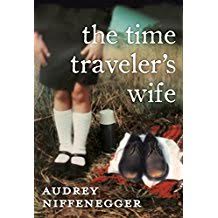
So reading has been pushed to the margins of my life, to the rare times when I’m not working on anything new. An advantage of this is that the great books, such as The Time Traveler’s Wife, really stand out. This one in particular opened new doors creatively speaking because it showed me that if your characters were strong enough you could take your readers anywhere. As a writer, it made me brave and I do wonder what else I would learn if I had more bandwidth to read.

I’m also aware of the need to read successful authors in my genre and books which break out of the ordinary and get talked about. Then there’s the guilt-induced consumption of books by authors you know and feel you should review. So is reading purely for pleasure a thing of the past for me?

Thankfully, no. I have learnt to be incredibly selective and not to finish a book if I’m not enjoying it. There is a difference between books I read for research and books I read for pure joy. And in the last few weeks I actually became very excited about the launch of a new novel for the first time in years. But more about that anon, because Su Bristow’s Sealskin deserves an article all of its own.


Eating Disorders – Missing the Signs

StockSnap_RAW1RLRTM7

If you’ve been reading my previous articles I know what some of you are thinking. She’s a bit dim isn’t she? How could she not know her daughter had an eating disorder?

That’s what I thought too. How could I have not known? Mother’s should know everything; they are meant to care for and protect their child against all comers.

What a shock it was. I was ashamed. I was a bad mother. Yes, I should have known.

Of course, I knew there was something wrong, I just never dreamed that it was an eating disorder. She wasn’t the type, was she? She loved her food. How wrong I was to dismiss it. It cost us precious time.

The thing is, most people are under the impression that eating disorders are anorexia. End of. Unless they are skeletal they can’t possibly have a problem. Big mistake.

My daughter was hiding things well. If someone wants to keep a secret they will go to great lengths not to be discovered. And my daughter was 19. She went to work, she could drive, she was an adult. She’d been ill for a couple of years – not all the time, some times were worse than others but I knew something was wrong. I went with her to the doctors, got referred to consultants and none of them could find anything wrong. No one mentioned her mental health, no one mentioned eating disorders. They were looking at the physical – as was I.

I took her to numerous alternative practitioners, had a nutritionist come to the house. Again, not one mention of eating disorders. Did they guess and not tell me? I doubt it.

She had always been feisty and strong willed – which can work for you or against you. It was the latter on this occasion. You need huge willpower not to eat. You need lots of determination. A steely core.

She was a stroppy teenager – who isn’t. I had been a stroppy teenager – I’m quite sure my mother still bears the scars from the lacerations of my sharp tongue. My daughter didn’t do anything I hadn’t done, only she did it to extremes.

I knew something was wrong and I was right.

And it would be well to remember this: if you think something is wrong it usually is – so persevere, get help. Don’t dismiss your instincts – they are the most powerful thing you possess.


Tracy Baines has written a book about how her daughter’s eating disorder impacted on her family. The book It’s Not about the Food is part memoir part self-help guide. It contains resources she found helpful and quotes from many other parents she either interviewed or who responded to her questionnaire.

www.b-eat.co.uk

www.tracybaines.co.uk

An Authentic Mexican Experience: Peyotito Review

After paying homage to our favourite cocktail, the Margarita, we decided to tail end National Margarita week with a trip to one of London’s most hotly tipped Mexican restaurants, Peyotito. As well as delving into their perfectly executed cocktail collection, we also ventured into their predominantly gluten and dairy-free menu to get a taste of the honest flavours of Mexico.

fullsizeoutput_e01

Having sampled many a Tex-Mex menu travelling through America, it’s not easy to come across Mexican cuisine outside of Mexico which is truly accurate and it’s something I certainly find lacking in London. Well thank goodness for Peyotito and well done to them for restoring the reputation of Mexican cuisine. The menu is a far cry from burritos and chimichangas and something much more accurate to the authentic dishes of Modern Mexico without the Texan twist and it goes without saying, the drinks list is authentically Mexican too.

fullsizeoutput_e00

Our favourite, the signature ‘Peyotito’ Margarita made with Mezcal instead of Tequila, packs a smokier punch than tequila but much more evocative of true Mexican style. You’re encouraged to sip slowly rather than knock it back and my favourite touch is that the ‘Peyotito’ Margarita contains a vial of mezcal inside your glass to add as you please or to enjoy on the side. Tajin coats the rim of the margarita which completes the well rounded flavour profile. Mezcal is much appreciated here at Peyotito with the old Mexican saying: Tequila to wake the living, Mescal to wake the dead’ emblazoned on it’s wall, gives you an idea of how to drink and dine the Mexican way and I thoroughly recommend trying some of the mescals they have on offer. Famously it’s the only spirit to not give you a hangover.

It’s the little of touches that really add class and panache to a place like Peyotito, which is the sister venue of Mayfair’s Peyote. Set in an indoor garden-like haven, you’re really a far cry from having mariachis and sombreros thrust in your face which is a rarity. On arrival you are presented with corn chips and three different accompaniments, Salsa Verde, a deeper, smokier and fiery chilli dip and a refreshing peanut dip. The chilli dip comes with a warning and with the deep flavours of Habanero which comes before the heat, it’s hard to not want to keep delving back in to experience the richness of the sauce. We recommend going for a bowl of their chunky Guacamole on the side to offset the heat.

Our waitress gave us a run down of all that was on their menu and recommended that most of the dishes are good for sharing. We were keen on trying a lot of what was on their menu and there really was a varied and mouth-watering selection. In terms of smaller dishes, they offer a couple of soups dishes, salads and crudo which is mainly comprised of sushi-grade yellowfin tuna but true to Mexican style served alongside corn, avocado and salsa. We decided to go for one of three ceviches on offer their signature dish, which is a scallop ceviche made with fresh coconut, cucumber and serrano chile. We then opted for a fish taco and a 24 hour braised lamb taco and from the mole side of the menu which means cooked in a sauce, we opted for the short rib.

fullsizeoutput_e03

BLANCO

When the food arrived it’s presented with no extra frills, simple, authentic and naturally stunning. The colours of the tacos and the different ingredients just bounce off the table. The portions are reasonable, not heavy but also bursting with zesty and vibrant flavours. A real feast for your eyes, there be no heavily starchy food here covered in cheese with a side of beans. This is really impressive, honest cooking made with typical Mexican flavours and enough to transport you straight to the food carts of Oaxaca. The first thing you notice when you start your dining experience is at how fresh everything tastes and how well balanced all of the dishes are.The food is of the highest quality and this is noticeable from dish to dish. Having chosen the signature ceviche dish ‘Blanco’ it was interesting to see how the delicate flavour of scallop would be complimented but the coconut, cucumber and chile are not overbearing in the slightest. The coconut is presented as an almost delicate soup in the bottom of the shell and is just the right combination of zesty and subtle.

fullsizeoutput_dff

fullsizeoutput_e02

Both taco dishes are presented on soft corn tacos, which I much prefer to it’s crunchy counterpart, the dishes are easily manageable with a knife and fork here. The sea bream is well cooked with a crispy skin left on and soft fish melting underneath. Bravo for our skin-on fish tacos this is much appreciated and adds an extra complementary texture to an already stand out dish. The lamb tacos are also robust in flavour bursting with a herbaceous yet smoky and sweet note; every mouthful is as divine as the last. The short rib is decadent, presented in a similar style to a beef dish you may encounter in a french bistro it’s full of the rich, chocolatey mole and served alongside seasonal veg. It personally resembled an elegant Sunday roast but with a flaky, fondant meat served with intense robust flavours of mole. After making our way through the dishes, we were happily full and well satisfied at the varied selection we had chosen but opted to go for the Flan De Vanilla to share. This baked custard dish was creamy, more-ish but still light, a theme which seems to go through all of the dishes we tried.

IMG_8386
If authentic Mexican dining is what you’re after with a side of London’s best Margarita, in my opinion, Peyotito is definitely the place to be. The restaurant is vibrant, attention to detail is on point and the dishes are honestly first class in terms of quality of the food, flavour and value for money. Great for a quiet date, dining alone or with a group of friends, the staff are attentive and will make sure your every need is catered for. It’s a refreshing change to a lot of Mexican restaurants I have tried in the city and also fills a gap of sophisticated Mexican dining with a much more laid back and edgy feel to it. So if a slice of authenticity is what you’re after make sure to make your rezzies at Peyotito.

Peyotito

31 Kensington Park Road, London, W11 2EU
Notting Hill, London
020 7043 1400
reservations@peyotitorestaurant.com

http://www.peyotitorestaurant.com