My Bangkok Life – The Elephant Parade Words and images by Alex Bannard

My Bangkok Life – The Elephant Parade

Words and images by Alex Bannard

Alex Bannard,Frost Magazines’ Bangkok correspondent, explored Lumpini Park to see the Elephant Parade. She found that this uplifting and colourful morning provided an insight into a worth cause.
My Bangkok Life – The Elephant Parade Words and images by Alex BannardA
We moved to Bangkok at the beginning of August 2015, following in the footsteps of the hubby, Mr P who had arrived at the beginning of March to start his new job. We loved it immediately: the food, the culture, the people, the weather. We’ve made some really wonderful friends, settled in & it feels like home already. Now it’s time to start exploring.


My Bangkok Life – The Elephant Parade Words and images by Alex Bannard1

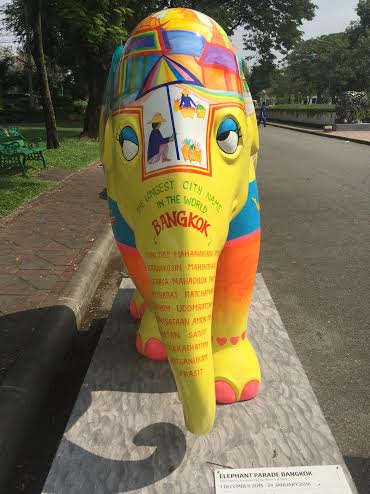
The Elephant Parade has been visiting Bangkok during December & January so we headed off to Lumpini Park keen to see it. I had suggested we take the water taxi, quicker, more fun for the kids but Mr P said the traffic would be fine on a Sunday. An hour later & much whining & pressing of each other’s & my buttons from the back seat & we finally arrived.

My Bangkok Life – The Elephant Parade Words and images by Alex Bannard2

We put the lead on the puppy & headed off to find the parade. Only to be stopped by security, no dogs allowed in the park. Seriously? For a moment my love affair with this amazing city faltered. But being a selfless character, I handed the lead to Mr P & said, ‘Well I’m going, you can stay here with the dog.’ He went for a snooze in the a/c’d car, win win all round.

My Bangkok Life – The Elephant Parade Words and images by Alex Bannard3

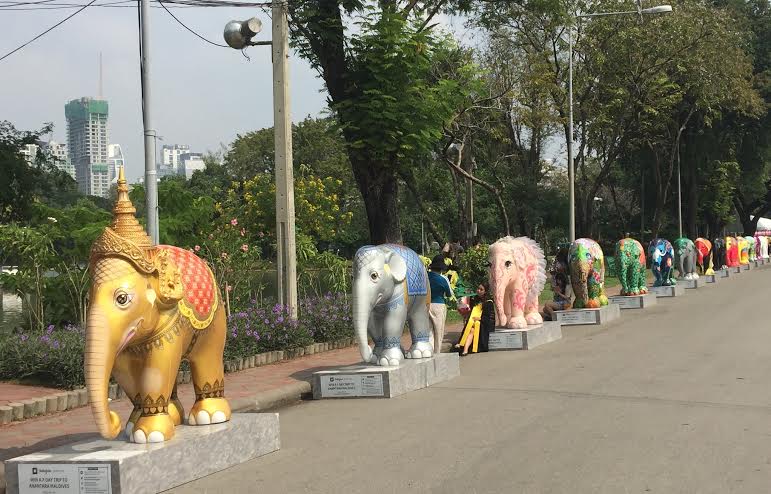
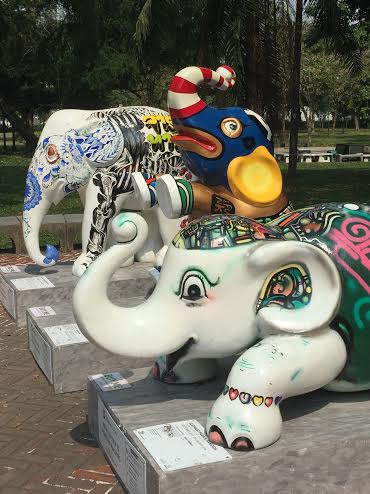
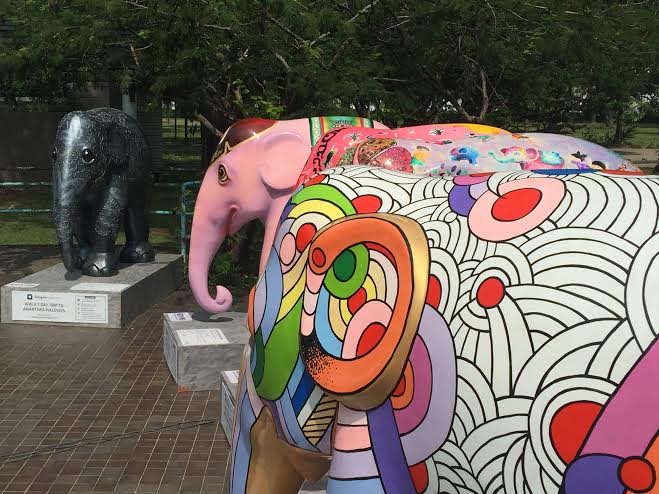
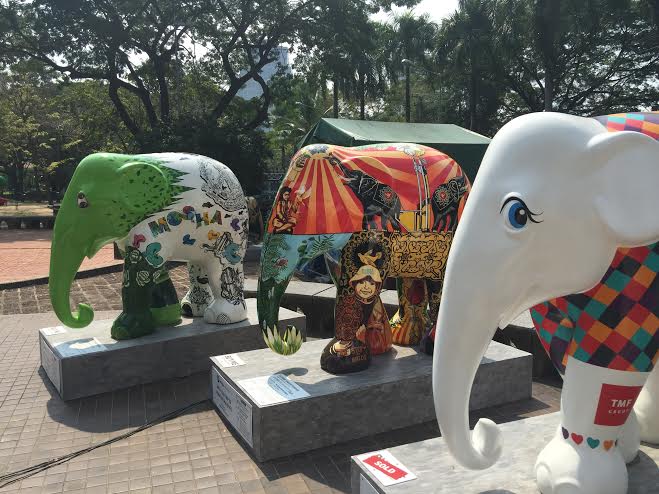
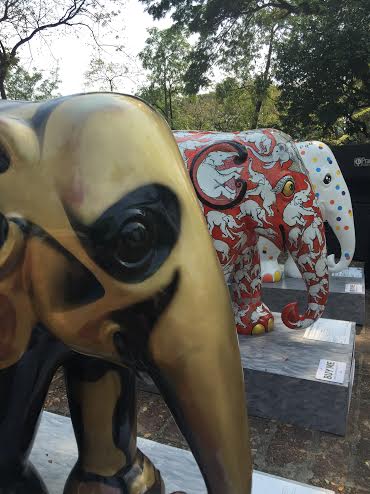
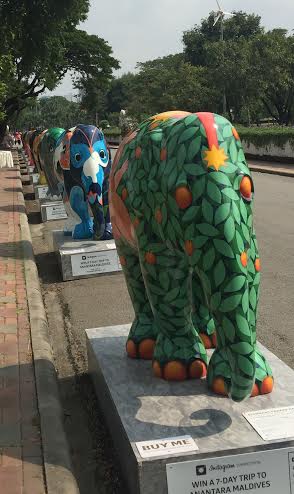
Aside from passing lots of Soi (street) dogs as we walked through the park & the sweltering heat, the parade was delightful. My daughter bumped into one of her ballet-class-cohorts & posed mercilessly by almost every elephant, having recently been taught the art my one of her friend’s mothers whilst my son was chief photographer.

My Bangkok Life – The Elephant Parade Words and images by Alex Bannard4

The Elephant Parade is the brain-child of Marc Spits who visited The Friends of Asian Elephant Hospital in Thailand with his son, Mike & meet Mosha a baby elephant who had lost a foot at 7 months old thanks to a landmine accident. She has a new prosthetic leg fitted every year & every year has to learn to re-walk again.  The Parade was set up to raise awareness & money for the plight of Asian elephants, many of which no longer have work & are forced to beg for food with their mahouts thorough the busy Thai streets.

My Bangkok Life – The Elephant Parade Words and images by Alex Bannard5

The Parade, which started in 2006 has visited many European & Asian cities including Milan, Copenhagen, London, Amsterdam, Hong Kong, Singapore & California. It is the largest exhibition of decorated life-sized elephant statues painted by celebrities & artists including Katy Perry, Sir Richard Branson, Paul Smith, Goldie Hawn, & here in Bangkok people like Nancy Chandler who makes wonderful maps & cards of Bangkok & local actors & artists.

My Bangkok Life – The Elephant Parade Words and images by Alex Bannard6

The elephants are auctioned afterwards to raise money – I went on line desperate to obtain my favourite Elephant but rather staggered at the average bid being around 250,000bht, more then £4,500. It is an auction only for the hi-so of Bangkok, not your average expat. But miniature replicas are available on line & you can buy packs to paint your own if you are a budding artist.

My Bangkok Life – The Elephant Parade Words and images by Alex Bannard7

The charity pledges to provide at least £50,000 in donations each year to support 25 elephants rescued from domestication or the streets, supporting the mahouts & their families with English lessons, education & even a livelihood for the wives in building their own silk worm farms. A great cause, some fabulous designs, definitely worth checking out.


Valentines Ideas: Perrier-Jouët Small Discoveries Blason Rosé Coffret

Valentines Ideas- Perrier-Jouët Small Discoveries Blason Rosé Coffret

Since Perrier-Jouët was founded on the love story of Pierre-Nicolas Perrier and his wife Adele Jouët, the Perrier-Jouët Small Discoveries Blason Rosé coffret is a Valentine’s collection with romance and surprise at its very core.


It includes:


·         Two champagne flutes which reveal a dazzling secret: When filled, their beautiful butterfly engravings cause bubbles to cluster and spiral upwards through the length of the wine

·         A bottle of Blason Rosé – the first rosé champagne created by Perrier-Jouët

·         A presentation box decorated with a flutter of butterflies and wrapped in green ribbon – Perrier-Jouët’s emblematic colour 


Perrier- Jouët Small Discoveries Blason Rosé coffret is the third release from the ‘Small Discoveries’ collection – a longstanding collaboration between Perrier-Jouët and award-winning Viennese design duo mischer’traxler. Small Discoveries celebrates Perrier-Jouët’s philosophy of fine craftsmanship and use of nature. 

Mischer’traxler has taken inspiration for ‘Small Discoveries’ from the core principles and rich variety of expression associated with the Art Nouveau movement: combining art with craftsmanship, and infusing nature and beauty into everyday objects; the proponents of which remain at the heart of Perrier-Jouët’s House philosophy. References to nature and the use of handcraft processes, two characteristics so vital to the artistic movement, have been utilised by the laser engraving of two butterflies on the inside of the flutes which, when the glass is filled bubbles flutter to the top.

Blason Rosé is the first rosé champagne created by Perrier-Jouët. It’s name derives from the ‘Blason de France’ range, created by the House in 1956. Blason Rosé is a subtle blend of 50 different ‘vins clairs’ from the best parcels of the House’s vineyards.  Built upon the great love of Pierre-Nicolas Perrier and his wife Adele Jouët who together established the Champagne House Perrier-Jouët in 1811, Perrier-Jouët’s Blason Rosé carries their legacy of love in every bottle.

Described as the house’s most gourmet wine, it is a fresh salmon pink in colour with an intense and lively palate which has great length and character. The finish is complex and persistent.


Available in store and online for £70 at one of Frost’s favourite shops www.fortnumandmason.com


One in Five Brits Have no idea How to Make Pancakes

Where to go for Pancake Day, pancake, pancakes, shrove tuesdayHappy Pancake Day! Will you be making your own? If so you are ahead of one in five other Brits. Pancakes are Britain’s most ‘faked’ dish, according to new research.

One in five Brits has no idea how to make them and admits to passing off store-bought and ready-made pancakes as their own.

And the humble pancake is the nation’s number one faked food – ahead of gravy, sauces, cakes and soup, according to a survey of 2,000 adults by Lyle’s Golden Syrup.

The main reasons cited for food fraud were lack of skill (20 per cent) and lack of time (12 per cent).

Lyle’s Golden Syrup spokeswoman Sara Harrison said: “We understand people are time-poor and are therefore turning to pre-made pancakes, so let’s celebrate panfakery. Whether you’re faking it or making it, we want to spread Lyle’s smiles this Pancake Day.”

Top of the pancake toppings this Shrove Tuesday are sugar (68 per cent), golden syrup (48 per cent), maple syrup (43 per cent) and ice cream (34 per cent).

The ten most-faked dishes in the UK:

1.      Pancakes

2.      Gravy

3.      Sauces

4.      Cakes

5.      Soup

6.      Mashed Potato

7.      Pasta

8.      Bread

9.      Pie (sweet or savoury)

10.  Chocolate Mousse


In a bid to help busy Brits spread smiles this Pancake Day, Lyle’s Golden Syrup has launched the UK’s first ‘PanMail’ delivery service, offering time poor Brits emergency supplies of pancakes and delicious Lyle’s Golden Syrup delivered straight to their door.

Visit @WeLoveBaking on Twitter to find out how you can receive your own PanMail delivery this Pancake Day.


Shoe Aid – Because Walking Barefoot Should Be A Choice…

Capture‘We’re shoe people….that’s what we do.

Can you imagine a life where you and your family cannot afford a simple pair of shoes? For 300 million children worldwide, this is a reality. They do not have a choice to be barefoot because their families are too impoverished to afford an essential pair of shoes. We’re working to change that, and you can help’.

Shoe Aid UK


In 2004, Lee Todd, who had created a career in the shoe business for himself watched on television a video of a single shoe washing ashore after the calamitous 2004 Indian Ocean Tsunami. It was an image he never forgot and it moved him to develop the Shoe Aid charity in 2010.

With Lee’s leadership and Shoe Aid’s core team, Shoe Aid has collected tens of thousands of shoes for people in need. In partnership with The National Police Aid Convoy the shoes collected have benefited and helped improve the lives of people in the UK, Malawi, Gambia, Uganda, Zimbabwe, Russia, Albania, Pakistan, Ghana and Rwanda.

Strategically placed shoe bins are used to collect used and new shoes. These can be found in participating schools, offices, factories and religious and retail establishments. Shoe Aid is working to establish itself as a leading global charity that will continue to provide needed shoes to people in the UK, developing nations, disaster zones and refugee camps. In addition, Shoe Aid aims to help develop micro-businesses in developing countries where they will teach people how to create commerce on gently worn shoes. Any newly donated shoes will be proudly allocated as designated by Shoe Aid.

Shoe Aid is also doing long-term planning to help those in poverty in the UK with a vision of establishing charity shops throughout the UK for people in need of re-purposed shoes at a nominal price.

ShoeAidSlider2

Why Shoe Aid?

As a UK charity, Shoe Aid are passionate about what they do. Every day, they are seeking ways to help improve the lives of children around the world by working with global partners to collect donated shoes. The shoes that are collected are sent to parts of Africa and Eastern Europe. The pieces are then repurposed and provided to impoverished families.

‘We need you to join us. We have a lot of work to do and we need businesses, companies, charities, schools and individuals to add their voices and efforts to our movement. Together, we can make a difference, not only in Eastern Europe and Africa, but also right here in the UK. Help support our efforts and make a difference in a child’s life today’.

12 New Terrace
Sandiacre
Nottingham
NG10 5PU

Phone: 07947 686333

E-mail
lee@shoeaid.com

About Shoe Aid…

Shoe Aid is a charity (in the process of registration) established to raise awareness and help the 300 million children worldwide who do not have the ability to obtain a pair of shoes, which are necessary for hygienic and health reasons, for work and school, due to the devastating ills of poverty. Shoe Aid believes that walking barefoot should be a choice, not a hardship.

www.shoeaid.com

@ShoeAidUK

Facebook: ShoeAidNottingham


The Boy From Nowhere Gregor Fisher By Mary Higgins

Last Christmas I bought my mother a book.

So what, I hear you say.

Well, she is practically blind and cannot now read.

‘I shall read it to you,’ I promised.

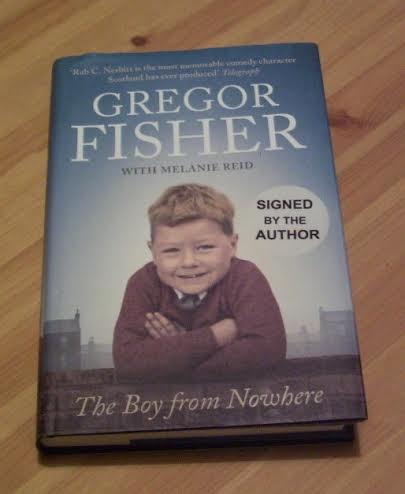
The book is ‘The Boy from Nowhere’; the story of one of Scotland’s best loved comedy actors: Gregor Fisher of Rab C Nesbit fame.

The Boy From Nowhere' Gregor Fisher By Mary Higgins

Gregor, along with Telegraph columnist Melanie Reid, researched his past, sifting through the layers of lies and deceit surrounding his life and the reason why he came to live in the village of Neilston, with his aunt Cis, at the age of three.

I chose this book because we live in Neilston and remember Gregor growing up in the village; a likeable boy who always had a story to tell; we would sit on the roundabout in the swing park listening to his soft voice and laughing at his jokes

The book is riveting from the start, with an honesty which is both disturbing and refreshing.

The descriptions of his life back in the 50s and 60s have stirred memories of my own childhood in the village reminding me of how difficult life was back then.

A picture is painted of a very happy childhood – happy, that is, till he finds out that Cis, the woman he calls mum, isn’t his mother at all – But, in true west of Scotland style, he quickly gets over it and doesn’t let it spoil his happiness for long.

Although the family were close and the atmosphere was loving, the people he called mum and dad were, like most inhabitants of the west of Scotland at that time, undemonstrative. This lack of physical contact caused Gregor a few problems when he finally arrived into the touchy feely world of show business. But, like a true Scot, once again he got over it.

He was accepted into the Royal Scottish Academy of Music and Drama and, after a laugh-out-loud moment when he has to wear tights and a leotard, he settles in but his lack of confidence meant that he never felt that he belonged.

His career really took off when he was offered an acting job and an equity card. This opened up all kinds of possibilities for him. He was off on his journey as an actor, forging lifetime friendships along the way.

I am well into the story now, reading one or two chapters per day, only stopping when my voice becomes hoarse; reading aloud takes a bit more effort than reading to oneself.

I feel an excitement when I reach for the book, The Boy from Nowhere has awakened memories and feelings within me which I haven’t touched on for some time but, each evening, I look forward to switching off the TV and with the face of a young Gregor smiling out at me, I wait till my mother settles back into her chair in anticipation then open at the page we finished on the night before and begin.


A remarkable hands on charity: Forces Support by Margaret Graham

A remarkable hands on charity- Forces Support A

Margaret Graham was a Royal Naval service wife, back in the days of the Gulf War, and during that time was disturbed to learn of a girl on her service ‘patch’ whose husband was killed in the conflict. This young widow and mother of young children had to relinquish her service quarter in short order, and move into other accommodation when she was least emotionally and physically in a position to do so.

The council house she was offered was in shabby condition and the garden a jungle. It was the last thing this widow, and her children needed to face. If only Forces Support had been in existence then.

Frost Magazine decided to find out more about this inspiring charity and the work it does.

Forces Support is the only UK charity that provides a unique type of practical support to families bereaved throughout the Iraq and Afghanistan conflicts.

The charity was established in 2010 by Bill McCance. Bill had searched relentlessly for a charity to provide practical assistance for the wife of a serviceman killed in Afghanistan and was amazed that this type of support wasn’t available anywhere. Strongly believing that practical maintenance work around the home and garden was vital and should be readily available Bill’s only option was to set up Forces Support.

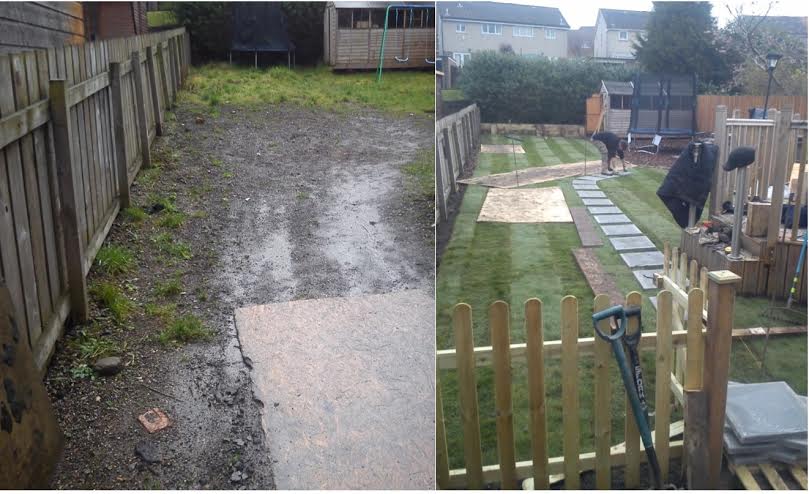
pic 1Before & After 2 (2)

Since then the charity has already carried out over 300 support projects for bereaved military families including for nearly 70 of the 453 families who lost a loved one in Afghanistan. Forces Support carries out projects for partners, children and the parents of the bereaved.

Initially the jobs were relatively small, decorating a room, putting up shelves or tidying the garden, jobs that the lost hero might have done themselves.  As word spread the projects have grown in size as the needs of the families became more apparent.

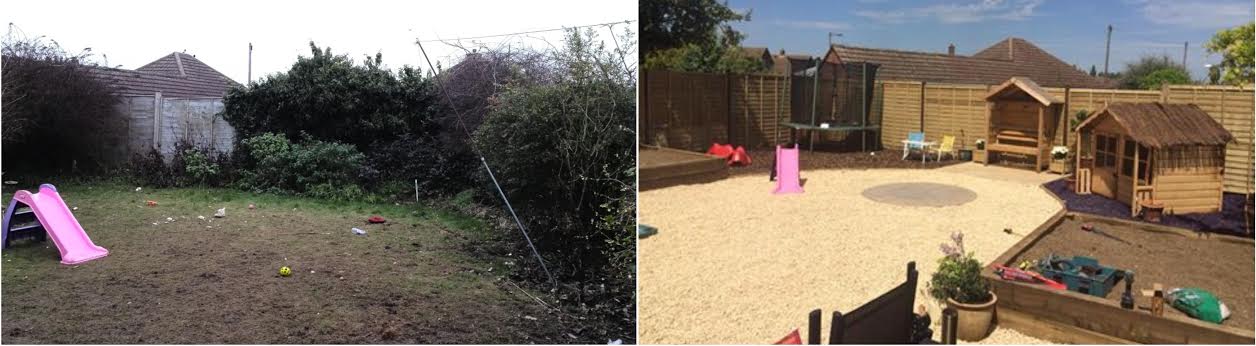
pic 2 Before & After1 (2)

Much of the charity’s work these days is carrying out garden improvements. A number of the families lose all interest in their garden and they become overgrown, neglected and a reminder to them of how they aren’t coping with their loss.

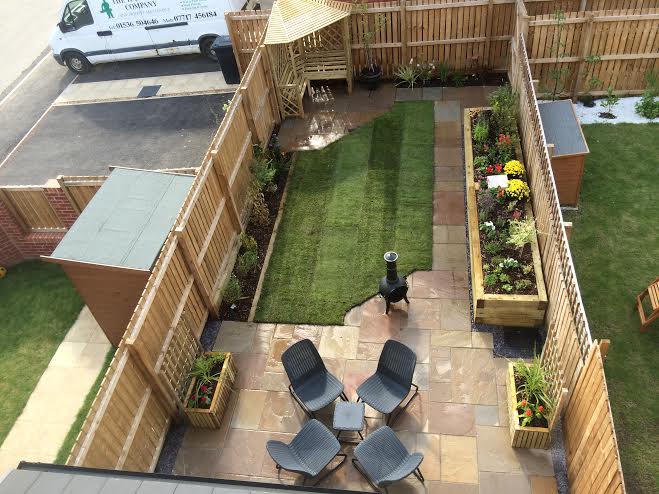
Forces Support team go in and makeover the garden for them, relaying patios, replacing broken fencing, laying turf and creating flower borders. The transformation can be quite spectacular. For many of the families Forces Support create a remembrance area with an arbour so that the families have a quiet special place in which they can sit and remember the person they have lost.

“We are so proud of the work we do for these families who have lost not just a member of their family but a hero too. The feedback we receive is so heart-warming and encourages us to keep going and growing. Many of the families report that the work we do goes way beyond just the practical nature of the work … but how it has significant benefits in helping them cope with their loss and aid their healing”, says CEO Bill McCance.

pic 3 finished from above

A study carried out by eminent specialists in bereavement study recognised the significance of Forces Support role in this field and identified their work as fulfilling a need and created a new form of bereavement care called Restorative Coping Bereavement Care.

Already the charity has carried out work for the families of Lee Rigby, the young fusilier who was brutally murdered in broad daylight in London in 2013, for the parents of LCpl James Ashworth VCone of only 14 to receive the Victoria Cross since WW2 and for the family of Lance Corporal Liam Tasker, who was killed in Afghanistan in 2011. His dog Theo died on the same day following a seizure.

Rob Fellows, Head of Major Gifts, commented “Readers can follow the progress of the projects on our active Forces Support Charity Facebook page, where we have 112,000 followers. Already we have aided many bereaved military families but there is still much for us to do and we always have a waiting list of families to help. We welcome donations, large or small, from anyone who’d like to support us helping more bereaved military families.”


www.forcessupport.org.uk

rob.fellows@forcessupport.uk

www.facebook.com/ForcesSupportCharity


A Perfect Six Nations Supper

With the storms forcing us to all batten down the hatches, I have temporarily swapped the gale force winds in the Channel Islands for the driving rain and bluster of Imogen blowing over Bristol just in time for the rugby. By now we will have had the first weekend’s Six Nations results but it is not too late for a perfect and suitable supper, coq au vin, the rich, satisfying, classic French peasant dish. It is generally accepted that it has a long history as a rustic, rural, recipe, however,  it only first appears in cookery literature in the late eighteen hundreds.

The two most popular stories about the creation of the dish involve Napoleon and Julius Caesar, of the two, as a long term Asterix fan, I like the Caesar story.After the conquest of Gaul, now part of modern-day France, the story goes that the natives presented the victor with an old gamey, rooster. The rooster is a tough proposition – excuse the pun and requires long, slow cooking. The rooster was cooked by Caesar’s chef simmered in wine ( a method of cooking extremely popular with the Romans, whatever else did they do for us ? ) and the end result was said to be very successful. Traditionally then the rooster or any tough old bird benefits from first marinating in wine* then gently braising, and the addition of the carcass adds a richness to the finished sauce.

A little Whine ! The Internet has failed to provide me the name of, at a cursory glance, the first person to say that if you would not drink a wine you should not cook with it. I certainly remember the late, great and sadly missed Keith Floyd elucidating, sometimes less than clearly, that this indeed is the case. He certainly was a fan of checking the quality of the vintage he was cooking with at the time. Your coq au vin does not need to be made with a first growth claret but will benefit from a full-bodied robust red. While it could be Australian or from Chile, I am at heart a traditionalist and believe that a Burgundy is best.
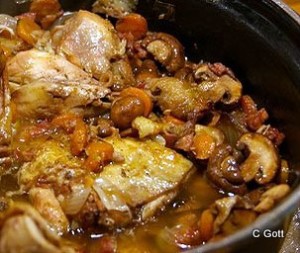
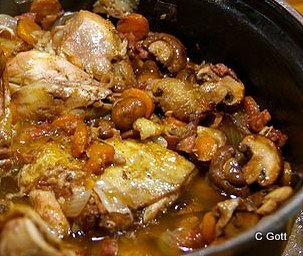
coq-au-vinMany regions of France have variants of coq au vin using the local wine, such as coq au vin jaune (Jura) and coq au pourpre (Beaujolais nouveau). In some variations of the dish, white wine is used, Riesling wine is popularly used in the Alsace region, with the addition of Morels and cream. In addition to the wine and chicken coq au vin is flavoured with the inclusion of fat bacon or salt pork, onion, garlic, mushrooms and a bouquet garni (thyme, bay leaf, parsley). The chicken is first marinated in wine, then seared in hot fat, this is essential to flavour and colour the finished dish. The meat, vegetables and aromatics are then simmered in the wine marinade until the meat is cooked and tender.

* No jokes, please

On a personal note, I find coq au vin an ideal dish for the slow cooker. A good coq au vin improves immensely if you marinade the chicken overnight and improves further if you leave it when cooked, overnight, in the refrigerator. If you cannot get a piece of bacon try to use the thickest rashers, you can find so the lardons will not break up during cooking. Celery is not a staple of many recipes for coq au vin but I agree with Nigel Slater as to the benefits it adds to the resulting dish and have included it below. If you want to peel baby onions you can but I find the result is in no way spoilt by using frozen baby onions. The dish is served in France with flat noodles or rice, it is equally appealing with steamed potatoes that you can crush in the gravy. I personally love a hefty chunk of crusty bread to soak up the juices and a lightly dressed green salad as an accompaniment.


Coq au vin                                                                                                                                                         Serves 4

A large chicken, jointed into 6 or 8 pieces, giblets and carcass saved

( ask your butcher if he can source a rooster and if he will cut it up for you )

for the stock

1 Onion, peeled and roughly sliced

1 Carrot, peeled and roughly chopped

1 stick of Celery, washed and roughly chopped

A small bunch of Thyme

A Bay Leaf, a Clove of Garlic and a few crushed Peppercorns


Butchers string

125 gr whole Pancetta or Unsmoked Bacon

2 medium Onions, peeled and finely chopped

2 Carrots, peeled, halved lengthwise and sliced

3 sticks of Celery, washed and finely diced plus one extra stick

3 Cloves of Garlic, peeled and finely chopped

200 gr Button Mushrooms, washed and halved or quartered if required

75g frozen Baby Onions

A bottle of drinkable Red Wine, preferably Burgundy

2 – 3 tablespoons Flour

75g Butter

4 tablespoons Cognac

A good handful of curly Parsley, washed and picked and finely chopped ( keep the parsley stems )

A small bunch of Thyme

3 Bay Leaves

Sea salt and freshly ground Black Pepper


For marinade ( you can omit this stage but it truly makes the dish magical ). Place the chicken pieces in a glass bowl and add the crushed garlic. Take one stick of celery and cut in half, into one-half place five or six stems of thyme, the bay leaves and the parsley stems. Sandwich the herbs with the remaining half of the celery stick and tie tightly together with string. Add to the chicken and cover with the wine. Seal bowl with cling film and place overnight in a refrigerator.

For the stock, place all of the ingredients in a large heavy bottomed pan, cover with water and bring to the boil. Set to simmer and cook for one hour. Remove the chicken pieces from the marinade and drain thoroughly. Reserve the marinade. Cut the pancetta into chunky lardons or short strips, they need to be thicker than a match but not quite as thick as your little finger. In a large thick-bottomed casserole melt one ounce of the butter over a moderate heat and gently sauté the lardons until crisp and light brown. Remove using a slotted spoon leaving the excess fat in the casserole dish.

Season the chicken pieces with salt and pepper and place them in the hot fat in the casserole, so that they fit snugly yet have room to colour. Sauté the chicken pieces and turn them when the colour is a nice light caramel brown. It is this colouring of the skin, rather than what wine or herbs you might add later, that is crucial to the flavour of the dish. Remove the chicken and set aside with the bacon lardons. Do not clean the casserole dish as the fat and juices in the dish are crucial to the flavour of the coq au vin.

Add the onions, celery and carrot to the pan and cook slowly, stirring from time to time, until the onion is soft and translucent. Add the remaining garlic, stir and then return the chicken and pancetta to the pan, stir in the flour and let everything cook for a minute or two more before pouring in the cognac and marinade including the bouquet garni. Strain the simmering stock and pour into the casserole until all the chicken is covered. Bring to the boil, then turn the heat down so that the sauce bubbles in a gentle simmer. Cover partially with a lid.

Melt the remaining butter in a small heavy-bottomed pan and sauté the mushrooms. Let them cook until they are golden, then add them to the chicken with the baby onions and a generous pinch of salt and pepper. Check the chicken after 40 minutes to see how tender it is. It should be soft but not falling from its bones. It will probably take about an hour, depending on the type of chicken you are using. Lift the chicken out onto a large plate and keep warm.

Turn up the heat, under the sauce and simmer vigorously until it has reduced by about a fifth and become shiny and glossy. Divide the chicken into serving dishes and cover with sauce, garnish with chopped parsley and serve.


The Ultimate Guide To Becoming a Successful Blogger Only £1.99 Until End of Today

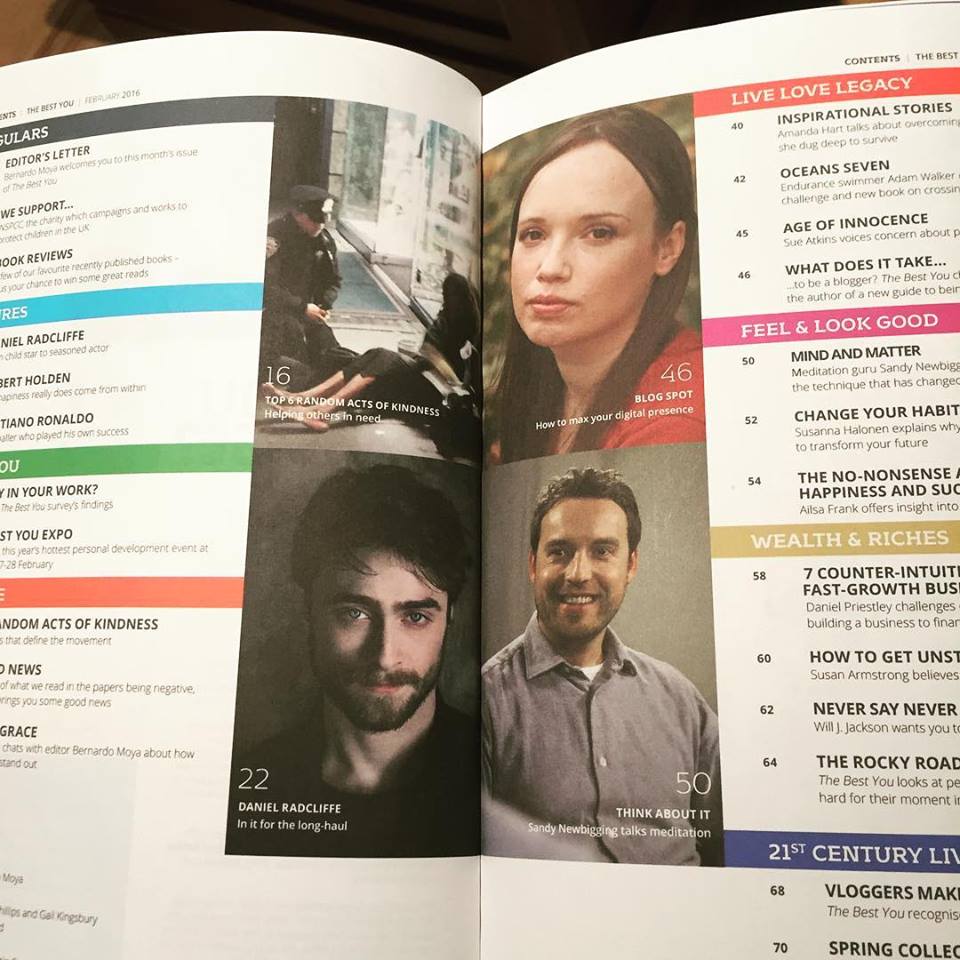
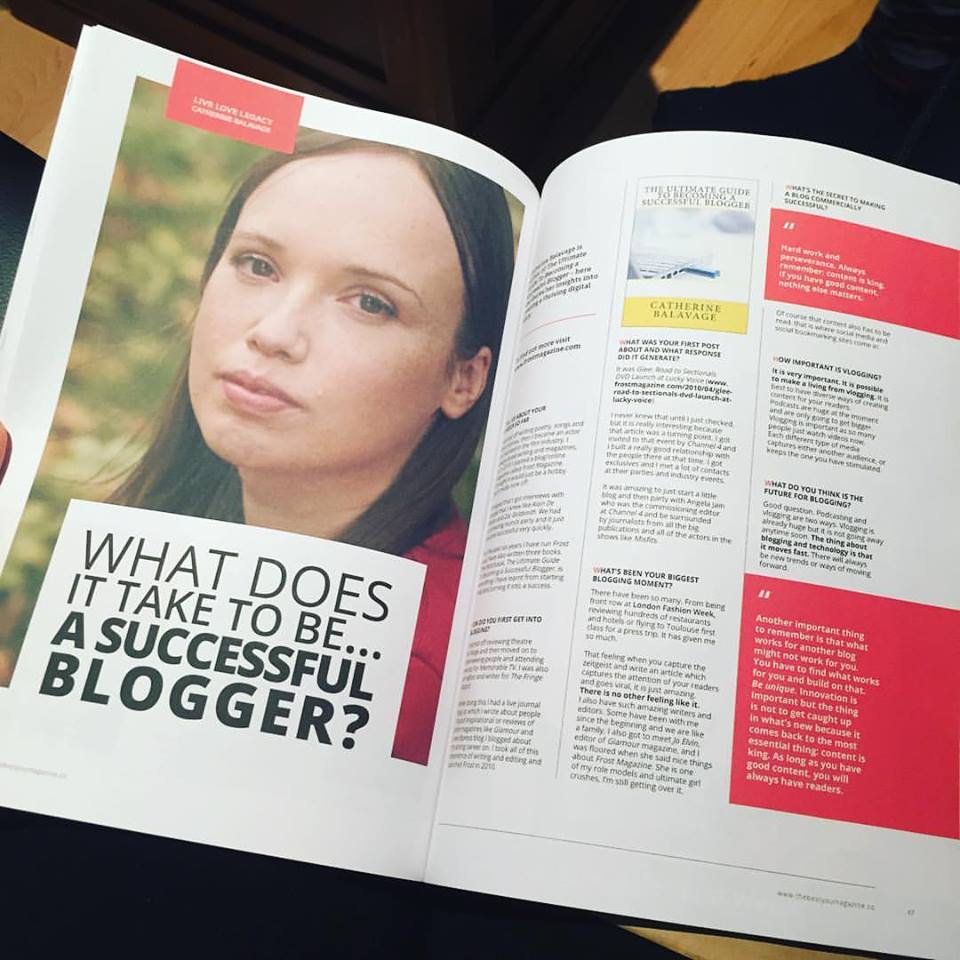
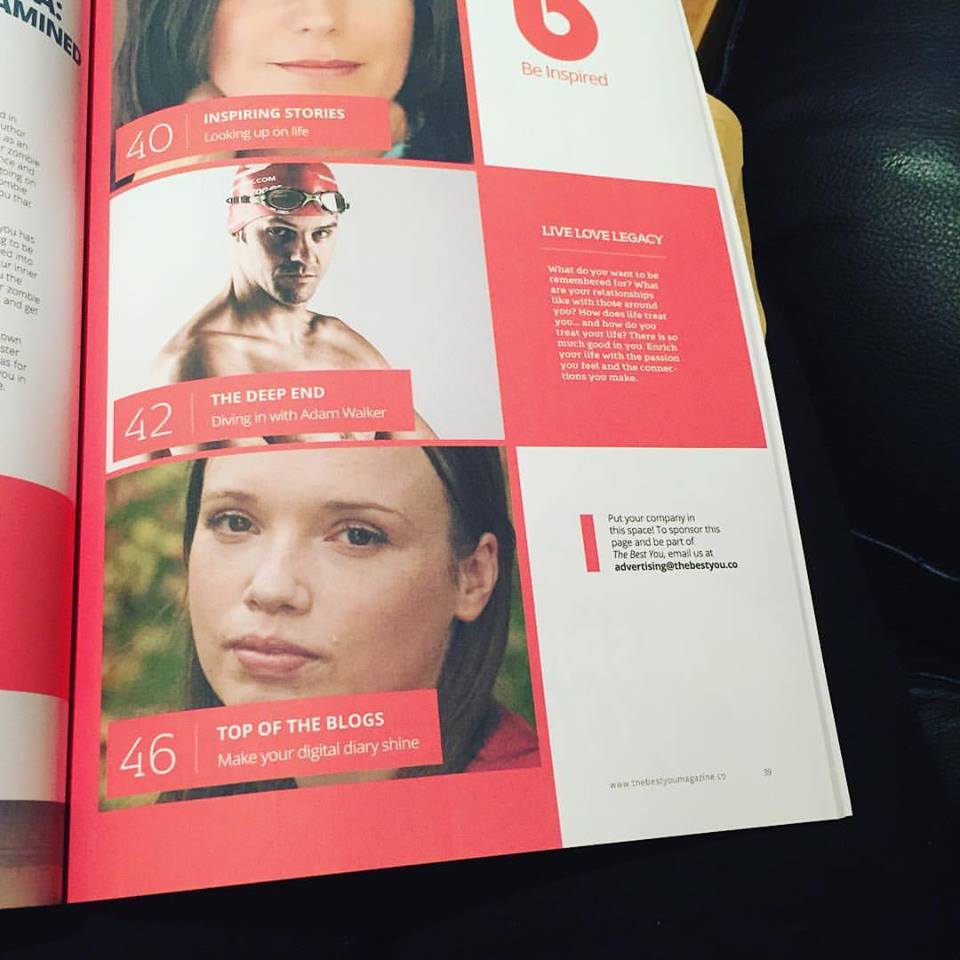
Our editor Catherine Balavage’s new blogging book, The Ultimate Guide To Becoming a Successful Blogger, is only £1.99 until the end of today. It has already had a four star review on Good Reads and a five star review on Amazon. Catherine was also interviewed in Best of You Magazine. The print copy of the magazine is out now. You can buy The Ultimate Guide To Becoming a Successful Blogger here

The Ultimate Guide To Becoming a Successful Blogger , blogging, blogs, how to be a successful blogger, blogger, blogging, Catherine Balavagecatherinebalavageinbestofyoumagazine3 catherinebalavageinbestofyoumagazine catherinebalavageinbestofyoumagazine1