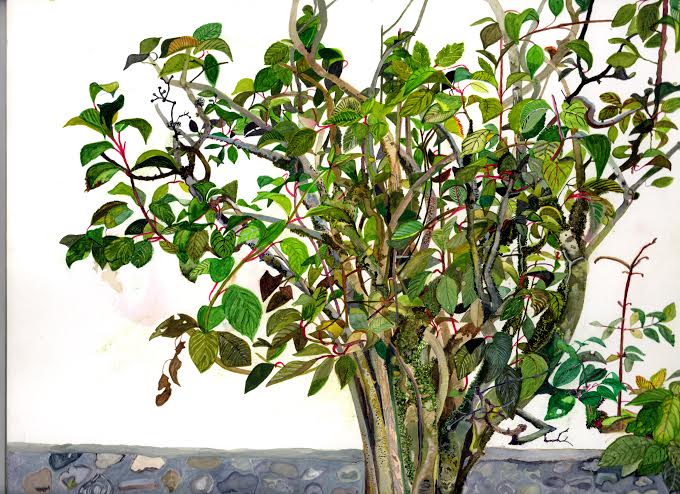
Early Chapters by Gillian Holmes of The Editor | Get Published

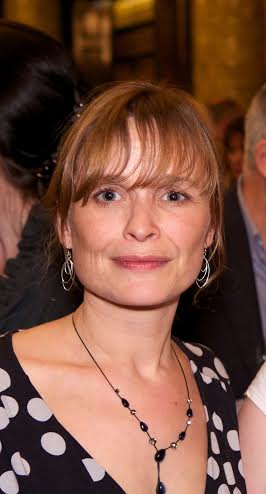
Meet Gillian Holmes – literary editor By Margaret Graham1

Frost is delighted to have an editor of Gillian’s calibre to help aspiring authors. It’s particularly apt, because the fundraising Independent Author Book Award, run by www.wordsforthewounded.co.uk is open for entries until 6th March 2016.


Last year’s winner, Jane Cable, is now represented by the Caroline Sheldon Literary Agency as a direct result of the competition. Felicity Trew of the Caroline Sheldon Literary Agency is judging this year’s Award.


So over to Gillian:


Early Chapters


It’s tough being a writer, and we editors appreciate that. I have never written a book – if you don’t count the half-written romance with a Daniel-Craig-as-Bond-type hero, but the least said about that the better. So all writers who have the tenacity and commitment to complete a novel have already earned my full admiration.


However, on the other side of the coin, having worked as an acquiring editor, a reader for literary agents, and a reader for competitions, you can appreciate, I’ve probably read more than my fair share of opening chapters and synopses. And sometimes I stop within half a page. It sounds brutal, but when you have a lot of manuscripts to read, you simply don’t have the time or the inclination to read on to see if it improves.


So here are ten tips to help you catch the eye of the judges.


First the Don’ts:


  1. Please do not, and really I mean this, open with a dream. Ask any editor/agent/reader. There is nothing more irritating than to be pulled into some action, only to find it’s not real. Can I add here, do not ever use dreams as a way to move the plot forward. Please.
  2. Do not open your book with backstory… if we don’t know the characters, how can we be interested in their backstory?
  3. Do not start the book with a minor character. No matter how good the writing, as soon as the reader realises that the character they have been reading about disappears by chapter 2, they will give up.
  4. Do not open with your character doing mundane stuff – getting ready for work, having breakfast, unstacking the dishwasher, going out the door – because although you may think it’s a great contrast with the explosive action that comes later, the reader may never know that. They’ll have given up just as your character is locking their front door.
  5. Do not mince your words. Starting any book with exposition and/or long descriptions of the character or location can be mind-numbing for the reader. Dive in, all will reveal itself as the book unfolds. Speaking of long descriptions: watch out for flowery language and too many adjectives. Having to wade through paragraphs of wordy prose before you even get to the story is frustrating and time-wasting.


Now the Dos


  1. Give the reader a snappy opening line that immediately intrigues.
  2. The submitted chapters should be the very best they can be, so I would suggest you hire an editor/copy editor. It can be an expensive business, but do it for just these three chapters in the first instance. It makes a huge difference to the reader, and could give you some useful advice for the rest of the book.
  3. Keep the pace moving and don’t get bogged down in irrelevant detail.
  4. Introduce us to your characters – the reader needs to be invested in them from the start.
  5. If you’re sending a prologue as part of your first three chapters, make sure it’s relevant and interesting, not just a convenient way to give backstory.

Soon I will be giving you some hints on writing the synopsis.


gilliansholmes@hotmail.com

www.wordsforthewounded.co.uk
http://www.carolinesheldon.co.uk
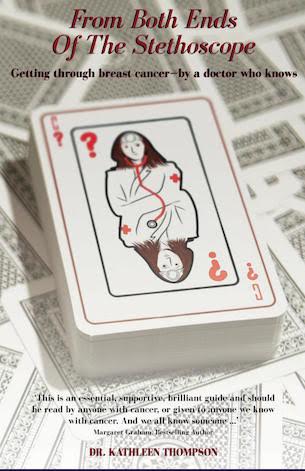


An interview with Dr Kathleen Thompson: Author of From Both Ends Of The Stethoscope and Frost’s medical correspondent

From Both Ends Of The Stethoscope by Dr. Kathleen Thompson book review, health, breast cancer,

Why did you write the book?

When I was diagnosed with breast cancer, I was surprised how hard I found it, even as a doctor, to navigate my way through the tests and treatments. It made me realise how much more difficult it must be for someone without any medical knowledge. This book is to help those people. I also wanted to give an insight of what it was like to have cancer, for the benefit of the friends and relatives of people with breast cancer.


What is your book about?

It uses my personal breast cancer experiences to guide people through their breast cancer treatment, explaining the various tests and procedures. It points them to further information sources too. Although full of information, it is simply written, in order to be easily absorbed by someone in a state of shock.

Later in the book I explain medical research. The internet is a fabulous source of information. The trouble is, it doesn’t have a truth-filter. Anybody can post anything, and there are numerous ‘cancer cures’ which are unsubstantiated and sometimes dangerous. When you have a serious illness, it is tempting to try anything. So, for these reasons, I explain how to assess whether a claim is valid, or whether it is misleading.

Finally I talk about the causes of cancer and what we can do to reduce our chances of contracting it – and it is surprising how much we can do.


What is the most important message of your book?

Take control. We lose control of our lives the moment we are told we have cancer—take it back. Don’t relinquish that control to anyone, even to your medical carers. They may do a fantastic job, but in the end, you are the one with the most at stake. You need to understand all your treatment options, discuss with your doctor, and then decide which are best for you, and make sure you get them.


Who will your book help and in what way?

Firstly it will help people going through breast cancer, or other cancers, as much of the information extends to all cancers.

Equally it will help the relatives and friends of people diagnosed with cancer.

It will also be of interest to anyone who enjoys reading about personal experiences and who is interested in improving their health, reducing their cancer risk and understanding medical research


Did being a doctor help you get through breast cancer?

In many ways, yes it did, and that is why I want to share my ‘inside knowledge’ with others. In some ways, though, it didn’t, and I felt as vulnerable, bewildered and uncertain about what to do as anyone else.


Can we do anything to help lower our cancer risk?

Absolutely yes—it is surprising how much we can do. Of course some people have a higher risk of cancerthan others, and sometimes, however hard you try, you can’t prevent it. But for many of us, we can shift along the seesaw of cancer risk—and so make ourselves go up, and not down.


Frost found From Both Ends Of The Stethoscope impressive, and important. If you know anyone who could use help after a diagnosis, don’t hesitate to point them towards the book.

From Both Ends Of the Stethoscope is available from all good bookshops and Amazon.co.uk


Amy Schumer Says Her Stomach Is Why She Has To Write Her Own Stuff

Always one to bring the party, Amy Schumer was the centre of the Critics Choice awards, making everyone laugh when she accepted the award for MVP.

“Thank you for this trophy, covering the reason I have to write my own [stuff], If you’re an actress and you have this area right here, [points to her stomach] you have to write your own stuff if you want to get it made.”

Then she made fun of how patronising the word “brave” can be.

“This is where I get really ‘brave’ as everyone said after my Annie Leibovitz photo. That’s what you want everyone to say when a naked photo of you goes viral. You want them to say, ‘What a brave photo.’ You’re like, ‘Thanks, wow, thank you,” .

Photo credit: wikipedia. Mario Santoro

Photo credit: wikipedia. Mario Santoro

She then thanked “the managers I fired.” Finishing with “This is so boring, I am so sorry you guys. Nobody cares,”


For more actors who make their own work read this article. You can also check out my new book, How To Be a Successful Actor: Becoming an Actorpreneur, out now.  It tells you all about how to become a successful actor.

Peace and Plenty and Annie Freud by Maya Pieris

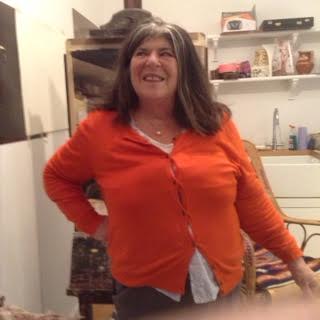
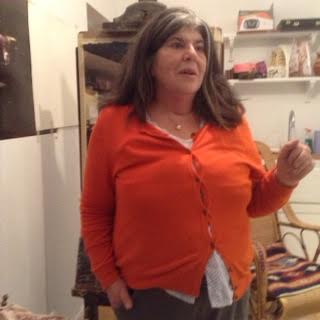
Annie Freud– teacher, embroiderer, painter, poet and brilliant party giver- is the daughter of Lucian Freud, great-granddaughter of Sigmund Freud and grand-daughter of sculptor Sir Jacob Epstein. She is also the proud owner of a new studio at her home, Peace and Plenty, in the heart of Dorset. Here from a window seat, which I would describe as more window bed, she has a view of fields, her husband Dave’s sheep and the slow train to Bath.

pic 1 frost annie imgpic032

The studio “is a first” and, along with a dedicated space for Dave means their interests which involve “paint, mud and dirt” aren’t a problem. And she’ll have the occasional sheep for a neighbour in the adjoining animal pens. It is now also home to her father Lucian’s easel which she inherited following his death in 2011 and on which currently she has just painted a “portrait” of The Fox and Hounds Pub, her local and home to the Cattistock Poets.

I’ve got to know Annie over the last 5 years through the Cattistock Poets which she started and leads, encouraging writers to find and listen to their own poetic voices, “to make it better..and to take it seriously”. She has also been responsible for organising some fabulous poetry readings to which she has invited a variety of other published poets.

Peace and Plenty and Annie Freud by Maya Pieris2

Her latest collection, The Remains, published this summer, contains 2 of my favourite poems – Aubergines and Abbotsbury, the latter which I heard Annie read in a beautiful, small, ancient Dorset chapel as part of a Christmas carol service. The Remains is her fourth collection and has established Annie as one of an exciting new group of poets – and a performer firmly committed to poems being heard.

The Remains is , however, proving an artistic turning point- another first- combining 2 loves, the visual and literary, the book illustrated by Annie with original paintings, some inspired by the Dorset landscape. When “I started writing poetry..I thought I would embroider in the mornings and write in the afternoon” but she found that this wasn’t working so put the visual to one side though found this “painful” needing this element to produce “something I would try to make more solid. I’ve painted all my life with pleasure but without enough self-belief but The Remains changed all that.” I asked her if her renewed need to paint was a rearrangement of two loves but she said that “was too easy, that one should not have self-limiting views of who you are or what you can do” and that painting fulfilled a physical need.

frost annie pic 3

But whatever the medium Annie is committed to work that will “move, disturb or delight”  the point being “what it is doing to other people”. She has also had another first this December with the setting of her poem The Sun Looks Forward to Winter to music by Benjamin Tassie for three female voice and hopes this time next year to see her first London painting exhibition happen.

As for Peace and Plenty- not her own invention but the name of the 2 cottages which form her very peaceful and plentiful home.


Jamie-Lynn Sigler: ‘I have Multiple Sclerosis’

Jamie-Lynn Sigler- 'I have Multiple Sclerosis'Sopranos actress reveals 15-year battle with the disease.

Sopranos actress Jamie-Lynn Sigler has revealed she has been secretly suffering from multiple sclerosis (MS) for almost 15 years.

The newly married actress married baseball player Cutter Dykstra in California over the weekend. She was diagnosed with the disease when she was only 20 years old. A year before that she had been diagnosed with Lyme disease.

She told People magazine “I wasn’t ready until now… You’d think that after all these years, somebody would be settled with something like this, but it’s still hard to accept.”

She had decided to go public about her illness because of her new husband and their two-year-old son Beau. She said, “I think I’m at a point in my life with my son, with my new marriage, it’s a new me and I want to live my truth. I don’t want to hold a secret where it feels like I have something to be ashamed of or have something to hide… It’s part of who I am, but it’s not who I am… I didn’t want him (Beau) to get to an age where he felt like he had to keep this secret for me as well… I wanted to be an example to him of strength and courage.”

She went on, “It was a shock, it was surprising… to get the diagnosis was confusing but also strange because I didn’t feel sick. I didn’t feel like anything was really wrong. At the time my ideas of MS were limited… I thought it meant wheelchair, I thought it meant your life was over. And so there began my almost 15 years of being in denial… I didn’t want to believe that was going to be my future.”

She admitted that her symptoms had been bad over the past ten years but she hide it from film and TV bosses, saying:

“Sometimes all I needed was like five or 10 minutes to sit and recharge but I wouldn’t ask, because I didn’t want them to be suspicious,” she says. “I can’t walk for a long period of time without resting. I cannot run. No superhero roles for me… Stairs? I can do them but they’re not the easiest. When I walk, I have to think about every single step, which is annoying and frustrating.”

The 34-year-old actress takes medication for the incurable condition. She says this has kept her symptoms stable for past six years.  She said: “Things are manageable now… It takes a fighting attitude to deal with all this. This disease can absolutely take over your life if you let it.”


Using a Copyrighted Picture Cost One Blogger $7,500. Why You Should Never Use Copyrighted Pictures

Using a Copyrighted Picture Cost One Blogger $7500. Why You Should Never Use Copyrighted PicturesDo you take images from Google without checking the copyright and hope for the best? Then stop. Pictures from Google and other search engines are protected by copyright law. It is rare to be sued over an image, or even to get a cease and desist letter, but it only takes one mistake to lose vast amounts of money. If you want proof then here is one example,

Chrystie from Living for Nap Time blogged about green pepper coupons in 2014, she needed an image so did a Google image search for a photo of green peppers, found one she wanted and then uploaded it, months later she received an email from a lawyer stating that the image cost $750. Chrystie pointed out that it was a picture of a green pepper that you can get a lot cheaper, the lawyer responded that the law was on their side and that their client wanted $7,500 in damages.

Chrystie researched the person in question and found out that they owned lots of domains and seemed to be planting clearly-tagged pictures to boost the SEO of the pictures. Chrystie thinks they did this to optimise the pictures so bloggers like her would use the image and would then sue the blogger in question. Chrystie had to hire her own lawyer. Her lawyer advised her to settle the case even though the chances of it going to court were small because if it did go to court she would be liable for the claim and all of the court costs, which could cost $100,000 or more.

The truth is, if you copy a picture from the internet and it is copyrighted it is protected by law and you are liable for the cost of the image or even damages even if you link back to the original source. So don’t do it, it’s not worth it! This case is American and people in the UK may be less likely to sue but it is not worth the risk.

If you need free images you can search Google for copyright-free images by clicking on the options icon in the top right hand corner then going to advanced search. If you then scroll to the bottom you will get to ‘usage’ and can click on ‘free to use or share – even commercially’. There are a few options, including an option to modify images. It helps to take a screenshot of the copyright-free image to further protect yourself. Don’t get caught out. You can also take your own pictures which is the best option as you can then tag them and get hits via Google Image Search. I will do another post on where you can get free images for your blog soon. In the meantime, stay safe.


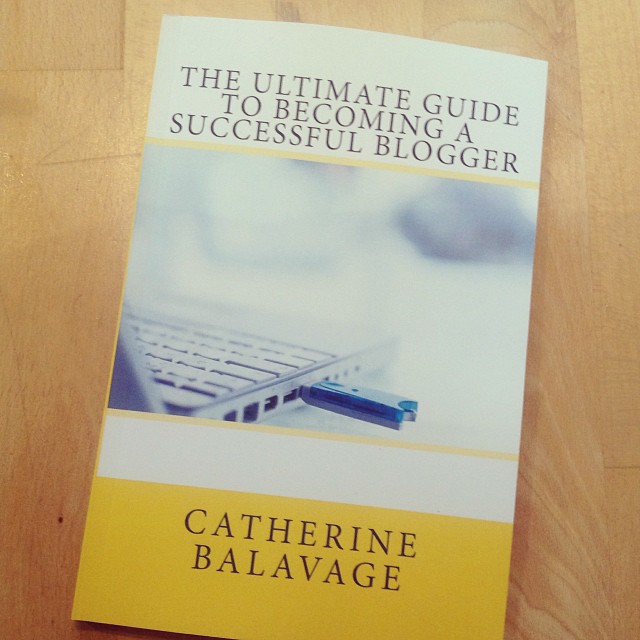
For more blogging tips like this check out my book The Ultimate Guide To Becoming a Successful Blogger. It tells you everything you will ever need to know about blogging. 

howtobeasuccessfulblogger


Film Extra Caught Out Pretending To Be Stormtrooper In Star Wars Film by Lucasfilm

Film Extra Caught Out Pretending To Be Stormtrooper In Star Wars Film by Lucasfilmtwitter
An aspiring actor and film extra got caught out lying about being a stormtrooper in the new Star Wars film…by Lucasfilm. Alex Rolt had a lot of positive feedback when he told his local paper that he played the stormtrooper who says the line “Traitor!” in the new Star Wars: The Force Awakens film. The drama school graduate told the paper he had been chosen because of his fencing experience to fight against Boyega. He told the journalist: ‘They got me in the stormtrooper outfit but the prop didn’t have a clip or anything on the uniform, so I had to hold it in a certain way then deliver the line: “Traitor!” ‘ The interview then went viral.

The interview came to the attention of Star Wars production company LucasFilm who revealed the role in Star Wars: The Force Awakens was played by veteran stuntman Liang Yang.

Film Extra Caught Out Pretending To Be Stormtrooper In Star Wars Film by Lucasfilm2

Rolt made a public apology and admitted he only had a small extra role in the production. He said on Twitter: “Sorry for doing this to all the fans. Was a joke that got out of hand. My career is tarnished.”

Acting is a very hard career and actors do embellish their careers sometimes. Unfortunately, Rolt did not simply embellish, but took the credit for another actors part. It probably was a joke that got out of hand. It remains to be seen if he can redeem his reputation in the industry but it could be possible. He has already publicly apologised and that is the first step.

What do you think? Should Alex Rolt be forgiven? How wrong was what he did?

Catherine Balavage has been an actor for over ten years. Her book on acting, How To Be a Successful Actor: Becoming an Actorpreneur, has gotten numerous five star reviews and has been called the ‘best advice available’ by numerous sources.


National Clear Your Clutter Day Launches in March 2016

Jasmine Birtles to launch the UK's first National Clear Your ClutterThousands more will be booking extra holidays this summer with the riches they acquire thanks to the first national Clear Your Clutter Day on March 19.

Hoarders will be encouraged to dig out their stash of unused items and to sell them at car boot sales, on classified and free local selling sites, and even at auction houses. They will also be urged to bin useless junk and to donate knick-knacks and clothes to charity shops and the homeless. Collectors will even be shown how to upcycle other curios to make free presents for family and friends.

It is hoped that the annual scheme, called ‘Clear Your Clutter Day’, will reduce the UK’s bulging mountain of unwanted stuff and give consumers a huge financial boost so they can afford an extra fun holiday this summer.

Organiser Jasmine Birtles, the consumer finance expert, said it will also help the one-in-five UK households in “bric-a-brac bother”.

She said: “Britain has long been a nation of hoarders, with 20 per cent of households admitting to having enough clutter to fill a whole room. Most people would like to de-clutter but either don’t have the time or are overwhelmed by the task at hand.“Clear Your Clutter Day is the long-awaited catalyst to  help people live stress and clutter-free lives. It is a time when hoarders can rid themselves of useless items once and for all.”

Jasmine, the founder of Moneymagpie.com and a regular guest on BBC Breakfast, Sky News and Channel 5 News, added: “The initiative benefits every one – the hoarder, bargain hunters, and UK charities.” which takes place on Saturday, March 19, a selection of how-to articles will be added to Moneymagpie.com.

A free ebook will also be available to anyone taking part in the Clear Your Clutter Challenge. On the day itself Birtles, dubbed the ‘Queen of Cash’, will be joined by a team of experts who will host live webinars on Google+ and Periscope.

To celebrate the inaugural launch of Clear Your Clutter Day,

Jasmine’s Top Five De-Cluttering Tips:

1. Make a bid for freedom. Look on de-cluttering as gaining space and freedom rather than having to get rid of things. If you see it as gaining something you’re much more likely to throw out things you know you don’t love or need.

2. Do it space by space. Don’t try and do your whole home in one go. Do it drawer by drawer and cupboard by cupboard. Start with the easiest room in the house (probably the bathroom) and once you’ve cleared that room, give yourself a quick break and then start on the next easiest room. Once you’ve done two whole rooms you will already have more of a sense of satisfaction and control over your life which should spur you on to do more cluttered parts of the house.

3. Do it with a friend. Get a friend or family member round to help you. It will make it more fun and help you sort more of your home than you would on your own. If you’re a natural hoarder, bring in someone who loves throwing things out, so that you’re not tempted to just keep everything.

4. Use the four box rule. Get four boxes which are marked ‘throw away’, ‘charity shop’, ‘sell’ and ‘recycle’. Everything you decide not to keep should go into one of those boxes. The ‘throw away’ one is easy (although even some broken electronic items could be given away through