Do Medicines Cost Too Much? By Dr Kathleen Thompson

The UK Cancer Drug Fund, which funds non-NHS cancer treatments, has removed twenty-five drugs off its list recently, to combat a £100 million (and rising) overspend. This highlights a recurring dilemma of modern healthcare.

Medical science is advancing with cosmic speed. Patients with desperate diseases have new hope. Genetic advances allow personalised medicine for enhanced individual benefit.

However, drug costs are becoming frighteningly high, and, as people live longer, health budgets rise further. To be cynical, it was cheaper when people simply didn’t survive.

In response, many governments have attempted to force medicine prices down. Politically a quick win. But what are the consequences?

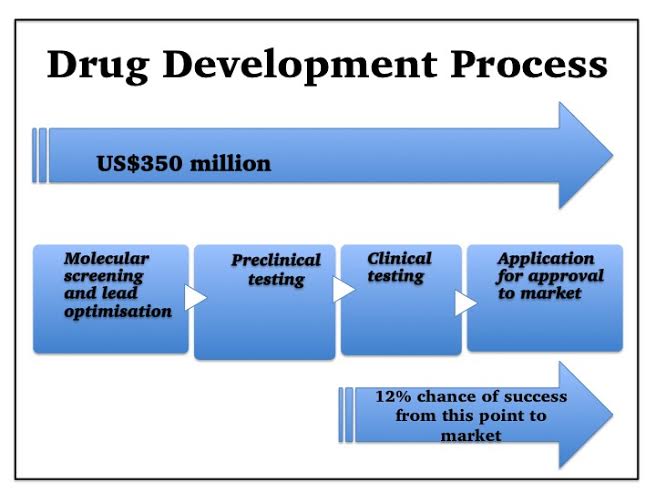
Let’s examine the drug development process. 
picture2drugarticle180915

First a drug target is chosen – often a protein molecule (receptor) on the surface of some of our cells.

Thousands of chemicals are then screened. If they bind to this receptor, they could influence how that cell works, and hence affect disease activity.

Chemicals which do bind are further narrowed down to those with additional potential drug properties—those likely to be well-absorbed, lack toxicity, and remain in the body long enough to work.

A lead candidate is chosen, and then modified further, optimising its chances of success.

Next, as required by government regulations, it is tested in animals and in the test-tube, for potential safety, effectiveness, and suitable dose.

Finally, clinical trials can begin. Often in healthy volunteers first, then small numbers of patients and finally in many patients. Thousands of people are usually tested before a drug can be marketed, and the size and duration of clinical trials has increased, as regulatory requirements have increased1.

Consequently, the typical cost of a new drug development is US$350 million according to a recent study by Forbes2.

But it’s worse than that—the development path is littered with booby-traps and precipices. Fledgling drugs frequently fail, and the Tufts Centre study found that, even those medicines which make it as far as clinical trials, have only  approximately a 12% chance of eventually reaching the market3.

Thus, including the costs of failed developments, the actual cost for each successful drug is nearer US$2.6 billion3, and for many smaller companies, if the roulette wheel isn’t kind, the cost is failure and liquidation.

Pharmaceutical companies are not angels, nor are they demons. To survive, they must make enough profit from their marketed drugs to fund their development pipeline, in addition to returning some profit to shareholders. Long drug-development times, mean they may only have a few years of patent-protection left to achieve this. If governments force prices down, companies sometimes react by reducing development risk – choosing drugs more likely to succeed in preference to innovative but riskier developments for difficult diseases.

A typical drug development takes around ten years – so we won’t see this effect immediately, and when we do, it will be too late – it could take another ten years to correct.

So there’s the problem – health bills cannot continue rising exponentially, but forcing drug prices down has serious consequences too. What to do?

Further Information and References:

1. http://www.phrma.org/sites/default/files/pdf/rd_brochure_022307.pdf

2. http://www.forbes.com/sites/matthewherper/2013/08/11/how-the-staggering-cost-of-inventing-new-drugs-is-shaping-the-future-of-medicine/

3. http://csdd.tufts.edu/files/uploads/Tufts_CSDD_briefing_on_RD_cost_study_-_Nov_18,_2014..pdf

Note: These articles express personal views. No warranty is made as to the accuracy or completeness of information given and you should always consult a doctor if you need medical advice



Actor Interviews: Rakesh Dasgupta

Actor Interviews- Rakesh DasguptaWhat made you become an actor?

It all started while I was in school. I never really had any friends to talk during my school days. I was experiencing domestic violence almost everyday; I could not find anyone to listen to me. I was getting bullied at school. All these experiences started giving me depression at that age and I was so helpless. But I always loved to watch movies and I liked portraying those characters I saw in the movies. Its hard to explain but when I used to portray the characters in front of the mirror I used to (kind of) become those characters from within which helped me for that short span of time to forget everything surrounding me. I found this to be a very helpful technique to stay away from my depression and the unwanted ambience. As time progressed, I just got hooked up with this acting.

Did you train and if so where?

Sounds weird but I must say my initial training started in front of the mirror. Being a commerce graduate I never had any formal acting qualification. Until 2013 when I started taking informal acting and accent removal classes in Sydney with some of the experienced actors.

Career Highlight

Instead of taking names of some of the projects that I have worked on, I would like to consider my career highlight to date being given the opportunity to go to Hollywood and perform in front of the film directors and casting directors. Also getting representation offer from one of the leading agencies in USA during my first week in Hollywood was something completely unexpected. (Well its a different thing that I could not accept the offer for having no work rights in USA)

Lowest Point

Those first days in Sydney when I did not have a place to live and was visiting Salvation Army to ask for food as I didn’t have any money with me. I don’t want to speak too much on my lowest points in life as I think people who want to pursue acting, want to become actors and have big dreams would get discouraged and scared listening to my past. So I would prefer to keep this point short.

Hardest thing about being an actor

1. Getting job – you can be an acting degree holder from the best acting university in the world and you might have the best acting talent but you might not get any acting job. If you ask me why, I don’t have that answer. It’s the way it is. 2. Uncertainty of the future – as an aspiring actor you never know where you will end up in the next 5 or 10 years time; you can end up with stardom or you can just end up with nothing. 3. No financial security – In the early stages of acting career, it does not pay you much, if at all to make both ends meet. It’s very likely that you might just end up with one meal a day as that’s all you would be able to sometime afford being an aspiring actor.

Do you make enough money from acting, if not, what else do you do?

At this stage of my career I do not make enough money from acting to pay all my bills. As such I have to do other stuff like working in supermarkets, gas stations, doing gardening work etc etc. I prefer these kind of odd jobs instead of a full time desk job because they provide flexibility to attend auditions and shoots.

Best and Worst audition

Best audition – When I had four days time to practice my lines which is quite unusual to get such a long time to prepare a script. I knew my lines and moves to perfection and was very satisfied with the way I performed in the audition room. The casting director appreciated my performance and I was so convinced about getting that role but guess what, I didn’t get the role.

Worst audition – I was driving to this audition and my car broke down in the middle of the highway. I had to get my car towed to the nearest gas station and then I got a cab and was able to reach the audition venue just on time. It was summer and I was profusely sweating. I went to the audition room and I couldn’t recall half my lines; I left the script in my car which made me look so unprofessional. I came out from the audition room dejected with no hope. Two days later my agent informed me that I got that role.

Advice for other actors

Firstly you should only pursue acting if you enjoy the actual art; If your reason to pursue acting is to become famous, you got a bad news coming – you are in the wrong business. Do not have a back up option because if you have a back up option you are basically preparing for failure. Acting is a business in which ‘YOU’ are the product that you sell, so maintain yourself (a good physique is always an asset in the acting business). When you are an aspiring actor you will get naysayers coming by default who will tell you that it cannot be done – just ignore them. Most importantly, you have to honestly believe in yourself that one day you will become a successful actor; Well, if you don’t believe in yourself, who else will.

What is the most important thing for actors to do to improve their career?

Practice Practice Practice! Practice your art, work on your art whole year, not just two days before going to an audition. Doesn’t matter if you practice lines in front of the mirror in your room, in the middle of the beach or in an acting school, but do something everyday to improve your confidence level.

Role Models

Arnold Schwarzenegger, Sylvester Stallone, Dwayne Johnson, Johnny Depp


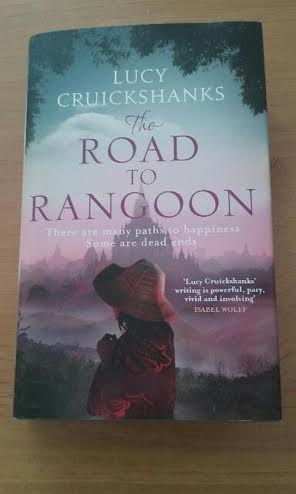
The Road To Rangoon By Lucy Cruickshanks By Jan Speedie

roadtorangoon

Lucy Cruickshanks’ latest atmospheric novel is set in 1980 in the Mogok region of northern Burma (now called Myanmar). This region is where they mine the world’s most beautiful rubies. A bitter civil war rages between the controlling Tatmadaw and the rebel Shan State Army. The people are poor and the Tatmadaw regime is cruel, violent and corrupt. Lucy’s three main characters are thrown together by chance and must struggle together to survive.

Than Chit an ambitious military officer with the Tatmadaw longs for promotion and power. His schemes and manipulations to promote himself end in devastating personal loss.

Thuza Win is 11 years old when her parents are imprisoned for ruby smuggling. Deeply scarred by life and struggling to survive she must grab any chance she can for a better life.

Michael Atwood, son of the British Ambassador in Rangoon is a naive 21 year old. Following a bomb attack in which his friend is seriously hurt Michael decides to avenge this terrible deed by helping the rebels. Unfortunately, Michael finds that he has been tricked; he is in danger and his only hope of survival lies with Than Chit and Thuza.

But as three strangers, in this savage country, they must learn who they can trust.

Lucy Cruickshanks has travelled the world, drawn to countries with a troubled history. Her first novel was set in Vietnam and was short listed for the Authors’ Club First Novel Award and the Guardian Not the Booker Prize.

Lucy was born and raised in Cornwall. She studied Politics and Philosophy at Warwick University and Creative Writing at Bath Spa University. She now lives on the south coast of England with her husband and two small children.  She enjoy writing and caring for her young family.

I enjoyed Cruickshanks’ handling of her material, and her research is thorough and fascinating. She weaves it all together into a satisfying novel. Even the title is evocative: ‘Rangoon’ has such resonance …

Published by Heron Books on 17th September 2015 in hardback £18.99


A Classic Little Recipe that Popped Over There

Yorkshire Pudding

As the time for long, lazy, Sunday lunch barbecues in the garden looks to be coming to an end, for this year at least, I thought I would publish a couple of recipes to polish up your classic roast to chef like standards. What can be more symbolic of Sunday lunch than the Yorkshire Pudding, the traditional accompaniment alongside roast potatoes, parsnips and spicy, hot English mustard to a hunk of rare roast beef. You can find this most English of dishes cooked around the world, where ever a few expatriates gather together, but I am always surprised to find Yorkshire Puddings, albeit under another name, over in the USA.

Let’s call Yorkshire pudding
A fortunate blunder:
It’s a sort of popover
That turned and popped under.

Ogden Nash

Of the Yorkshire pudding it has been said, it can only successfully be made by someone from that most august county of England. Grand, my mum is from Yorkshire and makes wonderful Yorkies and perhaps the skill is inherited because I am pretty proud of most of my attempts. A Yorkshire Pudding is made from a milk, egg and flour batter, which was originally poured into a tin set under the roasting joint. The pudding cooked in the hot meat fat and absorbed any juices from the roast. A large slice was served to each dinner with meat gravy before the main course. The meat and vegetables then followed, usually served with a parsley or white onion sauce.

In 1747 in ‘ The Art of Cookery made Plain and Easy ‘ by Hannah Glasse, one of the first English, famous female cookery writers, there is a recipe for Yorkshire pudding. This is the first time a batter or dripping pudding is recorded with the name, although a flatter less aerated dish had been cooked for many years previously. Traditionally any left over pudding could be eaten as a dessert with sugar and perhaps orange juice.

The Yorkshire pudding recipe popped over to America ( excuse the pun ) and the first recipe for a Popover is recorded in ‘ Practical Cooking ‘ published in 1876 by M. N. Henderson. Popovers may be served either as a sweet, topped with fruit and whipped cream for breakfast or with afternoon tea, and with roasted meats at lunch and dinner. Popovers tend to be individually baked in muffin tins and often include herbs or garlic in the recipe. Another popular variation replaced some of the flour in the batter mix with pumpkin purée. The name Popover is thought to come from the fact that the cooked batter swells or pops over the top of the baking tin.

In 2008 the Royal Society of Chemistry held a competition, carried out to create a vouch safe Yorkshire Pudding recipe and somewhat arbitrarily decided that a true Yorkshire Pudding cannot be less than four inches tall. They examined the effects of temperature, ingredients and even altitude in the search for perfection. My knowledge of chemistry is limited to an ancient ‘ O ‘ level but quite simply the heat causes the two raising agents, the egg and beaten in air, to expand the batter mix. My tips for success are simple are make sure all the ingredients are at room temperature and get the fat in your baking tray smoking hot. There I have shared the secret and that is because as they say in Yorkshire ‘ I’m a reight gud sooart ‘.

Individual Yorkshire puddings can be cooked after your joint while it is resting before carving.

Perfect Yorkshire Puddings

90 gr Plain Flour

1 fresh Egg

Around 250 ml half full fat Milk / half Water

¼ teaspoon Salt

A good pinch of freshly ground White Pepper.

1-2 tablespoon of good Beef Dripping.

Preheat your oven to 220C/425F/Gas mark 7. Place a damp cloth on your work surface to stop your mixing bowl slipping and place the bowl on top. Sieve the flour, pepper and salt into your bowl, make a well in the middle and add the egg. Start to beat together then gradually add the milk / water. Continue adding the milk/ water until the batter is smooth and the consistency of pouring cream. Leave the mixture to stand for ten minutes. While the mixture stands, divide the beef dripping into Yorkshire Pudding tins and place the tins in the oven until the fat starts to smoke. Give the batter a final stir and pour quickly into the tins. Put them back in the oven and cook until well risen and golden brown, this will take about fifteen to twenty five minutes depending on the size of your tin.

For the full Royal Society of Chemistry press release

Steak & The City & A Fabulous Party Atmosphere | The Trading House Review

An absolute wow of a venue with live music and amazing reasonably-priced food.

Restaurant review of The Trading House, City of London

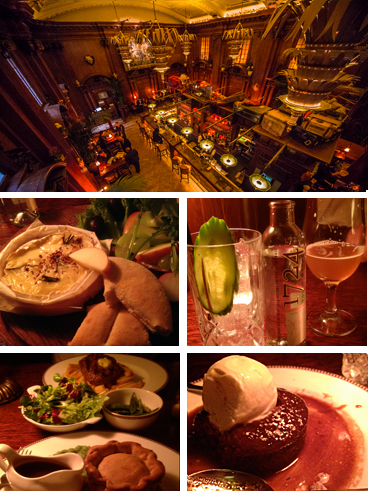
If you’re a Londoner bored of the West End or a tourist looking for a slightly different night out in London, check out The Trading House near Moorgate in the heart of the city of London. The second you step foot in the place, it’s buzzing – with a live pianist, a packed bar and seriously eclectic decor (including stuffed birds and animal heads). And all of this is set in the former Bank of New Zealand, an amazing building with a curved ceiling and wall-to-wall warm, luscious wood. Tucked at the back is a slightly calmer restaurant section which boasts some of the heartiest, tastiest pub food in London.

To start you off, there is a huge drinks menu in the form of a small book. The specialities here are gin, cocktails and beer. I opted for a Hendrick’s cucumber gin and tonic – there was a choice of four tonics, and I chose 1724 which was less bubbly than your average tonic and very palatable.

The food menu is broad – whatever mood you’re in, The Trading House has it covered – but we decided to stick to traditional pub grub. We started off with asparagus soup (which was very creamy and came in a mug) and baked camembert. This was served on a wooden platter and was surrounded by fresh fruit, salad and flatbread – it was a big platter which cost just £6.95 and would have been perfect for keeping hunger at bay whilst downing beers for a few hours. But were here to try the food, and we ate on.

For the main courses we chose a steak pie and classic steak and chips. The pie was beautiful with soft pastry and a tender tasty steak filling – it came with a jug of steaming hot gray, a large swirl of creamy mash (far too generous a portion for me to get through) and mushy peas. My partner ordered a steak and chips, with salad and sugar snaps. He declared the steak perfect.

A break was necessary before we could even think of dessert – we ordered one between us as we were so full. We went for the sticky toffee pudding – it did not disappoint. This was the lightest ever pud, soaked in sticky toffee sauce (rather than just having the sauce plonked on top) and with a dollop of ice cream on the top.

I will go back to The Trading House – oh yes, and I thoroughly recommend it. I also recommend a walk through the city afterwards to burn off some of the calories. This part of London is stunning at night. And if you come out of The Trading House and turn right you will stumble upon The Guildhall, with its amazing array of architecture. Keep walking and you may hit St Paul’s which is well worth seeing at night. Walk a little further and you’ll hit the West End and will be left wondering why it is heaving with tourists when the city of London, not so very far away, is quite so stunning.

The Tradiing House, 89-91 Gresham Street London EC2V 7NQ; tel 020 7600 5050


Communication And Safety Tips For Parents

keeping children entertained on car journeysAs a parent, you already understand that good communication is a necessary skill whether you are talking to a toddler or a teen. If your children are little, you can use communication as a way to teach them how to be safe around cars. This is an invaluable lesson you can teach them when they are out in the garden or when they are with you on the street.

You may also want to teach them that not all strangers are to be trusted. This is particularly useful when they first go to school. If your child is older, then good communication with your child will be instrumental in building up a sense of self-esteem and develop a feeling of mutual respect.

10 Tips to Build Rapport 

1. If your child wants to play, let your child know that you are interested in the things that interest them. Agree to help them with their game if they need it.

2. If your child has something they feel important, let him or her know that they are more interesting to you than some form of media entertainment. For instance, if your child is talking to you while you are watching television, pause to. If they have something that they urgently want to say, then turn off the television and give them your full attention

3. If your child is chatting with you when they are sharing something with you, let him or her know that they are more important than a casual telephone call. Rather than excuse yourself when your friend calls, let the answering machine pick up the message.

4. If you get to spend some personal time with your child, let your child know how much you enjoy your private chats with them.

5. If your child does something foolish when you have company, don’t rebuke them in front of everyone. Scolding them in front of others can be embarrassing for them. Public humiliation only leads to a feeling of resentment.

6. If your child has to constantly look up to talk to you, occasionally drop down to their level when you talk.

7. If you are really angry about your child’s behavior, give yourself time to cool down so that you can have an objective talk.

8. If your child is telling a story, don’t correct their grammar or how they narrate the story. Instead, show an interest in the story rather than how it could have been told better.

9. If you get a negative report about your child from another parent or a teacher, don’t simply launch into a tirade. First, listen to your child’s side of the story. They may have behaved badly because they misunderstood the situation and did not know that their behavior would upset others.

10. Be open and receptive to your child’s attempts to communicate and explain their point of view. Encourage your child to communicate by asking leading questions.

5 Ways to Make the House Safe for Kids

While safety in the home can be improved through communicating about dangerous things—like not jumping on the bed, climbing on the pipes, or touching hot plates—safety can also be ensured by taking proactive measures.

Here are some common household dangers that you should either warn your child about or use safety measures to protect them.

1. The danger of scalding when turning on a tap. Teach your child the difference between the hot and cold taps.

2. The danger of falling out of an upper story window. One solution is to install window guards.

3. The danger of falling down stairs. This can happen if your child is learning to crawl or it can happen if your child is rushing around the house. It’s only too easy for a child to roll down a flight of stairs.

4. The danger of leaving your house unprotected. One ADT security company discusses the need for extra precautions for your family. “The list of potential threats that could affect their safety includes burglary, fire, carbon monoxide and flooding.”

5. The danger of medications or poisons. Your curious toddler likes to taste all sorts of things. Make sure that you don’t leave your medications lying around and that you have locked all detergents and garden supplies in a safe place.

From our contributor Jenna.

ASDA Protect Kids Ice-Cream Scented Sun-Care For Kids Review

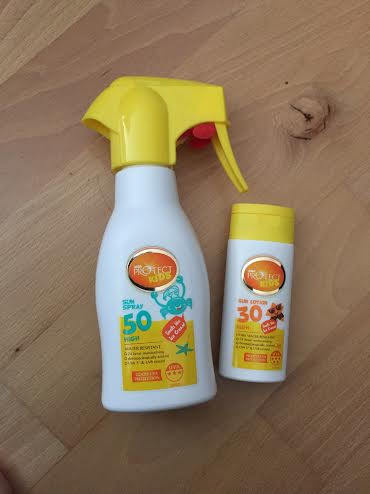
AsdaprotectkidsreviewAsda has launched a UK 1st for the sun-care market with its own brand ice-cream scented sun lotion for kids. In an effort to help make applying children with suncream fun and easy, the lotions and creams feature a delicious vanilla scent and are priced a just £3.50. All products featured in the range are highly water resistant, 24 hour moisturising and have been dematologicaly tested. You can also get two for £6.
We tested them and…yes, they do smell like ice cream. Not in a sickly way, but in a nice way. Hopefully the smell will make your little ones stay still long enough for you to get the lotion on them. Some of the sun protection even comes in a handy spray container. They are water resistant and protect little ones skin well. Recommended.

Tanqueray London Dry Gin Review & Cocktail Recipes

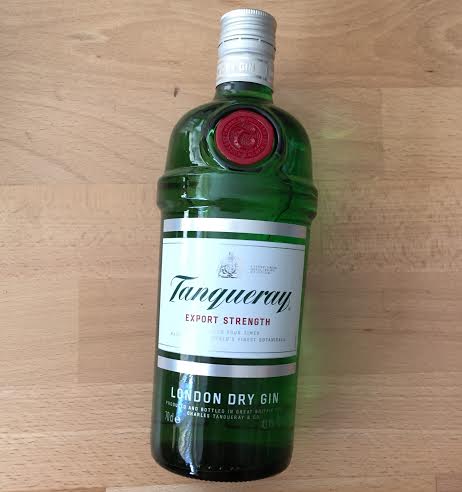
tanquerayginWe are quite particle to a Gin & Tonic at Frost. In fact, we love cocktails with gin in them, it is the perfect spirit for cocktails. We are quite fussy about quality but Tanqueray London Dry passed our taste test. It is a vibrant gin which is both sweet and savoury. It has a blend of four of the finest botanicals: juniper, coriander, angelica root and liquorice. It is a superior and high-quality gin. Frost loves.

Tantalise your taste buds with adventurous umami cocktails

When you think cocktail, do you think of a fruity and sweet concoction? Well think again with three delicious, yet savoury cocktails from Tanqueray London Dry Gin.

Over the last year, any cocktail bar worth its salt has featured savoury cocktails on the menu, allowing adventurous drinkers to enjoy the flavour sensation is known as umami – translated from Japanese as a ‘pleasant savoury taste’, which is actually one of the five basic tastes (along with sweetness, sourness, bitterness and saltiness).

Tanqueray London Dry Gin (70cl £21.50, stockist suggestion Waitrose.com) has an elegance and versatility of flavour that makes it the perfect spirit for cocktails – both sweet and savoury, as well as vibrant gin and tonics. The sophisticated flavour profile is achieved by the blend of four of the finest botanicals: juniper, coriander, angelica root and liquorice.
Impress your friends and join trend-setting mixologists with these piquant potions that you can make at home.

Beetroot Shocker
Beetroot Shocker

Ingredients:
50mls Tanqueray® London Dry Gin
15mls Lemon Juice
50mls Beetroot Juice
Pinch of Celery Salt
Top with tonic water

Method – shake first four ingredients with cubed ice and strain over cubed ice in a hiball glass, top with tonic water and garnish with a Lemon wedge and a mint sprig
Units – 2.1

Peppered Apple Martini

Peppered Apple Martini

Ingredients:
35ml Tanqueray® London Dry Gin
15ml Apple liqueur
30ml cloudy apple juice
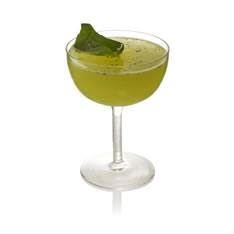
3 x fresh basil leaves
5ml lemon juice & 5ml sugar

Method – add all ingredients to shaker and shake with cubed ice, double strain into a chilled cocktail glass and garnish with a floating basil leaf and fresh cracked black pepper
Units: 1.5

Tanqueray Snapper

Tanqueray Snapper

Ingredients:
35ml Tanqueray® London Dry Gin
2 dashes Worcestershire sauce
Dash Tabasco sauce
4 dashes red pepper sauce
Pinch salt and pepper
Pinch white pepper
Squeeze half fresh lemon
100ml tomato juice

Method:
Combine all ingredients in a mixing glass, add ice, then roll back and forth to mix. Strain over fresh ice into a Collins glass. Garnish with a lemon wheel and celery stalk.
Units: 1.3