The Lowdown on Molton Brown

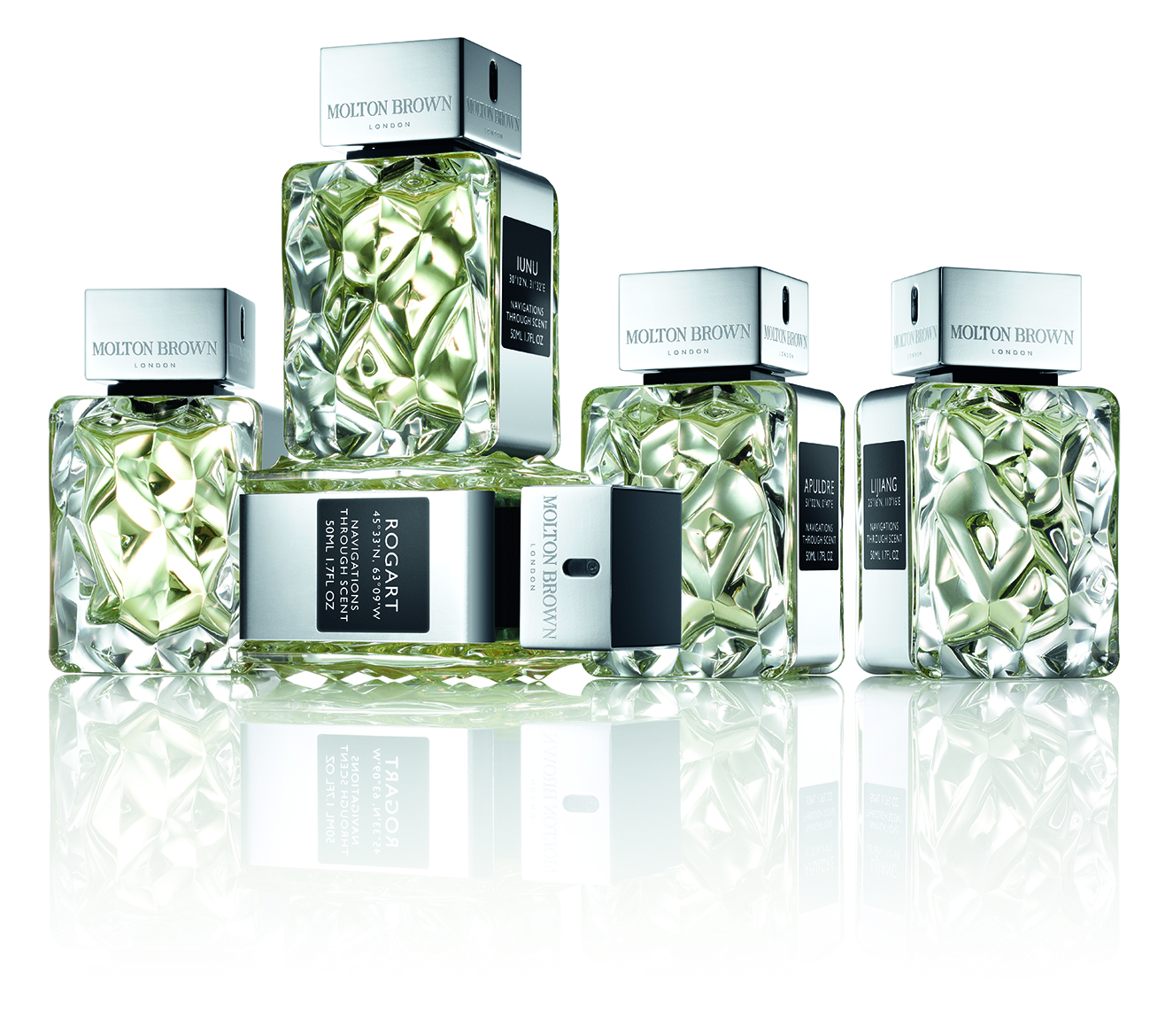
Molton Brown are a quintessential British brand. They make classic and excellent products. And they do much more than just hand washes. The more beauty savvy of you will also know that they also make candles, fragrances and anti-ageing skincare. No more so was this obvious than at Vanilla in central London where Handpicked Media and Molton Brown showed a handful of beauty bloggers their new range of beauty goodies.

They have launched some new additions to their Fine Fragrance range and a new anti-ageing range to go with their candles, body creams, shower gels….

Their Fine Fragrance range has four different scents for four different continents.

Molton Brown do not test on animals and they are big on sustainability.

On the night I also had a hand massage. I highly recommend you go along to a Molton Brown store and get one yourself.

The truth is I love Molton Brown. They make me proud to be British. I love their new range and old classics.

Vogue On Designers | Book Review

VOGUE ON

Elsa Schiaparelli, Coco Chanel, Christian Dior, and Alexander McQueen

Out Now, £15 each, hardback


 Sometimes I love my job, and the opportunity to review these books was one of those times. These books are as beautiful, elegant and enjoyable as the designers the books are about. I love the layout of the books and each one has great quotes from the designer.

Vogue on: Coco Chanel, by Bronwyn Cosgrave. Vogue on Chanel may be a short book but it is incredibly comprehensive. The book is full of pictures and quotes. It is hard to read the story of Coco Chanel’s life and not be inspired by what an amazing business women she was. To Vogue’s credit it does not brush over the rumours about Nazi collaboration (Chanel had an affair with a German officer during World War II) and the book is well-researched and beautifully written. The Vogue archive pictures are to-die-for and I learnt a lot from reading this book. Coco Chanel managed to leave her mark, not just fashion, but also the world. An excellent businesswomen she built an entire empire by creating a signature look.

Coco Chanel’s private life was as interesting as her business. She dated the Duke of Westminster and traveled in high society. She was backed by Kitty De Rothschild who stated, “I shan’t buy a thing without showing her. That child’s got more taste than the rest put together.” After this stamp of approval the elite of the day bought her clothes in droves, and still do.

I loved this book. It is a triumph for Bronwyn Cosgrave. A perfect gift for Christmas and beyond.


Vogue on: Alexander McQueen,  by Chloe Fox. This book is different from the others as I actually remember Alexander McQueen, and was very upset when he tragically took his own life. He is the most modern of the fashion designers and I remember some of the collections. For 15 years the mouthy, East-End, working-class boy-did-good, McQueen was deliberately controversial.

Talented beyond belief, McQueen was also arrogant, likable and visionary. He knew how to be quotable and work the press as much as he knew how to design beautiful, wearable clothes. This book has a ting of sadness as both McQueen and Isabella Blow committed suicide. Blow had ovarian cancer and McQueen killed himself not long after Blow, and then his mother died

McQueen’s label lasts and the mantle has been handed to Sarah Burton, who designed the wedding dress of Kate Middleton. Burton talks fondly of her former boss in this book.Burton says, “He was my inspiration everyday. Everything I know, I learnt from him.”  In fact, the book has access to all of the main players in McQueens life. A must have for fashion lovers and McQueen fans.

In this book Plum Sykes says, “The fact was, Alexander created a new silhouette for a generation. When you look back at the history of fashion, the only designers with any longevity – from Balenciaga to Dior to Yves Saint Laurent – are the ones who created their own iconic shape.” This quote is what you learn from Vogue’s series of books on designers: they all created their own shape.I really hope there will be more books in this series.


Vogue on: Christian Dior, by Charlotte Sinclair. Dior was such a visionary that he completely changed how women dressed. The ‘New Look’ he invented stunned the fashion world and had a cataclysmic effect. The truth is, Dior did more than create a look, he created a revolution. When Dior showcased his new range so many people would come that even the staircases would be filled. There is a wonderful picture of Marlene Dietrich in this book, clutching her ticket as a child would hang onto candy. This book, and indeed all of the others, is not just a book on fashion, but a book on history. Vogue on Christian Dior is a fascinating read, I could barely put it down. I could also stare at the pictures for hours.

All of Diors couture clients had their own mannequin that was made to their own measurements. Upon reading this I rather longed to be incredibly rich and that Christian Dior was still alive, as it sounded so romantic and wonderful. One of the reasons Dior was so successful was because he gave women what they wanted. “I brought back the neglected art of people pleasing.” He said.

Of course, all of the designers these books are about are dead now. An era ended. Even Alexander McQueen, sadly gone too soon. I hope Vogue do more books in this series. Yves Saint Laurent would be an obvious, and much deserved, subject.

Vogue on: Elsa Schiaparelli, by Judith Watt. Like the rest of the books in the series, Vogue on Elsa Schiaparelli is well illustrated, picture perfect and wonderfully written. Schiaparelli may not be as well known to the wider public as the other designers but she remains influential.

Schiaparelli was also a rare thing, even today: a female fashion designer. She had a lasting rivalry with Coco Chanel who was dismissive of her. Schiaparelli was born into high society but lost all of her money after her husband spent her dowry and then left her and her young daughter. She went to work and managed to open her own label. She said: ‘Poverty forced me to work, Paris gave me a liking for it.” Schiaparelli  not only managed to design her own “look”, she also made designs for different types of women, no matter what their body shape or personality. She was also an artist, collaborating with Salvador Dali and Man Ray,

This book is a brilliant story of flair, tenaciousness and perseverance. A wonderful book.

“Life on the dotted line was of no possible interest.” Elsa Schiaparelli


Vogue On is an influential and covetable series of short books from the fashion bible Vogue, celebrating the defining fashion designers of the last century.  The first four books in the series illuminate the significance of Elsa Schiaparelli, Coco Chanel, Christian Dior and Alexander McQueen, each pioneers of their time, and draw extensively on the Vogue archive, the definition of portraiture and fashion illustration. 


Alexandra Shulman, Editor of British Vogue, comments “Vogue On offers an authoritative overview of the work of the 20th century’s most influential designers. Unique access to the treasures of the Vogue library combined with concise, elegant and informed writing ensures that this series is an unmissable addition to any student or enthusiast of fashion’s library.”


Vogue, the international fashion bible, has charted the careers of designers through the decades. Its unique archive of photographs, taken by the leading photographers of the day from Cecil Beaton to Mario Testino, and original illustrations, together with its highly respected fashion writers, make Vogue the most authoritative and prestigious source of reference on fashion. No magazine is better positioned to present a library on the most influential fashion designers of the modern age.



Craig Lawrence | London Fashion Week 2012

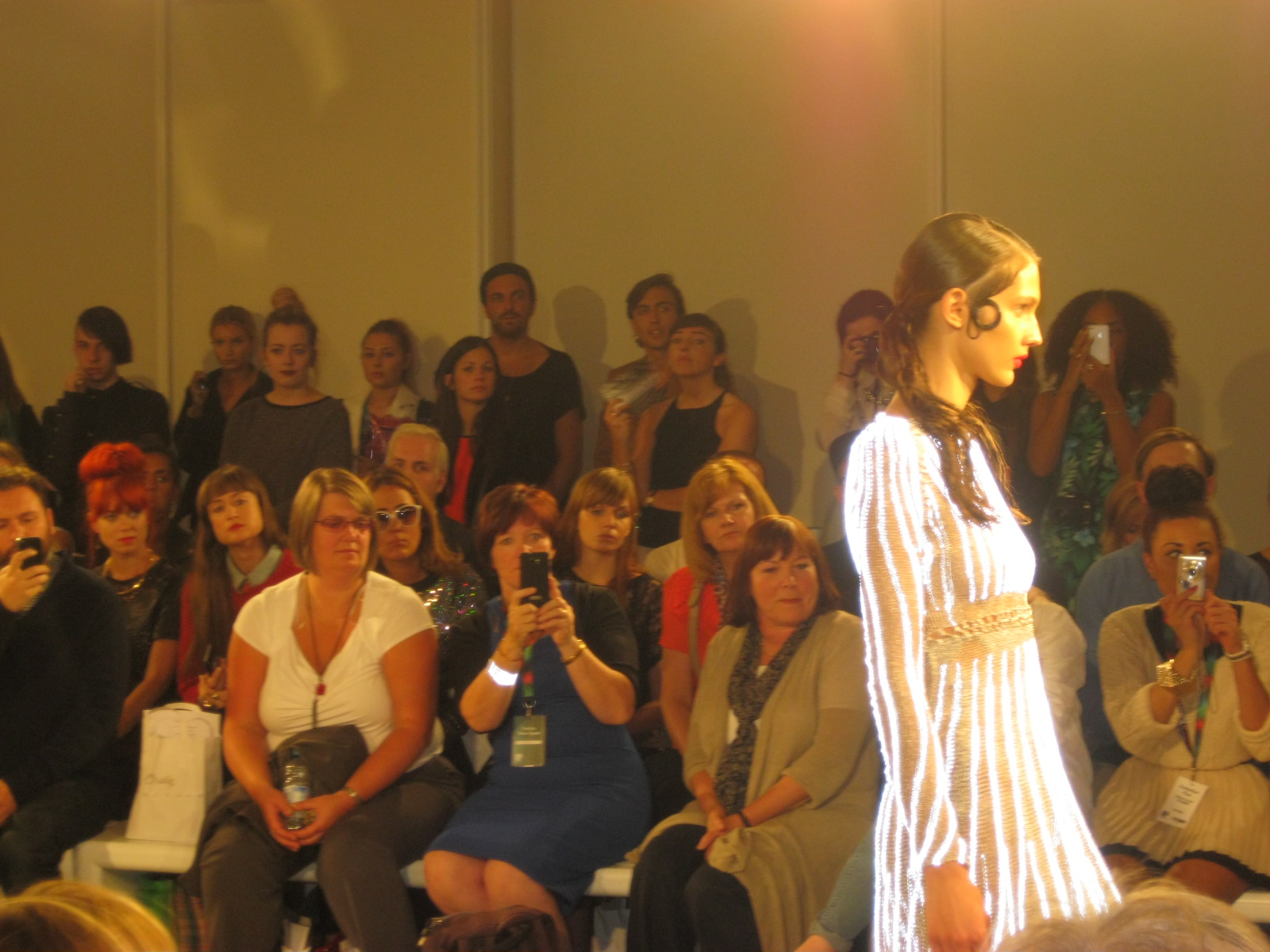
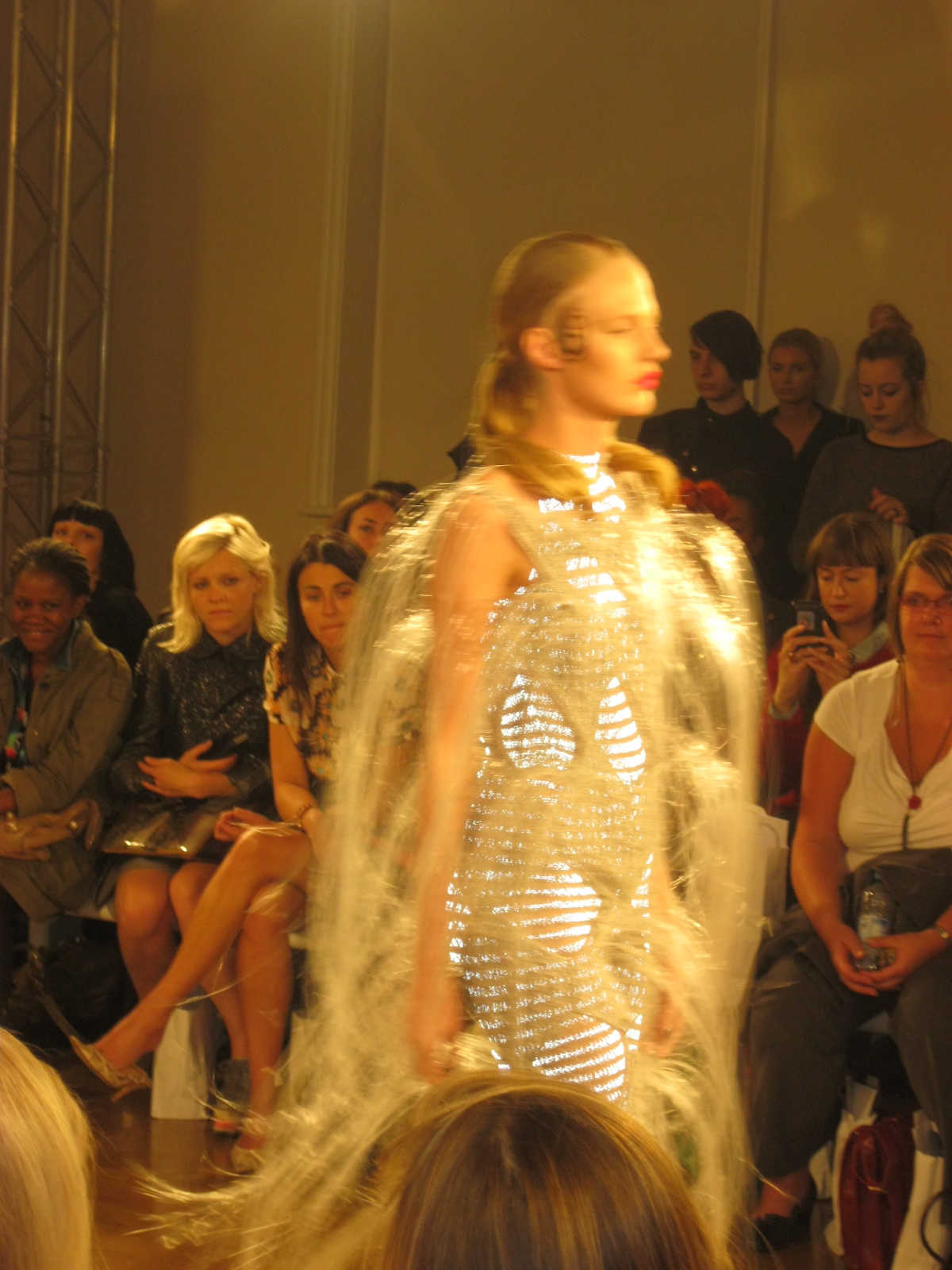
British knitwear designer Craig Lawrence underwater themed SS13 show was a particular highlight of London Fashion Week. The clothes were metallic with a lot of different textures. Lawrence said that he ‘craved purity’ after his last colourful show and this entire collection was silver or white. Lawrence used kyototex metallic yarn and techno fibres, and as the camera’s flashed the clothes glowed. Absolutely beautiful.

Let’s Claim Back The Union Jack.

The BNP can be blamed for a lot of things, but the main reason I hate them is what they have done to the Union Jack flag {or the Union Flag). Some people now see the Union Jack as racist, it’s not. It is the most inclusive flag you can think of. It is the flag of the United Kingdom; It has the St Andrews Cross (Scotland), St George Cross (England) and St Patrick’s Cross (Ireland). Wales was not a Kingdom but a Principality so it could not be included on the flag. which is made up like this:

  • The red St. George’s Cross width is 15 of the flag’s height with a 115 flag height fimbriation
  • The white diagonal St. Andrew’s Cross width is 115 of the flag’s height and the broader white diagonal’s width is 110 of the flag’s height
  • The red diagonal St. Patrick’s Cross width is 115 of the flag’s height and the narrow white diagonal’s width is 130 of the flag’s height

As all of the bunting went up in London I had an Irish friend ask if I found it offensive. Offensive? Why would I? “It’s racist”, she said, “to us”. By ‘us’ she meant that I am Scottish and she is Irish. To be honest it was her question I found offensive. I may be Scottish, but I am also British and I have lived in London for over five years. My flag is in the Union Jack and no-one, not a racist and certainly no one ignorant will ever take it away from me. I am proud to be British and I love my flag. Both of them.

Are The Good Times Really Over For Good?

For someone in their twenties it is hard to think of a time which has been harder economically than right now. But I do know that this is not true. There have been many booms and busts before, times much harder than this. Rationing, world wars, the great depression.

But what of the future? My generation seems to have gotten the muddy end of the stick. The OECD, a respected British think tank, said that Britain has slipped into a double dip recession and more pupils than ever are getting free school meals, the governments indicator of a child growing up in poverty. Tube drivers might be raking it in, getting paid £500 just to show up for work each day during the Olympics, but the rest of us are struggling.

Are the good times really over?We have become generation rent, unemployment is high, we not only have a harder time getting our dream job, but getting any job at all. I have friends that are moving out of West London where I live because they cannot afford it, struggling to find jobs and even if they have one, struggling to survive the squeeze.

Not getting to the nitty gritty. Tuition fees are up to a staggering amount, 9K a year for an education, transport costs go up above inflation every year; the Oyster caps at £10 per day in London. Then there is the fact that if you get an unpaid internship these days you are one of the lucky ones. It seems everyone is taking everything from the young. I am luckier than most. My education days are behind me and so are my internships: but if the children really are the future, then what of it? Are the good times really over for good? Everything from stamps and food is going up. Petrol is so expensive people cannot even get to work and the government is looking shifty after the cash-for-access scandal. Never mind the fact we don’t have any privacy anymore and they are trying to bring in web-monitoring.

Government debt is at a £988.7 billion. And who is going to have to pay that off? The decent, hard working people of Britain. Oh well. We can always print some more money.

What good will come from this? Lessons maybe. We lived in a society that saw the word ‘credit’ and did not take in the fact that actually means ‘debt’. Above all we will do what the British do: keep calm and carry on. You may want to cross your fingers too.


Montezuma's Real Chocolate Club Review

Gourmet chocolate by post, every woman’s dream? I think so. Montezuma’s chocolate club is from an innovative British firm. These handmade chocolates are absolutely divine. They are one of the best things I have ever had come through my letterbox. Perfect for those January blues.

This month the chocolates were dessert themed. They came in three sections, and each section had a bar of chocolate and truffles on top. They were: Dark Chocolate Lemon Meringue Truffles and Milk chocolate with salted peanuts and butterscotch bar, Dark chocolate Eton Mess Truffles and milk chocolate treacle tart bar and milk chocolate apple crumble truffles & Dark chocolate with orange and hazelnuts bar. It’s hard to choose a favourite as they were all as delicious as they were original. The Eton Mess and Lemon Meringue were particularly amazing.

Chocolate by post must be the greatest invention ever.

It cost £19.99pcm for a whopping 600g of hand made gourmet chocolate, including postage. You can have sign up for as long or as little as you want, or give the chocolate as a gift. Though, really, do you like anyone that much?

BRITISH TODDLERS AT RISK OF NOT GETTING ENOUGH VITAMIN D THIS WINTER

SHORTER WINTER days mean Britain’s toddlers risk not getting enough vitamin D, a vitamin needed for the growth and development of their bones, it is warned today by growingupmilkinfo.com.

A new survey reveals nearly eight out of 10 parents are not aware of toddlers’ specific nutritional needs and 74 per cent of British toddlers do not receive the vitamin supplements recommended by the UK Departments of Health for under-fives[1],[2]. Specifically, 9 out of 10 toddlers are failing to meet their recommended daily vitamin D reference nutrient intake3.

As the clocks go back and sunlight hours fall by up to half it becomes harder to get ‘The Sunshine Vitamin’ from sunlight alone. British children’s vitamin D-poor diets3 combined with low uptake of supplementation and a lack of knowledge amongst parents about their specific nutritional needs, mean toddlers could be missing out.

The research from growingupmilkinfo.com points towards the risk being highest in Edinburgh, Newcastle, Leeds and Sheffield, where vitamin supplement uptake is lowest[1], as is exposure to vitamin D-producing UVB sunlight. Toddlers of African-Caribbean and South Asian heritage are also at increased risk, as their skins’ increased melanin level means they are less able to produce vitamin D through exposure to sunlight4.

Shorter winter days

Vitamin D is made by the body on exposure to sunlight. In British wintertime, the number of daily sunshine hours drops by as much as half in some areas, especially in the north of the country, and the angle of the sun changes making it much more difficult for the body to make vitamin D.

Lack of knowledge for parents

Nearly eight out of 10 British parents are unaware that toddlers have specific nutritional needs and over half (54 per cent) say they never, rarely or occasionally consider a toddler’s specific nutritional requirements[1].

Nearly three-quarters of mums say they don’t give their toddler the vitamin supplements recommended by the UK Departments of Health. The Departments of Health recommend that ALL toddlers receive a daily supplement of vitamins A, C and D2.

Poor dietary uptake

The best source of vitamin D comes from UV light exposure. However in countries like the UK, where sunlight is limited, it is essential that toddlers also eat vitamin D rich foods. However, it can be hard to get toddlers to eat vitamin D rich foods – for example Government statistics show that the average consumption of oily fish is well below the recommendation5.

Simple steps parents can take to ensure toddlers are meeting their vitamin D needs include:

· Exposure to the summer (April-Oct) sun (without sunscreen) for 10 minutes a few times a week is enough for most people to produce vitamin D and store it for winter. However, some groups may not be able to get enough vitamin D exposure in this way. These groups include young children, those living north of Birmingham in the UK (due to the angle of the sun) and those of African-Caribbean and South Asian origin

· Take a daily children’s supplement of vitamins A, C and D

· Giving 2 x 150ml beakers of Growing Up Milk daily as part of a healthy balanced diet provides more than half a toddler’s daily recommended nutrient intake of vitamin D

· Include sources of vitamin D in the diet. Good sources include: fortified margarines and breakfast cereals, egg yolks, liver and oily fish

YOUNG BRITISH DRIVING STARS JOIN FORCES WITH HOT WHEELS

Four of the UK’s hottest young driving talents have joined forces with the most prolific car manufacturer in the world Hot Wheels to inspire and encourage the next generation of British racing stars.

With three British drivers now on the Formula One grid, the UK is enjoying an exciting period in its racing history. And with the leading boys vehicle brand Hot Wheels partnering with the prestigious British Racing Drivers Club based at the home of the Grand Prix Silverstone, the excitement is set to reach even the very youngest racing fan.

The four drivers that will act as ambassadors for the brand throughout the year are British Formula 3 racing star Jack Harvey, Sam Bird, a leading light within the prestigious GP2 Series, British Touring Car Championship contender Tom Onslow-Cole, and Oli Webb in his debut season in the World Series by Renault. Each driver will mentor a team in the popular Team Hot Wheels virtual racing championship www.teamhotwheels.co.uk allowing boys of all ages to see what life is like for a real-life racing driver.

Director of the BRDC Superstars Programme Tim Harvey commented: “BRDC Superstars is well-established as a programme, which any serious young British driver aspires to be part of. The scheme only selects the very brightest prospects. We are delighted to see four of our young drivers partner with Hot Wheels on an initiative that will bring the thrilling world of motor-racing to life for fans of all ages.”