Mother Hosts Feminism Debate With Lorraine Candy, MP Jo Swinson and Ruby Tandoe

feminismOn Monday 18 November, Mother London will host a debate about modern feminism. Equalities Minister Jo Swinson and Ruby Tandoe will join a panel hosted by ELLE editor Lorraine Candy to discuss the topic “Does feminism need a rebrand?” They will be joined by Laura Jordan Bambach, President of D&AD; Kat Banyard, UK Feminista; Ikarama Larasi, Rewind & Reframe and Holly Armstrong & Rhiannon Wlliams, Vagenda.

Following the recent success of ELLE and Mother’s www.makethempay.co.uk equal pay campaign, the panel will also address the issue of the pay gap, which is currently 17.5% in the UK.

Using www.makethempay.co.uk, employees can compare their pay to colleagues of a different sex and encourage their employers to sign up to the Think, Act Report, which encourages businesses to enforce equal pay legislation.

DOES FEMINISM NEED A REBRAND?

THE DEBATE

Chaired by Lorraine Candy ELLE Editor-in-Chief

Performance by Sara Pascoe

Speakers

Jo Swinson, Women and Equalities Minister

Laura Jordan Bambach, President D&AD

Ruby Tandoh, The Great British Bake-off

Kat Banyard, UK Feminista

Ikarama Larasi, Rewind & Reframe

Holly Armstrong & Rhiannon Wlliams, Vagenda

6.30-9pm Monday 18 November

Mother London, 10 Redchurch Street, E2 7DD

AudaCity of Fashion launches coffee mornings offering free crowd funding advice

Need money for your fashion business?

Then you need to book in to  “AudaCity Coffee Mornings” for a one-to-one free consultation to discuss how crowdfunding could be the solution to your funding issues

AudaCity of Fashion offers a revolutionary approach to the support of fashion creativity in London. As a reward based crowdfunding platform dedicated to fashion, AudaCity of Fashion allows designers to pre-sell their products and undertake market research. It fosters an early collaboration with the audience, who pledge and receive rewards in return of their contributions.

AudaCity of Fashion, Free fashion business advice

As this is a new concept to most young fashion brands, AudaCity of Fashion has launched a weekly coffee morning when fashion creative can pop in for a free one-to-one consultation to discuss how crowd funding could help their business. The sessions are available every Tuesday morning starting on October 1st from 10am – 1pm at Felicities Showroom, Shoreditch. To book an appointment call Josie on 0207 377 6030.


AudaCity of Fashion opens the door to creative funding. It allows fashion ideas, which do not fit the criteria required byconventional financiers to break through, get access to the market, and gain financial support from truly interested early supporters.


Open to everyone connected within the fashion industry including designers, photographers, illustrators, magazines, and bloggers, AudaCity of Fashion will engage with people to bring the energy, enthusiasm and resources to accomplish a positive change and build sustainable brands for the future.


AudaCity of Fashion which launched in July has already had two successful projects and has garnered support from key industry figures who will act as curators, catalysts and experts and be the visionary individuals willing to support the growth of inspirational fashion businesses.   Gemma Ebelis, Head of PR, British Fashion Council commented: “This exciting opportunity will enable designers to engage directly with their customers; a welcomed development in terms of communicating key messaging surrounding events or bespoke product.This successful technology is a move away from traditional funding models and has been instrumental in raising money within other industries. This September, we look forward to incorporating it into the UK’s fashion arena with activity planned for London Fashion Week”.

www.audacityoffashion.com   


4 Ways Mad Men’s Don Draper Would Use a Smartphone

The technology of the ’60s was nothing compared to what we have today — I mean, they were just inventing the first answering machines — and Don Draper was not impressed. He called technology a glittering lure and hinted that they were mostly just for show.

Still, it’s interesting to see how Don Draper would use the technology of today for his life in the ’60s. Read on for the four ways in which Don Draper would use a smartphone’s convenience.

1. As a Normal Phone


Image via Flickr by Tim G. Photography

Okay, okay, I know this one isn’t groundbreaking. But let’s face it — Don Draper has never experienced the simple, taken-for-granted convenience of owning a cellular or portable phone. Just think, with a phone by his side, Draper could call a taxi instead of driving drunk. Countless lives could be saved.

2. As a Camera/Slideshow Viewer

Like in his carousel photo gallery presentation, Draper has to have an itch to go back, a yearning for the nostalgic, a longing to “travel the way a child travels.” He could store photos of his terrible parents for those moments where he wants to drink and forget, or he could keep stock in all the women in his life.

In between his multiple extramarital affairs, a smartphone would allow Draper to love his kids from afar. Just how he wants it.

3. As a Way to Work Without Going to Work


Image via Flickr by mezclaconfusa

Of course Don Draper loves his office — who wouldn’t? But he sometimes likes to venture out. He takes long breaks that have nothing to do with work and everything to do with mistresses, but maybe with a smartphone, he could stay focused and enjoy the flexibility he feels he deserves.

Working away from your office, or workshifting, is one of the great features of a series of newer smartphones. The new BlackBerry smartphones, for example, claim to reinvent the idea of enterprise mobility management. Draper could have the whole creative team from Sterling, Cooper & Partners working simultaneously.

Perhaps Draper can take advantage of this technology while sitting in a booth alone, sipping a lonely scotch, while getting some work done on his newest ad campaign.

4. As a Note/Idea Saver

The popular app, Evernote, is available on pretty much any platform of computer and smartphone. This app allows you to save ideas from most websites, as well as jot down notes of your own. After you save the notes, it’s extremely easy to access from any device, including smartphones. It’s all right there on the cloud.

With Evernote, Don would be able to capture those wild epiphanies he has in his everyday life — you know, the ones that usually result in a brilliant presentation that leaves the client (and the audience) in awe, thinking, “I want to be like that guy. Minus all the negative stuff.”

Don Draper could benefit from a smartphone, even if he would first try to resist the temptation. Just think of how much safer the roads would be after one of Draper’s many happy hours.

Five fresh ideas to boost your business IQ

All professionals want to be cannier, more effective at work and always one step ahead of the competition, but that’s difficult to achieve if they are relying on outdated, incorrect or inefficient business principles.

To help sweep out the mental cobwebs, management writer and business consultant Antonio E. Weiss — author of new bite-size business guide 101 Business Ideas That Will Change The Way You Work (newly released by Financial Times Publishing) — provides five fresh and practical ideas guaranteed to boost your business IQ.

1. IF YOU FEAR LOSING, YOU’RE MORE LIKELY TO LOSE OUT

Loss aversion is the idea that people prefer to avoid losses than gain profits. In human decision-making, ‘losses loom larger than gains.’ For example, in the business world many investors sell stocks too soon, because they fear losing what they have gained. To mitigate the effects of loss aversion, you need to look out for your internal biases and those of your colleagues or customers. When evaluating any options, check whether you are overvaluing a potential loss and undervaluing the possible gains at stake. Also be sensitive to the loss aversion that others exhibit. When presenting options to an audience, for example, always bear in mind how loss aversion will affect how they perceive what you present – use fear of loss aversion to your benefit. Once you are aware of loss aversion there are ways of managing it and using it to your advantage. For example, consider trialling your goods with potential customers as once your service becomes part of their daily routine it is more difficult for them part with them – they fear losing what they’ve gained.


2. WHY EXPERTS GET IT WRONG

Although expert opinion carries much weight, often experts are no better at predicting events than the rest of the population. There is no accountability of many experts, such as television pundits. If they make predictions that do not come true, no-one is likely to call them up on it. They also tend to add increased variables to their predictions and overvalue certain variables, therefore distorting the normal paths of probability. Often the media drives these predictions to focus on one idea and the certainty of that happening. Therefore remember that although expert opinion comes from those in the field, that does not guarantee that prediction will come true.


3. FORTUNE FAVOURS THE BEAUTIFUL

Although this is a well-known belief, there is factual evidence to support this statement. Physically attractive people earn more, find it easy to get loans and even receive lighter prison sentences! Figures show that a less attractive American male can earn up to $230,000 less than his more attractive peers. That is even after adjusting for education and other factors. Therefore it is something to be aware of when selecting colleagues and employees. To discriminate positively or negatively about somebody because of their looks is a dangerous path to take. You would not discriminate against them because of their gender or race.


4. WHEN YOU CAN SKIP THAT MEETING

There is a widely held belief that face-to-face meetings are always better than those conducted over e-mail, instant messaging or even the telephone. However this is not always the case. Studies carried out by INSEAD and the Kellogg School of Management at Northwestern University show that when business people have not met or are still in the early stages of a business relationship, there are benefits to meeting in person. However once a relationship has been established those benefits are not as strong and if the relations are strained a face-to-face meeting can actually increase tensions. Therefore in a business age where the diary is dominated by meetings and the travel to and from can be longer than the meeting itself, it is important to consider not only the benefits of attending but also the method or platform used to attend.


5. WHEN TO TRUST YOUR GUT INSTINCT

If you have confidence that your gut instincts are going to be right, they are more likely to be so. A study from Columbia University and the University of Pittsburgh showed that candidates with a high level of trust in their gut instincts were consistently better at predicting future events than those with a low level. This has been dubbed the ’emotional oracle effect’. It can be explained by how people dive into their conscious and subconscious memory. If people have confidence in their gut feelings then they are stimulated into accessing the memory’s ‘privileged window’, which contains vast amounts of knowledge learnt over time. By recalling this information, they are able to accurately use it to make informed predictions about the future. Those with lower confidence in their predicting skills, however, lack the internal confidence to reach into their recollections and look into the ‘crystal ball’. The lesson: in business, if you know something about a subject, try to stimulate yourself into a high level of trust in your gut feelings (by remembering when you were recently right about something, for instance) and then make your forecast based on your recalled previous knowledge. It’s likely to be a pretty good prediction.

For more clever business insights, check out 101 Business Ideas That Will Change The Way You Work by Antonio E. Weiss (Pearson) — available now, priced £12.99, from Amazon & all good book shops.

 

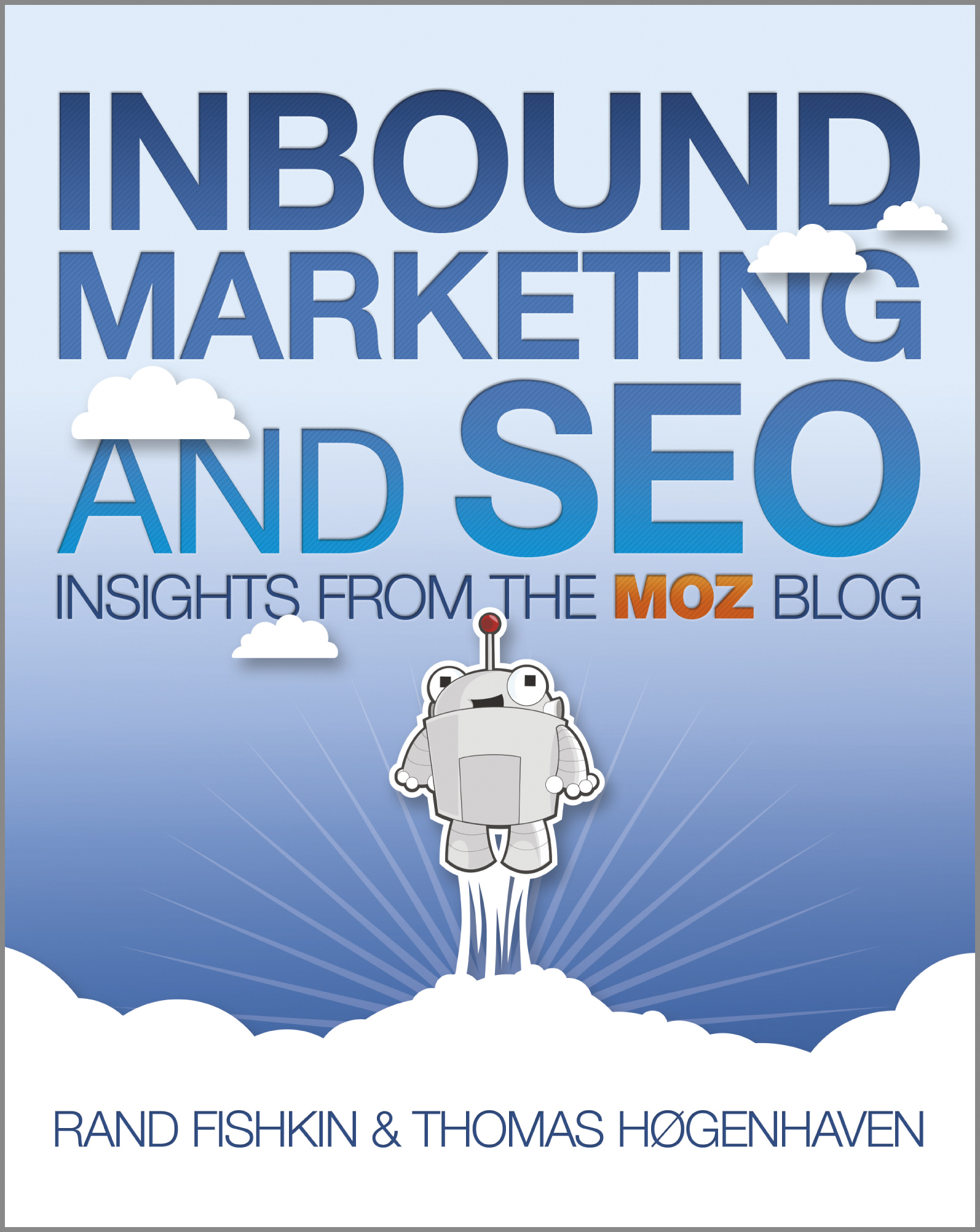
Inbound Marketing And SEO: Insights From The Moz Blog | Book Review

Inbound Marketing & SEO: Insights From The Moz Blog      , Rand Fishkin ,Thomas Høgenhaven, book, book review, SEO, I am sure some readers will have no idea what this book is about. Nor even care. But for those with blogs, online magazines, websites or digital companies, Inbound Marketing and SEO: Insights from the Moz Blog By Rand Fishkin and Thomas Høgenhaven is essential reading.

This excellent book didn’t only teach me a lot of stuff I didn’t know, it also taught me stuff I didn’t know that I didn’t know. That is not to say it made my head hurt with esoteric talk, as well as being knowledgeable it is also easy to read and the knowledge sinks in. I love the graphs too.

If you are in the digital media business I think you should buy this book, read it as quickly as possible and then reevaluate your business. Great business advice in a humourous and enjoyably written book. Brilliant stuff.

The Moz blog is the go-to place for the latest thinking on Search Engine Optimization, and Inbound Marketing and SEO: Insights From The Moz Blog is an anthology of some of the finest writing on this topic.

Search engine optimization (SEO) has been a growing area for many years but industry professionals now recognise that they require a broader set of competencies. In order for SEO to be successful, a wide range of marketing channels need to be covered. In response, Inbound Marketing and SEO is split into sections encapsulating: Channels of Online Marketing; Search Engine Optimization; Content Marketing; Social Media; Outreach; Conversion Rate Optimization; and Analytics.

Aimed at both new and experienced marketers within each of these six sub-disciplines, it primarily focuses on leveraging existing products such as Google, Bing, Twitter, Facebook and LinkedIn as marketing platforms. While most of the book does not require advanced technical knowledge, it also contains articles which look at SEO from a more technical point of view – for example, focusing on how to implement schematic data in HTML or setting up advanced segments in Google Analytics.

Updating the The Moz blog’s most popular articles on the key SEO disciplines, this new title compiles them with brand new, purpose-written articles which are unavailable elsewhere.

Inbound Marketing & SEO: Insights From The Moz Blog is available here, Waterstones, WH Smith and wherever books and e-books are sold.

How To Be Your Own Boss – Innocent Inspires Event

On the 24th July Frost went to an amazing event all about entrepreneurialism, as part of the Innocent Inspires series at Fruit Towers.

The entrepreneurs speaking at the event were Innocent co-founder Richard Reed, luxury jewellery brand Astley Clarke founder Bec Astley Clarke, creator of not-for profit computer charity, Raspberry Pi, Eben Upton, not on the high street.com founders Holly Tucker & Sophie Cornish and founder of global peace charity Peace One Day Jeremy Gilley.

We arrived and grabbed an Innocent mocktail from the Innocent van and then mingled. The talks were brilliant. A particular favourite was Jeremy Gilley who is the founder of Peace One Day, which is on the 21st of September. Keep it in mind and spread the word. If the world need anything it is an International day of peace.

Richard Reed was as concise, smart and inspirational as ever, Bec Astley Clarke started a business and had a baby at the same time, which actually makes her superwoman, Sophie Cornish gave great advice and Eben Upton was not only great, but we also had a good chat with him after and he told us that someone took his Raspberry Pi (which he throws into the crowd during his speech)  in Iceland, but because the country is so small he mentioned it to one of the organisers and got it back from a sheepish teenager who went to his hotel and apologised.

We had a great night and we learned a lot. During the break we had some great food from the Scandinavian Kitchen and we also took away a goody bag full of stuff made by people who used to work for Innocent. That is the great thing about Innocent; they are creative and great businesspeople, and they are also ethical and moral. You can’t ask for more. Head to an Innocent Inspires event soon.

Innocent Ins (how to be your own boss) 067 web

Innocent Ins (how to be your own boss) 026 web

Innocent Ins (how to be your own boss) 190 web

#innocentinspires  www.innocentdrinks.co.uk/inspires

Government youth work scheme failing 90% of jobless youth targeted

The Government’s work programme is an “abject failure” according to property maintenance boss Will Davis, MD of Aspect.co.uk.

“The fact that 90% of 160,000 18 to 24 year olds it pledged to put back into work are still out of work is a real cause for concern”.

The Government’s work programme offers business a subsidy of £2,275 for taking on a young person who has been out of work for at least six months.

Mr. Davies who pioneered ‘Boot camps’ in Britain to enable unemployed London youth to vie for a job said “bureaucrats are not getting young people working”.

“Jobs are what we need, not more hand-outs to subsidise companies to hire people to do jobs that are not a real requirement”.

“People will find money to employ people in areas that are a real requirement”.

Figures show that it has only paid wage incentives for 4,690 young people from its start in June 2012 to the end of May 2013 – significantly behind the target of 160,000 over three years.

Shadow work and pensions secretary, Liam Byrne, said: “The Youth Contract has utterly failed to get our young people back to work. This flagship scheme is on course to miss its target by more than 92 per cent”.

Davies adds: “The government needs to get out of the business of providing business with bribes to create artificial jobs”.

U.S. Business Travelers Miss Their Connection

Research of 1,000 U.S. business travelers from InterContinental Hotels Group (IHG) reveals staying in touch with home is top priority

· Lack of Internet access biggest stress for travelers

· Communicating with family the top way to de-stress when away from home

There really is no place like home, unless it is a hotel that offers free Internet connection according to new research from IHG which has found that being able to connect online with family and friends is now the top priority for U.S. business travelers.

The research polled 1,000 business travelers nationwide and was commissioned to mark this month’s launch of IHG’s renamed loyalty program, IHG® Rewards Club. It reveals that not being able to contact home due to lack of Internet connection is now the biggest travel headache for people away on business, cited by 48% of travelers in the U.S. as their biggest stress factor, ahead of noisy location (41%) and difficult transportation links (38%).

IHG set out to better to understand hotel guests’ priorities while traveling and is now the first and only hotel group to offer free Internet access globally to all its loyalty program members. This new benefit started with Elite members at the beginning of July and will roll out to all members starting in 2014, whether they are staying the night at one of IHG’s nine brand hotels, or coming in for a coffee or impromptu meeting.

Other top-line findings in the U.S. underline the importance of Internet access:

· 62% of those surveyed said that Internet was the most important additional facility in their hotel room above a TV (20%); mini-fridge (5%), landline phone (4%), bath tub (3%) and mini bar (1%).

· Logging onto the Internet in their room when they first arrive topped the list of things that help travelers feel most at home, while staying at a hotel (25%), above unpacking (20%), taking a shower (10%) or turning on the TV (6%)

More than half (55%) of travelers say that they would prefer to communicate with people back home over the Internet rather than using the phone.

· Almost half of business travelers (47%) surveyed cited connecting with family at home as the best way to de-stress at the end of a working day.

· 83% said that free Internet would make them happier whilst travelling away for business.

· And, more than two thirds of respondents, (69%), would be very unhappy traveling if they had no way of connecting with loved ones back home.

Relationship expert and Dating Doctor, David Coleman explains:

“Long distance relationships are difficult to successfully maintain. When we are separated from people we love or care for, we begin to physically miss their presence – their warmth, smile, touch, or facial expressions. Just hearing a voice on the phone is no longer sufficient for the modern business traveler, we need the comfort of being able to connect and see our loved ones. We need to be able to send an e-mail to our significant other to say we are thinking of them; be able to share a laugh with our children before they run off to school, and be able to stay connected to our friends back home. Being able to seamlessly and regularly connect with our loved ones is crucial, now more than ever, in maintaining strong remote relationships.”