BEST ENDEAVOURS: Best Welcome. Jane Cable’s blog about what happens once that digital publishing deal is in the bag continues.

Jane Cable, publishing, writingBEST ENDEAVOURS
 
Jane Cable’s blog about what happens once that digital publishing deal is in the bag continues.
 
BEST WELCOME
 
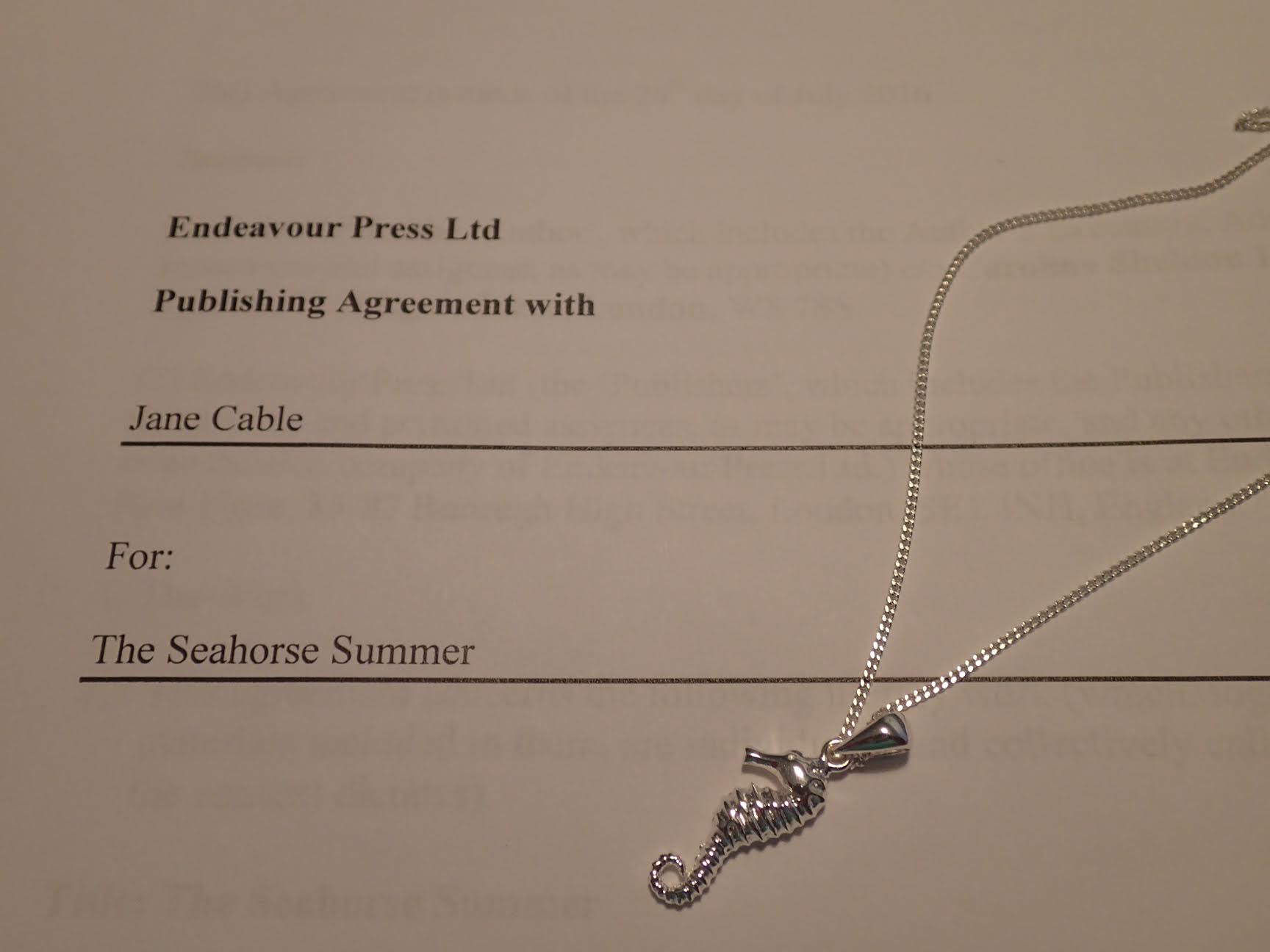
For those of you who are really paying attention and haven’t yet lost the will to live with my burblings, last week I mentioned that one of the tasks on my list was to get to grips with my shiny new membership of the Romantic Novelists’ Association. I had, of course, been aware of the organisation for years and joining was one of the first things that Agent Felicity advised me to do but I needed publishing contract to be admitted to their hallowed halls as a full member. 
As soon as I had the contract I filled in the application form and sent off my cheque. In due course a membership pack thudded through my letterbox (not its fault – everything thuds onto the chunk of slate behind our front door) and I eagerly scrambled my way through the papers to find out all the ways I could fully engage with the association.
So I fired off some emails; to the website co-ordinator, the libraries’ liaison officer, the named contacts for the Cornish and South chapters (having feet in more than one geographical camp). And with some trepidation sent another cheque for the winter party. In London. With crowds of people. People I didn’t know. Gulp.
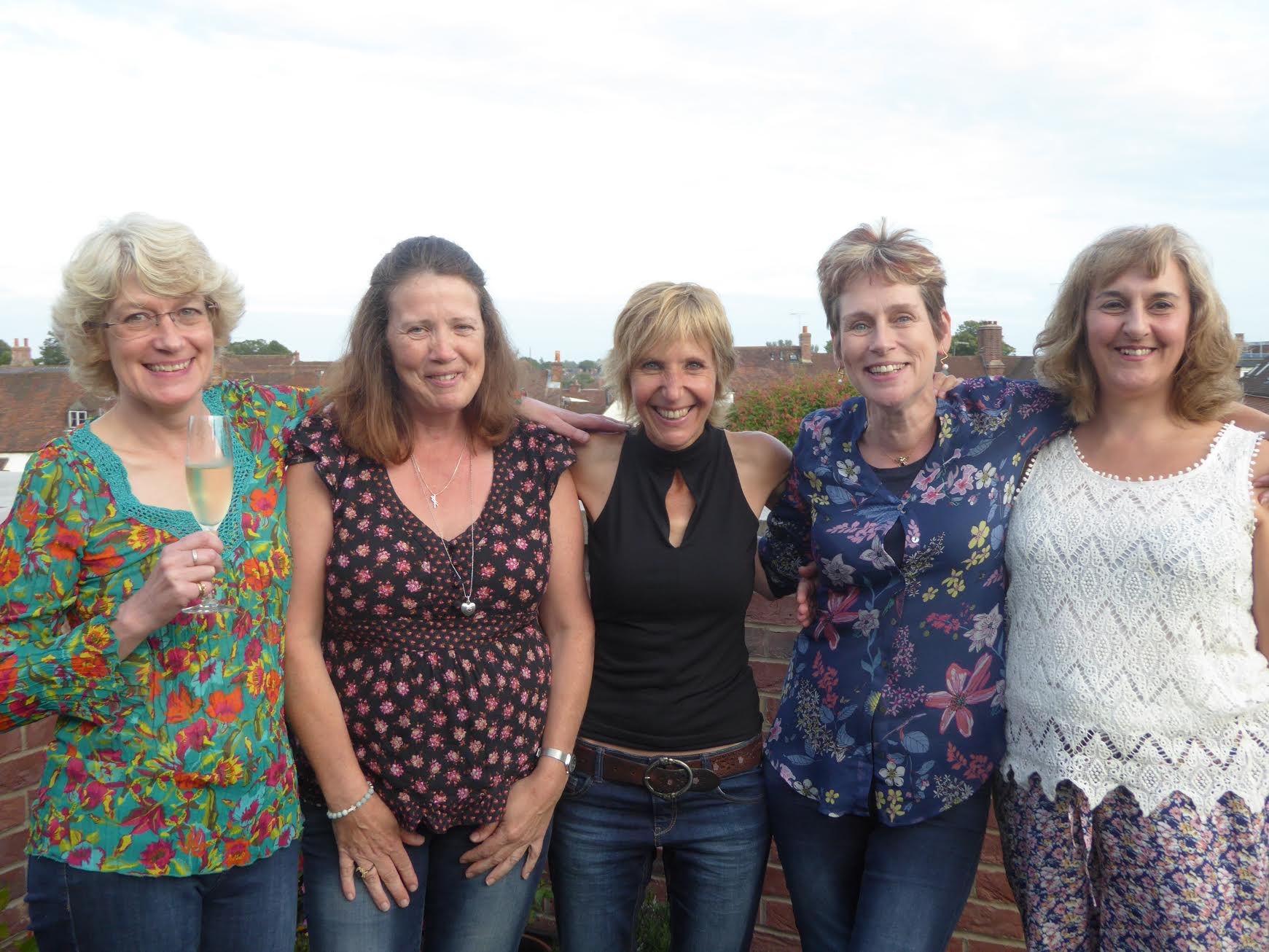
best-endeavours-best-welcome-jane-cables-blog-about-what-happens-once-that-digital-publishing-deal-is-in-the-bag
Very soon my inbox was filled with emails welcoming me to the RNA, and before long I was sharing online conversations and writing experiences with authors I knew only from their Amazon profiles. The genuine warmth left me feeling as though I was snuggling into a very large and fluffy (in a not remotely Barbara Cartland way) blanket and joining a group of writers who believe in co-operation because they know it works. And, well, because they’re positive, interested, interesting and overall friendly folk. 
The emails gave me the courage I needed to venture towards Twitter with the #TuesNews hashtag and @RNATweets handle. Nervously I tweeted about a lovely review I’d received for The Cheesemaker’s House. Within minutes the retweets had started and within hours reached a level I had previously only dreamt of. New follows and followers, my online network expanded in directions which are perfect for me. And what’s more I will actually meet some of these lovely people; both in London next month and at the chapter meetings in Cornwall and in Southampton.
Throughout my business life I’ve believed in the value of networking and although it sounds sexist I also think women understand the process of giving your time and energy to virtual strangers better than men. Not all RNA members are women by a long chalk, but most of us are, because that’s the way the cookie crumbles in the writing world. 
There’s also something about the genre of romance itself; those who write it, write about people. So we’re interested in people. We like people. And that attitude shines from the RNA like no other organisation I’ve ever had the privilege to belong to.
 
Jane Cable is the author of two independently published romantic suspense novels, The Cheesemaker’s House and The Faerie Tree, and a sporadic contributor to Frost. The Seahorse Summer tells the tale of how two American soldiers born sixty years apart help forty-something Marie Johnson to rebuild her shattered confidence and find new love. Discover more at www.janecable.com.

BEST ENDEAVOURS: TO DO MY BEST. Jane Cable’s blog about what happens once that digital publishing deal is in the bag continues.

publishing, digital publishing, writing, BEST ENDEAVOURS
 
Jane Cable’s blog about what happens once that digital publishing deal is in the bag continues.
 
TO DO MY BEST
 
This last week has been one great big long to do list; not just in my writing life, but in my business life as well, catching up with all the client work and admin swept to one side while I’ve been polishing The Seahorse Summer.
The single most important thing no-one ever told me about being a writer is that you spend more time marketing your books than you do producing them. If you want anyone to read them, that is. You can’t just put your book out there and wait for the crowds to come; particularly with the emergence of Createspace it really is true that everyone can publish a book, which makes the fiction market a very crowded place.
So, what’s been top of my writing life to do list this week? 
Jane Cable, publishing, writing First up I have recently joined The Romantic Novelists Association and to make the best of my membership I need to get involved: write my biography for their website; fire off emails to join various groups; add my details to their Author Talks list; send off my cheque for the winter party.
And talking of websites, there’s a great deal of updating to be done on my own with words and pictures to be prepared for my wonderful webmistress to beautify and publish in due course. Not to mention a PR campaign to be costed and planned for when The Seahorse Summer comes out. Oh, and cover quotes – let’s not forget cover quotes…
Next my local independent author group Chindi Authors (www.chindi-authors.co.uk) is in the middle of planning a series of events coming up to Christmas and I need to start pulling my weight again. There’s also the opportunity to record a few Youtube videos which will be really useful so I need to pull my finger out and practice – not least because the sight of a camera normally sends me fleeing for the hills.
I also need to start pushing my existing books again with a giveaway to be planned for The Cheesemaker’s House in the run up to Hallowe’en. Provided Hallowe’en doesn’t run up to and past me while I’m thinking about it, that is.

But one task this week has been a total and unadulterated pleasure, and that is a return to my part finished manuscript. It’s set in

Lincolnshire and features a feisty archaeologist and when I put it down in July to concentrate on The Seahorse Summer I had doubts about how well the story was working. Last week I curled up on my sofa over several early morning cups of coffee and lost myself beneath those huge winter skies, feeling the cold earth under my finger nails, hearing the voices of the past in my head. It was fine – it was actually better than I remembered.

And it was bliss to be writing new words on a fresh page again.


Jane Cable is the author of two independently published romantic suspense novels, The Cheesemaker’s House and The Faerie Tree, and a sporadic contributor to Frost. The Seahorse Summer tells the tale of how two American soldiers born sixty years apart help forty-something Marie Johnson to rebuild her shattered confidence and find new love. Discover more at www.janecable.com.


BEST ENDEAVOURS: Best Of Days: Jane Cable’s Digital Publishing Journey

Jane Cable, publishing, writingBEST ENDEAVOURS

Jane Cable’s blog about what happens once that digital publishing deal is in the bag continues.

BEST OF DAYS

That’s it – the manuscript has been emailed to Endeavour and acknowledged. In four to six weeks I’ll know how much more work I have to do.

So how do I feel? Exhausted – and suddenly very uncertain about my book. Of course the logical part of my mind tells me to get a grip; all I’ve done is a little tweaking and tidying up – they’ve read The Seahorse Summer, for goodness sake – and they’ve bought the rights. So of course it’s going to be fine. The tired, emotional part of my brain, however, is so mashed up I got motion sickness on the elevator in Sainsburys. No kidding.

But last night in my favourite pub, The Victory Inn at Towan Cross in Cornwall, an important aspect of my book was validated when conversation around the bar fell to a former soldier who was going badly off the rails. In so many ways they could have been talking about one of the two GIs in my book, Paxton.

Now when you tackle a subject like combat stress it’s important to get it right. I was lucky enough to be introduced to a former para turned fitness instructor who was prepared to tell me what he’d seen and heard from the soldiers under his care in Afghanistan after they came home from setting up Camp Bastion. The sense of isolation when separated from their unit on leave. The struggle returning to normal family life and relationships after all they’d experienced. How combat can scar a man in ways unseen. How fireworks are never the same again.

publishing, writing

Readers of Frost will be no strangers to Words for The Wounded, the charity set up by author and contributing editor Margaret Graham. The charity supports soldiers suffering from combat stress and I very much hope that I can do something with The Seahorse Summer that can help them in this work.

In the meantime, with the editing finished, what now? Feet up for a while? Not a chance… there’s a huge ‘to do’ list of tasks which have been swept to one side and too long ignored; a vast amount of marketing to be done – both in advance of The Seahorse Summer and for The Cheesemaker’s House and The Faerie Tree which have been sliding down the Kindle charts while I’ve been busy editing; and, of course, picking up the threads of my current manuscript again.

But as for today? I’m on the north Cornish coast and the sun is shining. Quite honestly, I think I deserve a little break.


Jane Cable is the author of two independently published romantic suspense novels, The Cheesemaker’s House and The Faerie Tree, and a sporadic contributor to Frost. The Seahorse Summer tells the tale of how two American soldiers born sixty years apart help forty-something Marie Johnson to rebuild her shattered confidence and find new love. Discover more at www.janecable.com.


Best Endeavours: Jane Cable on her digital publishing deal journey: Sunday Best

Jane Cable, publishing, writingBEST ENDEAVOURS
Jane Cable’s blog about what happens once that digital publishing deal is in the bag continues.
SUNDAY BEST
On Sunday I went to Studland. Not simply because I needed to, but because I wanted to. Walk where my characters walk; see what my characters see; breathe the same air.
The plot of The Seahorse Summer takes place almost exclusively in Studland Bay and the on the beaches and cliffs which surround it. Centered on the village pub (not The Bankes Arms, albeit my fictional Smugglers shares a similar position) the haunting claustrophobia of the bay echoes Marie’s world as she wonders how she will ever escape.
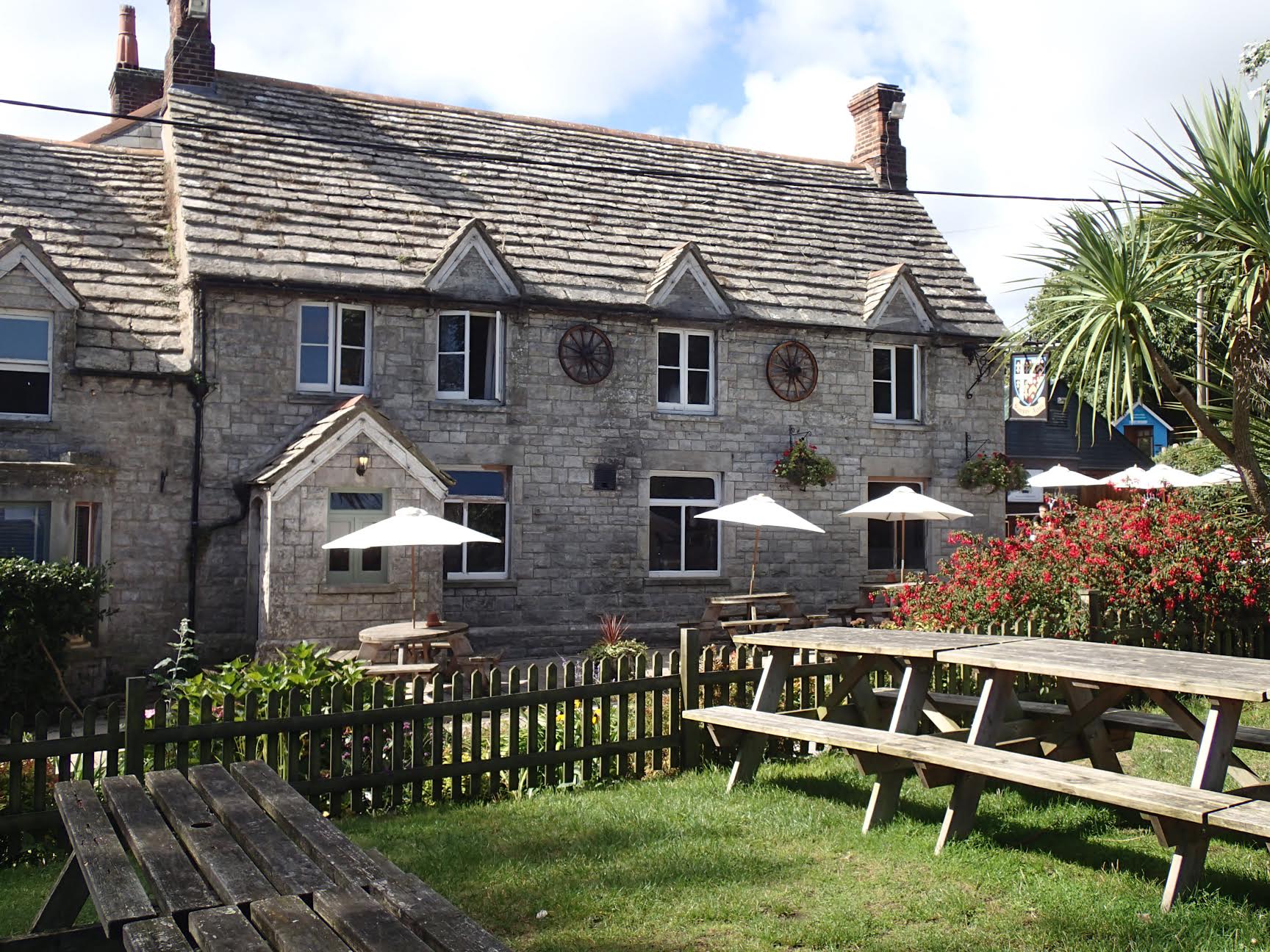
Having spent so long on one side of the bar in The Smugglers it felt slightly odd to sit on the either side of it in The Bankes Arms. As well as the location I’ve borrowed a few other things; the grey stone of the building itself, the basic L-shaped layout; the huge fireplace and the garden overlooking the sea. But the real pub is very much a vibrant business with its own brewery, B&B rooms and armies of staff – the poor old Smugglers could never compete, relying as it does simply on Marie’s marvelous food.

janecable
As a writer you tweak your locations to fit your story, but in the case of Studland the location is changing all by itself. The Seahorse Summer is set just twelve years ago, but all the same coastal erosion has taken its toll. My original position for Marie’s beach hut was at the bottom of a wooden staircase onto the sand not far from Fort Henry. It was there when I first visited in 2009, but not any more. The incredibly wet winter of 2012/13 caused many landslips in the area and the steps were just one of the casualties.
The beach itself is changing too, constantly with every tide. Where there were rocks under Redend Point, now there is sand. One day, the sand will disappear and the rocks will be revealed once again. Up on the cliffs the gorse is almost completely covered with brambles and ferns. The landscape outlives us all, and nature can be a powerful adversary – or ally – as Marie discovers.
The essence of Studland on a sunny Sunday remains. Pleasure boats filling the bay, children playing on the narrow strip of sand as the tide drops, the pub garden filling as lunchtime draws closer. And a writer, wandering slowly through it all, drinking it in, storing it away. Refreshed for the final assault on her editing.

Jane Cable is the author of two independently published romantic suspense novels, The Cheesemaker’s House and The Faerie Tree, and a sporadic contributor to Frost. The Seahorse Summer tells the tale of how two American soldiers born sixty years apart help forty-something Marie Johnson to rebuild her shattered confidence and find new love. Discover more at www.janecable.com.


Best Foot Forward: Jane Cable’s blog about what happens once that digital publishing deal is in the bag continues

Jane Cable, publishing, writing
BEST ENDEAVOURS

Jane Cable’s blog about what happens once that digital publishing deal is in the bag continues.

BEST FOOT FORWARD

Editing involves a great deal of sitting down. Far more than my slightly dodgy back can manage at the moment anyway. So after being glued to my office chair for a few hours I balanced my laptop on a box file on the ironing board and tried that (standing at your desk being all the rage). It helped, but not a great deal as I found it slightly awkward to type.

What does work is going for a walk in the middle of the day and I am hugely blessed to live in a small village tucked under the South Downs so peace and quiet and country air are only ever a few steps outside my front door. And while tramping around the lanes is freeing up my back muscles it does exactly the same for my mind.

Agent Felicity has cleverly crafted my elevator pitch as a writer as “love with a ghostly element in a beautiful setting” and I’ll go with that. Completely. And beautiful settings inevitably require walking.

publishing, what happens when you get a publishing deal

The Seahorse Summer is set in Studland Bay in Dorset and opens on the sixtieth anniversary of a rehearsal for D-Day which went horribly wrong. I visited the village exactly ten years later and on my walk up to the cliffs made special note of the wonderful countryside around me; the daffodils dying back on the banks, slowly being replaced by primroses; the tractor rumbling across the fields; tiny birds swarming the hawthorn hedges; enticing glimpses of the sea below. Minute observation helps me to create a credible world for my characters to inhabit.

Every day, as I walk, I do the same thing. It’s a great discipline for a writer. I always say that to write good dialogue you need to remember you have two ears and one mouth. To write great descriptions you need all five senses.

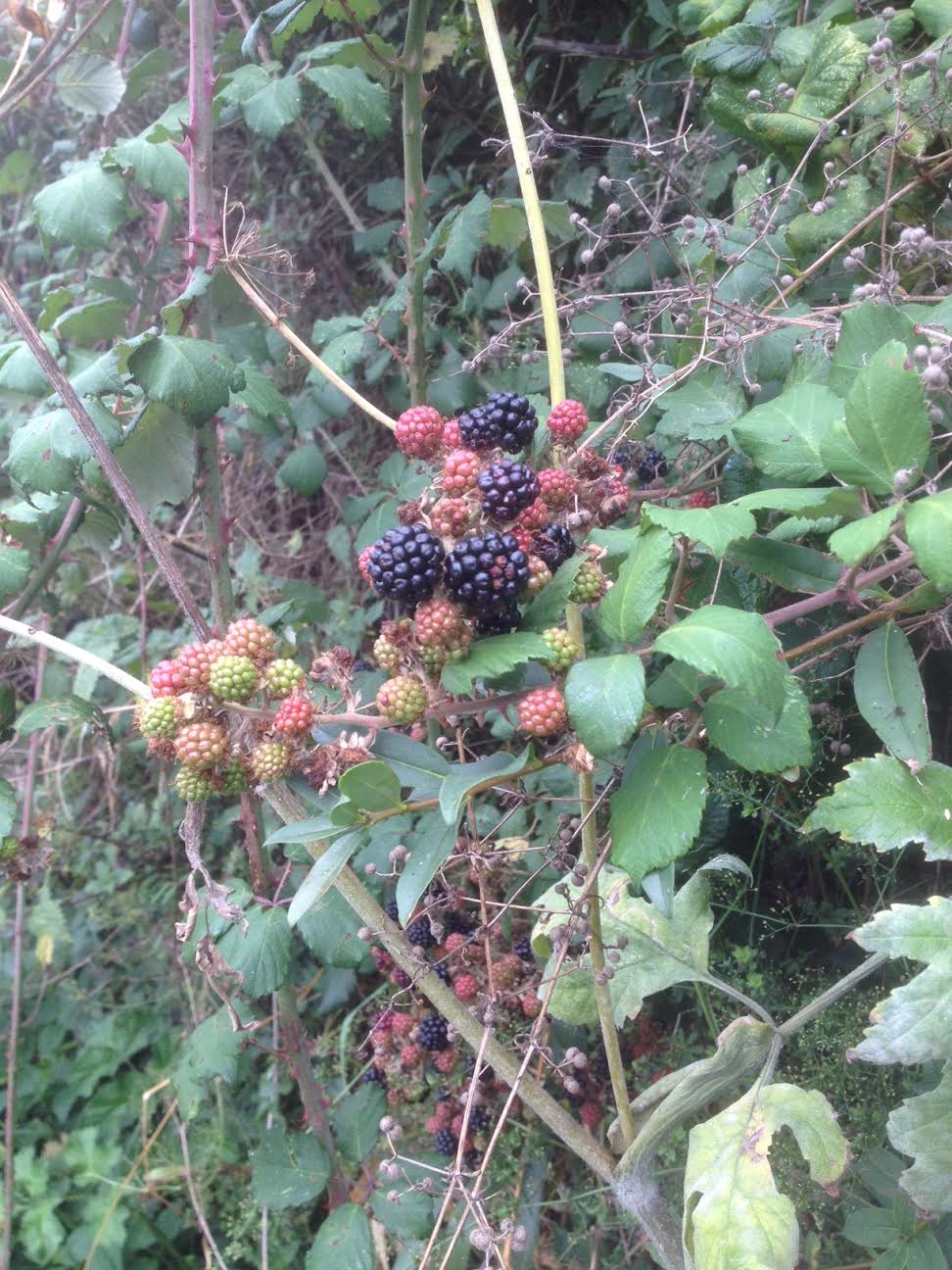
Yesterday the earliest touches of autumn were making themselves felt. Cow parsley dying back to reveal blackberries – some fruits ripe and squashy between my fingers, others in tight green fists. The tiniest hint of chill on the breeze which carried the pheasants’ calls and the wood smoke from a distant bonfire across the valley. The strict definition of meteorological autumn starting on 1st September becoming a reality before my eyes.

Time is, indeed, marching on. But I have finished the character edits for all but Marie and next I need to review each paragraph, making sure it is essential to the story. The book has changed so much since its first iteration I need to remove the distracting loose ends – and in the process make sure that every scene is adding something for the reader.

Jane Cable is the author of two independently published romantic suspense novels, The Cheesemaker’s House and The Faerie Tree, and a sporadic contributor to Frost. The Seahorse Summer tells the tale of how two American soldiers born sixty years apart help forty-something Marie Johnson to rebuild her shattered confidence and find new love. Discover more at www.janecable.com.

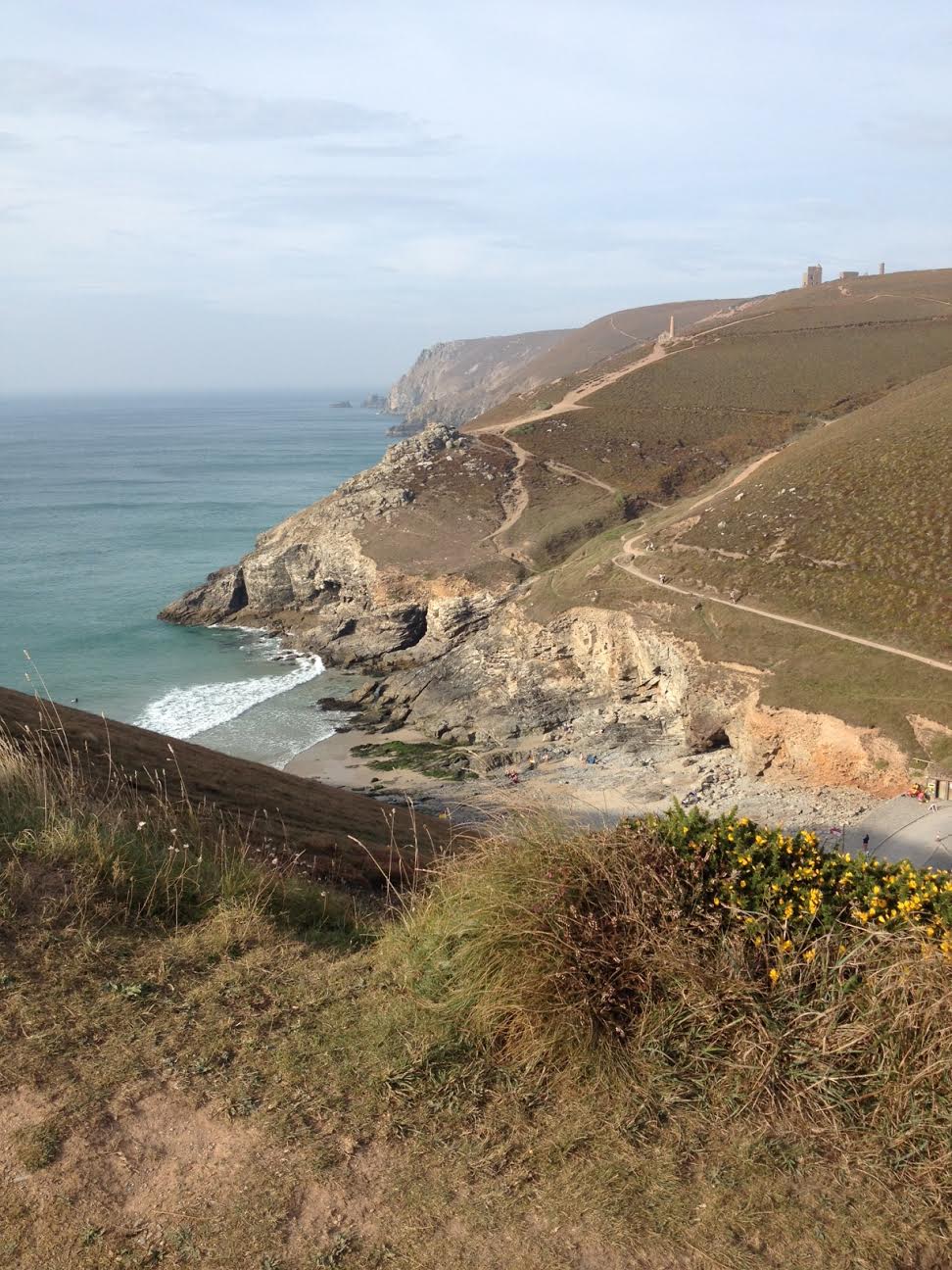


From West Coast to West Country by Maya Pieris

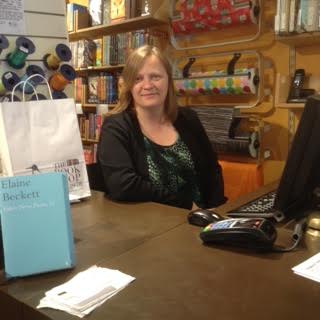
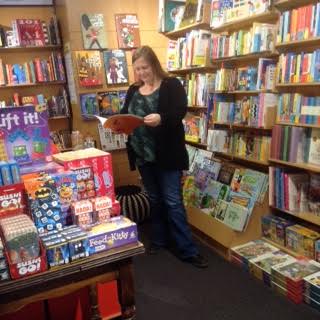
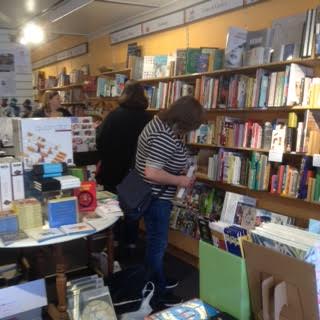
From West Coast to West Country by Maya Pieris1Antonia Squire is building up a loyal clientele for the Bridport Bookshop including dogs- they love the classy doggy biltong available and not just with a book buy. Brought up in Surrey and educated in Harrogate, Antonia upped sticks aged 20 for California, married an American and was happily living in the world of independent bookshops in San Francisco- first Kepler’s and then The Reading Bug- where she was the children’s book buyer amongst other roles.


Until a holiday in the UK in 2014 when they did a progress from Yorkshire to Cornwall and became one of many smitten with the idea of the south-west and Cornwall.  She came across the sale details for the Bridport Bookshop, voted one of the Guardian’s top 50 indie bookshops, took a detour on the way back to Heathrow and discovered the delights of the town and the potential of the shop, one of several book emporiums including two excellent second hand/antiquarian shops, a Waterstones and a wonderful Oxfam which has a brilliant range of “loved” Penguins.

From West Coast to West Country by Maya PierisThe result was changing coast and country but still keeping the west bit and, with husband and dogs in tow, becoming a bookshop owner. And discovering the challenges involved in running a business in a new country! Small but vital changes were made to the shop’s geography, not quite Hogwarts, but involving moving the counter to the back of the shop so the customer can see in and the staff can see out and increasing the size and range of the stock. “I’m a bookseller. The stock is the most important element of the shop and  knowing what people are going to want to read and not just what a publisher wants to see displayed is more art than science”.


She sees no problems with co-existing with the variety of other booksellers, her goal is to be the place people come to find the things they don’t know they want. Almost a year on, she is well on the way to establishing that indie bookshops are an invaluable resource to a town. So many people want the individual experience that can only be achieved by a true “shopkeeper” and, she has observed, people are very loyal, although she has had to tone down the “hi my name is kelly how are you today?” customer service style – less touch feely than she’s been used to but she still says hello!

From West Coast to West Country by Maya Pieris3And she is aware of the potential of the indie bookshop as a grassroots support for the community, working more closely with schools in supporting their curriculum needs as well as providing a venue for local authors to promote their works and judging local poetry and fiction slams. In particular she has developed links with the Open Book festival, a festival for and by the local community about literacy rather than literature which is more the remit of the more formal Bridport Literary Festival (which she is also working with to help develop the Children’s Programming). The shop will be supporting the Bridport Big Read as well as a pop up drama production. So over halfway through her first year she is restoring an independent bookshop into the literary and literate heart of the town. And she giftwraps the books too!
* Frost would love to hear about other Independent Bookshops – contact: frost@margaret-graham.com


Submissions Now Open For The 9th Luke Bitmead Writer’s Bursary

writing competitions, writing, competitions, novel, novel writingWe know a lot of writers read Frost so we wanted to bring this great competition to your attention. Submissions for the 2016 Luke Bitmead Writer’s Bursary are now open.

The award was set up shortly after Luke’s death in 2006 by his family to support and encourage the work of fledgling novel writers and the Bursary is now the UK’s biggest award for unpublished authors. The top prize is a publishing contract with Legend Press and a £2,500 cash prize.

Luke Bitmead was the first novelist to be published by Legend Press, his novel White Summer was released in 2006 shortly before his death. Two novels have been published posthumously – The Body is a Temple and Heading South (co-authored by Catherine Richards). Information about Luke can be found at www.lukebitmead.com.
This fantastic bursary for a ninth year, and hope to continue the success of our previous winners Andrew Blackman (On the Holloway Road), Ruth Dugdall (The Woman Before Me), Sophie Duffy (The Generation Game), J.R. Crook (Sleeping Patterns,) Joanne Graham (Lacey’s House), Jo Gatford (White Lies), Tara Guha (Untouchable Things) and Lyn G. Farrell (The Wacky Man) published today 2nd May 2016.

Only adult fiction is eligible for this bursary, no children’s books or non-fiction.

Tom Chalmers, Legend Press MD comments ‘We are delighted to be continuing this brilliant bursary for the ninth year. The prize is a fantastic way to find new, undiscovered writing talent, and we have found some of our most exciting authors through the prize. Luke was an amazingly talented young author, and it is an honour to be continuing the prize in his name.’

Submissions from writers will be accepted from Monday 2nd May until Friday 15th July 2016.

For information about how to enter visit: http://www.legendtimesgroup.co.uk/legend-press/365-luke-bitmead-bursary


Gillian Holmes, (aka The Editor) Responded to Frost’s Request for Help Writing a Synopsis

Synopsis: A brief summary of the plot of a novel, motion picture, play etc. by Gillian Holmes

Meet Gillian Holmes – literary editor By Margaret Graham1


A very talented friend of mine sent me the synopsis of the novel she was writing for her Creative Writing MA. Her tutor had sent her away with a flea in her ear, and she came to me with no real idea of what she’d done wrong.
As a veteran of synopses of nearly twenty years standing, I saw immediately that she had made a very common error. Namely, she’d forgotten what a synopsis is. She thought she needed to show her thinking behind the book, and give the reader a flavour of what was to come. Consequently, she had managed to give far too much information, while also giving too little.

How is that possible?


  1. She wrote a lot about her main character, while neglecting the plot.
  2. She had included lines from the book, but with no context, they were irrelevant.
  3. She had tried to illustrated the themes in the book, but neglected the plot.
  4. She had tried to illustrate the humour in the book by describing the occasional amusing scene. But she’d neglected the plot…


Do you see where I’m going here? So when you sit down to write your synopsis, always remember that  this is not a creative work, so don’t try to be too clever. Clarity is everything.


So what do agents and editors want from a synopsis?


  1. They want 1500 words or fewer.
  2. They want an elevator pitch – a couple of lines that outlines the concept. The concept is a very strong consideration for all agents and editors, so make it snappy and memorable. For example, let’s take a recent bestseller – The Husband’s Secret. A happily married woman with three children discovers that her husband murdered a young girl when he was a teenager.
  3. A brief summary of the plot, key moments, key events, and main characters so they can see the arc of the story and judge whether the structure seems sound – leave out complicated sub plots, it will only bog you down in unnecessary detail.
  4. The end – and that means the end. Don’t hold anything back, this is not a cover blurb.


And that’s it. Easy peasy.
If you’re wondering about my friend, I sent her back to rewrite her synopsis several times. But it was worth it. She got an A for it in the end.

Gillian has been an editor for mainstream publishers for twenty years. Now she runs her own editorial agency.
To contact Gillian:  gilliansholmes@hotmail.com