A Damsel In Distress, Chichester Festival Theatre – review

Photo credit Johan Persson

Photo credit Johan Perssonzpfile000

A Damsel In Distress
Chichester Festival Theatre
Until 27 June
Box office: 01243 781312
www.cft.org.uk

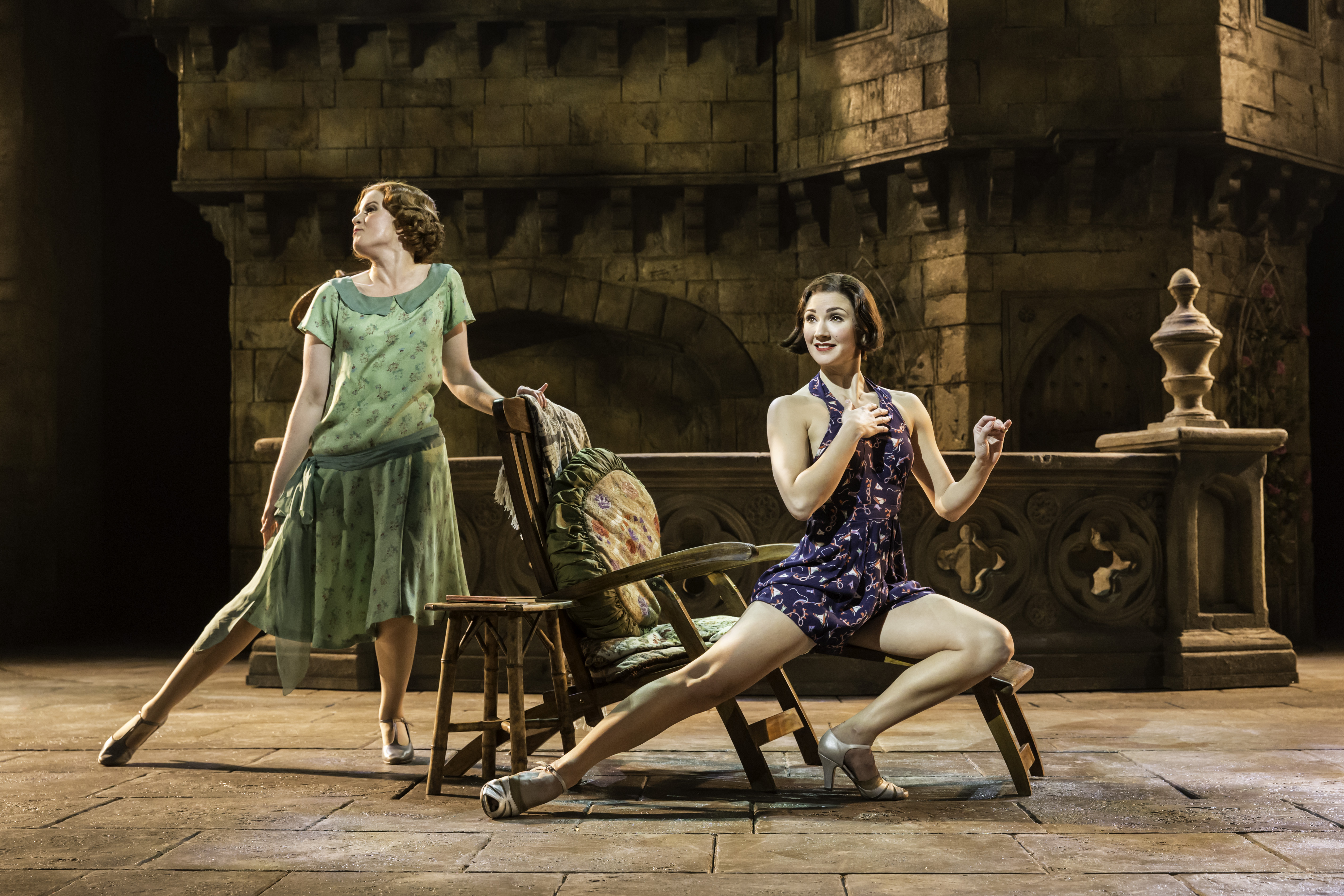
Gad zukes! What a delightful piece of froth! Perfect for summer, especially given the Festival Theatre’s glorious setting (what could be jollier than a pre-theatre G&T in the park?), the 1930s novel by PG Wodehouse initially adapted as a play, and later as a film for which Gershwin composed songs, enjoys new life as a stage musical by Jeremy Sams and Robert Hudson.

A topping blend of music, song and ripping fun, the story is about as daft as they come. Maud, a headstrong 1920s English rose, is locked in the tower of a stately home and guarded by her dragon of an aunt who is determined to prevent her niece marrying a penniless poet. But it’s an American theatre director who is smitten with the girl. If he can’t sleigh the dragon then he’s set on shoving her out of the way so that he can at least declare his heart. Spamalot meets Downton Abbey. But with more tap dancing.

Marshalling the whole charming caboodle, Rob Ashford directs and choreographs. The score may not be the most memorable in the world, but a cast of ace singers and dancers give it all they’ve got, adding plenty of visual fizz as they belt and hoof with as much infectious enthusiasm as dazzling skill. Clutching mops, rakes, and even oversized quivering jellies, routines are high octane and high camp.

It’s a terrific team effort but Isla Blair as fire-breathing Lady Caroline is a splendid battle-axe. Richard Fleeshman as George and Summer Strallen as the feisty ‘damsel’ of the title are in superb voice, while Nicholas Farrell as the aging lord of the manor who rediscovers his va va vroom when he meets showgirl Billie (a warm and effortlessly sexy Sally Ann Triplett) is gloriously funny. Delighted to have found a siren who not only has a cleavage like the Rhonda Valley but who also shares his passion for pigs and roses, the pair provide some of the production’s most uproarious moments.

Further comedic expertise is demonstrated by Desmond Barrit as butler Keggs, and also David Roberts. Managing to switch roles between Perkins the theatre director and Pierre the highly strung chef, as the latter Roberts inspires yet more laughter. Richard Dempsey meanwhile is adorable as dim toff Reggie.

Designed by Christopher Oram, the set, as Reggie would say, is bally clever. Revolving rose gardens and castle turrets cunningly morph into the stage at the Savoy and the kitchen of a stately home.

Chekov it ain’t. Brilliantly executed blissful nonsense it most definitely is. Don’t be a frightful clot – book tickets today!

Good Lord! Michael Flatley Talks to Vicky Edwards

IMG_0577IMG_1465

Michael Flatley talks to Vicky Edwards about his farewell tour, dancing in paint and the bliss of brunch

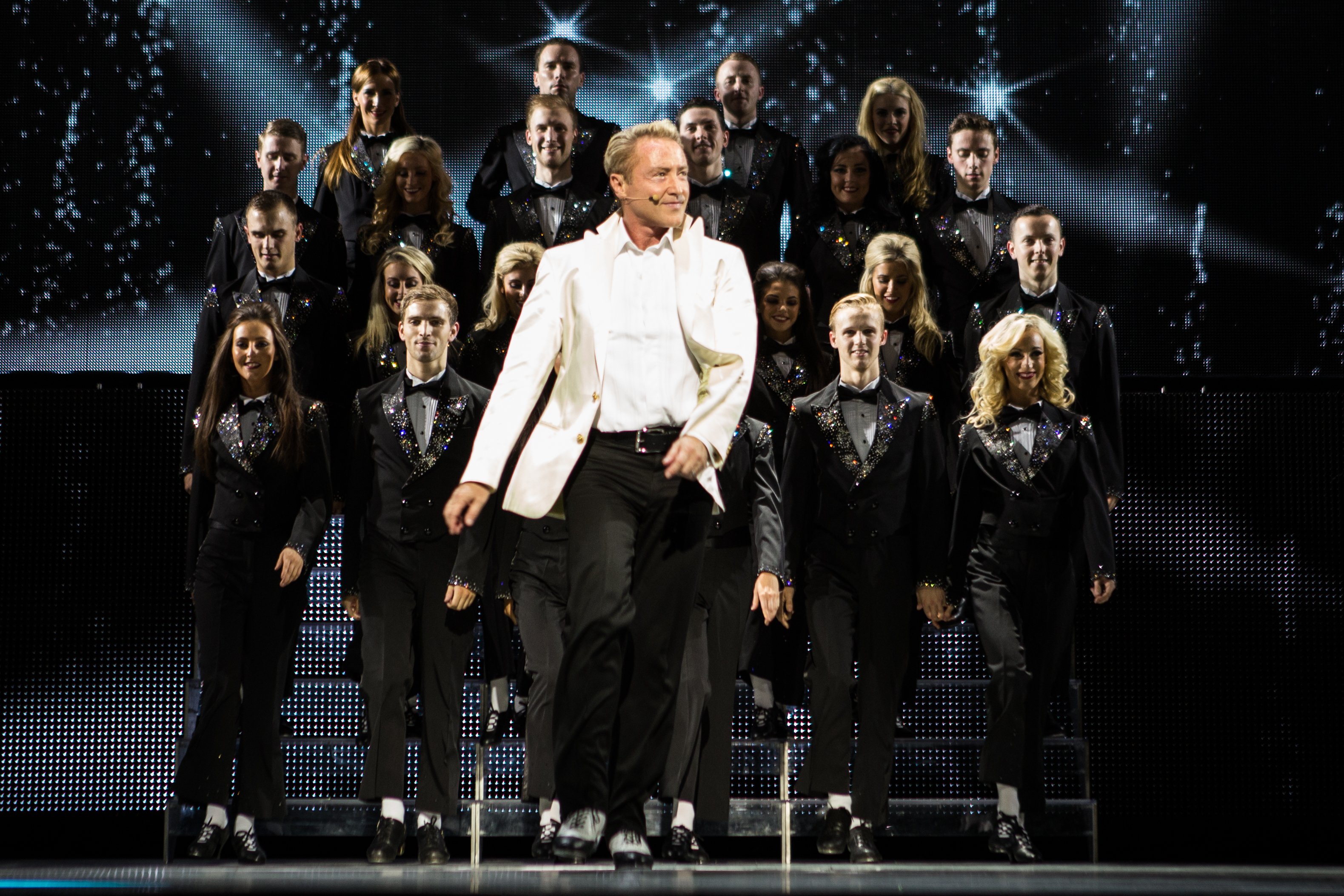
To call a Michael Flatley production a dance show is to undersell it on an epic scale. With more explosive thrills than a bottle of Moet uncorked on a roller coaster, The Lord of the Dance can never stand accused of failing to give value for money.

His latest show, Dangerous Games, is no exception. Complete with a new score by Gerard Fahy, audiences can expect everything from breath-taking special effects and ground-breaking technology to robots, world champion acrobats, unicorns and of course some of the most exceptional dancers on the planet. A dance show? Nah, this is a theatrical extravaganza. With bells on.

“And it’s a family show, too,” says Michael, his soft and melodic Irish-American tones somehow at odds with someone who holds the world record for slamming his foot onto a stage to make the most taps (an incredible 35) in a second.

And for Michael it is the audience’s response that is especially gratifying.

“People of all ages feel uplifted and happy after they have seen it and to transport people and fill them with joy is our whole goal,” says Michael, who began his career with Irish folk band The Chieftains in 1994. Going on to change the face of Irish Dance forever by incorporating upper body movement into his awe-inspiring creation Riverdance, in 1996 he topped the seemingly un-toppable with Lord of the Dance.

But with Lord of the Dance: Dangerous Games marking Michael’s farewell performances (his body simply can’t withstand the intense challenges that his shows demand any longer) is there, I enquire, a sense of loss?

“I am sure I will miss dancing,” he concedes, “but I’ve always been the creator and the choreographer and my dream going forwards is to bring new talent through and give them the chance to shine like the stars they are.”

Having returned to London, to the Dominion Theatre, in March, having sold out at the Palladium last year, Dangerous Games is touring some of the country’s biggest venues, concluding at the Wembley Arena on 4 July before embarking on a world tour. Michael, who is appearing on only a handful of the UK dates, is urging people to come and see the new ‘Lords,’ reassuring fans that they will not be disappointed and that his involvement in the creative aspects of the Lord of the Dance brand remains absolute.

Of his team of dancers, many of whom have been with him since his Riverdance days, Michael is fulsome in his praise. Highlighting the particular talents of James Keegan, Matt Smith, Morgan Comer, and Zoltan Papp “it’s a show I can be proud of,” he says, clearly relishing his role as mentor and teacher.

“It’s incredibly satisfying and rewarding,” he agrees, a note of excitement creeping into the gentle lilt. “It’s wonderful to see dancers fulfilling their potential and reaching for the stars.”

But while his protégés are reaching for the stars someone has to come up with the ideas and choreography. Where does Michael draw inspiration from?

“I think if you really want to create something special then you have to go deep inside of yourself. But you have to work for it; it won’t be given to you.”

His work ethic has roots and Michael needs no prompting to identify them. “He was my hero,” he says quietly, referring to his much-loved father who died only recently.

“He was such a hardworking and driven man. He wouldn’t let negativity into his head. As young men my brothers and I worked with him on construction sites and digging ditches and from him we learned self-discipline and the importance of doing things properly. He taught us to be the one who set the pace rather than the one who followed it.”

But even though he is giving up performing, Michael isn’t hanging up his dance shoes entirely.

“I became fascinated by the great painters who went before us. Once they painted a work it was there forever. With my art I had to paint it, live, every night. And it had to be perfect every night. I dreamed that there was a way that I could turn that whole 3D experience into a 2D image that would last forever.”

It was a problem that needed considerable pondering, but in 2005 he sussed it. Having longed to dance at Madison Square Gardens, where all his boxing heroes had fought, Michael proceeded to sell out at the 18,000-seat venue – unheard of for a dance show. Afterwards he received a framed cut-out of the vinyl flooring that had been covering the trap door on the stage, complete with scuff marks from his taps. A memento of his realised dream, the surprise gift gave Michael the answer to his dilemma.

“I’m a great fan of abstract expressionism and so I went into a studio, put vinyl on the floor and a little paint on my shoes and danced. Then I started throwing paint because I refuse to be just held to the one thing.”

Enjoying considerable success with what he self-deprecatingly calls ‘my last efforts,’ in June he will see his first exhibition unveiled.

“It’s my new passion and I just love it,” he says, with gleeful enthusiasm.

But not even painting comes close to his real passion. Married to his former leading lady Niamh O’Brien, with whom he has an eight-year-old son, for the man who has made millions family time is the most priceless thing in his world.

“For me real happiness is Sunday brunch in London with my beautiful wife and son. I leave the phone at home and we walk in the park, laughing and talking, and it’s just perfect.”

He will always be the Lord of the Dance to his legions of fans, but there’s a whole lot more to Michael Flatley. As warm, funny and charming as he is talented, driven and smart, the Lord is also an absolute gentleman.

Vicky Edwards

For further details of the UK Tour visit www.lordofthedance.com

Review: The Rehearsal at the Minerva Theatre, Chichester

Chichester Festival Theatre

Photo credit: Catherine Ashmore

The Rehearsal
By Jean Anouilh

The Minerva Theatre, Chichester.  Until 13 June
Box Office: 01243 781312 www.cft.org.uk

Anouilh has fallen out of fashion somewhat in recent times. Having seen Chichester’s revival of The Rehearsal one wonders why.

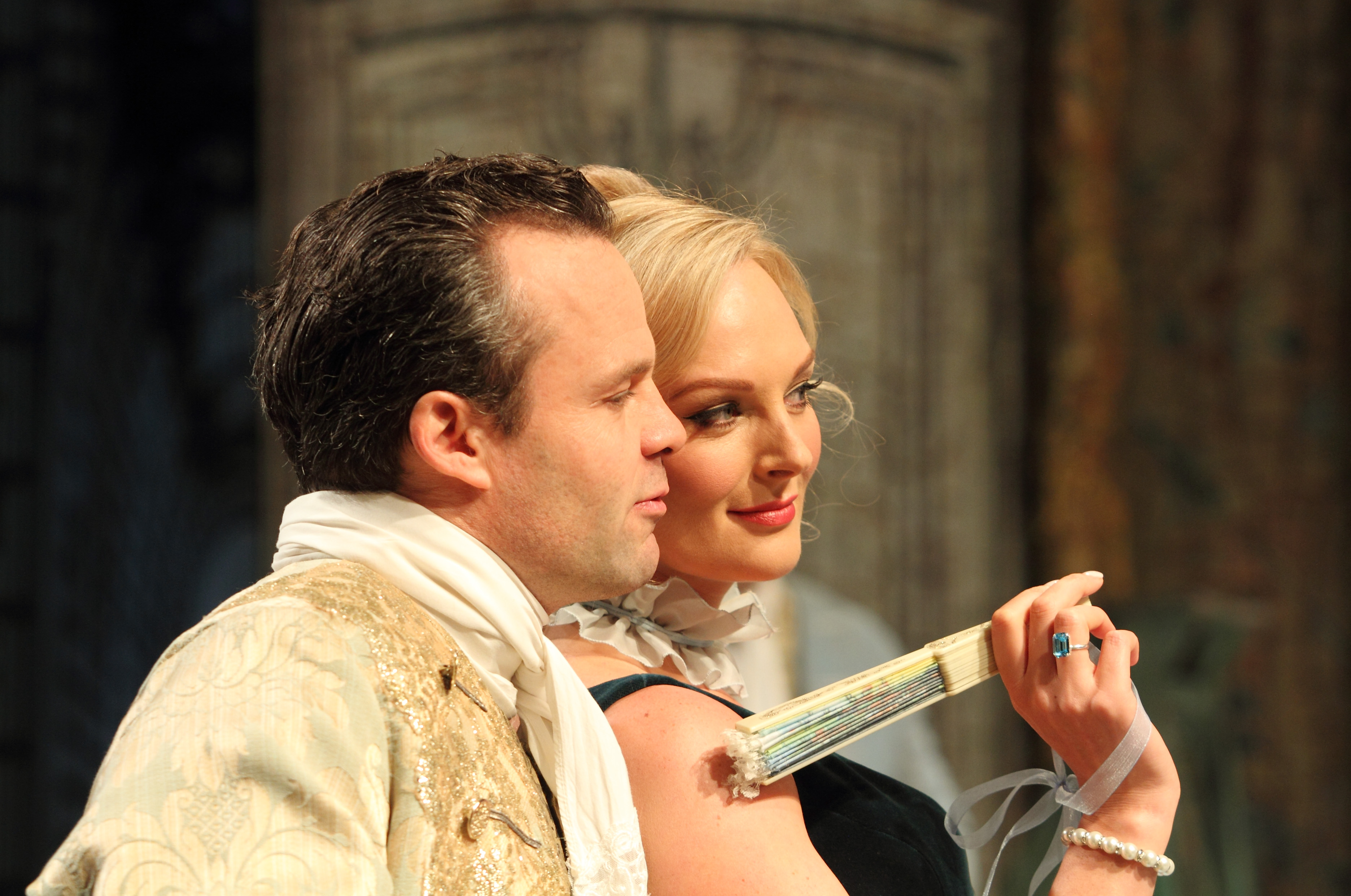
An insightful, dark and sharply witty comedy that is almost musical in its fluidity, the setting is a French chateau in the 1950s. The absurdities of class and relationships are in the spotlight as Count Tiger (Jamie Glover) revs up for one of his legendary parties. Deciding to include a performance of Marivaux’s The Double Inconstancy by way of entertainment, he hustles together a cast that includes his wife (Niamh Cusack), his mistress (Katherine Kingsley) his wife’s lover (Joseph Arkley), Lucille, a young resident nursemaid to a dozen orphans (Gabrielle Dempsey) and Hero, his old school friend and chronic alcoholic (Edward Bennett).

Rehearsals descend into a thinly veiled slanging match as both Tiger’s wife and mistress realise that he has fallen for the young nanny. Copping off with people of ‘their own kind’ is quite acceptable, but a servant? The shame! And worse, Tiger appears to have actually fallen in love, and that doesn’t suit at all. Resorting to trying to frame the girl for theft, a plan that swiftly comes apart, the Countess enlists the help of Hero, persuading the hopeless drunk who ‘likes breaking things’ to help her to boot out the little commoner with all speed.

It’s a well-meshed cast with terrific individual performances, not least Edward Bennett who is simply mesmerising as Hero. Shallow, cynical and permanently sloshed, as his desperation and despair becomes increasingly evident the effect is both nerve-shredding and heart-breaking.

Etiquette and manners doing little to disguise the cattiness of their verbal scuffles, Niamh Cusack and Katherine Kingsley are marvellously acerbic as the wife and the mistress, while Gabrielle Dempsey gives Lucille perfectly proportioned perception and vulnerability.

Translated and directed by Jeremey Sams, this is an accomplished and compelling production. Do not miss.

Interview with Dame Judi Dench and Finty Williams

Interview with Dame Judi Dench and Finty WilliamsOn election day, on May 7th, at 8:25pm, More4 is showing The Vote, a play by James Graham, set in a polling booth during the last 90 minutes before the polls close. The play, which will be screened live from the Donmar Warehouse (at the end of a two-week run), is a unique and ambitious project featuring a cast of over 50, including some stellar names. Chief among them is the acting royalty that is Dame Judi Dench, and her daughter, Finty Williams, who play, appropriately enough a mother and daughter.

Meeting the pair in the quiet opulence of a library in a central London hotel, their bond and mutual affection is immediately palpable, as is their excitement about this remarkable play. Here, they discuss politics, plays and passion, and revel in the joys of working together.

Can you explain a little bit about the concept of The Vote?

F: James Graham and Josie Rourke came up with this idea to set a play in a polling station in Lambeth. They wanted to get a cross-section of people who would come into a polling station in an area like that. So it’s an extraordinary, 52-person event, and we’re a small part of it.

J: It’s impossible to get us all on stage at the same time. Just for the curtain acll.

F: It’s really extraordinary, we did the curtain call yesterday. I found it quite emotional. Seeing all those people on that stage.

J: It’s thrilling.

So, in that respect, is it completely unlike anything you’ve ever done before?

F: Yes!

J: Well, it’s not completely unlike anything I’ve done, because I’ve done the York Mystery Plays three times, and that’s a cast of an enormous amount of people all together, all rehearsing in bits and then getting it all together. This is nothing like that, in content, but I suppose in the working process it’s reminiscent of that. But we only came into it the week before last.

F: We thought we were starring in an epic! And then we saw the first run-through and realised we’re actually in fifteen minutes.

You’re in it longer than most…

F: We are, actually. And we’re very lucky, because we’re in it at the end.

Who do you play?

F: Amazingly, we play mother and daughter. We keep saying “Do we look like mother and daughter?” People look at us as though we’re mad.

J: And we play mother and daughter of the same name: Christine Lola Metcalfe.

F: And the same address.

J: Which is what causes the confusion in the play.

Although you’ve acted together before, is this the first time you’ve played mother and daughter?

F: I’ve been ma, as a younger person.

J: And you’ve been my daughter before. Only on film, though.

F: Oh yes, in Mrs Brown – we did that!

What was it that attracted you to the project?

F: Selfishly, we wanted to work together. But it’s amazing to be part of something that’s so exciting, that people who aren’t in it are so excited about. And at such an extraordinary time, as well. How lucky is that? And to be in a play by James, directed by Josie.

J: And for thirteen performances. It’s a part I’ve waited for all my life, I think. Being with Fint, and to open on one day and twelve days later to close. It’s thrilling.

F: The excitement never goes then.

J: It never goes, because you’re always nervous and always frightened. But it’s a real one-off, it’s exciting and innovative.

And it’s the first time you’ve performed at the Donmar for almost 40 years?

J: Yes. My husband was the first company into the Donmar, with Schweik in the Second World War in 1977, and we followed with…

F: You can say it…

J: I’m not saying it! We followed with the Scottish Play straight afterwards. Although I’ve been to the Donmar, of course, I haven’t played there again. It’s very nice being back there, although much of it I don’t recognise. I recognise the theatre itself, but not anything backstage. We were all in one dressing room back then, the whole company. You certainly couldn’t do that now.

F: It would be tricky to get 52 of us in one dressing room.

Finty, I read that you are most on edge when your family come and see you perform. Does that still apply when your mother is watching you from the other side of the stage?

J: We’re never the other side of the stage. We stick completely together!

F: It’s just about the people who you love the most, whose opinion you value the most. When they come and see it, that’s always a nerve-wracking thing, whether it’s ma, or my boyfriend, who’s an actor, or my son, or very close friends.

J: It’s always that night that you want to go best.

F: And you inevitably come out and go “Oh, but last night it was so much better!”

When you go and see each other in something, are you brutally honest afterwards, if it’s called for?

F: Ma is… this is like a therapy session! I think ma is more honest than I am sometimes. But we have a sort of understanding that if you haven’t enjoyed it then you appreciate the fact that the other person’s got to go on and do it for however many more weeks, and then you can be honest about what you thought of the play, or somebody else in it, or whatever, after they’ve finished.

On election night, the play is going to be broadcast live on More4. What’s that prospect like? Is it nerve-wracking? Do you even still get nervous?

J: Do I get nervous? Yes I do! I get nervous about putting one foot in front of the other. And more so as the years go by! But it’ll be very exciting, because it goes right up to ten o’clock.

F: So we’ll hear the actual exit polls at the end of the show.

J: And then there is a party that goes on all night. And breakfast for the survivors. I very much doubt I’ll be there by then. But, especially this time, what on earth is that night going to be like?

It’s filmed by fix rig cameras. Does that mean they’re very unobtrusive? Will you have performed with them in situ before the night itself?

F: I did The Scottish Play at The Globe…

You see, you can’t say it either…

F: I’m only not saying it because ma’s not saying it! Anyway, that was filmed.

J: I can’t tell you how obtrusive they are. I don’t think we’ll do a performance with them before the final one. We do camera rehearsals. But I don’t think there’s an actual performance with the punters in.

F: I think if you’re on of those actors who constantly looks out at the audience, you might notice them. But I try not to look. Do you?

J: Always try not to look.

There are some incidental scenes that take place in the play that will happen during the ad breaks of the More4 screening. Presumably that means the whole thing will have to be meticulously timed?

F: Yeah. I’m not going to worry about that.

J (laughing): That’s absolutely not our concern, is it?

F: I’m just going to say the lines, and hope we don’t take too long over them.

It’s a wonderful cast, isn’t it?

F: It’s extraordinary.

J: It’s a lovely cast.

F: One of my greatest friends from drama school is in it – Ghiv Chahidi. It’s taken us 21 years to work together. Although he’s worked with ma, and he’s worked with my boyfriend. But we’ve never worked together. And we end up standing next to each other at the end. But it’s amazing people, extraordinary to watch. You say the script is funny – and it is – but it’s genius, what certain people are doing with it. Proper comedic genius. It’s amazing.

What do you think The Vote is saying about the election, and about democracy in general?

J: I don’t know. It’s going to say a lot of different things to a lot of people, I think. It’s an across-the-board look at the situation at the moment and, in a way, how chaotic it is.

F: It’s such a diverse cross section of people who go into the polling station. It sounds naïve, but I’d sort of not really appreciated that you’d get that sort of cross section of people just coming in to one polling station.

J: Or not coming in. We’ve not said about that. All the people who are not going to vote. And feel no responsibility about it whatsoever.

Have you discussed among yourselves how you think your individual characters would vote?

J: My character votes Conservative. I’m settling for that. That’s the kind of person she is. And she’s appalled that her daughter turns to her and says “What do we vote?” She’s a dyed-in-the-wool Conservative.

Are either of you particularly political?

F: My boyfriend is. He’s been out canvassing for Labour. He’s really passionate about it. He’s desperately trying to get me and my son more politically-minded.

J: I have political views, and I voice them, and get very, very angry about things. In my family, we were advised not to talk about religion or politics when we were young. And so we’ve all been able to be very diverse and do what we wanted to do. And see other people’s points of view. Some of them more than others.

F (laughing): We like to see everyone’s point of view, apart from those who don’t agree with us.

It’s an extraordinary political moment. Are you excited about this election?

F: Slightly fearful.

J: Yes, I think I’m fearful. I’m curious about it. But I’m appalled, in a way, about the apathy there is about it. Someone said to me the other day “It’s the most boring election campaign that there’s ever been,” which I have to agree with, I’m afraid.

F: When they start picking up on how many kitchens people have… Really? Is that something that is going to sway people?

J: I heard a programme this morning saying that no-one goes out with a soapbox anymore, because there’s actual fear of doing that. It was interesting. There is a kind of behind the glass attitude to it all now – and actually not talking to people, not engaging with people. Saying the same things over and over again. It’s all election speak now. That’s not what it should all be about. I heard some young people talking, saying nobody talks a language they understand. No-one addresses what they’re thinking about. And indeed they don’t.

After you’ve performed on May 7th, what will you do…

J: Lie down!

Will you sit and watch the election into the early hours?

J: There’s going to be this big party, and breakfast.

F: I’m going to be at the party all night. I will stay there.

Will there be screens? Will it be a political thing?

J: Oh, I think definitely.

F: I’ll be there. I’ll be one of the ones having breakfast.

What’s the best thing about working together?

J: Shorthand. And the fact that we like it so much. We don’t have to pretend that we like it. We actually like it. Michael used to have an expression. He used to say “There are some jobs you run to do.” And for all the fear of having three days’ rehearsal for this, it is a job I run to do, and I can’t wait to actually have that thing of being onstage with Fint.

Was it the same sort of experience for you when you worked with Michael?

J: Yes, it was. You’re frightened for the other person too, so it’s double fright. We did Mr and Mrs Nobody, and Mikey said “We’re going to have such a blast doing this. Lots of laughs, and it’s not very long, so then we’ll get to go home.” Well, it was the hardest thing you can imagine. It was thrilling to do, but we were so tired at the end of the evening.

F: And the learning was tricky, wasn’t it? Ma used to be upstairs in our house with me, learning lines. Dad would be downstairs. We’d have a running supper, it would go round the house.

Was it things like doing lines with your mum that inspired you into the same line of work?

F: No. I don’t know if it’s the same thing if you’re the daughter of a brilliant brain surgeon, who is incredibly good at what they do, works with incredible people and – not quite the same for the brain surgeon – gets to wear great costumes. That’s inspiring. And ma makes it great fun. I spent most of my teenage years in the National Theatre. Mum would go on to do a scene in Hamlet, come back, get changed to go back on and do another scene, and she’d come back and I’d be wearing her entire first costume in the dressing room. That was what I loved. And to hear the applause at the end for her. That still really gets me. That’s the person I love, and they’re being appreciated by all these people. I watch Britain’s Got Talent, and someone’s there saying they’re proud of their parent or their daughter, and then they get a standing ovation, and I’m in floods of tears. It’s a really deep-seated pride.

J: Fint originally wanted to be an acrobatic nurse. And we were very, very keen. Michael said “You’ve got to do it.” Can you imagine? Swinging up the ward to take somebody’s temperature upside down. Absolutely thrilling.

How did you feel when she revealed her intention to go into acting?

We were incredibly excited about it, and said “I suppose it was inevitable.”

What are the roles that have meant the most to you over the years?

J: Over sixty years!

F: Anything at The Globe, because it’s just the best. Playing Maria in Twelfth Night at The National. Ma did a play called Entertaining Strangers when I was about 14, which totally changed my life, I loved it so much. It was directed by Peter Hall, and it was in the Cottesloe. And I remember saying to ma “If I coukld just be in a play directed by Peter Hall at the Cottesloe, I’d be the happiest person in the world. And when I was doing Bedroom Farce, that he directed, which was another big favourite, he asked me to audition for Maria in Twelfth Night in the Cottesloe. And I got the job, and I came out and phoned ma, and I stood on the phone to ma outside the National howling, literally howling. And later on, we were rehearsing for it, and it was all wonderful, and we were doing Malvolio’s letter scene, and they’d picked up a load of letters from the props store, and I opened a letter, and it was one of the letters that had been used in Entertaining Strangers all that time before. That was probably the best. Ma, 60 years, go for it!

J: It’s really for people, for actors and actresses and the company and the director of course, that you remember things. Plays I did with Mikey. When we got the chance to work together it was thrilling. Not so thrilling when we did The Merchant of Venice, a play I don’t like very much. We were just married, and I turned to him and said “I speak too long; but ’tis to peize the time, To eke it and to draw it out in length, To stay you from erection.” And it’s ‘election’ of course. At which point, the Royal Shakespeare band just put their instruments down and had to walk off.

I loved playing Anthony and Cleopatra, because I was an unbelievably unlikely choice to play Cleopatra. I loved every minute of it. And I loved working with Peter. And I loved A Little Night Music, getting to sing and do Cabaret.

F: There was also an amazing show she did called The Gift of the Gorgon, which she didn’t have the best time doing, it was a very tricky play. But it floored me. Amazing.

Are there any particular parts that either of you would particularly like to play?

J: I never know what part I should do. I can never think if what I’d like to do, I wait until somebody says “This is a part you ought to have a go at.” Fint?

F: I want to play Miss Adelaide in Guys and Dolls. Really badly. And I’d like to work with [boyfriend] Joe, properly. Like ma got to do with dad.

J: Perhaps we could all be in a play together.

F: We could age-up Guys and Dolls, and you could play Miss Adelaide.

J: No, no, no. I’d be an old person, sitting in a chair watching. Tapping my foot to the music.

If you could work on one other project together, what would you choose?

J: I like a new play.

F: Something where we have a big entrance at the end, down a big fl… actually, not down a big flight of stairs.

J (laughing): I could come down in a lift.

F: You could have a Stair Lift. And we could be wearing wonderful red dresses cut up to the thigh.

J: That would be very, very good!

F: And an amazing dance number. Maybe I’ll do the dance number. You can just stand still and do something extraordinary in the middle.

The Vote is on Thursday May 7th, at 8:25pm, More4

With thanks to Channel 4. 



Way Upstream by Alan Ayckbourn at Chichester Festival Theatre

Credit: Simon Annand

Credit: Simon Annand

When a play requires a river, a tree-lined bank and a floating motor cruiser as its set, it’s destined to be seldom performed. But Chichester Festival Theatre doesn’t scare easily when it comes to technical challenges and Nadia Fall’s extraordinary production of Alan Ayckbourn’s dark comedy easily meets the play’s epic technical demands.

With most of the action taking place onboard Hadforth Bounty the first half is where the laughs are to be had. Keith and June have taken to the water with colleagues and business partners Alastair and Emma for a jolly waterways holiday. Trouble on dry land back at their novelty goods factory sees PA Mrs Hatfield (Nicola Sloane) having to show up bankside with daily updates. Brash and self-important, Keith (Peter Forbes) quickly nominates himself as captain, while his disgruntled wife June (Sarah Parish) carps, huffs and idles. Lily-livered Alastair (Jason Hughes) and his timid missus Emma (Jill Halfpenny) end up doing the bulk of the graft, resentment building like a slowly developing tidal wave.

But the sit-com feel and the jokes at the expense of well-drawn middle-class characters give way to altogether nastier themes. With the arrival of Vince (Jason Durr), a savvy and seemingly harmless bit of eye candy who does, unlike the novice sailors, at least seem to know how to avoid capsizing, initial barbed teasing swiftly degenerates into disturbing casual cruelty, punctuated only by drunken revels and sexual shenanigans. Manipulating Keith off the boat to go and deal with the threat of strike action back at the factory, Vince introduces minxy Fleur (Emily Laing) into the equation, all the while ramping up the intimidation and spite.

As Ayckbourn highlights the consequences of power in the wrong hands and the fallout of perpetual feebleness, the laughter from the audience gets increasingly nervous.

Fabulously played, the performances are all stunningly good; not even Ben Stones gloriously clever set, beautifully lit by Tim Mitchell, can upstage this superb cast.

An odd but nevertheless compelling play, the launch of the 2015 Festival season at Chichester makes an impressive splash.

Until 16 May. Box office: 01243 781312; www.cft.org.uk

Vicky Edwards

A Doll’s House, Read Again And Again By Paul Vates

A Doll’s House, read again and again By Paul Vates1

When a theatre invites you to produce a play of your choice because of the success of your previous production, you don’t take it lightly.

A Doll’s House, read again and again By Paul Vates2

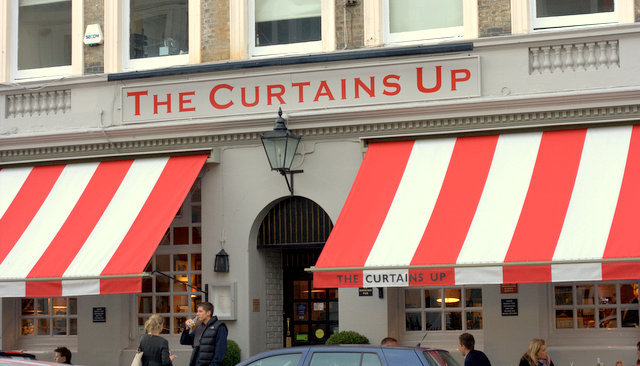
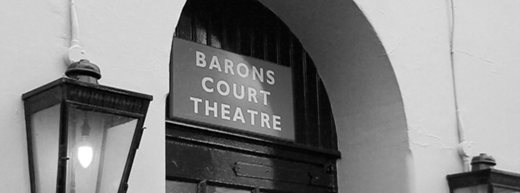
So, after innumerable drinks in The Curtains Up pub (the one upstairs from the Barons Court Theatre), director and producer Kevin Russell announced he fancied doing a classic for a change. The discussions lasted weeks.


The process truly began when I received a text from Kevin. He had found the play and was extremely excited. It touches on feminism, equality, obsession and, even, violence in the home. Written in 1879, Henrik Ibsen’s A Doll’s House centres around something unthinkable in its day: a woman putting herself first – above family and faith.


The central issues of the story have long resonated with the public, and still do today. News from the theatre owner saying it had never been performed there meant it was suddenly all systems go – the first step was to decide upon which version to perform.

I have a copy which has been gathering dust since my student days. It was translated by Michael Meyer nearly fifty years ago. It was a perfect starting point. Meyer’s is a blank canvas upon which we can perhaps add our own touches, as we needed to adapt the play to work in the venue’s intimate space.

A quick scan of bookshelves both real and virtual immediately provided other translations. Copies were borrowed from friends and libraries, some purchased from bookshops or discovered in charity shops.

We devoured them all and it was no surprise to discover that each version had a visceral effect upon us both – the Marmite test so to speak. Did we like it or loath it?

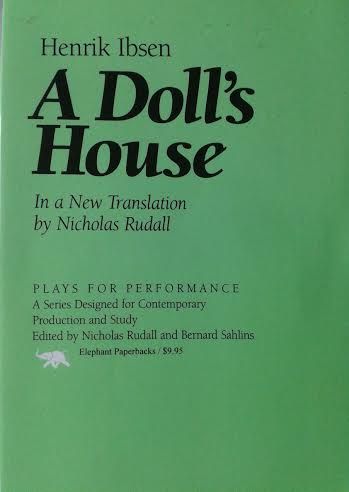
This was the pattern by the end of last year; each translation was debated every time we met, for consistency, at The Curtains Up. Most were shelved leaving us with three versions for serious consideration: Simon Stephens’ from 2012, Bryony Lavery’s from 2004 and Nicholas Rudall’s from 1999.

A Doll’s House, read again and again By Paul Vates5

We applied for the performance rights for all three. Rudall’s came through first and, after demanding details about ourselves, (feeling like we’re auditioning for her) Bryony Lavery is now offering her version. Although more versions do keep grabbing our attention, this part of the process is coming to a close. The focus now is meeting designers and searching for the image for the poster…

Looking back over the last few months, though, I have found the experience exhilarating and educational. Who knew there were so many translations? I have critically appraised ten versions with ten different visions. The tables will be turned later this year when all eyes will be upon us.

A Doll’s House, read again and again By Paul Vates6

New Dreams Theatre’s production of A Doll’s House will be at The Barons Court Theatre in London from 3rd to 22nd November 2015. Further details can be found at https://www.facebook.com/newdreamstheatre – Twitter: @kevinnewdreams


Chuffing brilliant! The Railway Children Theatre Producer Tristan Baker Talks

The Railway Children on stage at Kings Cross, London

The Railway Children on stage at Kings Cross, London

Theatre producer Tristan Baker talks about the show where the West End’s heaviest leading lady is not only delighting audiences of all ages, but is also inspiring marriage proposals …

Take one of the best loved books and films of all time. Add a vintage steam engine, a superb cast and mix well. While the ingredients are blending, crack on and build a theatre from scratch, including a railway track, against the clock. Add a dash of blind panic and garnish with lashings of Edwardian style. Serve to critical acclaim and enchanted audiences of all ages.

That’s the simplified version of how The Railway Children came to life at its new home in London’s Kings Cross. The unabridged version involves so many technical challenges that you could travel from London to York on old rolling stock in the time it would take to tell. Certainly one of the show’s producers reckons that the team who made it happen deserve their share of the five- star reviews.

“I am very proud of the team,” says Tristan Baker, with feeling. “In five weeks they built a one-thousand seat, purpose-built, theatre from the ground up, including laying a train track. It meant working around the clock to get the show on – they were sometimes laying track in the rain at 2am – but they did it.”

And when he says it’s a purpose-built theatre Tristan isn’t exaggerating. Walking around the venue on King’s Boulevard with him, the detail is extraordinary; from the state of the art heating system (to ensure maximum audience comfort), to the unique railway platform stage. Located behind King’s Cross Station, the site has been loaned by Google and will one day be Google HQ. But for now it is home to The Railway Children – “a steam engine rather than a search engine,” laughs Tristan, explaining that the objective was to create not just a show, but an experience.

“It is very site specific. From the moment you arrive and pick up your tickets you are in Edwardian England.” Bang on cue a group of costumed front of house staff surge forwards to greet members of tonight’s audience, directing them to the foyer, which is a perfect replica of an Edwardian station waiting room.

“Our front of house team are all carefully selected and trained to give the audience a really wonderful and authentic experience,” says Tristan, navigating a path through an excited party of teenagers and a group of middle-aged ladies who have come up from Cambridge for a day of shopping, lunch and theatre.

Undoubtedly it is a show with universal appeal. An average audience comprises dating couples, families (from toddlers to great grandparents and all the generations in between), tourists, students, WI ladies, book clubs, Guides and Scouts – people of all ages.

“They are all transfixed,” says Tristan, adding: “I think adults experience it on a different level. Maybe they remember the film from when they were children, or perhaps reading the book, but as adults they realise the political and emotional aspects of the story.” Leaping nimbly up the steps of the bridge that separates the two platforms (the audience sit either side of the track) he stops and looks fondly up at the hefty leading lady, her paintwork gleaming under the lights. “And who can fail to be excited by a three-hundred ton steam train arriving on stage?”

He’s got a point. The magnificent engine is breath-taking. Dating back to 1896, complete with a vintage carriage, this grand old lady is, quite literally, the West End’s biggest diva. Transported from the National Railway Museum in York on a low loader, even her arrival was the kind reserved for superstars as, like the most illustrious celebrities, she arrived with a police escort.

Adapted by Mike Kenny, The Railway Children was first produced by York Theatre Royal at the National Railway Museum, York in 2008. Two sell-out seasons were followed by a transfer to Waterloo Station, where it opened in the former Eurostar terminal and again enjoyed smash-hit success, bagging the 2011 Olivier Award for Best Entertainment along the way. And steaming into Toronto in 2011, Canadian audiences also fell in love with this stage version of Edith Nesbit’s classic story.

Telling of three children whose lives change dramatically when their father is mysteriously taken away and they are forced to relocate from London to a cottage in rural Yorkshire with their mother, the book was first published in 1906. Exciting, with plenty of adventure and drama at its heart (“what happens to the children is quite awful but they are resilient and make the best of their situation”), heading the current cast is Caroline Harker as Mother and comedian and actor Sean Hughes as Mr Perks.

“Sean has just joined us and he brings a joyous warmth to the role,” says Tristan, agreeing that ‘joyous warmth’ pretty well sums up the feeling that audiences go away with.

And it seems that The Railway Children also inspires romance. “We do get a lot of couples coming to the show on date nights and we have recently received a request for permission to make a marriage proposal from the train,” smiles Tristan, as we take our seats.

Long before we reach the end of the last act, with the heart-rending ‘Daddy, oh my daddy!’ line, the reasons for the production’s success are abundantly clear. With ‘wow!’ factors at every turn, this much-loved classic story has been transformed into chuffing brilliant theatrical experience. Whether you’re eight or eighty, it’s one that should not be missed.

Come on now! All aboard!

Vicky Edwards

THE RAILWAY CHILDREN

King’s Cross Theatre, Goods Way, King’s Cross, London N1C 4UR

Currently booking until 6 September 2015

Box Office 0844 871 7604

Website www.railwaychildrenlondon.com

Facebook www.facebook.com/railwaychildrenlondon

Twitter @TRCKingsCross

Google+  plus.google.com/+RailwayChildrenLondon

Theatre, For The First Time, INSIDE The Ivy!

BasicFlyerportal1[1]

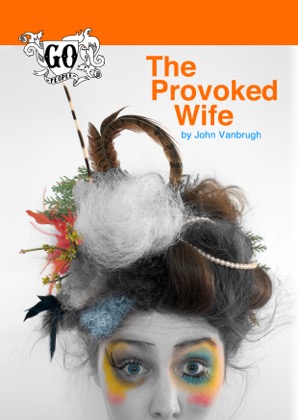
Restoration theatre was a revolution in itself, staged anywhere that was available – from disused tennis courts to ancestral family homes. In light of this, forward thinking theatre company Go People are bringing John Vanbrugh’s The Provoked Wife to intimate venues across London; and see they have an amazing opportunity to explore a revival of this idea, making new and unusual spaces our playground in the delivery of a brilliantly alternative theatrical experience. Their current bookings include both private and public performances happening in living rooms, member’s clubs, churches and hotels and run from 10th March – 23rd March.

The spring tour sets it’s main venue (for 4 nights) in the beautiful 1733 church building of St-Giles-in-the-Fields is a perfect setting in which to view this startling exploration of Restoration morality. The play is also being perfromed in Hoxtorn Holborn Hotel and Private Member’s club Home House.
Additionally, for the first time in history, The Ivy – famous for dining the media, celebrities, actors, directors and theatre goers themselves in it’s exclusive and luxurious setting – will be providing theatre in it’s own premises with Go People’s production. Tickets are available both for the public and for Ivy Club Members and dinner and drinks can be enjoyed in the Club before or after the performance.
Go People’s snappily-cut 90 minute production distills the best of playwright Vanbrugh’s 1697 original play, foregrounding the fabulously funny narrative whilst keeping his deliciously drawn characters firing on all cylinders. Sexy, silly and sumptuous, this contemporary interpretation of a restoration classic showcases the finest of London’s upcoming professional theatrical talent.
1979316_365578600292619_7700756060074020517_o

Venues:

10th March      7:30pm            HOME HOUSE

Members only; champagne & canapés before

13th March      7:45pm            THE IVY

Members and public

Booking:          Email lissa@the-ivyclub.co.uk


18th March      7:30pm            ST-GILES-IN-THE-FIELDS

Completely open to the public

Booking:          www.wearegopeople.com


19th March      7:30pm            ST-GILES-IN-THE-FIELDS

Completely open to the public

Booking:          www.wearegopeople.com


20th March      7:30pm            ST-GILES-IN-THE-FIELDS

Completely open to the public

Booking:          www.wearegopeople.com


21st March       7:30pm            ST-GILES-IN-THE-FIELDS

Completely open to the public

Booking:          www.wearegopeople.com


23rd March      7:00pm            HOXTON HOLBORN HOTEL

Completely open to the public; complimentary drink before

Booking:          www.wearegopeople.com


Cast and Creatives:

Director – Oliver Kaderbhai

Producer – Go People

Designer – Emily-Jane Swanson

Music Composer – Alex Woolf


Lady Brute – Lucy Eaton

Lord Brute – David Bryan

Constant – Mark Donald

Heartfree – Freddie Hutchins

Belinda – Rose Riley

Lady Fanciful – Greer Dale-Foulkes

Mademoiselle – Suzie Preece

Razor – James Mack

Cornet – Amelia Clay


BBC young composer of the year 2012 Alex Woolf has written new incidental music for the piece and has also composed a number of original songs for the production’s musical moments.


Director Ollie Kaderbhai is the Artistic Director of theatre company :DELIRIUM. Credits include ‘Go to Your Grave Like a Soldier’ for the Old Vic Tunnels and ‘From Where I’m Standing’ for Pegasus Theatre. Ollie has a long-standing association with the Old Vic Theatre and has directed numerous projects on behalf the Kevin Spacey Foundation, both in the UK and internationally.


Designer Emily-Jane Swanson experience covers theatre, film and editorial. She was awarded the NSDF and Methuen Drama Emerging Artist Award for Design at Edinburgh Fringe and also runs a successful online fashion business, popular with celebrities as diverse as Caitlin Moran and Nikki Minaj.


About Go People:

Go People are a theatre company formed of three professional actors who first met at Cambridge University, aiming to bring under-appreciated or undiscovered plays – as well as talent – to the London theatre scene. They believe that theatre belongs equally to the people making it and the people who watch – and that this can happen anywhere, from a traditional theatre to a living room, church or hotel bar.

Go People make having a group of actors come to your home to perform solely for you and your guests an utterly unique reality, offering exclusive performances of plays for private parties and corporate events – the full theatre experience without having to leave the house!

The production company aim to recapture the fun and excitement, energy and surprise that private, live theatre can add to any occasion, whether you are planning a celebration for hundreds of people or an intimate soiree with close friends, Go People will work with you to create something truly magical and memorable.

Go People can tailor the event to suit your needs – you might like to select something from their extensive repertoire of modern plays and old favourites, or maybe you already have something particular in mind you would like them to adapt. And, what’s more, they can perform in any space you choose – from a spectacular garden to a cosy living room, every seat is top price quality – no more restricted views or struggling to hear every line!

http://www.wearegopeople.com