Askerswell Short Story Workshop by Wendy Breckon

photo 1ASK

One of the most pleasant ways to spend an afternoon, is to share ideas with other writers and learn one or two writing tips.  On Saturday 17th January, the car ambled through the country lanes to Askerswell near Bridport, for a short story workshop.  Accompanied by a rather large notebook and a trusty pen, I bumped into other like minded people as we walked up the path.  The flyer for the Dorset Writers’ Network said, ‘let your imagination fly’, and that is exactly what we did.  In the warmth of the cosy surroundings of Grey Cottage, our excellent tutor, Frances Colville guided us towards creating the perfect short story.
Askerswell Short Story Workshop by Wendy Breckon

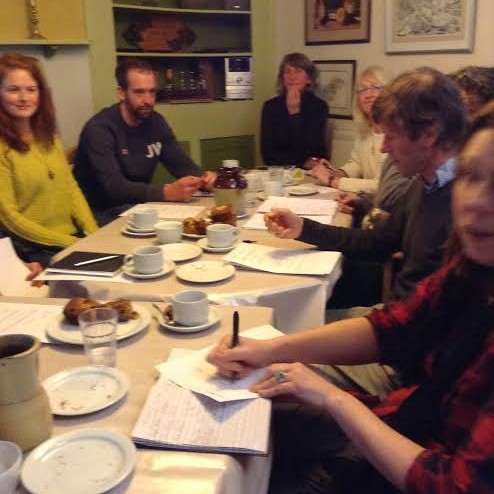
The twelve writers gathered around the table, listened, scribbled down ideas, exchanged helpful notes and read their work.  There is something magical about listening to other peoples’ writing.  All so different.  Quite fascinating. Wonderful.

Frances is a very accomplished writer.  She gave us a clear understanding into the composition of a good short story.  I found her tips very helpful and thought provoking.  One of the constructive ideas she presented to us, is to hot seat your chosen character. This technique is valuable for gaining further appreciation of characterisation; such as understanding his or her personality; age; relationships with others or individual motives. Either, ask yourself the questions about the person you have created, or ask someone else to ‘hot seat’ you.  Both are effective tools to consider when writing a short story.This was very helpful, for gaining an extra insight into the creation of our own characters.
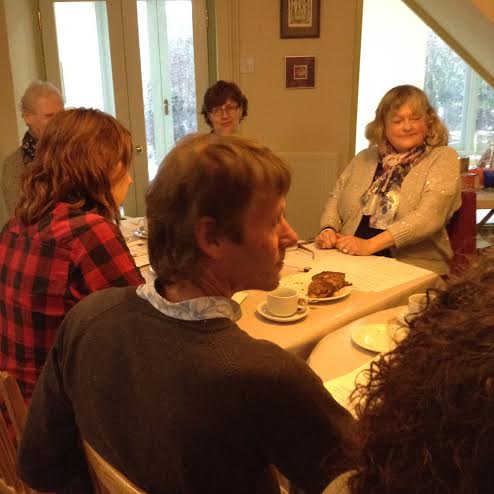
Askerswell Short Story Workshop by Wendy BreckonOur tutor made a number of further practical suggestions; the important use of dialogue in short stories; the inclusion of dramatic tension and how to achieve it, and the necessity for vigorous editing.  Reading your story out loud is very important for getting the sense of rhythm and pace.

A worthwhile exercise to do at home, (which I immediately applied to my own writing), with great success,  is to explore a written piece and the application of descriptive words.  Are they the best ones to choose?  Are you using cliché and words that are too obvious?  Frances suggested, that as writers we underline each one, and think of them on an individual basis.

photo 4ASK

Four o’clock.  It was the end of the session.  Chairs were placed under the table. Notebooks and pens disappeared into bags.  Coffee cups pushed to one side.  Everyone left chatting, heads buzzing.

Frances Colville gave us lots to think about in her invaluable and absorbing session.  I could have stayed for another two hours.

photo 5ASK

So now, it’s time to think of an idea!  If you want to take part in the competition, create a story with a maximum of 500 words.  This should be set in Dorset, have a strong sense of place and have equally strong characters.  The winners will be chosen for the e-book anthology and the closing date is the 31st March.

So, let those thoughts slide on to the page  and your imagination fly. Without any further hesitation get writing.



Words For The Wounded Writing Prize Closes On 11 March

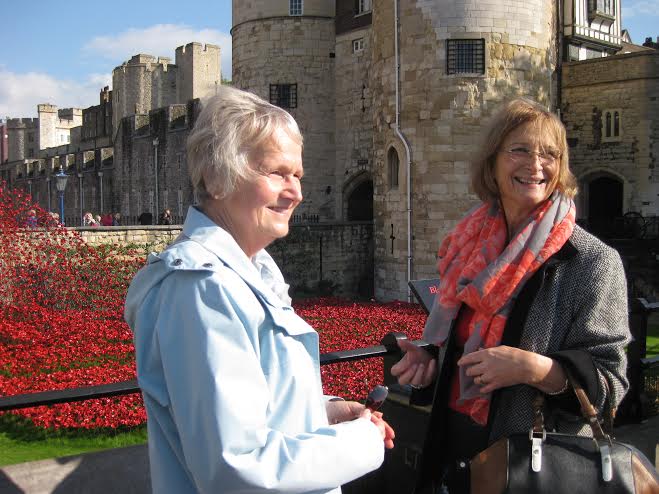
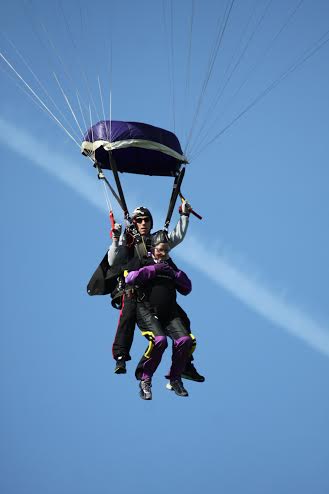
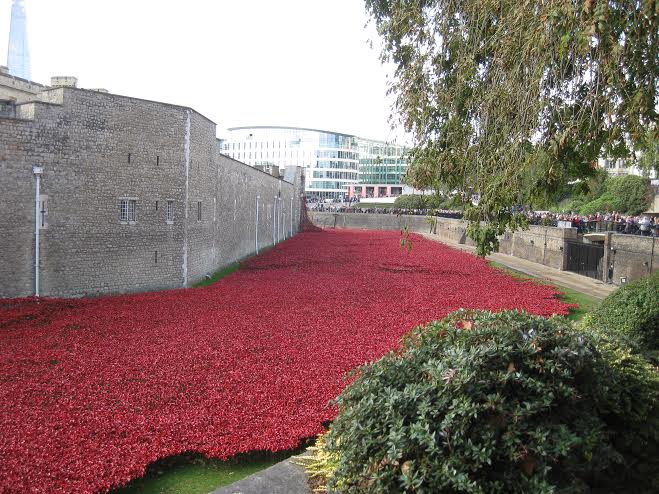
W4WLogoAlt3 Words for the Wounded writing prize closes on 11 March. two grannies Why on earth do three grannies (two shown above) throw themselves out of a plane, strapped to a fit young man, hoping their parachutes open? Well, OK, the fit young man is a bit of a clue. But seriously, why? pic2 janairborne The reasons lie in the past and the present. In the past, both my grandfathers survived the first world war, so just as there were thankful villages who had lost no men, so too there were thankful families. But life isn’t that simple, is it? Gentle Percy, my mother’s father survived but took his own life in 1923. War has long, relentless tentacles which reach out and destroy families, just as surely as bullets do. pic3 poppies Then, about four years ago I met a young  man and his wife. They were both under twenty five. She was pushing him in his wheelchair; his portable ventilator lay on his chest. He’d been shot through the neck in Helmand and is tetraplegic, (paralysed from the neck down). They were both smiling and cheerful but their hopes and dreams were very different now, and everyday life was a mountain in itself.   I decided that, as writers, my two granny friends and I could help not just the wounded, but also aspiring writers. We founded Words for the Wounded and were enormously lucky in our patrons, amongst whom are Julian Fellowes, Louis de Berniers, Katie Fforde, Paddy Ashdown and many others. Julian Fellowes   We decided also that we would earn our donations, not just appeal to the generosity of others; hence the skydive, and hence the Mud Challenge Obstacle Course in August, and hence the LitFest to be held at High Wycombe on 18th April  2015 with Katie Fforde and two Midsomer Murders writers amongst others.   katie-fforde Our main thread, however, is our writing prizes. We have the short category for poetry/fiction/memoir – up to 400 words, with prize money of £400. Entry fee £4.50   This year we are launching The Independent Author Book Award for fiction or memoir, with a 1st prize of a Palamedes PR professional press release. pic 6 palamedes.jpg And a biography and review in Frost Magazine.  Entry fee £12.50 pic7Frost The WforW grannies absorb ALL the costs themselves, so every penny raised goes to the wounded. Our troops put their lives on the line for us, some are killed, many, many,  more sustain life-changing injuries. To help them is the aim of Words for the Wounded. They deserve the best.

For more information: www.wordsforthewounded.co.uk 

Short Story Workshops Across Dorset by Margaret Graham

writing

One of Frost’s favourites, author Kate Kelly, who wrote of her experiences at the Edinburgh Festival is featuring as a tutor at one of the free Workshops taking place across Dorset over the next two months.

Short Story Workshops Across Dorset  by Margaret Graham

In an effort to reach aspiring writers living in rural communities a series of free-entry creative writing workshops for adults has been devised and take place at twelve venues across Dorset between 12 January to 14th February.

Amongst the tutors is another familiar name. Frances Colville who arranged the Bridport Slam, won by one of Frost’s most fun writers, Wendy Bracken, is teaching. Frances herself has featured in Frost in A Day in the Life. In addition, there is Tracy Baines who I taught, and who is a successful short story writer, so lots for the aspiring writer to enjoy.

Perhaps they would like to enter the Words for the Wounded writing prizes? www.wordsforthewounded.co.uk

writing, writing workshops, short, workshops, writing, Dorset, Margaret Graham

The short story workshops will kick-start DWN’s first e-book anthology. For anyone and everyone who enjoys writing or would like to learn to write short fiction check out the communities listed here: Winfrith Newburgh, Sturminster Marshall, Cerne Abbas, Askerswell, Durweston Horton & Chalbury, Martinstown, Stalbridge, Verwood, Crossways, Upwey, Bourton

To book a place, email sue@dorsetwritersnetwork.co.uk

Taking part gives you free entry to Dorset Writers Network e-book competition. Competition launch event is on Saturday 24th January – 2.30pm – at Dorchester Library.

Come along to hear Natasha Solomons reading from her work and celebrate the launch of Dorset Writers Network’s e-book competition.  Advance booking essential, telephone Dorchester Library on 01305 224440.


The Stages of Writing a Book

writing, the stages of writing a book, writing, writer, author, self publishing, writer, despair, first draft.

Ladies and gentlemen, I am in the process of writing my third book. Three-quarter of the way to be more precise. Which puts me at number 7 on this list. Writing and publishing a book is amazing. The feeling when you have your published book in your hands is like no other. You did it. It is not easy however. It took me years to get my first book published. Mostly due to procrastination. My next one was finished and published within five months. Not bad for someone with acute morning sickness. My third has so far taken seven days to get three-quarters of the way through the first draft. Which is not bad. You can check out the first two here. I will get into how tedious and hard it is writing a book with my list of the stages below, but before we get to the list I will leave you with this amazing quote from Amy Poehler in her amazing book Yes, Please.

“Everyone lies about writing. They lie about how easy it is or how hard it was…No one tells the truth about writing a book…the truth is, writing a book is this: hard and boring and occasionally great but usually not. Even I have lied about writing. I have told people that writing this book has been like brushing away dirt from a fossil. What a load of shit. It has been like hacking away at a freezer with a screwdriver.”

The Stages of Writing a Book


  1. Hopefulness.
  2. Excitement.
  3. Despair.
  4. First quarter done. Glimmer of light.
  5. Despair.
  6. Epic melt down. Tell everyone you give up and would burn the book if it wasn’t on your computer.
  7. Resignation, decide that since you started you should finish.
  8. Wonder what breathing in fresh air is like.
  9. Get into the flow of it, it might be okay after all.
  10. Finish first draft. realise it is only the first draft. Cry.
  11. Read first draft. It’s awful. Cry some more.
  12. Despair.
  13. Start editing. Ignore the boredom and the fact there are so many more fun things to do than this.
  14. Realise that it’s not actually that bad.
  15. Finish editing first draft.
  16. Hope
  17. Happiness
  18. The possibility of it all being over soon
  19. Get draft back from proof reader.
  20. Despair
  21. Try to ignore the amount of grammar and spelling mistakes you made.
  22. Final edit, go through all suggestions and edit accordingly.
  23. Finish book: go on week-long champagne binge.
  24. Get cover back from designer. Has spelling error. Cry.
  25. Get cover fixed.
  26. Get book formatted for the different eBook and print versions.
  27. Despair.
  28. Finally see finished book: elation.
  29. Publish book and it starts selling: happiness like no other. Feel huge sense of achievement.
  30. Start writing next book.
  31. Despair.


What do you think? Are you a writer? What do you think are the stages of writing a book?


A House in Italy by Amanda Brake, Frost’s Le Marche Correspondent

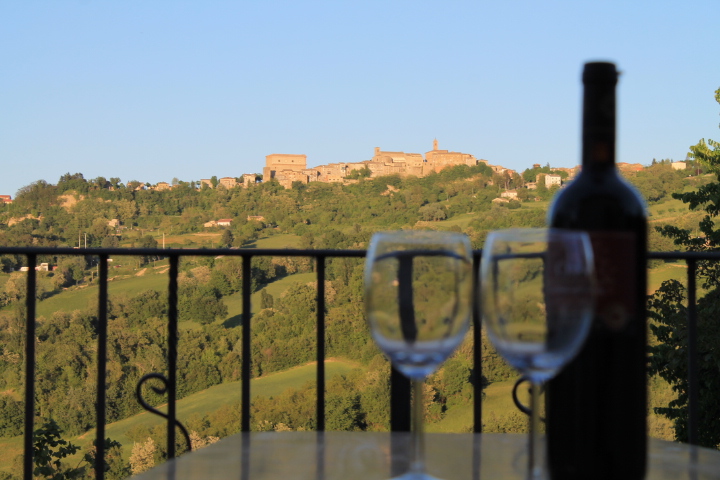
At the stroke of midnight, an explosion of fireworks cascaded over the medieval village of Force, in Le March on the east coast of Italy, marking the end of one year and the start of the next. My family and I remained in our house, relaxing and drinking our local wine while we watched the display.

It was the best way for us to enjoy the celebrations this year, because, after a Christmas with lots of friends and relatives, the children were whacked. They loved the skating on the rink put on this year in the town square particularly, so the local bars and restaurants will have to wait for next year, before we join them for their fabulous New Year celebrations.

So what brought me to Italy in the first place?

pic 1 Le Marche

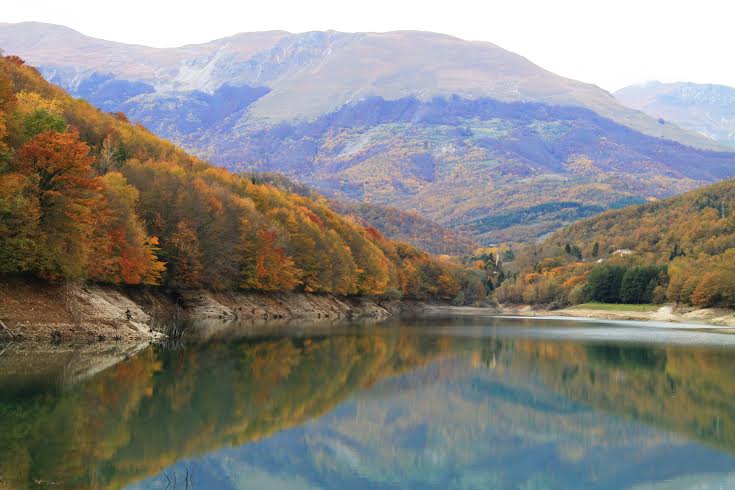
I suppose it was the same as so many other people: the stunning countryside, the wine, the food, the lyrical language, and of course the Mediterranean warmth. Italy is full of history and culture and this is what intrigued me when I first visited the country at the age of eighteen. I was introduced to the Le Marche area, by friends. It was the up and coming place to buy, ‘the new Tuscany it was labeled, but a lot cheaper

On my first morning in the area, I threw open the slatted shutters of my rental accommodation and the view was more than breathtaking: the mauve coloured mountains stood out like giants in front of me stretching out from the valley. Even to this day, though I live here, and could become careless of its charms, this stunning area never ceases to impress, especially with the changing seasons and weather.

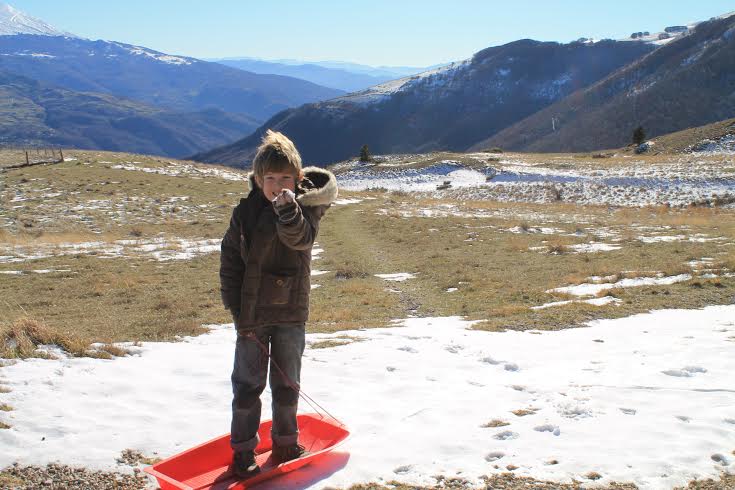
Today, in early new year, we have the magical deep snow of winter contrasting with the deep blue skies, or the tumble of snow clouds, before moving onto the rich greens of the rolling hillsides, in the hazy heat of the summer.

pic 2 Le Marche

I won’t say the twelve years here have not been challenging with Le Marche’s old antiquated ways, which often make us feel that we are living in a world that is closer to the UK fifty or sixty years ago. But of course, that is part of the reason for be being here in the first place.

Things are so different. If a house starts to crumble, a house that has been in the same family for generations, the family just build another next to it.

‘Piano, Piano’ is the common expression meaning ‘slowly, slowly’ everything in good time, which gives you time ‘to smell the roses’. You have to learn a completely different pace, and to remain laid back when the work that needs to be done for you, takes forever.

Here, in Le Marche, they inhabitants grow their own food, and breed their own animals. The small hamlets and villages are full of culture, their individual history not to mention a long line of local families. Each area has its own dialect, which makes learning the language challenging.

pic 3 le marche

Those native to Le Marche are slow to embrace you but if you, in turn, embrace the local environment and activities, you one become part of their community more quickly than you would have thought possible.

So, come, if you are thinking of a new life at the start of 2015. Just remember that you are not living in an ex-pat community. You will need to live as the Le Marche people do. Live, drive (an experience) work and local schooling can all help one to settle

I still struggle to adapt sometimes, but trust me, letting the old ways go and doing things the Italian way instead opens up your life more than you could ever hope.

So, what do we do, here, to earn a living? My boys have taken up most of my time up while my partner has found some building work, some house maintenance, or gardening. Whatever is about reallya little house maintains, gardening whatever is about really. As time has passed and the house has become more together, we have decided to start adventure holidays.

The area is packed with activities: mountain bike tracks, 4×4 off-roading, climbing, horse riding, rafting, beaches. This coming year we are hoping to provide accommodation above and beyond our existing self-catering apartment for back-packers, as the hiking potential in this area is limitless, in addition to our self-catering apartment.

You can see that our life here is a work in progress, but it is such a good life, though a hard working one. Like I always say to our two boys nothing is easy without a little effort.


THE FAERIE TREE: A book in the making

Yule: A time to celebrate with those we love. A season full of magic and new beginnings which spring from the darkest days of the year.

When short, dark days stretch interminably ahead the deep human urge to rebel against nature and celebrate is hardly surprising. It is an instinct deeper than religion, broader than faith; whether it’s carols in church, TV and tinsel, or the burning of a sacred log, it is something which touches almost all of us.

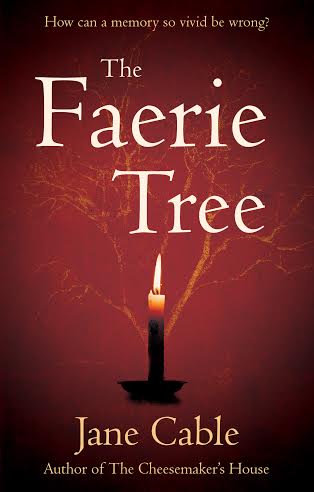
faerietreejanecable

After 21st December the days start to become a little longer. Actually, that’s what I need. Maybe there is some mid-winter magic to create a few extra hours in each one. Maybe I should write to the fairies and ask them. As well as everything else, this festive season I have proofs to check.

The last few months have been particularly hectic as I balance work, writing, preparing for publication of The Faerie Tree and even a stint or two selling books on Chichester Christmas Market. That came about because I’m lucky enough to be part of Chindi, a very active group of independently published authors in the Chichester area. The reason we exist is because there are so many things we can do together which we couldn’t do alone, and one of those was to take a stall on the Christmas Market. It was something of a learning curve and a great opportunity to meet readers. It was also fascinating to see which books sold well and which didn’t – and to try to work out why.

The huge importance of covers was brought home to us very quickly – which was actually great timing for me as far as The Faerie Tree was concerned. The Cheesemaker’s House is pretty striking visually and people tended to head straight for it on the stall. But when it was stacked sideways with other books the title disappeared – and having watched one gentleman struggle with the colour of the print on the back I realised a few things would need to change next time around.

My main concern when briefing the cover designer at Matador was to make sure the book looked as though it was for adults. The title could imply it’s a children’s story so it had to be crystal clear at first glance who it was meant for. I also wanted it to look as much like The Cheesemaker’s House as possible. It’s an inescapable – if a little uncomfortable – fact that authors are brands these days.

When I first saw the cover of The Faerie Tree I had one word for it: wow. It’s a word I’ve heard time and again as I’ve showed it to the people closest to me and to other members of Chindi. So, for the first time, I am revealing it to the wider world through Frost readers and I’m really interested to see what you think. The significance of the candle? Well, you’ll have to wait until Imbolc to find that out.

Now that the cover has been designed there is a plethora of marketing material to sign off. The paperback will be in the shops from 1st May and the book trade need to know about it now, so an AI (advanced information) sheet has been prepared as well as a trade press release. They’ve been languishing in my inbox for over a week but gut instinct tells me sending them out this side of January would be a waste of time. The thought is salving my conscience anyway.


The Readers & Writers Festival to be held in lovely Margaret River, Western Australia

I found Margaret River when I was researching my bestselling novel Canopy of Silence for Heinemann some years ago now. I flew over from the UK and took the bus down from Perth, Western Australia to seek out descendants of the Group Settlers. I found Dinkie Sutton, who was the relative of the guy who ran the post office in my Somerset village, where I lived then. She introduced me to others.

I fell in love with the Sutton family and Margaret River. I think of it as my second home. It is a place of great beauty and initially, of great hardship for the settlers, who were enticed out by the British and West Australian governments after the 1 World War to create dairy farms.

The settlers were shown films of established dairy farms in New South Wales typical, it was said, of the farms they would go to.

The reality on the western side of Australia was different. South of Perth there were sandy tracts, and further down, near Margaret River, the soil was just not capable of producing grazing land sufficiently nutritious for dairy herds.

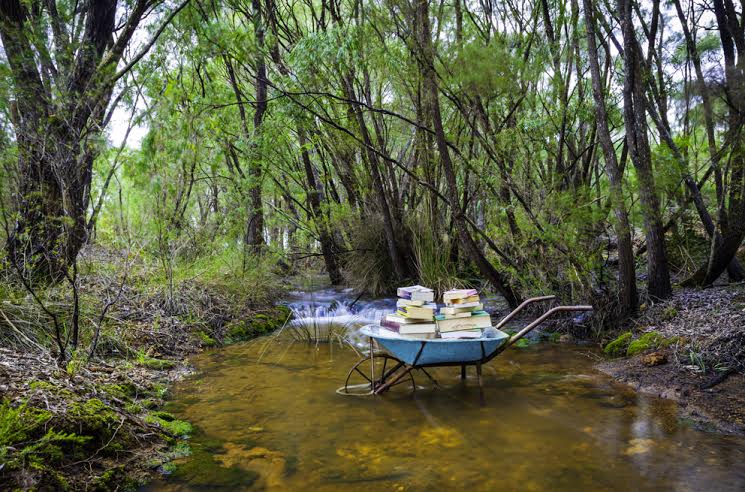
thebushnearmargaretriver

Before they reached that stage the settlers had to fell the huge trees, with a mattock and a saw, sometimes walking a couple of miles to collect water for their young families. It’s the stuff of heartbreak, but the Poms were a tough lot, just as are the Australians.

They endured, and latterly it was discovered that the Margaret River area is suitable for wine growing. It’s worth a visit just to tour the vineyards which produce the most superb wines. Trust me, I remember the hangovers. Even those were of a superior variety.

I have many tales to tell of the area and will dig out a few as we get more news from the region, because I’m delighted to tell you we have the first of many items from the region. Bring ‘em on, please.

*  * *

The Margaret River Readers’ and Writers’ Festival  2015

2015festimage

SEASONS is the theme for the seventh annual Readers and Writers Festival to be held in the beautiful Margaret River wine region in Western Australia next year, so those of you in the UK have time to plan your trip. Those of you in Australia, get ready to clear your diaries and give yourself a real treat.

Festival director Helen Allan tells me the annual festival will be held over the May long weekend 29-31 2015 and the festival has already secured a huge line-up of famous authors to excite readers of all genres.

“We are focussing on the environment, nature and the seasons of our lives – the theme `Seasons’ encapsulates all of those things, and Autumn is such a beautiful time in Margaret River, we should celebrate that – when Keats wrote that Autumn was the ‘season of mists and mellow fruitfulness’ it almost seems like he wrote it for our region.”

The festival committee had lined up around 20 authors and the festival will, once again, run over three days.

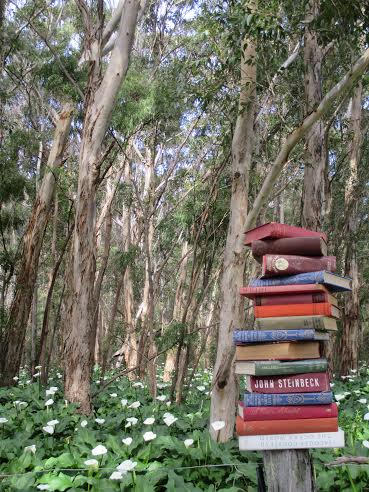
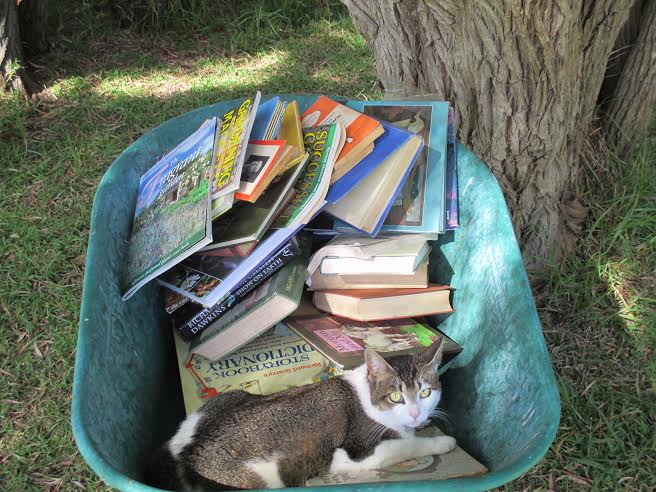
mrbookscat

“From Tomorrow When The War Began author John Marsdon to science fiction author Isobelle Carmody, comedian and authors Sami Shah, Justin Heazelwood and Luke Ryan to romance authors Fiona Palmer, Michelle de Kretser and food/nature author Sophie Zalokar, we have something for everyone,” she said. As both a reader and writer I was already hooked.

“We will be letting more names out of the bag as the time draws nearer, we have had a huge amount of interest from authors wanting to take part in next year’s festival, given the outstanding growth and success of the festival last year.”

The festival, while small, is steadily growing and  the organisers are keen to have a big-name international authors to headline their event.

“We don’t have a huge budget, but what we lack in funds we make up for in warmth and hospitality, our authors are treated like royalty and thoroughly spoiled when they come over.

“We had hoped to have some British writers participate in next year’s festival and had invited Stephen Fry and Michael Palin, but to no avail. Hopefully as our festival gains more of an international standing more English authors will come forward. Our wine region is an exciting and beautiful place to visit and what could be better than combining a look at our natural wonders with a celebration of literature?”


I can vouch for all of that, and what a wonderful time to be south of Perth, in the lovely Margaret River area. While you’re there, have a good look around. See the wonderful surf, and give it a go. My son-in-law promises himself the opportunity one day. Perhaps head out to see the Prevelly Chapel, a monument to the monks of Crete who helped save so many Australian Servicement in the 2nd World War, at the expense of their own lives. Returning servicemen raised the money to raise the Chapel in tribute. It’s moving, but that’s an understatement. Go and see for yourselves, and make it in May so you can catch the Festival.


Falling By Emma Kavanagh Book Review

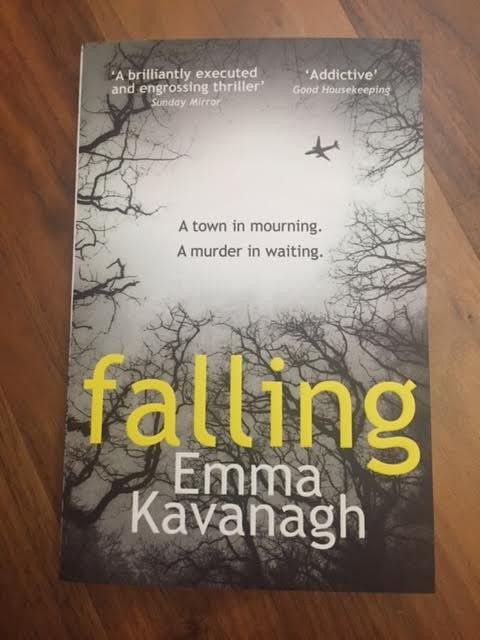
fallingemmakavanaghA plane falls out of the sky. A woman is murdered. Four people all have something to hide.

This debut psychological thriller from former police psychologist Emma Kavanagh is stunning indeed. An engaging and exciting novel. This novel is brilliantly executed, it is a confident debut written by an extremely talented writer. You can tell that Emma Kavanagh was once a police psychologist: her novel is believable. She knows what she is talking about. The characters are incredibly well written and the nuances of life, grief and marriage are all well observed by the eye of a very adept writer.

The story itself is thoroughly engaging, drawing you in and making the book unputdownable. I love how the characters are woven together, how they end up dipping in and out of each other’s lives. This is a crime thriller that belongs on the same shelf as Nicci French. It is high praise indeed, but well deserved.


Jim is a retired police officer and worried father. His beloved daughter has disappeared and he knows something is wrong.

Tom has woken up to the news that his wife was on the plane, and he must break the news to their only son.

Cecilia had packed up and left her family. Now she has survived a tragedy, and sees no way out.

Freya is struggling to cope with the loss of her father. But as she delves into his past, she may not like what she finds.


Falling is available here. Read our Day in the Life piece on Emma Kavanagh here.