A Day In The Life of Paul Vates

I am an actor and writer.
No two days are the same.
That’s part of the lifestyle I accept and face-up to.

paulvates

Most people, I am sure, abhor routine, but I strive to find little routines amidst the randomness.
Take yesterday, for example. I was up with the lark – well, the chattering gang of long-tailed tits that seemed to have included my garden in their morning constitutional route. Ablutions completed, healthy fruity breakfast absorbed, I sorted through a few emails, scanned Facebook, chased a few unpaid invoices and was then ready for a good long sit-down in front of mindless television.

But, no! I slipped into my jogging attire and hit the streets – well, gracefully ran the fifteen minutes to my Pilates session. An hour later, after much groaning and fake-smiling, I jogged far less like an athlete back home.

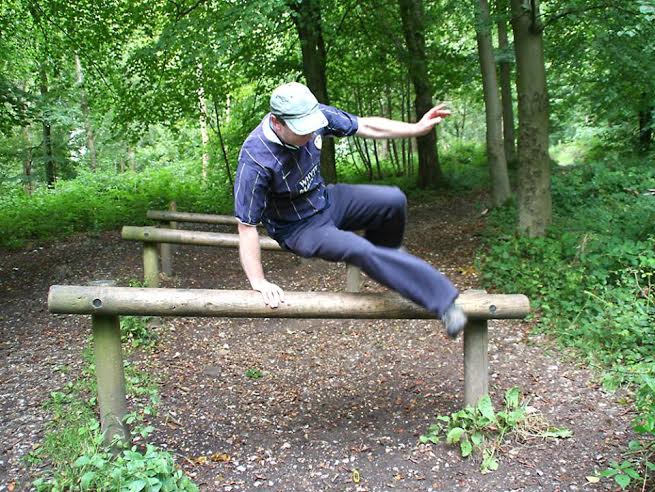
All this because I am in training to complete a charity run – five miles in mud, with various obstacles to surpass, for a local hospice. Seemed like a good idea at the time…

paulleaping

Shower and shave. Quick light lunch, then to the tube for a casting in London. I spent the journey reading Stella Gibbons’ Cold Comfort Farm – have never read it and am now intrigued by its style.

Then into the West End. Not many people realise it is littered with tiny rooms and spaces that producers and casting directors hire for the day to cast their latest projects. I had been instructed by my agent to attend the RADA Studios, near Goodge Street station. Once inside, name checked, smiles all round, I sat and waited.

Jim, a grinning, bespectacled director, greeted me and I followed him downstairs into a basement room that had the distinctive aroma of old sweat. We chatted, then I auditioned for him. ‘Very funny’, he said. (It was supposed to be, but I don’t know if he meant it…) The footage will be handed to the producers who will decide whether I am suitable to play a maniac in a Business To Business instructional internet video.

Oh, the glamour.

I headed to the tube and back home. Different reading material this time. Henrik Ibsen’s classic play A Doll’s House which a colleague is aiming to direct late next year. He has told me to look carefully at a certain part and to let him know if I’d like to play it.

Home in time to eat before visiting my local cinema/theatre, which was showing Nebraska. Such a beautiful film.

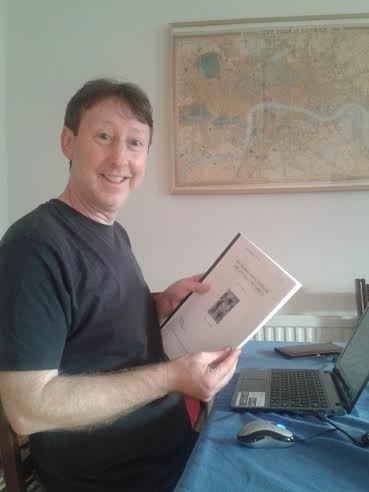
That was yesterday. Today I am writing – editing the fifth draft of my play Voltemand And Cornelius Are Joyfully Returned.

paulwithscript

Tomorrow I work – that miracle: paid work. I am going to West Middlesex Hospital to assist CASC (no, I don’t know what it stands for, either) in their exam training for forensic psychiatrists. I play a variety of characters – some with health issues, some relatives of patients – all of which test the candidates.

It never stops. Thank goodness.

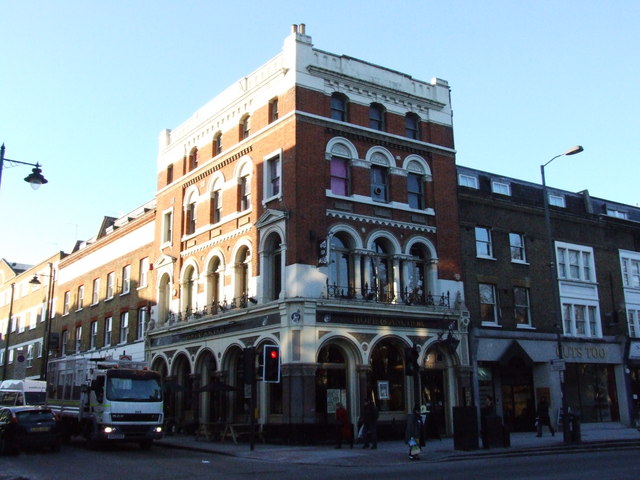
hopenadanchor

*Paul’s blog regarding the performance of Voltemand And Cornelius Are Joyfully Returned at the Hope Theatre, Islington, can be read in April’s www.wordsforthewounded.blogspot.co.uk


Kate Kelly: A Day In The Life of An Author: The Edinburgh International Book Fair

A sunny morning in August and I was heading into Edinburgh on one of the city’s shiny new trams. The reason – I had been invited to appear as an author at the Edinburgh International Book Festival and this was the morning of my event.

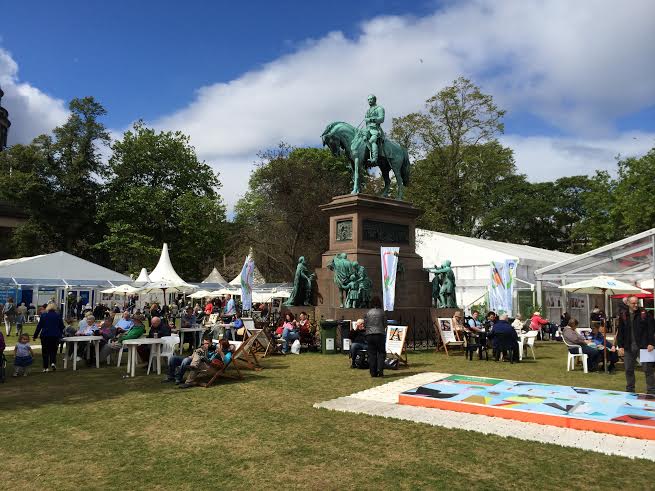
The Edinburgh International Book Festival 2014 was held in the beautiful Charlotte Gardens in the centre of the city. As I approached I could see the tents and marquees clustered beneath the trees and neat crocodiles of school children in pristine uniforms being herded by their teachers towards the venue.

A Day in the life of an author- The Edinburgh International Book Fair 1
The author arrives at Charlotte Gardens.

Inside covered walkways connected the event venues and bookshops which had been set up around the edge. In the middle was an area of lawns and seating where people gathered to drink coffee or eat their lunch

A Day in the life of an author- The Edinburgh International Book Fair 4
The Edinburgh International Book Festival in Charlotte Gardens

Mine was to be a joint event with Sarah Crossan, author of dystopian duology Breathe and Resist. Our event was called The End is Nigh and formed part of the Baillie Gifford Schools programme of events.

A Day in the life of an author- The Edinburgh International Book Fair 3
Another view of the venue, Charlotte Gardens.

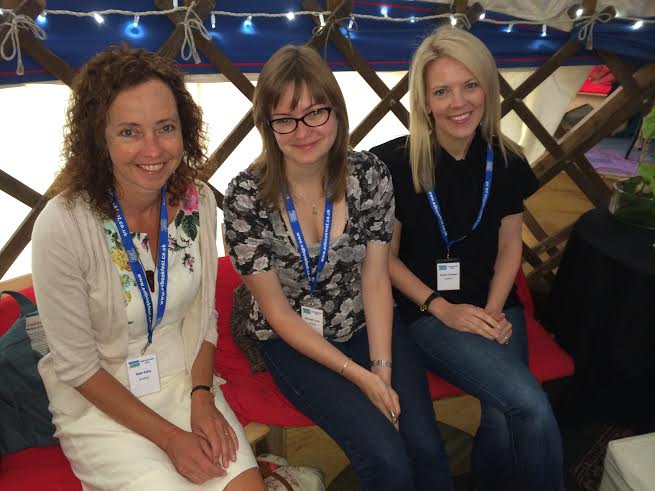
The authors had a separate area, the Author’s Yurt, where we could chat and relax both before and after our events and this was where I headed to meet up with Sarah, Hannah Love of Faber who was chairing our event and my publisher’s marketing director. Here we were fitted with our microphones and then we were escorted to our venue and 150 eagerly waiting schoolchildren.

A Day in the life of an author- The Edinburgh International Book Fair 7
Myself, Hannah Love and Sarah Crossan in the Authors Yurt

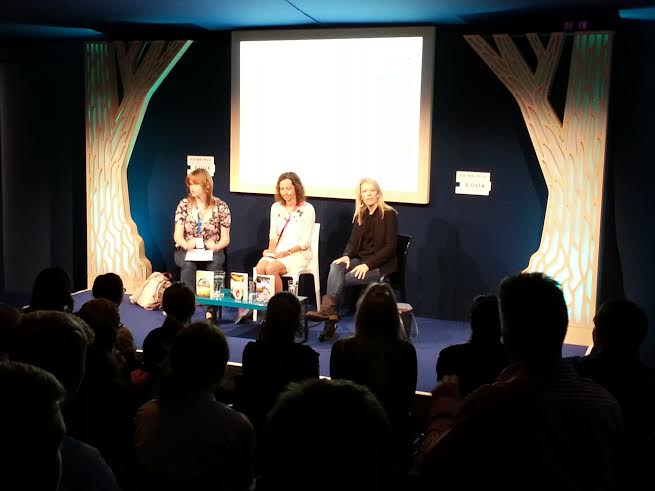
Sarah and I read extracts and answered questions about our books, both about the writing process and our inspirations as well as the environmental issues our books address and the emerging genre of Cli-Fi (Climate Fiction). It was an hour long event but it felt like minutes.

A Day in the life of an author- The Edinburgh International Book Fair
Answering questions about our books.

Afterwards we were taken into the festival bookshop where we had the opportunity to meet some of the children and sign books for them. A couple of groups had come across from Glasgow and were doing a school project on Climate Fiction of which our books formed part. It was lovely to meet them and see their enthusiasm. Then back to the author’s yurt for lunch.

A Day in the life of an author- The Edinburgh International Book Fair 5
Lunch laid out in the Author’s Yurt

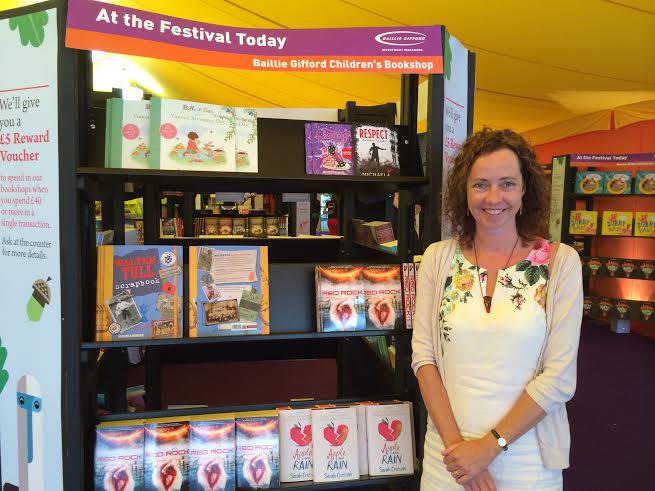
I was then able to explore the festival site a bit more and most importantly to check out the festival book shops. There was a special stand where that day’s events books were displayed.

A Day in the life of an author- The Edinburgh International Book Fair 6
Lots of copies of Red Rock for sale.

Of course no visit to Edinburgh during festival time would be complete without visiting out The Fringe and that was how I spent the rest of the day. Some of the street acts we saw were quite superb and the whole city was vibrant and alive.

My day at the Edinburgh International Book Festival was a superb experience and one I shall never forget.

Biography

Kate Kelly is a marine scientist by day but by night she writes SF thrillers for kids. Her debut novel Red Rock, a Cli-Fi thriller for teens, is published by Curious Fox. She lives in Dorset with her husband, two daughters and assorted pets and blogs at http://scribblingseaserpent.blogspot.co.uk/


Curious Fox link: http://www.curious-fox.com/


Amazon UK link: http://www.amazon.co.uk/Red-Rock-Kate-Kelly/dp/1782020616/ref=sr_1_1_bnp_1_pap?ie=UTF8&qid=1409831765&sr=8-1&keywords=red+rock


A Day in the Life of Tracy Baines

traceybaines


My life is full of distractions, it always has been. It’s one of the hazards of working from home. These days the distractions are mostly delightful and indulgent. First of all we have a new puppy, Harry, a springer spaniel and for the time being his needs come first. At the moment he’s snoozing in his bed at my feet but mostly he’s biting at my files and books and I am constantly telling him NO. He’ll learn.

harry

Once I’ve fed him and myself I’ll get to work on something easy like a blog post, just to get the writing flowing. If I start with emails it’s all too easy to get distracted so I leave that for later when I need a brain break.


I’m working on a book about my experience with my daughter’s eating disorder and the effect it had on the family. It was the kind of book I needed when we discovered how ill she was. It’s hard work as it brings back the awfulness of the situation so after about an hour I’m looking for something lighter to play with.  I might edit a couple of chapters of my novel or work on the second Nelly’s Jellies picture book for children, or an article or short story. I write for magazines such as You, (South Africa), That’s Life Fast Fiction, (Australia) and most of the UK women’s magazines.


After lunch my daughter usually appears with my grandchildren, Elsie and Hadley. The kettle goes on and we sit and chat and generally let the grandkids call the tune. So it might be CBeebies with Mr Bloom and Show Me, Show Me, or an hour in the garden. Sometimes my son comes over with his wife and my grandson, Huxley, and then the house becomes full and noisy and before long I want to escape to the quiet of my office and get back to work.

grandchildren I tend to use the afternoons for admin or going out for lunch with my husband. I can’t say long suffering husband as it’s been the other way around for years and now it’s my turn to pursue my writing career. When he goes out to the golf club  I might work for an hour or two in the office, editing a short story unless I’m teaching in which case I might arrive early to class and work on something or catch up on reading and research. I try to use as many ‘bits’ of time as productively as I can to work on my writing as for years that was all that was available to me. I think that’s why short stories are perfect if you don’t have a lot of time to write. You don’t have to hold so much in your head all and yet you have the satisfaction of seeing your work in print. A quick fix if you like.


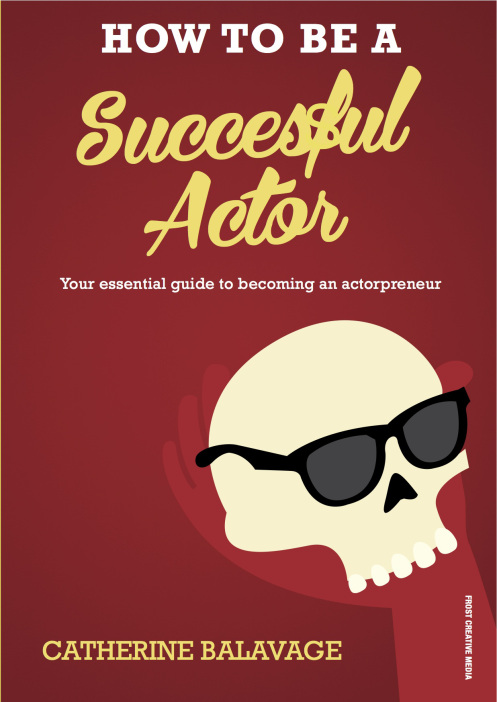
How To Be a Successful Actor: Becoming an Actorpreneur Only £1.99 For One More Day

acting, acting advice, how to be an actor, how to be a successful actor, hollywood, castings, auditions, casting directors.How To Be a Successful Actor: Becoming an Actorpreneur has been included in Amazon’s Kindle Countdown Deals and for one more day is only £1.99. How To Be a Successful Actor: Becoming an Actorpreneur, written by Frost Magazine’s editor Catherine Balavage, has received a number of good reviews including three five-star reviews on Amazon UK and another brilliant four-star review on Amazon US, even though it has only been out for two months. The below review is from acclaimed author Margaret Graham:

A triumph for Balavage, and a necessary tool for anyone considering an acting career. By Margaret Graham

Balavage has written a well balanced exploration of how to succeed as an actor. I am an author, not an actor, but having read How to be a Successful Actor, I feel the two precessions are closely allied. Balavage clarifies the positives and negatives of the profession, and then proceeds to walk us through the ups and downs, giving anyone interested in becoming an actor the tools to maximise their chances.

The basic ingredients, it seems to me, are to utilise common sense and good manners. After all, you will be meeting the the same people on the way up, and then, when times are hard, to be nice out there..

But more than that, we are led by the hand through the nitty gritty of whether to train, or not to train, the virtues of hard work in the face of lack of progress, the need to be glad of any chance to gain experience, and exposure. She explains the need to acquire the necessary skills through classes, and the value of networking.

As I also advise my writing students, Balavage advises actors to watch and analyse their craft, on stage, radio and screen. She emphasises the need for actors to BE their characters, to acquire accents, to keep fit. She moves on to marketing, to the virtues of mobile phones and the internet for spreading the word about YOU,

There is humour: remember to avoid the stunt co-ordinator’s elbows, there are detailed tips: what to do if your mouth dries up (read the book and find out) , there are a forest of useful addresses.

No wonder it took Balavage 4 years to write this book, because she includes a plethora of interviews with experts in the field. What comes across is that Catherine Balavage considers an acting career to be a project, one that needs to have: a firm foundation, on-going development, marketing skills, research, realistic self-belief, and a hell of a lot of luck. This book needed to be written. It was Catherine Balavage with her clear sighted view of the profession who needed to write it. Bravo!

This one is from actor and casting associate Clea Myers:

Fantastic & Essential Guide By Ms. C. Myers

This really is an excellent guide book into the terribly difficult, but potentially rewarding life of an actor. Balavage tackles the often ignored questions that surround the inexperienced and/or young person who wonders what the best road to take is? She starts with the basics that encompass questions about whether to train at drama school (and thereby find the money to do so), or go another route by getting involved with fringe theatre and/or film school films. Throughout she weighs up the pros and cons in a highly informative and intelligent manner that are also highly credible as she is writing from first-hand experience. Her own entrepreneurship into film-making is included and offers fantastic tips and empowerment, to what is often a dis-empowering profession. She also demystifies the perceived ‘glamour’ of working as an actor and says it how it is. A good wake-up call for those out there that crave instant fame!

Her approach is wholly professional and fundamentally knowledgeable: she interviews working actors, alongside well-known casting directors who give an insider-view into what is required to get ‘ a foot in the door’. I would highly recommend this book to anyone interested in becoming an actor.

Crime writer Penny Deacon called it the ‘Best advice available’ in her review and American actor Tom Shafer gave it a wonderful review and said it was a great companion piece to Bonnie Gillespie’s acting bible, Self Management For Actors in his review below.

An excellent guide for the entertainment professional By Thomas Shafer

I found this book to be an excellent companion to Bonnie Gillespie’s ‘Self-Management for Actors’, which I am also currently reading. The first half of Catherine’s book does a excellent job of distilling a seminar’s-worth of material into a manageable bit. The second half, the interviews, felt more conversational. What was clear, the recommendations made in the first half came, in part, from these interviews. This is an excellent technique, since it reinforces the validity of the recommendations as having come from entertainment professionals who have achieved a perceived level of success. (I like that the definition of “success” was open for discussion, since it can mean different things to different people.)

As an American reading this book, I did find some UK-centric resources and references. But, in this era of global Internet access, I found just as many that were valid for US readers. I was able to take this in stride and see this as a valuable tool in my self-management as a working actor.

Thanks, Catherine, for writing this excellent guide.

What are you waiting for? We are not biased, it is an excellent guide and an essential for any actor.

How To Be a Successful Actor: Becoming an Actorpreneur is available here.


Soho Literary Festival Returns September 2014

Soho Literary Festival 2014

Stephen Fry, Michel Roux and Antonia Fraser headline at the Soho Theatre

Wednesday 24th September – Sunday 28th September

www.soholitfest.com

•An end-of-summer, long weekend of literary delights hosted in the Soho Theatre on Dean Street, in the capital’s liveliest district

roux

•Stephen Fry to star in an exclusive event on PG Wodehouse on Friday 26th September.

•Interactive events such as the literary quiz with teams led by Rachel Johnson and Giles Coren, and a masterclass on matching wine with food led by Tom Parker-Bowles and Rowley Leigh.

soholiteraryfestival

paulbirston

•The 2014 line-up also includes Antonia Fraser, Michel Roux, Stephen Frears and Russell Norman

•Presented by The Oldie magazine and supported by Waitrose Cellar and Arts Council England


Soho Literary Festival, sponsored by Waitrose Cellar and supported by Arts Council England, marks its fourth anniversary on the London literary calendar in September 2014. With 36 unique events all taking place under one roof, the iconic Soho Theatre on Dean Street, the festival is set to take the capital by storm.

Visitors are invited to spend the weekend getting up-close and personal with their literary heroes, in the theatre’s three auditoria or mingling in the bar where regular signings will take place. The events and speakers have been carefully curated to inform and excite festival-goers with a programme encompassing art, music, food, comedy and plenty of author shenanigans.


stephenfry


Highlights include headline act Stephen Fry on the profound effects Wodehouse had on his life; panorama journalist Tom Bower delving behind the public facade of Richard Branson; Michel Roux and Russell Normanon the art of good service in restaurants; pre-eminent rock journalist Mark Ellen opening the festival to discuss forty years of life in the ludicrous music business; Britain’s most successful potter Emma Bridgewater in conversation with her illustrator husband Matthew Rice; and historian Peter Snow on the unknown tale of when Britain burned down the White House.

Further headline acts and returning favourites include an informative and humorous lesson on how to spot a psychopath led by Professor Simon Baron-Cohen, an in-depth Q&A with the Oscar-winning director Stephen Frears, and the sell-out one-stop literary smorgasbord hosted by Craig Brown & Friends.


Confirmed Soho Literary Festival Speakers:

Stephen Fry, Michel Roux, Antonia Fraser, Brian Sewell, Simon Baron-Cohen, Virginia Ironside, Russell Norman, Tom Parker-Bowles, John Julius Norwich, Christian Wolmar Simon Jenkins, Loyd Grossman, Craig Brown, Peter Snow, Rachel Johnson, Mark Ellen, Giles Coren, Kerry Daynes, Harry Mount, Valerie Grove, Chris Yates, Ferdinand Mount, Marcus Berkmann, Antony Beevor, Stephen Frears, Rowan Pelling, Kate Harrison, Rosie Boycott, Imogen Edwards-Jones, Bill Knott, David Kynaston, Paul Burston, Jeremy Lewis, Lizzie Enfield, Emma Bridgewater, Rowley Leigh, Tom Bower, Tom Ward, Will Hodgkinson, Geordie Greig, Simon Garfield, Dan Cruickshank, Sam Leith, John Sutherland, David Hepworth, Jerry Brotton, Roger Bannister, James Le Fanu, Chris Mullin, Andrew Billen, James Pembroke, Sarah Boseley, Dave Runciman, Tim Bryars, Dr Tom Stuttaford, Jonathan Meades, Mikey Cuddihy, Tom Harper, Owen Jones, Oliver Kamm, Michael White, Dan Kieran, Nigel McCrery,, Matthew Rice, Jerry White, Irma Kurz, Katherine Whitehorn, Shaun Usher, Mark Lawson, Assem Malhotra, Abbie Ross, Mikey Silverman, Dick Traverne, Merryn Somerset-Webb, Martyn Vander Weyer.


10 Little Known Facts About Dickens

The Charles Dickens Museum has put some great Dickens facts together for us in conjunction with the release of The Invisible Woman which is out on DVD now. . Enjoy.

Dickens was extremely fond of his sister in law, Mary Hogarth, who was 15 at the time they first met. Mary died, aged 17, in his arms at his home at Doughty St (now the Charles Dickens Museum) and Dickens was struck low with grief. He wore a ring from her finger for the rest of his life and kept a lock of her hair. He was unable to work for months following her death – a situation previously unheard of. To a close friend he wrote of her death:

“Thank God she died in my arms and that they very last words she whispered were of me … I solemnly believe that so perfect a creature never breathed. I knew her inmost heart and her real worth and value. She had not a fault…”

the_Invisible_Woman_dvd release

· Dickens love and fondness for Mary coloured his life for years after and affected him profoundly. Years later Dickens spoke of his wish to be buried beside Mary to his friend John Forster:

“The desire to be buried next to her is as strong upon me now as it was three years ago; and I know (for I don’t think there ever was love like that I bear her) that it will never diminish…”.

· Dickens met his first love, Maria Beadnell, at age 17. He was not considered good enough for the attentions of a bankers daughter. He vowed to become an actor to impress her and even when he became a well earning parliamentary reporter in 1835, he was refused by Maria’s parents. Maria contacted Dickens again later in life in 1854 and he was once again infatuated and sent her effusive letters until he discovered she had become dull and matronly. After this he never spoke to Maria again and portrayed her cruelly as Flora in ‘Little Dorrit’

· Dickens met the young actress Ellen Ternan when she was 17 and he pursued her from 1857 and was connected to her until his death in 1870. Dickens went to great lengths to keep the affair a secret from his adoring public. Ellen was the same age when he met her as Mary Hogarth had been when she died.

· As the relationship with his wife Catherine soured, he arranged for a wall to be built in the middle of their shared bedroom making the separation complete.

· In 1858, Dickens officially separated from Catherine and to put an end to rumours in circulation about his affair with Ellen Ternan, he had a notice published in London Times and Household Words to explain the ‘amicably composed’ separation to his wider public.

· When Dickens separated from Catherine, he blamed her mental instability as the cause of their break-up rather than the affair with Ellen Ternan

· A serpent ring tells the story of strained relations between Catherine Dickens and her sister Georgina following the separation of the Dickens’s marriage in 1858; Georgina made the controversial decision to remain with Dickens as his housekeeper. Many years later, after Dickens’s death, Catherine made a gift of the serpent ring to the sister who had deserted her, the symbol of the snake implying her betrayal.

· The affair between Dickens and Ellen was covered up well into 1920’s. Subsequent generations denied that the affair ever happened. A discovery of Dickens’ stolen or lost diary of 1867, found in 1943, appears to confirm the affair through coded entries..

Dickens was extremely fond of his sister in law, Mary Hogarth, who was 15 at the time they first met. Mary died, aged 17, in his arms at his home at Doughty St (now the Charles Dickens Museum) and Dickens was struck low with grief. He wore a ring from her finger for the rest of his life and kept a lock of her hair. He was unable to work for months following her death – a situation previously unheard of. To a close friend he wrote of her death:

“Thank God she died in my arms and that they very last words she whispered were of me … I solemnly believe that so perfect a creature never breathed. I knew her inmost heart and her real worth and value. She had not a fault…”

· Dickens love and fondness for Mary coloured his life for years after and affected him profoundly. Years later Dickens spoke of his wish to be buried beside Mary to his friend John Forster:

“The desire to be buried next to her is as strong upon me now as it was three years ago; and I know (for I don’t think there ever was love like that I bear her) that it will never diminish…”.

· Dickens met his first love, Maria Beadnell, at age 17. He was not considered good enough for the attentions of a bankers daughter. He vowed to become an actor to impress her and even when he became a well earning parliamentary reporter in 1835, he was refused by Maria’s parents. Maria contacted Dickens again later in life in 1854 and he was once again infatuated and sent her effusive letters until he discovered she had become dull and matronly. After this he never spoke to Maria again and portrayed her cruelly as Flora in ‘Little Dorrit’

· Dickens met the young actress Ellen Ternan when she was 17 and he pursued her from 1857 and was connected to her until his death in 1870. Dickens went to great lengths to keep the affair a secret from his adoring public. Ellen was the same age when he met her as Mary Hogarth had been when she died.

· As the relationship with his wife Catherine soured, he arranged for a wall to be built in the middle of their shared bedroom making the separation complete.

· In 1858, Dickens officially separated from Catherine and to put an end to rumours in circulation about his affair with Ellen Ternan, he had a notice published in London Times and Household Words to explain the ‘amicably composed’ separation to his wider public.

· When Dickens separated from Catherine, he blamed her mental instability as the cause of their break-up rather than the affair with Ellen Ternan

· A serpent ring tells the story of strained relations between Catherine Dickens and her sister Georgina following the separation of the Dickens’s marriage in 1858; Georgina made the controversial decision to remain with Dickens as his housekeeper. Many years later, after Dickens’s death, Catherine made a gift of the serpent ring to the sister who had deserted her, the symbol of the snake implying her betrayal.

· The affair between Dickens and Ellen was covered up well into 1920’s. Subsequent generations denied that the affair ever happened. A discovery of Dickens’ stolen or lost diary of 1867, found in 1943, appears to confirm the affair through coded entries..

Dickens was extremely fond of his sister in law, Mary Hogarth, who was 15 at the time they first met. Mary died, aged 17, in his arms at his home at Doughty St (now the Charles Dickens Museum) and Dickens was struck low with grief. He wore a ring from her finger for the rest of his life and kept a lock of her hair. He was unable to work for months following her death – a situation previously unheard of. To a close friend he wrote of her death:

“Thank God she died in my arms and that they very last words she whispered were of me … I solemnly believe that so perfect a creature never breathed. I knew her inmost heart and her real worth and value. She had not a fault…”

· Dickens love and fondness for Mary coloured his life for years after and affected him profoundly. Years later Dickens spoke of his wish to be buried beside Mary to his friend John Forster:

“The desire to be buried next to her is as strong upon me now as it was three years ago; and I know (for I don’t think there ever was love like that I bear her) that it will never diminish…”.

· Dickens met his first love, Maria Beadnell, at age 17. He was not considered good enough for the attentions of a bankers daughter. He vowed to become an actor to impress her and even when he became a well earning parliamentary reporter in 1835, he was refused by Maria’s parents. Maria contacted Dickens again later in life in 1854 and he was once again infatuated and sent her effusive letters until he discovered she had become dull and matronly. After this he never spoke to Maria again and portrayed her cruelly as Flora in ‘Little Dorrit’

· Dickens met the young actress Ellen Ternan when she was 17 and he pursued her from 1857 and was connected to her until his death in 1870. Dickens went to great lengths to keep the affair a secret from his adoring public. Ellen was the same age when he met her as Mary Hogarth had been when she died.

· As the relationship with his wife Catherine soured, he arranged for a wall to be built in the middle of their shared bedroom making the separation complete.

· In 1858, Dickens officially separated from Catherine and to put an end to rumours in circulation about his affair with Ellen Ternan, he had a notice published in London Times and Household Words to explain the ‘amicably composed’ separation to his wider public.

· When Dickens separated from Catherine, he blamed her mental instability as the cause of their break-up rather than the affair with Ellen Ternan

· A serpent ring tells the story of strained relations between Catherine Dickens and her sister Georgina following the separation of the Dickens’s marriage in 1858; Georgina made the controversial decision to remain with Dickens as his housekeeper. Many years later, after Dickens’s death, Catherine made a gift of the serpent ring to the sister who had deserted her, the symbol of the snake implying her betrayal.

· The affair between Dickens and Ellen was covered up well into 1920’s. Subsequent generations denied that the affair ever happened. A discovery of Dickens’ stolen or lost diary of 1867, found in 1943, appears to confirm the affair through coded entries.



CrimeFest 2014

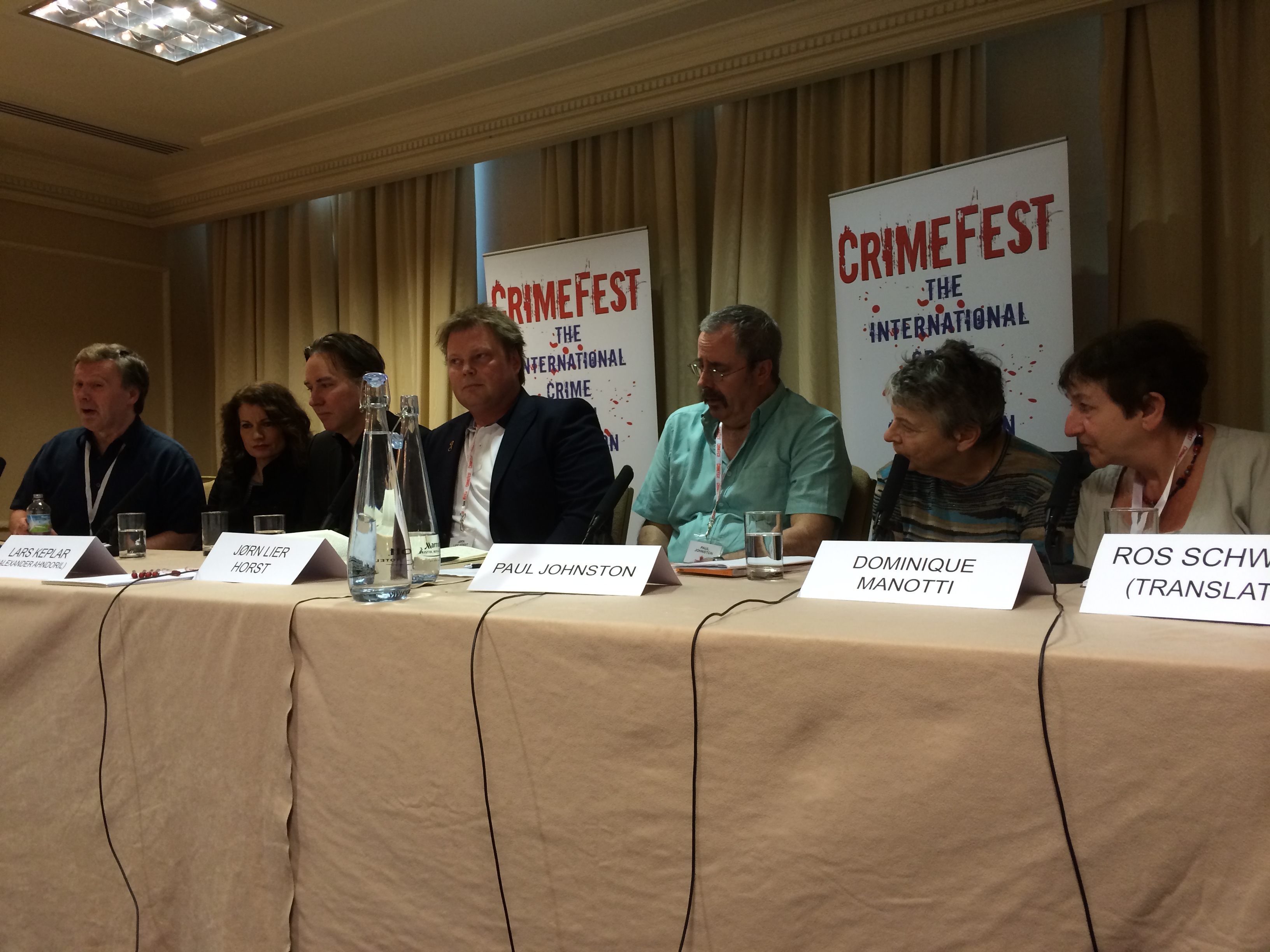
This year’s CrimeFest happened last weekend, May 15-18 at the Bristol Royal Hotel. So, what’s CrimeFest? It’s the annual gathering for anyone who has any interest in reading, writing, or simply talking about (sometimes quite loudly over several drinks) that curious and  bloody phenomenon: crime. Especially crime fiction, but there’s always room for true crime, too. Why go? You want to meet authors? Find out what they’re writing? Try to work out how people with such deviant imaginations can be really great company? These are all good reasons. Mark Billingham, one of Britain’s best-selling thriller writers was one of the featured authors this year. His books are spell-binding and disturbing – and he gave one of the funniest interviews I’ve had the pleasure of hearing. At the rather less dark end of the spectrum of crime-writing, Simon Brett was on top form as a speaker. There was also masses to learn about the Iceland Noir writing which has acquired such an enthusiastic following on UK TV – you could even have won a trip to the Iceland Noir convention in Reykjavik.

CrimeFest4 B Forshaw EUROCRIME Panel

CrimeFest4 B Forshaw EUROCRIME Panel

The long weekend is full of difficult choices: should I go to the panel discussion on historical crime or does it clash with the one which asks Does a crime novel have to have something to say? The one that deals with the problem of When your character isn’t qualified to solve crimes, or What have old thrillers ever done for us? Choices, choices, choices. There was a quiz on the Thursday evening when we discovered just how competitive we all were – who said you couldn’t argue with the judge? Not us. The Gala Dinner on the Saturday, was a triumph of organisation and good food, which kept us all comfortable in our seats, happy to celebrate the award of prizes for humorous crime, for e-books and audio books, for works in translation and for Euro Crime. And afterwards you could linger at the bar ….

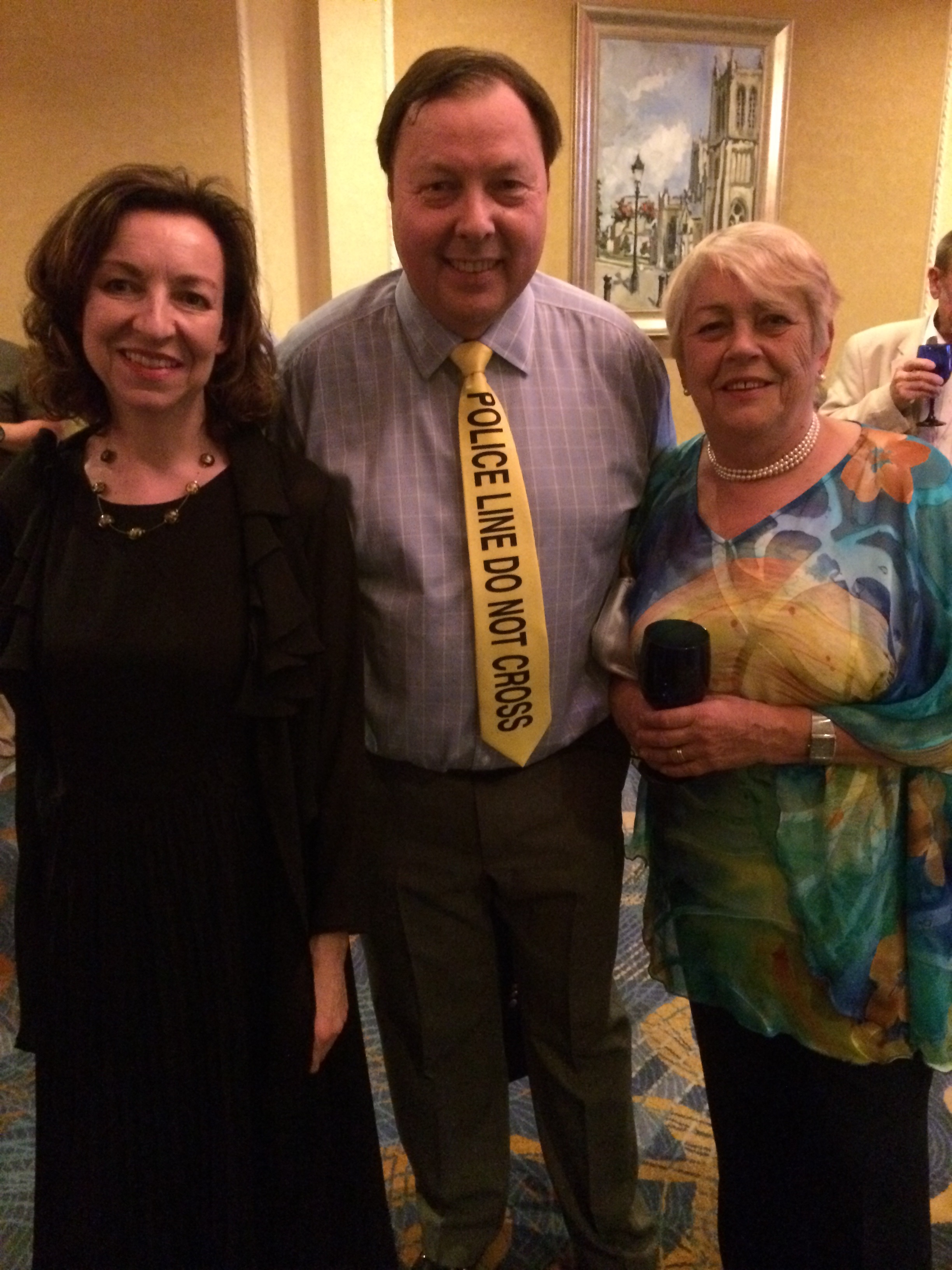
CrimeFest 6 crimefest bar

The joy of CrimeFest is that it doesn’t discriminate between readers, writers (wannabe or distinguished), publishers or agents, nor does anyone show the slightest sense of exclusivity. You can find yourself talking to a top author or an ardent fan. You can discover how the Alibi Channel’s crime dramas Miss Fisher’s Murder Mysteries and The Murdoch Mysteries have developed from page to screen; or hear the husband and wife team which makes up the author Nicci French (Nicci Gerrard and Sean French) discuss how they combine their relationship with writing international best-selling psychological suspense.

CrimeFest5 Alison Joseph, Felix Francis, Susan Moody

CrimeFest5 Alison Joseph, Felix Francis, Susan Moody

Alas it’s all over for this year – but it will happen again next year. If you enjoy crime writing or reading, or just want a slightly different weekend with a lively mix of people, all of whom seem eager to talk to you (I think writing, or reading, about terrible events must make people appreciate the good things about real life) then you might want to think about giving it a try.

 
Penny Deacon
Photos: thanks to Ali Karim of Shots Magazine


Open All Hours By John Adsetts

Who and what might I find in a supermarket at 3.0am in the morning?
Shift workers catching up on their shopping? Insomniacs? Smelly old men dressed in rags trying to keep warm? It had been a hard day but my cupboards were bare. I drove towards the temple of mammon. I felt discombobulated, foolish, embarrassed even and was glad to see the 24 hr petrol station. Somehow that seemed less ridiculous so I squeezed in a few litres and cast a glance towards the store. Do people really go shopping in the middle of the night?


openallhours24hoursupermarkets

Expecting to find a cathedral of silence with wide aisles and an absent congregation, I entered what looked like the inside of a monster ant hill. Everywhere were boxes, pallets, torn cardboard, damaged packages and an army of grim looking minimum wage slave shelf stackers. No room to move anywhere. No eye contact anywhere. I clutched my shopping list and moved toward the Baked beans. No chance of getting even close: Branston-  ‘four for two pounds’ and Heinz ‘low salt and sugar’ blocked my way. The extravagantly moustachioed young man’s T-shirt read ‘Get a Life’ I think that must have been elsewhere in the store. Leaving Beans till later I looked for Baking powder. No obstructions here just a carpet of snow. An accident with flour awaiting a sweeping brush to happen by. I headed beyond the Lady Chapel where fish should have been piled upon an icy altar. A few chilly pre-packed kippers winked at me.  The bananas huddled together in a corner. Bruised and lonely.

Feeling disoriented and confused I sat on a pallet of ‘value’ minestrone to take stock. In my fantastical haze, it seemed as if that the Rastafarian hovering around the alcohol section was going to drink his fill in the store on the basis of some misunderstanding of the shoplifting regulations. A small crowd of nuns must have nipped in after compline but before matins. How would they pay? Did God issue a debit or a credit card? A little old man and his wife were pushing a trolley laden with ready meals, and a parasol. Wake up! Get your stuff and go.

Back to Baked Beans, Baking powder and Bananas and then the exit. A green light indicated the one automatic check out counter available No actual operator was provided for those uninitiated in the art of bar codes. Swiping my goods across the glass panel, I watched for the correct sum to be recorded on the screen. Beans- fine. Baking powder- OK.  Bananas- no weight recorded. Red light.
Pressing the ‘assistance’ button I waited and waited (and waited). No-one came. The ants still toiled in the aisles but none was interested. Something inside me snapped. I stepped away from the check out counter and carefully emptied my entire trolley into a large messy pile by ‘Customer Service’ and strode out to where the first streaks of light were creeping into the night sky