A PUBLISHER’S YEAR: MAY – CRIME, CONTRACTS, ASSISTANCE

May saw Caoimhe and I head off to represent Sapere Books at our first ever CrimeFest in Bristol. Two of our lovely authors were speaking on panels; newly-appointed Chair of the Crime Writers’ Association, Linda Stratmann, and co-founder of Crime Cymru, Alis Hawkins. The Friday evening saw the announcement of the longlist for the first ever Sapere Books Historical Dagger Award. I can’t wait to get stuck into them all! You can see the longlists for all of the CWA Daggers here: https://thecwa.co.uk/wp-content/uploads/2016/05/CWA-Dagger-2019-Longlists-3.pdf

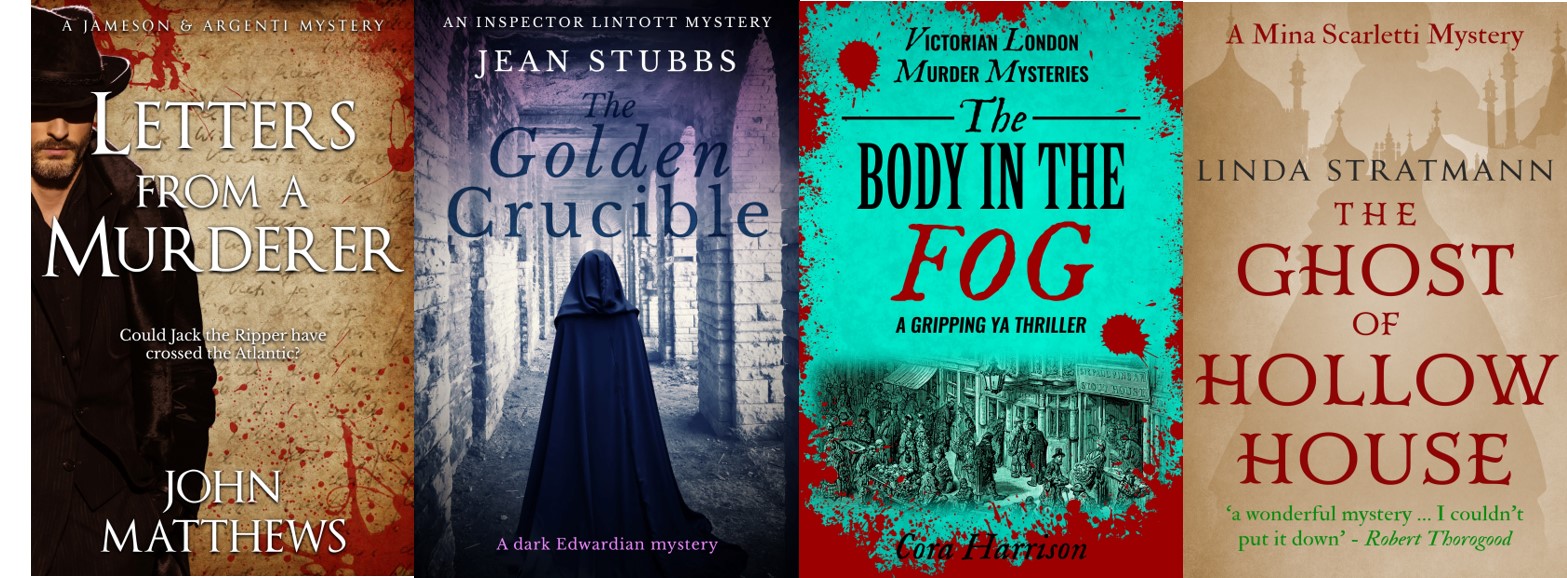
May saw the release of eight of our books: four books in Cora Harrison’s Victorian London Mystery series; Linda Stratmann’s latest mystery, THE GHOST OF HOLLOW HOUSE; the first in John Matthew’s historical thrillers, LETTERS FROM A MURDERER; the third Inspector Lintott mystery by Jean Stubbs, THE GOLDEN CRUCIBLE; and the penultimate cosy crime novel from Elizabeth Lemarchand, WHO GOES HOME?

We also signed two new authors to our family. We’ve contracted Sean Gibbons for a three-book deal of a series of crime books set in Galway City. We also signed a four-book detail with Natalie Kleinmann for her Regency romance novels.

And we can finally reveal our new Editorial Assistant! Natalie Linh Bolderston will be joining us from June 10th, and we can’t wait! We have lots of books in various stages of production, so she won’t be short of work – but we’ll try not to scare her off! Hopefully I can persuade her to check in with next month’s blogpost to let you know how she’s getting on!


Amy Durant

Follow Natalie on Twitter @NatBolderston

The Doll Factory: Historical Fiction for the ‘Me Too’ Era

‘The Doll Factory’, by Elizabeth Macneal, is published by Pan Macmillan.

I’ve never really considered myself the jealous type. And yet, yesterday – having finished the altogether best book I have read in possibly years – I found myself to be unequivocally, admittedly just that. Jealous. But, also awed, inspired and (isn’t it always so with a favourite book?) almost satisfied.

Because, well, this. This is the kind of book I’d want to write. Because it’s exactly the book I wanted to read.

We follow Iris: twin, shop girl, would-be artist. Dreaming of escape from the drudgery of working-class respectability she feels imprisoned in. Enter Louis, a spirited young painter who could offer just that. But is that all she has to contend with? Silas, a taxidermist with an obsession, has developed other ideas. It is a tale of possession, power and intrigue, with just the right measure of romantic relief.

Set in the possibilities of 1850, smack bang in the time of the Great Exhibition, The Doll Factory captures all of the aspects of Victorian London that we are most familiar with. The poverty, the degradation, the prostitution. Charity, ingenuity, opportunity. The constant framework of class. And art. Lots of art. The nothingness and the excess.

Aside from personal penchant – as a long-time fan of neo-Victorian literature, this romantic thriller was bound to appeal to me – Elizabeth Macneal’s debut boasts all the ingredients of a stunning success. Compelling characterisation, clever plot lines, and the seamless blending of historical accuracy with imaginary detail. Macneal’s world comes vividly alive and the thrill is deliciously real.

And a success it is proving to be. Macneal’s novel won the 2018 Caledonia Novel Award, is a Sunday Times top ten bestseller, and the TV rights have already been sold. And it’s not even out in paperback yet.

But more than that. There is a very modern edge to this story. At its heart, it is a story of womanhood, it is a story of breaking bonds and forging new ones, and it is a story of escape. And of course, the universal themes; life, and death.

And it is perfectly on point for the post ‘Me Too’ consciousness that we are living in. One particularly poignant passage conveys the male power that Iris feels threatened by, the paradoxical standard that women are held to; one that women are pushing against even now, two centuries later:

 ‘… all her life she has been careful not to encourage men, but not to slight them either… an arm around her waist is nothing more than friendly, a whisper in her ear and a forced kiss on the cheek is flattering, something for which she should be grateful. She should appreciate the attentions of men more, but she should resist them too, subtly, in a way both to encourage and discourage, so as not lead to doubts of her purity and goodness but not to make the men feel snubbed.’

Macneal’s Doll Factory. It is romantic, it is considered, and it is thrilling. I’d go as far as to employ that feminist buzzword, ‘empowering’.

Yes. Must read.

Reviewed by Nadia Tariq


SISTER SCRIBES GUEST: MERRYN ALLINGHAM ON HISTORY REPEATING ITSELF

“Researching history… changes our perspective, makes connections.” Historical novelist Merryn Allingham tells Susanna Bavin what she found by delving into the story of the Ottoman Empire.


When several members of my book group announced recently they didn’t like historical fiction, I was disappointed. But stunned when one went on to say she couldn’t see the point of history. For me, discovering the past doesn’t just illuminate quirky corners of a bygone age but helps understand the world of today. When I set out to research the background for A Tale of Two Sisters, a novel set in Constantinople 1905 – 1907, it was the nationalism of President Erdogan that I heard in my head, declaiming that Turkey had once been a great power and would be again.

So began my burrowing into the Ottoman Empire, a regime that lasted over five hundred years. The Ottoman Turks were indeed a great power, wielding influence over territories stretching from the Balkan States to the Horn of Africa. A multinational, multilingual empire, that  ended only after the Great War, when it was partitioned and its Arab region divided between Britain and France – helping to explain something of the Middle East today.

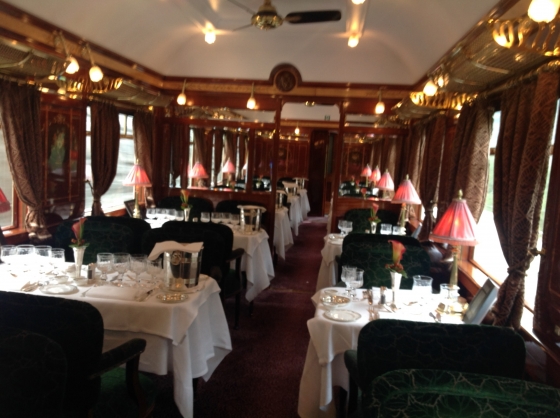
My research wasn’t all political. I had my characters travel on the Orient Express – I’d been fortunate to journey on the train myself, to Venice rather than Constantinople. Cocooned in gleaming blue and gold carriages, art deco compartments and mosaic-tiled bathrooms, I stepped back a century. Today the long journey to Istanbul is a once a year event, but in the early twentieth century it was part of the regular timetable and I gave my heroine the chance of travelling alone for the first time time in her life and to an unfamiliar, exotic destination.

I enjoyed researching old timetables, calculating how many days, how many hours, between one beautiful capital and the next – Paris, Munich, Vienna, Budapest, Bucharest – locomotives changing at every frontier, as one national railway system handed over to another. In all, the train covered a route of more than 1,700 miles before reaching Sirkeci station in Constantinople.

Topkapi Palace was my heroine’s destination and I still retain a vivid memory of my visit there. It was one of many Ottoman palaces in the city, sultans moving their court from palace to palace, often in response to external threat. Even though I saw only a small portion of Topkapi, I was overwhelmed by its opulence and beauty.

For this book, I wanted to dig deeper, wanted to know what life was like for the women who lived there around the  turn of the century. I’d read accounts by a number of intrepid female travellers to the Orient – Lady Mary Wortley Montague, Mabel Sharman Crawford, Mary Lee Settle – and been struck that, almost to the woman, their experience ran counter to the prevailing European stereotype of Turkish women as either decadent concubines or slaves.

Women spent most of their lives within the home, it was true, but within those four walls, they had absolute sovereignty. The harem was a sacrosanct space, not just a place where women were guarded, but a place of retreat to be respected. And if they ventured outside, always with a female companion, they were treated with courtesy. It was considered a sin to stare at women in public, for instance, and if a man behaved badly towards a woman, regardless of his position or religion, he would not escape punishment.

The truth, as always, is mixed. The Ottoman Empire was both civilising and brutal. Slavery continued until the last days of the empire, yet it was time limited for the individual and could be a means of social mobility. The children of the court were much loved, but in the early days of the empire, fratricide was frequent – the Ottomans did not practice primogeniture and male relatives seen as a threat to the potential sultan could be executed or imprisoned.

Researching history complicates that first simple ‘take’ on a culture and a period, changes our perspective, makes connections. And, crucially,  illuminates our own troubled present. Worth paying attention then!

SISTER SCRIBES: KIRSTEN HESKETH ON LOCAL RADIO STARDOM

I’ve been on TV and radio a number of times.

I’ve appeared on Flog It (in a filthy temper after the runner referred to my children as my grandchildren!). I’ve had a blink-and-you-miss-it appearance in a documentary about the Docklands. I’ve even been an extra in a comedy filmed at my children’s primary school starring Keeley Hawes no less (no, we haven’t stayed in touch!)

But I’ve never been in a real studio and I’ve never done anything linked to my writing.

Until today.

The lovely Claire Dyer asked if I would like to take her place as a guest panellist on Bill Buckley’s Reading Reads on Radio Berkshire.  I was enormously flattered and said yes before I had a chance to say no because it’s miles out of my comfort zone and Claire has very big shoes to fill.

The book we were reviewing this month was Life Death and Cellos by local author Isabel Rogers. I was sent a copy and duly read it, making notes as I went and feeling ridiculously important.  The book is a treat, BTW – a real laugh-out-loud ensemble piece with a big heart.

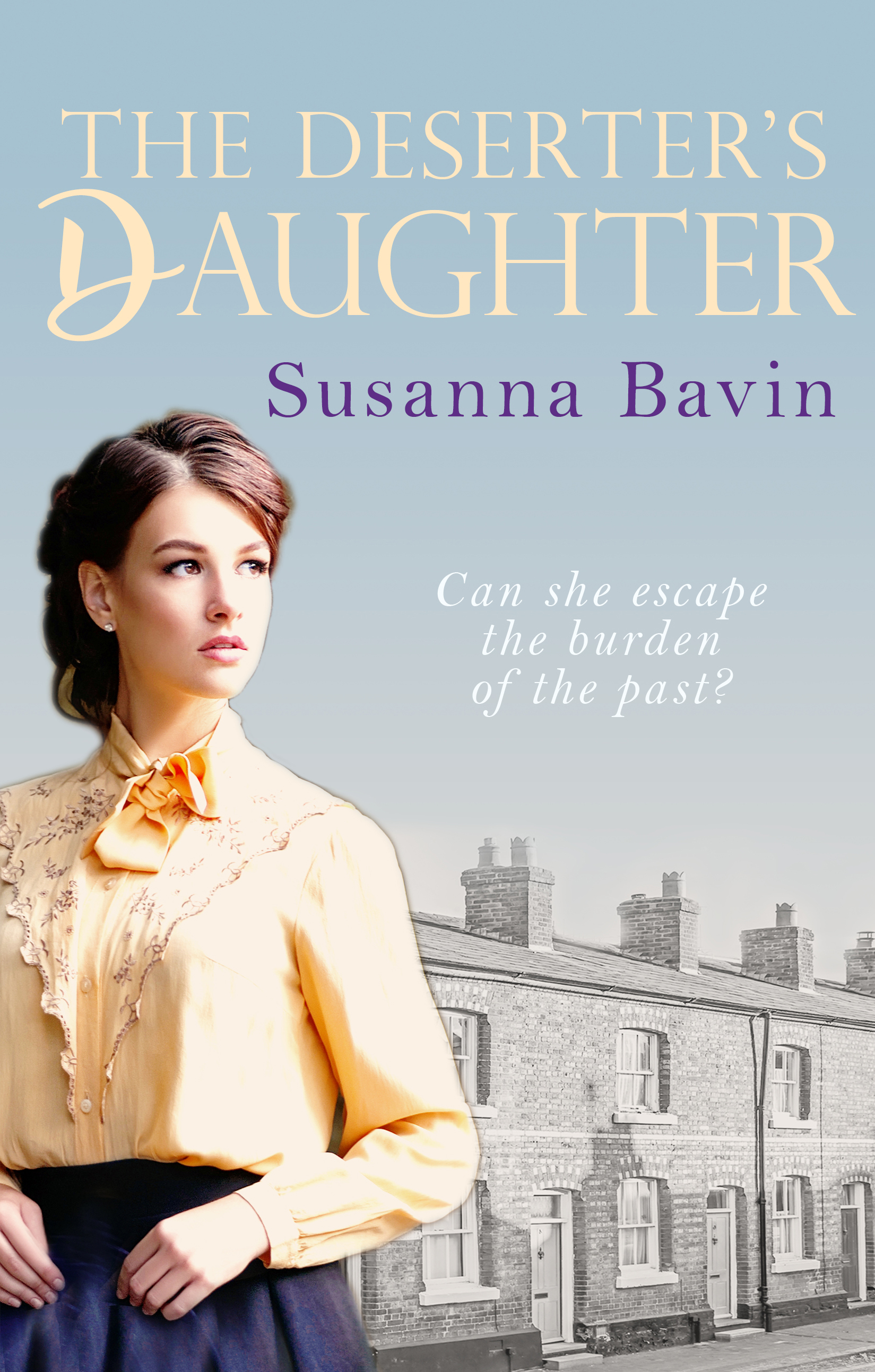
Panellists also recommend two others books and I plumped for The Girl Next Door, a taut and twisty psychological thriller by Phoebe Morgan and The Deserter’s Daughter, a saga set in 1920s Manchester by my fellow Sister Scribe Susanna Bavin.

The day itself was such an experience. To my husband’s despair and amusement, I started my day with a highly indulgent blow-dry; ‘it’s the radio, darling’.  Of course, no one took a single photo of me all day, but still; it’s how you feel about yourself that counts, isn’t it?

Radio Berkshire is set in an industrial park just outside Reading – the sort of place where your sat nav leads you to somewhere half way along a dual carriageway with no discernible building in sight. I arrived a trifle later and much more stressed than I would have like.

The regular panellist, David Barker, was already in reception and he was very kind and welcoming. He also explained exactly what to expect which was just as well because there is very little briefing or preamble; Radio Reads takes place half way through Bill Buckley’s afternoon show so you’re wheeled into the studio during a song, a few introductions and you’re off. At first I was very aware of the microphones and the production people behind the windows – they reminded me of the one-way mirrors when I am moderating focus groups, but Bill was so warm and friendly that pretty soon it just felt like a chat. There was even time, when songs were playing or the news was on, for Bill to explain his job and all the things he’s constantly juggling – like what to do when the traffic presenter went temporarily AWOL – whilst making it look oh-so-easy and effortless. It was all terrific fun and I was thrilled when Bill and David chose Susanna’s book as the book of the month.

All too soon it was over. I walked though reception on cloud nine, half expecting everyone to stand up and give David and I a rousing round of applause. Nothing. No one batted an eyelid. I switched on my phone. Daughter was feeling sick, could I pick her up from school? A reminder that I have a dentist appointment tomorrow. Husband had found a ring on the archaeological dig.

Life goes on … but what a blast!

Thank you, Claire Dyer, for the opportunity.


Dancing the day away: The Piano Works bottomless brunch

As you might’ve noticed, here at Frost we have a penchant for prosecco filled bottomless brunches. What could beat it? A bottomless brunch with live music, of course. We headed to Farringdon to give The Piano Works ‘Brunch to the Beat’ a try and, whilst initially nervous as we first entered the lair, we quickly embraced the atmosphere and partied the day away.

At £50 per person, the bottomless brunch includes a two-course meal and two hours (none of that 90 minute malarkey) of unlimited drinks. Choose to wet the whistle with either prosecco, pink Italian sparkling wine, Aperol Spritz, Bloody Mary or mocktails.

You’d be hard pressed to find staff who support your quest for completely embracing the ‘unlimited’ part of the Brunch to the Beat experience too. Each time your glass is edging towards the dangerous ‘half full’ territory (yep, we’re eternal optimists), the suited and booted waiters are at your side, ready to serve and encouraging the party.

Although you can choose to purchase just the drinks at £35 a head, the quality of the food is not to be ignored. The chicken and waffles were the perfect mix of sweet and savoury and the crunchy, smokey batter that encased the chicken was packed with flavour. For dessert, it’s a modest list of options but they’re certainly fan favourites – sorbet, waffles, fruit salad or the pancake stack.

Above all else, it’s imperative we talk atmosphere. This bar is often packed with large groups of hens, stags and party people (which usually guarantees a good time) but the sheer brilliance of the on-stage professionals is something else. Music starts at midday with two piano vocalists, followed by a full band at 1.30pm. Once the band has bowled in, the party intensifies.

Playing only the audience requests with a fantastic jazzy twist to just about everything, the artists become the pied pipers, drawing crowds to the dancefloor with tantalising ease. To top this experience with the metaphorical cherry, it’s a no holds barred kind of affair, with all types of requests welcome. During our experience, we heard Ben E King, Jackson 5, Ellie Goulding and Lewis Capaldi – what more could you want!?

By the end of the session, it’s pretty much guaranteed that you’ll be dancing like you’re 18 again on the dancefloor at 4am. Although, the reality is that it’s 4pm, the harsh light of day awaits outside and the hangover is starting to prepare for its inescapable appearance… we wish you luck.

To make a booking for The Piano Works’ Brunch To The Beat, visit the website.


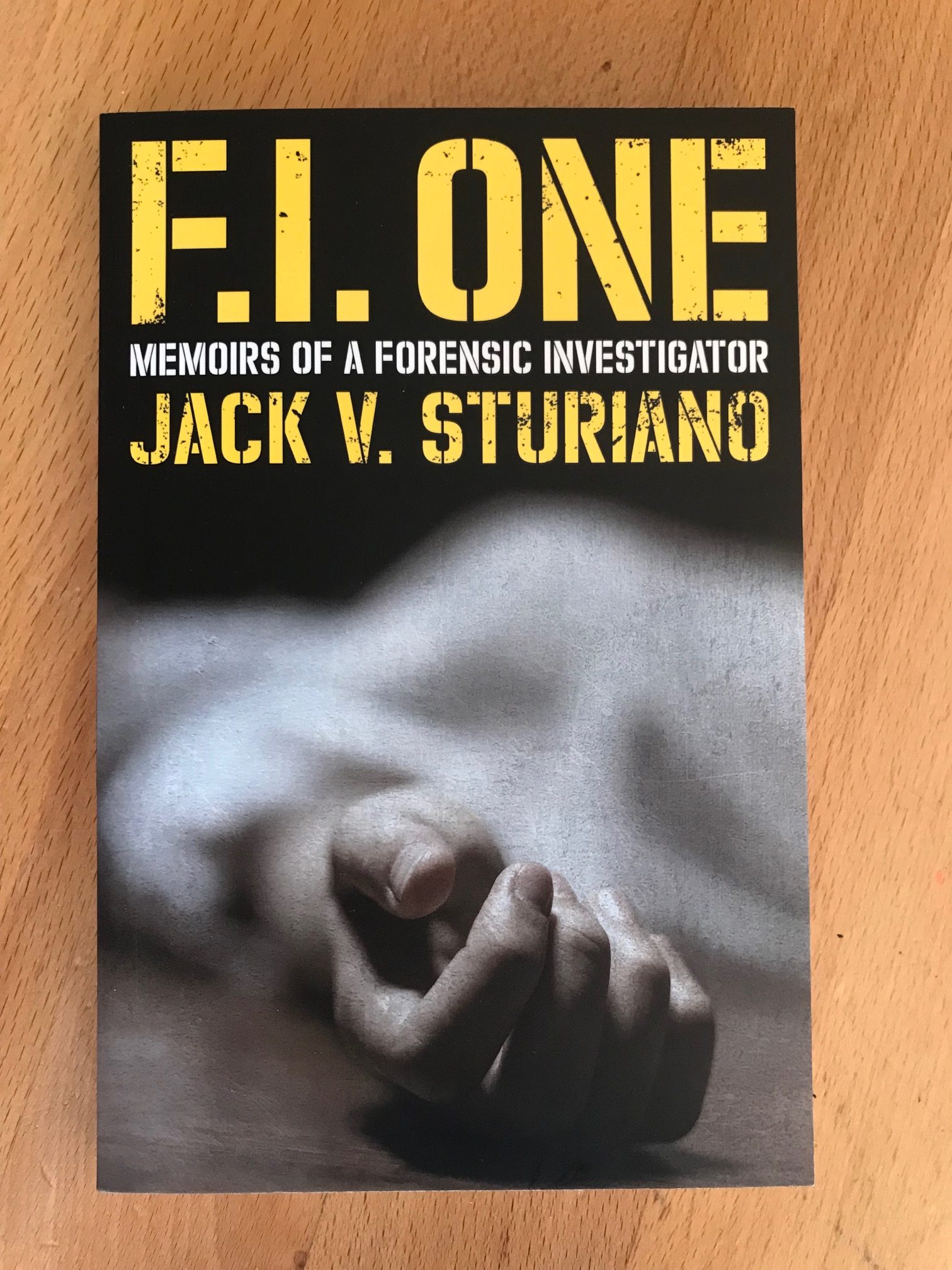
F.I One Memoirs of a Forensic Investigator By Jack V Sturiano

F.I One Memoirs of a Forensic Investigator By Jack V Sturiano

This memoir by Jack V Sturiano is perfect for fans of CSI and forensic science. It is full of haunting stories that stay with you. Not for the faint-hearted. One of the most haunting stories is how Americans buy guns, go to the grave of their loved ones, and then just kill themselves. It makes the job easy as the receipt is still in the box, but it is very sad.

Imagine working at the morgue for twenty-four years. Every corpse has a story. This is a first-hand account of the real world of forensic medicine. It’s not the book, radio or television version, which from Poe to Holmes to Morse is entertaining fiction, but very little to do with the reality that’s being presented in these memoirs of a forensic investigator who did the work for twenty-four years. Every one of these stories has at the core an actual event witnessed by the author. Nothing is made up. It presents an alternative to all the fiction that is a billion-dollar industry. The mood, tone and emotion are included in each narrative, for their power and each filtered through the sensibilities of the forensic investigator. After a couple of hundred suicides, the minute you walk through the door you can smell the bad ones. Something an old doctor once told me about diagnosing patients, “When you hear horses’ hoofs, don’t think Zebra’s”. Like little slices of life, this memoir is presented as a collection of short stories written in the style of O Henry, Ambrose Bierce and HL Mencken.

Available here.

THE TRUTH ABOUT BULLYING – ALEXANDER WALLIS

Jane Cable: Last week I received an email from an author I used to know when I lived in Chichester. I remembered him as a warm and principled man, a youth worker who’d written a fantasy book with a moral message. He’d contacted me to let me know he’d written a novel about bullying, aimed at teenagers and children. Not my normal read, but I clicked the link to I H8 Bullies anyway. Then I clicked on ‘look inside’. I read two pages and I was compelled, yes, compelled, to buy it.

It’s written from the point of view of a teenage lad in rich yet accessible language. The voice rings true. Alex’s blurb says it’s written for kids who don’t like books, and at only 66 pages short I can believe it. I also think it should be compulsory reading. Which is why I asked Alex to write this article for Frost.


The truth about bullying is that it can rarely be stopped.

The act of undermining others is a survival strategy – however maladaptive – which feeds vampiric ego at the target’s cost. Its excesses are applauded by those who don’t want to be next in the firing line and whose silence (or laughter) serve to timidly collude. Organisations enable rather than contain its flourishing, hierarchical lines supporting those who narcissistically abuse their power.

Nowhere can bullying be better studied than in a school, where adolescence stirs thicker the drama and thinner the consequences. A fully-stocked armoury is available to the teenager who bullies, from opportunity to physically aggress (within the relatively less punitive micro-society of the school discipline system), to ample places to regularly do it and the chance to capture and further torment on social media.

School anti-bullying programmes lean towards ‘awareness raising’, as if this phenomena is not already deeply understood. Since Goliath took up against David, humans have recognised that superior size, privilege or opportunity presents the risk of some throwing their weight around more than they should.

Interviewing students helped me to better understand the experience from the target’s view. Bullying somehow forces an intense self-examination, our own inner critic immediately jumping ship to add to the gang of detractors. Targeted students were not just conscious of the way they looked, but made to think deliberately of how they walked or talked. Thrown into a deep self-critique which often stemmed from an already sensitive and self-conscious life position.

When I began writing I H8 Bullies, my thoughts were initially on my own school experience, decades earlier. Old school bullying more often took the form of a thump to the ear, a pounding by some bigger boys (which we had sometimes provoked) and, at worst, the wave of a penknife.

Bullying feels more enduring and emotionally damaging now. Social media provides means to shame a person that is only limited by the imagination and which can endure long beyond the school bell. It can follow a person from place to place, preserving images better forgotten.

Sometimes the only factor under a target’s control is how they themselves react (or don’t). The quiet dignity of preserving your own values, even if you are still discovering for yourself what you think and feel. Bullying can rarely be stopped but it can be survived. It is about winning the battle within, and that is what the story of I H8 Bullies is all about.

Alexander Wallis is a youth worker for Sussex Against Bullying and the author of I H8 Bullies.


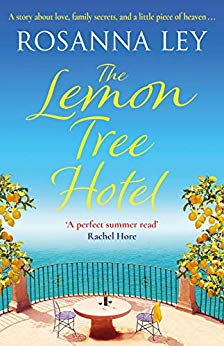
The Lemon Tree Hotel By Rosanna Ley

The Lemon Tree Hotel By Rosanna Ley

The weather is hotting up and this glorious, sun-drenched novel from Rosanna Ley should make its way into your suitcase. This is perfect feel-good escapism.

A story about love, family secrets, and a little piece of heaven . . .

In the beautiful village of Vernazza, the Mazzone family have transformed an old convent overlooking the glamorous Italian Riviera into the elegant Lemon Tree Hotel. For Chiara, her daughter Elene and her granddaughter Isabella, the running of their hotel is the driving force in their lives.

One day, two unexpected guests check in. The first, Dante, is a face from Chiara’s past, but what exactly happened between them all those years ago, Elene wonders. Meanwhile, Isabella is preoccupied with the second guest, a mysterious young man who seems to know a lot about the history of the old convent and the people who live there. Isabella is determined to find out his true intentions and discover the secret past of the Lemon Tree Hotel.

Available here.