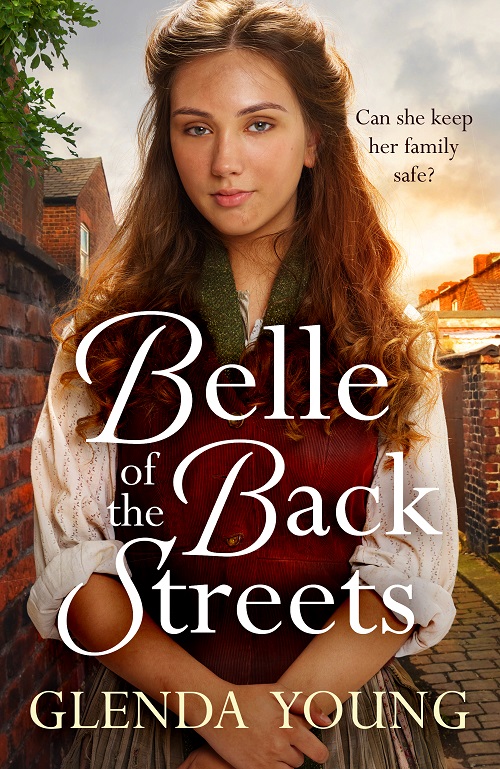
Belle of the Backstreets by Glenda Young


Belle-of-the-Backstreets-Glenda-Young

When Meg Sutcliffe’s father returns from the Great War he teaches his fifteen year old daughter, Meg the ways of the rag and bone man. But when tragedy strikes Meg has no other option than to carry on alone with her trusty dog, Spot at her side and her beloved horse, Stella pulling the wagon. 

Meg is a beauty and attracts attention wherever she goes – not all of it of the right sort, and when she catches the eye of charming Clarky it looks like she might have found a protector and a chance of happiness. But is Clarky really what he seems? And could Adam, Meg’s loyal childhood friend, be the one who really deserves her heart?

Meg Sutclifffe is a feisty beauty who will do whatever it takes to keep her family fed, and a roof over their heads. The Sutcliffe family may not have much but they have each other. Totally unsuited to the hard, heavy work of her father’s rag and bone round, Meg will not be deterred and sets out to build up the business to provide for her family.

Set in the mining village of Ryhope in the north east, Glenda Young paints such a fine picture of the area and the period that by the end of the book I felt I had been there. Her descriptions of both character and setting are wonderful and although Belle of the Backstreets has its fair share of villains, there are enough good honest people in the community to support and encourage her. There is a warmth and humour in bucket loads and you’ll be rooting for Belle to overcome all the trials that beset her.

A warm-hearted debut from Glenda Young.

Lovers of Dilly Court and Rosie Goodwin will enjoy Belle of the Backstreets.

About Glenda Young

Glenda Young credits her local library in the village of Ryhope, where she grew up, for giving her a love of books. She still lives close by in Sunderland and often gets her ideas for her stories on long bike rides along the coast. A life-long fan of Coronation Street, she runs two fan websites for which she sometimes interviews the cast of the show. For updates on what Glenda is working on, visit her website glendayoungbooks.com and to find out more find her on Facebook/GlendaYoungAuthor and Twitter @flaming_nora.

Headline – Paperback Original – 7th March 2019- £6.99 Also available in E-Book and Audio


SISTER SCRIBES GUEST: ADA BRIGHT ON BEING A CO-AUTHOR

I’m delighted to welcome my very good friend and fellow co-author, Ada Bright, to Sister Scribes. Ada is a novelist and a photographer, a wife and a mom and a very picky eater. She has lived in Southern California her whole life and says she fits into a good number of the stereotypes of the area, including being pretty laid back, considering anything below 65F as frigidly cold, and being unfazed by any earthquake under 5.0.

Over to you, Ada!


Thank you to Cassandra Grafton for inviting me to be a guest on Sister Scribes.  I was going to quip that we really are “sister scribes” since we co-author novels together, and we are unofficial family, but then I was imagining Cass reading it and injuring her eyes because she rolled them so hard… and I wouldn’t want to be the cause of something like that!

My best memories of childhood are from when I was living fictional stories by reading books. The characters I read about and re-read about were so much more formative to who I am than my early peers.

Writing became a natural next step for me. By writing extra scenes or character studies, I could hold on to the world I loved longer. My desire to write novels came more recently, but stemmed from a similar core. I simply wanted more.

Of course, impatience is not usually a good trait for a writer. But, in my case, I got  very, very lucky: I’d already met Cass. While we share a similar taste in stories, our writing is very different. I write in bursts that push the story forward, she composes a scene and always seems to have a handle on just exactly where our characters, our plot and even the reader are in their experiences at any given moment.

While we specialize in different areas, when we co-write, there is not one sentence that is purely one or the other of us. We write alone during our respective work days (which are 9 hours apart, since Cass lives in Switzerland). That means we usually start by waking up to a new scene from the other partner that we will begin by editing. Once we edit the new material, we either ask for a call to clarify what we’ve read or what we need to write next or we just continue on.

So many times, while talking about our first co-written novel The Particular Charm of Miss Jane Austen, I say how much I love co-writing with Cass – I mean, what writer wouldn’t want to hand off a scene that isn’t working to someone else and have it come back polished?! But, the further I get on in my solo novel, the more I realize that this experience of creating a shared world with someone has been a learning experience beyond measure.

As hard as writing can be, Cass and I have created a system that is, with all its ups and downs, fun. I have often joked about how I would leave text in the middle of the manuscript that said something to the effect of “Cass writes something brilliant here.” It can be a crutch, most definitely, but eventually, each writer will have taken a turn at being the hero even if the night before their entire scene ended up in the bin.

What I couldn’t have predicted is that seeing how Cass untangled us taught me both to recognize my negative patterns and also to learn ways of getting myself out of the ditches I’d written myself into.

Last year, Cass and I signed with Canelo Digital Publishing, and we’ve just finished writing our second novel together, which will be out later this year. No matter where our single careers take us, I will always be game to join our words together to create the voice that is both of us but not quite either of us.

Thank you for having me, Sister Scribes!


You can find Ada and Cass on their Blog, Tabby Cowhttps://tabbycow.com

Alternatively, Ada can be found on:

Facebook Ada Bright

Twitter @missyadabright


WHY HOMOPHOBIA HAS A STRONGHOLD IN SPORT

By David Ledain, the latest addition to the Frost magazine team, writing on LGBT issues

Sport is a phenomenon which can both bond and divide in equal measure. Tribal instincts and loyalties are challenged and revered, and in football especially, young men can be empowered and at the same time hidden from view.

Homophobia and anti-gay violence seems to crystalize young males in football tribes and gangs. It proves their heterosexuality and obliterates any secret homosexual desires of their own they may have. Targeting gay men is not seen by the perpetrators as hatred towards the individuals, but rather as an extreme expression of society’s expectations of them – that they are conducting themselves within what they have learned as acceptable male behaviour. They are in part driven by fear. The potential of any young man, regardless of his sexual orientation, to be labelled as ‘gay’ and weak, and ostracised from his family and the surrogate families of his football tribe, schoolfriends, work colleagues or neighbours, for being or unknowingly presenting anything other than the heteronormative, is so damning, even dangerous, that men are pressurised into characterising themselves to a very narrow set of male gender stereotypes. Owen Jones, the columnist, author and social activist, concurs, saying that the majority of homophobic abuse is ironically directed at straight males, and that almost all men will have been subjected to some sort of malicious homo-name-calling in their lives and been told in no uncertain terms what sort of a man they should be.

Photograph by kind permission of Altrincham FC

‘You grow up hearing people use what you are as the ultimate derogatory insult,’ Jones says. ‘Society tells you you should be heterosexual. It’s even subtler than that. There’s that awful patronising thing when people say, “Oh, I never would have guessed that you’re gay”, and you’re left feeling almost flattered that your leprosy isn’t publicly obvious.’

The potency of the idealised masculine heteronormative which captivates and imprisons young men especially, through its facade of power and place in the world, even when those same young men whose circumstances gives them no real power at all, is the derisible falsehood that is so destructive. Males who aspire to this gender stereotype, yet have no means of ever realising it due to factors out of their control, and not always economic or social, may feel their only way to make a mark in the world, to stand out in their community, is to carry out attacks on vulnerable groups, particularly, homosexuals – easy targets which they see as the antithesis of who they are and who they want to be.

Altrincham FC recently made the headlines by tackling the issue of homophobia in football by going out on pitch in a rainbow coloured kit, and in 2017 Stonewall backed the Rainbow Laces campaign to get everyone who plays sport to support LGBT equality. Cricketer, Joe Root, has also been widely applauded for his response to alleged homophobic abuse, telling the West Indies bowler, Shannon Gabriel, ‘There is nothing wrong with being gay.’

Things are slowly changing both on the pitch and in the dressing room but getting to a place where LGBT equality and anti-gay abuse from the terraces is not a topic of discussion any more is difficult to imagine because of the deep-rooted traits of the hetero-biased tribes. But if sport and particularly football continues to move towards diversity and inclusivity, one day we will get there.

You can follow David on Facebook & Twitter @Davidledain

And visit his website www.gaydad.co.uk for more information and his blog.


SISTER SCRIBES’ READING ROUND UP: FEBRUARY

Susanna:

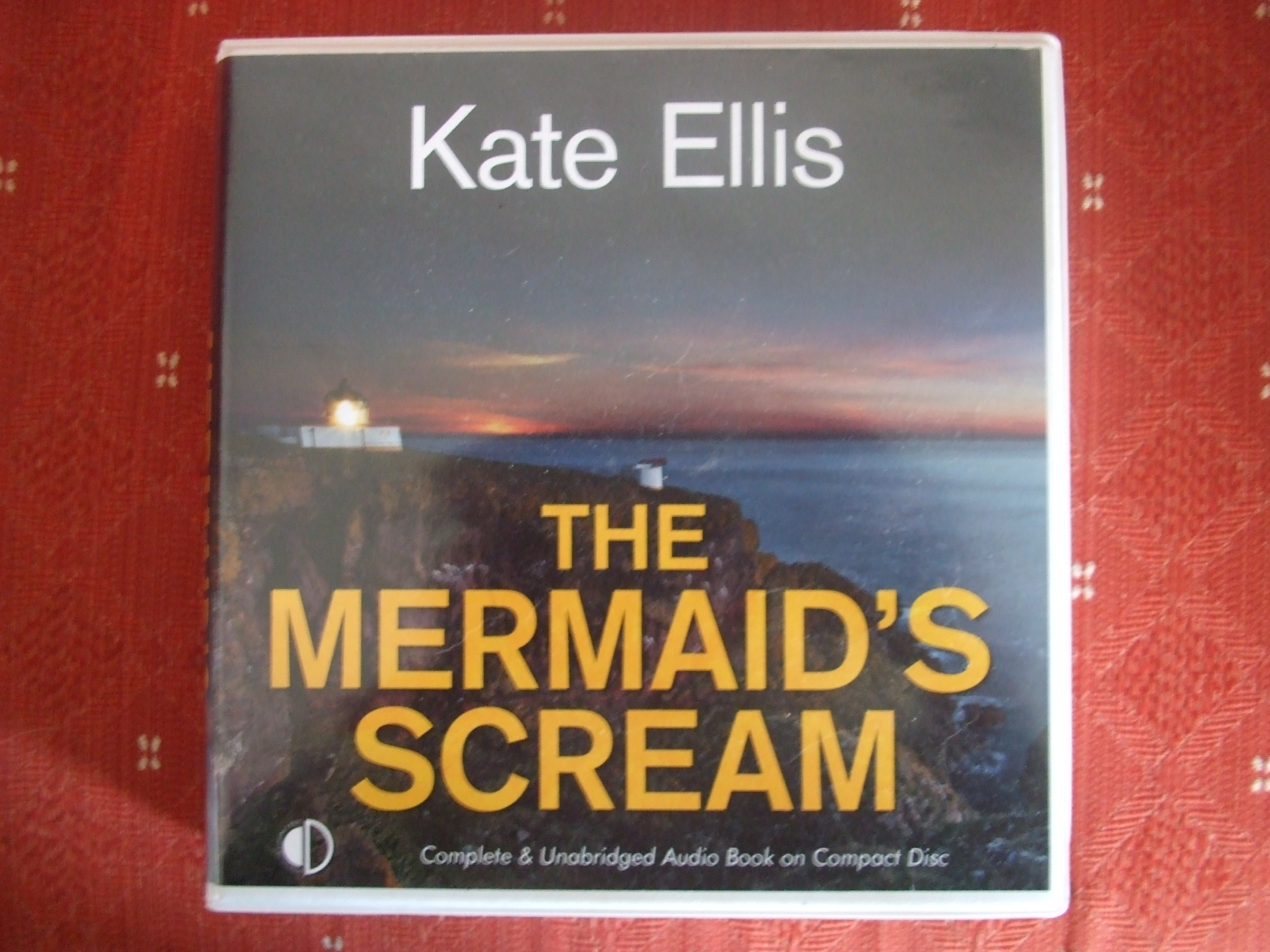
The Mermaid’s Scream by Kate Ellis

Famous author Wynn Staniland is as well-known for having turned into a recluse after his wife’s suicide as he is for the high-brow books he wrote before the tragedy. Now he has agreed to let Zac Wilkinson write his biography, but what are the startling facts Zac claims to have unearthed? When Zac is found murdered, DI Wesley Peterson’s investigation reveals a series of secrets in a mystery that successfully blends the present with the past.

Kate Ellis deftly handles the multiple threads in this story. As well as being intriguing and drawing the reader further in, the complexities of the plot make it impossible to predict what’s coming next. It is an engrossing, confidently-written story, featuring well-rounded characters.

I listened to the audio version published by Isis Soundings, read by Gordon Griffin, whose narration is in no way showy or intrusive, but who invests each character with their own voice and creates a quietly suspenseful atmosphere.


Kitty:

This month I finally finished Penmarric by Susan Howatch – it took ages but allowed me to wallow in adolescent nostalgia, always a favourite activity.

I have started to read Circe by Madeline Miller which I’m loving, my degree was in Classics so I love reading anything that features the Gods, heroes and myths of antiquity and this is beautifully written. She makes everyone so vibrant, I am quite in awe.

I also read Don’t You Forget About Me by Mhairi McFarlane which had me giggling on nearly every page apart from those that made me hold my breath as I raced through. I shall definitely be reading more of hers.

Finally, I have to mention Rachel Burton’s The Pieces of You and Me, a love story so honest, brave and uplifting that I fell deeply in love with it and will keep it forever.


Jane:

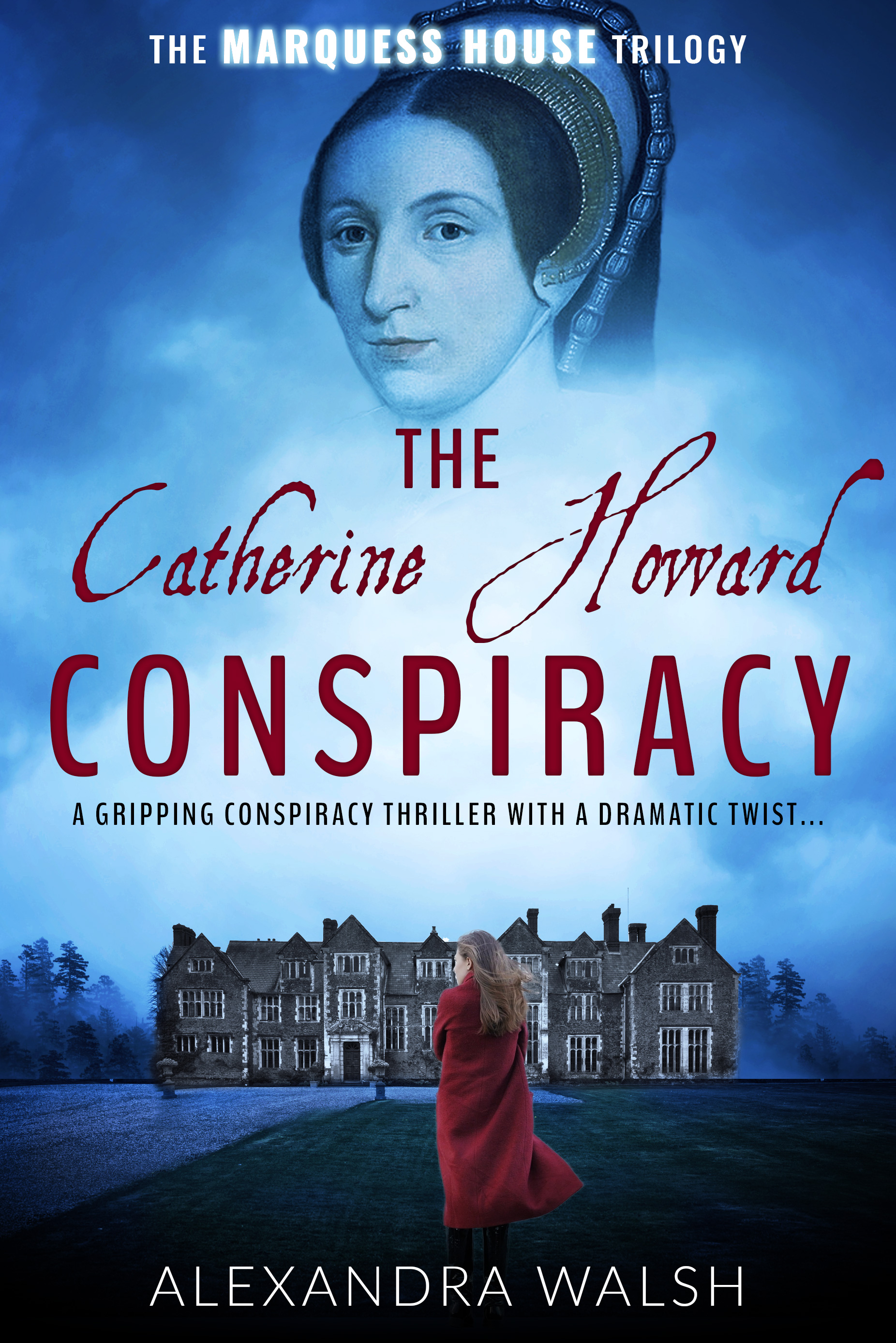
Although I hadn’t intended to read another Sapere book quite so soon, that’s exactly what happened. I was emailing with Amy Durant, the editorial director, with an idea for a timeslip novel for them and we fell to discussing the structure. As she felt it was something Alexandra Walsh had done particularly well in The Catherine Howard Conspiracy she emailed me an early review copy.

It’s the sort of book you don’t want to say too much about in case you inadvertently slip in a spoiler, but the timelines are split between present day and the early 1540s – not surprisingly, given that was when Catherine Howard was married to Henry VIII. I had expected to enjoy the modern part of the story, but I was completely captivated by Alexandra’s depiction of the Tudor court and the way she brought the historical characters to life.

The book kept me on edge from beginning to end. It was reasonably clear who could be trusted in the historical story but far less so in the contemporary strand and I just had to keep turning the pages. Not only that but the teasing out of an alternative historical truth was done so well that I even ended up almost believing it. The book is everything a classic timeslip should be and I’d thoroughly recommend it. It’s available for pre-order now.

It was when I was in Truro library tracking down local history books for research that I came across Winston Graham’s Poldark’s Cornwall. I’d been hunting for this book for some time and it didn’t disappoint with beautiful photos and the links – real and imagined – between Ross and Demelza’s world. It also contained a couple of pages of useful advice for authors. Most pertinent to me seemed: “…risk of becoming too preoccupied with history… But novels are about life.” I think I should pin that up on my wall.


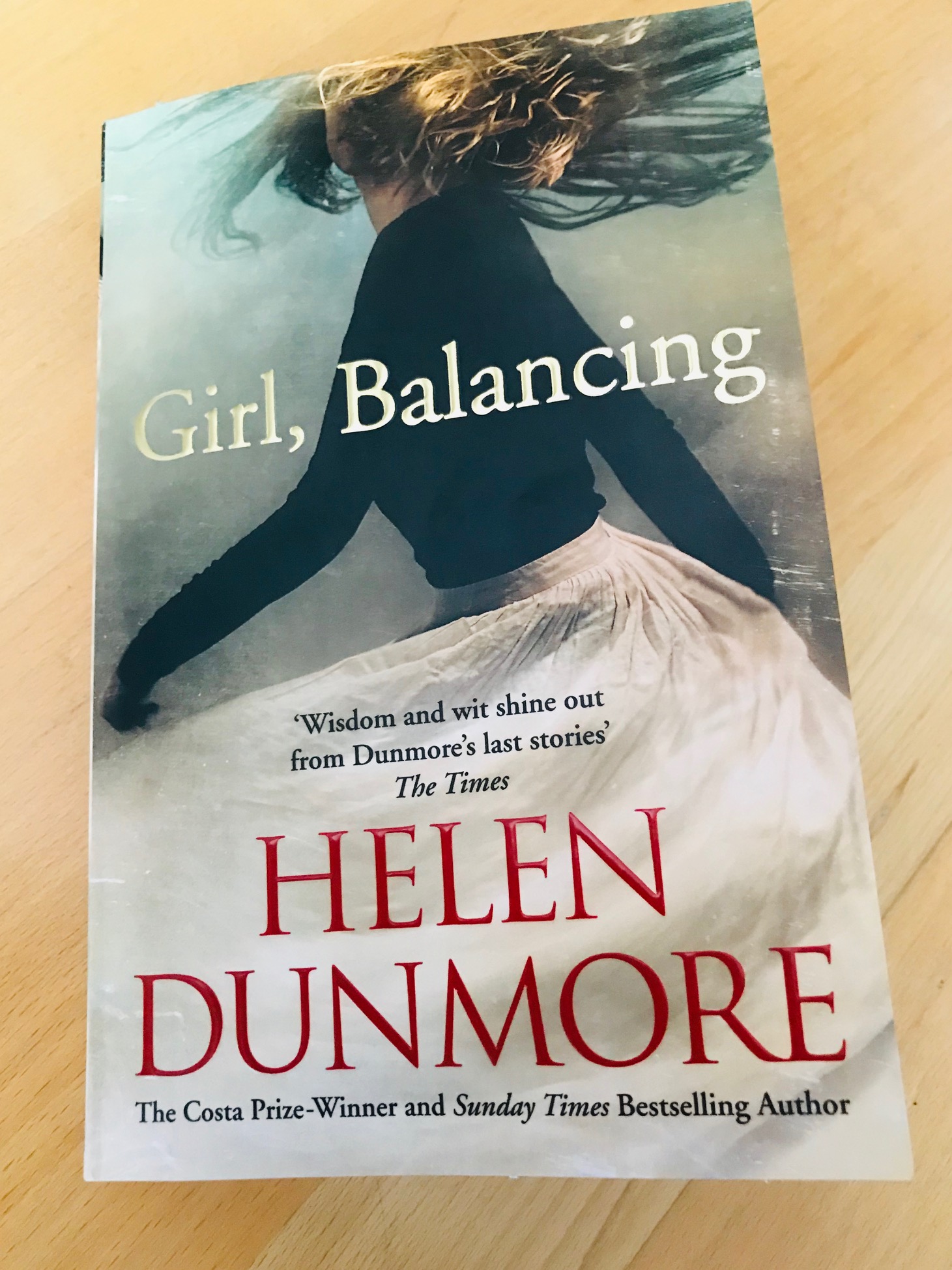
Girl, Balancing & Other Stories by Helen Dunmore – Her Final Collection


I loved this stunning collection of short stories from Helen Dunmore. There was a tinge of sadness that this will be her final collection, but we are lucky to have had such a literary talent. Girl, Balancing is also well edited, with the novel being broken down into three section: The Nina Stories, The Present and The Past. A wonderful way to get lost for a few hours. Dunmore excels in historical knowledge and razor sharp observation. The stories are true slices of life.

This very special collection of short stories was gathered by Helen Dunmore’s family in the months following Helen’s death in 2017. Helen’s writing was everywhere, on the computer, on letters to her children, in notebooks, on her ipad, even on her phone. Girl, Balancing is a collection of the very best of those short stories, some fully developed and others partial fragments of what occasionally became novels throughout her career. It is a wonderful insight into the writer’s craft – how one hones plots and develops characters, how Helen’s insight into people and the world surrounding us have always informed her writing. It has been 20 years since Helen published a short story collection and as Helen’s son, Patrick describes in his Introduction, contained within these pages is ‘the pleasure of discovering something new’, even for those familiar with Helen’s novels.

Girl, Balancing
& Other Stories

HELEN DUNMORE

£8.99 Windmill Paperback 7 March 2019

HER FINAL COLLECTION

In this remarkable final volume of short stories, Helen Dunmore explores the fragile ties between passion, familial love, parenthood, friendship and grief often from people who are at turning points in their lives.

With her extraordinary imagination, her gift for making history human, and her talent for acute observation and lyrical storytelling, Dunmore offers a deep insight into the human condition with a collection that will delight and move all her readers.

Helen Dunmore was an award-winning novelist, children’s author and poet who will be remembered for the depth and breadth of her fiction. Rich and intricate, yet narrated with a deceptive simplicity that made all of her work accessible and heartfelt, her writing stood out for the fluidity and lyricism of her prose, and her extraordinary ability to capture the presence of the past.

Her first novel, Zennor in Darkness, explored the events which led D. H. Lawrence to be expelled from Cornwall on suspicion of spying, and won the McKitterick Prize. Her third novel, A Spell of Winter, won the inaugural Orange Prize for Fiction in 1996, and she went on to become a Sunday Times bestseller with The Siege, which was described by Antony Beevor as a ‘world-class novel’ and was shortlisted for the Whitbread Novel of the Year and the Orange Prize. Published in 2010, her eleventh novel, The Betrayal, was longlisted for the Man Booker Prize and shortlisted for the Orwell Prize and the Commonwealth Writers Prize, and The Lie in 2014 was shortlisted for the Walter Scott Prize for Historical Fiction and the 2015 RSL Ondaatje Prize.

Her final novel, Birdcage Walk, deals with legacy and recognition – what writers, especially women writers, can expect to leave behind them – and was described by the Observer as ‘the finest novel Helen Dunmore has written’.

Helen was known to be an inspirational and generous author, championing emerging voices and other established authors. She also gave a large amount of her time to supporting literature, independent bookshops all over the UK, and arts organisations across the world. She died in June 2017.

A PUBLISHER’S YEAR: FEBRUARY – ROMANCE, CRIME, APPLICATIONS

To pick up on the cliffhanger of last month – the exciting Romantic Novelists’ Association news is now public! They are running a new prize from this year, which we have agreed to sponsor. It is officially called the Sapere Books Popular Romantic Fiction Award. The shortlist of six books has been announced. In the running are THE LION TAMER WHO LOST by Louise Beech, ONE THOUSAND STARS AND YOU by Isabelle Broom, YOU ME EVERYTHING by Catherine Isaac, THIS COULD CHANGE EVERYTHING by Jill Mansell and A SKY PAINTED GOLD by Laura Wood. I do have a personal favourite but my lips are sealed until the winner is announced on March 4th!

We are still looking for our first staff-member. Applications are just about closed but we have well over 100 to go through, so that will keep us busy for the next few weeks! We’ve also had our first responses to our ‘Call For Nautical Fiction’ and it looks like we’ll be able to announce some naval fiction deals soon. We have just finalised our schedule for London Book Fair and we are pretty booked up for all three days, plus some evening events so that will be a full-on week for us!

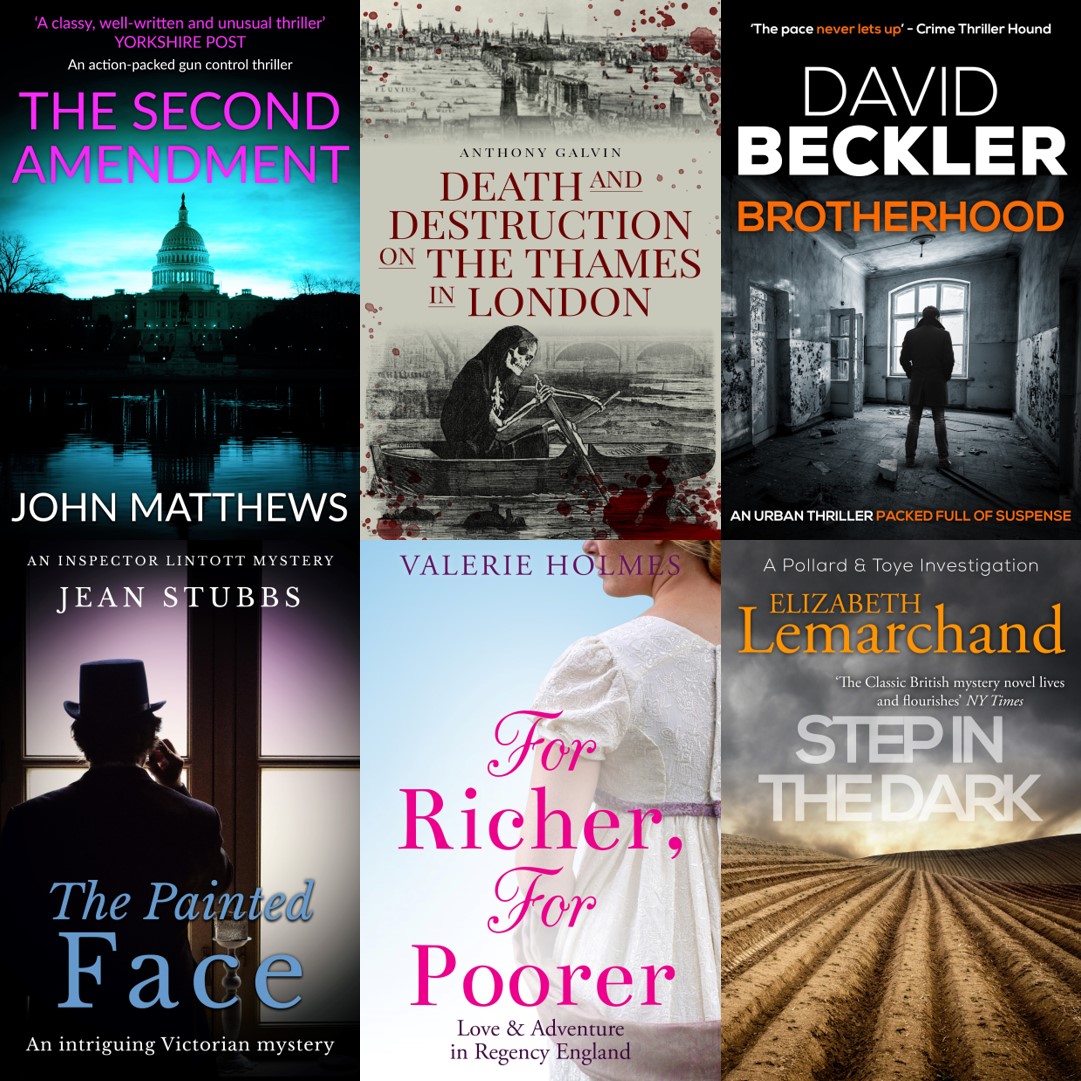
The published titles for this month were a mix of genres. We published Valerie Holmes’ second Regency romance novel in her Yorkshire Saga just in time for Valentines Day. We’ve also published one of our first non-fiction titles: a ‘deadly’ history of the Thames in London by Irish author, Anthony Galvin. That was followed by two classic mysteries: THE PAINTED FACE by Jean Stubbs and STEP IN THE DARK by Elizabeth Lemarchand. Finally, we launched two action-packed thrillers: David Beckler’s debut, BROTHERHOOD, set in urban Manchester and John Matthews’ thought-provoking gun-control thriller, THE SECOND AMENDMENT.

Our final piece of news is that we will be going to CrimeFest this year for the first time, which we are thrilled about. Last year we went ‘on tour’ to cover the Crime Writers’ Association Conference in Shrewsbury and the Historical Novelists’ Conference in Cumbernauld, and to contribute to a writing panel in Chorley. We aren’t actually speaking at CrimeFest so it will be fun to just enjoy all the talks, dress up for the Gala dinner and of course, hang out at the bar 😊. We should find out the longlist for the Sapere Books Historical Dagger Award as well, which is very exciting.

Come back next month for our Book Fair news, March releases, RNA award announcements and potentially a hello from our new Editorial Assistant!

Amy Durant


IT’S TIME TO START SHOWING THE SCI-FI GENRE SOME LOVE

Science-fiction may be enjoying a meteoric sales boom but it’s still not receiving the acclaim it deserves, writes the British novelist Hannah De Giorgis.

By Hannah De Giorgis

When it comes to the perception of Science Fiction and Fantasy (SF&F) as a genre, there’s a tension between its commercial success and its critical reputation. This time last year, it was reported that combined print and digital book sales in SF&F genres had doubled since 2010.

Today, unit sales of self-published and Amazon-published titles represent almost 50% of all SF&F sales across print, digital and audio. Elsewhere, and especially on the Big Screen, the popularity of SF&F shows no sign of abating: movies including the Maze Runner: The Death Cure, Black Panther, Annihilation, Jurassic World: Fallen Kingdom, and Solo: A Star Wars Story grossed billions of dollars at the Box Office and outsold most other genres.

Given its commercial dominance and crossover potential, one might assume that SF&F would carry the same kudos as other acclaimed genres. And yet, when it comes to the “literary” world, it doesn’t.

Despite its importance in popular culture, SF&F is often overlooked and underappreciated critically. For instance, SF&F is rarely offered as a module in undergraduate literature degrees – and, when it is, the relevant lecturer laments that it is regarded as a “lesser” genre. Meanwhile, in literary circles, science-fiction and literary speculative fiction is routinely dismissed and overlooked for most (if not all) of the more prestigious literary prizes. Perhaps because a potential consequence of being regarded as more “mainstream” can automatically render a book as less “serious”.

However, such a dismissal is – I think – unfair. Not only does SF&F arguably require more imagination than most other genres, it also allows writers to really delve into the potential repercussions of technological advancement in modern society. In some cases, sci-fi novelists will possess a comprehensive understanding of the laws of physical sciences, and in others fantasy novelists might fabricate an entirely new world from scratch.

In the glamorous world of film, the problem is less acute; blockbusters like The Martian and Interstellar have and do attract acclaim. That acclaim, however, only goes so far. Interstellar, for instance, was nominated for Academy Awards in categories such as special effects but not for overall picture. The Martian, on the other hand, which of the two movies is more “realistic”, was nominated for Best Picture.

While it would be disingenuous to suggest that critical acclaim is only reserved for Hollywood, it is fair to state that SF&F receives more recognition in the world of film than in the world of literature – and that’s not simply a consequence of the asymmetry of the two industries. And, when I think about it, this shouldn’t be the case given the important role that SF&F has and continues to play in our lives. Sci-fi, in particular, has long been a reflection on society: it shines a spotlight on mankind’s lust for and dependency on emerging technologies, arguably in a manner that would not be nearly as effective if it were not in the sci-fi form. Indeed, SF&F authors have for decades paved the way for Hollywood by daring to explore the potential repercussions of a world that is increasingly advancing technologically. Moreover, the genre offers an imaginative scope that is, in effect, unlimited – as can be demonstrated by many sci-fi movies or fantasy series that immediately spring to mind.

All I can hope is that, little by little, the literary world might cease to look down on SF&F and come to eventually recognise it for the innovative, limitless, and – at times – genius genre that it is.

Threads in Time by Hannah De Giorgis is available from today on Amazon priced £3.49 in Kindle edition and £7.99 in paperback.

SISTER SCRIBES: CASS GRAFTON ON MRS GASKELL… ON CHARLOTTE BRONTE

The other day, I had the urge to watch North & South again, the well-received BBC dramatization of Elizabeth Gaskell’s second novel.

I’m not sure if this stemmed from a need to watch a classic film or simply the shallowness of wanting to wallow in Richard Armitage’s smouldering interpretation of John Thornton, but whatever the attraction, it did make me think about Victorian writers.

Written originally for Charles Dickens’ magazine, Household Words, North & South has more recently been dubbed the ‘industrial’ Pride & Prejudice. It is typical of the stories spilling from Mrs Gaskell’s pen at this time: ones that didn’t flinch away from contentious social commentary but always had, at their heart, a bit of romance – and a copious body count!

It wasn’t a novel, however, that first introduced me to Mrs Gaskell’s writing. Back in school, I was obliged to read Jane Eyre as a set book.  My teenage heart was swept away by the passion of Charlotte Brontë’s classic and, considering myself plain and unnoticeable, I relished reading about this ‘oh so ordinary’ heroine getting her man.

Intrigued by the story behind the author, I bought a copy of a popular biography of Charlotte – the aforementioned Mrs Gaskell’s account of ‘The Life of Charlotte Brontë, having no idea of the drama surrounding the book.

It was written at the invitation of Charlotte’s father soon after his daughter’s death in 1855. Encouraged by Charlotte’s close friend, Ellen Nussey, Patrick Brontë wanted Mrs Gaskell, also a friend of his daughter’s, “to publish a long or short account of her life and works, just as you deem expedient and proper”.

Mrs Gaskell was used to her own writing exciting controversy amidst the admiration, but although the biography attracted critical acclaim, it was not universally well-received, with some critics not appreciating the whitewashing of certain aspects of Charlotte’s life. Mrs Gaskell had been stuck between the proverbial rock and a hard place – after all, parts of Charlotte’s life (like anyone’s) were not really for public consumption.

More controversy, however, came back to haunt the author. Published in March 1857, the Life attracted enough attention for a second edition to be announced in May of the same year. Suddenly, though, the book was withdrawn from sale, due to the threat of libel proceedings on more than one count and general grumblings from those who felt they had been unfairly depicted in the book.

The three main issues seem to have been these: how Patrick Brontë himself was portrayed; the account of Charlotte’s brother, Branwell’s, decline – exacerbated by the implication of the influence of a ‘lady’, who was described in such a way, all of society knew her identity; and descriptions of Charlotte and her sister, Emily’s, time at the Clergy Daughters’ School at Cowan Bridge.

Mrs Gaskell went on to describe herself as being in ‘the hornet’s nest with a vengeance’ and referred to the biography as ‘this unlucky book’ in a letter to her publisher. Its overall success, however, meant the Life wasn’t going to disappear. Balancing out the unpleasantness of the above, Mrs Gaskell began to receive additional information, either from others who admired what she had already achieved or those who wanted to correct certain details.

She faced a daunting major revision, but set to and the third edition – Revised and Corrected – appeared in the November, less than six months after the original had been withdrawn from sale. It contained a substantial amount of new material.

Despite the challenges she faced, Elizabeth Gaskell did an admirable job, and her insight into the life of Charlotte Brontë is a fascinating read and one I would highly recommend to anyone who enjoys reading about Victorian authors.

As for myself, I think I’ll avoid any attempts to pen biographies for my writing friends and immerse myself in fiction instead – the visual rather than the written version on this occasion! Excuse me whilst I hit play again on North & South… I may be gone some time!


Sources: Various Gaskell letters, and Alan Shelston’s Introduction and Appendices to the Penguin English Library 1975 edition of Jane Eyre