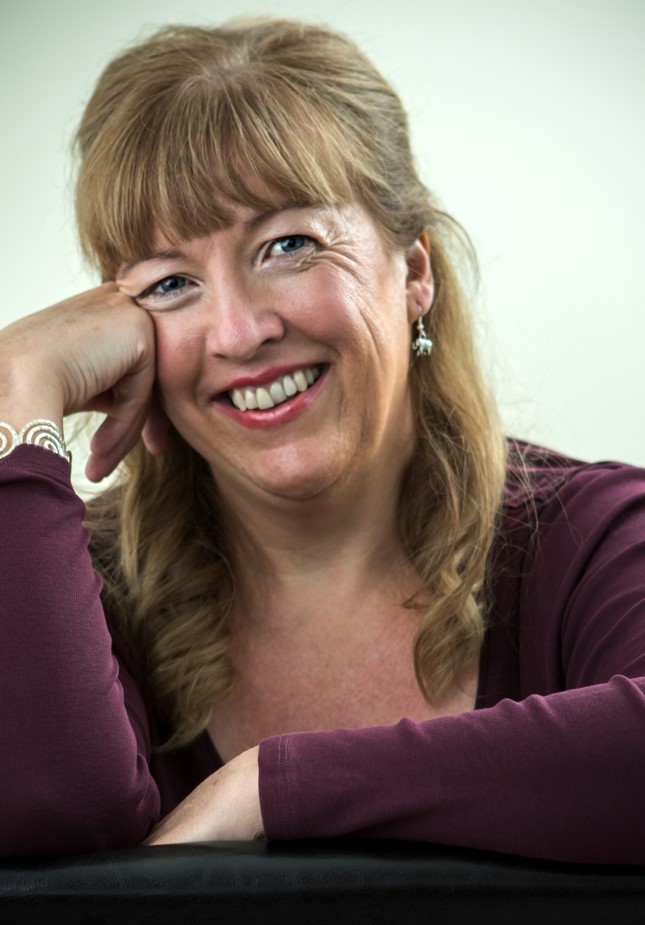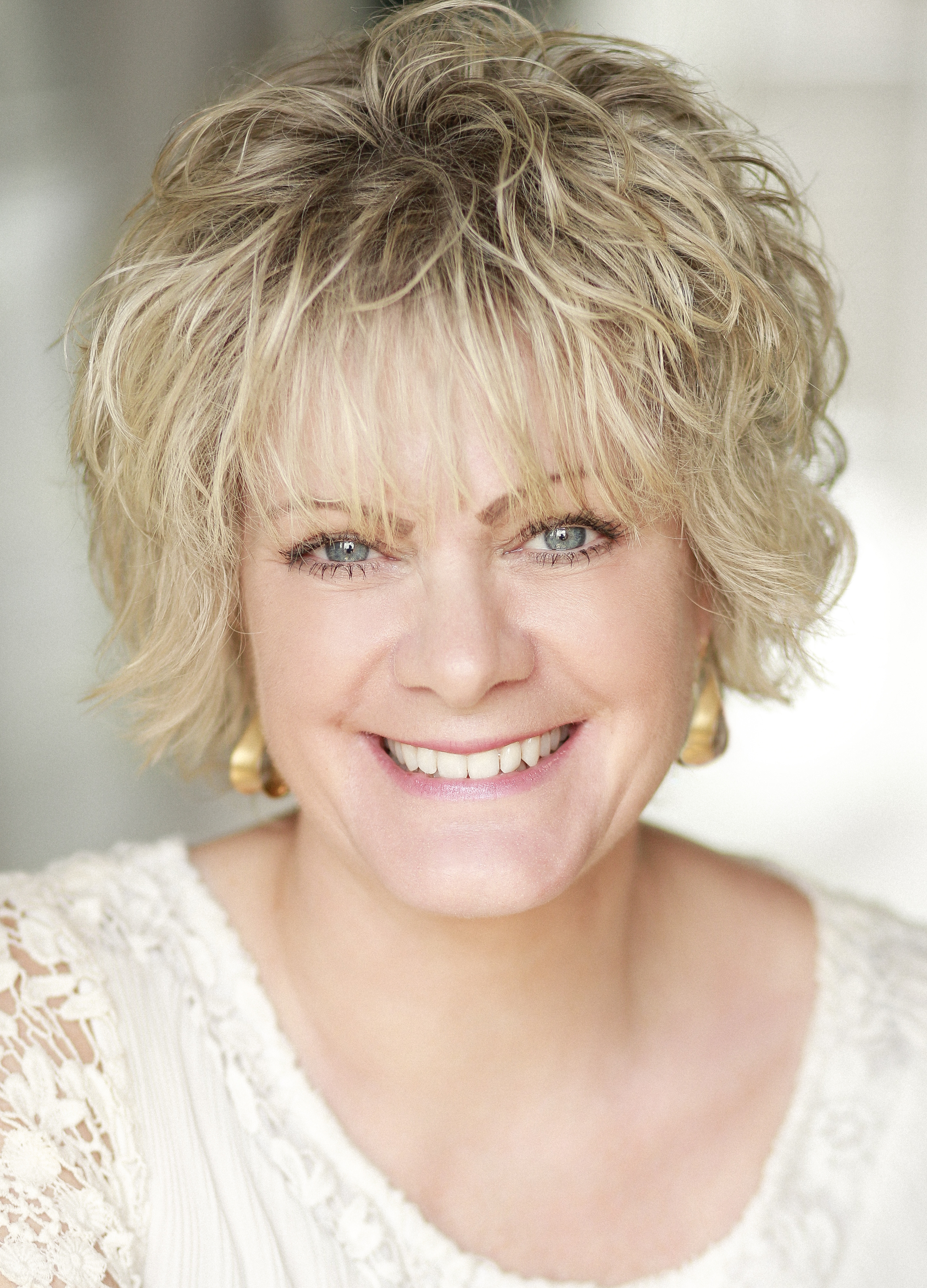
BUSINESS OF BOOKS: TAKE FOUR WRITERS – INTRODUCING CLAIRE DYER

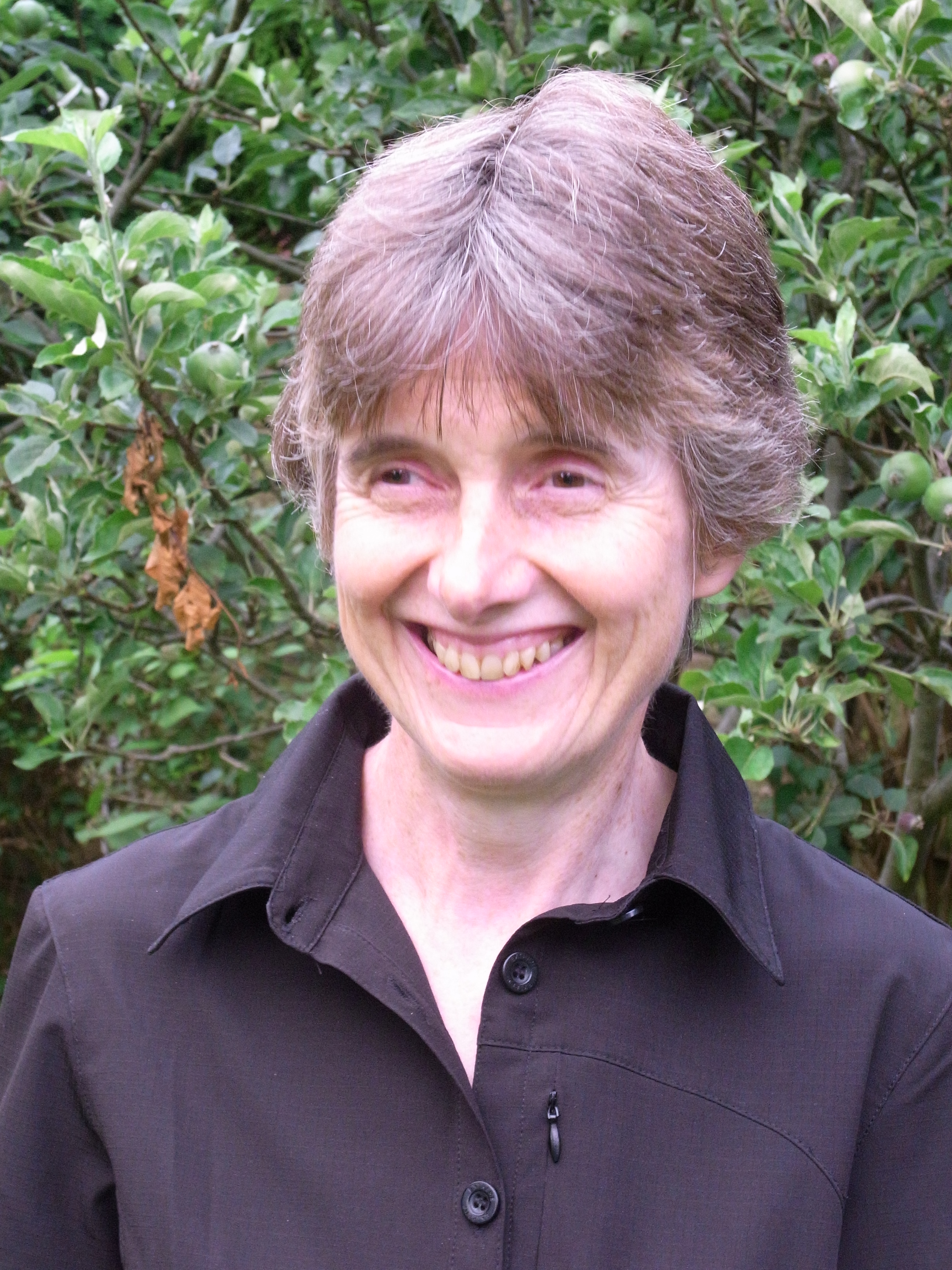
Being a poet and a novelist I’m often asked whether I prefer one over the other and I always answer that I love them both the same – like I do my two children, obviously! Seriously though, I really do believe both mediums are two sides of the same coin; both set scenes, tell stories and are peopled by characters who I hope are vivid and compelling.

The main differences may seem mundane: in poems the lines don’t always go right across the page, whereas in novels they do and, in poetry we have fewer words to play with, so every word really does count.

That’s not to say, however, that we can’t play with format in fiction and invest our prose with the same attention to detail as we do in poetry – in fact, we should.

Also, I believe that, as in poetry, a novel should have moments of distilled emotion but, unlike with poetry, in a book we can give our readers and characters, for that matter, more instances of down time: conversations about the weather, making tea, going to the shops.

For me, a poem works if it tumbles down the page and takes me with it and I believe a novel works if it draws me in and keeps me held safe in its narrative. I sincerely hope both my poetry and prose do both of these things!

So with this thought I’ll say a few words about my publications. I’ve had two collections of poetry published by the very lovely Two Rivers Press and, although each are only 50 odd pages long, they both took years in the making – each poem, I hope, earning its place in the stories the books aspire to tell. The second book, Interference Effects, came out of my MA in Creative Writing at Royal Holloway and what the poems aim to chronicle is how, as colours vary in a butterfly’s wing depending on the angle at which we view it, our impressions and thoughts about subjects as varied as art, love and loss, marriage and memory, can change when we look at them through different lenses.

I’ve had two novels and a short story published by Quercus and am utterly thrilled that The Dome Press are publishing The Last Day on 15th February. This book has had an interesting genesis. It was always going to be about the three of them: Boyd, Vita and Honey, but it was only on the second rewrite that Vita pushed her way front and centre and waved at me, glasses in one hand, paintbrush in the other and said, ‘Put me in the first person,’ and as much as I loved writing about the other two, it was Vita who called to me the loudest.

Also, during the rewrites, the book changed from being a story about one thing to a story about another: it had the same people and same plot but eventually it revealed its true colours (a bit like a butterfly’s wings!) and it’s been a wonderful experience being part of this evolution.

The title came to me (bizarrely and somewhat prophetically) on the day after the EU Referendum in June 2016 and the more I thought about it, the more it seemed to fit with the fact that we all will experience last days: the last day of school, of work, of love, of life. And, if after every beginning there is an ending, then after every ending is a beginning: after every last day there is a next day and it is this message I hope the book holds at its heart.

https://www.clairedyer.com

@ClaireDyer1


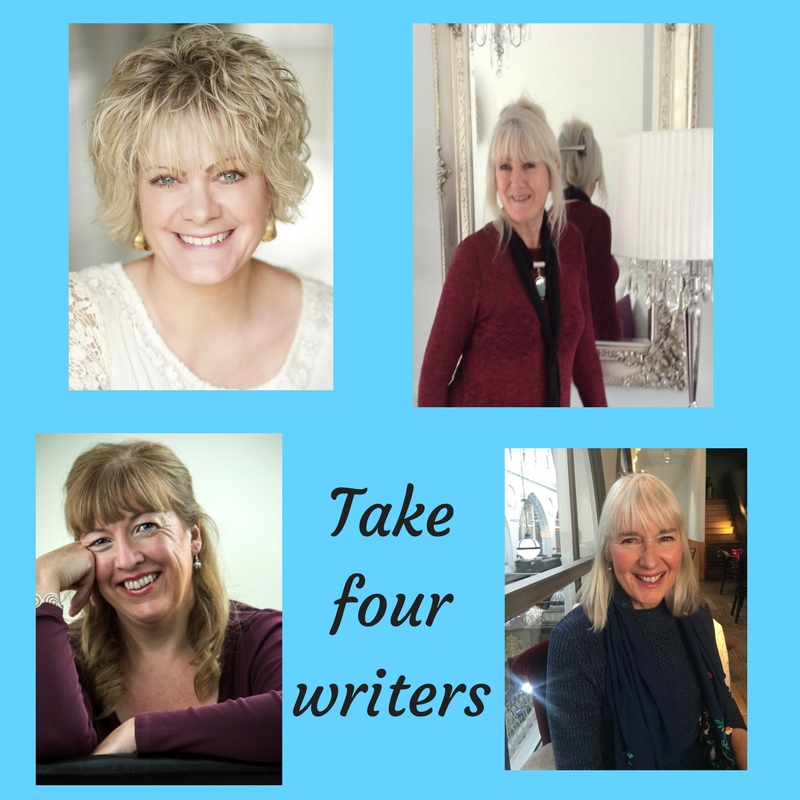
BUSINESS OF BOOKS: TAKE FOUR WRITERS

Sometimes when writing a regular column you get sick of the sound of your own voice. Well I do, anyway. However much you dress it up I am just one author on one career path and although other writers contribute wonderful guest columns to the Business of Books there is no sense of continuity to their experiences and I wanted to remedy that.

So a few months ago I put out feelers in the author groups I belong to on Facebook to see if there were writers with books being published in 2018 who would be prepared to write monthly updates. I wanted to cast the net wide; across genres, across routes to publication and with the new books coming out at different times during the year.

The first volunteer and first to be inked into the schedule was writer of literary women’s fiction, Claire Dyer. Claire has featured in this column before and is a good friend – but she also has an interesting story to tell. Her first two novels were published by Quercus but sadly the second one fell between the cracks when they were taken over and it seemed as though her career had stuttered to a halt. Now with a new agent and a new deal with The Dome Press for The Last Day she is set for an interesting year. And if early indications are anything to go by, a very successful one too.

Given that I’m a member of the Romantic Novelists’ Association many of my contacts are in this genre so my next task was choosing a single representative for romance. I have to say that I struggled initially but then one story piqued my curiosity. Linn B Halton, already a successful author with Harper Impulse, was about to embark on a parallel career as her alter ego Lucy Coleman, signed to Aria Fiction. Linn has two feelgood novels out next year but will be concentrating on her July launch for Frost.

Having come through the indie publishing route myself I was determined that this option should be represented, but again the issue was choosing between the impeccable credentials of the volunteers. I had two particularly strong candidates but in the end it came down to genre and as one was another romance writer, the humourist won out and I selected Angela Petch. It was particularly interesting because Angela is better known as an historical novelist (first indie and now with Endeavour Press) and this is her first foray in a new direction. That she was willing to share this potentially perilous journey spoke volumes about her courage and I can’t wait to find out how 2018 pans out for her.

I knew my final author should be writing thrillers or crime, and in an ideal world I’d have liked a debut novelist but none came forward. Whether they felt they’d be too busy trying to navigate uncharted territory or weren’t sufficiently ahead with their social media when I put out the call I don’t know. But in the end it’s worked really well because I’m able to feature Scottish crime writer Jackie Baldwin whose second novel for Harper Collins’ Killer Reads, Perfect Dead, is due out in June.

Over the next few weeks each writer will introduce themselves but in the meantime if you can’t wait to find out more, here are the links to their websites:

https://clairedyer.com/

http://linnbhalton.co.uk/

https://angelapetchsblogsite.wordpress.com/

http://jackiebaldwin.co.uk/


BUSINESS OF BOOKS: CLASS OF 2017 – Jane Cable considers the big lessons

Some writers consider their calling a business from day one – to others it comes as a complete surprise. But asking them to think about it has come up with some real pearls of wisdom we can all share.

On finding time to write:

“I’ve found the trick is to stay focused on the current work in progress while trying to fit all other aspects of my writing around it – and remembering to stop and eat occasionally. I can recommend writing retreats where I find working whilst gazing out to sea from my desk can be a welcome rest from my desk at home!” Elaine Everest

“I have the same commitments as everybody else. I’ve had to be very disciplined and make time to write. I set several evenings a week aside and also write on weekends; I watch a lot less TV than I used to. When I’m working under deadline… I write any spare moment I can, whether it’s during lunch breaks or into the early hours of the morning.” Nikki Moore

On marketing:

“Networking with fellow authors and bloggers, and interacting with readers is so important. It builds relationships, and ultimately I believe that the business of books is about people.” Barbara Copperthwaite

“While I don’t normally spend much on book marketing, I did engage a publicist for my second novel. That probably helped get it into bookstores. It certainly spared me a lot of time and footwork.” Carol Cooper

On running a business:

“I always remember my dad telling me that a new business takes an average of two years to make a profit. I went into self-publishing my books with that in the back of my mind, and very much thinking of it as an entrepreneurial venture. I ensured I had enough money behind me to survive for two years without making any profit at all.” Barbara Copperthwaite

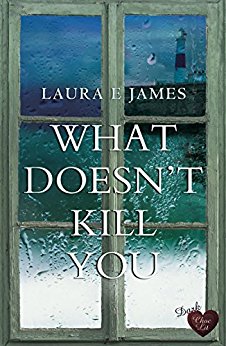
“It’s only recently I’ve converted my way of thinking to writing as a business, so I’m learning and in the process of developing the business model… In its simplest form: keep writing, keep engaging, and keep building my readership.” Laura E James

On diversification:

“I give talks about my writing to groups such as the Women’s Institute and to libraries. Sometimes I’m paid for the talks but they all give me an opportunity to sell paperback copies and also to collect email addresses of readers interested in hearing when my next book is out. I’d like to grow this side of the business in order to get a better return on the amount of preparation required to devise a talk.” Sally Jenkins

“I don’t have a formal business model, but writing full-time has given me the opportunity to take on different projects and I am now beginning to earn from a wider source than book sales. Writing short stories for magazines is a good way to supplement income and I have also taught a ‘writing a novel’ day course.” Heidi Swain

And the final word:

“Keep writing. Be flexible. Be aware of the market. Be dedicated.” Karen King

In 2018 The Business of Books is running a new regular feature on best advice from authors and publishing professionals so there will be plenty more great ideas from the world of words.


Find out more about the authors featured above at:
http://www.romanticnovelistsassociation.org/about/author/elaine_everest
https://nikkimooreauthor.wordpress.com/
https://www.barbaracopperthwaite.com/
http://www.drcarolcooper.com/
http://www.lauraejames.co.uk/
https://sally-jenkins.com/
http://heidiswain.blogspot.co.uk/
http://www.karenking.net/

THE BUSINESS OF BOOKS: SECRETS OF SEASONAL SUCCESS – Jane Cable takes a sleigh ride with Sunday Times bestselling author Heidi Swain

How much of your working life does the business of books take up?

The business of books, in one way or another, takes up all of my working life now. Earlier this year I made the leap and gave up the day job to write full-time. I had been gradually cutting down my hours, but going out to work two days a week meant compromising time at the keyboard. I was increasingly feeling that I was spinning one plate too many and something had to give. Nonetheless it was a difficult decision because I loved my job, but following my heart has been the right thing to do.

Now I can write from six thirty to lunchtime and work on guest posts, blogging and interviews in the afternoons. It’s a much better balance all round.


What’s your business model to earn a living from writing?

I don’t have a formal business model, but writing full-time has given me the opportunity to take on different projects and I am now beginning to earn from a wider source than book sales. Writing short stories for magazines is a good way to supplement income and I have also taught a ‘writing a novel’ day course. That said, I’m not poised to order the diamond shoes just yet and my priority is, and always will be, focusing on writing novels readers love.

What do you write and what do you consider to be your major successes?

I write commercial fiction for Simon and Schuster, although I prefer the term ‘feel good fiction’. I want my readers to feel whisked away to the fictitious town of Wynbridge as soon as they sit down with the book.

I feel very fortunate to have readers getting in touch every day to tell me how much they love Wynbridge and want to live there, or that they have purchased my book to take on holiday or to give as a Christmas present. For me personally, those messages and tweets are all major successes. What could be more flattering than a reader loving what you have written so much that they take time out of their day to tell you?

I’m also very proud of my two Christmas books. Mince Pies and Mistletoe at The Christmas Market was my winter 2016 release and having listened to readers and friends who had been disappointed by novels which featured ‘Christmas’ in the title but barely covered it in the book, I was determined to pack my pages full of festive feeling. Looking at the response it definitely worked and it wasn’t far into January before my editor called asking if I would consider writing another one!

Needless to say I jumped at the chance. I already had the beautiful setting of Wynthorpe Hall in mind and got to work straightaway. The result was Sleigh Rides and Silver Bells at The Christmas Fair which was published in October and again, I’ve crammed in as much cinnamon and spice as possible.


Tell me about your latest project.

I’m now working on my sixth novel which will be released next summer. This one features a Wynbridge resident who isn’t living in the town, but don’t panic. I’m planning for her to visit her friends and family at least twice so there’ll be plenty of opportunities to catch up with the girls from The Cherry Tree Café and The Mermaid Pub.

Thank you Jane for inviting me to feature today and I may take this opportunity to wish you all a very merry Christmas!


Since my interview with Heidi Sleigh Rides and Silver Bells at The Christmas Fair has taken the Sunday Times bestseller list by storm and just has to be this year’s most successful seasonal romance. Heidi lives in Norfolk with her wonderful family and a mischievous cat called Storm. Find out more about her here: Website: http://www.heidiswain.co.uk/


THE BUSINESS OF BOOKS: IGNORING NOVEMBER – Jane Cable considers NaNoWriMo

I have to admit to being a NaNoWriMo sceptic. Even their slogan – the world needs your novel – raises a wry smile. Does it? Really? Given the size of the ‘to be read’ piles of just about everyone I know, it probably doesn’t.

But this year – the scheme’s 19th – I couldn’t ignore it. Writers I respect are taking part so was I missing something? The goal is to write a 50,000 word novel in 30 days with help, support and motivation from the calculators and community on the NaNoWriMo website.

A better slogan for the programme – and one which has come up more than once in conversations with authors taking part – would be ‘don’t get it right, get it written.’ Now that, I can relate to. As RNA New Writers’ Scheme member and veteran of NaNos since 2014 Jan Baynham says: “In 2014 my attempts to write my first novel were taking an age. When all the publicity for NaNo came around, I thought I’d give it a go and set myself a goal of getting up a couple of hours earlier than normal and to try and write every day. Having NaNo buddies was a wonderful support. Seeing the tally of words written each day was another huge motivator. Apart from checking through what I’d written each day, I left serious editing until after NaNo was over. In 2014, I exceeded the 50,000 word goal by a couple of thousand. Did I make that editing stage harder by just writing non-stop for the whole of November? I don’t know but NaNo was one way for me to complete the initial draft of my first ever novel.”

Fellow RNA NWS member Kirsten Hesketh agrees and is making good progress with her first NaNo: “21 days and 34k words and still going strong. I made about every mistake going with my first book, faffing around, editing as I wrote and spending hours polishing passages that didn’t made it into the final cut. So Nano has been very helpful for getting the bones of my second novel on paper. I particularly like three things about Nano (1) committing to writing each day rather than trying to fit it around everything else and thereby not doing it at all; (2) not vetting as all as I write which I think has made me a braver writer (3) the camaraderie, support and shared purpose.”

The camaraderie point is an important one and typical of the writers I know it’s peer motivation rather than peer pressure. Susanna Bavin, author of The Deserter’s Daughter, a saga published by Allison & Busby, has particularly valued this: “What I have specially enjoyed and appreciated is the companionship of a group of online friends. In the November Nano, you can message your buddies through Nano one at a time, so we all got together via Twitter to share one another’s angst.”

The more I look at NaNo, the more I can see that for some writers support and a target over a limited period of time plays a big part in making it happen. However in 2016 less than 10% of those taking part reached the target. Does that necessarily matter? I leave the last word to Choc Lit author Laura E James: “When I discovered the updates that Nano provide, I smiled. After a couple of days of managing 500 words, as opposed to the 1660 plus required to hit the total, Nano informed me I would finish in January. What did I take from that? The fact I would actually finish. I celebrated. I high-fived my daughter. I’d reached a point where I was in danger of never again completing a project, but to see the statistics in black and white helped restore my faith.”

My thanks go to Jan, Kirsten, Susanna and Laura for sharing their thoughts with me.

janbaynham.blogspot.co.uk
www.susannabavin.co.uk
www.lauraejames.co.uk

THE BUSINESS OF BOOKS: GUILDING THE LILY – Jane Cable meets Book Guild author Sally Jenkins

How much of your working life does the business of books take up?

Around 40% of my working life is spent on writing and writing-related activities. I work for a multinational IT consultancy three days a week which, in theory, leaves two days for the business of books. In reality, domestic trivia eats into those two days but I try to make up that time on a Saturday morning when I can, plus if I’m aiming at a deadline I will squeeze in an hour’s writing before or after the day job.

What’s your business model to earn a living from writing?

Like most writers, I can’t earn a living solely from writing, hence the three days working in IT. The money I earn from writing comes from several sources, some passive, such as royalties (which I’d like to increase!), and some from sources that require active input. My best-selling ebook is Kindle Direct Publishing for Absolute Beginners, which is a guiding hand for writers brand new to e-publishing. Earlier this year I updated the book to include some of Amazon’s latest offerings, such as publishing a paperback through Amazon KDP. I sell the occasional story or filler to women’s magazines (Tip: Take a Break are one of the best payers if you have an anecdote that fits their Letters Page). I give talks about my writing to groups such as the Women’s Institute and to libraries. Sometimes I’m paid for the talks (and if I’m really lucky I get a free dinner as well!) but they all give me an opportunity to sell paperback copies of my first grip-lit thriller Bedsit Three and my bumper Coffee Break Story Collection and also to collect email addresses of readers interested in hearing when my next book is out. I’d like to grow this side of the business in order to get a better return on the amount of preparation required to devise a talk. Recently I’ve also been asked to do Kindle and paperback formatting for writers self-publishing on Amazon for the first time. Currently I restrict this to straightforward text-only books but it might be something I choose to grow in the future if giving up the day job becomes a reality.


What do you write and what do you consider to be your major successes?

Over the last few years I’ve gradually moved from short stories to novels. I write grip-lit (psychological thriller meets commercial women’s fiction) and straight commercial women’s fiction. I was elated when Bedsit Three won the Ian Govan Award and, as a result, the novel was published in e-book and paperback format. Another highpoint was The Book Guild recognising the commercial potential of my second grip-lit novel, The Promise, and offering me a place on their partnership publishing program. The partnership means we both invest in the publication costs and The Book Guild’s marketing arm is behind me, selling into bookshops, generating media publicity etc. We share the royalties. The Promise will be published on 28th January 2018 and I’m very excited!

Tell me about your latest project.

I’m working on my third grip-lit novel. I’m fascinated by how past events can impact our current lives. For example, in Bedsit Three the upbringing of one of the characters drives his destructive behaviour. In The Promise there are serious repercussions for something the heroine did three decades earlier. In my current work-in-progress, the protagonist wants revenge against someone who stole his girlfriend when they were teenagers.


Sally Jenkins writes grip-lit and commercial women’s fiction. She lives with her husband in Sutton Coldfield and has two grown-up daughters. Find out more about Sally and follow her blog at https://sally-jenkins.com/ or follow her on Twitter @sallyjenkinsuk or on Amazon.


The Business of Books: Millions of Thrills – Jane Cable meets USA Today bestselling author Louise Jensen

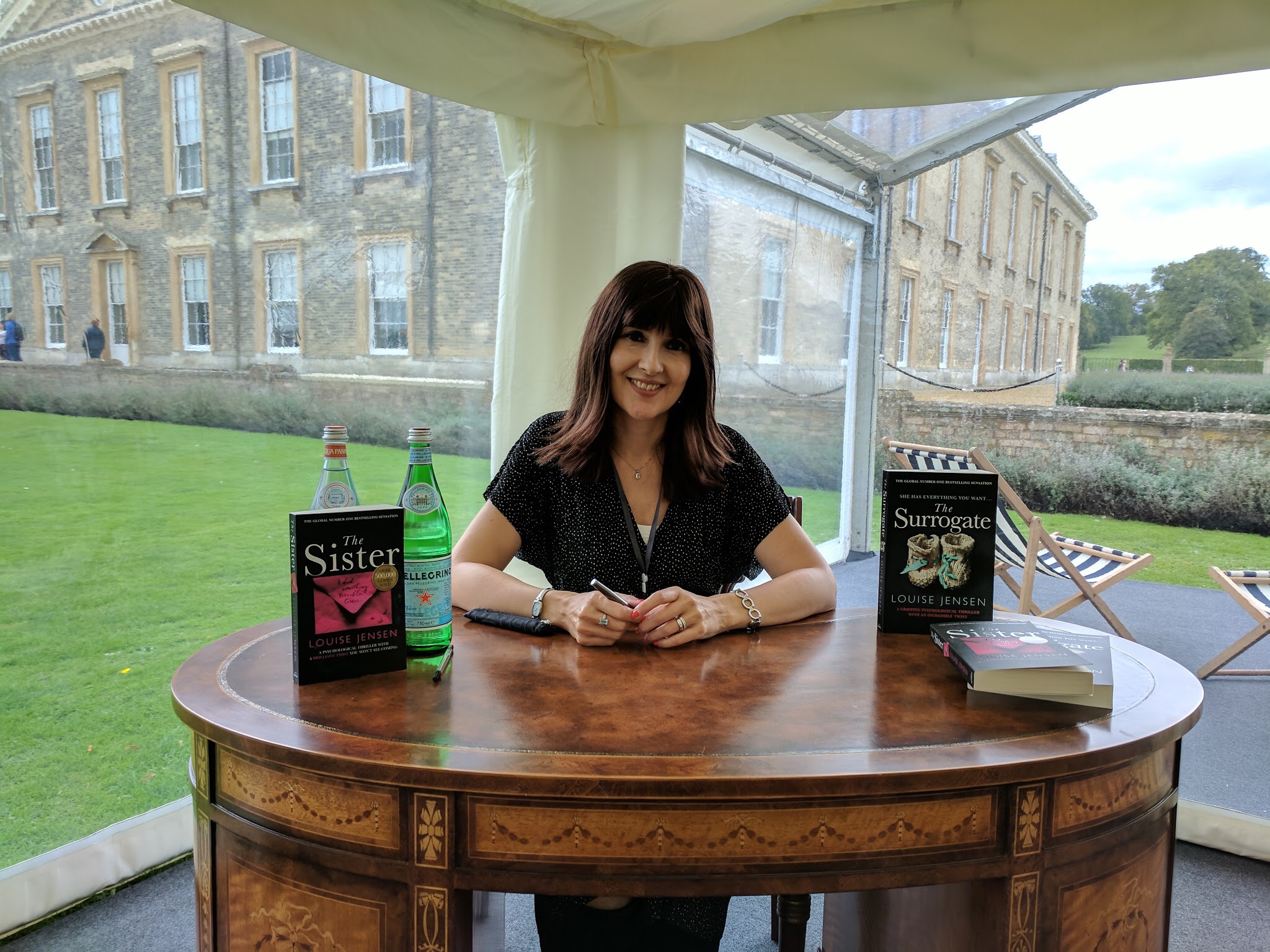
Louise’s first two novels, The Sister and The Gift, were both No.1 bestsellers, and have been sold for translation in sixteen territories. The Sister was nominated for The Goodreads Awards Debut of 2016. The Surrogate is out now.

1) How much of your working life does the business of books take up?

I’m quite structured and tend to work 9-3.15 every day to fit in with school hours. If I’m taking a book through the editing process I come back to my desk after the school run and work through until about 5.30 and I generally work for a part of most weekends too. Writing full time is busier than I’d anticipated. Writing new words is only a fraction of my day. There’s admin, interviews, events not to mention social media and blogging. In all honesty it’s taken me about a year to find my feet and settle into a good routine.


2) What’s your business model to earn a living from writing?

I didn’t have one! I started writing as a hobby but after completing the first draft of The Sister I read it back and realised I had something really special. I sat down with my husband and told him I’d love to work part-time for six months to give me a chance to really polish it and submit to agents and publishers. We went through our finances and realised it would be tight and sat down with the kids and discussed it as a family. Everyone agreed I should at least try. Within six months I’d signed a three book deal and six months after that I was fortunate enough to be in the position to be able to write full time.

3) What do you write and what do you consider to be your major successes?

I write psychological thrillers that also have an emotional thread running through the story line. I adore commercial fiction and thrillers and like to blend genres where I can. I love the feeling of being unnerved one second and then having a lump in my throat the next. I want to take readers through a whole spectrum of emotions when they read my stories.

Both my first two novels, The Sister and The Gift were No. 1 International Bestsellers and USA Today Bestsellers and have been sold for translation to sixteen territories. It really was a dreams come true year. The Sister sold half a million copies within the first six months and I was nominated for the Goodreads Debut Author of 2016 and also for the CWA Daggers New Blood 2017. The Sister spent over a year and a half in the psychological thriller top 100 so far.

Initially I published with Bookouture, a digital imprint of Hachette, but Sphere (Little, Brown) have since acquired paperback rights to my first three books, and a fourth to come next year, and I can’t tell you how exciting it is to walk into a bookshop or supermarket and see my stories on a shelf.


4) Tell me about your latest project.

The Surrogate is newly released and is the story of Kat and Nick who are desperate to be parents. They’ve almost given up hope when Kat runs into Lisa, her childhood best friend, who offers to act as a surrogate.

Kat’s longing to be a mother makes this book an emotional read, but the layers to all the characters also make this the darkest book I’ve ever written. Everyone has a secret!

I had such fun writing this story. There was no planning involved and there were so many twists and turns each day was an adventure. The ending completely took me by surprise and made me gasp out loud and so far, no reader has figured it out either, despite the clues I went back and planted.


At the time of publication The Surrogate is featured in a special promotion where the eBook is £0.99/$1.31 across all digital platforms for the next week. You can buy from Amazon here.

You can also find Louise at www.louisejensen.co.uk where she regularly blogs flash fiction and writing tips, and she also spends far too much time over on Twitter.


The Business of Books: Fiction, Friends and New Beginnings – Choc Lit’s latest signing Carol Thomas takes over!

I’d like to start this post by saying thank you to my fellow Chindi Author and friend Jane Cable for inviting me along to share the experience of getting my first publishing contract. She has left me to it, so I am titling this piece Fiction, Friends and New Beginnings and dedicating it to Jane.

This week, I have been delighted to announce that my next novel, currently titled Regret Me Not, will be published by Ruby Fiction – a new imprint of the award-winning independent publishers Choc Lit.

The deal came as a result of attending a Choc Lit live event and pitching to an editor in May 2017. I had never imagined pitching face to face, and probably never would have, had it not been for a conversation Jane and I had just weeks before.

Jane had read my debut novel, Crazy Over You, and said my writing style was well suited to Choc Lit. She told me (in a lovely polite Jane way) I should stop thinking about it and get on and submit to them. With her words in mind, I put my name down for a pitch slot. I then spent a week researching how to pitch, preparing what to say and generally panicking.

I needn’t have worried. Jane accompanied me to the event and shared a fortifying tea and cake before the pitch. The live event was great, and the authors were lovely, as I knew they would be. I have followed Choc Lit for several years and have enjoyed meeting the authors and building online relationships with them since the start of my writing journey. And Choc Lit editor, Lusana Taylor, quickly put my nerves to rest and got me chatting about my book and online presence. At the end of my session, Lusana requested I send my manuscript into the Choc Lit tasting panel (a panel of readers who give feedback before publishing decisions are made).

Three months later I got a call from Lyn Vernham, director of Choc Lit, who said they wanted to moveforward with publishing my book and that it would be one of the first books to be published under the new imprint, Ruby Fiction. I signed my contract a week later.

And so exciting times are ahead. I am told the title of my novel will change, and I await the first glimpse of the cover. All of which is new to me; as a previously self-published author, I have made my own decisions about titles and used my own illustrator for covers. I am keen to see how the publisher and the cover designer will interpret my book and I can’t wait to be able to share it.

I am thrilled to be starting this new phase of my writing journey with Ruby Fiction – along with Angela Barton and Caroline James who have also recently been signed.

I know that as I begin promoting my book, I will have the support of the fantastic team of Choc Lit authors whose online response to Ruby Fiction has been warm and welcoming, the support of my new Ruby Fiction family and, of course, my fellow Chindi Authors by my side. Without Jane Cable’s friendly nudge in the right direction (that’s the polite way to put it), I might have missed this great opportunity. New beginnings are exciting, but even more so when you have good people by your side. Thank you Jane x


To follow Carol Thomas’ journey to publication visit:

www.carol-thomas.co.uk

http://facebook.com/carolthomasauthor

http://twitter.com/carol_thomas2

www.chindi-authors.co.uk