SISTER SCRIBES: JANE CABLE ON A VERY PERSONAL TRIBUTE

The morning my mother died she asked me to tell her about the next book I would write. I said I had an idea about an archaeologist alone under Lincolnshire’s vast skies and she approved. True, the outline was a little different then, but Rachel and her story still caught her imagination.

It seemed only right, then, to include a character based on my mother in Endless Skies; an intelligent, perceptive octogenarian with a keen interest in people and a huge sense of fun. I called her Esther, the name on my grandmother’s birth certificate that she never used.

Even Esther’s physical attributes were the same as my mum’s. The platinum bob, the pearl handled walking stick and the desperately poor eyesight. But in the early drafts Esther had a very different life story, although I drew great comfort from Rachel’s growing friendship with her.

Without my mother’s faith and encouragement I can honestly say I would never have had a book published. She read my embryonic attempts at novel writing and gave constructive criticism – despite my father being the writer in the family – he never really understood romantic fiction and just seemed slightly puzzled by the whole thing. But Mum egged me on, and when she thought I had a strong enough book suggested I enter The Alan Titchmarsh Show’s People’s Novelist competition. I am absolutely sure it was one of her proudest moments when I reached the final and I just wish she could have travelled to London to see it with her own eyes.

She was also a huge influence on what I write. She devoured library books (large print in her latter years) and used to get very fed up with what she’d call ‘boy meets girl, they fall out three times then get married’ formulaic romances. As a reader she wanted so much more. What neither of us realised was that at the time it would have been far easier for me to find a publisher had I been closer to the mainstream in my chosen genre.

As a result she didn’t live long enough to see my first publishing deal, but I have a feeling she knows. I think she would have been really proud of Another You and would have enjoyed reading it. Endless Skies became a companion piece – my second book with Sapere – both contemporary romances looking back to World War Two.

It was when I made the decision to rewrite Endless Skies this way my mother’s wartime experience came into its own. Or rather one pivotal point she shares with Esther. Both were bright grammar schools girls living in rural communities who could no longer safely travel to school because of the bombing. My mother spent a terrifying air raid trapped on a train in a siding in the middle of Cardiff and her parents said ‘never again’.

While my mother went into the civil service at fourteen (not much older than she was in this picture), Esther’s only local option was a job in the laundry at the RAF base just outside her village. This was home to two squadrons of brave and often reckless Polish airmen, and Esther could only stand by and watch as the most tender and poignant love story unfolded in front of her eyes. A story which, seventy years later, had the power to change Rachel’s life.

Remember the days of penpals … They can be here again: says Natalie Jayne Peeke, West Country Correspondent


So, with everything that has been happening these past few months, I like many many others found myself housebound with no one for company except my darling children and my other half. For the first few weeks of the lockdown this was absolutely fine, I would video call my parents and grandparents daily and once a week would have a family quiz with my parents, siblings and their families, it was always great fun. However, I started to crave new conversations with new people, so I found a group on Facebook for Pen pals and I thought why not?

This group caters for everyone, everywhere. I put up a “about me” post to see if anyone would be interested in being my pen pal. I was delighted at the responses that I received. 3 months on I have pen pals in America, Germany, Italy, Poland, France and Australia. It has been fantastic to get to know other people and build friendships with them. One of my pen pals even threw a party for my daughters 5th birthday which we celebrated during lock down. My daughter loved the fact that an amazing lady and her family were celebrating with us all the way from America.

I have also learnt a lot about other countries and their cultures it truly is fascinating. I write to a wide range of women some are older than me, some are younger, some are parents, others aren’t, it doesn’t matter as we all have one thing in common- we love to write letters, it’s as simple as that.

I have also discovered another Facebook page which asks for people to write to residents in care homes in America, each resident holds up a piece of paper with their name and their interests and you simply choose who you would like to write to. The fact that someone cares enough to take the time out of their day to write a letter to them means the absolute world. And I believe I speak for all pen pallers when I say that receiving a letter truly does help battle the isolation the coronavirus has thrust upon us.
It has been said that this is the worst crisis since world war 2 and I believe that at times like this we see the very best of each other. This pandemic is something that our grandchildren will learn about and I would like to think that they will learn how we came together and helped one another even if it was just by sending something as simple as a letter.

Links:

To write  to the elderly

To find penpals from all over the world

ABC Diagnosis: Support For All Affected By Primary And Secondary Breast Cancer – A Very Important Book – by Dr Kathleen Thompson

This book is simply brilliant, and I don’t say so lightly.

Let me introduce its creator – Jo Taylor. Jo got breast cancer at 38 yrs old. Despite a full whack of treatments, her breast cancer returned. Secondary breast cancer (SBC) – when the cancer comes back – is currently considered incurable and thus very scary. You’d think that dealing with the emotional and physical effects, the very uncertain future, caring for a young family and juggling 3 weekly anti-cancer treatment cycles (for ever), plus several major operations, would be more than enough balls to keep in the air. But not for Jo. Since her diagnosis, she’s worked tirelessly to create a fantastic supportive website; campaigned relentlessly for more research (despite an estimated 35,000 women living with SBC in UK there are scant new treatments); set up, and runs, exercise retreats on Saddleworth Moor (exercise benefits both quality of life and survival); and co-founded BCCWW Twitter group and Met Up UK. This is just a flavour of Jo’s activities, all focused on helping current and improving future prospects for the growing numbers living with SBC. So maybe it’s no surprise that now she’s produced a book.

Whilst writing my own breast cancer help book, I was conscious that people needed to absorb copious complicated information to help them make critically important treatment decisions, whilst still in a state of shock. So what really struck me about the ABC Diagnosis book is, it’s concise, easy to read and yet contains a massive amount of key information, mainly imparted in one-page stories written by patients. Each patient gives a different aspect of breast cancer eg the (sometimes very young) women, who’ve been through treatment and regained a normal active life, either cancer-‘free’ or with SBC or those whose cancer propelled them into starting charities, or cancer-related businesses. But not all are superheroes – there are ordinary folk too, just getting through a pretty lousy deal, and showing that you can too. And let’s not forget men get breast cancer – they’re also featured. There’s a good chance any reader will find a story that resonates – showing they’re not alone, and they’ll absorb important information through the stories. Some will make you weep, but all provide hope and knowledge. Friends and family will learn from them too. Intermingled with the stories are one-pager information on numerous important topics – explaining the types of breast cancer, the treatments, side-effects, employment rights, complementary therapies, research, clinical trials, plus numerous resources – travel insurance, charity resources, books, support groups and much more.

So where do you get this book? Well follow this link, and guess what, it’s free. ABC Diagnosis can only continue this work with donations, so whilst ordering your book, check out the rest of this brilliant website and also consider donating through the Just-Giving page.

By Dr K Thompson, author of From Both Ends of the Stethoscope: Getting through breast cancer – by a doctor who knows 

http://www.amazon.co.uk/dp/B01A7DM42Q http://www.amazon.com/dp/B01A7DM42Q

http://faitobooks.co.uk

Note: These articles express personal views. No warranty is made as to the accuracy or completeness of information given and you should always consult a doctor if you need medical advice.

Make Great Art On Your iPad Book Review

When I was a child I loved to draw and would do it for hours. I have found it hard to continue to be an artist since I have become a mother. I never have the time nor the energy. I was excited when I saw Make Great Art on your iPad. I spent time on my iPad of course. It seemed the easiest way to get back to who I used to be.

This book tells you everything you could possible want to know, along with things you would never have thought to ask.  It is easy-to-read and to learn. It has all of the tips, tools and tricks you need. I highly recommend it.

Fully revised to reflect the latest updates in the most popular creativity apps, this is the original, best-selling guide to using creative apps on your Apple device to produce your very own masterpieces.

Artists like David Hockney have taken to creating art on the iPad, but you don’t have to be an artist to achieve great results on your device. This refreshingly accessible book is perfect for skilled artists and creative wannabes alike.

Alongside the step-by-step projects that teach the fundamentals of digital painting, there are also some easy and fun artistic tricks that anyone can try. You’ll master the most popular art apps, and you will learn new painting and drawing skills along the way.

Includes advice on using Procreate, ArtRage, Art Studio for iPad, Adobe Photoshop Sketch, Pen & Ink, Brushes and Tayasui Sketches Pro.

Make Great Art On Your iPad is available here.

SISTER SCRIBES: CASS GRAFTON ON AN UNEXPECTED LITERARY CONNECTION

Living in Switzerland for the past six years, we’ve been fortunate enough to visit some wonderful locations, many with literary connections.

For example, JRR Tolkien made a trip to Switzerland in 1911 and took inspiration from the scenery to create the settings for some scenes in The Hobbit and the Lord of the Rings trilogy. His journey took him to many iconic locations, including Zermatt—home to the Matterhorn—and Lauterbrunnen, a verdant and picturesque valley with over 70 waterfalls.

The author wrote to his son, Michael, in 1967: I am delighted that you have made the acquaintance of Switzerland, and of the very part that I once knew best and which had the deepest effect on me. The hobbit’s journey from Rivendell to the other side of the Misty Mountains, including the glissade down the slithering stones into the pine woods, is based on my adventures in 1911.

This is not the only Tolkien connection with the country. The unique Greisinger Museum in the village of Jenins is dedicated entirely to Middle-earth and contains unique artefacts, art, literature and collectors’ items, and you enter through a door into a hobbit hole!

Not far from Lauterbrunnen is another place with a literary connection: Meiringen. The town is in a beautiful valley and is famous for the stunning Reichenbach Falls, portrayed by Sir Arthur Conan Doyle in his Sherlock Holmes’ novel, The Final Solution.

These were not unexpected literary connections, however, being popular tourist destinations.

One of our early discoveries was idyllic Weggis, a small resort town lying on the shores of Lake Luzern and at the foot of Mount Rigi (known as the Queen of the Mountains) from whose summit there are stunning views of the lake and a spectacular vista of the Alps.

Modern day visitors take a train to the summit, but before the Victorians constructed this cogwheel mountain railway (the first of its type in Europe, opening in 1871), wealthy people travelled up Rigi by sedan chair. The mind boggles!

Weggis is such a beautiful place. The water is a deep, aqua blue, almost transparent by the shoreline, and the mountains across the water stand out starkly from it, glowing in the bright summer sun or wearing snowy caps in winter. There is an ethereal light gently embracing the rocky outcrops at all times of year; a light that changes with the seasons. Being there is like taking a deep breath of fresh air, bringing a sense of calm, of escape from the everyday world.

Imagine my surprise, however, to discover that American author, Mark Twain, had also visited the little-known town of Weggis and felt very much the same. In 1897 he wrote: This is the charmingest place we have ever lived in for repose and restfulness, superb scenery whose beauty undergoes a perpetual change from one miracle to another, yet never runs short of fresh surprises and new inventions.

I do, of course, take some words attributed to Mark Twain with a grain of salt. He is famously quoted as saying of Jane Austen, ‘Everytime I read ‘Pride and Prejudice’ I want to dig her up and beat her over the skull with her own shin-bone.

Anyone professing such strong feelings against a book, yet continually attempting to re-read it, must be considered a bit of a contradiction! Jane Austen, I’m sure, would have been excessively diverted, and talking of diversions, it’s time I went off to look at the diary in readiness for booking another trip to Weggis.

Sources: MySwitzerland.com, The Letters of JRR Tolkien and Mark Twain – A Biography by Albert Bigelow Paine


Three books for you to enjoy: reviewed by Annie Clarke


The Gypsy Bride by Katie Hutton, pub. Zaffre in pb, eBook and audio

This is a cross-cultural love story written with warmth and drama. Ellen is the granddaughter of  Methodist preacher and intends to marry Charlie, from her own village. But Charlie is killed in the 1st World War.

Fortunately Ellen meets Sam Loveridge, from a local Gypsy community. Such a heady moment, such excitement, which becomes passion and true love.

But how does this ‘sit’ in a Methodist community? Ah well, read and see.

The Devil you Know by Emma Kavanagh, pub by Orion in pb, eBook and audio.

A different kettle of fish altogether as good girl Rosa Fisher, who is halfway through her PhD, is in her house, alone, when she hears an intruder on the stairs. Arghh. Who hasn’t thought they have heard someone: the heart stops, fear freezes you, but then there is no-one there.

But what if it IS someone? Who is he? What does he want? Well, he’s after someone else that opens a window on Rosa’s life.  Now, she goes back in time, to her origins, and her ‘goodness’.

Full of pace, twists and written with grit. Clever, and great characters.

The Path to the Sea by Liz Fenwick, pub HQ. pb, eBook and audio.

Such an evocative title, and great jacket but set on the Cornish coast, how could it not be.

Boskenna, the imposing house on the Cornish cliffs which means something different to each of the Trewin women. Joan found it a paradise back in the 60s when she and her husband could be away from their normal world, but did they escape into happiness?

Diana is Joan’s daughter,  looking for the happiness of her childhood, symbolised by Boskenna, but was it really happy?

Then there’s Lottie, in disarray, heading for Boskenna escaping her life, in an echo of her parents, but how will the return end?

There they are, all three together. Time for the lid to be lifted on the past. Will their relationship survive?

Warm, evocative, you can taste the salt on your lips, feel the breeze in your hair as Liz Fenwick weaves her magic.

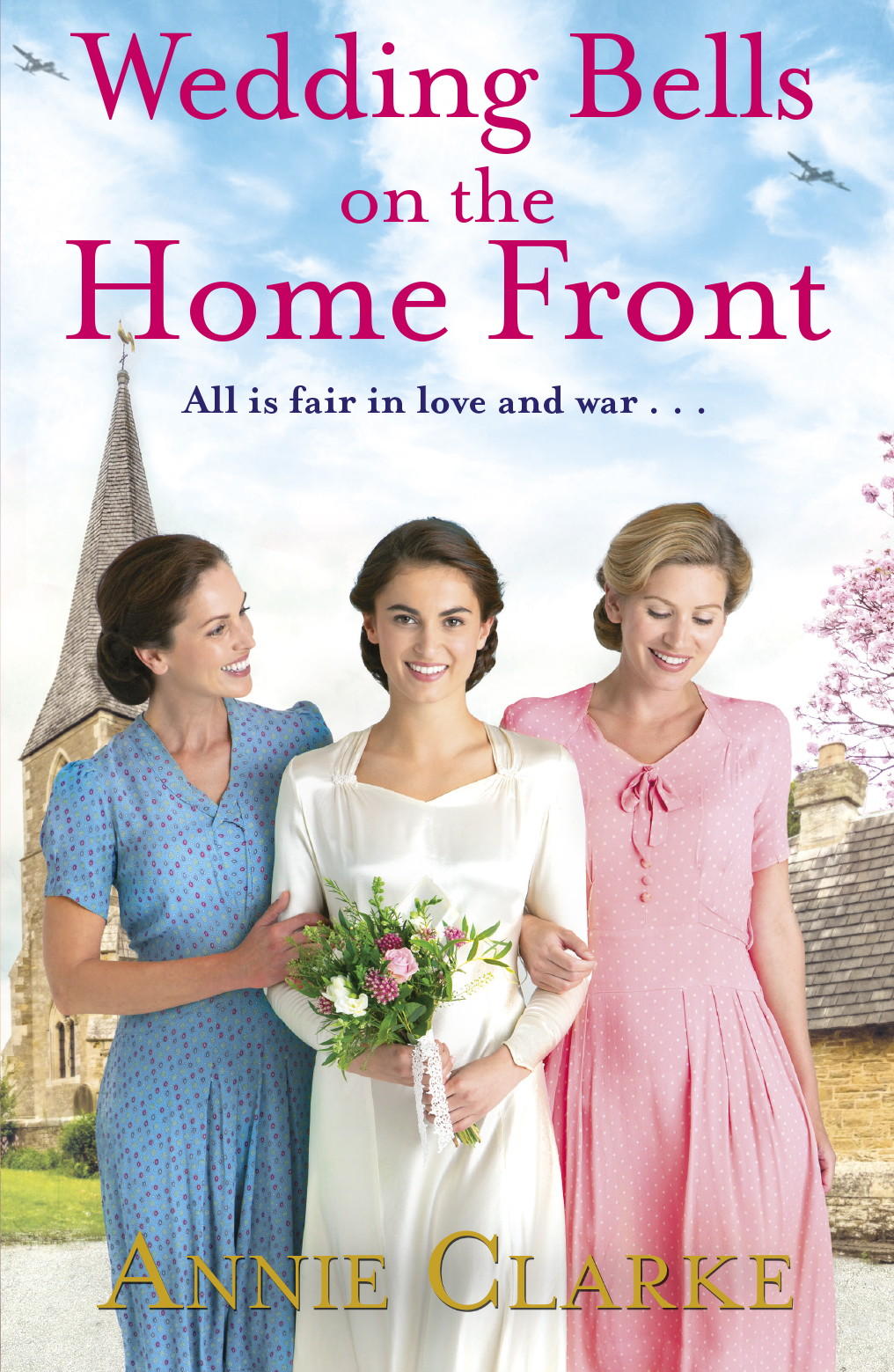
Annie Clarke is the author the Home Front Girls series.


My Writing Process Stephen Deutsch

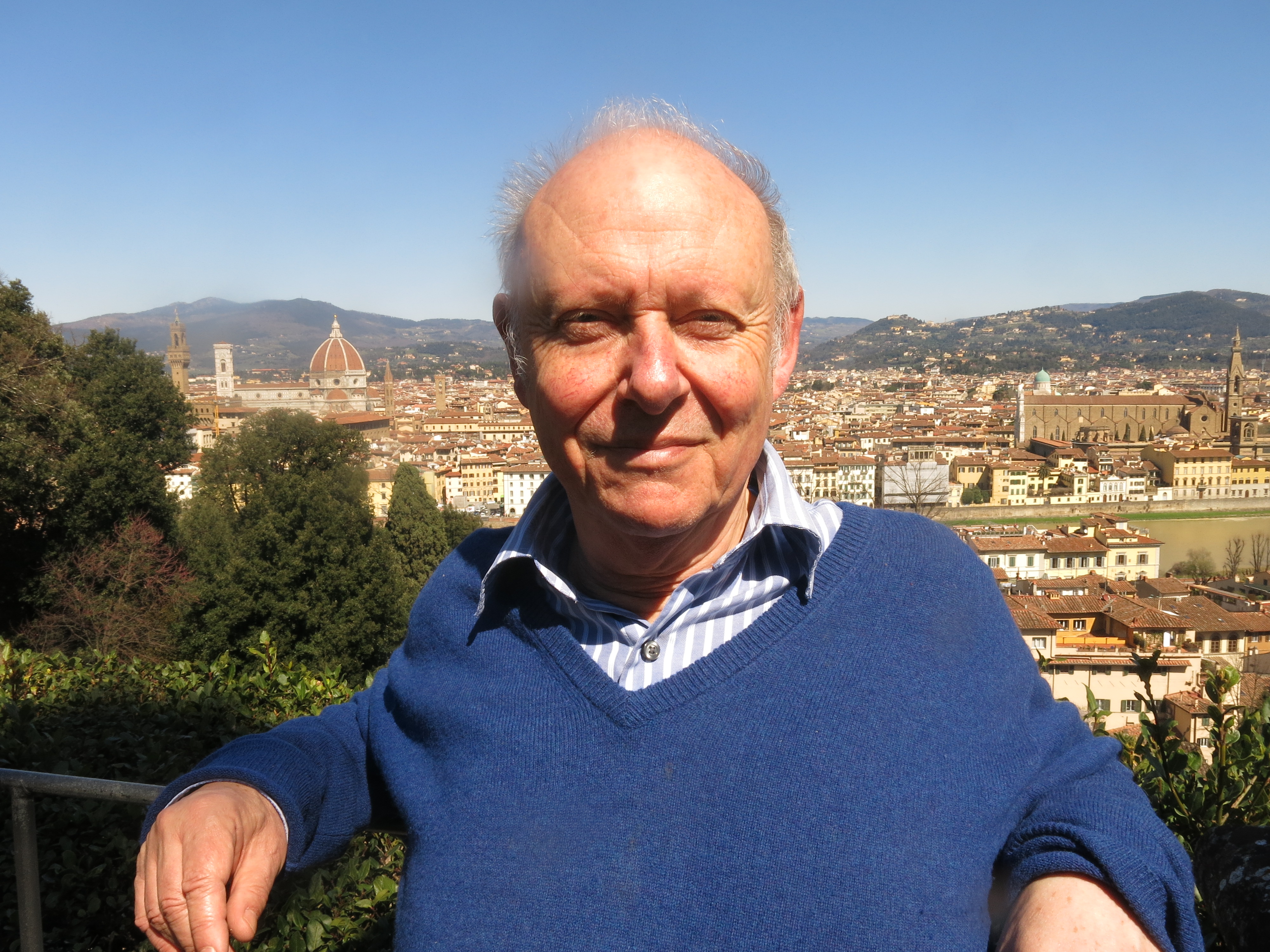
Stephen Deutsch, author, writerI was born in New York, but have been living in Britain for fifty years! The first part of my career was spent as a pianist, composer and conductor.  Many of my works have been broadcast on the BBC, especially as scores for their Classic Serial, but that was some time ago. I live in Dorset with my wife and her garden.

What you have written, past and present.

A late arrival to novels, I had previously written TV plays, some of which were broadcast on the BBC. My first novel, Zweck, a historical comedy about music, was published four years ago. It concerns a fictitious nonagenarian composer who knew everyone and hated most of them. In this novel, the main characters are fictitious but everyone else is real. It is set in the 1970s.

What you are promoting now. 

My most recent novel, Champion, is a true story, a novel of persecution and heroism during the Second World War. It is based on the stories of two men from different worlds, both struggling in the febrile atmosphere of Nazi Dominated Europe. 

The first is Herschel Grynszpan, dark haired, slight, with deep-set eyes. He is an undocumented Jewish adolescent living in Paris. He receives a postcard from his parents – recently bundled from their Hanover flat, put on a train and dumped, with 12,000 others, on the Polish border. Enraged, Herschel buys a gun and murders a minor official in the German Embassy.  The repercussions trigger Kristalnacht, the nationwide pogrom against the Jews in Germany and Austria, a calamity which some have called ‘the opening act of the Holocaust’.

Intertwined is the parallel life of the German boxer, Max Schmeling, who as a result of his victory over the ‘invincible’ Joe Louis in 1936, became a poster boy of the Nazis. He and his movie-star wife, Anny Ondra, were feted by the regime – tea with Hitler, a passage on the Hindenburg – until his brutal two-minute beating in the rematch with Louis less than two years later. His story reaches a climax during Kristalnacht, where the champion performs an act of quiet heroism.

A bit about your process of writing. 

I try to write every day. Usually I write in the morning and revise in the afternoon (often something I had written some days before – one chapter might be revised several times, even in the first draft).  I try to read every word out loud, to get the sense of the rhythm of the words. This is especially true for dialogue, which I really enjoy writing. You can tell so much about a character by the slight variations in their speech patterns, not the ums and ahs, but the choice and order of the words they use. I like to feel that when the book is finished, I had written, read and weighed every word.

Do you plan or just write?

Both.  I normally have a plan, but once that scaffolding is in place, I let the characters do the writing themselves. It depends on the story.  In Champion, the events unfold as they actually happened, so I didn’t need to work out a plot structure. In the historical novel I am now writing, Dallas, fictional characters set in a real historical time and place, The structure is fluid, but to some extent needs to fit into the chronology of actual events. It isn’t set at the time of Kennedy’s assassination – I was at the parade, but didn’t witness the shooting. A story for another time.

What about word count?

Horses for courses, really. Zweck  was a heavyweight, coming it at 120,000 words. Champion is leaner and meaner, only 80,000 words.

What do you find hard about writing?

Starting.  It is a new problem every day. It’s easier to encourage myself to edit a previous chapter than to begin a new one. There are various subterfuges and helpers I can use to get started.  Dictating some random thoughts onto a recorder can grease the wheels. A blank page is less terrifying if it contains even the smallest thought, the shortest sentence.  Then you feel like going on. I also use a software package called ‘Scrivener’. This allows me to enter text, import web pages, and most importantly, to see and change the shape of the entire book as it develops.

What do you love about writing? 

Almost everything.  Each book, each situation teaches me new things. And of course the internet makes researching both pleasurable and far less tedious than it used to be – especially as I don’t live in a large urban area with libraries, etc., at my disposal. Sometimes, when researching a particular item, I accidentally find something else, which can liven up what I am writing. And the act of writing itself, passing the time with my characters, is immensely pleasurable.

Advice for other writers. 

Whatever your style or genre, literary fiction or mass market romances, my advice is always to write as well as you can. Write every word. Spot clichés and either remove them, or turn them on their heads. For example, ‘You make a happy man very old’ is a great twist on a sclerotic saying. The best advice I can give is to enjoy what you are doing, do it every day, and while doing it forget everything else.


In the Corridor of a College Lodgings. A Poem By Annie Clarke | Uplifting Stories


Who’s this?’ the lecturer asked my daughter.
She said, all bare midriff with tattoo peeping,
‘Only Mum. She’s carrying my plants,
helping to move me in.’
‘Hello, Mum,’ he said, not looking just brushing
the leaves as he passed.
It was a plant my daughter felt would make her room
look familiar, lived in. ‘Like you,’ she’d joked.
At her doorway I placed it in her arms,
but it was his bustling back I watched.
He turned this way and that
distributing greetings to other beasts of burden.
Not waiting for their replies, either.
I called, too loud perhaps. ‘My name is Margaret.
I usually wear stiletto shoes, and pink jackets,
when not camouflaged as a removal man.
I cycled off road across harsh terrain for charity. If you’d looked
You’d have seen highlights in my hair.
I belly dance and have a name.
My name, again, is Margaret.

‘Way to go, Mum,’ my daughter whooped
Up and down the corridor’s length and breadth
Plants and CD players were handed over.
Students were kissed with love. And left.
‘Yes, we have names,’ we all said.
As thoughts of achievements big and small
lent wings to trainers. ‘And places to go. And
lives to live.
Fashion statements to make, and parameters to break.

‘Goodbye, lecturer,’ we smiled, as we passed by.