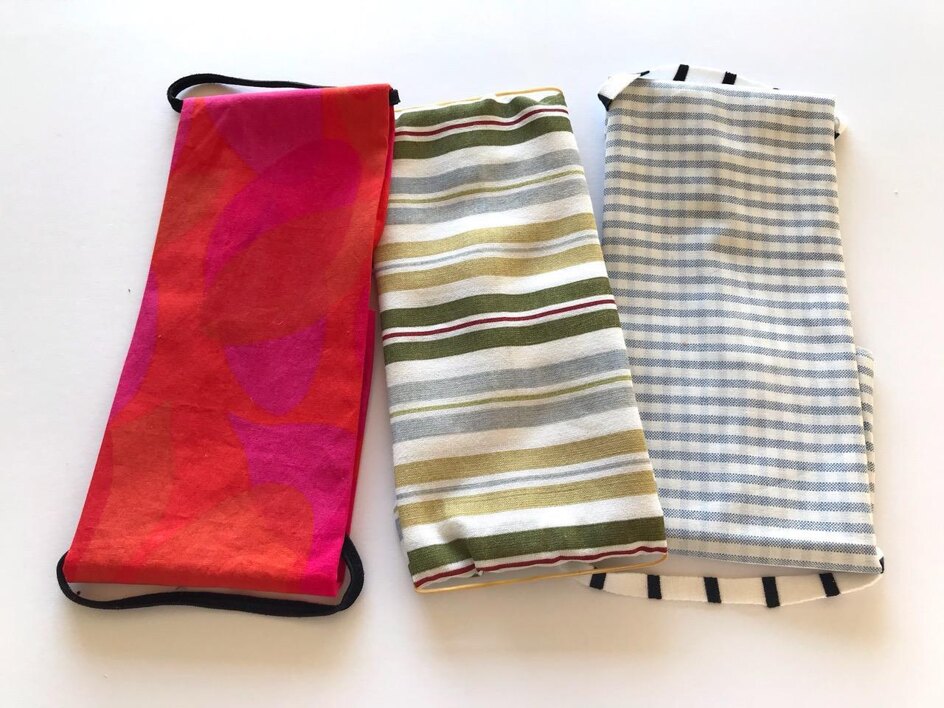
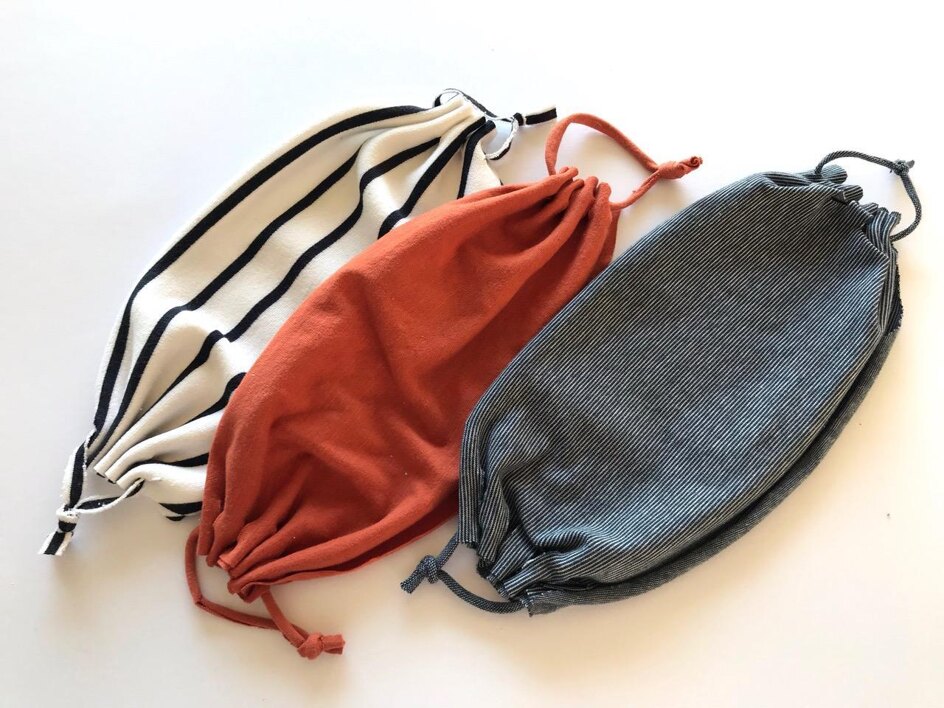
Thanks to the amazing lovecrafts.com for these tutorials.
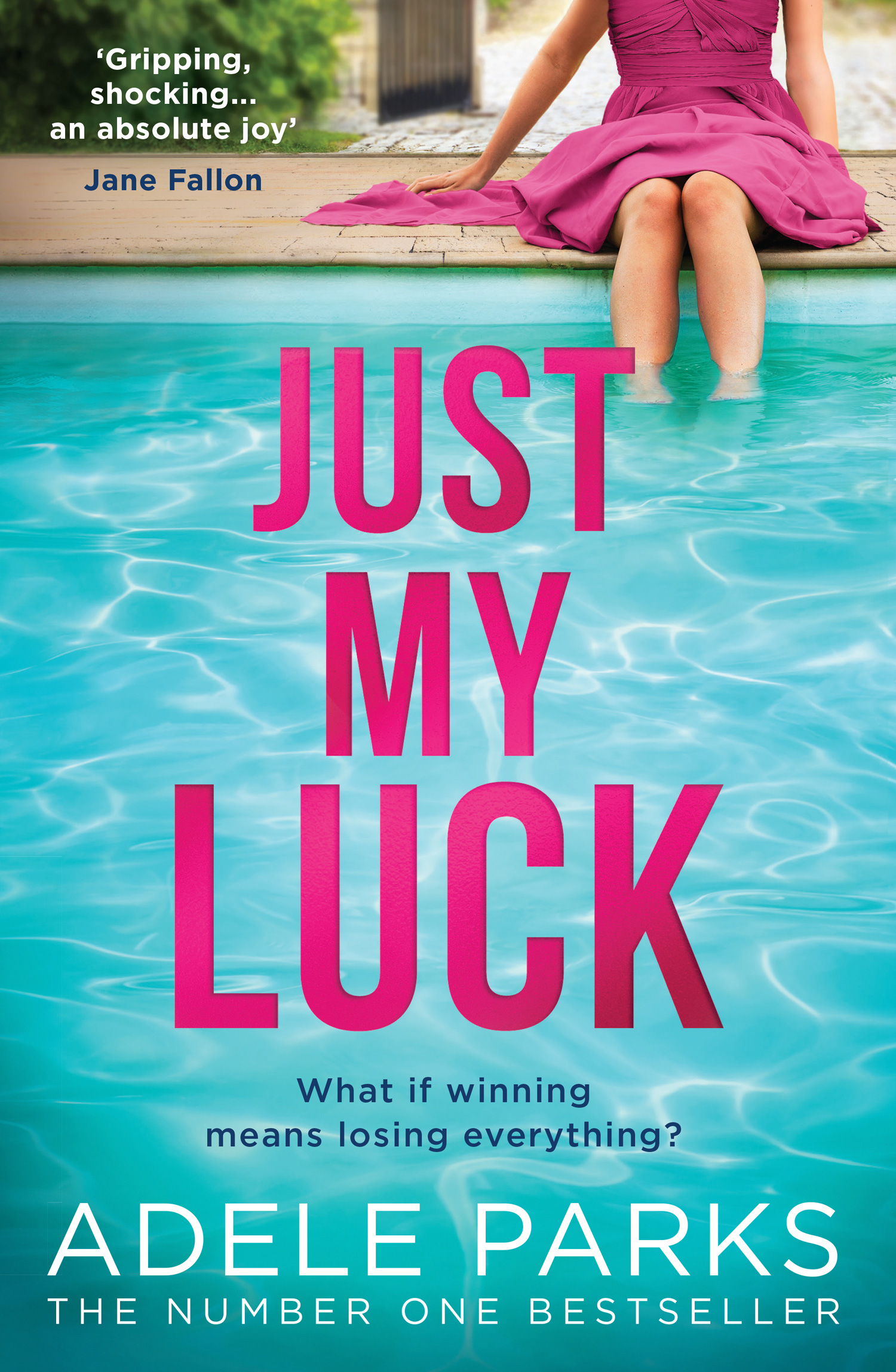
I have loved Adele Parks’ books for years now. Which is handy, as she writes one a year and has done for the past twenty years. Impressive.
Just My luck is another triumph. It has a great premise which is beautifully executed. We have all dreamt of winning the lottery. This book explores what happens when people become rich beyond their wildest dreams. It may be a novel, but it is a cautionary tale that money does not buy happiness. I loved the characters, even the ones I was loving to hate. The twists at the end are hugely satisfying. I find Adele Parks is an expert at picking up on the beautiful details of life, as she is at finding the complexities of the human character. Just My luck is the perfect escapist novel that will leave you hooked until the very last page.
It’s the stuff dreams are made of – a lottery win so big, it changes everything.
For fifteen years, Lexi and Jake have played the same six numbers with their friends, the Pearsons and the Heathcotes. Over dinner parties, fish & chip suppers and summer barbecues, they’ve discussed the important stuff – the kids, marriages, jobs and houses – and they’ve laughed off their disappointment when they failed to win anything more than a tenner.
But then, one Saturday night, the unthinkable happens. There’s a rift in the group. Someone doesn’t tell the truth. And soon after, six numbers come up which change everything forever.
Lexi and Jake have a ticket worth £18 million. And their friends are determined to claim a share of it.
Sunday Times Number One bestseller Adele Parks returns with a riveting look at the dark side of wealth in this gripping take on friendship, money and betrayal, and good luck gone bad…

Actress Phina Oruche whose show Identity Crisis was a hit at the Edinburgh Fringe and on UK tour, has graced our screens for years – and now she has turned her hand to storytelling.
During the Covid-19 crisis, Oruche has been learning to home-school and find creative ways to teach and motivate her son. The result is her debut children’s book, Jacopo Jacopo Football Star.
Writing in response to the challenges faced by many parents during the Covid-19 lockdown, she’s created an accessible and fun read for children.
Jacopo Jacopo follows a mixed heritage 10-year-old boy on his journey from grassroots football to signing with a Premier League team. This is an endearing story about a dream, a fragile family, and friendships while getting your game on. A native of Liverpool, Oruche brings to life this incredible city in her new book. Locals can see themselves and their city in this inspiring story which accurately and invitingly presents Liverpudlian culture to a wider audience.
Penning a story about one boy’s footballing journey, Oruche aims to motivate children, particularly young boys, to read more now and in the future. Phina Oruche comments, I love reading and books and the flight of the word imagined. Stories have changed my life, kept me company and everything in between. I would love to foster a love of reading real books in my son and other children. I would much prefer the glow of a night light and a cheeky read than a hidden screen any night of the week.
Jacopo Jacopo Football Star Writer Phina Oruche Age Guidance 7+
Annie Clarke is the author of Wedding Bells on the Home Front
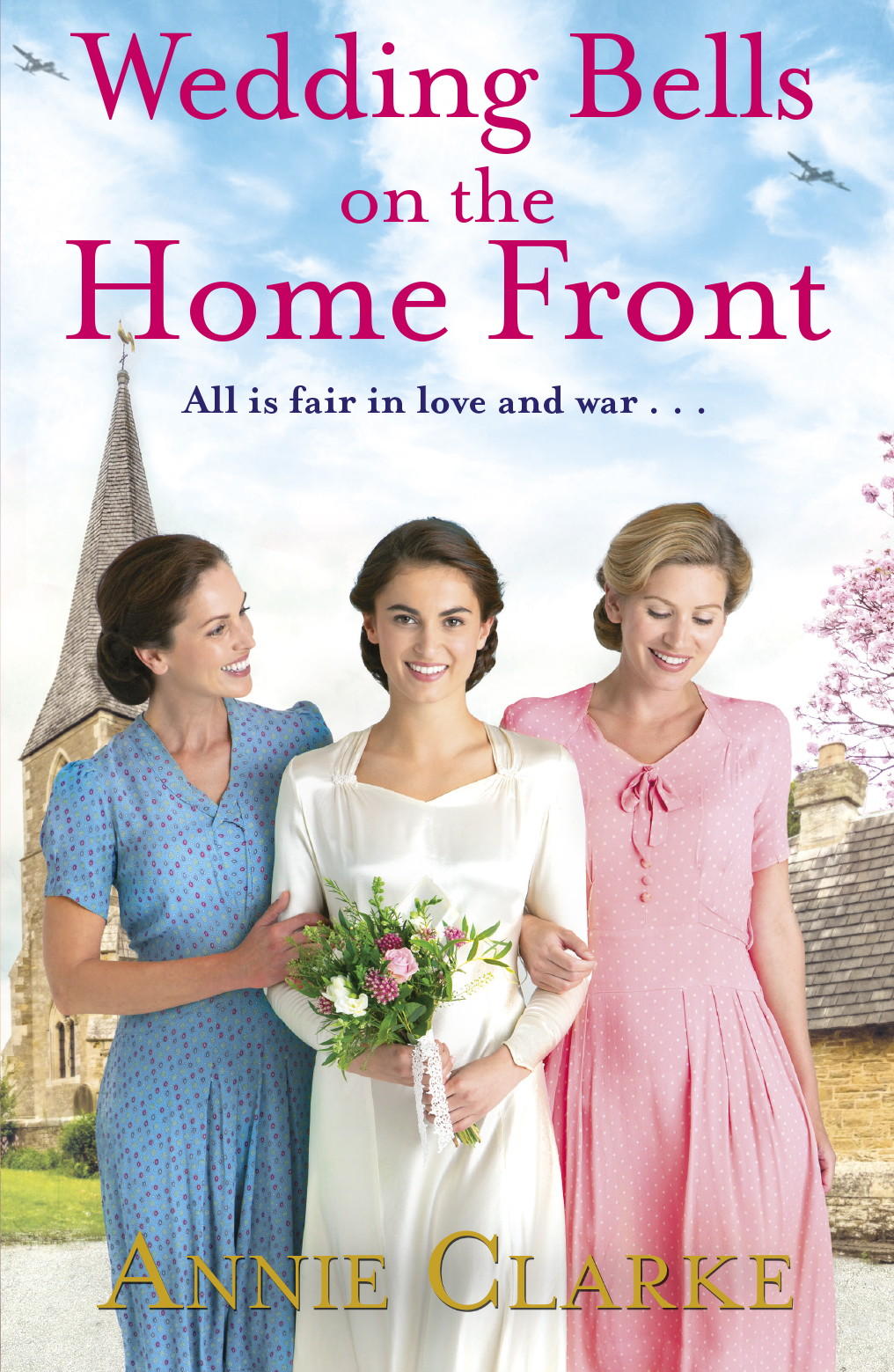
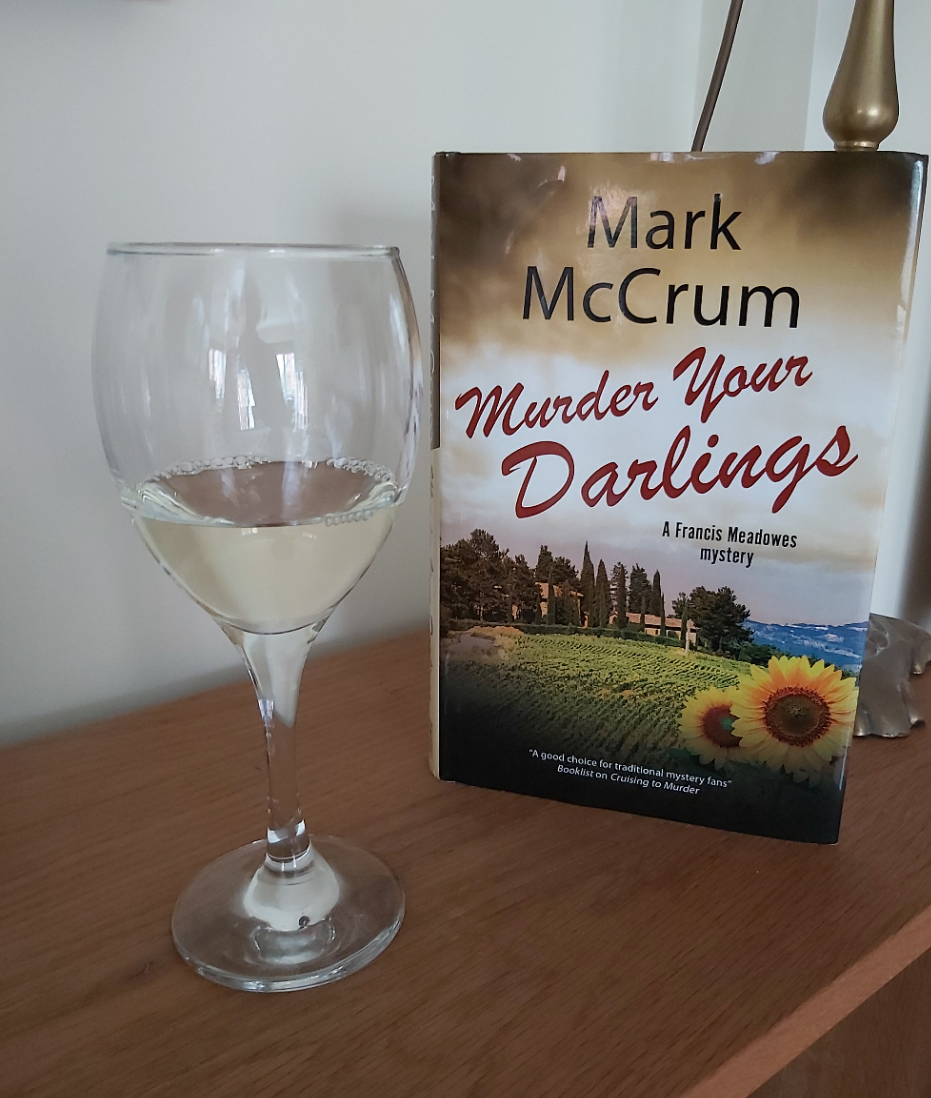
With, magically, time to spare now a manuscript is in, and before the edits come winging back I finished the wonderful Philip Kerr A Man Without Breath, but then what? I seldom re-read a book, but there it was, Murder your Darlings by Mark McCrum which I have reviewed before. It was such a romp and what’s more, an excellent detective story the first time round I wondered if it would ‘hold’ for another lap?
I felt drawn because, you might remember, it is set in gorgeous Umbria at a villa hosting a creative writing course. The ‘ring master’ is the tutor, the hosts Stephanie and Gerry. I ached with laughter, or was it recognition as the ‘performers’ the students milled, chatted, worked whilst the tutor, in this case Francis, observes, bites his tongue and oh, oh, staying neutral. Be still my beating heart… Yes, I’ve been there, taught these – by turn – wonderful, infuriating and fascinating writers.
I do remember one incidence, but no, I mustn’t, not even with the nom de plumes Mr A and Mrs B.
But another is repeatable. At ARVON, where I taught one particular course the students had to take turns to cook the evening meal. I joined in, as usual, with the first night’s team, chatting, learning more about them, until as one, the little domestic team disappeared. Was it something I said? It wouldn’t be for a quiet nip of something strong, for there was wine aplenty in the dining room.
They said they’d be back to serve, while all I had to do was stir the pot. Phew.
They did indeed return, as we sat around the large dining room table, tottering in, wearing high heels, and bunny girl outfits they had somehow mashed together. Glorious. Though I do wish they’d asked me to wear a fluffy bunny tail, fishnet tights but perhaps it would have been a tad too much to see granny dolled up, when people were eating. …
But back to the lovely scrumptious Murder your Darlings. So, into this course, set atop a hill with views of the Umbrian countryside, a swimming pool, a sauna – all mod cons, bursts a murder, of one of the writers. Or is it a murder? Perhaps an unfortunate accident? And here they all are, corralled at the villa by the police, all the various branches of the police it seems, under investigation it appears, because – was it an ‘inside’ job?. When into the mix, another murder and no-one has been in, or out. It doesn’t take a genius to realise it was ‘one of them.’ Arghh.
The police turn to Francis for help to ferret about and discover what exactly is going on under the surface .
Why are some of them really there? Why do those who have been coming for twenty years return? What secrets abound?
I defy anyone to put this book down,as the secrets emerge until – all is revealed.
All I can say is that it’s a blessing the tutor was there, as I often feel like telling my students – not that anything so dire has occurred, though at times, with the myriad of personalities there is always the chance of blood on the floor.
Bravo, read it once, then go back. Feel the sun on your face, observe the view, ferret amongst the students yourselves, have a snigger, wonder if you could write a book because there are so darned good tips for writers in these pages.
A book is esssential for whiling away the luxurious hours of lock down. And this one must be first in the queue, and a Philip Kerr.
Then – why not write your own memoir, or novel? This lock down has given some of us time for reflection, time to find the germ of an idea. Go on a writing holiday to – well, maybe not the Villa Giulia – but somewhere. Make sure you keep your wits about you though.
If you are one of the key workers, the time for reflection will come later. But write down your experiences, then, when time has allowed you to process this taxing, draining experience. The family will want to know, perhaps the libraries in their local history section Perhaps a publisher. Or put them in a blog. Writing can order your thoughts, and experiences, it can allow you to take control again.
I work with ill or injured veterans, editing and steering their writing. It is a great way of talking things out, shaping the mess. Fiction in particular allows you to throw around those experiences, use them as you see fit, and not allow them to overtake and control you. Or so I’ve found. OK, OK, lesson over.
This is the third of Mark McCrum’s Francis Meadowes mysteries. Beautifully written, and kindly but sharply observed. They really should be televised. Bagsy me to be one of the writers.
Loved it. Must read the others. Thanks a bunch Mark McCrum for a great read.
Murder your Darlings. Mark McCrum. pub Severn Kindle and hb. Available here.
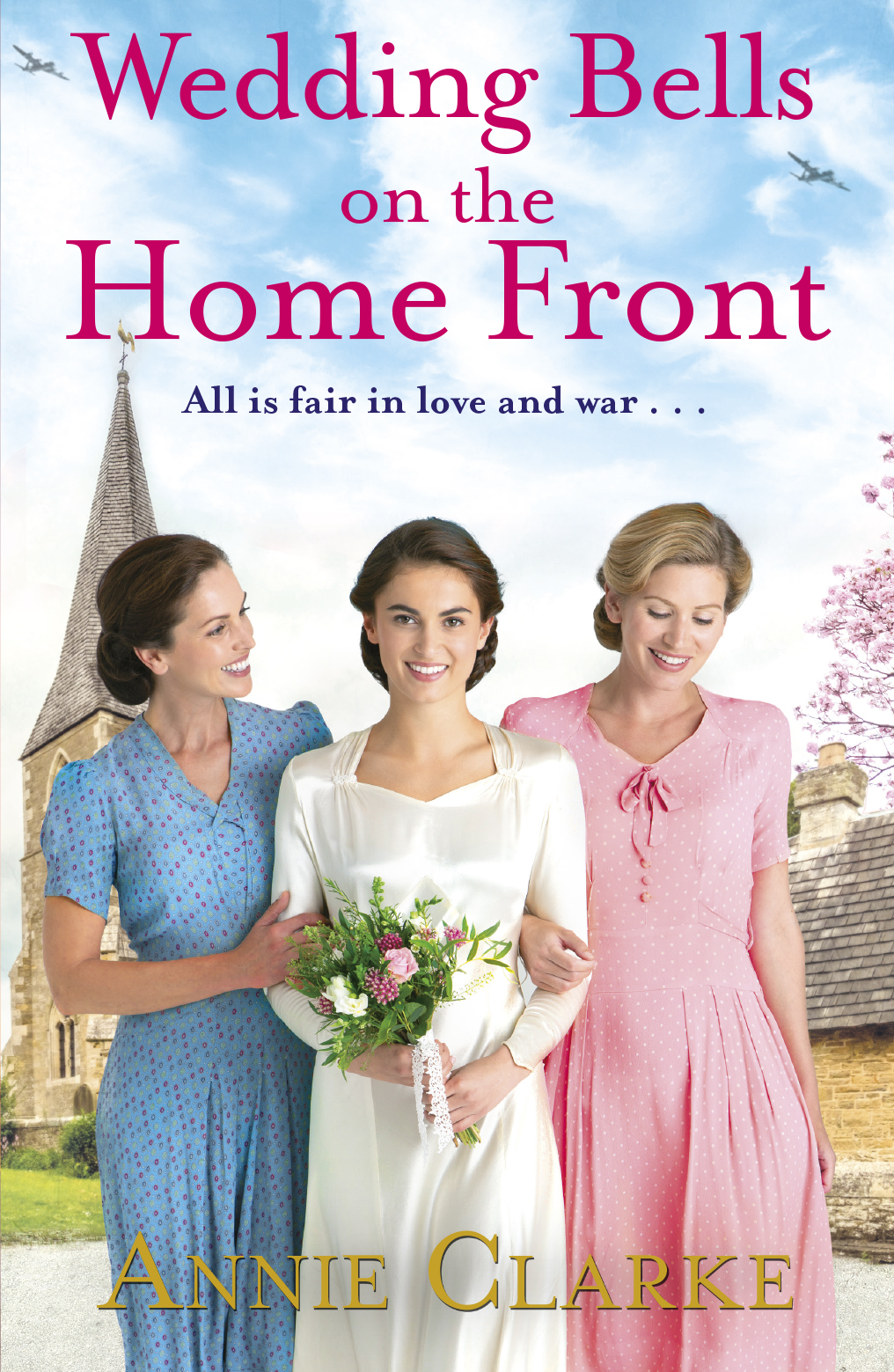 Annie Clarke is the author of Wedding Bells on the Home Front: pub 14th May by Arrow in e-Book
Pb due in July courtesy of Covid easing.
Is there anything more powerful than a book? I don’t think so. Life-changing, knowledge-giving, and entertainment. Though sometimes not all at once. They have the power to change the world and make us feel every emotion under the sun. With that in mind, here are the books that changed me and made me the women I am today.
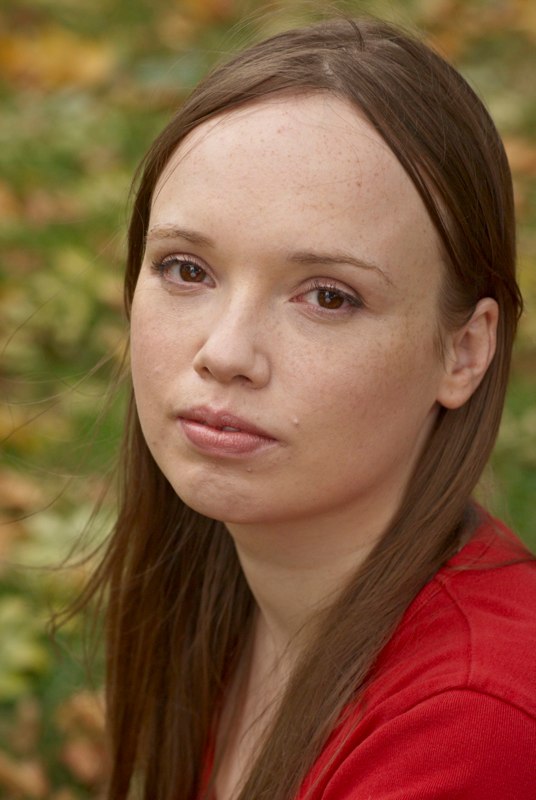
Crime and Punishment by Fyodor Dostoyevsky.
This book follows Raskolnikov, an poor student wrought out by his own nihilism, and thoughts of the struggle between good and evil. He brutally murders an old woman who is a pawnbroker as he beliefs he is above the law. He justifies his actions, but later is overwhelmed with guilt and terror. Raskolnikov confesses to the crime and goes to prison. He realises that happiness and redemption is only achieved through suffering.
This is an intense psychological thriller from the most famous Russian novelist. Dostoyevsky was in a bad way when he wrote it, his wife and brother had both died and he was living in poverty. Crime and Punishment will awaken your brain and make you rethink your opinions on crime and punishment. This is the perfect book on redemption and how our actions in life matter. The very last page has some of my favourite lines in literature, including the fact that a new life is not given for nothing. I will not spoiler you by sharing anymore but it is a hard, yet fascinating read. It opens your brain right up and makes you more intelligent by the end. Do not just read books that are easy to read, that is not how you end up smarter.
Life if Pi by Yann Martel .
A ship sinks and a boy ends up on a raft with a tiger he calls Richard Parker. This is a book about survival and wisdom. It is outrageous with its plot but is never not believable. This spiritual novel changed my entire way of thinking. This book will feed your imagination like nothing on earth. It is so cleverly done I will be forever be jealous that I will never be as good a writer as Yann Martel . It was made into a film that is a good enough watch, but the book is untouchable. This book left me with a spiritualness that has stayed with me until this day. Read it with a highlighter pen and go back to it often.
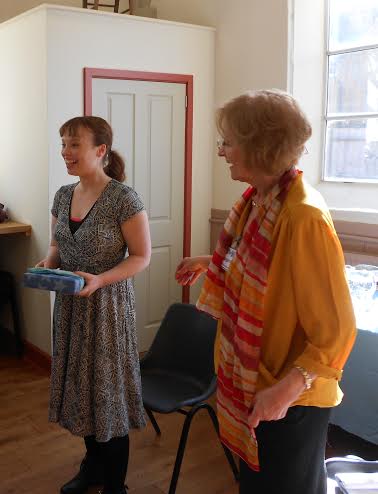
Catherine Yardley with Margaret Graham at the Words For The Wounded Literary Festival
Becoming by Michelle Obama.
Before reading this searingly honest memoir from the former First Lady of the United States I felt like a failure as I had never become who I was supposed to be. I was forever changing and no one ever told me that was a good, and normal, thing. There are so many stunning quotes in this book and it is filled with wisdom. Michelle Obama leaves no part of her life untold: she discusses miscarriages, IVF, politics, race and her marriage. Michelle is from a working class background and her father was disabled. She has triumphed through hard work and intelligence. I cannot think of anyone I find more inspirational than Michelle Obama. Well, other than the next novelist….
I Know Why The Caged Bird Sings by Maya Angelou.
Maya Angelou. What a woman. What a life. What a writer. I am full of admiration and awe. I am obsessed with Maya Angelou. I read I Know Why The Caged Bird Sings when I was about thirteen. I already wanted to be a writer and I was already writing. I knew I was nowhere near as good a writer as Maya Angelou, I doubt I ever will be. What I Know Why The Caged Bird Sings did for me was crack me open like a nut. I learned a lot about racism and I became even more political, I also learned a lot about life and wisdom. I learnt that everyone has a hard life and we should be kinder to each other. It is more than a good book, it is a book that teaches you that strength of character, and a love of reading, can overcome trauma and create a beautiful life.
The Wives By Lauren Weisberger.
This book makes me appear much more fun than my other selections, I am aware. Lol. I think Lauren Weisberger is underrated. She has such a keen eye for detail and the satire of everyday life. Yes, there is The Devil Wears Prada which was a runaway (ahem) success. Lauren holds a mirror up to sections of society and captures them with absolute perfection. Her characters are honest, flawed and real. She makes me laugh and nod, and cry all at once. The Wives is a sassy and entertaining sequel to The Devil Wears Prada. It features Emily, you know, the one who looked great in her dress because anytime she was about to faint she ‘ate a tiny bit of cheese.’ Her books are a joy to read because she makes writing them look easy. There are anything but and Lauren Weisberger is a fearless writer.
The Writer’s and Artist’s Yearbook.
Now, this book really did change my life. I have written my entire life. I wrote poems when I was in single figures and I tried to write my first novel when I was ten. It was terrible and I only got to fourteen pages. They were all written longhand. I decided to send some of my poems off but, how and where? Enter this book. It had so much advice and numerous agents and publishers to send my stuff too. I still use it to this day. The 2021 version has pride of place on my desk. This is an essential and life-changing book for all writers.
Guests of The Emperor By Janice Young-Brooks.
My parents have always had a house full of books. We had so many bookcases and books our home was more like a library. One of the books on my parents shelf was Guests of The Emperor By Janice Young-Brooks. It is a World War II novel about a group of women who are ‘guests’ in a Japanese prisoner of war camp. The characters were so vivid and the story so well told it has always stayed with me. It is a good history lesson too.
What books changed you? Send us your selection to frostmagaziine@gmail.com.
My debut novel, Ember, is available here and here.
Here’s your chance…
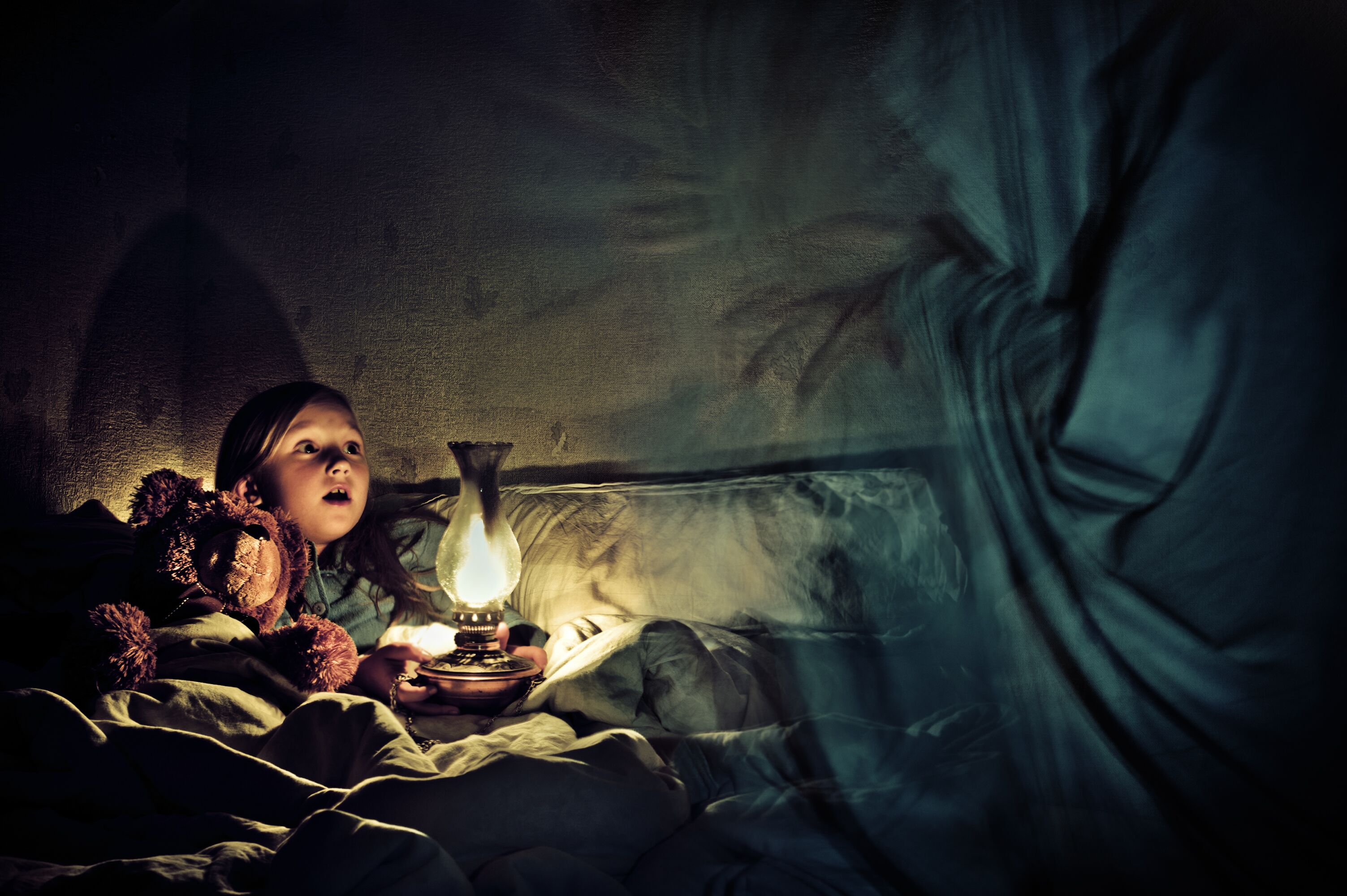
Why not stage one in your own home is the call from Rebecca Atkinson-Lord whose Cautionary Tale is an exciting new musical which was in development when Covid-19 came calling. Doom and gloom, the workshop performances had to be cancelled.
Nothing daunted the writers want Cautionary Tale’s incredible journey to go on, so are giving people the opportunity to stage it in their own homes and share their recordings online.
For five weeks, they will release sheet music and backing tracks, Tik Tok choreography, character sketches and script extracts. In week six, the best of these recordings will be used to create a live Zoom version. Record the weekly section by yourself or with your friends and family, share it online using #CautionaryTaleMusical and help make this a reality.
This new musical is about growing up and growing glum with book and lyrics by Rebecca Atkinson-Lord (Founder of Arch468; Director of Theatre at Ovalhouse, 2010 – 2016), music by Rebecca Applin (Cameron Mackintosh Resident Composer Award holder at the New Wolsey Theatre, Ipswich, and Mercury Theatre, Colchester), and choreography and additional material by Mark Iles (The Brook Under Siege for Medway Council and as performer: Elf the Musical, Dominion Theatre; Charlie and the Chocolate Factory, Theatre Royal Drury Lane) could be a story about many different things.
Cautionary Tale could be a West-End style musical about learning to live authentically. It could be a modern parable about liberal values triumphing over authoritarianism. It could be a mash up of Roald Dahl, Tim Burton and Hilaire Belloc about overcoming grief set in the landscape of a painting by LS Lowry. At its heart it’s a story about finding hope when all seems lost.
OK< so what’s the plot?
Cautionary Tale is the story of Gloaming, a town filled with perfectly ordinary, yet perfectly remarkable people. The inhabitants of Gloaming all have special talents and interests; the Hamingtons, for example, know the answer to any question you can think of, the Bittingworth 2 sisters are so strong they can lift an elephant and the Trockles can make pretty much anything you like out of knotted string. Some talents can be pretty dangerous and it can be tricky to manage a town filled with such interesting people. One day, in the mists of time, the town elders decided that the best way to keep the town safe was to forbid anything that might be a bit too dangerous. The adults of the town have to suppress their talents and conform but it’s hard to live a life of stifled potential. There is one place where they can go to remember what it’s like to feel human – The Black Dog, an ordinary pub where it’s OK to be extraordinary.
But there are consequences to breaking the rules and there are consequences to living lives without fun. One day, the children of Gloaming wake up to discover that all the adults have turned to dust and blown away overnight; there just wasn’t enough joy left in them to hold them together. The children set off on a quest to find all the joy and talent and curiosity that was forbidden for so long so that they can rebuild their town with joy at its heart.
Rebecca Atkinson-Lord comments, ‘I wrote Cautionary Tale at a time when I was really unhappy because I felt trapped in a life that didn’t feel authentic. It’s a show about finding joy in the darkest of circumstances and right now it feels like we all need a bit of help to be happy, so it seemed like the right thing to do to share it with people. The Covid-19 pandemic has meant that we can’t finish making and staging the show as we’d planned and to see years of work come to nothing has been incredibly sad for the whole team. I hope that people will help us make it happen anyway by staging bits of it in their own homes and sharing them online – and maybe we can all remember how to find a bit more joy.’
With the help of ordinary people taking to the stage at home, the team are hoping to bring their new British musical, Cautionary Tale, to life during lockdown.
They will be releasing a weekly downloadable learning pack including sheet music and backing tracks, Tik Tok choreography, character sketches and script extracts for people to get involved, record and share their musical staging. In week six, the best of the recordings will be collated to create a live Zoom version of the performance. It’s a chance for musical theatre lovers to come together, be creative, and keep the light on in these dark times. Download from www.cautionarytalemusical.com
Twitter #CautionaryTaleMusical, @Arch468 @BexAtkinsonLord, @beckyapplin, @jturnerdesign Instagram #CautionaryTaleMusical, @arch468theatrestudio @rebeccaatkinsonlord, @beckyapplin, @jamesturnerdesign, @markchalkiles
Download from www.cautionarytalemusical.com
 As an author, the most frequently asked questions are without a doubt about what inspires you. Sometimes it’s the very smallest thing, but wherever an idea starts it needs to become a snowball, slowly gathering size and pace, to create the perfect storm – if you’ll excuse my rather poorly mixed weather metaphors.
My lastest book Endless Skies had the strangest of starts. My husband Jim and I are huge fans of The Great British Menu, and when one of the then finalists, Colin McGurran, organised a Facebook competition to win a stay at his restaurant with rooms in Lincolnshire, Winteringham Fields, we decided to enter. It was a simple ‘yes or no’ question followed by a draw, so Jim decided to take ‘yes’ and I would take ‘no’. Unfortunately I never did complete my half of the bargain as my mother was rushed into hospital. Fortunately the answer was ‘yes’ and even more fortunately, Jim’s name was drawn out of the hat.
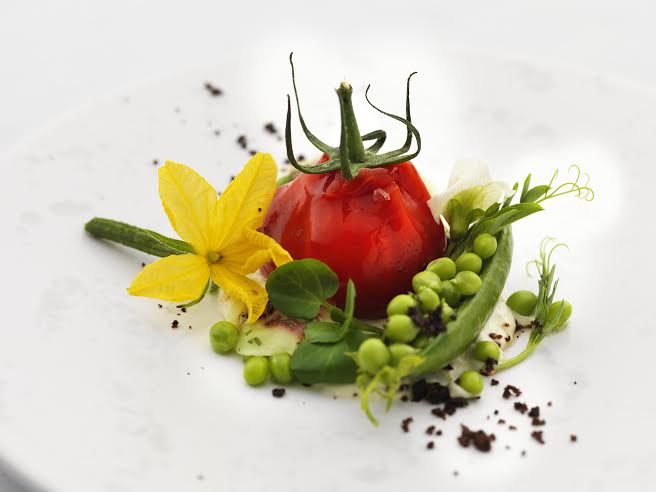
One of Colin’s signature dishes
We arrived at the village of Winteringham on the banks of the Humber on a glorious summer day and once we had checked in went for a walk. The skies above us were blue and quite immense – on a different scale to anything we had seen elsewhere – but half way back across a field of stubble we heard what sounded like thousands of running footsteps behind us. We turned, only to see a curtain of rain approaching. It was a scene so incredible it had to find its way into a book and a tiny seed was planted.
For a while it rattled around in my head as I was working on Another You. Eventually I did some research about the area and discovered it was where Ermine Street ended and the Romans probably tried to cross the Humber. What a great place for an archaeologist to find herself. Alone, under that vast, empty sky.
We returned to Winteringham Fields the next year to celebrate our twentieth wedding anniversary and explored the area further, including the wonderful museum and library at Scunthorpe, where I was able to find out more about archaeological digs in the area. By this time I was writing; Rachel was alive in my head and we were having such fun disappearing down Roman rabbit holes together.
The settings; gorgeous Winteringham with its spectral remoteness and the bustling city of Lincoln were firmly established and the characters were coming along nicely too. Not just Rachel, but her octogenarian friend Esther (based more than a little on my mother, who had died between our first and second visits), and then men in Rachel’s life; Ben, Jem and Jonathan. I had an intricate plot as well, but something just wasn’t working.
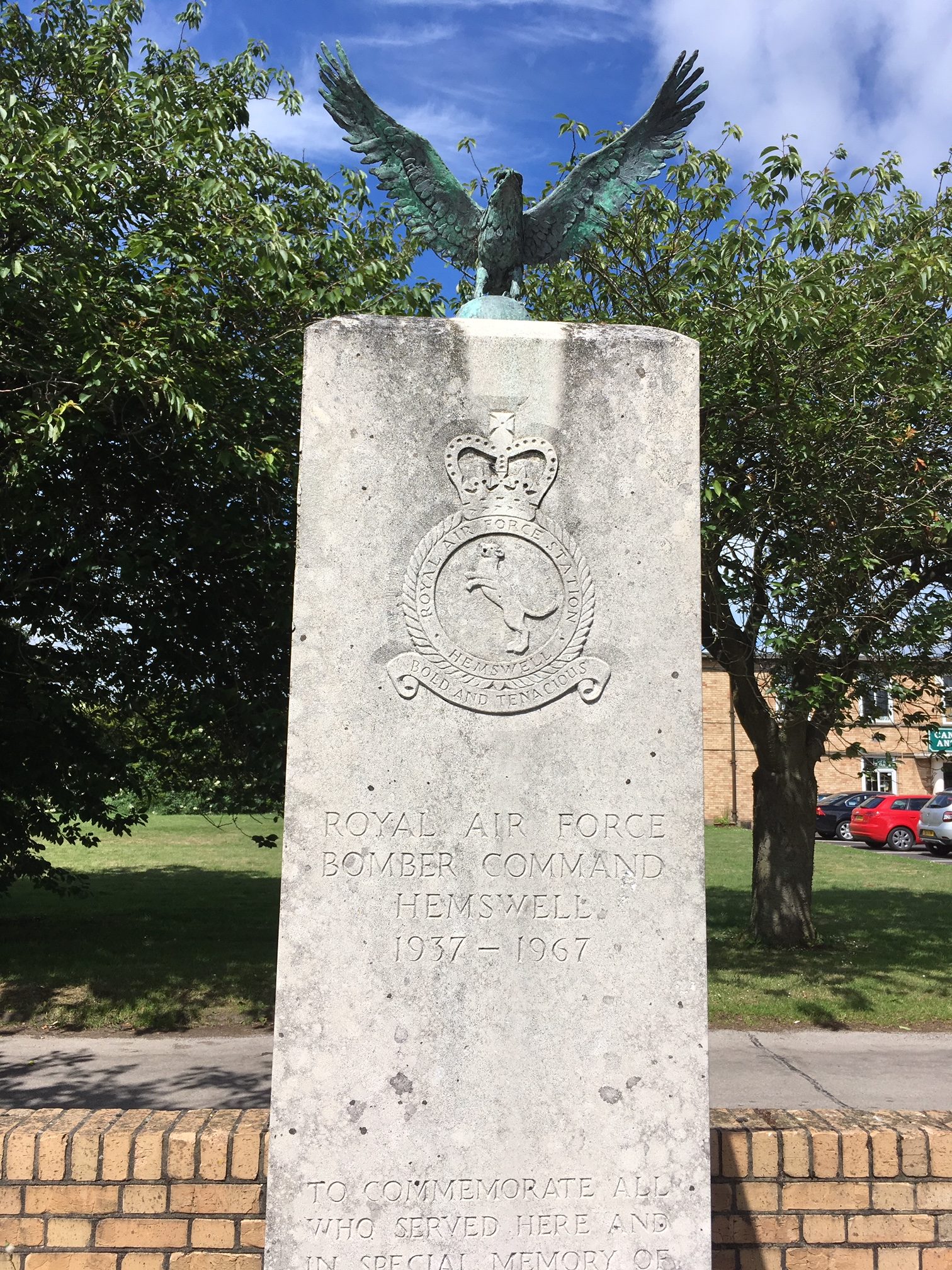
The war memorial at Hemswell
It took another visit to Lincolnshire to fathom it out. Jim is a keen cook and for his fiftieth birthday I arranged for him to spend a day in the kitchen at Winteringham Fields with Colin and his team. While he was up to his elbows in fish preparation I decided to visit the vast antiques centre at the old RAF base at Hemswell in search of a wooden towel rail for our spare room.
I found so much more. Standing in a quiet room at the back of the centre, with the sounds of schoolchildren in the playground next door drifting through the open window, it came to me. World War Two. I was in an old barrack block used by Polish airmen during the conflict and I could almost hear their feet on the lino as they ran down the stairs. The last piece of the jigsaw was in place and I could finish Endless Skies.
During our first visit to Winteringham Fields I reviewed it for Frost and you can read that review here. But not if you’re hungry.