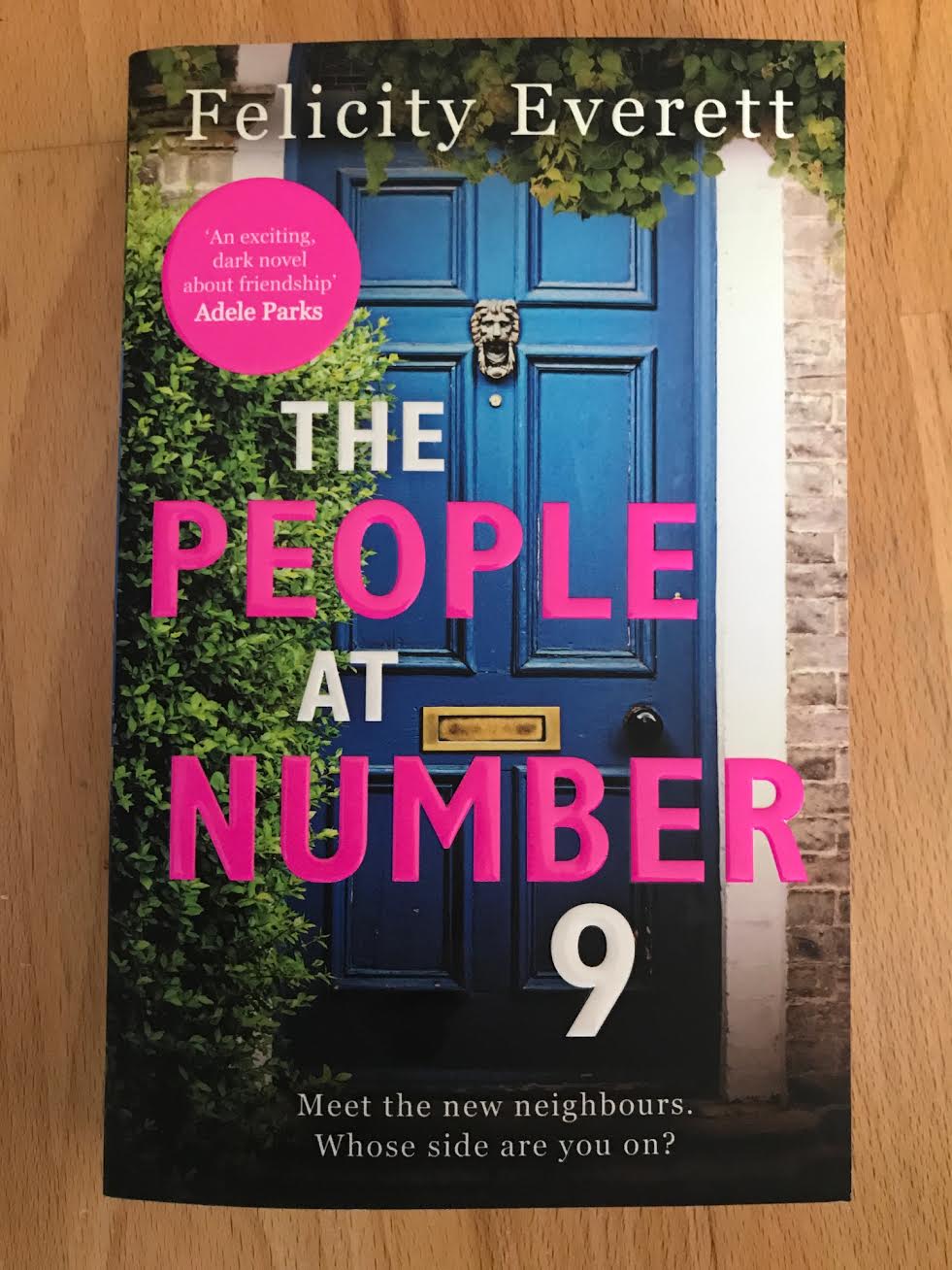
Felicity Everett The People at Number 9 | Author Interviews

I loved your book. Where did the idea for The People at Number 9 come from?

I’m glad you enjoyed The People At Number 9. The idea had probably been bubbling under for a long time before `i thought of a way to make it into an entertaining story. I’ve always been susceptible to ‘dangerous’ friends – the kind who are fun to be with but unreliable and sometimes worse! It started in primary school for me, when I was desperate to be in with a little gang, led by a queen bee who decided on a weekly basis who was ‘in’ and who was ‘out’. Even after the agony of being sent to friendship Siberia on a number of occasions, I didn’t learn my lesson and find a proper friend, just hung around until my turn to be ‘in’ came round again. I’m not saying Lou and Gav in The People At Number 9 are as mean or calculating as this – they probably aren’t aware of exploiting Sara and Neil (who maybe deserve it anyway!) but it’s that attraction, like a moth to a flame, that interested me.
Did you expect it to become so successful and resonate with people so much?

Of course any author hopes for  readers, but you can’t write the book you think people want to read, because it won’t be authentic. You have to write the book you’ve got in you.  More than anything, writing is communicating. It’s a way of asking ‘is it just me or…?’ So when I wrote The People At Number 9, it was my curiosity about the subject that drove me forward. I hoped people would get it, but it was surprising and thrilling that so many readers reacted so positively to it. From the feedback I’ve had, I think it resonates because it’s a rare person who hasn’t at some time in their lives been the underdog in a friendship – the one who always makes the phone call, books the tickets, turns up on time and is kept waiting around. Not many people are daft enough to let a situation like that get out of control the way Sara does in the novel, but they can empathise enough to enjoy the journey.

How long did it take for you to write?

It took about two and a half years to write, which is quite along time for a short novel, but I wrote it when me and my family were living in Australia for a little while, and there were many distractions!

What is your writing process?

I don’t plan very much. I take a theme and some characters and sort of improvise, although for No 9 I did have a vague route map for the story. In the past I’ve tried to do that thing that some writers do of creating a life for their characters before they even start writing, listing their record collection, where they lived as a child, their favourite colour – stuff like that, but it just didn’t work for me. I think I find my characters by hearing them speak. I love writing dialogue.

I am a compulsive rewriter – I can’t just rush to the end of a first draft, knowing it’s terrible and then rewrite it from the beginning, I have to go back and make each paragraph right (or as right as it can be) as I go along, which is very laborious. My finished first draft is effectively a fifth or sixth draft. I don’t send it to my agent until I’m pretty sure it’s as good as I can get it.

Do you have a daily word count?

No. It’s so dispiriting if you don’t reach it. I’m happy if I can write five hundred good words a day. Sometimes a good day’s writing can actually be deleting a page or two, if the scene’s not working, or the writing is flabby, so I tend to think in terms of progress rather than pages.

Where do your ideas come from?

That’s a tough one. I don’t really know. I think I’m very influenced by place and I’m interested in the psychology of relationships. I suppose I tend to take a fairly mundane universal situation – a friendship gone awry or a move to the countryside (in the case of my new novel) and then ask ‘what if?’ If you ask that question enough times, it can take you to some pretty dark and twisted places!

Do you have a specific place where you write.

I’m embarrassed to admit it, but I write in bed! We moved to a new house, and I got the study all kitted out, had the desk positioned in front of the window with the lovely view, got all my books organised, and then found I never went in there. It was just too daunted by the open lap-top on the pristine desk. It felt too ‘intentional’, as though I had to write really impressive sentences; be ‘A Writer’. So now, instead, I wake up and grab my laptop, read the news, check Facebook and then open my document – I sort of sneak up on it. I re-read what I last wrote, alter a word or two and then, before I know it, I’m in full flow and if I’m lucky I’ve written a page or two. The only problem is that all that slouching is doing my back in!

Who are our favourite writers?

Jonathan Franzen, Colm Toibin, Anne Enright, Elizabeth Strout, to name a few. I love a family novel and I like social commentary. I’m a big fan of short stories – The New Yorker has a wonderful archive and I’ve discovered some great novels by writers I’ve first come to for their short stories – George Saunders and Curtiss Sittenfeld being two.

What books have you read recently that you loved?

Eligible by Curtiss Sittenfeld and Lincoln in the Bardo by George Saunders (see above). I’ve also re-read Rebecca by Daphne DuMaurier because it’s a tutorial in evoking a sense of place and a compelling atmosphere, two things I am attempting in my new book.
What is next for you?

I’m writing a gothic psychodrama!  It’s a novel about a couple who move to the countryside to make a fresh start, but find themselves haunted, not only by their own past, but by a strange unease in their new community and the landscape that surrounds it.



The Sore Throat Season is Here with a Vengeance


Research by Ultra Chloraseptic, the anaesthetic throat spray which relieves pain in seconds, reveals that sore throats have a big impact on our work, social and family lives.

I should say so.

Having felt very sorry for myself over the last week, the only thing that actually helped, and helps, is an anaesthetic throat spray and so I’m all for this product.

Cough cough, sneeze sneeze.

Apparently I’m not alone, because a survey of 1,000 people aged 18 to 65 found that nearly half said the pain of a sore throat felt like they were swallowing razor blades. More than a third said they felt something scratchy at the back of their throat, a quarter said they had no energy and more than one in five said it felt like their throat was wrapped in barbed wire.

The new research by Ultra Chloraseptic reported how throat sprays could be a useful aid in treatment.

Mr Alasdair Mace, an ear, nose and throat surgeon says consumers are right to be concerned. He says: “Most cold germs are breathed in, so the first battle-front for our immune system is often the mucosal tissue lining our throat. Although sore throats are a relatively minor problem, and will eventually clear of their own accord, these infections cause considerable discomfort. Healthcare professionals should not dismiss the importance of fast symptom relief that targets the sore throat directly.”

GP Dr Paul Stillman explains: “Ultra Chloraseptic is an anaesthetic throat spray using the fast-acting ingredient, benzocaine, creating targeted pain relief within seconds, and helping to relieve discomfort when swallowing. Benzocaine works by blocking sodium and potassium from entering nerve cells and activating the pain pathway. As it is rapidly absorbed by mucosal membranes in the throat — the tissues which become painful and inflamed when we have a sore throat — benzocaine provides almost instant pain relief. However, absorption beyond the mucosal membranes is poor, so hardly any benzocaine reaches the bloodstream so overdosing is not an issue.

“Unlike many anaesthetic throat lozenges, which also numb the mouth, this spray provides targeted relief. It is also sugar-free — an important consideration for anyone with diabetes or those minimising sugar intake for general good health and in line with recent guidance that we should halve our intakes.”

Of course, tea and sympathy also has its place, but perhaps cold and easy to eat foods such as ice cream (forget the diet) jelly or why not  slurp some soup. Leave the spicy foods for another time.

As for work, most of us feel we must stiffen that upper lip and carry on, but best not to get too close to chums or colleagues. You will not be thanked for causing the whole department to be sent home sick.

Remember you can also gargle with warm salty water, but keep the throat spray with you at all times. Have a quick squirt when things get tough, and then you can keep going.

Children over 6 will be fine with it..


How to Win at Feminism Reductress Interview And Book Review

how to win at feminism, reductress, feminism How did you come up with the idea of Reductress?


Sarah: We were both writing and performing sketch comedy, and realized there was a lack of spaces for women to create comedy for and about us. Then Beth came to me with the idea for a fake women’s magazine, and we were happy to find that nobody had really done it before.


Beth: Yeah, plenty of people had made fun of women’s media before but it felt like there was so much more to cover in a more expansive way.


It is such a smart site and we love the book too, is it easy to come up with new ideas?


Sarah: Yes and no! Comedy is always hard, but fortunately the bizarre nature of women’s media and the internet at large have given us a lot of material to work with.
Beth: Yeah, luckily we have a team of super funny contributors and they’ve had plenty of experience reading women’s media and existing as women in the world to draw on.


What advice to you have for anyone who wants to follow in your path? 


Beth: Use your disadvantages to fuel your work. In comedy your frustration is part of your voice.


Sarah: Don’t give up on a good idea. Don’t be afraid to fail. It’s part of the process, and there’s always something to learn from it.


Do you think women’s magazines are damaging to women or helpful?


Sarah: Somewhere in between. Obviously a lot of what Reductress does is comment on the ways in which they have been harmful, but women’s media has definitely made a lot of strides since our mother’s generation.


Beth: Yeah it really depends on the magazine and the writer and the how they’re writing about a given topic. When it’s done in a one-dimensional way that speaks down to women, it’s harmful.


Describe a typical day.


Sarah: Answer emails, post everything on social media, bitch to everyone about whatever’s happening in the news? Order salad. The rest is a salad-eating blur.


Beth: Email, hide my private email server, pump breast milk, write, edit, eat salad furiously.


How do you run the site?


Sarah: Efficiently.
Beth: Girls.


Tell us about writing the book.


Sarah: We wanted to write a book about how women’s media has co-opted feminism. So, we wrote a proposal in early 2015 and got our editor-at-large Anna Drezen on board and we did the thing!


Beth: It was exhausting but fun. Lots of weekends sitting in a Starbucks thinking about the patriarchy.


What is the biggest issue affect women today?


Sarah: I don’t really think there’s one issue, and it definitely depends on which part of the world we’re talking about. In the states, I think the treatment of marginalized women (women of color, transwomen) and lack of representation overall is a huge issue.


Beth: If you mean biggest in terms of how many people it affects, I think subtle sexism is really insidious, but if biggest means most serious, then I think reproductive rights and the maternity leave policies are huge in the impact they can have on women’s lives.


What’s next?


Sarah: We’ve got some things cooking! For now, check out our podcast, Mouth Time!


Beth: We’re gonna go eat more salad!


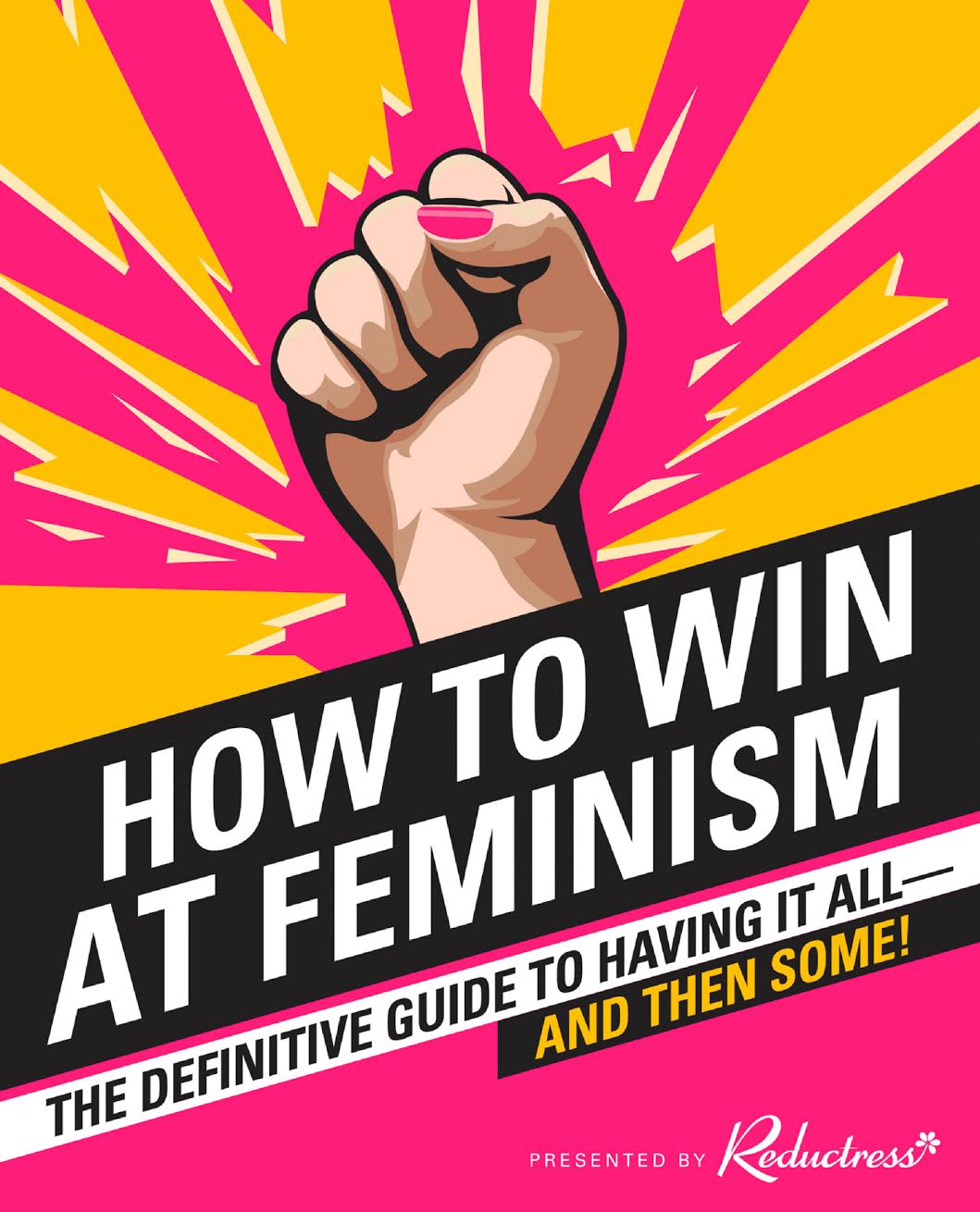
How to Win at Feminism is an awesome and original satirical book on feminism written by the subversive women’s magazine Reductress. Which is read by an audience of over 2.5 visitors a month. It will make you laugh out loud and nod your head in agreement.

UK and Commonwealth rights were bought by HQ Senior Commissioning Editor, Anna Baggaley, from Harper One in the US.

Beth Newell and Sarah Pappalardo, the authors of How to Win at Feminism, said: “we are excited to bring our book to the UK and hope that British readers will enjoy it half as much as they do Pippa Middleton’s bum!”

Anna Baggaley said: “As someone who is been a huge fan of Reductress and their sharp observational comedy for a while I am so thrilled to have the opportunity to publish such a funny, wry and necessary book”

Filled with tongue in cheek humour, colour illustrations, bold graphics, and hilarious photos, How to Win at Feminism teaches readers how to battle the patriarchy better than everybody else. From the her-story of feminism to how to apologise for having it all, and by using celebrity studies such as Beyoncé and Taylor Swift, How to Win at Feminism is a fresh take on women’s rights through the lens of some of funniest women in comedy today.

How to Win at Feminism is out now in paperback original £12.99 and ebook £9.99.

The Art of Feminism by Reductress is published by HarperCollins.

Reductress has discovered a rich, deep seam of comedy.” 

Graham Linehan, co-writer of Father Ted, Black Books and The IT Crowd

“People say women can’t be funny. WRONG… I love Reductress.” 

Sam Bain, writer of Peep Show


Reductress is a fast-growing satirical website that delivers mischievously hilarious, on-point criticism wrapped in hilarious headlines and feature articles. Referred to as the “feminist Onion,” it pokes fun at the messages fed to women from an early age and throughout adulthood. Since its creation in 2013, it has exploded in popularity, with over 2.5 million monthly visitors. Reductress was founded by Beth Newell and Sarah Pappalardo, the authors of this book.


MumsThread On Parents Taking It Easy On Themselves

baby, shared parental leave, feminism, equality, childcare, leave, maternal, work, working mothers, lean inThis column is late. It’s late because my son was ill. But mostly, it is late because I decided to take it easy on myself. We are doing our Christmas gift lists at the moment and they are a huge amount of work. That on top of all of my other jobs and activities, along with caring for an ill child, meant I was working hard and working a lot. So I decided to be easier on myself. Not killing myself by overworking, getting a takeaway so we didn’t have to cook, or going into the playpen with the toddler so you don’t have to chase him around the home. Unless you are a surgeon, or you work in a war zone, parenting is the hardest job in the world. It is 24/7 with no sick days. But you already know that. What you might not be doing is taking it easy on yourself. So I am going to tell you of because self care is important. Be kind to yourself. That is the only way you can be the best parent to your child. Here are some tips for you to help you take it easier on yourself.


Prioritise.

Some things are important, and those should always be done. Others can wait. Sure the oven needs cleaned but you have been on your feet all day and it can wait a few days. Every day do what really needs done, anything else can wait.  As for cleaning, make your home as clean and tidy as you are comfortable with. Unless you really want to, don’t waste your time making your home look like a show home. Your time is limited, don’t waste it cleaning.


Life Hacks.

There is usually an easier way to do something. A quicker way to cook, an easier way to clean, a better way to do your work quicker. Efficiency is important when you have a child. Cook one pot meals, it cuts down on cleaning afterwards and is quicker. Always cook too much so the extra can be used for lunch or supper the next day. Do your emails on the go, or when you are out and the baby is napping in the pram. Make sure you get the other half to pull their weight. That always makes a difference.


Don’t care what other people think. Know that compromise is fine. 

So what if your child is not wearing matching socks, If sometimes you feed him food from a jar or that you sometimes need to put a cartoon on? The most infuriating thing when you have a child is that everyone has an opinion on how you should raise them. That’s fine. Every one is allowed an opinion, but they should have the grace to keep it to themselves. It is your child, not theirs. Good for her, not for you. People will be rude and sometimes bitch. Ignore them. They clearly don’t care about your feelings, so don’t care about theirs. I have no childcare. I work and take care of my son. I do it well and I do it efficiently. My son rarely watches cartoons during the day, it doesn’t stop people bitching the times that he does. And on the subject of cartoons: I don’t get the snobby attitude towards TV. I know for a fact that some cartoons have helped my son progress. Say this aloud: screw them and screw their opinion. For extra help read the The Life-Changing Magic of Not Giving a F**k: How to stop spending time you don’t have doing things you don’t want to do with people you don’t like it is a great book for clearing your mental clutter.

 

Clear the physical clutter.


The thing that has made the most difference to my life is clearing out clutter. The less stuff you have, the less stuff you have to worry about. The less things to clean and the easier the surface area is to clean. It just makes sense that the less stuff you have, the less stuff you have to worry about. Personally, it has made such a difference to my stress levels and our home is looking much better.


Do you have any tips? Share them below.


This article was originally published in December 2016. We republished it because it was popular.

A Day in the Life of Photographer Cire Simone

A Day in the Life of photographer Cire Simone1clI have been passionate about photography since I was a child, and my evenings were spent watching David Attenborough documentaries and thinking that becoming a wildlife photographer would be the best job in the world. A degree in Marine and Natural History Photography at University College Falmouth further cemented my ambition to create images, both still and moving. It also developed my interests in other fields of the craft.

A Day in the Life of photographer Cire Simone2clA year spent travelling the world after university started a new love of travel photography as well as increasing my joy in photographing landscapes and the natural world. Over the last few years I have honed my craft – although, of course every day is a school day and I am consistently learning and improving my work. Although only able to pursue my photography on a part-time basis at the moment, the dream of becoming a full-time freelance photographer is still very real and one that I aim to achieve before this decade is out. I have recently started photographing weddings and love the challenges that come with documenting the most important day of people’s lives.


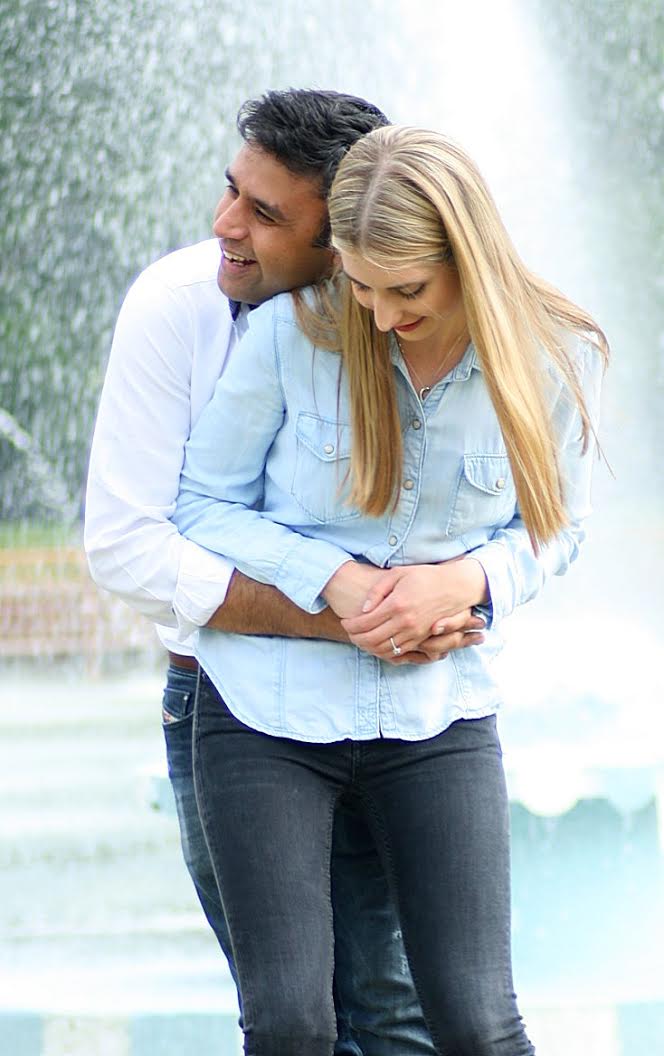
My most recent shoot, however, was with a lovely couple commemorating their engagement, in the stunning Battersea Park on Saturday afternoon. I allow plenty of time to get myself organised – batteries charged, correct lenses packed etc. Organisation is key when running your own business and is a key component of my life in general. However, I’ve recently bought an orchid and couldn’t resist the opportunity to stage a quick shoot.

A Day in the Life of photographer Cire Simone3I have a set of macro extension lenses which, when attached to my trusty 50mm lens, allowed me to get some beautiful abstract shots in my makeshift studio set-up. I love using natural light for my photography and the light coming through the window on that day was perfect.


After a quick lunch – and another battery re-charge – I head off to Battersea Park. It is really beneficial for photographer and client to build a relationship prior to the big day. Not only so they can see how you work but also so you can find out as much as possible about their likes and dislikes. This is likely to be one of the most important days of their lives and the photographs are one of the ways that their memories of the day can be remembered forever.


An engagement shoot is a perfect opportunity to build that relationship and for the couple to practice some preferred poses as well as become more comfortable being in front of a camera – something many people are nervous about. It’s really important for me to ensure that my clients feel at ease and are able to enjoy the experience. The weather was beautiful and we were able to get a range of shots in various locations around the park. Although nervous at first, both bride and groom settled in to the shoot and we were all able to have fun in the sunshine.

A Day in the Life of photographer Cire Simone4

The shoot lasted for a couple of hours and then it was back to the studio. Due to such tight time restraints it is important for me to get as much work done as possible when I have the time and that meant settling in for an evening of editing.

A Day in the Life of photographer Cire Simone5

Editing can be very time consuming but it’s really lovely to see your hard work come to fruition when you have the finished product in front of you.


The couple were really happy with the final images and we have scheduled in another shoot in a different London location for this Sunday.  I then need to prepare for a yet another happy couple, and after that… Well, that’s the life of a photographer. There’s always a new project. That’s why I love it.


My website is: ciresimonephotography.com


Professor Green interview for Working Class White Men

professor green white working class male

Explain a little bit about your new two-part series. What’s the idea?

I guess the idea is that it’s an exploration of a group of people who feel quite voiceless. What sold the idea to me was getting behind the image of this angry, white, working class male that was popping up everywhere, and that had views that conflicted with my own. I grew up white and working class, but I grew up in a very multicultural environment. None of the people who we followed in this documentary did – they grew up in largely white areas. It meant that I had to encounter things that I wasn’t totally comfortable with. But they had to be explored. I was trying to understand some of the reasoning behind people’s anger and unrest. I was looking at the situations of six young, working class white men, and their situations were not great, most of them. Whether or not they could find work, whether they had housing, all of that. This was an exploration of what it is to be white and working class in this day and age. Is it the people you see on Jeremy Kyle, is it the people you see on Benefits Street?

So you follow six guys over a period of six months, is that right?

Yeah. And each one is a different character, with their own issues. Some of them face similar problems, but they’re all very different people. None of us are wired the same. If we had tried to script the documentary, I don’t think we could have come up with the things that happened in their lives. Driving to Lewis’ house to find out if he’d got into Trinity, Cambridge, was one of the most terrifying things in the world, I was so nervous to film that part of the programme. I found I had quite a rapport with Lewis, because we both find ourselves between two worlds. His ability with mathematics could afford him social mobility, which not many people who are working class are afforded.

Were you with the guys quite a lot?

It was full on, yeah. I spent a lot of time with all of them. I’ve never shot a documentary over that length of time before. That’s longer than any tour I’ve done! To be that intensively involved in something, for that long, I’ve never seen anything like it.

Did you see anything that surprised you when you were making this?

I think, because of how I grew up, there was nothing that really surprised me. There were things that I thought were unfortunate, there were things that I thought were really sad. Things like finding out that David had missed out on two housing opportunities because he was illiterate, and he had no-one to read the letters to him, because he’d lost his mum and his dad. That was hard. And that’s the thing – you end up taking on people’s problems. People ask me if I enjoy making documentaries, and to be honest, I can’t say that they’re fun to make. Obviously I get some sort of fulfilment out of them, I feel like I’m bringing attention to things that would otherwise go ignored.

You also did some pretty personal stuff with the guys. Did you find aspects of filming really emotional?

Oh mate, the baby scan was harsh! I was told to go and meet one of the contributors in hospital, and I figured he was gonna show up with a broken nose or broken ribs something – he was a boxer, and he likes a scrap. But no – his girlfriend was expecting his first child. To be there at the baby scan, mate, it nearly made me well up. It was one of the most incredible things I’ve ever seen. It was such a powerful experience, I was just sat there in absolute awe. That little thing growing inside her – just amazing.

How did you find the experience of filming a Britain First march?

I went to the beginning if the march, I didn’t go on the march. It was horrible, I hated every minute of it. I was really reluctant to go. But I felt as though I wouldn’t be doing my job properly if I didn’t. David, one of the contributors, had said he was going to go on it, and I just didn’t understand it. I suppose when people don’t have anything, the only thing they feel they have is their whiteness. They’re angry, their lives aren’t great, and there’s someone they can blame for it.

Did you get massively frustrated with some of the guys who you featured? People like Denzel, who talk a good game, but blow any cash they have, rather than looking after it wisely.

Yeah, it was frustrating. It felt like he’d been infantilised. He’d never had to take on any level of responsibility before, because he lived with his gran and she did everything for him. I definitely think he could make better decisions, as far as his daughter is concerned. And I think he’s aware of that, and probably punishes himself a bit for it, or masks that by being a jack-the-lad and still having a bit of a party and so on. He was a charming bloke, and it was impossible not to like him, but he’s got a daughter. Would I make the same decisions he does if I was in his situation? It’s very easy to say no, but who knows?

Why is there a crisis among the working classes? Unemployment isn’t as high as at times in the past, but for some reason we feel more divided than ever. Why?

Jesus Christ! That’s a big question – one that probably never even came up in the documentary. I don’t know. It goes so much further than just being white and working class. I think what’s becoming apparent is the disparity between the rich and the poor. I think that’s coming to a head and things are getting worse. I think there’s a lot of people who are now being more penalised than ever for being poor. I think that’s what’s bringing it all to a head.

What would you say is the main factor that leads to a young working class white man making good decisions, as opposed to one who takes the wrong path?

I’d say probably family – and not just the presence of a parent, but parents who have time to be with their kids, which is difficult for a single parent who has to provide as well as raising a child. There’s a lot of time where kids may not have someone there. I was lucky, I always had someone there, for me, until my great gran passed when I was 13, which was when I went off the rails – because my nan had to work. She was out working. And another thing is that being poor creates stress. There was a lot of screaming and shouting in my household growing up, as there was in many households on my estate, just because of the situations families found themselves in. And it stays with you as a kid, it doesn’t just go away. It’s not something that disappears over time, it’s always in you. Those stresses and those anxieties still exist within me now. I hope that I can continue to work and make good money and leave something behind that gives my children, when I have them, all the security that I never had. But I still have no safety net. I don’t have the luxury of being able to go to mum and dad and getting bailed out. And then you make bad decisions. I wasn’t a bad kid, but I sold weed. I didn’t even meant to start selling it, but I always used to get it for my mates, and I just thought “Well, why don’t I smoke mine for free?” So I’d pick up an ounce and break it down, and I’d get my smoke for free. And then it started to go so quick that I was making money off it – all of a sudden, I’m a bloody drug dealer.

You shared quite a lot of your own experiences in the film, at a time when most celebrities are very wary of that sort of thing. Why did you feel it important to do that?

Otherwise I think people make assumptions. It would be really easy to bust that documentary off – “How can he be a voice of authority on this? He’s a rich rap artist who drives a Mercedes”. And I know that to be bollocks. In all of the documentaries I’ve done, I’m always the one that’s going to be judged, because I’m forming opinions. But I don’t tell people who are watching the programmes what to think. My role is just to be a catalyst for the people who I encounter. I’m really lucky, with the access that we get, and the openness and honesty that they give me, is great, and that’s something I don’t take very lightly.

Do you know how they’re getting on since filming?

A couple of them. I needed to spend a little bit of time just doing what I wanted – I’ve had a busy few years, for one reason or another – personal matters or work. And this was a real slog, a long project, and I had an operation quite early on in it. So it’s been a tough year. We got two amazing films out of it, but I needed a break. I’ve made seven films in under three years, which is all time spent living in other people’s lives. I felt like I’d lost a bit of a grasp on what my own life was, so I wanted to spend a little bit of time being selfish. So I’m just catching up with friends now, and getting in the studio, and doing stuff that makes me happy for a little while. Making music is my outlet, it’s how I tell my story.

A lot of the film is about how white working class men are judged and demonised and pigeon-holed. Do you still feel judged? That you’re not good enough?

Yeah, it never goes away. My life’s changed substantially because of the money that I’ve made, but I’m not from money, I’m not wealthy. Wealth isn’t in my family, that’s not going to change. I’m still working class. My children? I don’t know. I hope they’ll have the same values as me, but do I want them to be working class? I don’t know. I’d want them to understand the value of a pound, but I don’t want them to have to go through what I went through, or what my family before me went through. I will forever be working class, but I hope my children won’t be.

Working Class White Men starts on Channel 4 on Tuesday 9th January at 10pm.

James Swallow author of NOMAD – DAY IN THE LIFE


 pic-1-nomad-pbk


 Frost is thrilled that James Swallow has found time to write about his writing day for us – enjoy. And read his novel NOMAD, a belter of a book.

Bedtime? Forget it. This is one you won’t put down until it’s finished. We need a new strong character in this genre, and fresh for the New Year, Marc Dane is one.’ Frost Magazine

‘Unputdownable…a must read’ Wilbur Smith

‘nail-biting debut thriller for the post wikileaks world’ Mail on Sunday

‘a globe-trotting espionage thriller…very enjoyable.’ Guardian

James Swallow is a veteran author and scriptwriter with over 15 years of experience in fiction, television, radio, journalism, new media and videogames. He is the three-time New York Times bestselling author. He was nominated by the British Academy of Film and Television Arts (BAFTA) for his writing on the critically acclaimed DEUS EX: HUMAN REVOLUTION, 2013’s blockbuster videogame with over 2.18 million copies sold.

Frost is thrilled that James Swallow has found time to write about his writing day for us – enjoy.

pic-1a-jms1_atpc

The alarm wakes me around 8:00am, and if I haven’t been working ridiculous hours the night before it will have the desired effect and rouse me. Strong coffee and a breakfast snack come next, so the caffeine hits my system around the time I’m at my computer and logging on to the rest of the world. By far the best part of my working day is the commute; I have to travel a lengthy 12 or so metres to my home office, and as someone who used to have a long and dull journey into work back when I had a day job, it’s not something I miss!

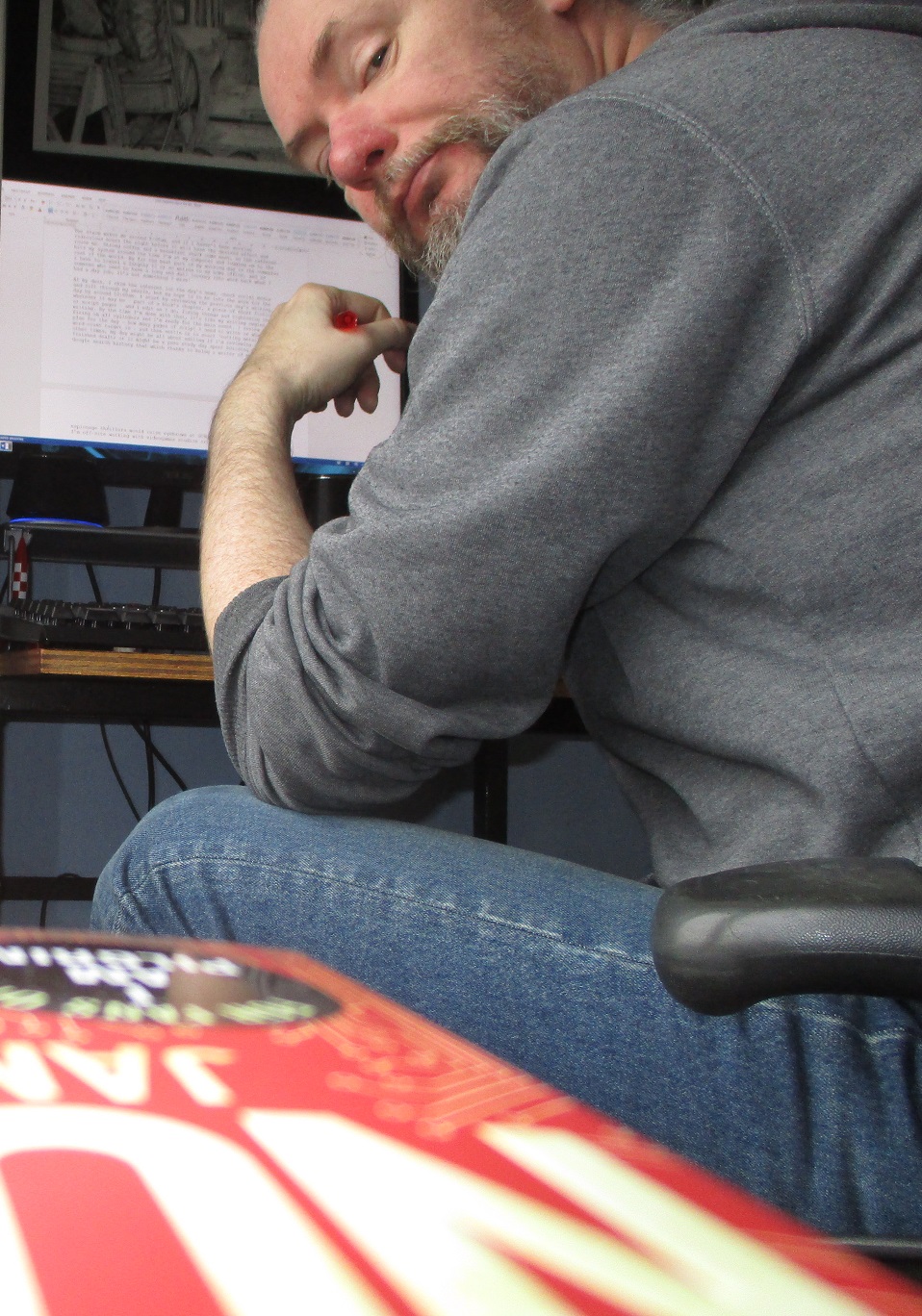
At my desk, I skim the internet for the day’s news, check social media and sift through my emails, but my hope is to be into the work for the day by around 10:00am. I start by reviewing the previous day’s writing, whatever it may be – part of a book’s chapter, a piece of short fiction, or script pages – and I edit as I go, fixing things and tightening the writing. By the time I’m done with that, it’s like my writing engine is firing on all cylinders and I’m ready for the main event. I review my plan for the day – how many pages of script I need to write or what my word-count target is – and then settle in to start ‘cutting metal’. At other times, my day might be all about editing if I’m reviewing a finished draft; or it might be a pure study day spent building up a Google search history that which thanks to being a writer of modern espionage thrillers would raise eyebrows at GCHQ and MI5! Other times, I’m off-site working with videogames studios or on location for research.


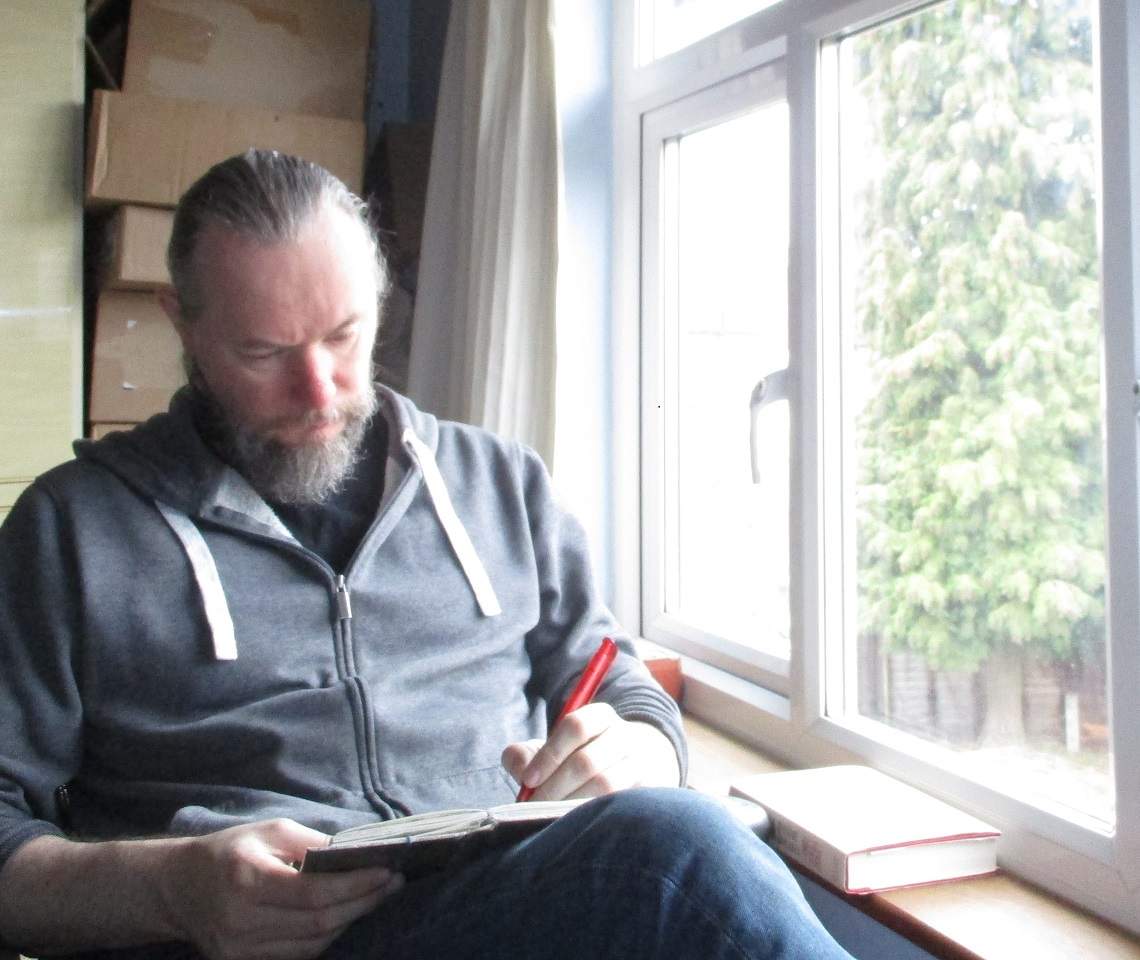
pic-2-jms2_takingnotesI’m typically at my desk six days out of every seven, although being your own boss does allow you the luxury of voting yourself a free day whenever you feel you need one! The trade-offs are good and bad – the writer’s lot can be a lonely and isolating one if you allow it to be, so it’s good to break up the schedule with the occasional walkabout or lunch at a local café. It’s also important to keep up a regular connection with your fellow authors in person, or online, if only to share the high and lows of the writer life, brainstorm ideas or just act as a sounding board.

pic-3-jms3_researchpile

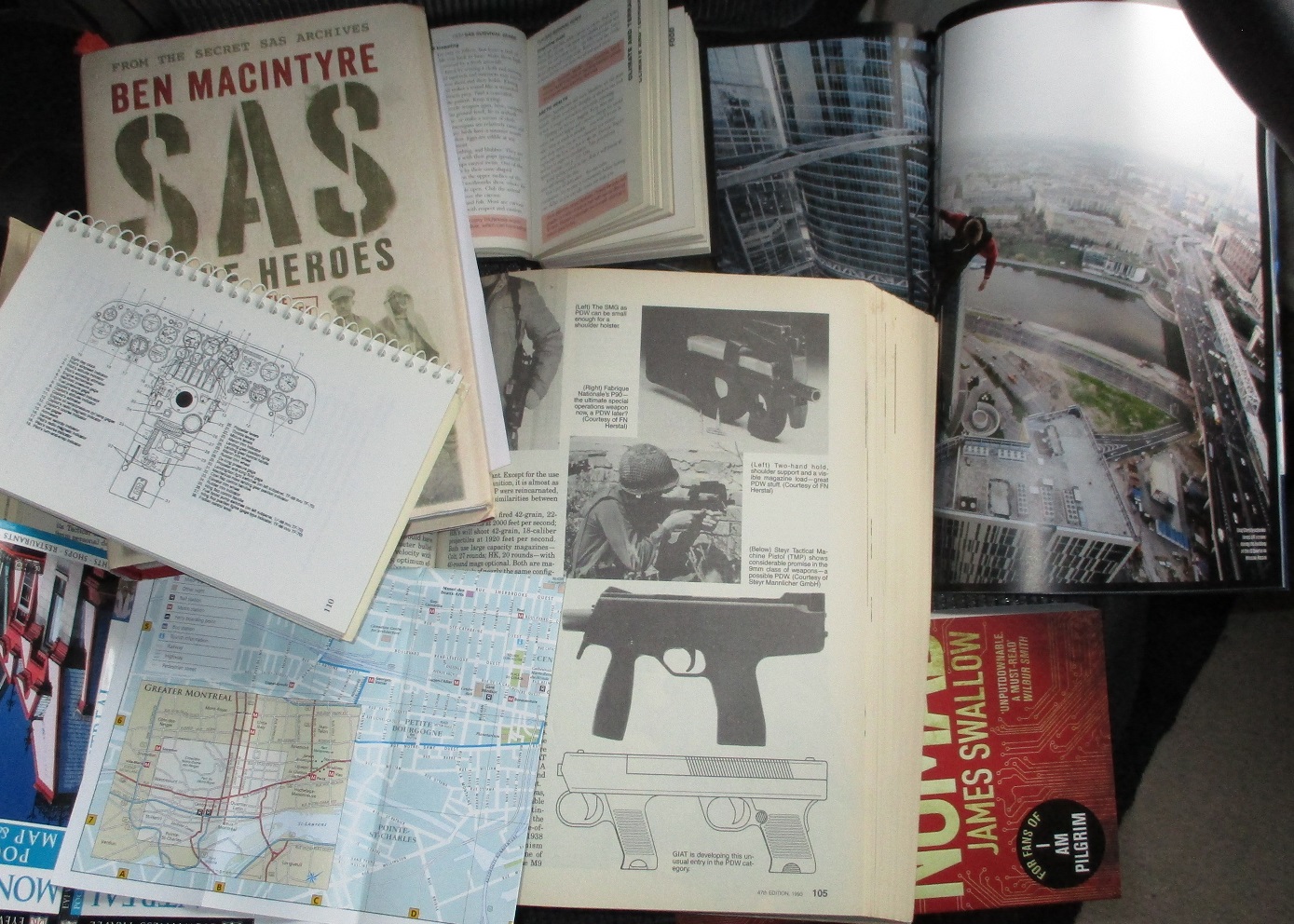
Just a bit of James’ research.

Lunch break comes sometime after 1:00pm, but occasionally it will slip to later if I’m not watching the clock – especially if I am working on something that really captures my attention! I eat at my desk more often than I should, but sometimes I’ll take my lunch on the sofa or out in the garden during the summer months. Then it’s back to the task at hand and I do my best to be done by the time my wife returns from work in the early evening. If I get finished early, I’ll reward myself by unwinding with music, a movie or a game.

But no matter where I am or what time of day it is, I will always have a notepad and a pen within arm’s reach just in case an idea occurs to me outside of “office hours”! As most writers will attest, we are all of us always writing, but we’re not always writing it down


Published by Zaffre, paperback, £7.99

http://jamesswallow.blogspot.co.uk/               #Nomad


Twelfth Night is on the horizon       by Milly Adams


It’s time to celebrate the remembered joys of the festive season so how about a Twelfth Night supper?

Perhaps a lightly spiced Asian meal (why not a takeaway after the feverish home cooking) followed by dessert, and perhaps a light blue cheese. What to drink though? Nothing better for Frost Magazine is the 56 Hundred 2017 Chenin Blanc which can keep you company from starter to the cheese.

Crisp, cool, with a scent of pineapple and peach – a hint of the summer to come. Excellent honest wine.

The Nederburg is an interesting South African winery which has created an initiative in partnership with the Qhubeka charity to raise money to build bikes to transform lives in South Africa.

#DoYourPart is encouraging people to  ride your bike and raise money to get communities across Africa mobilised by making bikes to get them moving – whether it be to work, school or simply just to make it possible to get around.

Sign up or donate at www.nederburgbelieves.co.uk and you can start logging miles for bike parts or a whole bike. Fundraising cycle packs are sent out to inspire one and all to get on their bikes and raise money to build bikes on the Nederburg vineyard in South Africa at a special assembly facility which has been built to support this life changing initiative. The facility, which assembles a minimum of 5,000 purpose-built bicycles a year, will not only offer employment to the community, but also provide all employees with their own personal bicycle, enabling them to improve their lives as well.


If you’d like to know more about Nederburg’s partnership with Team Dimension Data for Qhubeka to mobilise communities across Africa, visit http://www.nederburgbelieves.co.uk/or search #DoYourPart on social media.

So let’s step back into the sitting room, and bask in the glow of the fire, and let the talk drift to Christmas, the relatives, and how long the pine needles will lurk hidden in the carpet, and while doing that, why not sip a whiskey?

We suggest the twelve year old Johnnie Walker Black Label which brings together the flavours from the four corners of Scotland, to create a rather special flavour.

I wonder what John Walker would feel about the amazing empire he built up. He was a farm lad when his father died in 1819 but somehow he wasn’t cast down, but  instead he  powered onwards.

The farm was sold, and the money used to set John up in a grocer’s shop in Kilmarnock, which was far more John’s cup of tea, or should I say, shot of whiskey. Because it was in whiskey distilling where his real genius lay. He began to blend whiskey’s together to get some sort of reliability of taste.

In the 1850s John popped his clogs, and Alexander, his son, took over the business. It was the time of improved transportation: trains and ships and in 1867 Alexander launched Johnnie Walker’s first commercial blend and called it Old Highland Whisky. Before long, this unique blend was available around the globe.

What I didn’t realise was that it was then that the famous square bottle was introduced to reduce breakages, and the label, slanted at precisely 24 degrees. John’s son knew a thing or two about branding. The rest is history.

So here we are, sitting in front of the fire, drinking Johnnie Walker Black Label with its rich, complex and incredibly well balanced in flavour. Full of dark fruits, sweet vanilla and a signature smooth finish which is layered with rich smoke, pea and malt, it creates an impressive whisky to share on any occasion.

Of course, you can enjoy Johnnie Walker Black Label in any way you like – on its own, with a dash of water or alongside your favourite mixer.

But maybe for Twelfth Night you’d like to try a Johnnie Ginger – a spicy mix of Johnnie Walker Black Label and ginger ale, served over ice and garnished with a slice of orange or lime.

Either way, just lift your glass to 2018, and thank John Walker for his distilling skills.


Available from The Whiskey Exchange: https://www.thewhiskyexchange.com/p/550/johnnie-walker-black-label-12-year-old

Milly Adams is the author of several bestselling novels. The latest of which is The Waterway Girls. pub Arrow. £5.99