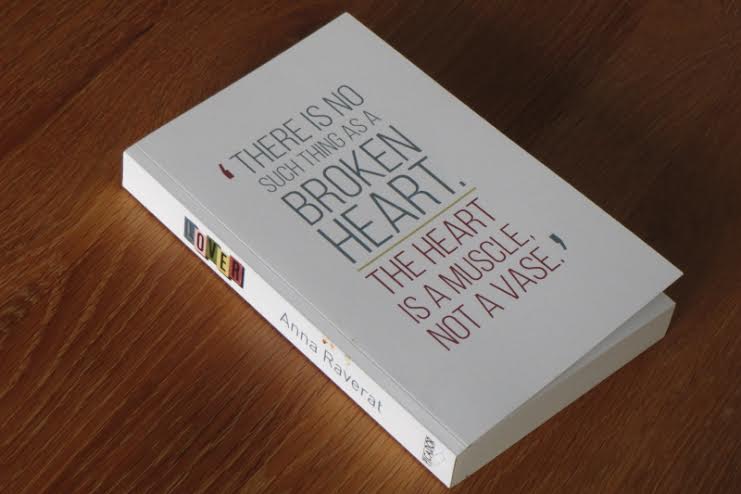
Lover by Anna Raverat. A review by Frances Colville

Lover by Anna Raverat. A review by Frances Colville book review books good reads

What happens when the relationship you thought was solid, even if not earth-shattering, comes to an unexpected end, leaving you with two young children to care for (and explain things to)  at the same time as the job you loved starts to become complicated and untenable?  In her new novel, Lover, Anna Raverat tells the story of Kate and how she copes with just that situation.  T

he book begins with a Charlie  M Schulz quote: Sometimes I lie awake at night, and ask, ‘Where have I gone wrong?’ Then a voice says to me, ‘This is going to take more than one night.’ which sets the scene and tone nicely.

Kate is a well-drawn character with whom it’s not hard to sympathise and her story is told with sensitivity and intuitiveness.  And while it’s not a wholly original plot,  there is enough individuality here to make this novel a good read.

Lover by Anna Raverat  is published by Picador and available in hardback and as an ebook from 10 March 2016


Gardening Fun for the Kids

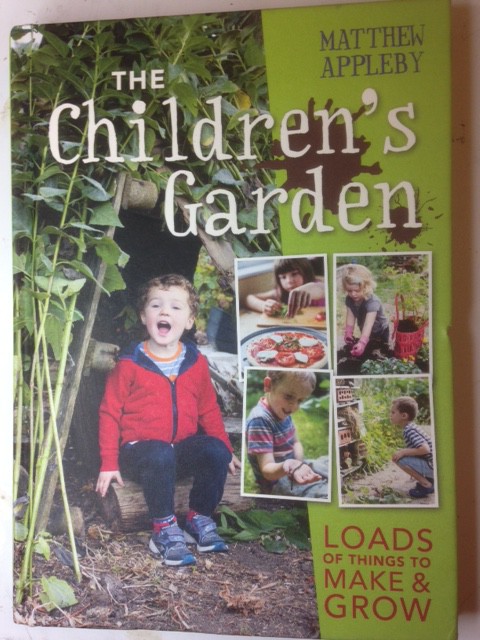
The Children's Garden

The Children’s Garden

There are two ways of getting your children into the garden and away from their Xboxes and Playstations. Either you can lock them outside and ignore their frenzied screams, or you can buy them a book like this.

The Children’s Garden is written with parents in mind. it has lots of great ideas and projects, so that youngsters can actually enjoy their time in the great oudoors. You can have a lot of great fun, with very little money if you do simple things such as pond-dipping or going on bug hunts to uncover beetles and woodlice and other creepy crawlies

The book has chapters devoted to simple things such as growing vegetables, including potatoes and spring onions, which can all be done in just about any container. And it makes the very valid point that children are more likely to eat things that they’ve grown themselves. And they can have lots of fun growing flowers from seed such as nasturtiums and sunflowers – which are really great because they are completely edible so even if the seeds end up in a toddler’s mouth, they won’t do any harm.

This book is a handy size – not too big – and has lots of great pictures. And if you want to inspire your child with a lifelong love of gardens and gardening, this is a great place to start.

The Children’s Garden by Matthew Appleby is published by Frances Lincoln, £14.99

.


Writing Short Stories for Magazines

Short Story Magazines

The Most Important Thing You Need to Know


There isn’t a secret recipe to success so it’s no use looking for the answer here.  If you want to write short stories and sell them there is one thing you need to do before you even begin to write your story. Market Research. You can’t write a story and send it off willy nilly. You may sell one or two that way, if you are extremely lucky, but for continuous success you need to know your reader.

I’d advise selecting one or two magazines that publish short stories. Those accepting them at the moment are, among others, Woman’s Weekly, Take A Break, Fiction Feast, The People’s Friend and Yours. You can find a full list of markets at www.womagwriter.blogspot.co.uk

Read through all of the stories in your chosen magazine and find something that resonates with you, those that might be similar to stories you would choose to write. Most importantly, read them with respect. Don’t sneer and pass judgement. It’s a hard market to crack and if you disrespect your reader your writing will come across as patronising. Guess what? No sale.

Get a pen and paper and make notes. What are the characters names, what ages? Where do they work?  Where are the stories set? What are they about – family, romance, comedy, thriller? Each market has its subtleties and you need to make yourself familiar with them if you are to have any hope of success.

What is the word count? Each magazine has set limits. It’s no good sending a 700 word story  to Woman’s Weekly when they only take 1,000 or 2,000 words. It will come straight back to you.

Now read the entire magazine, the articles, the readers’ letters, the adverts, the problem pages. You can learn so much about the readership by doing this and then you will be able to build a picture of your ideal reader. Do it as an exercise. Imagine a woman buying that magazine – what does she look like? What job does she have? Where does she live? Before you know it you will have a character; you may even have a story – get writing.

Editors are busy people. Make things easy for them. Present your work as per their guidelines, found on their website. If you are unsure how to set things out pop over to writer Sue Moorcroft’s website because she has the best example I’ve seen on how to present a professional manuscript. It will save you so much time and effort  www.suemoorcroft.wordpress.com/manuscript-presentation


I’ll be talking at Words for the Wounded Literary Festival on 16th April and will be happy to chat about writing short stories for the commercial market throughout the day.


Tracy Baines’ stories have appeared in Woman’s Weekly, Best, Take a Break, The People’s Friend, Candis, My Weekly, Yours in the UK – and magazines in Scandinavia, Australia and South Africa. She has completed a book on Eating Disorders and is now working on a novel.

On International Women’s Day FEMALE ARTS launched Friend Scheme as a #PledgeForParity

female, arts, feminismFemale Arts magazine launched a friend scheme on International Women’s Day, 8 March 2016.

The online arts review magazine, headed by Editor-In-Chief Wendy Thomson is based at South Street Arts Centre, Reading and reviews events across the UK.

“The theme of this year’s International Women’s Day is #PledgeForParity where business leaders from Sir Richard Branson, founder of the Virgin Group to Mark A. Weinberger the CEO of E&Y have made the pledge. We’re inviting everyone to make the pledge by joining our friend scheme so that we can continue our work to promote gender equality in the arts.”

Female Arts magazine annually reviews hundreds of female led performances, exhibitions and events and has a dedicated volunteer team of writers headed by an editorial team including London editor Michael Davis and Interviews Editor Amie Taylor.

Female Arts also produce events. Wendy Thomson said, ”As part of this year’s International Women’s Day celebrations we co-produced the launch of a new award for emerging female playwrights at the Greenwich Theatre in London – RED Women’s Theatre Award on Sunday 6th March 2016. We have also organized events at The Southbank Centre and The Bread and Roses Theatre, working with other advocates for gender equality including Gender and Performance (GAP) Salon and the So and So Arts Club.”

The Female Arts friend scheme is available to join from £30 a year at www.femalearts.com/friend where the benefits include a profile on the Female Arts website and networking opportunities.

Facebook: www.facebook.com/femalearts Twitter www.twitter.com/femalearts

International Women’s Day #IWD2016  #PledgeforParity  http://www.internationalwomensday.com/


J.D. Robb Brotherhood in Death Book Review

J.D. Robb Brotherhood in Death Book Review

J.D Robb (AKA Nora Roberts) does it again. This is a riveting and well written book. It is almost impossible to put it down. A superb, entertaining thriller. Get your hands on a copy now.

The new novel featuring homicide detective Eve Dallas from the #1 New York Timesbestselling author of Devoted in Death.

Sometimes brotherhood can be another word for conspiracy. . . .

Dennis Mira just had two unpleasant surprises. First he learned that his cousin Edward was secretly meeting with a real estate agent about their late grandfather’s magnificent West Village brownstone, despite the promise they both made to keep it in the family. Then, when he went to the house to confront Edward about it, he got a blunt object to the back of the head.

Luckily Dennis is married to Charlotte Mira, the NYPSD’s top profiler and a good friend of Lieutenant Eve Dallas. When the two arrive on the scene, he explains that the last thing he saw was Edward in a chair, bruised and bloody. When he came to, his cousin was gone. With the mess cleaned up and the security disks removed, there’s nothing left behind but a few traces for forensics to analyze.

As a former lawyer, judge, and senator, Edward Mira mingled with the elite and crossed paths with criminals, making enemies on a regular basis. Like so many politicians, he also made some very close friends behind closed—and locked—doors. But a badge and a billionaire husband can get you into places others can’t go, and Eve intends to shine some light on the dirty deals and dark motives behind the disappearance of a powerful man, the family discord over a multimillion-dollar piece of real estate . . . and a new case that no one saw coming.

Brotherhood in Death is available here.


30 Days of Gratitude Day Ten #30daysofgratitude

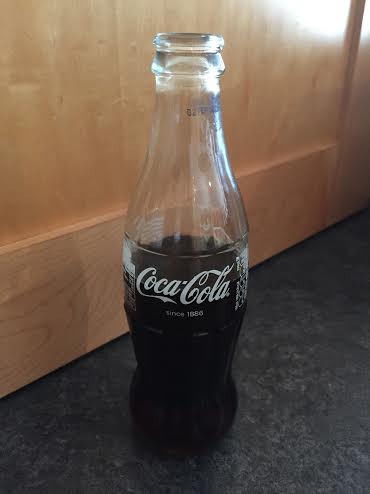
Today I am grateful for the small pleasures in life. One of my small pleasures is coca cola in a glass bottle. There is just something about coke in a glass bottle that makes it more enjoyable and taste better. It also looks cool and retro. It is more expensive than ordinary cola but there is just something about it and if you can buy yourself a little bit of joy, then it is completely worth it. It is one of my favourite things and I love how satisfying it is when you take the lid off with a bottle opener. It is a rare, but much appreciated treat.

coca cola, coca cola glass bottle, cola in a glass bottle

Catch up on other days:

Day 1.
Day 2.

Day 3.

Day 4.

Day 5.

Day 6.

Day 7.

Day 8.

Day 9.

What are you grateful for?


30 Days of Gratitude Day Nine #30daysofgratitude

Today I am grateful for cats. I love the furry little creatures. I have had four cats in my life. Rusty, Gizmo and Beauty have all sadly died but Trigger is still alive. He lives with my parents as he is the family cat and he recently met my son. My son had never seen a cat before and loved Trigger and stroked him. My husband also had an amazing cat called Natasha who died recently. We hope to get another cat soon so Luke can have the gift of growing up with a pet. We had Rusty for fourteen and a half years and we still remember her and how amazing she was to this day. Here is to cats. They are the best.

awesome cat pictures cat picture

Catch up on other days:

Day 1.
Day 2.

Day 3.

Day 4.

Day 5.

Day 6.

Day 7.

Day 8.

What are you grateful for?


Caroline Moran Raised By Wolves Interview

Caroline Moran InterviewHow did it feel watching series 1 go out? Where did you watch it, and who with?

I live in Sheffield, so I was at home, and my sister Claire, who is the inspiration for the character Yoko, also lives there. So I would go over to her house to watch it, she would take my phone off me so I wasn’t tempted to look a Twitter, because that’s never a good idea. I found the whole thing very, very, very surreal. Obviously I’d seen every episode a lot, because I’m on set all the way through shooting, and then in the edit. But when it goes out, it feels like opening night in the theatre. Just seeing something you’ve made on television is the pinnacle. It doesn’t get any better than that. I can die happy, right now.

Does it feel very vulnerable; having something you’ve worked on for so long, and is so personal, suddenly out there for criticism?

I kind of have all my anxiety a while before it goes out, actually, when we’re showing it to a few people and getting their opinions. Once it’s out there in the world, there’s nothing else you can do. Hopefully people will enjoy it. If they don’t, hopefully, they’ll enjoy not liking it. I let it go at that point. That’s why I try not to look at Twitter – there’s not really anything I can do at that stage anyway. Luckily, when I go to the supermarket, I’m alright, no-one knows that I wrote that thing on television that they hated last night. I’m not an actor!

Did writing series 2 feel different from doing the first series?

I really wanted to make sure the quality didn’t dip. And we wanted to get a bit more plot in there – we didn’t have a huge amount of that in the first series. And we knew we wanted to get more Della in; we knew that we wanted to get Grampy more into the family. And we knew the characters a lot better, and the actors, which helped us when we were writing. It felt a bit more pressured, because first time round we didn’t know what we were letting ourselves in for. This time, we knew the process, so we felt like we needed to get it right.

You’ve written for theatre in the past. Does writing for TV feel like a very different process?

Most of what I know about writing for TV is what I’ve learned from theatre. I guess the main thing is, in theatre you can tweak stuff. You can see the audience’s reaction, and then change things for the next night based on that. In TV, obviously you can’t do that. That’s where our executive producers are really helpful, because they’ll be that first audience for us.

When you sat down to write series 2, did you know what you wanted to do? Had you kept some stuff back from series 1?

We put everything into series 1 – we totally emptied the coffers. I think you shouldn’t hold back, you need to get it all in there, because you never know if you’re going to get another series. So every trick and joke went into the first series, and we had literally nothing for the second series. When we started brainstorming ideas, we quite quickly got to the idea of the final episode, and actually I wrote that first, I just did a draft over a weekend for that. Once we had that, we knew where we were going. Ultimately, they end up going on holiday in a caravan, which is based on holidays we went on in caravans as kids. We actually went away on location, it felt pretty epic. There were dunes to play with, and a caravan. And I think that’s my favourite episode as well. That was in Formby, north of Liverpool. They had red squirrels there! And it was so beautiful! We had such a great time. We had to evacuate though, because there was a massive storm, and it looked as though the catering bus would tip over.

How involved do you guys get on set?

Pretty involved. I think I’m probably quite irritating. I go on set – I love that bit of it. I can talk to the actors, and the director’s very good at taking suggestions. And then I’m in the edit, which is super-intense. And before that, there’s the writing period. So since May of last year, I’ve had no life – I’ve basically been doing Raised By Wolves. I’m aware that I’m quite mad

How did it feel getting everyone back together for the second series?

It just felt so right, being back with those guys. I’m actually friends with them all now, and really good friends with Rebekah Staton. She’s not Della, so at the end of every day, there’s a period of time when she winds back into being Rebekah. And Rebekah is very feminine and gentle, but has traits of Della. So you get Della plus this really cool woman as well. She’s just awesome. I’d love to write stuff for her forever.

How does the writing process work with the two of you?

We start off in a room together, and we brainstorm. We do big series-wide ideas, just chuck loads of stuff into the pot, and don’t think about structuring anything. And then we go our separate ways, and we start structuring and drafting. We don’t then write together until the very end, when we go through it and tart up lines and put in extra jokes. Or if there’s a crisis. We spend a lot of time on Skype.

Obviously Germaine and Aretha are based on the two of you, and you’ve mentioned that Yoko is based on another sister. Do any other family members think characters are based on them, and does it cause family ructions?

There are actually eight of us siblings – only six in the show; we thought eight was unmanageable, so we dropped two. So there’s been a bit of debate about who got merged with who? There are actually three boys in our family, and only one in the show – we thought it was funnier to just have one boy among all those women. So the boys gave us grief – “Are we that interchangeable that we’ve just merged into one?” We explained that it was for the purposes of comedy. We’ve spoken to various siblings about various things, and they’ve come up with ideas or music suggestions or Wolverhampton phrases, so they’ve been really supportive of it, and they watch the show whenever it goes out.

One of the great things about the show is the performances. Were you involved in the casting?

Yes, in the early days. Helen, who plays Germaine, just walked up to Caitlin at a book signing and said “If you ever make a TV show, can I be in it?” And that’s how they met. Caitlin would have done exactly the same thing. She used to write letters to Comic Relief, and Lenny Henry once replied to her, I think.

So Caitlin took her number?

Yeah, she did. Which is again incredible, because the number of times I’ve given Caitlin a bit of paper with something written on it and she’s lost it. But this one she kept, she didn’t lose it, and about a year later, when the casting started, we got her in, as well as loads of other people. But there was just something about her from the beginning. And with Aretha, obviously we had a whole load of ginger people in a room, auditioning. Although Alexa, who actually plays her, is blonde! And Molly, who plays Yoko, came in to audition for Germaine, and we just thought there was something about her, and we wanted to see her again. We hadn’t cast Della by that point, but then Rebekah Staton turned up. And Phil Jackson as well – the classiest man in television. He’s a prince.

What can you tell us about the series?

Germaine goes on an exploration to discover what it’s like to have a man in her life. Aretha finds a kindred spirit out in the world, and we realise she has a vulnerable side, actually. Yoko reaches adolescence, and becomes very worried about the environment, and extinction of animals. We explore Della’s work life and romantic life. Grampy is living in the coat cupboard, and he has a romantic liaison. Everyone’s got a bit of business