Michelle Williams: “I Have Struggled To Find Acting Work For Three Years”

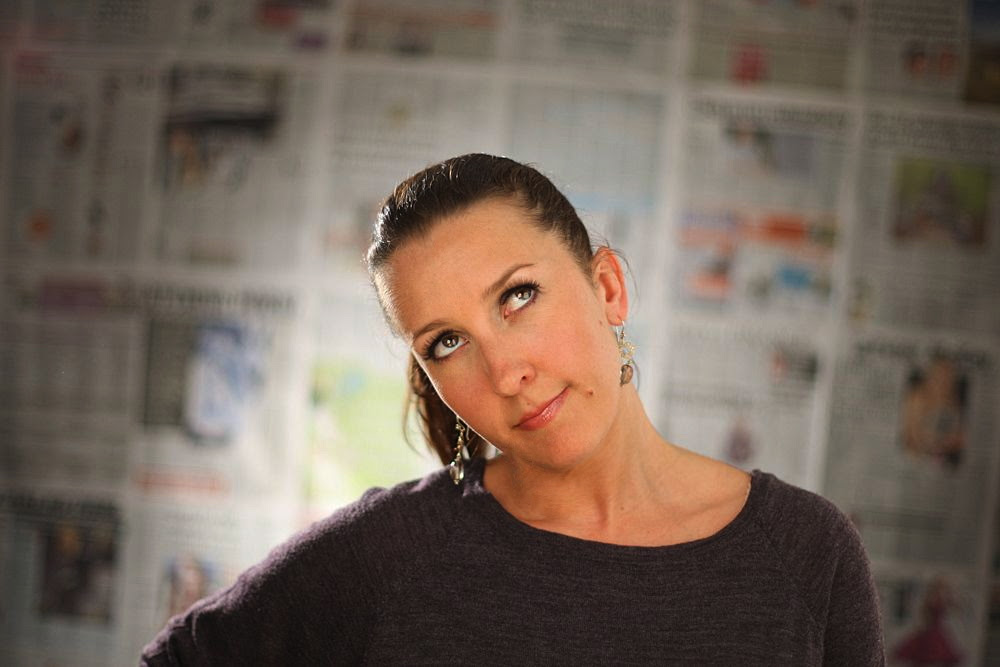
michelle williams i haven't find work in three yearsActress Michelle Williams has opened up about her difficulty finding acting work in the past three years.

She is getting acclaim for new film, indie drama Manchester by the Sea, which is one of only three films she has been in since 2013. In an interview with Porter magazine she put it down to trends:

“In the past three years I have found it really hard to get work, It is very seasonal, you know, your popularity or marketability or whatever these things are, and I’ve been like in a little bit in a winter… My expectation, because of my early experiences, is failure, and so when something good happens for me, I am dazzled by it, I am like on my knees, I am just so grateful, so happy, so excited, because it’s not what I expect,”

Luckily she has two films coming out in 2017 Wonderstruck and The Greatest Showman.

The 36-year-old actress is also worried that roles might dry up when she turns 40.

“People talk about it like it’s a sort of cliff that everybody gets pushed off! It’s hard to imagine that you’ve reached this kind of age where suddenly the rug is pulled from underneath your feet.”


What do you think?


If you are an actor then check out my book How To Be a Successful Actor: Becoming an Actorpreneur. It is available in print and in all eBook formats on both Smashwords and Amazon.


Interview With casting director, coach, actress & founder of Sound Advice Kate McClanaghan

Interview With casting director, coach, actress & founder of Sound Advice Kate McClanahan voice over work1. Tell us a bit about yourself. 

I’m a seasoned casting director, producer, coach, actress and founder of SOUND ADVICE, a unique, one-stop option for unparalleled voice over coaching, and exceptional demo production for all skill and experience levels.

I had been a freelance producer since I was 19 years old, producing commercials for Coca-Cola, McDonald’s, Dodge, JC Penney, FORD, Sprint, SEARS, and Kraft, to name a few. I had always been freelance because I’m a union actress as well. I’ve studied with the Royal Shakespeare in London, and came up through Chicago’s Second City and ImprovOlympic (IO), and even brought 9 shows to the Edinburgh Fringe.

2. What made you start Big House Casting & Audio and Actors’ Sound Advice?

BIG HOUSE came about to service the various casting and production demands that consistently kept coming in the door after I had produced a number of freelance projects for NPR. I was already freelance, I just named it after the enormous, greystone building we worked and lived in, in Chicago.

I started SOUND ADVICE because I couldn’t find a single, reliable source that would take me through the entire process of voiceover training, demo production, branding and marketing the career I was after. There were random people who did pieces, but didn’t have the whole in mind. I wanted a single source that honestly had my best interests in mind, understood my greatest commercial assets (perhaps even better than I did), and could produce my demos well enough to truly advance my career, not just my voiceover!

I began assisting friends, and after coaching and producing more than 100 demos for them and seeing them achieve remarkable results rather quickly, I realized my casting and production skills had a greater purpose!

3. How important is training?

It’s imperative. Without it, regardless of how naturally talented, smart, and mellifluous the voice might be… you’re dealing with a loose cannon. You can’t rely on a talent who doesn’t know their job. Trusting a million-dollar campaign to a complete hack puts everyone’s reputation on the line. And your mettle will be tested. There are no beginner, intermediate and advanced talent in this industry. You’re either a professional… or you’re not. Training defines your professionalism and instills confidence. And commerce is confidence.

4. Any tips for acing an audition?

Instead of trying to second-guess what those auditioning you are thinking, give them something interesting to think about. That’s the job! Besides they honestly aren’t thinking a thing. It’s precisely why you’re there. How would YOU play it?

THINK for yourself! In fact, entertain yourself and you’ll find your audience!

5. How different is voice over acting from acting?

There is very little, if any difference at all. Acting is acting is acting.

Voice acting is closest to film acting than any other medium, because they both demand a very vivid imagination and the desire to tell a story, often in the most constricting conditions. Personality and the ability to self direct are key attributes as well.

Perhaps the greatest difference is the fact that in nearly all voiceover scenarios, you’re all by your lonesome in the booth with no one to play off but yourself.

6. Tell us about your books.

The SOUND ADVICE Encyclopedia of Voice-over & The Business of Being a Working Talent is currently in its third edition. (There will be a fourth sometime next year.) It’s more than 500 printed pages of well-vetted industry insider information as well as How To Get An Agent, the branding, marketing and promotion of your career, to more than 100 printed pages of terms and phrases commonly used in all manner of acting for recorded media.

7. How do you become a successful voice over actor?

Do your homework. Practice. If you were to honestly dedicate 25 to 30 hours a week, what would be considered part-time for any other business, for a year or more to creating a voiceover career for yourself, then the chances of becoming successful in this field is more likely—provided, of course, you have realistic expectations and you wisely allocate your time.

You need a proper Vocal Warm Up, and maintain it 4 to 5 times a week for a solid half hour to 45 minutes at a time. Granted it may take you a couple weeks to incorporate it into your weekly routine, but without it your vocal precision and stamina won’t be as reliable as it should be.

Check out our website www.voiceoverinfo.com. Study up. Listen to a lot of demos.

Listen to our podcasts then email us. We have talent all over the world. Provided you have a reliable computer and stable Internet service, we can generally work with just about anyone from anywhere—we just don’t invite everyone to do a demo. (Our name is on it too. We don’t produce a demo track in an hour. Nearly every other demo production house does.)

Everything we do as SOUND ADVICE, just like in nearly everything in voiceover, is one-on-one. We don’t cookie-cutter anything. And we offer the best insight because we continually survey the industry as to what’s needed and wanted from talent in every aspect of the industry.


Patricia Clarkson Says ‘A white male actor should never complain’

 The Guardian  particia clarkson interview white men should not moanPatricia Clarkson has hit out at people who complain about female-led movie. The 56-year-old actress has had an illustrious career spanning decades, but she has faced pay inequality and notes that there is still a backlash. She used the new Ghostbusters film as an example, which stars an all-female lead cast which includes Kristen Wiig and Melissa McCarthy.

“There are still so many movies made starring 50 men and one woman! A white male actor should never be allowed to complain about anything. Shut up and sit in the corner. I mean, seriously!”  She told The Guardian

“The odds of us having films made which star women… Everyone still references one movie: Bridesmaids! Ghostbusters is a great thing and I love these actresses. I can’t wait to see it.”I think everyone has a right to a good moan, but her point about the Ghostbusters film is a good one.

She also said that female characters are usually “softened” or “some ridiculous caricature like a dominatrix or a one-dimensional boss with no life and bad hair.”

She went on: “When I was younger, of course I had people act inappropriately to me. I’ve had certain directors yell at me. But I didn’t stand for it and I didn’t let it go far enough for it to be in any way abusive to me. People didn’t speak up as much as they do now. Women have risen. But we’re still underpaid and we’re still a vast minority in this business.”

Actresses who have spoken out about inequality in the film industry have talked about a backlash, but the more strong people- both men and women- who fight for equality, the quicker we will get there.

What do you think?


If you are an actor then check out How To Be a Successful Actor: Becoming an Actorpreneur. It is available in print and in all eBook formats on both Smashwords and Amazon.


Interview With Bestselling Author Margaret Graham

housedivided

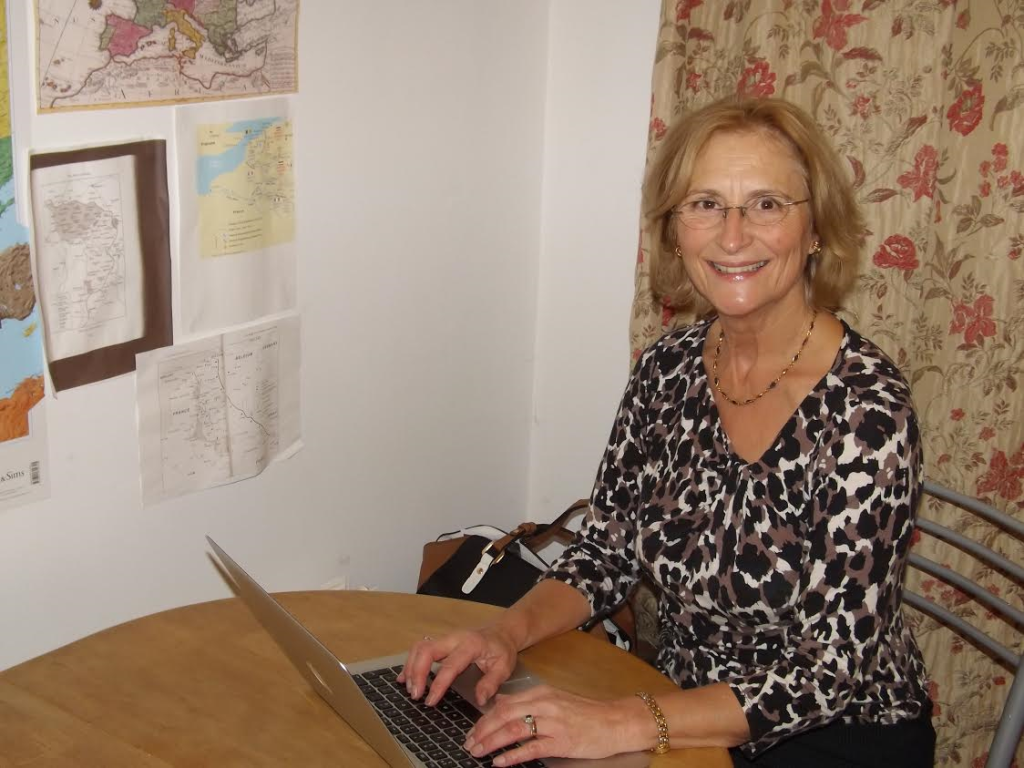
What made you get into writing?

Having a 4th child. She was lovely but seldom slept and mithered a great deal. I needed to ‘get away’ even if only for half an hour. So I started writing a book about my mother’s rather interesting life growing up in the North East just after the 1st World War. Halfway down the first page I realised I didn’t really know my mum in that way, only anecdotes. So it became fiction, but based on her life. It’s called After the Storm.
margaretgraham

Did You find becoming a published writer easy?

Not at all. Having embarked on the novel I joined a writing class. I do wish more would these days, or at least learn the basics of structure, and how to edit one’s work. The class was not only crucial but also supportive, because I was working alongside like minded people, and it helped me enjoy the process. Mark you, my writing class had an excellent tutor, and you need to check this out. There are a lot of charlatans out there, selling their services when they know diddly-squat – and charge a lot. If you have the time, try ARVON and other residential courses. Also the weekend Winchester Writing Festival. That’s fantastic.

Then, of course, you reach the stage where you have a manuscript, finished. What next? How to get that publishing contract?

Try and find an agent. But how do you get the interest of an agent. I entered a competition and was one of the Best Entries. This helped when circulating the manuscript. I was finally taken by an agent who knew that Catherine Cookson, who wrote about the North East had just left Heinemann. Mine was a novel about the North East, and the publishers were immediately interested. Mark you, I then had to double it in length, put in a secondary character and sub plot, and do it all in 6 months. I was on my way.

So it is very much about what the publisher needs at a particular time. However, as you can see, the author does need to be flexible, and listen to the experts, and do as they want. Basically we are providing a product, which they have to need in the first instance. Then it has to be tweaked to be the best product you can create. They are invariably right. As a writer, you need patience. Learning to write well took me 4 years. Over those years I was serving an apprenticeship really, lhoning my skills, so that when the time came, I could do as they advised.

What else would you have liked to do?

Be a star. I feel the world has been deprived of a great talent!

What is your writing process?

Find that germ of an idea. Then think, think and think again, to see if it it will run as a novel. I work out the normal world, point of change, the tension, motivation, and totally getting to be the main and secondary characters. Alongside this, because I am invariably writing out of my time and place, I need to research, make notes, become so familiar with the context so that I can swim amongst the period, or situation, without overloading it with show-off details. Therefore I do a lot of reading, and that old chestnut – thinking again. Then, when I have a thorough plan, and by this I mean a chapter by chapter plan I get my head down and write hard for about 8 weeks. Because I’ve been doing it so long I have the experience to get it more or less right, and to create a sound structure. There is only one structure, you know. And it must be followed. It is the author’s ‘voice’ that makes a novel ‘different’. That’s the first draft, then I go through and alter, tweak, edit. So the second I usually sent into my publisher. Writers need to designate writing time. It’s a job, even if you already have a day job, so discipline yourself to create your writing time. You will find you do much of your thinking whilst traveling, driving, working, and at the end of the day you’re a bit further on.

A House Divided is the third Easterleigh Hall novel. How hard is it doing a series?

Hard in a way. You have to remember all the characters inside and out. What are their ages? Appearance, little ways, and then when you start the novel you have to try and make the novel stand alone, though it must also bring previous readers of the series up to date. I think that first chapter is the most difficult.

When can we expect another EH novel?

In a year.

Have you become close to the characters? Oh yes, I become all the characters really. You have to or it doesn’t work.

Can you tell us where the series is going next?

I would imagine into the 2nd world war. Perhaps Tim will go into the secret side of the war, but not quite sure about anyone else yet. It will come to me.
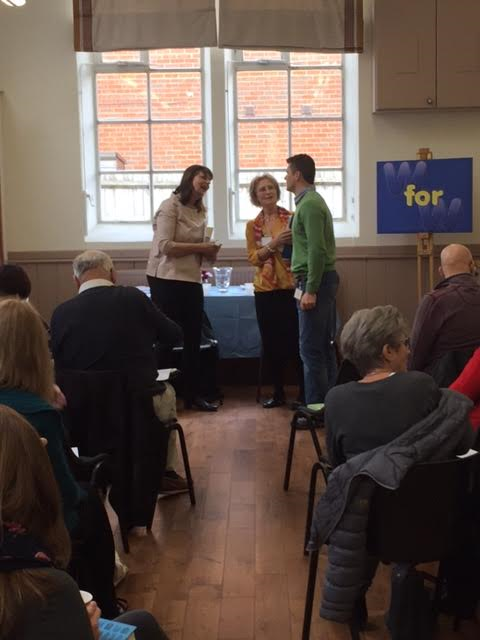
Lizy, me and Matt

What do you like to do when you are not writing? I run my charity, Words for the Wounded, which raises money for the wounded through writing events. We have an annual Independent Author Book Award, and we also run workshops and an annual LitFest. We’ve helped a few writers along in this way. Last year’s winner was picked up by an editor, and others have found that the publicity of being placed has helped their sales. I love working with Frost, and reviewing books, and I do like to play truant and just have a good time.

Any tips for aspiring writers.

Work hard, go to writing classes, and literary festivals, listen to authors talking, and listen to a publishers’ or agents’ advice. READ books, learn how to write short stories, because publication in womens’ magazines promotes sales of your books. Most of all, don’t rush. Do several drafts, edit carefully, and enjoy it. Life’s too short not to.



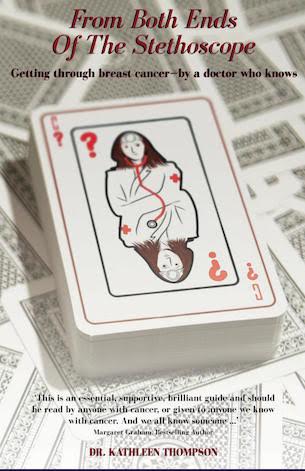
From Both Ends of the Stethoscope By Dr Kathleen Thompson Book Review

From Both Ends Of The Stethoscope by Dr. Kathleen Thompson book review, health, breast cancer,I have to admit that I thought From Both Ends of the Stethoscope would be good. I also knew that it would educate me, but what I didn’t realise was that Dr Kathleen Thompson would make her book so entertaining and readable. The book is outstanding, an essential for anyone with breast cancer and their family. Dr Kathleen Thompson writes about her own experience in a graceful and poignant way while also giving you the inside track. You would only get this type of information from an insider and Dr Kathleen Thompson is an insider twice over; as a doctor and cancer survivor. I was incredibly impressed by her book. Her writing is so good she could write a novel.

Far from a fuddy medical book this guide takes you by the hand and tells you everything you need to know. It takes the process step-by-step, giving invaluable information at every point, all intertwined with Dr Kathleen Thompson’s fine prose on her own experience. I loved this book. Well done Dr Kathleen Thompson. Well done indeed.

Dr Kathleen Thompson is Frost’s medical expert but I promise you this has caused no bias for this review. This book is stunning and I am proud to have Dr Kathleen as one of our writers. The woman is an inspiration. You can send us any questions for her about any medical problem to frostmagazine@gmail.com or tweet us @Frostmag

Whilst dealing with her own breast cancer, Dr Kathleen Thompson recognised the desperate need for a ‘going through breast cancer’ guide. Her experiences make a fascinating story in themselves, and Kathleen uses them to guide the reader through diagnostic tests and treatment options, what to do when things go wrong, and when mistakes are made. All the while she explains what is happening and why. 
Recognising that anyone encountering cancer is in a state of shock, she delivers factual information intermingled with her own story, in an easily-digestible, and often amusing format. Each chapter ends with further information sources and a summary. 
Kathleen looks back on her cancer journey with honesty, humour and compassion, and with the benefit of her medical understanding and knowledge of the system.  
Later in the book she also explains medical research and how to assess the credibility of the numerous cancer treatment claims, and what we can all do to protect ourselves from cancer.


Read an excerpt from From Both Ends of the Stethoscope here.

Both Ends of the Stethoscope by Dr Kathleen Thompson

Paperback ISBN: 978-0-9935083-0-1

E book ISBN: 978-0-9935083-1-8

http://www.amazon.co.uk/dp/B01A7DM42Q


How to Inject Colour into your Garden

Your garden definitely deserves some colour this spring and it’s so easy to introduce it to your outdoor space – and you don’t need to churn up your lawn or dig up the borders! Here’s how to inject some colour into your garden quickly and easily.

Introduce seasonal plants 

As well as carrying out the usual seasonal tasks in your garden, introducing seasonal plants also ensures you get to enjoy colour all year round. Daffodils in spring will add a spirit lifting dash of yellow, while a butterfly bush (Buddleia) blooming in the summer will not only look stunning but attract the attention of colourful wildlife too, such as bumblebees and butterflies.

In autumn and winter either opt for bedding plants, such as pansies or sweet William that can withstand the cold, or opt for shrubbery and bushes that not only add texture but introduce gorgeous colours to the garden as their leaves change – scarlet willow is a good choice.

You can either nurture these plants from seedlings the season before, or pick up mature flowering shrubs from YouGarden to add a boost of vibrancy to your outside space.

Feature colourful planters 

If your plant life isn’t as colourful as it could be, make up for it with vibrant planters instead. You can introduce any hue to a garden and you don’t need to stick to a theme. DIY stores feature hardy plastic pots in every shade of the rainbow that you can transfer plants to, or you could get crafty with some paint and a stone planter. Here are some great ideas to get you started – the brighter the better!

Revamp your furniture… 

If your garden furniture is a sad brown tone or a faded version of something that was once bright and fun, book in some time this weekend to give it a revamp. Strip back a wooden bench and give it a new lease of life with a bright paint job and varnish it to seal the deal. Refrain from boring browns and blues, instead favouring an eye popping yellow or even a bold pink.

If you happen to have metal furniture, there’s paint or spray paint for such a job too, so anything can be instantly revamped after a trip to Hobbycraft or your local DIY store.

…and your shed 

While you’ve got the paint out, why not give the garden shed a makeover too? Choose a colour that isn’t going to give you a headache, but still makes a statement in your garden. Why not paint the slats in different colours? Or just coat the roof trim in a neon shade?

Accessorise 

Having guests over for a BBQ but haven’t had time to implement any of the above tips? Then introduce some vibrancy with your al fresco dining accessories: bright place mats, napkins and glassware will instantly add playfulness to your outdoor space.

Introducing colour to your garden needn’t be hard work… employ some of these tips and tricks and start enjoying your outdoor space now!


By Patrick Vernon.


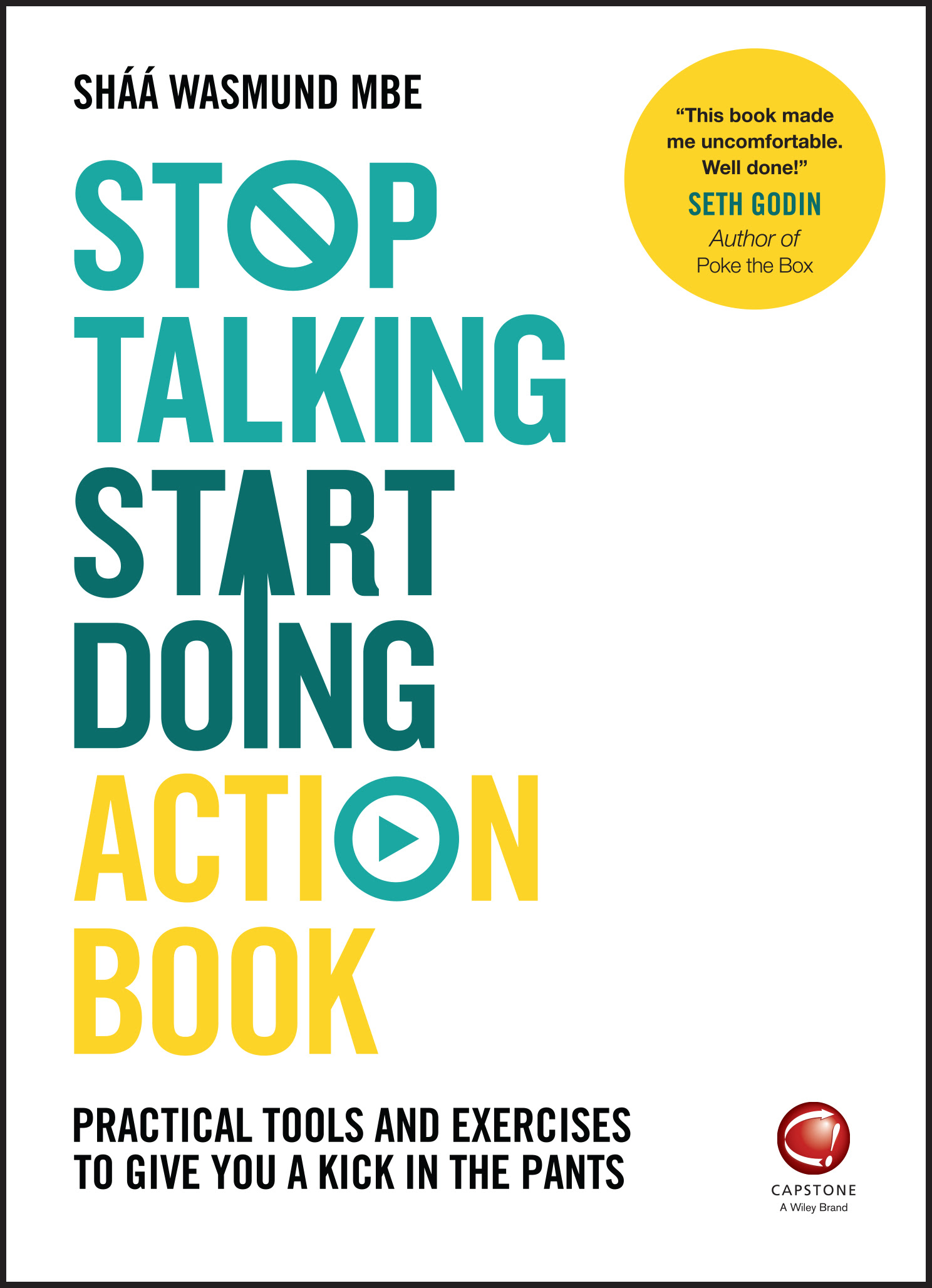
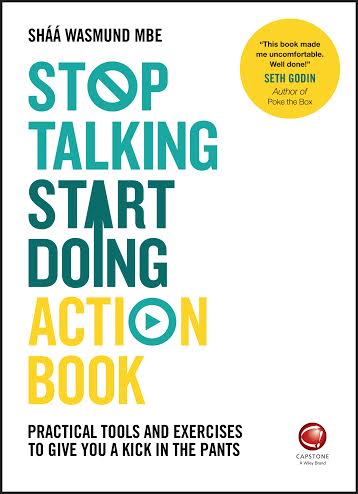
Stop Talking Start Doing Action Book By Sháá Wasmund MBE Book Review

Stop Talking Start Doing Action Book By Sháá Wasmund MBE Book Review

In 2013 I very briefly met Sháá at a How to Create A Non-Fiction Bestseller seminar at RADA. Sháá was great during the seminar, giving lots of advice and getting good answers out of the publishers who were there. Despite everyone in the room wanting to talk to Sháá she took some time out to acknowledge me. I always remembered her courteousness and generosity. She has charisma and talent in spades. When I got the press release for her new book I jumped at the chance to do a review.

This book works for a number of reasons: it can be read in one sitting (as I did), it has practical tools and exercises to do throughout the book, it has inspiring quotes, and the book is well structured. It allows you to take one step and then another. By the end, who knows what you will have achieved? The book gives you a kick in the pants while removing all of the excuses you make to yourself. It also takes advice from other self help writers and either expands on them or uses them to make a point. All in all this is a great inspirational book which helps you get your butt into gear. I wasn’t disappointed.

Stop Talking, Start Doing Action Book: Practical Tools and Exercises to Give You a Kick in the Pants is available here.


Stop Talking, Start Doing Action Book

Practical tools and exercises to give you a kick in the pants

 By Sháá Wasmund MBE

Published by Capstone.

Paperback original and e-book, £9.99

ISBN: 9780857086860

New book shows how to apply an entrepreneurial spirit to life

The Stop TalkingStart Doing Action Book is a motivational kick in the pants for anyone who has an itch to try something new or feels that there must be more to life. Encouraging people to face their fears, it helps readers identify their personal starting point and develop a plan to reach their goals.

Stop TalkingStart Doing Action Book is written by bestselling author and leading businesswoman, Sháá Wasmund. Awarded an MBE in 2015 for her services to business and enterprise, she helps readers apply an entrepreneurial spirit to achieve more and gain greater fulfilment from life.

Whether readers want to ditch their partner, seek a promotion, renovate their house, write a book, or start travelling, the Action Book demonstrates how to find the inspiration, self-discipline and confidence to move from talking to doing.

“As time roars past our ears we drift, deliberate, doubt and take ourselves too seriously” says Shaa. “But there’s never been a better time to start something. Now more than ever we live in a world of opportunity.”

A follow-up to the bestselling Stop Talking Start Doing (Wiley, 2011), the Action Book includes new tools and exercises to support readers who want to put their ideas into motion.


About the author:

Sháá Wasmund is a graduate of The London School of Economics. Her entrepreneurial career had an unusual start. At 22 she won a competition to interview Super Middleweight boxing champ Chris Eubank and ended up helping to promote his next fight to a sell-out 48,000 live crowd and an 18 million TV audience. Sháá remains an ardent boxing fan.

Shortly after she set up her own PR and marketing company and won the then relatively unknown vacuum cleaner company Dyson as one of her first clients. Working alongside Sir James Dyson helping to establish Dyson as a global brand taught Sháá more about business than any MBA. To this day, Sháá credits James as being one her biggest sources of inspiration.

Sháá’s love affair with the Internet began after she became a founding director in Sir Bob Geldof’s online travel company. A year later, Sháá raised substantial funds to launch mykindaplace.com an early social networking site. The company was later sold to BSkyB.

Sháá is an international bestselling author, prolific public speaker, digital native and passionate champion of small businesses. Amongst other accolades, Sháá has been voted by the Institute of Directors as one of the UK’s Most Connected Women.

In 2009 Sháá launched Smarta.com, the UK’s #1 Resource for Small Business. In 2011 Sháá launched ‘Smarta Business Builder’, a groundbreaking cloud-based toolkit for business.

In 2015, Sháá was presented with an MBE from the Queen for her ‘services to business and enterprise’ and published her second #1 bestseller Do Less, Get More: How To Work Smart and Live Life Your Way.

Sháá now runs business bootcamps, workshops and coaching programmes under her own brand, shaa.com. She has helped thousands of people monitize their passions and knowledge to build digital businesses they love.

She’s a regular guest on Sky Sunrise, reviewing the papers with Eamonn Holmes and now speaks on stages across the world, most recently sharing stages with Gary Veynerchuck and E-Myth legend Michael Gerber.


Follow Sháá: @Shaawasmund

Facebook: facebook.com/shaawasmund


Stop Talking, Start Doing

stoptalkingstartdoingactionbookSupposing you could take the next 2 years off from your normal life? You didn’t have to worry about where you live, earning a living, paying the bills, what family, friends and colleagues would think of what you do in those next 24 months.

What are you going to do in this time?

Do you want to write a book, start a band, study, renovate your house, leave your partner, your job, the town you live in and travel far and wide?

Get a pen and paper and write it down. Now. Write down the things you’d do and the people and places it would involve. Find an image from a magazine (or download one from online and print off), something that depicts what it is you really want to do.

If you’ve got something you want to do, now is a good time to start. Now more than ever we live in a world of opportunity.

Life is shorter than we expect and it races by while we’re working out what’s really important and what actually isn’t. So let’s walk the walk.

Here are 4 good reasons why you should stop talking, start doing:


  1. You can

Our connected world makes it possible for people to actualize dreams, ideas and initiative in ways our forebears could not even dream of. Whatever you want to know, it’s all at your fingertips.

Whether you want to start a business, a work of art or a social project, the soaring development of the social web have demolished barriers between you and the expertise you need. It empowers you to ask friends of friends (and friends of friends of friends) if they can offer advice, make introductions, share experiences.

Who do you know who’s already doing or has done what you want to do? Get in touch with them. Ask to meet them, talk on the phone or email them and find out how they did it. What are their top tips?


  1. Unconventional is Conventional

Sixty years ago a gentleman wouldn’t go to work without a hat on; ten years ago they stopped wearing ties. Now you don’t have go into work to go to work… so who knows what people are wearing. But the point is: who cares?!

Society cares less about conformity than it used to. The concept of a job for life is long gone. Self-employment is soaring.

If you want to give up your job and travel round the world, learn to juggle, join a commune – your neighbours might cough and shake their heads but you can cope with that…Or they might just tell you how they always wanted to do the same thing.


  1. The Feeling of Emptiness

For an awful lot of people, the fruits of their labour was the ability to maximize their debt and buy the biggest house they could afford in the area they wanted to live. And then the market crashed. Which was when you began to think to yourself: Is that all there is? Where’s my job satisfaction if it isn’t in the mortgage? What would I rather be doing with my free time? With my money? How am I going to change things?

In response to the feeling of emptiness and a search for meaning we are witnessing the emergence of business entities created for reasons other than solely monetary profit.

It’s not that seeking profit is necessarily bad. Far from it. But this trend shows a growing appreciation of how people can be powerfully motivated and compensated by the intrinsic meaning of what they DO and not just by a financial bonus scheme.

Waiting for an urban plot of land to work on before you start waiting to leave the city and grow your own vegetables in your own garden? Don’t confine your dream to waiting. Get your hands dirty. Start.


  1. That Ticking Sound

One thing technology hasn’t changed. You won’t live forever.

You might live a bit longer but that’s all the more reason to start pursuing the life you want, not just the one you’ve ended up with.

You don’t want to be an anonymous face in the crowd of your own life story. That’s a life of regret. You gotta face your fears and climb inside the ropes. Let’s get moving.


This article is based on Stop Talking, Start Doing Action Book: Practical tools and exercises to give you a kick in the pants by Shaa Wasmund (published by Capstone)