Five Mistakes Actors Make That Stop Them Getting Work

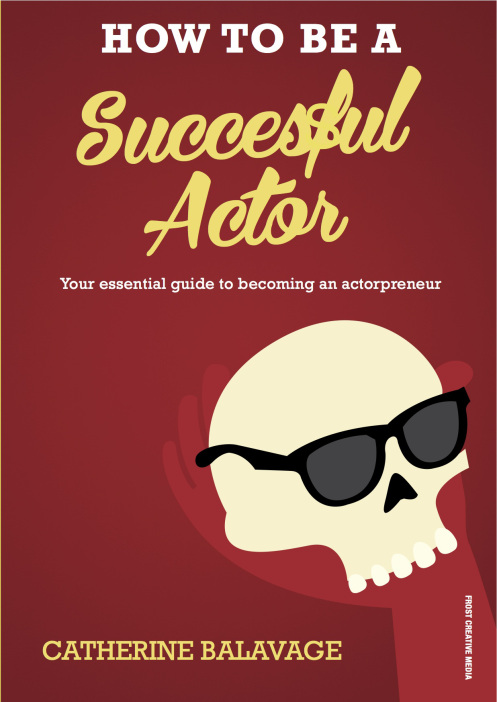
Getting work as an actor is hard. With long periods of unemployment and vast competition. This was the main reason I wrote my book How To Be a Successful Actor: Becoming An Actorpreneur. The odds are not good but you can tip them in your favour. You can make your own work, work on your skills, get your name out there. They say success is opportunity meets preparation. So here are my top five tips to make sure you are prepared and stop making the mistakes that stop you having the best career you can. Here are five mistakes actors make in their career that stop them being successful.


howtobeasuccessful_actor_book become How To Be a Successful Actor: Becoming an Actorpreneur

Arrogance

Far too many actors are arrogant. Especially just after they have left drama school. Thinking you are the best actor that ever walked the earth is not going to convince anyone else to hire you. No one likes arrogance. Always under-promise and over-deliver. Be humble and modest. The traits that make a good human being also make a good actor.


Marketing Yourself Wrong

Yes, you are an artist but you are also a product. You have to brand yourself correctly so people know what you are ‘selling’. If you are Irish and want to market yourself as an Irish actor you must be prepared for only getting Irish roles. People will try to put you into a box but you can do yourself a favour by making yourself versatile. If you don’t want to be known as a certain type of actor, (like Australian, Irish, etc) don’t market yourself that way. Play up to your strengths and downplay what will limit you getting mainstream work.

You must also update your head shots, CV and showreel at least yearly. Don’t forget to update the various online acting sites you may be on every time you get a job.


Not Continuously Working On Your Skills

Actors can go months, and even years without working. If you do not work on your skills when unemployed not only will you be rusty when it comes to audition and getting work, but you will also not be as confident. Your CV will also be lacking. You are a business, invest in yourself. Even if it is getting a camera and making some short films with friends.


Thinking The World Owes You a Living

You are not special. You do not deserve to be a super-successful world famous actor. The world does not owe you anything. A sense of entitlement is not going to do you any favours. This was the main piece of advice American casting director Daryl Eisenberg gave me for my book on becoming a successful actor. Don’t think you are better than anyone else.


Being a Jerk

No one wants to work with horrible people. The film industry is tiny, as is the theatre and TV industry. If you are rude, horrible and difficult to work with then you will have a pretty short career. Be nice. Manners cost nothing.


Catherine Balavage is an actor and writer with over ten years of experience in the industry. Her book, How To Be a Successful Actor: Becoming an Actorpreneur, came out in June this year. She also co-directed and wrote her own feature-length film, Prose & Cons, which will be out later this year.


Frost’s Editor Catherine Balavage Writes How To Be A Successful Actor Book

Frost’s Editor, Catherine Balavage, has written a book on How To Be A Successful Actor. It is called How To Be a Successful Actor: Becoming an Actorpreneur. It has gotten as high as number 5 on the Kindle charts under Stage & Theatre. It will also be released on paperback and Smashwords soon. Handpicked Future did a great piece on it and Catherine was on the front page of the Entertainment section in The Huffington Post with her Actors Who Make Their Own Work article. You can also read an article by Catherine written on her own blog.

howtobeasuccessful_actor_book_cover The book is available here for UK readers and here for US readers. It is also available worldwide.

Cover art by Steve McAleavy


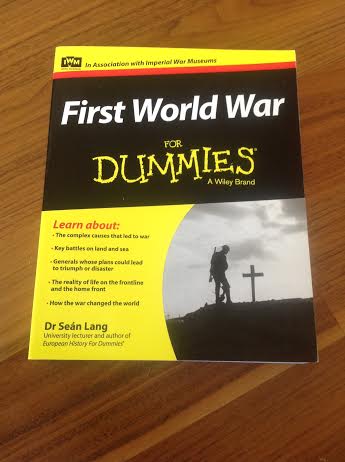
First World War For Dummies Dr Seán Lang Interview

I was very excited to interview Dr Seán Lang, author of First World War For Dummies. Dr Lang has written a great book, you can read our review here. He also gives great answers in the interview below. Enjoy!
firstworldwarfordummiesbookreview

How long did it take to research and write the book?

Not easy to say, because in a sense I have been reading up on the FWW for years, and teaching it to university students for the past four or five years. There was a tight turn-round schedule for the book, especially as the “for Dummies” process involves submitting chapters as you write them, rather than submitting a whole manuscript. The writing itself took about six months.

What is your writing process?

It’s different for the “For Dummies” series because of the very close process of collaboration with the editor. Then not only are there always some academic experts who review your text, but with this book, because of the partnership with the Imperial War Museum, their experts vetted it too. So you have to get a balance between what is academically respectable and what is comprehensible to a wide readership.

The readership is very different from that of a standard academic article or even a textbook: you’re writing for people who might not normally pick up a book, or who might even be a bit scared of them. I’ve seen people taking FD history books off the shelves in bookshops like WH Smith (ie a shop where they might not have gone in to buy a book) and hesitating a long time before deciding whether to buy it or to put it back – and I’ve seen people do both. So I think of the book not in terms of something primarily for people who already know a lot about the war, but rather in terms of the sort of book I would turn to if I needed a quick briefing on something about which I know nothing and of which I have scary memories from school – physics, say, or fairly advanced mathematics. You have to go to where people are and take them forward, not stand where you are and expect them to come to you.

Being a lecturer obviously helps, but did you learn anything that surprised you when writing the book?

There are always part of the narrative which you didn’t know much about before starting to read up for the book – elements of the war in Africa, for example, or the epic journey of the crew of the German raider “Emden”. But I think the greatest surprises lay in some of the images in the IWM’s collection, which we used for the illustrations. We tend to see only a limited range of types of photos from the war – trenches, recruits, women in factories and so on – so it was very refreshing to see images from around the world, some of them quite dramatic.


In the parts of tens you list First World War poets and writers, do you have a personal favourite?

I think probably RC Sherriff, author of “Journey’s End”. Joan Littlewood, who devised and directed “Oh! What a Lovely War” in 1964, loathed the play and wouldn’t allow anyone to mention it in her presence, but I think it is a much more authentic voice from the front line than she managed. It’s a play about a group of officers in 1918 and it captures that loss of schoolboy ideals we associate with the trenches. Sherriff went to the grammar school in Kingston across the road from the one I went to, so maybe there’s a sense in which I see him as the First World War equivalent of me.

A lot of women got their first taste of real work during the first world war, do you think that had a lasting difference?

There’s a lot of debate about this one among historians, because the liberation and emancipation of war work very quickly disappeared when the men came back home and resumed their old jobs, so some people say that the change for women was illusory. There’s also a certain irony in the fact the sort of work that women did in the FWW was often the very sort of work Victorian social reformers had been trying to rescue them from. But yes, I do think the change was long lasting, even if it wasn’t immediate. It made it clear that men and women were all part of the same fighting nation, and that women, whether they were in the factories or whether they were bringing up children at home, had a part to play in the national war effort just as the men had. That idea swung back into action in the Second World War, of course. That in itself effectively smashed the old Victorian idea that men and women inhabited “separate spheres”, both metaphysically and in reality. That idea has never revived, at least not in British society, so yes, I think the war made a lasting difference for women.

What can be learned from World War I?

That’s too big a question to answer fully, so I’ll give just a couple of things that can be learned from it, though I ought to start with a lesson that can’t be learned: I heard someone during this year’s centenary commemorations saying something like “We must learn from this war so it never happens again”, and I thought “Have you never heard that there was a Second World War? It has happened again”. I think the lessons that can be learned include: a) political leaders must avoid playing games of bluff, because that is effectively what was happening in 1914, and everybody’s bluff got called, with disastrous results. b) People always go into war assuming it will be like the Last One (whichever that one is) and it never is, but seldom have expectations about the likely nature of a war been so completely wrong as they were in 1914. So, if you go to war, assume it will be a hundred times worse than you expect. And remember that your decision will mean that a lot of people now alive will soon be dead.

What do you think is the lasting legacy of World War I?

There’s no strict hierarchy about these things, of course, but I would rank the First World War’s legacy as even greater and longer-lasting than the Second’s – after all, the SWW was itself a legacy of the FWW. For example, all the problems that blew up in the Balkans in the 1990s were almost directly a legacy of the FWW. So is the continuing and growing crisis in the Middle East, including Israel-Palestine, resurgent Islam etc. The Middle East (itself a European term) was a backwater before the FWW, when the Europeans carved it up, with all the consequences we are still living with. Ireland’s troubles go back a long way, but the specific issue of Northern Ireland – an issue which never quite goes away – is a direct legacy of the FWW. Above all, a) the Russian Revolution and the formation of the Soviet Union were both precipitated by the FWW (it is arguable that Russia would have had a revolution without the FWW, but there’s also a good case for saying that it wouldn’t have happened without a war to bring things to a head), and b) it was the FWW that first got the United States acting as a Great Power, well outside its own back yard, starting the process of American global action which still dominates the world.


D-Day just had its 70th Anniversary, as time goes by is there a danger of people forgetting what happened, and the lessons learned?

Yes, there is such a danger. Schools and local communities do a very good job of keeping the memory of the FWW alive at the moment, but we can’t assume that will go on for ever: firstly, it is noticeable that Islamist protests against western involvement in Iraq and Afghanistan seem to have taken the form of assaults against FWW symbols – desecrating war memorials, burning poppies, and so on. That might indicate that the commemoration of the FWW could become divisive in future, rather than welding the nation together, as it has done so far. But even if it doesn’t, just think of the children currently going on school trips to the trenches. Their teachers are old enough, except perhaps the very youngest, to have known people who lived through the war – grandparents and so on – so the human link is still there. But in forty years’ time, in 2054, those pupils will be the teachers and parents: they won’t have that direct link, and their children and pupils will be even further removed from it. The FWW will be about as close to them as the American Civil War or the Crimean War are to us. Now, okay we still acknowledge the losses and suffering in those wars, so it may well be that the memory of the FWW will still be kept alive, but it won’t be on anything like the scale of current commemorations. Lastly – and I hate to point this out – future generations may well have wars and disasters of their own to commemorate, which will push the 20th century world wars out of the picture.

Do you think the first World War was avoidable?

Yes. Totally. I think the fall into war in 1914 was entirely avoidable. There are some wars in history which probably had to be fought – the SWW, civil wars, wars against revolutionary regimes, for example – and others which were entirely avoidable, like the US/British ‘War of 1812’, or the Crimean War, but the FWW is the worst. The crisis that provoked it was entirely solvable – assassinations, even of Archdukes, do not usually provoke wars – and the Great Powers HAD solved far more dangerous crises in the years before 1914. But among some statesmen in 1914 there was a certain eagerness that this time they should get a war out of it, and among some – notably in Berlin but also in Vienna – there was a determination that nothing should get in the way of their desire to have a war. You remember that Israeli Eurovision song, “A Little Peace?” Or even John Lennon’s “GIve Peace a Chance?” Well, in 1914 there were some statesmen who thought in terms of having “A Little War” or wanted to “Give War a Chance”. They had no idea of exactly what that war would be like, but they bear a very heavy responsibility nevertheless.

What’s next?

I’m also a playwright. A short play of mine called “The Road Less Travelled” which is set in 1914 and is a reflection on the outbreak of the war has been picking up good reviews and awards recently and will be published soon; I’m also writing a play called “1914: Assassination Before Lunch” which will be performed in Cambridge in October.

First World War For Dummies

Felix Dennis Dies Aged 67

I was very upset to hear about the death of Felix Dennis. He was always kind and open with me and even sent me a book of his poetry once, with a rather lovely personal note attached too. I was devastated when tea was spilt on the book but (hope) I still have his personal note somewhere. Felix Dennis dies Felix Dennis was a great man. He built up a publishing business that is one of the most successful in the country and made an insane amount of money. Hundreds of millions of pounds, but stayed true to himself. He has left £500 million to his forest, proving his social conscious to the end. He had spent the past decade planting it.

Felix died yesterday at the age of 67 after a two-year battle with throat cancer. He was surrounded by loved ones at the time.

He led a very interesting life which included a jail term for “conspiring to corrupt public morals” during the famous 1971 Oz trial and overcame a crack addiction. 


His family will be cared for in his will, including his long-term partner Marie-France Demolis, who he spent two decades with. The bulk of the profits from Dennis Publishing and his fortune will go to his forest, which is open to the public but privately owned. He planted the millionth tree in September.
His family released a statement saying:
“After a long and painful battle with cancer, Felix died peacefully at his home in Dorsington, aged 67. Felix was a publishing legend, famed for his maverick and entrepreneurial style and, more lately, a successful and much loved poet. He will be greatly missed.
Thank you for the support and kindness of those who share our feelings for Felix, and we ask that you respect our privacy during our time of grief.”

Yesterday was a sad day for the publishing industry and I wish his family all the best.


The Bestselling England Football Autobiographies | Books

Amazon.co.uk has revealed the bestselling England football autobiographies – and David Beckham is only sixth!

David Beckham Book

Gary Neville tops the list, with David Beckham only making it to number six and Brian Clough beating Bobby Robson to the manager’s job


Looking at England’s players and managers, both past and present, the ranking takes into account print and ebook autobiography sales. Amazon has revealed the top 10 best sellers and translated the list into a full team starting lineup – in a 4-5-1 formation.


The Amazon Autobiography Starting Line Up is:


Stan Collymore

(11)

Paul Gascoigne

(7)

Paul Scholes      Steven Gerrard                 Bobby Charlton                David Beckham

      (4)                              (2)                                         (5)                                                  (6)

Stuart Pearce     Tony Adams       Jamie Carragher               Gary Neville

(16)                       (12)                              (3)                                              (1)

Peter Shilton

(25)


Brian Clough

(Manager) (10)


The Amazon.co.uk Top 10 bestselling autobiographies are:

1. Gary Neville – Red: My Autobiography
2. Steven Gerrard – Gerrard: My Autobiography
3. Jamie Carragher – Carra: My Autobiography
4. Paul Scholes – Scholes: My Story
5. Bobby Charlton – My Manchester United Years
6. David Beckham – David Beckham
7. Paul Gascoigne – Gazza: My Story
8. Frank Lampard – Totally Frank: The Autobiography of Frank Lampard
9. Brian Clough – Clough, The Autobiography
10. Bobby Robson – Farewell but not Goodbye: May Autobiography


How many have you read?


Property Tycoon: A Simple Seven-Step Guide To Becoming a Property Millionaire Book Review

Property Tycoon: A Simple Seven-Step Guide To Becoming a Property Millionaire by Ian Samuels Property Tycoon: A Simple Seven-Step Guide To Becoming a Property Millionaire by Ian Samuels couldn’t have come at a more relevant time. Property is booming in the UK today, and particularly in London. So can this book help you to become a property tycoon in seven simple steps? I would say so, it certainly has all of the information you would ever need and is easy to read.

I really enjoyed this book and it made me want to start a property business of my own. Baby step by baby step. This book is a good read and is very well-written. It is enjoyable despite its business like subject. It is a good, complete guide to every aspect of  property management. It is full of ideas and things you never even knew you didn’t know. Highly recommended. I will certainly be keeping it to hand.


What they say:

Property Tycoon offers a complete and incredibly revealing guide to EVERY aspect of residential property investment: whether you’re looking to just dip into buy-to-let or want to use property to build up a substantial and life-changing income.

Covering buying, managing, maintaining, financing and selling UK property, this book is written by someone who has made a success of buy-to-let investment for more than 20 years and through two booms and busts. Written in plain English, and filled with real-life case studies, it reveals the secrets of:

– the questions every successful property investor asks themselves before buying a property

– how to secure capital for your investment properties

– where to get tradesmen, agents, mentors and tenants you can rely on

– what it takes to manage and maintain different kinds of property portfolio and how to take your portfolio to the next level when the time is right

– when to buy and sell, and how to make sure you get your way in auctions and off-plan deals.

With housing in ever-increasing demand, and UK values showing an average rise in value of 9% a year for the last 60 years, today represents a great opportunity for anyone interested in entering the buy-to-let world. Property Tycoon is the friendliest and most up-to-date guide available.

Property Tycoon: A simple seven-step guide to becoming a property millionaire is available here.


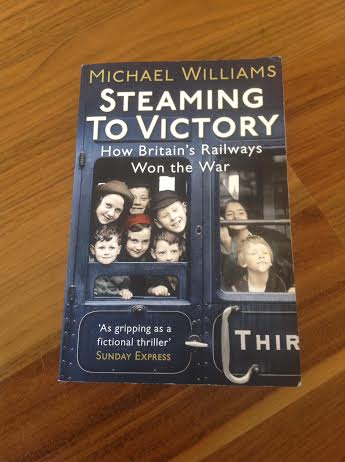
Steaming To Victory: How Britain’s Railway Won The War Michael Williams Book Review

steamingtovictorybookreview My grandfather was a railway man for years. It left him with a lifelong love of the railway. He was also in the RAF during World War II, which veers off topic from this book, although the obvious love and respect Michael Williams has for the railwaymen and women who won the war for Britain is obvious on every page.

This books is riveting and well researched. It is a compelling book that is easy to read, full of information and yet also manages to give a brilliant overall of the war and it’s lasting effect on the people who lived through it. Another thing I learned from this book is that in 1936 a train raced from London to Glasgow in less than six hours, seventy-eight years later, it takes just under five and costs an extortionate amount of money. This book harked back to an amazing period for trains and the railway, it is sadly a long-forgotten period for the British railway industry, let’s hope it can become great again.

In the seven decades since the darkest moments of the Second World War it seems every tenebrous corner of the conflict has been laid bare, prodded and examined from every perspective of military and social history.

But there is a story that has hitherto been largely overlooked. It is a tale of quiet heroism, a story of ordinary people who fought, with enormous self-sacrifice, not with tanks and guns, but with elbow grease and determination. It is the story of the British railways and, above all, the extraordinary men and women who kept them running from 1939 to 1945.

Churchill himself certainly did not underestimate their importance to the wartime story when, in 1943, he praised ‘the unwavering courage and constant resourcefulness of railwaymen of all ranks in contributing so largely towards the final victory.’

And what a story it is.

The railway system during the Second World War was the lifeline of the nation, replacing vulnerable road transport and merchant shipping. The railways mobilised troops, transported munitions, evacuated children from cities and kept vital food supplies moving where other forms of transport failed. Railwaymen and women performed outstanding acts of heroism. Nearly 400 workers were killed at their posts and another 2,400 injured in the line of duty. Another 3,500 railwaymen and women died in action. The trains themselves played just as vital a role. The famous Flying Scotsman train delivered its passengers to safety after being pounded by German bombers and strafed with gunfire from the air. There were astonishing feats of engineering restoring tracks within hours and bridges and viaducts within days. Trains transported millions to and from work each day and sheltered them on underground platforms at night, a refuge from the bombs above. Without the railways, there would have been no Dunkirk evacuation and no D-Day.

Michael Williams, author of the celebrated book On the Slow Train, has written an important and timely book using original research and over a hundred new personal interviews.

This is their story.

Steaming to Victory: How Britain’s Railways Won the War is available here.

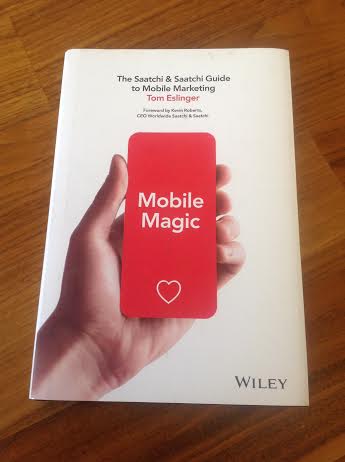
The Saatchi & Saatchi Guide To Mobile Marketing By Tom Eslinger Review

The Saatchi & Saatchi Guide To Mobile Marketing By Tom Eslinger is worth it’s weight in gold. It’s actual weight in gold, because it is basically free marketing advice from Saatchi & Saatchi. Mobile is the way forward: 50 per cent of all unique e-mail opens now occur on mobile devices, one half of all local searches are done on mobile devices and mobile commerce accounted for an estimated 15 per cent of total e-commerce sales in 2013. It is fair to say that if you are not utilising the mobile version of your site you are missing out, losing visitors and sales.

mobilemarketing

This book is useful and practical. It is not text-heavy and full of jargon, it is easy to read and navigate. Above all, this book leaves you educated instead of adrift. The mobile market is no longer a strange place, this book demystifies everything and leaves you with the knowledge to make the most out of your business. Essential reading.


Mobile phones and tablets aren’t like computers or TV or any other media channel or hardware technology that came before them. They’re personal—your mobile device is yours alone, the place where you go from work to play to socializing with the swipe of a finger. They’re portable—your mobile device goes wherever you go, and can connect you to almost anything, anywhere. Put together, these features come together to make mobile powerful—the most potent communication and marketing channel available to marketers today. How do you get onto your audience’s mobile, deeply engage them and have the privilege of staying there? Mobile Magic, by mobile marketing expert and Saatchi & Saatchi’s Worldwide Director of Digital & Social Tom Eslinger, takes you from the practical points of development and through to production, content strategy, content management and how to market your digital and social campaigns. You’ll learn how to understand your audience and how to maintain your mobile initiatives. This book will guide you in executing winning mobile strategies for your business. Written especially with marketers new to mobile in mind, Mobile Magic is your key to the wide world of apps, mobile websites, integrated campaigns, social media and cross-platform thinking and strategies that every marketer needs to know.


Mobile Magic: The Saatchi and Saatchi Guide to Mobile Marketing and Design is available here.