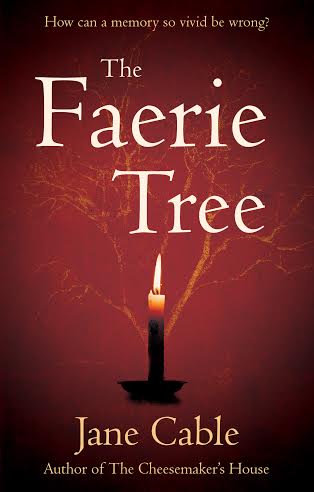
THE FAERIE TREE: A Book In The Making

faerietreejanecableImbolc: When the days are getting longer and the earth is getting warmer, a time of fertility and fire, and of focussing on our own magical gifts and abilities.

Being an author is in some ways akin to parenthood. Although not, of course, quite so important. But it is an act of creation (albeit solitary), nurture, and then letting your offspring go to make its own way in the world.

The last part is the hardest. Time and again while checking the proofs for The Faerie Tree I was assailed by awful thoughts: it’s not good enough; nobody’ll like it; it will fail. Time and again I had to remind myself to have faith in my editor’s view – and in the opinions of others who have read it.

But when your book makes its way into the wider world it isn’t enough to hover at the school gates for twenty minutes then go home and cry. You have to shout about it – tell the world – make them want to buy it.

So the last month has been focussed on marketing – which isn’t necessarily one of my own magical abilities. I know the theory, but somehow I don’t have the knack of pushing myself that some other authors have. I just don’t know how to stand there and say “Buy my book – it’s amazing.”

The first step in marketing is getting your book into places where people can buy it. Matador does a great deal of this for me, particularly the online stuff. On 21st March (or maybe a little before) it will miraculously appear on Amazon, Kobo, iBooks, Google, Waterstones & WH Smith online. It will be sitting on marketing platforms like Goodreads and I’ve Read That. It will be available for bookshops to order through the industry’s main wholesalers – but the job of persuading them to actually stock it will be down to me.

While the cut price books offered by the big retailers are great for readers they aren’t so good for writers because they have pushed many local booksellers out of business. The chain stores have a stocking policy which rules out local decision making, leaving independent authors and many traditionally published ones out in the cold. Even where they exist the independent book trade can be timid too – before giving it valuable shelf space they have to be sure a book will sell. It’s not their fault – most of them are living hand to mouth and cannot afford to take potentially costly risks. Even on sale or return.

Inevitably many sales are online (The Cheesemaker’s House sales to date are about a 50:50 split ebook and paperback, with half the paperbacks being sold through Amazon) so the marketing focus has to be here too. The first thing I did was organise a blog tour so I am at least guaranteed some coverage around the launch date. The next thing is to make sure the book is available for reviewers, booksellers and librarians to download via Netgalley. And book a Netgalley promotion to make sure it stands out from the crowd.

Other marketing musts are updating my website (www.janecable.com) ready for the beginning of March; moving my Amazon author profile to their new format (long overdue); and polishing up my Goodreads profile, Twitter masthead and Facebook page.

And if that wasn’t enough I’ve also got this really crazy idea to create a faerie tree for my home city of Chichester. I’ll certainly need more than a little help from the hidden folk to pull that one off…


Words For The Wounded Writing Prize Closes On 11 March

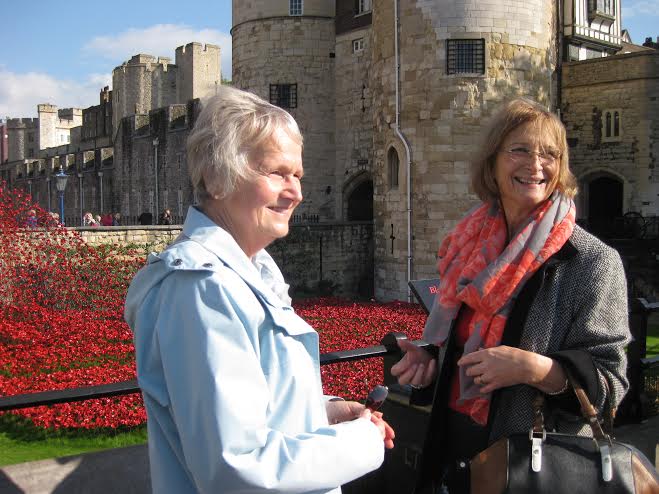
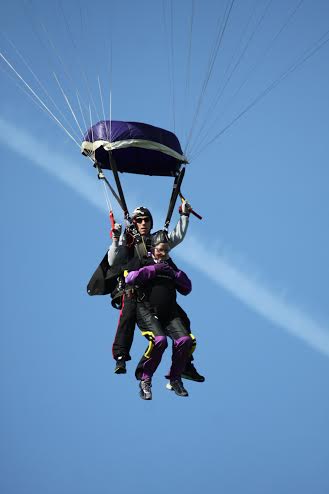
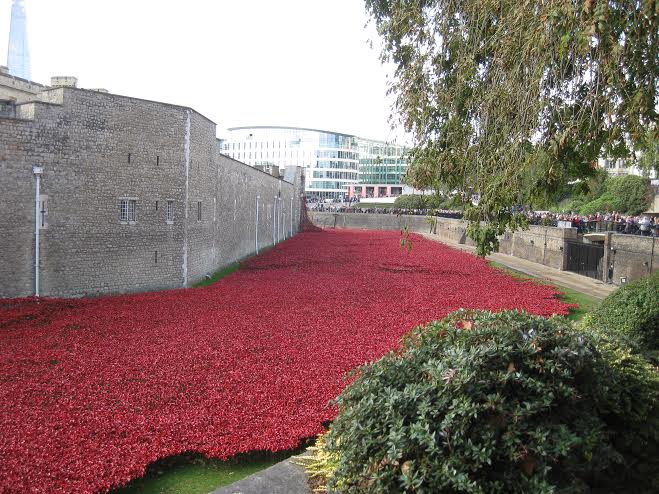
W4WLogoAlt3 Words for the Wounded writing prize closes on 11 March. two grannies Why on earth do three grannies (two shown above) throw themselves out of a plane, strapped to a fit young man, hoping their parachutes open? Well, OK, the fit young man is a bit of a clue. But seriously, why? pic2 janairborne The reasons lie in the past and the present. In the past, both my grandfathers survived the first world war, so just as there were thankful villages who had lost no men, so too there were thankful families. But life isn’t that simple, is it? Gentle Percy, my mother’s father survived but took his own life in 1923. War has long, relentless tentacles which reach out and destroy families, just as surely as bullets do. pic3 poppies Then, about four years ago I met a young  man and his wife. They were both under twenty five. She was pushing him in his wheelchair; his portable ventilator lay on his chest. He’d been shot through the neck in Helmand and is tetraplegic, (paralysed from the neck down). They were both smiling and cheerful but their hopes and dreams were very different now, and everyday life was a mountain in itself.   I decided that, as writers, my two granny friends and I could help not just the wounded, but also aspiring writers. We founded Words for the Wounded and were enormously lucky in our patrons, amongst whom are Julian Fellowes, Louis de Berniers, Katie Fforde, Paddy Ashdown and many others. Julian Fellowes   We decided also that we would earn our donations, not just appeal to the generosity of others; hence the skydive, and hence the Mud Challenge Obstacle Course in August, and hence the LitFest to be held at High Wycombe on 18th April  2015 with Katie Fforde and two Midsomer Murders writers amongst others.   katie-fforde Our main thread, however, is our writing prizes. We have the short category for poetry/fiction/memoir – up to 400 words, with prize money of £400. Entry fee £4.50   This year we are launching The Independent Author Book Award for fiction or memoir, with a 1st prize of a Palamedes PR professional press release. pic 6 palamedes.jpg And a biography and review in Frost Magazine.  Entry fee £12.50 pic7Frost The WforW grannies absorb ALL the costs themselves, so every penny raised goes to the wounded. Our troops put their lives on the line for us, some are killed, many, many,  more sustain life-changing injuries. To help them is the aim of Words for the Wounded. They deserve the best.

For more information: www.wordsforthewounded.co.uk 

The Stages of Writing a Book

writing, the stages of writing a book, writing, writer, author, self publishing, writer, despair, first draft.

Ladies and gentlemen, I am in the process of writing my third book. Three-quarter of the way to be more precise. Which puts me at number 7 on this list. Writing and publishing a book is amazing. The feeling when you have your published book in your hands is like no other. You did it. It is not easy however. It took me years to get my first book published. Mostly due to procrastination. My next one was finished and published within five months. Not bad for someone with acute morning sickness. My third has so far taken seven days to get three-quarters of the way through the first draft. Which is not bad. You can check out the first two here. I will get into how tedious and hard it is writing a book with my list of the stages below, but before we get to the list I will leave you with this amazing quote from Amy Poehler in her amazing book Yes, Please.

“Everyone lies about writing. They lie about how easy it is or how hard it was…No one tells the truth about writing a book…the truth is, writing a book is this: hard and boring and occasionally great but usually not. Even I have lied about writing. I have told people that writing this book has been like brushing away dirt from a fossil. What a load of shit. It has been like hacking away at a freezer with a screwdriver.”

The Stages of Writing a Book


  1. Hopefulness.
  2. Excitement.
  3. Despair.
  4. First quarter done. Glimmer of light.
  5. Despair.
  6. Epic melt down. Tell everyone you give up and would burn the book if it wasn’t on your computer.
  7. Resignation, decide that since you started you should finish.
  8. Wonder what breathing in fresh air is like.
  9. Get into the flow of it, it might be okay after all.
  10. Finish first draft. realise it is only the first draft. Cry.
  11. Read first draft. It’s awful. Cry some more.
  12. Despair.
  13. Start editing. Ignore the boredom and the fact there are so many more fun things to do than this.
  14. Realise that it’s not actually that bad.
  15. Finish editing first draft.
  16. Hope
  17. Happiness
  18. The possibility of it all being over soon
  19. Get draft back from proof reader.
  20. Despair
  21. Try to ignore the amount of grammar and spelling mistakes you made.
  22. Final edit, go through all suggestions and edit accordingly.
  23. Finish book: go on week-long champagne binge.
  24. Get cover back from designer. Has spelling error. Cry.
  25. Get cover fixed.
  26. Get book formatted for the different eBook and print versions.
  27. Despair.
  28. Finally see finished book: elation.
  29. Publish book and it starts selling: happiness like no other. Feel huge sense of achievement.
  30. Start writing next book.
  31. Despair.


What do you think? Are you a writer? What do you think are the stages of writing a book?


The Yeovil Literary Festival – An Author’s Perspective By Kate Kelly

If you braved the rainclouds and ventured into Yeovil in the first weekend in November you might have noticed large green banners flying outside a number of venues, for this was the weekend of the Second Yeovil Literary festival. The first Yeovil Literary Festival took place last September, and this year I was delighted to be taking part again.

yeovil2014 Liz Pike, one of the festival organisers.

I was in fact involved in three events across three of the festival venues. They were three very different styles of event, and were only a tiny fraction of what the festival had to offer.

The first event was the Yeovil Prize Winners event on the Friday Morning. The Yeovil Prize was founded by bestselling author, Margaret Graham, with James Mitchell to raise funds for the arts of the area. When Margaret moved from Yeovil, crime writer, Penny Deacon took her place until handing over to Margaret’s ex-student, Liz Pike and her team. It is now in its 11th year and continues to grow. It is an internationally renowned competition, and since its earliest days it has been watched closely by both editors and agents, and as the list of success stories continues to grow it is clear why.

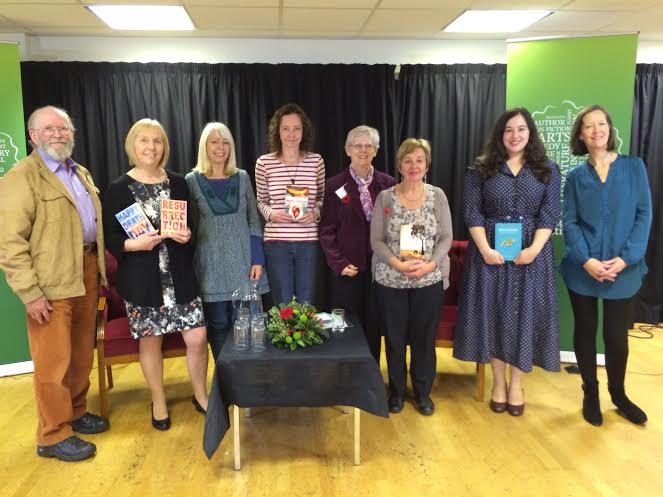
I am one such author – Red Rock was Highly Commended in 2010 and I’m convinced that this helped tip the balance with the agent who was considering it at the time. This year it was lovely to have a number of winners in the poetry category in our midst. We took turns to read our winning entries and talked about what the Yeovil Prize has meant to us.

2 The Yeovil Prize Winners Panel.

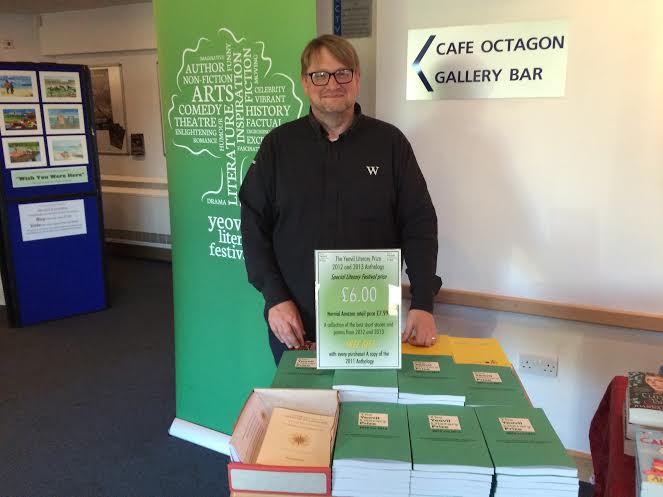
If you are interested in reading some of the poetry and fiction that has been shortlisted over the past couple of years, then the Yeovil Prize Anthology is now available.

3Marcus, manager of Yeovil Waterstones with copies of the Yeovil Prize Anthology.

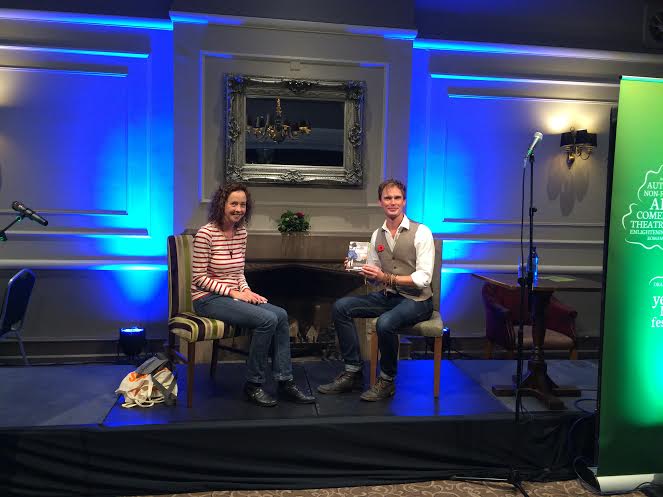
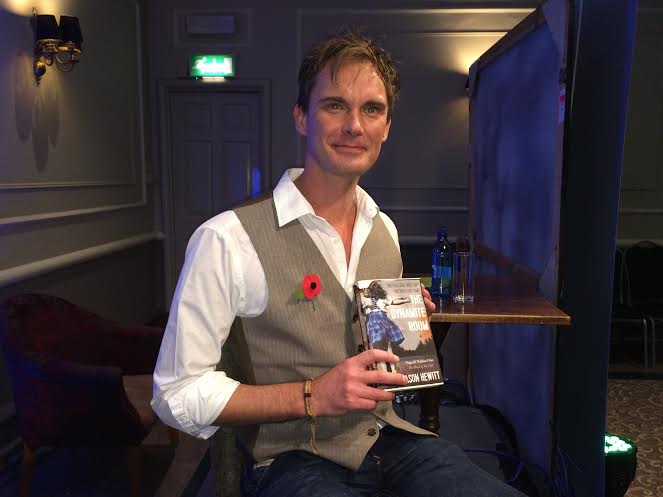
That evening I was honoured to host “In Conversation with Jason Hewitt”. Jason is a debut novelist and The Dynamite Room was published earlier this year. It is a World War 2 story, but one with a difference and is absolutely superb. Set on the Suffolk coast in July 1940, a German officer swims ashore and breaks into a boarded up house. There he finds Lydia, and 11 year old escaped evacuee hiding in the attic. Over the next five days Lydia is held hostage in her own home – but there is more to the German that meets the eye – for how is it that he knows her name?

4In Conversation with Jason Hewitt.

I really enjoyed meeting Jason and chatting to him. The ‘In Conversation’ style of event was a lot of fun, very relaxed, and Jason had so many interesting things to tell us that the time simply flew!

5 Jason Hewitt and “The Dynamite Room

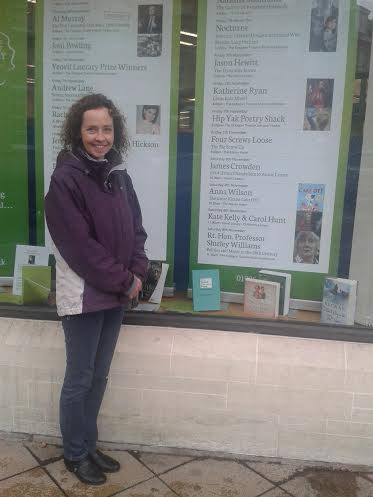
The following day was my third event, and quite a change from what had gone before. This time I was in the Yeovil Library running a writing workshop for children.

6 Outside Yeovil Library.

The event was well attended and I couldn’t have asked for a better bunch of kids to work with. They were all so enthusiastic and imaginative and half an hour after the event had ended were all still sitting scribbling away. I suspect there might have been some budding authors in their midst.

Of course, these were only three events in a packed programme. The organisers have really built on last year’s success and I can’t wait for next year.


A Day In The Life of An Indie Bookshop By The Chorleywood Bookshop

Some people have the rather quaint idea that an independent bookshop is a rather dusty place, run by an elderly woman who spends all her time with her feet up, stroking a cat and reading. Others imagine it like the bookshop in Notting Hill, a rather more boutique-style place which sells coffee table books and travel guides.

If there were shops like this they would have closed by now. To be a successful independent bookshop in 2014 you need to be so much more than just a bookshop.

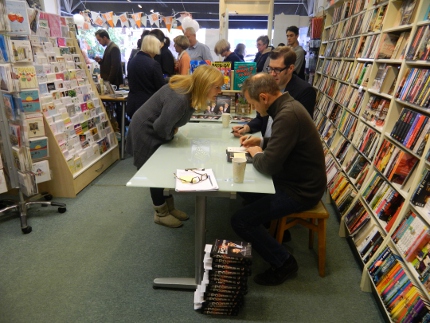
A day in the life of an Indie Bookshop By the Chorleywood Bookshoppic1

At Chorleywood Bookshop the owner, Sheryl Shurville, opens up at the crack of dawn, invoicing schools with their orders and organising the first of the deliveries. On the way she’ll be picking up a children’s author from the station to take to the school for an event.

Back at the shop a team of three will be unpacking boxes of books. Some will be for a literary lunch, others will be for customers who have ordered them the day before and others will be temporarily displayed in the window ready for the upcoming literary festival.

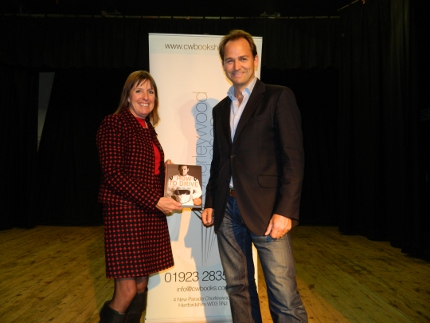
Along with our customers the staff meet so many authors and it’s like kids being let loose in a sweet shop. We love it. Here’s our owner, Sheryl Shurville with Ben Collins, The Stig.

A day in the life of an Indie Bookshop By the Chorleywood Bookshoppic2

The shop is busy with customers, many have come to buy greetings cards, others will be buying their tickets for the literary festival and some, of course, are just browsing the new titles.

Behind the scenes, one of the staff is now writing an article about an author event for the local magazine, someone else is pricing a box of children’s toys and gifts and the third member of staff is back and forth serving customers at the till, while working her way through a batch of books to be returned to the publishers and researching an out of print book for a customer who wants a second hand copy.

Sheryl returns and sorts out the banking and float for the author event later that day. Then she begins work on her introductory speech, sandwich in hand. No one stops to eat for more than 10 minutes, there simply isn’t time.

More customers orders placed, more cards sold, more personal book recommendations given-cups of tea are made and left to go cold.

Refreshments for customers are packed, shop signs and books loaded in the back of car, a bouquet for the author collected and on to the evening event… See Alexander Armstrong and Richard Osman signing copies of A Very Pointless Quiz Book.

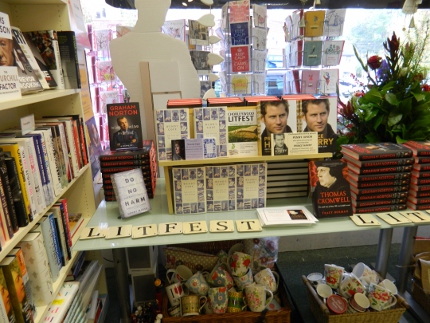
A day in the life of an Indie Bookshop By the Chorleywood Bookshoppic3

This may sound like exaggeration but this is exactly what  it’s like at an indie bookshop, well, unless it’s Halloween,Christmas, Easter, Mother’s Day….when it gets a whole lot busier.

Chorleywood Literary Festival November 10 – 16th. http://chorleywoodbookshop.co.uk/chorleywood-literary-festival-2014

Triskele Books | Self Publishing

Triskele Books is an author collective, a group of five writers from three countries who edit, proof, consult, advise, co-promote and market their books on a shared platform. Each works as an independent entity but all benefit from mutual support. From time to time they also take on associates who fit the Triskele ethos.

Between them, they have now published seventeen novels and offer advice on the process via The Triskele Trail, a warts-and-all story of how they made some mistakes and some smart decisions, discovered opportunities, found friends and dodged predators in the independent publishing jungle.

They have an informative blog, including a Toolbox with practical advice, a Bookclub with reviews and author interviews, and a Writers’ Services section, showcasing approved providers.

Core members are Gillian Hamer, JJ Marsh, Liza Perrat, JD Smith and Catriona Troth. Current associates are JW Hicks and Barbara Scott Emmett.

This autumn Triskele Books celebrates five new releases:

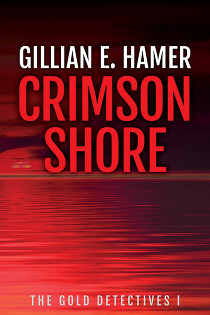
Crimson Shore by Gillian Hamer

A half-naked woman dead in a ditch. A disappearing pathologist. A teenager run off the road. For a peaceful island, Anglesey is experiencing abnormal levels of crime. What’s the connection? Crimson Shore is the first novel in The Gold Detectives series set along the North Wales coast.
 

crimsonshore

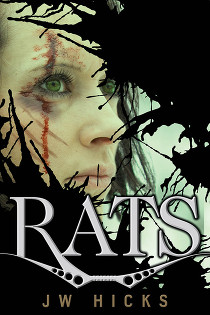
Rats by JW Hicks

In one world she is Bitch Singer—fighting a dictator, guerrilla style. In another, she is Dorrie Hart, housewife and mother—carer to a speech-impaired child. Which world is real, which life is true? And why does she wake each morning crying for a lost lover—a lover she is determined to find?
rats

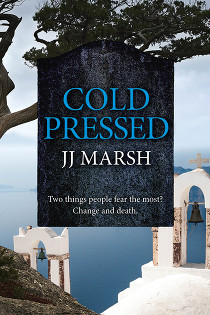
Cold Pressed by JJ Marsh

When an elderly British tourist falls to her death from a Santorini cliff, one witness claims it was no accident. Hellenic Police ask for international assistance from DI Beatrice Stubbs. As she tracks the killer from the Cyclades to the Dodecanese, Beatrice discovers two surprising things. One is a fifty-year old secret. The other is her inconstant heart.
coldpressed

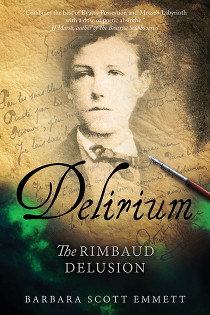
Delirium: The Rimbaud Delusion by Barbara Scott Emmett

“How many times had I dreamt of coming across the yellowing manuscript of La Chasse Spirituelle? Inside an old book on a stall in Paris, perhaps. Or in the attic of some befriended ancient…” The intoxicating hunt for a lost poem by Rimbaud.
 

delirium

The Fate of an Emperor – Overlord II by JD Smith 

My name is Zabdas: a brother, protector, soldier and sacrifice. I am a defender of Syria. I shall tell you the story of my beloved Zenobia: fearless woman, determined wife, Warrior Queen of Palmyra …

Crushed between two warring empires, Zenobia and Zabdas are ordered on another mission, deep into enemy ranks, to deliver terms to the King of the Persians, and pray they will not be flayed alive.

But all is not what is seems. More than one person is intent on betrayal …


emperor


Triskele Books will be launching these five titles at Barton’s Bookshop in Leatherhead on 15th November. The following day, they will co-hosting the Indie Author Fair at the Chorleywood Lit Fest.



A Day In The Life Of Wendy Breckon – Writer And Storyteller

wendy1

5.00 am. Wake up early, too early as usual. The creative mind cannot sleep. Wonder where the piece of paper I shoved under the pillow is? One gets many ideas in the middle of the night, but what good is a pencil, if there’s nothing to write on. Aah… it’s Wednesday today. The alarm was set for 6:30 am. Our son Olly, is a producer for Good Morning Britain  (ITV) and often texts us when his features are on.

“Do you think that is one of his items?” I mumble to my other half, through bleary eyes, holding a cuppa and crunching a half fat biscuit.
Mmmm… his reply could be considered interesting…Where is that pen and paper?

Today of all days I am feeling so delighted. Last night, I read one of the stories from my memoirs of an Ulster childhood, at the Bridport (Dorset) Story Slam, and was fortunate to win the first prize. This reflection on my early experiences and my wonderfully eccentric grandmother, has motivated me to keep writing… and writing… and writing.

wendywriting

So where did this passion first begin? Probably on her farmhouse table in County Down when I was seven and not quite eight. As I scribble, the words fly across the page and she is there; dancing in a Cossack hat, making soda farls for tea and whispering unbelievable French words.

The day continues downstairs with a large cup of coffee and later on, lunch. In the room overlooking the garden, blushing apples on gnarled, old trees and the faded blooms of lupins are waving gently. I reach for another new notebook and pencil. Handbags and shoes don’t thrill me, but writing materials increase my excitement to dangerous levels. We are talking dotty, spotty, cute pets and London buses. I own many but never stop craving more.

When I need to clear my head, or just let ideas and memories simmer, I head for the front at Lyme Regis and just let things work themselves out.

bytheseainlyme

Sometimes as a break from memoir writing, I send letters to magazines and have had a few published. The funniest one appeared in Homes and Antiques, where I told the tale of chasing a shoplifter in John Lewis down three escalators, before she disappeared without trace. My punishment as a student employee involved a ‘brief’ stint in men’s underwear and pyjamas. Naturally it took ages to recover!

Over the years the family has been very supportive of my writing. When my two sons were teenagers however, the fact that I had taught English and Drama to Glenn Hoddle the footballer in the 1970s, was much more interesting. They both loved the idea that their mum wouldn’t let him go to football because he dived over the desk.

As dusk settles, hopefully tonight we will get the chance to Skype our son Sam, partner Lorraine and grandson Finn (three), who live near Dublin.

wendyandfinn

I light one of my own home-made organic candles – fig and pink grapefruit, (another great passion), while we plan our next big adventure to Ireland.  Naturally, the latest story will be tucked in my suitcase.

Wendy Breckon

wendybreckon@outlook.com


A Day in the Life of Emma Kavanagh

Before Emma tells us of a day in her life, let me tell you that she has written a brilliant debut psychological thriller for Random House: a plane falls out of the sky, a woman is murdered, four people all have something to hide.

fallingbook

Emma is a former police psychologist but this is her day now. Over to Emma.

Emma Kavanaghauthor

I would love to tell you what my typical working day looks like. But I am the mother of two small boys, the youngest just eight weeks old, and so once my maternity leave ends I’ll be working on figuring out a new typical.

emma+children

So let me tell you about a typical day in my old, pre-baby life. I wake about 6am, stirred to life by the dulcet tones of my 3 year old, shrieking “Morning, Mummy. Wake up.” I blink, try to remember who I am and why there’s a stuffed dog that smells of stale milk resting on my forehead, then face the day. I always get dressed. That may not sound like much of an achievement but remember that I’m a writer. Pyjamas are practically uniform. But I’m a believer in getting ready for the day, allowing my brain to remember that I’m in work mode now. Then, after making my toddler toast (which he won’t eat) and scuttling him to creche or an obliging set of grandparents, I get started.


Work time is sacrosanct for me. I don’t have much of it, and that which I do have is fiercely guarded. Once my toddler is out of the house, everything is about writing. I’m even pretty good at staying off Twitter. Most of the time. I open up my laptop, hunker down on my spot on the sofa, and begin by reviewing what I wrote the day before. I’ll do a bit of a tidy up on that, just ensuring that it reads well enough that I feel comfortable moving on, then I’ll look at what comes next. I don’t tend to edit much on a first draft, just bits here and there. I like to get the words out so that I have something to work with later.

workinprogress

I’ll spend as much time as I can writing. Then when my brain starts to fizz, I’ll move on to e-mails and general admin. If I’m feeling particularly efficient, I’ll jot down a rough plan for the next day. Then I get to be mummy again and my world devolves into talk about Play Doh and Elmo.


So, that’s my life in theory. Of course, now I have two sons. I am officially outnumbered. So…um…watch this space.