BUSINESS OF BOOKS: FIRST, LAST, EVERYTHING – AUTHOR JOHN JACKSON

Kicking off a new series for 2018, Jane Cable talks to romantic novelist and former seafarer John Jackson

What was the first writing advice you were ever given?

The first piece was one I worked out for myself before starting to write fiction.

In a previous life, I spent many years preparing safety manuals, policies and procedures. In the main, these were for non-native English-speaking ship’s crew, from the Philippines, Burma, Poland and the like.

Back in the day, companies, especially shipping companies, all thought that the only good manual was a BIG one. This saw many shipping lines having massive and all-encompassing manuals that nobody read. These weren’t written to help seafarers be better at their jobs, they were written with the sole aim of stopping the Company being sued.

To me, it soon became clear that “It’s useless writing something that nobody can read and understand.”

So, clarity is everything – and it’s a trait that I hope I bring to my fiction writing. Certainly, a feature of Heart of Stone’s reviews is that it is a “fast read” and a “real page turner”

I got into writing fiction at the behest of some friends who happened to be members of the Romantic Novelists Association. Their advice to me, to try and get onto the RNAs “New Writers Scheme” was certainly the best advice I received. As a man trying to make it in a genre dominated by women writers, I can only thank the RNA and its members for the unconditional help and support I have been given.
What was the most recent writing advice you were given?

With just one published book to my name, I know I am still “learning my craft.” Publishing, with all the ancillary professions, such as editors and agents, is an enormous and diverse business.

It is also a business that is changing and changing fast. Writing is a famously lonely occupation. In many ways, we are the bottom men on the totem pole. It is also very easy to forget that this is a BUSINESS. We might write because it’s just something that we want or have to do, but for everyone else, it’s a business, and their only decision is “can they make money from your work.”

This might not be advice that anyone would give you directly, but it is true, nonetheless.

Self-publishing and the rise of Amazon has also shrunk the market for the other professionals; it has made them even more reluctant to take on any but the most immediately marketable authors. The days of a publisher taking on a young author and nurturing their career in the hope of a bestseller down the line are long gone. Self-publishing is no longer considered vanity publishing. It is a valid and popular method of getting your work to market.

What is the piece of advice you’d most like to pass on? (writing or otherwise!)

Every manuscript needs a good editor. It is someone else’s eyes giving a professional and fresh look at your work. So many self-published books show very early in the read that they have never been properly edited.

I am very lucky in that Sue, my editor, is also a friend, and we work together well. Other friends are not so lucky, especially when contracted to one of the major publishing houses. Sometimes you may have to fight for what you want, but always remember – this is YOUR story, You have to have faith in it.

That’s what we are doing Telling a story – and everything you write should be towards that end. We are not writing textbooks or reference works, we are STORYTELLERS!

Keep the faith! Your writing WILL get better, and you WILL succeed. Sometimes this is hard but you need to believe in yourself.

Keep up with John on Twitter @jjackson42
 

BUSINESS OF BOOKS: TAKE FOUR WRITERS – INTRODUCING JACKIE BALDWIN

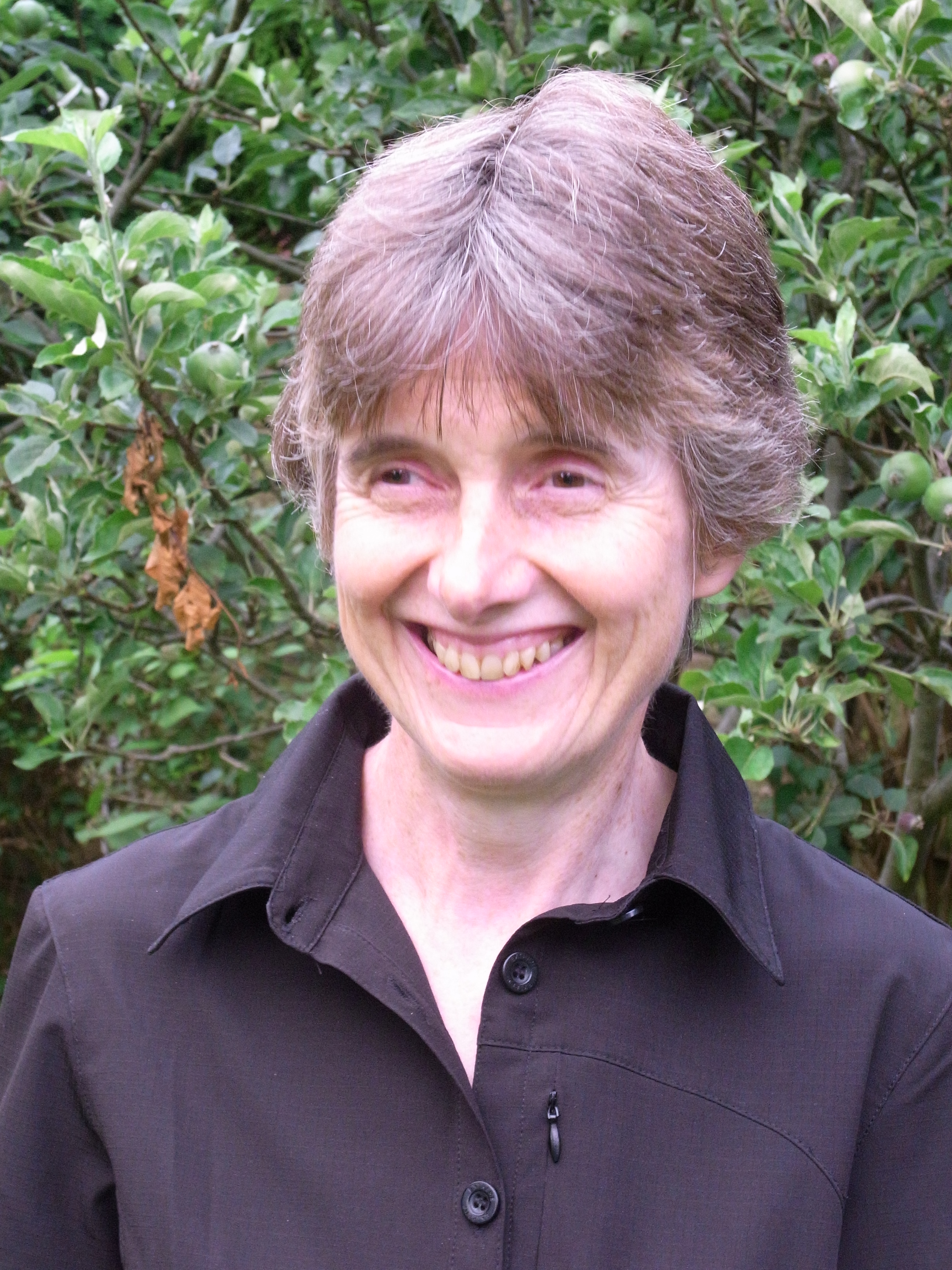
Hello everyone! I’m so excited to be sharing with you all the steps towards publication of my second crime novel, Perfect Dead. I’m a Scottish crime writer and live in Dumfries, SW Scotland which is where my series is set. For most of my working life I was a solicitor practicing in family and criminal law but for the last five years I’ve been working as a hypnotherapist which I really enjoy. I’m married and have two grown up kids and two golden retrievers. This is a great area to walk dogs as it has an abundance of forests, rivers and coastline to let them run free. Consequently, I spend a fair bit of time spattered in mud and with twigs tangled in my hair. Don’t be fooled by my author photo!

Writing my second book was very different to writing my first one. Writing a first book you can take all the time in the world. And I did! About 12 years to be precise, including three years when I didn’t write a single word. Friends and family viewed the whole tortured process as a harmless eccentricity. After a final rewrite I sent it to Killer Reads, a digital imprint of Harper Collins. Two weeks later I was holding an acceptance. I didn’t stop shaking until the next day. It was such a shock!

So, to go from that timescale to writing the second book in less than a year took some doing! It didn’t help that last February I developed angina culminating in a blocked coronary artery which required 3 stents in August. I have to say that my editor at Killer Reads was fantastic, no pressure whatsoever. The pressure came from within. Readers were asking for the next book in the series and I didn’t want to let them or my publisher down.

My first novel, Dead Man’s Prayer, I had plotted in advance of writing but, just to make life harder, I started the second novel deliberately with no idea of who had committed the crimes. This resulted in a bad case of ‘saggy middle’ where I had a complete crisis as my plot strands threatened to spiral out of control. It was time to commit and knit it all together. ‘It can’t be done,’ I wailed, adding my echo of despair to all the writers before me. I swear there have been times when I felt the words of this novel were bleeding onto the page a drop at a time, progress seemed so slow. But, to my surprise, and to the relief of my long suffering husband, it all came together in the end.

Perfect Dead will be published in ebook on 15th June and the POD paperback will be available on 23rd August. The action mainly takes place in the ‘Artists’ Town’ of Kirkcudbright, (Kircoobray). DI Farrell is faced with the apparent suicide of a promising young artist shortlisted for a major art prize. Human remains are then discovered on a MoD firing range. Both victims are connected to a shadowy Art Collective. The local police are further stretched investigating a forgery ring. Both investigations are hampered at every turn by secrets people will do anything to keep hidden. DI Farrell and his team are pushed to breaking point as they strive to catch a callous killer before he strikes again, this time much closer to home.

As you read this, I am waiting for my editor’s Notes to arrive so that I can start editing. A rather scary prospect! See you next month!


THE BUSINESS OF BOOKS: JANE CABLE SUCCUMBS TO A LITTLE MAGIC

Last week I posted the following tweet: “That moment when you start writing and you can’t stop; when you turn off the car radio because the characters are talking in your head; when you take long walks just to spend time with them.”

For me, it summed up the magic of writing and was a joyous expression of my delight at experiencing it again. And what’s more, I hadn’t even realised it had gone away. Had I become too much of a technician? Had I been trying too hard? Disappearing up my own wotsit?

I’ve made my name (such as it is) as a writer of books that are more than just romance. A twist of mystery, a twist of suspense, a twist of the ghostly. Hard to fit into a genre box – and very hard to sell to an agent or a publisher. Believe me – I’ve been there, done that, got the proverbial T-shirt. There was a time when I considered “you write well, but…” would be my most appropriate epitaph.

The stars began to align back in October when I had a manuscript turned down by a publishing house because it was ‘too dark and emotionally intense’. However they made it very clear they’d love another submission from me if I came up with something more escapist and with a simpler pay off.

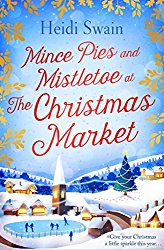
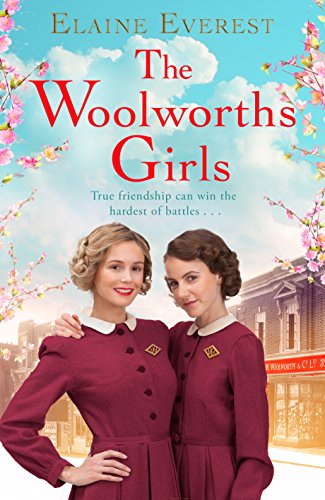
Seeing the proliferation of ‘heart warming’ stories on supermarket shelves made me step back and seriously consider the market for romance. Of course, it doesn’t take an awful lot more than common sense to see that life is pretty grim for a large number of people at the moment so they want a book to be a happy place to lose themselves. They want familiarity with their fiction: Heidi Swain’s Wynbridge series, Elaine Everest’s vintage Woolworths. In short – they want a comfort read.

But could I write one? Should I write one? After all, my readers expect something different and there are a significant number who buy my books for this reason, even if not enough to make a publisher bite off my hand. While I was mulling this over I chanced across Harper Collins’ Great British Write Off where they’re looking for thrillers and ‘beautiful love stories, particularly escapist settings.’ The deadline was the middle of January; perhaps I should give it a go.

So I started to make a few plans; an outline, some character sketches, a nice punchy opening. Still I prevaricated. In the meantime a friend who would dearly love to write ‘more complex’ (their words not mine) novels, was offered a three book deal for her chicklit. And then an agent who’d been reading my full manuscript came back with a no – but once again made it very clear they’d be happy to read more of my work – without the paranormal element.

On Wednesday morning my husband went away for a few days so I started to write. And write. And write. And live and breathe my characters inside my head in a way I’d almost forgotten. Long walks around the park and up the river. Then back home again to write some more. Researching on the hoof, taking it one or two scenes at a time. Letting the magic flow. 8,000 words of magic in just three days.

In fact, I’m itching to write another chapter now. So if you’ll excuse me…


THE BUSINESS OF BOOKS: GUILDING THE LILY – Jane Cable meets Book Guild author Sally Jenkins

How much of your working life does the business of books take up?

Around 40% of my working life is spent on writing and writing-related activities. I work for a multinational IT consultancy three days a week which, in theory, leaves two days for the business of books. In reality, domestic trivia eats into those two days but I try to make up that time on a Saturday morning when I can, plus if I’m aiming at a deadline I will squeeze in an hour’s writing before or after the day job.

What’s your business model to earn a living from writing?

Like most writers, I can’t earn a living solely from writing, hence the three days working in IT. The money I earn from writing comes from several sources, some passive, such as royalties (which I’d like to increase!), and some from sources that require active input. My best-selling ebook is Kindle Direct Publishing for Absolute Beginners, which is a guiding hand for writers brand new to e-publishing. Earlier this year I updated the book to include some of Amazon’s latest offerings, such as publishing a paperback through Amazon KDP. I sell the occasional story or filler to women’s magazines (Tip: Take a Break are one of the best payers if you have an anecdote that fits their Letters Page). I give talks about my writing to groups such as the Women’s Institute and to libraries. Sometimes I’m paid for the talks (and if I’m really lucky I get a free dinner as well!) but they all give me an opportunity to sell paperback copies of my first grip-lit thriller Bedsit Three and my bumper Coffee Break Story Collection and also to collect email addresses of readers interested in hearing when my next book is out. I’d like to grow this side of the business in order to get a better return on the amount of preparation required to devise a talk. Recently I’ve also been asked to do Kindle and paperback formatting for writers self-publishing on Amazon for the first time. Currently I restrict this to straightforward text-only books but it might be something I choose to grow in the future if giving up the day job becomes a reality.


What do you write and what do you consider to be your major successes?

Over the last few years I’ve gradually moved from short stories to novels. I write grip-lit (psychological thriller meets commercial women’s fiction) and straight commercial women’s fiction. I was elated when Bedsit Three won the Ian Govan Award and, as a result, the novel was published in e-book and paperback format. Another highpoint was The Book Guild recognising the commercial potential of my second grip-lit novel, The Promise, and offering me a place on their partnership publishing program. The partnership means we both invest in the publication costs and The Book Guild’s marketing arm is behind me, selling into bookshops, generating media publicity etc. We share the royalties. The Promise will be published on 28th January 2018 and I’m very excited!

Tell me about your latest project.

I’m working on my third grip-lit novel. I’m fascinated by how past events can impact our current lives. For example, in Bedsit Three the upbringing of one of the characters drives his destructive behaviour. In The Promise there are serious repercussions for something the heroine did three decades earlier. In my current work-in-progress, the protagonist wants revenge against someone who stole his girlfriend when they were teenagers.


Sally Jenkins writes grip-lit and commercial women’s fiction. She lives with her husband in Sutton Coldfield and has two grown-up daughters. Find out more about Sally and follow her blog at https://sally-jenkins.com/ or follow her on Twitter @sallyjenkinsuk or on Amazon.


The Business of Books: Giving it all Away

the-business-of-books-interviewswithjanecableJane Cable’s Another You goes on free download on Amazon…

Two weeks ago I wrote about trying to be empirical in judging the results of marketing – and also that Another You would be on free promotion. While an ideal opportunity to see if I could actually learn what worked and what didn’t, it felt a nerve-wracking and risky time, because if you can’t give your book away, what hope do you have of actually selling it?

Another You proved in spades that it could be given away. The entire week of the promotion it stayed in the Kindle UK top 200, most of that time in the top 100, rising to a highest position of number 20 and topping the free women’s historical fiction chart. Far, far, beyond my wildest dreams. So what did I do to achieve this?

First, the day before the promotion I sent round robin emails and used lead generation software for linkedin to all my friends and contacts who have shown an interest in my books. It was flattering that many of them had already bought it but I am sure there were a few who downloaded during offer week.

It was also a case of extending my network to people I used to know and I used Facebook and Linkedin to reach the alumni pages of both my secondary schools and the large accounting firm I trained with. From my former sixth form in particular the response was most enthusiastic, but then we always were a rather bookish lot.

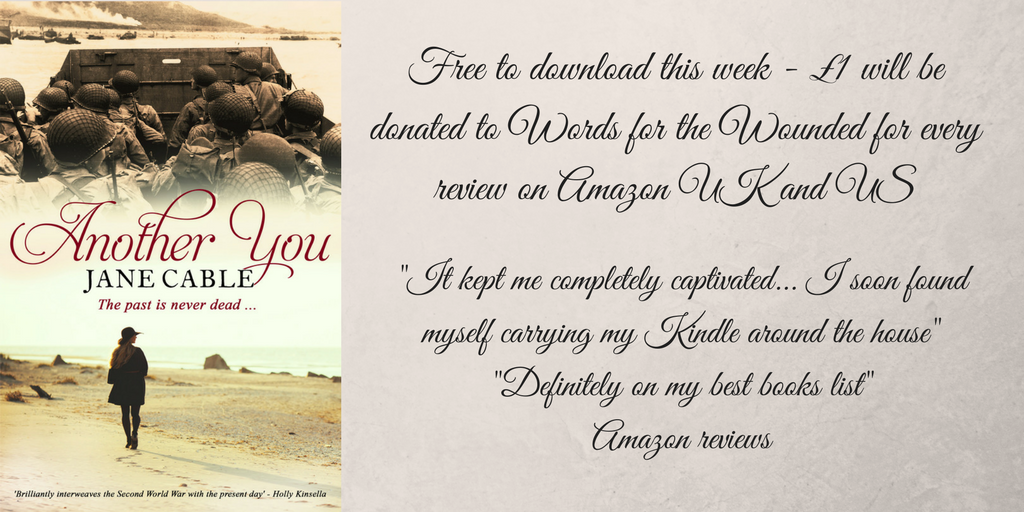
I devised a number of campaign graphics on Canva, some with review quotes from other authors, another pushing reviews in aid of Words for the Wounded. I used a different one each day on Twitter, Facebook and Linkedin. I also did some paid advertising and post boosts on Facebook. This included a ‘shop now’ promotion with a link to the Kindle UK download page which received 42 click throughs and cost £18. I messed up another boost later in the week by not noticing I’d reach the spend limit on my account, but by that time the book was flying and it didn’t seem to matter very much.

publishing, Jane Cable, writing

I also spent a little money (around £10-£15 each) on three free book promotion sites. For the UK market I tried Book Bongo but I have to say I was disappointed with the amount of coverage on social media and the book didn’t appear in their newsletter until after the free period was over. There was also a free listing on Book Angel.

For the US market I tried Awesome Gang and Pretty Hot on different days. The jump up the free chart was far more impressive on Awesome Gang day when Another You rose to number 671. The main Amazon.com marketing came from my publisher, Endeavour Press, who sent out hourly promotional tweets with a link to the site throughout US book buying hours. I can only think this was hugely successful because at the end of the week the book reached the dizzy heights of number 68. Amazing – as a quintessentially British author I never expected to have such appeal in the USA.

Overall the key must have been to reach enough downloads early in the promotion for the Amazon algorithms to kick in. Endeavour advises getting as many people as possible to download on the first morning and I suspect this is the reason.

Although I wish I’d had more time to prepare for the free offer period I really couldn’t knock the results and in the week since it ended Another You has continued to sell well and remained in Kindle UK top 20 women’s historical fiction. Now I need to somehow launch it closer to number one and that coveted bestseller label.


The Business of Books

the-business-of-books-interviewswithjanecableThroughout 2017 I’ll be alternating my own blog posts with interviews with other authors and book business insiders. I have a background in business myself, having trained as a chartered accountant and run my own company for the last sixteen years and when I embarked on my career as an author it was comforting to know how the commercial world works.

One of the biggest lessons I’ve learnt in my business life is never to ask anyone to do anything you wouldn’t do yourself. So in that spirit I’m going to kick off the series by answering the questions I’m going to be asking other authors.

How much of your working life does the business of books take up?

Up until now I’ve planned my working life so that a day a week is devoted to writing and the rest to the accountancy business I run with my husband. In practice I rarely take a whole day off so I’d say the split of my week as a whole is more like 25:75.

In 2017 all that will change as we’re going to move to Cornwall so that I can write more or less full time. Enough of our accountancy business can be done online or in distinct jobs which can completed with visits back to Hampshire when we’ll catch up with friends as well. We felt it was a bit of a risk but we have good relationships with our clients and most have been really supportive.

Now we just have to sell our house!

What’s your business model to earn a living from writing?

Unlike most authors, at the moment my only income stream from writing is book sales.

Being an accountant I set up my writing in a separate limited company from the start. The company owns the copyright to all my work and is owned by our accountancy business because I knew I would make losses initially so it was a more tax efficient structure.

2016 will be the first year the company makes a profit and I’m really proud it’s come so soon. This is purely from sales of The Cheesemaker’s House and The Faerie Tree – mainly ebooks and mainly from Amazon, although paperback sales from local outlets and events have also played a part.

At the moment I plan to re-invest any profit I make in marketing in the hope that the accountancy business can continue to generate enough money for us both to live off.

the-business-of-booksjanecable

What do you write and what do you consider to be your major successes?

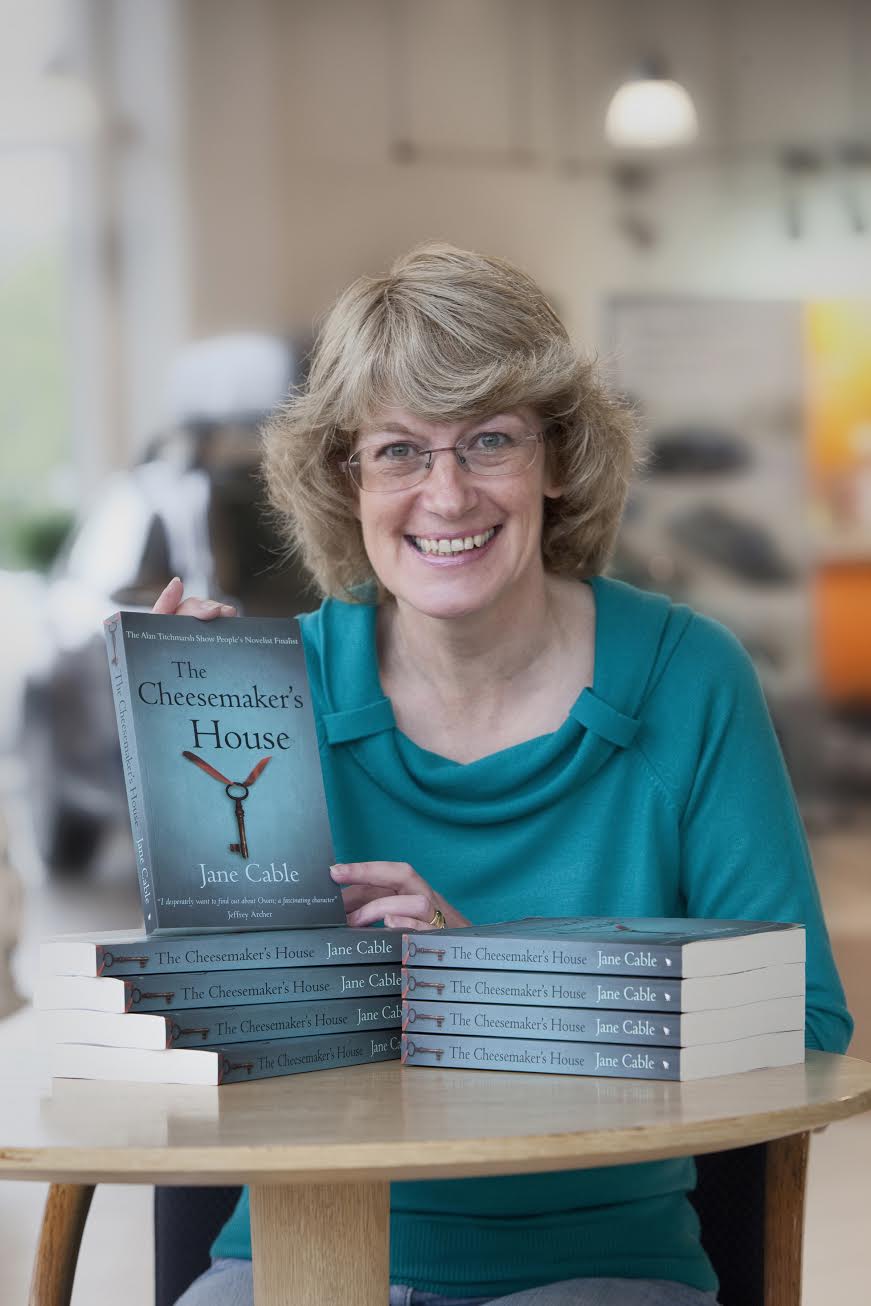
I write romantic novels with a twist of suspense. Undoubtedly the things which have made the most difference to my writing career were winning prizes. Way back in 2011 an early draft of The Cheesemaker’s House was a finalist when the Alan Titchmarsh Show won a competition sponsored by Harper Collins to find a new novelist. It gave me the confidence to press ahead and publish the book independently when I couldn’t find an agent or a publisher for it and it’s still my biggest commercial success, ending 2016 in the top 100 romantic ghost stories in the Kindle UK chart.

But it was the second competition the book actually won – the Words for the Wounded Independent Novel Award in 2015 – which moved my career on a stage when as a direct result I was signed by my agent, Felicity Trew. Within a year I had my first publishing contract with Endeavour Press.

Tell me about your latest project

My Endeavour ebook, Another You, was published just before Christmas. As Frost readers who regularly follow my blogs will know, the timing was something of a surprise and my latest project is getting together some serious marketing.

But the new writing cannot stand still and I am on the verge of completing an initial draft of what I hope will be my next novel, a romantic mystery set under the endless skies of Lincolnshire.

Jane Cable
www.janecable.com
@JaneCable


BEST ENDEAVOURS BEST IDEAS: Jane Cable on what happens once that digital publishing deal is in the bag

rembranbrancesundayIsn’t it funny how the most important emails just seem to slide into your inbox at the most inopportune times? Late on Monday afternoon my edit notes and first proof came back from Endeavour – just as I was wolfing down an early supper ready to go to Chindi Authors’ monthly meeting. I scanned the email – heart in mouth – only to find myself reeling from the last sentence.
But I had no time to consider the contents – the Chindi meeting was an important one, mainly devoted to planning the final details of our #LovetoRead fundraising evening for Dyslexia Action on Friday. Raffle prizes to co-ordinate, running order to finalise, budget for canapés to be agreed… All whirling around my head in an unusually disorganized fashion while I tried to digest the email bombshell.
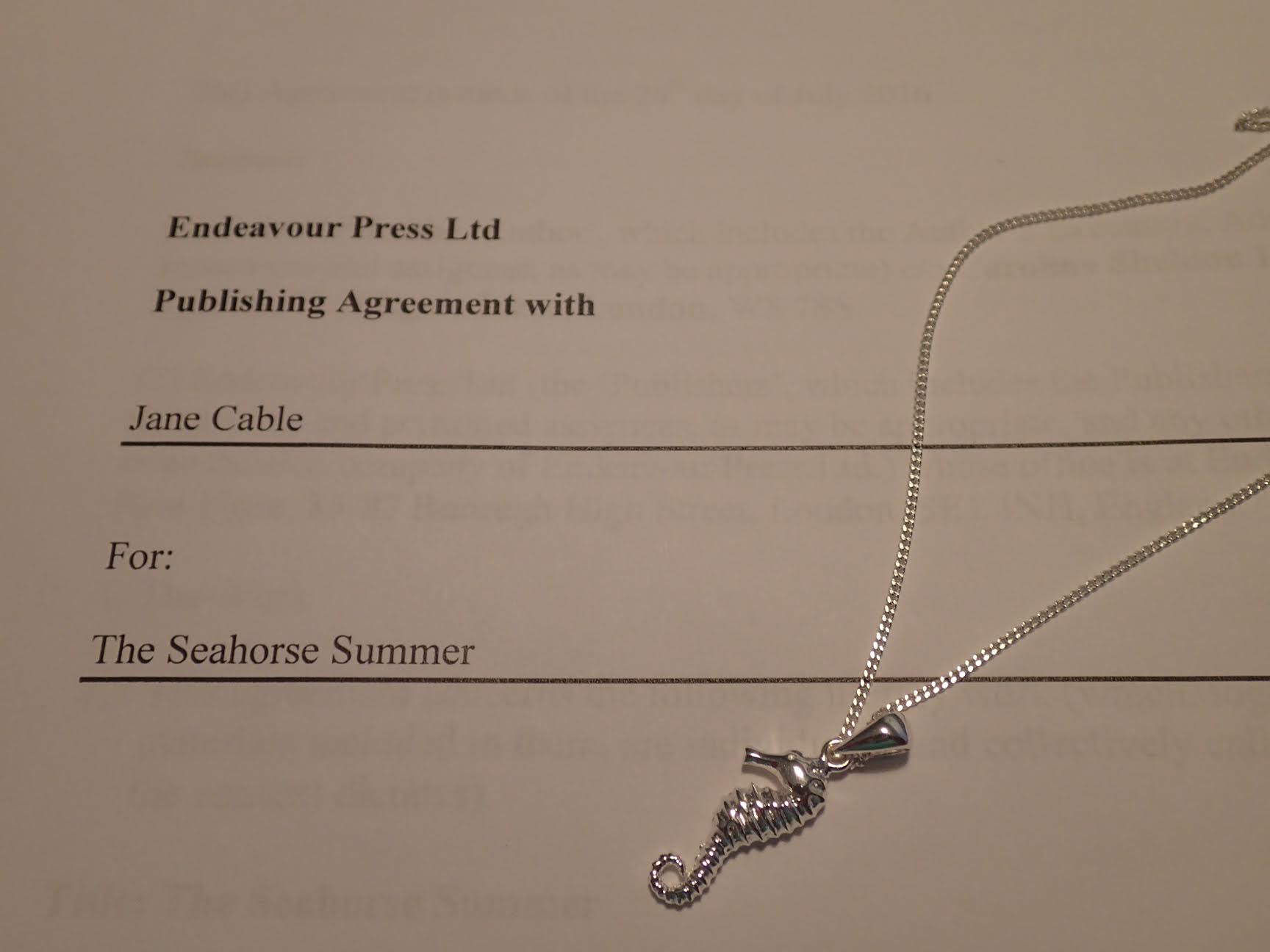
To be honest, now I’m used to the idea, it doesn’t seem so bad. Endeavour want me to change the title of the book, that’s all. And to put things in context, the edit notes extended to only three points, the last one prefaced with the phrase ‘this probably isn’t important’. They’re useful and fair and acting on them will certainly improve the book.

Jane Cable, publishing, writing
The problem with changing the title was that I didn’t have a clue where to begin. You become wedded to the name of your book over the years of development and when agent Felicity loved it too I felt sure I’d be able to keep it. Changing my mindset is something akin to turning an oil tanker but I’m determined to do it and come up with something better.
First some guidance was required from Amy, Endeavour’s publishing director and her answer came back clear and strong: look in the Kindle charts for books of a similar genre – and a tip that short phrases from films or songs often do well. Now my knowledge of films is limited to say the least (having not been to the cinema since the third… or maybe fourth… Harry Potter movie came out) but at least I have a neighbour with a first class degree in the subject so his enormous brain was brought to bear on the challenge.
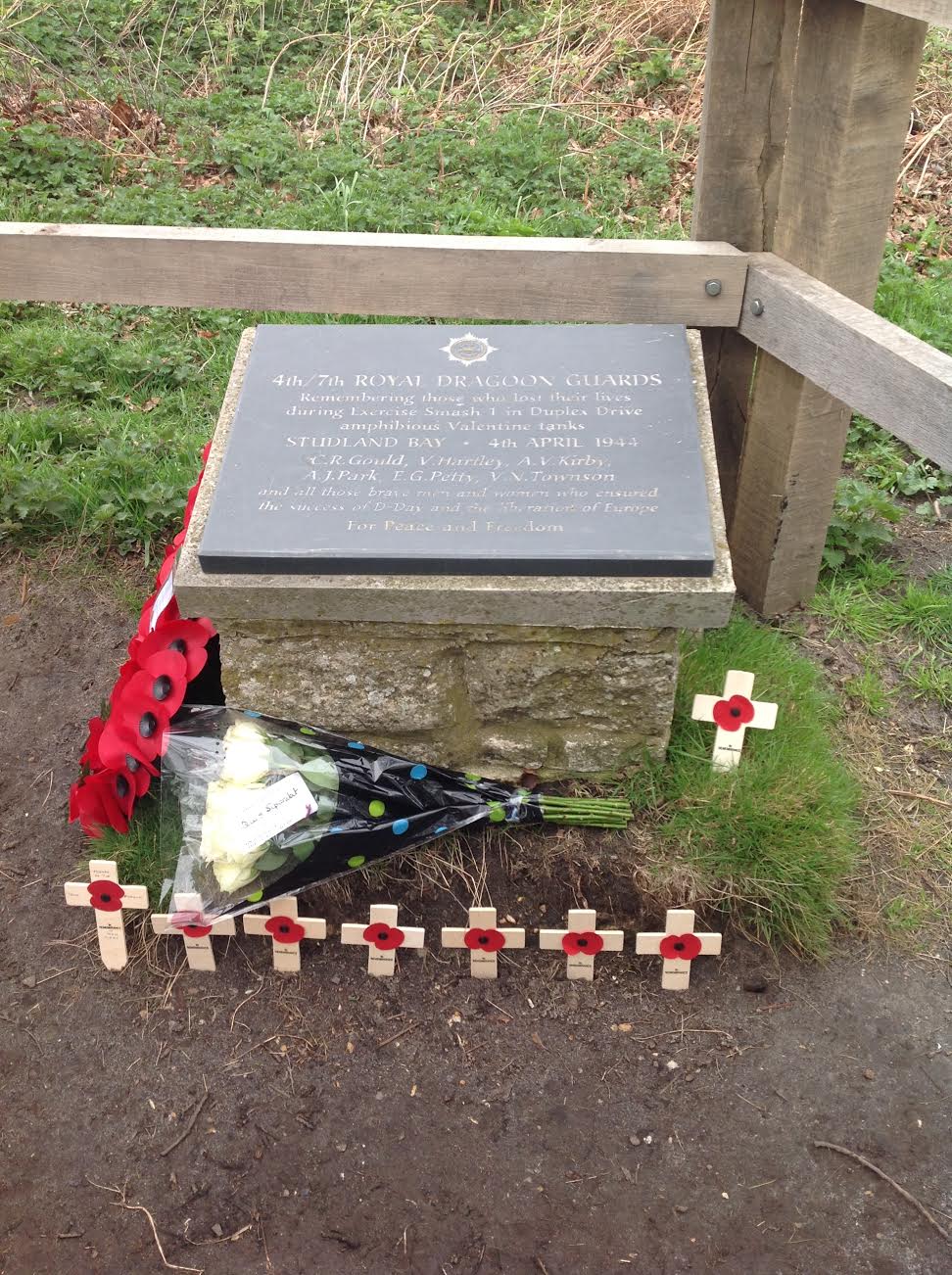
I quickly realised it’s impossible to instil all the nuances of a book into just a few words and that made me try to set out what it’s really about. It isn’t about seahorses (although they feature fairly strongly) and it isn’t about summer (although the action all takes place between April and August). It’s about being damaged, and healing, and moving on with your life. Or not – as the case may be. It looks back at the past – D-Day specifically – or perhaps the past looks forwards at us. No one title is ever going to cover it all.
So now there is a page in my notebook with an increasing number of titles on it. The most obvious ones have inevitably been taken but I have a few which might just do the trick. And I’m still canvassing opinion, so if you have any bright ideas then please, please let me know.

Jane Cable is the author of two independently published romantic suspense novels, The Cheesemaker’s House and The Faerie Tree, and a sporadic contributor to Frost. Jane will be reading from The Faerie Tree at Chindi Author’s #LovetoRead party in Chichester on 18th November. More details here: http://www.chindi-authors.co.uk/news/
The Seahorse Summer (or whatever it ends up being called) tells the tale of how two American soldiers born sixty years apart help forty-something Marie Johnson to rebuild her shattered confidence and find new love. Discover more at www.janecable.com.


Best Endeavours, Best of Spirits: Jane Cable’s on what happens once that digital publishing deal is in the bag

best-endeavours-best-of-spirits-jane-cables-on-what-happens-once-that-digital-publishing-deal-is-in-the-bagBEST ENDEAVOURS
 
Jane Cable’s blog about what happens once that digital publishing deal is in the bag continues.
 
BEST OF SPIRITS
 
For a writer of ghost stories Hallowe’en offers apparently boundless opportunities to promote your work. I benefitted greatly from this when my first novel, The Cheesemaker’s House, hit the bookshops one September and my friend and PR Lisa Holden was able to secure some wonderful reviews in seasonal features.
 
2016 is The Cheesemaker’s House’s fourth witching season so once again I decided to make the best of it by running promotions on Twitter and on Facebook to give away iBooks. While I won’t ‘sell’ my books for a big fat zero on Amazon (or anywhere else, for that matter) I’m happy to give iBooks – and paperbacks – as competition prizes because it opens the doors to new readers and requires a certain amount of engagement from them. And as you may have gathered, I just love engaging with people who love books.
Jane Cable, publishing, writing
This year my local writers’ group, Chindi Authors, has been supporting #LovetoRead (more of which in a few weeks) and as part of our efforts those of us with sufficient courage have been videoed reading from our books. My offering – the first chapter of The Cheesemaker’s House – can be accessed via my website here http://janecable.com/the-book/4577579495 . Do me a favour if you do visit the link… listen, but don’t look. But at least I can take comfort in the knowledge that next time I’ll dress more carefully.
 
Much as I love writing ghost stories I fell into it by accident. The Cheesemaker’s House didn’t start out that way, and The Seahorse Summer began life with a very different ghost. But I have a genuine fascination with the fictional possibilities presented by the ripping of the veil between this world and the next and with every new character from beyond the grave I want to stretch the boundaries a little bit more.
 
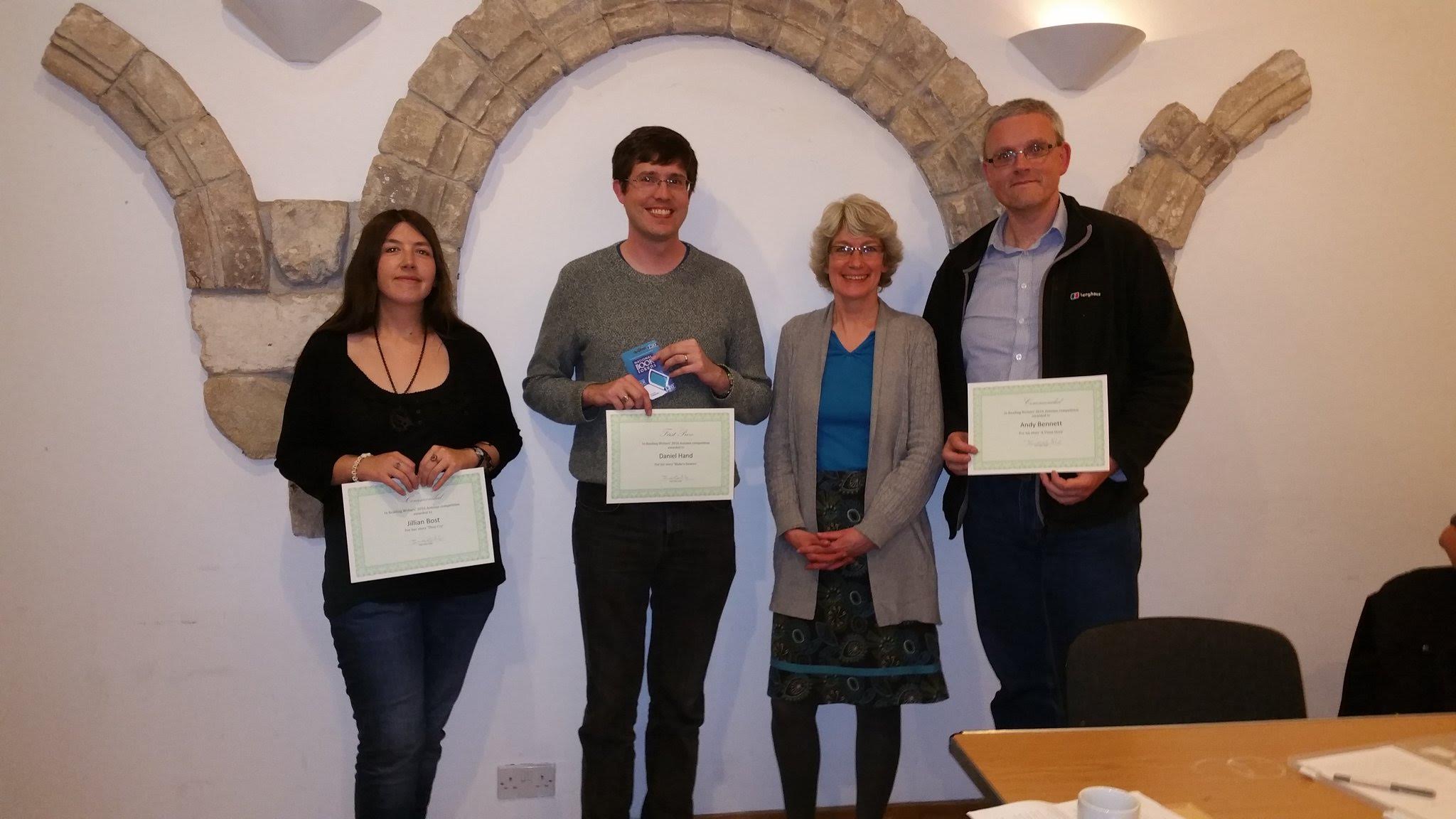
This year the Hallowe’en fear factor increased when Reading Writers asked me to judge their autumn competition which was for a short format ghost story. One poem and eight prose pieces later I realised that writers across all genres had been prepared to give it a go. Fantasy, thriller and humour were all represented and the winner used characters from his military work in progress to brilliant effect.
 
It was also a new experience sitting in front of a room full of writers and giving them feedback on their work. Most were extremely gracious (although I did detect a pursed lip or two), but technical errors aside at the end of the day a winning story is a matter of personal choice. It made me realise just how lucky I was that The Cheesemaker’s House found people who loved it… and just happened to be judging competitions.