The Edward Stanford Travel Writing Awards  Announce 2018 Shortlist 

Edward Standford Travel Writing

The Edward Stanford Travel Writing Awards, in association with luxury tailor made travel specialist Hayes & Jarvis, has announced its shortlist for 2018. The Awards celebrate the best travel writing and travel writers in the world.

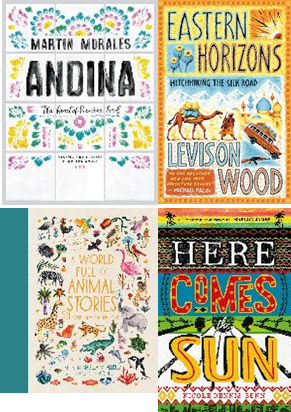
With 43 titles whisking readers to over 150 countries across seven categories, these awards celebrate both multi-award-winning authors and inspirational debuts from over 15 countries. These awards recognise the escapist, ingenious and inspirational qualities of travel writing in all its forms, including fiction, nonfiction and memoir, children’s books, cookery books illustrated adult nonfiction and Travel blogs.

The award categories are:

  • Stanford Dolman Travel Book of the Year, in partnership with The Authors’ Club
  • Hayes & Jarvis Fiction, with a Sense of Place
  • Wanderlust Adventure Travel Book of the Year
  • Food and Travel Magazine Travel Cookery Book of the Year
  • Destinations Show Photography & Illustrated Travel Book of the Year
  • Marco Polo Outstanding General Travel Themed Book of the Year
  • London Book Fair Children’s Travel Book of the Year
  • Bradt Travel Guides New Travel Writer of the Year
  • Lonely Planet Pathfinders Travel Blog of the Year

In addition to the above, the awards also include the Outstanding Contribution to Travel Writing award.  Six of these categories are open to a public vote which, combined with the judges’ verdict, will determine the 2018 winners. These include: Fiction, with a Sense of Place, Adventure Travel Book of the Year, Travel Cookery Book of the Year, Illustrated & Photography Travel Book of the Year, Outstanding Travel Themed Book of the Year and Children’s Travel Book of the Year. Readers can cast their vote here edwardstanfordawards.com/vote, and two voters will be in with the chance to win a set of 10 travel books.

The winners will be announced at a star-studded dinner on 1st February 2018 during the Stanfords Travel Writers Festival at Destinations: The Holiday and Travel Show at Olympia.

The winner of the Stanford Dolman Travel Book of the Year (in partnership with The Authors’ Club) receives £5,000 and all winners receive an antique globe trophy, to be presented at the awards ceremony.

The first Edward Stanford Award for Outstanding Contribution to Travel Writing was awarded to Bill Bryson and last year the award was presented to Michael Palin by Levison Wood who also won an award for his book Walking the Himalayas.

The full shortlist can be found at www.edwardstanfordawards.com

BUSINESS OF BOOKS: TAKE FOUR WRITERS – INTRODUCING CLAIRE DYER

Being a poet and a novelist I’m often asked whether I prefer one over the other and I always answer that I love them both the same – like I do my two children, obviously! Seriously though, I really do believe both mediums are two sides of the same coin; both set scenes, tell stories and are peopled by characters who I hope are vivid and compelling.

The main differences may seem mundane: in poems the lines don’t always go right across the page, whereas in novels they do and, in poetry we have fewer words to play with, so every word really does count.

That’s not to say, however, that we can’t play with format in fiction and invest our prose with the same attention to detail as we do in poetry – in fact, we should.

Also, I believe that, as in poetry, a novel should have moments of distilled emotion but, unlike with poetry, in a book we can give our readers and characters, for that matter, more instances of down time: conversations about the weather, making tea, going to the shops.

For me, a poem works if it tumbles down the page and takes me with it and I believe a novel works if it draws me in and keeps me held safe in its narrative. I sincerely hope both my poetry and prose do both of these things!

So with this thought I’ll say a few words about my publications. I’ve had two collections of poetry published by the very lovely Two Rivers Press and, although each are only 50 odd pages long, they both took years in the making – each poem, I hope, earning its place in the stories the books aspire to tell. The second book, Interference Effects, came out of my MA in Creative Writing at Royal Holloway and what the poems aim to chronicle is how, as colours vary in a butterfly’s wing depending on the angle at which we view it, our impressions and thoughts about subjects as varied as art, love and loss, marriage and memory, can change when we look at them through different lenses.

I’ve had two novels and a short story published by Quercus and am utterly thrilled that The Dome Press are publishing The Last Day on 15th February. This book has had an interesting genesis. It was always going to be about the three of them: Boyd, Vita and Honey, but it was only on the second rewrite that Vita pushed her way front and centre and waved at me, glasses in one hand, paintbrush in the other and said, ‘Put me in the first person,’ and as much as I loved writing about the other two, it was Vita who called to me the loudest.

Also, during the rewrites, the book changed from being a story about one thing to a story about another: it had the same people and same plot but eventually it revealed its true colours (a bit like a butterfly’s wings!) and it’s been a wonderful experience being part of this evolution.

The title came to me (bizarrely and somewhat prophetically) on the day after the EU Referendum in June 2016 and the more I thought about it, the more it seemed to fit with the fact that we all will experience last days: the last day of school, of work, of love, of life. And, if after every beginning there is an ending, then after every ending is a beginning: after every last day there is a next day and it is this message I hope the book holds at its heart.

https://www.clairedyer.com

@ClaireDyer1


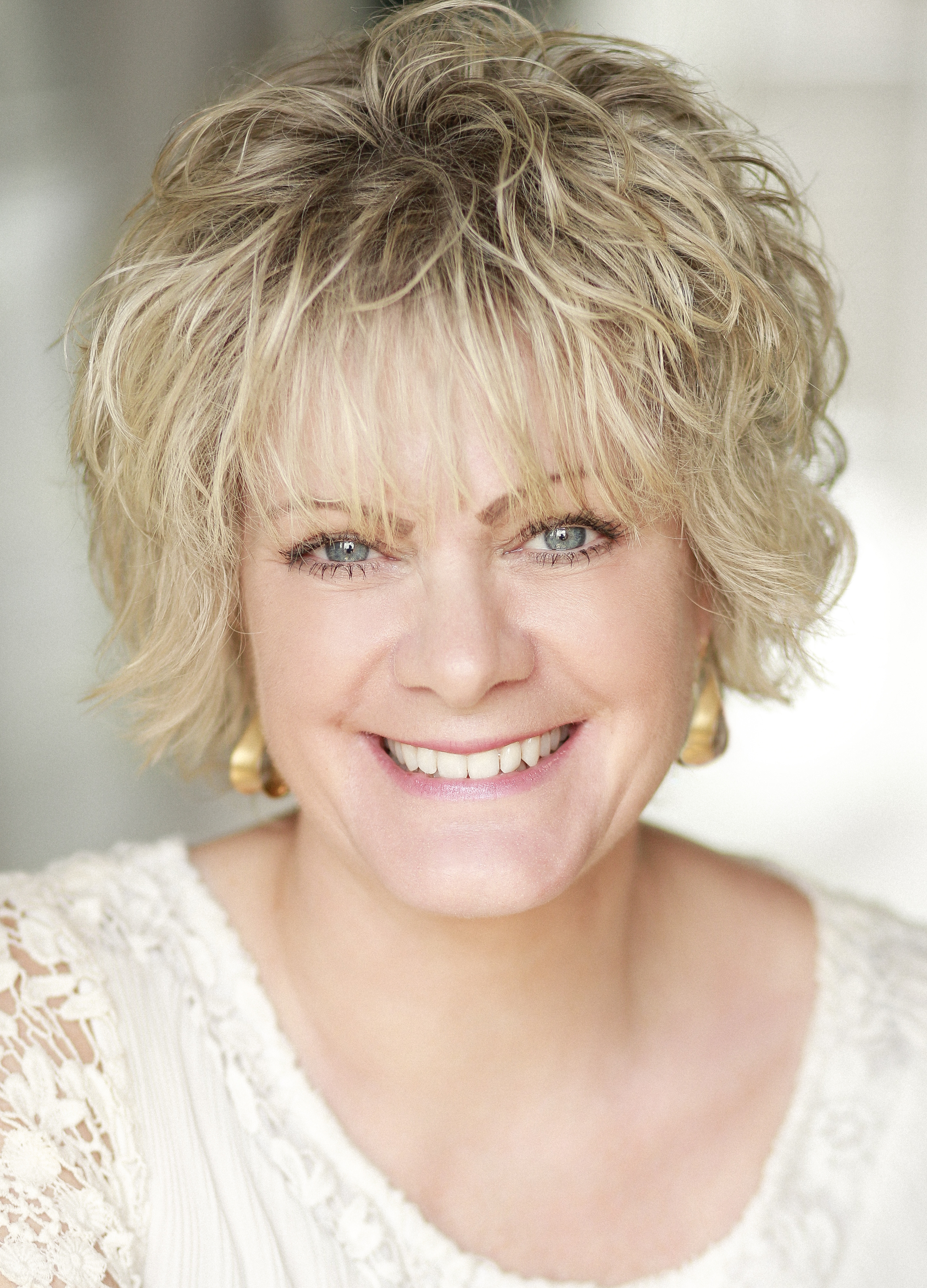
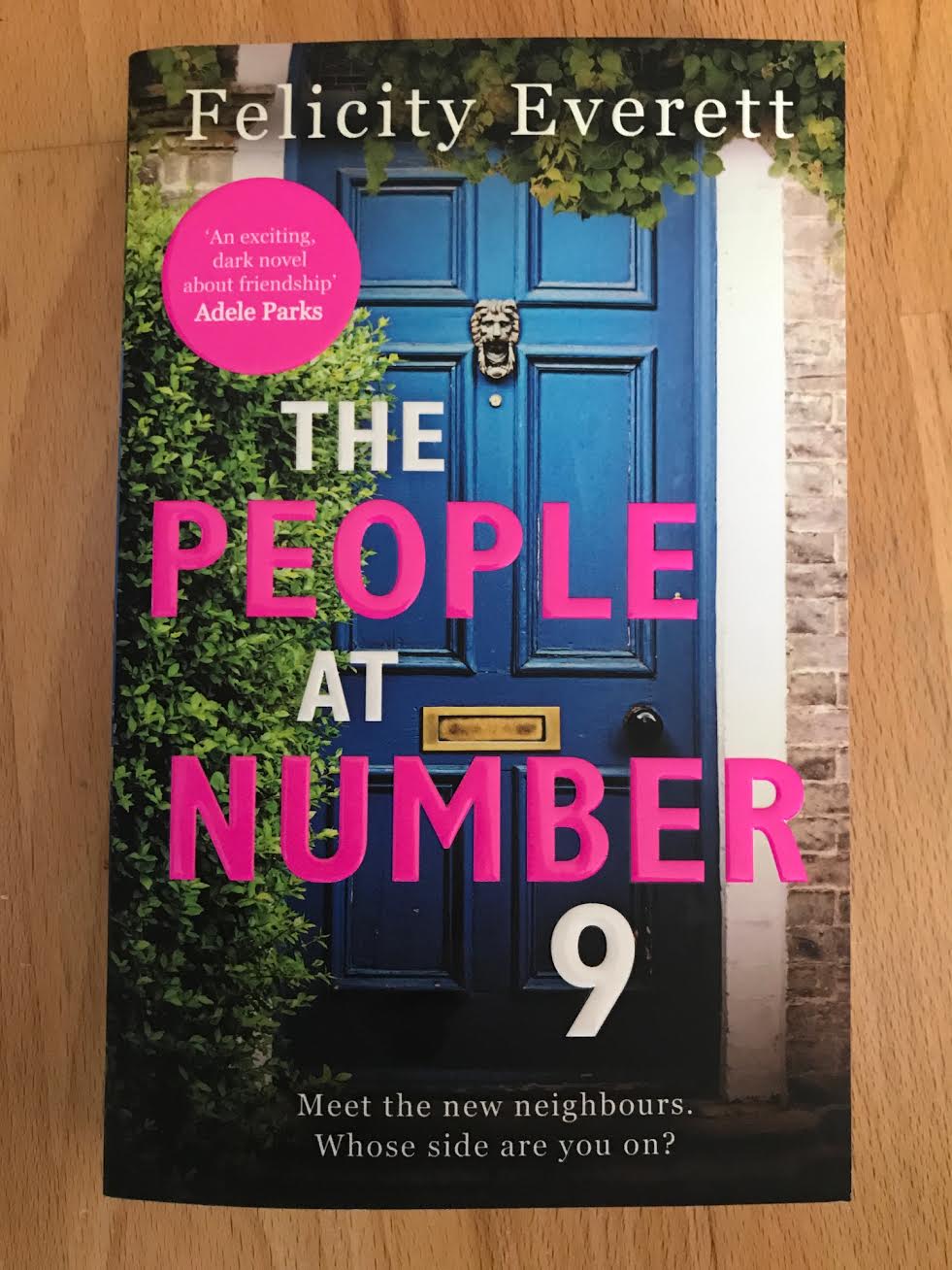
Felicity Everett The People at Number 9 | Author Interviews

I loved your book. Where did the idea for The People at Number 9 come from?

I’m glad you enjoyed The People At Number 9. The idea had probably been bubbling under for a long time before `i thought of a way to make it into an entertaining story. I’ve always been susceptible to ‘dangerous’ friends – the kind who are fun to be with but unreliable and sometimes worse! It started in primary school for me, when I was desperate to be in with a little gang, led by a queen bee who decided on a weekly basis who was ‘in’ and who was ‘out’. Even after the agony of being sent to friendship Siberia on a number of occasions, I didn’t learn my lesson and find a proper friend, just hung around until my turn to be ‘in’ came round again. I’m not saying Lou and Gav in The People At Number 9 are as mean or calculating as this – they probably aren’t aware of exploiting Sara and Neil (who maybe deserve it anyway!) but it’s that attraction, like a moth to a flame, that interested me.
Did you expect it to become so successful and resonate with people so much?

Of course any author hopes for  readers, but you can’t write the book you think people want to read, because it won’t be authentic. You have to write the book you’ve got in you.  More than anything, writing is communicating. It’s a way of asking ‘is it just me or…?’ So when I wrote The People At Number 9, it was my curiosity about the subject that drove me forward. I hoped people would get it, but it was surprising and thrilling that so many readers reacted so positively to it. From the feedback I’ve had, I think it resonates because it’s a rare person who hasn’t at some time in their lives been the underdog in a friendship – the one who always makes the phone call, books the tickets, turns up on time and is kept waiting around. Not many people are daft enough to let a situation like that get out of control the way Sara does in the novel, but they can empathise enough to enjoy the journey.

How long did it take for you to write?

It took about two and a half years to write, which is quite along time for a short novel, but I wrote it when me and my family were living in Australia for a little while, and there were many distractions!

What is your writing process?

I don’t plan very much. I take a theme and some characters and sort of improvise, although for No 9 I did have a vague route map for the story. In the past I’ve tried to do that thing that some writers do of creating a life for their characters before they even start writing, listing their record collection, where they lived as a child, their favourite colour – stuff like that, but it just didn’t work for me. I think I find my characters by hearing them speak. I love writing dialogue.

I am a compulsive rewriter – I can’t just rush to the end of a first draft, knowing it’s terrible and then rewrite it from the beginning, I have to go back and make each paragraph right (or as right as it can be) as I go along, which is very laborious. My finished first draft is effectively a fifth or sixth draft. I don’t send it to my agent until I’m pretty sure it’s as good as I can get it.

Do you have a daily word count?

No. It’s so dispiriting if you don’t reach it. I’m happy if I can write five hundred good words a day. Sometimes a good day’s writing can actually be deleting a page or two, if the scene’s not working, or the writing is flabby, so I tend to think in terms of progress rather than pages.

Where do your ideas come from?

That’s a tough one. I don’t really know. I think I’m very influenced by place and I’m interested in the psychology of relationships. I suppose I tend to take a fairly mundane universal situation – a friendship gone awry or a move to the countryside (in the case of my new novel) and then ask ‘what if?’ If you ask that question enough times, it can take you to some pretty dark and twisted places!

Do you have a specific place where you write.

I’m embarrassed to admit it, but I write in bed! We moved to a new house, and I got the study all kitted out, had the desk positioned in front of the window with the lovely view, got all my books organised, and then found I never went in there. It was just too daunted by the open lap-top on the pristine desk. It felt too ‘intentional’, as though I had to write really impressive sentences; be ‘A Writer’. So now, instead, I wake up and grab my laptop, read the news, check Facebook and then open my document – I sort of sneak up on it. I re-read what I last wrote, alter a word or two and then, before I know it, I’m in full flow and if I’m lucky I’ve written a page or two. The only problem is that all that slouching is doing my back in!

Who are our favourite writers?

Jonathan Franzen, Colm Toibin, Anne Enright, Elizabeth Strout, to name a few. I love a family novel and I like social commentary. I’m a big fan of short stories – The New Yorker has a wonderful archive and I’ve discovered some great novels by writers I’ve first come to for their short stories – George Saunders and Curtiss Sittenfeld being two.

What books have you read recently that you loved?

Eligible by Curtiss Sittenfeld and Lincoln in the Bardo by George Saunders (see above). I’ve also re-read Rebecca by Daphne DuMaurier because it’s a tutorial in evoking a sense of place and a compelling atmosphere, two things I am attempting in my new book.
What is next for you?

I’m writing a gothic psychodrama!  It’s a novel about a couple who move to the countryside to make a fresh start, but find themselves haunted, not only by their own past, but by a strange unease in their new community and the landscape that surrounds it.


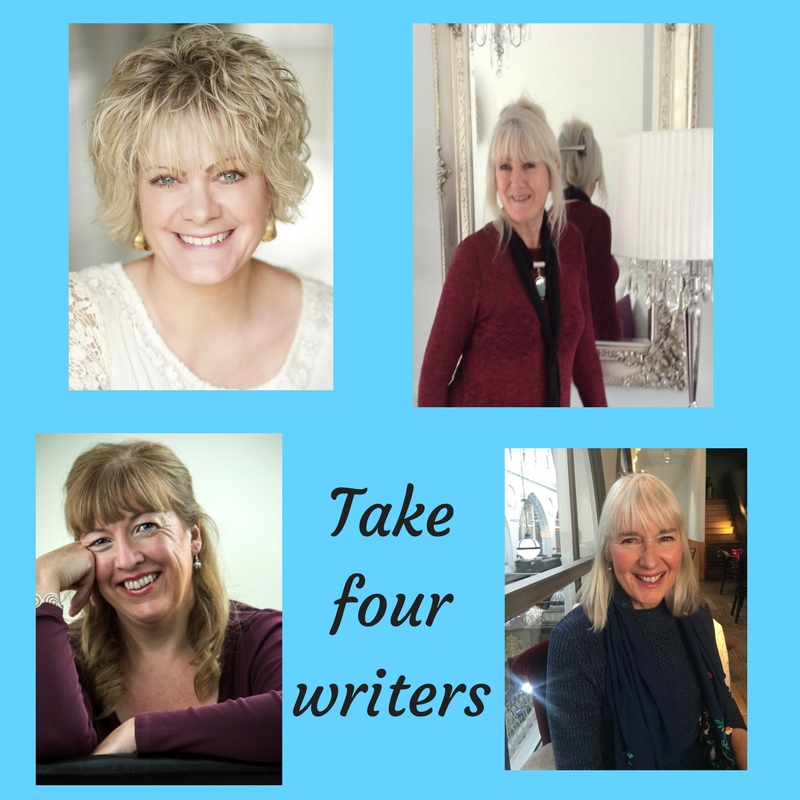
BUSINESS OF BOOKS: TAKE FOUR WRITERS

Sometimes when writing a regular column you get sick of the sound of your own voice. Well I do, anyway. However much you dress it up I am just one author on one career path and although other writers contribute wonderful guest columns to the Business of Books there is no sense of continuity to their experiences and I wanted to remedy that.

So a few months ago I put out feelers in the author groups I belong to on Facebook to see if there were writers with books being published in 2018 who would be prepared to write monthly updates. I wanted to cast the net wide; across genres, across routes to publication and with the new books coming out at different times during the year.

The first volunteer and first to be inked into the schedule was writer of literary women’s fiction, Claire Dyer. Claire has featured in this column before and is a good friend – but she also has an interesting story to tell. Her first two novels were published by Quercus but sadly the second one fell between the cracks when they were taken over and it seemed as though her career had stuttered to a halt. Now with a new agent and a new deal with The Dome Press for The Last Day she is set for an interesting year. And if early indications are anything to go by, a very successful one too.

Given that I’m a member of the Romantic Novelists’ Association many of my contacts are in this genre so my next task was choosing a single representative for romance. I have to say that I struggled initially but then one story piqued my curiosity. Linn B Halton, already a successful author with Harper Impulse, was about to embark on a parallel career as her alter ego Lucy Coleman, signed to Aria Fiction. Linn has two feelgood novels out next year but will be concentrating on her July launch for Frost.

Having come through the indie publishing route myself I was determined that this option should be represented, but again the issue was choosing between the impeccable credentials of the volunteers. I had two particularly strong candidates but in the end it came down to genre and as one was another romance writer, the humourist won out and I selected Angela Petch. It was particularly interesting because Angela is better known as an historical novelist (first indie and now with Endeavour Press) and this is her first foray in a new direction. That she was willing to share this potentially perilous journey spoke volumes about her courage and I can’t wait to find out how 2018 pans out for her.

I knew my final author should be writing thrillers or crime, and in an ideal world I’d have liked a debut novelist but none came forward. Whether they felt they’d be too busy trying to navigate uncharted territory or weren’t sufficiently ahead with their social media when I put out the call I don’t know. But in the end it’s worked really well because I’m able to feature Scottish crime writer Jackie Baldwin whose second novel for Harper Collins’ Killer Reads, Perfect Dead, is due out in June.

Over the next few weeks each writer will introduce themselves but in the meantime if you can’t wait to find out more, here are the links to their websites:

https://clairedyer.com/

http://linnbhalton.co.uk/

https://angelapetchsblogsite.wordpress.com/

http://jackiebaldwin.co.uk/


BUSINESS OF BOOKS: CLASS OF 2017 – Jane Cable considers the big lessons

Some writers consider their calling a business from day one – to others it comes as a complete surprise. But asking them to think about it has come up with some real pearls of wisdom we can all share.

On finding time to write:

“I’ve found the trick is to stay focused on the current work in progress while trying to fit all other aspects of my writing around it – and remembering to stop and eat occasionally. I can recommend writing retreats where I find working whilst gazing out to sea from my desk can be a welcome rest from my desk at home!” Elaine Everest

“I have the same commitments as everybody else. I’ve had to be very disciplined and make time to write. I set several evenings a week aside and also write on weekends; I watch a lot less TV than I used to. When I’m working under deadline… I write any spare moment I can, whether it’s during lunch breaks or into the early hours of the morning.” Nikki Moore

On marketing:

“Networking with fellow authors and bloggers, and interacting with readers is so important. It builds relationships, and ultimately I believe that the business of books is about people.” Barbara Copperthwaite

“While I don’t normally spend much on book marketing, I did engage a publicist for my second novel. That probably helped get it into bookstores. It certainly spared me a lot of time and footwork.” Carol Cooper

On running a business:

“I always remember my dad telling me that a new business takes an average of two years to make a profit. I went into self-publishing my books with that in the back of my mind, and very much thinking of it as an entrepreneurial venture. I ensured I had enough money behind me to survive for two years without making any profit at all.” Barbara Copperthwaite

“It’s only recently I’ve converted my way of thinking to writing as a business, so I’m learning and in the process of developing the business model… In its simplest form: keep writing, keep engaging, and keep building my readership.” Laura E James

On diversification:

“I give talks about my writing to groups such as the Women’s Institute and to libraries. Sometimes I’m paid for the talks but they all give me an opportunity to sell paperback copies and also to collect email addresses of readers interested in hearing when my next book is out. I’d like to grow this side of the business in order to get a better return on the amount of preparation required to devise a talk.” Sally Jenkins

“I don’t have a formal business model, but writing full-time has given me the opportunity to take on different projects and I am now beginning to earn from a wider source than book sales. Writing short stories for magazines is a good way to supplement income and I have also taught a ‘writing a novel’ day course.” Heidi Swain

And the final word:

“Keep writing. Be flexible. Be aware of the market. Be dedicated.” Karen King

In 2018 The Business of Books is running a new regular feature on best advice from authors and publishing professionals so there will be plenty more great ideas from the world of words.


Find out more about the authors featured above at:
http://www.romanticnovelistsassociation.org/about/author/elaine_everest
https://nikkimooreauthor.wordpress.com/
https://www.barbaracopperthwaite.com/
http://www.drcarolcooper.com/
http://www.lauraejames.co.uk/
https://sally-jenkins.com/
http://heidiswain.blogspot.co.uk/
http://www.karenking.net/

THE BUSINESS OF BOOKS: SECRETS OF SEASONAL SUCCESS – Jane Cable takes a sleigh ride with Sunday Times bestselling author Heidi Swain

How much of your working life does the business of books take up?

The business of books, in one way or another, takes up all of my working life now. Earlier this year I made the leap and gave up the day job to write full-time. I had been gradually cutting down my hours, but going out to work two days a week meant compromising time at the keyboard. I was increasingly feeling that I was spinning one plate too many and something had to give. Nonetheless it was a difficult decision because I loved my job, but following my heart has been the right thing to do.

Now I can write from six thirty to lunchtime and work on guest posts, blogging and interviews in the afternoons. It’s a much better balance all round.


What’s your business model to earn a living from writing?

I don’t have a formal business model, but writing full-time has given me the opportunity to take on different projects and I am now beginning to earn from a wider source than book sales. Writing short stories for magazines is a good way to supplement income and I have also taught a ‘writing a novel’ day course. That said, I’m not poised to order the diamond shoes just yet and my priority is, and always will be, focusing on writing novels readers love.

What do you write and what do you consider to be your major successes?

I write commercial fiction for Simon and Schuster, although I prefer the term ‘feel good fiction’. I want my readers to feel whisked away to the fictitious town of Wynbridge as soon as they sit down with the book.

I feel very fortunate to have readers getting in touch every day to tell me how much they love Wynbridge and want to live there, or that they have purchased my book to take on holiday or to give as a Christmas present. For me personally, those messages and tweets are all major successes. What could be more flattering than a reader loving what you have written so much that they take time out of their day to tell you?

I’m also very proud of my two Christmas books. Mince Pies and Mistletoe at The Christmas Market was my winter 2016 release and having listened to readers and friends who had been disappointed by novels which featured ‘Christmas’ in the title but barely covered it in the book, I was determined to pack my pages full of festive feeling. Looking at the response it definitely worked and it wasn’t far into January before my editor called asking if I would consider writing another one!

Needless to say I jumped at the chance. I already had the beautiful setting of Wynthorpe Hall in mind and got to work straightaway. The result was Sleigh Rides and Silver Bells at The Christmas Fair which was published in October and again, I’ve crammed in as much cinnamon and spice as possible.


Tell me about your latest project.

I’m now working on my sixth novel which will be released next summer. This one features a Wynbridge resident who isn’t living in the town, but don’t panic. I’m planning for her to visit her friends and family at least twice so there’ll be plenty of opportunities to catch up with the girls from The Cherry Tree Café and The Mermaid Pub.

Thank you Jane for inviting me to feature today and I may take this opportunity to wish you all a very merry Christmas!


Since my interview with Heidi Sleigh Rides and Silver Bells at The Christmas Fair has taken the Sunday Times bestseller list by storm and just has to be this year’s most successful seasonal romance. Heidi lives in Norfolk with her wonderful family and a mischievous cat called Storm. Find out more about her here: Website: http://www.heidiswain.co.uk/


Why Cybersecurity Can Win the Fight Against Islamic Extremism By Cosmo Clark

Cosmo Clark is a cybersecurity and cyber terrorism analyst and observer whose first novel, Blue Eyed Infidel, a satirical sci-fi thriller in the vein of Orwell’s 1984, hits the UK shelves this week. Here Clark (a pseudonym) argues that computers, not bombs, will win the war on terror.

What do you think is the best way to win an argument? When I was at primary school, John Biggers, the village bully, thought he had the answer: to punch me in the face. Hard.

But violence didn’t work in the playground and it doesn’t work in the real world, either. Invading Iraq and bombing ISIS in Syria might win a few headlines for politicians, but in the long term, all it really does is create more terrorists, and leads directly to more attacks here in the UK.

It is my firm view (and one shared by a wealth of academics) that technology, not bombs, will win the global war on terror.

1. In-APP-propriate action: why we should boost, not ban, encrypted chat apps

Extremists talk to each other using secretive, encrypted chat apps. That’s how they groom new members, organise attacks and keep out of the public eye.

Our kneejerk reaction to that has always been to shut these apps down. But that would be a big mistake. Banning one type of app (or making it less secure) will only lead to more. That is a battle that can never be won.

Instead, we should be encouraging their use; remember, loose lips have and always will sink ships. We should be using covert spyware to infiltrate the apps and identify the bad guys.

2. Jihadi Join: why UK spies should be posing as online extremists

Islamic extremists will never love the UK. They don’t feel loyalty to a passport, only to their God. Trying to force them into ‘being British’ or to ‘integrate’ is a total waste of time and money, and just helps them know what to say in order to disappear into our society.

Instead, we should talk to extremists online in ways that make sense to them. To start with, that will involve doing things which will seem completely counter-intuitive. Let’s say you are a jihadi who wants to blow himself up. If you create an online persona as someone who can help them make that bomb, it’ll be much easier to grab the perpetrator – and the rest of his terror cell – when the time comes.

3. Dead ringer: using deceased ISIS fighters to communicate with terror cells

Technology changes quickly, but we’ve got two exclusive advantages right now that we should be using more. Firstly, we must put more pressure on social media companies like Facebook and YouTube to track (rather than ban) and report on Islamic extremists using their platforms. That’s harder than you might think.

Secondly, we’ve got access to cool resources like artificial intelligence. My favourite idea is to create fake cyber-personalities, ‘chatbots’ if you like, which are smart enough to hold conversations with real-world Islamic extremists. To be genuinely believable, these cyber-personalities could actually appear to be real people. There are roughly 25,000 Islamic extremists in the UK, and about 1,000 British jihadis who went to fight for ISIS and who have since gone missing. If a few of those deceased individuals popped up online, they could be treated as heroes. Only those ‘in the know’ would ever know the truth.

Blue Eyed Infidel by Cosmo Clark is out now, priced £9.99 in paperback and £3.49 as an eBook, and is available at Amazon UK. Visit www.cosmoclark.com.


Why Technology is Ruining Christmas By Ian Shepherd, author of The Sleighmaker

A third of children will be sending their wish lists to Santa by smartphone app this Christmas.

Let that sink in for a moment.

Now, when the kids aren’t looking, swipe their gadgets – all of them – and hide them in a sock drawer until December 26. Because technology is ruining Christmas. And I mean ruining it.

I wrote an unashamedly traditional children’s book called The Sleighmaker, which is out this week. My publisher assures me that it will capture the public’s imagination in much the same way as The Snowman did all those years ago. Except that it won’t. Because that was then, and this is now. Raymond Brigg’s classic picture book was released in 1982, long before Britain’s obsession with all things ‘smart’. In those days, children read books for entertainment, not homework. Books were the must-have ‘device’, the original hand-held tablet.

Children still love to read – a lot. Sales of children’s books rose 16 per cent last year to £365million, according to figures released by the Publisher’s Association. But in today’s tech-obsessed households, where youngsters spend an average of six hours-a-day (yes, you read that correctly) glued to an array of ‘smart’ screens, the paperback no longer takes centre stage. Technology and its new leading lady, the smartphone (which has never been, er, smarter), steal the show. A quarter of children will use one to send Christmas wishes via Facebook on December 25. Yes, technology has written off the humble pen, too.

And so back to Christmas and the thankless pursuit of that impossibly perfect day. Nothing, even the in-laws, should be allowed to spoil it.

Except that technology in any of its guises almost certainly will. Its availability anywhere in the home will prevent kids from focusing on wonderful books like The Snowman (and The Sleighmaker). It will fill your home with irritating noises, and reduce your children’s vocabulary to monosyllabic grunts. It will also cause your children more harm that cocaine, if you believe the warnings (Earlier this year, an addiction therapist claimed that giving children a smartphone is like “giving them a gram of cocaine”. She said time spent messages pals on Snapchat and Instagram could be just as dangerously addictive for teenagers and drugs and alcohol).

A new smartphone app lets kids scan the barcode of a toy they want for Christmas before sending their parents an automated email with the details.

Let that sink in for a moment.

Now, when the kids aren’t looking, swipe their gadgets – all of them – and hide them in a sock drawer until December 26. Because technology is ruining Christmas. And I mean ruining it.

The Sleighmaker (Raj Joshi Publishing) is out now priced £11.99 in hardback, £6.99 paperback and £4.60 as a Kindle eBook. Signed copies and further information from www.thesleighmaker.com