THE BUSINESS OF BOOKS: JANE CABLE SUCCUMBS TO A LITTLE MAGIC

Last week I posted the following tweet: “That moment when you start writing and you can’t stop; when you turn off the car radio because the characters are talking in your head; when you take long walks just to spend time with them.”

For me, it summed up the magic of writing and was a joyous expression of my delight at experiencing it again. And what’s more, I hadn’t even realised it had gone away. Had I become too much of a technician? Had I been trying too hard? Disappearing up my own wotsit?

I’ve made my name (such as it is) as a writer of books that are more than just romance. A twist of mystery, a twist of suspense, a twist of the ghostly. Hard to fit into a genre box – and very hard to sell to an agent or a publisher. Believe me – I’ve been there, done that, got the proverbial T-shirt. There was a time when I considered “you write well, but…” would be my most appropriate epitaph.

The stars began to align back in October when I had a manuscript turned down by a publishing house because it was ‘too dark and emotionally intense’. However they made it very clear they’d love another submission from me if I came up with something more escapist and with a simpler pay off.

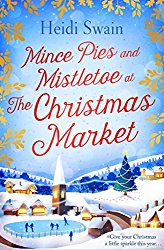
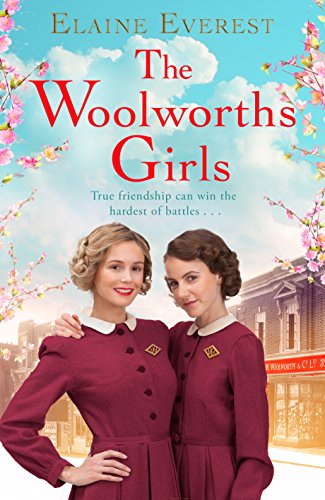
Seeing the proliferation of ‘heart warming’ stories on supermarket shelves made me step back and seriously consider the market for romance. Of course, it doesn’t take an awful lot more than common sense to see that life is pretty grim for a large number of people at the moment so they want a book to be a happy place to lose themselves. They want familiarity with their fiction: Heidi Swain’s Wynbridge series, Elaine Everest’s vintage Woolworths. In short – they want a comfort read.

But could I write one? Should I write one? After all, my readers expect something different and there are a significant number who buy my books for this reason, even if not enough to make a publisher bite off my hand. While I was mulling this over I chanced across Harper Collins’ Great British Write Off where they’re looking for thrillers and ‘beautiful love stories, particularly escapist settings.’ The deadline was the middle of January; perhaps I should give it a go.

So I started to make a few plans; an outline, some character sketches, a nice punchy opening. Still I prevaricated. In the meantime a friend who would dearly love to write ‘more complex’ (their words not mine) novels, was offered a three book deal for her chicklit. And then an agent who’d been reading my full manuscript came back with a no – but once again made it very clear they’d be happy to read more of my work – without the paranormal element.

On Wednesday morning my husband went away for a few days so I started to write. And write. And write. And live and breathe my characters inside my head in a way I’d almost forgotten. Long walks around the park and up the river. Then back home again to write some more. Researching on the hoof, taking it one or two scenes at a time. Letting the magic flow. 8,000 words of magic in just three days.

In fact, I’m itching to write another chapter now. So if you’ll excuse me…


THE BUSINESS OF BOOKS: TELLING THE WORLD – Jane Cable meets Bookouture publicist Kim Nash

What is your book related job?

I work as Publicity and Social Media Manager at Bookouture (www.bookouture.com). It’s my job to let the world know about our books and authors whether this be through traditional media such as magazines and newspapers or in the online arena so in online magazines or via our social media channels.   I spend tons of time on social media too, sharing all our fabulous news and books and reviews.

When I was a little girl my dream was to work at a book publisher because I thought you got to sit and read books all day long and that’s what a book publisher did. Now most of my friends and family think that I actually do that, but I can assure everyone that any reading I do is in my own time as my job is packed all day long with promotional work. I’m very lucky to be working in my dream job though, which I absolutely adore. I thank my lucky stars every single day!


What is the most rewarding part of it?

There are SO many rewarding parts of my job. To see a book get a high profile ranking in the charts and the excitement that causes. Seeing authors give up their jobs to write full time, and knowing that we’ve been an integral part of them achieving their dreams. Helping an author to release their stories into the world and get readers reading them. Knowing that we’ve produced books that our readers love and introducing new authors to our readers.

What do you consider to be your major successes?

My personal success was to win Media Star of the Year at last year’s RNA awards.   It was an absolute honour to be even nominated for such a prestigious award let alone win it. And made even more special that Bookouture won Publisher of the Year on the same evening! A double whammy!


Have you always loved books, and what are you reading at the moment?

Yes, I’ve absolutely always loved books from reading Enid Blyton books as a child and wanting to be part of the Famous Five and wanting to fly away on that Wishing Chair and travel to the Magic Faraway Tree, to growing up and reading (and crying) to many Danielle Steele novels and being reprimanded by my mom for reading well into the night.

Last night I finished a novella by Miranda Dickinson called Christmas in St Ives which was wonderful and the prequel to Miranda’s book which is out next summer which I now cannot wait to get my hands on. Before that I read a Bookouture book called Last Cry by Anna-lou Weatherley, which was phenomenal. It’s a new crime series featuring Detective Dan Riley (who I think I fell a tiny bit in love with) and is a diversion for Anna-lou with this new series, but she’s done it so brilliantly. I’m so lucky to work for a company who publish the most talented authors and I love to read as many of the Bookouture books as I can, and certainly the ones that I’m working on, so that I can genuinely share the book love.

Being a book blogger in my spare time (of which there’s not an awful lot) and also being part of a book podcast, and running a book club too, I do try to alternate between Bookouture books and also other novels that are written published by other incredible authors and publishers.


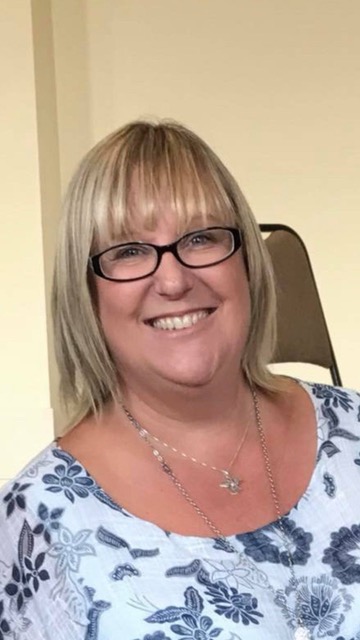
Mom to ten year old Ollie, publicity and social media manager at Bookouture, Kim Nash lives in Staffordshire. Kim also co-runs a local book club, co-hosts a book podcast and also

THE BUSINESS OF BOOKS: IGNORING NOVEMBER – Jane Cable considers NaNoWriMo

I have to admit to being a NaNoWriMo sceptic. Even their slogan – the world needs your novel – raises a wry smile. Does it? Really? Given the size of the ‘to be read’ piles of just about everyone I know, it probably doesn’t.

But this year – the scheme’s 19th – I couldn’t ignore it. Writers I respect are taking part so was I missing something? The goal is to write a 50,000 word novel in 30 days with help, support and motivation from the calculators and community on the NaNoWriMo website.

A better slogan for the programme – and one which has come up more than once in conversations with authors taking part – would be ‘don’t get it right, get it written.’ Now that, I can relate to. As RNA New Writers’ Scheme member and veteran of NaNos since 2014 Jan Baynham says: “In 2014 my attempts to write my first novel were taking an age. When all the publicity for NaNo came around, I thought I’d give it a go and set myself a goal of getting up a couple of hours earlier than normal and to try and write every day. Having NaNo buddies was a wonderful support. Seeing the tally of words written each day was another huge motivator. Apart from checking through what I’d written each day, I left serious editing until after NaNo was over. In 2014, I exceeded the 50,000 word goal by a couple of thousand. Did I make that editing stage harder by just writing non-stop for the whole of November? I don’t know but NaNo was one way for me to complete the initial draft of my first ever novel.”

Fellow RNA NWS member Kirsten Hesketh agrees and is making good progress with her first NaNo: “21 days and 34k words and still going strong. I made about every mistake going with my first book, faffing around, editing as I wrote and spending hours polishing passages that didn’t made it into the final cut. So Nano has been very helpful for getting the bones of my second novel on paper. I particularly like three things about Nano (1) committing to writing each day rather than trying to fit it around everything else and thereby not doing it at all; (2) not vetting as all as I write which I think has made me a braver writer (3) the camaraderie, support and shared purpose.”

The camaraderie point is an important one and typical of the writers I know it’s peer motivation rather than peer pressure. Susanna Bavin, author of The Deserter’s Daughter, a saga published by Allison & Busby, has particularly valued this: “What I have specially enjoyed and appreciated is the companionship of a group of online friends. In the November Nano, you can message your buddies through Nano one at a time, so we all got together via Twitter to share one another’s angst.”

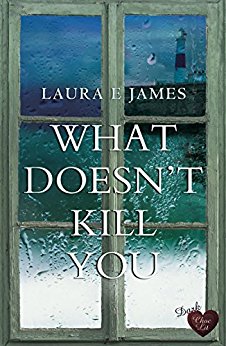
The more I look at NaNo, the more I can see that for some writers support and a target over a limited period of time plays a big part in making it happen. However in 2016 less than 10% of those taking part reached the target. Does that necessarily matter? I leave the last word to Choc Lit author Laura E James: “When I discovered the updates that Nano provide, I smiled. After a couple of days of managing 500 words, as opposed to the 1660 plus required to hit the total, Nano informed me I would finish in January. What did I take from that? The fact I would actually finish. I celebrated. I high-fived my daughter. I’d reached a point where I was in danger of never again completing a project, but to see the statistics in black and white helped restore my faith.”

My thanks go to Jan, Kirsten, Susanna and Laura for sharing their thoughts with me.

janbaynham.blogspot.co.uk
www.susannabavin.co.uk
www.lauraejames.co.uk

IS LIFE INHERENTLY UNSATISFACTORY? By Paul Kwatz, author of Conscious Robots

Ask a parent “What’s the most important thing in your life?”, and they’ll say “My kids”. This pleases a biologist, who believes that, because humans are the product of evolution, “having children” has to be the most important thing in our lives (after eating and breathing). If it wasn’t, our genes wouldn’t get passed on, and evolution simply wouldn’t work.

But ask a parent “What do you want for your kid when it grows up?”, and the biological angle might be less obvious. “As long as she’s happy…” doesn’t seem to have much to do with survival.

Until we realise that “happiness” is the mechanism that evolution uses to control our choices.

Maybe you didn’t realise that evolution was controlling your choices. Maybe you thought your conscious mind was the thing that was in control. But consider our daily battle to stay thin. “Eat a donut, or go for a run?” The donut gives you pleasure. The running hurts. Why does the donut give you pleasure? Because your brain evolved when calories were scarce. And the running hurts because running uses up those scarce calories.

Pain and pleasure arise from a non-conscious part of your mind that you can’t control. If you could, you’d simply choose to feel great when you were running, and, well, life would be a easier if a donut tasted like a kale shake, wouldn’t it?

We want a nice house because we think it will make us happy, we want to be thin because we feel good when we’re thin, and we want our kids to be happy because, although we encourage them to work hard at school, we’ve got a sneaking suspicion that a great career is no easy ride: it’s only satisfying in direct proportion to the hard work we put in every year.

And we’re right to be suspicious. When humans were evolving, the most successful ones were the ones with the “never-happy-with-what-I’ve-got” gene. They didn’t sit around as soon as they were full of berries, they carried on picking until the bushes were bare, made jam and designed bows and arrows to protect their bounty. It’s why millionaires become billionaires and why movie stars chase another Oscar. They, like all of us, are the descendants of hunter gatherers that were never satisfied: regardless of what we have achieved in life, regardless of our mobile phones, air-conditioning and indoor toilets, life, as Buddha observed, is inherently unsatisfactory.

But the good news is that life is also inherently satisfactory. Because sometimes there’s a drought and the berries don’t grow. And it’s not going to do our genes any good if we sit around moping. Our evolved brains reward us when our situation improves – regardless of how low we have sunk. As long as we’re moving upwards, our brains are happy to hand out the pleasure. It’s what allowed your grandparents to be perfectly happy without phones and why the plains of Africa rang with the laughter of our ancestors. `

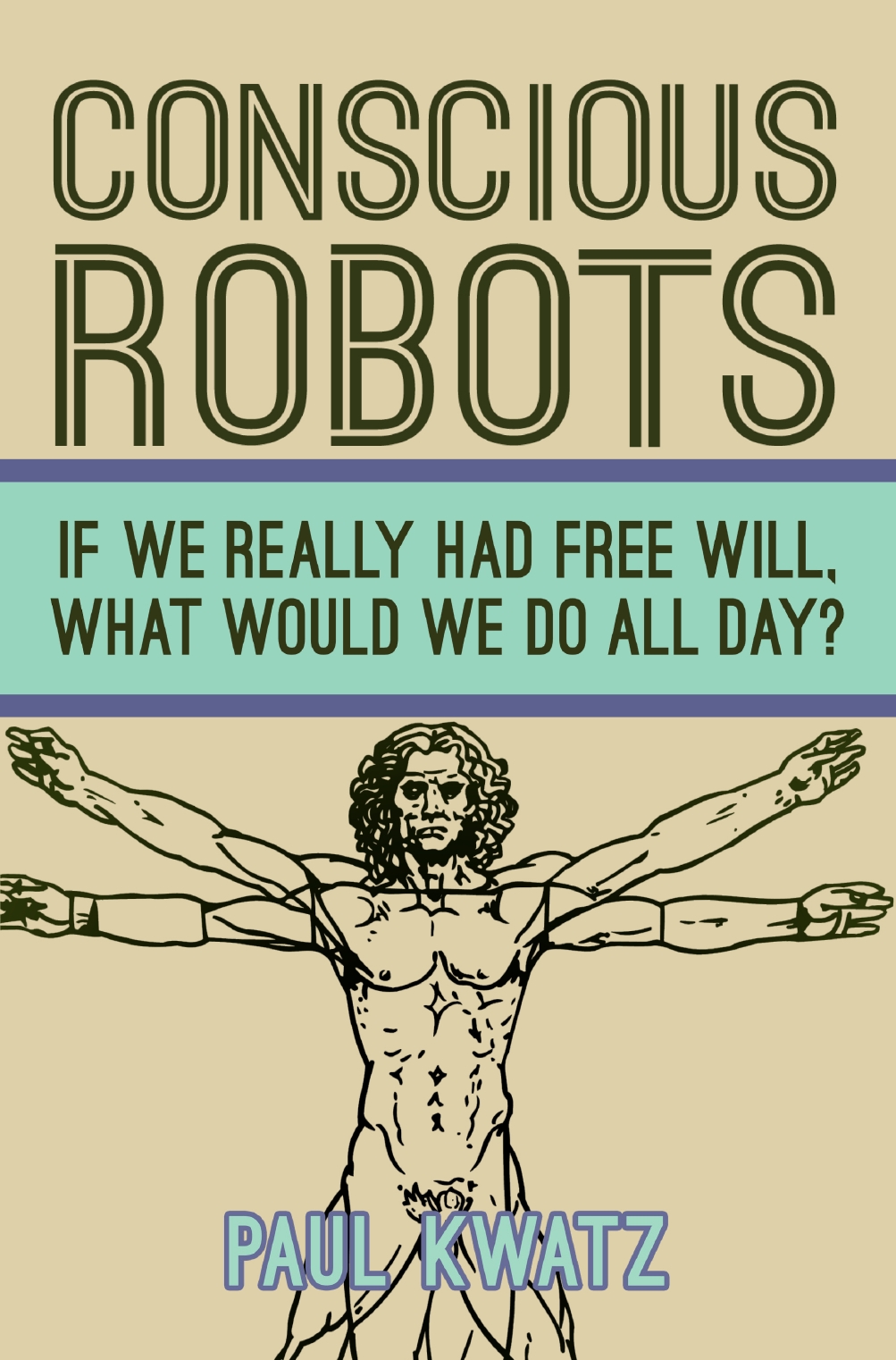
‘Conscious Robots: If We Really Had Free Will, What Would We Do All Day’ is out now in print, published by Peacock’s Tail Publishing and priced £4.99 in paperback and £2.99 as an eBook. Visit www.consciousrobots.com or Amazon UK

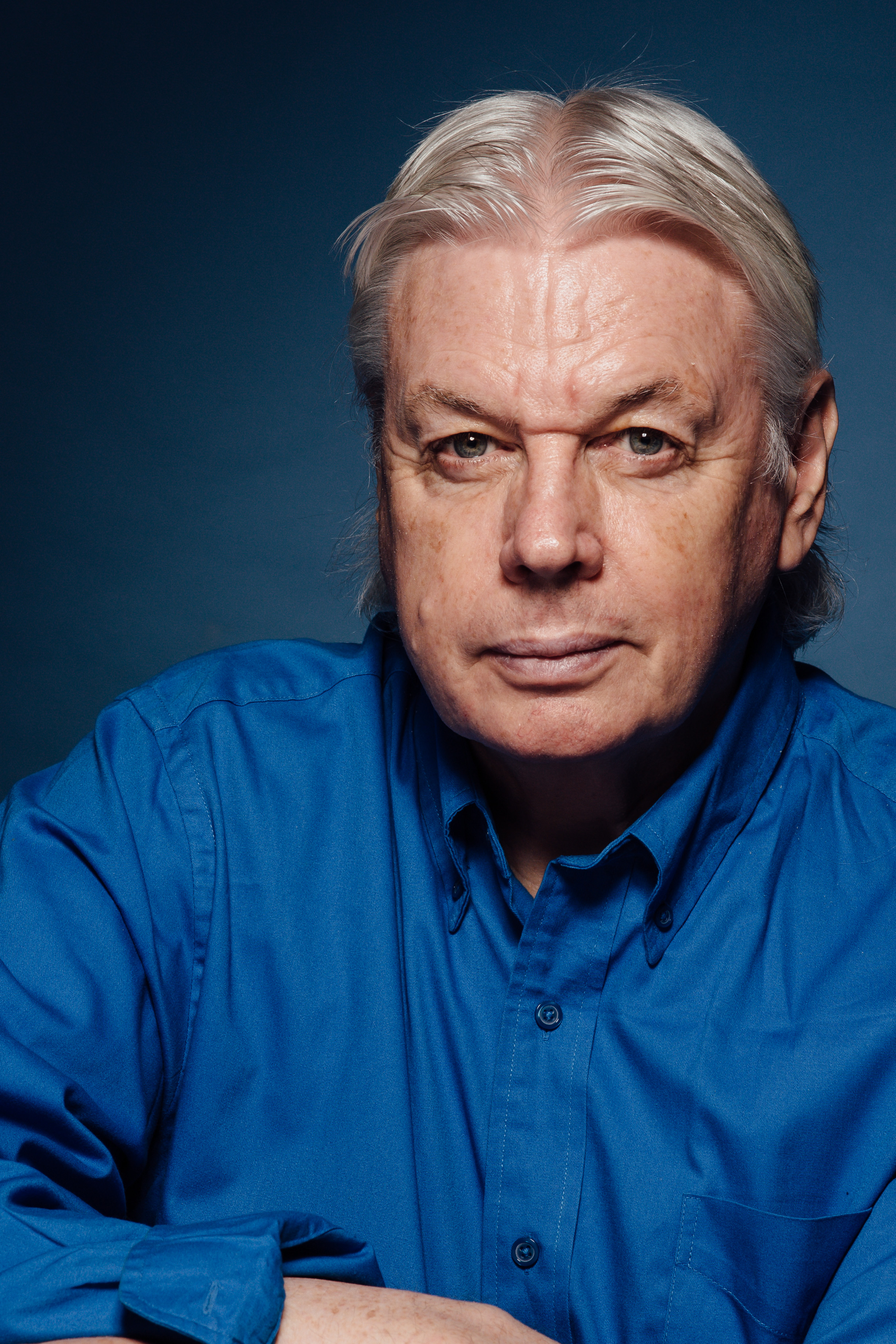
Transhumanism – The End of Perception By author and conspiracy researcher David Icke

Mind control is everywhere, but we call it something else – the TV news, political speeches, advertising, PR, education, science, journalism and religion. The list is endless.

Mind control sounds far-out and sci-fi, but all it really means is the control of perception. Control a person’s perception and you control their life. Control collective perception and you control the world. Perception is all. Our perceptions dictate the entirety of what we think, say, and do.

How many form their own perceptions by direct research, compared with those who download them from external sources? The answer, if the truth be told, is comparatively few. These sources peddle agendas which manipulate the human mind, and so human behaviour.

Mass mind control – perception control – is real, and can be confirmed in generation after generation who believed in the reality of so much which was later shown to be blatant nonsense. Most people believe only what they are told to believe.

This has always been so since the few seized control of mass communication. It began with religious zealots and now it’s the global media and internet corporations. As Morpheus might have said in The Matrix: ‘Are those your thoughts you’re thinking now?’

This is bad enough, but we stand at the cusp of something far worse: the end of human perception itself – the end of the human mind. Does this sound extraordinary? Yes, of course it does. But it’s also true.

As smartphone leads to tablet to Bluetooth, smartwatch and microchips (holdables, wearables and implantables) the stated goal of the Devil’s Playground, or Silicon Valley, is to connect the brain to Artificial Intelligence (AI) which will then hijack and override human thought.

There is no attempt to hide this any longer. Witness Google executive and PR man for Frankenstein, Ray Kurzweil, and his contention that humans will have ‘cloud-powered brains’ by 2030:

“Our thinking … will be a hybrid of biological and non-biological thinking … humans will be able to extend their limitations and “think in the cloud” … We’re 

going to put gateways to the cloud in our brains … We’re going to gradually merge and enhance ourselves … In my view, that’s the nature of being human – we transcend our limitations.

“As the technology becomes vastly superior to what we are then the small proportion that is still human gets smaller and smaller and smaller until it’s just utterly negligible.”

Put another way – it’s the end of humanity in any form worthy of the name. The AI manipulators are open about this now because we are told to believe – perceive – that literally losing our minds will make us ‘super-human’. In fact, it will make us sub-human.

‘Our’ perceptions would be only what AI tells us they are, and thus I say we are facing the end of human perception and the dawn of AI perception.

They who control AI would then control every human thought and emotional response. If I asked you who or what does control AI, the reply would be silence. We see the bag-carriers for this nightmare scenario, but who in the shadows are the real architects? Anyone know? Anyone even asked?

We are – again literally – giving our minds away and calling it ‘technological progress’. We are sleepwalking into perceptual oblivion and calling it ‘evolution’.

So who does control AI? The answer will blow your mind – while you still have one.

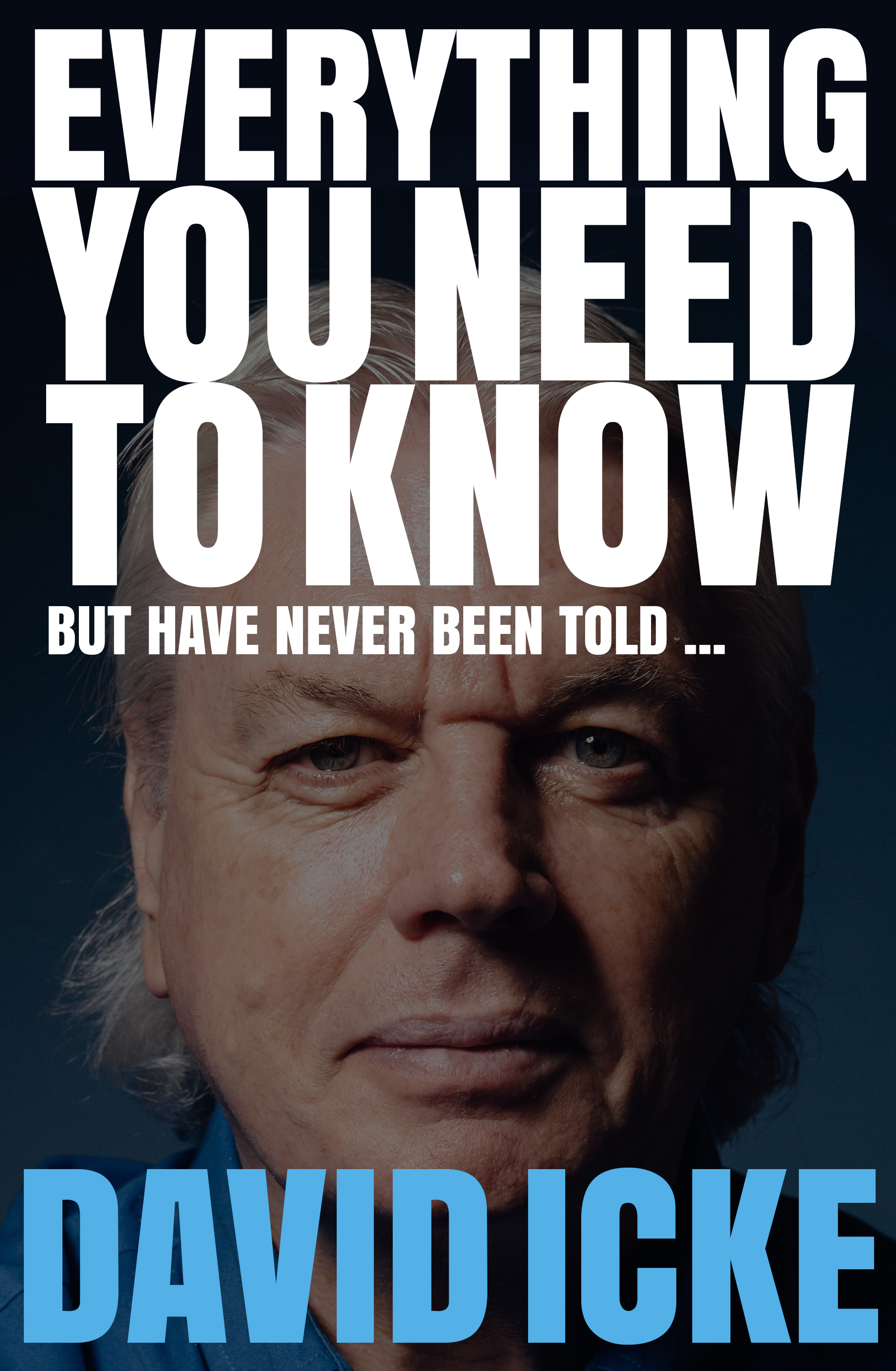
Everything You Need To Know But Have Never Been Told by David Icke (David Icke Books) is out now, priced £14.99. Visit www.davidicke.com.


Win a copy of Everything You Need To Know But Have Never Been Told by David Icke
We have three paperback copies of Everything You Need To Know But Have Never Been Told by conspirarcy researcher David Icke, usually priced £14.99,to give away. To be in with a chance of winning, just email frostmagazine@gmail.com with your name and address. UK applicants only.The three lucky winners will be notified by 16th of December and will receive their prizes shortly

THE BUSINESS OF BOOKS: GUILDING THE LILY – Jane Cable meets Book Guild author Sally Jenkins

How much of your working life does the business of books take up?

Around 40% of my working life is spent on writing and writing-related activities. I work for a multinational IT consultancy three days a week which, in theory, leaves two days for the business of books. In reality, domestic trivia eats into those two days but I try to make up that time on a Saturday morning when I can, plus if I’m aiming at a deadline I will squeeze in an hour’s writing before or after the day job.

What’s your business model to earn a living from writing?

Like most writers, I can’t earn a living solely from writing, hence the three days working in IT. The money I earn from writing comes from several sources, some passive, such as royalties (which I’d like to increase!), and some from sources that require active input. My best-selling ebook is Kindle Direct Publishing for Absolute Beginners, which is a guiding hand for writers brand new to e-publishing. Earlier this year I updated the book to include some of Amazon’s latest offerings, such as publishing a paperback through Amazon KDP. I sell the occasional story or filler to women’s magazines (Tip: Take a Break are one of the best payers if you have an anecdote that fits their Letters Page). I give talks about my writing to groups such as the Women’s Institute and to libraries. Sometimes I’m paid for the talks (and if I’m really lucky I get a free dinner as well!) but they all give me an opportunity to sell paperback copies of my first grip-lit thriller Bedsit Three and my bumper Coffee Break Story Collection and also to collect email addresses of readers interested in hearing when my next book is out. I’d like to grow this side of the business in order to get a better return on the amount of preparation required to devise a talk. Recently I’ve also been asked to do Kindle and paperback formatting for writers self-publishing on Amazon for the first time. Currently I restrict this to straightforward text-only books but it might be something I choose to grow in the future if giving up the day job becomes a reality.


What do you write and what do you consider to be your major successes?

Over the last few years I’ve gradually moved from short stories to novels. I write grip-lit (psychological thriller meets commercial women’s fiction) and straight commercial women’s fiction. I was elated when Bedsit Three won the Ian Govan Award and, as a result, the novel was published in e-book and paperback format. Another highpoint was The Book Guild recognising the commercial potential of my second grip-lit novel, The Promise, and offering me a place on their partnership publishing program. The partnership means we both invest in the publication costs and The Book Guild’s marketing arm is behind me, selling into bookshops, generating media publicity etc. We share the royalties. The Promise will be published on 28th January 2018 and I’m very excited!

Tell me about your latest project.

I’m working on my third grip-lit novel. I’m fascinated by how past events can impact our current lives. For example, in Bedsit Three the upbringing of one of the characters drives his destructive behaviour. In The Promise there are serious repercussions for something the heroine did three decades earlier. In my current work-in-progress, the protagonist wants revenge against someone who stole his girlfriend when they were teenagers.


Sally Jenkins writes grip-lit and commercial women’s fiction. She lives with her husband in Sutton Coldfield and has two grown-up daughters. Find out more about Sally and follow her blog at https://sally-jenkins.com/ or follow her on Twitter @sallyjenkinsuk or on Amazon.


What are the Essential Ingredients for a Gritty Crime Novel?

The crime thriller genre has always been a big seller. It has evolved over the years along with readers’ tastes. A few decades ago it was all about slick gangster flicks, driven by a morbid nostalgia for criminals like Capone, Dillinger and the Kray twins. At the turn of the century the gritty crime thriller ruled and now, thanks to a collective obsession with Nordic noir, that genre is making a return.

But what makes for the quintessential gritty crime novel? Here, author Eli Yance, whose new novel Consequences is best described as a high-octane blend of classic Brit gangster flicks Lock, Stock and Two Smoking Barrels, Get Carter and Sexy Beast, provides his top tips.

Humour

I am a firm believer that there should be humor in every genre. I write comedy novels under a different pen name, so I’m a little biased, but it’s something that has worked for me in every genre. In horror, it’s a great tool to help move the story along, keeping the reader interested before you get to the scary parts. In the crime genre, it can help the reader to associate more with the protagonist and the story—it just makes everything feel a little more realistic.

Humour helps to break down barriers. It’s why we use it to break the ice; it’s why we use it more when we’re anxious and it’s why it works so well in introducing readers to characters in a story.

Multiple Stories

The best crime stories involve a multitude of characters and storylines and they invite the reader into each of these. Writing the story from multiple perspectives, following completely different trajectories and then bringing them all together in the end is the best way to keep the story interesting.

It also allows the author to tell the same story from different perspectives, bringing multiple protagonists into the same narrative and ultimately reaching a climax where they all clash.

The Unexpected

Most stories are better with a twist and it’s almost a necessity for this genre. It doesn’t have to be big but it should leave the reader guessing. Just make sure it’s not clichéd and it’s not disappointing. A reader can love your writing style and your

story, but if they arrive at an ending that lets them down, they’re going to hate the book.

I find that the best way to write a twist ending is to just see where the story takes you, stop when you reach the climax and then let a few friends read it. Ask them how they think it will end and how they think it should end and then write an ending that none of them mentioned.

If you can throw a few twists in as you are building towards the climax, even better.

A Bad Good Guy

If all the bad guys are funny and entertaining and the protagonist is a clean-cut detective, it’s just not going to work. The readers won’t side with someone who goes by the book. The best protagonists are always flawed, because that makes them more relatable, but in gritty crime novels those flaws should be bigger and more obvious.

You don’t want to create a psychopath who has little regard for human life and literally does what he or she wants. But readers are always happy to get behind someone who wears their heart on their sleeve, gets angry and violent when the bad guys get their way and is always prepared to bend the rules. It’s a cliché, yes, but for a reason.


Consequence by Eli Yance (Skyhorse Publishing) is out now, priced £12.99 in paperback. Visit Amazon UK.


THE BUSINESS OF BOOKS: TWITTERQUETTE – Jane Cable’s personal foibles

Twitter is looming large in my mind this week. Not just because the potential to be rude to each other has doubled with the letter count, but because Chindi Authors has launched its pre-Christmas social media campaign. Normally we have an event where we sell festive books but this year we’ve chosen to do the same thing online and of course we’re tweeting about it like crazy.

Twitter is a great forum for authors. It’s a place we meet each other, form into street teams and groups (both formal, like @RNATweets, and informal), link up with readers and bloggers, and generally share news about our books. We all have our own styles, but if I was making the rules they would go something like this.

  1. Be nice to each other. Social media can make it very easy for some people with bullying tendencies to be rude. It’s cowardly in the extreme. Don’t do it. I will block you. Twitter should ban you.
  2. Retweets should be reciprocal. While likes and thank yous are nice to have they aren’t the same. If I’m retweeting you the chances are that you’re an author so our followers are likely to be bookish people. They will be as interested in my tweet as my followers will be in yours.
  3. Use pinned tweets. For those lovely, lovely people who do retweet, please make it easy for me to return the favour. I’m not lazy but I’m time poor and I don’t have hours to scroll through pages and pages of your generous retweets looking for your own original content. So please pin it. And change your pinned tweet regularly.
  4. Use a picture. Just because tweets are more noticeable that way. If the picture tells your story, so much the better. That goes for page headers too. There are no excuses – even I can make them using Canva.
  5. Your profile includes a space for words. If you don’t tell me who you are, how can we connect?
  6. Don’t play follow back. This one’s going to be controversial but I only follow back for other RNA, SoA and Chindi members. Otherwise I will thank you for the follow in a personal way which I hope you’ll respond to. Then we can connect properly and share common ground.
  7. Don’t blitz me with the same tweet over and over again. I think we can all be a bit guilty of this but I’m more likely to click through to interesting content such as a blog you’ve written or a review. I’ve actually had to block some accounts which pre-programme the same tweets to fire like bullets. My publisher did it with Another You when it was on free offer and I was more embarrassed than pleased.

    Although these are my personal foibles my fellow @ChindiAuthors contributed to the debate. So thank you @carol_thomas2, @chirosie, @angela_petch, @julia76871430 & @michael_parker.