Nordés Atlantic Galician gin: Michael Rowan becomes the latest convert 


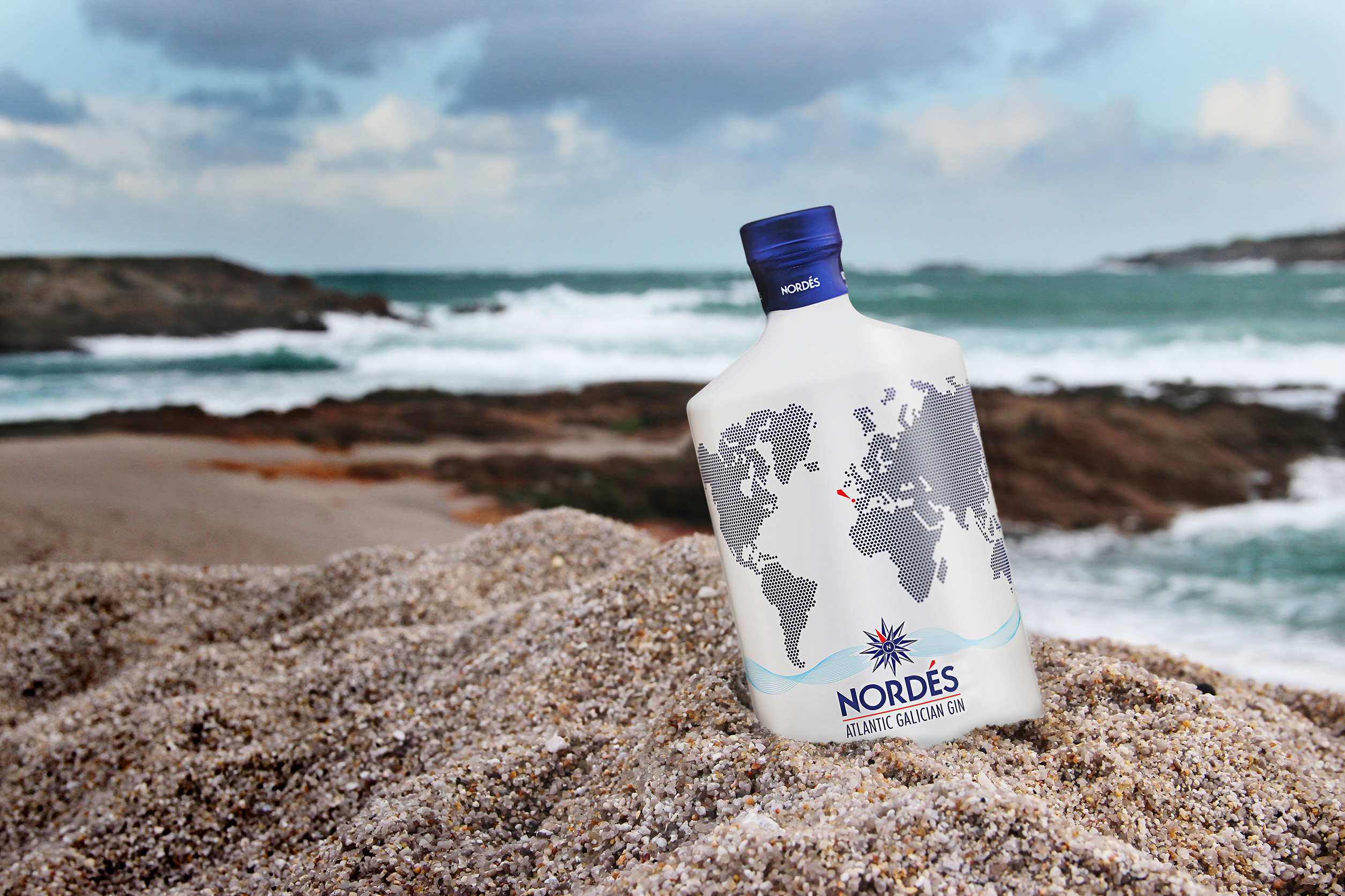
Not content with getting us Brits hooked on Tapas, those talented Spaniards have done it once again, this time by introducing us to Nordés Atlantic Galician gin, Spain’s fastest growing premium gin.


However, Nordés believe that their gin’s herbal and highly aromatic flavour profile makes it the perfect accompaniment to a wide range of savoury and sweet dishes, suggesting that perhaps it’s time to challenge the habits of British drinkers like me, and not restrict ourselves to drinking gin as an aperitif.


Always one to accept a challenge and being an avid drinker of gin for the better part of 35 years I can assure them that I am not to be so easily persuaded.


Of course, back then the choice of gins was limited and presented with 2 ice cubes, a slice of lemon and a bottle of tonic.

Thirty five years later and this once callow youth has developed a somewhat more discerning palate.

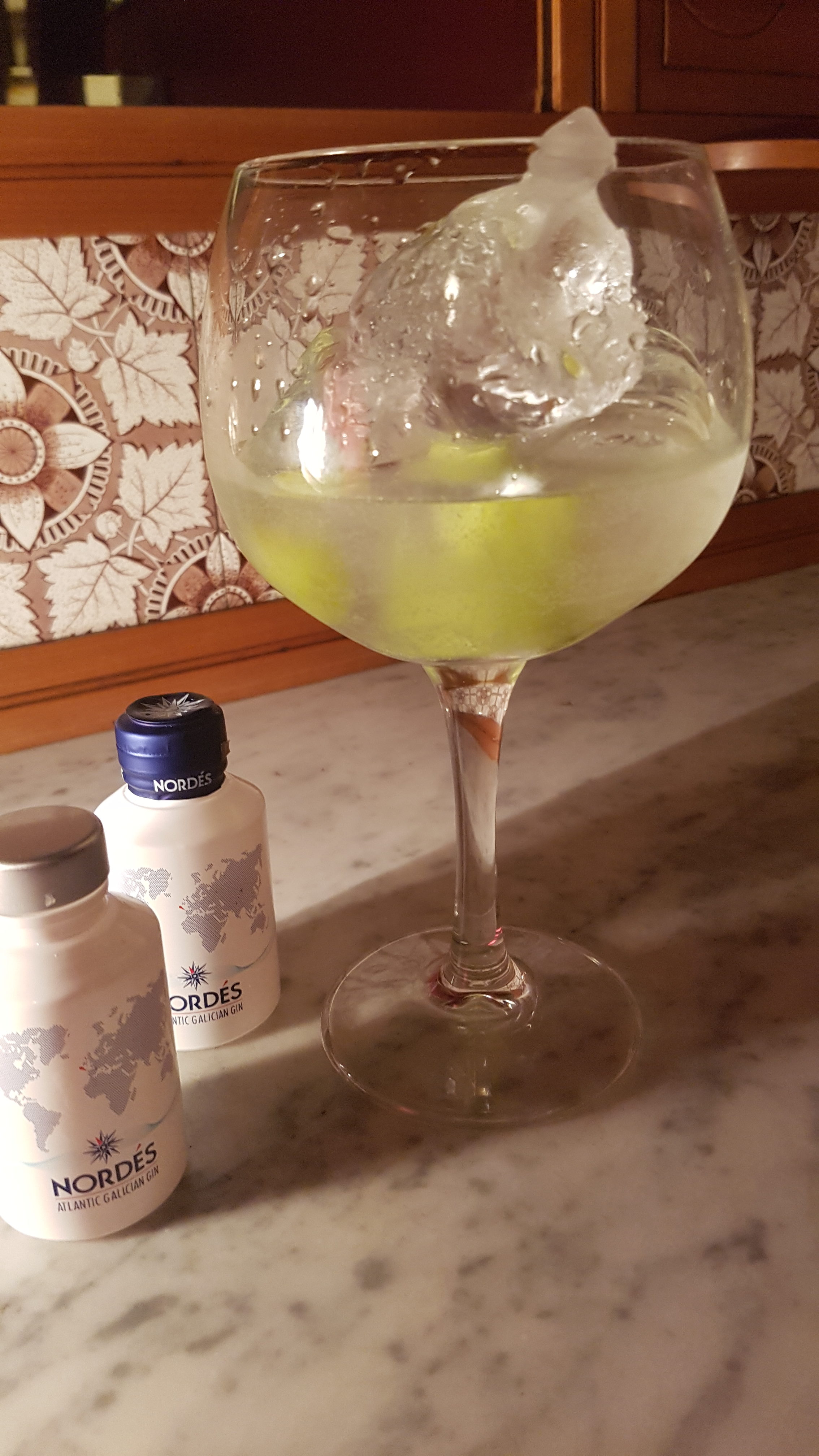
A large Copa balloon gin glass filled with ice, three white grapes for garnish and a large measure of Nordés Atlantic Gin, and I was raring to go.

It is important to taste the gin before adding tonic in order to really appreciate the aromatics. This is particularly true in this case, as the gin is light and flavoursome.

If my love affair with gin has taught me anything it is to add the tonic sparingly. You can always add more tonic, but you can’t take it out.

This gin has gastronomic notes of eucalyptus, laurel and mint and delicate flavours of white fruit, presumably due to the White albariñograpes, from which this gin is derived.


If you don’t have traditional tapas to hand, Nordés suggests pairing a well – made gin and tonic (try serving it with fresh sage leaves) alongside a smoked salmon starter or spicy sausage. As a main, match the gin with Thai cuisine to bring out the lemon verbena notes. And for desert, it could be paired with a summer fruit sorbet and a sprig of mint to bring out the sweeter aromatics.


My verdict is that this is a highly aromatic gin with a superb fresh taste and cliché or no, it certainly had me smacking my lips, or maybe that was the Nordés Atlantic gin-soaked grapes?


But the big question has to be, would I buy this gin and I have to say that I most definitely would.


Nordés gin (70 cl) ABV 40% with a RRP of £35 and is available nationwide at Amazon and Master of Malts.

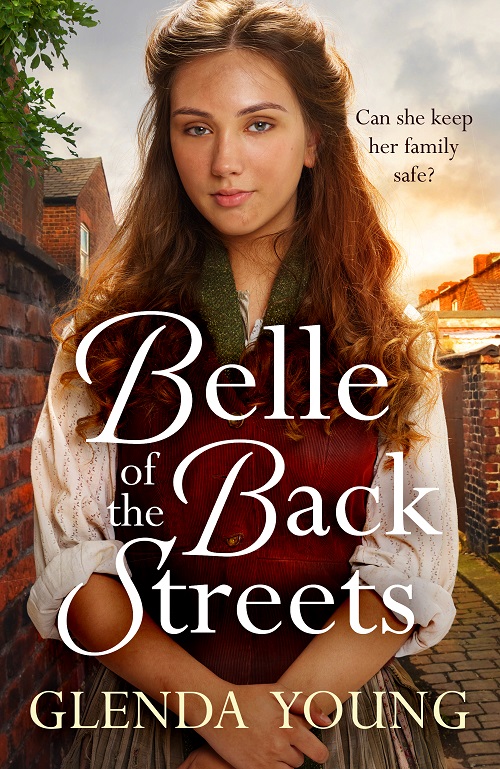
Belle of the Backstreets by Glenda Young


Belle-of-the-Backstreets-Glenda-Young

When Meg Sutcliffe’s father returns from the Great War he teaches his fifteen year old daughter, Meg the ways of the rag and bone man. But when tragedy strikes Meg has no other option than to carry on alone with her trusty dog, Spot at her side and her beloved horse, Stella pulling the wagon. 

Meg is a beauty and attracts attention wherever she goes – not all of it of the right sort, and when she catches the eye of charming Clarky it looks like she might have found a protector and a chance of happiness. But is Clarky really what he seems? And could Adam, Meg’s loyal childhood friend, be the one who really deserves her heart?

Meg Sutclifffe is a feisty beauty who will do whatever it takes to keep her family fed, and a roof over their heads. The Sutcliffe family may not have much but they have each other. Totally unsuited to the hard, heavy work of her father’s rag and bone round, Meg will not be deterred and sets out to build up the business to provide for her family.

Set in the mining village of Ryhope in the north east, Glenda Young paints such a fine picture of the area and the period that by the end of the book I felt I had been there. Her descriptions of both character and setting are wonderful and although Belle of the Backstreets has its fair share of villains, there are enough good honest people in the community to support and encourage her. There is a warmth and humour in bucket loads and you’ll be rooting for Belle to overcome all the trials that beset her.

A warm-hearted debut from Glenda Young.

Lovers of Dilly Court and Rosie Goodwin will enjoy Belle of the Backstreets.

About Glenda Young

Glenda Young credits her local library in the village of Ryhope, where she grew up, for giving her a love of books. She still lives close by in Sunderland and often gets her ideas for her stories on long bike rides along the coast. A life-long fan of Coronation Street, she runs two fan websites for which she sometimes interviews the cast of the show. For updates on what Glenda is working on, visit her website glendayoungbooks.com and to find out more find her on Facebook/GlendaYoungAuthor and Twitter @flaming_nora.

Headline – Paperback Original – 7th March 2019- £6.99 Also available in E-Book and Audio


A mystery/thriller to chill the soul: review by Kate Hutchinson

It’s a growing trend to  place the care of children at the heart of a thriller as it seems a good way to get  the reader to care quickly about the characters. Here is one which considers the relationship between mother and child.


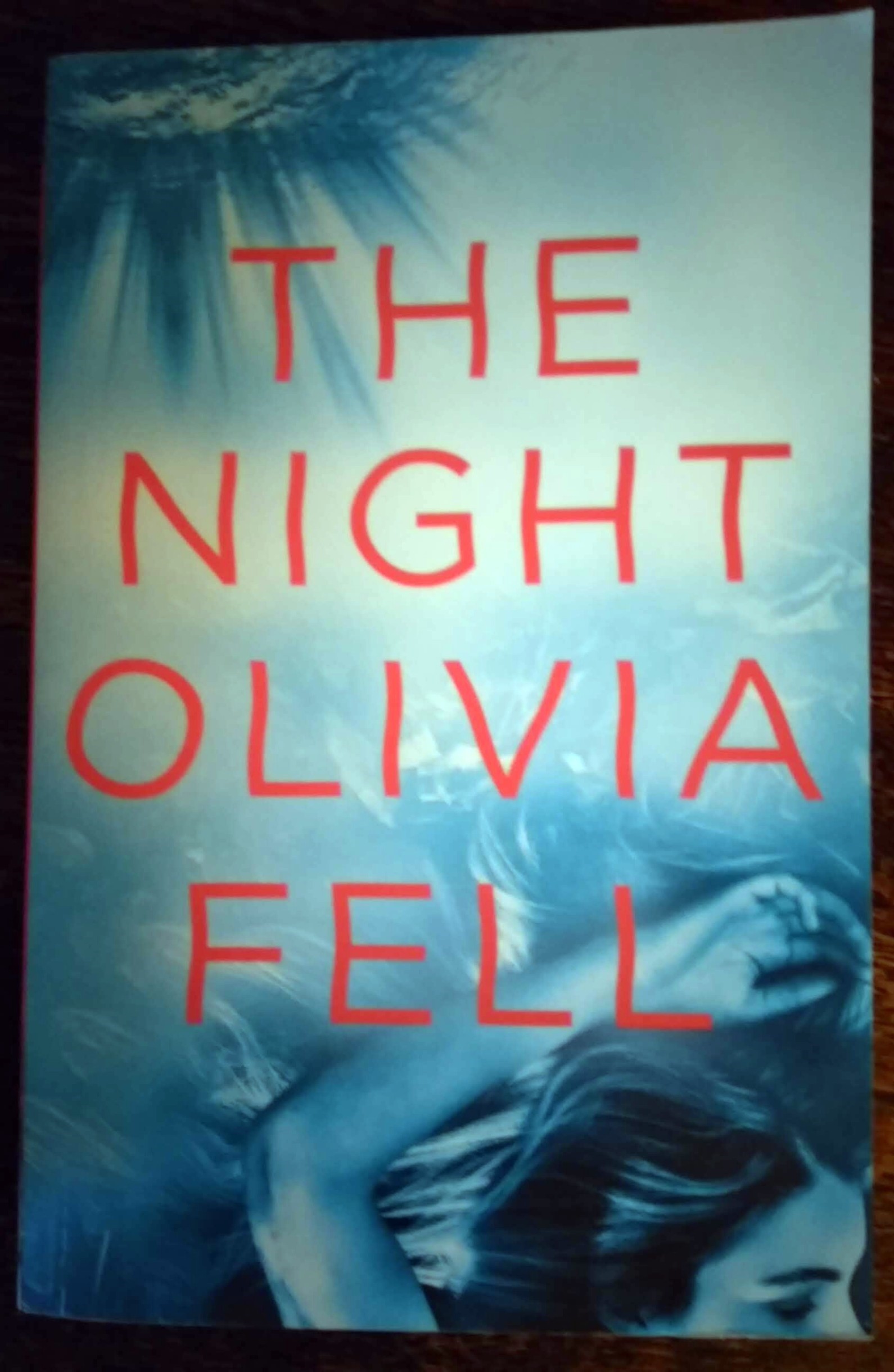
The NIght Olivia Fell by Christina McDonald


It’s every parent’s worst nightmare – to be woken in the middle of the night to hear your child has been in a terrible accident and is now on life support. But then Abi finds that her sensible, hardworking daughter is three months pregnant and she didn’t really know what was going on in Olivia’s life at all. How did Olivia get those unexplained bruises on her wrists, and did she really fall?


The story alternates between Abi in the present, trying desperately to find out what had happened in her daughter’s life and to convince the police to investigate her death, and Olivia in the recent past leading up to the accident. The author brilliantly balances the revelations in each half of the plot, which moves swiftly and it is written with great confidence for a debut novel. The relationship between Abi and her daughter, in particular the difficulty of being a single parent with a single child, is beautifully drawn and I felt all the characters were well-rounded and believable.

A really good story that gets you thoroughly involved.


HarperCollins pb £7.99


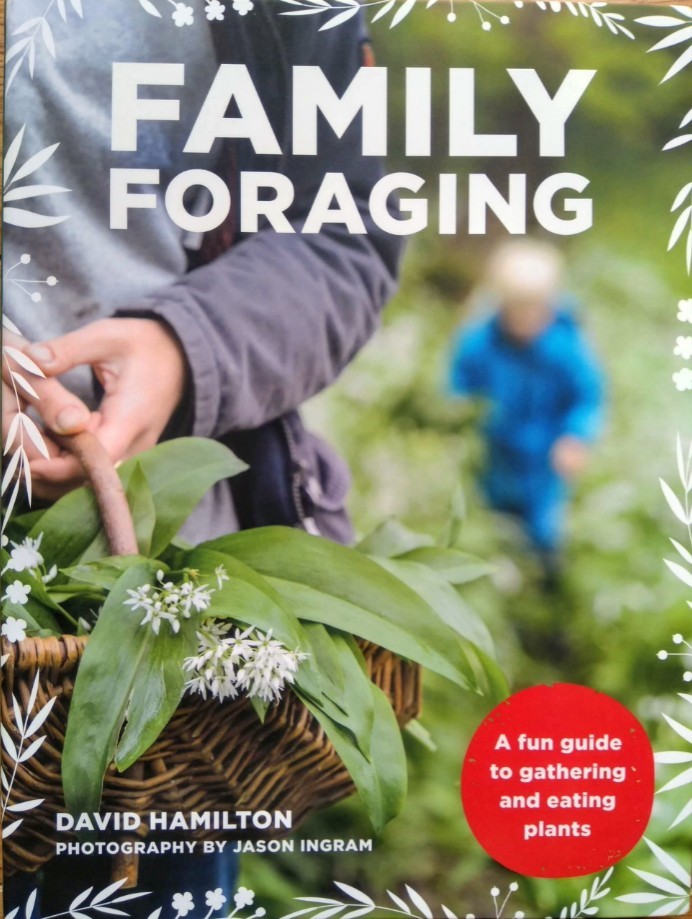
Family Foraging by David Hamilton Photographs by Jason Ingram reviewed by Kate Hutchinson


Blackberrying is one of those beloved childhood memories involving innocent sunlit days, sometimes real and sometimes acquired from The Famous Five or Milly Molly Mandy. It harks back, as they say, to simpler times.


But whilst most of us would still feel confident about taking our children out to harvest a free crop of bramble fruit, there are a lot more great foods to be foraged out there that could turn a family walk into a treasure hunt.


This lovely book lists thirty edible plants in seasonal order, most of which are commonly found in parks, hedgerows and woodlands. Each one has a really clear description of the different parts of the plant, illustrated with both photographs and drawings, making identification easy. Plus a recipe or two so you know what to do with your finds. Fancy homemade hazelnut chocolate spread or wild garlic bread? Elderflower shortbread or a wild cherry ice lolly?


David Hamilton, a gardening journalist and expert forager manages to get just the correct tone; the right language for a child to read it but without any hint of being patronising or annoying for the adult reader. All in all the perfect book to get a family of the sofa, out of the house, and exploring the great outdoors.

White Lion Publishing £16.99


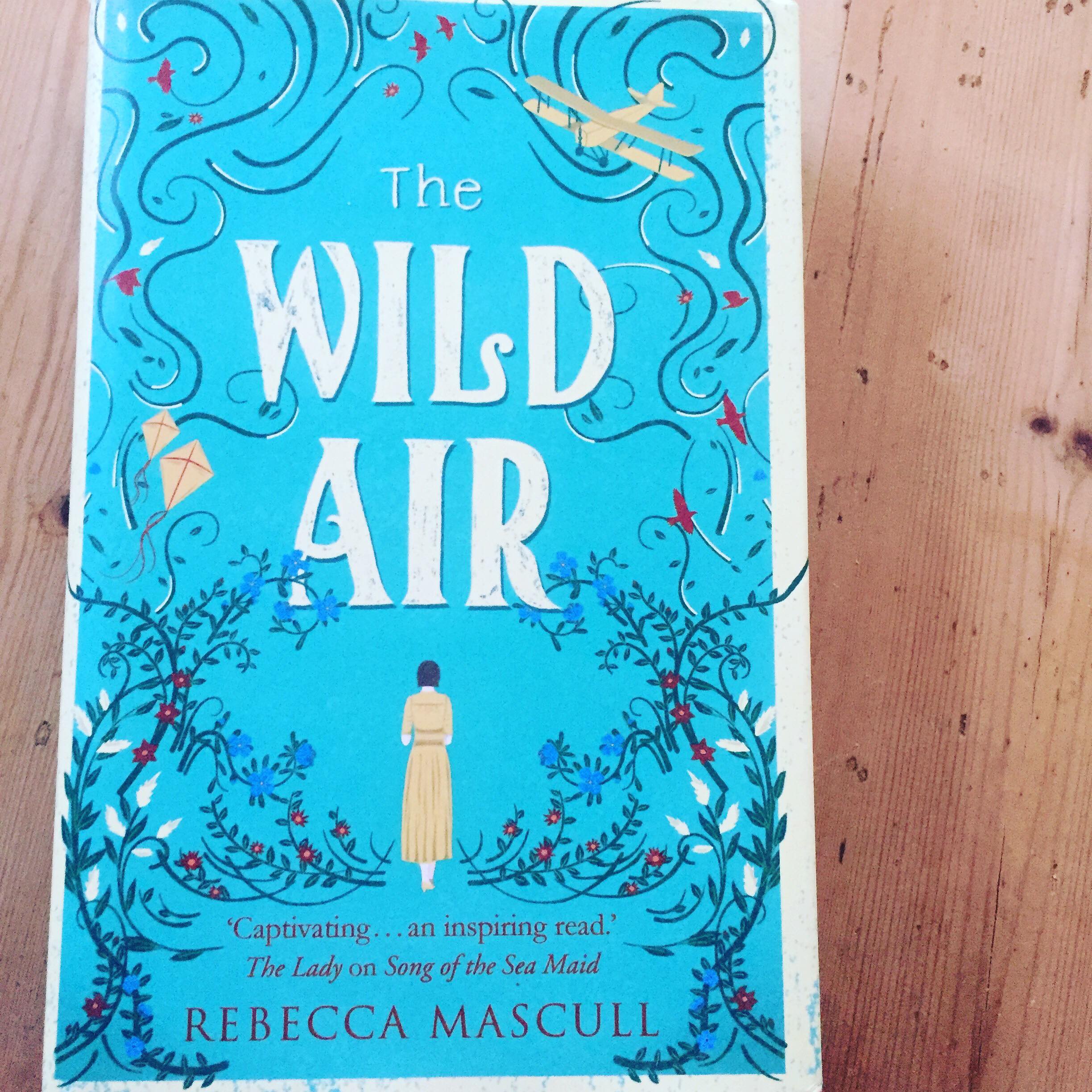
The Wild Air – Rebecca Mascull

Wild-Air-Rebecca-Mascull

Della Dobbs is my kind of heroine. The quiet, unassuming odd-one-out of a colourful family who becomes excited by flight and sets out to follow her dreams.

The Wild Air is set in Edwardian England when flight was in its infancy and aviators were either madmen or superstars, depending on your opinion.

Her father is a retired actor, scuppered by an accident, and his only son, Puck is his golden boy. Both of Della’s older sisters have found their place in life – one as the traditional (of the time) wife and mother, the other an actress living in London. Life holds no surprises for Della until her widowed Great Aunt Betty returns from Kitty Hawk, North Carolina bringing news of a great bird.

Mechanically minded Della is inspired by stories of the Wright brothers and, with her aunt’s encouragement, begins to design and build kites which they fly on the flat sands of Cleethorpes on the Lincolnshire coast. It’s a place I know well and Mascull’s love for the area shines through.

Over time Della’s ambitions grow and she dreams of learning to fly. The majority of aviation pioneers were male, few women allowed to experience the dangers it entailed, but Della is entranced and wants to know what it’s like to soar into the wild air for herself. Despite the odds that are most definitely against her, Della doubles her resolve and goes in search of women and men who will support her. Della takes to the air and we are drawn into her experience to discover how fine a balance life in the air was, the freedom – and the danger.

As the story encompasses the Great War Della meets with danger, loss and tragedy but, ever resourceful, she relies on her passion and knowledge to play her part. There’s plenty of emotion – love, laughter and despair – as Della sets out to shape the world in her own way.

Mascull’s research is meticulous and her attention to detail recreates a time of immense invention and daring. Her own characters are artfully blended with real-life aviation pioneers of the period with ease and fluidity. The Wild Air is well written, with a beautiful use of language that draws the reader in.

The pages are alive with wonderful fully-formed supporting characters – I loved Aunt Betty and the delightful Dudley Willow – isn’t that just the most perfect name?

Della Dobbs is not your average heroine, which in itself is refreshing. All in all, The Wild Air is an  inspiring and uplifting read that leaves the characters in your mind long after you’ve read the last page.

The Wild Air is published by Hodder RRP £9.99


ABOUT REBECCA MASCULL

Rebecca Mascull is the author of three historical novels. She is currently hard at work on her next trilogy of historical fiction, with the first novel due for release in April 2019 to be published by Bonnier Zaffre as The Ironbridge Saga. These will be published under the pen-name of Mollie Walton and the first book in the series is set in the dangerous world of the iron industry: THE DAUGHTERS OF IRONBRIDGE.

Rebecca has previously worked in education, has a Masters in Writing and lives by the sea in the east of England.


SISTER SCRIBES GUEST: ADA BRIGHT ON BEING A CO-AUTHOR

I’m delighted to welcome my very good friend and fellow co-author, Ada Bright, to Sister Scribes. Ada is a novelist and a photographer, a wife and a mom and a very picky eater. She has lived in Southern California her whole life and says she fits into a good number of the stereotypes of the area, including being pretty laid back, considering anything below 65F as frigidly cold, and being unfazed by any earthquake under 5.0.

Over to you, Ada!


Thank you to Cassandra Grafton for inviting me to be a guest on Sister Scribes.  I was going to quip that we really are “sister scribes” since we co-author novels together, and we are unofficial family, but then I was imagining Cass reading it and injuring her eyes because she rolled them so hard… and I wouldn’t want to be the cause of something like that!

My best memories of childhood are from when I was living fictional stories by reading books. The characters I read about and re-read about were so much more formative to who I am than my early peers.

Writing became a natural next step for me. By writing extra scenes or character studies, I could hold on to the world I loved longer. My desire to write novels came more recently, but stemmed from a similar core. I simply wanted more.

Of course, impatience is not usually a good trait for a writer. But, in my case, I got  very, very lucky: I’d already met Cass. While we share a similar taste in stories, our writing is very different. I write in bursts that push the story forward, she composes a scene and always seems to have a handle on just exactly where our characters, our plot and even the reader are in their experiences at any given moment.

While we specialize in different areas, when we co-write, there is not one sentence that is purely one or the other of us. We write alone during our respective work days (which are 9 hours apart, since Cass lives in Switzerland). That means we usually start by waking up to a new scene from the other partner that we will begin by editing. Once we edit the new material, we either ask for a call to clarify what we’ve read or what we need to write next or we just continue on.

So many times, while talking about our first co-written novel The Particular Charm of Miss Jane Austen, I say how much I love co-writing with Cass – I mean, what writer wouldn’t want to hand off a scene that isn’t working to someone else and have it come back polished?! But, the further I get on in my solo novel, the more I realize that this experience of creating a shared world with someone has been a learning experience beyond measure.

As hard as writing can be, Cass and I have created a system that is, with all its ups and downs, fun. I have often joked about how I would leave text in the middle of the manuscript that said something to the effect of “Cass writes something brilliant here.” It can be a crutch, most definitely, but eventually, each writer will have taken a turn at being the hero even if the night before their entire scene ended up in the bin.

What I couldn’t have predicted is that seeing how Cass untangled us taught me both to recognize my negative patterns and also to learn ways of getting myself out of the ditches I’d written myself into.

Last year, Cass and I signed with Canelo Digital Publishing, and we’ve just finished writing our second novel together, which will be out later this year. No matter where our single careers take us, I will always be game to join our words together to create the voice that is both of us but not quite either of us.

Thank you for having me, Sister Scribes!


You can find Ada and Cass on their Blog, Tabby Cowhttps://tabbycow.com

Alternatively, Ada can be found on:

Facebook Ada Bright

Twitter @missyadabright


WHY HOMOPHOBIA HAS A STRONGHOLD IN SPORT

By David Ledain, the latest addition to the Frost magazine team, writing on LGBT issues

Sport is a phenomenon which can both bond and divide in equal measure. Tribal instincts and loyalties are challenged and revered, and in football especially, young men can be empowered and at the same time hidden from view.

Homophobia and anti-gay violence seems to crystalize young males in football tribes and gangs. It proves their heterosexuality and obliterates any secret homosexual desires of their own they may have. Targeting gay men is not seen by the perpetrators as hatred towards the individuals, but rather as an extreme expression of society’s expectations of them – that they are conducting themselves within what they have learned as acceptable male behaviour. They are in part driven by fear. The potential of any young man, regardless of his sexual orientation, to be labelled as ‘gay’ and weak, and ostracised from his family and the surrogate families of his football tribe, schoolfriends, work colleagues or neighbours, for being or unknowingly presenting anything other than the heteronormative, is so damning, even dangerous, that men are pressurised into characterising themselves to a very narrow set of male gender stereotypes. Owen Jones, the columnist, author and social activist, concurs, saying that the majority of homophobic abuse is ironically directed at straight males, and that almost all men will have been subjected to some sort of malicious homo-name-calling in their lives and been told in no uncertain terms what sort of a man they should be.

Photograph by kind permission of Altrincham FC

‘You grow up hearing people use what you are as the ultimate derogatory insult,’ Jones says. ‘Society tells you you should be heterosexual. It’s even subtler than that. There’s that awful patronising thing when people say, “Oh, I never would have guessed that you’re gay”, and you’re left feeling almost flattered that your leprosy isn’t publicly obvious.’

The potency of the idealised masculine heteronormative which captivates and imprisons young men especially, through its facade of power and place in the world, even when those same young men whose circumstances gives them no real power at all, is the derisible falsehood that is so destructive. Males who aspire to this gender stereotype, yet have no means of ever realising it due to factors out of their control, and not always economic or social, may feel their only way to make a mark in the world, to stand out in their community, is to carry out attacks on vulnerable groups, particularly, homosexuals – easy targets which they see as the antithesis of who they are and who they want to be.

Altrincham FC recently made the headlines by tackling the issue of homophobia in football by going out on pitch in a rainbow coloured kit, and in 2017 Stonewall backed the Rainbow Laces campaign to get everyone who plays sport to support LGBT equality. Cricketer, Joe Root, has also been widely applauded for his response to alleged homophobic abuse, telling the West Indies bowler, Shannon Gabriel, ‘There is nothing wrong with being gay.’

Things are slowly changing both on the pitch and in the dressing room but getting to a place where LGBT equality and anti-gay abuse from the terraces is not a topic of discussion any more is difficult to imagine because of the deep-rooted traits of the hetero-biased tribes. But if sport and particularly football continues to move towards diversity and inclusivity, one day we will get there.

You can follow David on Facebook & Twitter @Davidledain

And visit his website www.gaydad.co.uk for more information and his blog.


How to Treat Dopamine Deficiency Naturally (And Why You Must)

We have all heard the word dopamine being thrown around in discussions about depression, but very few of us know what it actually is and how it affects us. In order to understand how to treat dopamine deficiency and why doing so is essential, we must first understand what dopamine is exactly and what functions it serves in our body.

What is Dopamine?

Dopamine is neurotransmitter that is responsible for initiating a number of emotional responses in animals and humans, but those are not the only functions which the chemical serves. Aside from creating sensations of reward, happiness, pleasure and satisfaction, the neurotransmitter also plays a vital role in regulating movements, causing sexual arousal, our ability to remain active, sleep, learn and memorize, among others.

What Would Happen If You Were Dopamine Deficient?

The result of dopamine deficiency depends on various factors such as the cause, the degree of the deficiency and for how long the person has been dopamine deficient.  Take the example of Parkinson’s disease, where the symptoms of dopamine deficiency will be much more severe and in addition to constant tremors, it will affect the patient’s ability to walk or even move in general. Even in people without Parkinson’s, a number of the following effects of dopamine deficiency can be observed, although they will likely not be all present at once and the ones that can be observed will also vary widely in degree of manifestation, according to the patient’s own physiological conditions and unique external factors.

  • Cramps, aches, sharp pain, spams
  • Stiffness, tremors, balance loss
  • Weight fluctuations (fast gains and losses)
  • GERD, constipation and other gastrointestinal disorders
  • Difficulty with swallowing and/or eating
  • Clinical depression, lethargy, brain fog, insomnia, demotivation, guiltiness, mood swings, anxiety, hopelessness, low confidence, low self-esteem and suicidal thoughts
  • Low libido
  • Hallucinations, delusions, unalert and unaware behavior, indifference to the practical world

Is It Possible to Treat Dopamine Deficiency Naturally?

As should be obvious by now, dopamine deficiency is a severe problem that can lead to more than just a case of bad mood like most people falsely believe. If you or anyone you know is exhibiting any of the signs of dopamine deficiency which were mentioned above, they may require immediate treatment. However, during the early stages, it is possible to counter the multiple negatives effects of dopamine deficiency through natural methods and in fact, they can be practiced alongside any clinical treatment that might be necessary. 

How Can We Treat Dopamine Deficiency Naturally?

As already stated, it is possible to treat dopamine deficiency naturally and the following methods are proven to be useful in most situations.

Replace Sugar with Honey

Sugar doesn’t exactly lower your dopamine levels; it actually bumps it up suddenly and quickly. Unfortunately, it doesn’t last and just like alcohol, once you come down from the high, an extreme low takes over. Over time, this will interfere with your natural dopamine availability and the receptors enough to cause imbalance. Not to mention, sugar itself causes a whole series of health problems. Switch to honey instead, which can also be bad for you in large quantities, but in moderate amounts, is an excellent source of antioxidants, and essential nutrients.

Exercise

Exercising is a very real and effective antidepressant because aerobic exercise, in particular, boosts our dopamine levels and consequently, lifts our mood.

Eat a Diet Rich in Healthy Fats and Protein

The great thing about eating healthy fats and protein is that they are generally tasty as well! Eggs, fish and fish fat, lean meat, cheese, leafy greens, nuts, fruits, avocados, etc. are all healthy and they help with maintaining healthy dopamine levels in the body.

Are There More Effective Ways to Boost Dopamine?

This was just an introduction to what we can do ourselves to improve dopamine availability, but do check out https://www.vitamonk.com/blogs/health/natural-ways-to-boost-dopamine if you want to know more about how we can all boost our dopamine levels without having to depend on clinical medication. VitaMonk provides a very easy to understand and multifaceted guide to doing so naturally, in addition to explaining each and every aspect of the neurotransmitter’s action on the human brain and body.

Just like every other disease, it is important to notice the signs early, and do something about them, before the brain goes further into a dopamine deficient stage, at which point, it might be too late to do anything naturally and clinical help will be required.


Sponsored Post