Book Competitions – Worth the Effort of Entering? By Dr Kathleen Thompson

Don’t judge a book by its cover—good advice maybe, but, as authors, we experience this unfair and superficial adjudication of our grandes oeuvres every minute of every day.  Whether potential readers are flicking through books in the local bookstore, or library, or scrolling down hundreds of thumbnail-sized cover images on Amazon, the book cover has a far greater influence on buying decisions than we would wish.

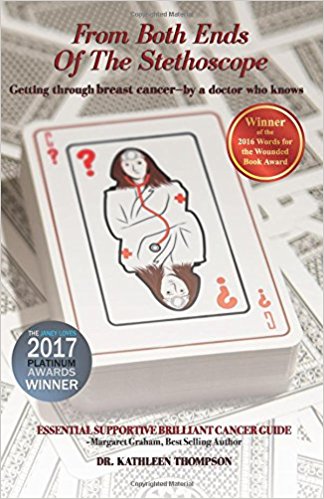
So the cover has to be compelling, even when viewed as a myopia-challenging image on an i-phone screen. A good cover design can catch the eye, at least long enough for the viewer to flick to the blurb, but a competition award sticker can bestow instant credibility.  When anyone with a computer can publish—independent endorsement is invaluable. See the unadorned jacket below, and how much more eye-catching the post-award version is.
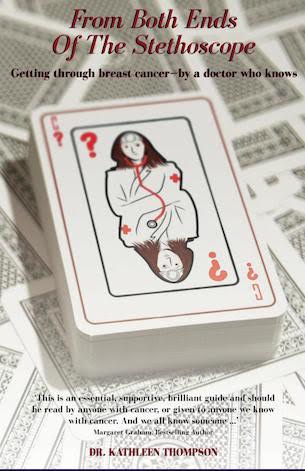
As a doctor and ex-breast cancer patient, my book guides fellow-sufferers through diagnosis, treatment, and life beyond cancer. However sometimes I struggle to convey to people how much the book can help them. Due to its genre, it is hardly an impulse buy, and a promotion doesn’t usually trigger a scrum in Waterstones, in the same way that a holiday read may.

So when I heard about the Words for the Wounded Book Competition I decided to enter.

 

I was aware that Words for the Wounded is a very special charity, started and administered by three ‘writing grannies’, including the Margaret Graham – best-selling author with Random House. Raising money by literary-based activities, their charity finds practical ways to help service personnel who have been damaged by war—either physically or through post-traumatic stress syndrome. I was pleased to support such a good cause, whilst taking the opportunity to have my book assessed by experienced literary professionals, in this case, Felicity Trew, of the Caroline Sheldon Literary Agency.

I was astounded and thrilled when my book won first place. Besides my pride that it had been judged best out of hundreds of entries, the new award sticker on my book cover and updated book description, together with social media announcements, resulted in a pleasant upturn in sales statistics.

Fired by my success I entered the same book for the ‘Janey Loves …’ (Radio 2’s Jayney Lee Grace) Platinum awards, and once again won. My book now has two award stickers of which I am very proud.

So, yes, if you believe in your book, enter book competitions – they really help.

Talking of which … The Words for the Wounded Competition is currently taking entries for The Georgina Hawtrey-Woore Award for independent authors in 4 categories: Fiction, Non-Fiction, Fiction for young adults, & Picture Books for Children. See  http://www.wordsforthewounded.co.uk for details.

The charity is also hosting a Lit Fest (details available on the same link) on 21st April, which is an excellent day of talks for writers and literary enthusiasts alike, held in High Wycombe, just thirty minutes from London. Consider treating yourself – you will not regret it.

And if you are interested in my book …

From Both Ends of the Stethoscope – Getting Through Breast Cancer by a Doctor Who Knows – please feel free to buy a copy http://amzn.to/20Y09pK

www.wordsforthewounded.co.uk

 

What Everyone Needs to Know about Tax: An Introduction to the UK Tax System Book Review

What Everyone Needs to Know about Tax- An Introduction to the UK Tax System Book Review

What Everyone Needs to Know about Tax: An Introduction to the UK Tax System By James Hannam immediately caught my eye. Sure I have an interest in finance and the workings of the society that we live in, but I have always been interested in tax. Now tax is a good thing; it is how society runs. No tax and no NHS, education or public services at all. But are we overtaxed? I thought that most people are overtaxed before, after reading this book, even more so. As the book points out there is income tax, employee national insurance (of various classes), employer national insurance, VAT, stamp duty, council tax, inheritance tax. The list just goes on. We are overtaxed and the government tries to make some of these taxes as invisible as possible. Did you know that someone on a salary of £26,000 pays almost £8000 in tax a year? Or that the top 0.05% of the UK population pay over a quarter of all income tax? The top 10% of earners pay over half the income tax, which is about 100 billion a year. Just 5% of the population pay more in income tax than the rest of the population put together. How much do you have to earn to be in this top 5%? Just over £50,000 a year. Another great section goes on about how taxes cause the poverty trap that people on benefits can get caught in when they try to get off benefits, they can essentially get taxed at 90%. More than the richest in society. Depressing? Yes. Fair? No. The book also has a great section on pensions versus ISAs. I have always been wary of pensions and the book helped clarify my thoughts.The book is full of great facts like that by a man who really knows his stuff. The book is chock full of essential information and interesting fact. I can highly recommend it to anyone who wants to get a grip of the complex UK tax system.Due to be published by Wiley, 23rd March 2017
£19.99, Paperback and e-bookISBN: 9781119375784“You pay a lot of tax. Of course, you know that. But I bet you don’t know just how much you pay, or all the ways the government has to extract the cash from you.” – James HannamIn his new book, What Everyone Needs to Know about Tax, James Hannam takes look at the UK tax system and provides non-specialist readers with an easy-to-understand explanation of tax and tax policy to show them just how much they pay, how the money is collected and how tax affects ordinary people every day.With no accounting or legal knowledge required, it contains practical case studies to illustrate how tax functions in the real world, for example: how the VAT on a plumber’s bill all adds up; why fraudsters made a movie to throw HMRC off their scent; how a wealthy couple can pay minimal tax on a six-figure income; and the way tracing the money you paid for your iPad sheds light why the EU is demanding Apple pay billions extra in tax.Written in a conversational style, What Everyone Needs to Know about Tax gives readers a real-world look at how tax works. In it they will:

  • Learn about the many ways that the tax system separates us from our money
  • Discover how Brexit could change the way we pay taxes
  • Understand how changing tax policy affects people’s everyday lives
  • See through the rhetoric from politicians and the media surrounding tax controversies

The system’s underlying logic is illustrated through three ‘golden rules’ that explain many of the UK tax regime’s oddities:

  • Lots of small taxes together add up to make big tax bills – “The point of all these taxes is to spread the pain so we notice it less.”
  • No matter what name is on the bill, all taxes are ultimately suffered by human beings – taxes levied on manufacturers are passed on to the consumer through a higher price for the product
  • Taxes are kept as invisible as possible – “Since we all hate paying taxes, the government has perfected the art of ensuring that we rarely have to hand over the money ourselves. Most taxes are paid by businesses on our behalf.”

With tax, there are no easy answers. No one enjoys paying them, but without them, the government would shut down.Whether readers are self-employed, have a general interest in the way the UK tax system works, are a finance or tax professional, or students wanting to understand more about taxation in a break from traditionally dry text books, What Everyone Needs to Know about Tax gives them the background and foundational knowledge they need to be a well-informed taxpayer.What Everyone Needs to Know about Tax will be published on 23rd March 2017 and will be available wherever books and ebooks are sold.
JAMES HANNAM, PHD, has spent twenty years advising clients on every aspect of the UK tax regime while working for firms including EY, Freshfields, and KPMG.

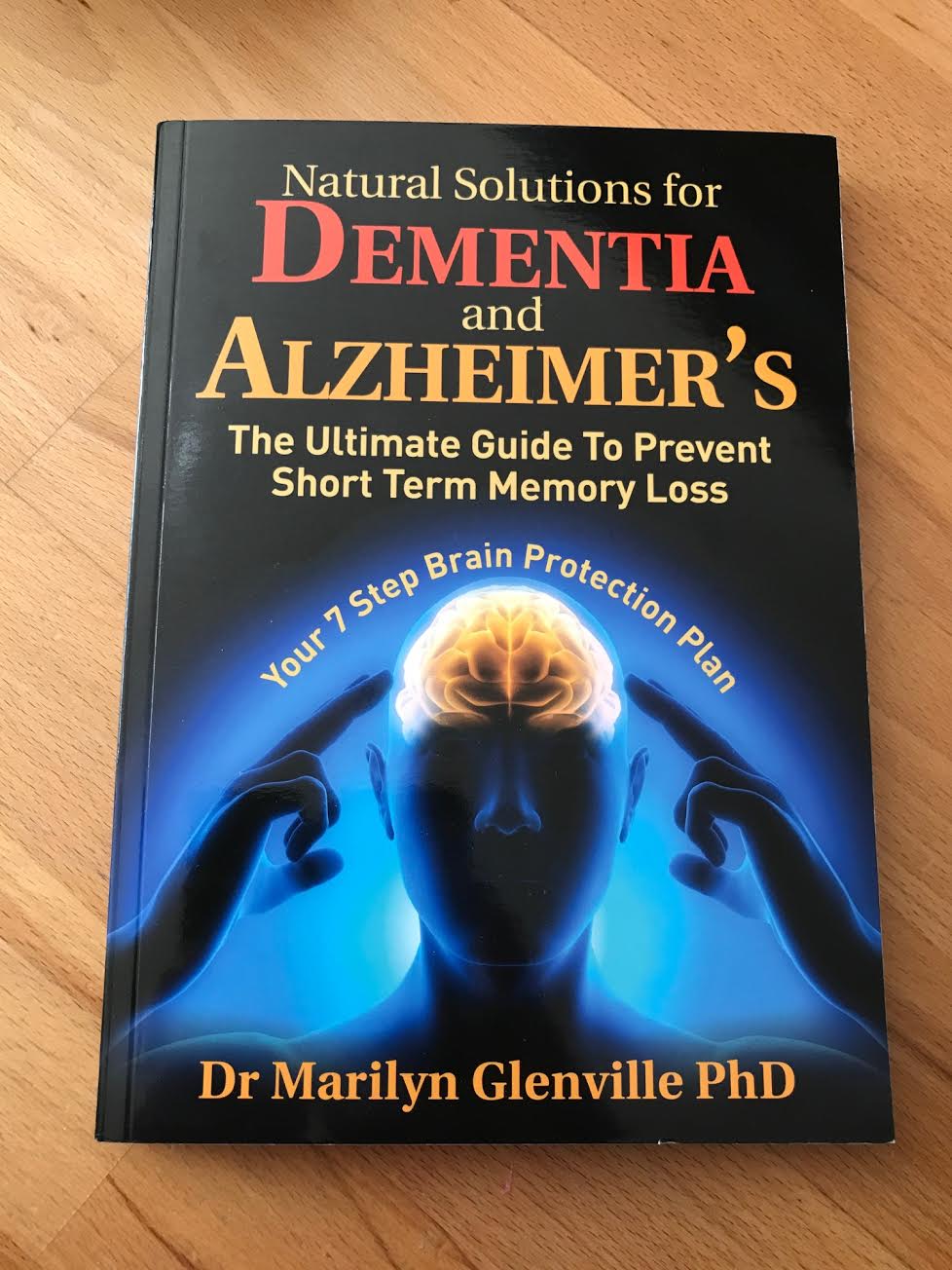
Natural Solutions for Dementia and Alzheimer’s, Your 7 Step Brain Protection Plan

natrualsolutionsfordementiaandalzheimers
I have read a few books by Dr Marilyn Glenville, and we also feature her articles on Frost sometimes. She is a woman who really knows her stuff. I greatly enjoy her writing and her new book Natural Solutions for Dementia and Alzheimer’s, Your 7 Step Brain Protection Plan is one of her best books yet. Well-researched and never dull to read, it is brimming with information and advice. The book is thorough; part one helps you understand dementia and part two is your 7-step brain protection programme. From what to eat, your environment, training your brain, dealing with stress and exercise. This is an essential book in the fight against Dementia and Alzheimer’s.


New book launch from Dr Marilyn Glenville PhD

Following the huge success of bestselling Natural Alternatives to Sugar, Dr Glenville is adding to her literary portfolio this year with her brand new book Natural Solutions for Dementia and Alzheimer’s.

As it can take up to 10 years for dementia symptoms to show, Dr Glenville gives a compelling argument as to why taking action sooner, rather than later is crucial in helping to prevent memory loss and reduce the risk of developing dementia and Alzheimer’s.  Whilst the pharmaceutical industry searches for a cure, Dr Glenville offers readers a practical easy-to-follow 7 Step Brain Protection Plan consisting of simple lifestyle and nutritional changes everybody can make.

Alzheimer’s, more than any other disease, is now responsible for the highest number of deaths amongst women; killing three times as many women as breast cancer.   The Alzheimer’s Society believes delaying the onset of dementia by just five years would reduce deaths directly attributable to dementia by a staggering 30,000 a year!

  • There are 850,000 people with dementia in the UK
  • It is estimated over 1 million people in the UK will be diagnosed with a form of dementia by 2025.
  • The total annual cost of dementia in the UK is £26.3 billion 
  • The NHS picks up £4.3 billion of the costs and social care £10.3


Who is the book aimed at?


In her latest book, Dr Glenville sheds light on the complex and often misunderstood world of dementia including Alzheimer’s, offering sufferers and their loved ones a clear and practical guide as well as an easy questionnaire to determine if you are headed towards Alzheimer’s. The book is also suitable for those who have a family history of dementia and want to take steps now to delay cognitive decline.

The book expands on newly discovered facts and latest research findings: 

  • Why scientists are calling Alzheimer’s ‘Type 3 Diabetes’s due to blood sugar and insulin being so closely linked with an increased risk
  • Gum disease has been linked to a six-fold increase in the rate of cognitive decline in people in the early stages of Alzheimer’s
  • Sleeping on your side is the best position to let cerebrospinal fluid flush out toxins and improve blood flow around the brain.
  • Omega 3 rich foods like oily fish improve cerebral blood flow and reduce inflammation making them important in the fight against Alzheimer’s and vascular dementia.
  • It might not be genetic – according to the Alzheimer’s Association in America, genetics are responsible for less than 5 per cent of all Alzheimer’s cases.
  • How certain nutrients ‘‘can slow the atrophy of specific brain regions that are a key component of the Alzheimer’s disease process and that are associated with cognitive decline’.*


Discover answers to questions such as…                                                                             

  • What is the difference between Alzheimer’s and other types of dementia?
  • Can making the wrong food choices be harmful to your brain health – no matter what age you are?
  • Which supplements can help improve and boost your brain function?
  • What lifestyle factors should you avoid and include to help improve your memory?

·      What are the most important tests to take to show if you have any deficiencies or imbalances that could be affecting your memory and concentration?


The 7-step Brain Protection Plan

Dr Glenville introduces readers to her unique 7-step Brain Protection Plan offering a practical step-by-step guide to help get your brain in the best possible shape naturally, with chapters covering:

  • Your diet
  • Nutritional supplements
  • Exercise
  • Stress and sleep
  • Your environment
  • Brain training
  • Testing, testing


What inspired Dr Glenville to write Natural Solutions for Dementia and Alzheimer’s?

Even though writing this book has touched a personal nerve (my father and mother-in-law developed Alzheimer’s and I saw first hand the effects not only on them, but on all those who had to care for them), my research has shown me just how much we do know already and how very beneficial simple, practical lifestyle changes can be, not only to help prevent the disease, but also to slow the decline for those who already have it.  I hope you find the information in the book as interesting as I did while I was gathering it; and I hope that it can make a difference both to you and to your family.


Natural Solutions for Dementia and Alzheimer’s £12.77, is available from all good stockists, Amazon and marilyngenville.com.


The Restory: To Be Fashion Thou Shalt Restore Not Replace

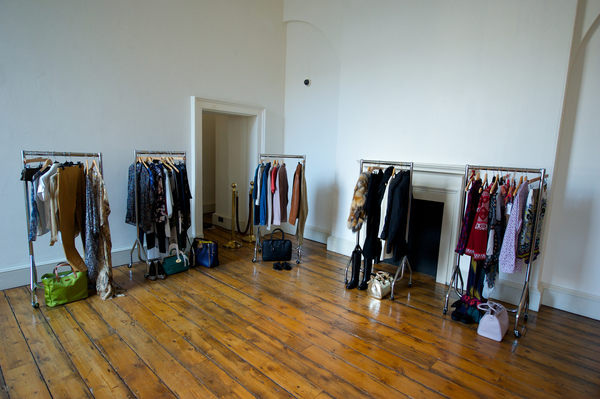
The Restory- To Be Fashion Thou Shalt Restore Not ReplaceOur consumption of fashion is evolving. The throwaway days of ‘new season, new wardrobe’ seem to be numbered as we seek a more sustainable approach to all aspects of our lives, not just the fashionable ones. This evolution is fuelled for some by pragmatism, for others by altruism, but for the majority by a desire for our purchases to exist beyond a few seasons, or even just a few outings. Maximalist founder of the website, Man Repeller, Leandra Medine, recently told British Vogue that she wished she only owned 15 things.


A more circular approach is taking hold; yes, we buy – both new and pre-loved – but we also repair and rent and sell. We buy less but we buy better and we expect more. Some brands have always understood customer’s demand for products that have longevity and therefore provide aftercare and repair services to that end; heritage names such as Mulberry and Hermes spring to mind. Whilst eco-brand Patagonia has a lifetime guarantee on all its products.


However, it seems that for many luxury brands, everything beyond a legitimate product defect is simply outside their scope … and maybe that’s true but it can still leave the customer in a lurch.


This is what happened to native New Yorker, Vanessa Jacobs when she moved to London in 2006. “A high-street cobbler made an unapologetic mess out of what should have been a simple heel tip replacement,” recalls Jacobs. It was this experience, and nearly 10 years of subsequent ones of a similar nature, that spurred her to launch The Restory, an on-demand shoe and handbag restoration service that brings together quality, service, convenience and craftsmanship.


“It felt like moving heaven and earth to find someone you trust only to realise you could trust them with some things and not others,” continues Jacobs. “I had to make up a web of lies to take a half-a-day off from work to travel to their out-of-the-way shops and then do it all over again to collect my things. Often, they were nice but wouldn’t really go out of their way. I thought someone ought to do something about this and it turns out that someone was me.”


Jacobs spent 2 years assembling an A-team of cobblers, leather restorers, shoe blacks and cordwainers from across Europe; she even relocated several here to London. Coupled with charming service-oriented consultants, the company prides itself on devising solutions to almost any challenge.


“We use the term restoration because it connotes a what-ever-it-takes-to-bring-it-back approach,” says Jacobs.


Boasting a collection of services ranging from bespoke repairs to leather restoration to complete refashioning, The Restory is earning some impressive admirers. British Vogue recently crowned the company its’ go-to specialist and Vanity Fair and Fabric have also praised the company’s work.


“Currently, we are concentrating on providing The Restory’s services in London but we will be expanding across the whole of the UK,” continued Jacobs.  “Looking further ahead, the plan is to offer new services and products and then we will look to bring The Restory’s much needed skills to other markets.”


So, how does this service work? Simply book a collection online (and soon via app), and a consultant will collect your items from any home or office in Central or West London. Your items will be taken to their atelier, beautifully restored and returned at a time and place of your choosing. “It’s like buying you favourite pieces all over again.”


www.the-restory.com


Playing with Fire by Paul Heiney – book review by Milly Adams

Playing with Fire by Paul Heiney

I was going to call this a quirky book, and then stopped myself.

Perhaps it’s a sign of the times, what with central heating, and small gardens, that a book that explores the art of chopping and burning wood is considered any such thing.

Paul Heiney, the author,  reminds us of the Zen proverb:

Before enlightenment, chop wood, carry water.

After enlightenment, chop wood, carry water.

Indeed.

Playing with Fire is actually a fascinating history of wood, and fires, and an illustration of the magic of fire and flame. It is a hands on exploration of the care of woodland, the most suitable woods for burning, and the tinder for getting things going in the first place. And once the tinder is lit, how best to make the fire draw – inside the house, and out. It is a wood lover’s book, or for someone who wants at least one foot in the real world, and to smell the woodsmoke, and watch woodland flourish – the illustrations are superb.

Being of a certain age, I thought it the simplest thing to make a fire burn, having been taught by Mum and Dad. Clean out the fireplace, put the ash on the garden, and lay the fire again. And how best to make it draw, and then moving on from the open fireplace to the wood burner, and how to manage that. Though aren’t those soon to be politically incorrect. There are so many things added to the list now, one loses count.

And how to build a bonfire, and even put some spuds in the ash to eat when the day is done. Probably outlawed too.

I happened to hear of a friend who didn’t know how to get her log burner to work. First a bit of paper, then throw on a log. Er, no. She needs this book.

But actually we all need books like this. Wonderfully illustrated and written with love – about one of our most precious and sustainable commodities. Trees have leaves that produce oxygen. Careful husbanding of woodland not only provides a better environment, but heat. There’s a synchronicity

Read this. It is wholesome, healing, evocative, and fascinating. A gem.

Playing with Fire – The art of chopping and burning wood by Paul Heiney.

Pub The History Press hb £20

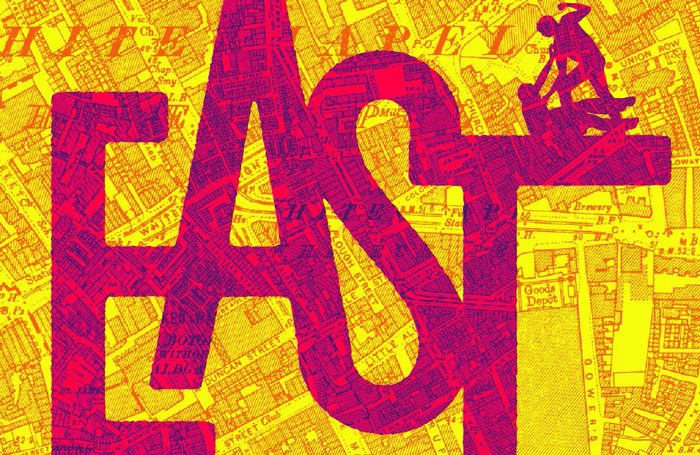
THEATRE REVIEW by Paul Vates – East at The King’s Head Theatre, London  

‘With brains, heart and guts it still hits home’


I ventured to trendy North London to watch an iconic play about gritty East London. Something ironic in that.


East arrived in 1975, from the Edinburgh Festival premiere, transferring to The King’s Head and launching Steven Berkoff’s raucous style. This revival shouldn’t work. Theatre – and audiences – should have moved on. But it – and we – haven’t. I wanted to write about the play’s unworthiness in the modern age, how it has dated and seems lacklustre. So out of touch. But the play still shocks, no-holds-barred; it is funny as some things never change; it is tragically brutal in a way that smacks so many new plays across the jaw and shouts into their faces ‘Wake up! Do your bloody job! Say something worthy…’


Director Jessica Lazar has assembled an amazing cast, who throw themselves into the style. Physical theatre is not everyone’s cup of tea, mime makes many run for the hills – but this is for adults, it is not cutesy. It sidles in alongside the prose: Berkoff’s quasi-Shakespearean text testing the audience, stretching plausibility as East End thugs and lovers fight verbally and physically in battle.


Boadicea Ricketts – (c) Alex Brenner @ King’s Head

I think the star of the show is debutant Boadicea Ricketts, playing an angry, sleazy and sexy Sylv. She shines and shows no fear. Aided by Jack Condon, another making a professional debut, as Les.


Jack Condon – (c) Alex Brenner @ King’s Head


Condon’s presence is assured and confident. Throwing himself around the stage with ease – it is somewhere he belongs. His counterpoint is James Craze, playing Mike.


(c) Alex Brenner @ King’s Head

Together, they live the best life can give them, albeit tough and frustrating. The parents are no better – exaggerating about their own youth, constantly comparing and bigging themselves up into more grotesque creatures than their offspring. Debra Penny and Russell Barnett play Mum and Dad – always on the verge of murder or enlightenment, neither of which arrives. Instead, they dream.


Debra Penny and Russell Barnett (c) Alex Brenner @ King’s Head

There is live piano accompaniment courtesy of Carol Arnopp, supplying a Cockney pub atmosphere as well as a soundtrack to the story.


What’s not to like? Well, the dancing’s a bit fuzzy and could be neater. At times, there is roaring where a whisper would suffice, but this is in-yer-face theatre. The East London that Berkoff knew may have changed – it’s probably trendier than the North of London now – but the memories linger and their relevance still reverberates. With brains, heart and guts it still hits home.


Paul Vates.


Producers     Atticist

Photography Alex Brenner

Design           David Doyle


Venue           The King’s Head Theatre, 115 Upper Street, Islington, London N1 1QN

Performing    until February 3rd 2018

Tuesday to Saturday at 7pm (no performances on Mondays)

Sunday Matinees at 3pm

(additional Matinee on Saturday February 3rd at 3pm)

Length           2 hours, plus an interval

Box Office     website www.kingsheadtheatre.com and telephone 020 7226 8561

Tickets          £19.50 (concessions £15/£18)

Premium are available priced at £25


Twitter                      @theAtticist, @KingsHeadThtr, #BerkoffEast


BUSINESS OF BOOKS: TAKE FOUR WRITERS – INTRODUCING JACKIE BALDWIN

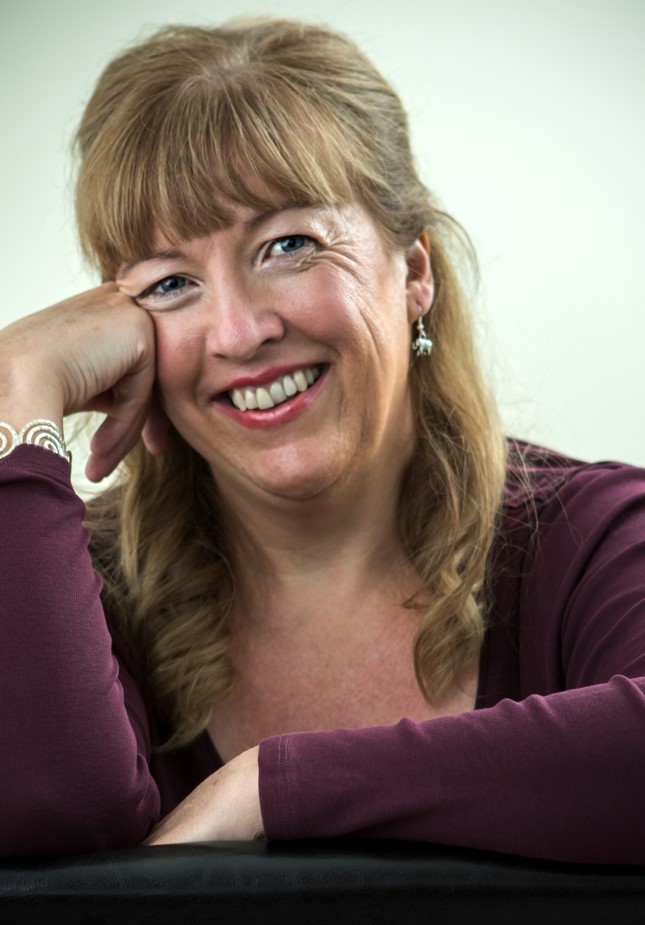
Hello everyone! I’m so excited to be sharing with you all the steps towards publication of my second crime novel, Perfect Dead. I’m a Scottish crime writer and live in Dumfries, SW Scotland which is where my series is set. For most of my working life I was a solicitor practicing in family and criminal law but for the last five years I’ve been working as a hypnotherapist which I really enjoy. I’m married and have two grown up kids and two golden retrievers. This is a great area to walk dogs as it has an abundance of forests, rivers and coastline to let them run free. Consequently, I spend a fair bit of time spattered in mud and with twigs tangled in my hair. Don’t be fooled by my author photo!

Writing my second book was very different to writing my first one. Writing a first book you can take all the time in the world. And I did! About 12 years to be precise, including three years when I didn’t write a single word. Friends and family viewed the whole tortured process as a harmless eccentricity. After a final rewrite I sent it to Killer Reads, a digital imprint of Harper Collins. Two weeks later I was holding an acceptance. I didn’t stop shaking until the next day. It was such a shock!

So, to go from that timescale to writing the second book in less than a year took some doing! It didn’t help that last February I developed angina culminating in a blocked coronary artery which required 3 stents in August. I have to say that my editor at Killer Reads was fantastic, no pressure whatsoever. The pressure came from within. Readers were asking for the next book in the series and I didn’t want to let them or my publisher down.

My first novel, Dead Man’s Prayer, I had plotted in advance of writing but, just to make life harder, I started the second novel deliberately with no idea of who had committed the crimes. This resulted in a bad case of ‘saggy middle’ where I had a complete crisis as my plot strands threatened to spiral out of control. It was time to commit and knit it all together. ‘It can’t be done,’ I wailed, adding my echo of despair to all the writers before me. I swear there have been times when I felt the words of this novel were bleeding onto the page a drop at a time, progress seemed so slow. But, to my surprise, and to the relief of my long suffering husband, it all came together in the end.

Perfect Dead will be published in ebook on 15th June and the POD paperback will be available on 23rd August. The action mainly takes place in the ‘Artists’ Town’ of Kirkcudbright, (Kircoobray). DI Farrell is faced with the apparent suicide of a promising young artist shortlisted for a major art prize. Human remains are then discovered on a MoD firing range. Both victims are connected to a shadowy Art Collective. The local police are further stretched investigating a forgery ring. Both investigations are hampered at every turn by secrets people will do anything to keep hidden. DI Farrell and his team are pushed to breaking point as they strive to catch a callous killer before he strikes again, this time much closer to home.

As you read this, I am waiting for my editor’s Notes to arrive so that I can start editing. A rather scary prospect! See you next month!


The Ultimate Guide To Clearing Your Clutter

Last year I became quite obsessed with decluttering. In fact, thanks to Marie Kondo I think we all did. I have never liked being surrounded by a lot of stuff. I have always hated clutter. Which is why I am feeling rather proud. My husband and I have got rid of thousands of things. There are still a few things earmarked to go, but we are the closest to minimalism we have ever been. The flat looks fundamentally tidy even though we have a toddler. Things are also much easier to find and we have even made some money selling things. Here is my quick, but comprehensive, guide to decluttering. It will change your life, trust me.

You need to put things into different bags,boxes or piles. The options are: Recycle, Sell, Keep, Mend, Give to Charity.


You don’t have to do it all at once so don’t get overwhelmed. You can do a room at a time, or even just a drawer of cupboard. Slow and steady is just as good as one full-on day.

My biggest tip is to keep a charity bag somewhere you can easily access. Put things in there you want to get rid of, and then when it is full you can take it to the charity shop. 

You can make decluttering fun by doing it while you watch your favourite TV show or listen to music. You can even get all of the family involved. Getting rid of old stuff always feels great.

Declutter for 5-10 minutes everyday. It all adds up.

Put the handle on the hanger in your wardrobe in one direction, if you wear the item, turn the handle around. Wait a certain amount of time, say, six months, then throw out everything you have not worn.


You can give away unwanted stuff while doing good for the environment via Freecycle.org


Get rid of all your old phones. Just remember to delete your personal information and remove the SIM card. There are plenty of good websites and companion websites which will give you the best price. I use https://www.mazumamobile.com/sell-my-mobile. Just make sure you check out their reputation on trustpilot.com

You can also sell old ink cartridges. The amount you can earn is so low that I would give them to chairty instead. Cash for Cartridges pay for old ink cartridges but you have to set up an account, the withdrawal limit is £25, and their prices are so low it would take an age to get there. http://www.cashforcartridges.co.uk/ink-cartridge-recycling-prices

Personally I think it is better to donate them to the British Heart Foundation. You can download their free post label here. https://www.therecyclingfactory.com/bhf/. Other charities that take old printer cartridges include the British Institute for Brain Injured Children, RNLI, Barnados, Sense, and the World Cancer Research Fund.

I have sold all of my old gadgets. After removing my personal data of course. I used eBay.co.uk as I found they had the best prices. There are other places of course. cashinyourgadgets.co.uk, musicmagpie.com and even Apple itself will buy your old technology. It is best to remove your old hard drive before selling your old computers. Note that Apple will give you a gift card in return. They also recycle things for free that they do not buy, including PCs.

Amazon.co.uk marketplace allows you to sell books, DVDs and some other stuff. They do take a huge fee however, a massive 17.25% commission. The good news is that it is free to list. They also give you a postage credit which does not always cover the cost of posting the book, then take it away in fees.

You can also sell by Car Booting. Car boot sales are not the best place to get the top price. I have never done it personally but there will be plenty in your area. Just do a search. They tend to charge a fee to pitch up your car and sell. I would mark your prices up a bit as people like to haggle.

Other good places to sell your stuff.


Facebook groups

There is even a sell option on Facebook. You can also join groups and sell your stuff on the group.

The best way I have found of getting rid of stuff is to give it to charity. You do good and give back to the community while clearing out your home. Win win.

You can donate pretty much everything. For instance, the RSPB, DHIVERSE and the World Owl Trust will take old stamps. Your old glasses and sunglasses can go to charity shops. Branches of Boots Opticians and  Dolland and Aitchinson usually have recycling bins for old glasses. You can donate your foreign currency. RNIB will take it. Help the Aged, Marie Curie and Age UK will even take old currency that can no longer be changed. Many charities will also take your old phones.

Take your old clothes to a charity shop or a local clothes bank. H&M, Uniqlo and Marks & Spencer’s all take old items of clothing.

It is best to sell furniture on Gumtree.com, Facebook groups or other local resources. Furniture and homeware does not hold its value well. If you do want to get rid of your furniture and don’t want to sell it do not spend hundreds getting someone to take it away for you. We were quoted over £400 for someone to come and take our furniture away. I donated it to the British Heart Foundation instead and they came and took it away for free.

When it comes to donating furniture the Furniture Reuse Network will take your goods and then distribute them to a charity organisation in your area.  Oxfam and the British Heart Foundation also take furniture. You can also try Freecycle and Freegle where you offer your good for free to anyone who can collect them.

Gone For Good is a great social enterprise that puts people in touch with charities that will come and take away their furniture or anything else they want to donate. You use the Gone For Good app by taking a photo of your unwanted stuff on our phone and then one of the charities will come and take the goods away based on your postcode. The app is free to use and the charity will pick up your goods for free too. Great for people who don’t have a car.

When you give stuff to charity make sure you sign up for Gift Aid. This allows the charity to claim an extra 25p for every £1 you give and also lets you get some money off your tax bill. Don’t do it unless you pay tax though, you will have to pay the extra gift aid. To learn more about tax relief and gift aid go here.

My last tips are to get rid of old change via self services machines. No, the staff from the supermarket don’t like it but as long as you don’t overdo it I am sure it will be fine. I also find eBay.co.uk the best place for selling stuff. Even if there are some people on there that just want to steal your stuff. I send valuable things signed for. My other, and biggest, tip for decluttering is also the one that is best for the environment: stop buying so much crap. Seriously. I rarely buy anything these days other than food and it has changed my life. My sure everything has a place and goes back into that place. Everything else can be sold or given to charity.
Thank you for reading. Please add your own tips below.