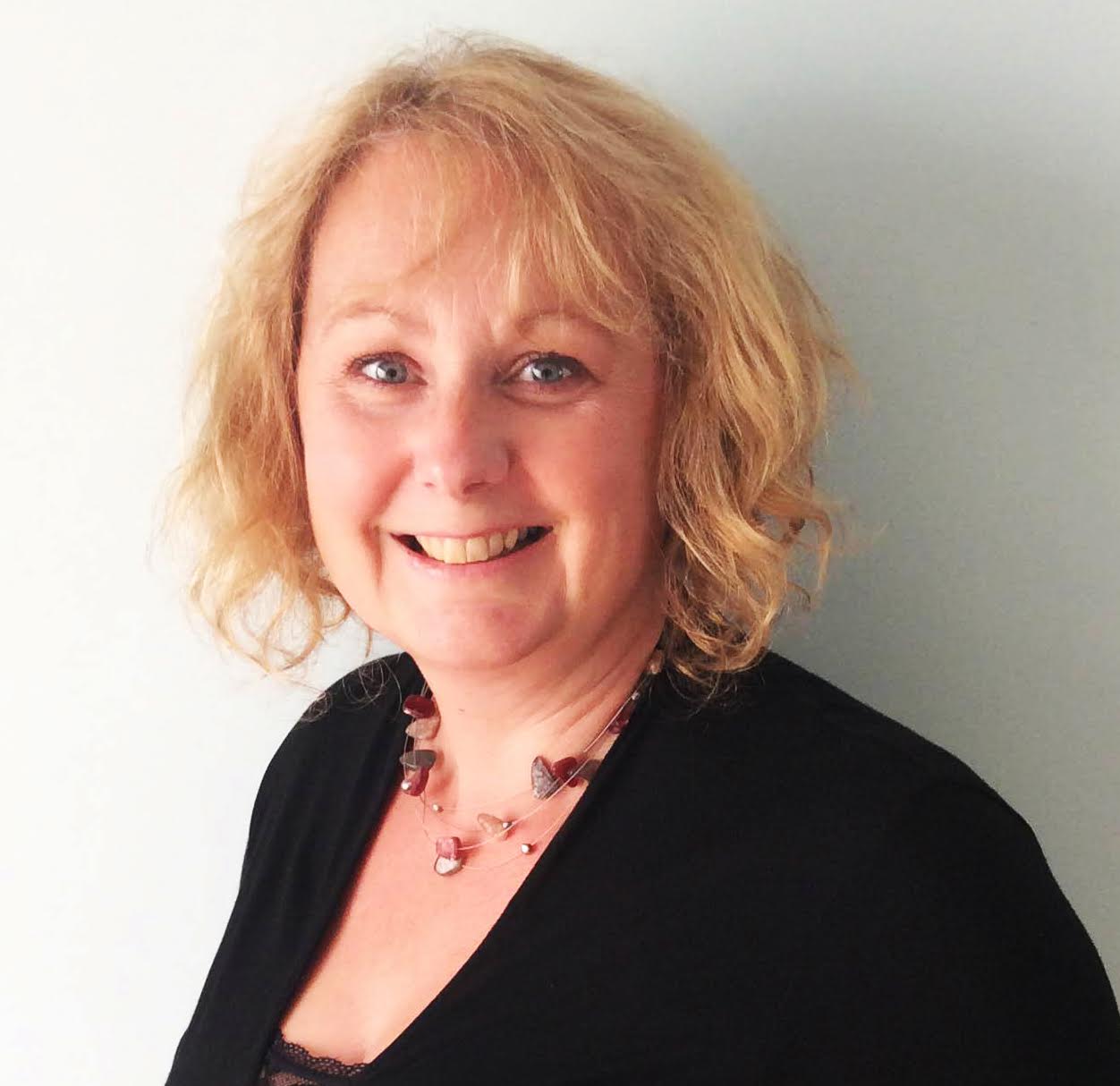
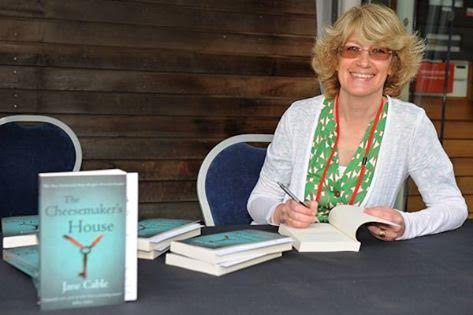
Business of Books: Jane Cable talks to author & book designer Christine Hammacott

the-business-of-books-interviewswithjanecableJane Cable talks to author and book designer Christine Hammacott
 
How much of your working life does the business of books take up?
The business of books is extremely varied these days. Being an author doesn’t just involve writing a book. It can involve research, editing, marketing and promotion, social media, blogging, events and book festivals, to name but a few – anything that can help raise your profile.
I’m an author and also a book designer. I run my own graphic design consultancy and spend a lot of time working on logos and brand development across all media both in print and online. Three years ago, I joined forces with a couple of other writing friends to set up a indie-publishing co-operative. We’ve published seven titles so far including my own book. As a result of this I’ve been asked by other authors if I would design their covers. So two years ago I added book design to my portfolio of offerings and word seems to have spread as I’m now constantly working with other authors.  
My writing is a lot less disciplined than the design side, as I’m forced to write around family commitments, often snatching time at the laptop or with notepad and pen in car parks and corridors while my daughter is at one of her out of school activities. It isn’t ideal but it’s a one way of ensuring I have some regular time to write.
Jane Cable talks to author and book designer Christine Hammacott
What’s your business model for earning a living from books?
As far as earning a living from my writing goes I’m a long from doing that. I’m not convinced I’d actually like to solely write, although I would like to address the balance better. In an ideal world I’d like to spend the mornings writing and the afternoons designing with a walk with the dog in between.
I really enjoy designing book covers. My first job after art college was working for a publisher doing just that. I turn an author’s manuscript into a marketable ‘product’ that is visually appealing and conveys the genre and essence of the book. It can be quite difficult getting this across sometimes to an author but it’s important for a potential buyer to know immediately what they are buying and whether they want it. 
I think authors like working with me because I’m an author too and therefore understand where they are coming from and that their work is precious. A lot of them haven’t published before and part of my role is to gently hand-hold them through the process.
What do you write and what do you consider your major successes?
Years ago when I first started writing, I entered a Writing Magazine short story competition and won first prize. That success gave me the confidence to believe in my writing and undertake something larger. I now write psychological suspense. I enjoy finding out how ordinary characters cope in extraordinary situations. My debut novel is about a young woman who just want’s to get back to some sort of normality after a devastating fire that has left her homeless and a neighbour dead. Only she then finds she has a stalker and begins to fear for her safety. It’s a genre I particularly like as it’s very easy to imagine myself in the protagonist’s position and that makes it scary.
Tell me about your latest project
I’m working on another psychological suspense. This one is set in the New Forest and is all about living with consequences, morality, family relationships and how easily a situation can get out of hand. 
 
 
facebook   christinehammacott.author/
twitter @ChrisHammacott
 

Can anything, really, make preparing and serving desserts easier? by Milly Adams


My heart always sinks when I have to provide a dessert or a cheesecake for an group meeting, a WI meeting, or a family ‘do’ but having been sent the Delicake Non Bake Master for review I thought I’d give it a go.


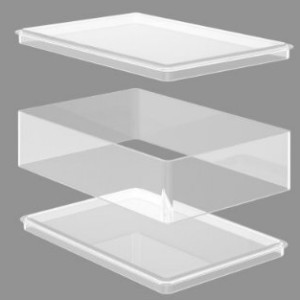
pic 1 rectangle

They’re an all-in-one solution, or so the blurb says, and saves you time and effort.

So, does it?

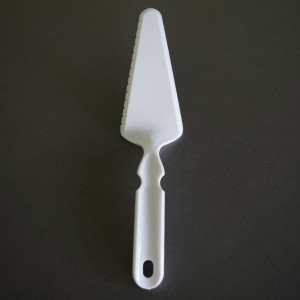
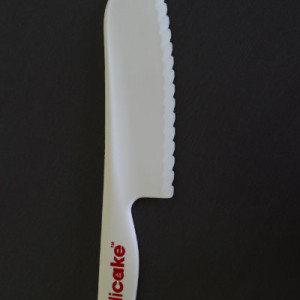
Actually, yes. The Delicake Non Bake Master has a clever three-piece assembly so your cheesecake can be prepared, set and served using a single kitchen item. It is comfortingly robust, and best to use the spatula and knife that you can buy when preparing, and indeed serving, your dessert, or cheesecake.


pic 2 Spatula-300x300


There is a base, a sleeve and a lid. Mine is rectangular so the biscuit base serves many. The sleeve locks into the base, and contains the dessert without it sticking to the sides. Basically it is a mould, in which you prepare your masterpiece, and then this goes into the fridge.

pic 3 knife-300x300

When needed and when set, just take it out of the fridge, remove the sleeve and there it is, in all its glory, ready to serve.

If you’re travelling with it, the lid not only locks in freshness but also makes transporting easy. I was going to take a photo of my masterpiece at a village do, but it all went. First time ever. The group are bakers supreme, (let’s ignore the fact that I am not for the moment) and with summer and picnics beckoning I reckon we’re in for some treats.

I do recommend this. I was going to take a photo of my masterpiece but it got eaten, which for me is a rare and heart warming success.


Delicake Rectangle Master: £30.99

Delicake Circular Master:     £24.99

Spatula: £2.99     Knife:   £5.99

www.delicake.com.au/shop/


A lovely charity event at the Ferndown Fete

On Saturday June 24th the Ferndown Pram Race is back. Bigger and better than ever. So if you don’t want to miss out on this fun packed event get a team of 5 together, 4 pushers and a baby and obviously you’ll need a pram too. Dressing up essential!

 pic 1 pram race

A very exciting new addition to this year’s Ferndown Fete on the Field is the 1st running of the John Thornton Pram Race.  A route around the full King George V Playing Fields with a number of physical and mental challenges on the way.


If you feel like you are up for the challenge and maybe have the stamina, brains and passion to win, then contact the organisers for an entry form and enter your team today.


This event will be raising funds solely for the John Thornton Young Achievers Foundation.


Please contact pramrace@ferndownfotf.org to register your interest or call Pete on 07792 121 645 for more details.  Visit the Ferndown Fete on the Field website to find out all about this great event and all the other activities which make it a Fern-tastic day out for the whole family.

www.jtyaf.org


Review: Forty Years on at Chichester Festival Theatre

ARSONatChichesterFestivalTheatre.PhotoJohanPersson_02652

Photos: Johan Persson

Taking up his post as Artistic Director new Head Boy Daniel Evans opens his first Chichester Season with Alan Bennett’s early play, which is set in 1968 at Albion House, a fading public school.

Some fifty local schoolboys join the cast and are outstanding, opening the production with a roof-raising rendition of Praise My Soul the King of Heaven.

The occasion is the end of term show, which also marks the retirement of the elderly headmaster. Under the directorial auspices of his reformist successor, the offering of a history revue includes some sketches that get the old duffer decidedly hot and bothered – to be overtly risqué is definitely tsk-tsk territory.

There are some joyous moments. Danny Lee Wynter’s naughty portrayal of an elderly aristocrat à la Dame Maggie as Downton’s Lady Violet is delicious, while an ace tap-dance solo is worthy of the Strictly! final. A stage invasion of lusty-voiced rugger buggers is also a gas, which for all the headmaster’s puritanical tendencies is deemed perfectly acceptable once it is revealed that the opposition has been roundly trounced.

Alan Cox as incoming headmaster Franklin, Jenny Galloway as Matron and Lucy Briers as Miss Nisbitt give accomplished performances, while the music and singing is superb, thanks to the excellence and exuberance of a terrific ‘school orchestra.’

Some of the historical inspirations do not resonate, leaving these skits teetering on the brink of tedium. But there are plenty of jolly spoofs to compensate, as well as flashes of poignancy bringing a balancing shade.

)inCFT'sproductionofFORTYYEARSON.PhotoJohanPersson_04653You can almost smell overcooked cabbage thanks to Lez Brotherston’s impressive school hall set, which comes complete with an almighty oak organ, rising from and towering over the stage.

At eighty years on himself, and having suffered a heart attack only last year, it is perhaps unsurprising that Richard Wilson is not yet tight on his lines. Reading from a script for the most part, when he struggles to find his place on the page it causes the audience collective anxiety. It’s a shame, but there is still much to enjoy here.

www.cft.org.uk Box office: 01243 781312

Vicky Edwards

Interview with Sarah Beeny for How To Live Mortgage Free

Interview with Sarah Beeny for How To Live Mortgage FreeYour new show is How to Live Mortgage Free. Explain what it’s all about.

Obviously with no money, you can’t own a house. But if you have some assets, let’s say you’ve saved up enough for a deposit, or you’ve got some capital in your home with a big mortgage, is there a way of living in proper low-cost housing? Is there a way of looking at things in a slightly different way, and instead of having a home that will cost you £300,000, can you do it for a tenth of that cost? Can you get a home for less money, so you don’t have a massive mortgage?

And what is the answer? What alchemy are you recommending?

It’s all about finding slightly alternative ways of living. If you want to go the standard route where you live near Starbucks and the tube in a three bedroom Victorian terrace, you probably can’t live mortgage free, because you need more money for that. But a lot of people spend an awful lot of money on rent. If you can stop paying rent then you save an extraordinary amount of money. So we have one girl on the show who pays £20,000-a-year in rent. She saved about £25,000, but that, as a deposit, was nowhere near enough to be able to buy a flat where she lived in London. So she ended up buying a barge for £168,000 and refurbishing it, and living on the water. There are a couple of people in the series living on the water. There are other places and other ways that you can live which are much lower cost, which either enable you to save up for a bigger deposit and a smaller mortgage, or you can just buy outright. We’ve got somebody else who’s bought a double decker bus and turned it into a home, which is really cool. And there’s another guy who’s turned the back of a lorry into a home. He does live on a farm in Wales, so he’s got the luxury of the fact that he can use his parents’ land. Land is the biggest cost involved – if you’ve got a piece of land with planning permission, that’s the biggest hurdle overcome.

And one of the ways of doing that is to build on a brownfield site [land previously used for industrial or commercial purposes]. How do people go about finding such places?

Well, that’s the key. You need to be a dog with a bone. This is not the easy path, which is why it’s not the normal path. You have to hunt around. One of the things I’ve learned in housing is that the big wins go to the people who take the big risks. Brownfield sites are really interesting. It’s an easier planning battle to get a home on a brownfield than a greenfield site, and you end up with a much cheaper property. Quite a lot of people in the series are selling their homes with a mortgage and buying a new home for a lot less money.

What was your favourite solution that someone came up with for going mortgage free? 

The double decker bus is really cool – we’re going to go and film the finished article in a couple of weeks, and I can’t wait to see it. But I think the lorry-back is really cool. Everyone knows you can build a home out of a container, but the lorry back was really interesting to me. Everyone knows you can build a home out of a shipping container. But the lorry back is very clever. It’s mobile, which means you can take it with you in the future. It’s not simple to move around, but you can move it. And if you use a container, it’s difficult to put in the windows and doors, because a lot of the structure is in the walls. But a lorry back is effectively a frame, and in-filling a frame is so easy, anyone could do it. My kids could do it. And you can fit it with any size of windows or doors. You need a low level of skill to turn a lorry back into a home. So I thought that was really clever.

If you were starting out now, what route would you take to being mortgage free?

I lived in the back of a van for a bit with my husband, back when he was my boyfriend. You’re so flexible when you’re young. What I would do now is I’d start young and save from a really young age. I had an ex-council van, and we slept in the back of the van for quite a long time, on and off, and that was fine because we were young. I wouldn’t want to do it now!

Was there something quite romantic and adventurous and fun about it at the time?

Yeah. God, it was brilliant. I was completely free. You’ve got no responsibilities and no tiers. It’s the only time in your life when you can just go anywhere and do anything and risk everything. The first flat we bought, we had an outside loo and no bathroom. I was 19 at the time. And where we wanted to put the bathroom was the door to the outside yard. So we blocked up the door to build the bathroom, which meant to get to the only loo you had to climb through the window to go to the loo. It was a really amazing and exciting adventure. So I’ve lived through what these people are doing, and that’s why I find it so inspiring. If you really want to do it, you just can’t take the normal path in life.

There’s a relatively conventional way of doing it, as with the family who simply paid off their mortgage by living very frugally for a while. But in doing that, they’ve saved an extraordinary amount compared to what their mortgage could have cost them, haven’t they?

Yeah, exactly. We live in such a consumer society now, we think we’ve got to spend all the money that we spend. But you can pay off your mortgage way, way, way quicker if you save harder. And saving doesn’t mean you have to sit around doing nothing. There are a billion things you can do that are free out there, or very low cost. The Victorians invented consumerism, and we’ve taken it to the next level. Shopping is now an activity, like going for a walk. You should go shopping because you need to buy something.

It’s not just about practicality this show, is it? It’s also about beautiful and ingenious design, like Grand Designs but without panes of glass that cost £70 grand and have to be brought in from Antwerp.

[Laughs] Exactly. There’s some amazing and very inspiring design, at a low cost. I’ve seen so many houses in my work, and I don’t get as inspired as often as I used to, but I can honestly say that every single one of these was absolutely amazing. They’re very creative people. But I don’t think you have to already be very creative to do this stuff.

So you’re saying, with a bit of hard work and sacrifice, this is genuinely stuff that people can do?

Definitely. And if you’ve got the confidence to give something a try. It’s not going to be a walk in the park, and you won’t have to work hard, but anyone can do it.

What takes up the most of your time – your TV work or your business ventures?

At the moment it’s Tepilo [Sarah’s online estate agents] that takes up most of my time. That’s running at 1000mph. I’ve never been involved in a business that has grown so fast. That’s really exciting. It’s probably a blend between Tepilo and, as the kids get older, they take up quite a lot of time as well. There’s those two and TV. I’m trying to do a bit less TV, because there isn’t that much time.

In amongst all of these time pressures, do you manage to get down to Rise Hall much?

Yeah, that takes up a load of time as well, thinking about it. That’s a really big business now, with lots of weddings. We’re diversifying just now, we’ve got new management in there, we’re looking at all the other aspects of business we can do at Rise Hall. It’s really exciting. We’re opening it up so that people can go there for tea, and during the week as well. Weekend weddings it’s fairly full, so now it’s a question of making use of the house for the rest of the time, during the week.

Lastly, you’ve got multiple businesses, you’ve got property interests, and you’re a TV personality. Are you the next Donald Trump?

[Laughs]Do you think I should have a go? I reckon if he can do it, I should have a go. I’ve always said I’d hate to be Prime Minister, but I wouldn’t mind being a dictator. It was meant to be ironic, at the time, but now it doesn’t seem quite so funny. I like to think perhaps I’d be a more benevolent dictator than Donald Trump would aspire to be.



The Business of Books: The Taxman Cometh… Or Does He?

the-business-of-books-interviewswithjanecableJane Cable on taxing income from writing

The first royalty cheque, the first receipts from Amazon – those are exciting moments for any writer. But in the slightly bewildered ‘wow – someone’s paid to read my book’ moment, whether you need to pay tax on the income is the furthest thing from your mind.

First let me say that taxation – any form of taxation – is a minefield. The volume of legislation is massive and while HMRC guidance is helpful and now provided in reasonably understandable lay terms, it is still easy to fall foul of the rules – or at very least not take full advantage of them. If you even think you might need professional advice then talk to an accountant – preferably a qualified one. Most offer free initial meetings and if you can’t find one by recommendation then the ICAEW’s Business Advice Service is a good place to start: http://www.businessadviceservice.com/

Assuming you haven’t set up a company for your writing business then your earnings from the business of books will be classed as self employment. This means that you won’t be taxed on your income, but on your profit. In broad terms, many costs which relate solely to your writing will be allowable for tax, including book production, marketing, attending conferences and agents’ fees. The list is not exhaustive but a good first question to ask yourself is ‘did I do that only for my writing business and was it necessary to do it?’ If the answer is yes, then you are more than half way there but the reality is that a good accountant will be able to maximise what you claim because they will know the laws inside out.

For the tax year just started, things will be quite a lot simpler for the majority of writers who have self employed earnings of under £1,000 per annum. Here I am talking about gross income, before any expenses. This is because the government has introduced a new limit below which HMRC doesn’t even need to know about it. The exception to this is if you already complete a tax return but even then the rules are relatively simple and you can read more about them here: https://www.gov.uk/guidance/tax-free-allowances-on-property-and-trading-income

The Business of Books- The Taxman Cometh… Or Does He?

Of course another issue is whether you are trading or not with your writing, or if it’s just a hobby. Working out when a writer crosses the line is a matter of judgment – and case law – and everyone’s circumstances will be different. The key ingredient is whether you are doing it with a view to making a profit (one day, if not now) but once you actually start selling books, then you probably are.

There is a good chance you might be trading before that day, but this is where the waters become unbelievable muddy. Why would it matter, you may ask yourself, because if I don’t have any income then I’m not making taxable profits. The answer is that you might be making a taxable loss which can be used to reduce the tax on your other income. And this is where professional advice is essential because it’s also where HMRC can become mighty interested and in 2015 they won a landmark case where a tax tribunal decided that someone who had a full time job but poured money into a hobby they loved was not trading so couldn’t claim tax relief. Even though they made a little income from it. Even though they had a professionally designed website. It struck me at the time that the circumstances were pretty similar to most authors when they set out in their writing careers.

The new £1,000 tax free allowance will undoubtedly make things easier for those setting up many businesses, including writing, which can only be a good thing. But remember it’s only half the story. And never, ever, mess with the Inland Revenue!

Please note that this article only points out general rules and should not be used as a substitute for professional advice.


La Roche Posay Effaclar Duo [+] & La Roche-Posay Effaclar BB Blur Review

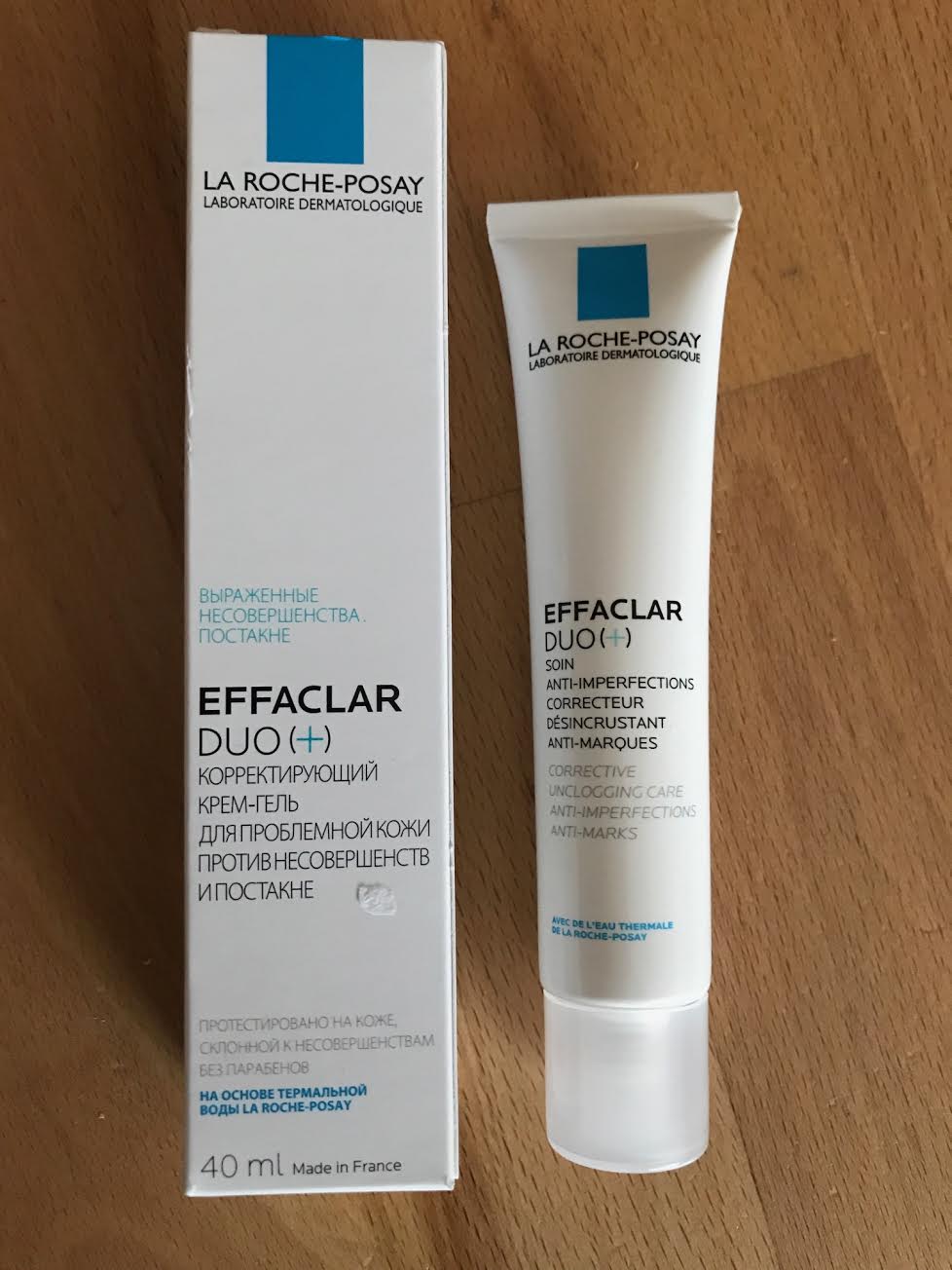
larocheposayeffaclarduo

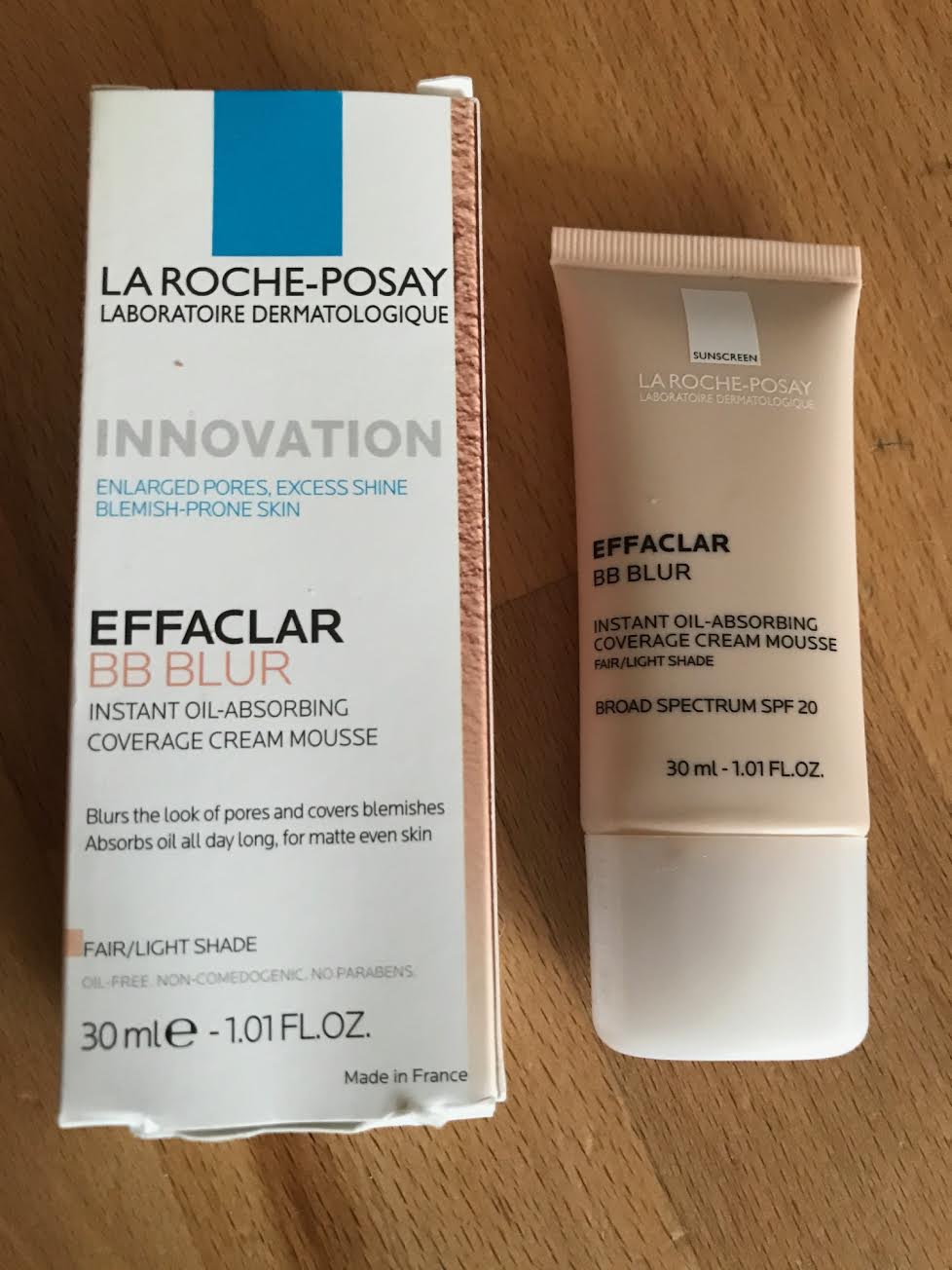
larocheposayinnovationeffaclarbbblur

I have used La Roche Posay products for years. I love how good their products are for sensitive skin. I reviewed two of their Effaclar products that promise to ace your base and leave you with photo ready skin.

La Roche Posay Effaclar Duo [+] (£15.50) is both intensely hydrating and soothing. It is also lightweight, sinking into the skin as if it was never there. My skin really loved this. It has perfect texture and really does the job. It is also a brilliant base for make-up.

The non-sticky, melt-in formula is clinically proven to correct the appearance of blemishes, while unclogging blocked pores, controlling shine and refining the skin’s texture. Most importantly, the award-winning formula accelerates the skin’s repair process and contains anti-inflammatory Niacinamide to intensely soothe, while LHA and Salicylic Acid work to gently exfoliate the skins’ surface for a smooth, blemish-free finish.

I love BB creams. I fell out of love with heavy foundation years ago. Some BB cream on areas of concern is all most women need. This is a great mousse formula that sinks into skin and feels great going on. It doesn’t sit on the skin but leaves it shine-free and looking good. This has now replaced my usual BB cream. It feels so velvety and smooth and it leave my skin looking refreshed.

Even out skin tone and blur the appearance of pores, blemishes and fine lines with La Roche-Posay Effaclar BB Blur (£16.50). This new generation skincare hybrid absorbs oil for a flawless complexion. Specifically tailored for oily skin, BB Blur provides day-long control of
shine with Aircilium, a cutting-edge ingredient that is 3 times its weight in oil, keeping the skin matte and unified with a velvet finish.Furthermore, added ingredient Perlite, which is composed of silica is 5 times more powerful than talc and protects against humidity with its continuous blotting paper effect.

All products are suitable for even the most sensitive skin.

Available from larger Boots stores and pharmacies nationwide and online at www.boots.com www.laroche-posay.co.uk


Alarum Theatre’s Idle Women of the Wartime Waterways reviewed by Paul Vates

Alarum Theatre’s Idle Women of the Wartime Waterways

at Limehouse Basin, London


“The whole production is convivial and informal, as though it is brought to you by a friend.”

pic 1. paul poster


This year marks the 75th anniversary of the Idle Women – the so-called volunteers who ‘manned’ the canals during World War 2 while the men were away fighting. An army of ladies who helped to keep industry moving from the industrial north to the bombed south: coal, munitions, food, steel. Everything that needed moving, they moved.


Alarum Theatre consists of Heather Wastie and Kate Saffin, embarking on their own voyage around the canals, touring this quaint show up and down the country over the next few months with a narrow boat. They met in February 2016, via Twitter, and linked up to create a neat show that has a homely, familiar feel.

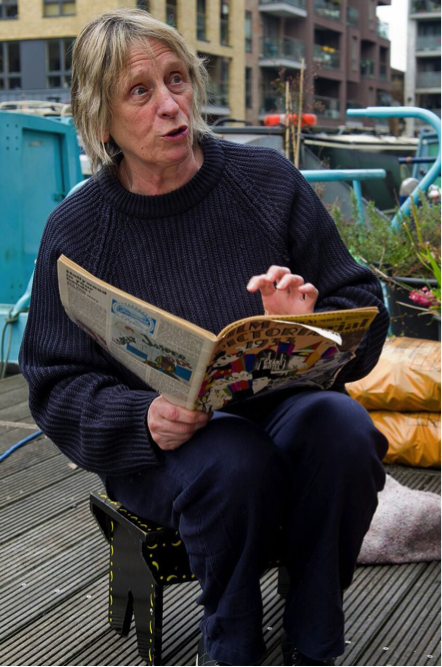
pic 2 paul katepic 3 paul


[Kate Saffin and Heather Wastie]


It is a relaxed setting in the bar of the Canal Association’s headquarters in the renovated and sought-after Limehouse Basin, the Thames just a few yards away, lapping at the lock.


The first 45-minutes is a monologue, performed by Kate. Isobel’s War is full of flashbacks and characters ranging from Isobel’s snooty mother to the Carters, a working family on the canals. It is engaging and follows Isobel as she decides to volunteer for the Inland Waterways rather than nursing or teaching. Her journey is eye-opening, very funny and touching in equal quantities. Directed by Milla Jackson, the piece flows – a little faltering at times and lacking some genuine peril in the performance which is definitely there in the script – but adorable all the same.


pic 4 heather and kate

[Heather and Kate]


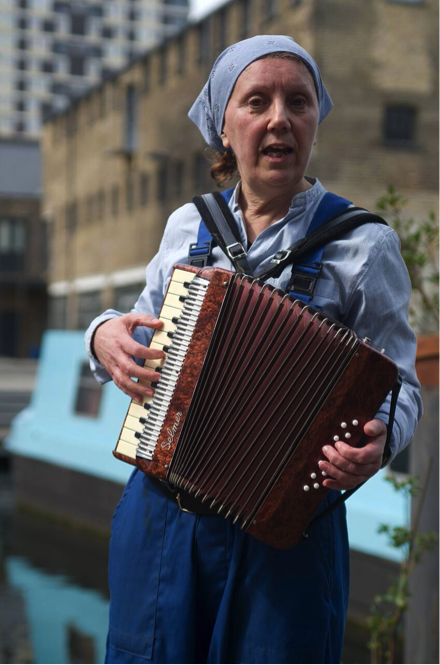
After the interval, Heather takes over, performing Idle Women and Judies – a collection of stories, poems and songs. This 40-minutes whizzes by. She’s more comfortable with the material and guides us through her set with a twinkle in the eye – she knows what’s coming! Ending with a couple of songs, akin to sea shanties, Heather plays the accordion. Her cherubic grin encourages the audience to join in with the chorus of the final song – which we do, reluctantly at first, but it is a good, solid ending to a satisfying evening’s performance.


The whole production is convivial and informal, as though it is brought to you by a friend. Add onto that the educational aspect – there is so much to learn about this time in our history and these unsung women’s war effort. Heather said, introducing one of her poems, ‘What is the truth anyway?’ History is a misty subject and one never really knows fact from fiction – but if stories are told like this, whether historically accurate or not, what better way can there be to learn and think about something new than in the warm, hard-working hands of Kate Saffin and Heather Wastie?


pic 6 idle women

[Genuine Idle Women]


  • With me was Milly Adams, whose novel The Waterway Girls (pub. Arrow) will be launched on September 7th, nicely timed to celebrate the 75th anniversary of the women’s trainee scheme. She absolutely loved the production.


pic 7 stars 


Tour details: www.alarumtheatre.co.uk – or call 07465 238063


Performances Length: 2 hours (this includes an interval)


Facebook: /alarumtheatre

Twitter: @alarum_theatre #TheIdleWomen