Old wines in interesting bottles at Winerack

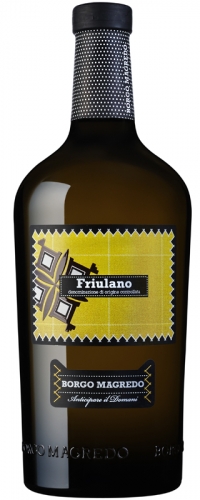
Borgo Magredo - great wine in an attractive flask

Borgo Magredo – great wine in an attractive flask

The big wine retailer Conviviality, which includes Bargain Booze and Wine Rack, is offering a series of wines which are veering towards the unusual.

Their autumn wine tasting, held last week (7 September 2016) had a wide variety of wines from unlikely countries. A Slovenian 2015 Gomilla Sauvignon Blanc (£10.99) was being offered alongside a Chinese2015 Chateau Changyu Moser XV Cabernet Sauvignon (£10.99). The Slovenian wine was light and fruity. The Chinese wine was slightly too dry for my palate, but it is the sort of thing that guests would be keen to try..

There are some really pretty flask-shaped wine bottles from Italy. The 2015 Fruliano Borgo Magedo, Friuli Grave was fruity and slightly floral with notes of grapefruit. It’s a nice wine and – it might sound a bit shallow – but when you are having a dinner party, it’s nice to have something on the table that looks interesting.

It’s worth checking out the South African wines. There are some good chenin blancs and I particularly rated the Julien Schaal Mountain Vineyards Chardonnay (£13.99) – light and slightly fruity with citrus tones. A nice thing to drink with fish, chicken breasts or just by itself.

And there are even wines with celebrity links. The 2016 MT Pinot Noir Rose (£10.99), is made by McGuigan/John Torode. John Torode is the Australian celebrity chef who does Masterchef and looks severe when contestants burn the apple crumble. Pinot noir is more normally used for Burgundy style wines and it is found in rose Champagnes. So this is a slightly unusual wine, but it would go well with prawns or a tuna salad and it is reasonably priced.

Gomila Exclusive sauvignon blanc

An exciting Slovenian cabernet sauvignon

99 objects about Europe & us by Margaret Graham

In this year when our political relationship with the continent has been so hotly debated, the National Trust have put together a selection of objects from their vast collections that help examine our nation’s rich and ancient cultural connections to our neighbours. This is a fascinating digital diary, and we’ve included a couple of excerpts here. It is a great idea to check in each weekday to find out what stories our objects have to tell.  But here are a couple to be getting on with.

Day 35. Campi phlegræi. Observations on the volcanoes of the Two Sicilies as they have been communicated to the Royal Society by Sir William Hamilton … Date 1776 Place of origin Italy. On show at Wimpole, Cambridgeshire, East of England, National Trust.

Not sure that I’d hang about as a live volcano does what it likes to do, but Lady Emma Hamiliton’s husband, Sir William Hamilton was made of sterner stuff. Campi Phlegraei or ‘Flaming Fields’ is a first-hand report of the spectacular eruptions of Mount Vesuvius written by Sir William Hamilton, the British envoy to the Neapolitan royal court and expert volcanologist. Perhaps he saw it as a metaphor for his wife’s raging affair with Lord Nelson which was burning strongly at the time? As a diplomat, Hamilton entertained many visitors and frequently accompanied them on the perilous ascent of the live volcano without a hard hat or flame-proof jacket in sight.  The area’s history of volcanic activity, including the recently excavated nearby classical sites of Pompeii and Herculaneum, made it a popular tourist destination for wealthy travellers making the Grand Tour.   Hamilton’s text is a wonderful example of a beautifully illustrated treatise from the Age of Enlightenment – when science clearly came before health and safety.

Day 8  Harp. Sebastion Erard 1732 – 1851 On show at Lyme Park, Cheshire.

The maker of this particular harp was the Frenchman, Sébastien Erard. Prior to establishing his firm in London, Erard was closely associated with the Bourbon court including the harp-playing Marie Antoinette, whose arrival to Versailles in 1770 fuelled the rage for the instrument amongst the French elite.   But by the early 1790s, with many of his clients facing certain death by guillotine, Erard fled France for London where he established a shop on Great Marlborough Street. There he honed his craft to such a degree that by 1794 he took out the first British patent for the harp to protect his innovations. In 1800, the Princess of Wales bought one of his harps and the success of his firm was ensured; by 1810 he had sold nearly 1400 of his stringed instruments from his London outlet alone.

http://www.nationaltrustcollections.org.uk/.


Crobar by Gathr – Award Winning cricket flour protein bar


crobar-frost_magazine

Crobar is the first insect-based food product to retail in the UK and Gathr have now added Coffee & Vanilla and Raspberry & Cacao to the original range of Peanut and Cacao. They are made from fruit, nuts and cricket flour and contain no added sugars or sweeteners.

Gathr is leading the trend of food producers who are looking at alternative sources of protein and vitamins in their products, and have plans on developing insects into a viable and more sustainable source of protein in our diets. Crickets contain more protein and less fat than an equivalent amount of beef, plus are high in iron and vitamin B12. They are not only good for you, they are good for the planet.

Insects are already available to buy as food in the UK, but Gathr has taken things one step further by using them as a key ingredient and incorporating them into everyday food.

Gathr’s products won ‘Best New Food Concept’ at the IFE World Food Innovation Awards.

Don’t be put off by the fact that it contains insects, albeit that they are ground into a flour. I can happily say it tastes delicious. I’m not partial to coffee flavoured sweets or cakes but the flavour was subtle and suitably balanced by the cacao. That said, I preferred the raspberry & cacao flavour.  Free from gluten, soy and dairy it was a tasty snack and easily satisfied my sweet tooth. I’d love to say it made me jump higher as well – but it didn’t.

Available in smaller 30g sizes the new flavours RRP from £1.79 each and are available online on the Gathr website, Amazon Prime and at selected retailers. For further information and multipack orders visit the Gathr website.

They will also be available to buy in-store from South East Asian Cuisine specialists Nusa Kitchen.

As well as energy bars, Gathr also stocks organic cricket flour, which can be used in everyday cooking. Recipes on the website.
 www.gathrfoods.com

www.gathrfoods.com/recipes

www.nusakitchen.co.uk

Interview With casting director, coach, actress & founder of Sound Advice Kate McClanaghan

Interview With casting director, coach, actress & founder of Sound Advice Kate McClanahan voice over work1. Tell us a bit about yourself. 

I’m a seasoned casting director, producer, coach, actress and founder of SOUND ADVICE, a unique, one-stop option for unparalleled voice over coaching, and exceptional demo production for all skill and experience levels.

I had been a freelance producer since I was 19 years old, producing commercials for Coca-Cola, McDonald’s, Dodge, JC Penney, FORD, Sprint, SEARS, and Kraft, to name a few. I had always been freelance because I’m a union actress as well. I’ve studied with the Royal Shakespeare in London, and came up through Chicago’s Second City and ImprovOlympic (IO), and even brought 9 shows to the Edinburgh Fringe.

2. What made you start Big House Casting & Audio and Actors’ Sound Advice?

BIG HOUSE came about to service the various casting and production demands that consistently kept coming in the door after I had produced a number of freelance projects for NPR. I was already freelance, I just named it after the enormous, greystone building we worked and lived in, in Chicago.

I started SOUND ADVICE because I couldn’t find a single, reliable source that would take me through the entire process of voiceover training, demo production, branding and marketing the career I was after. There were random people who did pieces, but didn’t have the whole in mind. I wanted a single source that honestly had my best interests in mind, understood my greatest commercial assets (perhaps even better than I did), and could produce my demos well enough to truly advance my career, not just my voiceover!

I began assisting friends, and after coaching and producing more than 100 demos for them and seeing them achieve remarkable results rather quickly, I realized my casting and production skills had a greater purpose!

3. How important is training?

It’s imperative. Without it, regardless of how naturally talented, smart, and mellifluous the voice might be… you’re dealing with a loose cannon. You can’t rely on a talent who doesn’t know their job. Trusting a million-dollar campaign to a complete hack puts everyone’s reputation on the line. And your mettle will be tested. There are no beginner, intermediate and advanced talent in this industry. You’re either a professional… or you’re not. Training defines your professionalism and instills confidence. And commerce is confidence.

4. Any tips for acing an audition?

Instead of trying to second-guess what those auditioning you are thinking, give them something interesting to think about. That’s the job! Besides they honestly aren’t thinking a thing. It’s precisely why you’re there. How would YOU play it?

THINK for yourself! In fact, entertain yourself and you’ll find your audience!

5. How different is voice over acting from acting?

There is very little, if any difference at all. Acting is acting is acting.

Voice acting is closest to film acting than any other medium, because they both demand a very vivid imagination and the desire to tell a story, often in the most constricting conditions. Personality and the ability to self direct are key attributes as well.

Perhaps the greatest difference is the fact that in nearly all voiceover scenarios, you’re all by your lonesome in the booth with no one to play off but yourself.

6. Tell us about your books.

The SOUND ADVICE Encyclopedia of Voice-over & The Business of Being a Working Talent is currently in its third edition. (There will be a fourth sometime next year.) It’s more than 500 printed pages of well-vetted industry insider information as well as How To Get An Agent, the branding, marketing and promotion of your career, to more than 100 printed pages of terms and phrases commonly used in all manner of acting for recorded media.

7. How do you become a successful voice over actor?

Do your homework. Practice. If you were to honestly dedicate 25 to 30 hours a week, what would be considered part-time for any other business, for a year or more to creating a voiceover career for yourself, then the chances of becoming successful in this field is more likely—provided, of course, you have realistic expectations and you wisely allocate your time.

You need a proper Vocal Warm Up, and maintain it 4 to 5 times a week for a solid half hour to 45 minutes at a time. Granted it may take you a couple weeks to incorporate it into your weekly routine, but without it your vocal precision and stamina won’t be as reliable as it should be.

Check out our website www.voiceoverinfo.com. Study up. Listen to a lot of demos.

Listen to our podcasts then email us. We have talent all over the world. Provided you have a reliable computer and stable Internet service, we can generally work with just about anyone from anywhere—we just don’t invite everyone to do a demo. (Our name is on it too. We don’t produce a demo track in an hour. Nearly every other demo production house does.)

Everything we do as SOUND ADVICE, just like in nearly everything in voiceover, is one-on-one. We don’t cookie-cutter anything. And we offer the best insight because we continually survey the industry as to what’s needed and wanted from talent in every aspect of the industry.



Port Lympne Hotel and Animal Reserve


port-lympne-hotel

It was our anniversary and we didn’t want to escape too far but we were looking for something different. We certainly found it at Port Lympne Hotel, Kent and enjoyed a superbly relaxing two-day break.

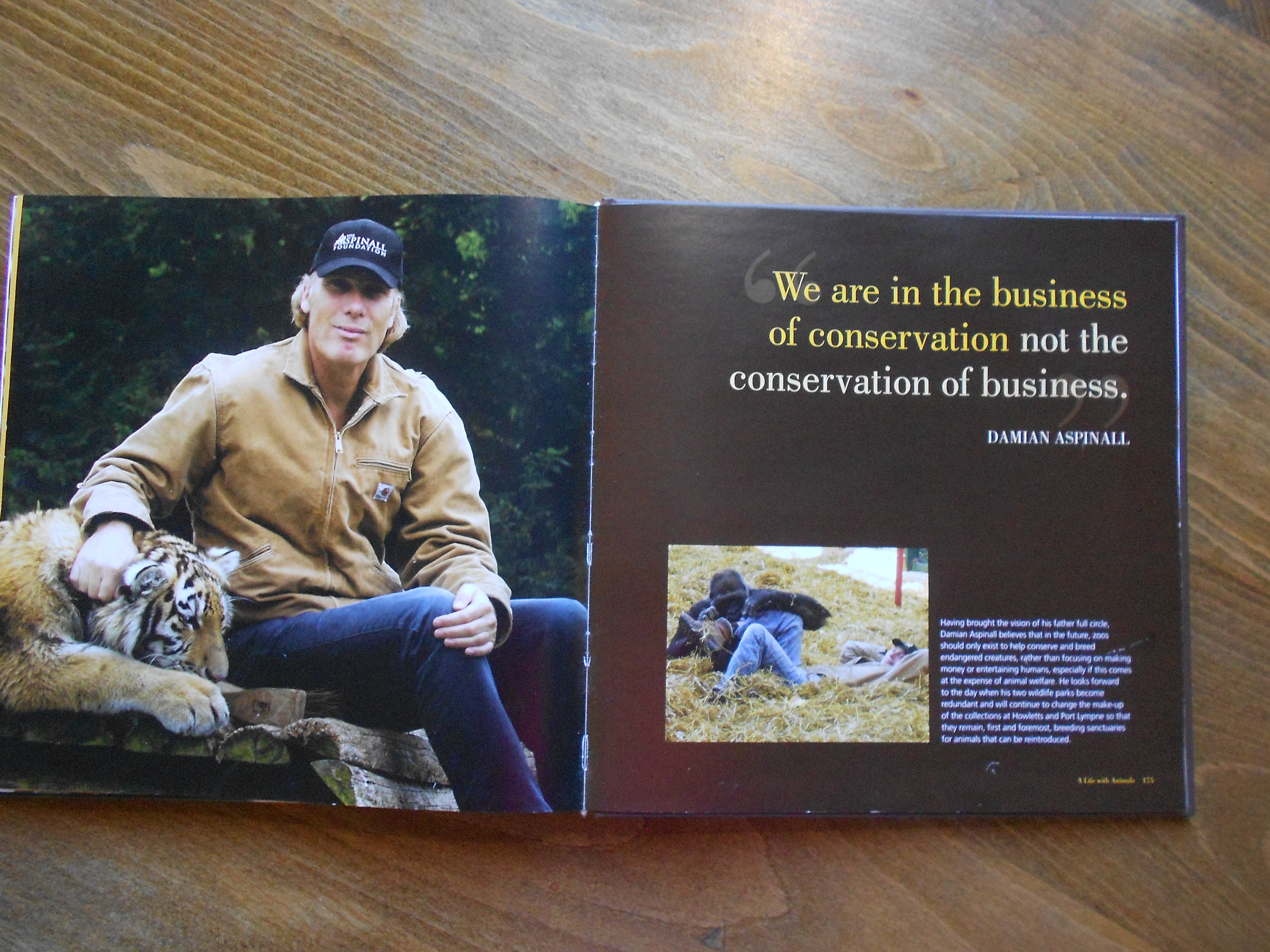
From the moment we arrived, we were entranced. The reception is housed in the library and the shelves spill with old books – the perfect welcome. The house was  built in 1911 for Sir Philip Sassoon with later additions after WWI and abandoned after WW2. It was in a sorry state when John Aspinall bought it in 1973 to cope with the overspill from his venture Howlett’s Animal Park. The house was restored over a ten year period and the animal reserve began to take shape.

port-lympne-business-of-conservation

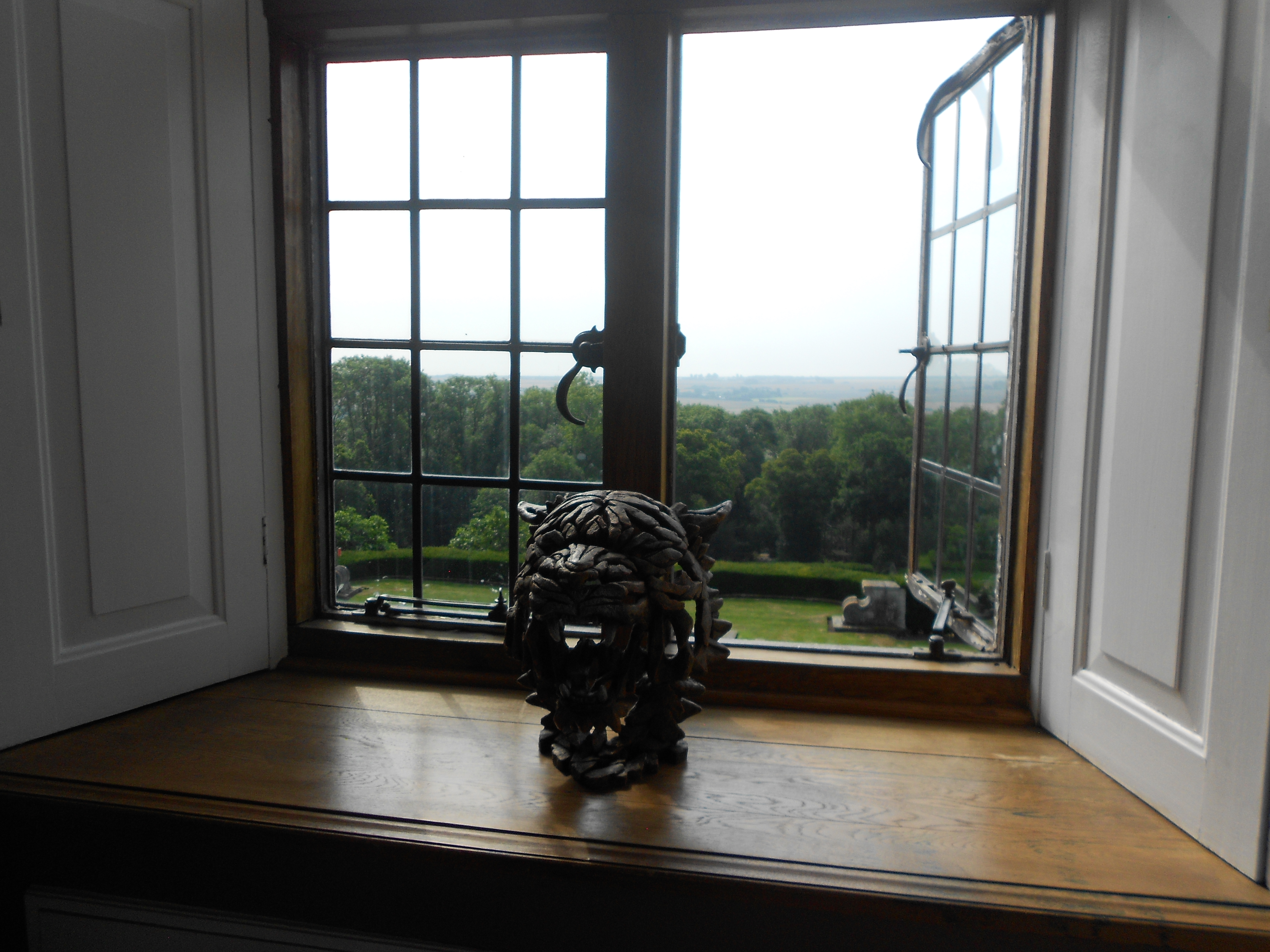
The rooms are named after the guests that Sir Philip Sassoon entertained there. We were shown to the Sir Winston Churchill room, overlooking the garden with views beyond the trees to the flatland of Romney Marsh. It was absolutely stunning and a joy to wake early and sit up in bed, enjoying the vista. It was exceptionally quiet, a few bird calls and the odd animal noise from a few animals that start with X but nothing disturbing at all. Bliss.

Our room had a new shower suite but the other rooms retain the original bathrooms from 1911 with art deco porcelain ware and tiles. Quite extraordinary given that most homeowners take on a total revamp once they have purchased a new property. Everything was clean and warm, and most importantly, the bed was comfortable. There was also a plentiful supply of hot drinks and biscuits which will always be a huge plus to me.

port-lympne-churchill-room-view

I was offered a peek into the other rooms: T E Lawrence, Sir Herbert Baker, The Rex Whistler and the two bridal suites – Sir Philip Sassoon and Charles  Chaplin. All were unique and any one of them would be a pleasure to stay in; all had fabulous views.

There are six rooms at the moment and two more were quietly being prepared during our stay.

port-lympne-dining-room

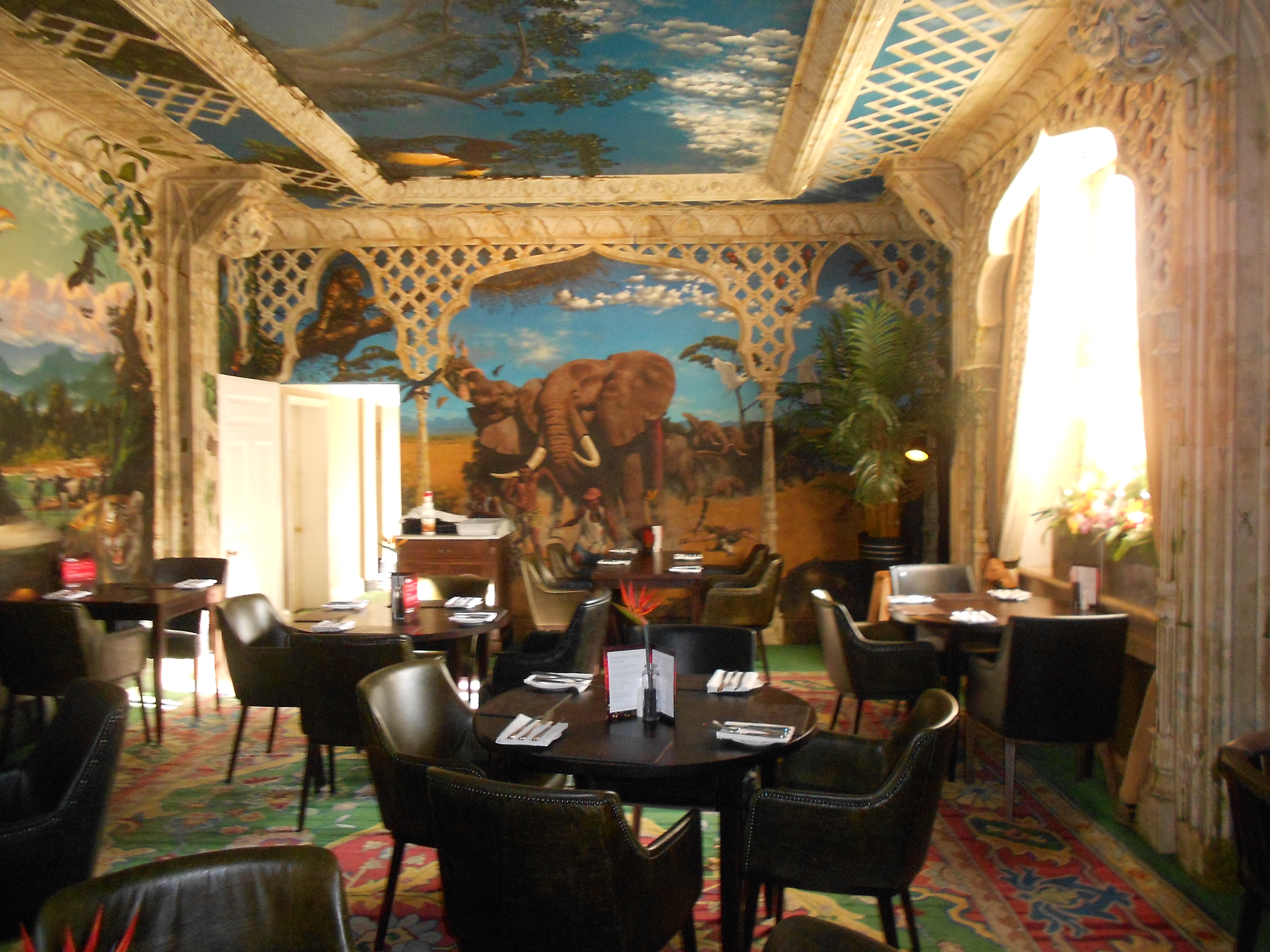
Dinner and breakfast were served in the dining room that was rather breathtaking, even a little intimidating. The mural was painted by Martin Jordan, a self-taught artist and over 200 animals adorn the walls and ceilings. In John Aspinall’s words ‘It is to be a tribute to the heroism of wild animals in the face of their continuing persecution by mankind.’ As we were alone in the room that evening I enjoyed spotting the various species, right down to the butterflies and insects that hide in the cornices and window frames.

port-lympne-bar

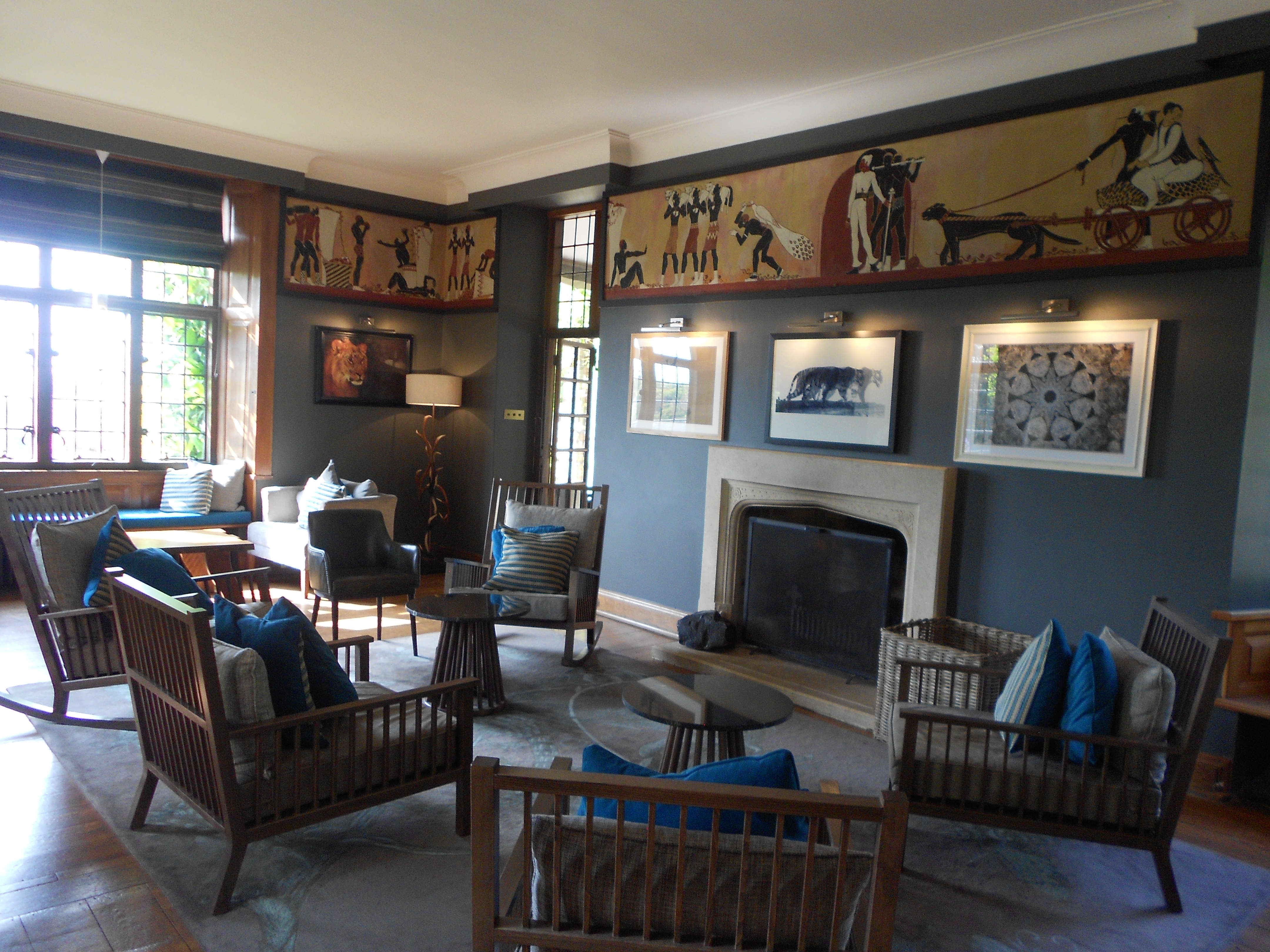
The hotel bar was restful and elegant, again with the safari theme but with all the comfort of the house. There is a TV on the wall which is almost the only reminder that the world still exists beyond the grounds.

port-lympne-tent-room

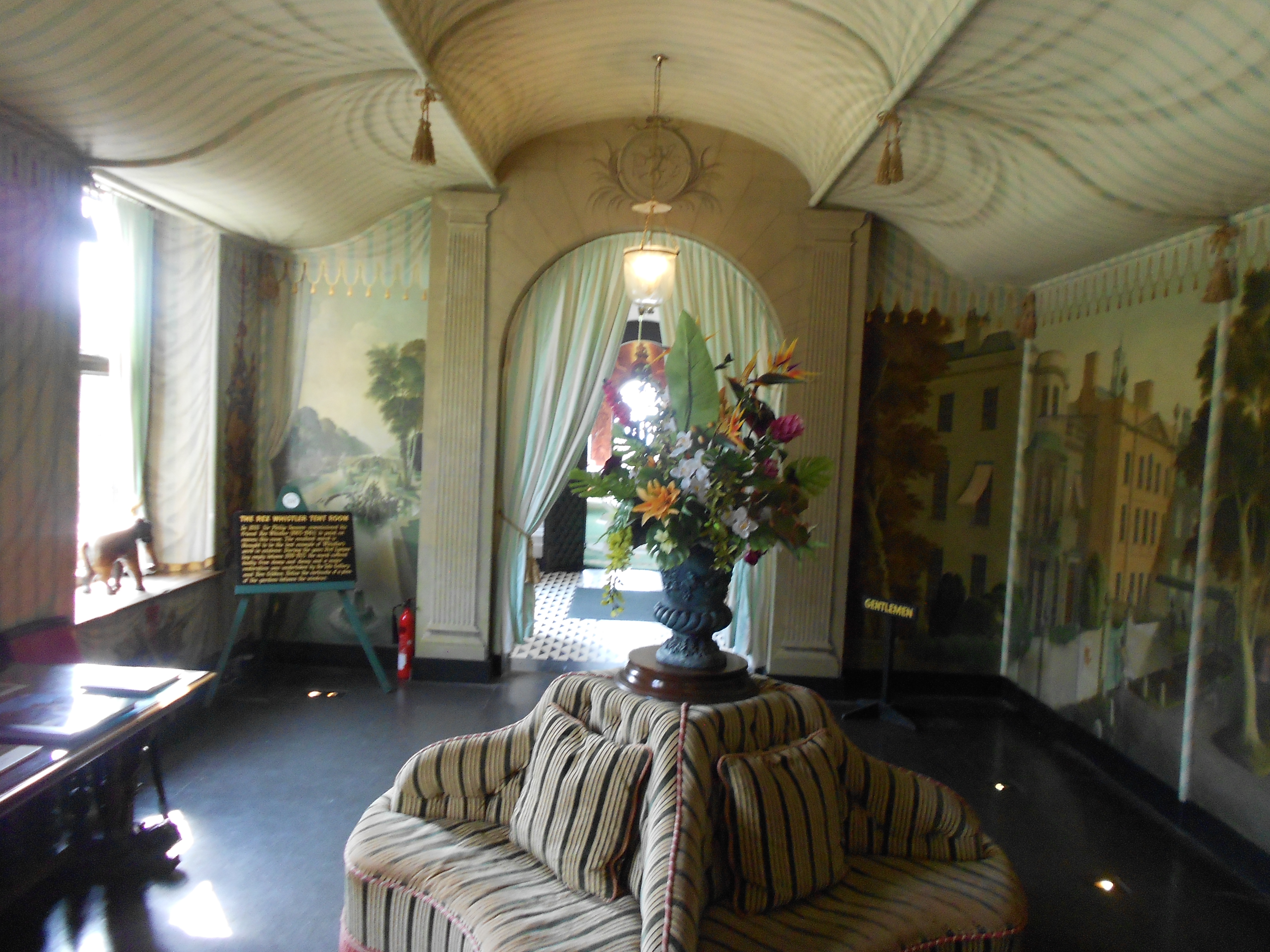
Just off the hall was a reception area, The Whistler Tented Room. Sir Philip commissioned his friend, Rex Whistler, to paint, on canvas, this room in 1933. It is thought to be the best example of his work in existence. The mural suffered badly from damp and decay when the house lay empty and restoration was undertaken by the Tate Gallery. The hotel is a popular wedding venue and this room is a rest area for guests; toilets and cloakrooms are located here. The hotel staff were busy preparing for a wedding that would take place the day following our visit – so we timed things perfectly.

The beautiful  gardens that surround the hotel are tranquil and soothing and if you never strayed toward the animal reserve you would barely know it was there.

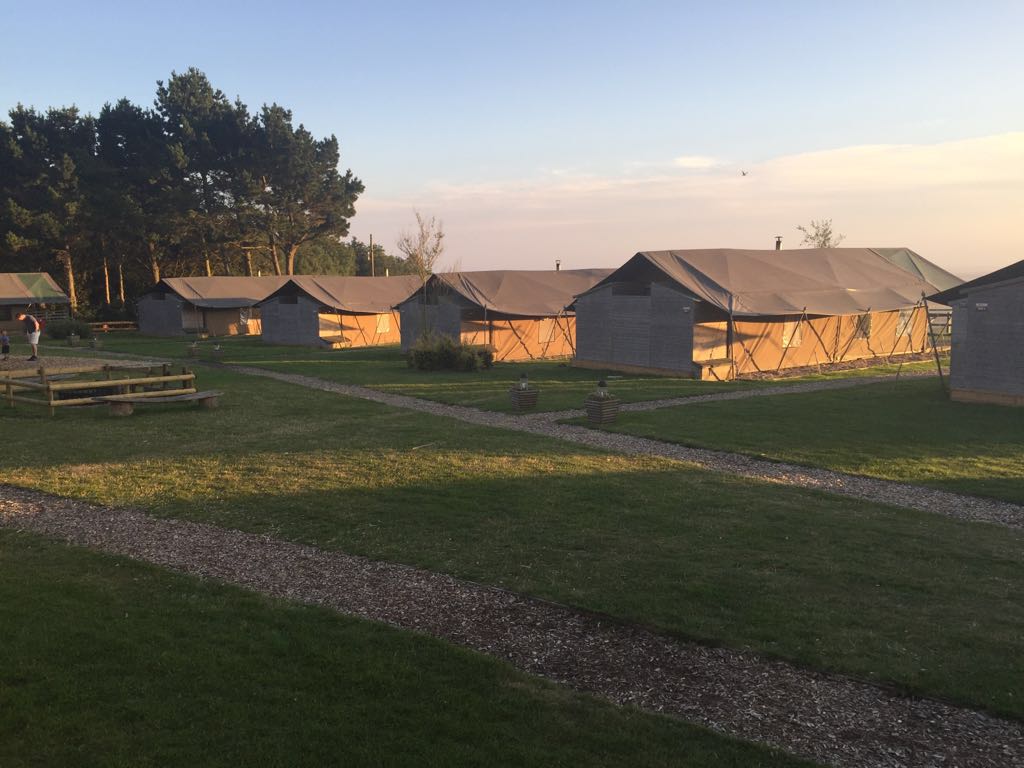
One the second night we drove round to Bear Lodge, one of the other types of accommodation at the reserve – glamping on a hill overlooking the bear and black rhino area. Each ‘tent’ sleeps 6 and has simple kitchen and bathroom facilities, and a wood burner for colder evenings. There is a clubhouse and play area so it’s perfect for families.

port-lympne-bear-lodge

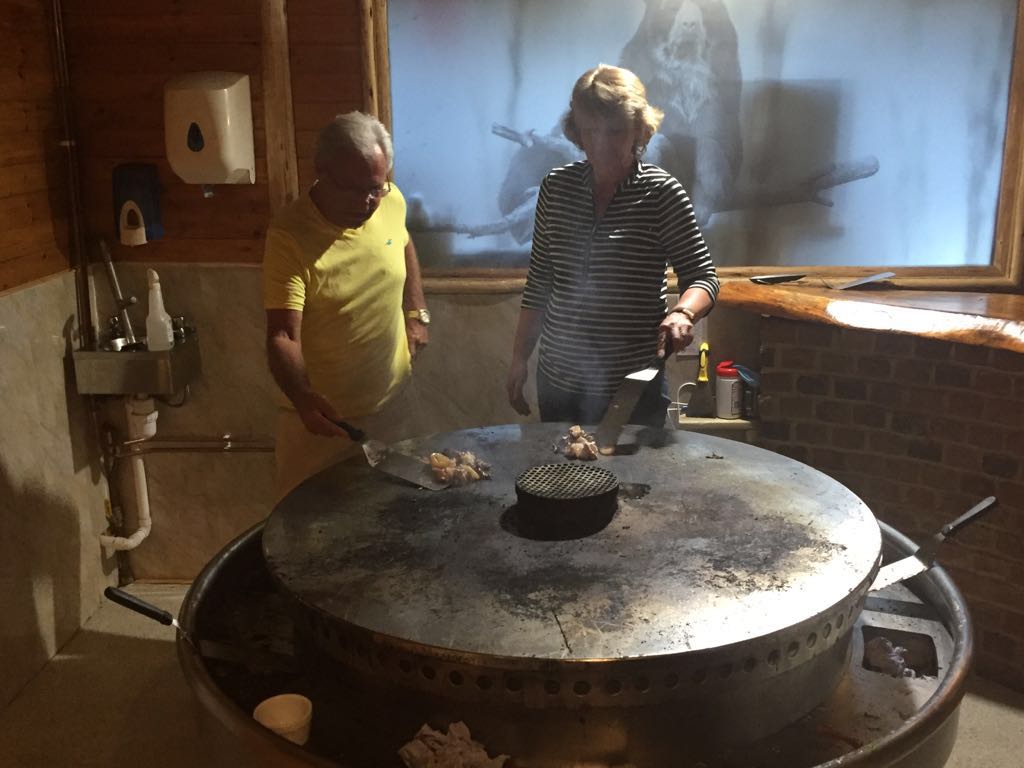
We visited the clubhouse to try the Mongolian barbecue we’d heard so much about.  We were shown bowls of three sizes that we were to fill with a choice of  meat and/or fish in one, vegetables another and lastly, noodles and rice. There was a selection of sauces – satay, sweet and sour, curry etc and we were to add a large tablespoon before taking over to the cooking area.

port-lympne-dining-room

It was the perfect portion size and our meal was ready in minutes. You could leave it to the chef or get stuck in – so we did. It was great fun but the heat was intense and I had great admiration for the chef who effortlessly coped with four meals at once, time after time.

mongolian-grill

No matter where your accommodation on the reserve entrance into the parks is included, as is travel on the safari trucks. These run every fifteen minutes and there are various stop-off points along the way so that you can disembark and wander through different sectors of the reserve.

port-lympne-safari-trucks

Private safari tours take place throughout the day and evening and I would definitely make use of these when we visit again. Whereas the trucks follow a given route the safari jeeps go across the terrain among the animals. There are other experiences on offer and you can find more about them on the website.

During our stay the staff were attentive and friendly – the right kind of friendly – not too intrusive and not over chatty but they really were a huge part of the enjoyment of our time there. We spent far too long just sitting and enjoying the view but it was so restful it was hard to drag ourselves away.

We thoroughly enjoyed our break but it would be far too quiet if you are looking for something with a bit of a buzz. As it was, we were glad of the quiet and respite.

www.aspinallfoundation.org

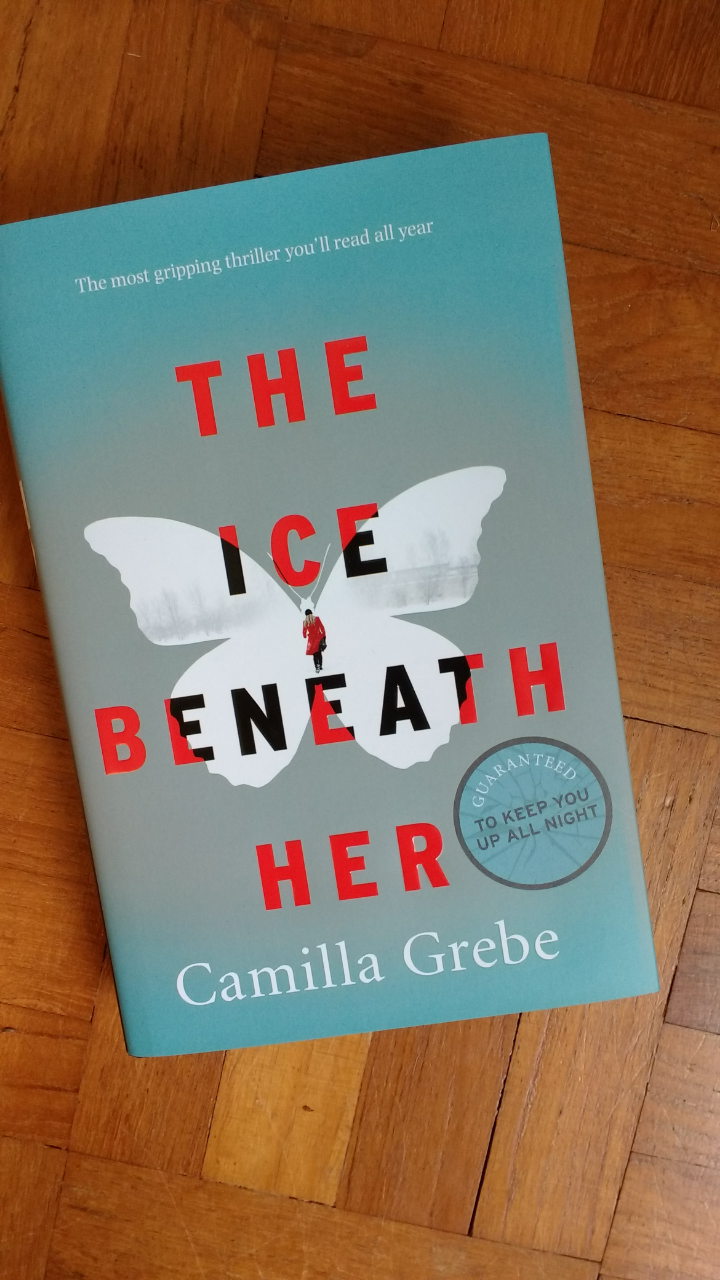
A Day in the Life of Camilla Grebe – author of The Ice Beneath Her

Frost is delighted Camilla has found the time to write A Day in the Life for our readers. Her books is excellent, and her advice to aspiring writers, is too. Read on.

a-day-in-the-life-of-camilla-grebe-author-of-the-ice-beneath-herI’m equally fascinated and amused by the misconceptions about life as a writer. You know, all the talk about creative anxiety, the booze and the glamorous lifestyle. To be honest, my life is nothing like that, although I consider myself extremely privileged to be able to work with what I love. And yes, I get to travel a lot and meet really cool people.

As a mother-of-two (and a dog owner), I wake up quite early to prepare breakfast and walk my nine-year-old Dalmatian, Ella. We live by the sea in downtown Stockholm – a beautiful location. As we walk pass the old ships we often stop for a coffee on one of the piers and watch people (me) and bark at dogs (Ella).

I mostly work from home, although I sometimes visit the Royal Library to write, surrounded by thousands of books – the library’s collection includes all works published in Sweden since 1661.

Before lunch I’ll go for a quick run or hit the gym – sitting in front of a computer all day can be really tough on your neck and back, so I need to work out. Also, I’ve discovered that the best way to solve a creative problem is to go for a run, as it really clears your thoughts.

I usually have lunch with a friend. Writing is solitary work, so I need to socialize during lunch or dinner, or else I fear I might turn into a hermit.

After lunch I spend another four to five hours working. Apart from the actual writing, I work on plots and do research into all kinds of strange subjects. For The Ice Beneath Her

a-day-in-the-life-of-camilla-grebe-author-of-the-ice-beneath-hercamillagrebebook

I talked to a medical examiner about beheading (!), read articles on Inuit mythology and had a long e-mail correspondence with a man in Greenland to find out exactly how one would dig a grave when the ground is frozen solid. If someone should overhear me on the phone when I did research, chances are they’d think I’m a serial killer.

I have dinner with my family and always end up watching TV on the sofa afterwards. I’m a big fan of British and Scandinavian crime series and movies. If someone disturbs me in the middle of a movie, I’ll calmly explain that, hey, I’m working, not just relaxing in the sofa (since I need to watch TV in order to be a good writer!).

It is, at least partly, true.

Before I go to sleep I always read for an hour or two in bed. When it comes to books, I don’t exclusively focus on crime. I try to read different genres – everything from historical novels to horror and biographies. In fact, that would be my best advice to anyone who wants to become a writer: Read a lot. Read all kinds of books, good ones and bad. And learn to tell the difference.
The Ice Beneath Her is available now. Published  by Zaffre at £12.99  E-book available.


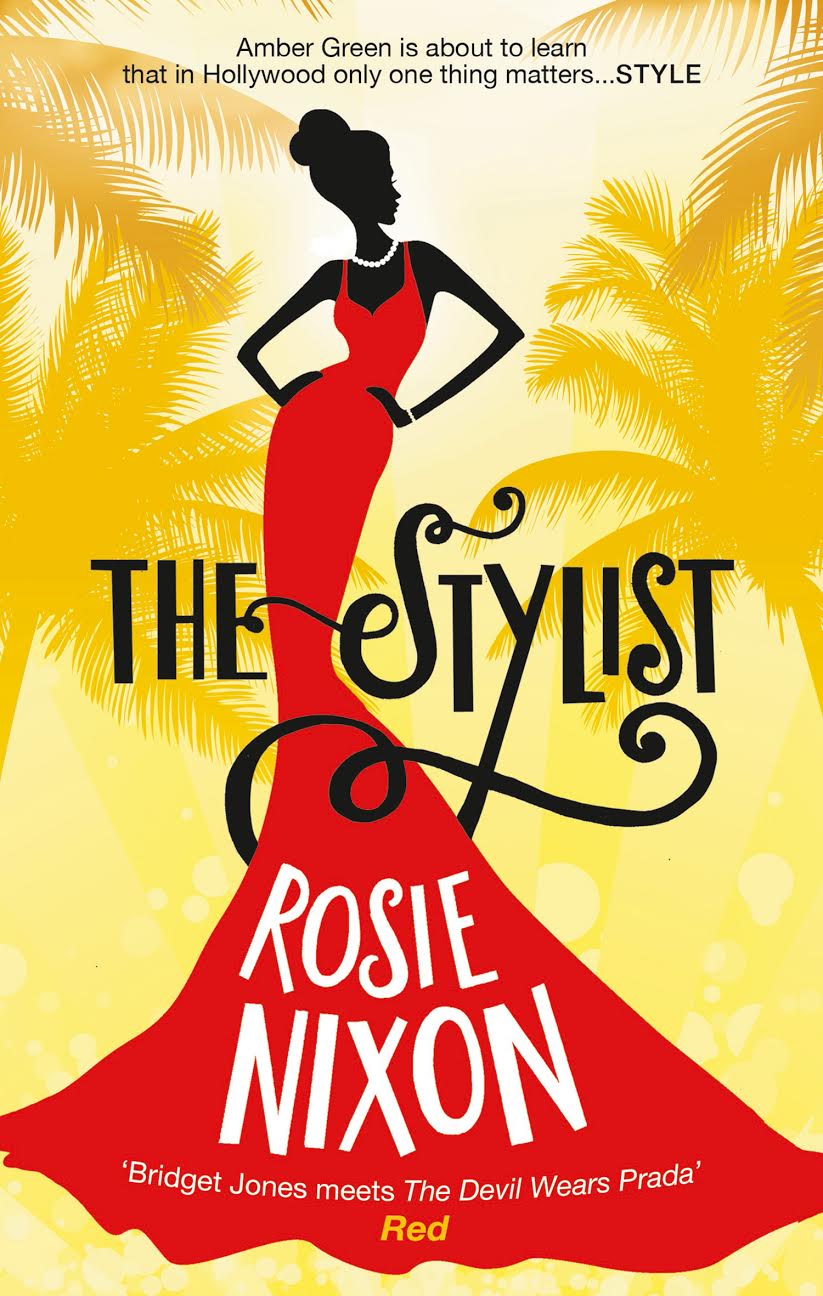
The Stylist by Rosie Nixon Book Review

Absolutely the novel for all those who love a really good romp with a bit of an edge.

 Absolutely the novel for all those who love a really good romp with a bit of an edge. Pic 1 Written by Rosie Nixon, the Editor-in-Chief of HELLO! The Stylist is the Cinderella story for our time. Amber Green is an ordinary sales assistant in an exclusive London boutique – so admittedly she doesn’t slog away in a kitchen, but the girl needs a few princes in her life. Then lo! Amber is mistakenly offered a job with Mona Armstrong who seems to exist on coffee, water and champagne, with not a morsel of food passing her lips. Mona is a ‘stylist to the stars’. Written in the first person, Rosie Nixon whooshes Amber into the exotic world of the glamorous and famous where she has to style some of Hollywood’s hottest celebrity stars at the LA Award Season. (Though she travels in economy while Mona doesn’t, of course) The pace of The Stylist must replicate the frenetic life of just such a stylist, and Rosie Nixon with her experience of women’s glossy magazines, will know all about that. I thought the juxtaposition of Amanda, unspoilt by her life with the stars, longing to be home, the Eastenders theme tune playing through her mind as she struggles to sleep on her return to Britain, was touching amongst the glitz. This normality does actually keep us empathising with her. Clever, I thought. The Stylist is a serving of sun, fun and a real look behind the scenes. But it is a novel that doesn’t ignore the core of the protagonist. Does Amber find her prince? Ah well, read it, enjoy the ride, and find out for yourselves. A really fun read. A success. Keep your eye on Frost Magazine next week, because Rosie Nixon’s A Day in the Life will be published. See if the glitz extends into this extraordinary young woman’s every day life. Crikey, she’s busy, and quite lovely. Life ain’t fair, says Granny Graham. The Stylist available now, published by HQ in paperback £7.99.Written by Rosie Nixon, the Editor-in-Chief of HELLO! The Stylist is the Cinderella story for our time. Amber Green is an ordinary sales assistant in an exclusive London boutique – so admittedly she doesn’t slog away in a kitchen, but the girl needs a few princes in her life.


Then lo! Amber is mistakenly offered a job with Mona Armstrong who seems to exist on coffee, water and champagne, with not a morsel of food passing her lips. Mona is a ‘stylist to the stars’.


Written in the first person, Rosie Nixon whooshes Amber into the exotic world of the glamorous and famous where she has to style some of Hollywood’s hottest celebrity stars at the LA Award Season. (Though she travels in economy while Mona doesn’t, of course)


The pace of The Stylist must replicate the frenetic life of just such a stylist, and Rosie Nixon with her experience of women’s glossy magazines, will know all about that. I thought the juxtaposition of Amber, unspoilt by her life with the stars, longing to be home, the Eastenders theme tune playing through her mind as she struggles to sleep on her return to Britain, was touching amongst the glitz. This normality does actually keep us empathising with her. Clever, I thought.


The Stylist is a serving of sun, fun and a real look behind the scenes. But it is a novel that doesn’t ignore the core of the protagonist.


Does Amber find her prince? Ah well, read it, enjoy the ride, and find out for yourselves.


A really fun read. A success.


Keep your eye on Frost Magazine next week, because Rosie Nixon’s A Day in the Life will be published. See if the glitz extends into this extraordinary young woman’s every day life. Crikey, she’s busy, and quite lovely. Life ain’t fair, says Granny Graham.


The Stylist available now, published by HQ in paperback    £7.99.


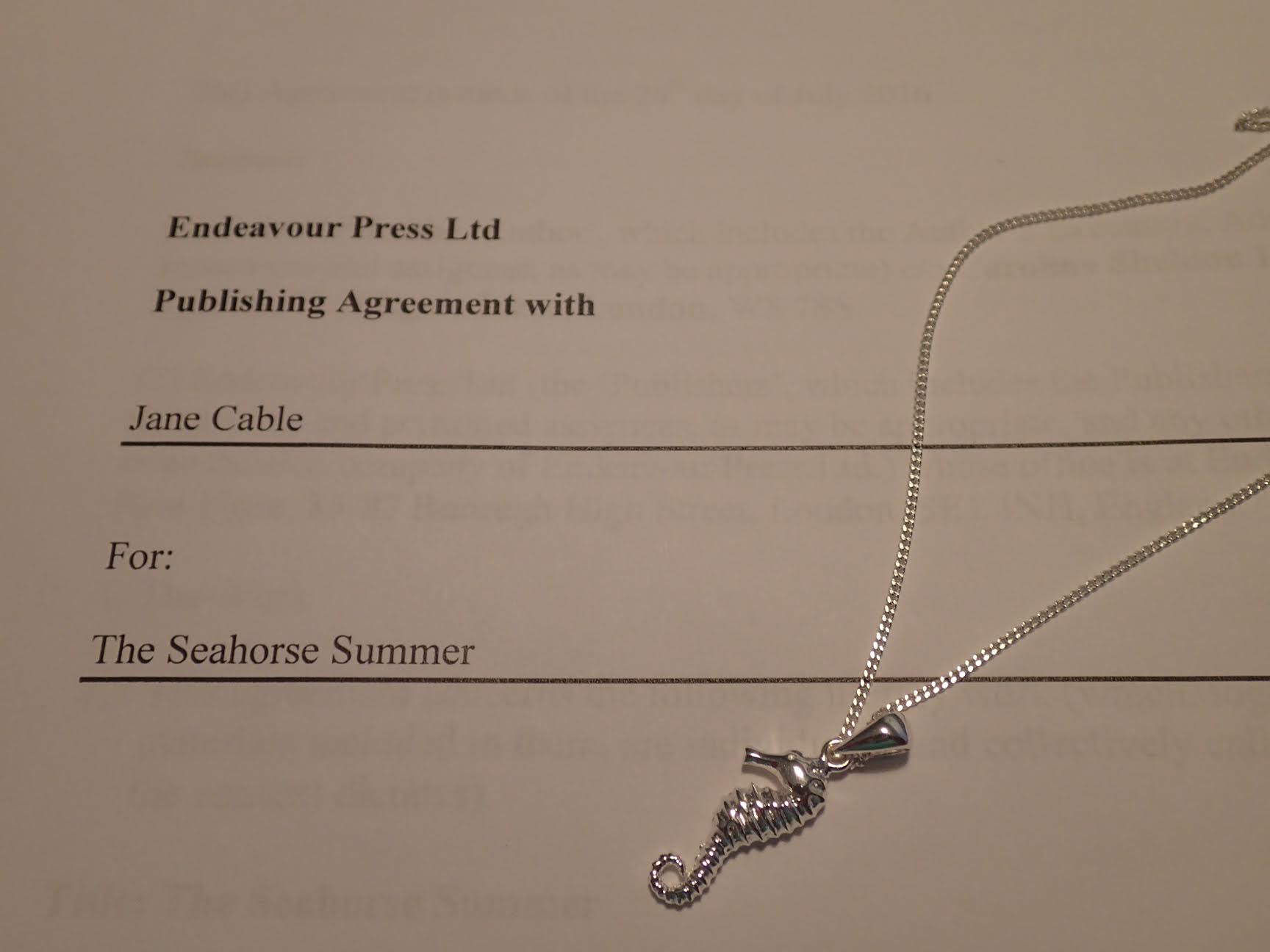
Best Endeavours: Jane Cable on her digital publishing deal journey: Sunday Best

Jane Cable, publishing, writingBEST ENDEAVOURS
Jane Cable’s blog about what happens once that digital publishing deal is in the bag continues.
SUNDAY BEST
On Sunday I went to Studland. Not simply because I needed to, but because I wanted to. Walk where my characters walk; see what my characters see; breathe the same air.
The plot of The Seahorse Summer takes place almost exclusively in Studland Bay and the on the beaches and cliffs which surround it. Centered on the village pub (not The Bankes Arms, albeit my fictional Smugglers shares a similar position) the haunting claustrophobia of the bay echoes Marie’s world as she wonders how she will ever escape.
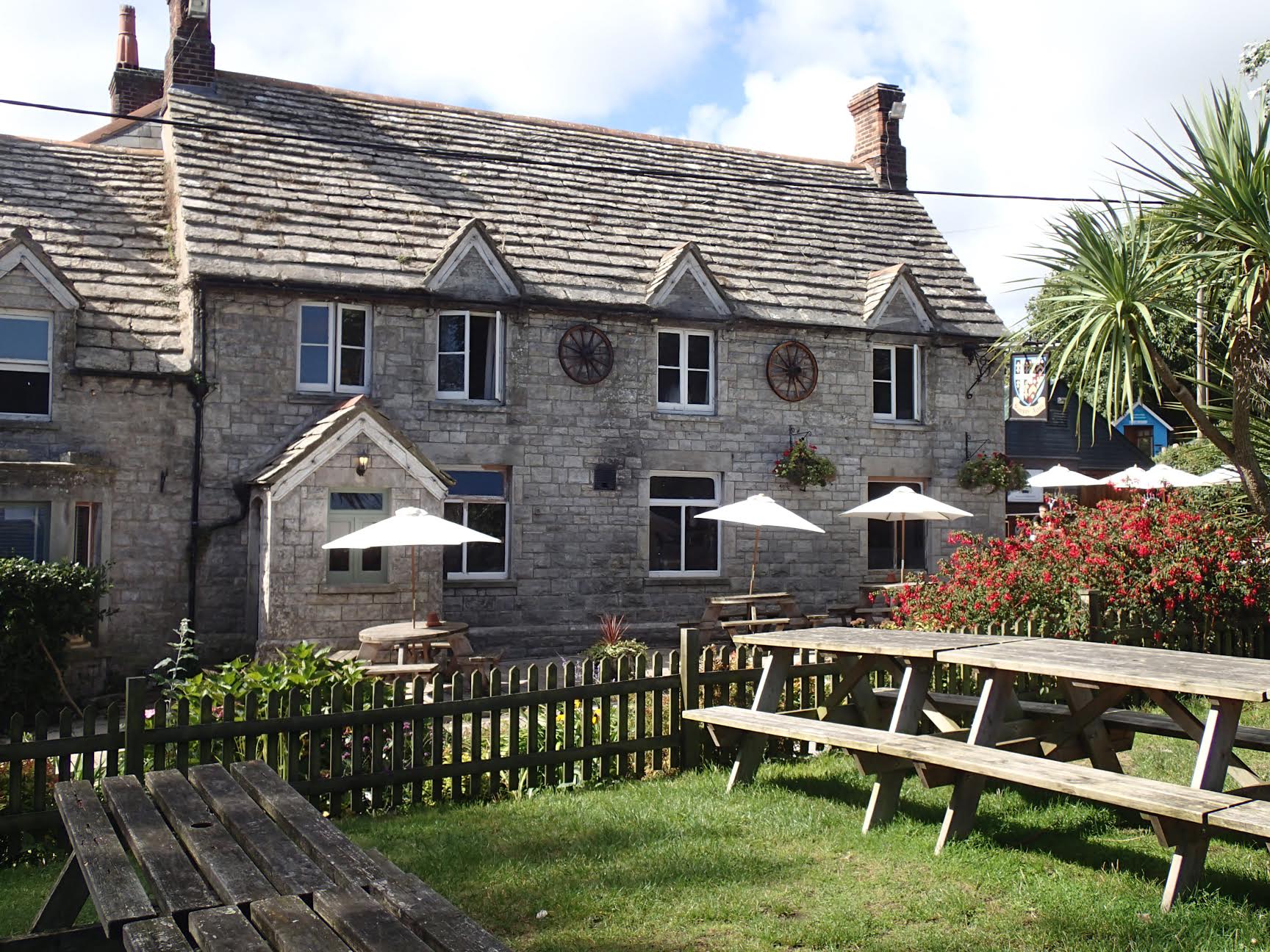
Having spent so long on one side of the bar in The Smugglers it felt slightly odd to sit on the either side of it in The Bankes Arms. As well as the location I’ve borrowed a few other things; the grey stone of the building itself, the basic L-shaped layout; the huge fireplace and the garden overlooking the sea. But the real pub is very much a vibrant business with its own brewery, B&B rooms and armies of staff – the poor old Smugglers could never compete, relying as it does simply on Marie’s marvelous food.

janecable
As a writer you tweak your locations to fit your story, but in the case of Studland the location is changing all by itself. The Seahorse Summer is set just twelve years ago, but all the same coastal erosion has taken its toll. My original position for Marie’s beach hut was at the bottom of a wooden staircase onto the sand not far from Fort Henry. It was there when I first visited in 2009, but not any more. The incredibly wet winter of 2012/13 caused many landslips in the area and the steps were just one of the casualties.
The beach itself is changing too, constantly with every tide. Where there were rocks under Redend Point, now there is sand. One day, the sand will disappear and the rocks will be revealed once again. Up on the cliffs the gorse is almost completely covered with brambles and ferns. The landscape outlives us all, and nature can be a powerful adversary – or ally – as Marie discovers.
The essence of Studland on a sunny Sunday remains. Pleasure boats filling the bay, children playing on the narrow strip of sand as the tide drops, the pub garden filling as lunchtime draws closer. And a writer, wandering slowly through it all, drinking it in, storing it away. Refreshed for the final assault on her editing.

Jane Cable is the author of two independently published romantic suspense novels, The Cheesemaker’s House and The Faerie Tree, and a sporadic contributor to Frost. The Seahorse Summer tells the tale of how two American soldiers born sixty years apart help forty-something Marie Johnson to rebuild her shattered confidence and find new love. Discover more at www.janecable.com.