EU Referendum – If You Really Believe in Democracy There is Only One Way You Can Vote on Thursday

eu referendum A couple of months ago I began this EU campaign genuinely undecided about how I would vote. I knew we sent the EU quite a lot of money and that it was bureaucratic. But I also believed fully in the idea that we were stronger together and that free trade is usually a good thing.

After much thought and research I have decided to vote to leave the EU. The final factor was the Paxman documentary which I would encourage everyone to watch.

Much as I love Europe. I cannot vote in favour of a system which is undemocratic and unaccountable. We must all fight to defend our democracy. So many have already sacrificed so much in the past to do so.

How is the EU undemocratic? Firstly, perhaps most importantly it lacks transparency. This system is unnecessarily and seemingly deliberately complex. Understanding how laws are actually made is difficult. There are three main bodies.

The European Council – Decides priorities and directions of the EU

The European Commission – Proposes legislation, policies and programmes of action and is responsible for implementing the decisions of the European Parliament and the Council.

The European Parliament – Amends and approves legislation

There are also a myriad of other bodies involved, of which there are far too many to list. When a system is this complex it becomes impossible for ordinary people to have any input or influence on the decision making process. Power becomes held in a smaller and smaller elite.

New laws are not proposed by elected members of the EU parliament. In almost all cases they are proposed by unelected commissioners. This is crucial. What is the point of having elected representatives if they are powerless to change anything? When I vote for my MP to go to Westminster he or she stands on a manifesto of policies he or she wishes to undertake on my behalf. My MEP stands for nothing. It’s little wonder that almost no one actually knows who their MEP is. The elected European Parliament, in those policy areas in which it is allowed a say, votes on directives in vast batches with very little opportunity for debate. Detailed scrutiny is given in committees, but only a tiny proportion of MEPs are able to participate. The ability to modify directives is itself subject to many rules. There is no accountability. Any laws which are created trump our own parliament. Whatever people may say, it is not democracy.

I do not pretend that leaving the EU would not be difficult and there would not be a great deal of upheaval. I have also been very disappointed with most of the arguments and figures from both sides. It saddens me that the debate has been dominated by immigration and the economy when to me the true issue is our relationship with the EU and our democracy.

But we cannot allow this undemocratic system to continue. The EU has shown itself to be completely unwilling to reform. David Cameron had a golden opportunity to work for proper democratic reform during his re-negotiation. He didn’t even bother because he, and most other politicians, have no interest in changing a system which favours them. It is time for us all to stand up and be counted and take back control of our democracy. We may not get another chance.
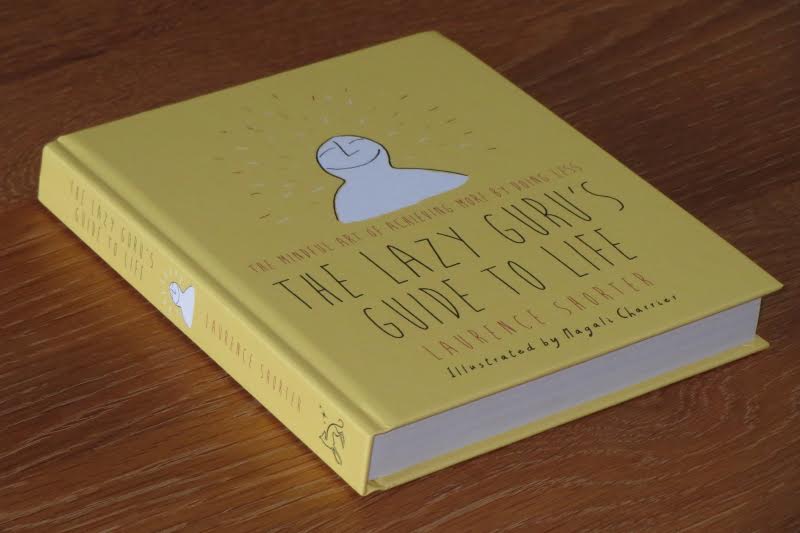
 

The Lazy Guru’s Guide To Life by Laurence Shorter Reviewed by Frances Colville

The Lazy Guru's Guide To Life by Laurence Shorter Reviewed by Frances ColvilleAn amusing and at first glance lighthearted book, but one with serious undertones, The Lazy Guru’s Guide to Life by Laurence Shorter takes a fresh look at the very current subject of mindfulness and offers suggestions for de-stressing, and making life flow as it should.  By using the simple techniques described in the book and learning how to embrace your inner Lazy Guru, you can improve your quality of life and understand how to achieve more by doing less.


You can read this book (and appreciate the beautifully simple and very effective line drawings) at one sitting in less than an hour, or you can take it one page, one thought, one session at a time.  It’s the sort of book you can return to again and again. The way of the Lazy Guru is to make space in your life by stopping, tuning in and letting go.  Learn how to beditate, or to clear out the crud or to dump your shoulds (I should be doing this or I should be liking that).  I particularly enjoyed the illustrations of a thunderous herd of shoulds (aka wildebeests) first shown charging through our hectic lives and then slinking away quietly once they have been tamed.


Laurence Shorter is an author, leadership coach and stand-up comedian and this book successfully combines those diverse elements.  Recommended for anyone in your life suffering from depression, or  those energy-sapping, life-affecting illnesses like fibromyalgia or ME, but also one to buy for yourself if you want to improve the quality of your own life.


The Lazy Guru’s Guide to Life is published in hardback by Orion Books, priced £14.99 and available now.


Torbay Poetry Festival 2016 Competition. £700 1st Prize

As Frost Magazine readers know, we are always supportive of writing events, and here’s one for all the poets out there.


Torbay Poetry Festival 2016 Poetry Competition is open for entries now. Poems submitted must be original, unpublished and not accepted for publication. They should be written in English and not exceed 50 lines. To give you an idea of the standard, please take a look at John Greening’s report on the Torbay Poetry Festival Competition Winners 2015 on the Torbay Poets Website website. All entries must be received by 6.00pm on 28th August 2016. Very best of luck!


Judging


Sue Boyle won The Poetry Business pamphlet competition in 2010 with Too Late for the Love Hotel and has a poem in The Forward Poems of the Decade, 2011. Her book Report from the Judenplatz was performed in full at the Torbay Festival of Poetry in 2014. Her first full collection, Safe Passage from Oversteps, came out last year.


Sue runs regular Writing Days for the Bath Poetry Cafe and organised the Cafe’s Short Poem Competition in 2015. Her wordpress site Sue Boyle features the ongoing story of last year’s Cafe Competition, with reviews of many of the successful poems and helpful insights from the twelve experienced Cafe judges for competition poets who aspire to win.


Prizes

£700 FIRST PRIZE, plus free weekend at the poetry festival, (27th – 31st Oct 2016), including accommodation and Festival Pass.

£400 second prize plus a free Festival Pass.

£200 third prize plus ticket for the Festival supper for two.

ENTRANCE FEE:  £5 per poem or 5 poems for £20 for entries received by post. Online entries are £5 each because of additional admin costs in time and printing.

Closing date:  August 28th 2016

Winners to be announced at the PRIZE-WINNERS’ PARTY on Saturday 29th October, at the Torbay Poetry Festival, Livermead Cliff Hotel,Torquay, Devon where short-listed poets will be invited to read their poems.


For further information:  http://www.torbaypoetryfestival.co.uk/competition/


Elisabeth Banks Was “Too Old” To Play Tobey Maguire’s Girlfriend In Spider-Man At 28

Elizabeth_BankstoooldtoplaytobymaguiresgilfriendIn an interview with the ever-amazing Glamour Magazine, Elizabeth Banks has revealed that she was deemed “too old” too play Toby Maguire’s Girlfriend in Spider Man, despite being close in age.

Now 42, Banks had a screen test with Tobey Maguire for the film that was released in 2002. She was rejected for the role because of her age, even though she is just 16 months older than Maguire.

“I screen-tested for the role of Mary-Jane Watson in the first Spider-Man movie, opposite Tobey Maguire,” she told Glamour magazine. “Tobey and I are basically the same age and I was told I was too old to play her. I’m like, ‘Oh, okay, that’s what I’ve signed up for’.”

Kirsten Dunst, who is six years younger than Maguire -34 to his 40- ended up playing the part. Banks played a minor role in the movie. As the Daily Bugle secretary Betty Brant.

The actress, director and producer recently directed Pitch Perfect 2, which grossed $285 million worldwide. She won’t be directing the sequel as she wants to spend more time with her family. “The new schedule butts up against my parental responsibilities in a way I’m not really comfortable with,” she said.


If you are an actor then check out How To Be a Successful Actor: Becoming an Actorpreneur. It is available in print and in all eBook formats on both Smashwords and Amazon.


From West Coast to West Country by Maya Pieris

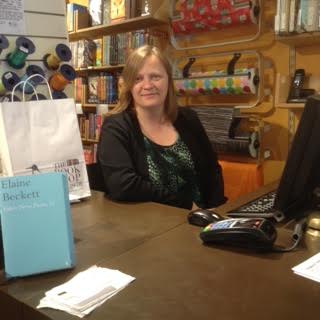
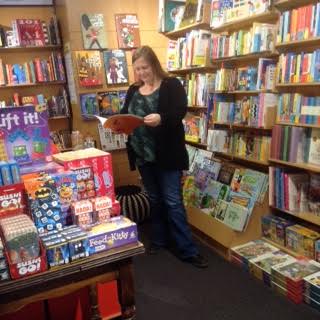
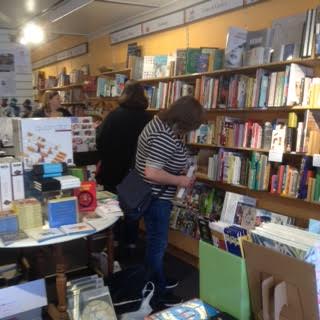
From West Coast to West Country by Maya Pieris1Antonia Squire is building up a loyal clientele for the Bridport Bookshop including dogs- they love the classy doggy biltong available and not just with a book buy. Brought up in Surrey and educated in Harrogate, Antonia upped sticks aged 20 for California, married an American and was happily living in the world of independent bookshops in San Francisco- first Kepler’s and then The Reading Bug- where she was the children’s book buyer amongst other roles.


Until a holiday in the UK in 2014 when they did a progress from Yorkshire to Cornwall and became one of many smitten with the idea of the south-west and Cornwall.  She came across the sale details for the Bridport Bookshop, voted one of the Guardian’s top 50 indie bookshops, took a detour on the way back to Heathrow and discovered the delights of the town and the potential of the shop, one of several book emporiums including two excellent second hand/antiquarian shops, a Waterstones and a wonderful Oxfam which has a brilliant range of “loved” Penguins.

From West Coast to West Country by Maya PierisThe result was changing coast and country but still keeping the west bit and, with husband and dogs in tow, becoming a bookshop owner. And discovering the challenges involved in running a business in a new country! Small but vital changes were made to the shop’s geography, not quite Hogwarts, but involving moving the counter to the back of the shop so the customer can see in and the staff can see out and increasing the size and range of the stock. “I’m a bookseller. The stock is the most important element of the shop and  knowing what people are going to want to read and not just what a publisher wants to see displayed is more art than science”.


She sees no problems with co-existing with the variety of other booksellers, her goal is to be the place people come to find the things they don’t know they want. Almost a year on, she is well on the way to establishing that indie bookshops are an invaluable resource to a town. So many people want the individual experience that can only be achieved by a true “shopkeeper” and, she has observed, people are very loyal, although she has had to tone down the “hi my name is kelly how are you today?” customer service style – less touch feely than she’s been used to but she still says hello!

From West Coast to West Country by Maya Pieris3And she is aware of the potential of the indie bookshop as a grassroots support for the community, working more closely with schools in supporting their curriculum needs as well as providing a venue for local authors to promote their works and judging local poetry and fiction slams. In particular she has developed links with the Open Book festival, a festival for and by the local community about literacy rather than literature which is more the remit of the more formal Bridport Literary Festival (which she is also working with to help develop the Children’s Programming). The shop will be supporting the Bridport Big Read as well as a pop up drama production. So over halfway through her first year she is restoring an independent bookshop into the literary and literate heart of the town. And she giftwraps the books too!
* Frost would love to hear about other Independent Bookshops – contact: frost@margaret-graham.com


Is This the Best Treatment for me Doctor? Statistics on a Postage Stamp by Dr Kathleen Thompson

When we read about impressive new drugs, do we really understand what the percentages quoted mean?

You may need to make medicines-related choices—particularly for cancer, but other illnesses too. To make rational decisions you MUST understand the numbers your doctor quotes. He won’t deliberately mislead, but it is easy to misunderstand  statistical data.

So let me give you an inkling—not a maths lesson, just a few tips to help you ask the right questions.

Last week the BBC headlined: ‘Breast cancer: Taking hormone drugs for up to 15 years can reduce risk … cancer recurrence was cut by 34%’

Wow. Impressive. But let’s look closer: In that particular study, 95% of those who took the treatment for 15 years were cancer-free, compared to 91% who stopped at 10 years.

Hang on – 95% isn’t that different from 91%. How is that cutting risk by 34%?

Well (and this is important) improvement percentages quoted in newspapers, and by doctors and scientists, are often described in relation to the original risk.

In these patients, the original risk of cancer recurring was only 9%, so any improvement would appear large relative to 9%. If the original risk had been higher, the same benefit would have appeared less.

OK that’s the bottom line. But for the curious, another example:

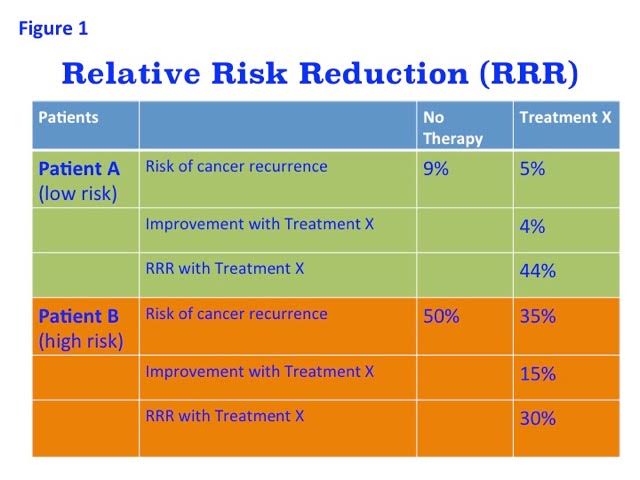
Relative Risk Reduction (RRR) is a statistic often used to describe drug benefit. It is what it says—the reduction in risk (eg risk of death, or disease recurrence) relative to the original risk, ie the actual risk improvement divided by the original risk.

cancerriskreduction2

The Table shows an example. Patient A has a low risk of cancer returning (9%); Patient B’s cancer is more likely to recur (50%).

You can see from the Table that Patient A’s risk will only decrease by 4% with Treatment X, whereas Patient B’s will decrease by 15%.

Knowing this, Patient B should be more inclined to take treatment X than Patient A.

However, if Patient A’s doctor describes the benefit as RRR (see Table), then Patient A’s risk appears to decrease by a massive 44%. Consequently Patient A may have wildly inaccurate expectations for the treatment. The doctor isn’t tricking him, RRR is scientifically valid, but you need to know what it means.

This example highlights another point. Sometimes we only know that a treatment works in most people. However sometimes there is more information about how much it works in different patients eg Patient B would respond to Treatment X more than Patient A.

If available, you need specific information on the benefit for YOU. This could influence your decision, particularly for a treatment which has significant side-effects.

So, in summary: 

If your doctor uses percentages to explain a treatment benefit, ask:

1. Exactly what do the numbers mean?

2. By how many percentage points should you improve on treatment?

3. Is there more specific information for your particular situation? 

Don’t be frightened to ask your doctor for more information—he wants you to understand and may not realise when you don’t.

By Dr K Thompson, author of From Both Ends of the Stethoscope: Getting through breast cancer – by a doctor who knows

http://www.amazon.co.uk/dp/B01A7DM42Q http://www.amazon.com/dp/B01A7DM42Q

http://faitobooks.co,uk

Note: These articles express personal views. No warranty is made as to the accuracy or completeness of information given and you should always consult a doctor if you need medical advice

Further information:

http://www.bbc.co.uk/news/uk-36455719

http://www.nejm.org/doi/pdf/10.1056/NEJMoa1604700

http://scienceblog.cancerresearchuk.org/2013/03/15/absolute-versus-relative-risk-making-sense-of-media-stories/

http://www.breastcancer.org/risk/understand/abs_v_rel

http://www.nps.org.au/glossary/absolute-risk-reduction-arr


This Is The Average 40-Year-Old

We have the stats on 40-somethings and they are having it tough. Pay inequality is an issue. The average 40 something is not earning a lot. In fact, men are earning an average of £28,460, but women are earning an average of £21,629. A huge gap. Worries include savings, health, looks, and caring for relatives. Read on for stats on the average 40-something.

The average 40-something enjoys retro-classics Star Wars and Grease, earns around £25,000 a year and wishes they’d saved, travelled and exercised more, a new study has found. A survey of 2,000 adults aged 40 to 49 found that the milestone is characterised by two distinct groups – those living a traditional family lifestyle and the ‘young at heart’ singletons.The Nationwide Savings poll looks at a number of different aspects, ranging from wealth, health and life decisions to missed opportunities and favourite pastimes, films and music.

Research reveals the average 40-year-old prefers to spend a night in front of the telly than down the pub, likes to escape on holiday once a year and enjoys two family outings a month.But despite a modest social life, three in ten worry about how they look.Just over half of 40 somethings are married or in a civil partnership and have been with their partner for 12 years on average.

However, one in seven is single and/or lives alone. Some 70 per cent of those in their fourth decade have teenage kids, while 64 per cent have pets.When it comes to regrets, more than a third wished they’d travelled more, while four in ten wish they’d put away more money and over a quarter wished they had kept themselves in better shape.The findings also show that 16 per cent wish they had better qualifications and more than one in ten thought they’d own their own home by now. And it seems people in their forties have plenty to worry about too, particularly when it comes to their finances.

According to the poll, they earn an average of £24,638 a year (men getting £28,460 on average, compared to £21,629 for women).Although 43 per cent fear their pension won’t be enough when they retire, nearly a third worry about being able to support their children. And one in five are concerned about looking after parents or grandparents. Andrew Baddeley-Chappell, Nationwide’s Head of Savings Policy, said: “Given our 40s are when we statistically reach middle age it is perhaps unsurprising that this transition from youth to maturity finds many with a foot firmly in both camps.

“At a time when we could be considered in our prime, our research suggests that some Brits are finding their 40s quite tough. “Their message to the younger generations would be to spend more time looking after your finances and your fitness – avoid that squeezed middle in both senses!” When it comes to relaxing, drama is the TV genre of choice for a frequent night in front of the telly, but retro comedy wins out, with Only Fools and Horses deemed the most popular show, followed by Blackadder and Fawlty Towers. Additionally, 40 something music tastes also have a retro feel, with Queen and Abba topping the charts, followed by Adele, David Bowie and Guns N’ Roses.On the film front, 1980s big franchises and musicals reign supreme, with Star Wars, Grease and Back to the Future taking the top slots, followed by Indiana Jones and Terminator.

After decades of work, the average 40 something earns just under £25,000 (£24,638) a year, has squirrelled away £8,665 in savings, owes £1,626 on their credit card and almost £700 (£681) to ‘the Bank of Mum and Dad’.

The survey shows that men earn an average of £28,460, compared to £21,629 for women. And when all the monthly outgoings have been tallied, the average 40 something reckons they have £291 left in disposable income, with most of their money going on bills, groceries and mortgage or rent payments, rather than a buzzing social life.

Money pressures may have dictated some important life choices, too. Fifteen per cent put off pursuing further training or education, while 18 per cent put off moving home and eight per cent put off getting married solely as a result of financial pressures. One in three feels pressure to stay in a job they don’t like for the financial stability, while a fifth thought they would be in a better paid job by now. One in ten decided not to have children due to the expense involved, while a quarter delayed their plans to go travelling.Despite money worries, 13 per cent of 40 somethings have completely paid off their mortgage, while one in seven believe that they are currently living in their ‘forever home’, where they intend to stay for the rest of their lives.

More than one in ten thought they would own their own property by the time they were in their 40s. And while just over half are paying a mortgage, in excess of a quarter still rent. Health also becomes a greater concern as we reach middle age, according to the poll.In a list of ailments, more than half have experienced back pain, 52 per cent have suffered headaches and migraines and nearly half have endured stress or anxiety. A further 41 per cent have suffered from sleep-related issues and 15 per cent have felt an effect on their mental health. When it comes to getting into shape, more than a quarter of 40 somethings regret not doing enough exercise, with 53 per cent admitting they don’t do any exercise in a typical month. Despite this, 30 per cent of those aged between 40 and 49 are conscious of their body image and how they look, with a clear gender split of concern between men and women.

TOP 10 FILMS FOR 40 SOMETHINGS

Star Wars series

Grease

Back to the Future series

Indiana Jones series

Top Gun

Terminator

Shrek

Pulp Fiction

Toy Story

The Lord of the Rings

TOP 10 MUSIC ARTISTS FOR 40 SOMETHINGS

Queen

Abba

Adele

David Bowie

Guns N’ Roses

Duran Duran

The Beatles

Robbie Williams

Ed Sheeran

Madonna

TOP 10 TELEVISION SHOWS FOR 40 SOMETHINGS

Only Fools and Horses

Blackadder

Fawlty Towers

Britain’s Got Talent

Coronation Street

Sherlock

Game of Thrones

The Big Bang Theory

Strictly Come Dancing

The Apprentice

Patricia Clarkson Says ‘A white male actor should never complain’

 The Guardian  particia clarkson interview white men should not moanPatricia Clarkson has hit out at people who complain about female-led movie. The 56-year-old actress has had an illustrious career spanning decades, but she has faced pay inequality and notes that there is still a backlash. She used the new Ghostbusters film as an example, which stars an all-female lead cast which includes Kristen Wiig and Melissa McCarthy.

“There are still so many movies made starring 50 men and one woman! A white male actor should never be allowed to complain about anything. Shut up and sit in the corner. I mean, seriously!”  She told The Guardian

“The odds of us having films made which star women… Everyone still references one movie: Bridesmaids! Ghostbusters is a great thing and I love these actresses. I can’t wait to see it.”I think everyone has a right to a good moan, but her point about the Ghostbusters film is a good one.

She also said that female characters are usually “softened” or “some ridiculous caricature like a dominatrix or a one-dimensional boss with no life and bad hair.”

She went on: “When I was younger, of course I had people act inappropriately to me. I’ve had certain directors yell at me. But I didn’t stand for it and I didn’t let it go far enough for it to be in any way abusive to me. People didn’t speak up as much as they do now. Women have risen. But we’re still underpaid and we’re still a vast minority in this business.”

Actresses who have spoken out about inequality in the film industry have talked about a backlash, but the more strong people- both men and women- who fight for equality, the quicker we will get there.

What do you think?


If you are an actor then check out How To Be a Successful Actor: Becoming an Actorpreneur. It is available in print and in all eBook formats on both Smashwords and Amazon.