Roast Beef and Yorkshire Pudding

My waist line will attest that I love food, I could alienate most of the food industry with the old classic adage never trust a skinny chef, and I adore eating pretty much anything, Chinese cuisine, Italian cooking, Barbecues, but the food I love most is the classic Sunday roast. Succulent roast chicken with crispy skin; chunks of tender lamb flavoured with garlic, rosemary and anchovy; melting, fatty pork with salty crackling or medium rare roast beef with rich red wine gravy, it is very difficult to choose which I prefer most. Which is your favourite? Which is the most popular roast in the country? Well the roast that everyone worldwide knows is as British as roast beef, well is er.., roast beef

Cow DiagramSo if the king of the British roast is a joint of beef, in my humble opinion it is the equally aristocratically sounding Sirloin* that is the best beef to roast. There are moderately cheaper joints such as a corner cut topside that make for an excellent roast, if you can afford it a rib on the bone is perhaps the most show stopping roast to present at a table, but I prefer is the sirloin. The meat itself is very lean, however that lovely layer of fat will help keep the meat moist when cooking. The taste is terrific, there is minimal waste and it is fantastically easy to carve at the table, if you feel like impressing you guests.

*You are perhaps aware of the story that an effusive monarch was so taken with his beef dinner he knighted the remains of the joint on the spot. It has been attributed to Henry VIII, Charles II and the host of English kings in between and was so popular it was referenced by Jonathan Swift and Samuel Johnson, but the origins of the word sirloin are much less regal. The old English word would be originally written as ‘surloyn’ or ‘surloine’, and was derived from French word ‘surlonge’, sur meaning over and longe meaning loin, the sirloin was then quite simply a cut of beef taken from above the loin. Interestingly most or our words describing cuts of meat or the name of the meat are from French origins, the names of animals or livestock are more often of Anglo-Saxon decent.
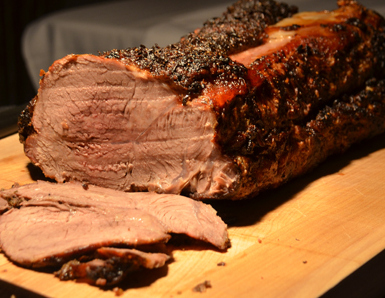
Roast SirloinLast time I gave you the recipe for Yorkshire Pudding, the classic accompaniment to roast beef. So here is my recipe for the perfect roast beef. A good local butcher will be able to provide you with a great piece of beef from a reputable, quality supplier. If you can find grass fed, mature beef, hung for three weeks it will be simply delicious, and I promise you won’t be disappointed.

Roast Sirloin of Beef and Rich Red Wine Gravy                                                      serves 6-8

1 ½ to 2 kg centre cut Sirloin, rolled and tied
( Ask your local butcher to do this )
250 gr Beef Dripping or Lard
1 tablespoon fresh Thyme leaves
½ tablespoon English Mustard Powder
1 teaspoon Salt
¼ teaspoon ground Black Pepper

For the gravy
350ml red wine
200ml beef stock
75ml port
1 small White Onion, peeled and roughly chopped
1 Carrot, peeled and sliced
1 stick of Celery, washed and sliced
1 clove of Garlic, peeled and crushed
2 tablespoons of Vegetable Oil
1 heaped tablespoon Plain Flour
1 Bay leaf
A few sprigs of Thyme

Heat your oven to 400 F / 200C/ Gas Mark 6 and weigh your joint of beef. Put the dripping into a roasting pan and place in the oven. Mix the thyme, mustard, salt and black pepper and rub all over the beef and when the dripping is melted and hot, place in the beef fat side down and return the roasting pan to the oven. Roast the beef for thirty minutes, then remove from the oven and turn the piece of beef over before placing back in the oven.

Turn the heat down to 360 F / 180C / Gas Mark 4. For every 450 gr of raw weight, cook your joint for ten minutes per 450 gr for a rare piece of beef and for fifteen minutes per 450 gr for well done. When the beef is cooked to your particular preference, take it out of the roasting pan, cover with foil and allow to rest somewhere warm for thirty minutes.

To make the red wine gravy, place the roasting tin on a high heat with the onion, carrot, celery, garlic, bay leaf and thyme. Fry the vegetables for a couple of minutes then add the flour, cook for a couple more minutes stirring continuously. Pour in the port, scrape with a wooden spoon to loosen any debris from the tin and add the red wine. Continue to simmer and reduce by three-quarters before adding the stock. Bring to the boil, reduce by a quarter and season to taste. Pour in any resting juices back into the tin, warm and pour the gravy through a sieve into a warm jug. Carve the meat and serve with the gravy and Yorkshire puddings.
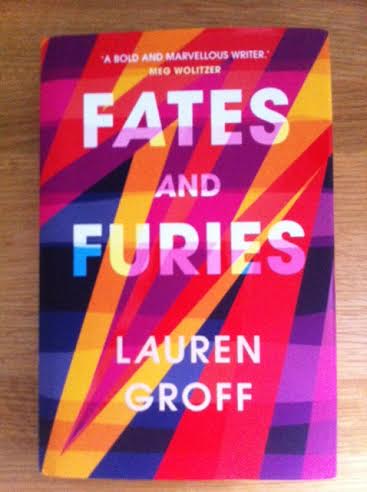
Fates and Furies by Lauren Groff Reviewed by Margaret Graham 

fatesandthefuruesbookreview
 
Fates and Furies 

This is a novel that deserves its hype, and trust me, not all do.

At age twenty-two, Lotto and Mathilde are tall, glamorous, madly in love, and destined for creative greatness. A decade later, their marriage is still the envy of their friends, but by now we understand that things are even more complicated and remarkable than they have so far seemed.

Lauren Groff is in full command of her perspectives. She reveals each new twist effortlessly, and her vibrant prose keeps us gripped and involved over more than two decades. Basically, Groff explores the unsettling truth: that secrets are often the cement – or do I mean the engine? – of relationships.

I really enjoyed Fates and Furies, and admire the oomph of the prose and profound understanding of creative, and relationships, that Groff displays. It’s a clever, accessible, and resonant novel. Brilliant.

Lauren Groff is the author of the New York Times bestselling novel The Monsters of Templeton, the short story collection Delicate Edible Birds and Arcadia. She has won Pushcart and PEN/O. Henry prizes, and has been shortlisted for the Orange Award for New Writers. Her stories have appeared in publications including The New Yorker, the Atlantic, One Story, and Ploughshares, and have been anthologised in Best American Short Stories 2007 and 2010, and Best New American Voices 2008. She lives in Gainesville, Florida, with her husband and two sons.

Fates and Furies by Lauren Groff. Published in hardback by William Heinemann in September 2015 at £14.99


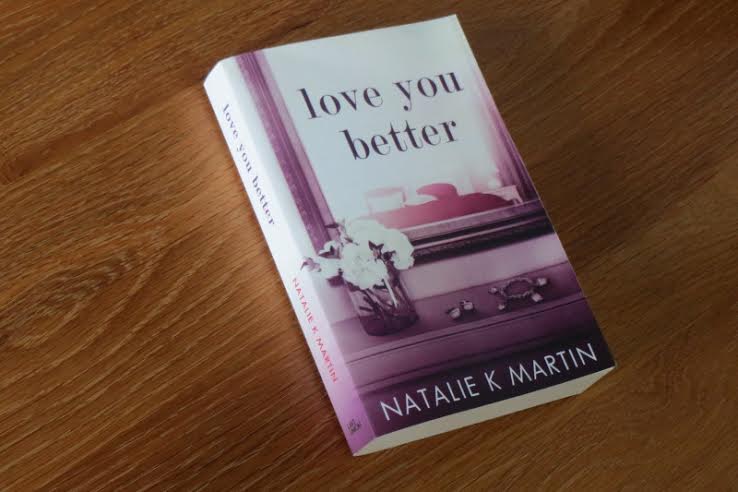
Love You Better By Natalie K Martin Book Review

By Frances Colville

loveyoubetterbookreviewNatalie K Martin’s second book Love You Better is about domestic violence. Set in London, Thailand and Ibiza with links to other parts of the world, the story is fast paced with well-drawn characters and a good if somewhat predicable story line. We all know that domestic violence can occur in all sorts of households and relationships, and any book which reinforces this and flags up some of the telltale warning signs is welcome. The author has done her research well. And her love of travel shines through too.

However, the ending of the book was clearly signposted from the early pages and for me this detracted from the impact of the story as it evolved. It’s hard to care enough about the development of a character – even one you empathise with as much as Effie – if you’ve already worked out what is going to happen to her. There were a few other things which pulled me up short. Is the character Oliver intended to be the same age as the other main characters (that is, mid twenties) and if so, how can he possibly be one of the most sought-after lawyers in London? A three storey whitewashed Georgian house in a quiet street in Clapham for £500,000? I don’t think so. Nitpicking? Yes. But why not get it right?

This book is still a good read though. It flows well, it’s interesting and I did actually want to know if I guessed the right ending. And I liked the play on words in the title. A book worth reading in fact. I’m going to search out the author’s first book Together Apart and look forward to future offerings as well.

Love You Better is published by Lake Union Publishing and will be available in the UK in paperback and ebook versions from 8th October 2015.

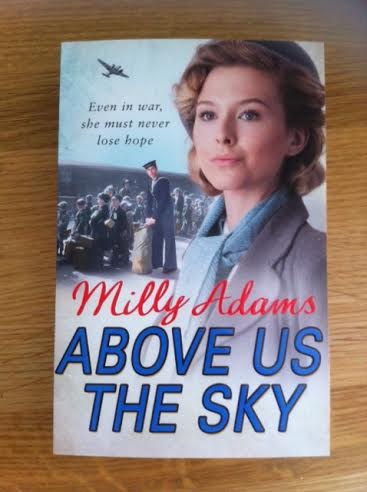
Above Us The Sky – Milly Adams Book Review by Kathleen Thompson

Book Review- Above Us The Sky – Milly Adams    by Kathleen Thompson

An unputdownable debut from an exciting new author.

Phyllie, a young teacher, finds herself acting mother to her pupils, and to a Jewish boy, Jake, in particular, when the school is evacuated from London to rural Dorset. She bumps into a childhood sweetheart, Sammy, as they wait to board the train, and he mock proposes, to amuse the children. But did he mean it? And will he be safe in the submarine where he and Jake’s father patrol the dangerous waters of Norway?

Phyllie gradually adjusts to country life. Fiercely protective of her wards, she overcomes misunderstandings and conflict. But as her circumstances take a turn for the worst, she discovers genuine friendship and love—from unexpected sources.

Millie Adams weaves a compelling story of love and loss in war-time Britain. She draws the reader in with her intense details of life in those times. I truly felt the claustrophobia and stress of life within a submarine—and started to appreciate the constant danger and the frequent death or ‘burn-out’, of so many young men.

She describes life in the countryside with such detail and accuracy that one feels she lived through it herself —the reality of sugar rationing and ‘making do’ and the often forgotten role of the Women’s Institute, in holding things together and organising food supplies.

She touches on many influences on life in those troubled times—the festering anti-semetism, fuelled by Mosley’s ‘black-shirts’ and ignorance; the reality of the bombing and airborne raids on civilians and the ubiquitous pain of loss, often of someone far too young.

As I said, unputdownable. A truly excellent read, a book that is well-written, compassionate, amusing, observant, and so tense I could hardly turn the pages quickly enough. I can’t wait for Milly Adams’ next book.


Amanda Holden Struggles With Nerves on First Day of Shoot

Amanda Holden struggles with nerves on first day of shootHaving last appeared on stage in the nationally acclaimed ‘Shrek the Musical’ back in 2011, Amanda Holden made her long awaited return to the stage in what could prove to be her toughest role yet.


In a behind the scenes video documenting her latest acting role, Holden is seen to struggle with nerves and even forget her lines on two occasions in front of impatient directors.


But as is always the case in show business, all is not as it first seems.


Holden, a mother of two children herself, was actually filming a spoof advert in her latest role as the face of Pebli Town, a revolutionary new pre-school toy that fuses traditional play with the latest technology.


With Holden reciting her lines to a team of directors made up of three children, Pebli Town is designed to give youngsters full control of four traditional play pieces and a physical play board that in turn interacts with a tablet to bring the toy to life.


“As an actor, it’s not often you’re asked to perform poorly in front of directors that are a similar age to your own children,” said Holden.


“What has impressed me most about Pebli Town is that children are really the directors of their own show. It’s also a toy that allows parents to be more involved whilst accommodating for all key developmental and educational needs a parent would want for their child.”


With four exciting interactive game modes, Pebli Town is designed to help develop children’s problem solving skills and hand eye coordination whilst sparking creativity, imagination and self-expression.


“As a performer myself, I think it’s really important that children are given the opportunity to express themselves and show their creative side at play time,” admitted Holden, who is mother to nine-year-old Alexa and three-year-old Hollie.


“I know from my experiences that children can be incredibly creative if encouraged in a fun way.”


As an established actress, singer, presenter and judge, the daily juggle between career and family life remains an admittedly challenging one for Holden.


“Like every mother, sometimes it feels a little like the time you have to spend with your children is going, it’s slipping away. It’s about finding a balance and making sure you get to spend the right amount of time with your family and my current workload absolutely allows me to do this.”


“It’s scary how quickly your children grow up so its important parents spend as much time with them as possible.”


“Even physically, Lexie went from a size two to a three in two months and she has gone to school with a sort of side, low ponytail and there’s no Alice T-bar shoes anymore, she has got slip on shoes. Because Holly is three and a half and looks up to her big sister, she tries to dress the same and appears more mature than an actual three and a half year old. You can even have a full conversation with her.”


With Pebli Town representing a new age of toys being brought to life through technology, the current trend of parents allowing their children to have unfettered access to their own tablets and mobile devices is growing, with children now spending an average of two hours 56 minutes in front of a screen every day.


According to a recent survey by ComRes, 84 per cent of parents believe there are educational benefits in their children having access to tablets and smartphones, a statistic Holden supports.


“It can only be a positive thing introducing children to technology in a way that is safe, controlled and benefits their educational development,” said the 44-year-old.


“Pebli Town has got the balance right as 99% of all game play is still done on the board so you avoid having your children glued to a tablet.”


As for Holden’s future career ventures for the rest of 2015, her relentless workload doesn’t look as though it will ease up just yet.


“I am filming something for the BBC now and doing a load of stuff for Text Santa. As for acting, there is a possible musical in the running but I can’t tell you too much at this stage. Watch this space!”


Down and Out Today: Notes From The Gutter by Matthew Small Book Review

Down and Out Today by Matthew Small Book ReviewI have always been interested in socioeconomics and poverty, and this book from Matthew Small really caught my eye. When my preview copy arrived I read it very quickly. It is a good book. It is well researched and asks important questions. The comparison between poverty in India and poverty in the UK is an interesting one. The truth is there is really no comparison, in India you have slums, in the UK you have a welfare system. The parallels are interesting. You have the Big Issue seller who doesn’t think he is poor because he has what he needs, people who work hard but life beats them down. Those in India with no safety net. Many of the stories in this book haunted me. Especially the one about a a little girl and a baby boy both sleeping on the streets at night. They were alone with no adult, the little girl asleep, using a plastic bag full of rubbish as a pillow and the baby boy, presumably her brother, wearing nothing but a ripped T shirt, bare bottom on the concrete. The baby was gurgling and laughing, playing with a piece of paper on the street, sticking it in his mouth the way babies do. Smalls says he is haunted by this and it is the worst thing he has ever seen but nothing is done. I often think of the child and infant. I have even tried to find them via the internet. I can just hope that someone took pity on them and lifted them from their plight. We live in such a sad world and I can’t help but think more can be done It made me so proud of my own country and our welfare and NHS. You cannot say we do not help the poor. Those who are homeless long term tend to have mental health issues or drug or alcohol problems. Because of this I feel that is where we should turn our efforts in the UK: to those with mental health problems or addiction. This book is a good book but also a haunting one. More importantly, if anyone could let me know what happened to those poor children I would be eternal grateful.

Down and Out Today: Notes from the Gutter is available here.

This is a topical book exploring the meaning of poverty today; questioning whether poverty is specific only to money. The book explores poverty across contemporary society and cultures specifically looking at UK poverty (in Bath) in comparison to India.

Second book from the popular ‘Notes From’ series, with the first book The Wall Between Us endorsed by Jon Snow. The book includes powerful images from Matthew’s travels.

What does poverty mean today? Writer Matthew Small seeks to answer this question and witness the similarities and differences between poverty in the UK and India.

Poverty stretches across all of humanity and by travelling East, Small encounters the raw faces of poverty in India’s slums; he works in a leprosy community, joins the Sisters of Mercy on the littered yet exhilarating streets of Kolkata. He then returns to the UK, to Bath, to see what the passing of three months means to those who are scarred by one of the most unglamorous of all humanities’ ills, being poor.

Small engages with different community members who are living with poverty, to answer these long standing questions: What’s keeping them down? What’s pushing them out? And how can we move forward?


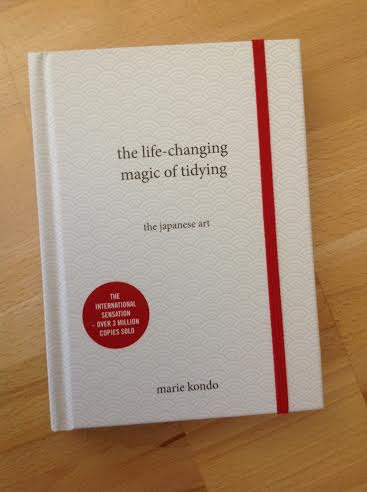
The Life-Changing Magic of Tidying By Marie Kondo Book Review

thelifechangingmagicoftidyingDe-cluttering is very in at the moment. In fact, it is a trend that does not seem to be going away, and when you think of our consumeristic society and all of the stuff we have is it any wonder? We buy too much and have nowhere to put it. Most of us are drowning in stuff. The Life-Changing Magic of Tidying By Marie Kondo is less of a book, more of a movement. People on Mumsnet rave about it and people say it has changed their life. It has 453 five star reviews on Amazon.co.uk. The hype is so high I was actually thinking about buying the book the very day it arrived to be reviewed. Happy me. I read the book quickly. We moved in to our new place in May this year and our flat is still overflowing with stuff, despite numerous trips to charity shops and selling stuff on eBay.co.uk. Can this book help? Let’s find out.

The books premise is that you should only keep things in your life if they spark joy. The KonMari method (a nickname of the authors) claims to tidy your rooms once and for all. You start with clothes, then books, then papers, miscellaneous items (like kitchen equipment) and, lastly, sentimental items. You leave sentimental things to last after your decision making skills have become better. Some of the book is great and other things seem harder. The tidying must be done all at once. Not easy when you have a baby. Whatever section you are doing must be put in a pile on the floor and then done all at once. I don’t know when I would find the time to do this. As for everything ‘sparking joy’. I have a lot of things that don’t spark joy but I need them. I am not going to get excited about my underwear or cutlery. Despite this, this is a good book. The book is not just about throwing things out, it is also about storing things, finding the place where things should go. Kondo even tells you how to fold properly (vertically, as it turns out). Some of the book is a bit hippy but Marie Kondo knows her stuff and following the method will result in a tidy and clutter free house. I will do this method fully and do a more in depth article soon. I just have to find the time. In the meantime, I like this book because it left me feeling inspired to get going and has great ideas. I have already thrown a lot of stuff out and this book even helps you make some tough decisions. Good if you want to get your life, and home, in order.

The Life-Changing Magic of Tidying: A simple, effective way to banish clutter forever is available here.

Transform your home into a permanently clear and clutter-free space with the incredible KonMari Method. Japan’s expert declutterer and professional cleaner Marie Kondo will help you tidy your rooms once and for all with her inspirational step-by-step method.

The key to successful tidying is to tackle your home in the correct order, to keep only the things you really love and to do it all at once – and quickly. After that for the rest of your life you only need to choose what to keep and what to discard.

The KonMari Method will not just transform your space. Once you have your house in order you will find that your whole life will change. You can feel more confident, you can become more successful, and you can have the energy and motivation to create the life you want. You will also have the courage to move on from the negative aspects of your life: you can recognise and finish a bad relationship; you can stop feeling anxious; you can finally lose weight.

Marie Kondo’s method is based on a ‘once-cleaned, never-messy-again’ approach. If you think that such a thing is impossible then you should definitely read this compelling book.


Pros And Cons of Breastfeeding at Different Ages

breastfeeding, benefits of breastfeeding, mum, baby, what age to stop breastfeedingPros and cons of breastfeeding at different ages by Geraldine Miskin The Baby Show Breastfeeding Specialist

1 day

Baby

Your baby gets colostrum, which is perfectly designed to provide all the nutrients, and immune boosting properties that he needs. The closeness of breastfeeding helps your baby feel secure in new and unfamiliar surroundings.

Mum

Breastfeeding helps your uterus contract quickly to reduce the risk of a post birth haemorrhage. You’re amazed and excited to be able to breastfeed.

Cons

It can be stressful, feeds erratic as baby learns what to do. It can be painful as both you and baby are learning a new skill and need to learn about each other.

Tip

Be patient with yourself and your baby. Allow him to try to feed, keep him in skin-to-skin contact with you as much as possible to allow him to activate and put his innate feeding instincts into practice. It should become more comfortable.

1 week

Baby

His stomach has stretched in line with your increasing milk supply from the size of a malteser at birth to the size of a ping-pong ball by day 8.

Mum

Frequent feeds have primed your breasts for long-term milk production. Your breasts are full, see milk drops on the nipple at the end of the feed and your baby seems milk drunk at the end of the feed.

Cons

It’s worrying if baby loses more than 10% of his birth weight, or develops jaundice. Engorgement, which results in hard, hot, full and uncomfortable breasts, can feel scary and painful. Baby keeps you busy and awake at night.

Tip

Know that a bumpy start is normal. Feed more frequently and wake baby if you need to, do more skin to skin and offer both sides at each feed. Hot, throbbing breasts respond well to cold packs so grab something from the freezer, wrap in light muslin square and apply to breasts at each feed until you feel better.

1 month

Baby

Your baby’s immune system is growing with each feed. He is less likely to develop food allergies until age 3 years, diarrhoea, chest infections and ear infections due to the immune boosting properties of your milk.

Mum

Feeds are getting shorter and your baby may be sleeping longer stretches at night. You don’t have to wash and sterilize bottles so have more ‘free’ time between feeds.

Cons

If breastfeeding isn’t going well, you’ll be stuck to sofa all day, feel like you have failed at something that others seem to get right easily and might get heat for introducing bottle feeds.

Tip

Get help and know that any breast milk your baby gets is beneficial. Surround yourself with those who encourage and empower you and do what works for your family.

3 Months

Baby

Babies digestive system has developed and is able to cope with foreign properties more easily. Less likely to develop childhood diabetes (Type 1) by 19 and 27%. Up to 40% less likely to develop asthma in families with history.

Mum

Baby may feed for 10 minutes or less. You are more likely to start losing baby weight between month three and six.

Cons

Babies become more social and pop on and off breast frequently to survey surroundings.

Tips

Rather than seeing this as a frustration, see it as a new milestone that your baby has reached.

6 months

Baby

Baby is less likely to develop allergies to common triggers such as cows milk which makes introducing solids easier. There is also a reduced risk of him developing childhood cancers like leukaemia.

Mum

Breastfeeds are spaced out and usually only 10 minutes long. You are less likely to develop breast and ovarian cancers as well as osteoporosis.

Cons

You may worry about how much milk your baby gets in his short feeds and feel obliged to get more into him which leads to fighting at the breast.

Tips

Trust your baby to take what he needs and know that he grows at a slower rate so needs less calories than when he was young. Follow his lead.

12 months

Baby

Continues to get immune boosting properties through your milk. The muscles used for breastfeeding are also important for speech.

Mum

It’s an easy way to comfort baby when he topples over or hurts himself. You have saved a healthy sum by breastfeeding. If your baby had 90ml per feed 8 times a day, you’d buy a new tin of formula (£12) every 8 days.

Cons

You may feel touched out and want to reclaim your body.

Tips

Breastfeed for nutrients and comfort whilst encouraging your partner to spend one on one time with your little one to create some time for yourself.

18 months

Baby

Baby continues to get skin-to-skin time with you which reduces stress hormone production. His immunity continues to grow.

Mums

You get a forced break, time to sit down and catch your breath when you have a million things to do on your ‘To Do list’.

Cons

Baby can use breastfeeding to curb boredom and get your attention, usually as soon as you answer the phone.

Tips

Introduce a feeding chair, which you use for feeds. Your little person will quickly realize that when you sit in the chair, he can have a feed. Create time in for one to one play to ensure your baby gets your attention in a different way.

Over 2 years

Baby and Mum

Mums usually only feed first thing in the morning and last thing at night by this age. It is a great way to start and end the day for both involved. The little one continues to get immune boosting properties from bugs that he has encountered during the day.

Cons

It can be embarrassing when an older child announces that he wants BOOBY or constantly tugs at your shirt, wants to tweak your nipples in public.

Tips

Find a word that both you and baby know pertains to feeding. Use the feeding chair tip as above to help your little one understand when to ask for milk. Educate those around you that the human body benefits from breast milk irrespective of age.

Benefits of breastfeeding for infants

Breast milk aids brain development, eye sight

Reduced incidence of the following:

Gastroenteritis

Necrotising enterocolitis

Chest infections

Eczema

Middle ear infections and glue ear

Urinary tract infections

Sudden infant death syndrome

Leukaemia

Benefits for the adult who breastfed as a baby

Reduced incidence of the following:

Obesity

High blood pressure

High cholesterol

Diabetes

Benefits for mums

Reduces risk of developing ovarian cancer

Reduces risk of develop breast cancer

Reduces risk of developing type 2 diabetes

Helps reset mums metabolism

Reduces risk of osteoporosis

Effective insulin production

Helps the womb return to non-pregnancy size

Acts as a contraceptive