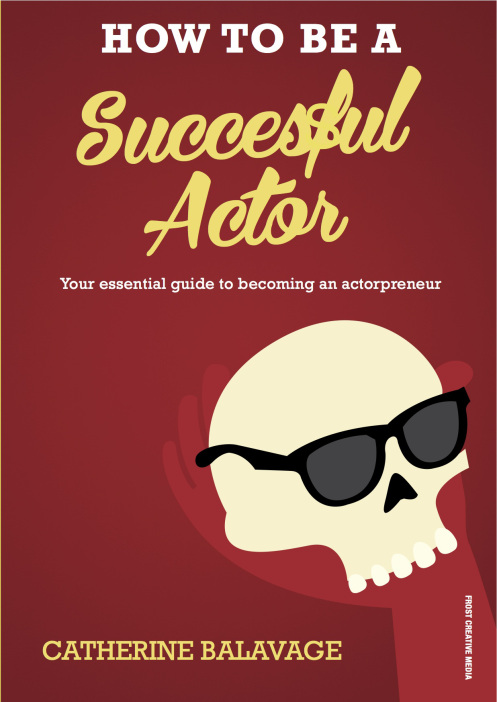
How To Be a Successful Actor: Becoming an Actorpreneur Only £1.99 For One More Day

acting, acting advice, how to be an actor, how to be a successful actor, hollywood, castings, auditions, casting directors.How To Be a Successful Actor: Becoming an Actorpreneur has been included in Amazon’s Kindle Countdown Deals and for one more day is only £1.99. How To Be a Successful Actor: Becoming an Actorpreneur, written by Frost Magazine’s editor Catherine Balavage, has received a number of good reviews including three five-star reviews on Amazon UK and another brilliant four-star review on Amazon US, even though it has only been out for two months. The below review is from acclaimed author Margaret Graham:

A triumph for Balavage, and a necessary tool for anyone considering an acting career. By Margaret Graham

Balavage has written a well balanced exploration of how to succeed as an actor. I am an author, not an actor, but having read How to be a Successful Actor, I feel the two precessions are closely allied. Balavage clarifies the positives and negatives of the profession, and then proceeds to walk us through the ups and downs, giving anyone interested in becoming an actor the tools to maximise their chances.

The basic ingredients, it seems to me, are to utilise common sense and good manners. After all, you will be meeting the the same people on the way up, and then, when times are hard, to be nice out there..

But more than that, we are led by the hand through the nitty gritty of whether to train, or not to train, the virtues of hard work in the face of lack of progress, the need to be glad of any chance to gain experience, and exposure. She explains the need to acquire the necessary skills through classes, and the value of networking.

As I also advise my writing students, Balavage advises actors to watch and analyse their craft, on stage, radio and screen. She emphasises the need for actors to BE their characters, to acquire accents, to keep fit. She moves on to marketing, to the virtues of mobile phones and the internet for spreading the word about YOU,

There is humour: remember to avoid the stunt co-ordinator’s elbows, there are detailed tips: what to do if your mouth dries up (read the book and find out) , there are a forest of useful addresses.

No wonder it took Balavage 4 years to write this book, because she includes a plethora of interviews with experts in the field. What comes across is that Catherine Balavage considers an acting career to be a project, one that needs to have: a firm foundation, on-going development, marketing skills, research, realistic self-belief, and a hell of a lot of luck. This book needed to be written. It was Catherine Balavage with her clear sighted view of the profession who needed to write it. Bravo!

This one is from actor and casting associate Clea Myers:

Fantastic & Essential Guide By Ms. C. Myers

This really is an excellent guide book into the terribly difficult, but potentially rewarding life of an actor. Balavage tackles the often ignored questions that surround the inexperienced and/or young person who wonders what the best road to take is? She starts with the basics that encompass questions about whether to train at drama school (and thereby find the money to do so), or go another route by getting involved with fringe theatre and/or film school films. Throughout she weighs up the pros and cons in a highly informative and intelligent manner that are also highly credible as she is writing from first-hand experience. Her own entrepreneurship into film-making is included and offers fantastic tips and empowerment, to what is often a dis-empowering profession. She also demystifies the perceived ‘glamour’ of working as an actor and says it how it is. A good wake-up call for those out there that crave instant fame!

Her approach is wholly professional and fundamentally knowledgeable: she interviews working actors, alongside well-known casting directors who give an insider-view into what is required to get ‘ a foot in the door’. I would highly recommend this book to anyone interested in becoming an actor.

Crime writer Penny Deacon called it the ‘Best advice available’ in her review and American actor Tom Shafer gave it a wonderful review and said it was a great companion piece to Bonnie Gillespie’s acting bible, Self Management For Actors in his review below.

An excellent guide for the entertainment professional By Thomas Shafer

I found this book to be an excellent companion to Bonnie Gillespie’s ‘Self-Management for Actors’, which I am also currently reading. The first half of Catherine’s book does a excellent job of distilling a seminar’s-worth of material into a manageable bit. The second half, the interviews, felt more conversational. What was clear, the recommendations made in the first half came, in part, from these interviews. This is an excellent technique, since it reinforces the validity of the recommendations as having come from entertainment professionals who have achieved a perceived level of success. (I like that the definition of “success” was open for discussion, since it can mean different things to different people.)

As an American reading this book, I did find some UK-centric resources and references. But, in this era of global Internet access, I found just as many that were valid for US readers. I was able to take this in stride and see this as a valuable tool in my self-management as a working actor.

Thanks, Catherine, for writing this excellent guide.

What are you waiting for? We are not biased, it is an excellent guide and an essential for any actor.

How To Be a Successful Actor: Becoming an Actorpreneur is available here.


How To Be a Successful Actor: Becoming an Actorpreneur Book Review

The daughter of a friend of mine is in her second year at drama school. She’s good: can sing, can dance, can act – particularly in comedy. So, she has it all? Trouble is, so do so many of the rest of her year group. And so do all of those other aspiring actors in all those drama schools across the country. She’s beginning to ask how she can show she’s different, that she deserves to be remembered from one audition to the next. How she can avoid annoying someone whose off hand influence can close as well as open doors for her?

howtobeasuccessful_actor_book become How To Be a Successful Actor: Becoming an ActorpreneurI’m going to give her a copy of this book. It may be the single most useful thing I ever do for her. How To Be a Successful Actor: Becoming an Actorpreneur by Catherine Balavage is one of those practical, down-to-earth guides which doesn’t try to hide the obstacles and difficulties of choosing an actor’s life but does give solid and sensible, practical, advice on making the best impression and avoiding the worst pitfalls. Equally valuably, Balavage makes suggestions for networking, for working with others to help each other through teamwork (e.g. helping film each other’s showreels), working for nothing except getting your name out there, remembering names, and never, never, never forgetting to say thank you – even when you don’t land the part. She is upfront about the chances of success in acting: ‘Only act if you cannot do anything else. It is the hardest and most competitive industry you can go into. Your chances of success at making a full-time living for the rest of your life are small.’ And then she offers clear and straightforward, practical advice about how to shift the odds just slightly in your favour.


This book seems, at first glance, rather plain, with no images and most chapters simply divided into paragraphs with explanatory headings, or questions followed by responses. I like this format. It’s no-frills and underlines the fact that this is a handbook. A ready reference tool which will be highlighted and annotated by anyone who uses it regularly. The pages of useful contacts and Top Tips are invaluable. I also liked the interviews with others in the profession: the replies to questions overlap with each other in ways which reinforce what Balavage has already said. This reinforces my conviction that this author really is writing from experience and passing on advice distilled from her own hard work. Which I really hope my young friend will take.


[Editorial note: Catherine Balavage is an editor of this magazine]


Perfect Holiday Reading: The Books To Read This Summer

Stop! Do not buy any books, nor put any in your suitcase until you have read our essential guide of the best books to read this summer. This is our second instalment of great reads. We hope you enjoy some of the books below and feel free to add you own in the comments section or by emailing frostmagazine@gmail.com


Hard Choices by Hillary Clinton

hillary28n-3-web

Former United States Secretary of State, U.S. Senator, First Lady of the United States and possible future President. What a life, what a woman. We loved her previous book, Living History, and this one is equally good. Brilliant stuff that will also give your brain a workout.

Maeve’s Afternoon Delight by Margaret Graham
maeve afternoon delight Margaret graham

Margaret Graham is one of Frost’s favourite authors and this book is yet another winner. Less historical than the previous books of hers we have reviewed, this has a modern setting. It is a brilliant First Wives style book with a rather loveable heroine in Maeve. A character it is impossible not to love and get excited about. After her husband leaves her for her best friend Maeve starts to make changes in her life. She finds solace in her allotment and the friends she gains. Perfect summer reading. This book would make a great film.
The Cheesemaker's House, Jane Cable, Book review

The Cheesemakers House by Jane Cable
We have already reviewed this book before but wanted to include it on this list due to its great story and pace. Very readable and perfect for the beach.
AC Hatter book

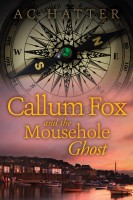
Callum Fox and the Mousehole Ghost by AC Hatter

Well-written with great characters. Perfect for adults too. Great summer reading

Callum Fox’s summer holiday in Cornwall isn’t working out quite as he’d expected. His Grandad’s turned out to be a miserable old git and Sophie, the girl he met on the train to Penzance, seems to view him as more of a liability than anything else. However, his time in Mousehole starts to get a whole lot more interesting when he meets Jim, the ghost of a World War II evacuee. Seventy years separate Callum and Jim, but as their stories unfold Callum realises they have more in common than anyone could have imagined, and that some secrets last a lifetime… Callum is a fabulous, funny and feisty character who takes us on a roller-coaster of a ride around Cornwall.
thebestsummerbooks

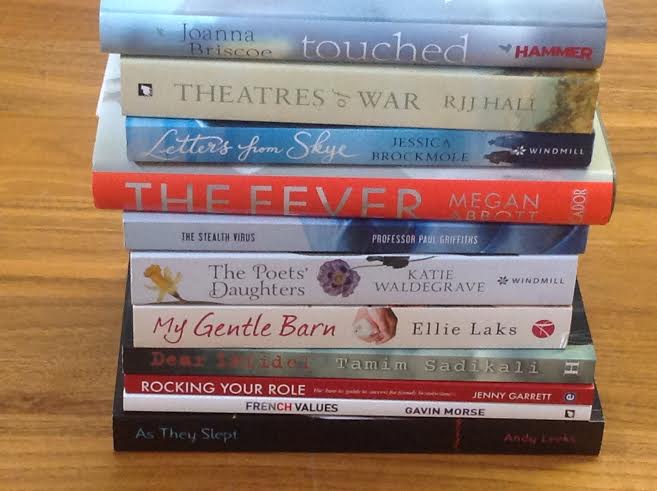
Touched by Joanna Briscoe
This is a gripping, creepy, novel that never lets you go until the end. Highly enjoyable stuff. You won’t even notice the world going by.  Perfect to read in a single sitting


Rowena Crale and her family have moved from London. They now live in a small English village in a cottage which seems to be resisting all attempts at renovation. Walls ooze damp, stains come through layers of wallpaper, celings sag. And strange noises – voices – emanate from empty rooms. As Rowena struggles with the upheaval of builders while trying to be a dutiful wife and a good mother to her young children, her life starts to disintegrate. And then, one by one, her daughters go missing …

Theatres of War by RJJ Hall

Perfect for those who love history and war novels. A very good book.
Winner of The People’s Book Prize (Fiction) 2013/14

On the landing beaches at Salerno in September 1943, two soldiers face the German bombardment together but they come from different worlds: Frank grew up in the backstreets of London but he’s clever and is now an officer; Edmund is a cricketer from a landed family.

Vermillion had fallen for Edmund in Cairo where she monitored German communications. Desperate to see him again, she gets transferred to war-torn Naples. But when Frank discovers an abandoned theatre and stages a revue, she can’t stay away. It proves such a success that Frank is ordered to stay in Naples and put on more shows. Vermillion joins him and her life becomes enmeshed with both men.

While Edmund fights in the bitter winter battles near Monte Cassino, Frank dreams of staging an opera. Vermillion still loves Edmund, but she doesn’t want him running her life. And working with Frank, she experiences the independence she’s longed for.

Vermillion feels fulfilled, but a time is soon coming when she’ll have to choose…

Theatres of War is a love story about sacrifice and duty, and a war story about self-discovery and love. Seen through the eyes of combatants and civilians, it evokes the convulsions of the ‘forgotten’ Italian campaign of World War II.


Letters From Skye by Jessica Brockmole
This is a stunningly wonderful love story, told in a series of letters. Endlessly romantic and the letter format makes the characters feel very real. Wonderful stuff.

Elspeth is fond of saying to her daughter that ‘the first volume of my life is out of print’. But when a bomb hits an Edinburgh street and Margaret finds her mother crouched in the ruins of her bedroom pulling armfuls of yellowed letters onto her lap, the past Elspeth has kept so carefully locked away is out in the open. The next day, Elspeth disappears.

Left alone with the letters, Margaret discovers a mother she never knew existed: a poet living on the Isle of Skye who in 1912 answered a fan letter from an impetuous young man in Illinois.

Without having to worry about appearances or expectations, Elspeth and Davey confess their dreams and their worries, things they’ve never told another soul. Even without meeting, they know one another.

Played out across oceans, in peacetime and wartime but most of all through paper and ink, Letters from Skye is about the transformative power of a letter – the letter that shouldn’t have been sent, the letter that is never sent and the letter the reader will keep for ever.

The Fever by Megan Abbott
This is Megan Abbott’s seventh novel and is her best yet. That is saying something! A brilliant, gripping crime novel. Even the author of Gone Girl, Gillian Flynn likes it. High praise indeed.

The Nash family is close-knit. Tom is a popular teacher, father of two teens: Eli, a hockey star and girl magnet, and his sister Deenie, a diligent student. Their seeming stability, however, is thrown into chaos when Deenie’s best friend is struck by a terrifying, unexplained seizure in class. Rumors of a hazardous outbreak spread through the family, school and community. 

As hysteria and contagion swell, a series of tightly held secrets emerges, threatening to unravel friendships, families and the town’s fragile idea of security. 

A chilling story about guilt, family secrets and the lethal power of desire.


The Stealth Virus by Professor Paul Griffiths
Brilliant, fascinating and food for the brain.

Paul Griffiths, Professor of Virology at the Royal Free Hospital and University College London studied medicine at St Bartholomew’s Hospital in London and has spent his professional life in medical virology. He has an international reputation, unrivalled expertise and insight into the effect that viruses can have on patients and their families. Professor Griffiths uses this experience and stories of real patients to demonstrate how cytomegalovirus has avoided detection and treatment for so long. He introduces you to CMV, an intelligent virus which evolved millions of years ago intending to infect everyone on the planet during childhood, spreading silently throughout the world whilst remaining unrecognised. Professor Griffiths explains how modern living has jolted this stealth virus out of its complacency, rapidly altering the conditions it needs to survive.

Over a period of 100 years (a blink of the eye in evolutionary time) humans have changed their world to become cleaner, longer living life forms which avoid childhood infections, have babies later in life, swap organs during transplantation and even suppress their immune systems with drugs or HIV. Professor Griffiths describes how and why this virus has come out of obscurity to become a top target for elimination. Although you may never have heard its name, there is a good chance that you, your family and your friends have encountered it. After you have heard The Stealth Virus tell its own story, its victims are given a voice too. This book describes how CMV is being confronted and introduces the researchers who will defend us against its insidious and sometimes devastating consequences. This book brings medical virology to life. It is dedicated to those who have encountered The Stealth Virus and to those who have declared war upon it.


The Poet’s Daughters: Dora Wordsworth and Sara Coleridge by Katie Waldegrave
Well researched and fascinating. Waldegrave brings the lives of these two women to life vividly, telling a story that has never truly been heard before. Brilliant stuff.

‘You are the best poetry he ever produced: a bright spark out of two flints.’

Dora Wordsworth and Sara Coleridge, were life-long friends. They were also the daughters of best friends: William Wordsworth and Samuel Taylor Coleridge, the two poetic geniuses who shaped the Romantic Age.

Living in the shadow of their fathers’ extraordinary fame brought Sara and Dora great privilege, but at a terrible cost. In different ways, each father almost destroyed his daughter. Growing up in the shadow of genius, each girl made it her life’s ambition to dedicate herself to her father’s writing and reputation. Anorexia, drug addiction and depression were part of the legacy of fame, but so too were great friendship and love.

Drawing on a host of new sources, Katie Waldegrave tells the never-before-told story of how two young women, born into greatness, shaped their own legacies.

My Gentle Barn: The incredible true story of a place where animals heal and children learn to hope by Ellie Laks
This is an amazing story about healing, hope, love and forgiveness. It is also a powerful story about how well animals can heal things. Highly recommended.


Founder Ellie Laks started The Gentle Barn after adopting a sick goat from a run-down petting zoo in 1999. Some two hundred animals later (including chickens, horses, pigs, cows, rabbits, emus, and more), The Gentle Barn has become an extraordinary nonprofit that brings together a volunteer staff of community members and at-risk teens to rehabilitate abandoned and/or abused animals. As Ellie teaches the volunteers to care for the animals, they learn a new language of healing that works wonders on the humans as well. 

My Gentle Barn weaves together the story of how the Barn came to be what it is today with Ellie’s own journey. Filled with heartwarming animal stories and inspiring recoveries, My Gentle Barn is a feel-good account that will delight animal lovers and memoir readers alike.

Many celebrities including Pamela Anderson, Justin Bieber and Ellen De Generes support The Gentle Barn.


Dear Infidel by Tamim Sadikali
An interesting book on identity. This first book from Tamim Sadkali shows promise.

Two families reunite for a feast on Eid ul-Fitr, the day Muslims celebrate the end of the month of fasting. And boys who grew up together will meet again, as men. As the big day approaches two of the men go to the mosque, one leaves his girlfriend and another watches porn. Nevertheless, they arrive intent on embracing the day. Old enmities are put aside, as they take tentative steps towards each other.

This is a story about love, hate, longing and sexual dysfunction, all sifted through the war on terror. And how we drift from one another, leaving every man stranded across a wasteland of atrophied connections. And so we witness the realities of a post-9/11 world filter down, touch individual lives, combine with some internal tension, and finally spill over.


Rocking Your Role – The ‘How To’ guide to success for Female Breadwinners by Jenny Garrett
A brilliant and informative book for female breadwinners.

This book goes beneath the surface of what it means to be the Female Breadwinner and drags women kicking and screaming out of the closet. Why? Because, being the Female Breadwinner can fundamentally challenge women’s identity. It is the trigger, catalyst and cause for many complex issues that women have to manage. For a successful family life and career, women must address and examine these internal challenges for their physical, mental and spiritual well-being. Find out: where your guilt button is and who is pressing it, what you love about being breadwinner that you were afraid to admit, how you tackle the thorny subject of money, how to cure yourself of Superwoman Syndrome.


French Values by Gavin Morse
An interesting book on culture, identity and the differences between Britain and France.

Gavin Morse is a British national, living and working in Strasbourg, France. French Values is an account of things that may or may not have happened to him while living in the European capital. This is his first novel. It originally started as observations of the pleasures of living and working in a Gallic society. Enjoying writing, Gavin decided to create a novel. In his first piece, he illustrates his cultural views and compares the Ros’ Beefs to the Frogs. Through this fiction, he shares the best and the worst from both sides of the channel.


As They Slept (The comical tales of a London commuter) by Andy Leeks
A brilliant idea that is well executed. A very enjoyable read.

The autobiographical tale of a stubborn, thirty something commuter, who wasn’t prepared to lose a petty argument on Facebook. 
Infuriated by the snoozing passengers surrounding him, Andy posted a status declaring that sleeping on trains is a complete waste of time. His friends disagreed. In a bid to prove them wrong, Andy set out to write a book from start to finish on the daily commute. “As They Slept” is a collection of comical tales of travel and trepidation, guaranteed to make you laugh. In his well received first book, Andy sets out to explain how to eradicate lost property, why women can’t use their pockets, and exactly when it’s ok to lie.
 

howtobeasuccessful_actor_book become How To Be a Successful Actor: Becoming an Actorpreneur

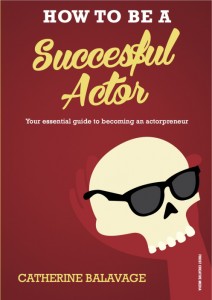
And if you are an actor, or want to be, then check out our editor, Catherine Balavage’s, new book How To Be a Successful Actor: Becoming an Actorpreneur. Here is a a five-star review it got on Amazon

This really is an excellent guide book into the terribly difficult, but potentially rewarding life of an actor. Balavage tackles the often ignored questions that surround the inexperienced and/or young person who wonders what the best road to take is? She starts with the basics that encompass questions about whether to train at drama school (and thereby find the money to do so), or go another route by getting involved with fringe theatre and/or film school films. Throughout she weighs up the pros and cons in a highly informative and intelligent manner that are also highly credible as she is writing from first-hand experience. Her own entrepreneurship into film-making is included and offers fantastic tips and empowerment, to what is often a dis-empowering profession. She also demystifies the perceived ‘glamour’ of working as an actor and says it how it is. A good wake-up call for those out there that crave instant fame!

Her approach is wholly professional and fundamentally knowledgeable: she interviews working actors, alongside well-known casting directors who give an insider-view into what is required to get ‘ a foot in the door’. I would highly recommend this book to anyone interested in becoming an actor.”


 What would you add?

 

Adeel Akhtar Interview For Utopia

Adeel Akhtar interview for UtopiaAdeel Akhtar plays Wilson Wilson in Channel 4’s acclaimed drama Utopia, which returns for a new series this July. Here, he discusses THAT torture scene and what’s in store for season two.

Utopia is back for a second series. Can it possibly be as good as the last series?

Yes is the short answer. The things which you liked about it in the first series are all there again. All the themes it was exploring are back again. The characters are taken further along their overall arc. It’s really interesting to see where each of the characters goes in this series. It really is pretty unexpected. It stays a few steps ahead of the audience in that sense.

Wilson Wilson is a fantastic character. How do you see him?

I seem him as a person who is quite idealistic in how he perceives the world, and I think in pursuit of that idealism he ends up struggling a lot. He definitely takes the path that’s more difficult to go down, because of his idealism. It’s a massive struggle for him. He has a very strong moral direction, and because of that, he finds himself in situations he wouldn’t ordinarily end up in. But he can’t be any other way.

Utopia was received with massive acclaim. Did you know when you were making it that it was something very special? Can you tell?

No, I don’t think so. I think you do something to the best of your ability, and the value of it is in the actual doing of it. When someone says “Action” you just get on with it, and hope that that is translated on to the screen for other people to see. All you can ever do is work as hard as you can on it and make sure you’re doing your job.

The eye torture scene was one of the iconic moments of series one. What was it like to film?

It was rewarding, to have done it. In the moment of actually doing it we were going to go to emotional places that were surprising us. There’s another level of satisfaction, which was that people then talked about it. That’s a good feeling, to know that it’s been seen, and it made an impression on people. You always hope an audience will respond to something you’ve done, but there’s no way of knowing whether or not they will.

What was it like coming back to film the second series? Is it easier, because you know your character and other cast members, and you’re familiar with the style of the show?

It didn’t feel easy, because the journey that Wilson has to go on in the second series is a real challenge. There was a familiarity to it, but just because there’s a familiarity doesn’t make something easier. From an acting viewpoint, this series was a real challenge. But yeah, it was nice to be back with other cast members, and to be back with Marc [Munden, the director].

Is it true that you trained as a lawyer before getting into acting?

I studied law, I got an alright degree, and then I was going to go and do something called an LPC, which is a Legal Practice Course, which qualifies you as a lawyer. But I didn’t end up doing it, because I went to drama school instead. I went to drama school, came out the other end, was out of work for a bit, then found some work, and now I’m playing Wilson.

How did your family feel about you giving up a stable and secure career in law for the notoriously precarious one in acting?

On some level, as much as they look at stuff that I’ve done and appreciate it, there’s always a hope that I’m just going to end up doing something sensible. Maybe not be a lawyer, but at least have a recurring role as a QC or something on TV. Just so they could see me in a suit, looking a little more well-presented, maybe addressing a courtroom. They’ve got their heads round it, but like you said, I think they’d like me to have a stable career. It’s the hope every parent has for their kid, that they are happy and stable.

What do you think you would have been like as a lawyer?

I would have probably been alright. I think I would have done a lot of pro bono work. I wouldn’t have gone in for it for the money. I’ll tell you who I really like – the lawyer Imran Khan. I did my dissertation on stop-and-search powers, and I put in loads of quotes from him. Years later, when I was selling insurance over in Harley Street, he rang up and asked for insurance. He told me his name and I asked him if he was the lawyer, and he said yes. We had a good chat about all the stuff that he did. He’s excellent. He didn’t buy any insurance, though. I’m terrible at selling.

What have been the roles that have meant the most to you over the years?

Wilson Wilson would be right up there. I’m still in the middle of it, so it’s all still a bit of a mystery to me, who he is and what he’s about. Unlike all the other stuff on TV, you can’t put a parameter around this and say “Oh, I understand it,” you’re always going to be trying to figure it out. So Wilson is a character I’m still trying to get to grips with. I’m not even sure he’s got to grips with himself.

At the other end of the scale, I’m currently playing Smee in the new Peter Pan film, and that is so much fun. Every day going there is such a massive release. I can be a bit silly. And way back, when I was at school, and I was 16 or 17, I played Lenny in The Homecoming by Pinter. It was the first time I ever acted, and it was the first time people said “You can do this,” and I thought “Okay then, I will.”

Utopia willbroadcast from 14th July, 10pm, Channel 4.

 With thanks to Channel 4. 


Rose Leslie Interview For Utopia

roseleslieAt the age of 27, Rose Leslie has already won a Scottish BAFTA and starred in two of the biggest global TV dramas of recent years, Downton Abbey and Game of Thrones. Now, she’s starring in the new series of Utopia, Channel 4’s unique, ambitious and acclaimed drama, as the youthful Milner. Here, she discusses the fun of playing pure evil, and why Milner is a character that fascinates her.

The first episode of the new series of Utopia is a bit different, isn’t it? Explain what it’s about.

It is. As a really big fan of the first season, I thought it was a brilliant idea. It basically takes us back to the 1970s and shows us where it all began. We get to see Milner as a young woman, and we get to see why she turns into this ruthless killer. And we see what happens to Carvel as well, and how Jessica and Arby come to be. I was completely hooked by the concept. It’s really a stand-alone episode, and a real treat for the fans.

Milner’s a real hard case, isn’t she? Is it fun to play someone so bad?

Oh it is so much more entertaining playing an evil person than playing a sweet, charming young lady. Before I even went in for the audition, reading some of the scenes and the stuff she does, it was breathtaking. I loved it. As an actor, it was an absolutely thrilling role to play. It was so exhilarating to be such a horrible character.

The 70s are really evocatively recreated. Did you do anything to try and get yourself into a 70s frame-of-mind?

I felt the clothes did a lot of that. The costumes were brilliant – there was a lot of tweed and a lot of beige. That definitely helped me, as did the hairstyling, with the soft curls, particularly at the bottom of the head, that really transported me. And I grilled my parents on what the 70s were like. And I also felt like there was a lot of information that I could use in the script.

The script weaves in some key news stories from the 1970s. It’s very cleverly done, isn’t it?

It is so clever. That was one of the reasons why I was so thrilled to get this part. I think Dennis Kelly is a genius – both his stuff for screen and his plays – and the writing was superb. That’s what hooks the audience. All the garbage on the streets and so in is incredibly evocative of the time, and some of the political intrigue, the way the Airey Neave story is woven in, it’s brilliant. It was a real history lesson for me as well. I was embarrassed about how little I knew of the 70s.

It sounds like you were already a fan of Utopia. Did you watch it when it went out?

I did. I was all over it. It was word-of-mouth for me. I remember talking to a girlfriend of mine, and she told me about this new drama that had started the previous night, and she said that it was unlike anything she’d ever seen on TV before. So obviously that piqued my interest, and I went home and watched it. And the colouring, the direction, the editing, the acting, it was just incredible. So I was a little bit late on the first episode, and then, of course, I watched it every week that it then came out.

When you were cast as Milner, did you then go back and study how Geraldine James had played the role?

I went back and studied it, and of course that was a great excuse to watch the whole series again. So I was very happy to do some homework. But I was also aware that it might become something of a hindrance to then try and pick up her voice and to recreate each mannerism. Of course, as human beings, we develop through time. We develop, we change, and we’re not the same person we were 20 years ago. So I felt that allowed me some artistic license to interpret the character as I saw her as a young woman. But of course it was great to watch Geraldine do her work, and she does Milner magnificently. She sets such a high standard, the thing that really worried me as would I be able to be convincing enough that she would seem to be the same person.

The fascinating thing about Milner and the Network is that there’s a twisted morality at the heart of what they’re trying to do, isn’t there?

Yes, there really, really is. And what’s terrifying is, playing her for a full month, you can see the reasoning, you can see where she’s coming from. They’re doing it for the greater good. They’re doing it for the longevity of our species, giving it the chance to thrive. You can totally get swept up in that. But then you see the lines start to blur, you see what she has to do to make things happen. They can’t afford to have friends, they can’t trust anyone, they have to commit the most terrible acts. That makes you step back and think. But that’s the beauty of Dennis Kelly – he writes it in such a beautiful way, you’re able to see both sides of the argument.

You’ve had a pretty amazing few years, starring in Downton Abbey and Game of Thrones. Those experiences must have changed your life.

They really have. I’ve felt hugely privileged, from the bottom of my heart, to have been a part of those two shows. They were wonderful platforms – being part of something that’s popular is a wonderful springboard for any actor. I had an absolute blast on Game of Thrones – they were the best three years – meeting all these amazing people, and working with fantastic crews, and going to these incredible locations. I would never otherwise have gone to Iceland, and now I have a great love for the country.

Is it true you had no idea how big Game of Thrones was until after you’d auditioned for it?

Yes, and it’s the first time in my entire life that I’ve been so happy to be ignorant. If I’d had any idea just how popular it was after the first season, I think I’d have been far more nervous walking into that room. Luckily, it just felt like another audition to me. By the second round, I’d clued up and done my research, and I managed to get the part. But the first stage is always the toughest, and I walked into that room blissfully unaware. It could all have gone very differently.

Do you get recognised a lot now? How do you find that experience?

I get recognised quite a bit from Game of Thrones, and so far it’s been great, because the fans are so passionate about it. People just want to come up and have a picture taken with you or have a chat, because they love the show. It’s been a great experience. Now that I’ve said that, I’ve jinxed it. I’m going to get eggs chucked at me and be abused in the street.

Your first big project was New Town, a Scottish drama set in Edinburgh. You won a Scottish BAFTA for that. You must have thought this acting game was pretty easy at that stage.

Noooo! I think the wonderful thing about having gone to drama school is they made every single person well aware of just how cut-throat and hard this industry can be. So I was all too aware that it’s a marathon, not a sprint.

Are you a proud Scot?

I am a proud Scot. I consider myself Scottish, but I also consider myself British, and I want Scotland to stay within the UK. I’m very passionate about that.

Which actors do you particularly look up to? Who would you really like to work with?

There are so many that I’d like to work with. I think Andrea Riseborough is astonishing, such an amazing talent. I’d love to work with her, and with Cate Blanchett. I’m a huge fan of Mark Rylance too.

What do you watch for your own entertainment?

I have just finished Breaking Bad. I can’t believe I was such a latecomer to it. It was phenomenal, every single episode. I’m ashamed to say I watched the whole thing, every series, in about five weeks.

Utopia will broadcast from 14th July, Channel 4, 10pm.


Five Mistakes Actors Make That Stop Them Getting Work

Getting work as an actor is hard. With long periods of unemployment and vast competition. This was the main reason I wrote my book How To Be a Successful Actor: Becoming An Actorpreneur. The odds are not good but you can tip them in your favour. You can make your own work, work on your skills, get your name out there. They say success is opportunity meets preparation. So here are my top five tips to make sure you are prepared and stop making the mistakes that stop you having the best career you can. Here are five mistakes actors make in their career that stop them being successful.


howtobeasuccessful_actor_book become How To Be a Successful Actor: Becoming an Actorpreneur

Arrogance

Far too many actors are arrogant. Especially just after they have left drama school. Thinking you are the best actor that ever walked the earth is not going to convince anyone else to hire you. No one likes arrogance. Always under-promise and over-deliver. Be humble and modest. The traits that make a good human being also make a good actor.


Marketing Yourself Wrong

Yes, you are an artist but you are also a product. You have to brand yourself correctly so people know what you are ‘selling’. If you are Irish and want to market yourself as an Irish actor you must be prepared for only getting Irish roles. People will try to put you into a box but you can do yourself a favour by making yourself versatile. If you don’t want to be known as a certain type of actor, (like Australian, Irish, etc) don’t market yourself that way. Play up to your strengths and downplay what will limit you getting mainstream work.

You must also update your head shots, CV and showreel at least yearly. Don’t forget to update the various online acting sites you may be on every time you get a job.


Not Continuously Working On Your Skills

Actors can go months, and even years without working. If you do not work on your skills when unemployed not only will you be rusty when it comes to audition and getting work, but you will also not be as confident. Your CV will also be lacking. You are a business, invest in yourself. Even if it is getting a camera and making some short films with friends.


Thinking The World Owes You a Living

You are not special. You do not deserve to be a super-successful world famous actor. The world does not owe you anything. A sense of entitlement is not going to do you any favours. This was the main piece of advice American casting director Daryl Eisenberg gave me for my book on becoming a successful actor. Don’t think you are better than anyone else.


Being a Jerk

No one wants to work with horrible people. The film industry is tiny, as is the theatre and TV industry. If you are rude, horrible and difficult to work with then you will have a pretty short career. Be nice. Manners cost nothing.


Catherine Balavage is an actor and writer with over ten years of experience in the industry. Her book, How To Be a Successful Actor: Becoming an Actorpreneur, came out in June this year. She also co-directed and wrote her own feature-length film, Prose & Cons, which will be out later this year.


Frost’s Editor Catherine Balavage Writes How To Be A Successful Actor Book

Frost’s Editor, Catherine Balavage, has written a book on How To Be A Successful Actor. It is called How To Be a Successful Actor: Becoming an Actorpreneur. It has gotten as high as number 5 on the Kindle charts under Stage & Theatre. It will also be released on paperback and Smashwords soon. Handpicked Future did a great piece on it and Catherine was on the front page of the Entertainment section in The Huffington Post with her Actors Who Make Their Own Work article. You can also read an article by Catherine written on her own blog.

howtobeasuccessful_actor_book_cover The book is available here for UK readers and here for US readers. It is also available worldwide.

Cover art by Steve McAleavy


Top Schools ‘Too Dominant’ In Acting

Sir Peter Bazalgette, the chairman of Arts Council England, has said that the British film and TV industries are ‘too dominated’ by actors who have gone to private schools and that state school pupils have too few opportunities to have a career in the arts.

He told the Sheffield Doc/Fest: “I personally don’t see why all the male actors getting Baftas should come from Eton, Good for them, and great actors, but why should they all come from Eton?”

HOMELAND_series 2

Damien Lewis went to Eton.


Actors who went to Eton include Damian Lewis, Dominic West, Tom Hiddleston and Eddie Redmayne. Actors who went to other private schools include Rory Kinnear, who went to St Paul’s, Benedict Cumberbatch, who went to Harrow and Hugh Bonneville, who attended Sherborne.


12 Years A Slave actor Chiwetel Ejiofor went to Dulwich College – where Sir Peter went to school.


“Seven per cent of the population go to private schools, and in those private schools they get an absolutely, crackingly good education in the performing and visual arts. Ninety-three per cent don’t go to those private schools and, in some state schools, people get a wonderful education in visual and performing arts as well. But in quite a lot of them they don’t.


Visual performing arts have been marginalised in some areas in the curriculum as the curriculum becomes more instrumentalist and focused on what’s known as the Stem agenda – science, technology, engineering and maths. If there is one message, we say Steam, not Stem – put the ‘a’ for arts in.”


Dame Helen Mirren also recently warned that acting was becoming the “prerogative only of kids who have money”.


Check out Frost editor, Catherine Balavage’s, new book, How To Be a Successful Actor: Becoming An Actorprenur, which tells you how to become an actor, no matter what your background.


What do you think?