
Emma Dyson Interview: Acting Advice From Spotlight’s Career Expert

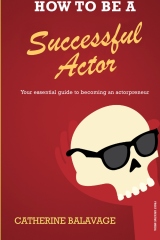
acting tips, acting career, acting, advice, book, how to be a successful actor, quit, Catherine BalavageI interviewed a lot of great casting directors, actors, directors and experts in the acting industry for my book How To Be a Successful Actor: Becoming an Actorpreneur. One of those interviews was with Emma Dyson who gives actors career advice for Spotlight, the main casting site for actors and casting directors. Spotlight is also the essential casting site for actors, if you are not in it, you are invisible. An extract from the interview is below. Read it and learn.

Emma Dyson works for the main casting website for actors in the United Kingdom, Spotlight. She also does one-on-one talks for Spotlight members to give them career advice.

So tell us about you.

I’ll tell you a bit about my background. I trained as an actor at the Guildford School of Acting in the 1990s and then, having got the training out of my system, I quickly realised I couldn’t be an actor. I probably didn’t have the talent or the perseverance or the backbone. Then I was an agent for six years. Then I left being an agent thinking that I would go into a different career, something entirely different, but every job that I was getting was pulling me back to the business so first of all I was working at my old drama school back at Guildford, I was the personal assistant for Peter Barlow who was the then assistant director, and then I left two weeks into the job because he was leaving. Subsequently a casting director put me in touch with Thea from United Agents, and I was temping at United Agents sort of off and on for about six months which is when I got the job here at Spotlight being the PR manager.

I used to do castings within the agencies and get the Spotlight breakdown and put roles and the actors that fit them together. It was interesting, having worked in an agency, because the first point of contact that you do in casting work is Spotlight. Now I am very happy here as PR manager and I go to the drama schools and talk about acting and Spotlight member benefits. How to get a good CV and photo, what type of letters to write to casting directors, agents. Time and time again they are incredibly green. They are in their final year of drama school and have hardly written any letters to agents or casting directors. They leave thinking ‘Here I am, come and get me!’ it just doesn’t work out like that. It’s really important and I empathise that it is very important to write letters, to hopefully reach your future employer, who will, across the course of your career, become your friends, and keep re-employing you.
acting, acting advice, acting book, how to be a successful actor, actorpreneur, auditions, castings, casting breakdown, how to be an actor, It is such a shock when people leave drama school. They don’t really know what to do.

I know and it is such a shame. They go to Central, LAMDA and RADA. Those are very central London schools. They get so spoilt for choice because it’s awash with agents and casting directors, it carries the kudos of being at the best drama school. Where I was at Guildford  we were terribly cut-off  despite the facts it’s only a twenty minute train journey, but, we felt very cut-off.  It’s a shame that schools that are not in central London get kind of left out and not thought of. There are some interesting actors in regional schools. The Welsh college is a very good school with a lot of good courses and a brilliant reputation. Conversely Rose Bruford has some really good students and that is in Kent.

I think you have got to train, you have got to workshops, you have got to keep classes going. Try to teach yourself as many skills and techniques as possible because the more skilled you are as an actor the more you should work. I always like the actors who go into musical theatre, straight theatre, film and do a bit of everything,  And what we are noticing is that there is more of a vogue for musical theatre and films are being made from those musicals. I know of a few film directors who are making films which are musicals. It is kind of a renaissance or a nod to the 1950s. The MGM sort of musicals. Musicals are very popular.

So learn to sing

Learn to sing if you can, and if you can dance then I think you will probably work all the time.

Daryl Eisenberg, an American casting director, told me two things when I met her: One, you are not special. Don’t think you are more special than anyone else and are just going to make it,  and two, whatever is stopping you from getting a job, remove it.  So if you can’t dance then learn to dance, etc.

I think that is just a roundabout response to what I just said. If you do just keep yourself as skilled and as tuned in as possible then you will get work. You have to do as much theatre as you can and as much film as you can. Not only that but I extend it to: if you are a London actor or a London based actor see as much art as you can, culturally exploit everything which is on your doorstep. Because I think that tunes you in to everything. It keeps you aware of what is current. You pick up on working trends and that reflects across the arts.

Tell me about Spotlight events,

Yeah, we do events. Being PR manager. ..We did one in October in conjunction with the London Film Festival. I got three casting directors. I got Karen Lindsay Stewart and Lucinda Syson. It was held at the British Film Institute and it was chaired by Pippa, my boss, and myself, it was just about how to become a working actor, keeping your CV up to date, how to get an audition, and also I do seminars where I talk a lot about being a working actor, how to network, all of those things, and at Spotlight offices on every Monday we have Spotlight Mondays where I operate 20 minutes chats with people who are stuck in their careers. They are incredibly popular. They always sell out very, very quickly. And the seminars are sometimes in conjunction with Actors Expo or other bodies. We just hold little seminars in house.

How do you break through?

I think it depends because some actors burn out very quickly, and other actors, they see an opportunity and they become very successful and popular when they are in their forties. So I think it just depends because there is so much reliance on good luck and you have to have a lot of charisma, a lot of talent. But then the rest of it is luck. I think you can make your own luck, but a lot of it is out of your control. Probably one of the reasons that I didn’t become an actor was because I couldn’t stand being in a career with no control.

To answer your question, I think it depends on many things. They have to have a good agent behind them and the rest of it I think is luck.

What is the most common mistakes actors make?

Not being proactive, not writing letters to casting directors. Even with a good agent you should still do your own work. Not looking after themselves, not working out, not eating well, not networking, I think all of these things, the actor has to do that. It is part of their homework.

How many actors are on Spotlight?

Just over 40,000


For the rest of the interview, and great interviews from our acting industry professionals get your hands on a copy of How To Be a Successful Actor: Becoming an Actorpreneur now.


Five Things Aspiring Actors Should Do

acting tips, acting career, acting, advice, book, how to be a successful actor, quit, Catherine BalavageTake Advantage of Your Novelty Value.

You are new and shiny. Take advantage of this. Casting directors will give you an audition just because they have never seen you before. Not so much after you have been auditioning for years. Getting noticed when you are new can really give you a foothold into the industry as every agent, producer and casting director wants to discover the Next Big Thing. You have about six months until the next wave of graduates enter the ring. Sounds brutal and unfair? That’s because it is.

Get An Accurate Headshot.

I cannot stress this enough. Get a headshot that looks like you. I have been on the other side of the casting divide and have always been shocked when an actor comes in with a headshot that is either ten years old or airbrushed into oblivion. You are an actor, not a supermodel. The key to a good headshot is to look like yourself, only better. Have spots and dark circles removed, nothing else. Actors are hired to play real people, not robots (usually). Not looking like your headshot is also the quickest way to upset a casting director. They will look bad in front of the producer or director. Many productions also cast from pictures and, if like the women who was hired to play 1980s era Madonna on a production I was also cast in, you now look completely different than you do in your picture that casting director will never hire you again.

Write To Every Casting Director Who Ever Lived.

Slight exaggeration but you get my point. Start your research. Watch TV and film and write down who the casting director is. Do the same for theatre. Do not just throw mud at the wall however, don’t contact casting directors who only do kids TV shows if you are 30. The key is to contact casting directors who cast your type. Be concise and to the point and remember to include your headshot and contact details. This brings me to my next point…

Know Your Type.

I know, I know. You are an actor dahling. You can play any role. But the acting industry does not work like that. Casting directors have to put you somewhere and the brutal truth is that the acting industry is probably the only industry that can actually discriminate on how you look. And it will. Catherine Zeta Jones may be a lass from the Welsh valley but she is frequently cast as Italian or Spanish because, in a superficial stereotypical world, that is what they think she looks like. I get cast in period roles a lot because I am slim and pale. So work out your type. Ask friends and family. Make a list of who you are and who you are not and market yourself accordingly. It is not all bad however, getting typecast means getting work, and you can always branch out into other roles later.


Catherine Balavage has been an actor for over ten years. Her book on acting, How To Be a Successful Actor: Becoming an Actorpreneur, has gotten numerous five star reviews and has been called the ‘best advice available’ by numerous sources.


Naomi Watts: I Was Ready To Quit Acting

acting, acting advice, quit acting, Naomi WattsSome actors find success easy and others struggle for years. Naomi Watts definitely falls into the latter category. The Oscar nominated actress used to drive for hours to pick up bad scripts people refused to send her. She regularly doubted that she would ever have a career after moving to Los Angeles as things were so tough.

“[I went from playing leads] to being someone who had to drive for two hours to get two pages of really bad dialogue in some TV movie, just because they couldn’t be bothered faxing me the pages. And I did that for pretty much ten years. When it was like, you know what, I can’t handle it, I’m giving up. But every time my bags were packed, I’d get a call saying, ‘You’ve got this part.'” she told InStyle magazine.

The 46-year-old actress took anything she was offered when she moved to LA.

“Oh, listen, I did not have any snobbery about anything. I just wanted to work. I always had the attitude that work begets work and one thing would roll to the next, I think I knew I had something. But I certainly had plenty of doubt.”

The star did not get her big break until David Lynch cast her in Mulholland Drive solely from her photograph.


If you are an actor then check out How To Be a Successful Actor: Becoming an Actorpreneur. It is available in print and in all eBook formats on both Smashwords and Amazon


Why The Best Thing You Can Do For Your Acting Career Is To Quit

acting tips, acting career, acting, advice, book, how to be a successful actor, quit, Catherine BalavageI know what you are thinking: what? That makes no sense. But bear with me. I have been acting for a long time. Since I was a teenager and in that time I have had some amazing parts, met amazing people and worked on projects that I was proud of. Also in that time I worked with a lot of jerks, had some terrible auditions, worked on awful projects and had some really awful experiences. My hair was always in a state of recovery because some over-zealous make up person had gone to town on it, my breasts were always being taped down by gaffer tape because costume people ‘didn’t know what to do with them’ and I was working too damn hard in an industry where the pay had not only not risen, but was actually the lowest in fourteen years. I kept almost getting the life-changing parts but lost out at the final hurdle. To put it frankly, I had had enough.

The last straw was working on a film on which I sustained a serious back injury. I damaged a disc and also had nerve damage. Over a year of painful physiotherapy followed. It was a nightmare. It was the last straw. ‘I quit’ I told my husband. ‘I just can’t do this anymore’. But it was only then the moment of clarity came; ‘Don’t quit’, my husband said, ‘You are too talented and have too much to offer. Take a break and then go back to it’. Cue the previously mentioned moment of clarity. He was right. Quit, but then go back.

The truth was, I just wasn’t into it anymore. I hated auditions, I hated working, I hated all of the BS that came with acting. So I quit, wrote my acting book, and by the time I was ready to go back I was in love with acting again. I wanted to make films again. I wanted to be on a television set. The break gave me the distance needed to realise why I had become an actor in the first place. I rediscovered all of the things I loved about working in the entertainment industry, which is the only way you can deal with all of the stuff you don’t love about it.

When your heart isn’t in something it comes across. You just have to take a break and go do something else for a while. Get a good-paying job and build up your bank account, travel, learn a new skill. Do anything but quit acting. It just might be the best thing for your acting career that you ever do.


If you are an actor then check out my book How To Be a Successful Actor: Becoming an Actorpreneur. It is available in print and in all eBook formats on both Smashwords and Amazon


Stupid Things People Write In Acting Casting Breakdowns

Stupid Things People Write In Acting Casting Breakdowns, acting, auditions, castings, acting advice, acting book, casting breakdowns Ah, casting breakdowns, audition notices. Whatever you want to call them, they sure can frustrate. An actor will generally spend more time applying for acting roles than acting or even attending auditions. Acting is a game of numbers and applying to casting calls can be soul destroying indeed. Especially when they include any of the criteria below. Luckily I can find the humour in it. Like my dad says, ‘If you don’t laugh, you’ll cry.’


Must be able to convey emotion. Jeez, that will be hard, it’s not that actors are trained in conveying emotion or anything.

We want real people, not actors. Really? Then why advertise on an ACTING JOB SITE. Idiot.

Nudity is required. All of the time but generally only for women.

Payment for lead actor only. Great, everyone else can just live on fresh air and pay their rent with fairy dust. That’ll work.

Female wanted. Character name: “The Girl”. Because in real life women are not known by their names, only by their gender. Oh, and they are ‘girl’ no matter how old they are apparently. Which is fine, because most of the people behind these castings want an 18-year-old. I wrote an article on this problem in the acting industry here.

Must be able to act. Really?

For women: Must be slim. Because a persons body mass impacts directly on their acting talent apparently.

For women: Must have long hair: Read: must be fuckable. So many castings just suit a stereotypical male ideal of female beauty. It is so sad

No acting experience needed. Because why hire actual actors when you can just hire someone off the street? It is not like we are trained professionals or anything.


These came just off the top of my head. I will continue to write about silly things in casting breakdowns in the hope that they improve somehow. Please add your own casting breakdown fails below or email them to frost magazine@gmail.com and I will include them in the next post. Let’s try and change the industry, even if we have to use tiny baby steps.


If you are an actor then check out my book How To Be a Successful Actor: Becoming an Actorpreneur. It is available in print and in all eBook formats on both Smashwords and Amazon


Amanda Seyfried: Being ‘Overweight’ Has Affected My Acting Career

Want to know how hard it is to be an actress? Then just look at how slim Amanda Seyfried is and then read her tweet below.

The Mean Girls actress went on to say in an interview with Elle UK.: “I don’t have to look like a supermodel. I don’t have to have those abs, the camera doesn’t see that. But because we have all been designed to want these things, I’m a victim of this stuff, too. I’d be lying if I said I wasn’t constantly aware of what I’m doing with my body.”

Amanda_Seyfried_2009

It is very disappointing that Hollywood, and the media in general, cannot get over their cookie cutter one-size-fits-all view of beauty. Amanda Seyfried is not ‘overweight’. I understand that you have to be in shape and healthy to act and the camera really does add 10 pounds, but the world would be a truly horrible world if we all looked the same. Hollywood: take note.

If you are an actor then check out my book How To Be a Successful Actor: Becoming an Actorpreneur. It is available in print and in all eBook formats on both Smashwords and Amazon. It has had 5 five star reviews. 

Russell Crowe: Female Actors Should Act Their Age. Meryl Streep Responds

There has been some uproar after Russell Crowe said that female actors should act their age. Meryl Streep came out in support of him and The Guardian did a great quiz on actors and playing age.

Russell said in an interview with the Australian Women’s Weekly: “To be honest, I think you’ll find that the woman who is saying that [the roles have dried up] is the woman who at 40, 45, 48, still wants to play the ingenue, and can’t understand why she’s not being cast as the 21-year-old, Meryl Streep will give you 10,000 examples and arguments as to why that’s bullshit, so will Helen Mirren, or whoever it happens to be. If you are willing to live in your own skin, you can work as an actor. If you are trying to pretend that you’re still the young buck when you’re my age, it just doesn’t work. I have heard of an actress, part of her fee negotiation was getting the number of children she was supposed to have lessened. Can you believe this? This (character) was a woman with four children, and there were reasons why she had to have four children – mainly, she lived in a cold climate and there was nothing to do but fornicate all day – so quit arguing, just play the role!”

Russell_Crowe female actors should act their age

Unfortunately that is not right at all. While some women will not want to play older, I have met a few, the roles for women are usually terrible when under 40: girlfriend, stripper, ‘the girl‘, a whore or merely window-dressing. When a women is over 40 the roles do not realistically reflect women’s lives. We are usually the mother, grandmother, crone or witch.

Jezebel blogger Rebecca Rose had this to say: “ALERT: Hollywood movie actor person Russell Crowe is fed up with all the old ladies who dare to want to be cast as something other than old spinsters or whatnot. Quit complaining that you’re cast in a role where your character has ‘nothing to do but fornicate all day’ and make a bunch of babies. Stop demanding that film-makers try to expand the depth of your character beyond ‘broodmare’. Just play the role, OK? Funny how Crowe doesn’t bother to offer any opinion about the mind-boggling legacy of Hollywood men playing romantic leads to women 10, 20, 30, and sometimes 40 (!!!!!) years younger than them,” Rose added. “Because it’s clearly the sad old women daring to pretend they are outside their actual birth ages that are ruining Hollywood … Thanks Crowe for reminding us, yet again, that women are always held in contempt for doing anything remotely similar to what their male counterparts do without reproach.” Very good points. Men do not tend to ‘play their age’ and their on-screen wives are usually significantly younger than them.


Amy Gray wrote on Junkee.com,  “The ‘ingenue’ roles Crowe refers to are the only ones readily available for women; on the flip side, the majority of male characters in film and TV are aged between their 30s (27%) and 40s (31%). That could be because we’re more likely to want to watch lead characters based on their fuckability – and the older a woman gets, as any executive will tell you, the less faceable she becomes.” Crowe is 50 and also said “The point is, you do have to be prepared to accept that there are stages in life. So I can’t be the Gladiator forever,”


What do you think?

If you are an actor then check out my book How To Be a Successful Actor: Becoming an Actorpreneur. It is available in print and in all eBook formats on both Smashwords and Amazon. It has had 5 five star reviews. 


Sharon Horgan Interview for Catastrophe

We love Sharon Horgan at Frost. Funny and endlessly talented, we can’t wait to catch her new show, Catastrophe. Find out more in the interview below.

Explain a bit about Catastrophe. What’s the concept of the series?

It’s an unromantic look at a romance, I think. It’s about a couple who meet on a one night stand, and end up spending this great week together, and that should be it. But she gets pregnant, and he decides to do what he thinks is the right thing and stuck around. And she’s happy for him to lend a hand, as she can’t really be on her own. So they have this speed-life version of a relationship, where everything starts going to shit from the moment they get together. But the way it differs from a normal relationship is that they don’t really know each other, they’re just getting to know each other while all this shit’s happening. Going to have a pregnancy scan and getting bad news is hardcore enough with someone you’ve been with for years. But having to do it with someone who’s almost a stranger to you… And as the series progresses, more and more catastrophic things happen to them. And they’re slowly falling in love while all this shit’s going down.

 Catastrophe_RobDelaney_SharonHorgan--(None)_A2

Where did the idea come from? Why did you want to write this?

I guess because of my situation, and Rob’s situation, and the fact that you kind of want to write about what you know. I knew what sort of material he did with his stand up, he knew the kind if stuff I did, and we just figured this subject matter would suit our styles the best. And we both had a series of shitty things happen to us in our relationships or in our experiences as child rearers, and we felt like it would be nice to bring people a warts-and-all picture of a relationship. Still romantic, still a love story, but a real version of it.

Am I right in thinking that you and Rob met over Twitter?

Yeah, that’s right. I started following him because Graham Linehan had retweeted him a few times, and I found him extremely funny. And totally filthy. And then I noticed he was following me, and then he got in touch on a private message saying he liked what I did. I thought that was sweet, and when I was over in the States we decided to meet up – it’s always interesting,meeting people who kind of do what you do but in a different medium.And then we just kept meeting up, over the years, and eventually found the right thing to collaborate on. But that was kind of scary when we started writing – you never know whether these things are going to be a disaster or not. It can be really hard to write with someone, it’s very intimate and exposing. But the relationship worked immediately, it felt fun and easy.

How did that process work? Presumably you were separated by the Atlantic?

Yeah. For the Pilot, we talked a lot across the Atlantic, and then I was in America working again, and we grabbed what time we could. And then, for the second episode, Rob was over here for a while, and then we went back and forth over Skype. When Channel 4 said they wanted to do the full series, we wrote all the first drafts on Skype. We Skyped each other the whole time. But then we kind of realised that you need to be in a room, reading the script aloud, making changes as we’d go. So we did a lot of rewriting when I was over in LA. But now he’s moved here, he lives here now, which makes it much easier.

Did you find that you each tended to write more for your own characters?

I don’t think it did pan out like that. Maybe a little bit initially. What we did end up doing was rubbing our corners off a bit. If I’d write something that sounded a bit harsh, for either character, he’d give it a bit of California sweetness. And if he wrote something that I thought sounded too warm and American, I’d write a bit of Irish acerbic into it.

Judging from the trailer, your character isn’t going to have the most pleasant pregnancy. Is that partly based on your experiences? What were your pregnancies like?

I would say pretty tricky. But it wasn’t just mine that we based it on. We used mine and Rob’s wife’s experiences, we mixed it all in. Any shit that happened to me we multiplied by two, because we had another pregnancy to steal from as well. But you ask any woman who’s been through it. There won’t be too many rosy stories in there. I got knocked over by my dog and broke my knee. My pelvis parted, so I was on crutches for most of it. My second one, my ribs felt like they were splitting because My baby was so massive. A lot went wrong – the same with Rob’s wife – which is why we were able to throw that all in there. I know there are women out there who loved being pregnant, but that wasn’t my experience.

While you were filming, did you have to wear a bump that grew steadily bigger throughout the series?

Yes. I had three or four bumps over the series. It was good, because it genuinely felt incredibly uncomfortable, especially the really big one. It was really heavy, and it did make me relive it, because my back was fucked at the end of it, and I remember feeling exactly the same at the end of the pregnancy. But it worked – whenever I needed to be grumpy and fed up in character, I generally was.

The show’s got a great cast, including Ashley Jensen and the great Carrie Fisher. That must have felt so exciting, getting them on board.

Yeah, it was. It kind of felt like that for everyone who came on board. Every time we got the person we really wanted, we were pinching ourselves. Everyone in the cast is phenomenal, top of their game. But we did end up feeling “Shit, why weren’t they in it more?” with every supporting character. They’re all actors you want to see more of.

Carrie Fisher’s a legend, isn’t she? We were madly excited when she came down on set. We were all acting like dicks. We were running around like grinning weirdoes. I was going over her lines with her, lying on a bed by her side because she was a bit jet-lagged, and I felt like “Yeah, this is it. I’ve reached the heights now.” And Ashley is just incredibly funny, and great to be around. She’s a lovely,. Funny, warm presence all the time. Mark Bonnar, you can’t take your eyes off him. I can’t wait for people to see it, just for the supporting cast.

In the past, you’ve done a couple of factual programmes for Channel 4. Is that something that you’d like to do more of in the future?

No. I really loved that they asked me to do it, and allowed me to make documentaries on whatever I wanted. I hooked up with my friend, Chloe Thomas, and we went out and talked about the stuff that we were interested in, and our own experience. And at the time, that was motherhood, and mid-life crises, and marriage, so those were the three films we made. But it’s not really something I want to pursue any further than that for now. I said what I had to say. And it’s hard work! It’s tough, because you’ve got no script, and a lot of it is built in the edit, and a lot of it is down to chance. These are real people that you’re dealing with, you have to tread carefully. I had a great experience, and I’m glad I got to do them, but I think I’d rather just watch that sort of thing from now on.

In your body of work, what are you most proud of? And where does Catastrophe sit within that?

I’m still very proud of Pulling. It was the first sitcom I ever made, and it was a situation where someone took a leap of faith, and let us have a go. So we ended up making something that we really liked, and had enormous fun doing, with the people that we wanted to do it with. And Catastrophe, for me, feels very similar. I felt with Pulling that I couldn’t have made it at any other time, and I think with Catastrophe, I couldn’t have made it even three or four years ago. It feels like the perfect thing for this moment, for the stories that I have to tell. It’s the same thing, just being given proper creative scope by Channel 4 to make the show that we wanted to make. I guess we’ll have to wait and see now what people think, but it was an enormous pleasure. I felt as emotional at the end of filming as I did at the end of Pulling, just the feeling that I’d really, really enjoyed it and I was very lucky.

Catastrophe starts on Monday 19th January at 10pm on Channel 4