
Taking Small Steps To Improve Your Health

Many of us whose waistline is on an expansion mission know there are simple solutions to rein in weight gain. In many cases, a healthy lifestyle is seen as being too much effort, but the truth is that just a few small changes to lifestyle and diet can see a massive difference to health and wellbeing and in most cases you will hardly notice a difference to daily routine.

health, health tips


Why is it important to stay healthy?


Eating properly and having the right amount of exercise are key to your ability to fight off illness and disease.  The immune system needs the right amount of nutrients to remain strong in order to work efficiently, but it is also hampered when you are overweight and out of shape.  Additional factors to consider if you want to improve your health include the damaging effects of smoking and alcohol consumption.  Both of these can lead to illness and also reduce the effectiveness of your immune system.


A healthy diet


Following a healthy diet will mean that you are providing your body with all the nutrients that you need to stay in good health.  With plenty of fruit and vegetables in your diet it will be much easier to get the right nutrients.  The recommended daily amount is around five portions a day, but some scientists are now recommending that people extend this to seven portions a day, with just two of those as fruit.  However, if you are one of those people who rarely eats fresh fruit and vegetables, the first step is to include just some each day.  Over time, you can build this up to the right amount.


In addition to fresh fruit and vegetables, it is a good idea to make a few swaps so that your unhealthy choices are suddenly much better for you.  One example is fries.  Replace these with jacket or boiled potatoes and you will cut your fat intake dramatically.  White bread can be swapped for wholegrain and you can opt for brown versions of rice and pasta instead of the standard white.


For some it can be difficult to get the balance right, particularly if there are underlying health issues.  Herbal and nutritional supplements can be useful here.  A good multivitamin can help to redress the balance, but you can also incorporate herbal teas as an easy way to add the benefits of herbs to your diet.  Jasmine Tea, for example, is considered to be very calming and perfect for those who suffer from stress and anxiety, both of which can have a negative effect on health.


Don’t forget exercise!


Finally, make sure that you get regular exercise.  The jury is still out on just how much exercise a person needs but the good news is that you only have to go for a good walk a few times a week to see a difference.  Exercise does not have to be hard work or boring – take up cycling with the family or even try something like ballroom dancing.  You will be having so much fun you might not even notice the pounds and inches slipping away!


How To Create The Perfect All Year Round Garden

gardeningHaving the perfect garden all year round is something that many homeowners dream of, giving them an outside space that can be admired whatever the weather. Gardens created with the varying seasons in mind can be incredibly low maintenance once the initial planting has been done, and offer households a real haven that will attract a wide range of wildlife throughout the year.

A year round garden is also ideal for those who are looking to sell their home; a low maintenance, but attractive, outdoor space can be tempting to prospective buyers, and homeowners will be assured of a great-looking garden, no matter how long their house takes to sell. The perfect garden can be a deal breaker when it comes to real estate; a badly kept outdoor space risks putting buyers off while a well-kept plot, which they can imagine themselves using and enjoying, can sell a whole house.

Planting a year round garden

The key to a year round garden is maintainability; it should make the most of plants and features that will look good in every season with very little upkeep, and it’s a great idea to bed flowers that will come back with the changing seasons without the need for constant replanting. This will give gardens a continual new lease of life and bring bursts of color no matter what the weather’s doing. Narcissi, or daffodils, can be planted in the fall and will bloom come spring. Once planted, narcissi will continue to flower each year, creating a beautiful display of white, orange, and yellow with little repeat effort. Similarly, crocuses, snowdrops, peonies, sedum, and the Siberian iris will return year after year. These blooms, known as perennials, are a dream come true for the year round garden.

Shrubs are a great addition to any garden, helping it to look lush and green whatever the season, while a well-kept lawn can also make a beautiful focal point, and will prove a huge selling point to any prospective buyers. Landscaping is another great way of ensuring a garden’s suitability all year round. Carefully planned rockeries, patio areas, water features, and themed beds can help homeowners to create their ideal gardens with very little effort, allowing them to keep to a strict, easily attainable, plan.

Maintaining a year round garden

It is essential for homeowners to keep on top of simple gardening chores such as pruning, weeding or using a weed eater to maintain the pests on the lawn (we personally use black and decker weed eater), and raking, ensuring that their gardens remain smart and attractive. Even low maintenance gardens require some effort, after all, but it really is worth it to create a space that families can enjoy day after day.

Another vital task is ensuring that garden tools are kept in good working order. This includes storing them properly and taking the time to clean them after every use, and will save money on costly repairs and replacements further down the line. Maintaining tools also means that they will be ready for use at any time – perfect for homeowners expecting prospective buyers. It is particularly essential that lawnmowers, which do the biggest job in the garden, are kept well maintained and in working order; they should be stored somewhere secure and dry, and gardeners should take care to replace parts as soon as they begin to wear.

Online retailers, such as Pat’s Small Engine, generally stock a ready supply of lawnmower parts, gardening tools, and special clothing, as well as advice for maintaining more complex equipment; it has never been simpler to keep a garden, and its tools, in fantastic shape. A year round garden needn’t, and shouldn’t, take all year to get right. However, with a little thought and general upkeep, it can be enjoyed whatever the season and will make a great selling point for any home.


Why Mothers Stop Breastfeeding

GentleIt’s not your imagination– all babies go through a difficult period around the same age. Research by Dr. Frans Plooij Ph.D. and Dr. Hetty van de Rijt Ph.D., authors of The Wonder Weeks: How to Stimulate Your Baby’s Mental Development and Help Him Turn His 10 Predictable, Great, Fussy Phases Into Magical, has shown that babies make 10 major, predictable, age-linked changes – or leaps – during their first 20 months of their lives taking place around weeks 5, 8, 12, 19, 26, 37, 46, 55, 64 and 75. During this time, they will learn more than in any other time. With each leap comes a drastic change in your baby’s mental development, which not only affects his mood, his health, sleeping patterns and the “three C’s” (crying, clinging and crankiness) but also… babies drinking and comfort seeking habits. Unfortunately these Wonder Weeks are often a reason for moms who do not know about these wonder weeks, to stop breast-feeding their child.
With every new wonder week a baby gets a totally new perception of the world. Every Wonder Week is like waking up on a strange planet. A baby did not ask for this, did not see it coming, but suddenly this whole new world was there. What would you do? You would retreat to a well-known and safe place. For a baby that is mom. How would you do that? By literally clinging to your mom. Being one with her, holding on tight and the best way to do that would be via literally sucking yourself to your mom. This is where breast-feeding and Wonder Weeks meet. Whilst on the one hand Wonder weeks are in fact something good and signal progress in development, on the other hand, when the Wonder Weeks are misunderstood, they are often the reason moms give up breastfeeding.

“My daughter was crying so much that I was afraid something was terribly wrong. She wanted to breastfeed constantly. I took her to see the pediatrician, but he couldn’t find anything wrong with her. He said he just needed to get used to my milk and that many infants went through a similar crying phase at 5 weeks. I thought that is was a strange thing to say, because she hadn’t had any problems with my milk until then. Her cousin, who was the same age, kept crying, too, but he was being bottle-fed. When I told the doctor that, he pretended he hadn’t heard, I didn’t push the subject though. I found out about wonder weeks later on, but I keep on wondering why nobody told me about these wonder weeks earlier.” – Julitte’s mom, 5th week

Wonder Weeks and the milk doubting moms:

Wonder Weeks: One of the reasons mothers stop breastfeeding? As the baby gets more Clingy, Cries more and is more Cranky during a wonder week, many mothers start doubting themselves. Are they doing something wrong? If a baby wants to drink so often, does this mean they do not have enough milk? Or is their milk not good enough? Moms who know their baby is in a wonder week, don’t doubt themselves or their milk.

“Around the third wonder week my daughter suddenly started nursing less. After 5 minutes, she would start playing around with my nipple. After that had gone on for two weeks, I decided to start supplementing my milk with formula, but she wouldn’t have any of that either. This phase lasted 4 weeks. During that time I worried she would suffer from some kind of nutrition deficiency, especially when I saw my milk supply starting to diminish. But now she is drinking like she used to again, and my milk supply is as plentiful as ever. Now I know this is normal behavior during a wonder week. I never doubted my milk again since I know when these wonder weeks are.”
– Hannah’s mom, 19 th week.

Wonder Weeks and the exhausted moms:
Even the moms not doubting their milk sometimes give up breastfeeding. Simply because the impact of the leap on the behavior of their child is wearing them out. The moms that know about Wonder Weeks tend to be less exhausted as they know what is happening and that Wonder Weeks are actually a good thing.

Wonder Weeks and the mom of a six month old:
One of the most difficult leaps is the one of relationships, around six months after due date. The exact same time breast milk alone is not enough anymore and most parents start to give solid food as well. Mom is exhausted from the leap, doesn’t sleep or sleeps very poorly, while at the same time her child needs food. Just days after giving the first ‘meals’, the baby is in a much better mood. Often moms explain this whole sequence of events wrongly and seem to think their child was in need of other milk than theirs. While in fact the child just went through another leap and finished the leap when he turned six months.

Wonder Weeks and nipple cracks or abrasions:
Pain is, logically, one of the reasons moms want to stop feeding their child. When a child is in a Wonder Week he wants to drink many times more often than is normally the case. As this is one of the only times a baby is quiet, a mom doesn’t really pay as much attention to the feeding process as she normally would. Often resulting in wrong feeding positions, resulting in i.e. cracked nipples.

Making parents aware of Wonder weeks will enable parents to understand their baby’s behavior much better and will help many moms to continue feeding their child and to make sure these Wonder Weeks are not a reason to give up.

Dr. Frans Plooij Ph.D. and Dr. Hetty van de Rijt Ph.D. discovered the leap phenomenon while studying chimpanzee mother infant relationships in the Gombe National Park, Tanzania, East-Africa together with Jane Goodall. They are the authors of the book The Wonder Weeks: How to Stimulate Your Baby’s Mental Development and Help Him Turn His 10 Predictable, Great, Fussy Phases Into Magical

Dr. Frans Plooij Ph.D. is always willing to educate professionals about these Wonder weeks, or answer questions via Skype or email. He regularly has Skype sessions with moms around the world.


Editor Catherine Balavage’s Radio Interview With Orla Barry

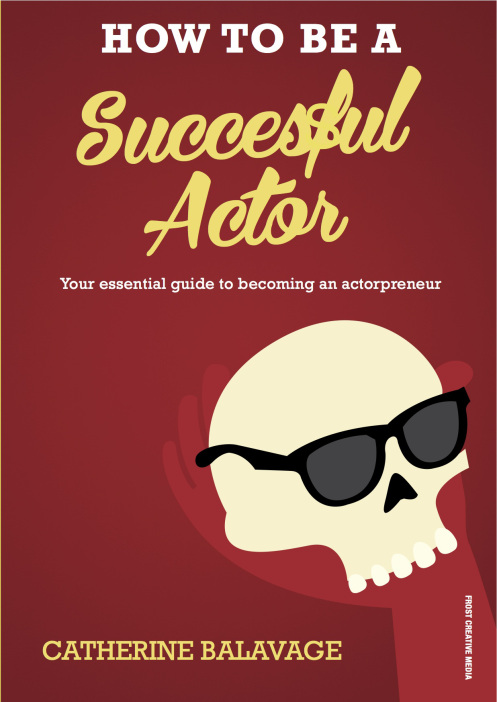
Frost editor Catherine Balavage was interviewed on The Green Room with Orla Barry. Catherine was talking about her new book How To Be a Successful Actor: Becoming an Actorpreneur. The interview is below and has lots of great acting advice. Have a listen and let us know what you think.


Are you an actor? If you have any acting questions then comment below and Catherine will answer them.


How To Be a Successful Actor: Becoming an Actorpreneur is out now and available here.


Frost Editor Catherine Balavage To Be Interviewed By Orla Barry On The Green Room

Frost Magazine’s editor, Catherine Balavage, will be interviewed about her new book by Orla Barry on The Green Room this Saturday between 9-11pm. The interview will air on Newstalk 106-108FM (Winner-PPI Radio Station of the Year 2013). Irish readers can catch the interview live while a link to the podcast will be posted for non-Irish residents. 

acting, acting advice, how to be an actor, how to be a successful actor, hollywood, castings, auditions, casting directors.

Orla Barry is a BBC World Service Broadcast Journalist, Broadcaster of The Green Room Culture Show on Newstalk 106-108FM, Columnist and Documentary Maker.

Catherine will be taking about her new book, How To Be a Successful Actor: Becoming an Actorpreneur, which has been selling well and getting rave reviews. Grab a copy if you are an actor or want to be.

Other guests Orla has interviewed include actors George Clooney, Harrison Ford, Salma Hayek, Alan Rickman, John Hurt, Colin Firth, Jessica Chastain. Comedians Ricky Gervais, Phil Jupitus, Ruby Wax, Bill Bailey and Monty Python’s Terry Jones.  Film Directors Mike Leigh, Jim Sheridan, Neil Jordan, Kathryn Bigelow, Guillaume Canet, Morgan Spurlock and Michael Apted.  Authors, Joyce Carol Oates, Man Booker winner Howard Jacobson, Hanif Kureishi, John Banville, Jo Nesbo, Michael Palin and Garrison Keillor. Photographers Greg Marinovich, Steve McCurry, Giles Duley and performers Kristen Hersh,  Neil Hannon, Emmy-Lou Harris, Seun Kuti, Lisa Hannigan and Stevie Nicks.

So our editor is in good company!


American Actors Can Get How To Be a Successful Actor For $1.99: One More Day Only

acting, acting advice, how to be an actor, how to be a successful actor, hollywood, castings, auditions, casting directors.American Actors Can Get How To Be a Successful Actor: Becoming an Actorpreneur For $1.99: One More Day Only

Fresh from a Kindle Countdown Deal for British actors which was very successful, now American actors can get my book for only $1.99 for a limited time only. How To Be a Successful Actor: Becoming an Actorpreneur has been getting rave reviews in America and it has already been selling stateside.

This is what American actor Tom Shafer had to say about my book: “An excellent guide for the entertainment professional

I found this book to be an excellent companion to Bonnie Gillespie’s ‘Self-Management for Actors’, which I am also currently reading. The first half of Catherine’s book does a excellent job of distilling a seminar’s-worth of material into a manageable bit. The second half, the interviews, felt more conversational. What was clear, the recommendations made in the first half came, in part, from these interviews. This is an excellent technique, since it reinforces the validity of the recommendations as having come from entertainment professionals who have achieved a perceived level of success. (I like that the definition of “success” was open for discussion, since it can mean different things to different people.)

As an American reading this book, I did find some UK-centric resources and references. But, in this era of global Internet access, I found just as many that were valid for US readers. I was able to take this in stride and see this as a valuable tool in my self-management as a working actor.

Thanks, Catherine, for writing this excellent guide.”


What are you waiting for? Get your copy now.


How To Be a Successful Actor: Becoming an Actorpreneur Only £1.99 For One More Day

acting, acting advice, how to be an actor, how to be a successful actor, hollywood, castings, auditions, casting directors.How To Be a Successful Actor: Becoming an Actorpreneur has been included in Amazon’s Kindle Countdown Deals and for one more day is only £1.99. How To Be a Successful Actor: Becoming an Actorpreneur, written by Frost Magazine’s editor Catherine Balavage, has received a number of good reviews including three five-star reviews on Amazon UK and another brilliant four-star review on Amazon US, even though it has only been out for two months. The below review is from acclaimed author Margaret Graham:

A triumph for Balavage, and a necessary tool for anyone considering an acting career. By Margaret Graham

Balavage has written a well balanced exploration of how to succeed as an actor. I am an author, not an actor, but having read How to be a Successful Actor, I feel the two precessions are closely allied. Balavage clarifies the positives and negatives of the profession, and then proceeds to walk us through the ups and downs, giving anyone interested in becoming an actor the tools to maximise their chances.

The basic ingredients, it seems to me, are to utilise common sense and good manners. After all, you will be meeting the the same people on the way up, and then, when times are hard, to be nice out there..

But more than that, we are led by the hand through the nitty gritty of whether to train, or not to train, the virtues of hard work in the face of lack of progress, the need to be glad of any chance to gain experience, and exposure. She explains the need to acquire the necessary skills through classes, and the value of networking.

As I also advise my writing students, Balavage advises actors to watch and analyse their craft, on stage, radio and screen. She emphasises the need for actors to BE their characters, to acquire accents, to keep fit. She moves on to marketing, to the virtues of mobile phones and the internet for spreading the word about YOU,

There is humour: remember to avoid the stunt co-ordinator’s elbows, there are detailed tips: what to do if your mouth dries up (read the book and find out) , there are a forest of useful addresses.

No wonder it took Balavage 4 years to write this book, because she includes a plethora of interviews with experts in the field. What comes across is that Catherine Balavage considers an acting career to be a project, one that needs to have: a firm foundation, on-going development, marketing skills, research, realistic self-belief, and a hell of a lot of luck. This book needed to be written. It was Catherine Balavage with her clear sighted view of the profession who needed to write it. Bravo!

This one is from actor and casting associate Clea Myers:

Fantastic & Essential Guide By Ms. C. Myers

This really is an excellent guide book into the terribly difficult, but potentially rewarding life of an actor. Balavage tackles the often ignored questions that surround the inexperienced and/or young person who wonders what the best road to take is? She starts with the basics that encompass questions about whether to train at drama school (and thereby find the money to do so), or go another route by getting involved with fringe theatre and/or film school films. Throughout she weighs up the pros and cons in a highly informative and intelligent manner that are also highly credible as she is writing from first-hand experience. Her own entrepreneurship into film-making is included and offers fantastic tips and empowerment, to what is often a dis-empowering profession. She also demystifies the perceived ‘glamour’ of working as an actor and says it how it is. A good wake-up call for those out there that crave instant fame!

Her approach is wholly professional and fundamentally knowledgeable: she interviews working actors, alongside well-known casting directors who give an insider-view into what is required to get ‘ a foot in the door’. I would highly recommend this book to anyone interested in becoming an actor.

Crime writer Penny Deacon called it the ‘Best advice available’ in her review and American actor Tom Shafer gave it a wonderful review and said it was a great companion piece to Bonnie Gillespie’s acting bible, Self Management For Actors in his review below.

An excellent guide for the entertainment professional By Thomas Shafer

I found this book to be an excellent companion to Bonnie Gillespie’s ‘Self-Management for Actors’, which I am also currently reading. The first half of Catherine’s book does a excellent job of distilling a seminar’s-worth of material into a manageable bit. The second half, the interviews, felt more conversational. What was clear, the recommendations made in the first half came, in part, from these interviews. This is an excellent technique, since it reinforces the validity of the recommendations as having come from entertainment professionals who have achieved a perceived level of success. (I like that the definition of “success” was open for discussion, since it can mean different things to different people.)

As an American reading this book, I did find some UK-centric resources and references. But, in this era of global Internet access, I found just as many that were valid for US readers. I was able to take this in stride and see this as a valuable tool in my self-management as a working actor.

Thanks, Catherine, for writing this excellent guide.

What are you waiting for? We are not biased, it is an excellent guide and an essential for any actor.

How To Be a Successful Actor: Becoming an Actorpreneur is available here.


4 in 10 admit they go online to seek health and wellbeing advice

Where Do You Go For Reliable Health Advice?

New research has revealed the growing trend of people taking important health and well-being advice from unreliable sources.

health advice online. Almost 4 in 10 people would choose to go online to seek advice on their own health and wellbeing and around 1 in 20 Brits have admitted they would turn to social media sites like Facebook or Twitter for advice on health issues.

While there are many reliable sites offering health and nutritional information, it can be easy to take the wrong advice.

The research, commissioned by Viridian Nutrition, also revealed that more than 1 in 3 people surveyed said they would go to their doctor for medical advice, only 1 in 4 claimed they would take advice from their local specialist health food store.

Jeff Martin is Managing Director of As Nature Intended, and he said health food stores are good sources of reliable health information, ‘People coming into health food stores and asking for health advice is a cornerstone of what we’re about. If people came in and saw me earlier they would have got a resolution to whatever problem they had a lot quicker’.

A further survey from the Health Food Manufacturer’s Association also revealed that, of the 10,000 adults questioned, 40% said they don’t think they have access to enough information on vitamin supplements.

The research also revealed that around 55% of the UKs population now take food supplements (a 9% rise over the past two years) and that almost 1 in 4 people get the majority of their information about vitamin supplements from the box or packaging they come in.

We also spoke to Nutritionist and Lecturer Ben Brown, ‘In terms of the reliability of health information there are a number of different potential consequences. One of the more obvious ones is misdiagnosis – you may have something that seems like a garden variety headache but it could be more serious and the same is true for diet and nutrition information.

‘You could be following something that’s potentially misguided and unhealthy in the long term. If you’re looking for general diet and lifestyle advice and in particular advice on natural products, it’s much better to get off the internet and get into your local independent health food store and speak to someone there’.